

1. Introduction
RAP-soil mixes would be one potential future material system in flexible pavement engineering that would use reclaimed asphalt pavement (RAP) - soil blends. The structural foundation of pavement systems is the subgrade layer, which plays a significant role in determining the load distribution, the formation of stiffness, and deformations over time. The compression properties of the subgrade materials are directly associated with the engineering performance of the material, especially the maximum dry density (MDD) and optimum moisture content (OMC), which determine the field density and construction efficiency that can be obtained.
The growing amount of reclaimed asphalt pavement (RAP) generated in the process of rehabilitation and repairs has acted as an impetus to use reclaimed asphalt in infrastructural development. The reuse of RAP will help reduce the number of natural resources used and minimize the effects of construction waste disposal, as well as enhance the efficiency of materials utilized in the transportation system (Ai et al., 2023) (Karthikeyan et al., 2023). Although it has been a universally used material in asphalt mixtures, recent studies have shown the use of RAP in unbound layers such as base, subbase, and subgrade layers, where the compaction behaviour is the determining factor for both structural performance and constructability.
Recent investigations have demonstrated that recycled pavement materials and modified asphalt systems contribute significantly to sustainable transportation infrastructure through improved material efficiency and reduced environmental impacts. (Al-Ghurabi & Al-Humeidawi, 2021) Previous studies have highlighted the influence of recycled constituents on mechanical performance, particle interaction, and long-term pavement behaviour, emphasizing the importance of optimizing material composition for engineering applications. Furthermore, advances in performance-oriented evaluation methodologies have encouraged the integration of laboratory characterization with practical decision-making frameworks for recycled geomaterials. These developments provide a strong foundation for investigating RAP–soil blends as sustainable subgrade materials while identifying optimum replacement levels based on engineering performance and constructability (Al-Gurah & Al-Humeidawi, 2021).
When incorporating RAP into cohesive soils, a composite geomaterial is formed that comprises aggregates coated with asphalt and interacting with fine fractions of the soils. These interactions alter the behaviour of particle packing, the characteristics of surface friction, and moisture behaviour. Past research has revealed that both the gradation and hydrophobic effects (Al-Humeidawi et al., 2021).
The presence of ageing binder films disrupts the moisture-density correlations observed due to the addition of RAP (Baldovino et al., 2025) (Suebsuk et al., 2023). The mechanical behaviour of the mixture gradually shifts in response to the growing concentration of RAP material and becomes dominated by friction-controlled grain-to-grain contact, where MDD and OMC behaviour occur.
Existing studies have been seeking ways to enhance the mechanical strength by employing cementitious binders, polymers, or other additions as part of the stabilization methods of the ensured material (Costa et al., 2025) (Coelho et al., 2024) (Guerrero-Bustamante et al., 2025). Although parameters associated with strength, such as California bearing ratio, resilient modulus, and shear resistance, are relevant in structural assessment, compaction behaviour is a particularly important parameter that determines how fields should be implemented. Nevertheless, compaction properties are often managed as auxiliary data and are not presented as a major performance measure to make engineering decisions.
Mechanisms on a particle scale that govern the interaction between RAP and soil are yet to be well understood. The asphalt-coated aggregates exhibit less water affinity and altered interparticle friction, which affects the packing density and compaction efficiency (Ai et al., 2025) (Santana & Paula, 2025). A better insight into these mechanisms is required to be able to make sense of observed compaction tendencies and to develop justifiable rules of thumb about acceptable RAP replacement levels. Within the engineering concept, sustainable pavement development needs to extend beyond recycling of the material but must consider a performance-based assessment methodology. A possible environmental and economic benefit of RAP reuse is that the need to use virgin aggregates is decreased, and less material transport is required (Gomes Correia et al., 2016). However, subgrade use requires a systematic evaluation of compaction behaviour to allow compatibility with design requirements.
Recent research has pointed at the fact that the RAP-soil mixtures exhibit nonlinear compaction behaviours with increase in RAP content, due to alterations in the particle interaction patterns and moisture requirements (Fanijo et al., 2023) (Dushmantha et al., 2025). Although interest in research on the topic has increased, there is still a lack of practical implementation because laboratory results can hardly be transferred to systematic evaluation systems that can be used in the engineering decision-making process. Past studies have indicated that the RAP particles have ability to increase the contact friction between the particles and to decrease moisture sensitivity in the free layers (Plati et al., 2023), but the trends are stated to vary based on material gradation, plasticity of soil and binder aging properties (Boaventura et al., 2024).
Even though the mechanical performance has received vast research (Arulrajah et al., 2012), few studies have focused on emphasizing the compaction behaviour as an autonomous performance measure. Additionally, most of the research report the separate compaction parameters without normalised metrics that can allow a systematic comparative analysis of mixture compositions (Indraratna et al., 2025). This absence of combined assessment limits useful instructions on the right levels of RAP replacement (Marinković et al., 2022).
According to the literature review, there are several gaps in research that are observed:
Compaction behaviour of untreated RAP-soil blends has not been sufficiently stressed as one of the main engineering parameters (Yaghoubi, Arulrajah, & Horpibulsuk, 2024) and mechanistic understanding between effects of particle interaction and compaction response is scarcely exercised (Wang, Li, & Zhang, 2023). performance-based frameworks of technical and economic consideration are not usually integrated to be used (Nguyen, Rahman, & Pham, 2025).
Although numerous studies have reported the compaction characteristics and mechanical behaviour of RAP–soil mixtures, most investigations primarily present conventional parameters such as Maximum Dry Density (MDD) and Optimum Moisture Content (OMC) independently. Limited attention has been given to integrating these compaction characteristics into a unified performance-based framework that simultaneously considers normalized density, moisture efficiency, mechanistic interpretation of particle interaction, and economic feasibility for engineering decision-making. Consequently, there remains a need for a systematic methodology that translates laboratory compaction results into practical guidelines for selecting optimum RAP replacement levels in sustainable subgrade construction. The present study addresses this gap by proposing an integrated performance-based evaluation framework that combines technical performance with cost considerations to support rational material selection (Li et al., 2024) (Basu et al., 2015).
These limitations suggest that the present research tries to resolve the issues by offering a performance-based exploration of RAP-soil blends based on the compaction behaviour as the main evaluation criterion. The study proposes a systematic concept combining normalized density, moisture efficiency, and cost-associated parameters to facilitate the process of making engineering decisions. The study will apply compaction trends using particle packing theory, and cohesive to frictional transitions of behaviour to study patterns that have not been explored in as much detail as empirical observation (Sadiq & Shuvo, 2025) (Park et al., 2021).
The following objectives of this study are developed:
To investigate the influence of Reclaimed Asphalt Pavement (RAP) incorporation on the moisture–density relationships of soil using Standard Proctor compaction tests.
To develop normalized performance indicators for the comparative assessment of RAP–soil mixtures with different RAP replacement levels.
To integrate technical performance and economic considerations through a performance-based evaluation framework for identifying the optimum RAP content for sustainable subgrade applications.
The proposed methodology aims to provide practical engineering guidance for the effective utilization of RAP–soil blends in subgrade construction by combining laboratory compaction characteristics with performance-based decision-making concepts.
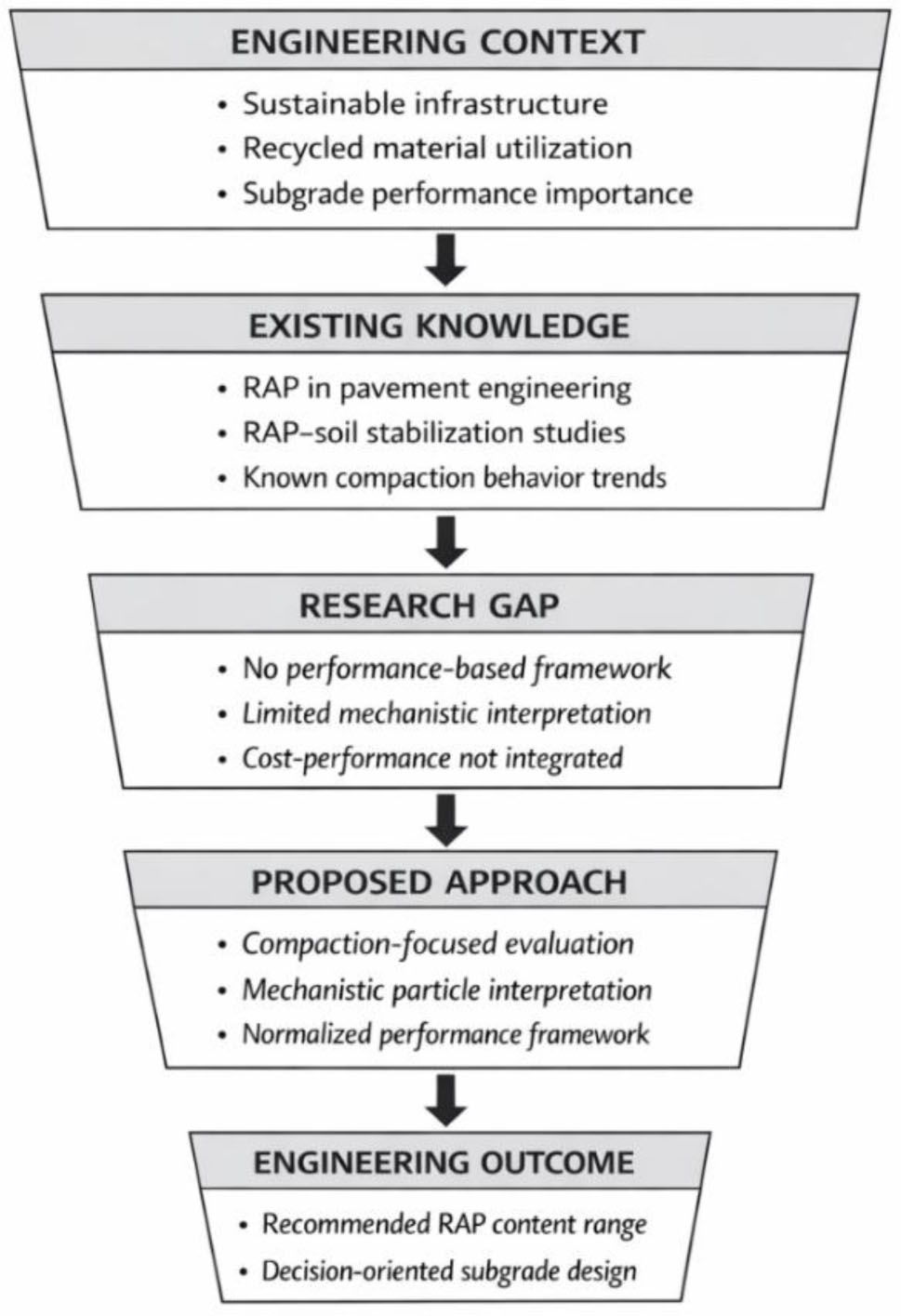
Figure 1:
Research framework illustrating the identification of the research gap, formulation of objectives, experimental methodology, performance-based evaluation framework, and engineering recommendations for RAP–soil blends
The overall methodology adopted in this study is illustrated in Figure 1, which presents the research workflow from problem identification through laboratory investigation and performance-based evaluation.
2. Materials and Methods
2.1. Materials
2.1.1. Natural Soil
The natural soil which was used in this test was taken at an excavation in the roadways subgrade which was involved in construction of the transportation infrastructure. A depth of 1.0–1.5 m underground level was used to get bulk disturbed samples to exclude organic pollution and the effects of weathering on the top of the surface. The soil was shipped in containers that were airtight and then dried under the heat of air before laboratory tests were performed. To retain representative particle gradation, gentle disaggregation was used (Kommanamanchi & Chennarapu, 2026).
The index property testing and the classification of soil were performed about the applicable Indian Standard (IS) testing. An investigation of the distribution of grain size showed that it was a fine-grained soil that contained clay and silt fraction with moderate sand content. Atterberg testing proved moderate plasticity behaviour as is common with the cohesive subgrade soils. According to the classification of IS 1498, soil was classified as lean clay (CL) that implies the presence of the cohesive properties with moisture sensitive compaction behaviour.
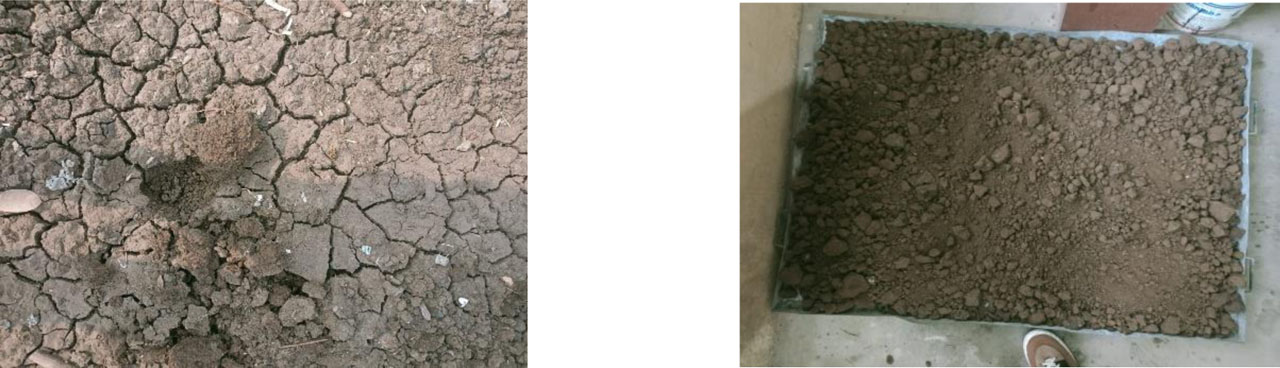
Figure 2:
Natural soil sample collected for laboratory characterization prior to index property and compaction testing
The natural soil used in this investigation is shown in Figure 2. The collected material was air-dried and prepared for index property determination and subsequent RAP blending.
The properties of the basement index such as specific gravity, the characteristics of plasticity, and natural moisture content were measured to create the reference conditions of determining the effect of reclaimed asphalt pavement (RAP) incorporation.
The engineering properties of Reclaimed Asphalt Pavement (RAP) may vary depending on the origin of the reclaimed material and the pavement rehabilitation process from which it is obtained. Factors such as the type and age of the original pavement, aggregate mineralogy, degree of asphalt binder aging, traffic loading history, and milling depth can influence the particle size distribution, residual binder content, specific gravity, particle angularity, and surface characteristics of RAP. Consequently, these variations may affect the moisture - density relationship, particle packing behaviour, and optimum RAP replacement level observed during compaction. Although the RAP used in the present study was obtained from a single source and exhibited relatively uniform characteristics, the proposed performance-based evaluation framework should be applied together with appropriate material characterization when RAP from different sources is considered. Such characterization will improve the reliability of engineering decisions and facilitate the practical implementation of RAP - soil mixtures in subgrade construction.
2.1.2. Reclaimed Asphalt Pavement (RAP) Material
The reclaimed asphalt pavement (RAP) substance was acquired because of cold milling processes done when a stretch of the existing flexible pavement was undergoing rehabilitation. The processed material was made up of asphalt coated aggregates that have different particle sizes and old binder coatings of the aggregates. RAP was dried in the air and sieved before being used to eliminate oversized debris.
The analysis of gradation, which was performed according to the IS 2386, Part 1 revealed that the granular behaviour occurs and the particle sizes are well distributed to be blended with cohesive soils. Asphalt-coated aggregate surfaces were verified by visual observation skills, and they confer hydrophobic properties and affect the interaction of moisture during compaction. Angular/sub-angular shape of RAP particles will assist in increasing friction amongst particles and change particles packing processes in blended mixtures.
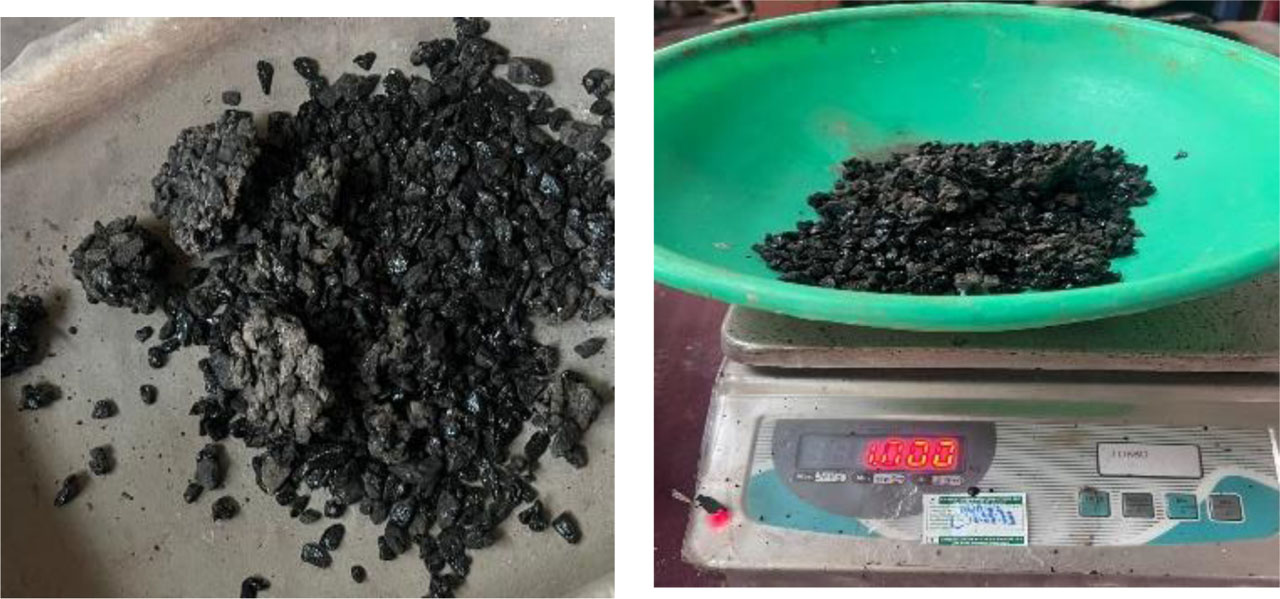
Figure 3:
Reclaimed Asphalt Pavement (RAP) particles showing aged asphalt coating and granular morphology used for preparing RAP–soil mixtures.
Figure 3 presents the RAP material used in this study, illustrating the asphalt-coated aggregate particles responsible for the hydrophobic behaviour and enhanced interparticle friction observed during compaction.
Table 2:
RAP properties
| Property | Test standard (IS Code) | Value |
|---|---|---|
| RAP source | Field milling | Flexible pavement rehabilitation |
| Maximum particle size [mm] | IS 2386 Part 1 | 19 |
| Specific gravity | IS 2720 Part 3 | 2.48 |
| Asphalt binder content [%] | Ignition method | 4.8 |
| % Passing 75 µm sieve | IS 2386 Part 1 | 7 |
| Gradation type | Sieve analysis | Well-graded gravelly sand |
| Particle angularity | Visual assessment | Sub-angular to angular |
| Surface condition | Visual assessment | Asphalt-coated particles |
| Water interaction behaviour | Qualitative | Hydrophobic tendency |
Material characterization was done to define the characterization of physical and index property of natural soil and reclaimed asphalt pavement (RAP) before mixing. They were grain size distribution, Atterberg limits and specific gravity, which determine particle interaction and moisture-density behaviour during compaction. Sieve analyses in accordance with IS 2720 (Part 4) of soil and IS 2386 (Part 1) of RAP indicated a fine-grained cohesive soil with large proportions of clay and silt, and RAP with coarser granular gradation with high proportions of sand and gravel-sized particles and few fines. These opposite gradations lead to the conclusion that incorporation of RAP brings in a granular skeleton that affects the packing of the particles. Moderate plasticity of soil was confirmed by Atterberg limits testing (IS 2720 Part 5) which indicated a gradual shift between cohesion-controlled compaction behaviour and friction-controlled compaction behaviour with increase in RAP content. RAP indicated non-plastic behaviour instead of plastic behaviour of soil.
Both materials had specific gravity measurements that were based on the IS 2720 (Part 3). The natural soil had values that were reported to be of the same composition about clay minerals, whereas RAP particles had slightly lower values of specific gravity because of coating of asphalt binder and aggregate composition. Differences in specific gravity between materials lead to changes in densities caused by compaction and should be remembered when the trends in dry densities in blended mixtures are being interpreted.
The overall characterization availing it, there is the complementary feature of the materials such that fine-grained cohesive soil offers binding behaviour and RAP offers granular interlocking and altered moisture interaction. It is these traits that are used in the measurement of compaction performance and mechanistic behaviour on the RAP-soil blends.
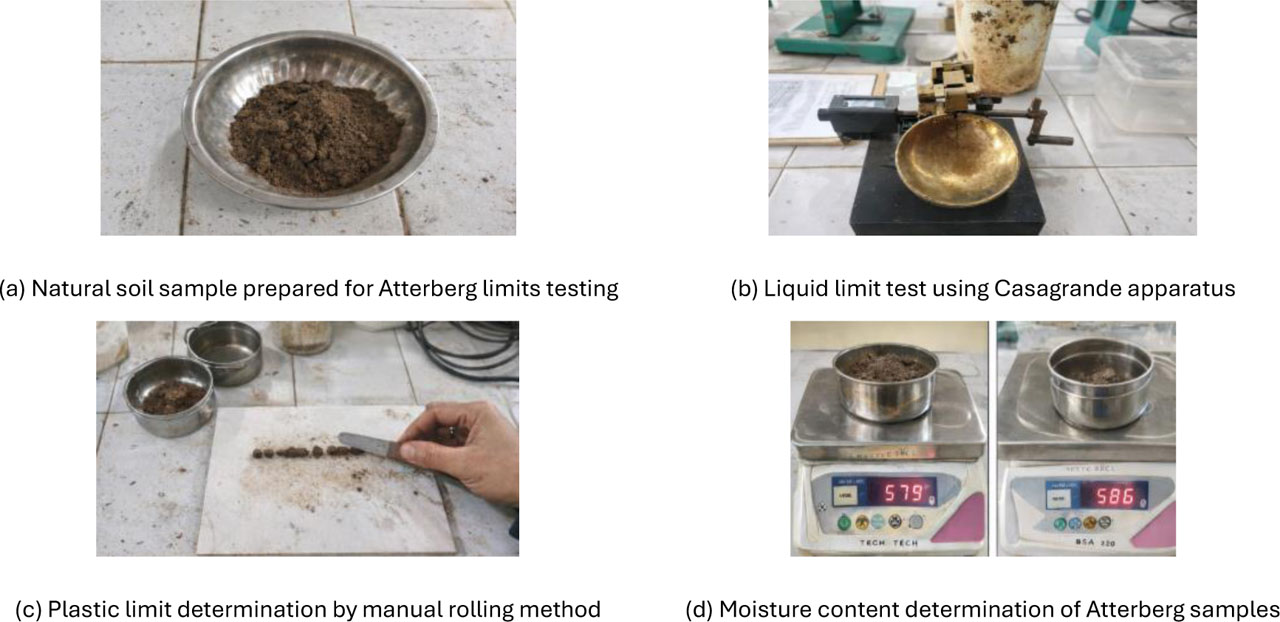
Figure 4:
Atterberg limits testing procedure
The mix design measured the effect of addition of RAP to the cohesive soil compaction behaviour of progressive replacement degrees in respect of dry weight percentages which acts as a simulated practical subgrade blending situation. The selection of RAP content was made to pick up the change of behaviour between that of cohesion dominating and that of friction dominating. Systematic evaluation of response with density and moisture was possible in incremental replacement levels. The chemical analysis of soil and RAP involved drying soil and RAP to a constant mass by drying in the oven followed by thorough dry mixing to homogeneity, and the moisture conditioning of the material to give the desired moisture level, which ensured the consistency in the sample preparation and the reliability of compaction test results.
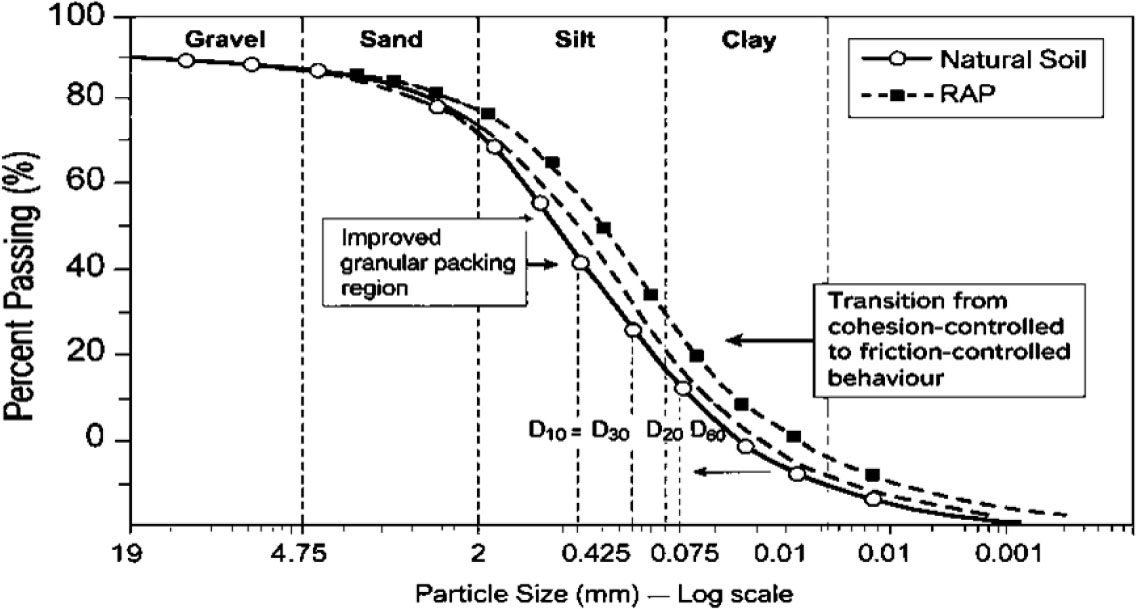
Figure 5:
Particle size distribution curves of natural soil and Reclaimed Asphalt Pavement (RAP), illustrating the complementary gradation characteristics of the constituent materials
As shown in Figure 5, the natural soil contains a higher proportion of fine particles, whereas RAP exhibits a coarser granular distribution. This complementary gradation promotes improved particle packing at intermediate RAP replacement levels.
The mix design matrix is presented in Table 3.
Table 3:
Mix design matrix
| Mix ID | RAP [%] | Soil [%] | Preparation details |
|---|---|---|---|
| M0 | 0 | 100 | Control soil; oven-dried and moisture-conditioned |
| M10 | 10 | 90 | Dry blending followed by moisture conditioning |
| M20 | 20 | 80 | Uniform mixing with gradual water addition |
| M30 | 30 | 70 | Mechanical blending to ensure homogeneity |
| M40 | 40 | 60 | Increased RAP proportion with consistent mixing protocol |
| M50 | 50 | 50 | Equal soil–RAP blend; controlled moisture distribution |
| M60 | 60 | 40 | RAP-dominant mix; extended blending time |
| M70 | 70 | 30 | High RAP content: uniform particle dispersion ensured |
| M80 | 80 | 20 | RAP-dominated mixture; moisture adjusted carefully |
2.2. Experimental Setup
In the evaluation of the moisture-density behaviour, a common laboratory compaction apparatus was used to carry out compaction testing to determine the behaviour of natural soil and RAP-soil mixtures. The testing system was modelled to follow the requirements of the standard Proctor compaction as defined by IS 2720 (Part 7) that provides guidelines to standard Proctor compaction as could be applied during the evaluation of subgrade material. The device was made up of cylindrical steel mould, removable collar, base plate, and manually actuated rammer that could provide controlled compaction energy.
The experimental setup used for compaction testing is illustrated in Figure 6.
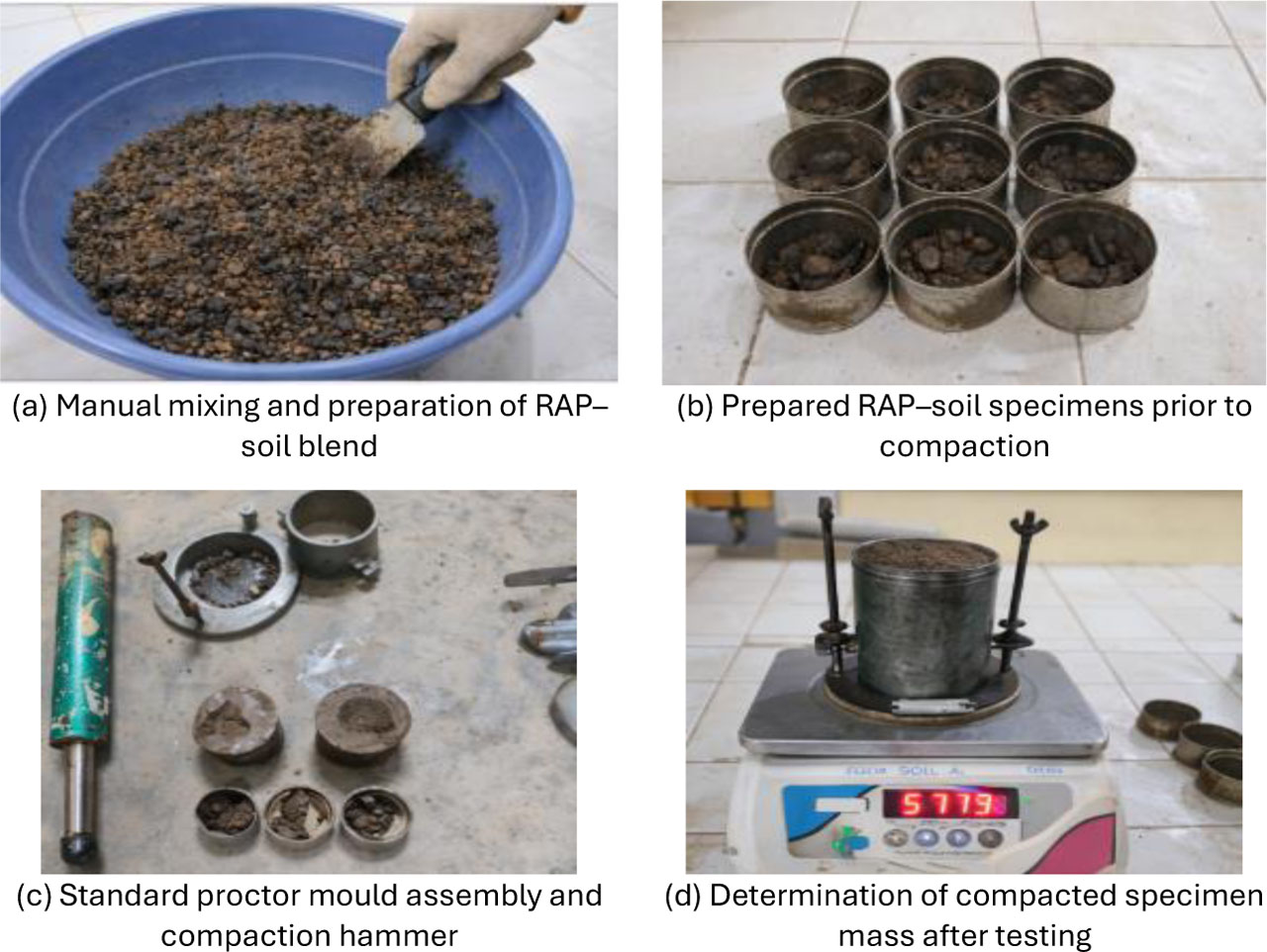
Figure 6:
Standard proctor compaction apparatus used for evaluating moisture–density behaviour of RAP–soil mixtures
The mould assembly allowed an internal volume to be fixed which could be used in establishing the relationship between the dry density and moisture at various levels of RAP replacement. The compaction was done on a normal hammer with known weight and drop height to give the same amount of energy to all the samples. To reduce variability, the device was calibrated before the test to achieve consistency between experimental runs.
The preparation of samples was done by putting material in several layers inside the mould with each layer pressed by a given number of blows spread uniformly on the surface area. The content of moisture was varied in a systematic manner to develop complete compaction curves of every mixture. The same test conditions were ensured in all the samples such as compaction effort, mould dimensions, and preparation, among others, and comparability between the mixtures was ensured.
The experimental procedure was conducted in a guided flow that involved the characterization of the materials, preparation of the mixes, and standardized compaction tests to form the correlation between moisture and density. The important parameters including the maximum dry density and optimum moisture content were incorporated in a performance-based structure through cost analysis that would allow the engineering examination and decision-oriented explanation of replacement levels of RAP (Figure 7).
To ensure the reliability and repeatability of the experimental results, each RAP–soil mixture was tested in triplicate following the Standard Proctor compaction procedure. The reported Maximum Dry Density (MDD) and Optimum Moisture Content (OMC) values represent the average of three independent tests. The standard deviation was calculated for each mixture to evaluate experimental variability, and the observed variations were small, indicating good repeatability and consistency of the testing procedure.
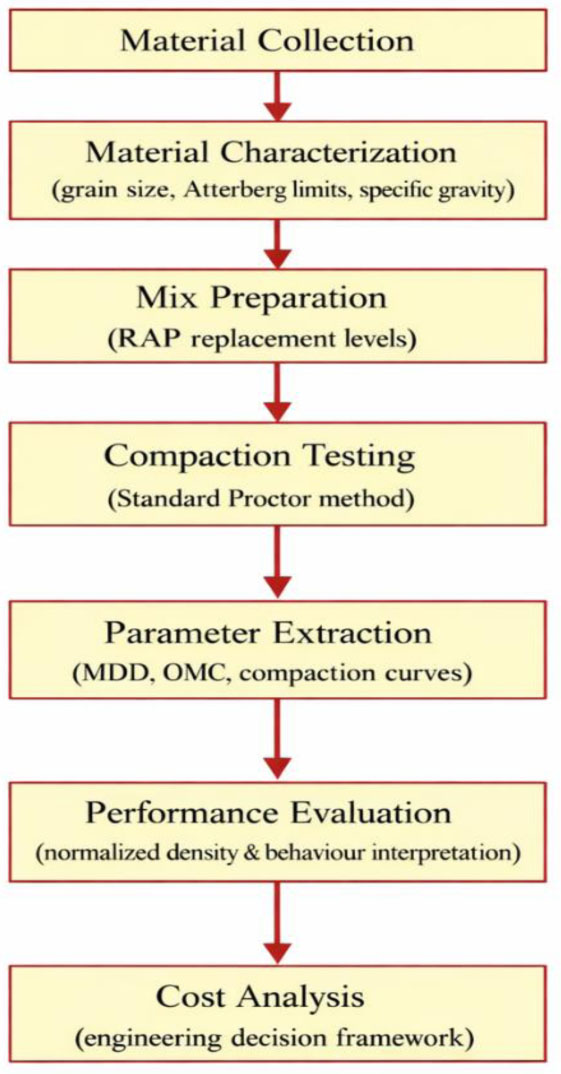
Figure 7:
Experimental methodology workflow for performance-based evaluation of RAP–soil mixtures
2.3. Compaction Testing Procedure
To determine the relationships between moisture-density on natural soil and RAP-soil mixtures and relate them to ISO 2720 (Part 7) (International) which is equivalent to the Standard Proctor method, compaction testing was conducted. This was aimed at finding maximum dry density (MDD) and optimum moisture content (OMC) when working under controlled laboratory conditions. Various levels of moisture content were added to each of the mixtures to obtain the full response of density. Water was added in small doses to dry materials until thoroughly mixed to cover the level of moisture under and above the desired optimum to form complete compaction curves. Compaction was done with the help of a cylindrical mould, which was filled then compacted into three layers with each layer compacted with a regular rammer that applied the known amount of compaction energy employing the same number of blows per blow. Care was observed to ensure that there was uniform layer thickness and no segregation occurred. Once compaction was done, any remaining material was scraped off to the surface of the mould so that the correct amount of material could be determined. Compacted mass and the mould volume were used to compute bulk density whereas moisture content was estimated by drizzling in an oven using the standard IS 2720 (Part 2). MDD and OMC of each RAP replacement level were then calculated based on the values of dry densities.
2.4. Performance Based Evaluation Framework
To allow engineering interpretative analysis of compaction behaviour, a performance based analytical framework was created combining the normalized density, moisture efficiency and cost related parameters. The framework will transform laboratory compaction results into relative performance variables to aid in decision making on optimization of subgrade materials.
The proposed Performance Index (PI) was formulated as a simplified comparative parameter to integrate two fundamental aspects of subgrade compaction behaviour: densification efficiency and moisture demand. Normalized density reflects the relative improvement in particle packing and achievable field density, while moisture efficiency represents the reduction in water requirement during compaction, which directly influences constructability and resource utilization. By combining these two normalized indicators, the PI provides a practical framework for comparing RAP–soil mixtures and identifying optimum replacement levels from a compaction and construction perspective. The index is intended as an engineering decision-support parameter rather than a constitutive mechanical property.
2.4.1. Normalized Density
Normalized density was used to measure relative gains or losses in the compaction performance of the soil compared to the control soil. Normalization of maximum dry density of each RAP-soil mixture in relation to maximum dry density of control soil was conducted as follows:
Where:
ND - normalized density,
- highest dry density of RAP-soil mixture,
- utmost dry weight of natural earth.
This normalization can be used to compare them across mixtures without reference to differences in absolute density, which shows the relative compaction performance due to incorporation of RAP.
2.4.2. Moisture Efficiency
Moisture efficiency was formulated to measure the modification in moisture demand caused by RAP addition. The parameter indicates the benefits of constructability, where low optimum moisture content in the material lowers the field compaction operations. The moisture efficiency was given as:
Where:
ME = moisture efficiency index,
OMCcontrol = optimum moisture content of control soil,
OMCmix = optimum moisture content of RAP–soil mixture.
A larger than unity means lower moisture requirements and implies that compaction efficiency is better than with hydrophobic behaviour of particles coated with asphalt.
2.4.3. Cost Ratio
To include an economic factor, the ratio of cost was to be simplified to:
Where:
CR = cost ratio,
Cmix = estimated material cost of RAP–soil mixture,
Ccontrol = price of natural soil substances.
The parameter of cost ratio permits obtaining a quantitative assessment of the performance of compaction regarding economic efficiency, which is the primary factor in making engineering-driven decisions. The performance-based framework proposed entails incorporating the normalized density, moisture efficiency, and cost as a multi-criteria basis, thus going beyond normal reliance on the individual parameters of MDD and OMC. This methodology incorporates constructability, material behaviour, and economic feasibility in a simplified yet strong analytical model, which depicts the practical under-grade design concerns. The paper is restricted by the laboratory-scale Standard Proctor compaction testing, including the moisture-density relations and the performance indices drawn out there. Properties of strength were omitted to separate the compaction behaviour, hence, one should interpret the results in comparison, where future workis undertaken to field-check and gauge the mechanical performance.
3. Results and Discussion
The compaction results demonstrate a distinct nonlinear response with increasing RAP content. The Maximum Dry Density (MDD) increased from 17.6 kN/m3 for the control soil to 18.7 kN/m3 at 40% RAP incorporation, corresponding to an increase of approximately 6.3%. This improvement indicates enhanced particle packing and more efficient granular interlocking resulting from the complementary gradation of RAP and natural soil. Beyond 40% RAP, the MDD decreased to 17.4 kN/m3 at 80% RAP, representing a reduction of approximately 7.0% from the peak value. This decline reflects the combined effects of reduced fine-particle content, lower specific gravity of RAP, and increased interparticle voids within the friction-dominated granular skeleton.
Similarly, the Optimum Moisture Content (OMC) decreased from 17.8% for the control soil to 12.5% at 80% RAP, corresponding to an overall reduction of approximately 30%. This substantial decrease demonstrates the influence of asphalt-coated hydrophobic particles, which reduce moisture absorption and lower the amount of water required to achieve effective compaction. These quantitative trends confirm that RAP incorporation not only modifies the compaction characteristics but also improves construction efficiency by reducing moisture demand while maintaining satisfactory densification at intermediate replacement levels.
3.1. Material Characterization Results and Interpretation
Material characterization identified unique physical and mineralogical distinctions between the natural soil and reclaimed asphalt pavement (RAP), and compaction behaviour of blended compaction systems is directly proportional to these differences. The soil under consideration was the natural soil with lean clay (CL) according to IS 1498, it had fine-grained gradation with large silt-clay fractions and medium plasticity (PI = 21%), which means that it had cohesion-controlled behaviour. These soils need greater moisture levels to resist the attraction between particles and allow the particles to settle into different configurations during compacting processes and so the density in these soils responds to moisture at the expense of capillary and electrochemical bonds.
On the other hand, RAP exhibited a graded granular texture made up of sand and gravel-size particles with few fines and asphalt surfaces. Angular morphology and granular skeleton result in increased inter - particle friction and loading transfer, whereas a lower water adherence and moisture requirements are achieved using hydrophobic binder films. Meanwhile, a mixed state causes a gradual transformation of the soil fabric of a dispersed clay matrix to that of a friction-based composite structure when mixed with RAP. This change in transition modifies the efficiency to pack, the distribution of voids and lubrication needs that affect the maximum dry density and optimum moisture trends to be seen in the next compaction analysis.
3.2. Compaction Behaviour
Standard Proctor compaction testing was used to assess the behaviour of RAP - soil mixtures under compaction to measure the changes to the relationship between moisture and density with an increase in RAP concentration. The control soil had a normal bell-shaped compaction curve corresponding to cohesive soil whereby the increase in dry density was related to a corresponding increase in moisture content up to an optimal moisture content (OMC 17.8%) before decreasing as the moisture content exceeded this optimum. Introduction of RAP changed the shape and position of the compaction curves, which demonstrated the alteration of the mechanisms of particle packing and moisture interactions. When RAP content was lowered (10–30 percent) the curves moved upwards and maximum dry density (MDD) rose to about 17.6 kN/m3 and to about 18.5 kN/m3 and the results were better packing which is due to the filling of the void coupled with the increased rearrangement of the particles in the soil matrix of small grains.
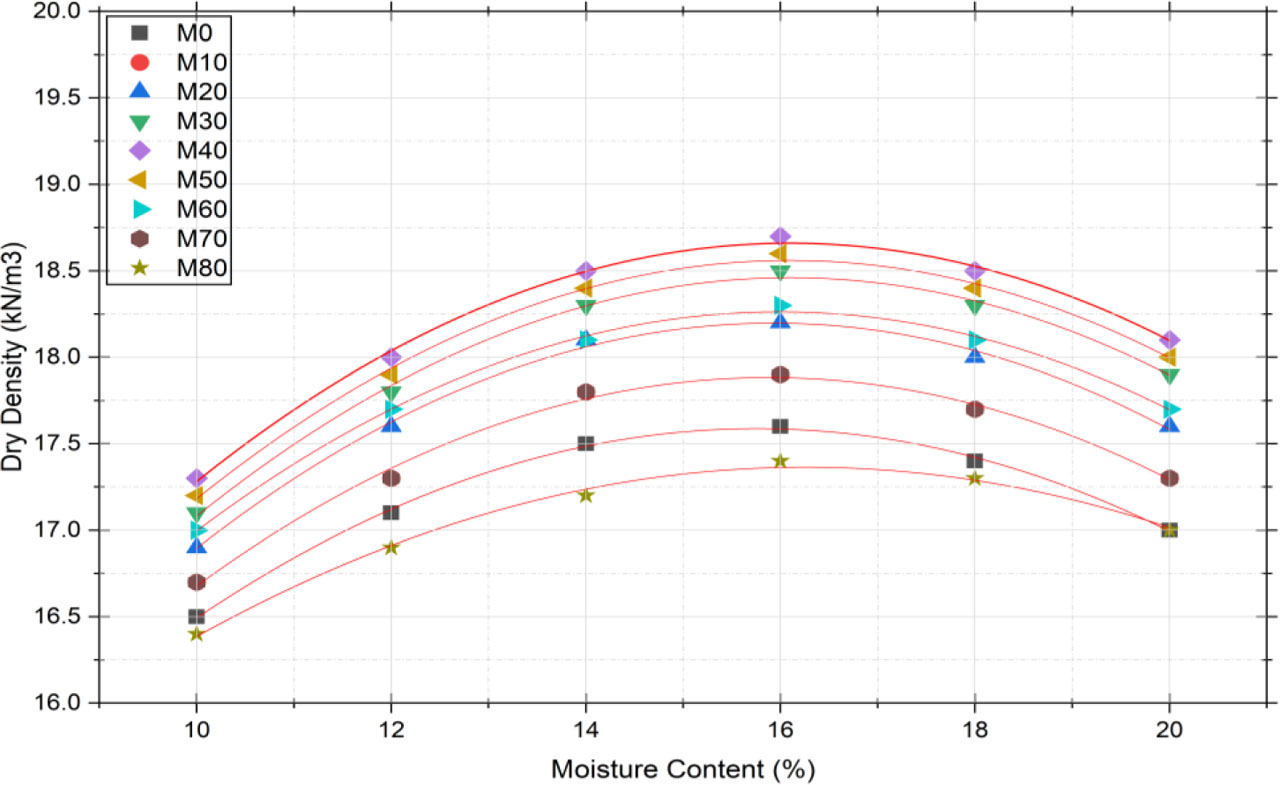
Figure 8:
Standard Proctor compaction curves showing the variation of dry density with moisture content for RAP–soil mixtures containing different RAP replacement percentages
Figure 8 illustrates the complete moisture - density relationships obtained from Standard Proctor compaction tests. A progressive leftward shift of the compaction curves with increasing RAP content indicates reduced moisture demand and changes in particle interaction mechanisms.
As RAP was added further, the compaction curves became flat and moved to lower content of moisture, indicating negative water affinity of the particles bound with asphalt and low lubrication requirements. The angular geometry and the granular structure of the RAP aggregates enhanced the friction between the particles, and the compaction proceeded at a change in the compaction mechanism, shifting to the friction-dominated mode. Quantitatively, OMC decreased gradually (17.8% to 12.5%), which reflects enhanced moisture efficiency and advantages of using RAP in constructing fields in terms of moisture efficiency.
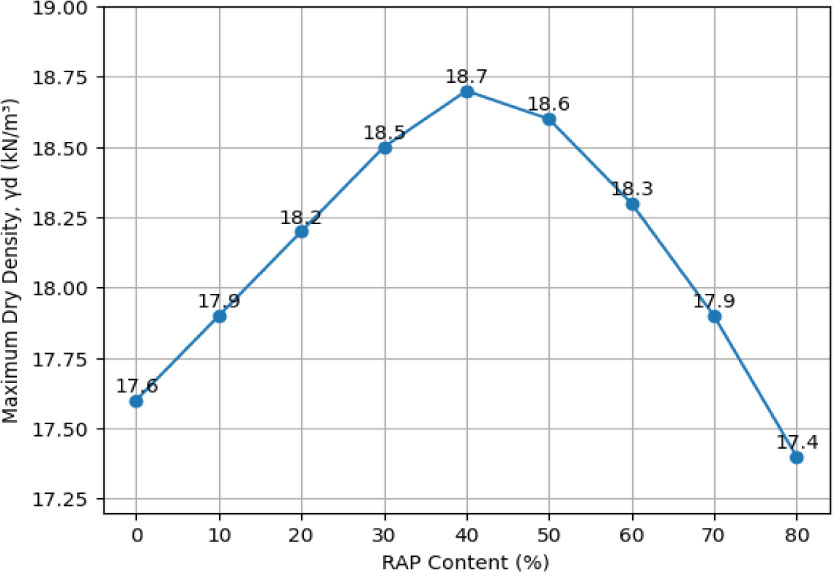
Figure 9:
Variation of maximum dry density with increasing RAP percentage
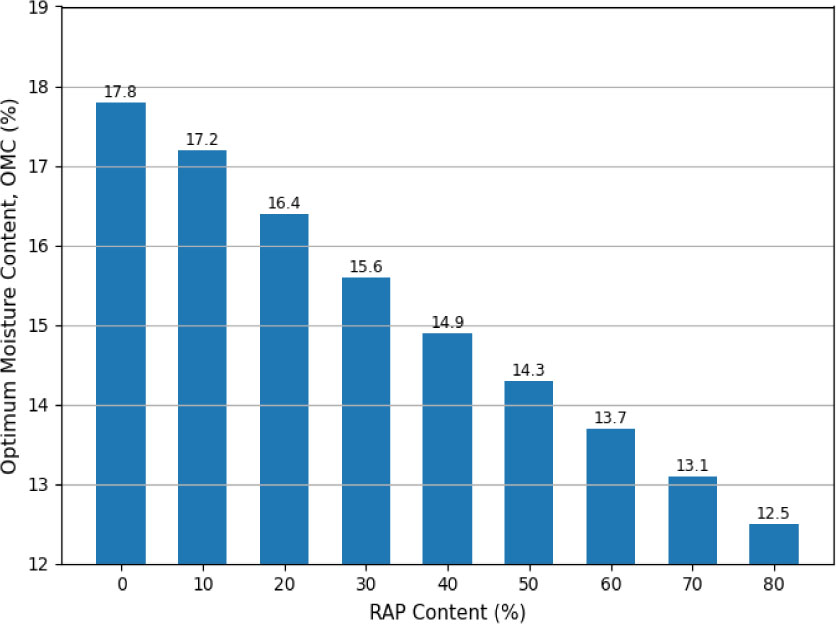
Figure 10:.
Relationship between optimum moisture content and RAP replacement level
Figure 9 shows how the maximum dry density (MDD) changes with an increase in the RAP content; a nonlinear change in response to altered particle packing and particle interaction. MDD rose steadily if low to intermediate RAP replacement levels were achieved and reached elevated levels of about 17.6 kN/m3 in control soil and elevated levels of about 18.7 kN/m3 in high RAP of about 40 percent. This enhancement is a sign of higher packing efficiency in which coarse RAP particles occupy the gaps within the fine - grained soil matrix to allow more tightly packed particles and exceptionally raise the force of transfer of loads under compaction energy. In addition to the optimal RAP level, there was a sideway decrease in the MDD driven either by the lower specific gravity of asphalt-based aggregates and because of the weaker cohesive bonding that occurs as fine soil fractions reduce in the heavily granular blends.
The progressive reduction in Optimum Moisture Content (OMC) with increasing RAP incorporation is primarily associated with the moisture interaction characteristics of asphalt - coated particles. Natural cohesive soils possess a high specific surface area and contain clay minerals that readily adsorb water through electrochemical attraction and capillary forces, requiring relatively higher moisture contents to facilitate particle rearrangement during compaction. In contrast, RAP particles are coated with an aged asphalt binder film that exhibits hydrophobic behaviour and low surface energy, significantly reducing their affinity for water. As a result, less water is required to overcome interparticle friction and achieve adequate lubrication during compaction. Furthermore, the replacement of fine cohesive soil particles by coarser RAP aggregates reduces the overall surface area available for moisture adsorption, contributing to a further decrease in water demand. Consequently, the gradual reduction in OMC observed with increasing RAP content reflects the combined effects of the hydrophobic asphalt coating, reduced moisture absorption capacity, and the transition from a cohesion-controlled soil matrix to a friction-dominated granular system.
3.3. Influence of Specific Gravity on Dry Density Behaviour
The difference in specific gravity between natural soil and Reclaimed Asphalt Pavement (RAP) is an important factor influencing the observed dry density trends. The natural soil used in this study has a specific gravity of approximately 2.67, whereas the RAP material exhibits a lower specific gravity of approximately 2.48 due to the presence of aged asphalt binder coating and differences in aggregate composition. At low to intermediate RAP replacement levels, improved particle packing and void-filling effects compensate for the lower specific gravity of RAP, resulting in an increase in Maximum Dry Density (MDD). However, as the RAP content increases beyond the optimum level, the growing proportion of lower-density RAP particles begins to dominate the mixture composition. Combined with the reduction in fine soil particles and increased interparticle voids, this leads to a gradual decrease in the bulk dry density of the compacted mixture. Therefore, the observed nonlinear variation in MDD is governed not only by particle packing mechanisms but also by the intrinsic density characteristics of the constituent materials.
Table 4:
Influence of constituent material properties on the compaction behaviour of RAP–soil mixtures
| Property | Natural soil | RAP | Influence on compaction behaviour |
|---|---|---|---|
| Specific gravity | 2.67 | 2.48 | Lower RAP specific gravity contributes to reduced MDD at high RAP contents |
| Particle shape | Fine cohesive particles | Angular/sub-angular | RAP increases interparticle friction and mechanical interlocking |
| Surface characteristics | Hydrophilic | Asphalt-coated(hydrophobic) | RAP reduces water demand and lowers OMC |
| Dominant interaction | Cohesion | Friction | Governs transition from cohesion-controlled to friction-controlled behaviour |
| Packing mechanism | Fine matrix | Granular skeleton | Optimum packing occurs at intermediate RAP replacement levels |
The increase in Maximum Dry Density (MDD) up to approximately 40% RAP content can be attributed to improved particle packing, where coarse RAP particles effectively occupy the void spaces within the fine-grained soil matrix, resulting in a denser composite structure. This optimum gradation enhances particle rearrangement under compaction energy and improves load transfer through increased granular interlocking.
However, beyond the optimum RAP content, a gradual reduction in MDD is observed due to several interacting mechanisms. The increasing proportion of RAP reduces the amount of fine soil particles available to fill the voids between coarse aggregates, thereby diminishing the void-filling effect and weakening the cohesive soil matrix. In addition, RAP particles possess a lower specific gravity than natural soil and are coated with aged asphalt binder, which exhibits hydrophobic characteristics that reduce moisture-assisted particle lubrication during compaction. As RAP content increases, the mixture develops a coarse granular skeleton with larger interparticle voids and predominantly frictional contacts. Under the constant compaction energy of the Standard Proctor test, this friction-dominated structure resists further particle rearrangement, resulting in lower packing efficiency and a subsequent decrease in Maximum Dry Density despite the increase in granular material. These mechanisms collectively explain the nonlinear compaction response observed in RAP - soil mixtures and support the existence of an optimum RAP replacement level for achieving maximum densification.
As shown in Figure 10, optimum moisture content (OMC) varied with the addition of RAP whereby, the moisture content steadily declined to 12.5 – 17.8 percent with addition of more RAP. It is explained by the fact that the asphalt-coated particles are hydrophobic and therefore have a low water affinity and lubrication needs during compaction. Reduced values of OMC show increased efficiency of moisture, and it may facilitate possibilities in constructability of the field like less water is required and compaction process can accelerate.
The compaction parameters obtained from testing are summarized in Table 5.
Table 5:
Compaction parameter summary
| Mix ID | Maximum dry density (kN/m3) | Optimum moisture content (%) | Trend observation |
|---|---|---|---|
| M0 | 17.6 | 17.8 | Control cohesive behaviour |
| M10 | 17.9 | 17.1 | Improved packing begins |
| M20 | 18.2 | 16.3 | Density increase continues |
| M30 | 18.5 | 15.6 | Optimal particle interaction |
| M40 | 18.7 | 14.9 | Peak packing efficiency |
| M50 | 18.6 | 14.2 | Transition toward granular response |
| M60 | 18.3 | 13.6 | Reduced cohesion observed |
| M70 | 17.9 | 13.0 | Granular behaviour dominates |
| M80 | 17.4 | 12.5 | Density reduction due to RAP dominance |
Table 6:
Mean values and standard deviations of Maximum Dry Density (MDD) and Optimum Moisture Content (OMC) for RAP–soil mixtures
| Mix ID | MDD [kN/m3] | SD [kN/m3] | OMC [%] | SD [%] |
|---|---|---|---|---|
| M0 | 17.6 | 0.06 | 17.8 | 0.15 |
| M10 | 17.9 | 0.05 | 17.1 | 0.13 |
| M20 | 18.2 | 0.07 | 16.3 | 0.17 |
| M30 | 18.5 | 0.06 | 15.6 | 0.14 |
| M40 | 18.7 | 0.05 | 14.9 | 0.16 |
| M50 | 18.6 | 0.07 | 14.2 | 0.18 |
| M60 | 18.3 | 0.08 | 13.6 | 0.15 |
| M70 | 17.9 | 0.09 | 13.0 | 0.17 |
| M80 | 17.4 | 0.08 | 12.5 | 0.16 |
3.4. Transition from Cohesion Controlled to Friction Controlled Compaction Behaviour
The compaction behaviour of RAP - soil mixtures are governed by a gradual transition from a cohesion-controlled system to a friction-controlled granular system as the RAP content increases. In the control soil, the high proportion of clay and silt particles produces a cohesive matrix in which particle interactions are dominated by electrochemical attraction and capillary forces. Consequently, adequate moisture is required to reduce interparticle bonding and facilitate particle rearrangement during compaction, resulting in relatively high Optimum Moisture Content (OMC).
At low to intermediate RAP replacement levels (10 – 40%), coarse RAP particles are incorporated into the cohesive soil matrix while sufficient fine particles remain available to fill the voids between larger aggregates. This complementary particle arrangement improves packing density and mechanical interlocking, leading to increased Maximum Dry Density (MDD). Simultaneously, the hydrophobic nature of asphalt-coated RAP particles reduces the overall water demand of the mixture, causing a gradual decrease in OMC.
As RAP content exceeds the optimum level, the continuous reduction in fine cohesive particles weakens the soil matrix, and the compaction mechanism becomes predominantly controlled by frictional interactions among angular RAP particles. In this friction-controlled state, particle movement and rearrangement under the applied compaction energy become increasingly restricted because of greater interparticle resistance and reduced void-filling capability. Consequently, larger interparticle voids remain within the mixture, resulting in a gradual reduction in Maximum Dry Density despite the continued decrease in moisture demand.
Therefore, the observed nonlinear compaction behaviour reflects the progressive shift from a moisture-sensitive cohesive soil structure to a friction-dominated granular skeleton, with the optimum RAP content representing the balance between efficient particle packing and sufficient fine material to maintain a dense composite matrix.
Table 7:
Mechanistic interpretation of the transition from cohesion-controlled to friction-controlled behaviour in RAP–soil mixtures and its influence on compaction characteristics
| Rap content range (%) | Dominant behaviour | Particle interaction mechanism | MDD trend | OMC trend | Engineering interpretation |
|---|---|---|---|---|---|
| 0 | Cohesion-controlled | Clay cohesion and capillary forces dominate | Baseline | Highest | Moisture-dependent compaction of cohesive soil |
| 10–20 | Cohesion–friction transition | RAP particles fill voids while soil matrix remains continuous | Increasing | Slightly decreasing | Improved packing and particle rearrangement |
| 30–40 | Balanced cohesion and friction | Optimum void filling and granular interlocking | Maximum | Moderate | Highest compaction efficiency and optimum packing |
| 50–60 | Friction-controlled transition | Reduced fine matrix and increased granular contacts | Slightly decreasing | Lower | Granular skeleton begins to dominate behaviour |
| 70–80 | Friction-controlled | Angular RAP particles dominate with limited void filling | Lowest | Lowest | Reduced packing efficiency due to excessive granular structure |
3.5. Mechanistic and Performance-based Interpretation
The effects of RAP content in mixtures on compaction behaviour are determined by the progressive change in particle interaction and moisture behaviour with advancement in proportion of RAP. In the case of the natural soil, there was cohesion-dominated behaviour whereas the packaging of the soil increased with the addition of RAP, which introduced the granular particles that enhanced packing efficiency but decreased plasticity. At intermediate RAP (10–40 percent) void filling augmented maximum dry density between 17.6 and 18.7 kN/m3. At greater than 50%RAP, a decrease in cohesive bonding was mediated by decreased content of fine fraction of radicles despite an increase in frictional contact. The moisture content was lowered each time because hydrophobic asphalt applied lower water requirements. Normalized density and moisture efficiency were summed up into performance index to measure total compaction efficiency and establish the best ranges of RAP content.
The angular and sub-angular morphology of RAP particles plays a significant role in controlling the compaction behaviour of RAP - soil mixtures. Unlike rounded particles, angular particles develop greater interparticle friction and mechanical interlocking, which enhance the stability of the granular skeleton and improve load transfer under compaction. At moderate RAP replacement levels, the combination of coarse angular RAP particles and fine soil particles promotes efficient particle packing, as the fine fraction fills the voids between larger aggregates while the angular particles provide structural interlocking. This complementary arrangement contributes to the observed increase in Maximum Dry Density (MDD).
However, as the RAP content increases beyond the optimum level, the predominance of angular coarse particles and the reduction in fine soil content limit particle rearrangement during compaction. The increased frictional resistance between adjacent angular particles restricts their ability to slide and rotate into denser configurations under the applied compaction energy. Consequently, larger interparticle voids remain within the granular skeleton, resulting in reduced packing efficiency and a gradual decline in Maximum Dry Density. These mechanisms demonstrate that RAP particle angularity has both beneficial and limiting effects on compaction performance, depending on the proportion of RAP incorporated into the soil matrix.
The performance index (PI) was defined in simplified form as:
Where:
ND - normalized density,
ME - moisture efficiency.
The PI of more than unity is a representative of greater performance with respect to control soil condition. As shown in Figure 11, the performance index rose at the beginning of incorporation of RAP and this signified improvement of simultaneous dry density and decrease in optimum moisture content. The index peaked at a middle range of RAP replacement beyond which slow decrease was noticed at high RAP contents. The optimum performance zone is in the range of conditions where the efficiency of granular packing is utmost with enough fine material to hold the structure intact. According to this combined analysis, the best RAP replacement value was recorded to be between 30 and 50 percent where optimum performance was noted to be at around 40 percent RAP. This is a performance-based scheme that offers a systematic foundation of engineering decision making because it considers the density and moisture as a single quantified measure, which can be used in situations of sustainable subgrades.
The normalized density parameter provides a dimensionless measure of the relative compaction efficiency of RAP–soil mixtures compared with the control soil. From an engineering perspective, values greater than unity indicate that the incorporation of RAP has improved particle packing and densification under the same compaction energy, reflecting enhanced constructability and potential improvement in subgrade quality. The increase in normalized density at intermediate RAP replacement levels suggests more efficient utilization of compaction effort due to the complementary interaction between coarse RAP particles and fine soil fractions. Conversely, the gradual reduction in normalized density at higher RAP contents indicates a decline in packing efficiency caused by the predominance of lower-density granular particles, reduced fine material for void filling, and increased interparticle voids. Therefore, the normalized density parameter serves as a practical engineering indicator for comparing different RAP-soil mixtures and identifying the optimum RAP replacement level based on compaction performance rather than absolute dry density values alone.
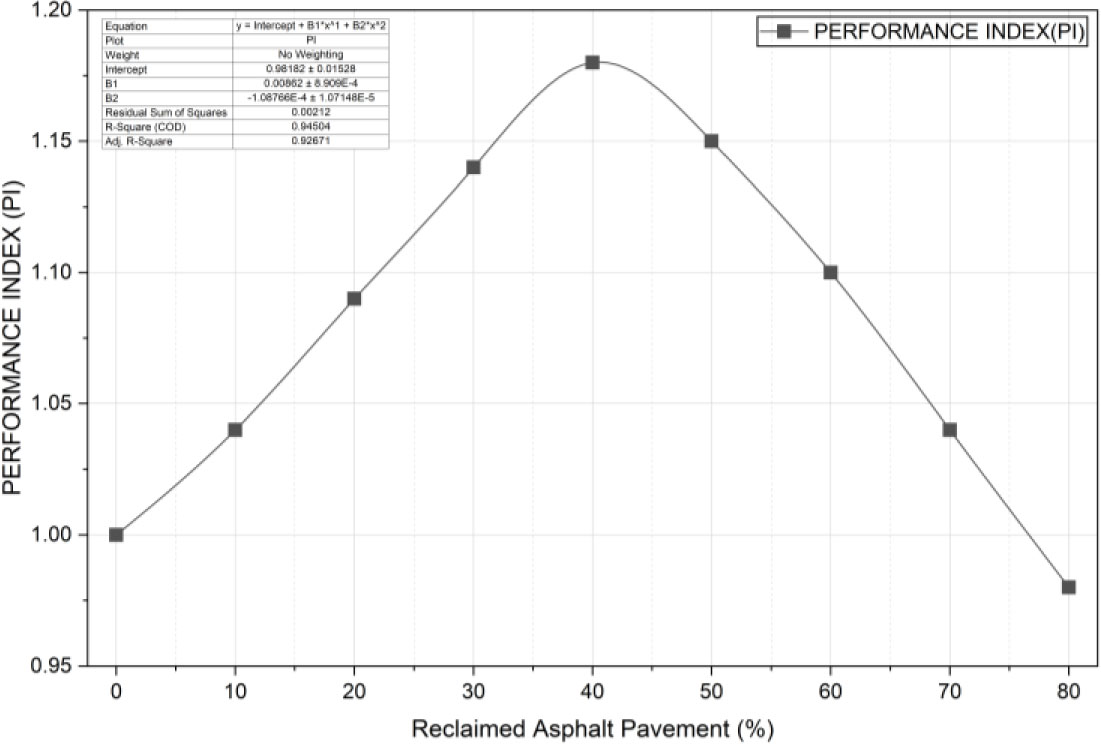
Figure 11:
Variation of performance index with RAP content showing optimal performance range
The hydrophobic behaviour of RAP particles is primarily attributed to the presence of an aged asphalt binder film coating the aggregate surfaces. Unlike fine-grained soil particles, which readily adsorb water through electrochemical attraction and capillary forces, asphalt-coated RAP particles exhibit lower surface energy and reduced affinity for water. As a result, a smaller amount of moisture is required to overcome interparticle friction and facilitate particle rearrangement during compaction. The reduced water adsorption also limits the formation of moisture films around particles, leading to lower lubrication requirements compared with cohesive soils. Consequently, the optimum moisture content decreases progressively with increasing RAP content while maintaining effective densification up to the optimum replacement level. However, at very high RAP contents, the predominance of coarse hydrophobic particles and the reduction in fine soil matrix limit further particle rearrangement, resulting in increased interparticle voids and a decline in maximum dry density. These mechanisms provide a theoretical basis for the observed moisture–density behaviour of RAP–soil mixtures.
3.6. Cost Performance Relationship
To bring the performance-based assessment to actual engineering practice, a cost-performance connection was made by combining the performance index (PI) with a simplified relative material cost model. It aimed at quantifying whether the enhancement in compaction behaviour through incorporation of reclaimed asphalt pavement (RAP) attains quantifiable engineering and economic benefits. The natural soil was taken as the standard condition and the ratio of costs was normalized, RAP was anticipated to have cheaper relative cost since it is recycled, and it does not need virgin material mining as much. The total mixture cost was calculated using the weights of the proportion of soil and the RAP so that comparative analysis may be done regardless of the market variability in each specific location without losing engineering relevance.
The cost analysis presented in this study is intended as a comparative engineering assessment to support material selection rather than a detailed economic evaluation. The relative cost ratio was estimated considering the proportions of natural soil and Reclaimed Asphalt Pavement (RAP), assuming that RAP is available locally as a recycled material requiring minimal processing before reuse. The simplified analysis focuses on material acquisition costs and provides a normalized comparison among different mixture compositions. Costs associated with transportation, stockpiling, processing, quality control, construction equipment, field compaction, maintenance, and environmental impacts were not included, as these factors vary considerably with project location and local market conditions. Therefore, the proposed cost ratio should be interpreted as a preliminary indicator for comparative evaluation. Future research should incorporate comprehensive life-cycle cost analysis and environmental assessment to establish a more rigorous economic framework for RAP–soil applications in pavement engineering.
Table 8:
International RAP Utilization Practices in Pavement Applications
| Country | Typical RAP content range | Primary application | Implementation context |
|---|---|---|---|
| United States | 20–40(%) | Base layers, recycled asphalt mixtures | Widely adopted for cost and sustainability benefits |
| Germany | 30–50(%) | Structural pavement layers | Strong recycling policies and material recovery systems |
| Netherlands | 25–50(%) | Base and surface recycling | Emphasis on circular economy principles |
| Japan | 30–60(%) | Asphalt pavement recycling | High material recovery rates and controlled processing |
| India | 20–40(%) | Pavement rehabilitation and base layers | Increasing adoption under IRC guidelines and sustainable infrastructure initiatives |
Quantitative analysis revealed that with low RAP replacement levels (<=20%), there was a slight improvement in the value of performance index although there was a small decrease in the value of cost ratio, implying minimal engineering advantage compared to the control condition. Under intermediate RAP (30–50%), normalized density as well as optimum moisture content rose whereas the performance index values were large and, at the same time, the relative material cost decreased greatly. This area is a favourable area of optimization where higher efficiency of compaction would match with cost reductions. At more than about 50% RAP, the values of performance index decreased because of less cohesive interaction and lower packing efficiency although the cost ratio still decreases, indicating the trade-off between economic gain and technical performance.
Based on engineering decision-making, the maximum RAP replacement range was defined to be 30% to 50%, where compaction efficiency and the cost savings are combined to maximize the results. These results are consistent with the global RP practices in the field of recycled pavement use and are compatible with the effectiveness of performance-based frameworks as the useful method to choose the RAP content depending on the quantitative multi-criteria assessment.
Based on the simplified comparative cost-performance assessment, RAP replacement levels between 30% and 50% provide a favourable balance between compaction performance and material economy under the assumptions adopted in this study. However, the optimum replacement level may vary depending on local material availability, transportation distance, processing requirements, and project-specific economic conditions. Therefore, project-specific cost analysis should be undertaken before field implementation.
The RAP replacement range reported in the current study (30–50%) can be considered in the range of utilization, which is widely accepted internationally, and which implies a similarity between the optimization of the given laboratory and the real field application in various countries.
3.7. Practical Implications for Field Compaction
Although the present investigation was conducted under controlled laboratory conditions using the Standard Proctor compaction test, the observed compaction trends provide useful insights for field implementation of RAP–soil mixtures in subgrade construction. The reduction in Optimum Moisture Content (OMC) with increasing RAP content indicates that lower quantities of water may be required during field compaction, potentially reducing construction time and water consumption in areas where water availability is limited. Similarly, the improved Maximum Dry Density (MDD) achieved at intermediate RAP replacement levels suggests that enhanced particle packing and granular interlocking may facilitate more efficient densification under field compaction equipment. However, actual field performance may be influenced by factors such as compaction equipment type, lift thickness, environmental conditions, material variability, and construction practices. Therefore, while the laboratory results provide a rational basis for selecting suitable RAP replacement levels, field trials and pilot-scale validation are recommended before large-scale implementation to confirm the applicability of the proposed performance-based evaluation framework under practical construction conditions.
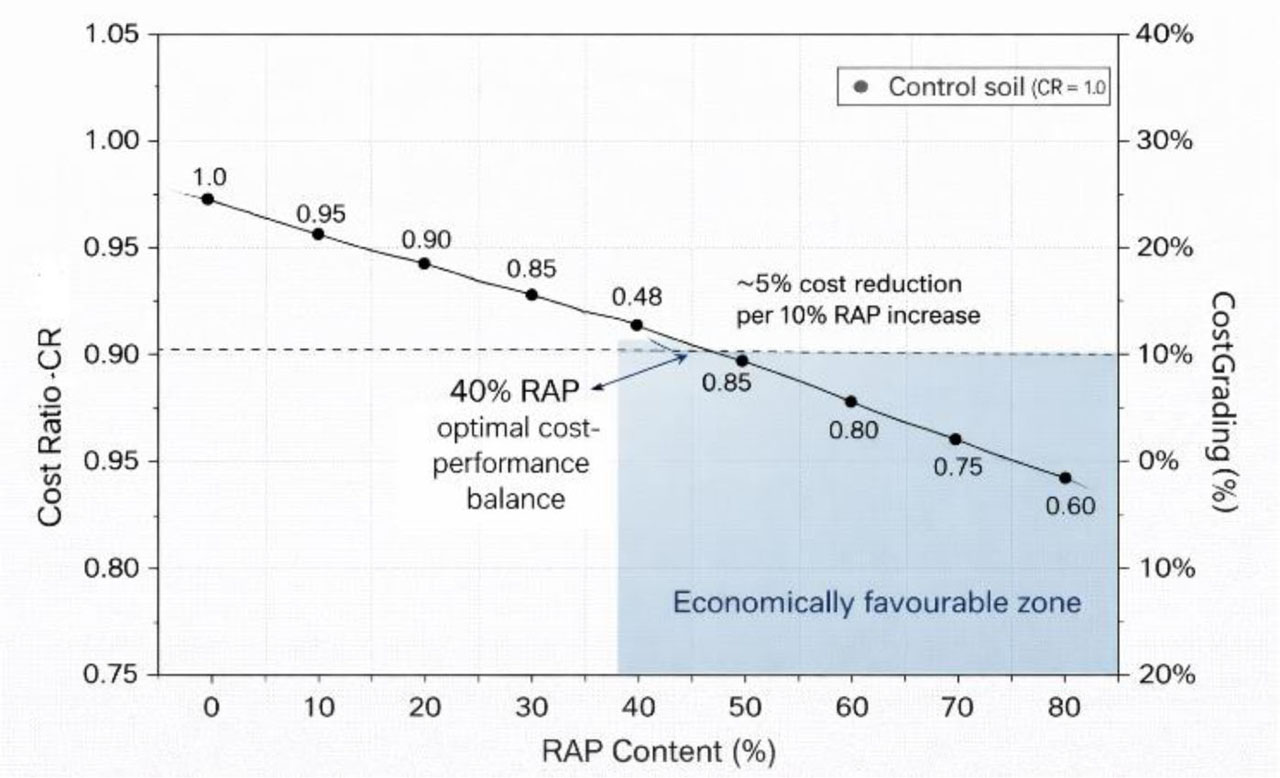
Figure 12:
Cost ratio (CR) variation with RAP content and corresponding cost-saving behaviour
3.8. Limitations of the Cost Analysis
The cost analysis presented in this study is intended as a simplified comparative evaluation to support engineering decision-making rather than a comprehensive economic assessment. The analysis considers only the relative material costs of natural soil and Reclaimed Asphalt Pavement (RAP) mixtures based on their replacement proportions. Project-specific factors such as transportation distance, RAP processing and stockpiling costs, equipment operation, construction practices, labour charges, quality control measures, maintenance requirements, and regional market fluctuations were not incorporated into the analysis. Furthermore, environmental and life-cycle costs associated with carbon emissions, resource conservation, and long-term pavement performance were beyond the scope of the present investigation. Consequently, the proposed cost-performance framework should be interpreted as a preliminary comparative tool for identifying optimum RAP replacement levels. Future studies should incorporate detailed life-cycle cost analysis (LCCA), life-cycle assessment (LCA), and field performance data to establish a more comprehensive economic evaluation of RAP–soil mixtures for sustainable pavement applications.
The relative cost estimation adopted in this study is based on a simplified comparative approach intended for engineering evaluation of different RAP–soil mixtures. The analysis assumes that natural soil and Reclaimed Asphalt Pavement (RAP) are locally available and that RAP requires only minimal processing prior to reuse. The relative material cost of each mixture was estimated from the weighted proportions of soil and RAP, with the cost of the control soil mixture taken as the reference condition for normalization. Costs associated with transportation, stockpiling, processing, equipment operation, labour, quality control, maintenance, and environmental impacts were not considered because they are highly dependent on project location and construction practices. Under these assumptions, the proposed cost ratio provides a reproducible and practical comparative indicator for evaluating the economic efficiency of RAP incorporation while maintaining consistency across all mixture compositions.
3.9. Comparison of the Literature
The compaction behaviour as noted in the current study has a high correlation with the current studies that have been done on the recycled pavement materials which are used in both unbound and stabilized layer. Other studies have indicated that moderate use of reclaimed asphalt pavement (RAP) enhances compaction efficiency because of better packaging of the particles and gradation between the fines soil particles and coarse RAP aggregates. Comparable enhancement in maximum dry density at intermediate levels of RAP replacement have been observed, in which coarse particles serve as a skeletal structure that enhances load distribution, and minimizes excessive plastic deformation (Riekstins et al., 2024) (Gui et al., 2025). The decline in optimum moisture content identified in this study is in line with the trends reported in the past that attribute the declining moisture demand to the hydrophobicity of the asphalt-coated RAP particles and lower surface energy interactions as opposed to the fine-grained soils (Wang et al., 2023).
The determined optimal percentage of constitutions between about 30 to 50 percent RAP is quite close to the results of performance-based assessment of recycled geomaterials in transportation infrastructure where moderate degrees of replacement give a trade-off between densification and structural stability (Hamedi et al., 2020). Investigations into the mechanism of interaction between particles have revealed that addition of the granular recycled materials to the compaction process affects compaction behaviour because it switches between cohesion-controlled behaviour and frictional networks of contacts leading to enhanced packing efficiency with compaction energy (Santos et al., 2018). These processes facilitate the sensed increment of normalized density and performance index in mid RAP fields.
Although literature is agreeable, some differences are observed with an increase in the level of RAP replacement. Although several studies have shown that performance continued to increase with the addition of more RAP content at stabilized conditions, the current study has seen that the maximum dry density beyond the middle range started to decrease. In this case, it is possible to discuss the mechanistic explanation of this deviation by the lack of chemical stabilization or by some extra fines, which play some role in the other studies that have demonstrated the enhanced bonding and structural integrity at higher RAP percentages (Uniyal et al., 2020). The irregular shape of particles and the low content of fine particles in unbound RAP-soil mixtures can lead to excessive incorporation of RAP and thus decrease the cohesive interaction and high void ratio, leading to reduced compaction efficiency.
Additionally, the performance-based interpretation framework, which was used in this study goes beyond the analysis of conventional compaction parameters by incorporating the consideration of normalized density, moisture efficiency, and the aspect of cost. Geotechnical multi-criteria assessment schemes have gained more popularity in sustainable geotechnical geology to enable the latter and justify the choice of materials by decision-based criteria as opposed to individual performance indices (Kaseer et al., 2019). The identified cost-performance relationship shows the recent studies which underline the significance of using a combination of technical and economic indicators to assess the recycled construction materials in the context of using them in infrastructure construction (Pineda et al., 2024) (Tao et al., 2008).
Altogether, the results have high consistency with known mechanistic knowledge of RAP-soil mixtures as well as with added knowledge by incorporating an integrated performance-based analysis. The consistency with international studies reflects the usefulness of the suggested framework in the context of the usability in relation to engineering practice in sustainability of subgrade design.
Table 9:
Comparison to the literature
| Reference | RAP Range [%] | Peak density range [%] | OMC reduction [%] | Reported optimum RAP [%] |
|---|---|---|---|---|
| Gui et al. [24] | 0–60 | Increase up to ~40 | 10–15 | 30–40 |
| Wang et al. [25] | 0–70 | Progressive increase to ~35 | 12–18 | ~35 |
| Hamedi et al. [26] | 0–50 | Minor change | 15–20 | ~30 |
| Santos et al. [27] | 0–60 | Peak at moderate RAP | 10–20 | 25–45 |
| Uniyal et al. [29] | 0–80 (stabilized) | Increase up to ~60 | <10 | 50–60 |
| Present Study | 0–80 | Peak at ~40 | 25–30 | 30–50 |
Although the proposed Performance Index provides a practical framework for evaluating compaction efficiency and constructability of RAP–soil mixtures, it is derived solely from moisture–density characteristics obtained through Standard Proctor testing. The index has not been directly validated against mechanical performance indicators such as California Bearing Ratio (CBR), resilient modulus, or shear strength. Future investigations should integrate these engineering parameters to establish quantitative correlations and further validate the applicability of the proposed performance-based evaluation framework for pavement design and field implementation.
4. Conclusions
The observed systematic variation in compaction behaviour of RAP-soil mixtures with increasing RAP content was that the highest dry density of 17.6 kN/m3 of control soil gradual declined and reached a maximum at approximately 18.7 kN/m3 with increasing intermediate RAP content, and then a gradual decrease with higher replacement percentages. At the same time, optimum moisture content was found to decline steadily with RAP additions and there was an overall decline in moisture of about 25–30 percent that shows better moisture efficiency and less water demand in compaction.
Mechanistic interpretation implies that densification in moderate RAP mixture is controlled by improved particle packing and high granular interlocking whereas cohesive contribution in high RAP mixture is suppressed by high fine fraction and therefore most compaction in RAP dominated mixtures is lowered. The nonlinear compaction response is explained by observed changes in behaviour between the cohesion-controlled one and a friction based dominant one.
The suggested performance-based consideration framework that incorporates normalized density, moisture efficiency and cost ratio was able to locate the perfect RAP substitution with a range of 30 and 50 percent with optimal performance found at around 40 percent RAP. RAP-soil mixes in this range provide enhanced compaction efficiency, less moisture requirements, and favourable price performance.
Alongside the engineering merit, the results confirm the feasibility of applicability of RAP-soil blends into use as sustainable subgrade materials to offer systematic guidelines on an optimum use of recycled materials in the construction of flexible pavements.
The findings of this study demonstrate that RAP incorporation significantly influences the compaction characteristics of RAP–soil mixtures and that intermediate RAP replacement levels provide favourable moisture–density behaviour under the laboratory conditions investigated. The proposed performance-based evaluation framework offers a practical approach for comparing mixture compositions based on compaction efficiency and constructability. However, the conclusions of this study are limited to compaction behaviour obtained from Standard Proctor testing and should not be considered a complete assessment of subgrade performance. Additional investigations involving California Bearing Ratio (CBR), resilient modulus, shear strength, durability, and field validation are necessary to establish the structural suitability of RAP–soil mixtures for pavement applications and to comprehensively validate the proposed evaluation framework.
Future research should focus on validating the proposed performance-based evaluation framework through field-scale trials and laboratory investigations under cyclic loading conditions to assess the long-term behaviour of RAP–soil mixtures subjected to repeated traffic loads and environmental variations. Such studies will facilitate the correlation of laboratory compaction characteristics with in-service pavement performance and support the development of more reliable design guidelines for the practical implementation of RAP–soil blends in sustainable subgrade construction.
Acknowledgements
The authors gratefully acknowledge KL (Deemed to be University) for providing the necessary facilities and institutional support to carry out this research work.
Notes
[1] Contributed by Author Contributions
G.R.B. conceived and designed the study, conducted the experiments, collected and analysed the data, and drafted the manuscript. H.R.C. supervised the research work, contributed to methodology development, reviewed the analysis, and critically revised the manuscript. All authors critically reviewed and approved the final version of the manuscript and agreed to be accountable for all aspects of the work.
List of Abbreviations
RAP – Reclaimed Asphalt Pavement
MDD – Maximum Dry Density
OMC – Optimum Moisture Content
PI – Performance Index
CR – Cost Ratio
USCS – Unified Soil Classification System
IS – Indian Standard