

1. Introduction
Asphalt pavement is one of the most common infrastructure systems for road transportation due to its low construction and maintenance cost, and high riding quality. However, traditional asphalt mixtures are prone to various performance issues under conditions of high traffic loads, service temperature, and moisture damage. This often results in severe pavement distress types, including rutting, stripping and fatigue cracking (Yousef et al., 2025; Basheet & Latief, 2025), which reduce the performance and lifetime of the pavement and increase maintenance costs. As a result, to address these issues, enhancing the mechanical properties and stability of asphalt mixtures has been a recent focus of pavement engineering research.
Various improvements of the bitumen composition have been used by engineers to improve its elasticity and stiffness in the key temperature ranges. It is known that polymer modification is one of the most common and successful methods of upgrading the engineering properties of asphalt binders. The addition of polymer modifiers has been shown to enhance the viscoelastic properties of asphalt, resulting in improved resistance to deformation, elasticity and temperature susceptibility (Alhelyani & Zhang, 2023; Basheet & Latief, 2024). Styrene-butadiene-styrene (SBS) is one of the most widely used polymers for asphalt modification since 1970s due to the formation of a strong three-dimensional polymer network in asphalt binder (Riaz et al., 2025). This network provides stiffer binder at higher temperatures and sufficiently flexible binder at lower temperatures, leading to better pavement performance over a wide range of load and temperature conditions (Pipintakos et al., 2025). But, SBS modified binder has some drawbacks, especially in terms of workability, cost, storage stability, aging and oxidation, compatibility with asphalt, ultraviolet resistance and high temperature thermal stability (Yun et al., 2025; Liu et al., 2020).
Other than SBS, polyethylene glycol (PEG) has been recently considered as a binder modifier. PEG has good compatibility with asphalt binder and has improved flow and moisture resistance (Wang et al., 2020). PEG has good thermal stability and phase change enthalpy, is non-toxic and inexpensive. It is a series of linear polyether with average molecular weight from 400 to 100,000 g/mol (Wang et al., 2023; Chen et al., 2016). Specifically, PEG with an average molecular weight of 2000 g/mol was one of the most common phase change materials used for temperature regulation of asphalt pavement, due to its phase change temperature that matches the high temperature of asphalt pavement (Shahbazi et al., 2026). Phase change materials are a family of functional materials that can regulate and modulate the surroundings through the heat storage and release during the phase change. Specifically, when the temperature of surroundings is above their melting points, these materials can be used as latent heat storage materials which absorb heat from the surroundings when undergoing a phase change from solid to liquid, and release heat when undergoing the opposite process. This allows the materials to stay at almost constant temperature until the phase change is complete, and the temperature of surroundings to increase more slowly than those without these materials (Qureshi et al., 2018; Nazir et al., 2019). In addition, the characteristics of PEG are different with different average molecular weights. PEG can also enhance the adhesion between asphalt binders and aggregates, when combined with other additives. This is particularly important in combating moisture damage, which is believed to be one of the main factors of pavement failure (Chen et al., 2025).
Current research has focused on hybrid systems of polymer modification (Saudy et al., 2026; Shahbazi et al, 2026, Yao et al., 2025; Shahbazi et al., 2025), where two or more modifiers are blended to achieve a synergetic effect in performance improvement. Hybrid systems are likely to offer higher strength and durability than single-polymer systems, which leads to reduced deformation, moisture resistance and improved asphalt mixtures. These enhancements are particularly important for areas with hot climate and heavy traffic loads, in which asphalt mixtures might experience premature failure. For example, bitumen pavements in Iraq tend to fail prematurely because of excessive traffic loads and weather conditions. Also, such premature pavement failures affect the traffic safety. The statistics show that road failure in Iraq, especially rutting and moisture damage, is a major factor in high fatality rate, and is the second leading cause of accidents after human error (Latief et al., 2023). Therefore, this study aims to investigate the rutting distress and moisture damage for asphalt mixtures made with polymer modified binders using single and composite modification.
Although the performance of SBS or PEG modified asphalt binders and mixtures have been studied extensively, a lack of research exists on the specific impacts of SBS-PEG composite modified asphalt binders. This provides an opportunity to further develop and improve this novel composite modified binder. Hence, this study explores the performance of asphalt mixtures modified with SBS only, PEG only and SBS-PEG hybrid. PEG, with an average molecular weight of 4000 g/mol, was used as a secondary modifier and blended with asphalt at various mass ratios: 1.5%, 2.5%, and 3.5% of the binder weight. The overall objective of this study is to assess the effectiveness of hybrid polymer modification on the strength and durability of asphalt mixtures, with the hope of producing stronger and more resilient pavement materials that are capable of withstanding extreme conditions. In order to meet the aim, the modified binders were examined using conventional tests, such as penetration, softening point and ductility. Also, the scanning electron microscopy was conducted to evaluate the microstructure of modified binders. However, the behavior of asphalt mixtures was evaluated using the splitting test in dry and wet conditions to determine the potential moisture damage. Rutting resistance was also measured using a wheel tracking test.
2. Materials
All the materials needed for this study were procured from well-accepted local resources for preparing the modified asphalt mixtures. The materials were prepared and tested in accordance to the local specifications and standard practices for the preparation of hot-mix asphalt mixtures. A type (40–50) of penetration-graded asphalt cement was used and obtained from the Al-Duarah refinery in Iraq, and it is commonly used in Iraq especially in the centre and southern regions. The empirical properties of this asphalt are detailed later in the Results and Discussion section along with the influence of the modifiers (SBS, PEG, and SBS/PEG) on it.
The aggregates (filler, fine aggregate, and coarse aggregate) for preparing the hot mix asphalt were taken from a local asphalt plant. The selected aggregates were crushed and graded to the specified gradation of “asphalt surface course mixtures” and were selected to provide sufficient strength, stability and durability of the asphalt mix. The local specification (Standard Specifications for Roads and Bridges, 2003) required coarse aggregate to be crushed in various sizes (3/4 in. (19 mm) to No. 4 (4.75 mm), and fine aggregate sizes ranged from No. 4 (4.75 mm) to No. 200 (0.075 mm). The aggregates were sieved and mixed in the laboratory to produce the selected gradation and to produce the same, controlled gradation. The asphalt mixture was filled with limestone powder. This filler had a 95% passing through sieve No.200 (0.075 mm), which meets the specification (70–100%). The aggregates were selected to be used in surface course with nominal maximum size 12.5 mm and type IIIA. The aggregate target gradation is shown in Figure 1.
SBS polymer used as a main modifier was provided by the Mining Company in Al-Taji industrial zone of Baghdad-Iraq. The SBS polymer was supplied in solid form as white granules (Figure 2) with 30% mass bound of styrene. It is also reported by the supplier that the density is 1242 Kg/m3 with melting point of 194°C. SBS polymer is commonly used as it improves the elasticity, temperature susceptibility and the overall strength of the asphalt binder. While, the PEG was used as co-modifier. The PEG was purchased from a chemical supplier in Baghdad city. PEG's molecular weight is 4000 g/mol and density is 1200 Kg/m3. It has a melting point of 62 °C. The physical form of the PEG modifier used in this study is also illustrated in Figure 2, as a white waxy-solid.
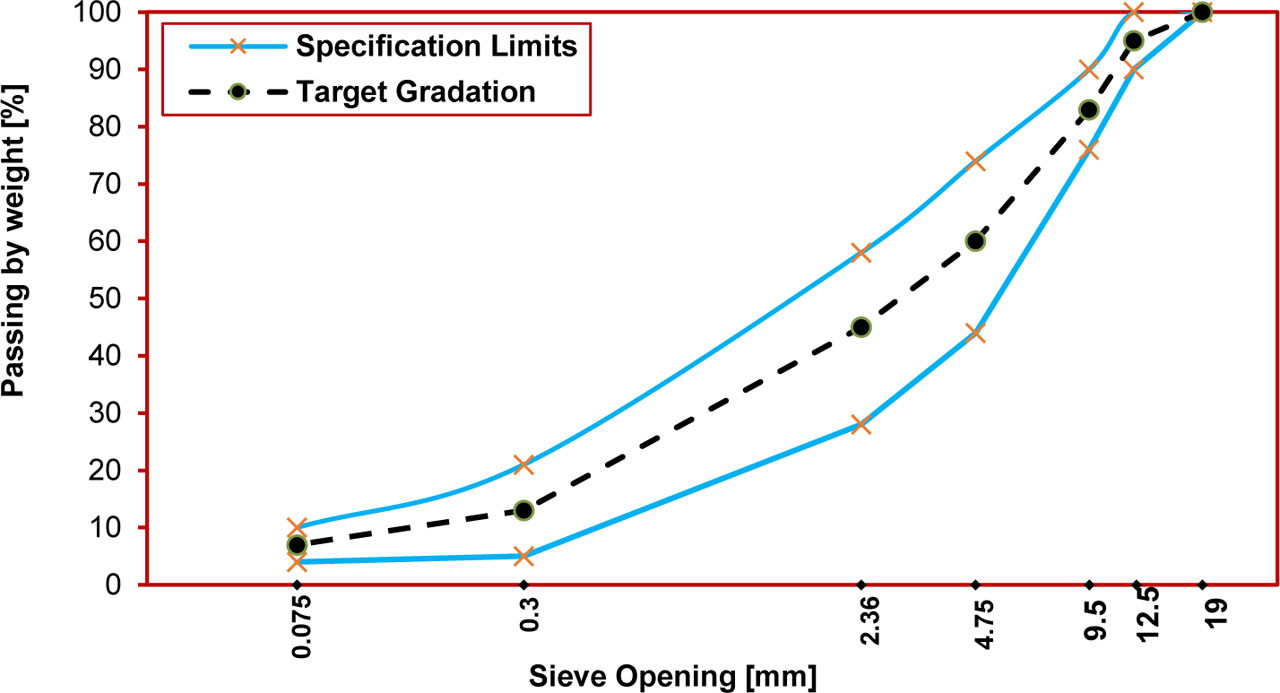
Figure 1:
Aggregate grading combination for surface course
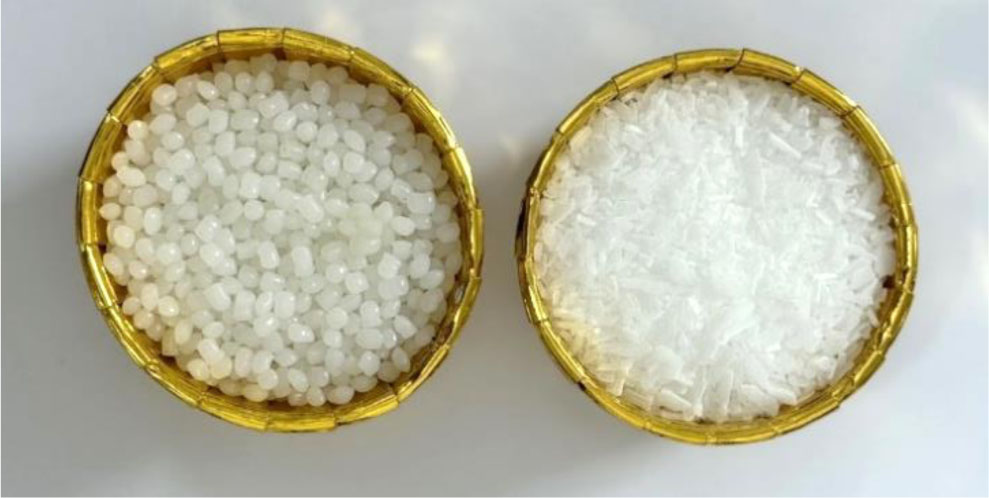
Figure 2:
SBS modifier (left) and PEG modifier (right)
3. Experimental Methods
This part of the paper outlines the process of binder modification and methods used to assess the impact of SBS and PEG and their hybrid combinations on asphalt binder properties and performance of asphalt mixtures. These techniques were chosen to give a holistic evaluation of the physical, morphological and mechanical properties of the asphalt mixtures. Figure 3 describes the outline of the experimental work that adopted in this study.
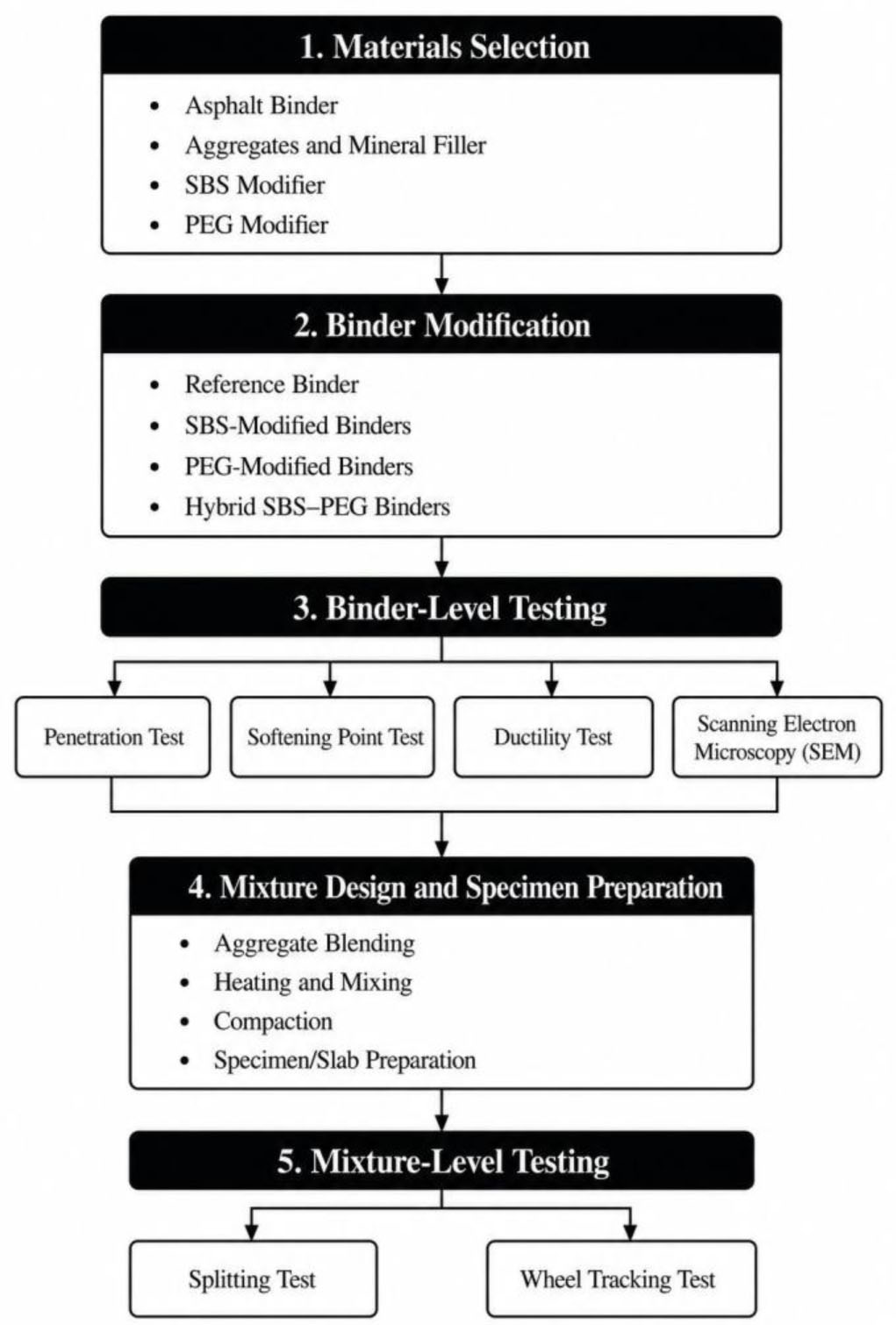
Figure 3:
Flowchart of the experimental work
3.1. Modification Process
The experimental program was designed in such a way that it systematically assessed the effect of individual and combined polymer modification on asphalt binder performance and the hot mix asphalt mixtures performance. The base asphalt (BA) was adopted to be a 40/50 penetration grade asphalt cement. SBS was used as the main elastomeric modifier and PEG was used as a secondary modifier. To have a unified experimental matrix, ten binder formulations were made, with one being unmodified control binder (BA), three SBS-modified binders, three PEG-modified binders, and three hybrid SBS/PEG-modified binders. Table 1 summarizes the name of the prepared blends and the contents of the corresponding modifiers. The formulation matrix was chosen so that it could be used to conduct a strict comparison of the individual and hybrid modification and the degree to which the hybrid utilization of SBS and PEG may enhance the performance of binder and mixtures could be determined. The addition ratios of SBS and PEG modifiers were selected in this work based on the conclusions and recommendations of the previous studies (Pipintako et al., 2025; Wang et al., 2021) which stated that the dosages of SBS and PEG must be less than 5% and 4%, receptively. These specific contents provide the ideal balance of workability, increased stiffness, and elasticity to maximize rutting resistance without making the asphalt binder excessively stiff, thus compromising the thermal cracking resistance.
Table 1:
Blend codes with modifiers content
| Blend code | Modifier content [%] | |
|---|---|---|
| SBS | PEG | |
| BA | 0 | 0 |
| S1 | 2 | 0 |
| S2 | 3 | 0 |
| S3 | 4 | 0 |
| P1 | 0 | 1.5 |
| P2 | 0 | 2.5 |
| P3 | 0 | 3.5 |
| SP1 | 2 | 1.5 |
| SP2 | 3 | 2.5 |
| SP3 | 4 | 3.5 |
The typical method of blending SBS and PEG with asphalt binder is wet processing where the high temperature and high shear mixing can produce a stable, elastomeric and high-quality modified binder. Initially, SBS polymer at mass contents of 2%, 3%, and 4% was blended with the BA. First, the BA was heated to 160°C and mixed with the high-shear mixer (1000 rpm) until a small vortex is formed. Then the SBS was added to the heated BA binder at required content at a rate of 5 g/min while using a low-speed mixer (300-500 rpm) for 5 min to avoid clumping, and then at 3000 rpm for one hour at 175°C ± 5°C to ensure the polymer miscibility (Al-Nawasir & Al-Humeidawi, 2023; Nisar et al., 2025). For PEG-modified binders, three different percentages (1.5%, 2.5%, and 3.5% by weight of the asphalt binder) of PEG was added to the BA at the temperature of 140–150 °C and the rate of 1 g/min. At the same time, the mixture was mixed by a high-speed mixer, 3000 rpm for one hour (Naeem et al., 2023). For the hybrid modified binders, after the first addition of SBS polymer, the PEG is added into the SBS/asphalt mixture because the melting temperature of PEG (62°C) is lower than SBS (194°C) and it can enhance the compatibility of SBS and asphalt. The speed of the mixer should be increased to 4000 rpm and maintain the temperature at 175°C ± 5°C for around 60 minutes.
3.2. Asphalt Tests
This study first tested the conventional and polymer-modified asphalt binders using standard tests to determine the effects of the polymers on the fundamental properties of asphalt cement. The asphalt binder tests were penetration, softening point and ductility tests, as described in the ASTM D5, ASTM D36 and ASTM D113 standards, respectively. The above tests were chosen to determine binder consistency, temperature sensitivity, and ductility. This experiment helped to get an overview of the effects of SBS, PEG and their combinations on the characteristics of the BA binder before evaluating the mixture performance.
3.3. Scanning Electron Microscopy
In addition to the conventional binder testing, the morphological properties of the BA and polymer modified binders were examined using scanning electron microscopy (SEM). The SEM analysis involved the virgin binder (BA), single modifiers (SBS and PEG) and selected modified binders (S2, P2 and SP2). This test was performed to qualitatively examine the internal structure, phase organisation and structural integrity of the binder system after the addition of the polymer. Specifically, the SEM analysis was to present microstructural evidence of the interaction between the asphalt phase and polymers, and to determine if hybrid modification resulted in a more coherent and uniform internal structure than single-polymer modification. The process of sample preparation involves heating the asphalt binder to a liquid condition (around 145–165 °C) to make it flowable and homogeneous. A tiny heated sample then was transferred to a conductive stub, and gold coating (10–35 nm thick) for 60 seconds to avoid charging and provide better contrast. The SEM was used in this study at magnifications of 47x for SBS modifier and 30,000x for PEG modifier, BA, S2, P2 and SP2.
3.4. Splitting Test
The design of the asphalt mixture is done using the Marshall design process as per ASTM D 6926. Volumetric properties, stability and flow were evaluated, the Marshall Mix design criterion was met and the optimum quantity of asphalt was calculated. It is calculated based on 4% air voids; therefore, in this research the best asphalt content of surface course was identified as 5.0 percent in weight of mixture. All polymer-modified mixtures had the same consistent asphalt content 5.0% to maintain the consistency of the mixture in terms of binder content and to more accurately determine the performance of single and hybrid modification of mixtures with various concentrations of SBS and PEG.
The Marshall compaction is used to prepare 60 specimens to be used in carrying out splitting test. The aggregates were sieved, cleaned and dried in the oven to a constant mass at 110°C in order to remove moisture content and to be consistent in preparing the mix. The desirable combination of the aggregate sizes was made by mixing the coarse and fine aggregates with the appropriate quantity of mineral filler. This was then mixed with the aggregate blend which was then heated to 160°C before mixing. Simultaneously, the asphalt binder was heated to 163°C in order to attain the right viscosity to mix. The hot aggregate mix was then measured and stirred by hand with a spatula approximately three minutes with the measured amount of the heated binder and all the pieces of aggregate covered with asphalt binder. This was done to provide adequate binder distribution and mix homogeneity before the preparation of the specimen and the performance testing. The loose asphalt mixture is then put in a compound of a Marshall compactor and compacted. The splitting test has 56 compactions on each side to give air voids of 7±1% and the specimens are 101.6 ± 0.2 mm diameter cylinders with a height of 63.5 ± 1.3 mm. Each specimen in the mold was left to cool 24 hours at room temperature after which they were removed and put on a clean and flat surface to be prepared to undergo testing.
The moisture sensitivity of asphalt mixtures was assessed by the indirect tensile splitting test in both dry and wet conditions. The average splitting strengths of the specimens produced from the control (BA), singly modified, and hybrid-modified mixtures and their retained tensile capacities in the wet condition were measured. As outlined in the standard test method ASTM D-4867, for each group, six test specimens are prepared and then split into two sets: the first set (untreated group) of three replicate specimens for the dry condition and the second set (freeze-thaw cycle group) of three replicate specimens for the wet condition. In the freeze-thaw cycle testing set, three identical specimens of each testing group are stored in water under a vacuum pump at a partial saturation of 55% to 80%. After that, the specimens are frozen for 16 hours at −18°C in a deep freezer, and thawed for 24 hours in a 60°C water bath. Once the freeze-thaw treatment is complete, the specimens are immediately soaked in a 25°C water bath for an hour, the same as the untreated specimens. Then, all the specimens undergo compressive load, which is applied through the center of the specimens along the vertical diametrical plane at a crosshead speed of 50 mm/min. This leads to a relatively uniform tension acting perpendicular to the load. Note the maximum load (P) when the specimen splits. The indirect tensile strength (ITS) for each specimen is then calculated as per the formula given below:
Where:ITS – indirect tensile strength [kPa],
P – maximum load [N],
d – specimen diameter [mm],
t – specimen thickness [mm].
Besides the direct comparison of the values of dry and wet strength, the tensile strength ratio (TSR) was taken as a measure of resistance of the mixtures to the damage caused by moisture. The aim of this testing phase was to clarify how the addition of both SBS and PEG, and the two formulations, could increase both the cohesion of the binder matrix and adhesion at the binder-aggregate interface. In addition, if the TSR value is more than 80%, it implies good moisture damage resistant as per standard (ASTM D-4867). Figure 4 shows a typical test specimens. TSR is the tensile strength of wet and dry specimens that was established as below:
Where:TSR – tensile strength ratio [%],
ITSw – the average tensile strength of the wet conditioned [kPa],
ITSd – the average tensile strength of the dry set [Kpa].
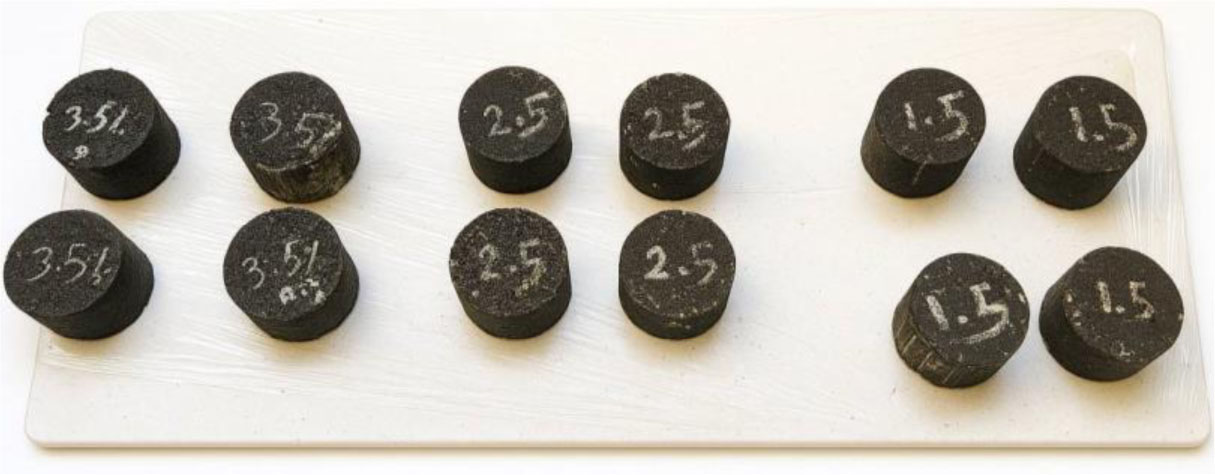
Figure 4:
Some of prepared specimens for splitting test
3.5. Wheel Tracking Test
The rutting resistance of asphalt mixtures was evaluated by wheel tracking test based on EN 12697 to evaluate their ability to resist permanent deformation under repeated loading. Firstly, the blend of aggregates (Figure 5a) and asphalt binder was mixed (Figure 5b). After that, the asphalt mixtures were compacted by using the Dyna compaction machine (Figure 5c). As per EN 12697, the slabs (300 mm × 400 mm × 50 mm size) are tested at 60°C environment temperature. The slabs are shown in Figure 5(d). After 4 hours of placing, the rutting specimen is rolled back and forth by the solid rubber wheel with a contact pressure of 80 psi at a frequency of 42 ± 2 times/min using Dyna-track or wheel tracker (Figure 5e). The solid rubber wheel with an outside diameter of 200 mm and a width of 50 mm is attached to the equipment. The wheel tracking machine was controlled automatically by the software, which keeps track of the number of cycles and the rut depth. The wheel tracking will be terminated when the number of wheel cycles reaches 10,000. The rut depth and the estimated number of wheel rolling times are measured. The final appearance of the slabs after testing are shown in Figure 5(f). In summary, the experimental process consisted of blending the aggregates, mixing the asphalt mixture, compacting the mixture into slabs and finally testing the slabs in a wheel tracking device. Key stages in specimen preparation and testing are illustrated in Figure 5.
This test was chosen to evaluate the effect of polymer modification on the high-temperature stability and traffic-induced permanent deformation. The rutting resistance was assessed by measuring the final rut depth and dynamic stability, allowing a comparison between the control mix and the polymer-modified mixes. The dynamic stability is a widely used measure of the resistance of bitumen mixes to permanent deformation under repeated traffic loads. It is defined as the number of cycles to cause a permanent deformation of 1 mm in the last 25% of the wheel tracking test. This is a critical characteristic of asphalt mixture performance because it is related to the resistance of asphalt mixture to rutting, a major pavement distress that has a significant impact on safety and pavement life cycle (Zhang et al., 2022). Equation (3) was used to calculate dynamic stability value (Latief, 2026).
Where:t1 – the time at 7500 cycles [minute],
t2 – the time at 10,000 cycles [minute],
d1 – the rut depth at t1 [mm],
d2 – the rut depth at t2 [mm],
N – the speed rate of the wheel tracking and it is approximately 42 [cycle/minute],
F1 – the machine type parameter (typically taken 1.0),
F2 – the specimen coefficient (typically taken 1.0).
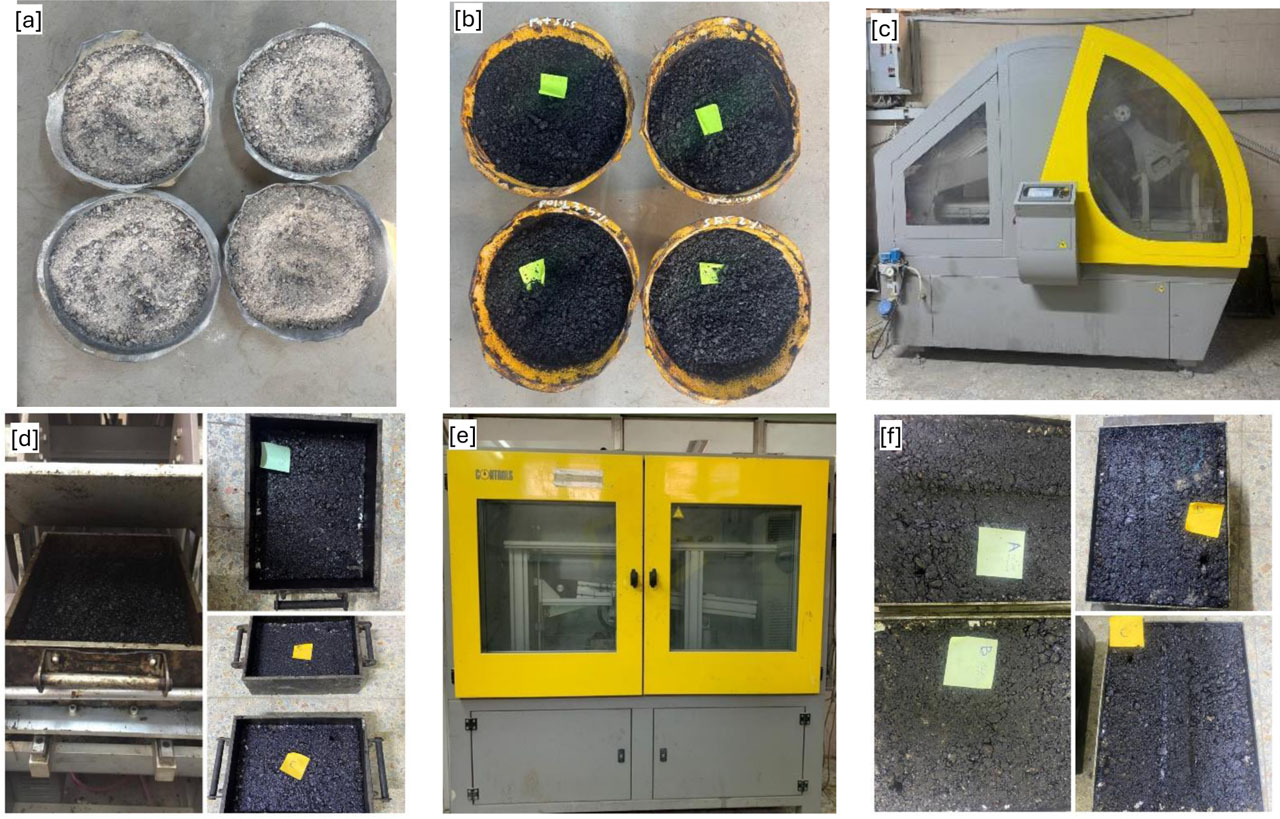
Figure 5:
Wheel tracking test: (a) aggregates mixtures, (b) loose asphalt mixtures, (c) compactor device, (d) compacted slabs, (e) wheel tracking machine, (f) slabs after rutting test
4. Results and Discussion
4.1. Physical Characteristics of Modified Asphalt
Table 2 has indicated that the physical properties of BA binder have significantly been changed after polymer modification. The binder (BA) had a penetration value of 44 (0.1 mm), a softening point of 52.0 °C and ductile exceeding 150 cm. Following modification, all blends exhibited decreased penetration and increased softening point, and this result suggested that both SBS and PEG played a role in enhancing stiffness and thermal stability of binder. This overall trend was enhanced by the increase in the dosage of the modifier, and this proved the definite concentration-related effect. The same shift of physical properties of BA with the SBS and PEG incorporation was also observed in the previous studies (Al-Azawee & Latief, 2020; Abdlaziz, 2025).
In the case of the SBS-modified binders, the penetration continued to decrease in order of S1 (37), S2 (35), and S3 (33), and the softening point rose to 56.7, 57.5, and 58.7 °C, respectively. The PEG series showed a similar tendency, with the decreasing penetration values of P1 (39), P2 (37), and P3 (34) with a rise of the softening point values of 56.4, 57.2, and 58.4 °C respectively. The hybrid-modified binders had the highest response, but the penetration values were 34, 31, and 29 of SP1, SP2 and SP3, respectively, and the softening point was 57.9, 59.1 and 60.2 C, respectively. Compared to all the blends, SP3 had the lowest penetration and the highest softening point, which means that it is the preferable blend to resist deformation and sensitivity under elevated temperatures. Compared to the control binder, the penetration value of the S3, P3, and SP3 decreased by about 25.0, 22.7, and 34.1 percent, respectively. At the same time, S3, P3 and SP3 had their softening points increased by about 12.9, 12.3 and 15.8, respectively. The values show that hybrid modification strategy generated a more pronounced stiffening effect than either of the modifiers applied individually and it is possible to assume a positive interaction effect between SBS and PEG with the binder system. Similarly, in earlier research (Naeem et al., 2023; Karim et al., 2023), addition of PEG to asphalt binder modified with nano-additives, titanium dioxide and zinc oxide is a very viable alternative to enhance the stiffness and workability of asphalt binder under high-temperature condition. The results of the ductility further give insight into the kind of the modification effect.
Despite the BA and PEG-only blends retaining higher ductility values higher than 150 cm, the SBS- and hybrid-modified binders exhibited lesser ductility with a range of 127 cm in S1 and 102 cm in S3 and 112 cm in SP1. This tendency meant that PEG was more efficient in maintaining the flexibility, and SBS and the hybrid systems favored better stiffening. Based on this, Table 2 results indicate that PEG helps to maintain workability and flexibility, whereas SBS is mainly involved in stiffening of the structure. Combined, these two modifiers offer a stronger response of high temperature binder. Also, the ductility indexes of the all binders meet the requirements of the ductility of asphalt binder to be used in road and bridge specifications of highway asphalt pavements (Standard Specifications for Roads and Bridges, 2003), which indicates that ductility of the asphalt binder should exceed 100 cm.
In general, the findings of the physical characterization were confirmed that the polymer modification enhanced the resistance of the asphalt binder to the softening effect of temperature, and this enhancement was the greatest in the hybrid formulations. In terms of binder-performance, SP3 can thus be considered as the most effective formulation of the investigated blends.
Table 2:
Physical characteristics data for modified binders
| Blend ID | Property | ||
|---|---|---|---|
| Penetration [0.1 mm] | Softening point [°C] | Ductility [cm] | |
| BA | 44 | 52.0 | > 150 |
| S1 | 37 | 56.7 | 127 |
| S2 | 35 | 57.5 | 113 |
| S3 | 33 | 58.7 | 105 |
| P1 | 39 | 56.4 | > 150 |
| P2 | 37 | 57.2 | > 150 |
| P3 | 34 | 58.4 | > 150 |
| SP1 | 34 | 57.9 | 112 |
| SP2 | 31 | 59.1 | 107 |
| SP3 | 29 | 60.2 | 102 |
| Limits (Standard Specifications for Roads and Bridges, 2003) | Not limited | Not limited | 100 (minimum) |
4.2. Morphology Analysis
The SEM images in Figure 6 are consistent with the results from conventional binder tests. The observed micrographs represent the base asphalt (BA), single modifiers (SBS and PEG) and some modified binders (S2, P2 and SP2). The SEM picture of the S2 sample (Figure 6d) has an inhomogeneous and coarse surface which means that the SBS polymer has not been properly dispersed in the asphalt matrix. In particular, this morphology represents an incomplete swelling and dispersion of the SBS polymer within the asphalt that usually leads to phase separation in which the polymer and the asphalt are not a homogeneous network but different phases (Ma, et al., 2023). In contrast, the P2 sample has a smooth and uniform surface which indicates that the PEG polymer is well dispersed and has formed a homogeneous network in the asphalt matrix. This morphological appearance shows a high level of compatibility between the PEG and the asphalt which typically results in improved storage stability, rheology and overall stability of the binder as shown from the previous work (Jin et al., 2024).
While the image is more a qualitative evaluation, the hybrid-modified system appears to have a more integrated and homogeneous structure than the single-modifier systems. This type of morphology is in line with enhanced compatibility between asphalt and polymer phases. The hybrid systems evolved a more uniform microstructure and interlinked network in the binder matrix. In terms of performance, such a microstructure can explain the lower penetration and higher softening point of the hybrid binders in Table 2 (especially SP2 and SP3). Hence, the SEM image in Figure 6 supports the conclusion that SBS/PEG hybrid system improved the binder structure more than the binders modified with individual polymers.
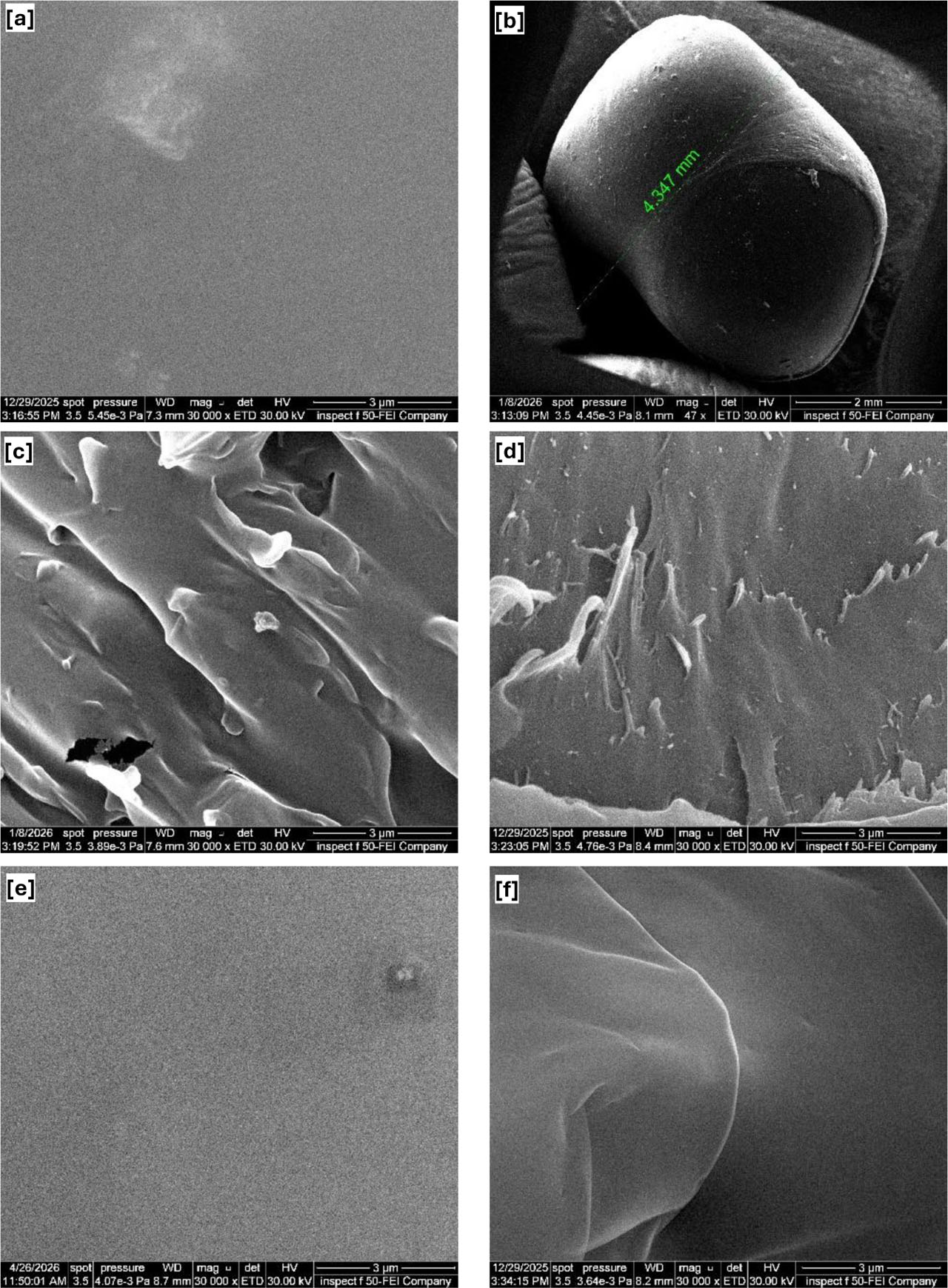
Figure 6:
SEM images: (a) BA, (b) SBS, (c) PEG, (d) S2, (e) P2, and (f) SP2
4.3. Water Susceptibility
The water susceptibility data presented in Table 3 show polymer modification enhanced the splitting performance of asphalt mixtures in both dry and wet states. The unmodified mixture (BA) had average splitting strengths of 1189.6 kPa (dry) and 982.3 kPa (wet). Each of the modified mixtures achieved higher values, and the enhancement was greater with increased modifier content. In the SBS series, dry strength increased from 1251.3 kPa for S1 to 1308.7 kPa for S2 and 1385.1 kPa for S3, while wet strength rose from 1052.5 to 1123.9 and 1205.5 kPa, respectively. The improvement in the moisture damage resistance of SBS modified mixture is because the SBS polymer formed a tough and more flexible structure in the asphalt binder. This promotes interaction with aggregates, enhancing viscosity (and hence preventing moisture from penetrating), and improving elasticity (which prevents stripping and cracking, allowing water to penetrate into the pavement) (Liao et al., 2024). A similar trend was observed in the PEG series, with dry strengths of 1224.8, 1297.0, and 1342.8 kPa (P1, P2 and P3, respectively) and wet strengths of 1038.5, 1135.1, and 1198.1 kPa.
The greatest splitting strengths were found in the hybrid modified mixtures. SP1, SP2, and SP3 exhibited dry strengths of 1388.3, 1491.7, and 1588.0 kPa, respectively, and wet strengths of 1252.7, 1363.6, and 1470.0 kPa. Compared to the control mixture (BA-mixture), the dry strength increased by about 16.7% for SP1, 25.4% for SP2, and 33.5% for SP3 and the wet strength by about 27.5%, 38.8%, and 49.7%, respectively. These findings clearly show that the hybrid system was more effective than the single-modifier systems in improving the moisture-damaged tensile strength, especially under wet conditioning.
This trend can also be observed in the TSR values shown in Figure 7. The TSR of the control mixture was 82.57%, which is higher than the minimum acceptable value of 80%. Nevertheless, all modified mixtures yielded higher retained strength ratios: 84.11% for S1, 85.88% for S2, 87.03% for S3, 84.79% for P1, 87.52% for P2, 89.22% for P3, 90.23% for SP1, 91.41% for SP2, and 92.57% for SP3. Therefore, the percentage improvement in TSR ranged from 1.54% for S1 to 10.00% for SP3 when compared to the control mixture. These results reveal that all modified mixtures exceeded the moisture susceptibility criterion (greater than 80%) and the hybrid mixtures exhibited the highest retained strength after conditioning. This is because the PEG lowered the asphalt surface free energy and dispersion of the binder in the modified mixture, increasing binder-aggregate adhesion. It also stiffens the binder and reduces pavement voids and potential water ingress (Wang et al., 2023; Jin et al., 2024).
In terms of mechanistic understanding, the fact that dry strength, wet strength and TSR have all been increased by the modification indicates that the modification improved both cohesion between the binder-rich phase and adhesion between binder and aggregate. The improved performance of hybrid mixtures suggests that the presence of both SBS and PEG in the hybrid mixtures made a more effective moisture barrier than SBS or PEG alone. Thus, SP3 can be considered the optimum mixture with regard to moisture susceptibility. Additionally, it is essential in future research to evaluate the roughness property due to its effect on mechanical adhesion, wettability factor, and permeability risks, which significantly influence the durability of these types of modified mixtures (Brna & Cingel, 2020; Kováč et al., 2024).
Table 3:
Average splitting strength in dry and wet conditions
| Mixture type | Average splitting strength [kPa] | |
|---|---|---|
| Dry condition | Wet condition | |
| BA | 1189.6 | 982.3 |
| S1 | 1251.3 | 1052.5 |
| S2 | 1308.7 | 1123.9 |
| S3 | 1385.1 | 1205.5 |
| P1 | 1224.8 | 1038.5 |
| P2 | 1297.0 | 1135.1 |
| P3 | 1342.8 | 1198.1 |
| SP1 | 1388.3 | 1252.7 |
| SP2 | 1491.7 | 1363.6 |
| SP3 | 1588.0 | 1470.0 |
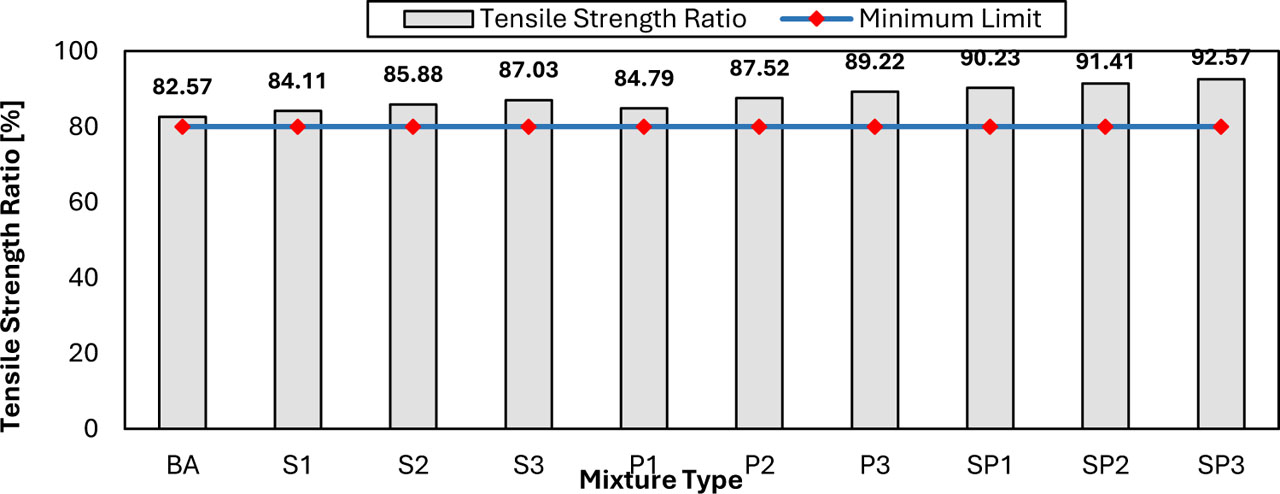
Figure 7:
TSR for unmodified and modified mixtures
4.4. Rutting Evaluation
In this research, in addition to the control mixture (BA), the wheel tracking test was used to evaluate the rutting behaviour of asphalt mixtures modified with 4% SBS (S3), 3.5% PEG and hybrid modification of 4%SBS-3.5%PEG (SP3). Results of rutting resistance (see Figure 8 and Table 4) indicate that polymer modification enhances the resistance of asphalt mixtures to rutting. Among all the mixtures, the unmodified mixture (BA) had the greatest final rut depth (4.49 mm) and the smallest dynamic stability (8621 pass/mm), which shows poor resistance to repeated loading. By contrast, all modified mixtures considered for rutting performance tests exhibited improved performance. S3 had the smallest final rut depth (1.40 mm) and the largest dynamic stability (14706 pass/mm) while SP3 showed a similar rut depth (1.44 mm) and a dynamic stability of 13889 pass/mm. P3 also showed better rutting performance than BA (control mixture), but to a lesser degree, with a final rut depth of 3.92 mm and a dynamic stability of 10417 pass/mm.
The final rut depth reduced by nearly 68.8%, 12.7%, and 67.9% for S3, P3 and SP3, respectively, as compared with the control mixture. Similarly, the dynamic stability improved by almost 70.6%, 20.8% and 61.1% for S3, P3 and SP3, respectively. This suggests that SBS was mainly responsible for the improvement in rutting resistance, while PEG alone had a minor effect. But the hybrid system had a very high resistance to deformation, close to the SBS optimum mixture. This is confirmed by the deformation development in Figure 8. The control mixture showed a rapid increase in rut depth with repeated loading, with values of 3.51 and 4.49 mm at 5000 and 10000 cycles, respectively. However, the rut depths in S3 and SP3 were approximately 1.12 and 1.15 mm at 5000 cycles, and 1.40 and 1.44 mm, respectively, at 10000 cycles. P3 showed an intermediate behaviour, with rut depths of 3.23 and 3.92 mm at 5000 and 10000 cycles, respectively. These results are suggestive of the fact that the rate of deformation was significantly curtailed in the SBS-modified mixtures, especially in the cases where SBS was used alone or was incorporated as a hybrid. The SBS can improve the high-temperature performance because the SBS modifier can help to form a three-dimensional network structure to enhance the viscoelastic property of the BA (Huang et al., 2021).
While S3 performed marginally better than SP3 in rut depth and dynamic stability, the two mixtures were very similar. More importantly, considering the rutting resistance and moisture susceptibility results, SP3 was found to be the most balanced mixture. In other words, S3 can be considered as the optimum mixture in terms of rutting resistance, while SP3 can be considered as the optimum mixture in terms of a combined response (rutting resistance and moisture damage). This is in agreement with the conclusion of this study that hybrid SBS/PEG modification is a promising strategy to prolong pavement service life under heavy traffic and harsh environments.
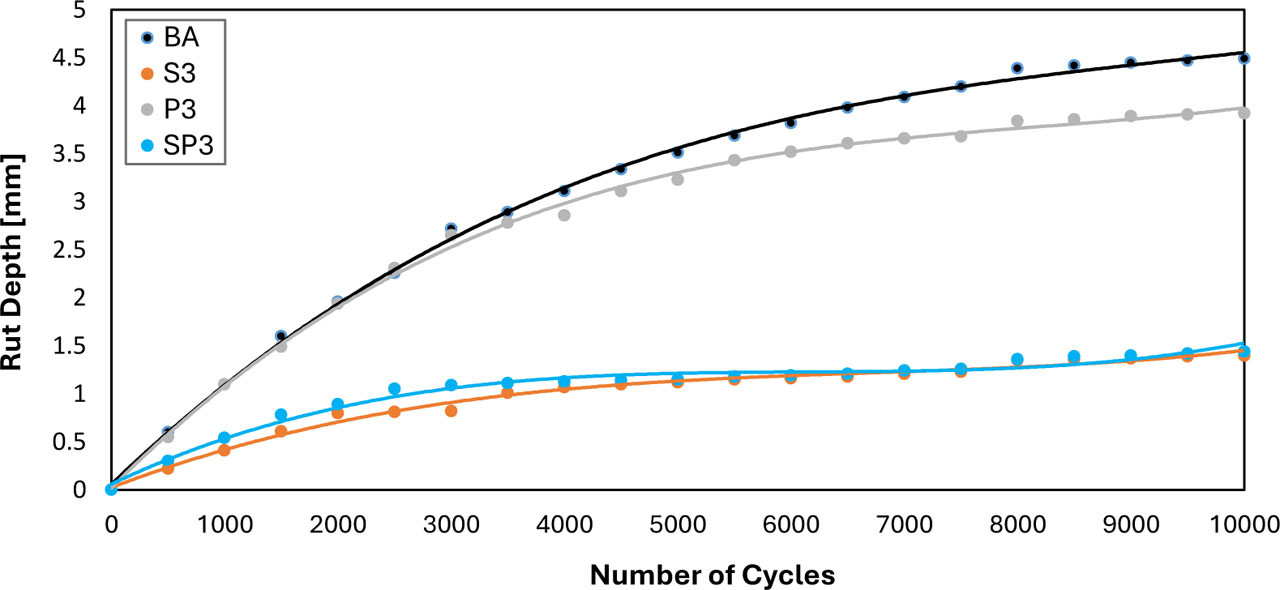
Figure 8:
Outcomes of wheel tracking test
Table 4:
Summary of rutting resistance outcomes
| Mixture type | Final rut depth [mm] | Dynamic stability [Pass/mm] |
|---|---|---|
| BA | 4.49 | 8621 |
| S3 | 1.4 | 14706 |
| P3 | 3.92 | 10417 |
| SP3 | 1.44 | 13889 |
The hybrid modification system of SBS/PEG provides potential environmental advantages. To clarify more, this modification improves the durability and rutting resistance of asphalt mixtures, which leads to extending the service life of asphalt roads, thus reducing the frequency of pavement maintenance and rehabilitation loops. As a result, the consumption of non-renewable natural resources, such as aggregates and petroleum asphalt, is reduced. Additionally, the road scientists expect a reduction in the overall carbon footprint associated with production and paving applications. Life-cycle assessment is highly recommended in future research directions to fully quantify these environmental benefits.
5. Conclusion
This study also showed that modification of the polymer with SBS and PEG, either applied alone or in a hybrid form, significantly improved both binder performance properties and asphalt mixtures properties when compared to the unmodified control. The degree of enhancement was highly dependent on the type and dosage of modifier, with the hybrid system being consistently identified as delivering the most balanced engineering response across formulations studied.
At the binder level, increased modifier content reduced penetration and raised the softening point (proving that, by virtue of these two metrics at some level of what defines stiffness and thermal stability for a binder). The optimum binder-level response was achieved by the hybrid blend SP3 (4% SBS + 3.5% PEG), with a reduction in penetration from 44 to 29, as well as an increase in softening point from 52.0 °C to those of control binder (BA): 34.1% reduction and 60.2 °C: 15.8% over control for bitumen-penetration and softening-point, respectively, while PEG-only modification retained ductility better, the hybrid formulations showed greater tensile strength improvement because of the better resistance to temperature-related softening. Additionally, SEM observations revealed that the hybrid modification resulted in a more homogeneous and integrated internal structure than single-polymer modification. Since this morphological characteristic leads to improved compatibility between the asphalt continuous phase and the polymer additives it provides a microstructural explanation for the better physical properties achieved with the hybrid blends.
Polymer modification led to a substantial improvement in moisture resistance at the mixture level. The splitting strengths of the dry state reached 1189.6 and 982.3 kPa for the control mixture and SP3, respectively, while in the wet state, it was a maximum value at 1588.0 kPa (dry-state) and SP3 (wet-state) achieved these parameters of up to 1470.0 kPa each time higher than the correct mixture. In addition, the TSR increased from 82.57% for the control mixture to 92.57% for SP3, reaffirming a significant enhancement in moisture-induced tensile strength retention after conditioning. The results indicate that the hybrid modification was especially successful in improving the mixture cohesion and binder–aggregate adhesive work. For rutting resistance, SBS-rich systems gave the best impact. The control mixture showed a final rut depth of 4.49 mm and a dynamic stability of 8621 pass/mm, while the S3 had the best rutting performance with a final rut depth 1.40 mm and dynamic stability is 14706 pass/mm. The blended hybrid SP3 gave a very similar response, with recordings of 1.44 mm and 13889 pass/mm for rut depth and dynamic stability respectively. This comparison shows that S3 could be selected as the best form for unbound rutting resistance while SP3 provided nearly identical deformation resistance along with clearly better moisture responses. SP3 might be the best and most technically balanced formulation in this study because its strength was higher than that of all other non-SBS mixtures, TSR values were higher than the required levels, binder thermal stability was comparable with SBS-only mixture IDB-1 and rutting resistance was equal to or even better than the one obtained by highly modified binder SA (SBS only). On this basis, hybrid SBS/PEG modification can be considered as a potential road for enhancing the durability of asphalt mixture and prolonging pavement service life under heavy or extreme traffic and environmental conditions.
Eventually, further research needs to assess the high-temperature aging resistance of modified asphalt binders by means of medium-term or long-term observance simulations (e.g., Rolling Thin Film Oven Test and Pressure Aging Vessel) for determining the polymer network durability over time. Furthermore, since the mixture performance in terms of the flexibility and cracking resistance under multiple conditions are affected by different polymer ratios, further studies would be needed to find out effective volumes of SBS and PEG polymers. Finally, it recommends to evaluate the cost-effectiveness of hybrid polymer binder in terms of materials, processing, and production expenses.
Notes
[1] Contributed by Author Contributions
R.H.L. designed the study and supervised the project. S.A.I. conducted the experiments. R.H.L. performed the data analysis. S.A.I. contributed to manuscript writing. All authors critically reviewed and approved the final version of the manuscript and agreed to be accountable for all aspects of the work.