

1. Introduction
From a psychological perspective, green infrastructure represents a significant psychosocial determinant of the quality of life of individuals and communities, as the physical environment does not represent a neutral framework for human functioning, but an active factor shaping cognitive, emotional, behavioural and relational processes (Bronfenbrenner, 1979; Evans, 2003). Current knowledge of environmental psychology, social psychology and health psychology indicates that a systematically planned network of natural and semi-natural elements in settlements creates conditions for psychological regulation, social cohesion and the development of individual and collective sources of psychological resilience (Ulrich, 1983; Hartig et al., 2014). A psychologically relevant starting point is the biophilia hypothesis, according to which humans have an innate need for contact with natural elements (Wilson, 1984; Kellert & Wilson, 1993). The long-term absence of such contact in an urban environment leads to increased stress, emotional dysregulation and feelings of alienation (Ulrich, 1983; Evans, 2003; Hartig et al., 2014). Green infrastructure therefore acts not only as an aesthetic or environmental element, but as a regulatory system supporting psychological balance, subjective well-being and the need for rootedness in space (Kaplan & Kaplan, 1989; Hartig et al., 2014).
Green infrastructure is currently a popular phenomenon that, in addition to urban planning, urban engineering, and psychology, is also beginning to be investigated by administrative science (Skulová, 2014). Slovak legislation, like several professional publications, also understands green infrastructure primarily as a tool for combating climate change or as an environmental or ecological tool (Tóth, 2014). It is not only a system of green areas that contribute to the development of settlements in a protective or developmental way but can also form systemic public policy measures in several areas. 19 green infrastructure solutions have been identified, a key part of which relates to social aspects (Kimic&Ostrysz, 2021). Using the example of several case studies from around the world, it can be stated that the elimination of social phenomena such as poverty, social isolation, stigmatization, and exclusivity in certain population groups can be addressed using green infrastructure tools. The existence of poverty is a real fact that is present throughout the world, albeit in different qualities and for different reasons. While in some cases it concerns essential needs, primarily food and clean water, in some cases it may concern housing or healthcare provision, and finally, issues of social isolation and stigmatization. Understanding green infrastructure as exclusively an issue of nature and landscape protection within settlements is a long-overdue approach. Modern approaches to territorial development prefer a holistic approach to solving key issues, as attempted, for example, by authors in the definition of municipal engineering from the University of Žilina (Decký et al., 2022). Apart from the provisions of Slovak legislation, especially on the issue of spatial planning or nature and landscape protection, i.e. from the normative approach to understanding green infrastructure, the science of public administration and administrative law, like municipal engineering, is approaching a holistic understanding of phenomena that need to be supported within the framework of legal regulation.
From the holistic understanding of green infrastructure (Benedict & McMahon, 2012), as a comprehensive solution to various issues in the territory, we focused on the social issue in the article for a more detailed analysis. This is the application of the principle of subsidiarity, which states that some areas of problems should be solved on a community basis and community solutions are directly connected to the issue of building some elements of green infrastructure, especially in the form of urban agriculture or community gardens. In both elements, it is not only the issue of food justice and the right to access food, but also the issue of broader participation in civil society necessary for the greater development of a democratic system. These two elements of green infrastructure directly affect the issue of food justice. The second issue will be the issue of legislative solutions into areas that could directly support the building of socially proactive elements of green infrastructure from the point of view of the legal legislation of the Slovak Republic. The third question will be the view of road and urban engineering on building green infrastructure elements from a technical perspective, especially around roads. We proceed from the basic hypothesis that the social aspect of building green infrastructure elements is effective, legislatively possible and applicable in the development of settlements.
2. The Psychological Dimension of Green Infrastructure
2.1. Green Infrastructure as a Tool for Supporting Mental Health and Psychological Resilience
From a health psychology perspective, the availability of green spaces and community-based natural spaces has been shown to correlate with reduced anxiety and depressive symptoms, lower perceptions of chronic stress, and higher subjectively perceived control over life (Hartig et al., 2014; Twohig-Bennett & Jones, 2018; White et al., 2019). The mechanisms of this effect can be explained through Attention Restoration Theory (Kaplan & Kaplan, 1989) and the stress-reduction model (Ulrich, 1983), according to which the natural environment supports the restoration of cognitive resources, reduces physiological activation of the stress response, and creates space for emotional stabilization.
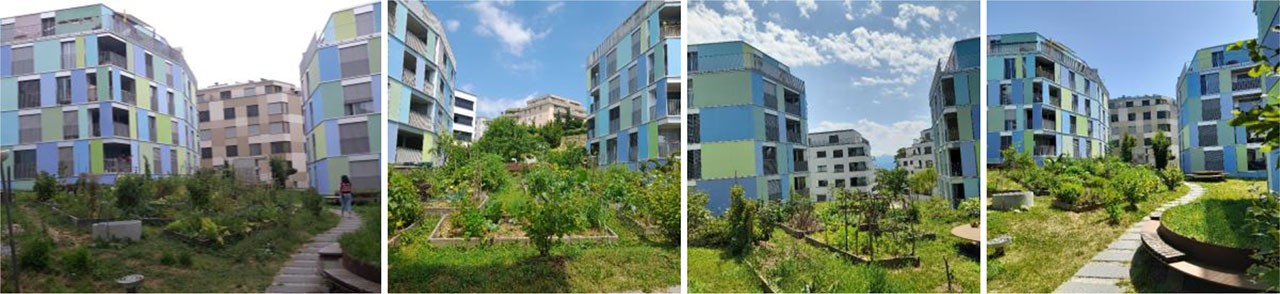
Figure 1:
Views from 2 August 2020 (left) and 16 July 2023 of the community gardens in the Fourmi housing estate in Lausanne, the capital of the canton of Vaud
In the context of socially disadvantaged groups, green infrastructure is of particular importance as a compensatory factor (Hartig et al., 2014; World Health Organization [WHO], 2017). People living in poverty, social isolation or long-term insecurity are exposed to cumulative stress that weakens their ability to adapt and actively cope with the burden (Evans & Kim, 2013; McEwen & Gianaros, 2010).
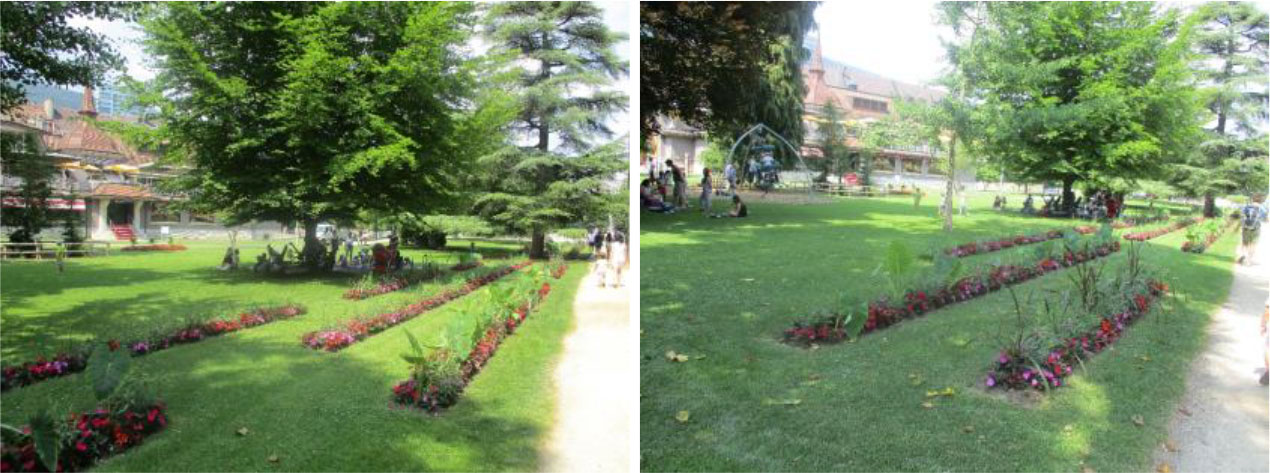
Figure 2:
Views from 21 June 2017 of participatory green spaces in the city of Neuchâtel, the capital of the canton of Neuchâtel
Community gardens (Figure 1), urban farms, and participatory green (Figure 2) spaces create safe and predictable environments in which self-efficacy, meaningfulness, and the need for personal competence can be strengthened (Bandura, 1997; Alaimo et al., 2010; Soga et al., 2017). Egerer, M. et al., 2024 presented, that recognise of urban community gardens as a useful physical land use and of the gardeners themselves as important habitat managers and stewards of urban biodiversity, however, they also draw attention to the problem of their gradual depreciation vulnerability to urban planning threats.
2.2. Social-psychological Dimension: Inclusion, Participation and Social Capital
From the perspective of social psychology, green infrastructure can be interpreted as an important tool for building social capital and inclusive social ties (Putnam, 2000). Participatory forms of green infrastructure, especially community gardens and urban agriculture, create natural conditions for interpersonal interaction, cooperation and the emergence of horizontal relationships based on reciprocity (Alaimo et al., 2010; Kingsley & Townsend, 2006; Putnam, 2000). Such an environment supports processes of social integration and stigma reduction (Allport, 1954; Link & Phelan, 2001; Hartig et al., 2014). Working together to care for space weakens the “us – them” categorization and allows for the redefinition of social identities based on a common goal and shared responsibility (Tajfel & Turner, 1979; Brewer, 2007). From a psychological perspective, this is a mechanism that directly supports the inclusion of marginalized groups, including people in social need, seniors, people with health disabilities, or people with migration experience (WHO, 2017; Kingsley et al., 2009).
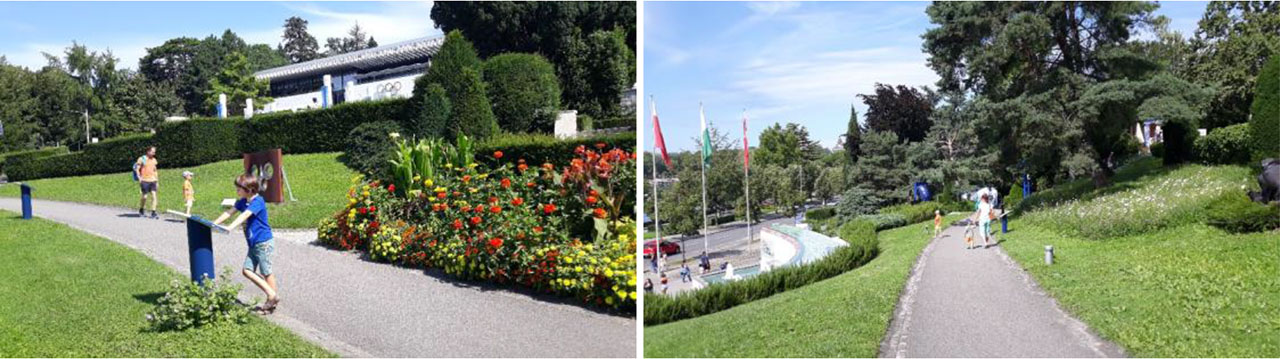
Figure 3:
Views from 11 August 2021, of the transitive green spaces around the Olympic Museum in Lausanne
Green infrastructure thus functions as a transitive space in which informal learning of social skills (Figure 3), strengthening of trust and development of participatory competences take place (Winnicott, 1971; Putnam, 2000; Lerner et al., 2013). This process is psychologically crucial for the functioning of democratic self-government, as active civic participation presupposes an internal need for competence, responsibility and belonging (Deci & Ryan, 2000; Zimmerman, 2000; Putnam, 2000).
2.3. The Psychological Significance of Green Infrastructure in a Post-crisis Context
From the perspective of social psychology, green infrastructure can be interpreted as an important tool for building social capital and inclusive social ties (Putnam, 2000). Participatory forms of green infrastructure, especially community gardens and urban agriculture, create natural conditions for interpersonal interaction, cooperation and the emergence of horizontal relationships based on reciprocity (Alaimo et al., 2010; Kingsley & Townsend, 2006; Putnam, 2000).
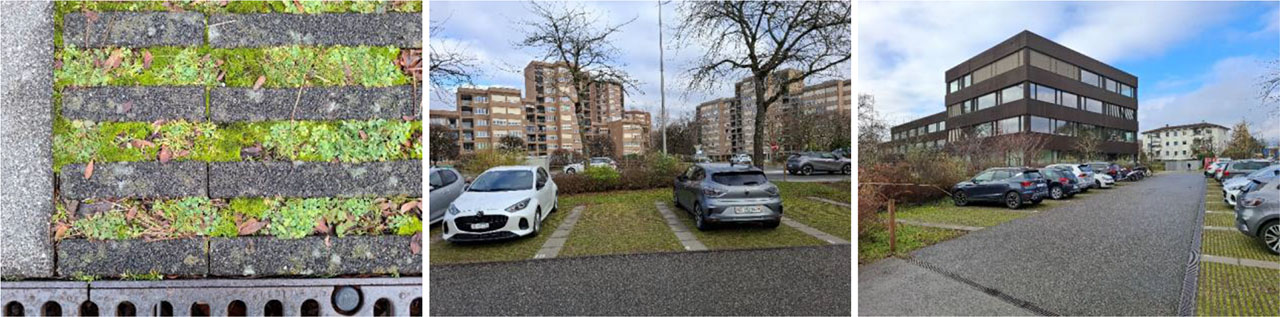
Figure 4:
Views from 4 December 2025 of the green parking spaces in Nyon
Such an environment supports processes of social integration and stigma reduction (Allport, 1954; Link & Phelan, 2001; Hartig et al., 2014). Joint work on caring for space weakens the categorization of “us – them” and allows for the redefinition of social identities based on a common goal and shared responsibility (Tajfel & Turner, 1979; Brewer, 2007). From a psychological point of view, it is a mechanism that directly supports the inclusion of marginalized groups, including people in social need, seniors, people with health disadvantages or people with migration experience (WHO, 2017; Kingsley et al., 2009). Green infrastructure thus fulfils the function of a transitive space in which informal learning of social skills, strengthening of trust and development of participatory competences occur (Winnicott, 1971; Putnam, 2000; Lerner et al., 2013). From a psychological perspective, this process is crucial for the functioning of democratic self-government, as active civic participation presupposes an internal need for competence, responsibility, and belonging (Deci & Ryan, 2000; Zimmerman, 2000; Putnam, 2000).
3. Legislative Dimension of Green Infrastructure
The issue of the environment has long been understood as an organic part of fundamental human rights in the form of the right to a quality environment. In the Slovak Republic, there is a decision of the Supreme Court of the Slovak Republic that approaches this issue in a different way. This decision speaks of the fact that a quality environment is in its own way a prerequisite for the realization of all other human rights, including political and social rights, as well as the right to life itself.
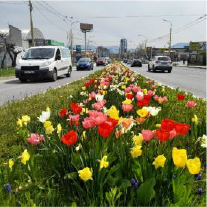
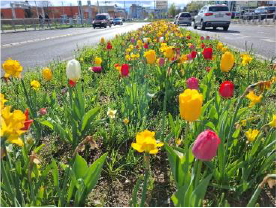
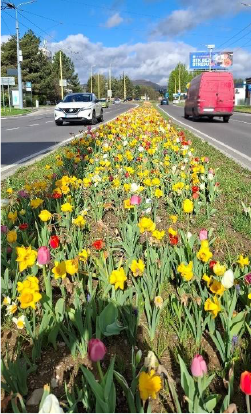
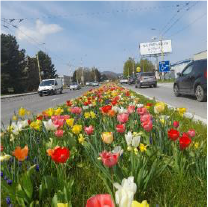
Table 1:
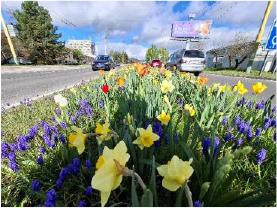
Examples of urban road greenery in shape flower planting into dividing strip
| Views of the flower planting of the central dividing strip of University Street in Žilina from | ||
|---|---|---|
| 28 April 2023 | 19 April 2025 | |
 |  |  |
 |  | |
In the long-term absence of a quality environment, the human being and the human race have always been confronted with the ability to survive. Constitutionalism also connects the issue of the environment with a wide range of social relations. It is not, as it is understood in the Slovak Republic and often incorrectly, an exclusively environmental issue.
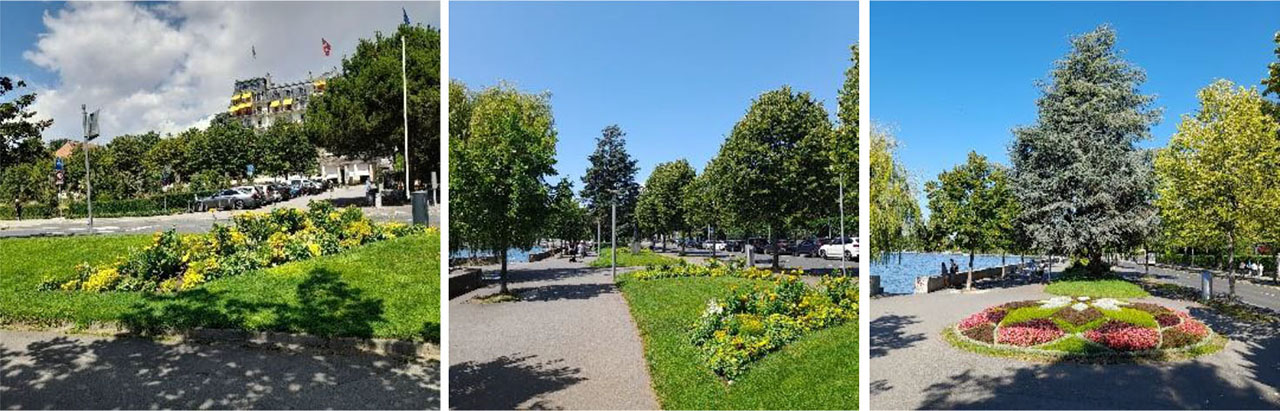
Figure 5:
Views from 6 July 2023 of the green infrastructure of urban roads in Lausanne
The environment is a reason, but also an opportunity for the full life of human beings and, as mentioned above, also the fulfilment of all dimensions of human life, including cultural, social and the issue of human dignity. The ethical dimension of inclusive green infrastructure thus forms not only an abstract theoretical idea of municipal engineering or administrative science, but also a constitutional dimension of understanding the right to the environment.
From the point of view of national law, the municipality plays a key role in building green infrastructure, but also in creating social policy. The municipality is the basic unit of the Slovak Republic, the legal regulation of which is defined in the Constitution of the Slovak Republic, and which has a special legal regulation in Act No. 369/1990 Coll. on municipal organization, as amended and subsequent legal regulations. To perceive the possibilities of the municipality in the framework of building creative green infrastructure focused on social inclusion and social support, it is necessary to perceive the municipality as a self-government. In Slovak legislation, the municipality can also perform the tasks of delegated state administration.
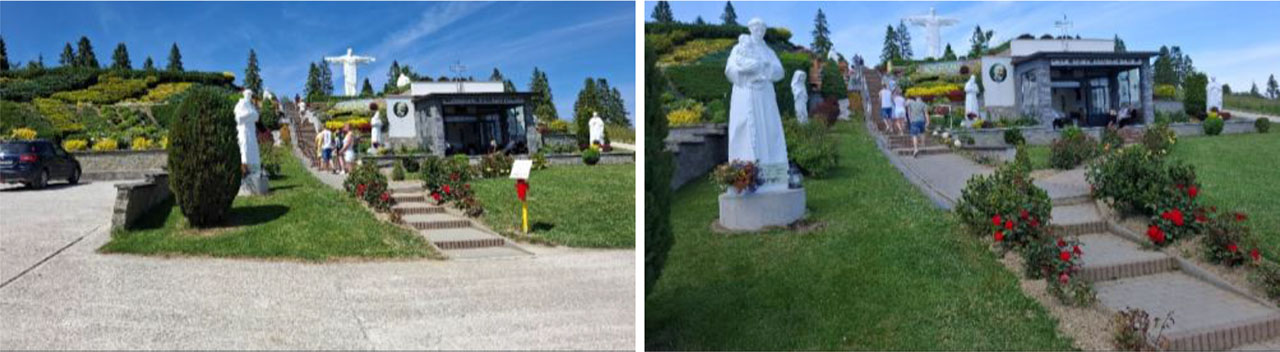
Figure 6:
Views from 22 June 2025, of the green infrastructure of the Rio de Klin site built by Mr. Jozef Srok
However, the exercise of state administration is strictly bound by the existence of the possibility to act in the form of a right from public delegation, as stated in article 2, paragraph 2 of the Constitution of the Slovak Republic, which allows state bodies to act only based on the law and within its limits. On the contrary, there are de facto two key restrictions in the implementation of self-government functions.
Firstly, it is a question of prohibition or permissibility of action. A municipality, like a natural person or a legal entity, cannot do something that is expressly prohibited by law.
Secondly, the existence of competition from the point of view of other state bodies is limited. The authority and competence of a municipality is given by law, which in the conditions of the Slovak Republic is adopted by the National Council of the Slovak Republic as the highest legislative body. From this point of view, a municipality cannot, with its normative acts of lower legal force than a law, adopt any authority or enter the existing authority of a state body. However, a municipality can behave as a classic business entity, including the possibility of creating its own legal entities within the founding competence of the municipality.
Since the municipality is a subject of public law, it is also a legitimate recipient of funds from the European Union or non-refundable funds from the state budget. In this case, if the municipality creates a business company of which it is a 100% owner, it can use funds from national budget sources or the European Union much more flexibly within the framework of in-house solutions. In other words, the municipality can create elements of green infrastructure with a social aspect much more effectively than a private entrepreneur, as a classic subject of legal relations, i.e. outside the framework of its special public law status. The municipality as a legal entity is also the owner of land or other real estate and it is only a question of the philosophy of the approach of the members of the municipal council and the mayor as to how it handles the land in question. The legislation only regulates the regime in question by the special Act on the Management of Municipal Property No. 138/1991 Coll. The green infrastructure approach as a community and social solution to public policies assumes that real estate, especially land owned by public authorities (municipality, self-governing region, state) will have a priority social purpose, primarily for:
Creating access to food justice.
Increasing community interaction of residents of the municipality or self-governing region.
Increasing civic participation of residents of the municipality in public administration.
This social purpose of using real estate and municipal property is not a purely doctrinal construct. Act No. 369/1990 Coll. on municipal organization as amended by later legal regulations, as already mentioned, creates an obligation for the municipality under paragraph 3 paragraph 4 of the cited law to provide support to a resident of the municipality who found himself in sudden social need or who, for example, due to a natural disaster, found himself in a crisis social situation. Even if we interpret this provision of the law very strictly and restrictively, it still creates space for social and community projects, including projects for building green infrastructure elements (Tekeli & Hoffmann, 2014). From the point of view of the interconnection of green infrastructure and the statutory tasks of the municipality as an essential unit of building public administration in Slovakia, the municipality is the founder of school facilities. The community-based elements we mentioned, such as urban agriculture or community gardens, are a source of food and food justice in the world. In the field of holistic planning and financing of green infrastructure, the application of the principles of subsidiarity and strong public participation are essential (Finka et al., 2017). The international project TRANSGREEN covering the territory of five European countries – Slovakia, the Czech Republic, Austria, Hungary and Romania – can be considered a successful example of a public participation model in integrated transport and green infrastructure planning. The challenge of the project is to coordinate the efforts of public actors and non-governmental organizations in an international environment in often uncertain transport infrastructure and green infrastructure development projects. The project aims at developing and environmentally friendly and safe international transport network. The proposed public participation procedure consists of five main steps – spread of information (passive), collection of information (consultation), intermediate discussion, engagement and partnership (empowerment).
Another dimension of the position of the municipality in building social policy on infrastructure is from the perspective of spatial planning. The Slovak Republic has a new Act on Spatial Planning No. 200/2020 Coll. on Spatial Planning, which, from the point of view of finding the goals of spatial planning, clearly connects this activity with measures of a social nature. This Act understands the interest in infrastructure as an important public interest which, together with other spatial planning tools, can build a socially attractive safe environment for residents regardless of whether they are able to fully participate economically in terms of their health status or social situation. However, spatial planning is a tool of municipal self-government that primarily creates pressure on business entities to proactively build elements of green infrastructure within their investment projects.
The current wording of the Act does not create the possibility for the municipality to talk about the qualitative side of elements of green infrastructure, for example, in the form of creating community gardens or community agriculture. Projects as we mentioned above are usually just a matter of either municipal policy or a matter of voluntary activity of the business environment. The spatial plan may set the condition of green roofs, a mandatory percentage of greenery within the built-up area or, as was the original idea, the mandatory incorporation of green infrastructure elements into projects.
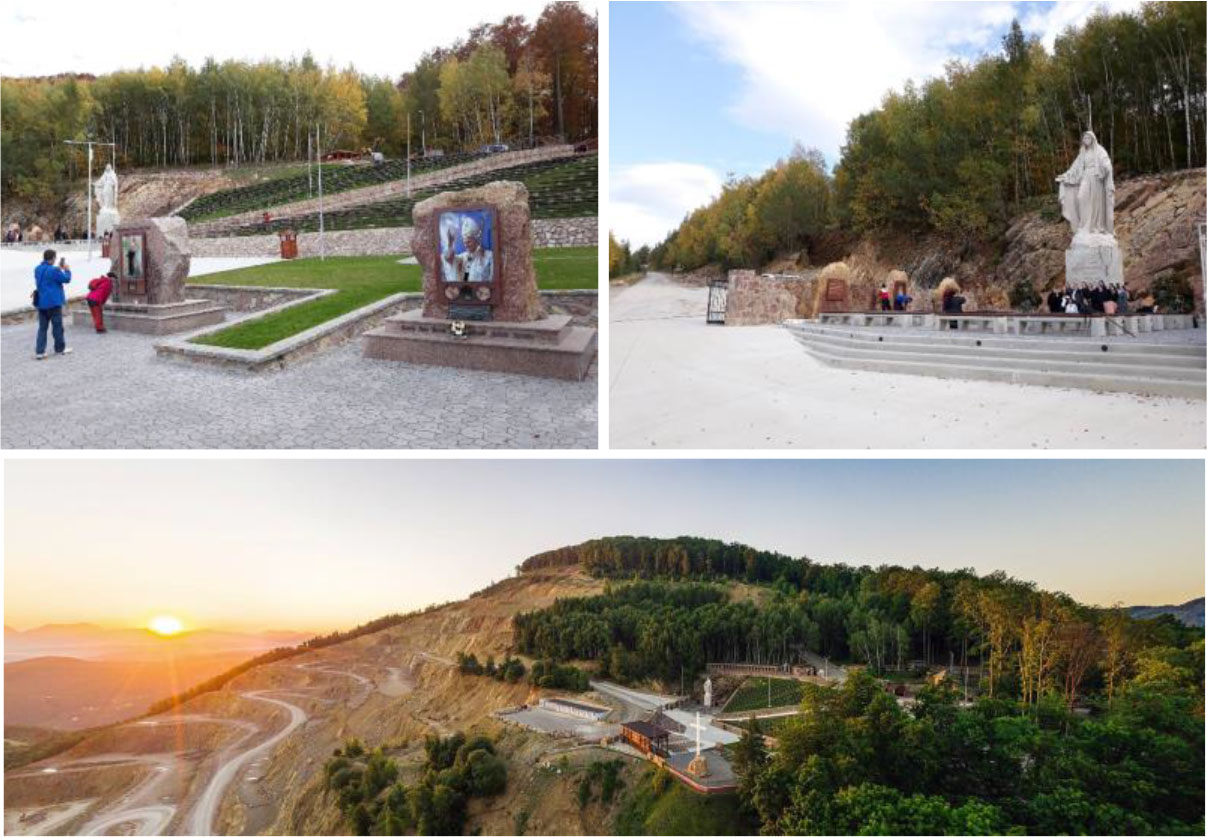
Figure 7:
Views from 16 October 2018, of the green infrastructure of the rock sanctuary on Butkov Mountain, lower part panoramic view https://krizbutkov.sk/aktivity/najmladsie-putnicke-miesto, 16 October 2026
4. Green Infrastructure Elements as an Integral Part of the Road Environment
Green infrastructure around roads has a long tradition in Central Europe (Figure 8–10). The imperial rescripts of 1740 first required the planting of trees along the sides of roads during road construction in the Czech lands. This was followed by Maria Theresa's decrees of 1756 and 1767 on mandatory roadside greenery and tree planting along roads in open countryside (Píry et al., 2023). In the last century, significant attention was paid in the territory of present-day Slovakia to planting trees along roads and harmoniously integrating the route into the landscape. Currently, the decisive Act No. 135/1961 Coll. for road design states that the design of roadways is carried out according to valid Slovak technical standards, technical regulations, objectively determined results of research and development for road infrastructure or similar technical specifications.
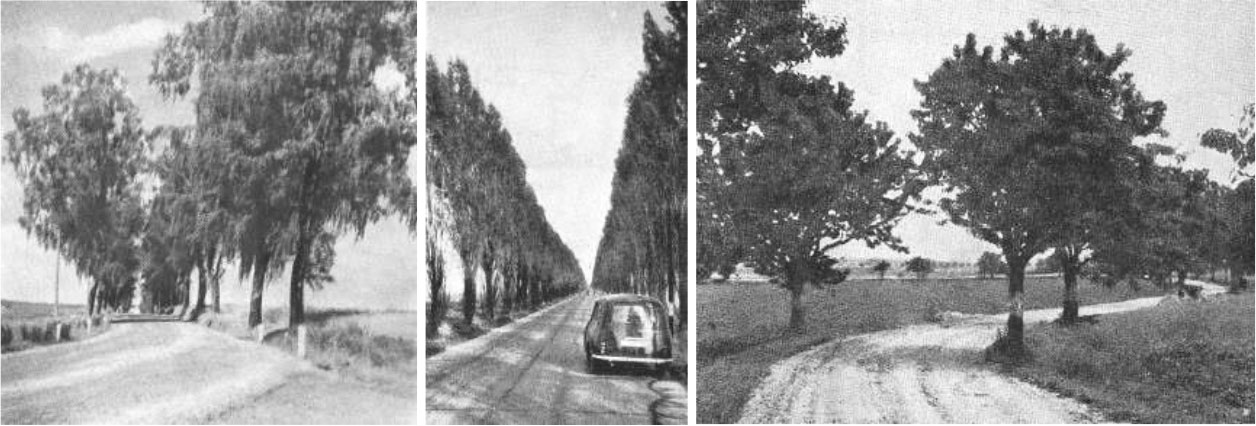
Figure 8:
Alleys of birches (left), pyramidal poplars – (centre), fruit trees - an unsuitable winding route in flat terrain (right)lining Czech roads in 1958, Hos and Veselý (1958)

Figure 9:
Views from 1958 of a mountain road in a mountainous landscape and a valley route with limestone formations in the background Hos and Veselý (1958)
In the Act No. 135/1961 Coll., the following provisions are stated in relation to the describing issue in Section 14 Road Greenery.
Road administrative authorities shall ensure that suitable road greenery is grown on road auxiliary land, or on other suitable land forming part of motorways, roads and local roads (slopes of embankments, rest areas and the like), in accordance with local conditions; it is necessary that road traffic safety is not endangered or that the use of these lands for the purposes of managing motorways, roads or local roads or for the management of neighbouring lands is not disproportionately hindered.
When dealing with road greenery, the aspect of road traffic safety is respected when discussing it with nature and environmental protection authorities.
The location and species composition of roadside greenery and the felling of its trees are decided by the road administrative authority in agreement with the environmental authority (Act No. 525/2003 Coll.).
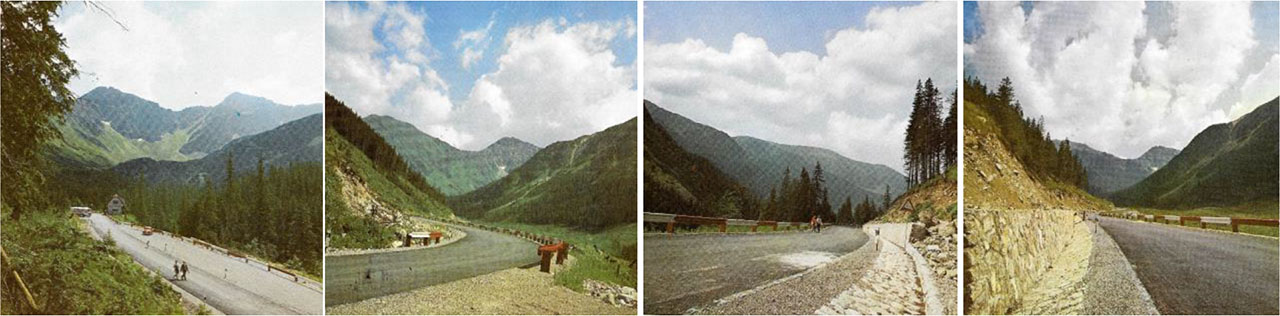
Figure 10:
Tourist access road to Roháče from Zverovka, Road construction 1953–1973, Cestné stavby 1953–1973
The nomenclature standard for roadways STN 73 6100 explicitly states the following definitions in relation to greenery.
Living space - a space used for non-transport purposes (rest, relaxation, greenery, park landscaping, etc.).
Road greenery - a part of a roadway formed by vegetation treatments of the earth's surface, road land, dividing strips, traffic islands, etc.; according to the type of vegetation, the following are distinguished:
Green road - an urban road in a transport corridor in an open space of an urbanized area, mostly with natural conditions, which may include paths for cyclists and pedestrians.
Green area - an open urban space for free recreation; the area is defined by landscaping rather than by house facades; the green area does not contain any local roads and should contain lawns and trees in a natural arrangement; local roads are also steps along the edge of the green area in the associated traffic area; boarding points at the interface with local roads are analysed in terms of dispersion areas and pedestrian crossings or alternative transport on local roads.
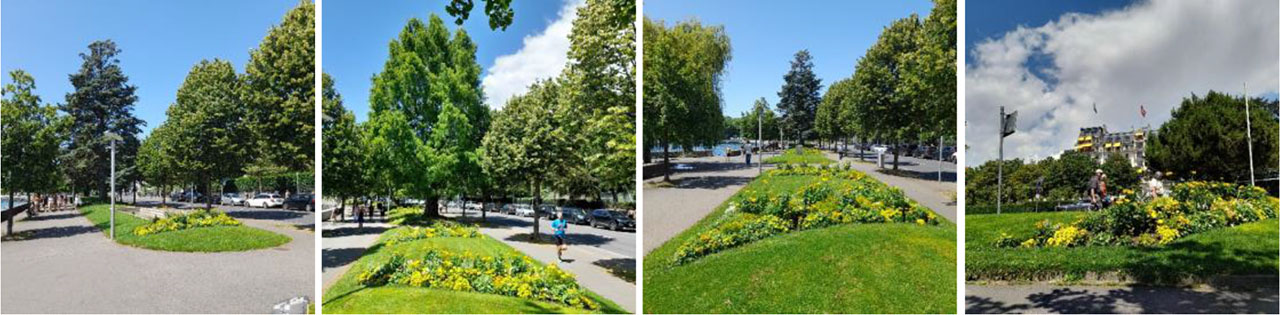
Figure 11:
Views from 6 July 2023, of the Alley at Lake Geneva in Lausanne consisting of grassing, flower planting and roadside trees
Associated traffic space - part of the urban road space between the main traffic space and the outer edge of the local road; this space is used by static and dynamic traffic, pedestrians and cyclists; it is the space above the associated lanes/strips and/or sidewalks, including greenery.
Auxiliary right of way - a part of a road plot, intended mainly for maintenance and roadside greenery.
Square (plaza) - an open space for free recreation, public purposes (Figure 12) and commercial activities; the square is defined by the facades and frontages of buildings; squares are located at the intersection of important traffic routes and streets; squares are usually paved throughout - paved areas without the organization of pedestrian and motorized traffic; in the case of a square arranged according to a formal plan, there are sidewalks, paths, lawns, astroma and furniture.
Cycle strip (bicycle strip) - a strip of non-motorized traffic composed of two or more bicycle lanes; it can be one-way or two-way; it is separated from other modes of transport by a safety distance, paving or greenery.
Alley - an urban road along the border between built-up area and natural area, usually by a river, park or foothills; one side of the road has an urban character with steps and buildings, the other side of the road has parks or alleys, with natural greenery and rural details.
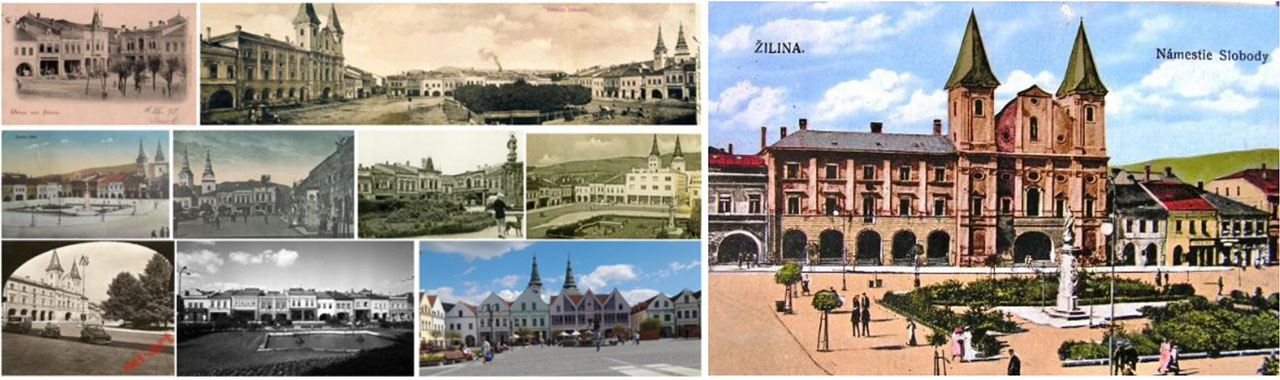
Figure 12:
Left - views of Marians square from 1898, 1918, 1919, 1925, 1946, 1966, 1977 and 2023 (Jakubíková, 2023), right - a modification of the market square in the vicinity of the Immaculate Conception statue during interwar period, likely around the turn of the 1920s and 1930s (Dudas et al., 2024)
Thoroughfare - an urban road with high traffic capacity and a speed set by a special regulation, forming the shortest connection between urban centres and usually equipped with a central green dividing strip.
Park - a natural protected area for free recreation; a park can be independent of the surrounding facades of houses and a network of local roads; it includes paths and sidewalks, grassy and water areas, tree stands and open shelters - all in a natural arrangement; parks can be linear, following the trajectories of natural corridors as well as the urban structure of the main public spaces; the created network of non-motorized roads is designed for mixed pedestrian movement and alternative transport where pedestrians are preferred.
Playground - an open space designed and equipped for children's entertainment and sports; the playground should be fenced; playgrounds are part of residential neighbourhoods and may be scattered or located within a block (Figure 13); playgrounds may be incorporated into parks and green areas; they do not have a specified minimum and maximum size; non-motorized traffic is not allowed on the playground; sidewalks are designed around the edges of the playground.
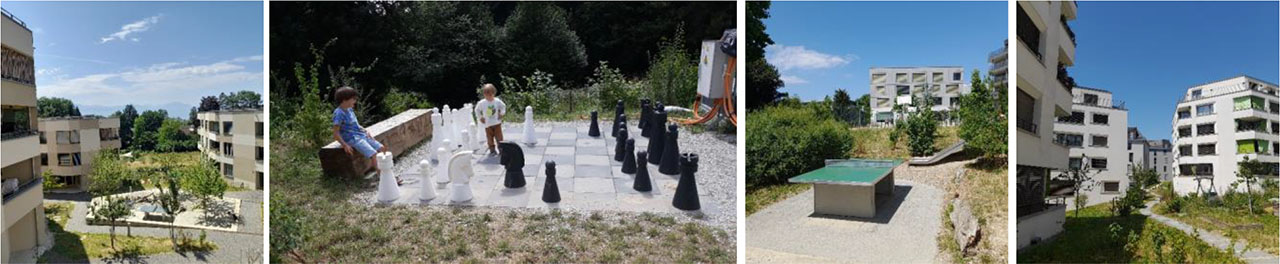
Figure 13:
Views from 7 July 2023 of the playgrounds of the Fourmi housing estate in Lausanne
Abroad, green infrastructure of buildings (Al Subhi & Al-Kazee, 2025; Sanchaniya et al., 2024) and surrounding road infrastructure are beginning to be perceived as one organic whole. In addition to positive psychological impacts, green infrastructure also has a significant environmental aspect (Figure 14) of reducing noise (Píry et al., 2023; Juodkiene & Rekus, 2026) and air pollution (Jandačka et al., 2024).

Figure 14:
Photographs from year 2022 of Road traffic noise reducing devices combined with green infrastructure, Lausanne (Píry et al., 2023)
A significant progress around green infrastructure implementation in settlement areas of Slovakia is the technical regulation TP 73 6110 (Schlosser et al., 2024). It is necessary to draw attention to the fact that in Slovakia there is no official term of city, but a municipality with the status of a city. Currently in Slovakia we have 2927, assuming consideration of the urban districts of Bratislava, Košice and 3 military districts, or 2890 without considering them. For this reason, the authors are inclined to the term of prof. Finka, who prefers the term intra-settlement greenery. The following interrelated facts are contained in the TP 73 6110. The principles of designing and establishing greenery in urban conditions are unified in the requirements for the entire territory of the city/municipality. The details differ only in the central urban zone or the monument reservation of the historical city centre. The green infrastructure in the built-up area near the local road consists of street trees, vegetation barriers (including hedges), green walls. In the urban street network, tree planting is created in terms of the proportions of the street profile and the orientation of the cardinal points. The presence of trees in street profiles also demonstrably changes the vertical thermal distribution inside the streets, especially at night, with the lower layer being much warmer than the upper part of the profile, moreover with a remarkable separation of air flow and reduced vertical exchange. In the urban green area, when planting urban green areas, the principles of the above-ground part (tree crowns) and the underground part (root system) must be considered, which must not interfere with the basic dimensions in the transverse as well as longitudinal arrangement of the street line. The basic requirements in the cross-section of the urban green area are defined in the Figure 15.
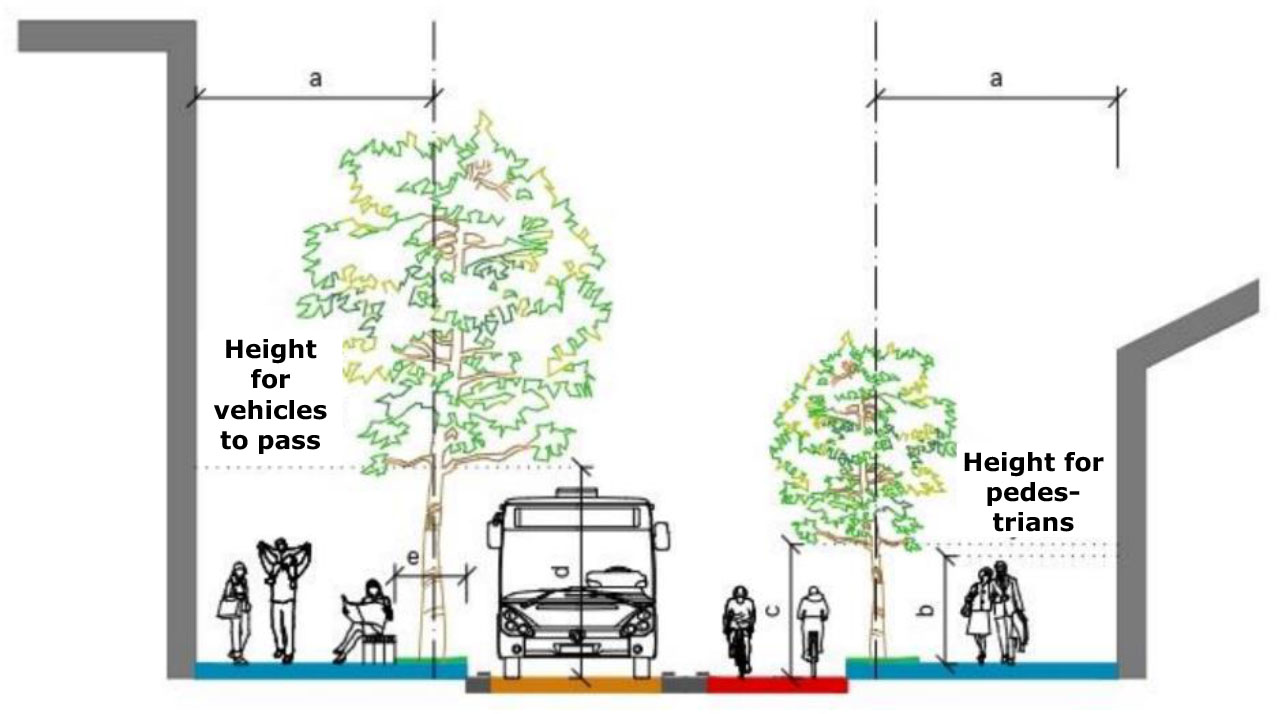
Figure 15:
Basic parameters of greenery in the transverse arrangement of the UR (Schlosser et al., 2024)
where:
a – distance from the object min. radius of crown width in adulthood is greater than the sidewalk dimension in the associated traffic space.
b – height for pedestrians min. 2.20 m.
c – height for pedestrians min. 2.50 m.
d – height for vehicles to pass, min. 4.00 m, optimal 5.50 m associated with maintenance.
e – distance from the edge of the curb, structures, street furniture foundations min. 0.50 m – 0.75 m.
5. Conclusion
In the context of current challenges of territorial development, social cohesion and mental health of the population, green infrastructure is shown to be a multidimensional tool, the significance of which goes beyond traditional environmental and urban understanding (Hartig et al., 2014; WHO, 2017). The psychological perspective clearly confirms that the quality of the physical and social environment is an integral part of the quality of life, psychological well-being and adaptive capacity of individuals and communities (Bronfenbrenner, 1979; Evans, 2003; Masten, 2014). Green infrastructure is thus not an additional element of public space, but a functional psychosocial resource that supports mental health, psychological resilience, social inclusion and participation of residents (Putnam, 2000; Hartig et al., 2014).
In terms of psychological mechanisms of action, green infrastructure creates conditions for stress regulation, cognitive resource restoration, strengthening self-efficacy and development of social capital (Ulrich, 1983; Kaplan & Kaplan, 1989; Bandura, 1997). Its role is particularly significant in the context of socially vulnerable and marginalized groups, where it can act as a compensatory and protective factor mitigating the negative consequences of social inequality, poverty and long-term insecurity (Evans & Kim, 2013; WHO, 2017). Participatory forms of green infrastructure also support social learning processes, building trust and forming inclusive social identities, which are essential prerequisites for the functioning of democratic self-government (Putnam, 2000; Tajfel & Turner, 1979; Lerner et al., 2013). The legislative and strategic framework at both European and national levels is creating increasingly favourable conditions for the integration of green infrastructure into public policies (OECD, 2019; United Nations, 2020). However, if green infrastructure is implemented without considering psychological knowledge, there is a risk that it will be reduced to a technical or aesthetic element without real social and health impact (Hartig et al., 2014; Marmot et al., 2010). Therefore, to effectively fulfil its inclusive potential, a systematic connection between spatial planning, social policy and psychological foundations is essential, including participatory processes that enable the active involvement of residents in decision-making about public space (Deci & Ryan, 2000; Zimmerman, 2000).
In conclusion, it can be stated that green infrastructure represents, from the perspective of psychology and public policy, a strategic tool for supporting a sustainable, socially just and mentally healthy environment (Hartig et al., 2014; WHO, 2017; Masten, 2014). Its integration into inclusive self-government legitimizes the shift from reactive interventions to a preventive and developmental approach that strengthens not only the quality of life of individuals, but also the long-term resilience of communities and citizens' trust in public institutions (Norris et al., 2008; Aldrich & Meyer, 2015). The psychological dimension of green infrastructure thus represents a key argument for its systematic anchoring in the legislative, strategic and implementation processes of modern self-government.
The systematicity of green infrastructure elements solutions primarily depends on the economic level of society and the environmental awareness of the inhabitants of the respective communities, regions or cities. The article primarily uses inspirational solutions from Switzerland, which is one of the richest and most environmentally friendly countries in the world, thanks to which there was no degradation of the green infrastructure during the 5-year monitoring. From the aspect of effective spending of public funds on building road green infrastructure elements, it is important to respect the credible provisions of Act No. 135/1961 Coll. The relevant law requires that when designing road green elements, standards and technical regulations, currently STN 736110 and TP 736110 (Schlosser et al., 2024), be respected.
Acknowledgements
This article was made possible thanks to the financial support of the Grant Agency for the project KEGA no. 009ŽU-4/2025: Adapting and Innovating the Teaching of Transportation Planning Using a Digital City Transportation Model.
Notes
[1] Contributed by Author Contributions
E.Š. In collaboration with the second author, she proposed the conception of the article, conducted an extensive search of the relevant scientific literature in the field of psychology and independently prepared chapter 2. M.P. Created the article processing methodology, independently prepared chapter 3, in which he abstracted the most important codified provisions of the laws to green infrastructure. M.D. Independently prepared chapter 4 about greenery in the roads and provided all graphic materials for figures and tables from his own photographic archive and older book publications in his possession, which are not subject to copyright. All authors participated in equal partnership in the creation of chapters 1. Introduction and 5. Conclusion. All authors critically reviewed and approved the final version of the manuscript and agreed to be accountable for all aspects of the work.