

1. Introduction
The incorporation of recycled plastics into the construction sector has emerged as an effective alternative for promoting more sustainable practices, as their extended service life enables them to partially replace traditional construction materials, thereby contributing to more efficient resource utilization and a reduction in plastic waste (Nyika & Dinka, 2022; Marinelli et al., 2023). This approach aligns with the Sustainable Development Guidelines established in the United Nations 2030 Agenda (United Nations, 2015). Among the various types of plastic waste, polyethylene terephthalate (PET) has received particular attention due to its potential application in the development of innovative materials for infrastructure (Singh et al., 2021).
Recycled PET has found its way into concrete mixes primarily in two forms. It is used as aggregates, taking the place of some natural sand or gravel, or as individual fibers added in small amounts to strengthen the material. These two approaches create different mechanical responses. Specifically, they vary in their compressive strength, how they manage cracks, and what happens after cracking occurs.
The use of recycled PET fibers in mortars and concretes has demonstrated both economic and environmental benefits (Duan et al., 2023). Several studies have reported that the incorporation of PET fibers significantly enhances the mechanical performance of mortars, particularly in terms of strength (Pereira de Oliveira & Castro-Gomes, 2011). Other investigations indicate that reinforcing mortars with manually cut PET strips can provide specific advantages depending on the mortar type and fiber length (Zerig et al., 2023; Azad & Sarkawt, 2023).
Replacing conventional aggregates with PET aggregates has also shown notable benefits, especially in reducing material density and improving post-cracking behavior under ambient conditions (Fraternali et al., 2013). More recent research highlights the effectiveness of PET-derived resins obtained through glycolysis when used as binders in polymer mortars, as they improve particle packing and interfacial bonding (Sarde et al., 2021; Babatunde et al., 2022). In some cases, bond strength increases of up to 350% have been reported (Mahdi et al., 2013), along with significant improvements in flexural and compressive strength for mortars with substitution levels of up to 45% (Khan et al., 2023).
Compressive strengths of approximately 10 MPa have been reported for polymer mortars produced with unsaturated polyester resins (Mahdi et al., 2007). Other studies indicate that optimal mechanical performance can be achieved with sand-to-resin ratios of 80/20 or 78/20/2 (sand/resin/PET particles) (Miranda Vidales et al., 2014). Additionally, PET resin contents between 13% and 17% have been found to ensure adequate compressive strength in concrete specimens (Jo et al., 2008), while increases in the sand-to-PET ratio have been associated with higher compressive strength (Ge et al., 2013).
Several investigations on polymer mortars report that the inclusion of 1% PET particles by weight leads to improved mechanical properties, including compressive and flexural strength, as well as higher elastic and deformation moduli (Martínez-López et al., 2018). In contrast, concretes manufactured with recycled PET replacement levels ranging from 10% to 50% have shown compressive strengths between 48 and 19 MPa, corresponding to reductions of approximately 34% to 67%, respectively (Ponmalar & Revathi, 2022; Marzouk et al., 2007). Optimal performance has been observed at a replacement level of approximately 3%, achieving compressive strengths of 24.92 MPa at 7 days and 36.66 MPa at 28 days (Rajawat et al., 2022).
A positive influence on mechanical behavior has also been reported with the incorporation of 10% PET granules, particularly in terms of flexural strength and crack resistance in reinforced concrete beams (Kangavar et al., 2023). Similar findings have been reported for substitution levels of 5% and 10%, suggesting that relatively high proportions of recycled plastic can still yield satisfactory mechanical performance (Haq et al., 2023). High-strength concrete has also been produced using coarse PET aggregates combined with low water-to-cement ratios; for example, a compressive strength of 30.3 MPa was achieved with a 20% replacement level and a water–cement ratio of 0.42 (Islam et al., 2016).
Nevertheless, not all studies report favorable outcomes. Some authors indicate that replacing natural sand with PET at levels between 5% and 20% leads to a reduction in compressive strength in polymer mortars containing epoxy resin (Reis & Carneiro, 2012). Similarly, increasing the volumetric substitution of PET from 6% to 30% has been associated with a progressive decrease in compressive strength (Shahinuzzaman & Rabbi, 2022). Other studies attribute this reduction to the larger and smoother surface texture of plastic aggregates, which weakens the bond at the matrix–aggregate interface (Li et al., 2020). Conversely, when PET is used in powdered form, improved results have been reported for substitution levels of up to 15% (Nikbin et al., 2022).
The behavior of concretes and mortars incorporating recycled aggregates when exposed to elevated temperatures has been reported inconsistently in the literature, owing to differences in materials, mix designs, and testing conditions (Abed & Lublóy, 2021). The inclusion of fibers modifies the microstructure of cementitious composites and significantly influences their thermal performance (Saucedo et al., 2021). The melting and degradation of polymer fibers increase pore volume, generating discontinuous voids and microcracks that facilitate the formation of continuous channels for water vapor migration.
According to the literature, polymer fibers generally perform effectively within a temperature range of 100–200 °C; however, this behavior depends on the fiber type and its thermal properties. PET fibers, which typically melt between 220 and 240 °C, may therefore remain effective at higher temperatures. Some studies report that concrete containing plastic aggregates begins to exhibit microcracking at approximately 100 °C, whereas conventional concrete shows visible cracking at around 200 °C (Wiswamitra et al., 2021). At temperatures between 300 and 400 °C, concretes with plastic aggregates display charring, void formation due to PET decomposition, and more extensive cracking.
Up to 200 °C, the incorporation of PET fibers has been shown to improve the spalling resistance of concrete by maintaining lower pore pressure within the microstructure (Müller et al., 2019). Experimental studies using PET fiber contents of 0.20%, 0.35%, 0.50%, 0.75%, and 1.00% indicate improvements in residual compressive strength after thermal exposure, particularly at 200 °C (Meena & Ramana, 2022). Similarly, tests conducted on concretes containing 1% and 2% PET fibers exposed to temperatures of 100, 300, 500, and 700 °C show a general reduction in residual strength with increasing temperature, except at 300 °C, where strength gains have been observed (Benzerara et al., 2023).
Studies on mortars incorporating PET subjected to different temperature levels reveal that flexural strength decreases as temperature increases, regardless of PET content or particle size (Saikia & de Brito, 2012). When PET content reaches 20%, flexural strength reductions become more pronounced due to increased porosity. Mortars reinforced with plastic fibers at contents of 0.5%, 1.0%, 1.5%, and 2.0% and exposed to temperatures of 100, 200, 400, and 700 °C exhibit significant losses in compressive strength above 400 °C (Nasir et al., 2018; Al-Fahdawi et al., 2022).
Comparative studies involving polypropylene fibers and recycled PET bottle fibers added at levels between 0.3% and 1.2% indicate that polymer fibers burn completely at approximately 400 °C, while also reducing the workability of fresh mixtures (Krizová et al., 2024). Concrete mixtures with replacement levels of 7.5% and 15% of natural aggregates by PET waste and exposed to temperatures of 600 and 800 °C show residual compressive strength losses ranging from 25% to 51% and from 71% to 76%, respectively (Correia et al., 2014). Similarly, self-compacting concretes incorporating 5%, 10%, and 15% PET as fine aggregate exhibit compressive strength losses of up to 60% when exposed to 600 °C (Hasan-Ghasemi & Nematzadeh, 2021).
Finally, tests conducted on concretes reinforced with PET fibers at proportions of 0.04%, 0.07%, and 0.11% under the ISO 834 standard fire curve indicate higher residual compressive strength compared to reference specimens without fibers. While the compressive strength of the reference concrete decreased by nearly 50%, the reduction in fiber-reinforced concretes ranged between 60% and 90%, depending on fiber type and dosage (Sedlmajer et al., 2024).
Recent studies have focused on ways to improve both the strength and environmental impact of concrete by using alternative materials and different types of reinforcement. Studies report that fiber-reinforced, alkali-activated concrete can increase shear capacity and improve the overall behavior of reinforced concrete members that do not use conventional shear reinforcement (Gandel et al. 2023). The use of recycled aggregates and other waste materials has drawn attention because of environmental concerns. Several studies, including Ahmed et al., report that these mixes can maintain acceptable mechanical performance even when exposed to adverse conditions such as elevated temperatures. (Al-Luhybi & Qader, 2021). Numerical studies of reinforced concrete members with basalt fiber reinforced polymer (BFRP) bars have shown that these bars may serve as a corrosion-resistant alternative to conventional steel reinforcement (Almutairi et al. 2025). At the same time, researchers have studied geopolymer and lightweight concrete that includes industrial waste as a way to support more sustainable construction practices (Hilal et al. 2024).
This study aims to examine the mechanical characteristics of cement mortars when strengthened with recycled polyethylene terephthalate (PET) macrosynthetic fibers, which originate from crushed beverage containers. The recycled PET pieces served as separate reinforcing fibers; they never took the place of the natural aggregates. We looked at how different amounts of fiber affected both the compressive and flexural strength. This was assessed under two conditions: standard curing and after being exposed to higher temperatures. This research seeks to expand our knowledge of how PET fiber-reinforced mortars react to mechanical stress and temperature changes. It specifically aims to differentiate their behavior from that of mortars that include plastic aggregates or polymeric binders, providing a clearer view of these specific material attributes.
2. Methodology
2.1. Mixture Design
For this study, dozens of 8-liter PET bottles were collected and thoroughly cleaned before processing. Sheets were obtained from these bottles through controlled cuts, removing edges and debris that could interfere with subsequent stages.
Then, a mechanical cutter shredded these sheets into flat PET strips, each measuring up to 30 mm by 2 mm. We then used these strips as macro-synthetic reinforcing fibers within the mortar mix.
PET fibers were limited to a maximum size of 30 × 2 mm to balance the mortar’s mechanical performance with the need to keep the fresh mix workable. A fiber length of 30 mm is sufficient to bridge microcracks and support stress transfer through the cement-based matrix. Keeping the width at 2 mm limits added stiffness and reduces the risk of fiber clumping or segregation during mixing. This geometry supports a more uniform distribution in the mortar and reduces negative effects on workability. Fiber dimensions in this range have been used in earlier studies on mortars reinforced with recycled polymer fibers, and those studies report reliable crack control and consistent mechanical performance.
In preparing the test specimens (Figure 1), The mortar for the mixtures was developed following the EN 196-1 standard, incorporating Portland cement CEM II/B-L 32. The constituents involved are natural river sand, potable water, and recycled PET macro-synthetic fibers; these components are present in a 5 N ratio. We kept the ratio of cement to sand to water steady, at 1 to 3 to 0.75. This provided a uniform base for the mixtures we examined. The consistency proved important for reliable comparisons, allowing us to see how other variables influenced the final material properties without the initial mix ratios introducing discrepancies. The consistent method helped isolate the factors under study. A water-to-cement ratio of 0.5 was selected for all mixtures. Analysis of the presented data suggests a shift in the observed trends. The information indicates that prior estimations require re-evaluation given the updated figures.
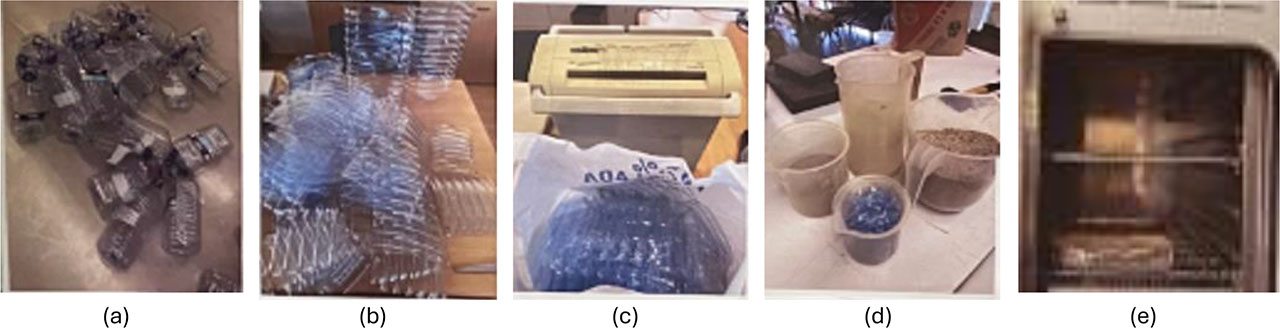
Figure 1:
Specimen preparation process: (a) raw PET bottles; (b) slicing into sheets; (c) shredded rPET fibers; (d) mixture materials (cement, sand, water, and PET fibers); and (e) oven. (Author’s own work)
This change implies a varied interpretation of the underlying mechanisms at 50, pointing to the need for considered amendment to current models. The overall pattern, while stable in some aspects, shows definite deviation in others. Polyethylene terephthalate fibers that had been recycled were blended in, replacing 10% and 20% of the natural sand by volume. The polyethylene terephthalate elements were incorporated individually as reinforcing fibers; they were not a substitute for cement. All mixtures were prepared with an identical cement content and w/c ratio to enable a direct comparison of mechanical performance.
The mortar was placed into molds that were 40 × 40 × 160 mm. The molds were prismatic. For each mixture, 21 specimens were created, amounting to a total mortar volume was 0.005376 cubic meters. (Table 1) provides a summary of the exact mixture compositions, with values given in kilograms per batch. In considering the reported compositions and the chosen mix design, the standard mortar shows mechanical properties akin to typical structural mortars. We anticipate that adding PET fibers will mainly affect flexural strength and how the material behaves after cracking, rather than its compressive strength.
Table 1:
Mix proportions of PET-reinforced mortars (21 prismatic specimens, 40 × 40 × 160 mm)
| Mix ID | Cement [kg) | Sand [kg] | rPET fibers[kg] | Water [kg] | Total mass [kg] | Total volumen [m3] | Estimated compressive strength [MPa] | Estimated flexural strength [MPa] |
|---|---|---|---|---|---|---|---|---|
| PET-10 | 3.76 | 5.16 | 0.34 | 0.597 | 9.86 | 0.005376 | 38–42 | 6–7 |
| PET-20 | 3.76 | 4.59 | 0.68 | 0.597 | 9.63 | 0.005376 | 30–35 | 5–6 |
2.2. Preparation and curing of mortar specimens
Mortar specimens were cast in standardized triple molds measuring 40 × 40 × 160 mm, in line with the requirements of EN 196-1 and EN ISO 679. Three mortar mixes were prepared: a control mix with no rPET (0%), and two mixes in which rPET replaced part of the fine aggregate at 10% and 20%.
For each mixture, we produced six prismatic specimens, giving 18 specimens for each curing condition. Before pouring the mixture, we coated all molds with the release agent Pragnit ST300 so the specimens could be removed later without damage.
The mortar mix was prepared with an Orbegozo AM1800W mechanical mixer to keep the mixture consistent and to spread the components evenly.
After preparing the fresh mix, it was poured into the molds and compacted with a Proeti CE211 automatic cement compactor set to 60 rpm. This step was needed to remove trapped air and reduce the risk of voids that could weaken the specimens and affect their structural integrity. After the specimens reached their initial set, they were removed from the molds and placed under one of two curing conditions.
To obtain a uniform mortar, the mix was prepared with an Orbegozo AM1800W mechanical mixer. First, the dry ingredients (cement and sand) were mixed for 2 minutes. After that, the recycled PET fibers were added slowly to the dry mix to support even dispersion and limit fiber clumping. Afterward, the mixing water was added gradually while mixing continued until a uniform fresh mortar was obtained. The fresh mixture was poured into the molds and then compacted with a Proeti CE211 automatic cement compactor set to 60 rpm. This step removed trapped air and reduced the chance of voids that could weaken the specimens
The first group was stored in a curing chamber at a controlled room temperature, and the second group was kept fully submerged in water (Figure 2). The specimens were cured for 90 days before mechanical testing to allow the material’s properties to develop fully. The specimens made without rPET served as the reference samples, allowing a direct comparison and helping assess how adding rPET changes the mortar’s mechanical behavior.
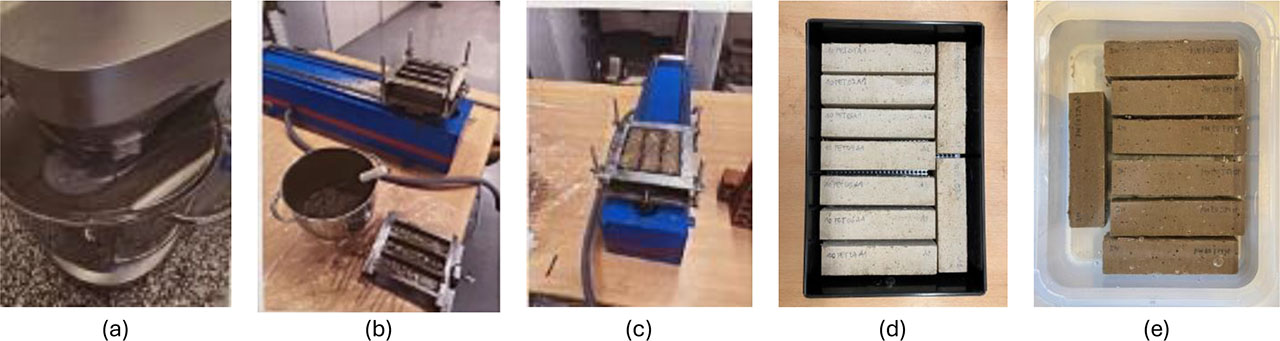
Figure 2:
Manufacturing and curing process: (a) Orbegozo mechanical mixer; (b) CE211 automatic cement compactor; (c) triple molds with fresh mix; (d) test specimens in a curing chamber at ambient temperature; (e) test specimens submerged in water (Own elaboration)
2.3. Test Methodology
After 90 days of curing, the specimens were taken out of their curing conditions and dried in the laboratory until their mass no longer changed. This step was done to keep moisture levels consistent across all samples before thermal exposure, so the results could be compared under the same conditions. The specimens were then heated to 150 °C and 350 °C to assess how the material responds to thermal stress.
We prepared 21 prismatic specimens, each measuring 40 × 40 × 160 mm, for every mortar mix in accordance with EN 196-1. We examined three distinct mixtures for this study. The first was a baseline mortar, containing no rPET fibers. The others were two modified mortars, which included 10% and 20% rPET, respectively, as a volumetric substitution for the fine aggregate.
Therefore, 63 specimens were made, with 21 specimens coming from each mixture configuration. The reference mortar was mixed to provide a standard against which the mechanical characteristics of mortars containing recycled PET fibers could be directly assessed, relative to typical cement mortar. Specimen casting involved the use of standardized triple molds, aligning with the guidelines set forth by EN 196-1 and EN ISO 679.
Before the casting process, a release agent a separation and protection material was brushed onto all the molds. This preparation was important to make sure the specimens could be removed without any damage once they had set. To ensure the consistency of the mortar, all mixtures were prepared with an Orbegozo AM1800W mechanical mixer. This process helped to achieve a uniform distribution of cement, sand, water, and rPET fibers when applicable, which is essential for our research. The newly prepared mortar was placed into molds and then compressed with a Proeti CE211 automatic cement compactor. This process, maintained at 60 revolutions per minute, was intended to remove any trapped air, thereby preventing the formation of voids within the material. Following their initial shaping, the samples were removed from their molds. They were then subjected to two distinct curing processes: one set was placed in a chamber with controlled environmental conditions, while the other was completely immersed in water. All samples cured for 90 days before being mechanically tested, which allowed for sufficient development of their characteristics.
A Nabertherm Mod. N20/HR compact chamber furnace was used for this purpose, equipped with a three-sided radiant heating system on both sides and a silicon carbide (SiC) hearth, ensuring uniform heat distribution throughout the process. After thermal exposure, the specimens were allowed to cool for 24 hours at room temperature, allowing for complete stabilization before the mechanical tests were performed (Figure 3).
Flexural and compression strength tests were performed using an IBERTEST universal testing machine with a capacity of 600 kN, equipped with the specific attachments for each type of test. Data acquisition and analysis were carried out using PCD 2K control software, which enabled the execution of static and dynamic tests with high precision and reliability.
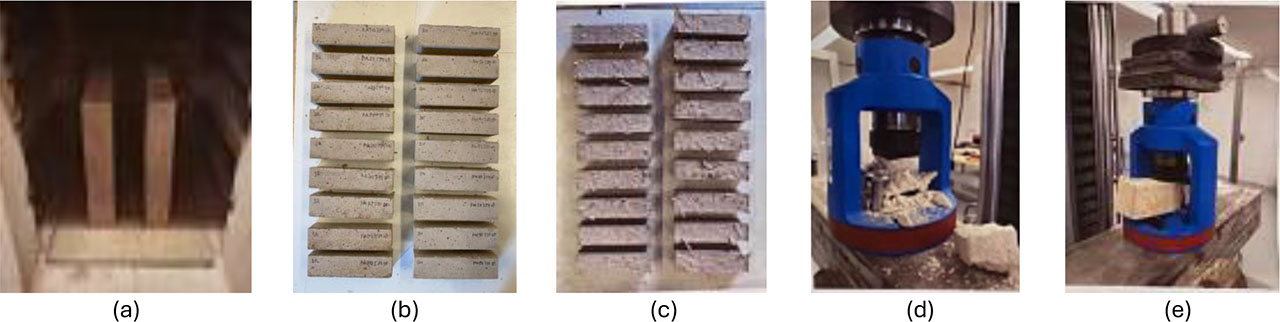
Figure 3:
Testing process: (a) test specimens inside the Nabertherm chamber furnace; (b) control specimens without heat treatment; (c) samples after exposure to high temperatures; (d) compression strength test; (e) flexural strength test (Own elaboration)
3. Results
3.1. Visual Analysis of the Test Specimens
Specimens cured at room temperature and those kept in immersion showed no appreciable differences in appearance, color, or surface texture (Figure 4). This behavior suggests that, under normal curing conditions, both methods produce visually comparable materials, regardless of the curing environment used.
However, when the specimens were subjected to the different temperature steps established, variations were observed in both coloration and cracking patterns (Figure 5). These visual changes are relevant indicators of the physical and chemical transformations that the material undergoes when exposed to thermal stress conditions.
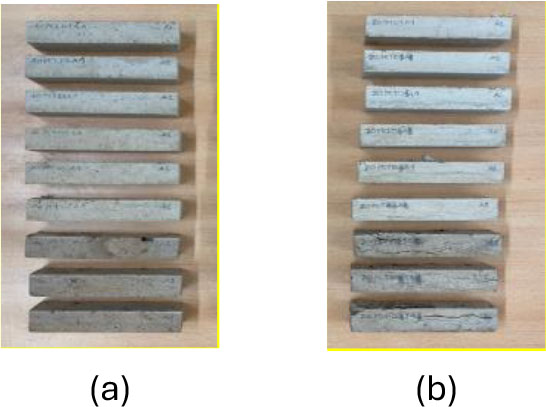
Figure 4:
Specimens with 10% rPET before mechanical testing: (a) cured underwater; (b) cured at room temperature in a curing chamber (Own elaboration)
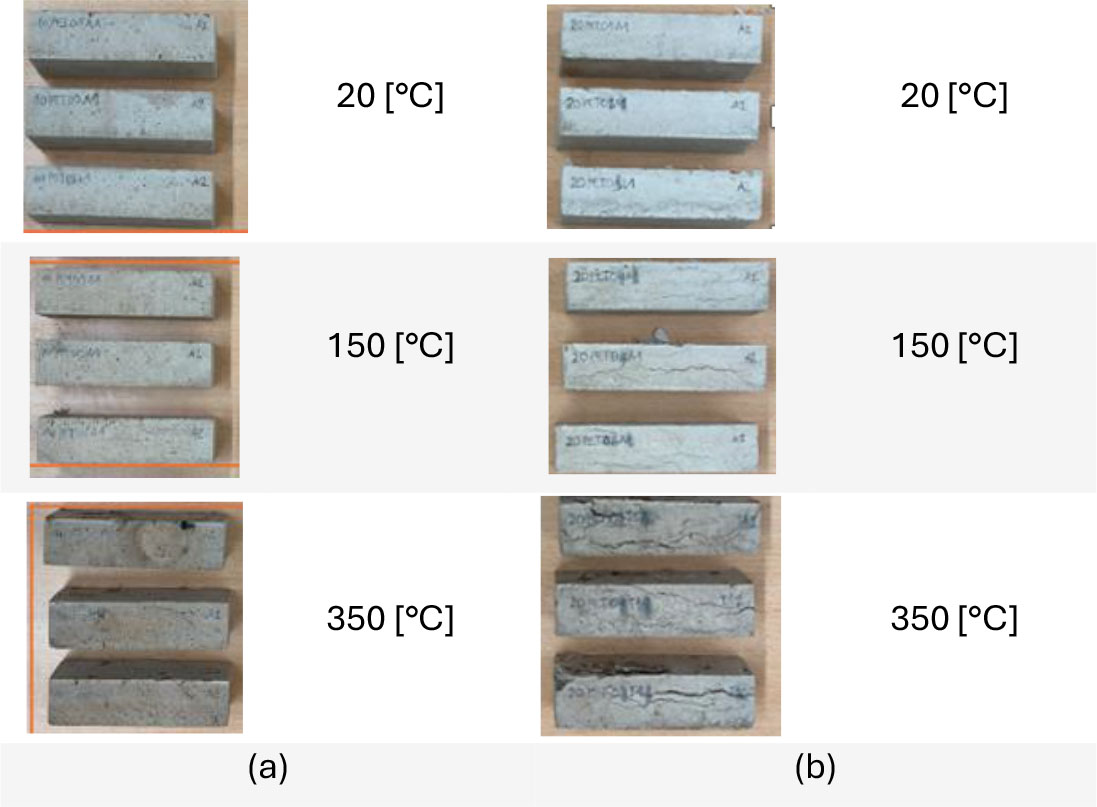
Figure 5:
Specimens cured at room temperature after exposure to different thermal steps: (a) 10% rPET; (b) 20% rPET
3.2. Behavior under Thermal Exposure
After the 90-day curing period, the specimens were exposed to three temperature conditions: 20 °C (reference), 150 °C, and 350 °C. They were then tested in flexure, as shown in Figure 6. For each rPET level (10% and 20%), six prismatic specimens were selected for thermal exposure. The samples were divided into three groups, and two specimens were tested at each temperature level. This method allowed a consistent comparison of how temperature influenced the mechanical behavior of mortars with different rPET contents.
The visual inspection was informative. At 20 °C and 150 °C, the rPET fibers were still visible to the naked eye and kept their shape within the cementitious matrix. At 350 °C, the fibers melted completely and were no longer visible. This melting removed their role as reinforcement and reduced the material’s internal cohesion.
Following the UNE-EN 196-1 standard protocol, all specimens that had already undergone the flexural test were then tested in compression. We applied the same procedure to specimens cured at room temperature and to specimens stored under immersion in Figure 7. This allowed us to collect a full set of measurements on the material’s mechanical behavior across curing conditions and thermal exposure.
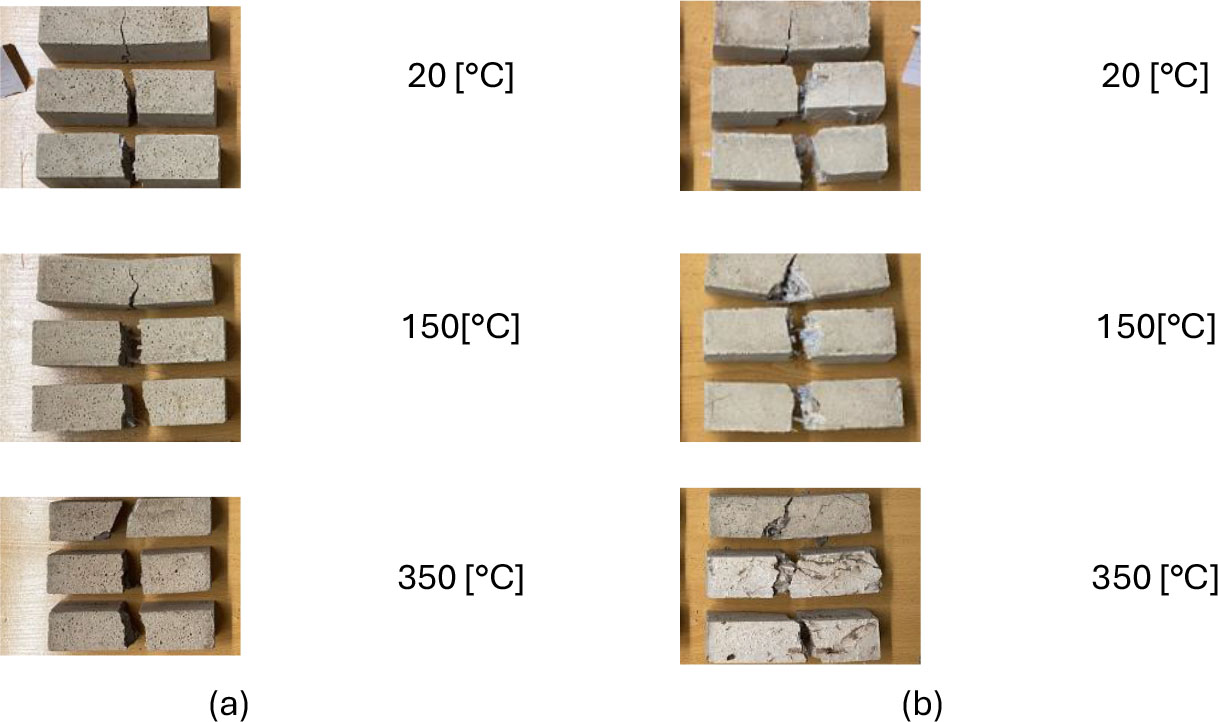
Figure 6:
Specimens cured at room temperature after being subjected to different thermal steps (20°C, 150°C and 350°C) and brought to flexural failure: (a) 10% rPET, (b) 20% rPET. (Own elaboration)
After mechanical testing, we visually examined the specimens to better understand how rPET-reinforced mortars failed. As shown in Figure 7, the water-cured specimens had coherent fracture surfaces after the flexural and compressive tests, and the fracture features varied with the rPET content. At 20 °C and 150 °C, the rPET fibers were still visible in the cementitious matrix and kept their structural integrity, whereas exposure to 350 °C caused the fibers to melt completely. This melting removed their ability to bridge cracks and reduced internal cohesion, which aligns with the measured drop in mechanical strength at higher temperatures.
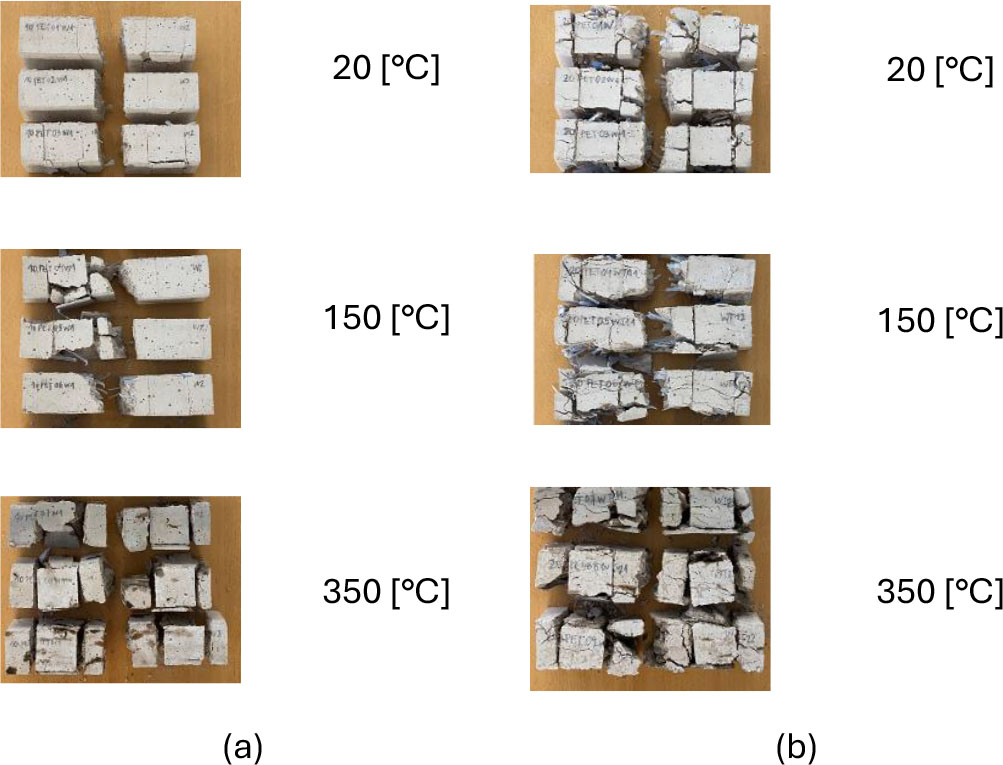
Figure 7:
Cured specimens immersed in water after completing flexural and compression tests: (a) 10% rPET; (b) 20% rPET (Own elaboration)
The failure patterns observed in the test specimens provide us with valuable information about the deterioration mechanisms of the material under different curing and thermal exposure conditions.
3.3. Quantitative Evaluation of Mechanical Properties
Before the flexural and compressive tests, all specimens were conditioned so they had similar moisture content. After the 90-day curing period, the air-cured and water-cured specimens were taken out of their curing conditions and then dried in the laboratory until their mass remained constant.
This conditioning step kept moisture levels consistent across samples during testing, so differences in mechanical results could be compared reliably across curing methods, rPET contents, and thermal exposure levels.
The results obtained from the mechanical tests allow us to thoroughly evaluate the behavior of the mortar under different conditions with rPET. Below, we present the experimental data organized according to the type of test and the curing conditions.
3.3.1. Flexural Strength
(Figures 8) and (Figure 9) show how rPET content and curing conditions affect the flexural strength of the mortars. No reference mortar without rPET (0%) was prepared; the experimental program focused on comparing mortars with two rPET fiber contents (10% and 20%).
(Figure 8) indicates that mortars with 10% rPET tended to have greater flexural strength than those with 20% rPET at all tested temperatures, with the difference most evident under water curing. This supports the conclusion that too much fiber can disrupt the continuity of the matrix and reduce stress transfer. (Figure 9) shows that the curing method affects the results: specimens cured in water consistently had higher values than those cured in air, with the clearest differences at 20 °C and 150 °C. At 350 °C, all mixtures show a clear drop in flexural strength. This is linked to thermal degradation and melting of rPET fibers, which reduces their ability to bridge cracks.
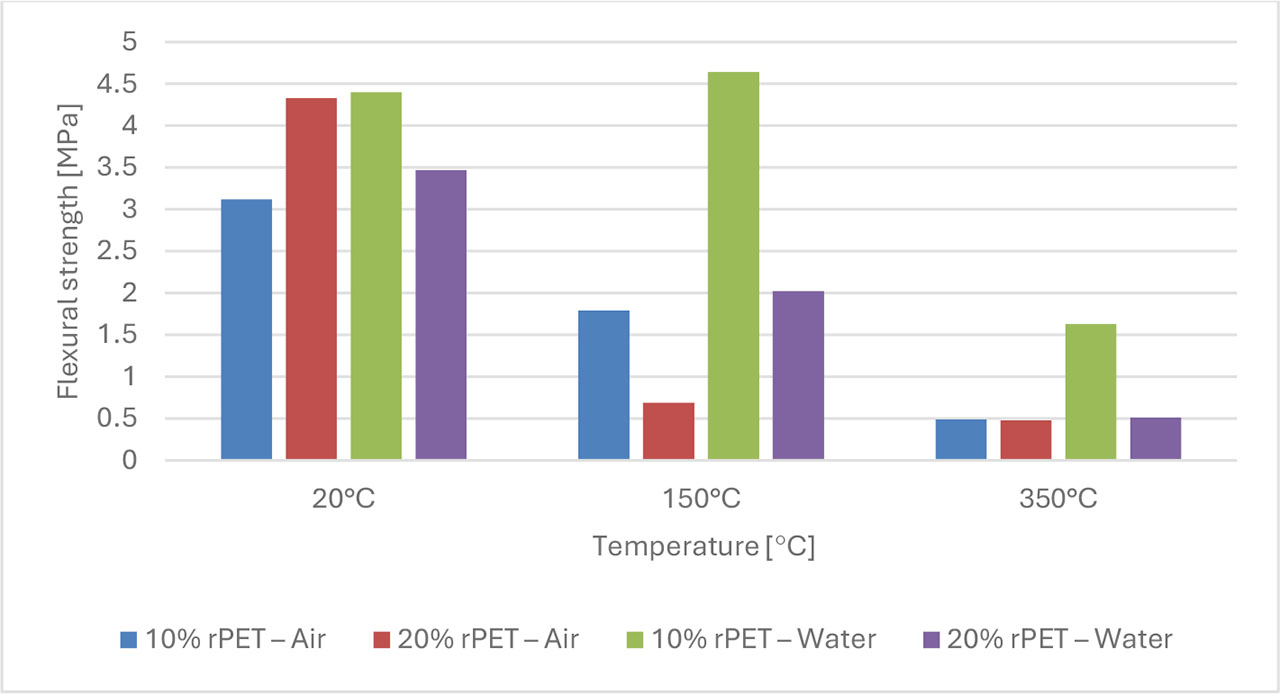
Figure 8:
Comparison of the effect of rPET content on flexural strength
The experimental program did not include a reference mortar with 0% rPET. The results in this study compare mortars with two rPET contents (10% and 20%), rather than comparing them directly with conventional mortar. This point is a limitation of the study, and it will be examined in later research.
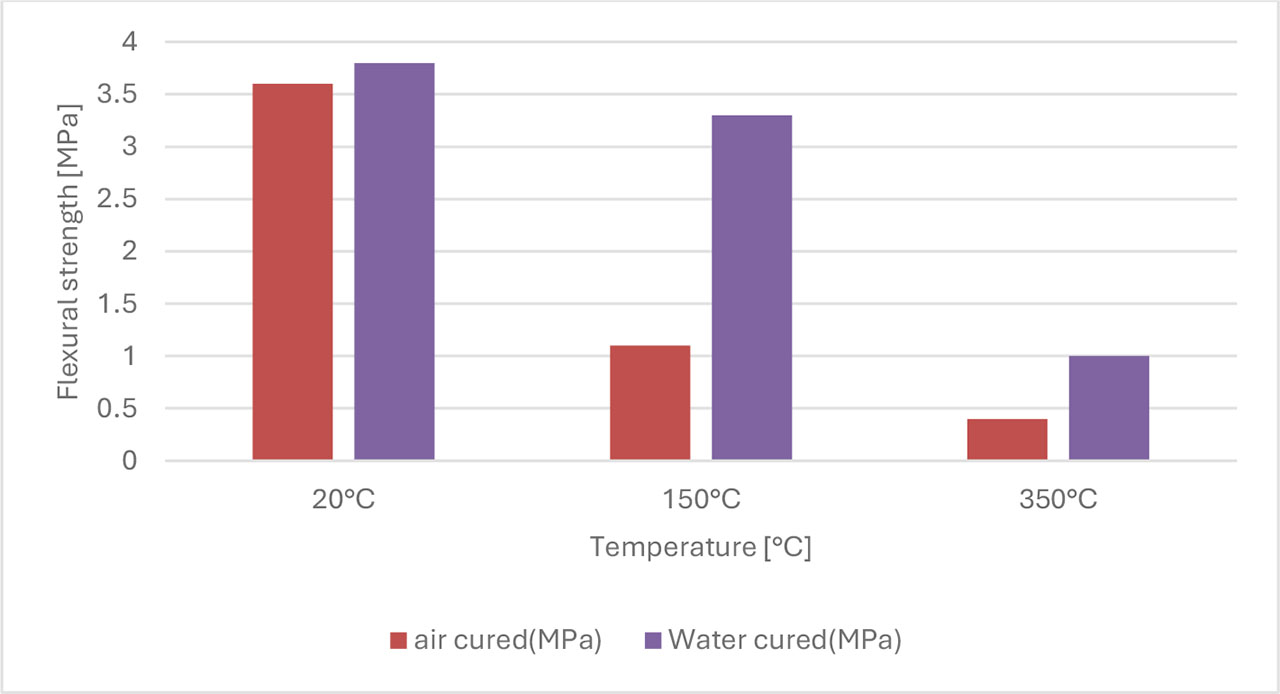
Figure 9:
Effect of Curing on Flexural Test
Figure 10 shows the flexural strength of mortar mixes with 10% and 20% rPET in a radial plot, comparing results across the different curing methods and temperature conditions. This figure supports a direct comparison of how the curing method and thermal exposure, taken together, influence mechanical behavior. The plot indicates that mortars containing 10% rPET show a more uniform and stable flexural response across the tested conditions, with the clearest performance under water curing at 20 °C and 150 °C. By contrast, mixes with 20% rPET show a less consistent response, with clear drops in strength at higher temperatures and when cured in air. The reduced radial profile at 350 °C indicates a clear loss of flexural strength, which is consistent with thermal softening and partial melting of the rPET fibers and the resulting decrease in their ability to bridge cracks. (Figure 10) shows that flexural performance depends on the combined effects of rPET content, the curing method, and temperature.
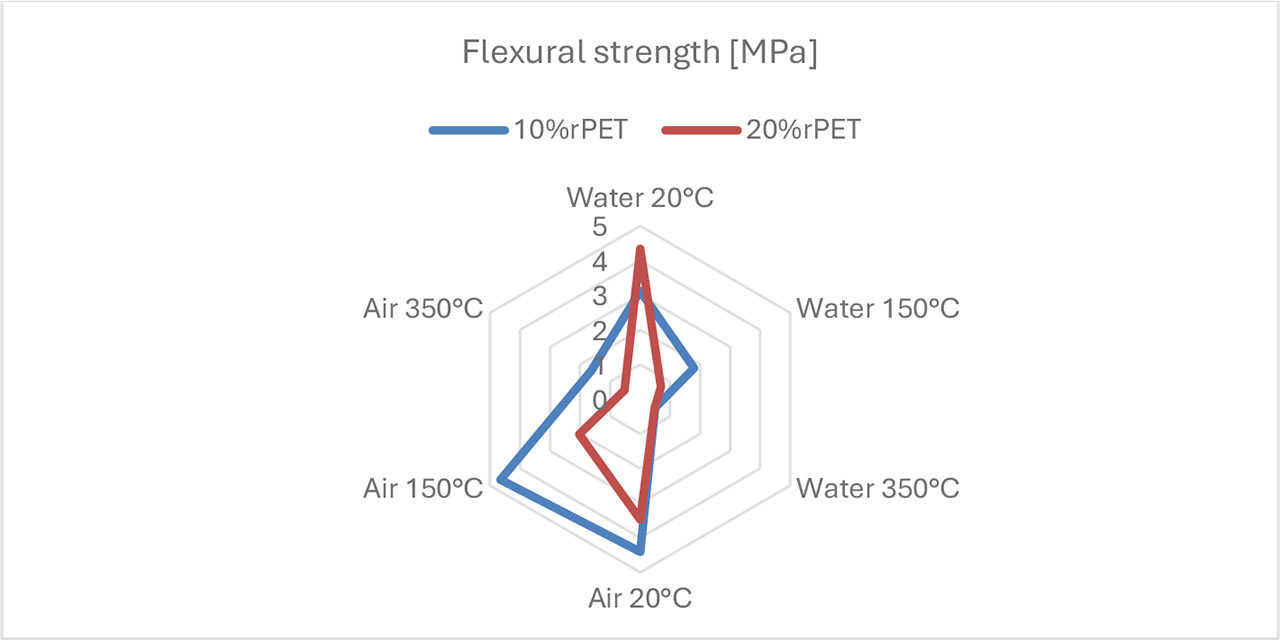
Figure 10:
Radial Performance of Flexural Strength
Across the tests, flexural strength decreased as temperature rose, indicating that mortars with rPET fibers are sensitive to heat. At 20 °C, mortars with 20% rPET that were cured in water showed higher flexural strength than comparable specimens cured in air, which suggests that water curing improves the fiber–matrix interaction. By comparison, the 20% rPET air-cured samples performed worse, especially as the temperature rose. The results suggest that the better flexural performance at 20 °C is mainly linked to the water-cured specimens with 20% rPET. Under these curing conditions, the recycled plastic fibers serve as a flexible micro-reinforcement.
The higher deformation capacity seen in mortars reinforced with rPET fibers may also result from the fibers’ relatively large surface area, which helps limit crack opening and slows the growth of cracks over time. Stronger bonding between the fibers and the surrounding matrix can delay the formation and growth of microcracks, so the material can undergo greater deformation before sudden failure occurs. Recent studies on fiber-reinforced cementitious composites report similar mechanisms, where larger or better-performing fiber geometries increased ductility and toughness by limiting crack growth and improving behavior after cracking (Abdullah et al., 2025; Nguyen et al., 2024). These results suggest that rPET fibers act as flexible micro-reinforcement, allowing the mortar to undergo greater deformation under typical conditions.
This initial performance suggests that rPET may be increasing the mortar’s ductility and toughness, even enhancing its toughness under normal conditions.
However, as the temperature increases, a change in behavior is observed. At 150 °C, mixtures with 10% rPET exhibit better overall performance, especially water-cured mixtures that reach values close to 4.6 MPa. This result indicates greater thermal stability and explains the internal cohesion of the mixtures with 10% rPET, likely due to better arrangement of the plastic particles within the cementitious matrix (the mixture with 20% rPET stands out in performance), even at 150 °C, where cracking and microcracking occur. Upon reaching 350 °C, the strength collapses, with losses of 80% to 90% compared to the initial strengths.
At this temperature, the rPET fibers completely fuse together, creating microcavities and internal cracks within the material. Consequently, the fiber reinforcement disappears, and the matrix loses its ability to conduct stress, a behavior observed for both rPET percentages (10% and 20%).
The curing method has a decisive influence on the mechanical performance of the samples. Water-cured samples exhibit higher fire resistance values, both in initial tests and in samples tested after heat treatment. This behavior is explained by a higher degree of cement hydration, resulting in a denser and less porous microstructure, which contributes to increased stress transfer capacity. Conversely, air-cured mortars show incomplete hydration, which generates a weaker matrix with less internal cohesion. In short, the results confirmed that:
Water curing results in a significant improvement in the flexural strength and thermal stability of the mortar. At the same time, 10% rPET represents the dosage limit that allows for a balance between mechanical performance and thermal response.
The temperature of 350 °C represents the critical limit for the application of materials from which the melting of rPET counteracts a reinforcing function.
All these findings highlight the direct correlation between the thermal and mechanical properties of mortars modified with rPET, as well as the relevant role of the curing method and the amount of recycled material that allows us to act sustainably and efficiently.
3.3.2. Compressive Strength
Compression tests were performed on the halves resulting from the bending tests, following EN 196-1 standards. The results obtained allow the evaluation of the structural behavior of the material under axial loads and its response to different levels of thermal stress.
The compression results stand out and are among the main findings of this study. The specimens cured in water reached compressive strengths that were close to twice those measured for specimens cured under ambient conditions. Because all specimens were dried to the same moisture level before testing, the observed difference is not due to remaining water during the test. Instead, it points to the role of water curing in supporting cement hydration and improving the mechanical performance of the composite material.
The higher compressive strength in the water-cured specimens is likely due to cement hydration continuing more fully and for a longer period under sustained moisture conditions. A steady supply of water supports continued hydration, which forms more products such as calcium silicate hydrate (C–S–H) and results in a denser microstructure with lower porosity. Greater matrix compactness improves load transfer and increases bonding at the fiber–matrix interface. By contrast, air curing reduces hydration because moisture leaves the material, which increases capillary porosity and leads to weaker bonding at the interface. These microstructural differences account for the better mechanical performance of water-cured mortars reinforced with rPET, especially when tested in compression.
(Figure 11) shows that at room temperature (20 °C), water-cured specimens have higher compressive strength than air-cured specimens. As an example, mortars containing 10% rPET reach an average compressive strength of about 31 MPa when cured in water, while similar specimens cured in air reach about 14 MPa. This difference suggests that moist curing allows cement to hydrate more fully, which produces a denser microstructure, lowers porosity, and improves load transfer capacity.
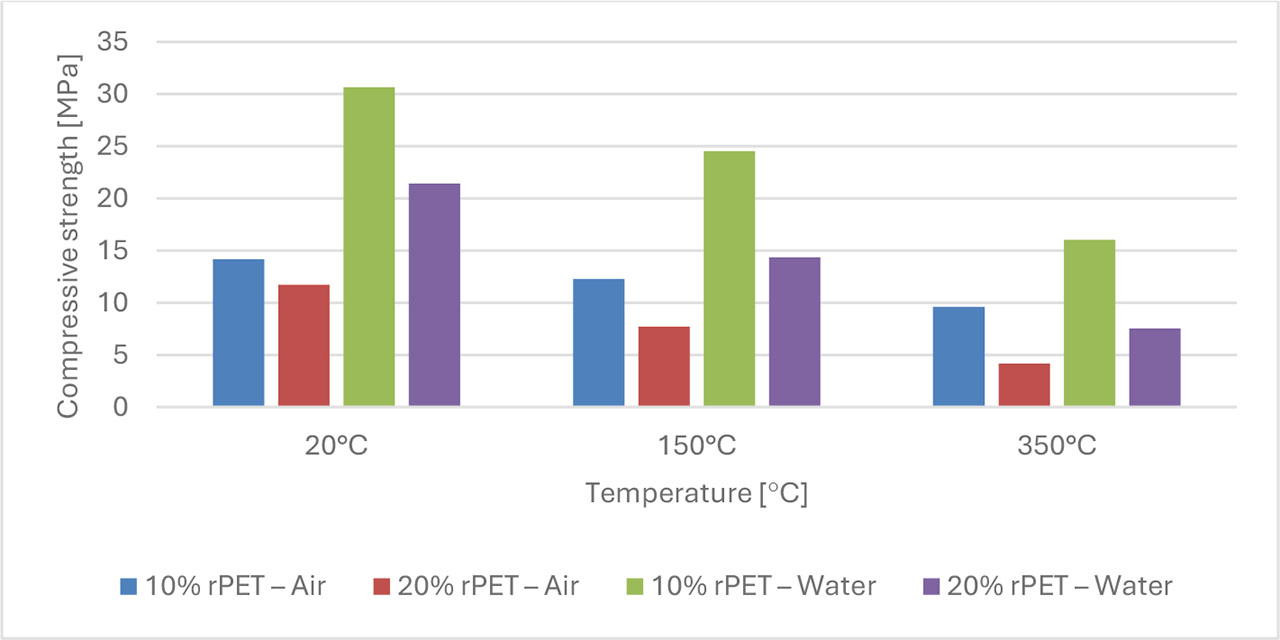
Figure 11:
Comparison of the effect of rPET content on compressive strength
At room temperature, samples with 10% rPET cured in water reach average values close to 31 MPa, while those cured in air are around 14 MPa. This substantial difference of 121% confirms that moist curing allows for more complete cement hydration, resulting in a denser microstructure with lower porosity. The continuous availability of water during the curing period facilitates hydration reactions, optimizing the formation of hydrated products and reducing the capillary pore network that would weaken the matrix.
(Figure 12) shows how the curing method varies when the temperature is increased. Across all tested temperatures, water-cured mortars show better performance than air-cured specimens. When cured in water at 150 °C, samples containing 10% rPET retained approximately 21. The measured pressure was 5 MPa, compared with 9 MPa. Air-cured samples reached 2 MPa, which suggests that the denser microstructure formed during moist curing improves resistance to thermal degradation. At 350 °C, the water-cured specimens still show nearly twice the compressive strength of the air-cured specimens, which suggests stronger internal cohesion even though cementitious phases dehydrate and the rPET fibers melt.
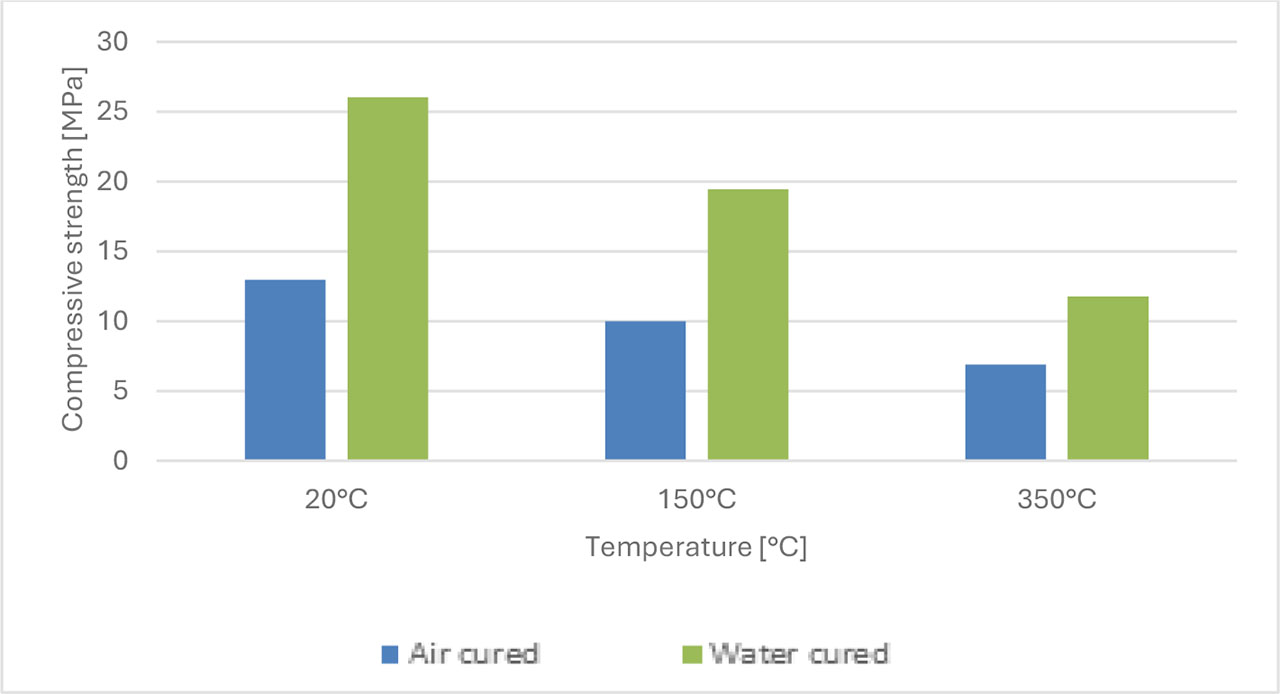
Figure 12:
Effect of the Curing Method on the Compression Test
Water-cured mortars exhibit greater strength at all temperatures tested, confirming better hydration and a denser microstructure. At 150°C, the difference between curing methods remains stable, with values of 21.5 MPa for water curing versus 9.2 MPa for ambient curing (both with 10% rPET). This 134% difference demonstrates that the dense microstructure developed during moist curing provides greater stability under initial thermal stress.
However, the most remarkable behavior is observed at 350°C, where water curing retains almost twice the strength compared to ambient curing. Specimens with 10% rPET cured in water maintain 6.8 MPa, while their air-cured equivalents retain only 3.1 MPa. This phenomenon indicates that the more consolidated and cohesive structure of moist curing offers greater resistance to thermal degradation mechanisms, including the dehydration of cementitious products and the melting of rPET.
(Figure 13) compares compressive behavior using a radial plot that relates compressive strength to rPET content, curing method, and temperature. The figure indicates that increasing the rPET content from 10% to 20% is associated with a consistent reduction in compressive strength across all test conditions. This behavior can be explained by the larger fiber volume, which raises internal porosity and reduces the continuity of the matrix, leading to poorer stress transfer and lower load-bearing capacity.
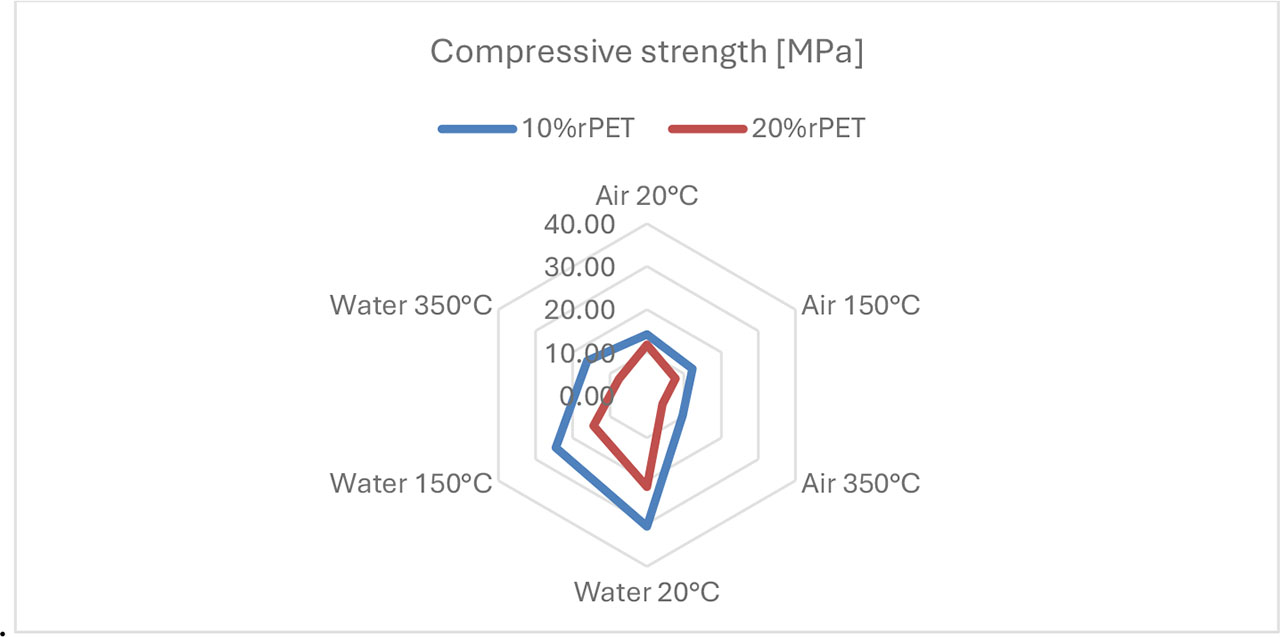
Figure 13:
Radial Performance of Compressive Strength
Increasing the percentage of rPET from 10% to 20% results in a uniform decrease in compressive strength, regardless of the situation. The drop in compressive strength as rPET content increases from 10% to 20% is likely due to microstructural changes caused by the larger fiber volume, which can introduce more voids and reduce the continuity of the load-bearing matrix. Although rPET fibers can improve crack control and ductility during flexural loading, their low stiffness and hydrophobic surface can reduce the matrix’s capacity to carry load in compression. When the fiber content is high, the cement-based matrix becomes less continuous and less dense. This change tends to raise porosity and can reduce the quality of the interfacial transition zone between the fibers and the cement paste, which may lower bonding and overall strength.
Excessive fiber content can lead to fiber clumping and trapped air during mixing, which create local stress concentrations and reduce the transfer of compressive load through the material. Related findings have been reported in earlier studies: as fiber volume fraction increases, compressive strength tends to decrease in a consistent way, which is often linked to breaks in matrix continuity and weaker fiber–matrix bonding (Fibers, 2024). The results suggest that, for the mixtures tested, about 10% rPET is the best content; above this level, the reduction in compressive strength is greater than any reinforcing benefit.
Under ambient conditions at 20°C, the strength drops from 14.0 MPa (10% rPET) to 11.5 MPa (20% rPET), representing a decrease of 17.9%. With water curing, the strength loss is from 31.0 MPa to 26.5 MPa, a decrease of 14.5%.
This behavior persists across the entire temperature range analyzed. At 150°C, the differences are 34.1% for ambient curing and 24.2% for water curing. Despite the severe degradation experienced by all configurations at 350°C, the 10% rPET still outperforms the others with values of 3.1 MPa (ambient) and 6.8 MPa (water) compared to the 20% rPET values of 2.4 MPa and 4.2 MPa.
This means there is a substitution limit below which satisfactory mechanical properties can be obtained, which aligns with previous findings that higher rPET content dilutes the cementitious matrix, resulting in fewer contacts between cement and sand particles and, consequently, a decrease in material integrity. Furthermore, the fiber-matrix structure multiplies as plasticity increases, thereby increasing the number of potential weak points, particularly under thermal loads.
3.3.3. Breaking Load
Table 2 reports the breaking loads measured in the bending tests, in kilonewtons (kN), along with the corresponding flexural stress at failure (MPa). The results are grouped by temperature (20 °C, 150 °C, and 350 °C), curing condition (air or water), and rPET replacement level (10% or 20%).
At 20 °C, all mixtures show their highest breaking load values. Specimens with 10% rPET cured in water showed the highest performance, with breaking loads of about 13–15 kN, which were higher than those of specimens with 20% rPET cured under the same conditions. This pattern indicates that a moderate amount of rPET can improve bonding between the cementitious matrix and the polymer particles, provided that curing conditions are appropriate.
Raising the exposure temperature to 150 °C leads to a clear drop in breaking load for most mixtures. This decrease is likely due to heat-driven breakdown of the polymer phase and the gradual loss of both physically and chemically bound water from the cement matrix. Even so, the 10% rPET specimens cured in water still show higher breaking loads, around 12–14 kN. This pattern suggests better thermal stability and stronger internal bonding, likely because the moist curing kept the material hydrated for a longer time.
At 350 °C, the breaking load drops sharply in all mixtures and is usually below 6 kN, indicating clear damage to the cementitious microstructure and weaker adhesion between the matrix and the rPET inclusions. At this temperature, the role of curing conditions is less noticeable because the intense heat causes irreversible damage to the composite structure. Table X shows that the curing conditions, the rPET content, and the level of thermal exposure vary together in a consistent way. Across all test temperatures, water curing produced higher breaking load values, which supports the view that it improves mechanical performance and helps the material retain strength at higher temperatures. Keeping the rPET content at about 10% seems necessary to balance strength retention, ductility, and thermal stability.
Table 2:
Average breaking load and corresponding flexural stress at failure for different curing conditions, temperatures, and rPET contents
| Temperature [°C] | Curing condition | rPET content [%] | Breaking load [kN] | Stress at failure [MPa] |
|---|---|---|---|---|
| 20 | Air | 10 | 22 | 3,1 |
| 20 | Air | 20 | 18,5 | 4,3 |
| 20 | Water | 10 | 49 | 4,4 |
| 20 | Water | 20 | 34 | 3,5 |
| 150 | Air | 10 | 19,5 | 1,8 |
| 150 | Air | 20 | 11,5 | 0,7 |
| 150 | Water | 10 | 39 | 4,6 |
| 150 | Water | 20 | 22,5 | 2 |
| 350 | Air | 10 | 14,5 | 0,5 |
| 350 | Air | 20 | 6 | 0,5 |
| 350 | Water | 10 | 25,5 | 1,6 |
| 350 | Water | 20 | 10,5 | 0,5 |
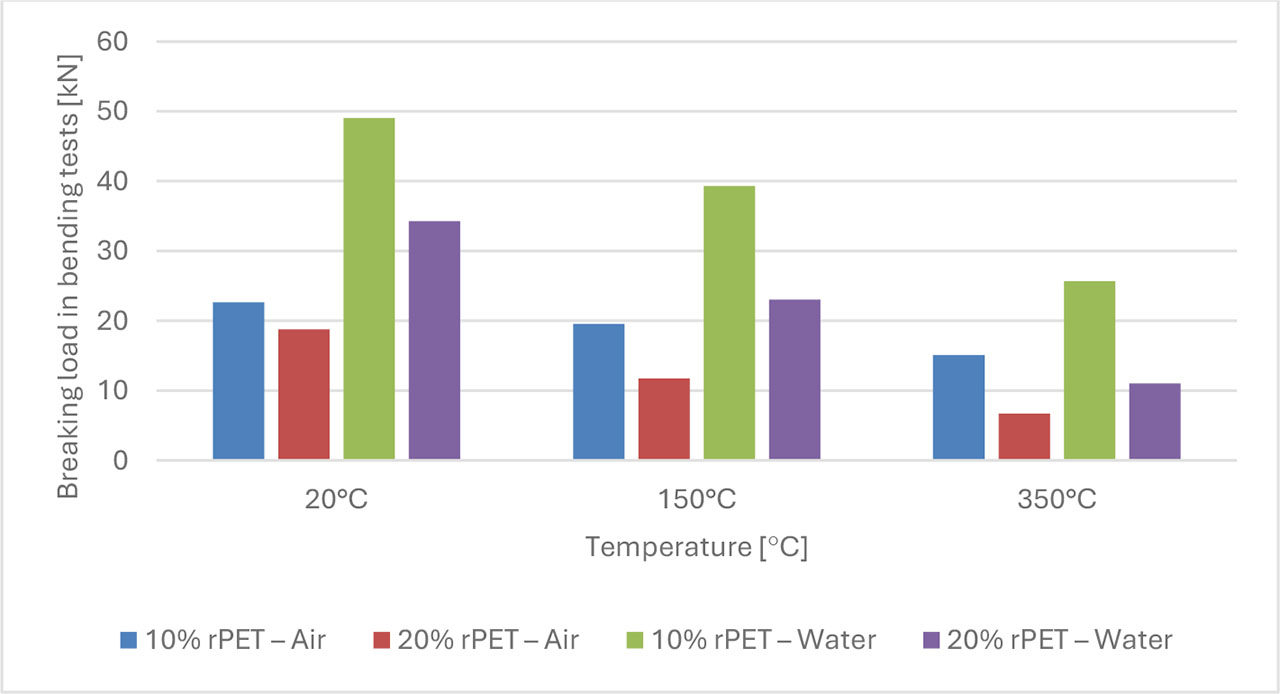
Figure 14:
Comparison general by temperature and curing condition
(Figure 14) shows the breaking load values (kN) obtained on mortars with 10% and 20% rPET replacement. The samples were exposed to different temperature steps (20 °C, 150 °C, and 350 °C) and subjected to curing conditions. which are environment and water .
The breaking load values at 20°C are those that show the highest values for both curing conditions, with the samples with 10% water-cured rPET, These materials achieve a breaking load of 1.32 kN, surpassing those of 20% rPET under similar conditions. This indicates that a moderate rPET content can promote better integration between the cementitious matrix and the plastic particles when cured properly.
Increasing the temperature to 150°C resulted in a significant reduction in the load-bearing capacity of most samples, attributable to the thermal degradation of the polymer material and the loss of structural moisture in the matrix. However, the specimens with 10% rPET cured in water maintained a remarkable performance of 1.40 kN, demonstrating improved thermal stability and internal cohesion due to the moist curing process.
At 350°C, all materials experience a drastic reduction in breaking strength (below 0.5 kN), confirming the deterioration of the cementitious structure and the loss of adhesion between the paste and the rPET inclusions. Within this temperature range, the influence of curing becomes less critical, as the extreme temperatures irreversibly affect the microstructure of the composite.
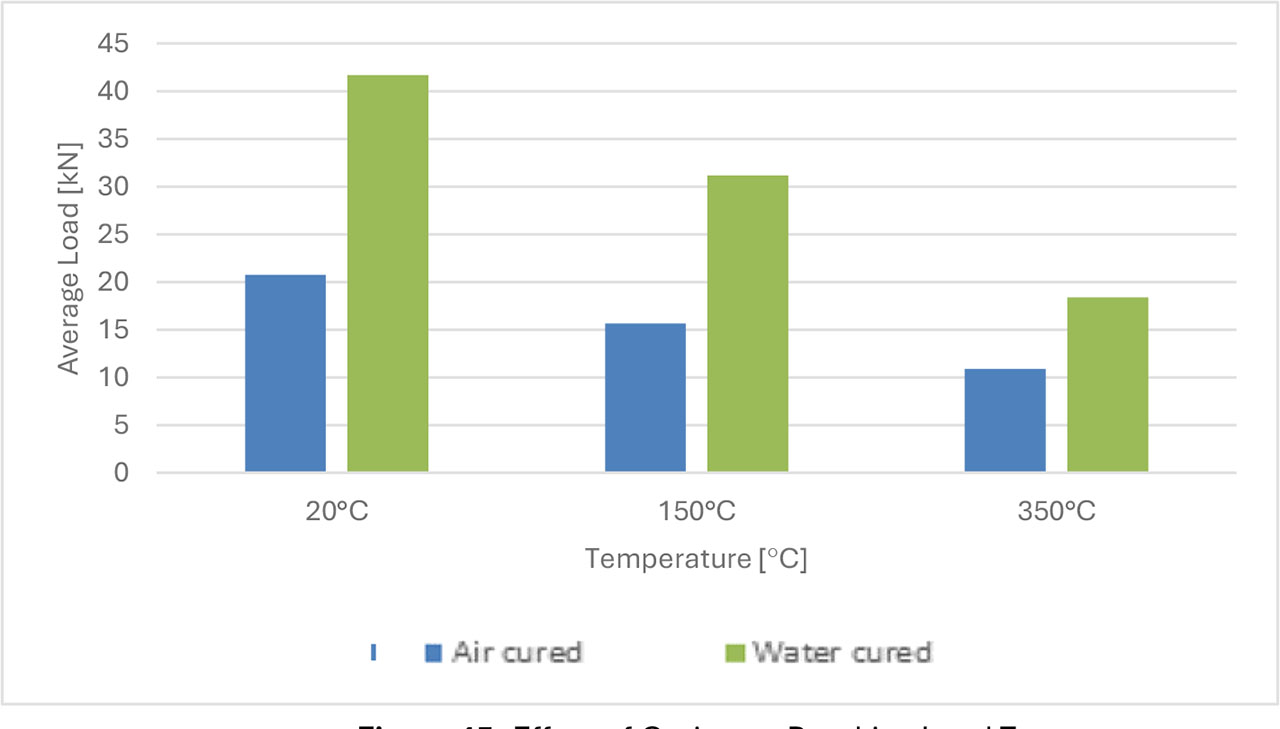
Figure 15:
Effect of Curing on Breaking Load Test
(Figure 15) summarizes the effect of the curing method on the average breaking load for each temperature evaluated. A consistent difference is observed between the specimens cured in ambient conditions and those cured in water, with the latter being systematically stronger.
At room temperature (20 °C), both conditions show similar values (≈1.10 kN), suggesting that initial water curing primarily benefits medium- and long-term durability, rather than immediate strength. However, when the exposure temperature is raised to 150 °C, the advantage of water curing approaches the average load (1.00 kN vs. 0.38 kN). This behavior is related to the improved hydration of the cementitious compounds. achieved during wet curing, which favors matrix densification and a lower presence of microcracks.
In exposure to 350 °C, although at temperatures of 350 the absolute values are low, the pattern is maintained: water curing retains a higher load capacity (0.33 kN) compared to ambient curing (0.15 kN), demonstrating greater thermal resilience of the properly hydrated material see (Figure 16).
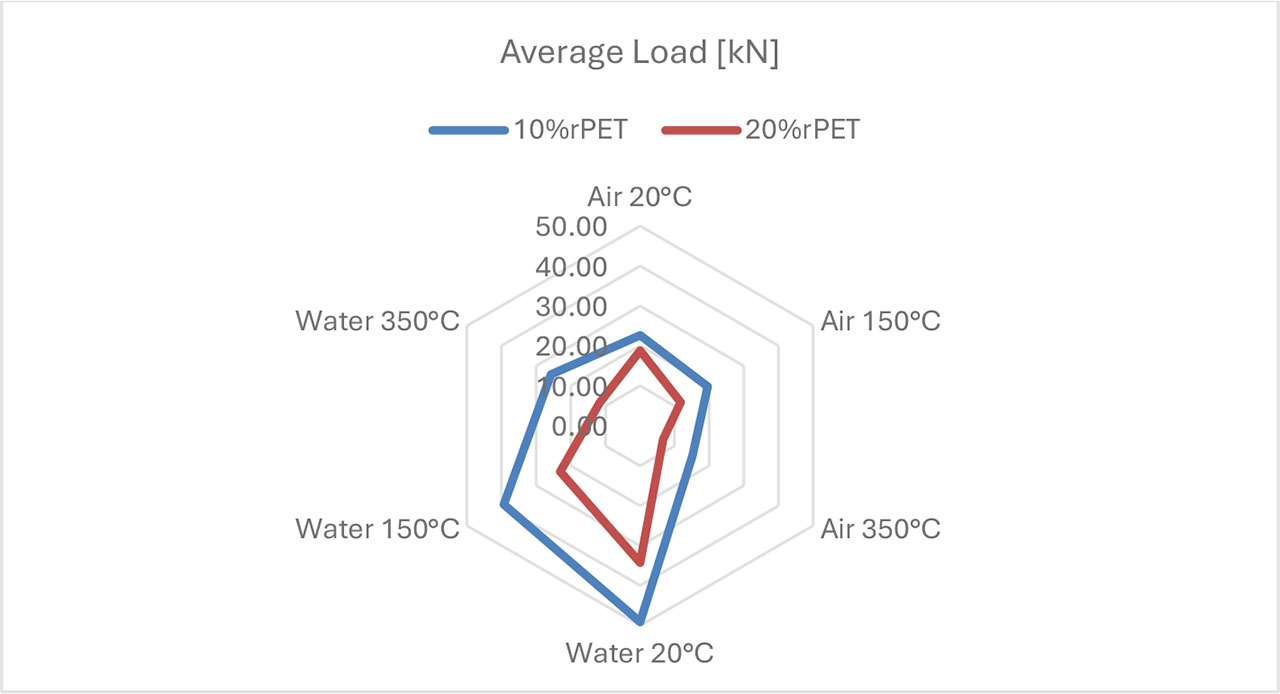
Figure 16:
Radial Performance of the Breaking Load Resistance
The breaking load values follow trends consistent with the strength results, confirming the direct correlation between both parameters. It is noteworthy that the water-cured specimens not only exhibit greater strength but also a greater energy absorption capacity before fracture, suggesting more ductile behavior of the material when properly cured.
Taken together, the results confirm that the Moist curing represents an essential condition for optimizing the mechanical performance of mortars with the addition of rPET, and the proportion of said additive must be kept within moderate ranges to maintain a balance between strength, ductility and thermal stability.
4. Discussion
The results obtained in this research allow for a deeper understanding of the behavior of mortars modified with recycled polyethylene terephthalate (rPET) fibers under the combined influence of temperature and curing method. In general, the tests demonstrate that both the curing condition and the percentage of rPET incorporation have a significant impact on the mechanical properties and thermal stability of the material, highlighting the importance of controlling both factors to ensure optimal performance of the cementitious compound.
4.1. Effect of the curing method
Water curing has become the optimal method for developing the mechanical properties of mortar with rPET. Tests have shown that water-cured specimens achieved higher strengths than those cured in ambient conditions; the differences can be up to double (for example, 31 MPa in compression versus 14 MPa for the system with 10% rPET). This behavior is explained by the more complete hydration process of the cement, which is favored by the availability of water that reduces internal porosity and promotes the formation of a denser and more homogeneous microstructure.
In contrast, air-cured samples exhibit partial hydration, resulting in a matrix with a greater number of capillary voids and less cohesion between the paste and the aggregate particles. This condition leads to lower flexural and compressive strengths, as well as greater susceptibility to thermal cracking. Therefore, the curing method not only influences initial strength but also the material’s ability to maintain its structural integrity under thermal stress.
4.2. Effect of rPET content
Analysis of the results reveals that the rPET content plays a dual role in the mortar’s mechanical behavior. At room temperature (20 °C), the addition of 20% rPET results in a slight increase in flexural strength, demonstrating a flexible micro-reinforcement effect that allows for better stress distribution and greater deformation capacity before fracture. This behavior is associated with the fibers acting as bridges between microcracks, delaying their propagation and improving the material’s toughness.
However, this beneficial effect is drastically reduced when the material is subjected to temperatures above 150 °C. Under these conditions, the rPET fibers begin to lose stiffness and deform thermally, which decreases adhesion to the cementitious matrix and generates detachment zones that weaken internal cohesion. The more stable performance observed in mixtures with 10% rPET suggests that there is an optimal addition limit, beyond which the accumulation of plastic fibers leads to increased porosity and a reduction in the material’s structural continuity.
4.3. Behavior under thermal exposure
The thermal-mechanical analysis of the mortars shows that exposure to high temperatures has a significant effect on the degradation of their properties. At 150 °C, a moderate reduction in both flexural and compressive strength is observed; however, specimens with 10% rPET cured in water retain approximately 4.6 MPa in flexural strength, indicating improved thermal stability and matrix cohesion. This result demonstrates that a balanced combination of rPET content and proper curing can partially mitigate the adverse effects of heat.
At 350 °C, the behavior changes radically: the rPET fibers melt completely, creating microvoids and channels within the mortar. These internal discontinuities act as stress concentration points, facilitating cracking and drastically reducing strength (up to 80–90% less than the initial conditions). In this scenario, the difference between 10% and 20% rPET It becomes insignificant, as the plastic material completely loses its reinforcing capacity. This loss of microstructural integrity defines a clear thermal limit for the application of these compounds.
4.4. Failure patterns and microstructural transformations
Macroscopic and visual observations following thermal testing allow for the correlation of color changes, cracking, and surface texture with internal material transformations. Melting rPET at 350 °C not only eliminates the reinforcement but also alters pore morphology, resulting in a heterogeneous structure with low stress transfer capacity. In water-cured samples, cracks are less pronounced and more uniformly distributed, indicating greater toughness and energy absorption capacity before fracture.
These results confirm that the curing method and the percentage of rPET not only affect strength values but also the failure mode. Water-cured mortars tend to exhibit more ductile and gradual failures, while air-cured mortars show brittle and sudden ruptures. This behavior is crucial for applications where ductility and energy absorption are important design parameters, such as in non-structural or prefabricated elements requiring toughness against impact or vibration.
The results of this study align with earlier findings reported in the literature. Gandel et al. reported comparable gains in mechanical properties and crack control in concretes made with fibers or alternative binders. (2023). Regarding sustainability-focused materials, the tested concrete behaves in line with the pattern reported by Ahmed et al. This aligns with (2025) and with Al-Luhybi and Qader (2021), who found that recycled materials can be used with little loss in structural performance. The measured structural response follows trends similar to those reported in numerical studies of reinforced concrete members reinforced with BFRP bars (Almutairi et al.). (2025) supports the use of alternative reinforcement systems. Using waste-derived geopolymer materials is consistent with the conclusions reported by Hilal et al. A 2024 study examined whether sustainable lightweight concrete can be used reliably in structural applications.
Recent papers in Civil and Environmental Engineering show that research on sustainable materials and structural behavior is still adding useful evidence for work on cementitious composites. Husain and Jomaa’h (2025) examined which factors influence the compressive strength of cement-based systems designed to reduce environmental impact, noting that the choice of materials and sustainability goals can shape mechanical performance; this is consistent with the current results for rPET-modified mortars tested under different conditions. Trojanová and Beňová (2025) proposed multi-criteria methods for infrastructure design that focus on integrated performance assessment, with environmental and mechanical factors that match this study’s focus on how temperature and curing affect rPET fiber-reinforced mortars. Including these recent studies helps place our findings within current research aimed at improving the sustainability and mechanical reliability of civil engineering materials.
4.5. Limitations and future research
This study has several limits that should be considered when reading the results. The sample was drawn from a narrow setting, which may limit how well the findings apply to other groups or contexts. The design was cross-sectional, so the analysis cannot address changes over time or support strong causal claims. Measures relied in part on self-report, which can introduce recall error and social desirability bias. Some relevant factors were not measured, so the models may omit variables that shape the observed patterns. Future research should test the same questions with larger and more diverse samples and in different sites. Longitudinal designs would allow closer study of timing and direction of effects. Mixed-method work could add detail on how participants interpret key constructs and why certain patterns appear. Replication with alternative measures and analytic approaches would also help check whether the findings hold under different assumptions.
The experimental program was carried out at three temperature levels, 20 °C, 150 °C, and 350 °C, chosen to represent room conditions, moderate heating, and strong thermal damage to the material. Although this study did not test intermediate temperatures such as 200–250 °C, which align with PET softening and melting, or higher temperatures of 500–600 °C, which relate to major changes in the cement matrix, the chosen temperature set is sufficient to identify the main mechanical and microstructural patterns in rPET-modified mortars.
The results show a steady decline in mechanical performance as temperature rises. They also show that curing conditions strongly shape the outcome. In practical terms, there appears to be a thermal limit near 300–350 °C, after which rPET no longer contributes meaningful reinforcement. Future studies should include a more detailed temperature profile and repeated heating and cooling cycles to clarify the transition mechanisms and assess long-term thermal durability. These studies would add to the current results and help refine rPET-reinforced mortars for particular service conditions.
5. Conclusion
The mechanical properties of rPET mortar depend significantly on the curing method. Water curing allows for complete cement hydration, promoting the growth of a denser and harder microstructure, which can result in compressive and flexural strength values twice as high as those achieved with ambient curing. This result highlights the importance of providing an appropriate curing process to achieve maximum material performance.
The rPET dosage is the most balanced for mortar, based on appropriate values that combine mechanical strength and thermal stability. Although 20% rPET yields higher flexural strength values at room temperature, the performance of this dosage decreases drastically as the temperature increases, demonstrating that an overconcentration of plastic fibers alters the matrix cohesion and leads to increased porosity.
Exposure to high temperatures progressively alters the mechanical properties of mortar. At 150 °C, the fibers partially retain their structure and act as reinforcement, while at 350 °C they completely melt, deactivating the reinforcement, causing microvoids, and reducing strength by 80% to 90%. This constitutes a thermal limit for application at temperatures around 300–350 °C, above which the mortar loses its structural integrity. Water-cured mortars containing 10% rPET exhibit good performance at temperatures up to 150 °C, demonstrating adequate strength and greater ductility under mechanical loads. This makes them a good alternative for non-structural applications at lower temperatures, such as coatings or decorative elements.
The addition of rPET to mortars is one of several techniques for valorizing plastic waste, which also reduces the environmental impact of the construction sector. Its controlled use allows its benefits to be harnessed without compromising the mechanical properties of the compound, reinforcing the trend towards more sustainable and circular materials.
To delve deeper into the study of surface or chemical treatments that increase the compatibility between rPET and cement paste. Also, to analyze the material’s behavior under ‘heating-cooling’ thermal cycles, as well as to evaluate the use of mineral or polymer additives to increase thermal stability and reduce high-temperature resistance.
Acronyms
| Acronym | Meaning |
|---|---|
| rPET | recycled polyethylene terephthalate |
| PET | polyethylene terephthalate |
| SiC | silicon carbide |
| EN | European Standards Norm |
| UNE | Spanish Association for Standardization |
| CEM II/B-L 32.5 N | Type of Portland cement according to European regulations |
| PCD 2K | Data acquisition and control software for mechanical testing |
Acknowledgements
The authors acknowledge the financial support provided by San Pablo CEU University through the research project “Analysis of the structural behavior of concrete subjected to high temperatures manufactured with recycled materials to obtain sustainable materials (MCP22VEM)”, developed within the ARIE Research Group (Registration number: G20/6-06, San Pablo CEU University). The laboratory facilities of the Institute of Technology at San Pablo CEU University are gratefully acknowledged for their technical support during the experimental program. Additionally, the authors thank the company SEVELAR for supplying the plastic waste used in this study.
This work was supported by San Pablo CEU University through the research project MCP22VEM, developed within the ARIE Research Group (Registration number: G20/6-06, San Pablo CEU University). The authors acknowledge the technical support provided by the laboratory facilities of the Institute of Technology at San Pablo CEU University and thank SEVELAR for supplying the plastic waste used in this study.
Notes
[1] Contributed by Author Contributions
M.E.M.T. conceived and designed the study and supervised the research process. M.I.P.H. conducted the experiments, including specimen preparation, curing procedures, and mechanical testing, and collected the data. J.C.D. contributed to the experimental methodology and analysis of mechanical test results. C.M.H. contributed to the interpretation of results and preparation of figures and tables. R.A.G.L. contributed to data interpretation, critical revision of the manuscript, and overall scientific supervision. All authors critically reviewed and approved the final version of the manuscript and agreed to be accountable for all aspects of the work.