

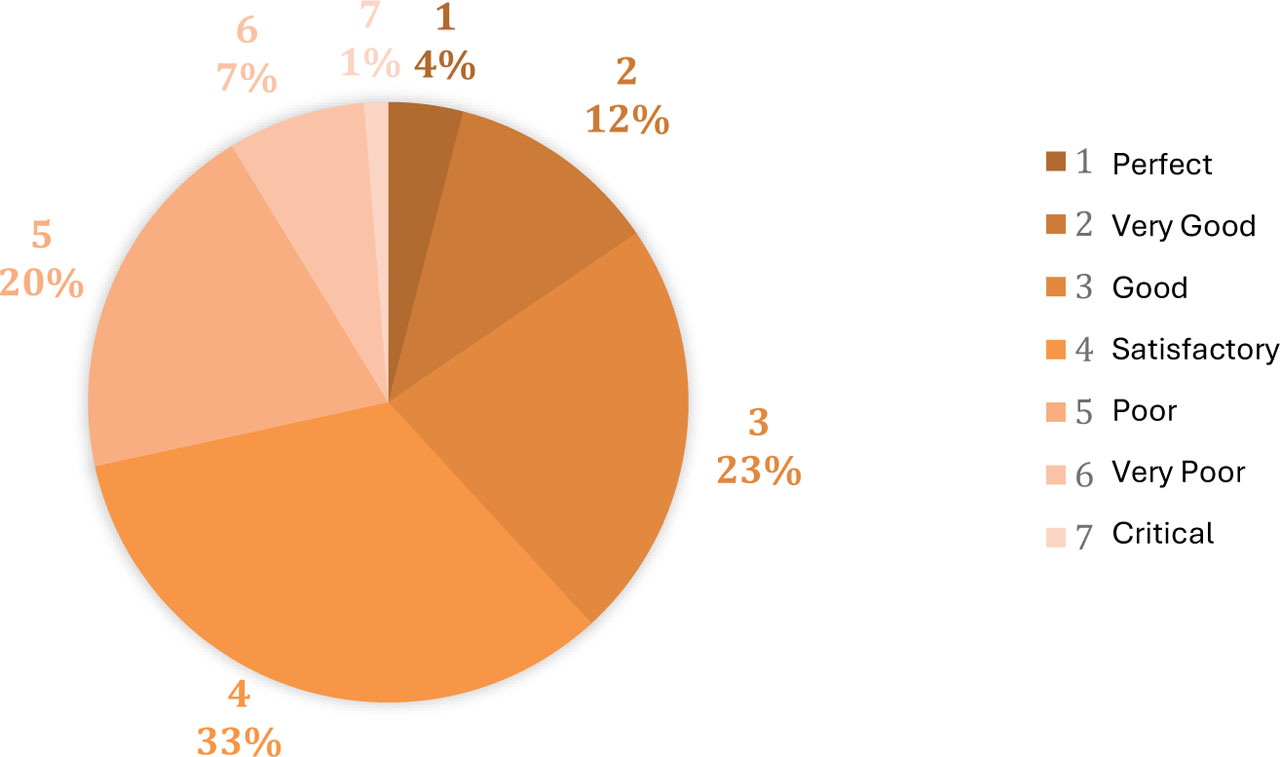
Figure 1:
Structural and technical Condition of Prestressed Bridges in Slovakia
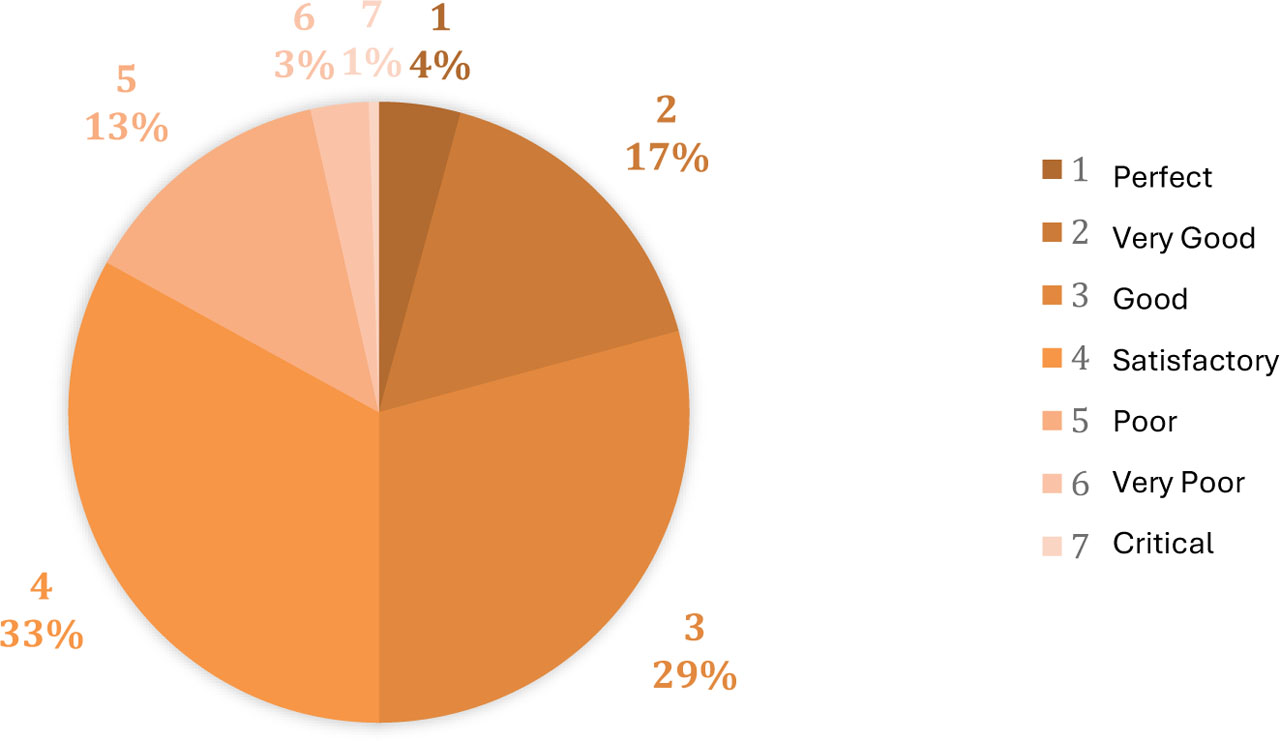
Figure 2:
Structural and technical Condition of Prestressed Bridges in Slovakia after year 1975
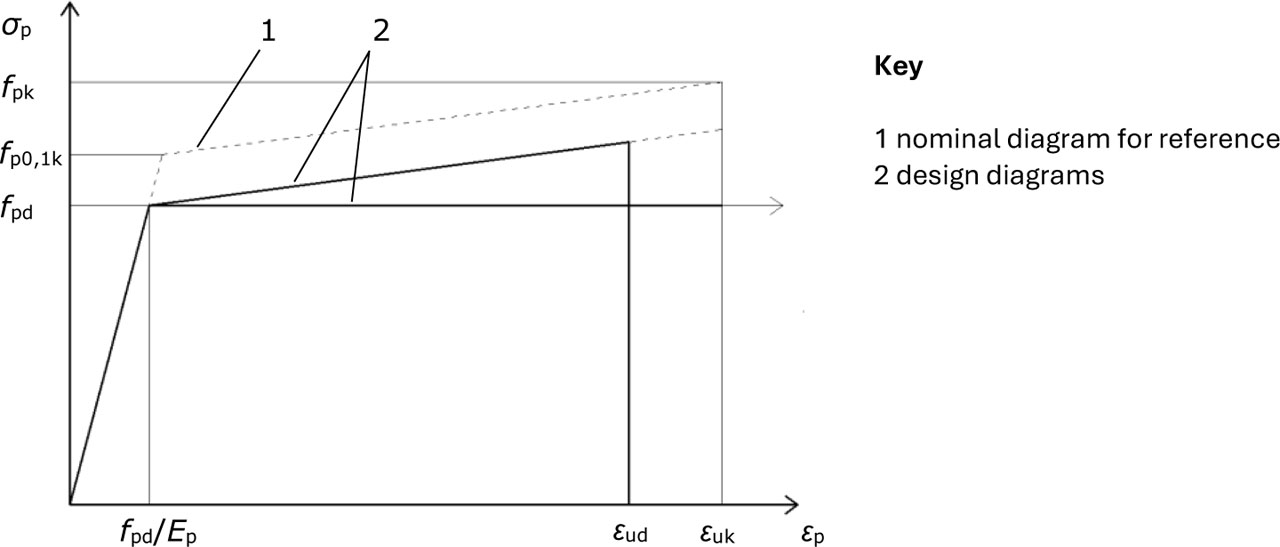
Figure 3:
Stress-strain diagram for prestressing steel
Table 1:
Corrosion type
| Corosion type | Main causes | Characteristic appearance | Effects on structure |
|---|---|---|---|
| Pitting corrosion | Chloride ingress (de-icing salts, marine exposure), depassivation of steel surface | Small but deep pits on the surface of wires/strands | Stress concentration - fracture without warning |
| Uniform corrosion | Long-term exposure to moisture and oxygen, concrete carbonation | Even thinning of steel surface | Gradual loss of cross-section and load-bearing capacity |
| Crevice corrosion | Narrow gaps or voids in concrete, insufficient grouting of ducts | Rust concentrated in gaps, spalling of concrete cover | Local weakening → initiation of pitting corrosion |
| Stress corrosion cracking (SCC) | Combination of high tensile stress and aggressive environment (chlorides, acidic medium) | Long, narrow cracks without plastic deformation | Sudden brittle failure at low strains |
| Hydrogen embrittlement | Hydrogen generated during corrosion reactions or cathodic protection | No significant surface changes, internal weakening of the metal | Loss of ductility, sudden brittle fracture |
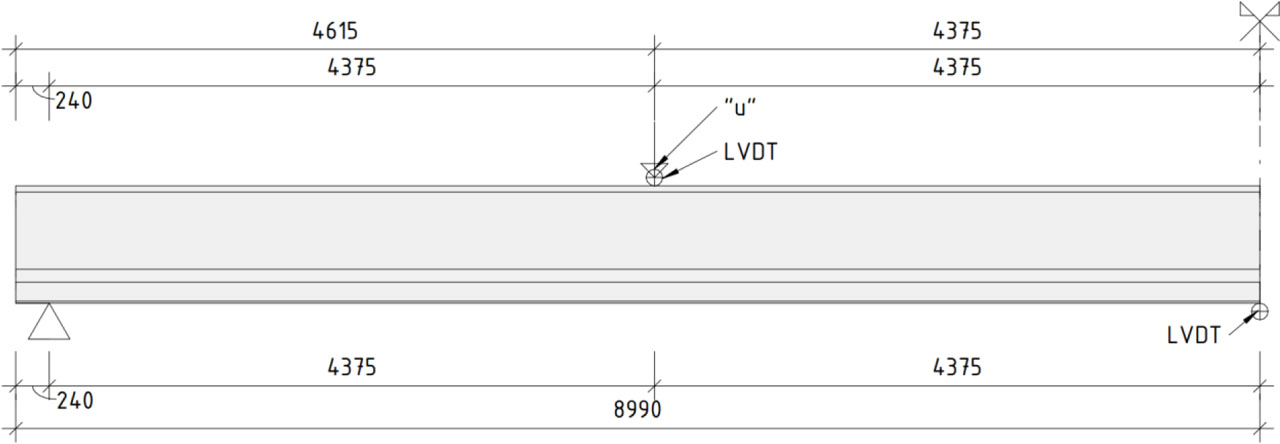
Figure 4:
Loading scheme of prestressed girder
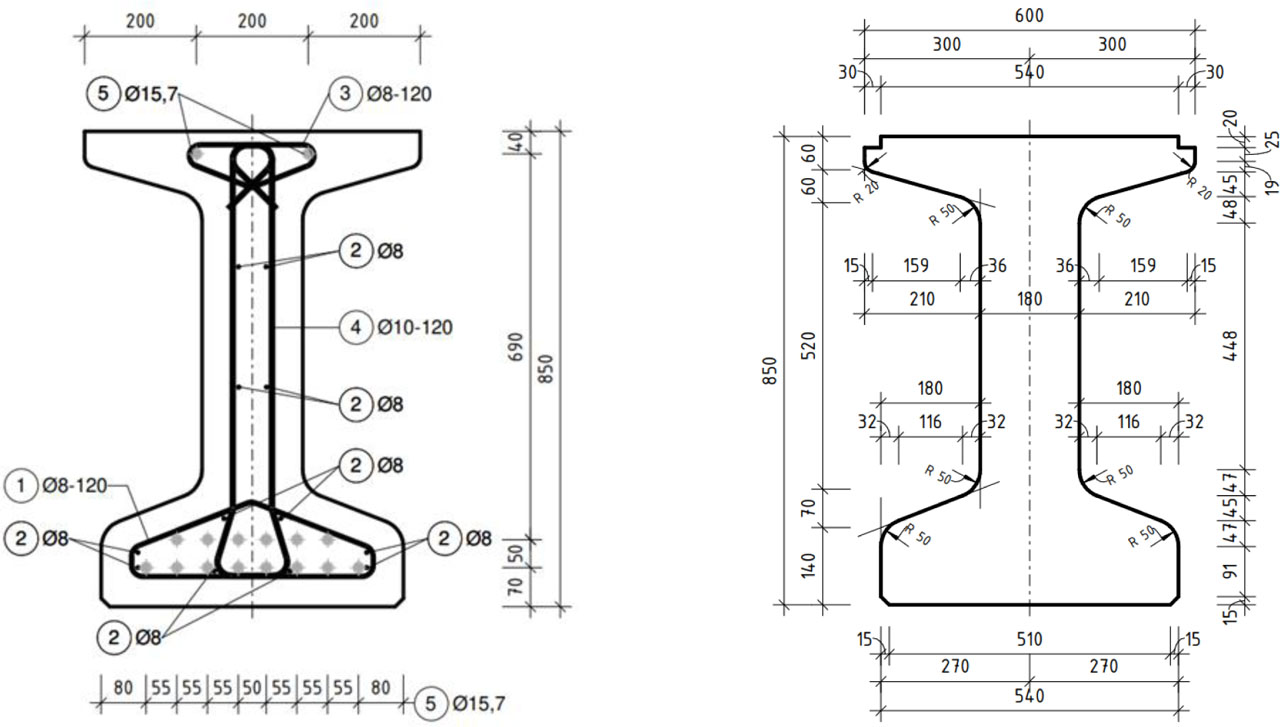
Figure 5:
Cross-section of beam

Figure 6:
Analysed beam
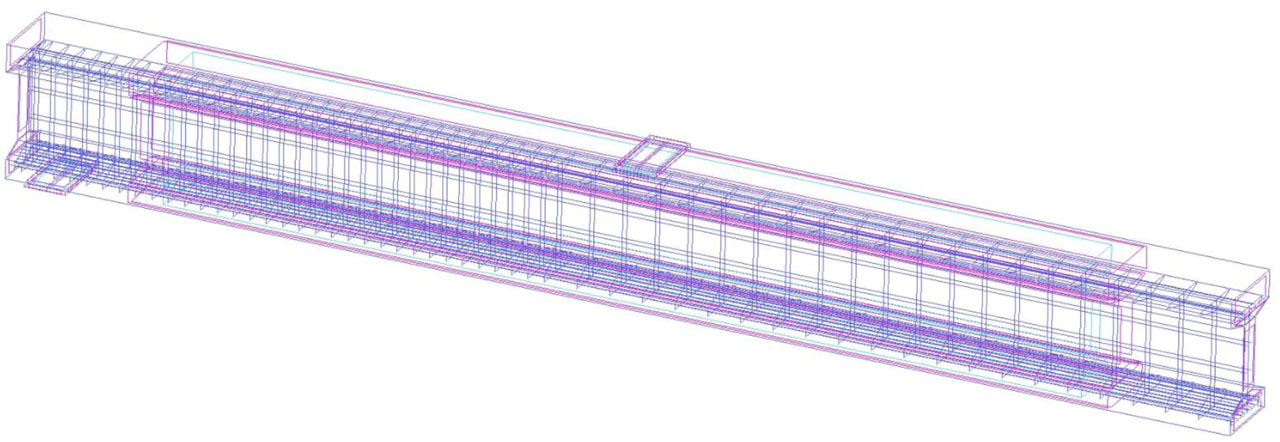
Figure 7:
Analysed beam with reinforcement
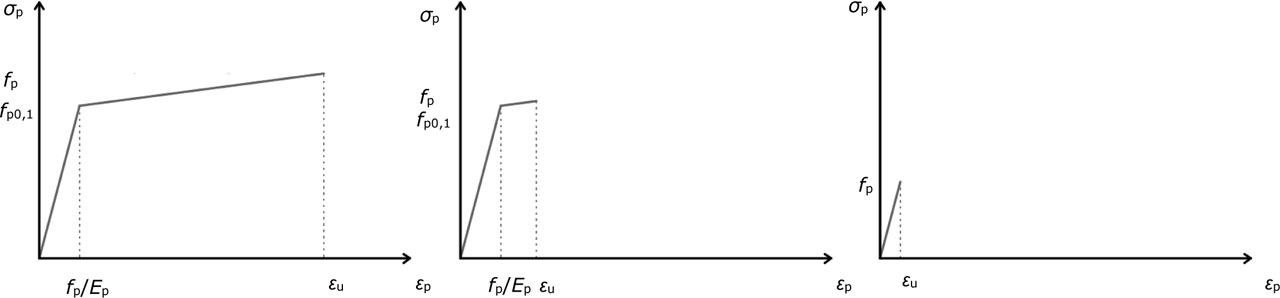
Figure 8:
Stress-strain diagram of prestressing steel
Table 2:
Inputs for nonlinear analysis
| Sample | Tensile strength (mean value) [MPa] | Yield strength (mean value) [MPa] | Strain [%] |
|---|---|---|---|
| Beam A - Reference state | 1952 | 1775 | 3.5 |
| Beam B - 5% loss | 1645 | 1564 | 1.86 |
| Beam C - 25% loss | 1350 | - | 0.6 |
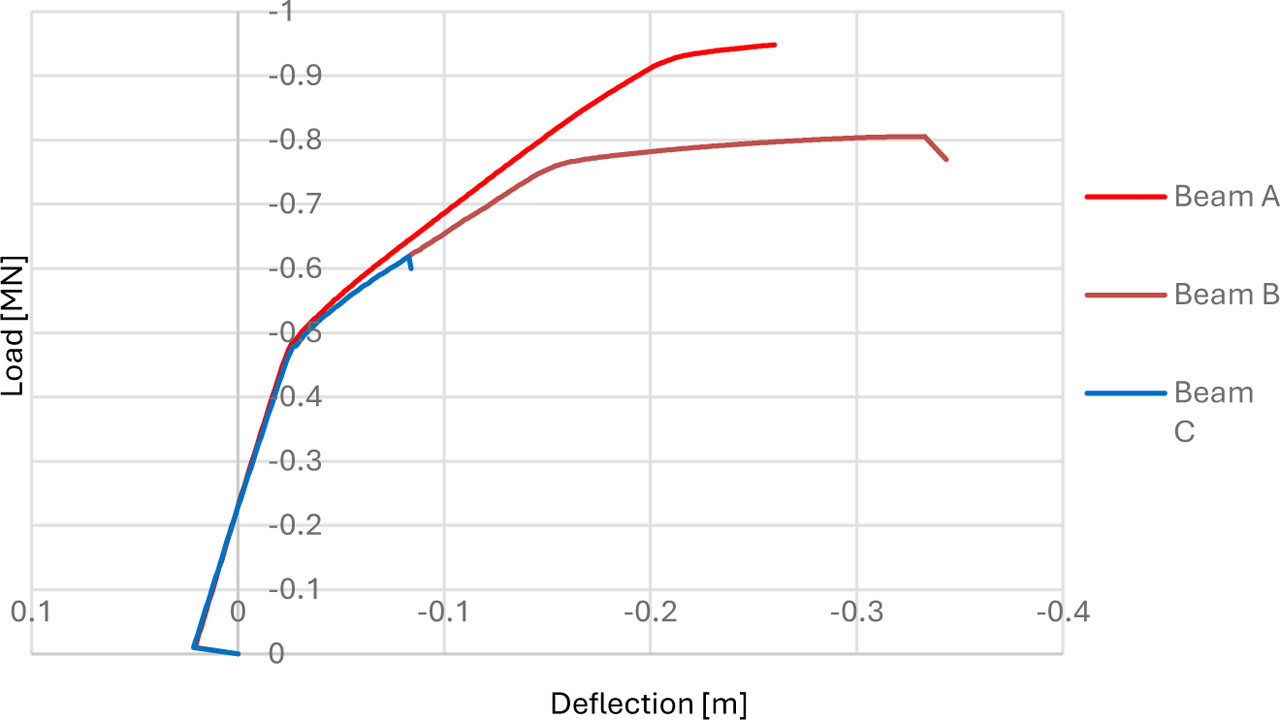
Figure 9:
Load-deflection diagram
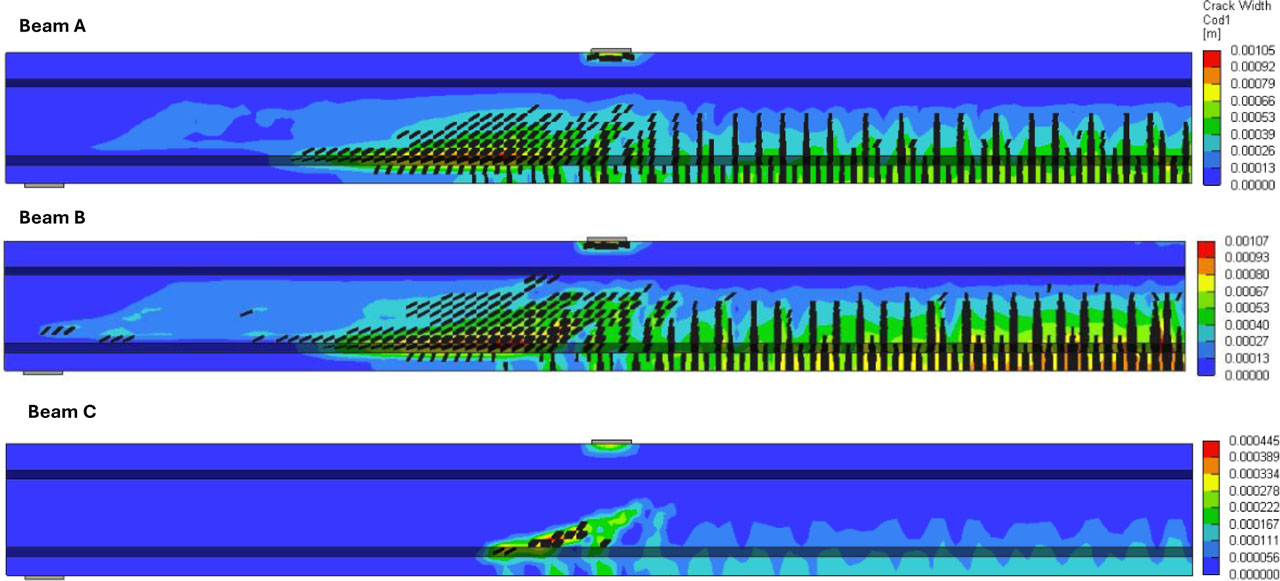
Figure 10:
Crack pattern distributions with width greater than 0.3 mm
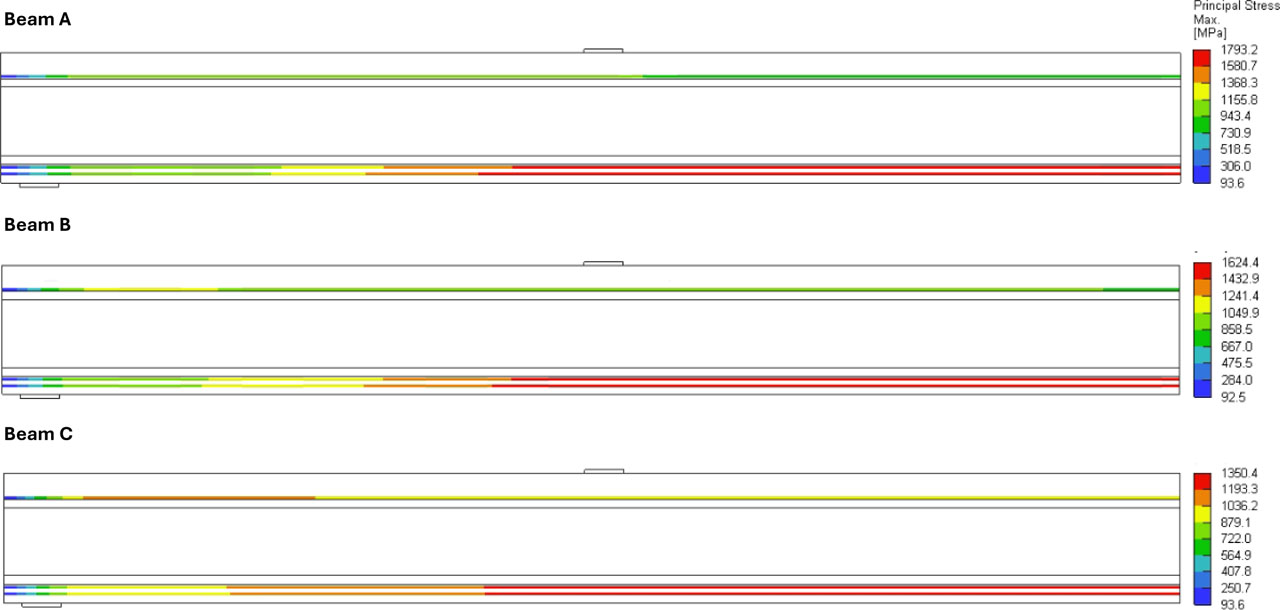
Figure 11:
Principal stress in strands prior to failure