

1. Introduction
Prestressed bridges have played a key role in transportation infrastructure for decades due to their high load-carrying capacity. Although, under optimal design and maintenance, a service life of 100 years can be expected, material degradation may still occur, potentially leading to operational restrictions or even structural failure. The most significant degradation mechanism affecting prestressing reinforcement is corrosion, which reduces its mechanical properties such as strength, modulus of elasticity, and ductility. Unlike conventional reinforcement, prestressing steel is more susceptible to stress corrosion cracking and hydrogen embrittlement, particularly under long-term tensile stress.
Previous studies (Kim et al., 2025; Jeon et al., 2019; Mousa et al., 2025; Flores-Nicolás et al., 2025) have demonstrated that even a relatively small loss of cross-sectional area can result in a significant reduction in ductility, leading to brittle failure without warning deformations. Numerical analyses (Korec et al., 2023) have confirmed that a reduction in the plastic region of the steel's stress–strain diagram has a substantial impact on the nonlinear behaviour of load-bearing elements.
The aim of this research is to analyse the effect of corrosion of prestressing reinforcement on the nonlinear behaviour of a prestressed bridge girder using the ATENA software. Changes in the mechanical properties of the reinforcement will be considered in the model by modifying the stress–strain diagram for various levels of damage. Increasing levels of corrosion in prestressing reinforcement led to a decrease in the girder's load-bearing capacity and a transition from ductile to brittle failure modes.
2. Methodology
2.1. Research Design
This research was designed as a numerical simulation study employing the nonlinear finite element method (FEM) in the ATENA software. The primary objective was to investigate the structural behaviour of a prestressed reinforced concrete bridge girder subjected to varying levels of corrosion-induced degradation of the prestressing reinforcement.
The study follows an experimental – numerical approach, where the input mechanical properties of the degraded prestressing steel were derived from previously published papers (Kolisko et al., 2025) and subsequently integrated into the finite element model. Three distinct corrosion scenarios were considered – without corrosion (without loss of cross-section area), medium (5% loss), and high (35% loss) - to capture the progressive deterioration in material properties and its impact on global structural performance.
The research adopts a comparative design to evaluate how each corrosion level influences:
load-bearing capacity,
overall and local deformations,
cracking patterns and failure modes.
To ensure reliability, the modelling framework incorporates validated stress-strain diagrams for concrete and steel, and consistent boundary/loading conditions across all simulation cases. The selection of a nonlinear FEM approach allows for accurate representation of cracking, bond-slip effects, and post-peak behaviour, which are critical for structures experiencing ductility loss due to corrosion.
The use of the nonlinear finite element method (FEM) in the ATENA software offers several important advantages. It enables a realistic representation of the behaviour of concrete and steel beyond ultimate limit states, including progressive crack propagation, and the transition from ductile to brittle failure. Numerical modelling also provides controlled conditions in which the influence of individual variables, such as the level of corrosion, can be isolated and studied without the interference of environmental factors. Another significant benefit is the ability to rapidly compare multiple scenarios, which would be both time-consuming and costly in full-scale experimental testing.
On the other hand, this approach has certain limitations. The accuracy of the results depends directly on the quality of the input data and the constitutive models used, while experimental data for heavily degraded prestressing steel are relatively scarce in the literature. The model does not account for all random and spatially variable factors present in real structures, such as non-uniform corrosion distribution or local manufacturing defects. Furthermore, even with detailed calibration, numerical simulation is always a simplification of reality and should therefore be interpreted in conjunction with experimental validation.
2.2. Literature Review
In-situ surveys of post-tensioned segmental bridges in Slovakia (1960s–1980s) have shown that approximately half of the inspected structures contained partially or completely ungrouted ducts. This defect, often combined with inadequate drainage and local cracking, was found to promote localized pitting corrosion of tendons and, in some cases, necessitated traffic restrictions (Gasparek et al., 2024). International case studies confirm similar vulnerabilities in segmental and box-girder bridges exposed to chloride ingress from de-icing salts or marine environments, where poor detailing and defective grouting accelerate deterioration (Campione et al., 2022).
Corrosion of prestressing steel is particularly critical due to its small cross-section, high sustained tensile stress, and susceptibility to stress corrosion cracking (SCC) and hydrogen embrittlement (HE) - both mechanisms capable of triggering sudden brittle fracture without significant prior deformation (Podolny, 1992). Moisture condensation within ungrouted ducts has been identified as a significant corrosion initiator, even without direct water ingress, underscoring the importance of complete and durable grouting (Gasparek et al., 2024).
Among corrosion types, pitting corrosion is the most dangerous for prestressing steel. Localized deep pits cause severe section loss, concentrate stresses in individual wires, reduce ductility, and promote brittle fracture modes. Documented effects include prestress loss, strength degradation, and spalling of the concrete cover due to expansive corrosion products (Kolisko et al., 2025; Bossio et al., 2016). In prestressed concrete, these effects develop more abruptly than in reinforced concrete because of the higher stress levels and smaller steel volumes involved.
Protective measures recommended in the reviewed literature include full and void-free grouting of ducts, effective drainage design, and chloride ingress barriers. These are especially important as the industry trend toward higher-strength steels - while increasing ultimate capacity - often reduces ductility and increases susceptibility to SCC and HE, making adequate protection strategies critical for service life extension (Podolny, 1992).
2.3. Current Situation of Prestressed Bridges
A statistical assessment of the structural condition of bridges in Slovakia was carried out based on data from 2024, with the aim of providing an overview of the technical state of prestressed bridges and identifying the main factors influencing their deterioration. The evaluation employed a seven-level classification scale, where category 1 denotes bridges in excellent condition and category 7 represents structures in a critical state requiring immediate closure or major reconstruction. Initially, the dataset included all 2635 prestressed bridges recorded in the road authority's database (Figure 1), with parameters such as structural type, year of construction, and current condition category. From this dataset, only 1554 prestressed bridges constructed after 1975, representing the last 50 years were selected (Figure 2), allowing the analysis to focus on modern structures reflecting newer design standards and construction technologies.
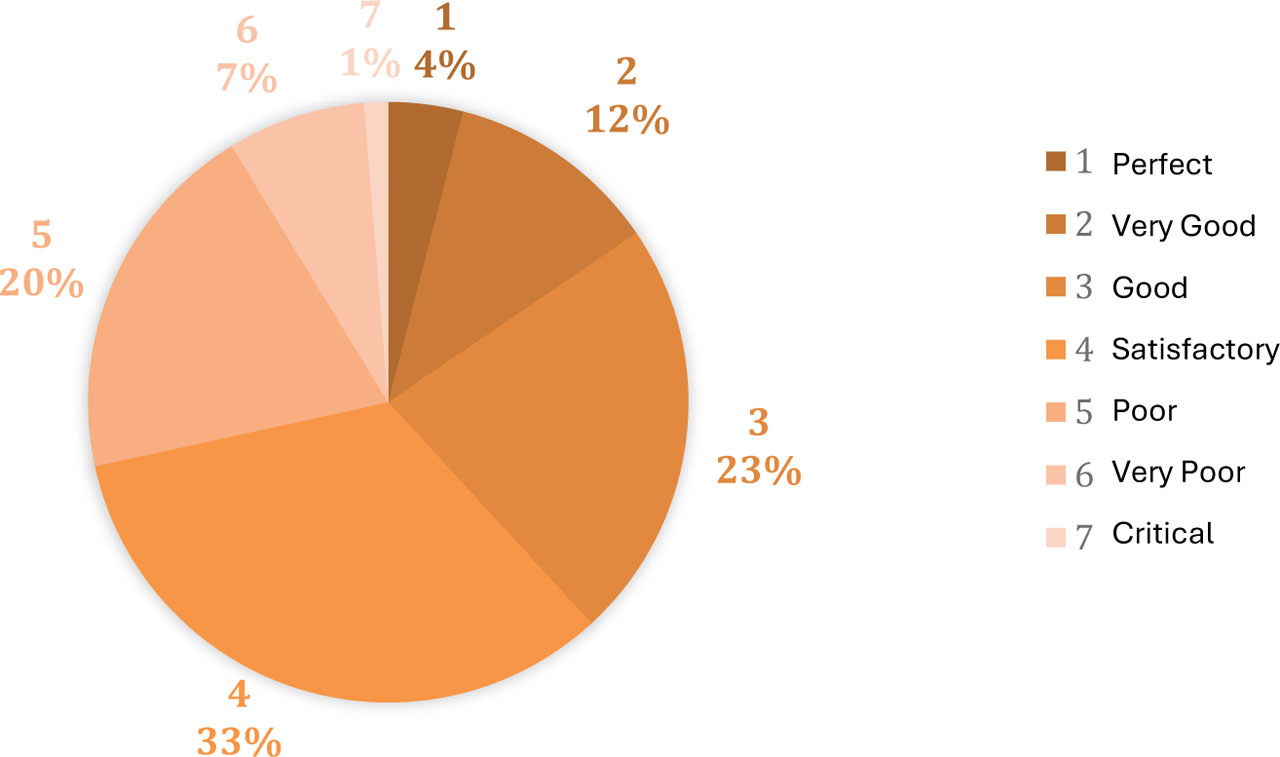
Figure 1:
Structural and technical Condition of Prestressed Bridges in Slovakia
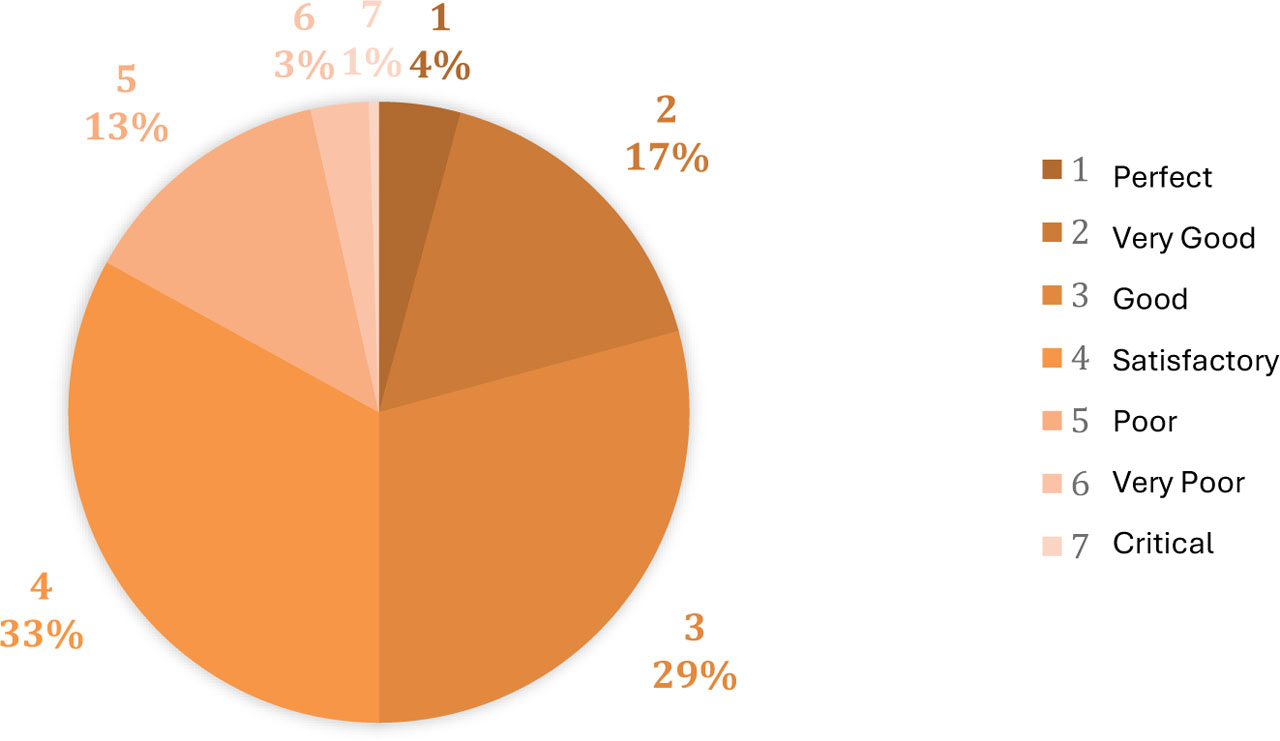
Figure 2:
Structural and technical Condition of Prestressed Bridges in Slovakia after year 1975
Although most of the analysed bridges belong to the newer generation, the age of the structure remains a significant determinant of its condition. After approximately 30 – 40 years of service, prestressed bridges more frequently exhibit damage related to corrosion of the prestressing reinforcement, material fatigue, and concrete degradation. These processes are further accelerated by increasing traffic volumes, which in many cases exceed the original design loads.
The statistical evaluation revealed recurring problems, including a high proportion of bridges in condition categories 4 to 6 even among relatively recent constructions, indicating insufficient preventive maintenance; structural details prone to water retention, such as bearing areas and drip edges, which aggravate local damage; insufficient diagnostic assessment of prestressed elements, with a lack of detailed non-destructive testing of tendons and strands; and inconsistent construction quality in terms of materials, workmanship, and technology, which directly affects the rate of deterioration. Although prestressed bridges built after 1975 generally show better condition ratings than older structures, the analysis confirms that modern construction methods alone do not prevent the occurrence of serious defects. Service conditions, environmental exposure, and the quality of maintenance remain decisive factors influencing the lifespan and reliability of these bridges.
2.4. Ductility
Ductility, also referred to as deformation capacity, expresses the ability of a material or load-bearing element to undergo plastic deformation without failure under high stress. Ductility is a key parameter in the design of concrete structures, particularly in the case of prestressed beams, which must withstand high loads and ensure that sudden brittle failure does not occur. Prestressing reinforcement is manufactured from hot-rolled steel wires of circular cross-section. It is well known that increasing the carbon content of steel improves its strength but at the same time reduces its ductility. The mechanical properties of prestressing strands can be further modified by cold working, which again increases the strength but reduces the deformation capacity ɛuk and increases the brittleness of the steel. The ductility of prestressing reinforcement is characterised by two parameters:
the stress ratio (fp/fp0.1)k
the characteristic strain at maximum load ɛuk.
For prestressing reinforcement, a minimum deformation capacity of ɛuk = 3.5 % is required (Figure 3).
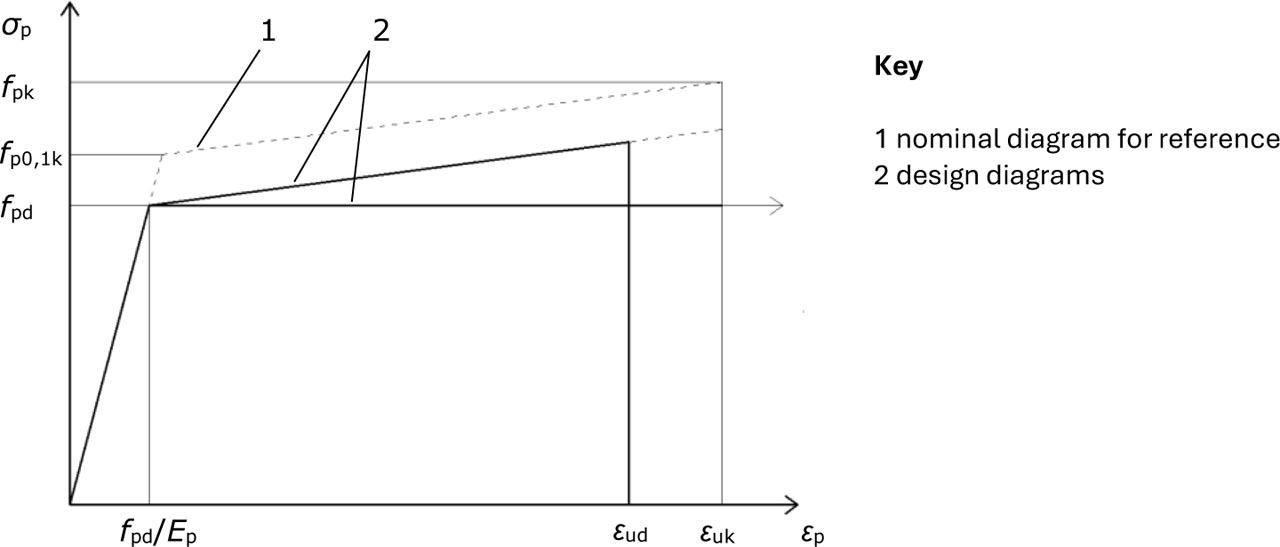
Figure 3:
Stress-strain diagram for prestressing steel
According to the current standard and the upcoming 2nd generation of the Eurocode, prestressing reinforcement is considered sufficiently ductile if the following condition is satisfied:
Where:
fp – tensile strength,
fp0.1 – 0.1 % proof stress.
The recommended value of the coefficient is k = 1.1. Although this value does not directly affect the structural design itself, it plays a crucial role in the specification of prestressing reinforcement.
2.5. Corrosion
The corrosion process in prestressing steel is influenced by several interacting factors. Chloride ingress – originating from de-icing salts on road bridges or from seawater in marine environments – is one of the most aggressive agents. Chloride ions break down the passive iron oxide layer that normally protects the steel, leading to localized pitting corrosion, which is especially detrimental to high-strength steel wires and strands. Carbonation of concrete, caused by the reaction between atmospheric carbon dioxide (CO2) and calcium hydroxide in the cement matrix, reduces the pH of the pore solution. When the pH drops below approximately 9, the passive layer dissolves, leaving the steel highly susceptible to active corrosion. Other contributing factors include insufficient concrete cover or high porosity of the protective concrete layer, which accelerates the penetration of aggressive agents; incomplete or defective grouting in post-tensioning ducts, which leaves voids that allow moisture and oxygen to reach the steel; and high humidity combined with elevated temperatures, which increase the rate of electrochemical reactions. Furthermore, mechanical damage to the concrete - caused by impacts, fatigue loading, or thermal stresses - can create microcracks that facilitate the ingress of water and chlorides.
Corrosion in prestressing steel manifests in several distinct forms, each with specific initiation mechanisms, visual characteristics, and structural implications.
Pitting corrosion typically results from the ingress of chlorides from deicing salts or marine environments, which break down the passive oxide layer on the steel surface. This form is characterized by small but deep pits on wires or strands, creating severe stress concentrations that can trigger sudden fracture without warning (Berrocal et al., 2016; Castel et al., 2000).
Uniform corrosion is marked by even material loss over the surface, caused by long-term exposure to moisture and oxygen, often in combination with carbonation of the concrete. While less localized than pitting, uniform corrosion gradually reduces the cross-sectional area of the steel, leading to a proportional loss in load-bearing capacity (Weyers, 1998).
Crevice corrosion occurs in narrow gaps and voids within concrete, such as construction joints, microcracks, or inadequately grouted post-tensioning ducts. Corrosion products tend to concentrate in these hidden areas, often causing delamination of the surrounding concrete cover. Such localized weakening may serve as an initiation point for further pitting corrosion (fib Bulletin 33, 2006).
Stress corrosion cracking (SCC) arises from the combined effect of sustained high tensile stresses and aggressive environments containing chlorides or acidic species. SCC is typically manifested as long, narrow cracks without significant plastic deformation and leads to sudden brittle failure at relatively low strain levels (El-Hacha & Rizkalla, 2004).
Hydrogen embrittlement occurs when atomic hydrogen enters the steel lattice during corrosion processes or cathodic protection. This phenomenon may not produce visible surface changes, but internally it weakens the steel, significantly reducing ductility and causing sudden brittle fracture under service loads (El-Hacha & Rizkalla, 2004; François et al., 2013).
Collectively, these corrosion mechanisms contribute to the degradation of prestressing steel, accelerating the transition from ductile to brittle structural behaviour and shortening the service life of prestressed concrete bridges. Preventive measures - such as ensuring adequate concrete cover, defect-free grouting of tendon ducts, effective drainage, and regular advanced diagnostics - are essential to mitigate these risks. The types of corrosion are summarized in the following table (Table 1).
Table 1:
Corrosion type
| Corosion type | Main causes | Characteristic appearance | Effects on structure |
|---|---|---|---|
| Pitting corrosion | Chloride ingress (de-icing salts, marine exposure), depassivation of steel surface | Small but deep pits on the surface of wires/strands | Stress concentration - fracture without warning |
| Uniform corrosion | Long-term exposure to moisture and oxygen, concrete carbonation | Even thinning of steel surface | Gradual loss of cross-section and load-bearing capacity |
| Crevice corrosion | Narrow gaps or voids in concrete, insufficient grouting of ducts | Rust concentrated in gaps, spalling of concrete cover | Local weakening → initiation of pitting corrosion |
| Stress corrosion cracking (SCC) | Combination of high tensile stress and aggressive environment (chlorides, acidic medium) | Long, narrow cracks without plastic deformation | Sudden brittle failure at low strains |
| Hydrogen embrittlement | Hydrogen generated during corrosion reactions or cathodic protection | No significant surface changes, internal weakening of the metal | Loss of ductility, sudden brittle fracture |
2.6. Modelling the Influence of Corrosion
In nonlinear finite element analysis of prestressed concrete structures, corrosion of prestressing steel can be effectively represented through modifications to the reinforcement material model. This approach focuses on adjusting the mechanical properties of the steel without explicitly modelling the corrosion process itself, making it computationally efficient while still capturing its primary structural effects. Two main strategies are commonly reported in the literature.
○ Reduction of the Cross-Sectional Area
Corrosion reduces the effective cross-sectional area of prestressing steel, thereby decreasing its load-bearing capacity. In finite element models, this is implemented by adjusting the steel reinforcement area according to experimentally determined or estimated mass loss percentages. Typical scenarios involve reductions of 5%, 10%, or 20% to represent different damage states. This method maintains the original shape of the stress–strain curve while lowering the total force the reinforcement can sustain (Campione et al., 2022; fib Bulletin 33, 2006).
○ Modification of the Stress–Strain Relationship
Experimental evidence shows that corrosion affects not only the cross-sectional area but also the mechanical behaviour of the steel, particularly its ductility. Localized pitting, microcracks, and hydrogen embrittlement can cause a reduction in tensile strength, modulus of elasticity, and ultimate strain.
These effects are incorporated in numerical models by adjusting the stress–strain curve to:
○ Lower the elastic modulus, representing stiffness degradation.
○ Reduce the yield and ultimate tensile strength.
○ Shorten the plastic plateau or post-yield strain capacity, simulating the ductility loss observed in corroded strands.
Kim et al. (2023) reported that even a 5 – 10% cross-sectional area loss could lead to a reduction in ɛuk by more than 50%. Such degradation is critical in prestressing steel, as it promotes brittle failure without significant warning deformations.
2.7. Nonlinear Analysis
The nonlinear numerical analysis was performed on a prestressed concrete beam type DPS VP I/10 with length of 18 m, which is a standard precast girder commonly used in Slovak bridge construction. The geometry and reinforcement layout were adopted directly from the manufacturer's design documentation (Figure 5), ensuring that the numerical model reflects the actual structural configuration. The model included the full prestressing strand arrangement, concrete dimensions, and reinforcement detailing, as specified in the original production drawings.
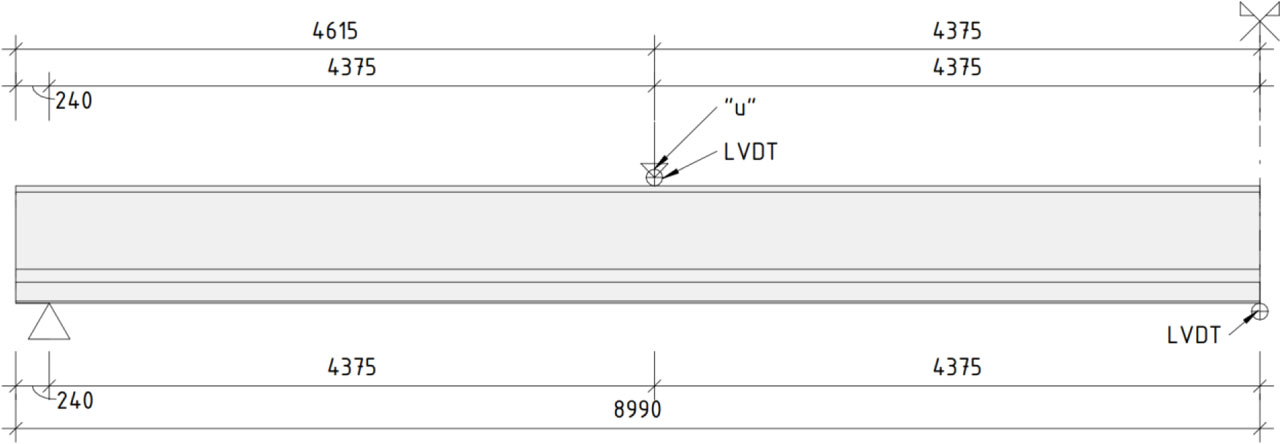
Figure 4:
Loading scheme of prestressed girder
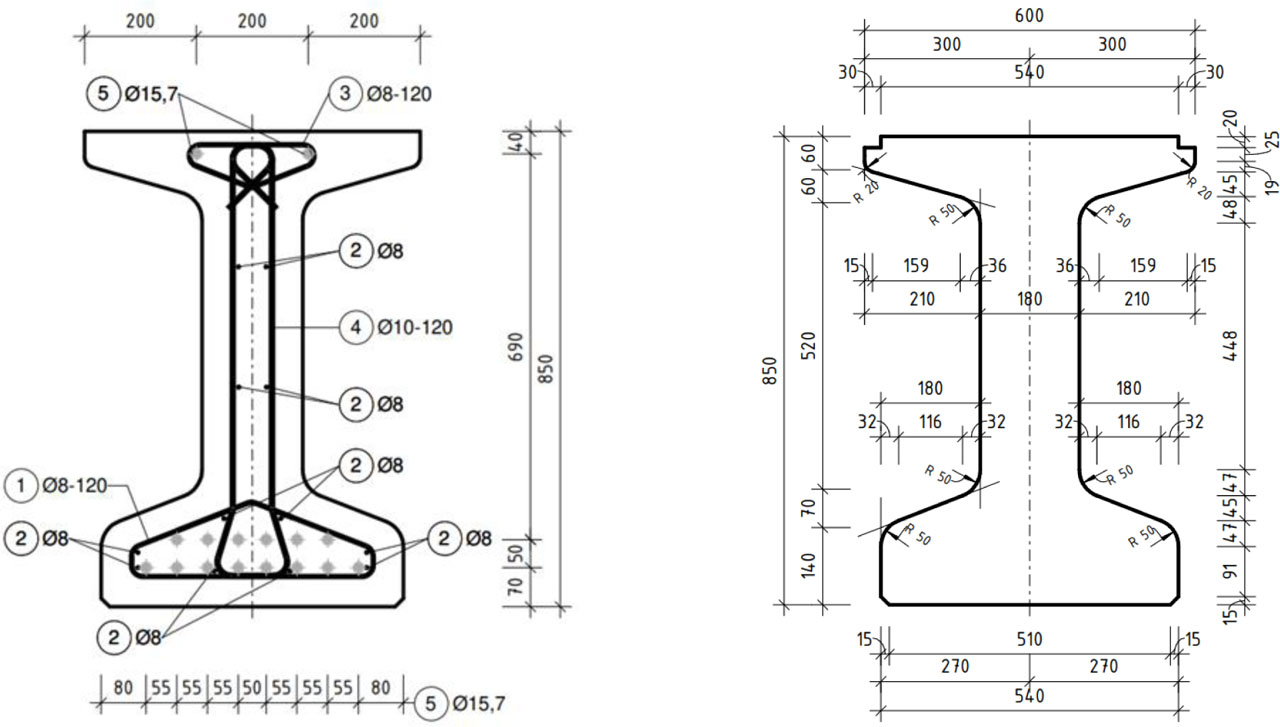
Figure 5:
Cross-section of beam
The analysis was conducted using the finite element software ATENA, which allows for accurate modelling of concrete cracking, crushing, and post-cracking behaviour, as well as nonlinear steel response. The prestressing strands were represented using embedded reinforcement elements, with initial prestressing force 1100 MPa applied. For the nonlinear analysis, only one half of the girder was modelled (Figure 6) taking advantage of symmetry to reduce computational time while maintaining accuracy. The geometry, material properties, and reinforcement layout correspond to the manufacturer's design (Figure 7). Symmetry boundary conditions were applied along the mid-span plane. The loading was applied according to the four-point bending test setup (Figure 4), enabling a uniform bending moment in the constant moment region and allowing a precise determination of the flexural capacity of the girder. The cross-section was partially modified by increasing the thickness of the top flange to 200 mm to account for the composite action of the deck slab and the increased thickness of the compressed concrete.

Figure 6:
Analysed beam
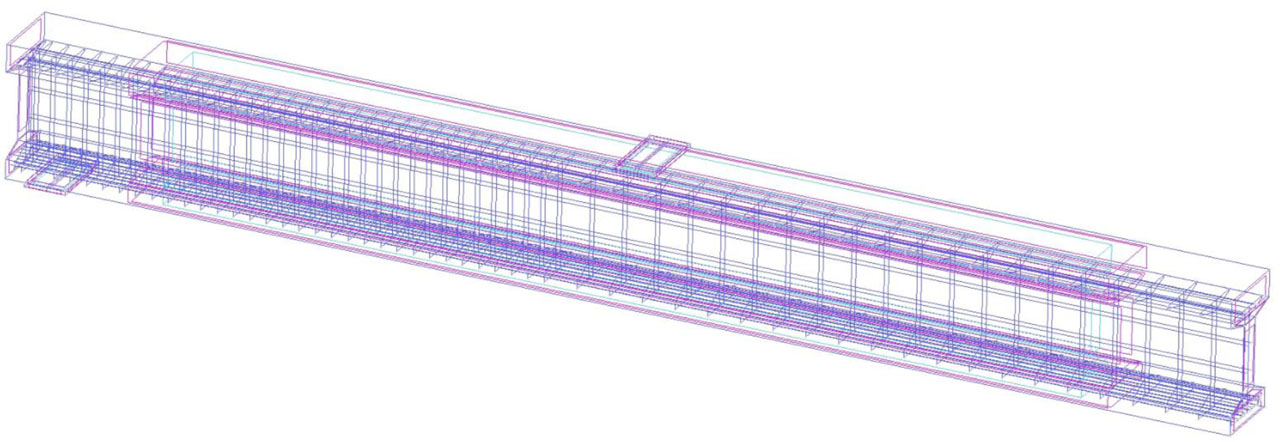
Figure 7:
Analysed beam with reinforcement
The prestressed concrete girder was cast using high-strength concrete of class C45/55. For numerical analysis, mean values of material parameters were adopted instead of characteristic values. The mean tensile strength of concrete fcm=53 MPa was assumed according to Eurocode 2 provisions. In numerical analysis, the nonlinear concrete model CC3DNonLinCementitious2 was adopted, as it provides a realistic representation of concrete behaviour in both tension and compression, including crack initiation and post-peak softening. The model incorporates parameters such as compressive and tensile strength, elastic modulus, fracture energy, and Poisson's ratio, while accounting for stiffness degradation due to cracking. Considering the objective of the study – to evaluate the influence of prestressing strand corrosion – this model was selected as the most appropriate to capture the interaction between the prestressing reinforcement and the surrounding concrete. The prestressing reinforcement consisted of seven-wire strands with a nominal diameter of 15.7 mm and a strength fpk= 1860 MPa. The elastic modulus of the strands was taken as Ep= 195 GPa. The stress–strain diagram of the strands was modelled as bilinear, with an elastic range up to the yield point followed by a strain-hardening branch until rupture. The reinforcing steel consisted of deformed bars of grade B500B. Transverse reinforcement in the form of stirrups was included in accordance with the original design details (Figure 5).
To evaluate the influence of corrosion on the structural performance, the mechanical properties of the prestressing steel were modified through adjustments to its stress–strain diagram (Figure 8). This approach is supported in the literature (Kolisko et al., 2025; Kim et al., 2023; El-Amoush et al., 2023) as an efficient and physically realistic method for simulating corrosion-induced degradation without modelling the corrosion process itself.
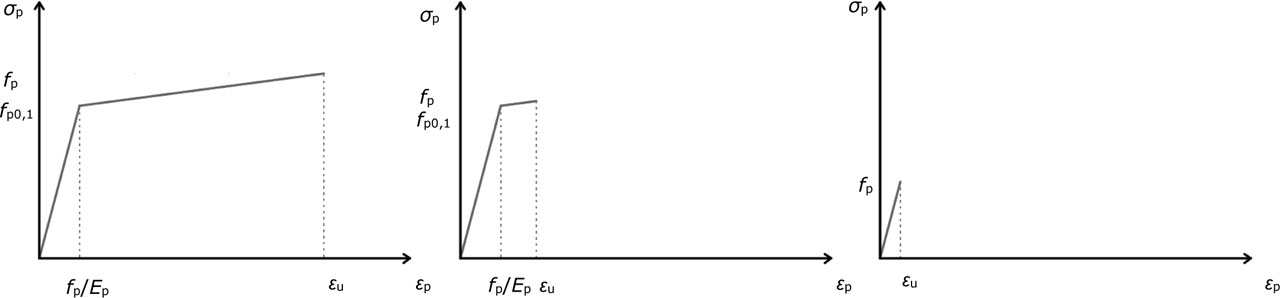
Figure 8:
Stress-strain diagram of prestressing steel
The following changes were applied to represent different corrosion levels:
Reduction in ultimate tensile strength (fp), reflecting the loss of load-carrying capacity due to pitting and general cross-sectional reduction.
Reduction in ultimate strain (ɛu), simulating the loss of ductility typically observed in corroded high-strength steel strands.
Three corrosion scenarios were analysed:
Beam A - 0% loss of cross-section area – undamaged strands (reference state).
Beam B - 5 % loss of cross-section area – moderate degradation.
Beam C - 35 % loss of cross-section area – severe degradation.
For each scenario, the stress–strain curve was adapted accordingly (Table 2), resulting in a reduced post-yield plateau. The prestressing steel in the model followed a bilinear elastic–plastic relationship with strain-hardening, adjusted to match the degradation level.
3. Results
The nonlinear finite element analysis provided a comprehensive inside into how corrosion of prestressing steel affects the global behaviour of prestressed concrete girders.
In the reference model (beam A) without corrosion, the beam exhibited a gradual load–deflection response. Cracks initiated at approximately 54 % of the ultimate load, followed by stable crack propagation and redistribution of stresses. The maximum load capacity reached approximately 950 kN, with midspan deflections exceeding 270 mm prior to failure. The prestressing strands developed yielding but the failure mode was governed by concrete crushing in the midspan after substantial deformation - the cause may be insufficient concrete strength. In addition to bending cracks, shear cracks were also prominent.
In the corrosion case at the beam B (representing ≈ 53 % loss of ductility parameters of the strands), cracking initiated at the same load levels. The beam reached an ultimate load about 15 % lower than the undamaged state. Deflections at ultimate load increased, with maximum midspan displacement 333 mm. After reaching the yield strength of the prestressing steel, a pronounced plastic branch accompanied by a typical yield plateau was observed. The plateau represents the horizontal part of the stress–strain curve, where large deformations occur at nearly constant stress. This behaviour was considerably more evident compared to the reference beam. Nevertheless, failure occurred before the ultimate tensile strength of the steel was reached.
In the corrosion scenario at the beam C (≈ 83 % degradation of ductility), the deterioration became much more evident. Cracks appeared initiated at the same load levels. The maximum load was reduced by 35 %, and the corresponding deflections were 193 mm. The failure mechanism was distinctly brittle: fractured strands with little warning deformation, accompanied by splitting of the surrounding concrete. Unlike the reference case, where a gradual decline in stiffness was observed, the corroded model showed an abrupt load drop once the critical section failed.
The comparative evaluation clearly demonstrates a nonlinear relationship between corrosion level and structural behaviour. While the strength degradation between the moderate and corrosion cases was on the order of 20 %, the ductility degradation was disproportionately higher, dropping by more than 50%. This highlights that serviceability and safety are not only governed by ultimate strength but also strongly depend on the ability of the system to redistribute forces through ductile behaviour.
Graphical outputs from ATENA, including load–deflection diagram (Figure 9), crack pattern distributions (Figure 10), and stress of the strands (Figure 11), consistently supported these observations.
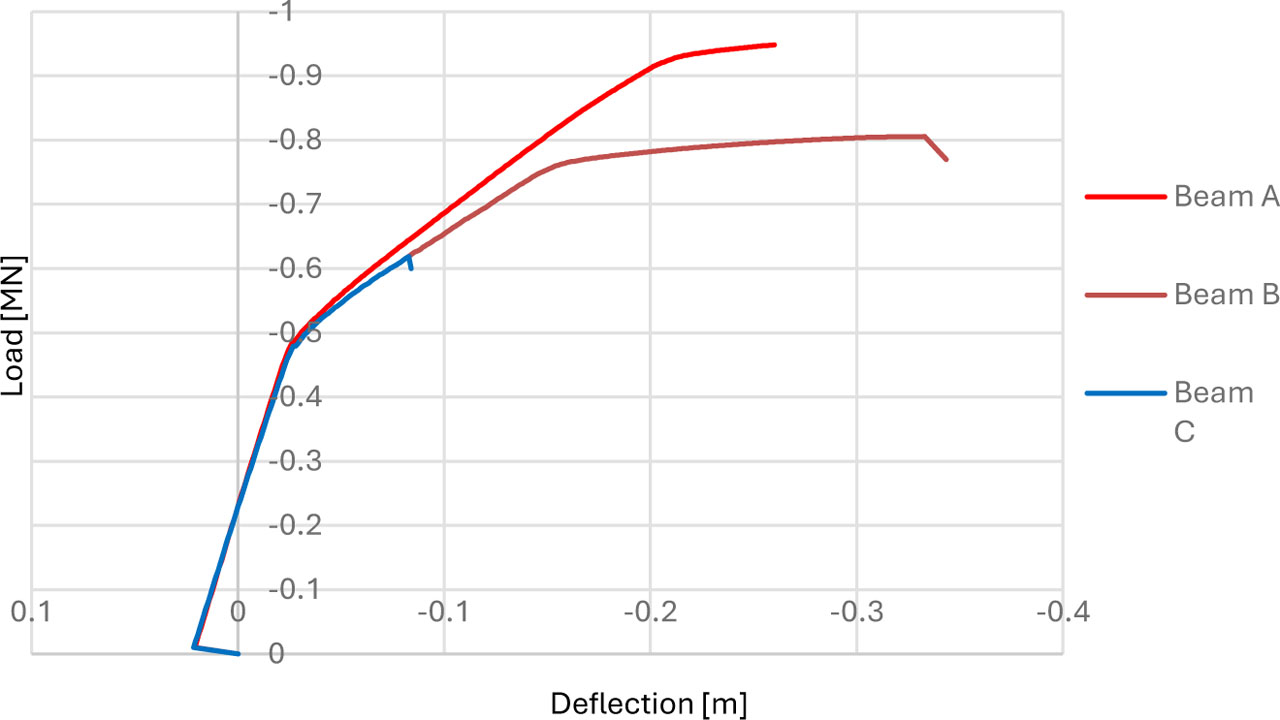
Figure 9:
Load-deflection diagram
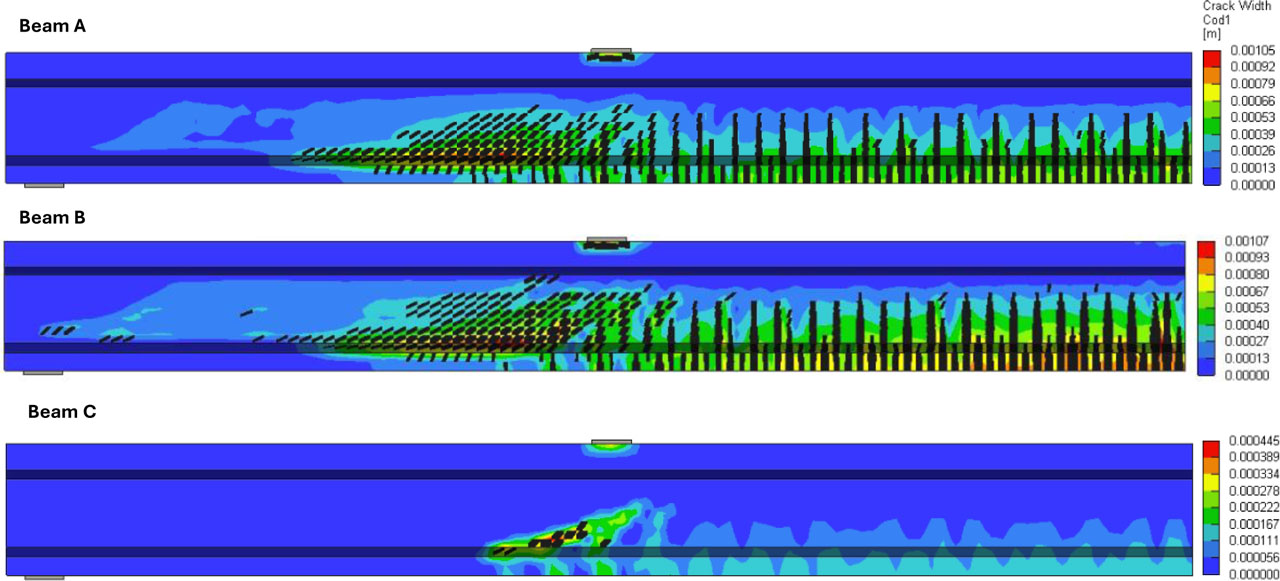
Figure 10:
Crack pattern distributions with width greater than 0.3 mm
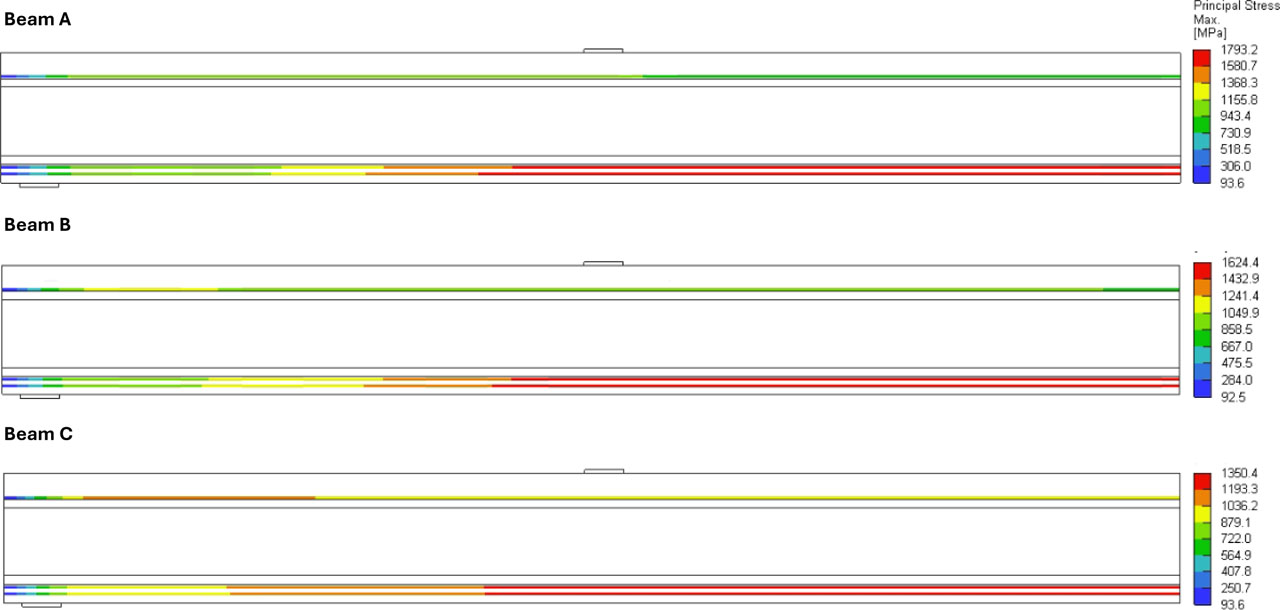
Figure 11:
Principal stress in strands prior to failure
4. Discussion
The findings of this study emphasize the critical role of ductility in the behaviour and safety of prestressed concrete girders. The finite element simulations demonstrated that corrosion of prestressing strands significantly reduces deformation capacity, altering the failure mechanism from ductile flexural behaviour to brittle failure. This observation is consistent with experimental results reported in the literature, where relatively small cross-sectional losses or reductions in ultimate strain already triggered a disproportionate loss of ductility (Kim et al., 2023; El-Amoush et al., 2023).
An important aspect is that the reduction in ultimate strength was same pronounced compared to the reduction in ductility. For instance, the moderate corrosion case exhibited a decrease in load-bearing capacity of around 15 %, while ductility increased as a result of yielding of the steel in the beam B. This disparity indicates that evaluating structural safety based solely on ultimate strength may create a false sense of security. In practice, a girder may retain a large part of its load-bearing capacity but still fail abruptly without visible warning signs once ductility is exhausted (Table 3).
Table 3:
Results
| Sample | Ultimate load [MPa] | Midspan deflection [mm] |
|---|---|---|
| Beam A: Reference state | 950 | 273 |
| Beam B: 5% loss | 806 | 333 |
| Beam C: 35% loss | 619 | 83 |
The numerical results also illustrate the limitations of conventional diagnostics. Many bridge management systems still rely primarily on surface indicators such as cracking, spalling, or visible corrosion staining. However, the simulations confirm that serious internal deterioration of prestressing steel may already be present at this stage, without external signs.
From a design and maintenance perspective, the results further highlight the importance of preventive measures. Adequate grouting and drainage systems remain decisive in protecting strands from aggressive agents. Once corrosion initiates, rehabilitation strategies should not only focus on reducing chloride ingress but also on restoring the passivity of the steel environment and controlling moisture within tendon ducts. Failure to address these issues accelerates degradation and may ultimately lead to premature loss of structural capacity.
Lastly, the study underscores the need to reconsider evaluation criteria in bridge assessment frameworks. While current codes often emphasize ultimate strength, the findings here support the inclusion of ductility-based criteria as an equally important measure of safety. Such an approach would better reflect the true risk associated with brittle strand fracture and provide more realistic predictions of service life for prestressed concrete bridges.
5. Conclusion
The conducted nonlinear analyses demonstrated that corrosion of prestressing reinforcement has a decisive influence on the behaviour and safety of prestressed concrete girders. While the loss of ultimate strength was relatively moderate, the reduction in ductility was far more critical, leading to a change in failure mode from gradual, ductile behaviour to sudden brittle fracture. This highlights the necessity of evaluating not only residual strength but also deformation capacity when assessing the remaining service life of bridges. The study further confirmed the importance of preventive measures such as effective grouting and drainage, as well as the need for advanced diagnostic methods capable of detecting hidden tendon deterioration before critical damage occurs. Overall, the results underline that the long-term reliability of prestressed bridges depends not only on the initial design but also on environmental exposure, maintenance quality, and the ability to preserve ductile behaviour of prestressing steel throughout the service life.
Future research should focus on integrating experimental data and numerical modelling to better calibrate the relationship between corrosion progression, ductility loss, and structural safety. More detailed studies are needed on the interaction between loading and environmental exposure, particularly under cyclic and fatigue conditions. Development of non-destructive testing protocols specifically tailored for prestressing ducts and strands would greatly improve early damage detection. Finally, incorporating ductility-based behaviour criteria into bridge management systems and standards represents a promising step toward more resilient infrastructure.
Acknowledgements
This work was supported by the Scientific Grant Agency VEGA under contract No. VEGA 1/0358/23.
Notes
[1] Contributed by Author Contributions
V.B. designed the study and supervised the project. M.J. conducted the experiments and collected the data. Z.H. performed the data analysis. All authors critically reviewed and approved the final version of the manuscript and agreed to be accountable for all aspects of the work.