

1. Introduction
The wide implementation of asphalt mixtures as road pavement material is due to their flexible properties, durability and cost-effectiveness. Although these advantages exist, asphalt pavements are prone to several distresses including rutting, fatigue cracking, thermal cracking and moisture degradation which affect their structural integrity and lifespan (Crucho et al., 2018; Yao & You, 2016; You et al., 2011).
In response to these performance-related problems, numerous modification approaches have been critically analyzed. Nanotechnology emerges as a sophisticated approach to improve the performance of asphalt binder and mixtures by leveraging the distinctive characteristics of nano-scale materials (N. Albayati & Qadir-Ismael, 2024; Cheraghian et al., 2022; Yang & Tighe, 2013).
Nanomaterials are defined as substances possessing at least one dimension that falls within the nanoscale range, which generally spans from 1 to 100 nanometers. The prefix ‘nano’ denotes a factor of 10−9. Nanomaterials come in different shapes such as nanoparticles, nanotubes, nanorods, nanoplatelets, nanowires, and nanoporous materials, which have different physical and chemical properties. Their diminutive dimensions and enhanced surface area to volume ratio introduce novel characteristics such as heightened reactivity, improved strength, and greater heat stability, which are absent in traditional materials. Due to their exceptional properties, nanoparticles are very useful as additives in asphalt pavement construction where better performance and durability are highly required (Crucho et al., 2019). (Moussa et al., 2021) demonstrated that incorporating NC into HDPE-modified asphalt mixtures resulted in notable improvements in mechanical performance. The dry compressive strength increased by up to 103%, Marshall stability improved by approximately 36%, and flow values decreased by nearly 23%, indicating enhanced stiffness and resistance to permanent deformation. Furthermore, (Hassan & Ismael, 2024) demonstrated that using NC improved Marshall stability by approximately 13%, indicating enhanced load-bearing capacity of asphalt mixtures.
(Ismael & Ismael, 2019) and (Ameri et al., 2017) reported that incorporating nanoclay into asphalt mixtures enhances compressive strength and indirect tensile strength (ITS), confirming the positive impact of NC modification on mechanical performance. Click or tap here to enter text.
Several studies have confirmed the beneficial role of nanoclay in enhancing asphalt mixture strength. (Jahromi & Khodaii, 2009a) observed improvements in stability and ITS at elevated temperatures, (Aljbouri & Albayati, 2023) reported that an optimal nanoclay dosage significantly increased Marshall stability and ITS, and (Iskender, 2016) similarly found that nanoclay modification enhanced both parameters. Collectively, these findings indicate that nanoclay contributes to greater resistance against deformation and cracking.
Moreover, (Hussain et al., 2022a) demonstrated that replacing 60% of conventional limestone filler with NC hydrophilic bentonite resulted in a substantial improvement in mechanical properties. Marshall stability increased by 94% compared to the control mixture, while Marshall flow decreased by 25%, indicating enhanced strength and reduced deformation potential in the modified asphalt mix.
In addition to conventional mechanical properties, the resilient modulus (MR) is considered a fundamental parameter for characterizing the elastic behavior of asphalt mixtures under repeated traffic loading (Al-Bayati & Ismael, 2023) It serves as a critical input in mechanistic-empirical pavement design frameworks.
The observed improvements in the mechanical performance of nanoclay-modified asphalt mixtures can be theoretically attributed to the unique structure and surface chemistry of nanoclay particles. Their layered silicate structure, high aspect ratio, and large surface area enable better dispersion within the asphalt matrix, leading to improved binder–aggregate adhesion and reduced microstructural voids. The intercalation or exfoliation of nanoclay layers enhances the viscoelastic behavior of the binder, increasing its stiffness and resistance to permanent deformation. Additionally, the presence of polar functional groups on the nanoclay surface can interact with bitumen components, forming a more stable and thermally resistant binder network.(Afshin & Behnood, 2025; Huang et al., 2024)
However, Due to the nonlinear dependency of resilient modulus (Mr) on multiple interacting factors such as temperature, nanoclay content, binder modification level, and mixture stiffness, traditional regression models often struggle to accurately capture these complex relationships. To address this limitation, the present study developed an Artificial Neural Network (ANN) model to predict Mr values based on experimental data involving varying nanoclay percentages and test temperatures. ANNs, inspired by the structure of the human brain, are capable of learning hidden patterns in complex datasets without relying on predefined functional relationships. This makes them particularly well-suited for modeling behaviors governed by intricate physical–chemical interactions, such as those found in nanomodified asphalt mixtures. The multi-layered architecture and adaptive learning capability of the ANN used in this research offer a robust and cost-effective approach to understanding and predicting the elastic performance of asphalt mixtures under diverse conditions, effectively complementing traditional laboratory methods (Dagli, 2007). The reviewed studies demonstrated the general effectiveness of nanoclay in enhancing asphalt properties. However, most lacked predictive modeling for resilient modulus across temperature ranges. This study bridges that gap by combining experimental evaluation with ANN modeling for accurate MR prediction.
This study aims to evaluate the effect of NC additives on the mechanical performance of hot mix asphalt mixtures and to investigate how varying NC contents (0%, 2%, 4%, and 6%) influence optimum asphalt content (O.A.C). The research further examines the impact of NC on key mechanical properties including Marshall stability, flow, Marshall stiffness, indirect tensile strength (ITS), compressive strength and resilient modulus (Mr). It also includes the evaluation and prediction of resilient modulus (Mr) across multiple temperatures using an ANN model with nanoclay content and temperature as input variables. What distinguishes this study is its combined focus on nanoclay dosage and temperature as key factors for Mr, evaluated experimentally and predicted through ANN within a unified framework. The objective is to provide practical insights into the use of NC for enhancing both the structural characteristics and mix design parameters of asphalt mixtures.
2. Materials and Methodology
2.1. Asphalt cement
This study used bitumen which falls within 40/50 penetration classification. The Al-Dourah refinery located in Baghdad serves as the primary source for this binder material. The experimental results for binder testing appear in Table 1
Table 1:
Lab Evaluation of Asphalt Binder
| Property | Unit | Results | SCRB Standard Range | ASTM Standard |
|---|---|---|---|---|
| Penetration (25 [°C], 100 [g], 5 [sec]) | 0.1 mm | 43 | 40–50 | D5 |
| Ductility (25 [°C], 5 [cm/min]) | cm | 159 | 100 Min. | D113 |
| Softening Point (Ring& Ball) | °C | 53 | - | D36 |
| Flash point (Cleveland open Cup) | °C | 265 | 232 Min. | D92 |
| Specific Gravity @25 [°C] | --- | 1.044 | - | D70 |
| After conducting the Thin-Film Oven Test (ASTM D 1754) | ||||
| Retained Penetration [% of original] | % | 65 | 55 Min. | D5 |
| Ductility (25 [°C], 5 [cm/min]) | cm | 78 | >25 | D113 |
2.2. Aggregates: Fine and Coarse
The fine and coarse aggregates used in this study were sourced from the Badrah quarry. The coarse aggregate for the binder course ranged from 25 mm (1 in.) down to 4.75 mm, whereas the fine aggregate size varied between (4.75 mm) to (0.075 mm) sieve. Table 2 displays several physical characteristics of both fine and coarse aggregates. The aggregate gradation of the mixture was chosen to comply with the Iraqi standards (SCRB, Section R/9) for the binder course Type II. Figure 1 illustrates the gradation of aggregates.
Table 2:
Fine and Coarse Aggregate Properties
| Property Evaluated | ASTM Standard | Results | SCRB Standard Range |
|---|---|---|---|
| Coarse Aggregate | |||
| Bulk Specific Gravity | (ASTM C128) | 2.62 | --- |
| Water Absorption [%] | (ASTM C127) | 0.55 | --- |
| Los Angeles Abrasion [%] | (ASTM C131) | 17.8 | 30 Max |
| Fine Aggregate | |||
| Bulk Specific Gravity | (ASTM C128) | 2.632 | --- |
| Water Absorption [%] | (ASTM C127) | 0.79 | --- |
2.3. Mineral Filler
The research adopted limestone dust as its filler material because of its availability and affordability. The filler enhances the asphalt binder's rigidity and long-term performance. The material exists as a fine powder that will pass through No. 200 sieve with a 0.075 mm opening. The physical properties of the limestone dust are presented in Table 3.
Table 3:
Characteristics of the limestone dust
| Property Evaluated | Result Obtained | SCRB Standard Range |
|---|---|---|
| Specific Gravity | 2.711 | --- |
| Passing 0.075 [mm], % | 99 | 70–100 |
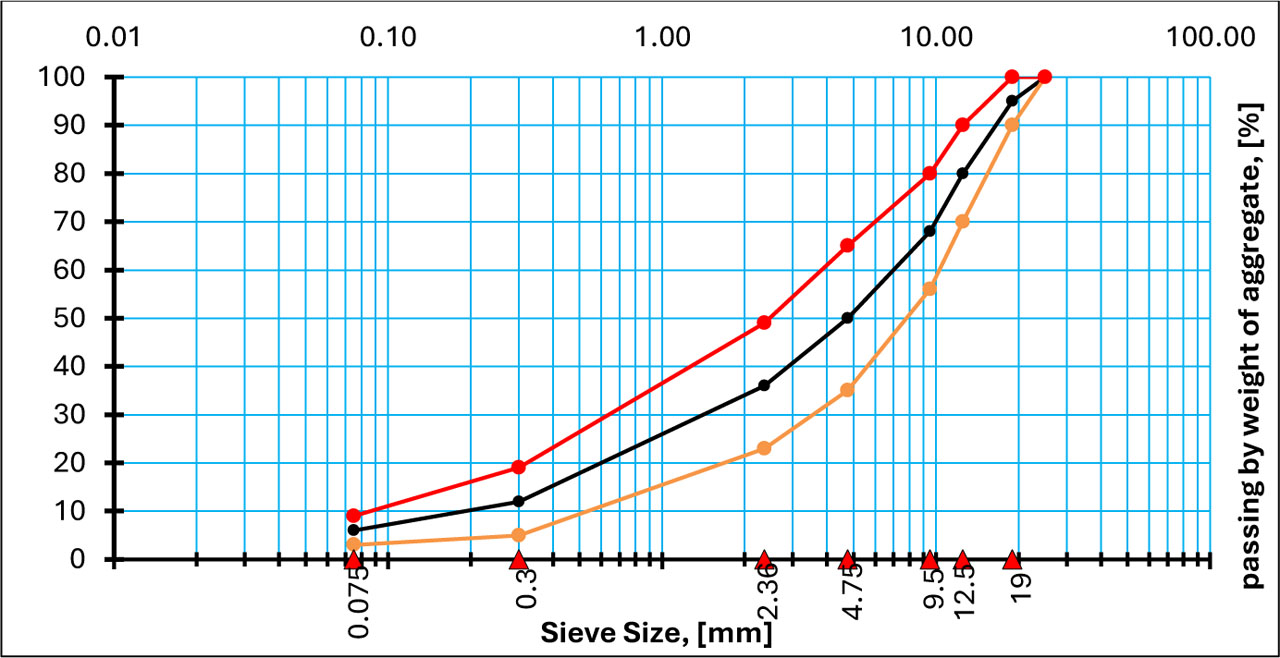
Figure 1:
The gradation of Binder Course
2.4. Nanoclay (NC)
The particle size of the NC was assessed using Atomic Force Microscopy (AFM) through laser analysis to ascertain if the former had reached the nanoscale. The investigation determined that the particles average diameter was 49.67 nm, satisfying the requirements regarding measurements in the nanometer range. Figure 2 (a) illustrates the NC shape as determined by AFM. Figure 2 (b) displays the particle size of the NC.
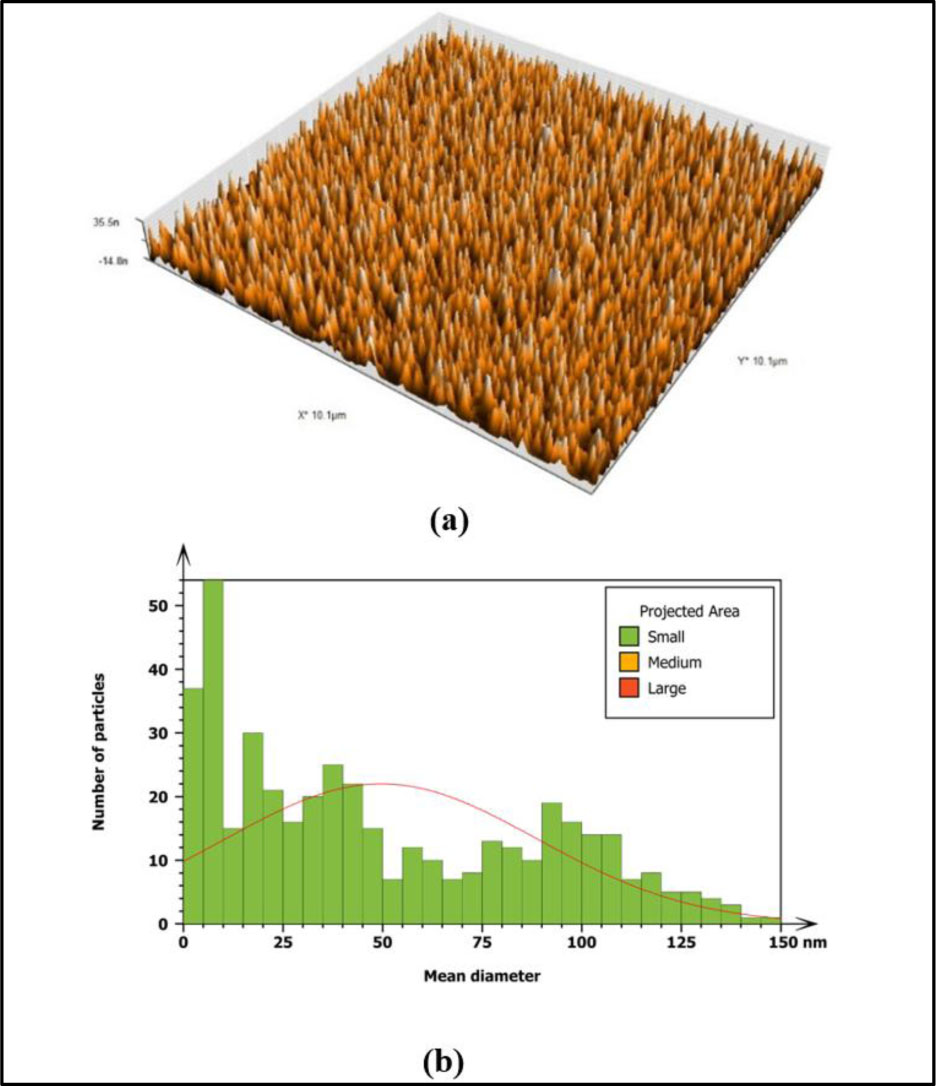
Figure 2:
(a) AFM image of nanoclay platelets; (b) particle size distribution of the nanoclay
2.5. Marshall Tests
The asphalt binder was heated to 155 ± 5 °C, and NC was added at 2%, 4%, and 6% by binder weight, followed by mixing at 4000 rpm for 45 minutes to ensure uniform dispersion (Jasim & Ismael, 2021; Li et al., 2017). HMA trial blends with 4–6% asphalt content (three replicates each) were prepared, cooled for 24 hours, and tested for stability, flow, density, and air voids per ASTM D6927. A 4% air void target was used to determine O.A.C. (A. H. Albayati & Al-Mosawe, 2023; Al-Saad & Ismael, 2022). Figure 3 illustrates the Marshall testing setup used in this study.
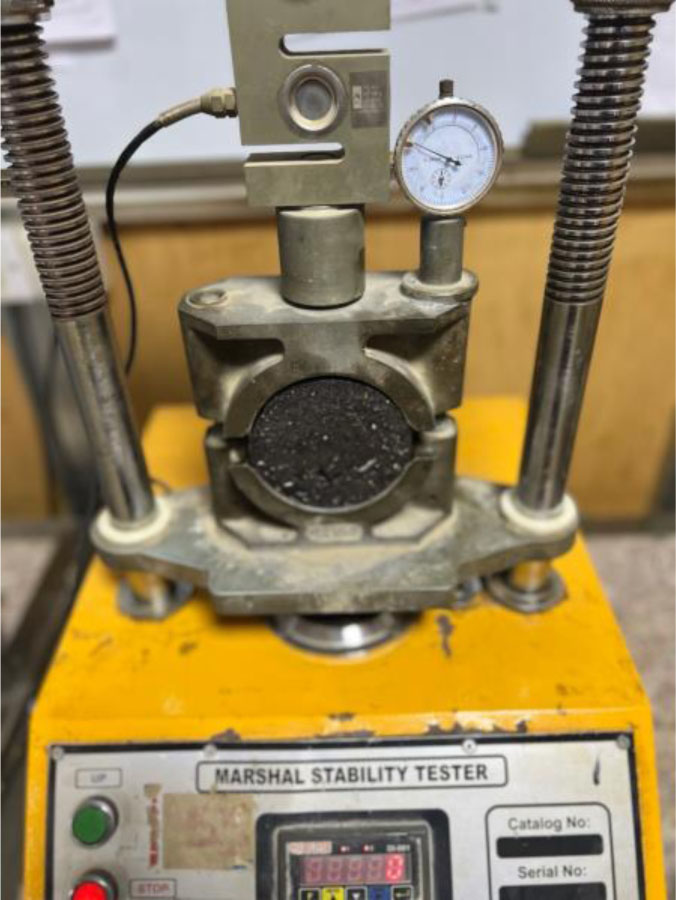
Figure 3:
Marshall test setup
2.6. Indirect Tensile Strength (IDT)
The Indirect Tensile Strength (ITS) test was performed in accordance with ASTM D6931 to evaluate the tensile behavior and cracking resistance of the asphalt mixtures. Cylindrical samples measuring 100 mm in diameter and 63.5 ± 2.5 mm in height were stabilized at 25 °C for no less than two hours before initiating the test (Ahmed & Ismael, 2025). This test provides insight into the tensile cracking resistance of the mixture under loading conditions similar to those experienced in actual pavements. Figure 4 shows the indirect tensile strength (ITS) test setup used in this study.
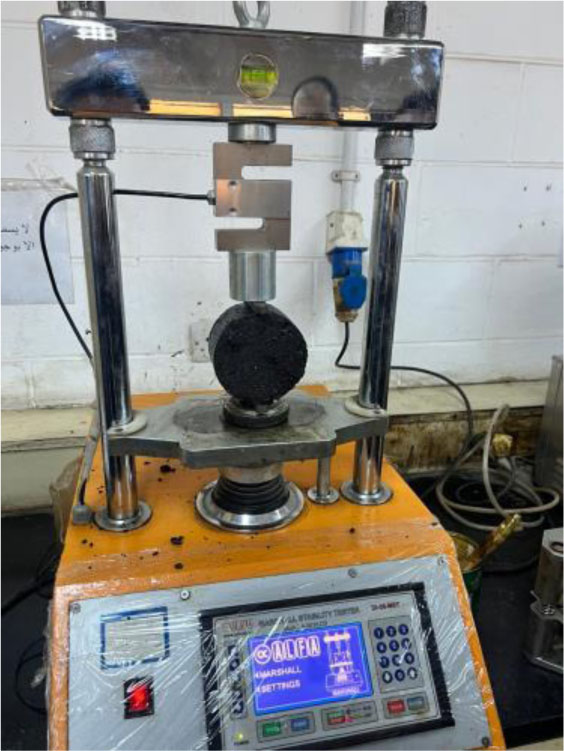
Figure 4:
Indirect tensile strength (ITS) test setup
2.7. Compressive Strength Test
The asphalt mixtures' resistance to compressive loads was evaluated according to ASTM D1074. Cylindrical specimens, having identical dimensions of 101.6 mm in both diameter and height, were molded using a steel mold and subjected to a pressure of 20.7 MPa for two minutes. The specimens underwent a compressive strength test at a loading rate of 5.08 mm/min, with axial force applied to the initial surface until failure occurred. [22]. Three specimens were prepared and tested for each NC percentage (0%, 2%, 4%, and 6%), and the average value was reported as the compressive strength. Figure 5 illustrates the compressive strength test setup.
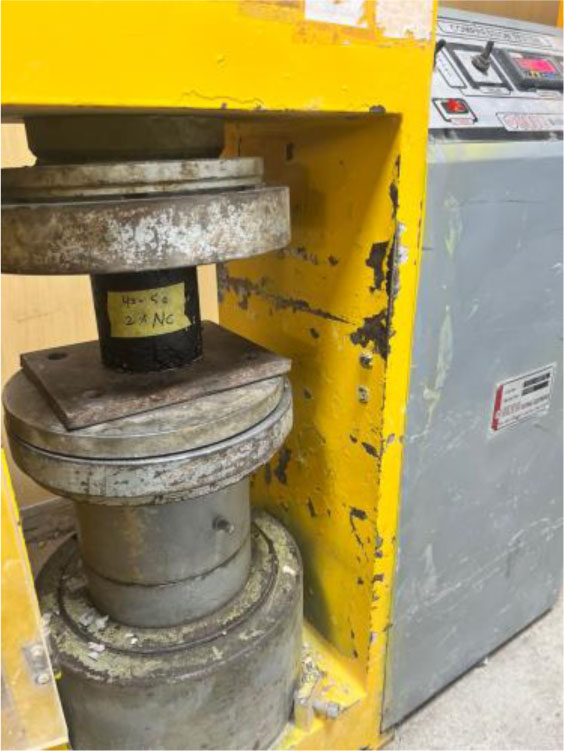
Figure 5:
Compressive strength test setup
2.8. Resilient Modulus (Mr) Test
The resilient modulus was evaluated in accordance with ASTM D4123. Before testing, specimens were conditioned at target temperatures of 5 °C, 25 °C, and 40 °C for at least four hours. The test employed an indirect tensile setup, where a repeated haversine load pulse was applied vertically along the diametral axis of the specimen. Each load pulse lasted 0.1 seconds, followed by a 0.9-second rest period. Repeated axial loading simulated traffic conditions, while horizontal deformations were measured using linear variable differential transformers (LVDTs) to calculate the resilient modulus. Figure 6 illustrates the testing of MR specimens.
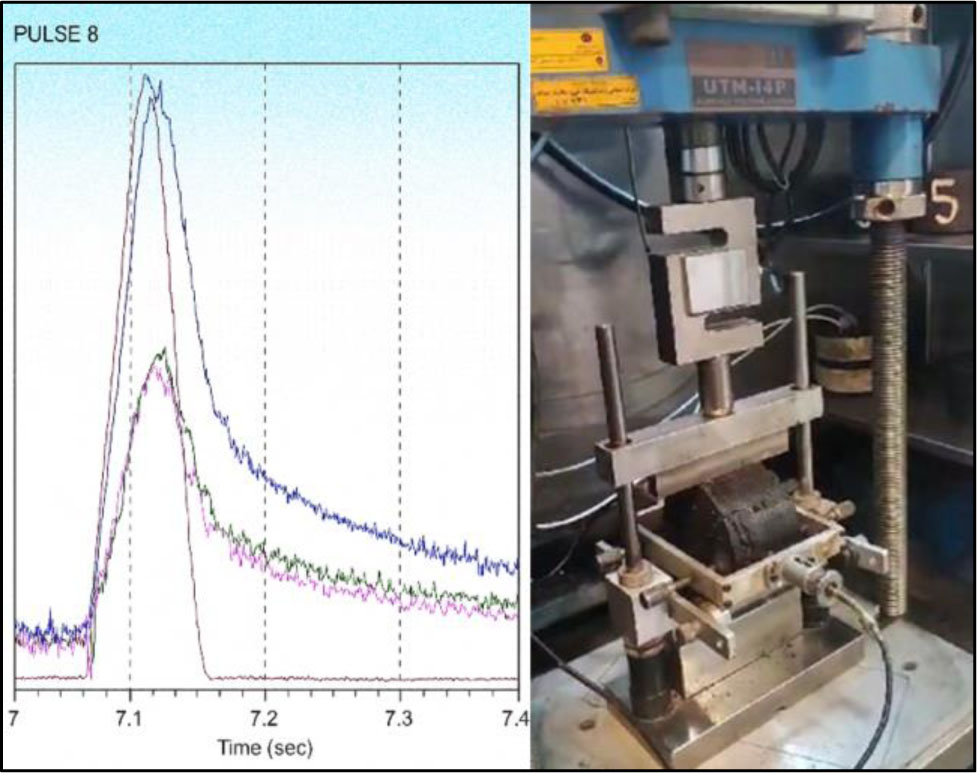
Figure 6:
Resilient modulus (MR) test setup
2.9. Artificial Neural Network (ANN) Modeling
In addition to experimental evaluation, an Artificial Neural Network (ANN) model was developed to predict the resilient modulus (Mr) based on two input variables: nanoclay content (%) and temperature (°C). The ANN was implemented using Python 3.11, utilizing the MLPRegressor from the scikit-learn library. Input data were normalized using MinMaxScaler, and the model architecture included four hidden layers with 64, 32, 16, and 8 neurons respectively. The ReLU activation function was used for hidden layers, while a linear function was used for the output. The model was trained using the Adam optimizer, and its performance was evaluated using R2 and RMSE metrics. This approach enabled the simulation of MR values for input conditions not directly measured in the lab. The dataset was randomly split into a training set (80%) and a testing set (20%) using a fixed random seed to ensure reproducibility. The schematic architecture of the developed ANN is illustrated in Figure 7.
The adopted architecture of four hidden layers (64, 32, 16, and 8 neurons) was selected after preliminary sensitivity checks with alternative configurations (1–3 layers and different neuron counts). The hierarchical reduction in neuron numbers allows gradual compression of information, reducing the risk of overfitting while maintaining prediction accuracy. ReLU was chosen as the activation function for the hidden layers due to its computational efficiency and ability to avoid vanishing gradient issues, which ensures faster convergence compared to Sigmoid or Tanh. This configuration achieved the lowest RMSE and highest R2 among the tested alternatives, and is consistent with recent pavement engineering study that reported the effectiveness of ReLU in ANN modeling (Othman, 2022).
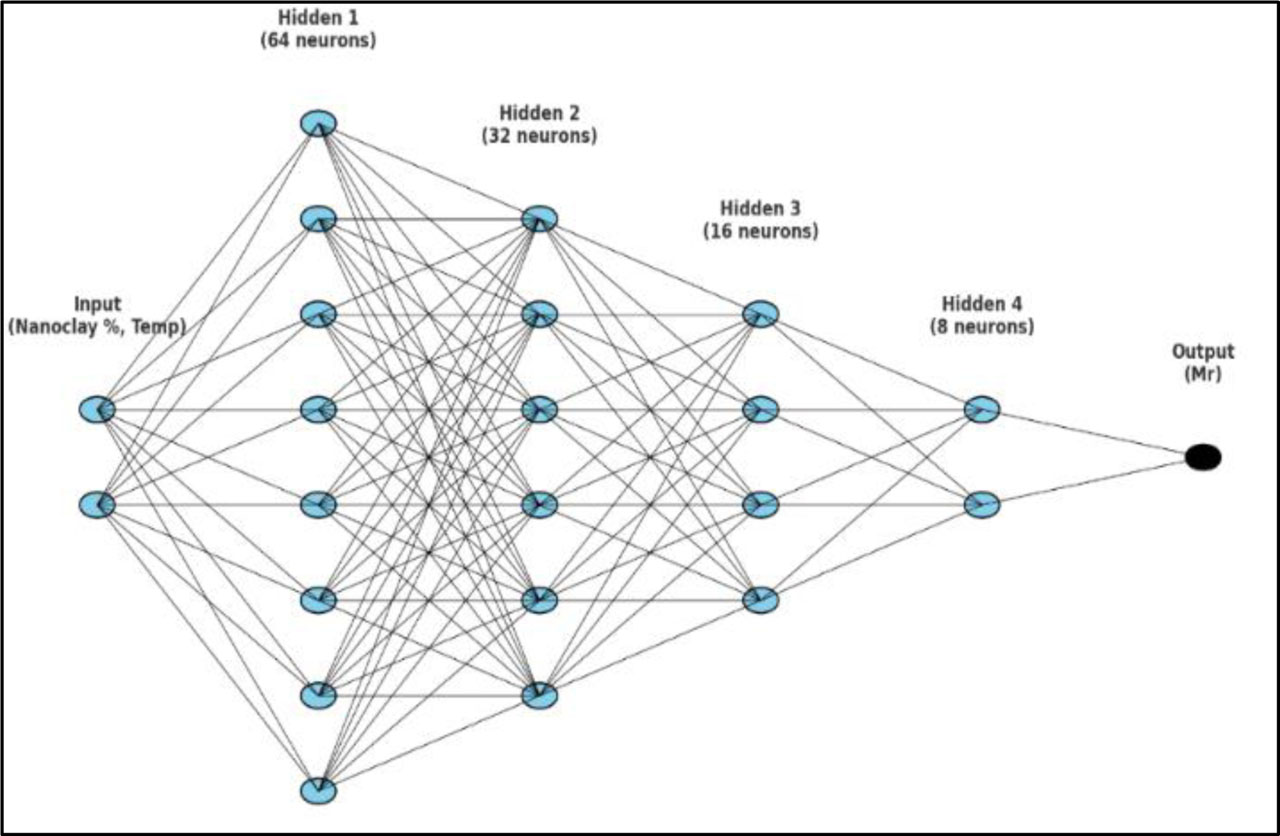
Figure 7:
ANN Model Architecture for MR Prediction
3. Results
3.1. Marshall Test
Marshall test results indicated a progressive increase in (O.A.C) with higher NC contents: from 4.72% for the control (0% NC) to 4.94%, 5.02%, and 5.11% for mixtures containing 2%, 4%, and 6% NC, respectively. These findings align with those reported by (N. Albayati & Qadir-Ismael, 2024; Hassan & Ismael, 2025). The observed rise in (O.A.C) is mainly attributed to the elevated viscosity of the asphalt binder due to incorporating NC, thus requiring higher asphalt content to ensure adequate coating and complete aggregate coverage. Additionally, the nano-scale size and large surface area of NC particles contribute to increased binder absorption, raising asphalt demand (Dai et al., 2023). The stability values increased significantly from 11.51 kN in the unmodified mixture to 12.61 kN (9.6% increase), 13.45 kN (16.9%), and 14.61 kN (26.9%) for mixtures containing 2%, 4%, and 6% NC, respectively. These results confirm the consistent improvement in the structural strength of the mixtures due to nanoclay incorporation. The results are consistent with previous studies (Hassan & Ismael, 2025; Taher & Ismael, 2023). A summary of the results is presented in Table 4.
Table 4:
Marshall Properties at Different Nanoclay Levels
| Mixture | Optimum Asphalt Content [%] | Marshall Stability [kN] | Flow [mm] | Bulk density [g/cm3] | Air Voids [%] | Voids in Mineral Aggregate [%] | Voids Filled with Asphalt [%] | Marshall Stiffness [kN/mm] |
|---|---|---|---|---|---|---|---|---|
| No.1 (0 % NC) | 4.72 | 11.51 | 3.78 | 2.371 | 4 | 13.80 | 71.11 | 3.05 |
| No.2 (2% NC) | 4.94 | 12.61 | 3.39 | 2.360 | 4 | 14.37 | 72.13 | 3.72 |
| No.3 (4% NC) | 5.02 | 13.45 | 3.26 | 2.358 | 4 | 14.54 | 72.35 | 4.13 |
| No.4 (6% NC) | 5.11 | 14.63 | 3.60 | 2.356 | 4 | 14.72 | 72.62 | 3.98 |
The bulk density exhibited a slight reduction as NC content increased. Specifically, raising the NC dosage from 0% to 2% decreased the density from 2.371 g/cm3 to 2.360 g/cm3 (0.46% decrease), from 0% to 4% lowered it to 2.358 g/cm3 (0.55% decrease), and from 0% to 6% reduced it further to 2.356 g/cm3 (0.63% decrease). This trend is primarily attributed to the increase in optimum asphalt content required for mixtures containing NC. Since the air void content was held constant at 4%, the additional asphalt displaced heavier aggregate particles leading to a reduction in overall mass per unit volume. As asphalt has a lower specific gravity than mineral aggregates, its increased proportion in the mix resulted in a slight drop in bulk density. Results of bulk density comply with (Iskender, 2016).
The Flow values exhibited a general decreasing trend with increasing nanoclay content from 0% to 4%, dropping from 3.78 mm to 3.26 mm. This reduction may be attributed to the stiffening effect of the NC’s layered structure, which enhances internal friction and resists deformation under load. However, at 6% NC, a slight increase in flow to 3.60 mm was observed. This can be explained by the higher optimum asphalt content, which introduces additional binder, and by the potential re-agglomeration of nanoclay particles at higher dosages. Such clustering reduces the effective surface area available for binder reinforcement, creating localized weak zones that facilitate deformation. Similar microstructural phenomena at elevated nanoclay contents have been reported in previous studies using SEM and AFM observations (Hussain et al., 2022b; Jahromi & Khodaii, 2009b). Overall, flow values remained within acceptable limits, indicating that nanoclay generally reduces plastic deformation, although higher dosages may slightly increase flow due to the combined effects of additional binder and particle clustering. Figure 8 shows how different NC percentages affect Marshall stability, flow, and volumetric properties of the mixtures.
Marshall stiffness, defined as the ratio of Marshall stability to flow, provides a complementary assessment of the mixture's resistance to deformation under load (Aboutalebi Esfahani & Namavar Jahromi, 2020a; Esa et al., 2024). In this study the stiffness rose from 3.05 kN/mm in the control mixture (0% NC) to 3.72 kN/mm at 2% NC (+21.9%), reaching a peak of 4.13 kN/mm at 4% NC (+35.3%). At 6% NC, stiffness slightly decreased to 3.98 kN/mm, which is still 30.5% higher than the control. These findings indicate that 4% nanoclay yields the most favorable resistance to permanent deformation. Figure 9 (a) shows Marshall stiffness values (kN/mm) for asphalt mixtures modified with different nanoclay contents.
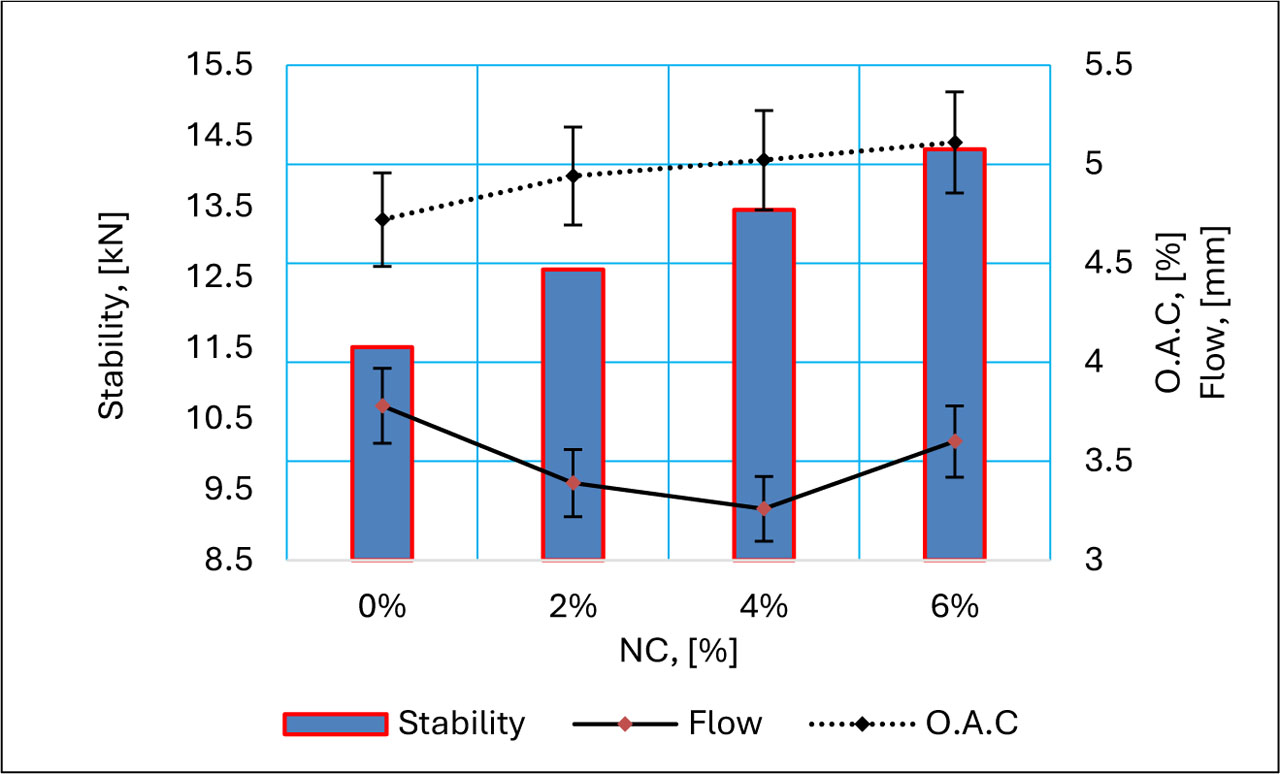
Figure 8:
Influence of varying nanoclay dosages on Marshall stability, flow characteristics, and (O.A.C)
The values of Voids in Mineral Aggregate (V.M.A) and Voids Filled with Asphalt (V.F.A) showed clear trends with increasing asphalt content. Higher nanoclay content leads to increased (V.M.A) values because of rising (O.A.C). The 4% air voids requirement necessitates additional binder in the mix which creates a larger asphalt volume compared to aggregate volume. The extra binder takes up additional space between aggregate particles thus expanding the mineral structure voids. The V.M.A shows direct proportionality with (O.A.C) values. Meanwhile, V.F.A consistently increased as asphalt content rose, reflecting a higher proportion of the mineral voids filled with asphalt, which positively impacts durability and reduces potential moisture damage. These trends confirm the suitable volumetric structure of the asphalt mixture designed in this study.
3.2. Indirect Tensile Strength (IDT)
The results showed that the IDT values increased significantly with the increase in NC content. The control mixture (0% NC) had an average IDT of 1,155 kPa, while the mixtures with 2%, 4% and 6% NC had average values of 1,286 kPa, 1,375 kPa and 1,440 kPa, which correspond to increases of about 11.34%, 19.05% and 24.68% respectively. The improvement in IDT observed can be attributed to the layered structure and large surface area of the NC which improves the bonding between asphalt binder and aggregate particles. The internal bonding that is stronger due to this process resists tensile stresses better and reduces stripping, thus improving IDT performance. (Ameri et al., 2016; Ismael & Ismael, 2019). The trends in tensile strength with varying NC contents are demonstrated in Figure 9 (b)
3.3. Compressive Strength Test
Results indicated a notable increase in compressive strength with higher NC content. The control mixture (0% NC) recorded an average compressive strength of 6,584 kPa, while mixtures containing 2%, 4%, and 6% NC exhibited increased compressive strengths of 7,452 kPa (13.2% increase), 7,961 kPa (20.9% increase), and 8,385 kPa (27.4% increase), respectively. These improvements can be attributed to the reinforcing effect and increased stiffness provided by the NC particles within the asphalt binder, enhancing resistance against compressive loading and deformation. The trends in compressive strength with varying NC contents are clearly demonstrated in Figure 9 (c)
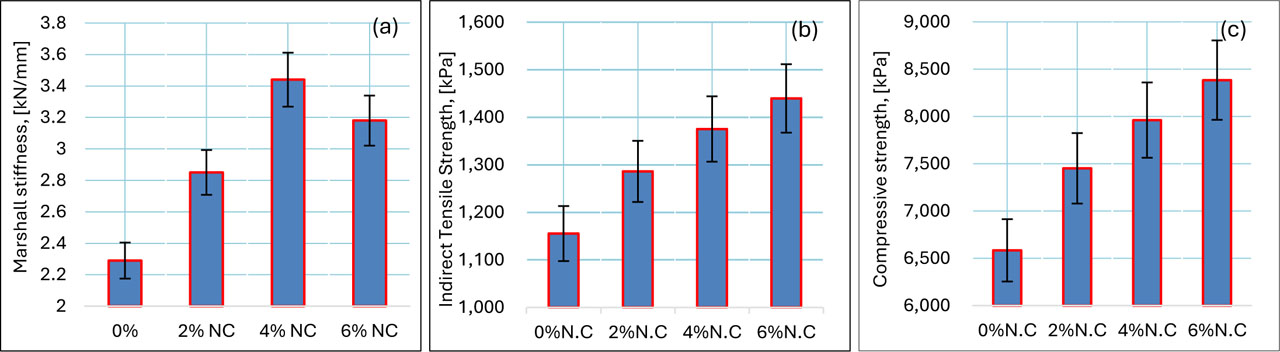
Figure 9:
Effect of Nanoclay Content on (a) Marshall Stiffness; (b) Indirect Tensile Strength; and (c) Compressive Strength
3.4. Resilient Modulus Test
(Mr) values for mixtures containing 0%, 2%, 4%, and 6% nanoclay were obtained at three temperatures: 5 °C, 25 °C, and 40 °C. The results are illustrated in Figure 10, clearly showing the synergistic relationship between nanoclay content, temperature, and resilient modulus, demonstrate a clear increase in MR with the addition of nanoclay.
At 25 °C, the MR value increased from 3037 MPa for the control mixture to 4291, 5355, and 5514 MPa for 2%, 4%, and 6% nanoclay content, respectively. This represents an improvement of 41.3%, 76.3%, and 81.6%, highlighting the role of nanoclay in enhancing mixture elasticity and load response. Similarly, MR values at 5 °C followed a comparable trend, increasing from 4121 MPa (0% NC) to 6843 MPa (6% NC), indicating enhanced stiffness at low temperatures which may reduce thermal cracking. At elevated temperature (40 °C), all MR values dropped significantly due to binder softening, but the relative improvement remained evident. MR increased from 824 MPa (0% NC) to 1318 MPa (6% NC), indicating better high-temperature performance.
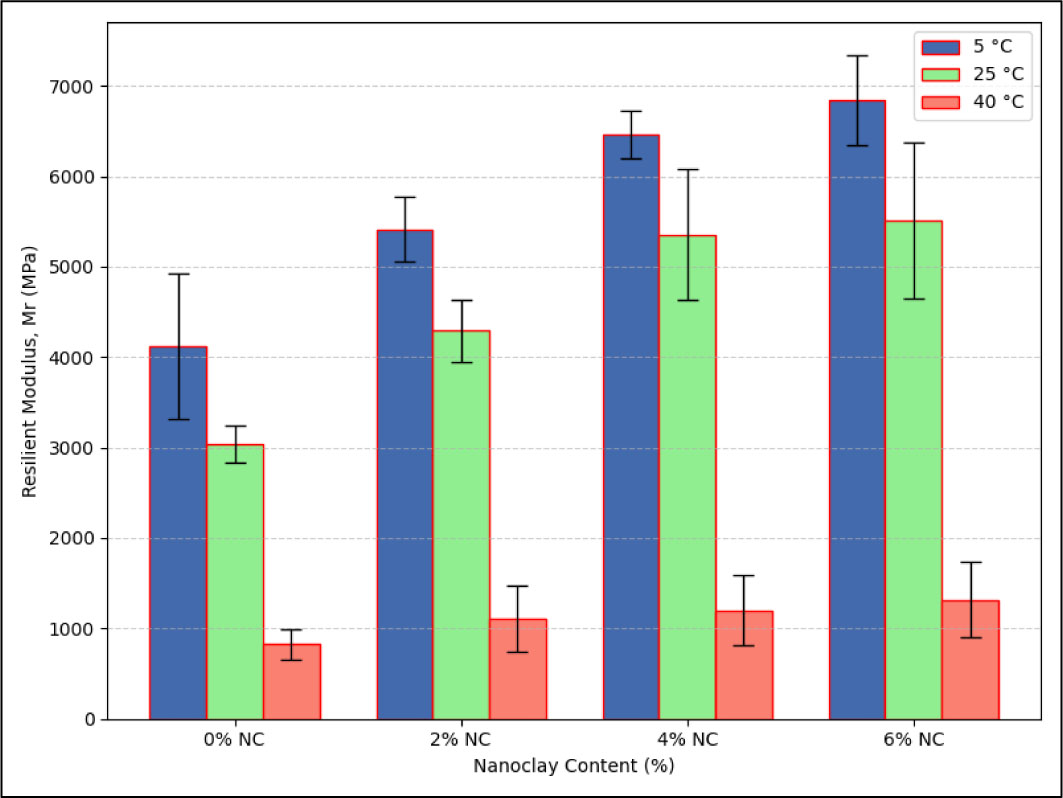
Figure 10:
Effect of nanoclay content and temperature on resilient modulus (Mr) of asphalt mixtures
3.5. Predictive Modeling of MR Using Artificial Neural Network (ANN)
The Artificial Neural Network (ANN) model developed to predict the resilient modulus (Mr) based on nanoclay content and temperature exhibited strong predictive performance. The model achieved a high coefficient of determination (R2 = 0.9434) and a low Root Mean Squared Error (RMSE = 508.87 MPa), reflecting a high level of accuracy in capturing the nonlinear relationship between the input variables and the resilient modulus.
As shown in Figure 11 the scatter plot comparing the predicted MR values to the experimentally measured ones reveals that the majority of points are closely distributed along the ideal 1:1 reference line. This alignment confirms the ANN model’s reliability in replicating the experimental trends and its capability to generalize well within the studied range, confirming the ANN model’s high reliability in predicting experimental data and accurately representing the relationships studied.
The results demonstrate the effectiveness of using ANN as a predictive tool in pavement material research, offering a complementary approach to traditional laboratory testing by enabling efficient and data-driven estimation of mechanical properties (Aboutalebi Esfahani & Namavar Jahromi, 2020b; Bastola et al., 2021).
To validate the effectiveness of the Artificial Neural Network (ANN) model in predicting the resilient modulus (Mr), a comparison was made with a traditional Linear Regression model using the same dataset. Both models were trained on inputs consisting of nanoclay content (%) and test temperature (°C), with Mr as the target output. The Linear Regression model resulted in a coefficient of determination (R2) of 0.778 and a root mean square error (RMSE) of approximately 1008.71 MPa. In contrast, the ANN model achieved a significantly higher R2 of 0.9434 and a lower RMSE of 508.87 MPa. These results highlight the superior predictive capability of the ANN model, particularly in capturing the nonlinear and complex interactions between nanoclay dosage and temperature. Unlike linear regression, which assumes a direct linear relationship, the ANN model effectively models the underlying nonlinear behavior of asphalt mixtures. This justifies the adoption of ANN as a more robust and accurate tool for estimating the mechanical performance of nanoclay-modified asphalt mixtures.
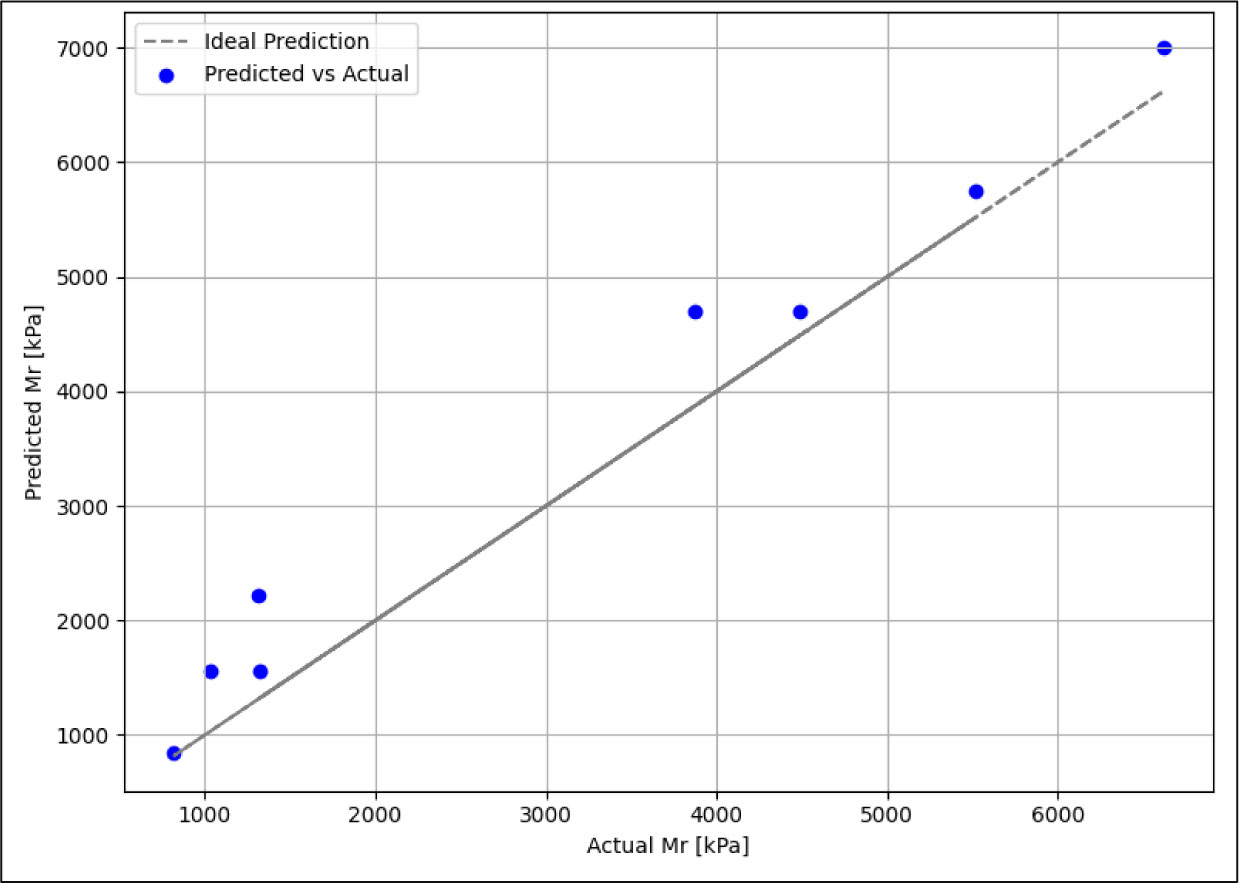
Figure 11:
Comparison between actual and predicted MR values using the trained ANN model
4. Conclusion
Drawing from the outcomes and evaluations conducted throughout this study, the following key findings were identified:
Incorporating NC into the asphalt mix led to a rise in (O.A.C), likely due to increased binder absorption and enhanced viscosity. (O.A.C) rose from 4.72% in the control sample to 5.11% at 6% NC concentration.
Marshall stability showed a marked improvement with higher NC content, reaching nearly 26.9% above the control at the 6% dosage. Simultaneously, flow values experienced an initial decline, suggesting enhanced resistance to deformation. However, a slight rise in flow at elevated NC levels may indicate the beginning of particle agglomeration.
A slight decrease in bulk density was observed as NC content increased. This behavior can be attributed to the inherently lower density of NC, as well as increased microporosity and the rise in asphalt binder content while maintaining constant air void levels.
Compressive strength test results confirmed a substantial increase in mixture stiffness and resistance to compressive stresses, demonstrating enhancements up to 27.4% at the highest NC content (6%).
Marshall stiffness improved with the addition of NC, peaking at 4% content with a 35.4% increase over the control, confirming higher resistance to permanent deformation and reinforcing the indication that 4% is the optimal dosage.
Additionally, the resilient modulus (Mr) values exhibited a consistent improvement with increasing nanoclay content at all test temperatures (5 °C, 25 °C, and 40 °C). At 25 °C, MR increased by more than 80% from the control to the 6% nanoclay mixture, indicating a significant enhancement in the elastic recovery behavior and load resistance. This trend was also observed at low and high temperatures, suggesting that nanoclay incorporation enhances the temperature susceptibility of asphalt mixtures and contributes to better long-term pavement performance. These findings reinforce the role of nanoclay as a viable additive for improving both structural and thermal behavior of asphalt mixes.
The findings suggest that nanoclay modification not only improves mechanical performance but may also support sustainability goals by extending pavement life and reducing maintenance needs. Further research is needed to quantify lifecycle and environmental benefits.
In addition to the experimental findings, the Artificial Neural Network (ANN) model successfully predicted the resilient modulus (Mr) values with high accuracy based on nanoclay content and temperature. The model’s performance (R2 = 0.9434, RMSE = 508.87 MPa) confirms its potential as a reliable tool for forecasting asphalt mixture stiffness, complementing laboratory testing and supporting future design optimization efforts.
The observed enhancements in mechanical performance and stiffness behavior can be theoretically attributed to the nanoclay’s structural characteristics. Its high surface area and layered morphology enhance binder–aggregate bonding and reduce internal voids, leading to increased stability and strength. Furthermore, the ANN model’s success in predicting resilient modulus is grounded in its capability to capture nonlinear relationships influenced by temperature and material composition. These theoretical insights support the experimental findings and affirm the scientific contribution of this study.
From a practical perspective, the findings indicate that nanoclay, particularly at an approximate dosage of 4%, can be effectively incorporated into pavement design to enhance mixture stiffness and potentially extend service life. Nevertheless, the present study was restricted to one binder grade, and laboratory-scale testing, which may not fully capture field performance. Future investigations should therefore prioritize large-scale field validation, comprehensive durability assessments, economic feasibility analyses, and the exploration of nanoclay in combination with other additives such as polymers and fibers to further optimize mixture performance.
Notes
[1] Contributed by Author Contributions
M.I conceived and designed the study. M.Al-A. conducted the experiments and collected the data and performed the statistical analysis. All authors critically reviewed and approved the final version of the manuscript and agreed to be accountable for all aspects of the work.