

1. Introduction
Recently, the high-strength concrete was considered as the preferred material due to improved mechanical properties compared with the normal concrete, where high-strength concrete with compressive strength exceeding 150 MPa and flexural strength 15 MPa can withstand force more than normal concrete (Datta et al. 2024). High-strength concrete performs double the capacity of normal concrete in case the cement content is approximately 1000 Kg/m3, but increasing the manufacturing of cement will lead to environmental impact because the cement industries are responsible for 5–8% of CO2 (Tahwia et al, 2022). To decrease this impact, many substitute materials such as fly ash, nanomaterials, recycled glass, and other materials are utilized. (Datta et al. 2024, Onaizi et al. 2021 and Alharbi et al. 2022).
ACI Code 318-08 (2018) allowed and approved that the steel fibers can be used as a minimum shear reinforcement in beams for the first time. Based on the material flexural tests, fiber-reinforced concrete became acceptable for shear resistance.
The description of non-conventional material reinforcement has been given to steel fibers in the concrete paste that improves concrete’s mechanical properties and controls the development of the crack (Amulu and Ezeagu, 2017). Because of the ability of steel fibers to transfer tensile stress across the crack surface, it can create a bridge, known as crack-bridging.
ACI 544 (2009) recommended that discrete steel fiber can be used with typical dosages range between 0.5% to 2.5% by volume, typical dosage 1.5% is commonly used in practice to develop the concrete tensile properties. The fiber mainly used due its capability to provide increase resistance of post-cracking tension stage of the fibers reinforced concrete members. In case that the fibers were added to the concrete with low to moderate dosage, the modulus of elasticity and compressive strength do not greatly affect (Darwin et al. 2016). The main purpose of adding discontinuous steel fibers to the concrete mixture is to restrain and delay crack development (Hsu, 1962, Broo, 2008 and Bernardo et al. 2013). Where, the main goal of using fibers is to enhance the ability of concrete to carry tensile forces. Based on the fiber’s material, it can be classified into a variety of types: Synthetic fibers, Glass fibers, Natural fibers, and Steel fibers.
Fiber can be used for different types of concrete, where found that the compressive strength as well as the shear and bending strength of lightweight concrete was developed by adding different percentages of two types of fiber (steel and polypropylene) (Al-Khafaji and Harba, 2023).
In addition to steel fiber, some of nanomaterials can be used to enhance the properties of the concrete. One of the nanoparticle materials has been used to improve the properties of blended concrete. Al2O3 used to improve the compressive strength and workability; it showed that the cement could be advantageously replaced with nano-Al2O3 with a maximum limit up to 2% with size of the particles 15 nm as an average (Riahi et al. 2010).
In a study by Taher, Attar and Al-adili (2024) found that incorporating waste glass nanopowder as a partial replacement of limestone filler led to enhance the mechanical properties of the self-compacting concrete with good flowability.
Rahmat at el. (2015) found that replacing the Portland cement partially by 25 wt% fly ash and three different types of nanoparticle materials SiO2, Fe2O3, and CuO with the percentage up to 5% of weight, slightly enhanced the workability of self-compacting mortar, and the nanoparticles could improve the durability and mechanical properties of self-compacting mortar.
N. Abdoli Yazid at el. (2011), found that adding 1% and 3% of Fe2O3 by weight of cement led to improve the mechanical properties of concrete, and presence of this nanoparticles fill the pore of reduce the large crystals of Ca (OH)2, increasing the percentage of Fe2O3 up to 5% led to reduce the mechanical properties of concrete.
Hematite powder, or it can be known “Iron Powder “(Technical datasheet of hematite API) is one of the nanoparticle materials that have been used to be incorporated with the cement binder to improve the properties of the concrete, such as compressive, tensile strength, and other properties like porosity, permeability, and workability of the concrete. it has been found that the compressive and tensile strength using 2.5% of hematite (Fe2O3) as a cement replacement can improve the compressive and tensile strength approximately 21.88% and 26.77% respectively, (Largeau et al. 2018)
Based on the previous studies, few researches have been studied the effect of nanoparticles on the properties of the normal concrete only, in this research, the effect of nanoparticles (Hematite powder API-Fe2O3) on the properties of high strength steel reinforced concrete has been deeply investigated.
2. Experimental Work
The experimental work has been conducted through two stages. The first stage is to find the best ratio and type of fiber, which can provide the highest improvement in the concrete properties. The second stage depends on the results of the first stage. After determining the ratio and type of steel fiber, this ratio and type will be used in the second stage, and the variable is only the hematite ratio. Figure 1 shows the flowchart of the experimental work
Ratio of mixed steel fiber (1.5% of volume) means that 50% of each type of steel fiber, end hooked and corrugated, has been added to the concrete.
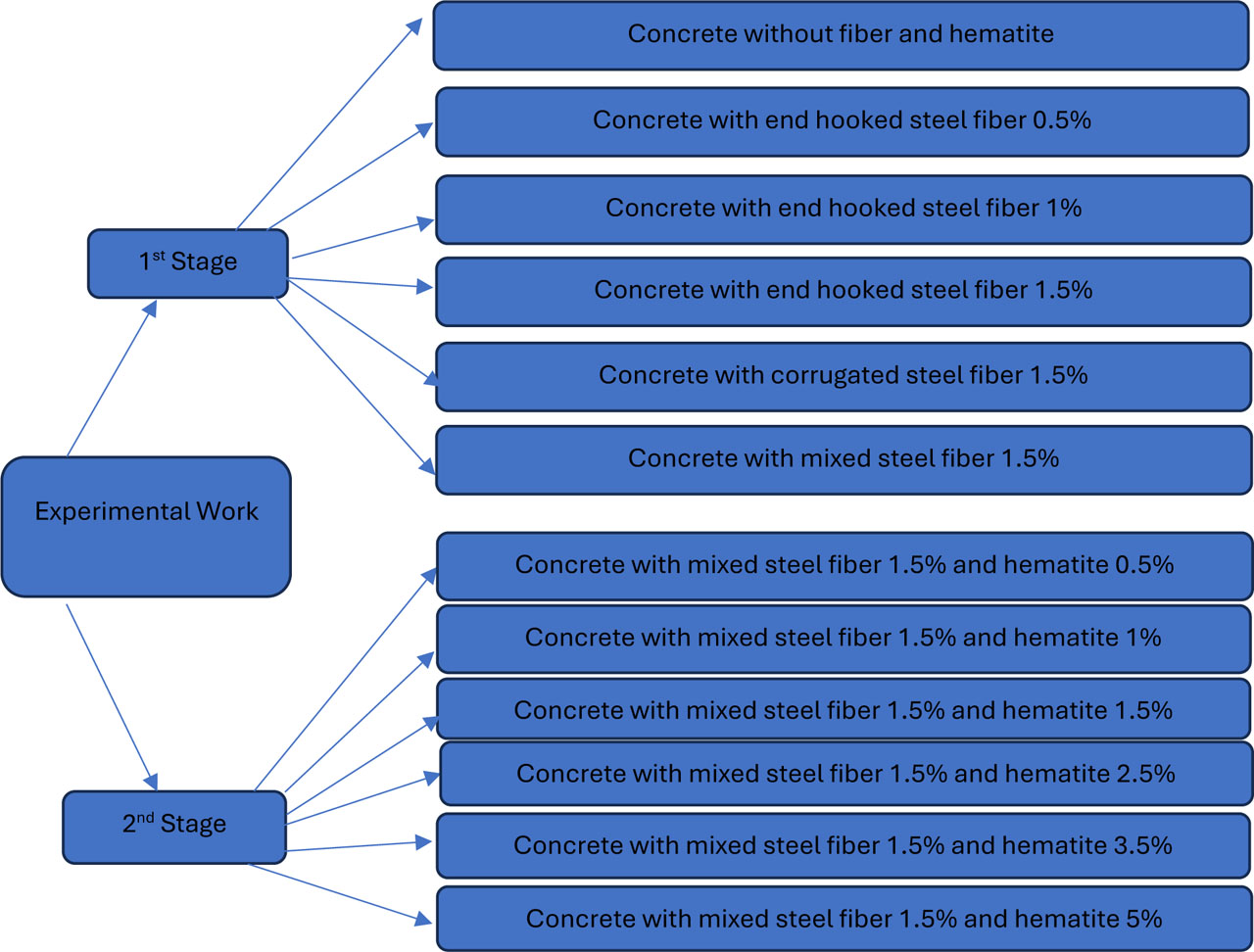
Figure 1:
Flowchart of the Experimental Work
2.1. Materials
The selected materials for this study were tested in the laboratory of Basrah University / Engineering College, and the results were compared with the required specifications.
Cement
Mabruka Type 1 ordinary Portland cement was used to prepare the concrete mix in this study. Before using the cement, one sample was taken to be tested to verify that it is within the specification ASTM C 150 (2020) for physical test and chemical test, the results of the test are shown in Table 1
Coarse Aggregate
The gravel used in this study was taken from the Al-Zubair field with a maximum size 20 mm. Figure 2 displayed the graduation of coarse aggregate as per ASTM C33/C33M-13 (2013).
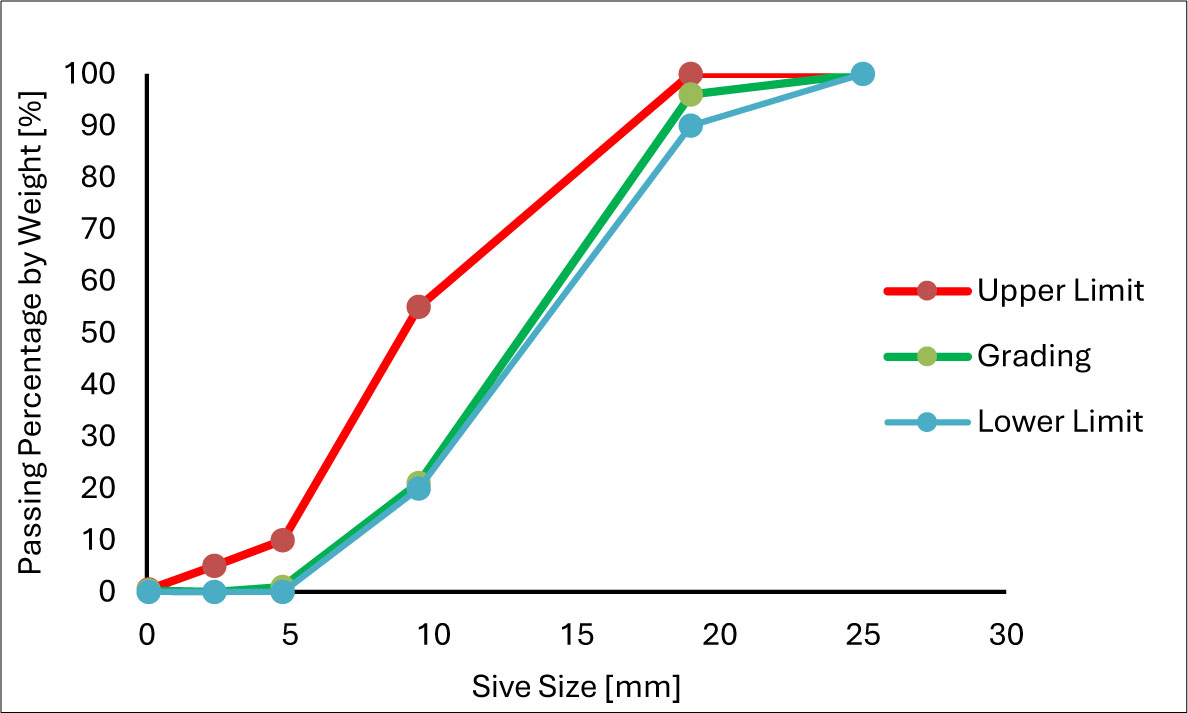
Figure 2:
Grading of Coarse Aggregate
Fine Aggregate
Sand was taken from Al-Zubair natural field, the particle size was not exceeded 4.75 mm. Figure 3 displayed the graduation of coarse aggregate as per ASTM C33/C33M-13 (2013).
Water
Potable water (RO) has been used for both mixing and curing the concrete. RO water is suitable for human consumption tested according to BS-1427 (2009)
Additive Material (DCP Hyperplast PC200)
The additive material used in this study is Hyperplast PC200, which is super superplasticizing admixture with high performance based on polycarplast polymers with long chains created specifically to enhance the performance of concrete’s water content. It can be used for flowable concrete and high-strength concrete mixers to increase the concrete durability and performance (Technical datasheet of PC200). ASTM C494/C494M-22 (2022) type A and G comply with this additive material. Figure 4 shows the specification (TDS).
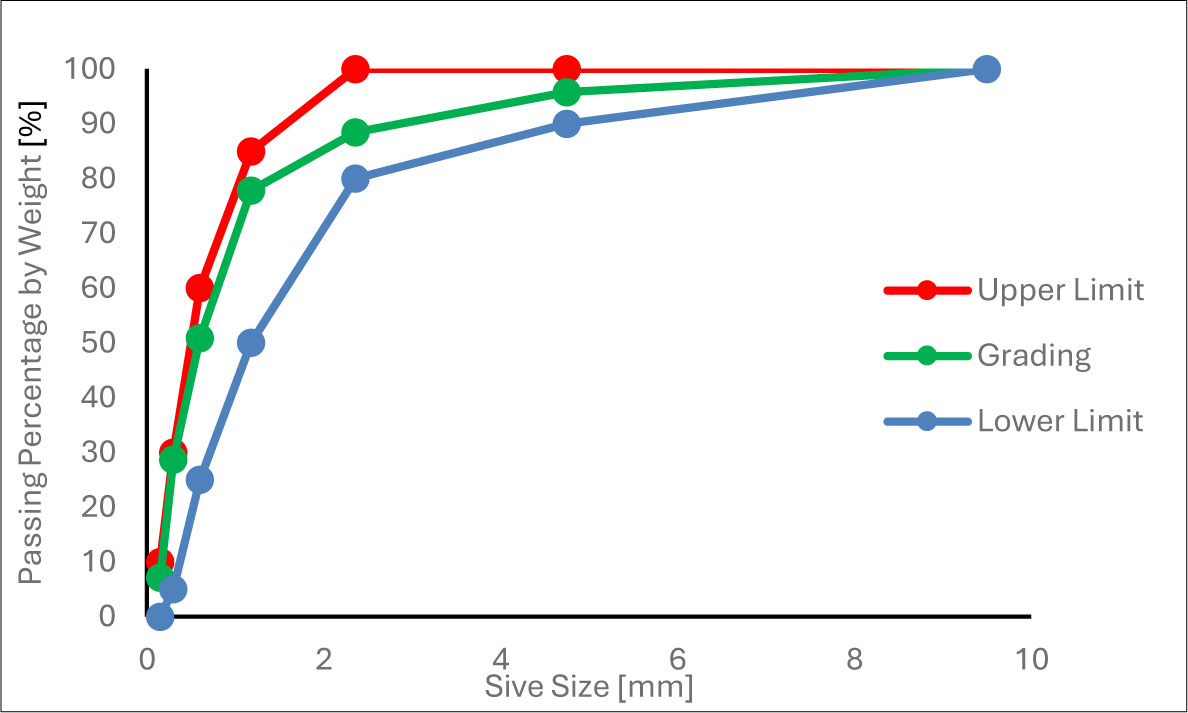
Figure 3:
Grading of Fine Aggregate
Silica Fume (MegaAdd (D))
Silica fume MegaAdd MS(D) is high performance mineral additive that can be used in concrete mix; it is a very fine pozzolanic. It acts chemically as a highly reactive pozzolan and optimizes particle packing of the concrete or mixture of mortar physically. When mixing with the water, it goes as a solution within an hour. On the surface of the silica fume particles, the silica in solution agglomerates and forms an amorphous silica-rich, calcium-poor gel. The system of pozzolanic reaction in cementitious is that after time, the silica, which is rich in agglomerates of silica fume and poor calcium poor coating liquefies and reacts with free lime (CaOH2) to create calcium silicate hydrates (CSH) (Technical datasheet of MegaAdd MS). MegaAdd MS(D) complies with ASTM C1240-20 (2022).
Steel Fiber
Two types of fibers were used in this experimental study: end hooked and corrugated. The materials are within the specifications as per the certificate and testing of origin. The test results are shown in Tables 2 and 3.
Table 2:
Properties of end-hooked steel fiber
| Test Items | Specification | Results of Test | Remarks |
|---|---|---|---|
| Tensile Fiber Strength [Mpa] | ≥ 1100 | 1185 | Passed |
| Fiber Length [mm] | 35 ± 0.5 % | 35.5 | Passed |
| Fiber Diameter [mm] | 0.55 ± 0.5 % | 0.51 | Passed |
| Aspect Ratio | 65 ± 5 | 69.6 | Passed |
| Qualified Rate of Shape [%] | ≥ 90 | 98 | Passed |
| Content of Impurity | ≤ 1 | 0.1 | Passed |
Table 3:
Properties of corrugated steel fiber
| Test Items | Specification | Results of Test | Remarks |
|---|---|---|---|
| Tensile Fiber Strength [Mpa] | 1100 – 1400 | 1140 | Passed |
| Fiber Length [mm] | 30 ± 5 % | 31.4 | Passed |
| Fiber Diameter [mm] | 0.75 ± 0.5% | 0.76 | Passed |
| Aspect Ratio | 40 ± 5% | 41.31 | Passed |
| Qualified Rate of Shape [%] | ≥ 90 | 98 | Passed |
| Content of Impurity | ≤ 1 | 0.1 | Passed |
Hematite Powder (Hematite API)
Hematite API is a ground iron oxide with a specific gravity 5.05 used in this study. The properties of material are considered as per the technical datasheet of the product. Table 4 shows the typical properties of hematite API.
2.2. Concrete Mix
The mix design of concrete was prepared based on ACI211.1-22 (2022). High strength reinforced concrete was considered to achieve 65 MPa at 28 days of casting. For this purpose, several experimental trial mixes were conducted to find the optimum concrete mixture, it is found that the mix design with (570 Kg of cement, 950 Kg of gravel with maximum size 20, 700 Kg of sand, 50 Kg of MegaAdd Silica fume, 6 Kg of PC additive material and W/C 0.3) for one cubic meter of concrete was the best concrete mixture.
2.3. Compressive Strength Test
For testing the properties of concrete, 150 mm cubes and Ø150 × 300 mm cylinders were prepared as shown in Figure 5. The cubes have been tested to find the compressive strength, and the cylinders have been tested to evaluate the tensile strength of the concrete in accordance with ASTM C-39 (2001) and BS-1881/108 (1983).
The cubes and cylinders samples were removed after 24 hr. of casting time. To ensure proper strength and hydration development, all cubes and cylinders have been cured by storing them in water tanks filled by RO water up to 28 days as per ASTM C192/C192M-23 (2023). The situation and conditions of the curing place was monitored to check the temperature and change the water as needed. Three cubes of concrete have been tested at 7 days in order to get an indication about the compressive strength, An average was taken, and another three cubes were tested at 28 days to get the final compressive strength of the concrete. Table 5 shows the compressive strength of the concrete mixture at 28 days.
Table 5:
Results of Compressive Strength
| Cube Symbol | Compressive Strength [MPa] | Average [MPa] |
|---|---|---|
| F0-1 | 68.7 | 66 |
| F0-2 | 64.4 | |
| F0-3 | 65.2 |
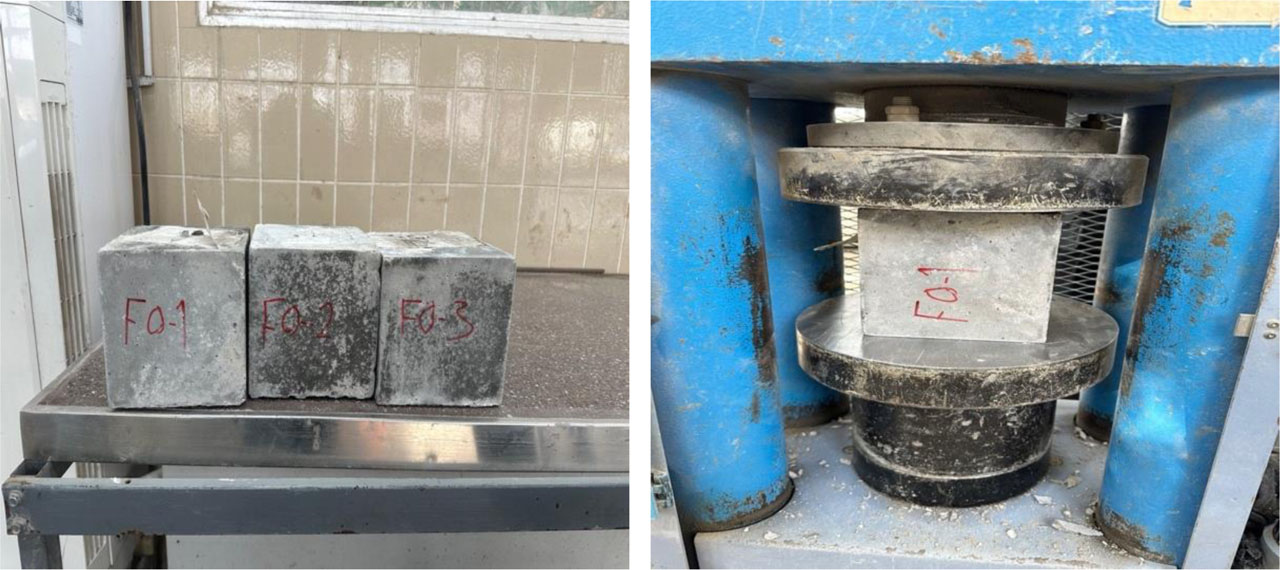
Figure 5:
Compressive Strength Test
2.4. Tensile Strength Test
For the purpose of determining the tensile strength of the concrete, splitting test was conducted for the cylinder at 28 days, this test is less difficult test for determining the tensile strength (Chalioris and Karayannis, 2009). The compression load was applied in the opposite specimen surfaces as shown in Figure 6, and the maximum load was measured by (ton unit) based on the test device reading, and then convert to Newton. The following formula was used to calculate the tensile strength based on the test results (BS-1881/108, 1983).
fsp is the tensile strength of concrete in MPa, L is the length of the line in contact of a specimen (mm). It has been taken 300 mm; D is the cross-sectional diameter (mm). In this study, it has been taken 150 mm, and P Maximum applied load (N). Table 8 shows the results of cylinder test with calculated tensile strength.
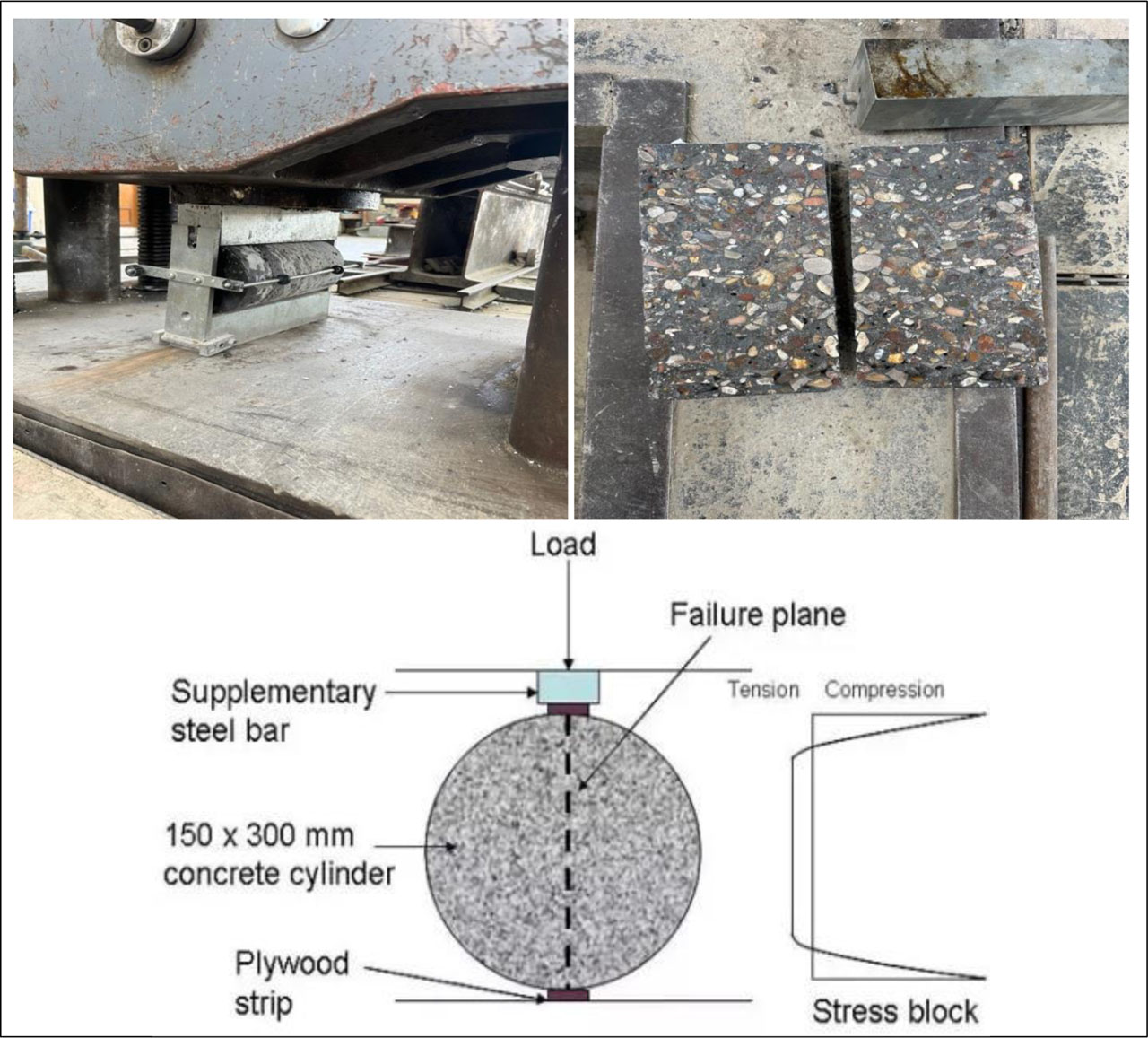
Figure 6:
Splitting Test
2.5. Modulus of Elasticity (Ec)
In this study, testing of the modulus of elasticity of concrete has been performed as per ASTM C469/C469M-22 (2022) by using the instrument and concrete cylinder (150 × 300mm) as shown in Figure 7. By using the following equation, modulus of elasticity was determined.
Where,
Ec is the concrete modulus of elasticity (MPa),
S2 is the stress corresponding to 40% of maximum load (MPa),
S1 is the stress corresponding to longitudinal strain,
ɛ1 = 0.00005, and
ɛ2 is the longitudinal strain produced by S2.
Two concrete cylinders were prepared for each ratio of fiber and hematite powder, first cylinder was tested to find the compressive strength of the concrete, which is almost equal to 87% of the cube compressive strength. The second cylinder was tested as shown in Figure 7 to find the data based on equation 2 for determining the modulus of elasticity.
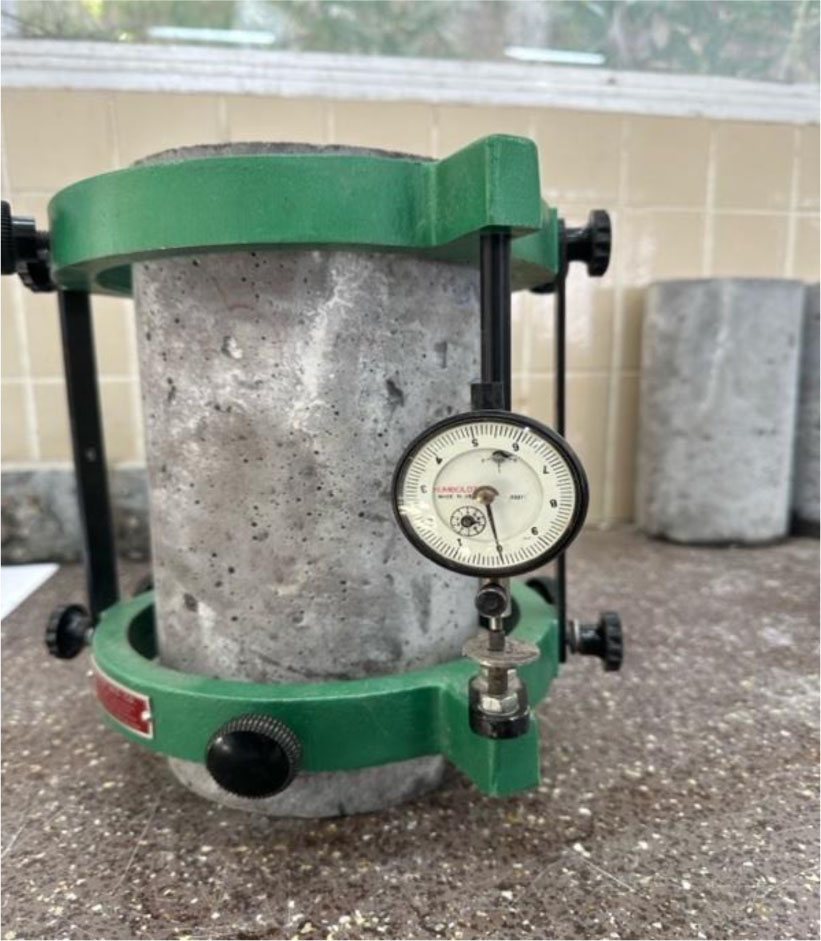
Figure 7:
Modulus of Elasticity Test
3. Results and Discussions
3.1. Effect of Steel Fiber on Compressive Strength
As mentioned in paragraph 2.2 that six cubes with dimensions (150 × 150 mm) have been prepared for each ratio of fiber; three of them were tested at 7 days and the rest tested at 28 days.
Based on the experimental results, it was found that adding steel fiber led to improve the compressive strength of the concrete. For the specimens with end hooked steel fiber, found that the increment in the compressive strength was 1.65%, 4.03% and 12.27% corresponding to ratios (0.5%, 1%, 1.5%) respectively. It is considered slight increment in the compressive strength of the concrete reinforced by end hooked steel fiber
For a specimen that contains corrugated steel fiber, the increment in the compressive strength was less than the increment provided by the end hooked with the same ratio of fiber, where the increment was 11.21% compared with the control specimen. It is less than the end hooked steel fiber, about 2.22%.
Highest compressive strength was obtained by using the mixed steel fiber, where the increment was about 13.68% more than the control specimen. Table 6 shows the compressive strength at 28 days, and Figure 8 shows the comparison of the compressive strength with different shapes and ratios of steel fibers.
Table 6:
Results of Compressive Strength (First Stage)
| Steel Fiber Ratio [%] | Compressive Strength [MPa] | Increment Ratio [%] | Shape of Steel Fiber |
|---|---|---|---|
| 0 | 65.53 | - | Nil |
| 0.5 | 66.63 | 1.67 | End hooked |
| 1 | 68.17 | 4.03 | End hooked |
| 1.5 | 73.57 | 12.27 | End hooked |
| 1.5 | 72.88 | 11.21 | Corrugated |
| 1.5 | 74.5 | 13.68 | Mixed |
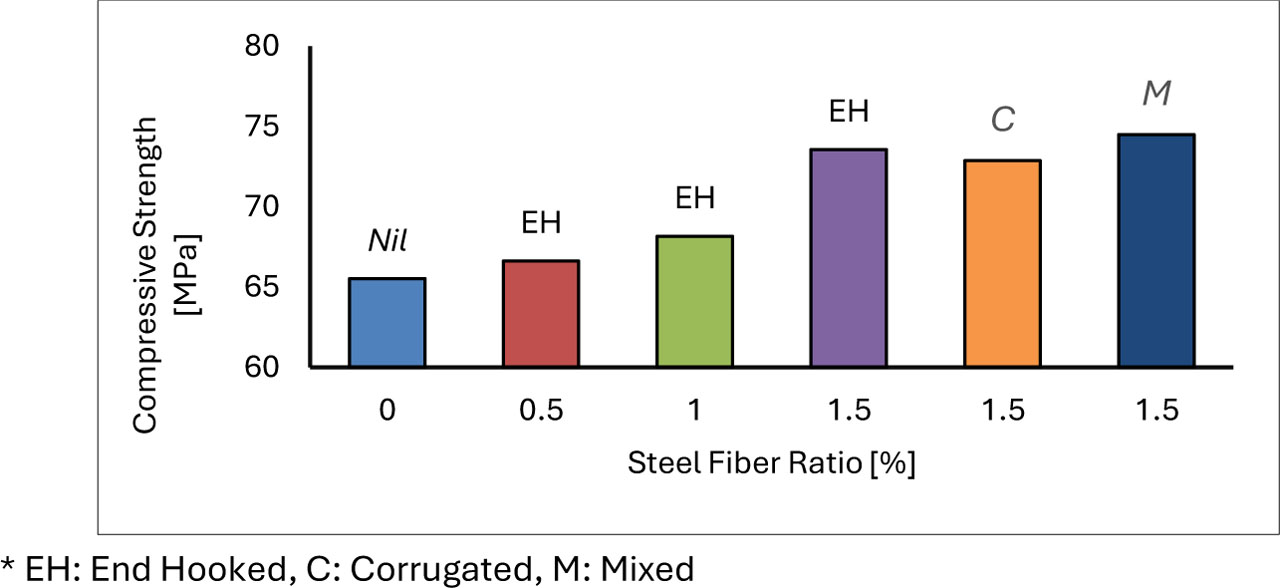
Figure 8:
Effect of Steel Fiber on Compressive Strength (First Stage)
3.2. Effect of Steel Fiber on Tensile Strength
Based on the experimental results, it was found that increasing the ratio of steel fiber led to an increase in the tensile strength of the concrete. When end hooked steel fiber was used, it was found that the tensile strength increased by 8.39%, 17.09% and 23.29% for ratios 0.5%, 1% and 1.5% respectively. The random distribution of end hooked steel fiber has a significant effect on the development of the crack in post post-cracking stage, where it works as a crack-bridge due to its shape, which leads to reduce crack development during increasing load. For the corrugated steel fiber, it was found that the tensile strength is a little less than the end hooked with the same ratio (1.5%). The highest tensile strength was found when using a mix of steel fibers, as shown in Table 7 and Figure 9, where the increment was about 35.72%.
Based on these results, it can be said that mixing end hooked and corrugated steel fibers will lead to forming a component that can improve the tensile strength of concrete, depending on the shape of the ends of the end hooked and the wavy shape of the corrugated steel fiber better than when using only one type separately
Table 7:
Results of Tensile Strength (First Stage)
| Steel Fiber Ratio [%] | Tensile Strength [MPa] | Increment Ratio [%] | Shape of Steel Fiber |
|---|---|---|---|
| 0 | 6.55 | - | Nil |
| 0.5 | 7.10 | 8.39 | End hooked |
| 1 | 7.67 | 17.09 | End hooked |
| 1.5 | 8.12 | 23.96 | End hooked |
| 1.5 | 8.01 | 22.29 | Corrugated |
| 1.5 | 8.89 | 35.72 | Mixed |
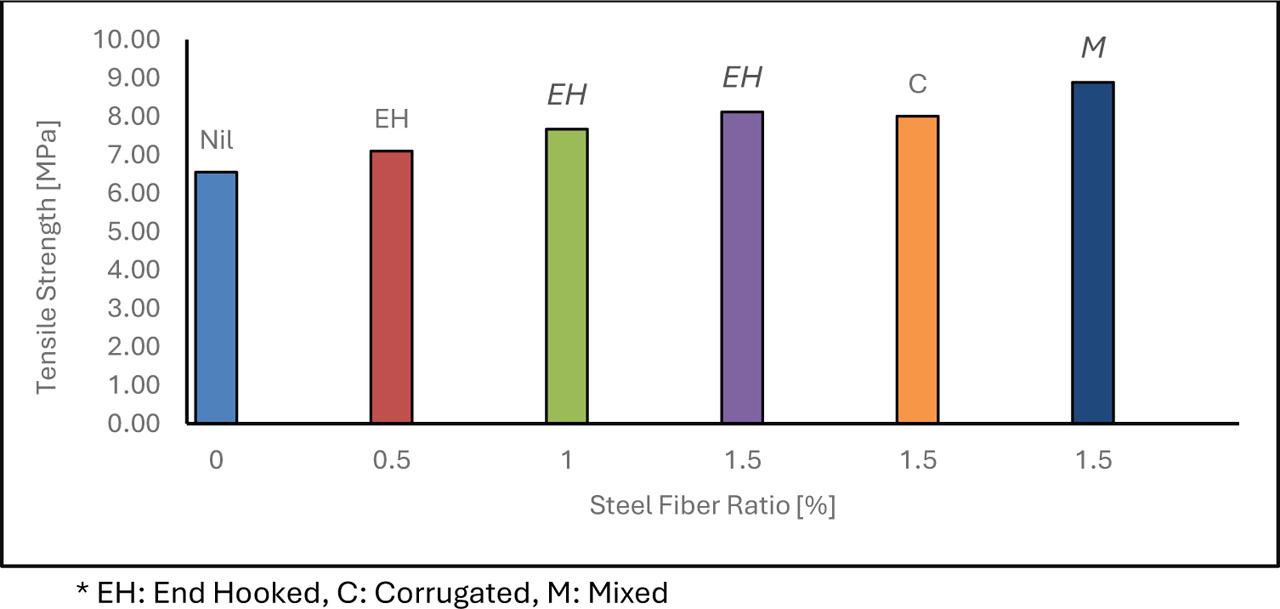
Figure 9:
Effect of Steel Fiber on Tensile Strength (First Stage)
3.3. Effect of Steel Fiber on Modulus of Elasticity
Modulus of elasticity for each ratio of steel fiber was determined. The compressive strength and actual properties of the aggregate were the main factors that affected the modulus of elasticity, it was found that the compressive strength increased proportionally with adding steel fiber, this led to increase the modulus of elasticity. In addition, the effect of steel fiber bond with the concrete mix, and its capacity as crack-bridging, and the high stiffness contributed to improve the modulus of elasticity. The highest modulus of elasticity was achieved by using mixed steel fiber as shown in Table 8
3.4. Effect of Hematite Powder on Compressive Strength
The compressive strength was found at 7 and 28 days for each ratio of hematite powder. The experimental results showed that adding hematite powder as a cement replacement led to improve the compressive strength of high strength fiber reinforced concrete, where found that 0.5%, 1%, 1.5% and 2.5% of cement replaced by hematite powder, the compressive strength increased by 2.97%, 4.85%, 7.81% and 12.16% respectively, compared with specimen, which contained only mixed steel fiber and without hematite powder (taken from the first stage). Beyond these ratios, the compressive strength decreased by 7.61% and 11.19% when the ratio of hematite was increased by 3.5% and 5% respectively, compared with the ratio of 2.5%.
Based on these results, the maximum ratio of cement is 2.5% to be replaced by hematite powder led to highest compressive strength, beyond this ratio, the compressive strength tends to decrease, the reason for this is that the amount of cement will be reduced, which is the main influence on the compressive strength.
The increment in the compressive strength of high strength steel fiber reinforced concrete achieved by adding hematite powder as a cement replacement up to 2.5% can be explained that each particle of iron powder has a cubic pattern and distance nanoparticle is adjustable when the powder is unformal distributed in concrete (Branch, Y. 2011). Due to the micro fine size of the particles, they fill the pores which is leading to more compacting of the microstructure. Reducing the number of pores lead to improve of the microstructure, bonding between the cement matrix and the aggregate and the density of the cementitious composite will be increased (Sikora et al. 2016). Due to rapid consumption of Ca (OH)2 which was formed during the hydration of the cement, the high improvement of compressive strength was achieved (Alabdulhady et al. 2017). Table 9 shows the compressive strength at 28 days, Figure 10 shows the comparison of the compressive strength with different ratios of hematite powder.
Table 9:
Results of Compressive Strength (Second Stage)
| Steel Fiber Ratio [%] | Hematite Ratio [%] | Compressive Strength [MPa] | Increment Ratio [%] | Shape of Steel Fiber |
|---|---|---|---|---|
| 1.5 | 0 | 74.5 | - | Mixed |
| 1.5 | 0.5 | 76.34 | 2.46 | Mixed |
| 1.5 | 1 | 78.12 | 4.85 | Mixed |
| 1.5 | 1.5 | 80.32 | 7.81 | Mixed |
| 1.5 | 2.5 | 83.56 | 12.16 | Mixed |
| 1.5 | 3.5 | 77.89 | 4.55 | Mixed |
| 1.5 | 5 | 75.23 | 0.97 | Mixed |
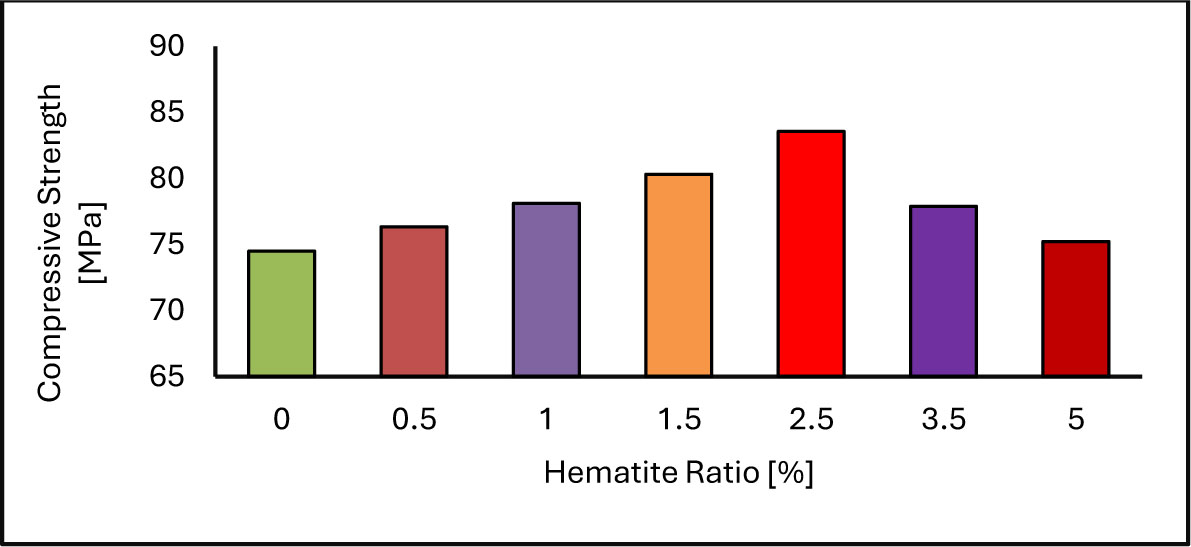
Figure 10:
Effect of Hematite Powder on Compressive Strength (Second Stage)
3.5. Effect of Hematite Powder on Tensile Strength
The tensile strength of each ratio of hematite powder found through splitting test for the cylinder of ratio with considering that the ratio of fiber is constant 1.5% of mixed steel fiber (50% end hooked and 50% of corrugated), and by using the equation 1, the tensile strength was found. Based on the experimental results, it was found that with increasing the ratio of hematite led to increase the tensile strength of the concrete, and the highest tensile strength was gained at ratio 2.5% of cement amount, where the increment 1.62%, 2.11%, 2,97% and 4.01% for hematite ratio 0.5%, 1%, 1.5% and 2.5% respectively. beyond this ratio, the tensile strength tends to decrease by 3.52% and 6.91% for hematite ratio 3.5% and 5% respectively, as shown in Table 10 and Figure 11, compared with the control specimen. This is because there were more hematite powder particles in the mixture exceeded the stoichiometric requirement to combine with the calcium hydroxide (Ca(OH)2) during the hydration process. As a result, too much silica leached out, which reduced the cementing material's strength because the powder was added as a cement replacement, not as an additive (Al-Khafaji and Harba, 2023).
Table 10:
Results of Compressive Strength (Second Stage)
| Steel Fiber Ratio [%] | Hematite Ratio [%] | Tensile Strength [MPa] | Increment Ratio [%] | Shape of Steel Fiber |
|---|---|---|---|---|
| 1.5 | 0 | 8.89 | - | Mixed |
| 1.5 | 0.5 | 9.04 | 1.68 | Mixed |
| 1.5 | 1 | 9.08 | 2.13 | Mixed |
| 1.5 | 1.5 | 9.16 | 3.03 | Mixed |
| 1.5 | 2.5 | 9.26 | 4.16 | Mixed |
| 1.5 | 3.5 | 8.59 | 0.96 | Mixed |
| 1.5 | 5 | 8.45 | 0.94 | Mixed |
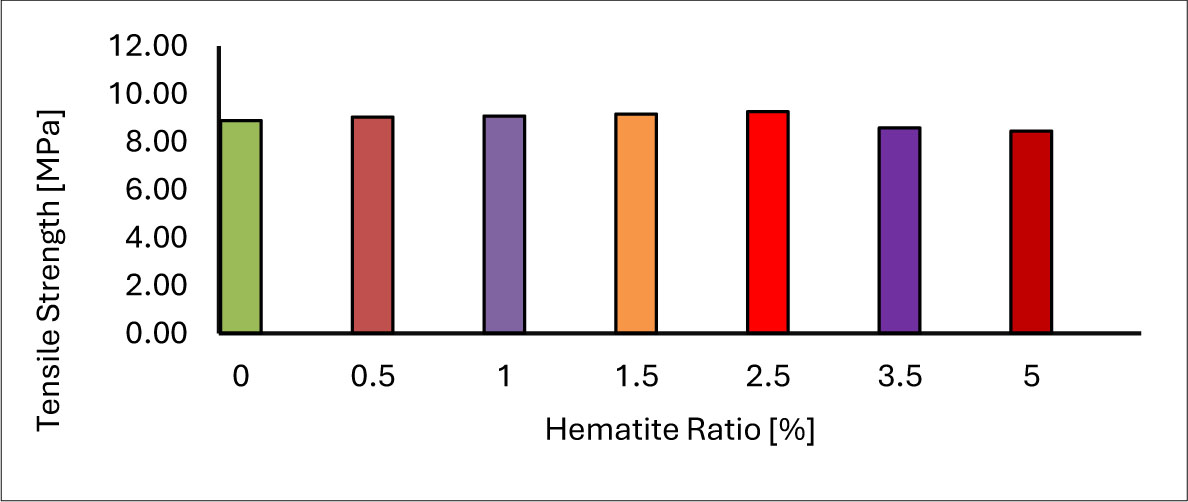
Figure 11:
Effect of Hematite Powder on Tensile Strength (Second Stage)
3.6. Effect of Hematite Powder on Modulus of Elasticity
As per ASTM C469-02 [29] and using equation 2, the modulus of elasticity for the specimens with hematite powder has been determined. it can be seen that when increased the hematite ratio up to 2.5% as a cement replacement, the modulus of elasticity increased as shown in Table 11, as a result of increased compressive strength, and beyond this ratio, it decreased as the compressive strength decreased.
4. Conclusions
Based on the experimental results of the high strength steel fiber reinforced concrete with and without hematite powder subjected to pure torsion. The following conclusions may be drawn as:
1) There is significant improvement of using steel fiber to increase the compressive and tensile strength of high strength concrete.
2) Incorporating hematite powder with mixed steel fiber give more enhancement in the mechanical properties of the concrete
3) Using end hooked steel fiber is better than corrugated, but the highest compressive and tensile strength was achieved by using mixed steel fiber (50% end hooked and 50% corrugated) with ratio 1.5%. The increments was 13.68% and 35.73% for compressive and tensile strength, respectively.
4) Adding hematite ratio up to 2.5% as a cement replacement to high strength concrete strengthened by mixed steel fiber give more increment in the compressive and tensile strength without any implementation problems, where the increment was 12.16% 4.16% for compressive and tensile strength, respectively.
5) Increasing the ratio of hematite more than 2.5% lead to decrease the compressive and tensile strength, as well as the workability of concrete mix decreased.
6) Incorporating hematite powder with high strength steel fiber reinforced concrete lead to increase the modulus of elasticity.
Acknowledgements
The authors are grateful to the Department of Civil Engineering of University of Basrah, Iraq
Notes
[1] Contributed by Author Contributions
Conceptualization, M.A., and A.C.; methodology, M.A., validation, M.A.; investigation, M.A.; resources, M.A.; data curation, M.A.; writing—original draft preparation, A.C..; review and editing, A.C.; visualization, A.C.; supervision, A.C..; project administration, M.A.; funding acquisition, M.A. All authors have read and agreed to the published version of the manuscript.