

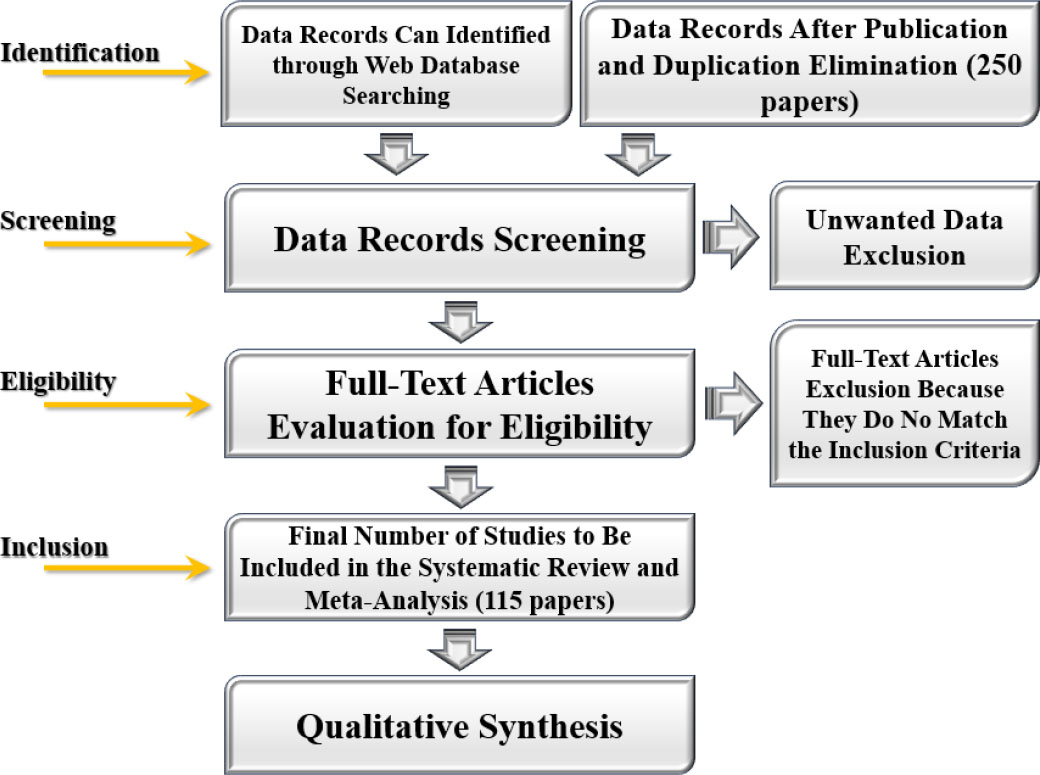
Figure 1:
A flowchart of main PRISMA implementation stages
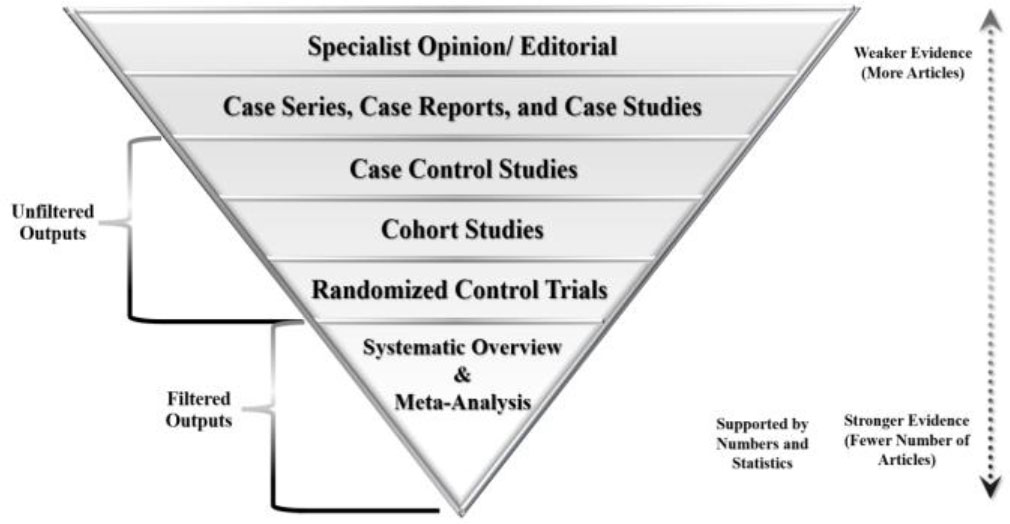
Figure 2:
Distinct features of the systematic review compared to other review works (Author, 2024)
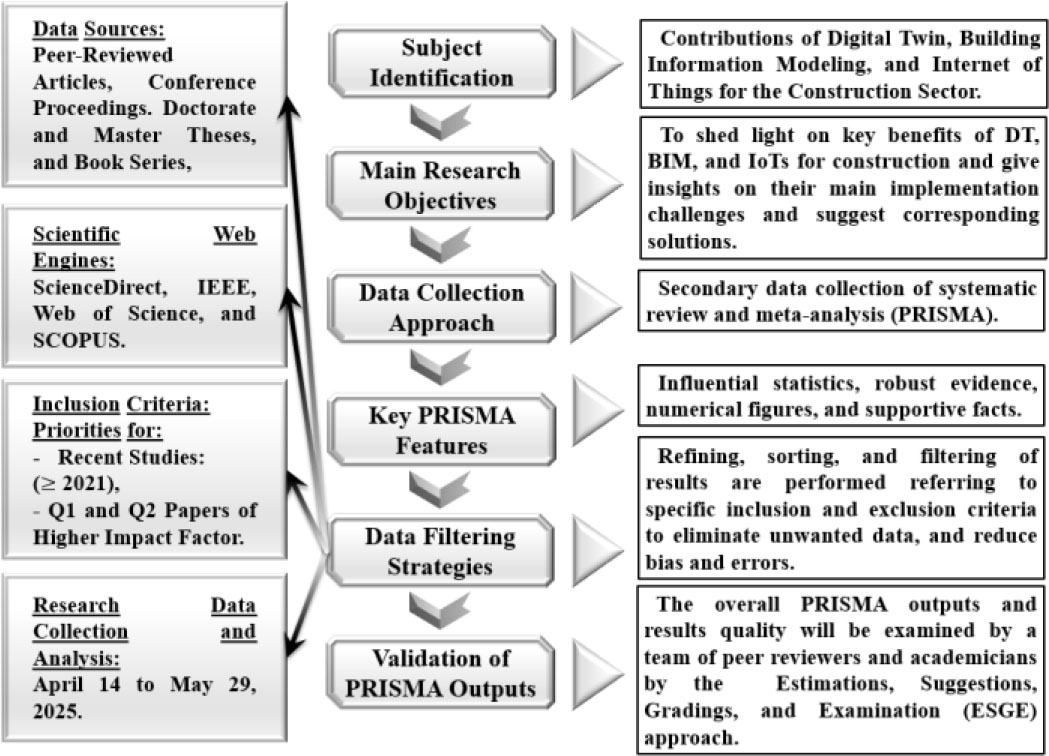
Figure 3:
The main research methodology
Table 1:
Construction-related theoretical (bibliometric) and empirical studies of DT, BIM, and IoTs
| No. | Publication | Aim [s] | Methodology | Country | Key Findings | Theoretical or Empirical? | |
|---|---|---|---|---|---|---|---|
| Theoretical | Empirical | ||||||
| Digital Twin (DT) | |||||||
| 1 | Li et al. (2025) | DT is utilized for an industrial cascade refrigeration framework to broaden the applicability of the energy-consuming parts regulation approach. | Two bidirectional automated data flow behaviors are formulated for various scenarios, namely, the IoTs and Cloud-Edge Computing. | China | The total power was reduced between 3 kW to 18 kW. The COP was improved by 7.2%. The thermal comfort of users is provided while maintaining reduced carbon emissions, lower energy consumption, and less negative climate change impacts. | ✓ | |
| 2 | Fawad et al. (2025) | DT is introduced to virtually model, simulate, analyze bridge damage issues, conduct life cycle assessment, and predict and investigate updates of this structure. | An Immersive Bridge Digital Twin Platform (IBDTP) is created. | Poland | DT is influential since it enables infrastructure authorities to automate Structural Health Monitoring (SHM) of bridges. BIM is implemented to provide active decision-making procedures referring to Augmented Reality (AR) technology. IoTs sensors are installed at different bridge locations to collect real-time data to make simulation, virtual modeling, and analysis. | ✓ | |
| 3 | Khalifa & Marzouk (2025) | To optimize EE and facilities energy consumption. To help smart cities and urban communities efficiently adhere to and contribute positively to favorable outcomes related to global Sustainability Development Goals (SDGs), certainly SDG11 and SDG13. | A framework is formulated integrating DT into the blockchain A DT and blockchain platform is utilized. | Egypt | DT enhances EE and optimizes the energy consumption of facilities to enhance their sustainability and reduce their negative impacts on the environment and climate. | ✓ | |
| 4 | Shehata et al. (2025) | To accomplish sustainability in many construction procedures. | A scientometric PRISMA review is conducted referring to quantitative, mixed methods using VOSviewer and RStudio. | Global Review | DT provides pivotal advantages for construction, humans, and facilities. This study clarifies multiple DT roles in dynamically implementing global sustainable goals, helping stakeholders involved in all stages related to the facility life cycle. | ✓ | |
| Building Information Modeling (BIM) | |||||||
| 5 | Ghosh & Karmakar (2025) [26] | To manage the claim documentation process in construction projects. | A new claim management Autodesk prototype for the BIM platform has been formulated. | India | BIM makes resource-efficient, swift, dynamic, and feasible claim documentation management systems (CDMSs) and active claim and dispute resolution processes in construction. | ✓ | |
| 6 | Veerendra et al. (2025) | To supply enhanced PM and manage project designs. To conduct an effective Life Cycle Assessment (LCA) of the whole project. | A case study is considered and analyzed. | India | BIM is practical since it facilitates communication and minimizes conflicts. BIM enhances a facility’s structural integrity throughout construction. BIM is considered a preventative strategy. It reduces costly rework issues that correspond to submission delays, helping make construction simple. | ✓ | |
| 7 | Liu (2025) | To estimate the cost of the construction project. | BIM is utilized with Cloud Computing. | China | BIM estimates the project cost with an up to 99% accuracy, reliability, and high-performance. BIM and Cloud Computing reduce bias and errors and alleviate many complexities connected with this task. | ✓ | |
| 8 | Jiang (2025) | To enhance the coordination process among variant construction progress phases. To maximize resource allocation and alleviate high labour costs. | A case study and overview of the knowledge body are utilized. | China | BIM utilization achieves better quality control (QC) and management of the project design. It minimizes risky accidents and investment challenges. It enhances the economic viability of the construction project. It raises projects’ competitiveness and enhances their brand image in the global construction market. | ✓ | ✓ |
| 9 | Nasir et al. (2025) | To conduct building sustainability assessment (BSA) flexibly in the Indian context. | The GRIHA-2015 rating approach is considered. The automated, Autodesk, BIM-driven BSA framework is validated through a case study of an official facility in northwestern India. | India | BIM is pivotal since it enables the automatic synchronization of BSA. BIM guides construction decision-makers on enhanced choices of sustainable resource allocation and facilitate sustainable practices in Indian construction through careful estimations of building life cycle stages, components, and materials. | ✓ | |
| Internet of Things (IoTs) | |||||||
| 10 | Yuan et al. (2025) | To exploit IoTs to manage the thermal comfort of facilities. To control occupants’ thermal comfort and behavior. | A case study of an official space is analyzed. IoTs sensors and data mining are utilized to collect real-time data of thermal comfort and make predictions and optimizations of proper values to achieve enhanced occupants’ comfort. | China | An enhanced occupants’ comfort with an acceptance rating raising from 3.78 to 4.38. An IoTs web platform integrates the centric occupancy controlling workflow. | ✓ | |
| 11 | Mu & Antwi-Afari (2024) | To highlight the beneficial impacts of IoT implementation in industries like construction. | A scientific mapping overview is conducted. | Worldwide review | IoTs is integrated into many industries, including construction, to optimize control, monitoring, and PM. The agility of PM can be further improved through IoTs' real-time data collection. IoTs are integrated into other forms of digital technologies, such as robotics, sensing technologies, Cloud Computing, blockchain, and AI, bringing significant benefits. | ✓ | |
| 12 | Al-Obaidi et al. (2022) | IoTs is introduced to manage smart buildings and smart cities and minimize overall energy consumption. | An extensive, systematic overview is performed. | Worldwide review | IoTs enhances EE. Many IoT applications achieve promoted EE in facilities. Influential IoT concepts, frameworks, pivotal and helpful applications, main trends and adoption obstacles have been reviewed in construction. Insufficient comprehension of many technological advancements has limited their broad application. | ✓ | |
| 13 | Poyyamozhi et al. (2024) | To uncover IoTs importance for construction, mainly energy management of smart facilities. | A systematic review is conducted. | Worldwide review | IoTs are pivotal in enhancing EE in facilities. Therefore, significant global energy consumption from the building sector and greenhouse gas (GHG) emissions can be alleviated. IoTs provides crucial data that foster EE decision-making, real-time control, and intelligent operations. Real-time data can be collected from IoTs sensors installed at different locations of facilities. | ✓ | |
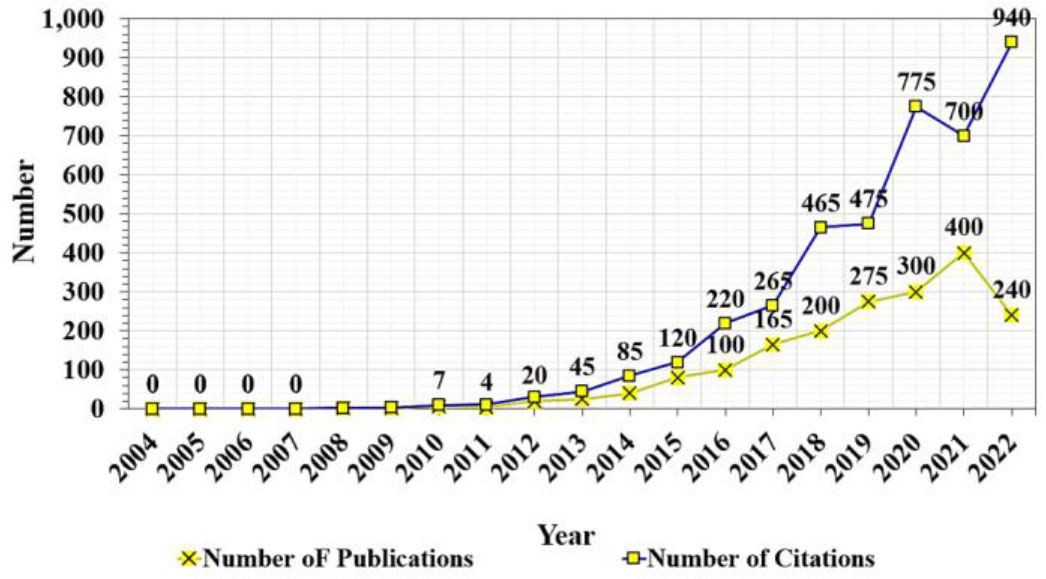
Figure 3:
Publications and citations of DT, BIM, and IoTs in construction (Baghalzadeh Shishehgarkhaneh et al., 2022)
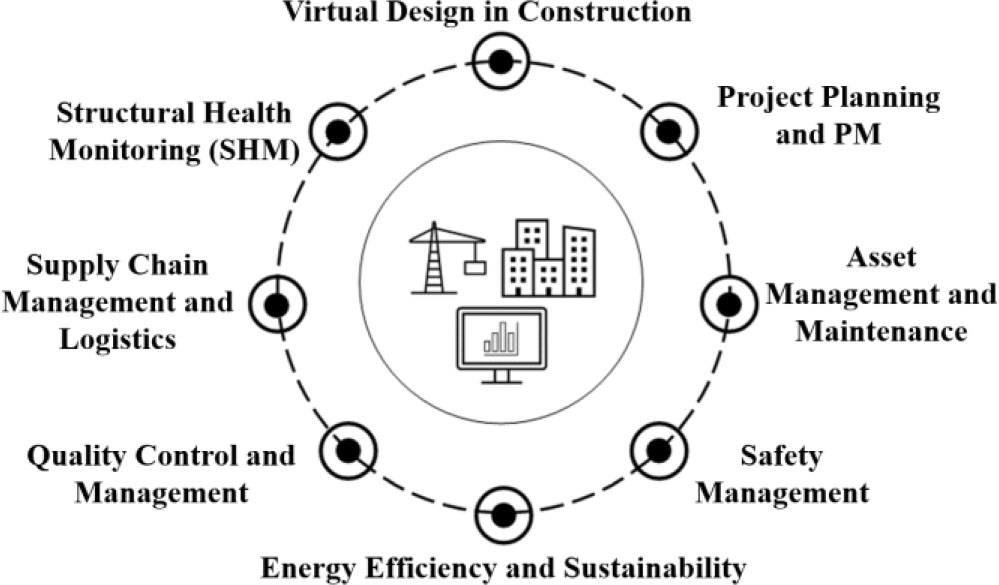
Figure 4:
Working principles of the DT in the construction context (Baghalzadeh Shishehgarkhaneh et al., 2022)
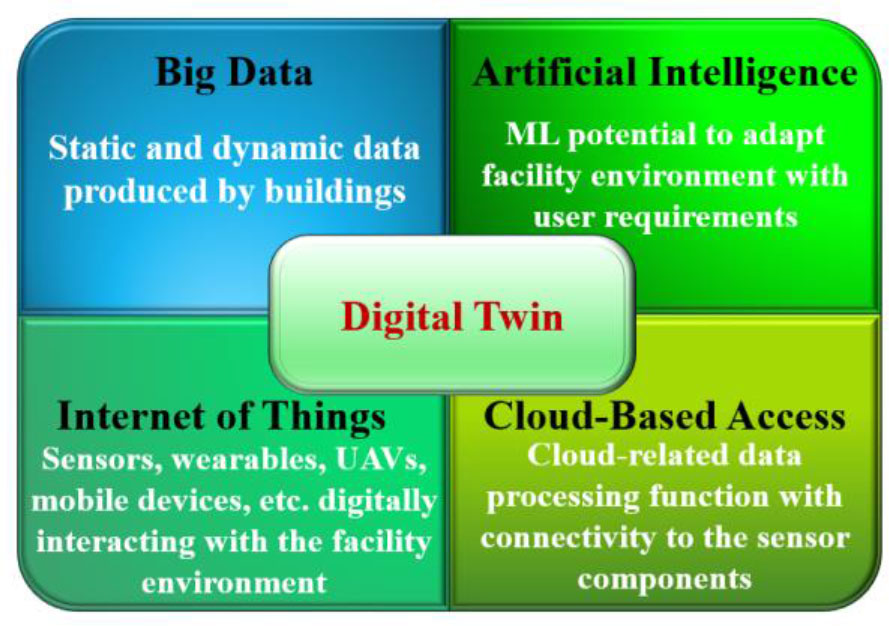
Figure 5:
Four critical components drive DT in facility transformation (Madubuike et al., 2022)
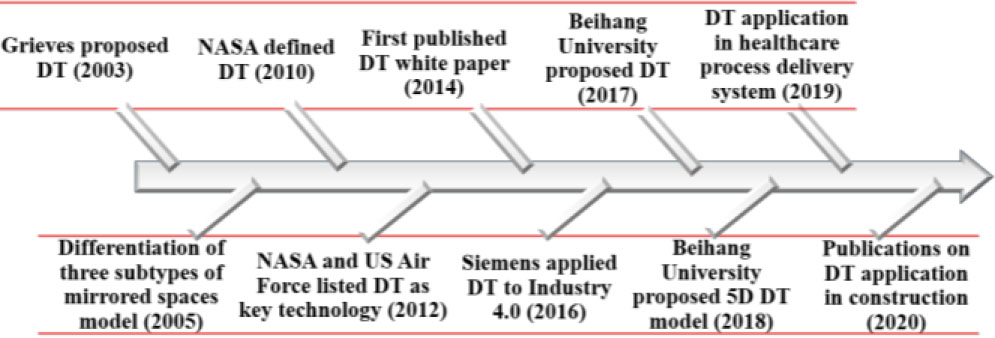
Figure 6:
The critical milestones of DT evolution (Madubuike et al., 2022)
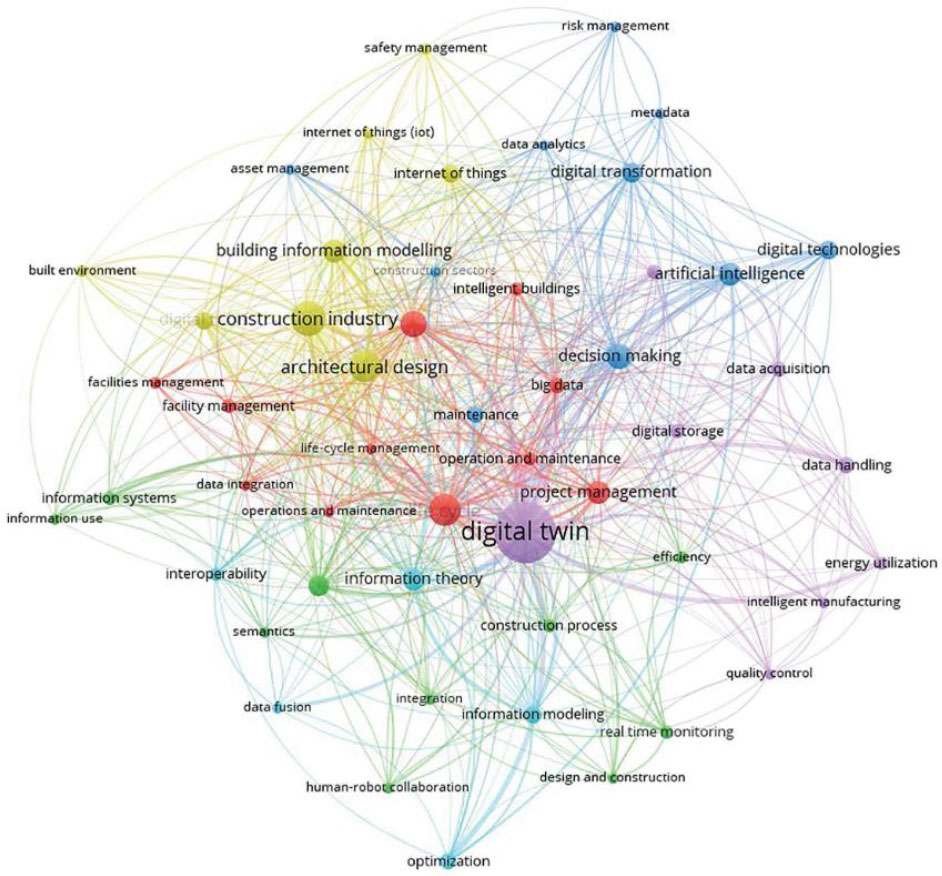
Figure 7:
Co-occurrence keywords network on DT in construction and FM (2016 to 2022) (Hosamo et al., 2022)
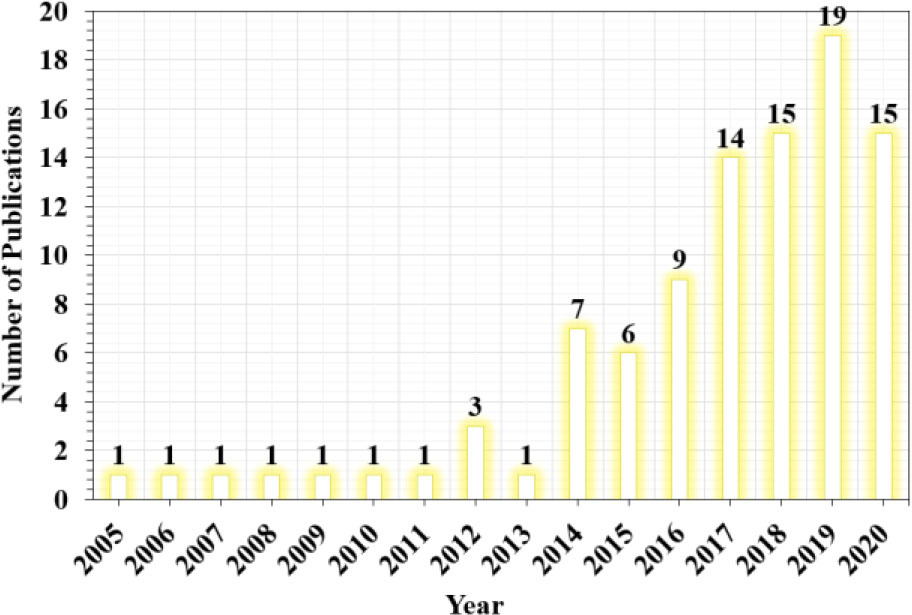
Figure 8:
Number of publications on BIM technology (2005 to 2020) (Yang et al., 2021)
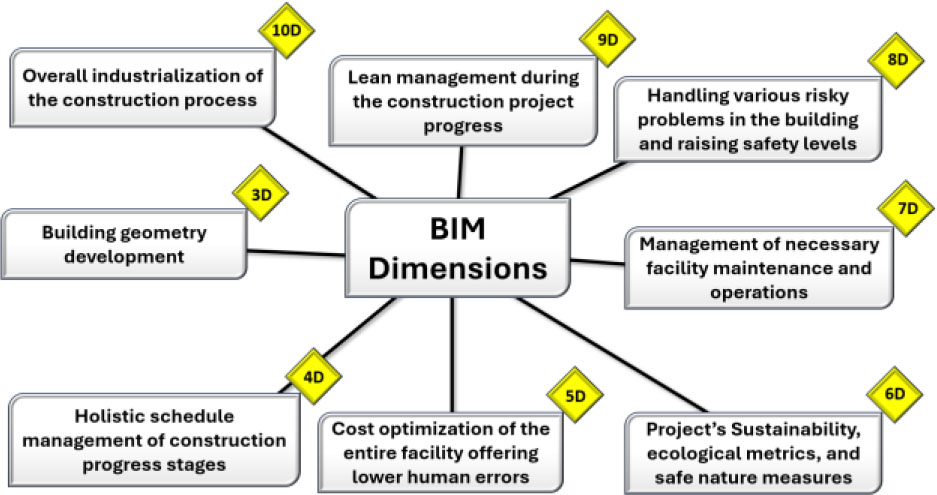
Figure 9:
Major creative BIM dimensions to manage construction projects (Ershadi et al., 2021)
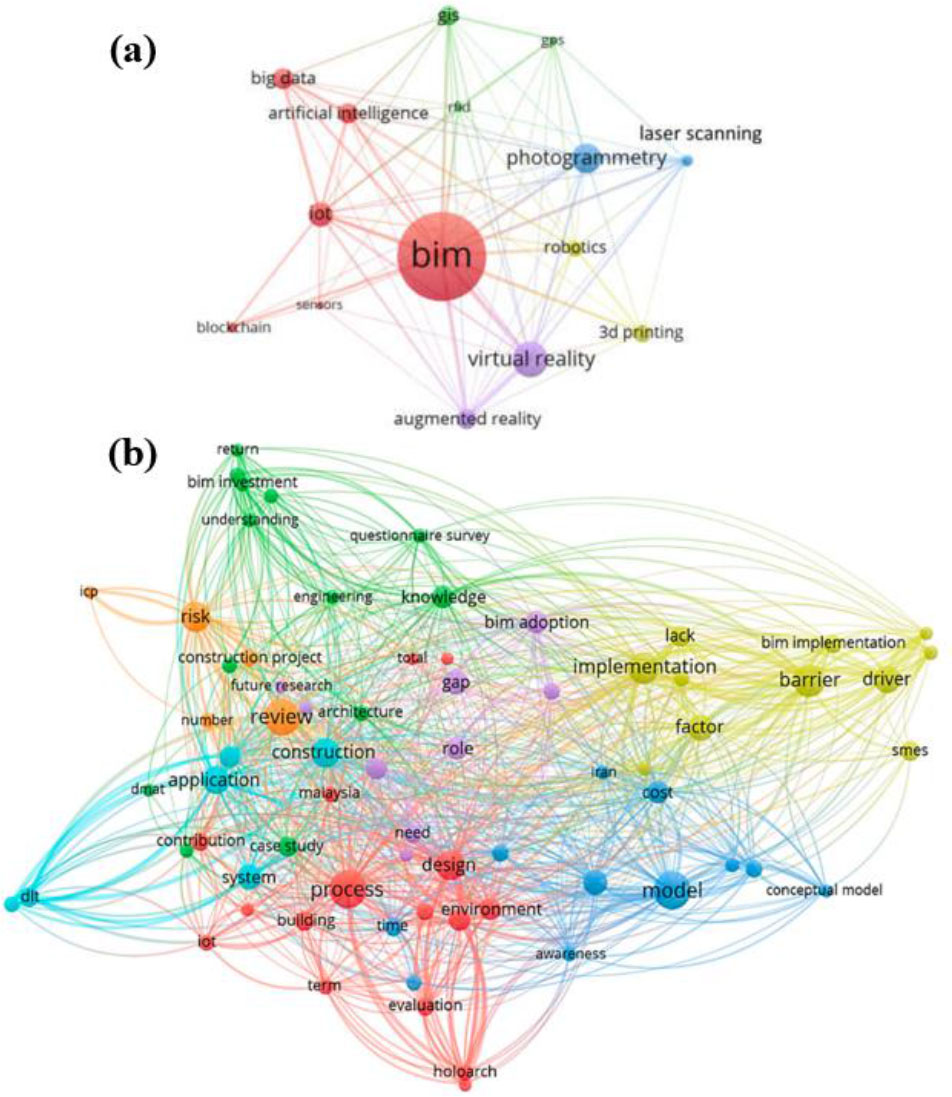
Figure 10:
Co-occurrence keywork network of BIM technology in (a) developed and (b) developing countries.
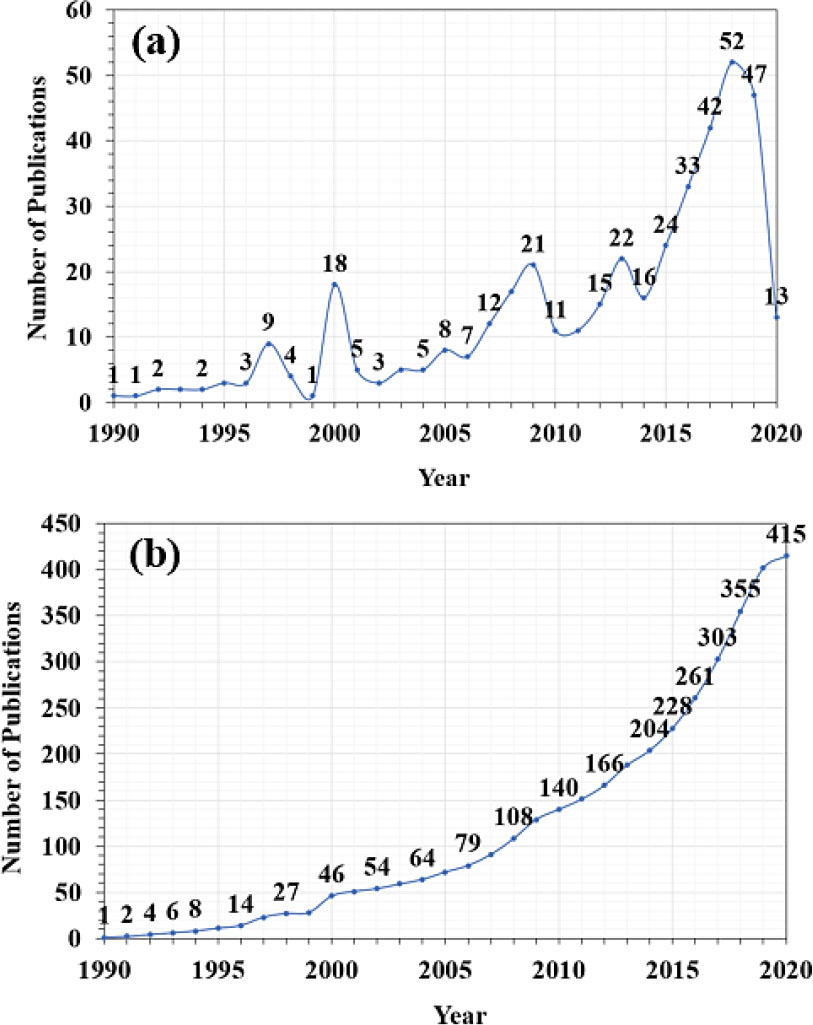
Figure 11:
The rising trend of IoT research in construction is (a) as publication numbers and (b) cumulative publication numbers (1990–2020) (Ghosh et al., 2021)
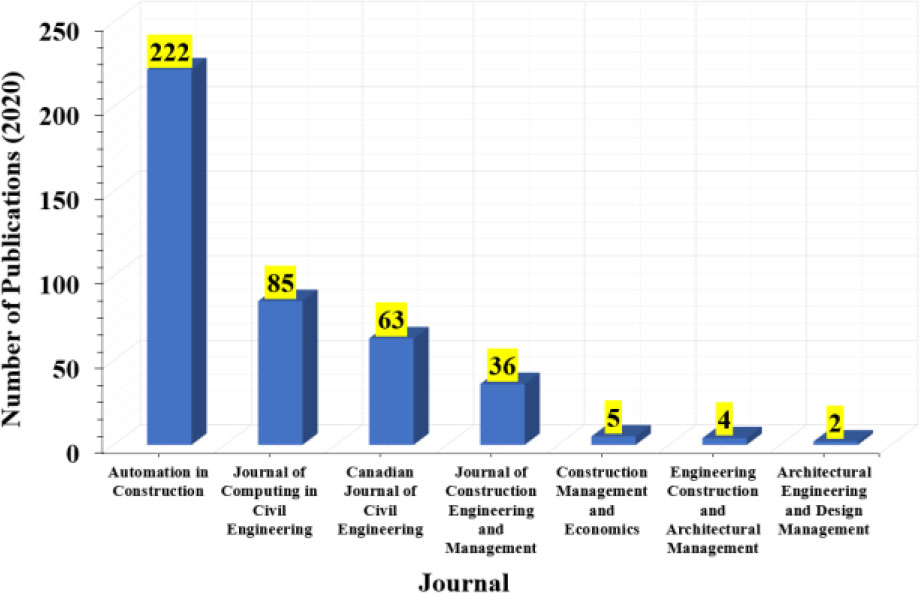
Figure 12:
Number of IoTs publications in Famous construction journals (Ghosh et al., 2021)
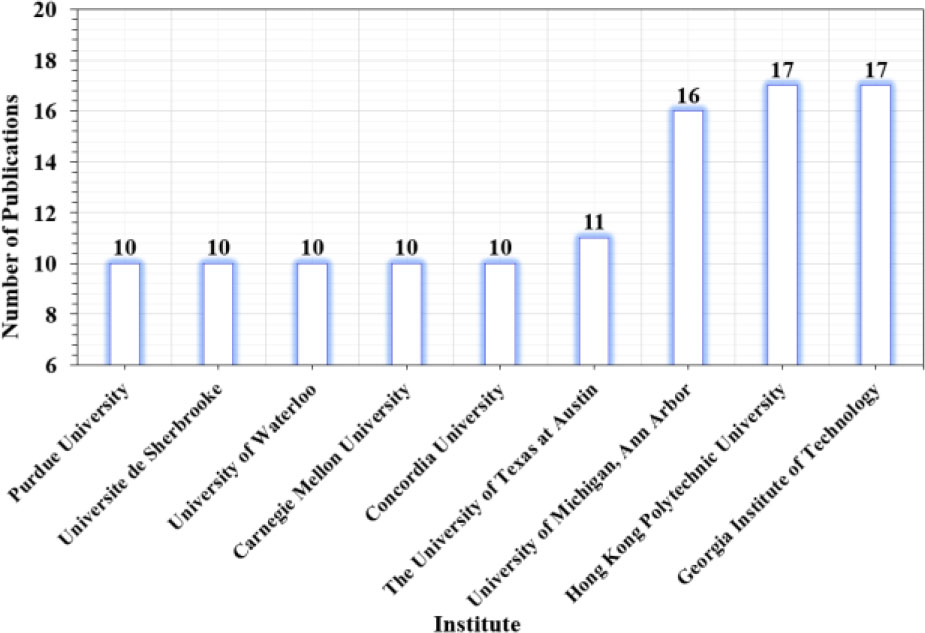
Figure 13:
Number of IoTs publications in construction by institution globally (Ghosh et al., 2021)
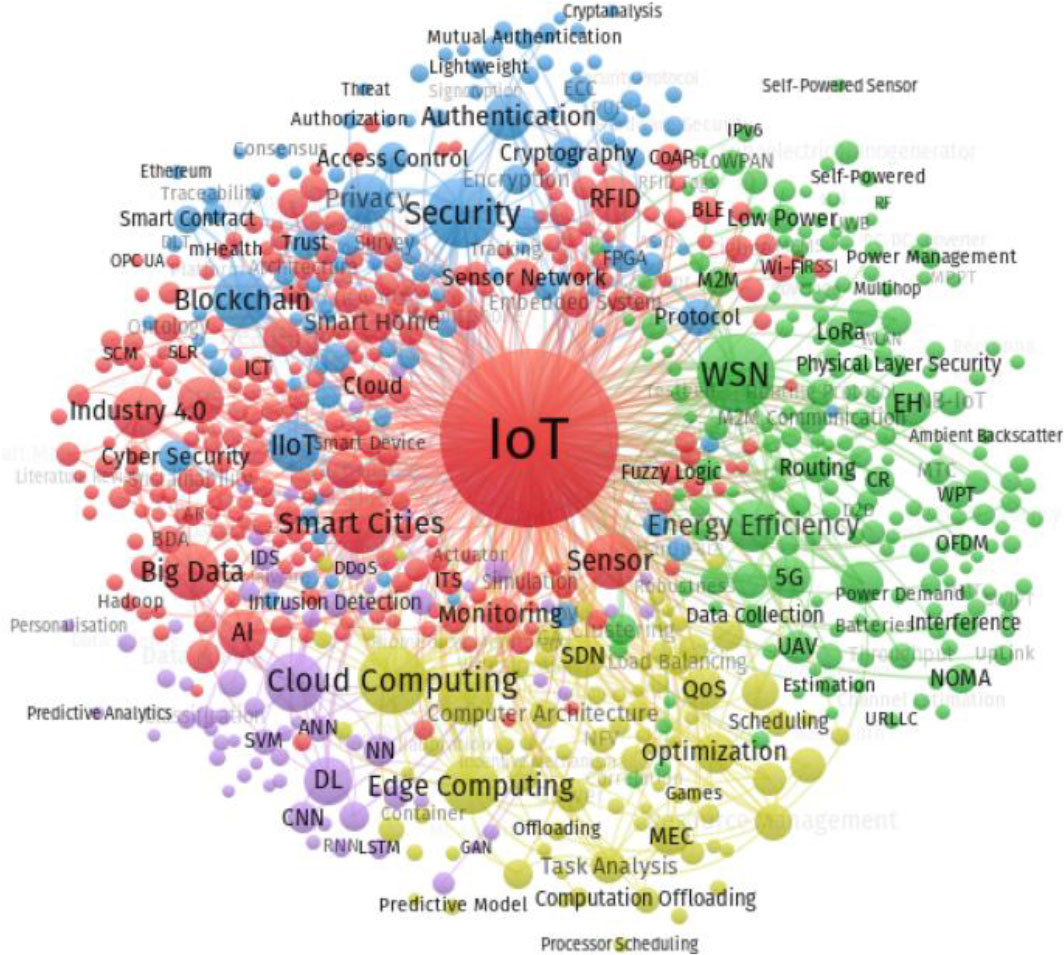
Figure 14:
IoTs co-occurrence keyword network (Rejeb et al., 2022)
Table 2:
Major challenges of DT, BIM, and IoTs adoption in construction
| # | Challenge Classification | Challenge | Reference | Country |
|---|---|---|---|---|
| 1 | Organizational | The autocratic culture, centric mindset, and hierarchical features of construction companies |
| |
| 2 | Management | Lack of top management support, understanding, and commitment |
| |
| 3 | Management | Poor leadership, attitude, and perceptions concerning technological advancements |
| |
| 4 | Legal and governmental | Lack of laws, legalization, and incentives necessary to apply digitalization |
| |
| 5 | Human-Related | Shortage of communication, coordination, and collaboration |
| |
| 6 | Organizational | Lack of supportive learning and motivative innovation atmosphere in the construction company |
| |
| 7 | Financial | Lack of budget, expensive resources, and high costs of hardware and software solutions of digital technologies |
| |
| 8 | Financial | Lack of supportive networks, digital equipment, computers, hardware tools, and technology infrastructure |
| |
| 9 | Financial | Shortage of training, skills, awareness, knowledge, talents, and education in digitalization |
| |
| 10 | Human-Related | Resistance to change/psychological behavior |
| |
| 11 | External | Cyber data protection against threats of digital infrastructure of construction and data sharing problems and fear of data loss |
| |
| 12 | Technical | Unavailability of critical DT, BIM, IoT directions, helpful guidelines, and driving standards |
| |
| 13 | Organizational | Poor human resource (HR) department role |
| |
| 14 | Technical | Poor information technology (IT) department role |
| |
| 15 | Project | Project characteristics, reflected in complexities, location problems, costs, and contractual issues among stakeholders |
|
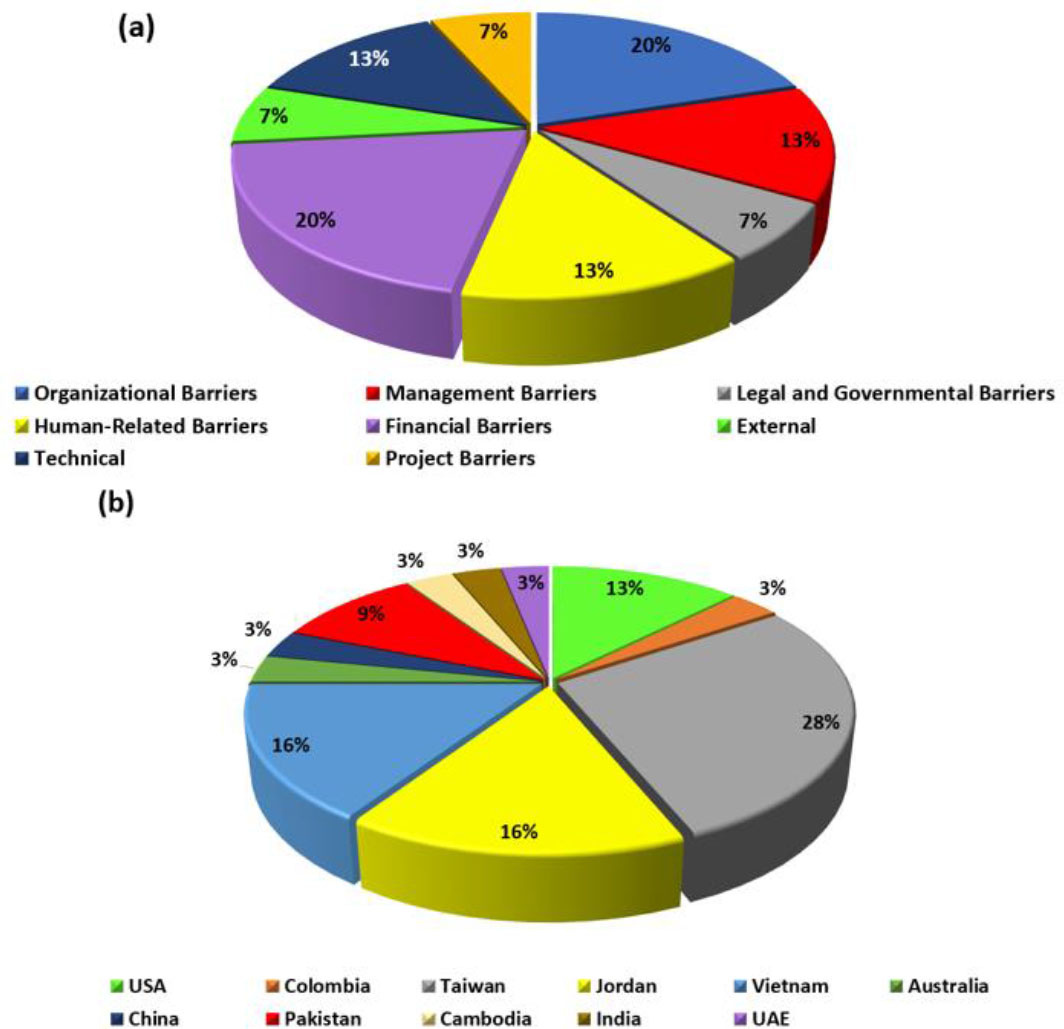
Figure 15:
Classification of DT, BIM, and IoTs adoption barriers in terms of (a) type of challenge and (b) country