

1. Introduction
The continuous efforts of research and development (R&D) have revealed new contributions, translated in in the Industrial Revolution (IR) 5.0 (Construction 5.0) in 2020. These digital Construction technologies are necessary nowadays because the current construction environment has massive uncertainties and heterogeneous factors (Feng et al., 2022). The difference between IR 5.0 and previous IRs is that IR 5.0 considers various avant-garde concepts of environmental protection and sustainability, green, Circular Economy, clean production, wise consumption of raw materials, waste management, and intelligent resource allocation (Ikudayisi et al., 2023). IR 5.0 also differs from past IRs through the promoted potential to protect cyber-physical information by deep learning (DL) frameworks, the introduction of remote machine operations, and quantum computing (Marinelli, 2023).
These tools have made construction cost-effective, feasible, practical, and efficient (Pal et al., 2024). New construction approaches make construction products and services more sustainable and environmentally friendly, safe, and committed to quality (Yitmen et al., 2023). Recent common innovations include electric vehicles (EVs), augmented reality (AR), virtual reality (VR), mixed reality (MR) or augmented and virtual reality (A&VR), smartphones, wearable technologies, artificial intelligence (AI), machine learning (ML), and deep learning (DL) (Abbasnejad et al., 2024). These technologies have contributed to considerable efficiency, quality, resource planning (Junussova et al., 2022), logistics management, dynamic diagnosis and maintenance, risk management (RM), PM, cost overruns and submission delays control (Honnappa & Padala, 2022; Ja’far, 2021); and thus, court claims and disputes reduction (Ibraheem & Mahjoob, 2022), productivity, and feasibility (Liu et al., 2022). Besides these innovations, the emergence and broad practice of special software and hardware solutions and strategic approaches, like DT, BIM, and IoTs, have brought various benefits and practicalities (Yoon, 2023). Specifically, these three innovations have provided distinguished feasibilities, high-performance task accomplishment, and efficient management of project complexities (Deng et al., 2021).
1.1. Problem Statement and Research Gap
Construction 5.0 is increasingly realized in developed countries. Because of large initial investment costs, developing nations have not exhibited sufficient accessibility to Construction 5.0. The difference between these lands is that developed nations have advanced infrastructure, cutting-edge technologies, large-scale digitalization, various innovations, and welcoming environment and large budget to conduct R&D compared to developing nations, which are poor and struggle; therefore, to offer sufficient infrastructure requirements and breakthrough facilities for local citizens.
This is the knowledge gap of this work, i.e., why Construction 5.0 technologies are not sufficiently implemented in these lands. Construction 5.0 implementation obstacles include many reasons that necessitate investigation since the available literature lacks the coverage of this topic. For this reason, this study utilizes PRISMA (systematic review and meta-analysis) and its main research objectives can be summarized as follows:
To revise DT, BIM, and IoTs rationale for construction PM,
To identify insights concerning DT, BIM, and IoTs adoption challenges,
To propose solutions to combat these difficulties,
To provide guidelines for engineers to enhance Construction 5.0 implementation,
To raise construction engineers’ awareness to protect environment,
To change construction organizations’ attitudes towards Construction 5.0.
The research questions are:
RQ,1: How could DT support construction managers in handling complex project activities?
RQ,2: What are the influential advantages of BIM for construction PM?
RQ,3: How can cost overruns, delays, and controversies be alleviated by IoTs?
The sequence of this paper is as follows: Section 2 is Materials and Methods, Section 3 is DT, BIM, and IoTs Contributions, Section 4 is Research’s Practical Implications, and Section 5 is research’s Conclusions.
2. Materials and Methods
Preferred Reporting Items for Systematic Reviews and Meta-Analyses (PRISMA) (Sarkis-Onofre et al., 2021) (Figure 1) is utilized to achieve the objectives and answer research questions.
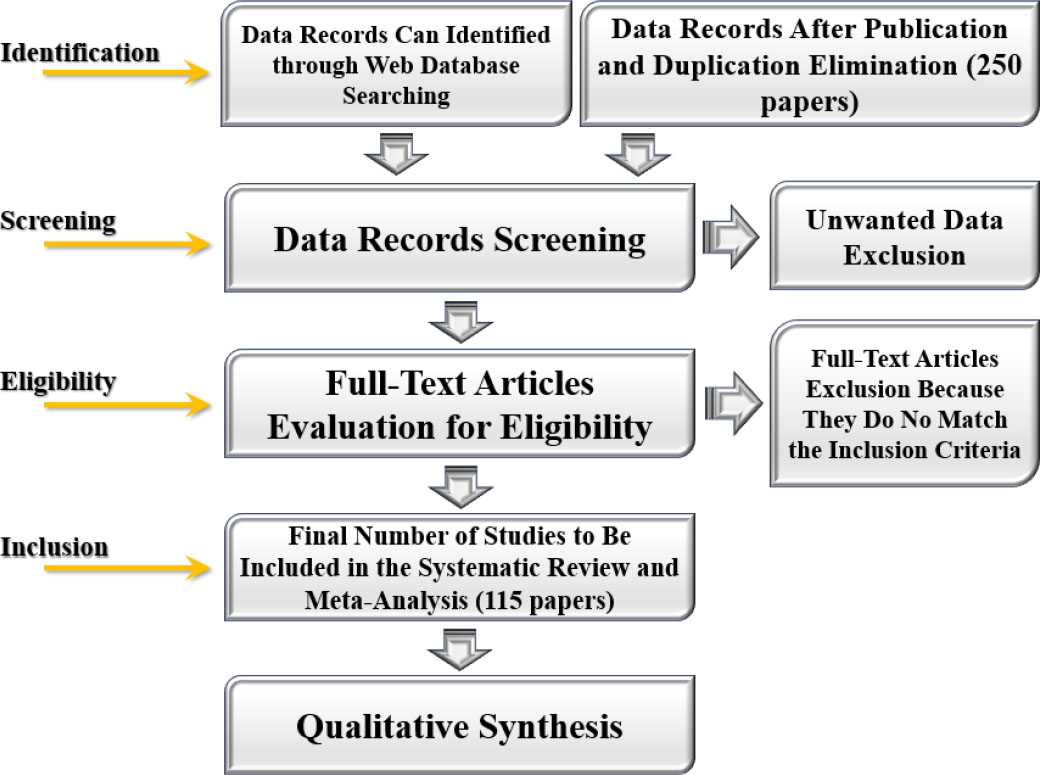
Figure 1:
A flowchart of main PRISMA implementation stages
PRISMA is more reliable than other reviews (Deng et al., 2021). Systematic reviews, Figure 2, utilize figures, tabulated data, and statistical facts. These can strengthen the evidence and validation of the whole research. The study utilizes filtering strategies (inclusion and exclusion criteria) to refine the study outputs and remove bias and errors.
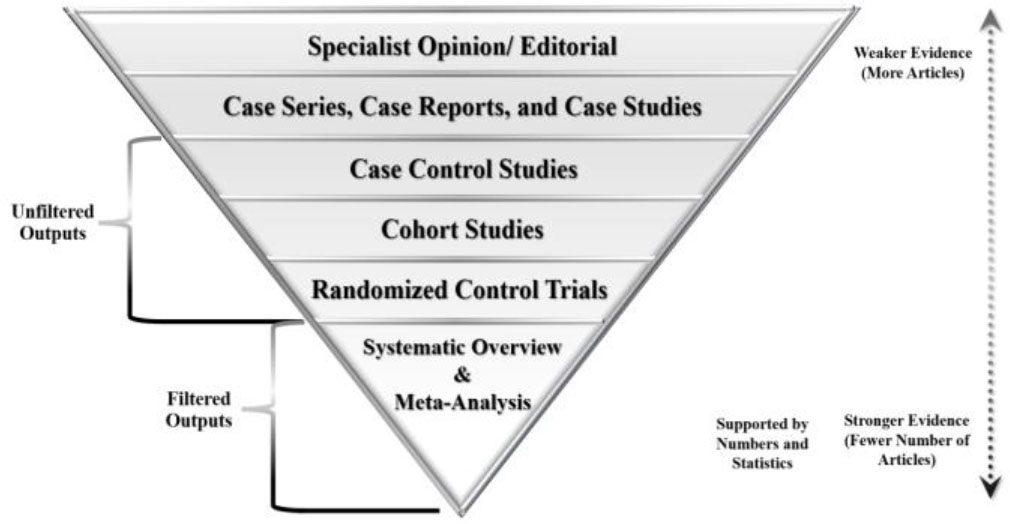
Figure 2:
Distinct features of the systematic review compared to other review works (Author, 2024)
Inclusion criteria consider peer-reviewed articles, book series, conference proceedings, and doctorate and master’s theses, Figure 3. It considers Web of Science, SCOPUS, and ScienceDirect data resources. Quartile {1} and {2} publications with higher impact factors are preferred. The topic included in Q1 and Q2 articles involve DT, BIM, and IoTs contributions for construction PM, as shown in step 2 of the research method (to identify research objectives) (Figure 3).
During the systematic review conducted PRISMA, some software tools have been utilized, like the VOSviewer, for keyword mapping.
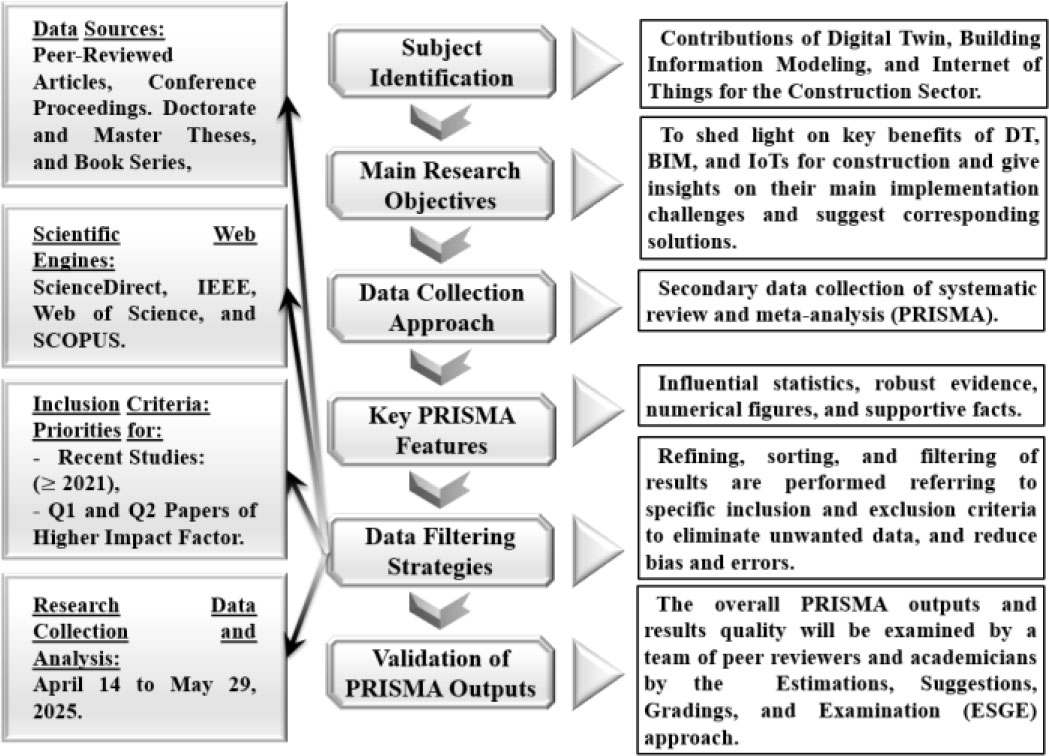
Figure 3:
The main research methodology
Then, a validation strategy is implemented. It is the suggestions, grading, and examination (ESGE) approach. This approach is well recognized worldwide as the Grading of Recommendations, Assessment, Development, and Evaluation (GRADE) (Schünemann, 2022; Brennan & Johnston, 2023). Two academicians and two peer reviewers provided their appraisal. The two academicians and two peer reviewers have been chosen referring to the researcher’s academic experience and social relations. The reviewers have provided their comments, feedback, and other points of view to raise the research reliability. Therefore, the overall research contribution has been enhanced.
3. DT, BIM, and IoT Contributions
Through DT, engineers can conduct modeling and simulations to predict future scenarios, therefore managing construction activities, intelligent facilities, and smart cities. DT supports construction managers to monitor resources efficiently (Jiang et al., 2022). Therefore, the construction processes or phases that can benefit from DT, BIM, and IoTs include (1) execution (progress) and (2) theoretical design (planning). Slow flow of information between construction parties causes significant communication problems (Suleiman et al., 2023). In addition, according to Setiawan et al. (2021), communication and coordination have the largest effect on project delays referring to owners’ points of view. In response, BIM fosters communication among project stakeholders because it can visualize project activities. It can conduct a bias-free estimations of projects’ cost and time (Chen et al., 2022). IoTs sensors, installed at different locations, record real-time Big Data to export to BIM and DT platforms to provide high-performance analysis of construction project data (Zhou et al., 2021). Table 1 provides more insights on these three technologies for construction.
Table 1:
Construction-related theoretical (bibliometric) and empirical studies of DT, BIM, and IoTs
| No. | Publication | Aim [s] | Methodology | Country | Key Findings | Theoretical or Empirical? | |
|---|---|---|---|---|---|---|---|
| Theoretical | Empirical | ||||||
| Digital Twin (DT) | |||||||
| 1 | Li et al. (2025) | DT is utilized for an industrial cascade refrigeration framework to broaden the applicability of the energy-consuming parts regulation approach. | Two bidirectional automated data flow behaviors are formulated for various scenarios, namely, the IoTs and Cloud-Edge Computing. | China | The total power was reduced between 3 kW to 18 kW. The COP was improved by 7.2%. The thermal comfort of users is provided while maintaining reduced carbon emissions, lower energy consumption, and less negative climate change impacts. | ✓ | |
| 2 | Fawad et al. (2025) | DT is introduced to virtually model, simulate, analyze bridge damage issues, conduct life cycle assessment, and predict and investigate updates of this structure. | An Immersive Bridge Digital Twin Platform (IBDTP) is created. | Poland | DT is influential since it enables infrastructure authorities to automate Structural Health Monitoring (SHM) of bridges. BIM is implemented to provide active decision-making procedures referring to Augmented Reality (AR) technology. IoTs sensors are installed at different bridge locations to collect real-time data to make simulation, virtual modeling, and analysis. | ✓ | |
| 3 | Khalifa & Marzouk (2025) | To optimize EE and facilities energy consumption. To help smart cities and urban communities efficiently adhere to and contribute positively to favorable outcomes related to global Sustainability Development Goals (SDGs), certainly SDG11 and SDG13. | A framework is formulated integrating DT into the blockchain A DT and blockchain platform is utilized. | Egypt | DT enhances EE and optimizes the energy consumption of facilities to enhance their sustainability and reduce their negative impacts on the environment and climate. | ✓ | |
| 4 | Shehata et al. (2025) | To accomplish sustainability in many construction procedures. | A scientometric PRISMA review is conducted referring to quantitative, mixed methods using VOSviewer and RStudio. | Global Review | DT provides pivotal advantages for construction, humans, and facilities. This study clarifies multiple DT roles in dynamically implementing global sustainable goals, helping stakeholders involved in all stages related to the facility life cycle. | ✓ | |
| Building Information Modeling (BIM) | |||||||
| 5 | Ghosh & Karmakar (2025) [26] | To manage the claim documentation process in construction projects. | A new claim management Autodesk prototype for the BIM platform has been formulated. | India | BIM makes resource-efficient, swift, dynamic, and feasible claim documentation management systems (CDMSs) and active claim and dispute resolution processes in construction. | ✓ | |
| 6 | Veerendra et al. (2025) | To supply enhanced PM and manage project designs. To conduct an effective Life Cycle Assessment (LCA) of the whole project. | A case study is considered and analyzed. | India | BIM is practical since it facilitates communication and minimizes conflicts. BIM enhances a facility’s structural integrity throughout construction. BIM is considered a preventative strategy. It reduces costly rework issues that correspond to submission delays, helping make construction simple. | ✓ | |
| 7 | Liu (2025) | To estimate the cost of the construction project. | BIM is utilized with Cloud Computing. | China | BIM estimates the project cost with an up to 99% accuracy, reliability, and high-performance. BIM and Cloud Computing reduce bias and errors and alleviate many complexities connected with this task. | ✓ | |
| 8 | Jiang (2025) | To enhance the coordination process among variant construction progress phases. To maximize resource allocation and alleviate high labour costs. | A case study and overview of the knowledge body are utilized. | China | BIM utilization achieves better quality control (QC) and management of the project design. It minimizes risky accidents and investment challenges. It enhances the economic viability of the construction project. It raises projects’ competitiveness and enhances their brand image in the global construction market. | ✓ | ✓ |
| 9 | Nasir et al. (2025) | To conduct building sustainability assessment (BSA) flexibly in the Indian context. | The GRIHA-2015 rating approach is considered. The automated, Autodesk, BIM-driven BSA framework is validated through a case study of an official facility in northwestern India. | India | BIM is pivotal since it enables the automatic synchronization of BSA. BIM guides construction decision-makers on enhanced choices of sustainable resource allocation and facilitate sustainable practices in Indian construction through careful estimations of building life cycle stages, components, and materials. | ✓ | |
| Internet of Things (IoTs) | |||||||
| 10 | Yuan et al. (2025) | To exploit IoTs to manage the thermal comfort of facilities. To control occupants’ thermal comfort and behavior. | A case study of an official space is analyzed. IoTs sensors and data mining are utilized to collect real-time data of thermal comfort and make predictions and optimizations of proper values to achieve enhanced occupants’ comfort. | China | An enhanced occupants’ comfort with an acceptance rating raising from 3.78 to 4.38. An IoTs web platform integrates the centric occupancy controlling workflow. | ✓ | |
| 11 | Mu & Antwi-Afari (2024) | To highlight the beneficial impacts of IoT implementation in industries like construction. | A scientific mapping overview is conducted. | Worldwide review | IoTs is integrated into many industries, including construction, to optimize control, monitoring, and PM. The agility of PM can be further improved through IoTs' real-time data collection. IoTs are integrated into other forms of digital technologies, such as robotics, sensing technologies, Cloud Computing, blockchain, and AI, bringing significant benefits. | ✓ | |
| 12 | Al-Obaidi et al. (2022) | IoTs is introduced to manage smart buildings and smart cities and minimize overall energy consumption. | An extensive, systematic overview is performed. | Worldwide review | IoTs enhances EE. Many IoT applications achieve promoted EE in facilities. Influential IoT concepts, frameworks, pivotal and helpful applications, main trends and adoption obstacles have been reviewed in construction. Insufficient comprehension of many technological advancements has limited their broad application. | ✓ | |
| 13 | Poyyamozhi et al. (2024) | To uncover IoTs importance for construction, mainly energy management of smart facilities. | A systematic review is conducted. | Worldwide review | IoTs are pivotal in enhancing EE in facilities. Therefore, significant global energy consumption from the building sector and greenhouse gas (GHG) emissions can be alleviated. IoTs provides crucial data that foster EE decision-making, real-time control, and intelligent operations. Real-time data can be collected from IoTs sensors installed at different locations of facilities. | ✓ | |
It can be realized from Table 1 that implementation of DT, BIM, and IoTs have supplied revolutionary contributions for construction PM, and facilities energy management. Taking the construction sector in the Middle East as a case study, it can be observed that this sector encounters many barriers and challenges to evolve and prosper compared to the construction sector in developed countries, like the USA, which revolve mainly around poor financial liquidity, low R&D budget, and insufficient training and experience. By 2000, digitalization has been practised broadly in many sectors, including construction. As explained earlier, DT is influential as it enables construction stakeholders to virtually model different real-world, large-scale complex physical systems. Large-scale systems control, repair, and monitoring are problematic due to uncertainties and large number of variables (Tuhaise et al., 2023). To confirm previous discussion, virtual DT visualization of real-world facilities supports decision makers in choosing optimum strategies to repair and manage buildings (Kamari & Ham, 2022). As discussed before, BIM visualizes construction projects. It supports construction stakeholders through collaboration and communication (Radman et al., 2021). Also, to consolidate previous discussions, it is important to cite that IoTs cuts down much resources needed to record difficult-to-document data from different risky sites. Therefore, challenging poor weather conditions and natural disaster situations can be avoided. IoTs sensors need low-frequency, radio energy to record and transfer high-quality real-time data. They can track equipment, conduct SHM of facilities, track labor safety, and record AI, ML, and DL datasets for training and testing to conduct high-performance forecasting of many project indices. Therefore, decision makers can choose optimum approaches to protect humans and handle dangerous future events (Kariuki, 2021). As cited before, DT, BIM, and IoTs can be incorporated together or coupled with other digital innovations, like robotics, unmanned aerial vehicles (UAVs), AddM, blockchain, Cloud Computing, cybersecurity, VR, AR, MR, edge computing, quantum computing, prefabricated and modular construction (Aghimien et al., 2021). As explained earlier, DT, BIM, and IoTs can manage construction robots to accomplish tiring, time-consuming, repetitive, risky, and costly tasks (Liu et al., 2024). DT, BIM, and IoTs can be integrated into CNC machines to support engineers in producing necessary end-products with enhanced quality, efficiency, and wise consumption of raw materials (Soori et al., 2024). Unfortunately, through the four IRs, humans have forgotten ecological measures. Negative climate impacts, like extreme weather events, extensive rainfall, and much drought has been increasingly realized. Responsively, as explained earlier, IR 5.0 considers the Circular Economy, sustainability, safe manufacturing, green production, and environmentally friendly principles (Maddikunta et al., 2022).
3.1. Major DT, BIM, and IoTs contributions to construction PM
Because DT, BIM, and IoTs have brought multiple advantages for efficient PM, these approaches have gained popularity over years. They became more prevalent in construction (Baghalzadeh Shishehgarkhaneh et al., 2022). It can be realized that the number of publications and citations of these three advancements has exponentially grown in construction (Figure 3). This growth reflects significant importance, interest, attention, and perceptions to adopt such technologies for construction PM among practitioners and professional engineers.
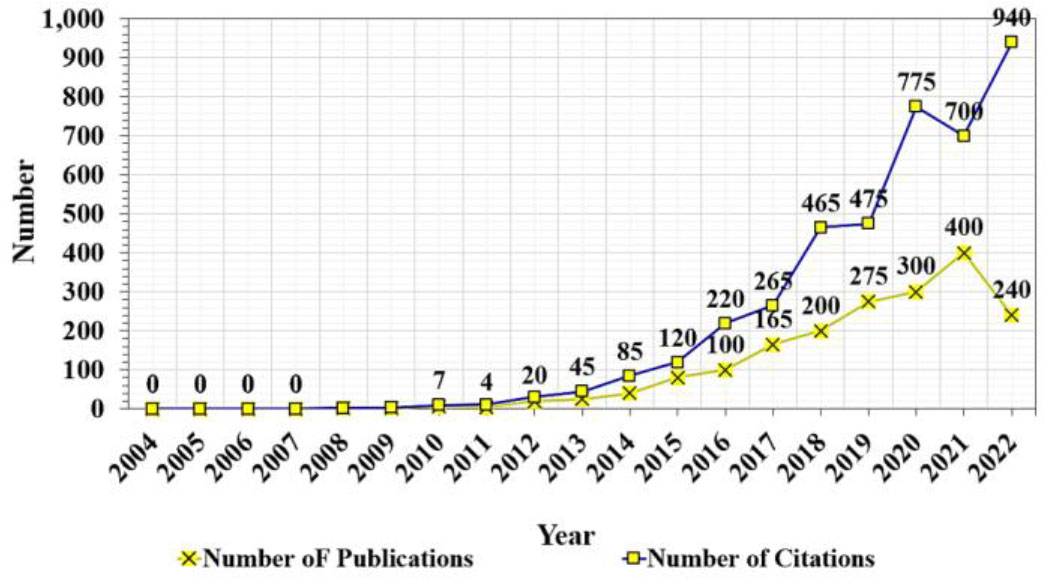
Figure 3:
Publications and citations of DT, BIM, and IoTs in construction (Baghalzadeh Shishehgarkhaneh et al., 2022)
3.1.1. DT: Meta-analysis and important roles in construction PM
Construction professionals have lately observed distinguished DT tool practicalities to manage construction projects. Opoku et al. (2021) elucidate that DT exhibits multiple chances to proactively overcome construction problems and critical challenges before they may occur. They explain that DT adoption in construction focuses on a single project lifecycle stage. DT can be applied during the engineering and design stages of different construction projects with many digital solutions, like BIM technology. However, till the moment, lower beneficial impacts have been documented and discussed in the available body of knowledge concerning DT at construction sites due to the lower construction pace in adopting digitalization. Figure 4 indicates the corresponding directions and areas of the DT tool in the construction context. Omrany et al. (2023) comprehensively review DT’s current implementations, supportive technologies, and future evolution directions.
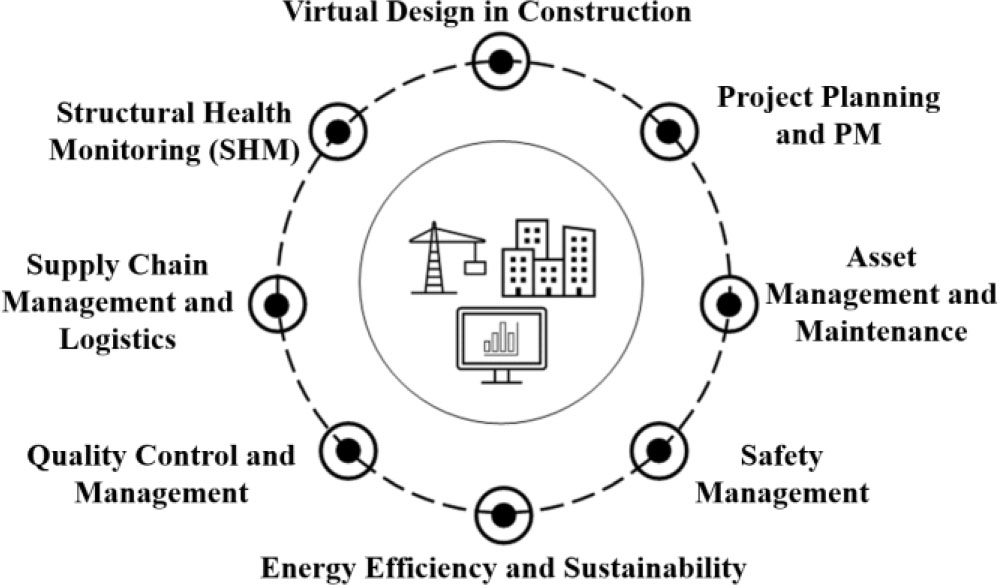
Figure 4:
Working principles of the DT in the construction context (Baghalzadeh Shishehgarkhaneh et al., 2022)
Boje et al. (2023) review DT, covering its integration into the LCA and BIM in construction. A novel framework, including both DT and BIM, is formulated to consider social, ecological, and economic sustainability. A case study is investigated, which expresses a real-world facility. Recommendations on critical digital tools are proposed to help enhance the consideration of sustainability in construction. Madubuike et al. (2022) critically revise influential DT applications in construction. They explain that DT exhibits promising opportunities to design, structure, operate and maintain different facilities. The authors review the implementation and development of DT in construction and compare its utilization with other industries. They investigate four critical components to drive DT in facility transformation (Figure 5).
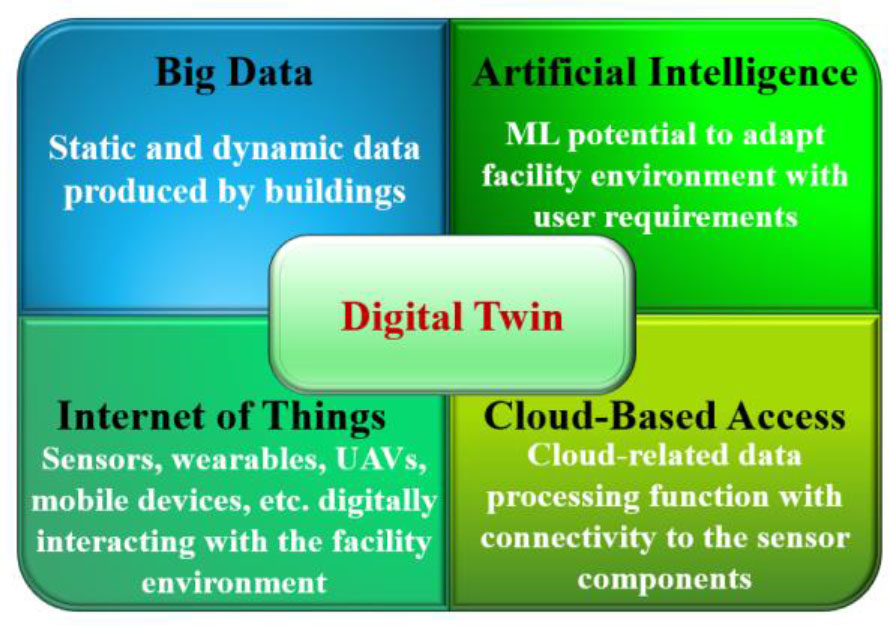
Figure 5:
Four critical components drive DT in facility transformation (Madubuike et al., 2022)
In addition, critical milestones of DT evolution were reviewed throughout history (Figure 6).
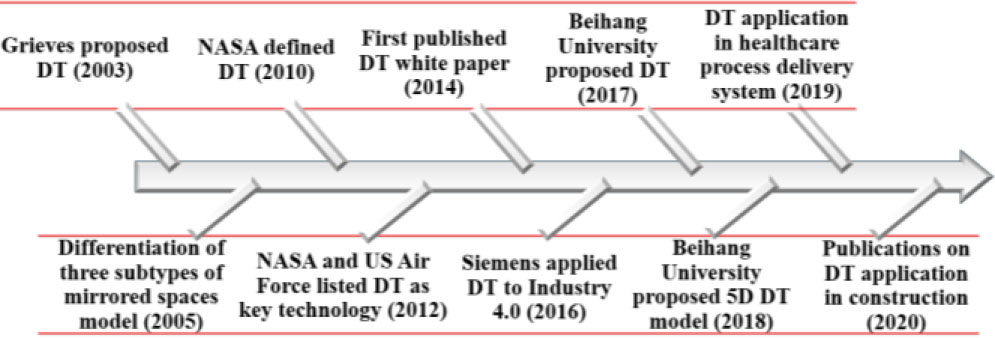
Figure 6:
The critical milestones of DT evolution (Madubuike et al., 2022)
Jiang et al. (2024) utilize a PRISMA to investigate the pivotal rationale of DT for construction. The authors analyze the DT technology implementation and its viability for PM. A framework is proposed, indicating the path into enhanced digitalization construction PM journey. The objective is to prioritize stakeholders’ satisfaction and well-being and enhance ecological sustainability and resilience.
Hu et al. (2024) elucidate that construction displays an information-intensive domain in which large databases are analyzed and investigated. The authors express the potential benefits of DT and IoTs integration into BIM to conduct real-time SHM of facilities relying on digital signal processing and building analysis. A network of co-occurrence keywords on DT in construction and FM (2016 and 2022), is shown in Figure 7. This network has been generated by the VOSviewer software package.
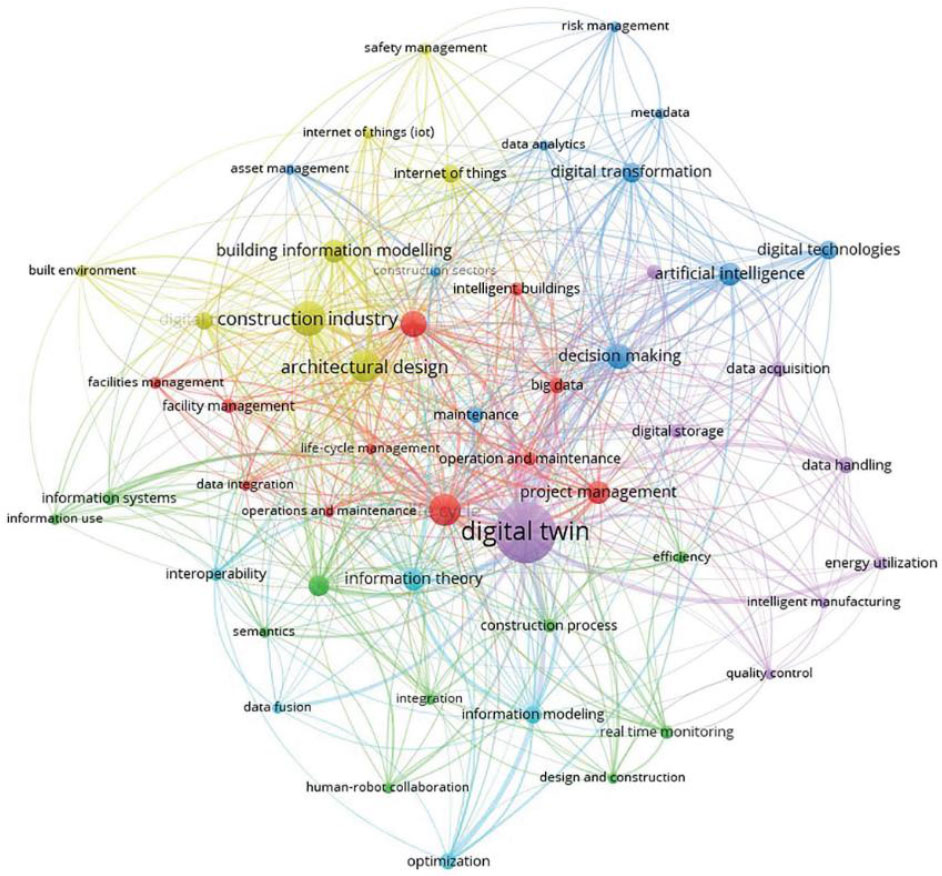
Figure 7:
Co-occurrence keywords network on DT in construction and FM (2016 to 2022) (Hosamo et al., 2022)
A review is conducted by Hosamo et al. (2022), shedding light on various viable DT applications in construction, certainly in the Architecture, Engineering, Construction, and FM sector. The research reports that many advances in digitalization, namely DT, provide higher-level representations of facilities and their assets through integrating digital and physical worlds.
Teizer et al. (2022) explain that DT has been applied recently in construction, but in construction safety, DT application is still scarce. Correspondingly, they identified three major gaps in information-driven control and management of physical construction systems, including (A) safe design and planning to prevent hazardous issues, (B) risk control to predict and warn construction managers about risks proactively, and (C) permanent performance enhancement related to personalized- and project-data learning. Zhang et al. (2021) explain that DT involves holistic perception networks, real-time data management, and digital models. For construction, DT can achieve real-time information fusion and interactive feedback between virtual and physical spaces. This technology involves a digital model, real-time information management, comprehensive intelligent perception networks, etc., and it can drive the rapid conceptual development of intelligent construction (IC), such as smart factories, smart buildings, smart cities, and smart medical care (Farsi et al., 2020).
DT has emerged as an active strategy to update the data in BIM models relying on real-time information to accomplish cyber-physical integration, helping allow for real-time control of facilities, assets, and tasks and achieve better decision-making processes. To this end, the application in construction is not sufficient due to the lack of digitalization. Because DT is still implemented nowadays in its nascent phases, investigations, reviews, and R&D are necessary to bridge this gap (Tuhaise et al., 2023).
3.1.2. BIM: Meta-analysis and practicalities in construction PM
BIM technology creates a virtual construction environment, supporting engineers in evaluating and visualizing many project dimensions, like its budget and schedule. It is feasible since it aids construction chiefs in creating precise project geometries and models to predict potential risks. Therefore, project managers can consider enhanced scales of safety and protection for their workers and other materials, cost, equipment, and time resources (Yang et al., 2021). Figure 9 indicates the number of publications on BIM technology (2005–2020).
Construction specialists can industrialize their projects by BIM. They can organize operation and maintenance (O&M) project tasks. BIM supports engineers in considering ecological and sustainability criteria when they build facilities (Qi et al., 2021). In their proposed quantitative risk evaluation approach, including risk exposure, risk consequences, and risk likelihood, Lu et al. (2021) affirm that BIM can be utilized to classify various potential threats since construction has more opportunities of occupational casualties than other sectors.
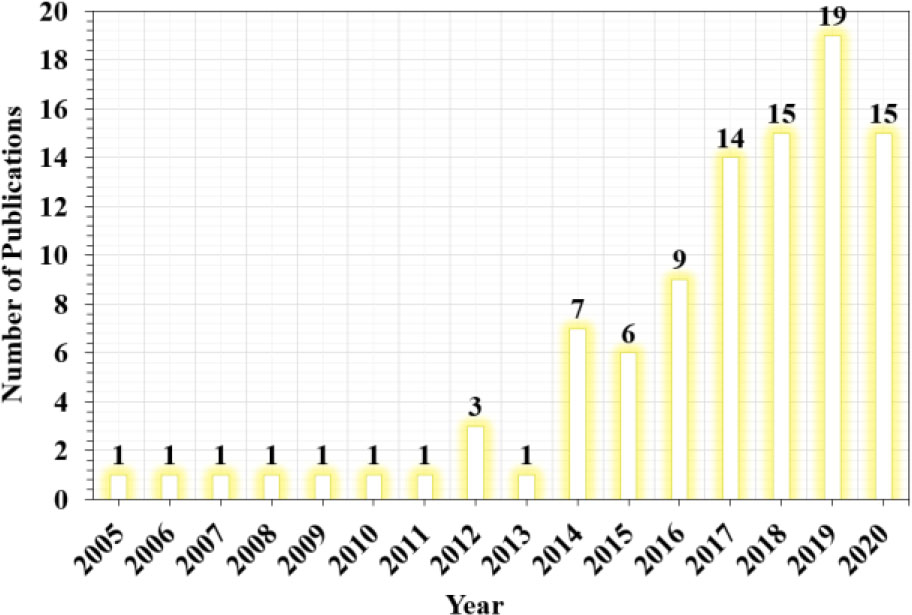
Figure 8:
Number of publications on BIM technology (2005 to 2020) (Yang et al., 2021)
Software solutions of BIM, like Revit® can help project managers quantify the probable risk chances. These software tools provide quantitative data, helping engineers, designers, and architects decide the most appropriate strategies to protect their site personnel and laborers. Furthermore, studies reveal that BIM is utilized efficiently in precast concrete facilities and prefabricated and modular construction to conduct LCA, quality and safety control (Gao et al., 2024), and estimations of carbon emissions (Ashtiani Araghi & Vosoughifar, 2023; Chao et al., 2021).
Traditional BIM implementation drivers include revolutionary PM strategies that replace traditional PM activities, starting from project schedule control and progress monitoring to multi-dimensional PM variables, including optimization, lean construction, and sustainability (Marcellino et al., 2023). These three tasks express three BIM levels of its ten (Figure 4).
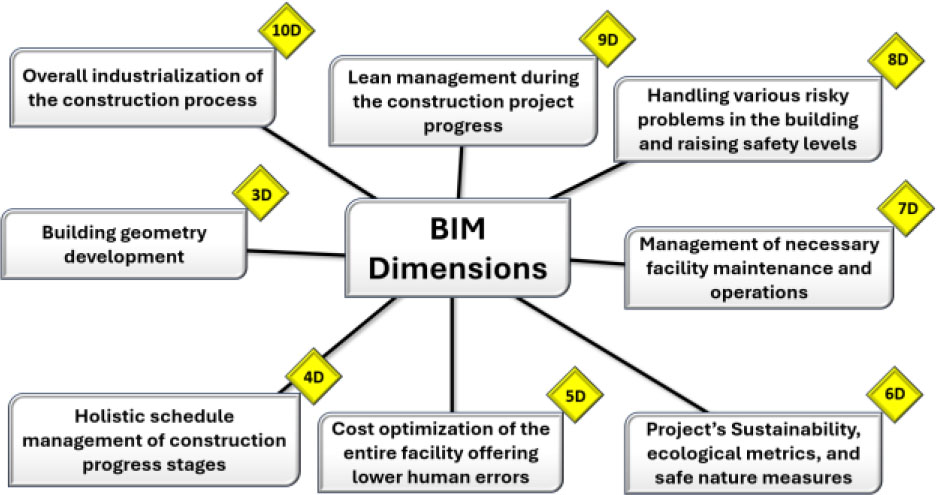
Figure 9:
Major creative BIM dimensions to manage construction projects (Ershadi et al., 2021)
Construction is responsible for negative impacts on environment. There is an urgent need to implement smart strategies to make it more resilient, clean, and safe. This can be done by considering the Circular Economy concept. The Circular Economy has become a priority in many industries. BIM is the main mandate to support construction in applying Circular economy. To this end, studies on BIM contributions to construction to apply Circular Economy are scarce (Charef & Emmitt, 2021).
In this respect, studies identified main BIM technology drivers in construction, including (A) environment sustainability considerations, (B) innovative leaders, (C) strategic alliances and long-term relationships, (D) training, (E) knowledge exchange, (F) integrated R&D, (G) contractor (capability pushing), (H) stakeholders and participants coordination, (I) intention to enhance the construction company reputation, (J) customers, (K) absorptive capacity, (L) frameworks encouraging collaboration, (M) competitive advantages, (N) enhanced productivity and performance, (O) improved efficiency, (P) legislations and governmental acts (Ariono et al., 2022). Figure 10 shows the BIM cooccurrence keyword networks of its implementation in developed and developing nations. This map was produced by the VOSviewer software.
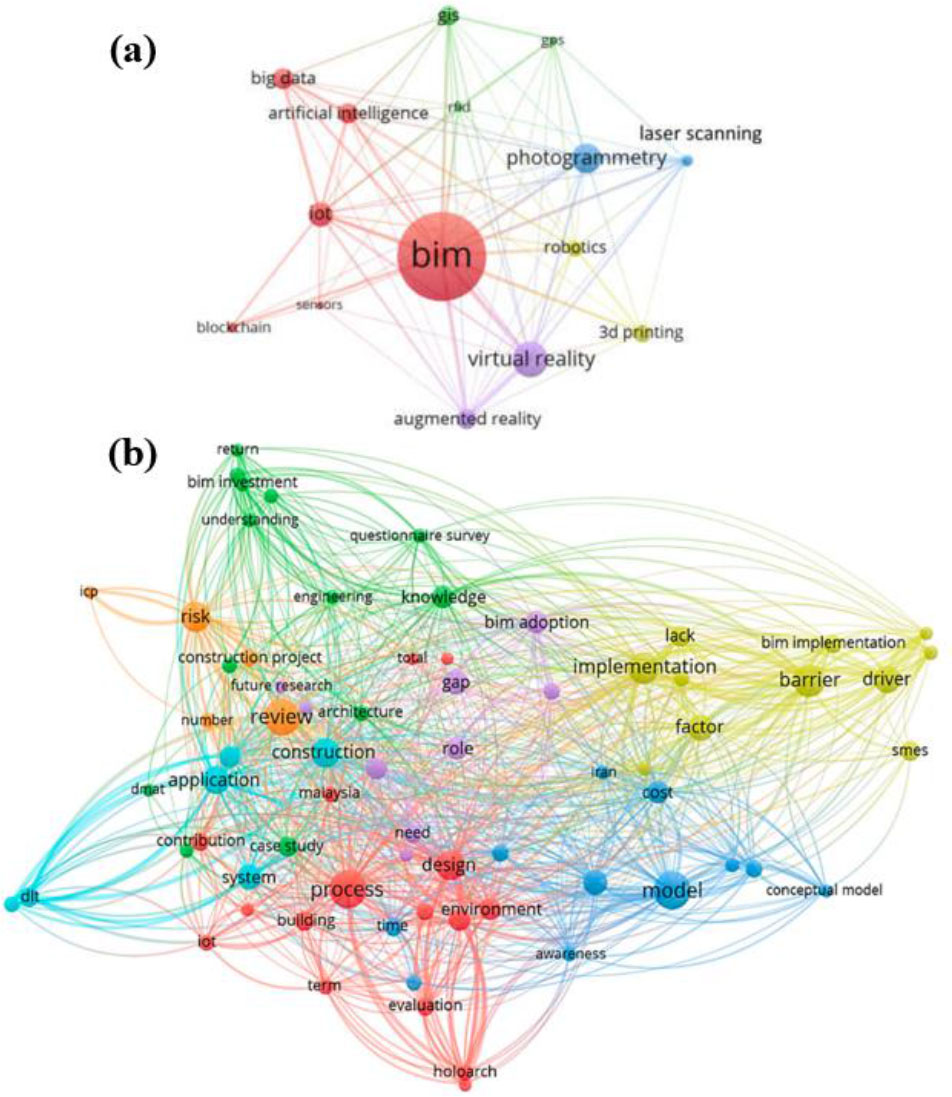
Figure 10:
Co-occurrence keywork network of BIM technology in (a) developed and (b) developing countries.
3.1.3. IoTs: Meta-analysis and feasibilities in construction PM
IoTs is another imperative technology that helps promote progress potential and performance. Cheap IoT sensors can be installed at different locations in and around construction sites. They record real-time data. These data can be transferred through a feasible, low-energy (radio frequency) communication network (Rao et al., 2022), and analyzed later for decision making. For construction, the IoTs range of utilization is broad. IoTs sensors record Big Data, like ambient temperature, solar radiation, relative humidity, soil humidity, and precipitation rate at the site. Then, Big Data classification can be done, including risk predictions and weather forecasting. This supports stakeholders in deciding the safest approaches to respond wisely (Rane, 2023), early, and quickly if dangerous situations occur, affecting labor force (Maqbool et al., 2023).
IoTs is practical since it aids construction actors in special situations where necessary health measures of workers are substantial to consider at the site. Laborers can utilize wearable technological tools to predict their health status and supply early warnings of their health issues when they perform difficult tasks (Liang & Liu, 2022). Also, IoTs sensors can be installed in different facility locations to make an active SHM (Sakr & Sadhu, 2023), as explained earlier.
Big Data recorded from IoTs sensors can also be integrated into other technologies, like DT platforms, to create virtual models similar to physical environments (Li et al., 2022), and BIM software tools to make necessary management of construction projects (Malagnino et al., 2021).
Ghosh et al. (2021) critically revise 417 peer-reviewed articles. Through their qualitative-science-metric analytical approach, they found lower efforts on IoTs’s role in construction. Nonetheless, lately, these minor efforts have been dramatically supported and grown by extensive research and innovations through accelerated citations and awareness in IoTs. The same authors affirm that critical drivers of flexible IoT adoption include appropriate construction business modeling and planning, supportive governing legislations, cyber-physical data protection and privacy, and interoperability. The researchers classify the number of publications investigating major beneficial relevance of IoTs in construction (Figure 11).
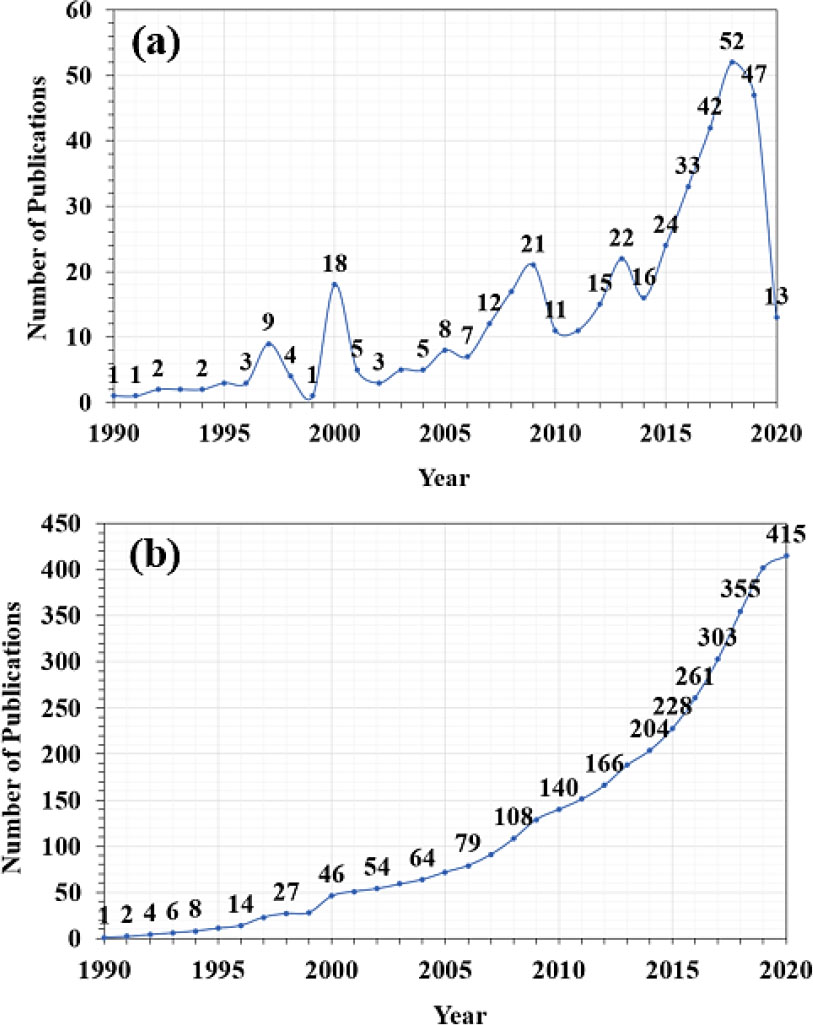
Figure 11:
The rising trend of IoT research in construction is (a) as publication numbers and (b) cumulative publication numbers (1990–2020) (Ghosh et al., 2021)
Furthermore, Figure 12 displays the most common journals that have introduced the publication of analytical research works related to IoTs in construction.
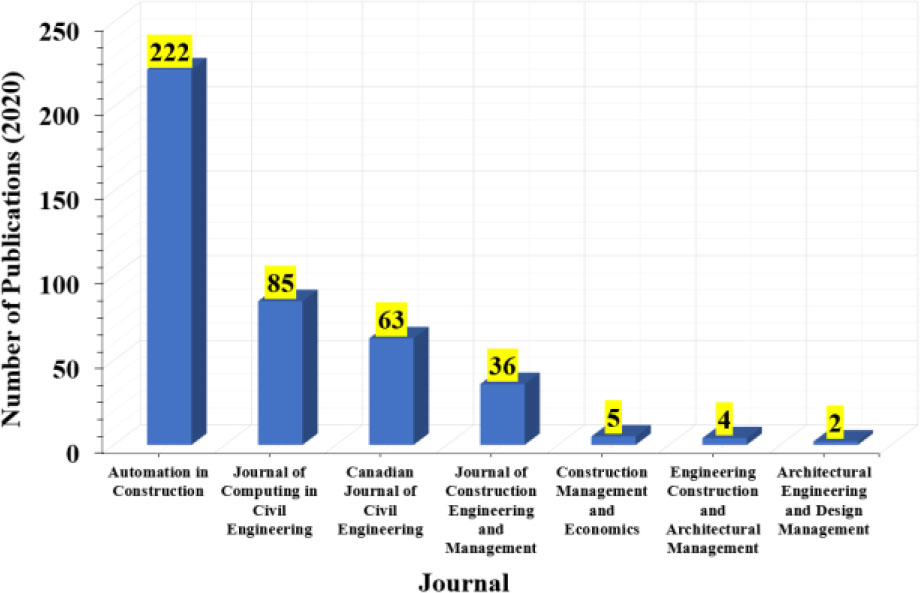
Figure 12:
Number of IoTs publications in Famous construction journals (Ghosh et al., 2021)
Figure 15 illustrates the names of the top ten institutions in the world that have been extensively interested in and aware of conducting a large number of IoTs investigations in construction.
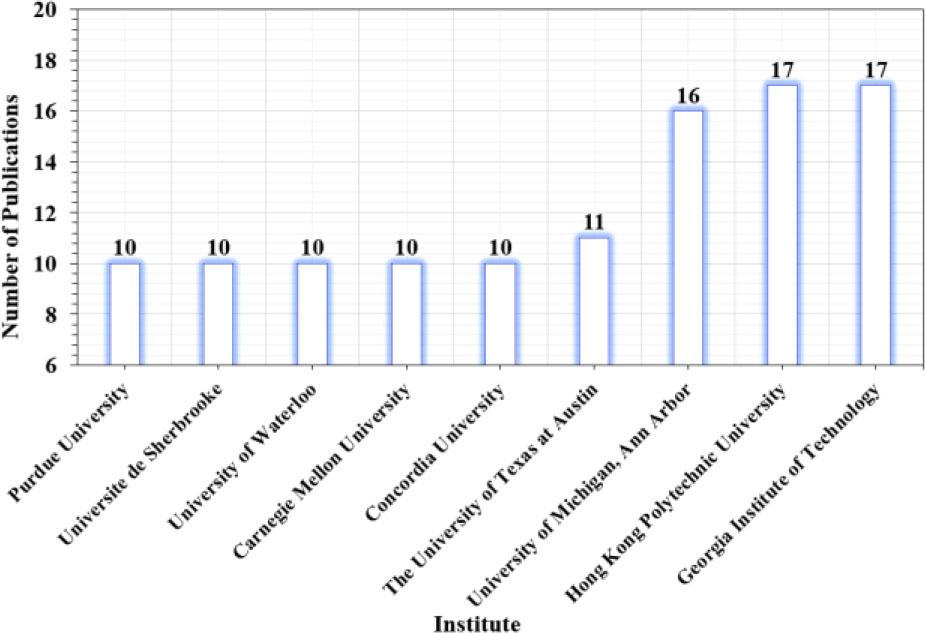
Figure 13:
Number of IoTs publications in construction by institution globally (Ghosh et al., 2021)
IoTs in construction has been discussed and investigated in various disciplines, notably engineering (with 417 publications), computer science (85 articles), environmental science (63 articles), and business, accounting, and management (47 papers) between 1990 and 2020 (Ghosh et al., 2021). Hashim et al. (2022) explain beneficial roles of BIM in enhancing PM practices in construction. However, to enable efficient project progress management of project safety by BIM, it is essential to integrate real-time information recorded by IoTs sensors. Exporting these real-time data into BIM platforms helps achieve functional visualization of projects. Figure 14 indicates a word network of IoTs in construction produced by the VOSviewer software tool.
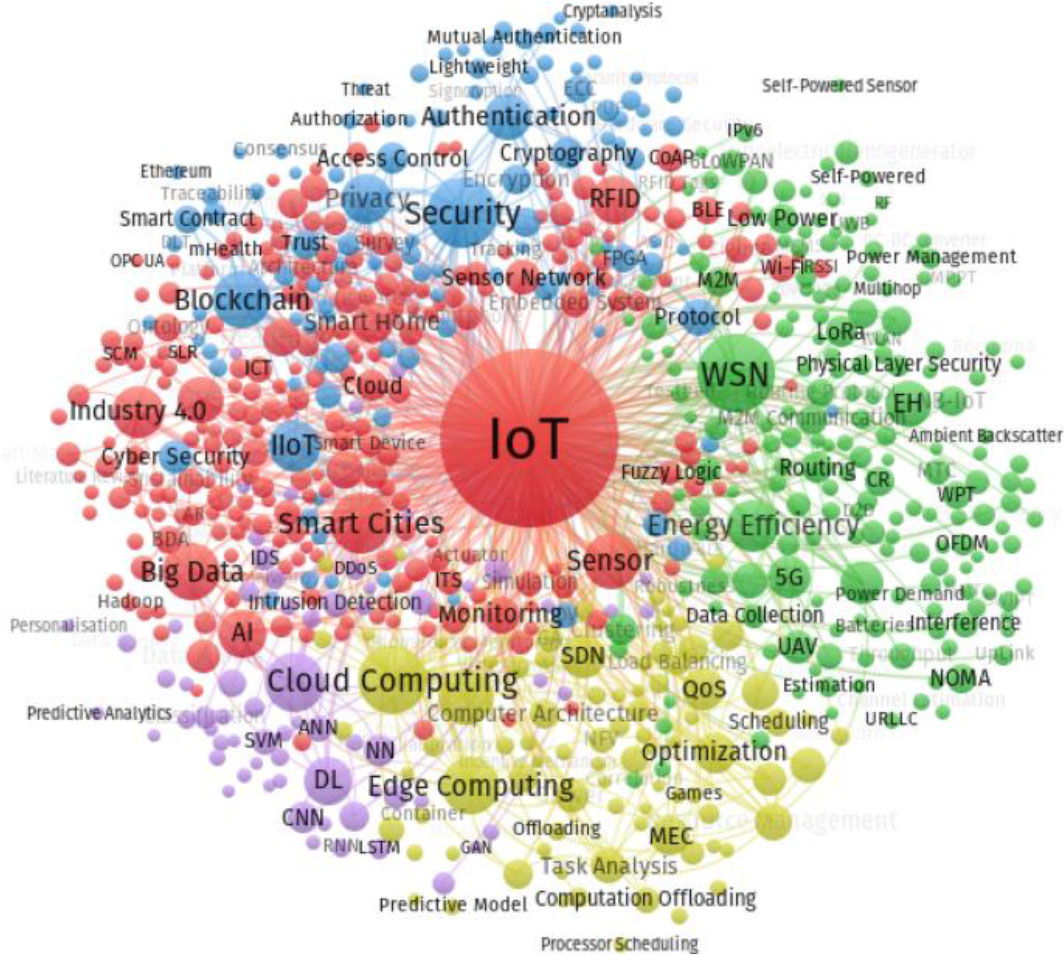
Figure 14:
IoTs co-occurrence keyword network (Rejeb et al., 2022)
Xu et al. (2023) explore the pivotal roles of IoTs in construction in elaborating on various potentials of communication and control of indoor environmental quality (IEQ) in facilities. Ninety-one papers are analyzed through PRISMA. The authors report that IoTs sensors can collect real-time data on the total consumed energy by equipment. Therefore, engineers can choose optimal solutions to reduce the overall energy consumption with ML classification. Finally, enhanced economic profitability can be achieved by active management of equipment’s energy efficiency (EE). Cheap IoTs sensors provide essential real-time data on the current conditions of the environment, like temperature and relative humidity where laborers work. Therefore, managers can maximize workers' and engineers’ occupational health during working hours.
3.2. Critical Impediments of BIM, DT, and IoTs Adoption in Construction
From critically revising many publications, it can be noticed that major impediments of BIM, DT, and IoTs are more prevalent in developing countries than in developed lands. It is essential to illustrate bounding limitations that restrict flexible adoption of DT, BIM, and IoTs in construction. A collection of these barriers can be displayed in Table 2.
Table 2:
Major challenges of DT, BIM, and IoTs adoption in construction
| # | Challenge Classification | Challenge | Reference | Country |
|---|---|---|---|---|
| 1 | Organizational | The autocratic culture, centric mindset, and hierarchical features of construction companies |
| |
| 2 | Management | Lack of top management support, understanding, and commitment |
| |
| 3 | Management | Poor leadership, attitude, and perceptions concerning technological advancements |
| |
| 4 | Legal and governmental | Lack of laws, legalization, and incentives necessary to apply digitalization |
| |
| 5 | Human-Related | Shortage of communication, coordination, and collaboration |
| |
| 6 | Organizational | Lack of supportive learning and motivative innovation atmosphere in the construction company |
| |
| 7 | Financial | Lack of budget, expensive resources, and high costs of hardware and software solutions of digital technologies |
| |
| 8 | Financial | Lack of supportive networks, digital equipment, computers, hardware tools, and technology infrastructure |
| |
| 9 | Financial | Shortage of training, skills, awareness, knowledge, talents, and education in digitalization |
| |
| 10 | Human-Related | Resistance to change/psychological behavior |
| |
| 11 | External | Cyber data protection against threats of digital infrastructure of construction and data sharing problems and fear of data loss |
| |
| 12 | Technical | Unavailability of critical DT, BIM, IoT directions, helpful guidelines, and driving standards |
| |
| 13 | Organizational | Poor human resource (HR) department role |
| |
| 14 | Technical | Poor information technology (IT) department role |
| |
| 15 | Project | Project characteristics, reflected in complexities, location problems, costs, and contractual issues among stakeholders |
|
It can be inferred from Table 2 that the most cited barriers to practice construction digitalization can be classified into (A) human-related barriers (resistance to change, psychological behavior, education, skills, and awareness), (B) organizational (the autocratic culture, centric mindset, and hierarchical construction organizations), (C) legal and governmental (data governing and supportive digitalization regulations), (D) technical (poor IT and HR departments’ roles and unavailability of critical digitalization directions, and helpful guidelines), and (E) management barriers (poor leadership, lack of top management support, understanding, and commitment), financial (lack of sufficient budget to purchase hardware and software solutions). It is, therefore, necessitated to overcome these major problems by adopting some influential digitalization drivers. These construction-related digitalization drivers are discussed in the following section. Figure 15 shows two pie charts related to the classification process of DT, BIM, and IoTs adoption barriers in terms of (a) type of challenge and (b) country referring to Table 2.
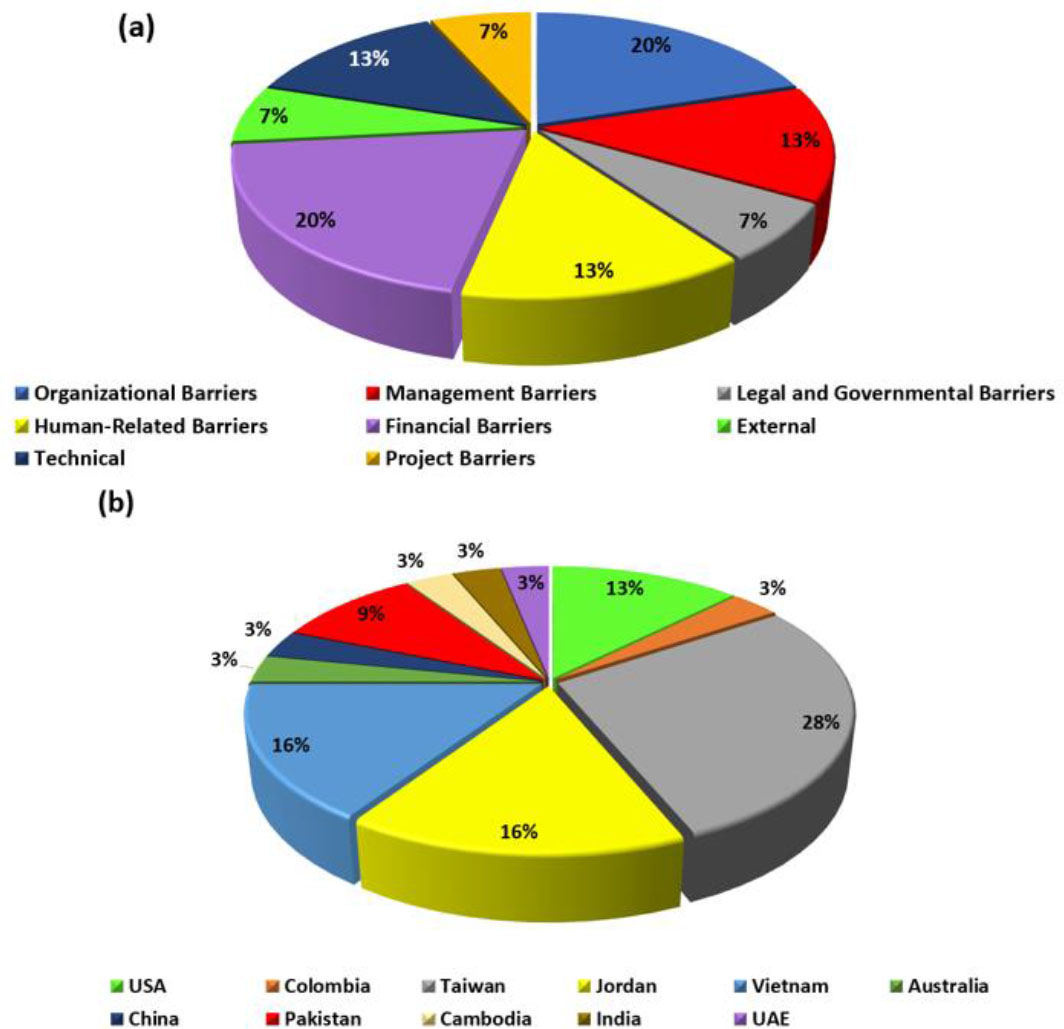
Figure 15:
Classification of DT, BIM, and IoTs adoption barriers in terms of (a) type of challenge and (b) country
4. Research’s Practical Implications
Referring to the major challenges facing construction engineers to adopt BIM, DT, and IoTs, this study proposes a few strategic solutions to implement by construction management to facilitate digitalization practice, which include the following (Maqsoom et al., 2023):
Providing special budget to make technological innovations accessible,
Offering incentives and supportive digitalization atmospheres,
Allocating special budgets for DT, BIM, and IoTs training,
Adjusting construction curriculum to make juniors talented with many PM strategies involved in DT, BIM, and IoTs,
Increasing commitment and support of top management to adopt digitalization,
Fostering digital technology background by IT and HR departments,
Implementing helpful regulations and enable experts to propose guidelines to adopt the three technologies,
Applying active digital leadership.
5. Conclusions
This article utilizes PRISMA to analyze influential statistical data on the main contributions of DT, BIM, and IoTs in construction PM. The GRADE approach is harnessed for result validation and enhancing the research reliability. The main research outputs can be concluded in the following key points:
A- DT is influential since it offers a powerful tool for real-time data collection, enabling construction actors to optimize project tracking and improve efficiency across various construction stages through collaborative environments between virtual and physical spaces. This technology can be utilized with other platforms to amend economic growth, sustainability, and resilience,
B- Through ten levels of BIM, engineers can monitor construction project progress, control quality, reduce risks, raise sustainability, automate construction processes, optimize costs, perform precise estimations of cost and time, estimate the project’s lifecycle, and conduct an industrialized construction process,
C- IoTs sensors can record real-time Big Data at various project locations, allowing for improved tracking of the health and safety of workers and an efficient SHM of facilities and energy management. These Big Data can be analyzed through safety predictions and weather forecasting to foresee critical events and situations that could adversely affect site progress. IoTs, therefore, can share in solving significant problems of poor coordination and collaboration among project stakeholders, preventing claims and disputes,
D- Main impediments to applying digitalization in construction PM include human-related barriers, organizational, legal and governmental, technical, and management barriers.
While PRISMA is considered an influential research survey approach, it is important to cite its limitations that are noted in this work, which are reflected in the necessity for modifications in specific review categories, the possibility of subjective bias to occur, and some difficulties to ensure complete adherence.
Notes
Acknowledgements
The researchers would like to acknowledge academic consultants and construction specialists who did take a part in estimating, validating, and examining the overall research outcomes of this SLR.