

1. Introduction
Cement is a vital building material, but its production process poses significant environmental challenges. For every ton of clinker produced, roughly 0.86 tons of carbon dioxide (CO2) are released, along with other harmful gases such as sulfur oxides (SOx) and nitrogen oxides (NOx), which contribute to environmental pollution. Cement production is accountable for approximately 8% of global anthropogenic CO2 emissions. One of the most pressing consequences of global warming driven by greenhouse gases, such as CO2, is the urgent need to replace traditional cement with alternative, low-carbon, and eco-friendly materials: D. Zhang et al. (2023). Furthermore, the rapid growth of the global population has led to rising demand for concrete to support infrastructure development, urbanization, and housing. This demand, in turn, accelerates the depletion of natural resources, such as raw materials and aggregates, used in the manufacturing of concrete and cement. As a result, population growth further intensifies concerns related to greenhouse gas emissions and energy consumption, according to Tran et al. (2021).
LAFTA and ALI (2024) reported that researchers and environmentalists require assistance in finding suitable alternatives to traditional Ordinary Portland Cement (OPC) concrete and in managing or disposing of the resulting industrial waste. Therefore, it is crucial to explore practical strategies for the efficient use of industrial byproducts and waste to reduce the adverse effects of land and air pollution. One promising solution is the use of alkali-activated cement or geopolymer concrete (GPC). Davidovits was the first to create a new class of inorganic binders called geopolymers. Geopolymers are inorganic materials composed of alumina and silica, formed through the combination of an active alkali solution with raw materials such as slag and fly ash, supplemented with SiO2 and Al2O3, as Moradikhou & Esparham (2021) noted. These mineral binders possess chemical characteristics similar to those of zeolites. Unlike traditional Portland or pozzolanic cement, geopolymers utilize the polycondensation of silicate and alumina precursors to form a more robust matrix. They primarily consist of source materials and alkaline liquids Amouri & Nada, (2022). Since geopolymers share several performance traits with ordinary Portland cement (OPC), they are viewed as a promising alternative. They work well as a binding phase in concrete, enhancing its mechanical properties. Moreover, producing geopolymers is more energy-efficient and often more budget-friendly than traditional materials Mahmood et al., (2021). At the same time, solid waste, particularly from discarded tires and plastic, poses significant environmental challenges, as much of it is poorly managed. Toriqule (2021) and Adewumi et al. (2021) described a sustainable approach to waste management, including recycling materials for use in concrete, which can help mitigate these environmental issues, particularly through the use of geopolymer concrete. The factors mentioned earlier have led researchers to focus on developing this specific type of concrete and incorporating waste materials to enhance sustainability and facilitate efficient waste management. Hsino et al. (2022) are investigating a range of sustainable strategies to enhance concrete performance, including the incorporation of waste-derived materials and the use of advanced additives, such as phase change materials (PCMs), to manage shrinkage and thermal behavior. These diverse approaches exemplify a concerted effort to create environmentally friendly, high-performance concrete.
Geopolymer is typically an inorganic material that is regarded as amorphous rather than crystalline, especially when compared to pozzolanic materials. It boasts several excellent properties, including low permeability, outstanding fire resistance, strong chemical resistance, and good erosion resistance, as reported by HILALA et al. (2024). High-strength geopolymers are also quite brittle. Adding fibers to increase the density and toughness of the geopolymer matrix is one method of enhancing the material's ductility. Numerous academics have compiled a list of variables that influence fiber-reinforced geopolymers, including fiber type, fiber content, geopolymer precursor, fluidity, mechanical properties, and durability, for instance, Qin et al. (2023). The creation of geopolymer concrete (GPC) is regarded as a significant innovation, and the main challenges that today's carbon fiber (CF) reinforced geopolymer composites face are examined.
The study of geopolymer concrete has gained considerable traction in recent years due to its promising potential as a sustainable alternative to traditional Portland cement-based concrete. Researchers are particularly interested in this innovative material for its outstanding mechanical properties, durability, and resistance to harsh environments. These unique advantages drive ongoing scientific exploration and technological advancements to realize the full potential of geopolymer concrete in contemporary construction.
Frayyeh & Swaif (2018). Create geopolymer boards using fly ash and reinforce them with carbon fibers, while investigating the mechanical properties of different mixtures of fly ash geopolymer mortar that are also reinforced with carbon fibers. Carbon fibers (CF) were incorporated in varying weight proportions of 0.2%, 0.5%, 1%, and 1.5%. The mortar mix proportion included an 8-molar sodium hydroxide solution, a sodium silicate-to-sodium hydroxide weight ratio of 2.0, an alkaline liquid-to-binder ratio of 0.47, and a curing temperature of 70°C for 24 hours. Fresh and hardened state properties, such as flow capacity, flexural strength, compressive strength, and physical properties like bulk density, were evaluated from the FGC samples after a 3-day curing period. The findings indicate that incorporating CF significantly enhances compressive and flexural strength. However, adding CF slightly reduces bulk density. The highest compressive and flexural strength results were achieved with a carbon fiber weight percentage of 1%.
Korniejenko et al. (2021) focused their research on the mechanical properties and fracture mechanics of geopolymer composites made from fly ash, metakaolin, and river sand, which were reinforced with glass, carbon, and aramid fibers for additive manufacturing purposes. The composites were reinforced with fibers at volume ratios of 0.5%, 1.0%, and 2.0%, and were subjected to tests for bending strength. The inclusion of fibers significantly improved the bending strength of all metakaolin-sand composites. Specifically, aramid fiber reinforcement at a 2.0% ratio led to a strength increase of over three times compared to composites without reinforcement. For fly ash-based composites, the peak strength was achieved with 2.0% carbon fiber reinforcement. Metakaolin composites reinforced with glass and carbon fibers showed consistent performance during the bending tests, with the highest strengths observed at the 2.0% aramid fiber level. On average, aramid fiber composites demonstrated 40% greater strength than those reinforced with glass fibers, with strength increasing with higher fiber volumes. Interestingly, for 1.0% and 2.0% aramid fibers, there were initial declines in strength followed by significant gains. The morphology of the fibers was analyzed using electron microscope images. Properly adding fibers can change the fracture behavior from brittle to ductile, thus decreasing the number of cracks in the material.
Korniejenko et al. (2021) investigated the impact of short coir, glass, and carbon fiber additives on the mechanical properties of fly ash-based geopolymer materials, with a particular emphasis on flexural and compressive strength. Glass and carbon fibers were chosen due to their exceptional mechanical properties. In contrast, natural fibers were included for comparison based on their mechanical attributes. Four series of fly ash-based geopolymers were created for each type of fiber, with inclusions of 1%, 2%, and 5% by weight of fly ash, along with a control series that contained no fibers. These samples were tested for flexural and compressive strength at 7, 14, and 28 days of age. Furthermore, a microstructural analysis was performed after 28 days. The findings indicated an increase in compressive strength in fiber-reinforced composites, showing improvements ranging from 25.0% to 56.5%, depending on the fiber type and quantity added. There was an increase in bending strength with the addition of 1% and 2% carbon fibers, achieving enhancements of 62.4% and 115.6%, respectively. A slight enhancement in flexural strength was noted with the addition of 1% glass fiber (4.5%) and 2% coconut fibers (5.4%). However, when 2% glass fibers were added, the flexural strength remained unchanged compared to the matrix material. Furthermore, the strength decreased with the inclusion of 5% glass fiber and with both 1% and 5% coconut fibers.
Langaroudi et.al. (2025). Their study investigates the use of metakaolin and glass powder as supplementary aluminosilicate materials in slag-based geopolymer mortars to enhance their mechanical properties and durability. Polypropylene fibers were added in various amounts to improve performance. A total of thirteen unique formulations of geopolymer mortar utilizing blast furnace slag were created. The control mixture did not include any fibers or slag replacement materials. In contrast, the remaining mixtures included glass powder and metakaolin as 5% and 10% substitutions for the slag, either used alone or in combination. Furthermore, the samples that contained fibers were divided into two categories based on the volume ratios of polypropylene fibers, which were set at 0.2% and 0.4%. The findings indicate that using glass powder, especially at a 10% replacement level, significantly enhances the 28-day compressive strength. Moreover, the mixes with glass powder exhibited superior flexural strength compared to those with metakaolin, regardless of the fiber volume percentage. The optimal results in the rapid chloride permeability test were observed in the mix that combined glass powder and metakaolin at a 10% replacement rate, including fibers at 0.2% and 0.4% volume percentages, which also yielded satisfactory outcomes. Furthermore, this study employed a fuzzy inference model for forecasting compressive strength, showing that it can be estimated with an error of less than 1% by accounting for uncertainties, eliminating the need for complicated mathematical computations.
Following a previous literature review, few studies have thoroughly investigated the combined effects of fiber reinforcement and waste aggregate replacement in GPC, particularly carbon fiber, focusing on mechanical properties, microstructural behavior, and sustainability benefits. This study is strongly motivated by the existing gap in the literature, which enables the investigation of critical, previously undiscovered regions and the enhancement of prior discoveries. This study aims to enhance GPC's mechanical qualities, longevity, and environmental benefits by incorporating waste aggregates and fibers, making it a more attractive option for environmentally friendly building. Also, to describe an innovative method for producing high-performance, eco-efficient geopolymer concrete (GPC) by integrating waste-derived materials reinforced with carbon fibers. The outcomes of this investigation contribute to the development of sustainable construction materials. It also adheres to circular economy concepts, assuring a synergistic balance of environmental sustainability and structural performance. The findings offer insights into engineering multifunctional, fiber-reinforced GPC, paving the path for innovative, robust, and climate-friendly construction methods.
2. Methodology
2.1. Research Design
This research employs an experimental design to assess the mechanical properties of geopolymer concrete (GPC) made from modified metakaolin, which incorporates both recycled rubber and plastic aggregates, as well as carbon fiber reinforcement. The study involved creating several concrete mixtures with controlled variations in both aggregate type and fiber content. The mechanical performance of each mixture was evaluated through standardized laboratory tests, including compressive strength, tensile strength, and static modulus of elasticity, as specified in BS1881: (Part 116), ASTM C496 (2015), and ASTM C469 (2015). Additionally, scanning electron microscopy (SEM) was used to investigate microstructural changes. This approach enabled a systematic comparison of how recycled materials and fiber reinforcement affect the behavior of GPC. Materials and Methods.
2.2. Materials
Kaolin clay was heated to 700°C for two hours to convert it into metakaolin (MK). This clay was subjected to several processes, including grinding, to conform to the American Standard ASTM C618 (2022) as a natural pozzolanic material, class N, and as a source of silica and alumina for the production of geopolymer concrete. Tables 1 and 2 show the physical and chemical properties of the metakaolin, respectively.
Table 1:
Physical properties of metakaolin
| Physical Properties | MK | Requirements of ASTM C 618 |
|---|---|---|
| Strength activity index at 7 days [%] | 113 | ≥75% |
| Retained on 45 µm [%] | 18.5 | ≤34% |
| Specific surface area [m2/kg] | 14300 | -- |
| Specific gravity | 2.64 | -- |
| Color | White –pinky powder | -- |
Table 2:
Chemical properties of metakaolin
| Oxide Composition | Weight [%] | Requirements of ASTM C 618 |
|---|---|---|
| SiO2 | 62.410 | SiO2 + Al2O3 + Fe2O3 = 98.327 ≥70 |
| Al2O3 | 35.026 | |
| Fe2O3 | 0.891 | |
| K2O | 0.908 | |
| TiO2 | 0.531 | |
| CaO | 0.143 | |
| SO3 | 0.027 | ≤4% |
| MnO | 0.002 | |
| LO I* | 0.71 | ≤10% |
The alkaline solution was prepared from sodium hydroxide (NaOH) with a purity of 99.5% and sodium silicate (Na2SiO3) as an activator for the production of geopolymer concrete. The natural fine aggregate used had a maximum size of 5 mm. The sieve analysis and properties of the fine aggregate are presented in Table 3, which conforms to Iraqi Standard No. 45/2021 gradation zone No. 2 (2021).
Table 3:
Properties of fine aggregate
| Sieve Size [mm] | Cumulative Passing [%] | Limits of IQS No. 45 for Zone II |
|---|---|---|
| 10 | 100 | 100 |
| 4.75 | 94 | 90–100 |
| 2.36 | 82 | 75–100 |
| 1.18 | 68 | 55–90 |
| 0.6 | 51 | 35–59 |
| 0.3 | 27 | 8–30 |
| 0.15 | 8 | 0–10 |
| Material passing from sieve 75 µm, [%] | 3 | ≤5% |
| Sulfate content [%] | 0.18 | ≤0.5% |
| Fineness modulus | 2.71 | -- |
| Absorption, [%] | 0.4 | -- |
| Specific gravity | 2.63 | -- |
| Bulk density [kg/m3] | 1744 | -- |
Crushed gravel with a maximum size of 10 mm was used in this research as natural coarse aggregate. The sieve analysis and properties of the coarse aggregate are presented in Table 4, which complies with Iraqi Standard (No. 45/2021). The natural fine aggregate used had a maximum size of 4.75 mm. The sieve analysis and fine aggregate characteristics are presented in Table 3, which adheres to Iraqi Standard No. 45/2016, gradation zone No. 2. Potable water was used in addition to its properties to improve workability in the plastic state, as extra water during the mixing process to dilute sodium hydroxide granules (with a molecular weight of 0.04 kg/mol) to 13 molars.
Table 4:
Properties of coarse aggregate
| Sieve Size [mm] | Cumulative Passing [%] | Limits of IQS No. 45 |
|---|---|---|
| 10 | 97 | 85–100 |
| 5 | 12 | 0–25 |
| 2.36 | -- | 0-5 |
| Material passing from sieve 75 µm, (%) | 0.3 | ≥3 |
| Dry density (kg/m3) | 1627 | -- |
| Specific gravity | 2.62 | -- |
| Absorption, (%) | 0.6 | -- |
| Sulfate content (%) | 0.059 | ≤ 0.1 |
A high-range water reducer with the commercial mark KUT PLAST SP 400 was used. It is free from chlorides and complies with (ASTM C494 2017). Type F. Table 5 lists its main properties. Silica fume from CONMIX Company (accessed Jun. 9, 2025). compatible with the American Standard (ASTM C 1240, 2020), was also used in geopolymer concrete mixtures. Table 6 presents the physical and chemical properties of the silica fume used.
Table 5:
Properties of the high-range water reducer*
| Property | Description |
|---|---|
| Appearance | Dark brown liquids |
| Specific gravity | 1.24–1.26 @20º |
| Chloride content | Nil |
| Recommended dosage | 1.00–2.00 L/100 kg cementitious |
Table 6:
Properties of silica fume
| Property | Results | Requirements of ASTM C1240 | |
|---|---|---|---|
| Physical properties | State | Amorphous sub-micro powder | -- |
| Strength activity index with Portland cement at 7 days [%] | 122 | ≥ 105 | |
| Retained on sieve 45 µm max [%] | 9 | ≤ 10 | |
| Specific gravity | 2.00 –2.40 | -- | |
| Color | Grey to medium grey powder | -- | |
| Chemical properties | Oxide’s composition | Results [%] | |
| SiO2 | 88.593 | ≥85 | |
| Al2O3 | -- | -- | |
| Fe2O3 | 5.564 | -- | |
| K2O | 4.777 | -- | |
| TiO2 | -- | -- | |
| CaO | 0.666 | -- | |
| SO3 | 0.027 | -- | |
| MnO | 0.27 |
The calcium oxide used in this research was sourced from the Karbala factory, which is known for manufacturing cement and Al Noora. Table 7 presents the physical and chemical characteristics of calcium oxide.
Table 7:
Properties of calcium oxide
| Property | Results | |
|---|---|---|
| Physical properties | Specific surface area [m2/kg] | 16350 |
| Specific gravity | 3.3 | |
| Color | White | |
| Chemical properties | Oxide’s composition | Results [%] |
| SiO2 | 4.314 | |
| Al2O3 | -- | |
| Fe2O3 | 0.461 | |
| K2O | 1.667 | |
| TiO2 | -- | |
| CaO | 93.40 | |
| SO3 | 0.10 | |
| MnO | 0.025 |
Two waste materials were used as volumetric replacements for natural coarse aggregate. The first one is crumbed rubber waste from tires. The collected material was processed by being cleaned and then cut into various sizes, ranging from 0.3 to 18 mm, sourced from the Al-Diwaniyah plant, which specializes in cutting car tires in the Al-Diwaniyah governorate of Iraq. The second waste category consisted of various high-density polyethylene (HDPE) plastic products, such as vegetable crates, garbage bins, plastic jerrycans, and bottles used for shampoo and dishwashing liquid. Initially, this plastic waste was cleaned, then crushed and shredded into small, chip-like flakes. Finally, the plastic particles were sorted to meet the grading standards for natural coarse aggregates. The shape and physical properties of the rubber and plastic waste (PL) aggregate are depicted in Figure 1 and described in Tables 8 and 9. According to previous studies, Xue & Cao. (2017), Segre et al. (2002); Siddique &Kadr, (2012), and Al-Obeidy & Khalil, (2023), to roughen the surfaces of rubber particles and plastic waste and thus improve their bond strength with the geopolymer matrix, these particles were treated with a solution of 5% Ca (OH)2 and water for 48 hours.
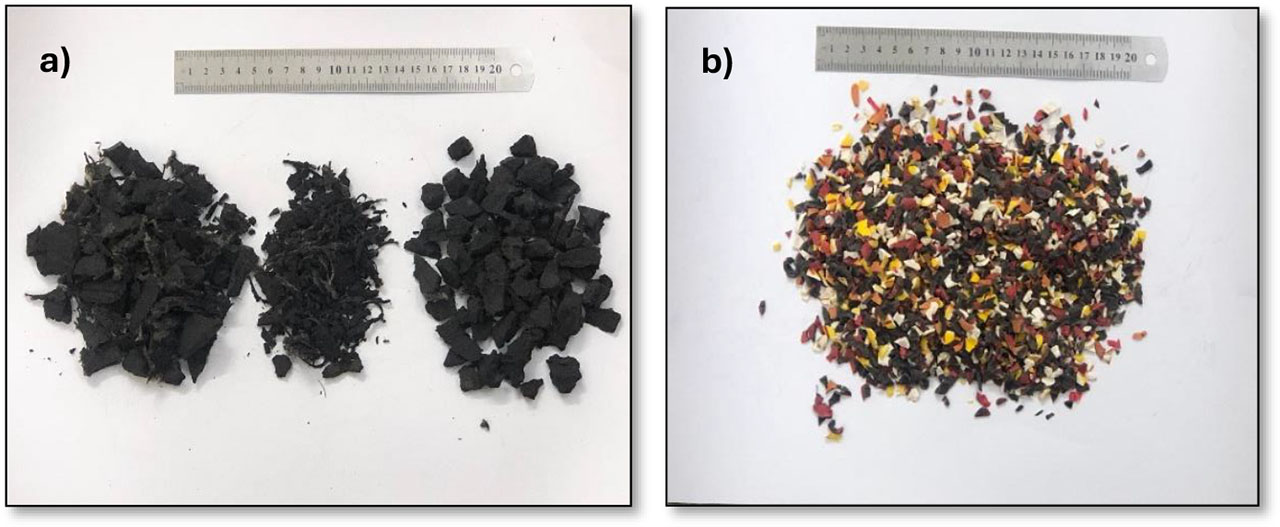
Figure 1:
Waste aggregate (a) Crumbed rubber (b) Mixed plastic
Table 8:
Properties of Crumbed Rubber Waste after Preparation
| Properties | Results | Specifications |
|---|---|---|
| Loose bulk density (kg/m3) | -- | ASTM C 29-15 |
| Compacted bulk density (kg/m3) | 494 | ASTM C 29-15 |
| Specific gravity | 1.10 | ASTM C127-15 |
| Water absorption [%] | 4.8 | ASTM C 127-15 |
| Sieve analysis | ||
|---|---|---|
| Sieve size [mm] | Passing [%] | IQS No.45/2021 Limits for max. size (10 mm) |
| 14 | 100 | 100 |
| 10 | 97 | 85–100 |
| 5 | 12 | 0–2 |
Table 9:
Grading and physical properties of shredded waste plastic aggregate
| Sieve size [mm] | Cumulative Passing [%] | Limits of IQS No. 45 |
|---|---|---|
| 20 | 100 | 100 |
| 14 | 95 | 90–100 |
| 10 | 60 | 50–85 |
| 5 | 3.5 | 0–10 |
| Physical properties | Values | Limits of IQS No. 45 |
|---|---|---|
| Absorption, [%] | 0.00 | ----- |
| SO3 [%] | Nil | ≤0.1% |
| Thickness [mm] | Max. 3 | --- |
| The shape of particles is flaky to lamellar. | ||
This investigation used woven carbon fiber fabric for structural strengthening. It was a 100-m roll, 0.6 mm wide, and cut to specific dimensions (7 mm length and 7 µm in diameter). Table 10 indicates the properties of Sika Warp—230C/45 accessed Jun. 9, (2025), which was used in this work. Figure 2 shows the carbon fiber used.
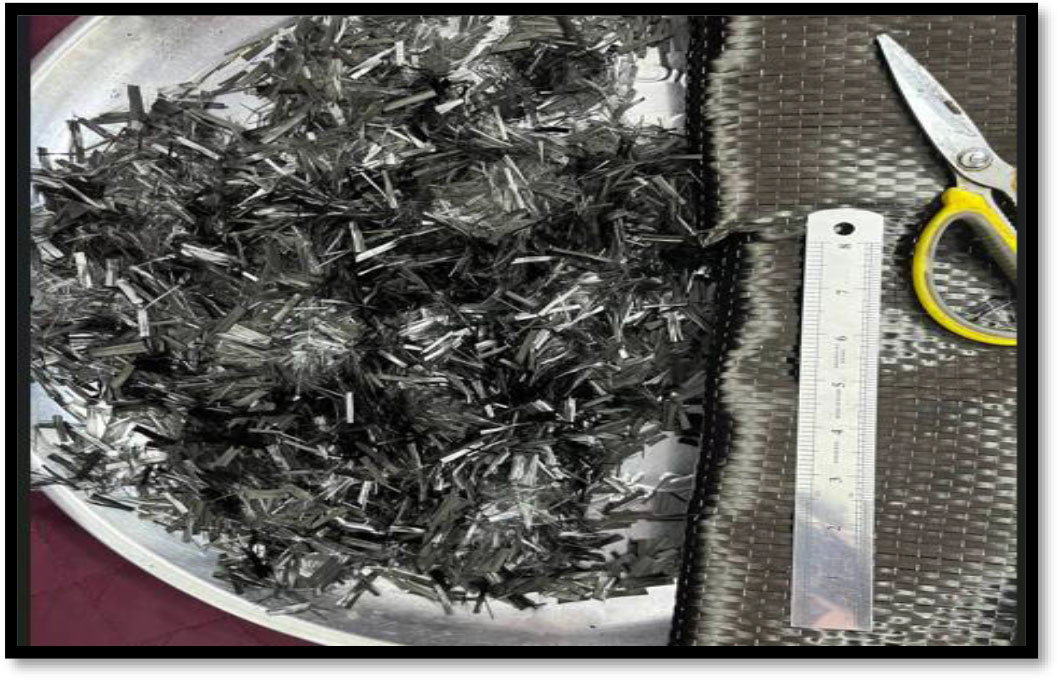
Figure 2:
Carbon fiber before and after cutting into a specific length
Table 10:
The typical properties of carbon fiber wrap *
| Properties | Description |
|---|---|
| Fabric length [m] | ≥50 |
| Fabric width [mm] | 600 |
| Areal weight [g/m3] | 230 ± 10 |
| Fabric design thickness [mm] | 0.131 |
| Fiber density [g/cm3] | 1.76 |
| Tensile strength [N/mm2] | 4300 |
| Tensile E-modulus [N/mm2] | 234000 |
| Carbon content [%] | 99% of the total weight |
| Elongation at break [%] | 1.8 |
2.3. Proportion of Geopolymer Concrete Mix
The initial geopolymer blend was derived from a prior investigation, Al-Obeidy & Khalil (2023). First, superplasticizer (SP), extra water, and mix proportion dosages were accurately calculated. Several trial mixes were conducted during the experimental work, including modifying metakaolin as the base material in GPC by partially replacing its weight with a binary blend of silica fume and calcium oxide to determine the optimum proportions for other materials used in GPC production. Finally, the selected GPC mixture had a binder content (metakaolin) of 372 kg/m3 modified by silica fume and calcium oxide of 54 kg/m3 for both of them, 13 molarity sodium oxide concentration, sodium silicate/sodium hydroxide of 2.5, fine and coarse aggregate of 603 kg/m3 and 911 kg/m3 respectively, SP of 4 kg/m3, extra water of 56 kg/m3, and ratio of the alkali solution/binder of 0.65 to produce GPC with compressive strength not less than 50 MPa. The alkaline liquid used in this study was a combination of sodium hydroxide (NaOH) and sodium silicate (Na2SiO3). Sodium hydroxide, weighing 33 kg/m3, is added to the water, which weighs 50 kg/m3, in the container to achieve a molarity of 13 M. The molecular weight of NaOH is its sum (83 kg/m3) as a solution material. It must be left for at least an hour before sodium silicate is added, and the solution must be allowed to stand for 24 hours before use. After numerous trials, the most effective curing regime was found to be heating the samples in an electrical oven at 60°C for 4 to 5 hours, followed by exposure to direct sunlight during the summer. During this period, the average temperature reached 43°C, with nighttime temperatures at 35°C and maximum daytime temperatures soaring to 49°C. As a volumetric replacement for natural coarse aggregate, the selected crumbed rubber waste aggregate and plastic waste content were 10% in the geopolymeric concrete. This percentage was chosen based on previous studies, Al-Obeidy & Khalil (2023); Hadi et al. (2017); Mehta et al. (2017); Khalil et al. (2020), which indicate the best properties. Another trial mix was done to select the optimum percentage of carbon fiber additive in the mixture. Table 11 below shows the details of the mixes chosen in this investigation.
Table 11:
Details of Geopolymer Concrete Mixes Used in This Study
| Mix Symbol | MK* | SF* | CaO | CA* | FA* | SS* | SH* | SP* | W* | R* | PL* | C* |
|---|---|---|---|---|---|---|---|---|---|---|---|---|
| [Kg/m3] | ||||||||||||
| GR# | 372 | 50 | 50 | 820 | 603 | 192 | 83 | 8 | 58 | 38 | 0 | 0 |
| GR+0.15C# | 372 | 50 | 50 | 820 | 603 | 192 | 83 | 8 | 60 | 38 | 0 | 2.8 |
| GR+0.2C# | 372 | 50 | 50 | 820 | 603 | 192 | 83 | 8 | 60 | 38 | 0 | 3.8 |
| GPL# | 372 | 50 | 50 | 820 | 603 | 192 | 83 | 7.5 | 58 | 0 | 38 | 0 |
| GPL+0.15C# | 372 | 50 | 50 | 820 | 603 | 192 | 83 | 8 | 60 | 0 | 38 | 2.8 |
| GPL+0.2C# | 372 | 50 | 50 | 820 | 603 | 192 | 83 | 8 | 60 | 0 | 38 | 3.8 |
* Mk =metakaolin, SF=silica fume, CA=coarse aggregate, FA= fine aggregate, SS=sodium silicate, SH= Sodium hydroxide, SP= Superplasticizer, R= crumbed rubber waste aggregate, PL= plastic waste aggregate, W= water, C= carbon fiber additive.
# GR =mixture with 10% crumbed rubber, GR+0.15C =mixes with rubber reinforced with 0.15% carbon fibers, GR+0.2C= mixes with rubber reinforced with 0.2% carbon fibers GPL= mixture with 10% plastic waste, GPL+0.15C =mixes with plastic waste reinforced with 0.15% carbon fibers, GPL+0.2C= mixes with plastic waste reinforced with 0.2% carbon fibers.
2.4. Preparation of Specimens and Processing Methodology
GPC is more sensitive to temperature changes than regular concrete, requiring greater attention when curing under temperature conditions. The steps of mixing and preparing GPC specimens can be summarized as follows:
The electric rotating mixer, with a 0.1 m3 capacity, was wetted with water.
The natural coarse and fine aggregates, along with waste materials (such as rubber or plastic waste), were placed in the mixer and mixed thoroughly for 2 to 3 minutes before the mixer was stopped.
Calcium oxide, silica fume, and metakaolin were manually blended for two minutes.
While the mixer was rotating, the modified metakaolin was added and mixed for 2–3 minutes.
Half of the alkaline solution was combined with the dry materials in the mixer.
At this stage, the additional water and the required amount of superplasticizer were manually mixed with the remaining alkaline solution and then gradually incorporated into the mixture.
After two minutes of mixing, the electrical mixer was paused for one minute to allow it to rest. During this time, the fiber was added to the mixture to achieve an even distribution.
The mixer was then turned on again for one minute to ensure a consistent and homogeneous metakaolin geopolymer concrete mixture.
Finally, the mixer with blades was cleaned.
The samples were compacted using electrical vibration to ensure uniform density and minimize air voids by promoting better particle rearrangement during casting.
Nine to ten minutes were spent on GPC mixing in total. Grease was applied to the interior surfaces of the moulds to prevent concrete from adhering to the mould surfaces. Subsequently, the GPC mixture was transferred into the molds according to the prescribed guidelines for each test. The top surfaces of the GPC specimens were levelled, then wrapped in nylon sheets and stored in the lab for a full day. Then, according to different test procedures, the molds of various sizes were opened, cured for four hours at 60°C in an electric oven for 4–5 hours, and left outside in the sun where the average temperature reached 43°C, with nighttime temperatures at 35°C and maximum daytime temperatures soaring to 49°C.
2.5. Test Method
The compressive strength test was conducted according to BS 1881: Part 116, British Standards Institution (1983), using three cubic samples with dimensions of 100 × 100 mm, and the average was taken. The testing used a robust hydraulic machine with a maximum capacity of 2000 kN, ensuring precise and reliable measurements. The load was applied at a controlled rate of 0.25 N/mm2 per minute
Splitting tensile strength was determined according to ASTM C 496, ASTM International (2015), with the average of three cylinders, each measuring 100 x 200 mm, applied at a rate of 0.7–1.4 MPa/min, until the specimen failure.
The static modulus of elasticity test was conducted according to ASTM C 469-15 standards, ASTM International (2015), using cylinders measuring 150 mm x 300 mm. The compression meter used has a gauge length of 150 mm and a dial gauge of 0.001 mm/div. accuracy.
3. Results and Discussion
In contrast to Ordinary Portland Cement (OPC)-based concrete, Geopolymer Concrete (GPC) achieves strength significantly more rapidly, particularly when cured at high temperatures (for example, between 60–80°C). Davidovits, J. (1991) and Hardjito, D., & Rangan, B. V. (2005) explained that geopolymer concrete can reach a substantial portion of its final strength (often exceeding 70–90%) within the first seven days, making it a reliable indicator of early strength. Consequently, the following tests were performed at the seven-day mark:
3.1. Compressive strength
Regardless of the reference mixture, the results shown in Table 12 and for the GPC mixes with different types of waste aggregate indicate that compressive strength varies with changes in the kind of aggregate. The compressive strength of mixes incorporating plastic waste aggregate is lower than that of mixes containing crumbed rubber waste aggregate, due to the inherent weakness of the plastic waste aggregate and the differences in properties between the waste material and natural aggregate Atahan & Yücel (2012). The mixture with 10% plastic waste aggregate (GPL) recorded the lowest result. It resulted in a notable discrepancy between the geopolymer paste and the waste aggregate. Due to the lightweight nature of the waste aggregate, this inconsistency resulted in an uneven mixture that retained air bubbles and created weak spots, lowering density and adversely affecting the GPC's characteristics Khalil et al. (2020); Chabuk (2022). Plastic waste is frequently more flexible and less rigid than traditional aggregates or crumbed rubber. Since plastics often have a lower modulus of elasticity, the concrete matrix does not receive the same structural support. Concrete containing plastic waste materials may be more prone to distortion under compressive stresses, reducing its compressive strength. Additionally, plastic particles are less dense, which makes the concrete building less sturdy overall. Furthermore, the composite material may weaken due to the plastic's generally poor bonding properties with the matrix, as reported by Frayyeh & Mushtaq (2021).
Table 12:
Properties of GPC Mixes in this Research
| Mix Symbol | Compressive strength at 7 days [MPa] | Tensile strength at 7dayes [MPa] | Modulus of elasticity at 7days [GPa] | Density [kg/m3] |
|---|---|---|---|---|
| GR | 45.40 | 2.4 | 18.00 | 1940 |
| GR+0.15C | 50.05 | 2.8 | 20.90 | 2150 |
| GR+0.2C | 54.70 | 3.0 | 22.50 | 2170 |
| GPL | 39.50 | 1.7 | 13.45 | 2080 |
| GPL+0.15C | 43.80 | 1.9 | 15.80 | 2110 |
| GPL+0.2C | 48.50 | 2.7 | 18.00 | 2140 |
Compressive strength values significantly increased when fiber was employed, as illustrated in Table 12 and Figure 3. This is because fiber stops microcracks from growing by halting their formation in the matrix Ružek et.al. (2023). The compressive strength values improve dramatically as the fiber percentage increases, with 0.2% proving to be the optimal dosage for fiber addition. It is possible to deduce from comparing mixes with and without fibre that the compressive strength increased by around 10% and 20% for GPC mixes incorporating crumbed rubber waste aggregate and 0.15% and 0.2% carbon fibre, respectively, relative to GPC mixes not reinforced with fibre (GR mixes). The compressive strength of GPC mixes with plastic waste aggregate reinforced with 0.15% carbon fiber (GPL+0.15C) and 0.2% carbon fiber (GPL+0.2C) increased by about 11% and 23%, respectively. Carbon fiber is the most appropriate reinforcement for the strength of geopolymer composites. These fibers boosted both flexural and compressive strength. This behavior is characteristic of fibers with a high Young's modulus, including steel and carbon fibers, Bowen & Liu. (2022). The interaction between the matrix and the fiber plays a crucial role in determining the composite's overall mechanical properties. Fibers with inert surfaces will also result in weak interface contact. If the interface is bonded correctly and the load can be efficiently transferred from the matrix to the fiber with a high capacity for carrying it, using fibers increases compressive strength through high-pressure compaction and appropriate homogeneity between the fiber and the matrix, Qin et al. (2023). Carbon fiber (CF) typically aligns well with various geopolymer matrices, Bowen & Liu (2022).
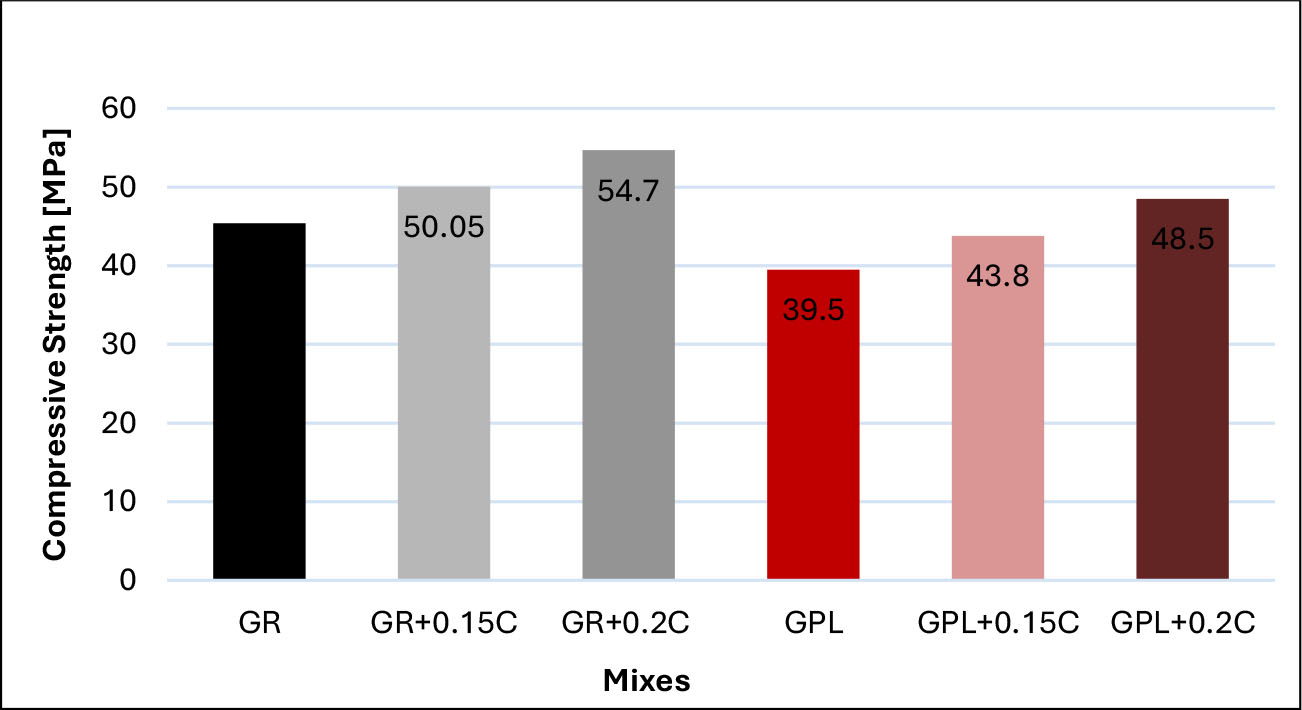
Figure 3:
Compressive Strength Results of GPC mixes
3.2. Splitting tensile strength
Table 12 and Figure 4 reveal that the splitting tensile strength of GPC mixtures with plastic waste aggregate (GPL) is the lowest when compared to the mixture including crumbed rubber waste aggregate (GR). This is due to the low stiffness of plastic; waste aggregate may have a weak bond with the geopolymer matrix, Adeleke et.al. (2024). Plastic is a hydrophobic substance, which means it requires less water to cure. As a result, the observed decrease can be connected to the hydrophobic character and surface smoothness of plastic aggregates, which contribute to weak interfacial interaction between the plastic and the geopolymer binder matrix, Giri et.al. (2023).
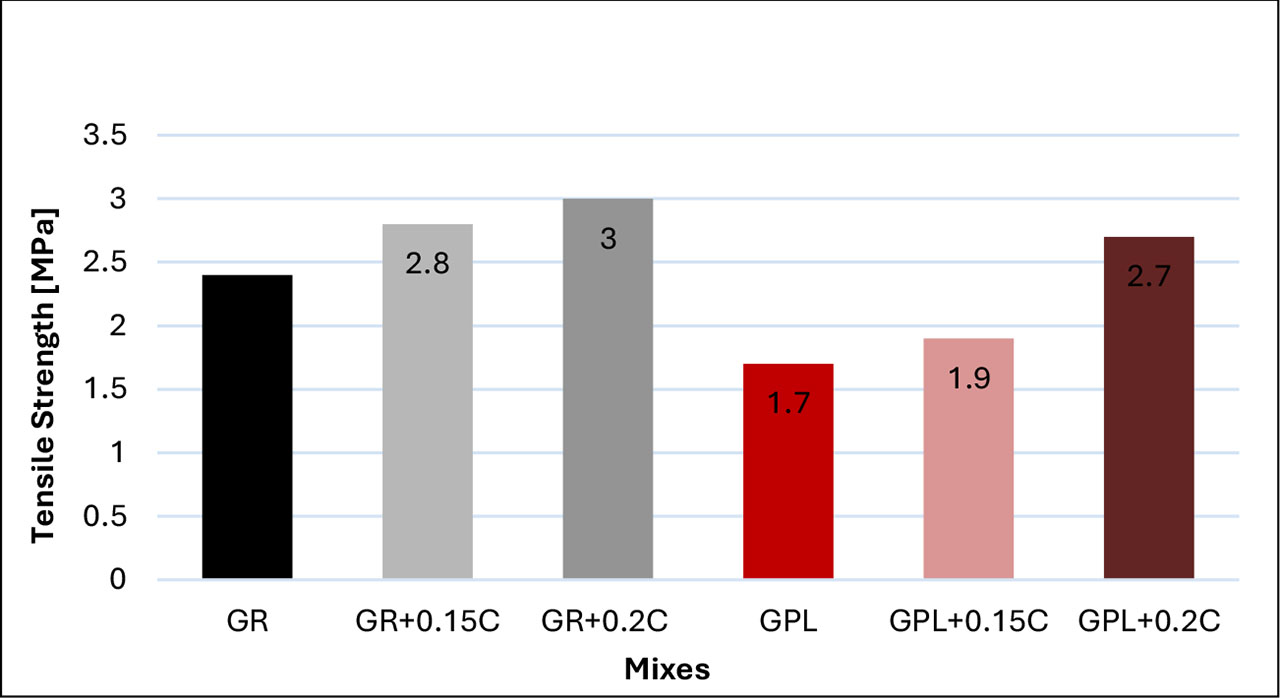
Figure 4:
Splitting Tensile Strength Results of GPC mixes
Rubber, on the other hand, is more flexible and has superior elastic qualities. Its more elastic and flexible character may allow it to make a stronger bond with the geopolymer binder. This flexibility can enhance the tensile properties of the GPC, making it more resilient and durable under stress, resulting in superior mechanical performance compared to mixes that include plastic waste aggregate. According to Giri et al. (2023), the crumbed rubber surface was covered with paste, indicating that the NaOH reactivity-inducing effect enhanced the reactivity of the crumbed rubber. As a result of enhanced stress transfer at the ITZ, the mechanical strength of the mixes increased, as stated by Moradikhou & Esparham (2021). When examining fiber-containing mixes in four different scenarios, it is evident that mixes containing 10% crumbed rubber and 10% plastic waste aggregate, whether with 0.15% or 0.2% carbon fiber additive, exhibit a notable increase in splitting tensile strength compared to mixes including waste aggregate only without fibers. The percentage increase in tensile strength was roughly 17% and 25% for the mixture with 10% crumbed rubber reinforced with 0.15% and 0.2% carbon fibers, respectively. The maximum value measured was 3 MPa for mixes with 10% crumbed rubber and 0.2% carbon fiber (GR+0.2C). Conversely, mixes containing 0.15% and 0.2% carbon fibers with 10% plastic waste aggregate show development in splitting tensile strength of approximately 12% and 59%, respectively, relative to GPC with 10% plastic waste aggregate without carbon fiber (GPL). Generally, the results indicated that using fibers improved tensile strength values compared to the control specimen without fibers.
Fibers can provide a bridge effect over pores or cracks, increasing the geopolymeric matrix's hardness and strength, as observed by İsıkdağ & Mutlu (2024). Carbon reinforcement generally exhibits superior mechanical properties compared to other fiber types, particularly in terms of tensile strength and Young's modulus, Giri et.al. (2023). Based on the findings of Qin et.al. (2023), the addition of fiber can significantly enhance the matrix's tensile characteristics, which is explained by the fibers' high tensile strength, elastic modulus, and ability to transfer stress to the sample via the interface with the geopolymer matrix.
3.3. Static Modulus of Elasticity
Generally, geopolymer concrete made with metakaolin has shown low static elastic modulus values, irrespective of the type and amount of waste material used. Despite the apparent correlation between compressive strength and static modulus, MK geopolymer concrete's elastic modulus was lower than that of an equivalent OPC concrete for a given compressive strength level, Siddique & Khan (2011). The lamellar structure of kaolinite clay, which is more pliable under load, is responsible for the low modulus of elasticity of the MK-geopolymer paste, Si et.al. (2020). Other researches have found the same trend of behavior such as Khalil et.al (2020), Siddique and Khan (2011), Si et.al. (2020), and Ahmed et.al. (2022).
From Table 12 and Figure 5, and when comparing the mixes without fibers, the mixes with crumbed rubber waste aggregate showed a higher Young modulus (GR), (18 GPa), than mixes with plastic waste aggregate (GPL), (13.45 GPa). As mentioned, rubber has better elastic properties and is more flexible. It could form a stronger bond with the geopolymer binder because of its more elastic and adaptable nature. Compared to mixes containing plastic waste aggregate, this flexibility can enhance the GPC's tensile properties, making it more robust and long-lasting under stress and resulting in a better mechanical performance increase, Moradikhou & Esparham (2021). As studied earlier, MK-GPC mixes containing PL waste aggregate have lower compressive strengths than those containing crumbed rubber waste aggregate, which results in lower modulus of elasticity values. The modulus of elasticity of concrete is directly influenced by the type of aggregate used. The phenomenon can also be attributed to the weak bond between the matrix and the flat surfaces of PL particles, according to Saikia & Brito. (2014).
As demonstrated by the results, including fibers in the mixes improves the modulus of elasticity for mixes containing waste materials. GPC mixes containing 0.2% carbon fiber and 10% crumbed rubber waste aggregate (GR+0.2C) have the highest modulus of elasticity, measuring 22.50 GPa. As the percentage of carbon fiber grew, the modulus of elasticity also increased, as illustrated in Figure 7. The modulus of elasticity increased by roughly 16% and 25% for mixes reinforced with 0.15% and 0.2% CF, respectively, relative to those containing crumbed rubber without fiber. On the other hand, mixes containing 0.15% and 0.2% carbon fiber, along with plastic waste aggregate, exhibit increases in modulus of elasticity of approximately 17% and 34%, respectively. Because GPC concrete has lower elastic moduli and more brittle behavior than OPC-based concrete, reinforcing fibers have a greater impact on the modulus of elasticity of this concrete. The stiffness of the fibers significantly impacts the modulus of elasticity of alkali-activated concretes (Mohamed & Zuaiter, 2024).
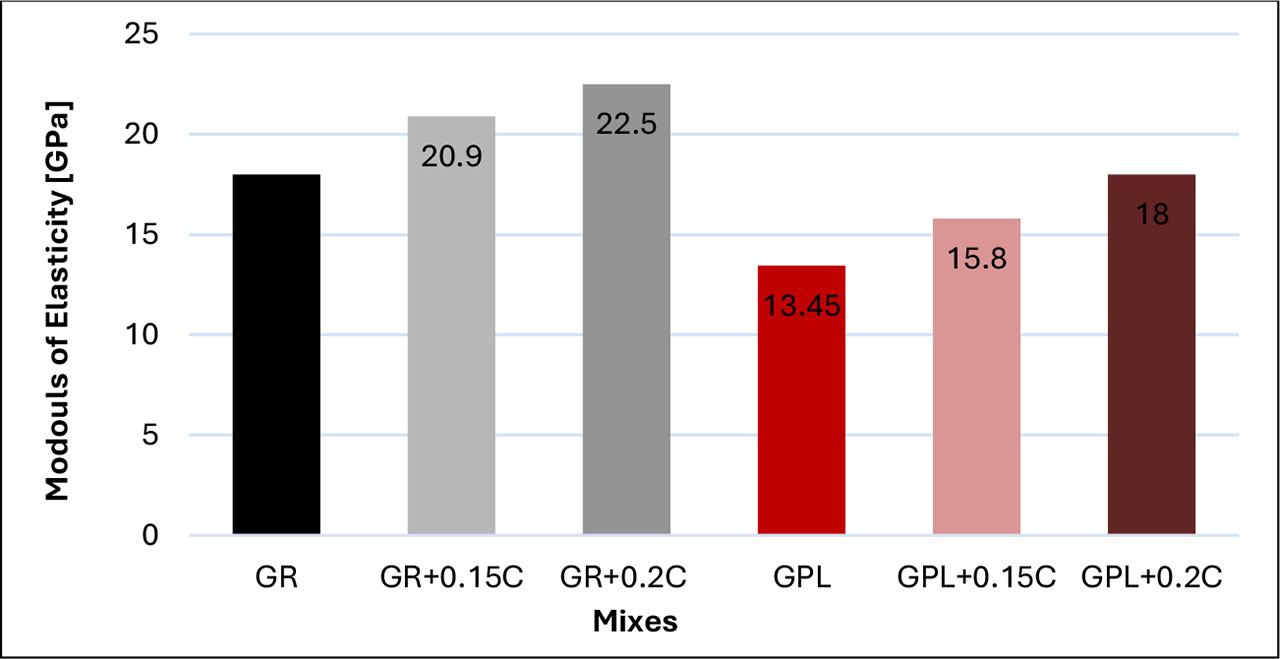
Figure 5:
Modulus of elasticity of GPC mixes
The addition of carbon fibers to geopolymer concrete can enhance the modulus of elasticity due to several factors:
Reinforcement Mechanism: Carbon fibers serve as reinforcement materials, thereby enhancing the composite's tensile strength. By distributing loads more uniformly throughout the material, they lessen stress concentrations that might cause cracking.
Matrix Interaction: The strong bond between the carbon fibers and the geopolymer matrix improves the overall mechanical properties. By preventing the geopolymer matrix from moving while under load, the fibers can raise the matrix's stiffness and modulus of elasticity.
Enhancement of Ductility: Carbon fibers enhance the ductility of geopolymer concrete. This helps the material deform under stress without failing abruptly, which is advantageous in load-bearing applications even if it does not directly raise the modulus of elasticity.
Reduced Porosity: By adding carbon fibers, the porosity of geopolymer concrete can be decreased, resulting in a denser structure. Generally, a denser concrete matrix is more elastic and rigid, according to descriptions provided by Wang et al. (2023) and Zada et al. (2021).
Our research indicates that the inclusion of recycled materials, such as rubber particles, plastic aggregates, and carbon fibers, in modified geopolymer concrete mixtures yields mechanical properties comparable to, and in some cases even superior to, those of traditional concrete. This improved performance results from the combined effects of pozzolanic reactions involving metakaolin, silica fume, and calcium additives, as well as the crack-arresting and bridging properties of carbon fibers. Specifically, the addition of carbon fibers enhances the tensile strength and energy absorption, while a carefully designed mix and adequate distribution of waste aggregates help maintain the material's structural integrity. These results suggest that, with the right proportions and curing methods, waste-based geopolymer concretes can meet the mechanical standards required for load-bearing structures. Additionally, this technology is particularly advantageous for projects that prioritize environmental sustainability, resource efficiency, and waste reduction, such as green building initiatives, precast structural components, and infrastructure in regions where high-quality natural aggregates are scarce. Its lower carbon footprint, combined with the use of industrial by-products and post-consumer waste, aligns well with global sustainability goals and modern construction standards. The same findings were also reported in Xu et al. (2022) and Davidovits (2020).
3.4. Scanning Electron Microscope (SEM) Image
Scanning Electron Microscopy (SEM) analysis was performed using the Thermo Fisher Scientific Axia Chemi SEM system. This state-of-the-art instrument combines high-resolution imaging with elemental analysis capabilities, providing an in-depth understanding of the microstructural properties of geopolymer concrete samples. The specimens prepared for SEM analysis measured approximately 1 mm and were coated with a thin layer of gold utilizing a sputter coater. The application of the gold coating aimed to enhance surface conductivity and improve image quality by reducing charging effects during exposure to the electron beam. This preparation enabled precise observation of the geopolymeric matrix, the interaction between the binder and aggregates, and the effect of carbon fibers and waste materials on the internal structure.
SEM pictures illustrate the GPC microstructure, the GP gel matrix distribution, holes and cracks, and the distribution of materials in the concrete structure, offering a thorough understanding of the geopolymer reaction during the polymerization process. When examining the image of mixes with 10% crumbed rubber waste aggregate, it is clear that the interfacial transition zone (ITZ) between crumbed rubber particles and the geopolymer matrix is weak, as illustrated in Figure 6-b, as well as pores in the structure matrix, Figure 7 depicts a micrograph of a 10% plastic waste aggregate specimen with a nonhomogeneous microstructure that includes several big pores, multiple microcracks, and a less compacted geopolymer paste. This is related to the irregular and flaky nature of plastic particles, which results in a random distribution of waste plastic particles within the matrix. Furthermore, SEM images revealed that there is no gel adherent to the PL particles, and the interfacial transition zone (ITZ) comprised a significant quantity of large gaps, as well as poorer binding between the plastic particles and geopolymer paste compared with that between the crumbed rubber particles and the matrix. This explains the lower strength for the geopolymer mixture with 10% plastic aggregate relative to the mixture containing 10% crumbed rubber aggregate. These gaps could affect the long-term durability by allowing moisture to enter. The disadvantages of GPC mixes with waste aggregate can be mitigated by incorporating carbon fibers, as indicated in Figure 8. Combining calcium silicate hydrate (CASH) and sodium aluminum hydrate (NASH) gels refines the pores. At the same time, the fiber works as a micropolymer in the matrix, effectively dispersing the sample stress. Crack formation is typical of unreinforced geopolymer structures, and voids are filled by CSH gel and NASH gel generated during geopolymerization. Furthermore, the image shows a well-defined ITZ between the fiber and the geopolymer matrix, which is characterized by homogeneous texture throughout. The SEM study also revealed a denser microstructure in fiber-reinforced samples, with fewer voids and better interfacial adhesion. This improved microstructure accounts for the increased compressive and tensile strength recorded in the experimental work. Their presence enhances matrix continuity, leading to reduced porosity, improved stress transfer, and greater resistance to environmental degradation. The SEM analysis indicates that samples incorporating both waste aggregates and fibers exhibited a more refined pore structure than those containing only waste aggregates. This combination creates a balanced microstructure that contributes to improved durability characteristics. The observed microstructural characteristics correspond closely with the anticipated durability performance of sustainable geopolymers. While the incorporation of recycled aggregates may introduce some structural heterogeneity, the addition of fibers significantly mitigates the associated risks by enhancing crack control and overall structural integrity. This synergy is essential for creating durable, environmentally friendly concrete that is suitable for use in non-aggressive to moderately aggressive environments.
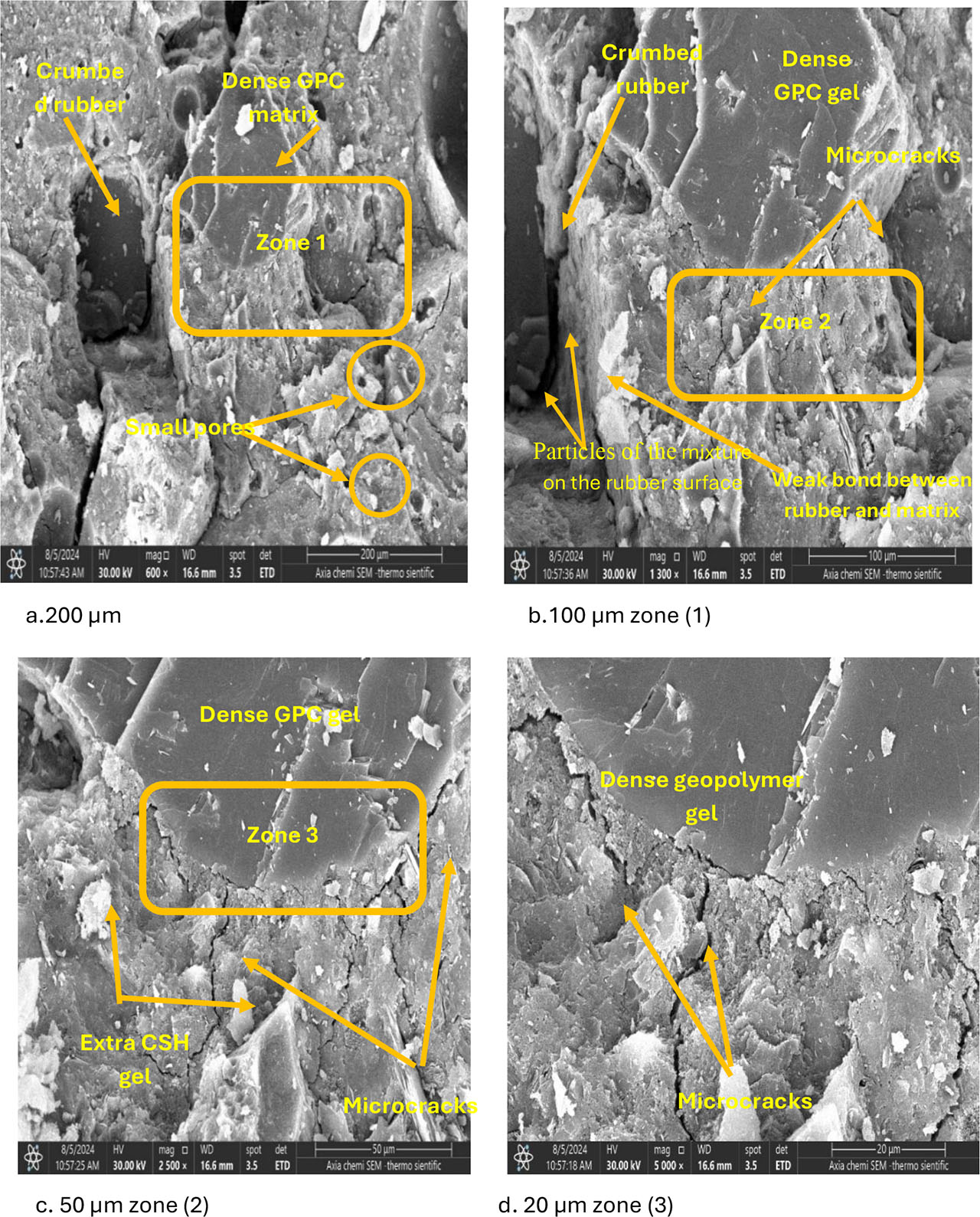
Figure 6:
SEM image of GPC specimens with rubber waste aggregate (GR mix)
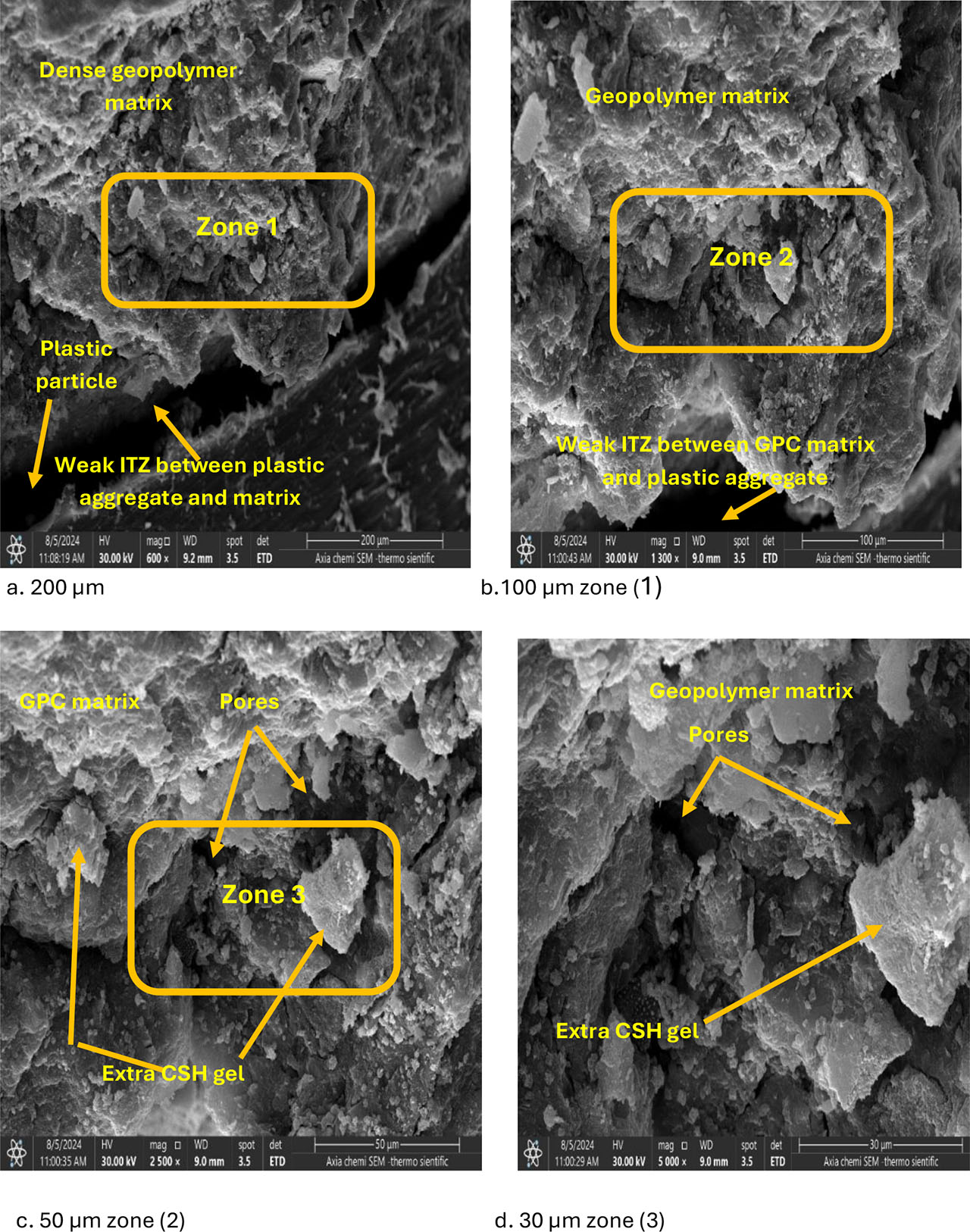
Figure 7:
SEM image of GPC specimens with plastic waste aggregate (GPL mix)
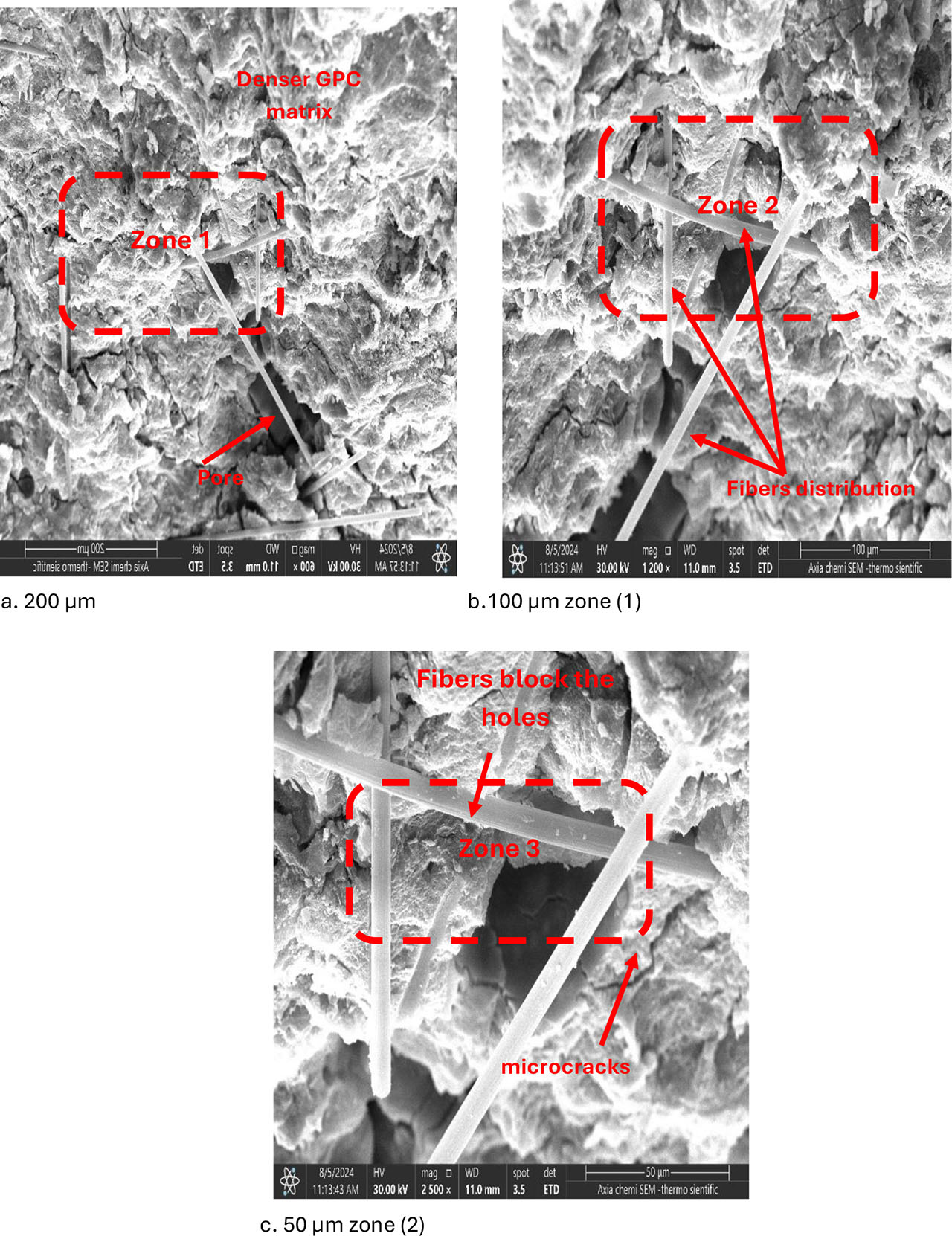
Figure 8:
SEM image of GPC specimens with carbon fiber and plastic aggregate (GPL+0.2C mix)
4. Conclusion
Metakaolin can be used as a primary binder with 10% waste aggregate by volume, provided that it excludes coarse components (such as rubber and plastic), thereby enhancing the material's sustainability. This minimizes the demand for traditional cement and natural aggregates, thereby reducing the environmental impact of concrete production.
Incorporating carbon fibers into geopolymer concrete can improve its mechanical properties, including tensile strength, modulus of elasticity, and compressive strength.
Adding carbon fibers resulted in the most significant property improvement, at 0.2 percent. The percentage increase in tensile strength for mixes containing 10% crumbed rubber and 10% plastic waste aggregate with carbon fiber was approximately 25% and 59%, respectively, compared to mixtures that included crumbed rubber waste and plastic waste without fibers.
Compared to mixes containing waste aggregate without fibers, the modulus of elasticity increased by approximately 25% for mixes including 10% crumbed rubber with 0.2% carbon fiber and 34% for mixes containing 10% plastic waste aggregate with 0.2% carbon fiber.
Mixtures with 10% crumbed rubber waste aggregate and 0.2% carbon fiber exhibited a 20% increase in compressive strength, whereas mixes with 10% plastic waste aggregate and 0.2% carbon fiber showed a 23% increase in compressive strength compared to the corresponding mixes without fibers.
The SEM and microstructural analyses confirm the experimental results and offer deeper insights into the characteristics of geopolymer concrete. The images show a well-formed geopolymeric matrix with a dense and compact structure in the GPC specimen, which lacks waste aggregates and is associated with superior mechanical properties. Furthermore, the incorporation of carbon fibers enhances microstructural integrity by bridging microcracks and refining the matrix, thus further bolstering mechanical performance.
4.1. Recommendation for Future Studies
Future research could concentrate on performing chemical and elemental analyses, such as EDS/EDX or FTIR, to gain a deeper understanding of the geopolymerization process and the composition of the binder. Additionally, assessing the durability of geopolymer concrete with waste aggregates under severe environmental conditions, such as sulfate and acid exposure or freeze–thaw cycles, would offer valuable insights into its long-term performance. Other promising avenues for exploration include studies on thermal resistance, life cycle assessments, and full-scale structural testing to investigate practical applications in the construction industry.
Acknowledgements
I am writing to express my sincere gratitude to the University of Technology, whose exceptional academic environment and resources have been instrumental in supporting this work. I am especially thankful to the Laboratory of Concrete at the Civil Engineering College.