
INTRODUCTION
Black wheat is one of the recently developed colored (greyish-black) variety of wheat known for its multiple health benefits. This wheat variety was developed through routine plant breeding methods and named ‘Nabi MG’ after being developed at NABI. Scientifically, it is known as Triticum aestivum and contains many healthy constituents, such as anthocyanins (responsible for imparting color to grains), protein, dietary fibers, iron and zinc. The 100 g of black wheat seeds on average provides 71 g of carbohydrates, 13 g of protein, 10 g of fiber and 3.40 g of fat to consumers (Kumari, Tzudir, 2021). These nutritional compositions of black wheat have made it a health-improving food supplement. Besides having the above nutritional components, black wheat is cereal with a low gluten that is also rich in vitamin B and other nutrients like phosphorus, potassium, calcium, magnesium, manganese, selenium and copper. As the consumption of wheat protein “gluten” triggers inflammation in affecting soft tissue and organs of the body, the low gluten of black wheat bread has made it a better option for people who are allergic to wheat or suffering from digestive disorders or stress. Based on such properties, this cereal crop can combat and address the global and national challenge of malnutrition (Dhua et al., 2021; Gautam, Kumar, 2022).
Because of the multiple health benefits, black wheat has gained importance among health-conscious people. Its cultivation has gained big momentum across different states of India, including Bihar, Chhattisgarh, Haryana, Madhya Pradesh, Maharashtra, Punjab and Uttar Pradesh. Madhya Pradesh is leading in the production of black wheat. It is currently being cultivated on more than 300 acres of land in the state. Because of the multiple nutraceutical properties and health benefits to consumers, black wheat has become successful in attaining higher prices in the market (Biswal et al., 2022; Rawat et al., 2023).
The package of practices for black wheat are similar to those of common wheat; the seeds are smaller in size and the crop requires around 130–135 days to reach maturity (Kumari, Tzudir, 2021). Similar to other field crops, the cultivation of black wheat also requires the application of different fertilizer treatments. The use of chemical fertilizers is at its extreme to fulfill the food demand of the continuously increasing population of India. Their use, although, become successful in combating food supply, but, the soil is now becoming barren and unfit for farming. Organic and bio-fertilizers have emerged as the best and safest alternatives to protect producers, consumers and the environment from the harmful impacts of chemical fertilizers. Besides having good impacts on crop health and yield, these fertilizers have been proven to enhance soil microbial diversity, which is involved in the breakdown of organic matter (Kouam et al., 2024). Keeping in view the beneficial aspects of organic and bio-fertilizers, the present study was undertaken to evaluate their effects on the growth and yield of black wheat.
MATERIALS AND METHODS
Field trials were carried out at Patanjali Research Foundation (PRF) research farms from November 2023 to April 2024. It is situated at 29°54′49″ N latitude and 77°59′51″ E longitude in the Gangetic agro-climatic zone with Tarai and Bhabar areas at an altitude of 1,030 ft (313.944 m) above sea level. The average annual temperature and rainfall of the study area were recorded at 23.0 °C and 1174.3 mm, respectively. The variable temperature (37 °C maximum and 5 °C minimum) was recorded during the study, whereas total precipitation during the study was recorded in the range of 4–48 mm (Fig. 1).
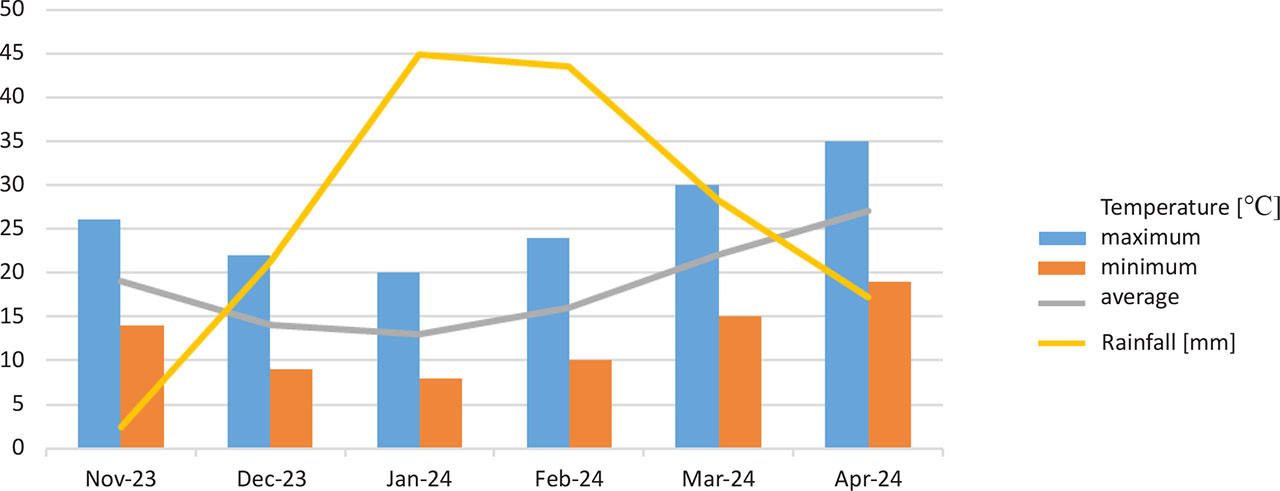
Figure 1.
Meteorological data of the experimental site during the study.
Experimental design
The experimental design based on Randomized Block Design (RBD) with ten fertilizer treatments, with three replications (30 ploughed plots with average size of 2.5 × 4 (10 m2)) was used to carry out this study (Fig. 2). The line sowing of wheat was carried out 30 kg ac−1 at a distance (R-R) of 35 cm. The wheat seeds were soaked overnight in bio-pesticide (Trichoderma + Pseudomonas) 5 ml/liter of water before sowing to avoid infection with soil-borne pathogens. The fertilizer treatments were applied every 30 days after sowing. No pesticides were used throughout the experiment. Different combinations of organic and bio-fertilizers were used in this study. While Jaivik Khad (organic fertilizer) was used before sowing at the rate of 100 kg/acre as base fertilizers with all treatments, the Patanjali PSB plus, Patanjali Bio-NPK plus, Patanjali Bio Potash Plus (2 ml l−1, 3 ml l−1 and 4 ml l−1 each) were used as bio-fertilizers immediately after sowing and thereafter every 30 days interval. The final prepared solution of each bio-fertilizer was used with a rate of 2 l per plot (Table 1). The analysis of the soil was also done before the start of the field trial (Table 2).
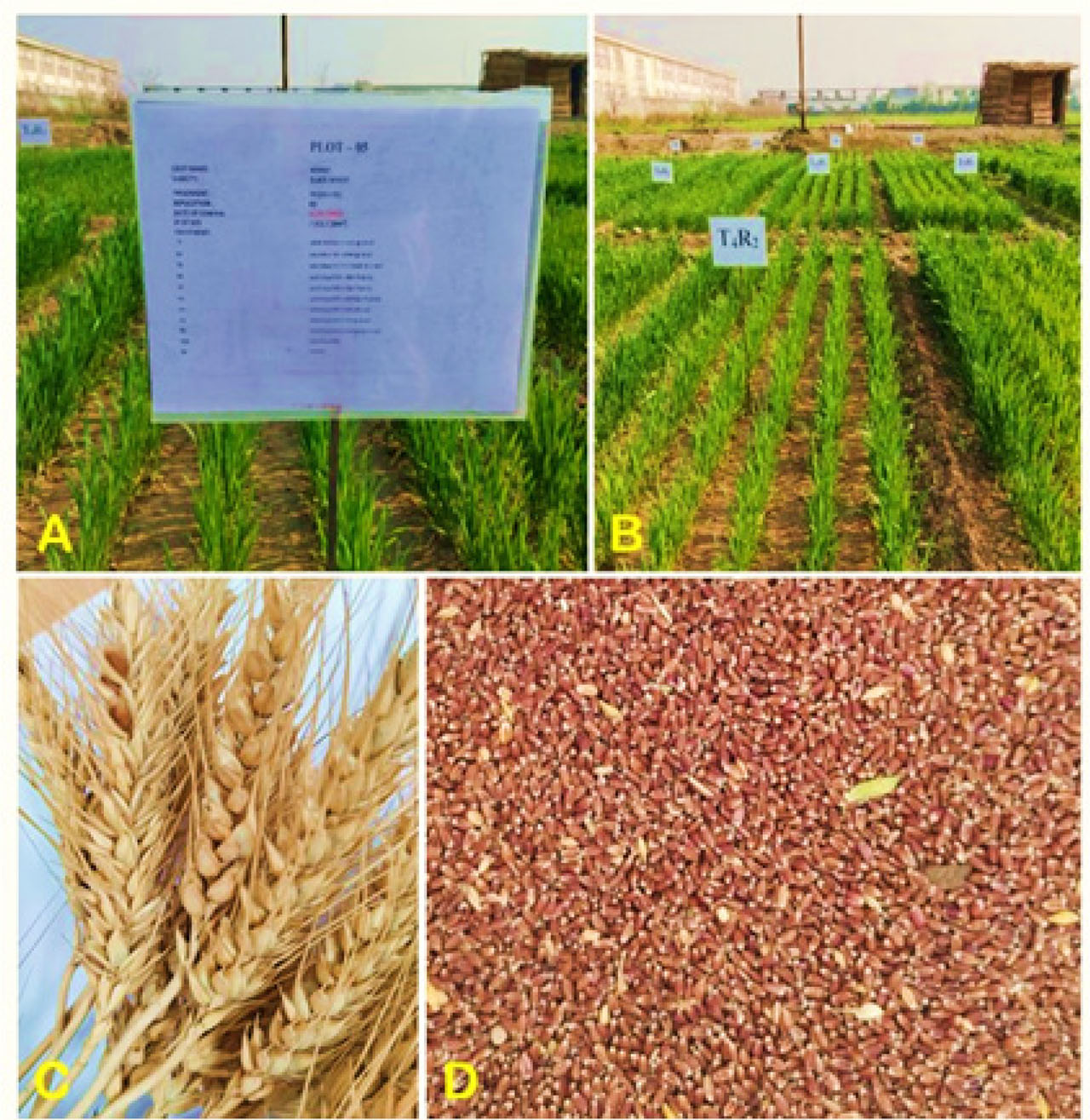
Figure 2.
Field trial on black wheat crop in the field on 60 days after sowing (DAS). (A-B) wheat in primary stage in the experimental field, (C) wheat spikes, (D) kernels of black wheat.
Table 1.
Different treatments used during the present study.
| Treatment no. | Treatments Details |
|---|---|
| T0 | Control (No Fertilizers) |
| T1 | Jaivik Khad (100%) + PSB (2 ml l−1) |
| T2 | Jaivik Khad (100%) + NPK (2 ml l−1) |
| T3 | Jaivik Khad (100%) + POTASH (2 ml l−1) |
| T4 | Jaivik Khad (100%) + PSB (3 ml l−1) |
| T5 | Jaivik Khad (100%) + NPK (3 ml l−1) |
| T6 | Jaivik Khad (100%) + POTASH (3 ml l−1) |
| T7 | Jaivik Khad (100%) + PSB (4 ml l−1) |
| T8 | Jaivik Khad (100%) + NPK (4 ml l−1) |
| T9 | Jaivik Khad (100%) + POTASH (4 ml l−1) |
Measuring growth parameters
To analyze the impact of various treatments on crop growth, a series of parameters were employed. Three healthy and disease-free plants were randomly selected for each treatment and their replicates (total nine per treatment) with the use of the L sampling technique (excluding border plants) at 60 and 90 days (at 30-day interval) after sowing. The growth parameters including plant height (shoot and root) (cm), shoot and root biomass (g), moisture content (shoot and root), leaf area (counted as length × width, cm2), accumulation of dry matter (g), and the total chlorophyll content were measured at the distinct periods of 60 and 90 days after the sowing. The plant length was expressed as the total length of the shoot and root, while, biomass and moisture content were measured based on fresh and dry weight measurements. The total chlorophyll content was determined using a SPAD meter and the results were expressed as SPAD meter values. The Crop Growth Rate (CGR) in g day−1, Relative Growth Rate (RGR) in g day−1 and Net assimilation rate (NAR) in g m−2 day−1 were calculated by using the following formulas:
W1 = initial fresh weight (at time t1)
W2 = final fresh weight (at time t2)
t2 – t1 = time interval
ln = natural logarithm
W1 = dry weight at time t1
W2 = dry weight at time t2
t2 – t1 = time interval
W1 and W2 = total dry weight of plant at time t1 and t2 respectively
A1 and A2 = total leaf area at time t1 and t2 respectively
t2 − t1 = time interval in days
ln = natural logarithm
Measuring yield parameters
The specific parameters at crop maturity (specifically between 120–135 days of sowing), which include the length of spikes (cm), 100 g seed weight, number of seeds per spike, yield per plot (kg) and total yield per acre (q), were assessed. The grain components like: moisture content, total ash, protein content, gluten content, nitrogen (N), phosphorus (P), copper (Cu), iron (Fe), zinc (Zn), manganese (Mn) and potassium (K) of wheat grains were also assessed during this study. All nutraceutical investigations of seed grains were carried out at the Central Laboratory located at Patanjali Food & Herbal Park Pvt. Ltd., an accredited testing facility endorsed by the National Accreditation Board for Testing and Calibration Laboratories (NABL).
Statistical analysis
All the data collected were classified and processed in Microsoft Excel and then transferred to R version 4.3.1 (R Core Team, 2022) for further analysis. The normality of distribution and homogeneity of variance were tested before performing the analysis of variance (ANOVA). Multiple comparisons were made using the “agricolae” package (de Felipe, Yaseen, 2020). Pearson correlation was used to assess relationship between fertilizer dosage and wheat yield. Spearman correlation was used to highlight the relationships between variables using the “metan package” (Olivoto, Lúcio, 2020).
RESULTS AND DISCUSSION
Soil analysis
The soil of the experimental site was found alkaline with a pH of 7.83 ±0.06, electrical conductivity (0.19 ±0.03 dS m−1), organic carbon (0.23 ±0.00 %w), organic matter (0.70 ±0.01%w), available nitrogen (145.93 ±4.75 kg ha−1), available phosphorous (14.84 ±6.21 kg ha−1), exchangeable potassium (55.18 ±8.46 kg ha−1), zinc (0.81±0.13 ppm), sulfur (4.51 ±0.98 ppm), iron (9.17 ±5.92 ppm), manganese (1.13 ±0.11 ppm), copper (0.69 ±0.12 ppm) (Table 2).
Table 2.
Physicochemical properties of the field soil samples.
| Physicals elements | Results (Value in range) |
|---|---|
| pH | 7.83 ±0.06 |
| EC [dS m−1] | 0.19 ±0.03 |
| Organic Carbon [%w] | 0.23 ±0.00 |
| Organic Matter [%w] | 0.39 ±0.01 |
| Nitrogen [kg ha−1] | 145.93 ±4.75 |
| Phosphorus (P2O5) [kg ha−1] | 14.84 ±6.21 |
| Potassium (K2O) [kg ha−1] | 55.18 ±8.46 |
| Sulfur [ppm] | 4.51 ±0.98 |
| Zn [ppm] | 0.81 ±0.13 |
| Iron [ppm] | 9.17 ±5.92 |
| Mn [ppm] | 1.13 ±0.11 |
| Cu [ppm] | 0.69 ±0.12 |
Crop growth variables
A considerable effect on all fertilizer treatments was observed on all growth parameters of the black wheat crop. However, these effects vary on different growth parameters (Table 3). At the level of doses of applied fertilizers, the PSB plus (3 ml l−1), Patanjali Bio-NPK plus (2 ml l−1), or Patanjali Bio Potash Plus (2 ml l−1) were considered effective, although the efficacy of doses quantities showed variation in growth and yield parameters. In terms of growth parameters, positive effects were exhibited upon applying organic and bio-fertilizers. The results of the present study revealed that the wheat grown under (T2 i.e. NPK (2 ml l−1) has enhancing effects on plant length (shoot + root); whereas, the crop under T3 was higher in shoot and root biomass and number of tillers; high chlorophyll content in T2, T4, T5, T6 and T8 showed enhanced efficacy in leaf area. The synergistic effects of each fertilizer may be responsible for the effectiveness of the combination treatment of bio-fertilizers and Jaivik Khad. The application of Jaivik Khad as an organic fertilizer perhaps proved helpful in supplying macro and micronutrients and enhancing the soil’s ability to hold onto water and nutrients. The application of Jaivik Khad as an organic fertilizer not only enhances the organic matter of the soil but also encourages the growth of beneficial microbes that can break down inorganic phosphate and produce phytohormones, which are known to stimulate plant growth (Bedine et al., 2022; Kouam et al., 2023). Bio-fertilizers consist of beneficial microbes that can fix the nutrients present in the soil and make them available to the crop plants and enhancing the vegetative growth and yield parameters of black wheat crops. Ahmed et al. (2011) studied wheat productivity in newly reclaimed sandy soil in Egypt. They studied the efficacy of applying organic and bio-fertilizers singly or in combination on the growth and yield of black wheat. The study showed that mixed inoculate generally had a greater positive impact than a single inoculum. Similarly, a field experiment was carried out at the agriculture farms of Mansoura University to study the effects of different bio- and organic fertilizers and their combination on hybrid maize growth, yield, and grain quality. Like the present study, similar observations were made in that study. The results recommended combining the organic and bio-fertilizer mixture to enhance growth, yield, and nutrient uptake in maize (Gao et al., 2020).
Table 3.
Growth and development parameters of black wheat under different treatment conditions after 60 days of sowing (DAS).
| Treatments# | Shoot biomass (g) | Root biomass [g] | Plant length [cm] | Leaf area [cm2] | Chlorophyll | No. of tillers | |
|---|---|---|---|---|---|---|---|
| Shoot | Root | ||||||
| T0 | 6.274 ±0.493 | 1.071 ±0.649 | 72.444 ±4.194 | 12.556 ±1.347 | 41.380 ±8.364 | 45.889 ±2.329 | 3.778 ±0.509 |
| T1 | 9.544 ±2.011 | 1.349 ±0.494 | 77.444 ±2.795 | 13.333 ±0.882 | 47.823 ±3.766 | 47.778 ±8.688 | 4.000 ±0.882 |
| T2 | 10.292 ±1.348 | 1.209 ±0.046 | 81.556 ±4.914 | 13.778 ±1.347 | 49.747 ±2.222 | 52.489 ±5.709 | 4.333 ±0.667 |
| T3 | 11.713 ±2.434 | 1.792 ±0.193 | 78.000 ±5.044 | 13.778 ±1.072 | 53.533 ±2.890 | 49.911 ±4.002 | 5.333 ±0.667 |
| T4 | 10.388 ±4.068 | 1.539 ±0.579 | 77.000 ±6.083 | 14.222 ±0.192 | 54.620 ±9.984 | 52.878 ±2.260 | 4.556 ±0.839 |
| T5 | 9.393 ±1.292 | 1.538 ±0.211 | 75.111 ±2.502 | 14.333 ±0.882 | 52.590 ±4.485 | 53.544 ±1.291 | 4.000 ±0.577 |
| T6 | 9.938 ±1.408 | 1.332 ±0.116 | 76.333 ±3.786 | 13.000 ±0.667 | 55.223 ±10.149 | 52.144 ±3.866 | 4.111 ±0.192 |
| T7 | 9.558 ±0.450 | 1.427 ±0.094 | 73.333 ±2.848 | 14.444 ±1.388 | 50.687 ±3.728 | 48.144 ±1.021 | 3.889 ±0.192 |
| T8 | 9.938 ±1.408 | 1.332 ±0.116 | 76.333 ±3.786 | 13.000 ±0.667 | 55.223 ±10.149 | 52.144 ±3.866 | 4.111 ±0.192 |
| T9 | 9.558 ±0.450 | 1.427 ±0.094 | 73.333 ±2.848 | 14.444 ±1.388 | 50.687 ±3.728 | 48.144 ±1.021 | 3.889 ±0.192 |
# see Table 1
Crop yield variables
Like growth, the application of organic- and bio-fertilizers also exhibited considerable effects on the yield of black wheat crops. The enhanced spike length (9.433 ±0.481 cm) and weight of 100 seeds (4.880 ±0.445) collected from spikes were observed under treatment T6 (Jaivik Khad RFD + Patanjali Bio Potash Plus 3 ml l−1), while the maximum number of grains per spike (57.000 ±7.550) were observed in spikes produced by black wheat plants growing under treatment T9 (Jaivik Khad RFD + Patanjali Bio Potash Plus 4 ml l−1). However, the highest total yield per acre (15,85 q) was observed in the black wheat crop growing under treatment T9 (Jaivik Khad RFD + Patanjali Bio Potash Plus 4 ml l−1). Thus, the treatment T9 (Jaivik Khad RFD + Patanjali Bio Potash Plus 4 ml l−1) exerted a good impact on the yield parameters of the wheat crop (Table 4). Two other treatment combinations – T2 (Jaivik Khad and Patanjali Bio-NPK Plus2 ml l−1) and T7 (Jaivik Khad and PSB Plus 4 ml l−1) also exhibited good yield, 15.69 and 15.42 q per acre, respectively (Fig. 3). The analysis of the seed grains of black wheat revealed the presence of a wide range of major and minor constituents which reflects that these seed grains are a rich source of different nutrients, including protein (13.77%), nitrogen (2.20%), phosphorus (5111.59 mg kg−1), copper (4.81 mg kg−1), iron (47.76 mg kg−1), zinc (20.19 mg kg−1), manganese (53.61 mg kg−1) and potassium (4481.12 mg kg−1). An earlier study based on the application of organic manures and bio-fertilizers on growth and yield parameters of cowpea (Vigna unguiculata) revealed a positive response on growth and yield attributes. In comparison to the control, a 46% increase in the yield of cowpea was observed during the study (Yadav et al., 2019). Similar work was also carried out by Singh et al. (2019 a, b) to evaluate the effects of different organic, inorganic and bio-fertilizers on the yield and yield components of wheat. The study concluded that fertilizer treatment combinations like farmyard manure, poultry manure, and Azotobacter in different combinations have significant effects on the yield of wheat along with enhancing growth parameters. In a similar study, the combined application of biofertilizers with organic manures enhanced soil fertility and the bioavailability of major nutrients in the soil and untimely plant growth of the fruits at a desired level. Moreover, bio-fertilizers are now being considered eco-friendly and low-cost agriculture inputs that have wonderful potential to increase the yield of wheat and other food and vegetable crops (Kumar, Urmila, 2018; Karanveer et al., 2024). A recent study by Balkrishna et al. (2024a) also advocated the use of organic fertilizers to enhance the performance of wheat and other crops. Many other studies on millets (Pallavi et al., 2017; Susmitha et al., 2022), vegetable crops (Rajput et al., 2022; Kapoor et al., 2023; Balkrishna et al., 2024b) and other crops (Gao et al., 2020) also justified the use of organic and bio-fertilizers to propose a sustainable and ecological method to enhance agricultural productivity.
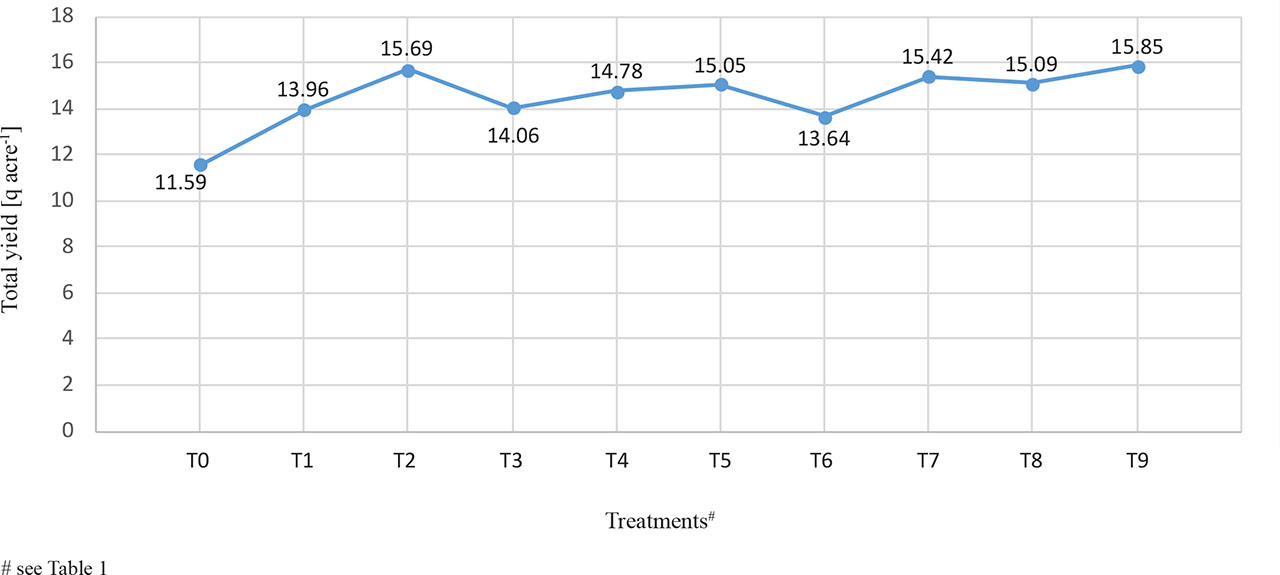
Figure 3.
Total yield of black wheat under different treatment conditions.
Table 4.
Yield parameters of black wheat in response to different treatment conditions after 120 days of sowing (DAS).
| Treatments# | Spike length [cm] | No. of seeds per spike | 100 seeds weight [g] | Total yield per plot [g] |
|---|---|---|---|---|
| T0 | 7.433 ±0.581 | 40.889 ±7.198 | 4.030 ±0.056 | 2290.333 ±341.951 |
| T1 | 8.533 ±0.186 | 51.444 ±2.835 | 4.810 ±0.156 | 2759.000 ±169.608 |
| T2 | 8.467 ±0.578 | 46.667 ±3.844 | 4.320 ±0.139 | 3102.333 ±267.562 |
| T3 | 8.556 ±0.353 | 49.778 ±2.269 | 4.540 ±0.408 | 2779.333 ±179.737 |
| T4 | 8.989 ±0.510 | 51.667 ±6.110 | 4.240 ±0.056 | 2922.333 ±145.225 |
| T5 | 9.356 ±0.521 | 55.444 ±1.262 | 4.773 ±0.246 | 2975.000 ±333.078 |
| T6 | 9.433 ±0.481 | 56.667 ±6.506 | 4.880 ±0.445 | 2697.000 ±158.357 |
| T7 | 8.656 ±1.006 | 51.667 ±7.506 | 4.560 ±0.164 | 3048.667 ±241.504 |
| T8 | 8.833 ±0.549 | 53.333 ±5.925 | 4.340 ±0.295 | 2983.667 ±258.411 |
| T9 | 9.067 ±0.176 | 57.000 ±7.550 | 4.557 ±0.564 | 3132.333 ±303.846 |
# see Table 1
Effect of different fertilizer treatments on growth and net assimilation rate of wheat plants over time
The Crop Growth Rate (CGR), Relative Growth Rate (RGR) and Net Assimilation Rate (NAR) for wheat plants revealed distinct differences in the growth performance of wheat plants subjected to various fertilizer treatments (Fig. 4). In comparing the treatments, the control (T0), which received no fertilizers, showed the lowest values for CGR (0.5604 g day−1), RGR (0.0708 g day−1), and NAR (0.0154 g m−2 day−1), confirming the necessity of nutrient supplementation for optimal wheat growth. Among all treatments, T3 (POTASH 2 ml l−1) demonstrated the most significant improvement in all three growth parameters, achieving the highest CGR (0.918 g day−1), RGR (0.0838 g day−1), and NAR (0.0255 g m−2 day−1). This indicates that T3 not only supported an overall increase in biomass but also enhanced the efficiency of biomass accumulation relative to leaf area and initial plant mass. The superior performance of T3 may be attributed to the role of potassium in promoting enzyme activation, osmoregulation, and efficient photosynthate translocation, all of which are vital during early vegetative growth. The benefit here could be due to the presence of phosphate-solubilizing bacteria (PSB) enhancing phosphorus availability, which is crucial for energy transfer and root development. Similarly, T4 (PSB 3 ml l−1) and T1 (NPK 2 ml l−1) also showed moderate increases in growth parameters, indicating a dose-dependent but limited improvement compared to T2 and T3. Treatments T5, T6, T7, T8, and T9, representing higher doses of NPK, POTASH, and PSB (at 3 and 4 ml l−1), showed marginal or reduced benefits compared to their lower-dose counterparts. For instance, T9 (POTASH 4 ml l−1) recorded a relatively lower CGR (0.7215 g day−1) and NAR (0.0203 g m−2 day−1) despite a decent RGR (0.081 g day−1), suggesting that increasing fertilizer concentration beyond an optimal point may not further enhance assimilation or biomass gain, and could potentially hinder plant metabolic processes (Fig. 4).
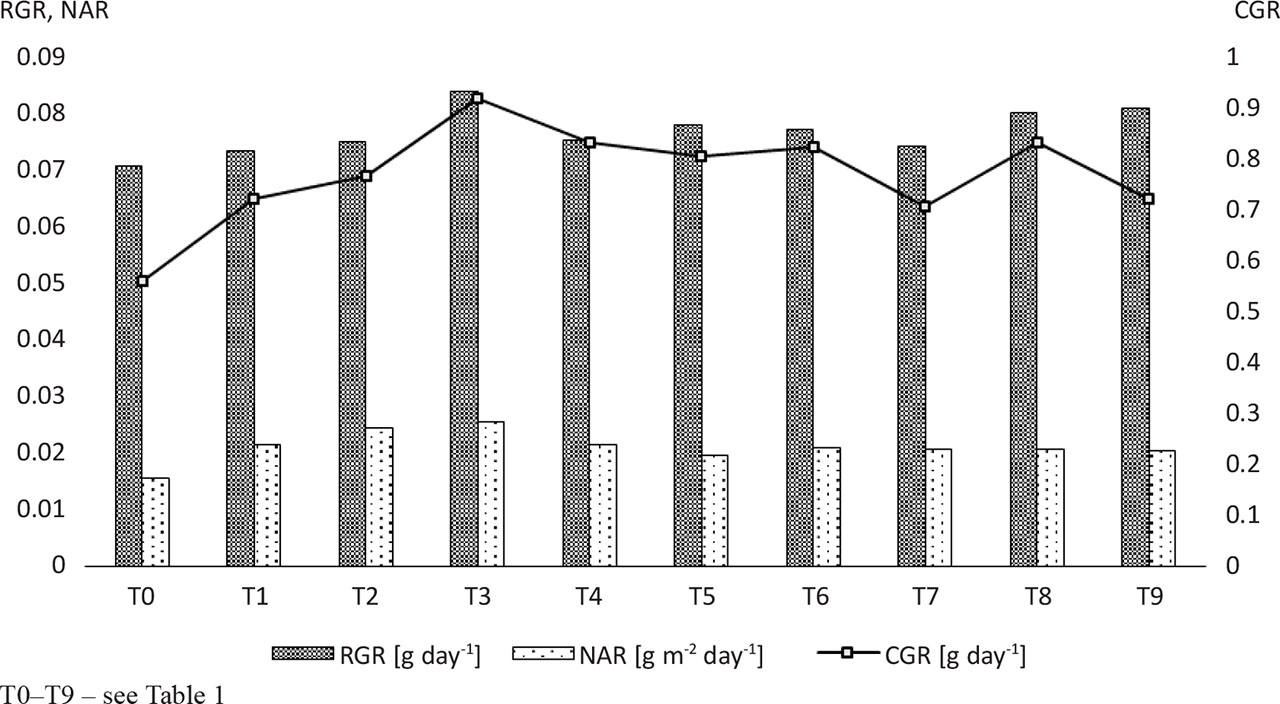
Figure 4.
Crop Growth Rate, Relative Growth Rate and Net Assimilation Rate for black wheat plants subjected to various fertilizer treatments.
Correlation among the parameters showed that treatments with higher CGR and RGR generally corresponded with higher NAR, indicating a positive interaction between biomass production, relative growth, and photosynthetic efficiency. Overall, POTASH 2 ml l−1 (T3) emerged as the most effective treatment, possibly due to its optimal support of both vegetative biomass accumulation and photosynthetic efficiency. This underscores the importance of potassium and appropriate fertilizer dosing in enhancing wheat growth during the initial stages.
Correlation analysis between fertilizer dosage and yield
The Pearson correlation coefficient analysis between fertilizer dosage and black wheat yield demonstrated clear differences among the nutrient treatments. Phosphate-Solubilizing Bacteria (PSB) showed a very strong positive correlation (r ≈ 0.997), reflecting a consistent dose-dependent increase in yield. The grain yield increased from 2759.000 g at 2 ml l−1 to 2922.333 g at 3 ml l−1, and further to 3048.667 g at 4 ml l−1, indicating that higher PSB concentrations substantially improved productivity. This trend highlights the effectiveness of PSB in enhancing nutrient availability and supporting yield improvement in black wheat. In contrast, NPK bio-fertilizer exhibited a strong negative correlation (r ≈ −0.834), suggesting that higher dosages were not beneficial. Yield was highest at the lowest concentration (3102.333 g at 2 ml l−1), but declined at higher levels (2975.000 g at 3 ml l−1 and 2983.667 g at 4 ml l−1). This finding implies that excessive NPK bio-fertilizer application may lead to nutrient imbalance or reduced efficiency, emphasizing the importance of optimized, rather than increased, NPK use for black wheat cultivation. Potash treatments displayed a moderately strong positive correlation (r ≈ 0.763), with yields of 2779.333 g at 2 ml l−1, 2697.000 g at 3 ml l−1, and a marked improvement at 3132.333 g at 4 ml l−1. Although some variability was observed, the overall trend suggested that higher Potash dosages were favorable for yield enhancement, particularly at the 4 ml l−1 level (Fig. 5).
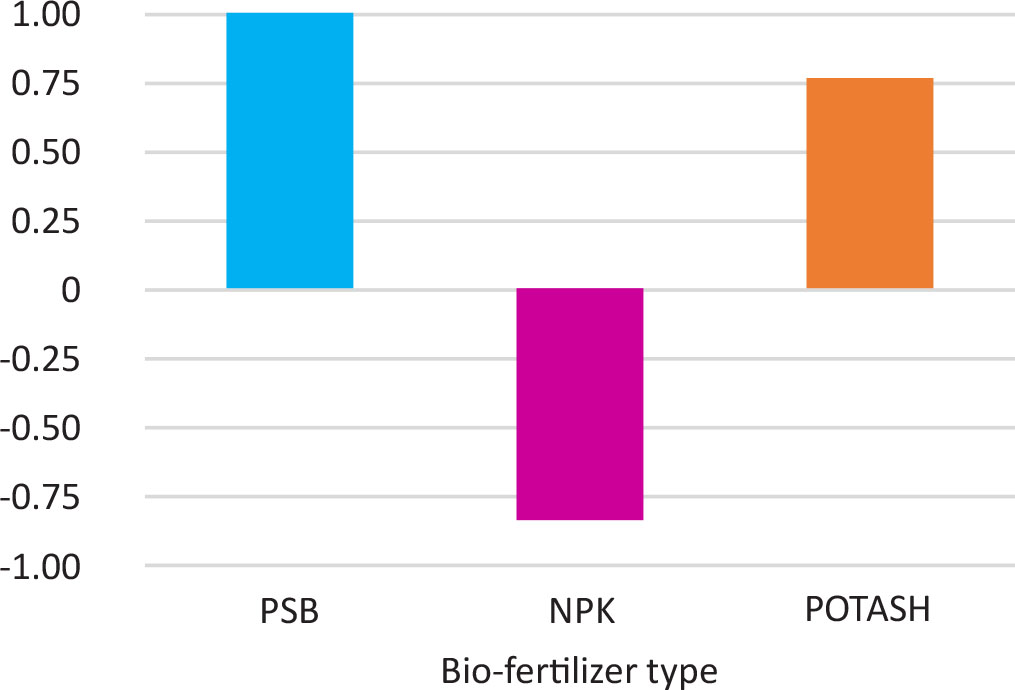
Figure 5.
Pearson correlation coefficient to depict the effect between fertilizer dosage and yield.
Correlations between different parameters
Yield parameters
The Spearman correlation analysis reveals that spike length and the number of seeds per spike share a very strong positive correlation, indicating that longer spikes are typically associated with a greater number of seeds. This suggests that spike length could serve as a reliable morphological indicator for estimating seed number, a crucial yield component. Moderate positive correlations were observed between spike length and 100-seeds weight and between the number of seeds per spike and 100 seeds weight, implying that larger spikes and higher seed numbers may be moderately linked to heavier seeds, although the association is not particularly strong. Conversely, weak correlations were found between spike length, number of seeds per spike, and total yield per plot, indicating that neither trait alone serves as a strong predictor of yield. Notably, the correlation between 100 seeds weight and total yield per plot was slightly negative and negligible, suggesting that seed weight alone did not substantially influence total yield in this study, possibly due to trade-offs with other yield components such as seed number or plant population density. Overall, these findings highlight the multifactorial nature of yield determination, where no single trait among those measured acts as a definitive indicator (Fig. 6).
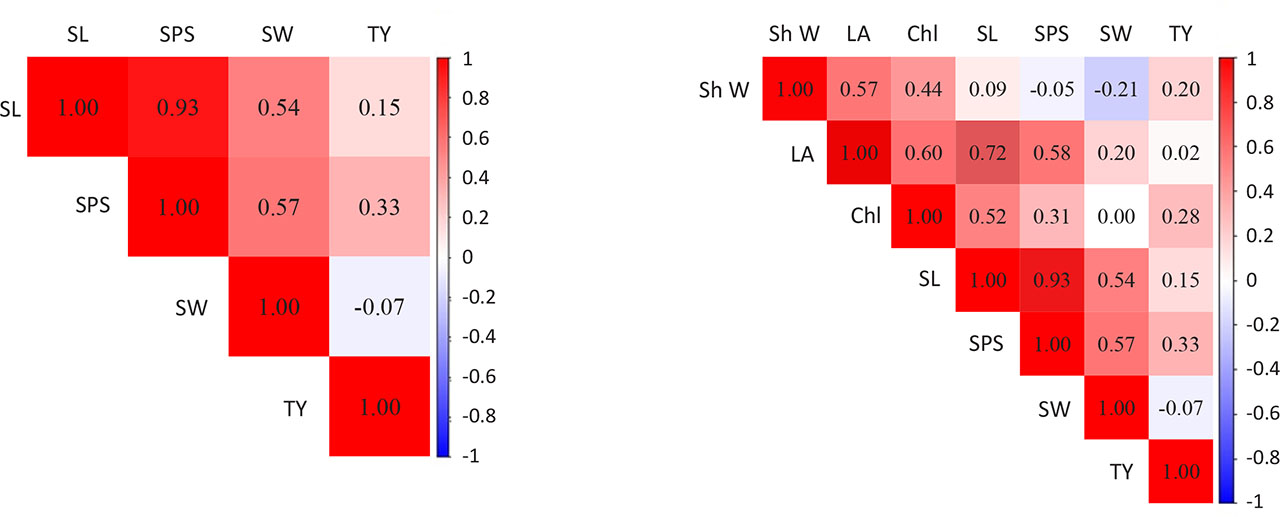
Figure 6.
Correlations (left) between yield parameters and (right) between growth and yield parameters in wheat. SL: spike length (cm); SPS: no. of seeds per spike; SW: 100 seeds weight (g); TY: total yield per plot (g); Sh W: shoot biomass (g); LA: leaf area (cm2); Chl: chlorophyll
Growth and yield parameters
The correlations between growth and yield parameters in wheat are presented in Figure 6. A very strong positive correlation exists between spike lengths with leaf area, indicating that plants with more developed leaf structures tend to have longer spikes. The number of seeds per Spike also shares a moderate positive relationship with leaf area and 100 seeds weight, suggesting that better vegetative growth may support enhanced reproductive traits. Shoot biomass shows moderate correlations with leaf area and chlorophyll content, implying that greater biomass production is associated with enhanced photosynthetic capacity and larger leaf surface. However, shoot biomass correlates weakly with total yield and spike length and negatively with seed number per spike and 100 seed weight, indicating that higher biomass does not necessarily translate to better yield. Chlorophyll content moderately correlates with leaf area, spike length, and total yield per plot, implying that higher chlorophyll levels may support better spike development and slightly improve yield, likely through more efficient photosynthesis. These findings suggest that wheat yield is influenced by a complex interplay of traits, and no single factor among those studied serves as a dominant predictor of final yield. Instead, an integrative improvement in physiological and morphological traits may be required to enhance productivity significantly (Fig. 6).
Fertilizers containing nitrogen, phosphorus, and potassium are pivotal for plant growth, enhancing leaf development, root growth, and overall plant health. The optimal combination of these nutrients can significantly impact crop yield and quality by enhancing soil fertility and promoting beneficial microbial communities in the rhizosphere. A field experiment conducted by Sun et al. (2022) demonstrated that the precise application of NPK fertilizers increased the growth and yield of Panax ginseng by optimizing the rhizosphere’s fungal community structure, enhancing the plant’s adaptability to environmental conditions. A more precise study was conducted by Singh et al. (2019a, b) to evaluate the effects of different fertilizers (organic, inorganic and bio) on the yield and yield components of wheat. The results revealed the significant effects of these treatment combinations on the yield of wheat along with enhancing growth parameters. Another study by Guo et al. (2024) also found that NPK fertilizer applications can effectively improve maize and wheat yield through enhanced nutrient availability and utilization. The study also demonstrated that PSB fertilizers work by converting insoluble phosphorus compounds into plant-accessible forms, enhancing phosphorus uptake and, thus, potentially influencing yield positively. In the same study, it was also observed that the potassium application, in conjunction with other fertilizers, boosts crop yields through improved nutrient balance and efficiency. Potash’s role in enhancing drought tolerance is crucial in ensuring sustainable agricultural practices in varying environmental conditions. Although there is variability in PSB effectiveness, Tomar, Singh (2022) showed that PSB applications improved yield attributes of chickpeas, particularly under rainfed conditions, suggesting their effectiveness might be contingent on specific environmental factors. Potash fertilizers, containing potassium, are essential for water regulation and enzyme activation, contributing to stress resistance and improved water use efficiency in plants. Recently, Yin et al. (2025) studied the effects of water and fertilizer coupling on pumpkin growth and quality under organic fertilization conditions. They concluded in their study that the application of organic fertilizer with moderate irrigation significantly increased the dry matter accumulation of pumpkin. It was also concluded in another study that integrating bio-organic fertilizers with reduced chemical inputs can enhance not only yield but also soil health, guiding sustainable agricultural practices (Jin et al., 2022).
CONCLUSIONS
This study rigorously evaluated the impact of integrating organic manure (Jaivik Khad) with different bio-fertilizer treatments on the growth and yield, of black wheat under field conditions. The experimental design, based on a randomized block approach with multiple treatment combinations, provided robust evidence that an optimum blend of organic and bio-fertilizers significantly enhances crop performance compared to wheat cultivation without fertilization (as control). The results indicate that moderate dosages of bio-fertilizers, particularly the combinations of PSB Plus at 3 ml l−1, Patanjali Bio-NPK Plus at 2 ml l−1, or Patanjali Bio Potash Plus at 2 ml l−1, are most effective in promoting vital growth parameters such as shoot and root biomass, leaf area development, and chlorophyll content. These changes were directly reflected in improved yield metrics and overall yield per acre. A key aspect of the study was the analysis of physiological indices. The treatment with Potash at 2 ml l−1 (T3) emerged as particularly noteworthy by producing the highest values in CGR, RGR, and NAR. These parameters underscore that the treatment not only accelerated biomass accumulation but also improved the efficiency of photosynthate conversion relative to leaf area and initial plant biomass. Moreover, the statistical correlations revealed that increases in CGR and RGR were positively associated with enhanced NAR, indicating that a balanced nutrient supply through optimal fertilizer dosing is critical for maximizing the photosynthetic efficiency and growth performance of black wheat. Overall, the analysis indicates that PSB was the most effective treatment, showing a clear dose-responsive increase in yield, followed by Potash, which also contributed positively at higher concentrations. Conversely, NPK showed diminishing returns at elevated levels, suggesting that careful regulation of its dosage is necessary to maximize yield potential. These findings underscore the importance of fertilizer type and concentration in determining the yield performance of black wheat and highlight PSB as a promising biofertilizer for sustainable production.
In summary, the integrated application of organic manure with carefully calibrated bio-fertilizers effectively elevates both the quantitative and qualitative aspects of black wheat production. The observed improvements in agronomic efficiency, crop growth dynamics, and net assimilation highlight the importance of a balanced nutrient management system that supports sustainable agricultural practices and soil health. The results of the current study are promising, but there are still questions about the long-term effects, the best rates of application, and the mechanisms underlying the benefits that have been seen, especially for black wheat varieties that might have different nutritional and physiological needs. Regular studies are still required to expand findings of present study for capturing long-term trends, understanding variability, and ensuring the robustness and applicability of experimental results. The results of this study still need to be expanded upon by future research in order to comprehend variability, capture long-term trends, and guarantee the validity and relevance of experimental findings.