
INTRODUCTION
In the years 1994–2023, Poland was the 7th producer of rapeseed in the world and 3rd in Europe (https://www.fao.org/faostat/en/#data/QCL/visualize). In 2024, the area of rapeseed and turnip rape cultivation amounted to 1010 thousand ha, yields 32.4 dt ha−1, and harvests 3267.8 thousand tons (GUS, 2025). Winter rapeseed dominates production, occupying 995 thousand ha, yields amounted to 32.5 dt ha−1, and harvests 3230.9 thousand tons.
The yield of winter rapeseed is reduced by many factors causing stress. These are stresses caused by abiotic factors (too high or too low temperature, water deficiency or excess, torrential rains, hail) and biotic factors (weeds, pathogens causing diseases and pests). Production is hampered by the withdrawal of further active substances of plant protection products by the European Commission. Therefore, new methods are being sought to increase plant tolerance to stress factors. One of them may be foliar application of products containing silicon (Si). Foliar silicon is used in various forms: silicates (calcium, potassium, sodium), stabilised orthosilicic acid, nanoparticles. These forms differ significantly in terms of production cost and, consequently, the price of the product for the agricultural producer. Stabilised orthosilicic acid is the most expensive, while silicates are the cheapest.
Foliar application of silicon has been shown to enhance the health and stress tolerance of rapeseed by improving water management, reducing oxidative stress, and strengthening cell wall structure (Saja-Garbarz et al., 2021, 2022, 2024 a,b; Moghadam et al., 2022). It also mitigates the severity of fungal diseases caused by Botrytis cinerea, Alternaria, and Sclerotinia sclerotiorum without adversely affecting yield or seed quality (Ciecierski, Kardasz, 2014; Feng et al., 2021). Moreover, silicon-containing fertilizers contribute to reduced pod damage and pre-harvest seed losses, supporting better overall plant health and productivity (Ciecierski, Kardasz, 2014; Sajedi et al., 2023).
Artyszak and Popielec (2022) found, based on surveys conducted in 2021, that winter rapeseed was in 3rd place in terms of popularity among agricultural producers who performed foliar application of Si products. It was used by 31% of respondents, sugar beet was in 1st place (41.4%), and maize in second place (37.9%). However, there is little research on the effectiveness of such a treatment in the cultivation of winter rapeseed in this region of Europe. There are especially few experiments conducted in field conditions, which have high application value. The results of laboratory experiments are often not confirmed in field conditions. The following research hypothesis was formulated: two-time foliar application of Si + Ca in spring has a significant and beneficial effect on biometric features of plants before harvest, seed and fat yield, seed quality and gross and net production value of winter rapeseed.
MATERIAL AND METHODS
Soil and climate conditions
The field experiment was conducted in Sahryń (50°41′ N, 23°46′ E) in the years 2021/2022–2023/2024 (Figure 1). It was established on soil classified as Calcic Chernozem (IUSS, 2022). After harvesting the forecrop, soil samples were taken to assess pH potentiometrically in 1 M KCl (PN-ISO 10390:1997), organic carbon content using the titration method (Research Procedure of the Regional Agrochemical Station in Warsaw 2009) and the content of available macro- and microelements using the Mehlich 3 method (Mehlich, 1984). Analyses were performed at the District Chemical-Agricultural Station in Warsaw-Wesoła.
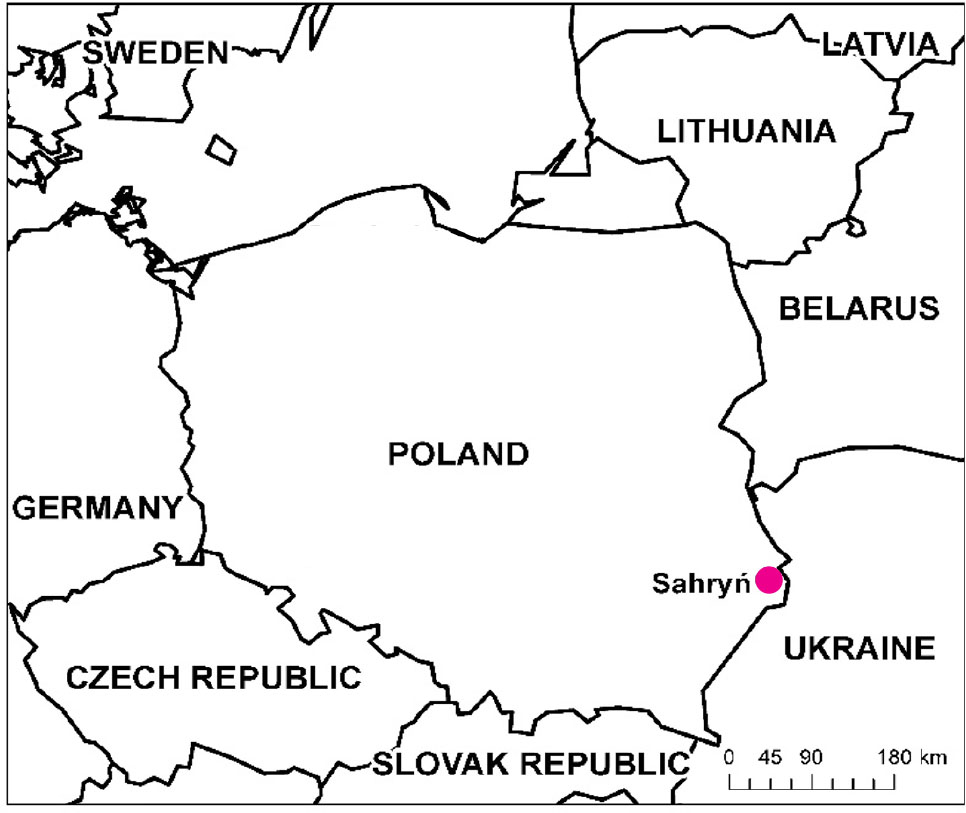
Figure 1.
Location of the field experiments.
The soil reaction was neutral to slightly alkaline (Table 1), which is generally favorable for oilseed rape cultivation. The organic carbon content indicated low to medium soil fertility. The phosphorus level was high, while the potassium content was very low in all years, suggesting a potential limitation for rapeseed, which has a relatively high demand for this nutrient. Magnesium levels were sufficient or high, meeting the crop’s requirements. The content of available micronutrients in the soil was sufficient for rapeseed, except for Fe in 2022, when it was low.
Table 1.
Soil analysis results after harvesting the fore crop (2021–2023).
| Year | pHKCl | Corg [% a.d.w.] | mg kg−1 | |||||||
|---|---|---|---|---|---|---|---|---|---|---|
| P | K | Mg | B | Cu | Fe | Mn | Zn | |||
| 2021 | 6.9 | 1.02 | 88.1 (high) | 119.0 (very low) | 103.0 (medium) | 1.25# | 4.8# | 720# | 160# | 4.8# |
| 2022 | 7.6 | 2.56 | 80.0 (high) | 124.5 (very low) | 149.0 (high) | 4.82# | 3.6# | 115 (low) | 105# | 3.4# |
| 2023 | 7.6 | 1.90 | 83.2 (high) | 110.0 (very low) | 96.4 (medium) | 2.14# | 2.9# | 239# | 171# | 3.5# |
The amount of precipitation in the years of the study during the growing season of winter rape (August–June) ranged from 448 to 1072 mm (Figure 2). The course of weather conditions for winter rape yields was the most favorable in the 2021/2022 season, and the least favorable in the next season. Hydrothermal coefficient was calculated according formula:
where Σ p and Σ t – accordingly sum of precipitations and temperatures in the period. HTC below 1.0 indicate insufficient soil moisture. The most severe water stress was observed in May 2024, other periods were characterized by moderate or good soil moisture according HTC.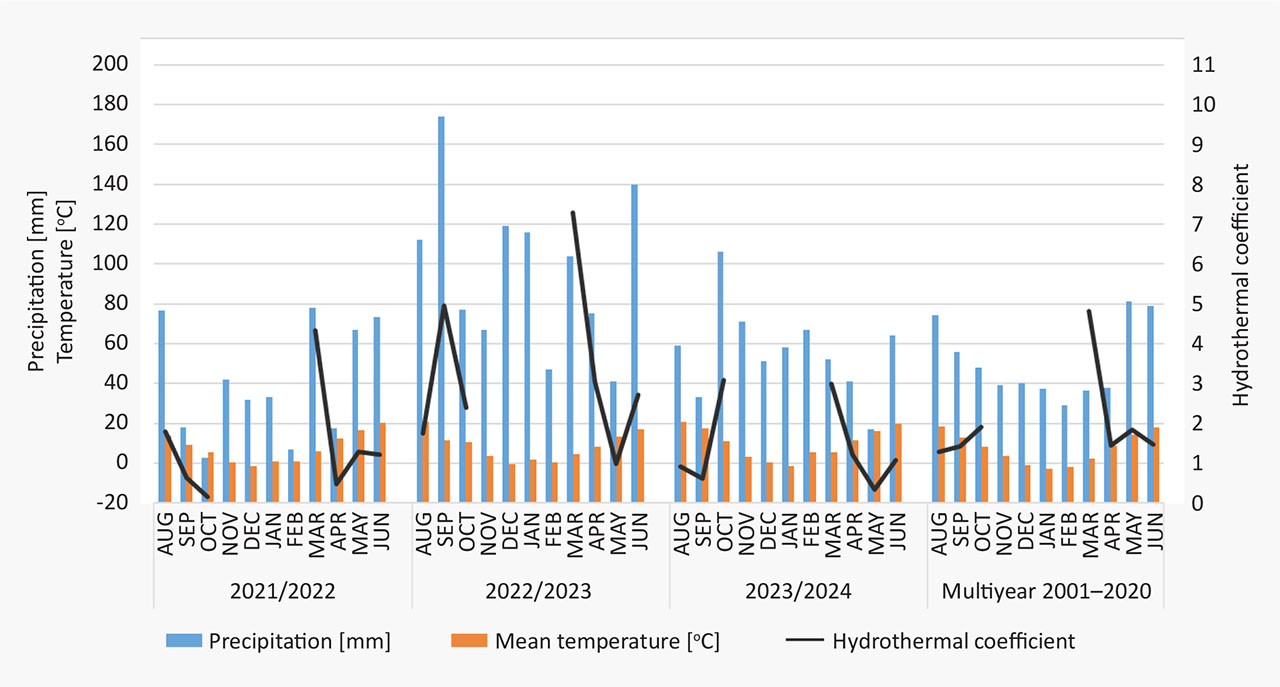
Figure 2.
Weather conditions during the three growing seasons and in multiyear period.
Source: own study based on https://www.edwin.gov.pl/dane-agrometeorologiczne and https://danepubliczne.imgw.pl/
Crop management
Winter rapeseed was cultivated using no-till technology. In each year of the study, the fore crop was winter wheat. After its harvest, the chopped straw was mixed with the soil using a disc harrow equipped with a roof roller. Before sowing winter rapeseed, Polifoska 6® fertilizer (N – 6%, P – 8.7%, K – 24.9%, S – 2.8%) was spread at a dose of 300 kg ha−1, which was mixed with the soil using the above-mentioned disc harrow. A total of 18 kg N, 26.1 kg P, 74.7 kg K and 8.4 kg S were supplied before sowing. The LG Antigua® (Limagrain) rapeseed was sown on 18.08.2021, 18.08.2022 and 23.08.2023. The sowing rate was 45 germinating seeds per 1 m2. LG Antigua is a variety with very high resistance to turnip yellows virus (TuYV) and blackleg – it has the Rlm7 gene (https://www.lgseeds.pl/rzepak-ozimy/odmiana/lg-antigua).
Nitrogen fertilizers were applied in spring on two dates: after the start of vegetation and a few days later (25.03 and 30.03.2022, 16.03 and 21.03.2023, 11.03 and 16.03.2024). In the first date, Saletrosan 30® (30% N, 7% S) was applied at a dose of 350 kg ha−1, and in the second Pulan® (34.4% N) at a dose of 250 kg ha−1. In total, 191 kg N and 24.5 kg S ha−1 were applied in spring.
Dr Green Borowy® fertilizer (150 g B kg−1, 50 g Fe kg−1 + amino acids) was used for foliar feeding in autumn in the rosette formation phase BBCH 14-16 (Weber, Bleiholder, 1990) (1 kg ha−1) and twice in spring: after the start of spring vegetation BBCH 30 (2 kg ha−1) and in the compact green bud phase BBCH 51 (1 kg ha−1). In total, 600 g B and 200 g Fe per 1 ha were supplied to the plants. Weed, disease and pest control was carried out in accordance with the recommendations of the Institute of Plant Protection – National Research Institute in Poznań.
Methods
The experiment was a single-factor experiment, and the tested factor was the application of SmartSil SC Power® foliar fertilizer, the effect of which was compared with the control object. The size of a single plot is 250 m2, with 4 repetitions. Content of components: Ca – 168 g dm−3, Si–99 g dm−3, K – 8 g dm−3, Mg – 2 g dm−3, Fe – 9 g dm−3, Ti – 1 g dm−3, Mn – 528 mg dm−3, Zn – 32 mg dm−3. SmartSil SC Power® foliar fertilizer at a dose of 2 dm3 ha−1 was applied twice at the beginning of the main shoot growth (BBCH 32) and in the green bud phase (BBCH 50-51). The treatment was performed with an Appollo® tractor sprayer (Krukowiak). The water dose in each treatment was 250 dm3 ha−1. The treatments were performed: 14.04 and 02.05.2022, 12.04 and 03.05.2023, 21.03 and 08.04.2024.
Before harvest, 4 representative plant samples from 1 m2 each were manually cut from the control combination and from the combination with the applied product. Rapeseed plant samples were collected on: 09.07.2022, 08.07.2023 and 22.06.2024.
During sampling, the plants were counted. The plants were transported to a wooden barn, where they were left to dry. 10 pods were randomly selected from each sample, in which the seeds were counted. The plants were threshed and the seeds were cleaned. The seeds were then transported to the laboratory of the Department of Agronomy at the Institute of Agriculture of the Warsaw University of Life Sciences, where their qualitative assessment was performed (moisture content, fat content, ADF, NDF and protein, and bulk density) on the Infratec 1241 Grain Analyzer®. The LN 3® seed counter was used to calculate the mass of 1000 seeds, and the counted seeds were weighed on an electronic scale and results were converted to a standard moisture content of 9%. The obtained seed yield with the current moisture content was converted into seed yield with a standard moisture content of 9%. Based on the fat content in d.m., seed moisture and seed yield, fat yield was calculated. Seed yield per plant was determined as the quotient of seed yield and plant density. Using the seed yield, plant density, 1000 seed mass and the number of seeds per pod, the number of pods per plant was calculated.
The economic effects of foliar application of Si + Ca in the production of winter rape were determined using the principle of differential calculations. The value of production obtained in a given experimental combination was included on the side of additional revenues. The cost of purchasing fertilizer and its application was included on the side of additional costs. Then, the gross production value and the additional cost associated with the use of Si + Ca were determined. After subtracting these additional costs from the gross production value, the net production value was determined, i.e. the production value taking into account the fact that additional costs had to be incurred to obtain it. The remaining elements of the calculation were omitted (in accordance with the essence of differential calculations), as they are identical throughout the study (Zarzecka, 2006). The applied solution is used in research on the economics of agricultural production in the field of comparing the profitability of different technology variants (Skarżyńska, Jabłoński, 2013). The calculations assumed a purchase price of 1 t of rapeseed of PLN 3144 in 2022, PLN 1963 in 2023 and PLN 1950 in 2024 (Rosiak, 2024). The costs of inputs incurred in connection with the foliar application of Si + Ca were determined based on the calculation, assuming that the treatment is performed separately from other treatments and together. These costs include the cost of the treatment and the cost of the product used. Based on the estimates of the farm where the experiment was conducted, the cost of performing a single foliar application was assumed to be PLN 30 ha−1 in each of the years of the study. This value includes fuel consumption and machine depreciation. The price of the SmartSil SC Power® fertilizer was given according to the manufacturer’s data: PLN 41–56 dm−3.
Calculations were performed in Excel. The obtained results from the experiment were subjected to statistical analysis using variance analysis and multiple comparisons using the Tukey procedure. The significance level of P = 0.05 was assumed for the comparison of means. The variability parameters of the assessed features were also calculated: minimum, average and maximum values, standard deviation and coefficient of variation. These calculations were performed in Excel spreadsheet. To examine the relationship between causal and final features, an analysis of path coefficients based on multiple regression analysis for standardized variables was performed. This analysis was performed for fat yield (causal features are: seed yield and fat content in seeds) and for seed yield (causal features are: plant density before harvest, number of pods per plant, number of seeds per pod, weight of 1000 seeds). Calculations were performed using Statistica 13® (TIBCO Software Inc.).
RESULTS
The years of the study had a significant effect on all the assessed features before harvest, except for the rapeseed bulk density, the increase in the gross and net production value (Table 2). The variant of foliar application of Si and Ca had a significant effect on the seed yield, their moisture content, NDF content in seeds and the number of seeds per pod. The interaction of the years of the study and the foliar application of the tested product had a significant effect on the moisture of seeds and the content of fat and NDF in them.
Table 2.
P values based on analysis of variance for assessed characteristics (2022–2024).
| Variable | Year (Y) | Treatment (A) | Year × Treatment (Y × A) |
|---|---|---|---|
| Plant density at harvest [pcs. m−2] | <0.05 | 0.965 | 0.992 |
| Seed yield at standard moisture (9%) [dt ha−1] | <0.05 | <0.05 | 0.971 |
| Seed moisture [%} | <0.05 | <0.05 | <0.05 |
| Fat content in seeds [% d.m.] | <0.05 | 0.313 | <0.05 |
| Protein content in seeds [% d.m.] | <0.05 | 0.415 | 0.276 |
| Content of ADF (acid detergent fiber) in seeds [% d.m.] | <0.05 | 0.102 | 0.431 |
| Content of NDF (detergent neutral fiber) in seeds [% d.m.] | <0.05 | <0.05 | <0.05 |
| Yield of fat [dt ha−1] | <0.05 | 0.067 | 0.443 |
| Number of pods per plant [pcs.] | <0.05 | 0.833 | 0.926 |
| Number of seeds per pod [pcs.] | <0.05 | <0.05 | 0.712 |
| Weight of 1000 seeds [g] | <0.05 | 0.721 | 0.248 |
| Seed yield per plant [g] | <0.05 | 0.289 | 0.993 |
| Bulk density [kg hl−1] | 0.670 | 0.688 | 0.881 |
| Gross yield value [PLN ha−1] | <0.05 | 0.062 | 0.975 |
| Gross yield value increase [PLN ha−1] | 0.983 | 0.121 | 0.983 |
| Net production value increase [PLN ha−1] – use in combination with other treatments | 0.983 | 0.216 | 0.983 |
| Net production value increase [PLN ha−1] – separate use | 0.983 | 0.263 | 0.983 |
The applied combination of foliar application of Si + Ca caused, on average, a significant increase (by 8.0%) in rapeseed seed yield for the entire study period compared to the control variant (Table 3). The largest increase (15.1%), but insignificant, was observed in the 2022/2023 season, which was characterized by the most difficult weather conditions for rapeseed yield, and the smallest in the previous season (4.9%), which was the most favorable. The increase in fat yield in the combination with foliar application of Si + Ca for the entire study period compared to the control combination was 7.0%, but was insignificant, and in the subsequent years of the study, respectively: 0.9%; 11.8% and 12.4%, only the last one was statistically significant. Of the component traits of seed yield, foliar application of Si + Ca caused a significant increase of 18.8% in the number of seeds per pod for the entire study period. From the quality features, the applied combination of Si + Ca application had a significant effect on increasing the moisture content of seeds (by 5.0%) and increasing the content of NDF (by 2.0%) for the entire period of the study. Gross production value increased by PLN 769 ha−1 (by 7.4%) under the influence of foliar application of Si + Ca. The increase in the net production value when used together with other treatments was PLN 605 ha−1, and when used separately – PLN 545 ha−1.
Table 3.
Rapeseed yield, seed quality, plant morphological features and profitability (2022–2024).
| Variable | 2022 | 2023 | 2024 | 2022–2024 | ||||
|---|---|---|---|---|---|---|---|---|
| 0 | 1 | 0 | 1 | 0 | 1 | 0 | 1 | |
| Plant density at harvest [pcs. m−2] | 32.00 a | 31.75 a | 25.75 a | 25.50 a | 23.0 a | 23.25 a | 26.92 a | 26.83 a |
| Seed yield at standard moisture (9%) [dt ha−1] | 58.19 a | 61.03 a | 24.24 a | 27.89 a | 42.97 a | 46.56 a | 41.80 a | 45.16 b |
| Seed moisture [%] | 7.23 a | 8.18 b | 7.15 a | 7.50 b | 7.28 a | 7.05 a | 7.22 a | 7.58 b |
| Fat content in seeds [% d.m.] | 45.60 a | 43.93 a | 47.03 a | 45.70 a | 45.88 a | 47.63 b | 46.17 a | 45.75 a |
| Protein content in seeds [% d.m.] | 20.98 a | 21.40 a | 19.88 a | 18.88 a | 20.55 a | 20.25 a | 20.47 a | 20.18 a |
| Content of ADF (acid detergent fiber) in seeds [% d.m.] | 23.08 a | 23.95 a | 23.28 a | 23.90 a | 22.48 a | 22.45 a | 22.94 a | 23.43 a |
| Content of NDF (detergent neutral fiber) in seeds [% d.m.] | 30.68 a | 31.85 b | 31.45 a | 32.40 b | 31.38 a | 31.15 a | 31.17 a | 31.80 b |
| Yield of fat [dt ha−1] | 24.15 a | 24.37 a | 10.38 a | 11.61 a | 17.95 a | 20.17 b | 17.49 a | 18.72 a |
| Number of pods per plant [pcs.] | 178.19 a | 185.73 a | 102.45 a | 88.97 a | 115.06 a | 106.30 a | 131.90 a | 127.00 a |
| Number of seeds per pod [pcs.] | 24.00 a | 28.00 a | 23.00 a | 29.50 b | 28.75 a | 32.50 b | 25.25 a | 30.00 b |
| Weight of 1000 seeds [g] | 4.58 b | 4.28 a | 4.18 a | 4.26 a | 5.74 a | 5.85 a | 4.83 a | 4.80 a |
| Seed yield per plant [g] | 18.62 a | 19.83 a | 9.69 a | 11.25 a | 18.77 a | 20.09 a | 15.70 a | 17.06 a |
| Bulk density [kg hl−1] | 70.28 a | 70.15 a | 68.98 a | 69.25 a | 69.59 a | 70.85 a | 69.61 a | 70.08 a |
| Gross yield value [PLN ha−1] | 18295 a | 19187 a | 4759 a | 5475 a | 8380 a | 9078 a | 10478 a | 11247 a |
| Gross yield value increase [PLN ha−1] | 0 a | 893 a | 0 a | 717 a | 0 a | 699 a | 0 a | 769 a |
| Net production value increase [PLN ha−1] – use in combination with other treatments | 0 a | 729 a | 0 a | 553 a | 0 a | 535 a | 0 a | 605 a |
| Net production value increase [PLN ha−1] – separate use | 0 a | 669 a | 0 a | 493 a | 0 a | 475 a | 0 a | 545 a |
For both variants (control and Si + Ca), a significant effect of seed yield and fat content on fat yield was found (Figure 3). Fat yield was determined to a greater extent by seed yield than by fat content. There was a negative relationship between seed yield and fat content, but it was not significant. The results obtained are very similar for both variants.
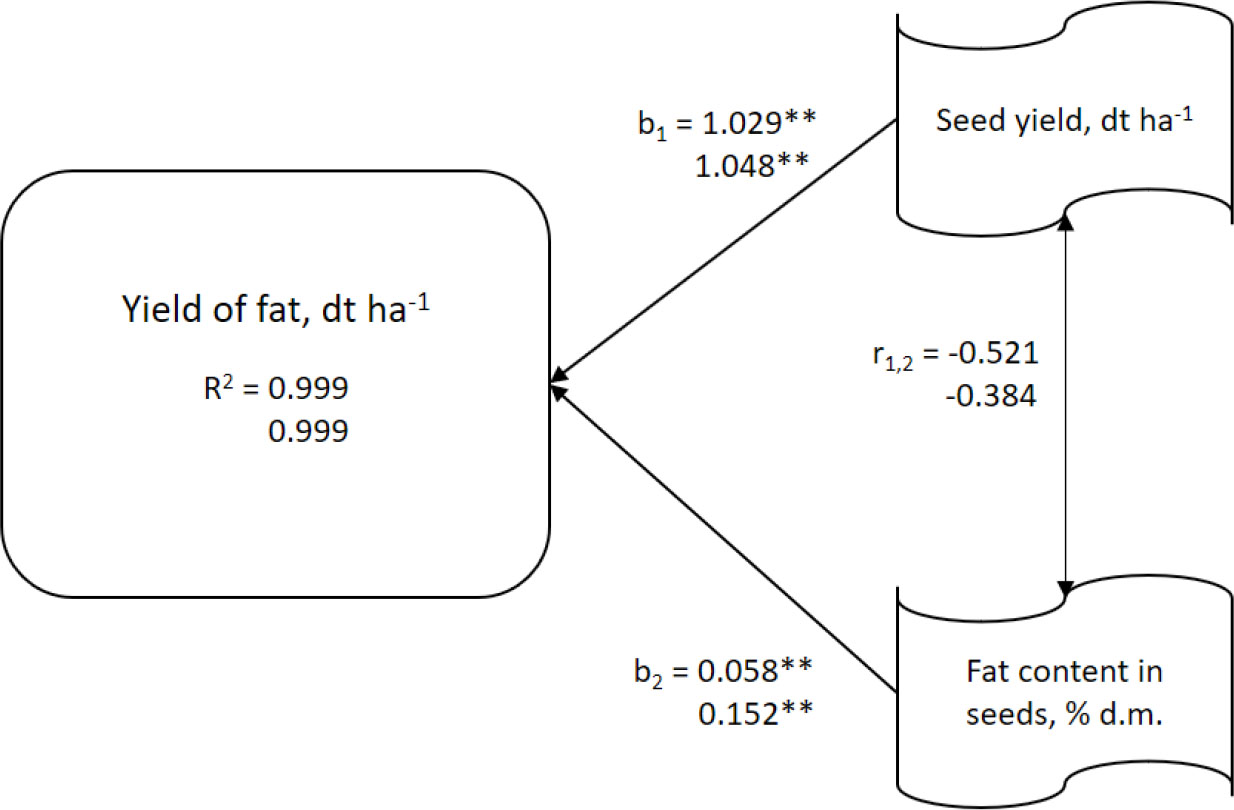
Figure 3.
Path analysis results for variables determining fat yield (2022–2024).
The subsequent numbers refer to the control and Si + Ca. R2 – coefficient of determination, bi denote path coefficients, i.e. regression coefficients for standardized variables, ri,j denote correlation coefficients between individual causal features. * denotes a statistically significant relationship at a significance level of 0.05, while ** denote a statistically significant relationship at 0.01.
In the case of the both variants, the greatest influence on seed yield was observed for number of pods on a plant (Figure 4). A negative correlation occurred between the number of pods on plant and the number of seeds per pod, it was stronger for the Si + Ca variant combination. The number of seeds per pod was positively correlated with the 1000-seed mass, a stronger correlation occurred for the control.
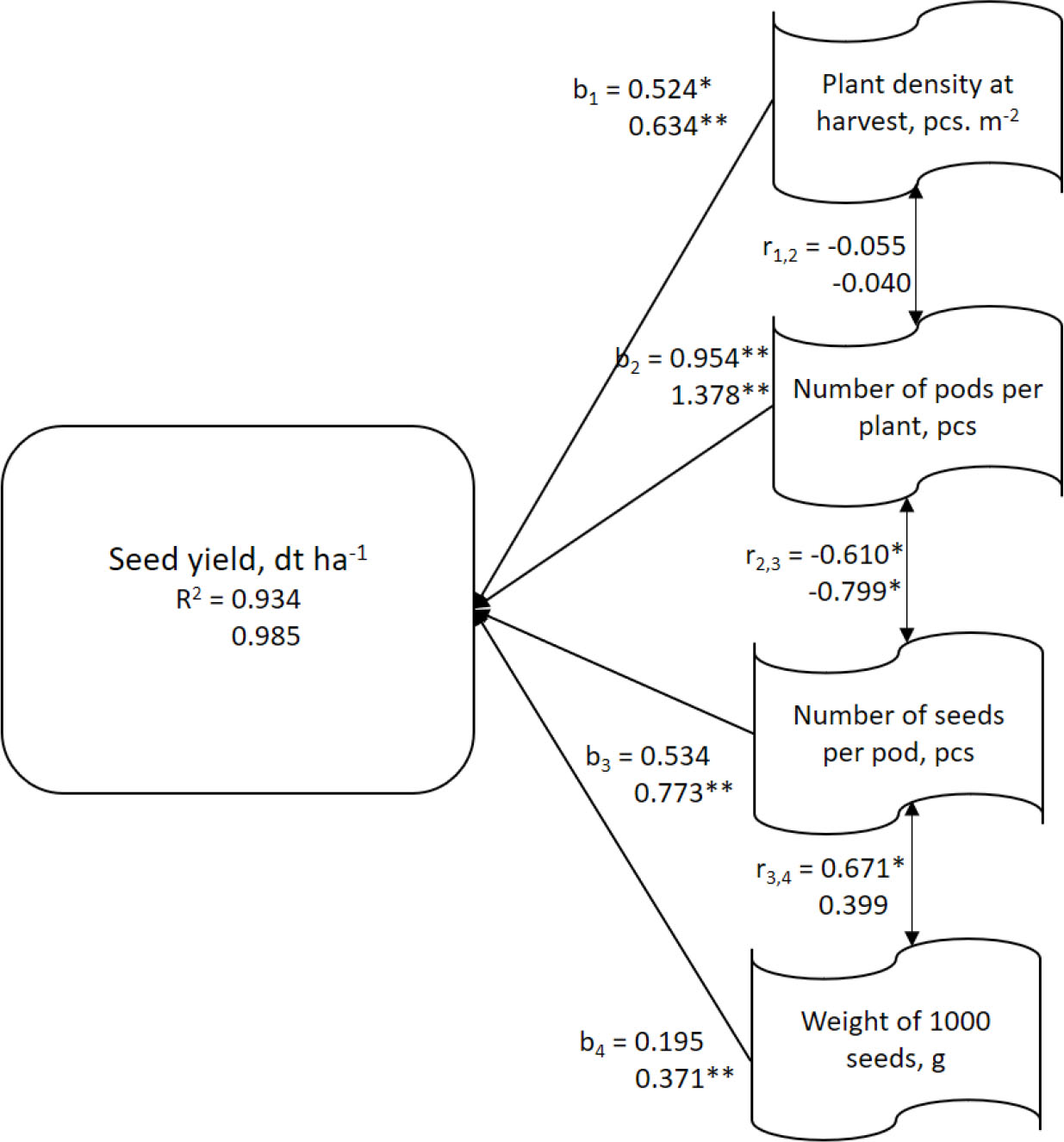
Figure 4.
Path analysis results for variables determining seed yield (2022–2024).
The subsequent numbers refer to the control and Si + Ca. R2 – coefficient of determination, bi denote path coefficients, i.e. regression coefficients for standardized variables, ri,j denote correlation coefficients between individual causal features. * denotes a statistically significant relationship at a significance level of 0.05, while ** denote a statistically significant relationship at 0.01.
For all years of the study (2022, 2023 and 2024), a significant effect of seed yield and fat content on fat yield was found (Figure 5). Fat yield was determined to a greater extent by seed yield than by fat content. There was a negative relationship between seed yield and fat content in 2022, a very weak negative relationship in 2023 and a positive relationship in 2024. The determination of fat yield in individual years by seed yield and fat content was similar.
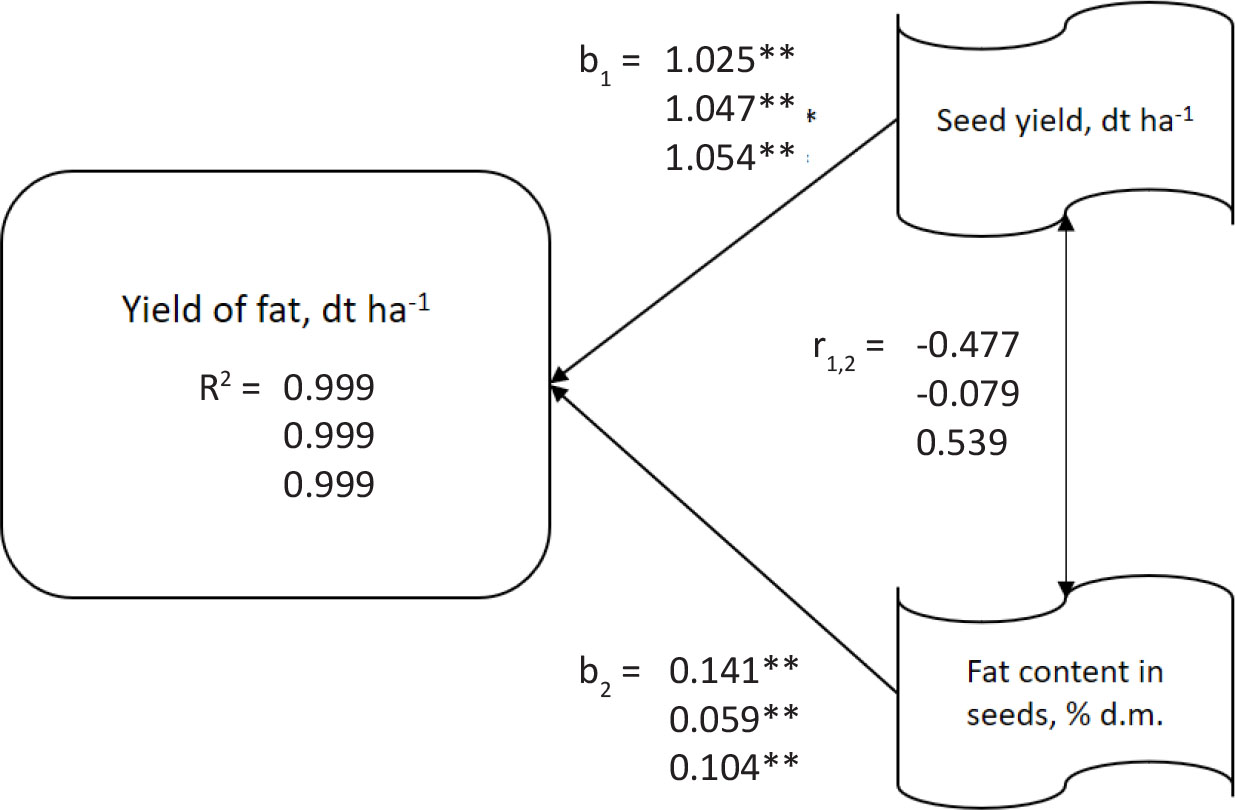
Figure 5.
Path analysis results for variables determining fat yield in individual years of the study.
The subsequent numbers refer to the following years, 2022, 2023 and 2024. R2 – coefficient of determination, bi denote path coefficients, i.e. regression coefficients for standardized variables, ri,j denote correlation coefficients between individual causal features. * denotes a statistically significant relationship at a significance level of 0.05, while ** denote a statistically significant relationship at 0.01.
In 2022, the determination of seed yield by individual traits was quite weak, the yield was most strongly associated with number of pods on a plant (in 2022 and 2024) and plant density at harvest (in 2023), and these effects were positive (Figure 6). Negative correlations occurred between the plant density and the number of pods per plant in all years. The relationships between the number of pods per plant and the number of seeds per pod were negative for all years but significant only in 2022. Correlations between the number of seeds per pod and the 1000-seed mass varied between years, sometimes positive and sometimes negative, but quite weak.
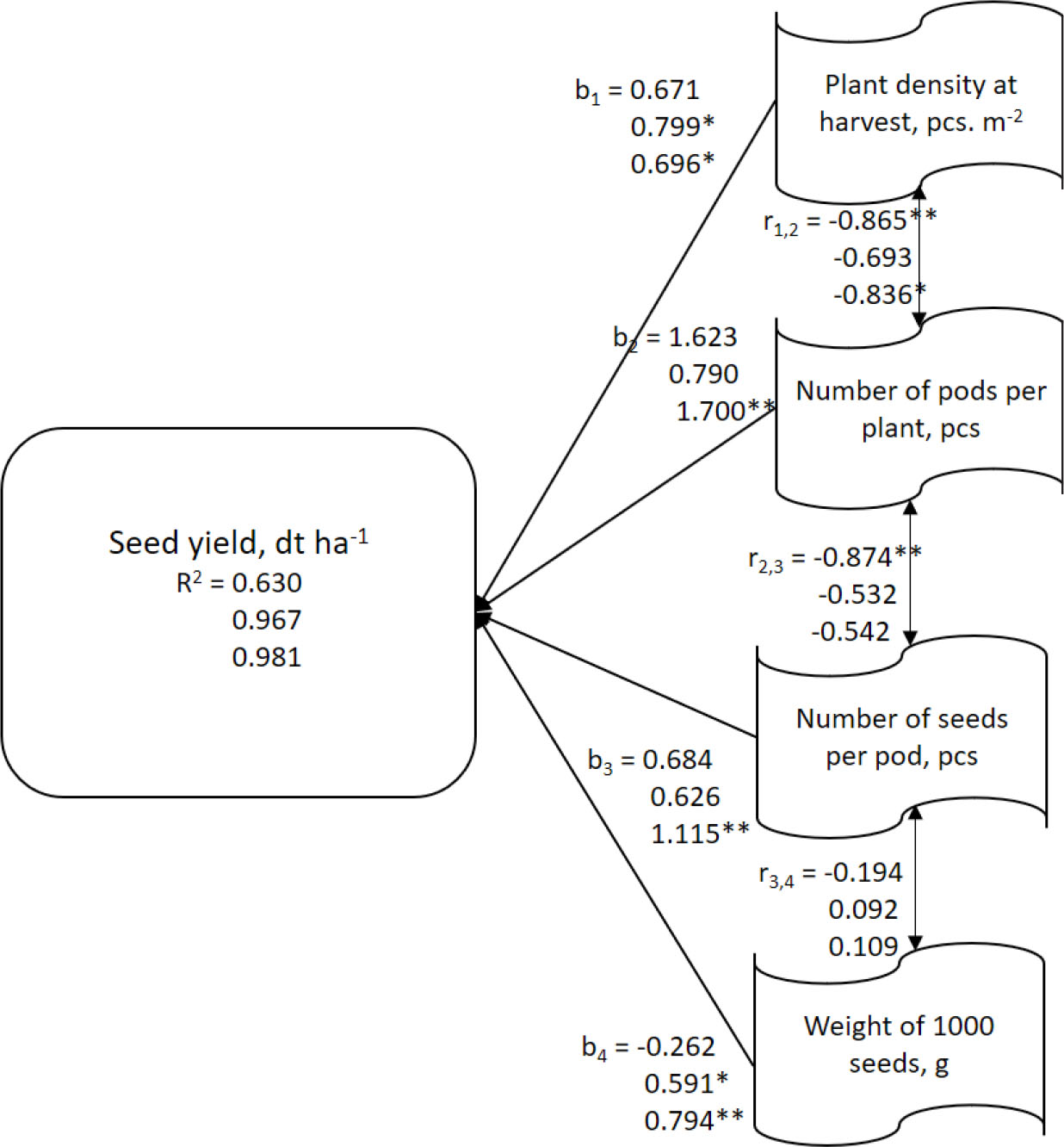
Figure 6.
Results of path analysis for variables determining seed yield in individual study years.
The subsequent numbers refer to the following years, 2022, 2023 and 2024. R2 – coefficient of determination, bi denote path coefficients, i.e. regression coefficients for standardized variables, ri,j denote correlation coefficients between individual causal features. * denotes a statistically significant relationship at a significance level of 0.05, while ** denote a statistically significant relationship at 0.01.
For the entire study period and for both experimental combinations, a significant effect of seed yield and fat content on fat yield was found (Figure 7). Fat yield was determined to a greater extent by seed yield than by fat content. There was a negative relationship between seed yield and fat content, but it was not significant.
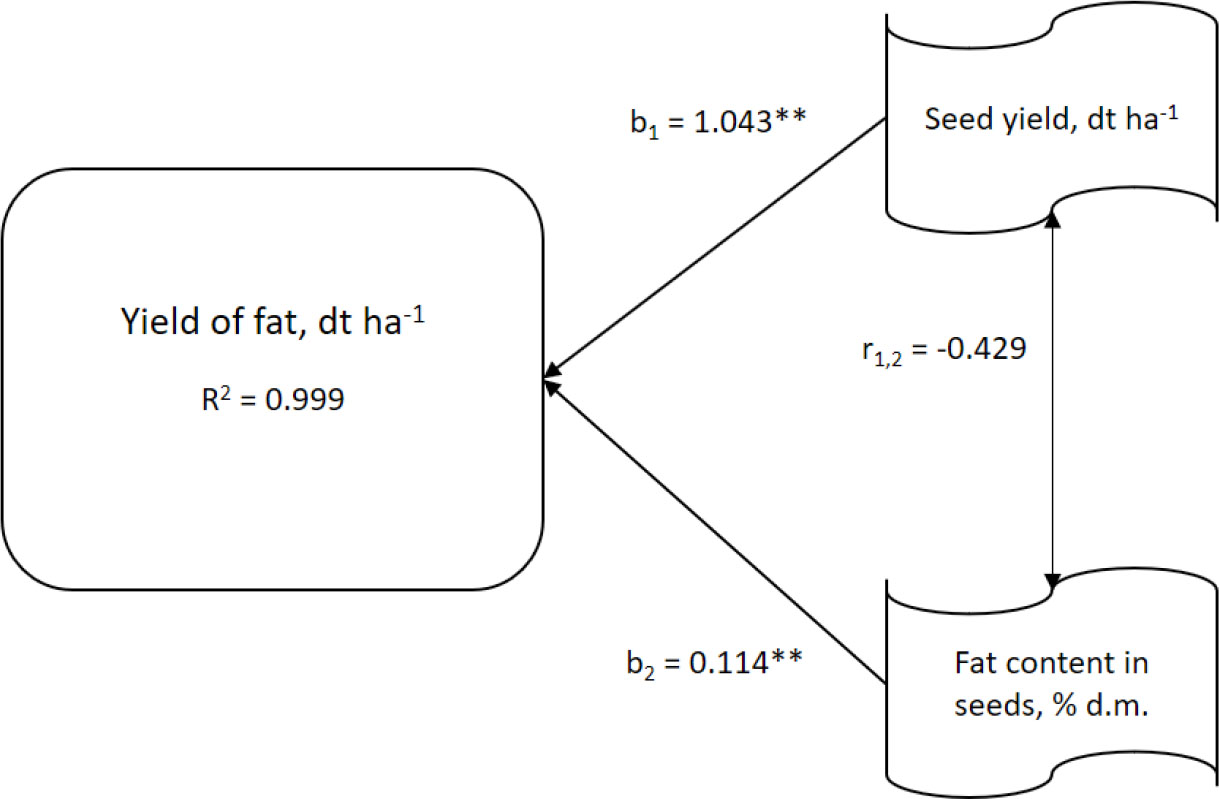
Figure 7.
Path analysis results for variables conditioning fat yield in total for all years of study and combinations.
R2 – coefficient of determination, bi denote path coefficients, i.e. regression coefficients for standardized variables, ri,j denote correlation coefficients between individual causal features. * denotes a statistically significant relationship at a significance level of 0.05, while ** denote a statistically significant relationship at 0.01.
For the entire study period and for both experimental combinations, it was found that seed yield was determined to the greatest extent by number of pods on a plant, followed by plant density (Figure 8). A negative relationship occurred between the number of pods per plant and the number of seeds per pod. The number of seeds per pod was positively correlated with the 1000-seed mass.
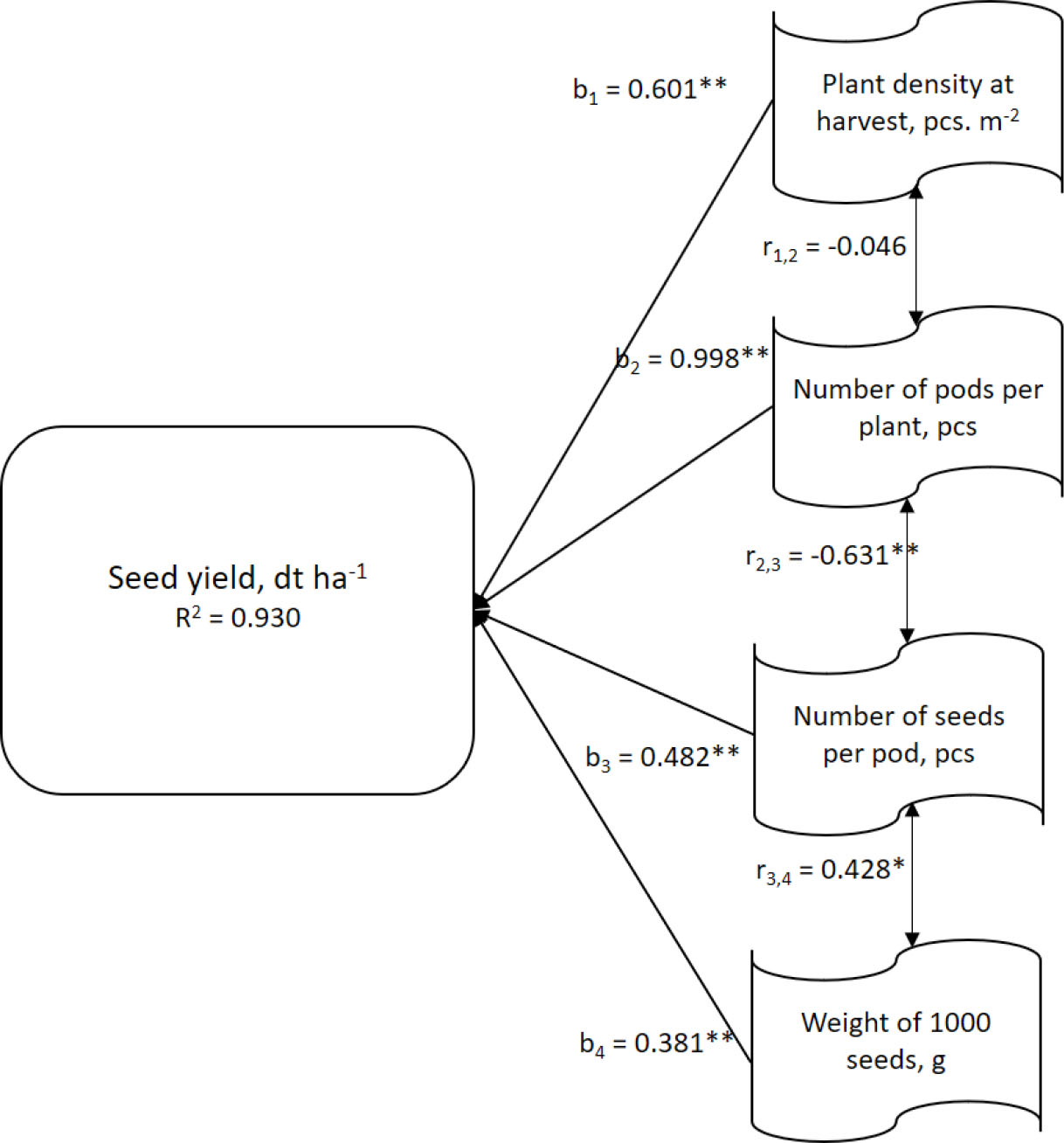
Figure 8.
Results of path analysis for variables conditioning fat yield for all years of research and combinations together.
R2 – coefficient of determination, bi denote path coefficients, i.e. regression coefficients for standardized variables, ri,j denote correlation coefficients between individual causal features. * denotes a statistically significant relationship at a significance level of 0.05, while ** denote a statistically significant relationship at 0.01.
The highest variability among the assessed traits was observed in the increase in net production value, and the lowest in the NDF content in seeds (Table 4).
Table 4.
Characteristics of variability of winter rapeseed yield traits and profitability (2022–2024).
| Variable | Mean | Minimum | Maximum | Standard deviation | Coefficient of variation [%] |
|---|---|---|---|---|---|
| Plant density at harvest [pcs. m−2] | 26.88 | 19.00 | 38.00 | 5.54 | 20.60 |
| Seed yield at standard moisture (9%) [dt ha−1] | 43.48 | 18.80 | 65.95 | 14.50 | 33.34 |
| Seed moisture [%] | 7.40 | 6.80 | 8.50 | 0.44 | 6.00 |
| Fat content in seeds [% d.m.] | 45.96 | 42.70 | 48.80 | 1.48 | 3.22 |
| Protein content in seeds [% d.m.] | 20.32 | 17.30 | 22.20 | 1.12 | 5.52 |
| Content of ADF (acid detergent fiber) in seeds [% d.m.] | 23.19 | 21.60 | 25.00 | 0.87 | 3.76 |
| Content of NDF (detergent neutral fiber) in seeds [% d.m.] | 31.48 | 30.40 | 33.30 | 0.711 | 2.26 |
| Yield of fat, dt ha−1 | 18.10 | 7.91 | 26.52 | 5.79 | 31.96 |
| Number of pods per plant [pcs.] | 129.45 | 68.02 | 350.59 | 63.10 | 48.74 |
| Number of seeds per pod [pcs.] | 27.63 | 18.00 | 34.00 | 4.63 | 16.77 |
| Weight of 1000 seeds [g] | 4.81 | 4.02 | 6.43 | 0.76 | 15.69 |
| Seed yield per plant [g] | 16.38 | 7.27 | 26.38 | 5.10 | 31.14 |
| Bulk density [kg hl−1] | 69.85 | 63.16 | 77.95 | 2.58 | 3.69 |
| Gross yield value [PLN ha−1] | 10862.29 | 3691.26 | 20733.32 | 5959.48 | 54.86 |
| Gross yield value increase [PLN ha−1] | 384.67 | −1235.07 | 3199.85 | 1097.69 | 285.36 |
| Net production value increase [PLN ha−1] – use in combination with other treatments | 302.67 | −1399.07 | 3035.85 | 1070.57 | 353.71 |
| Net production value increase [PLN ha−1] – separate use | 272.67 | −1459.07 | 2975.85 | 1062.13 | 389.53 |
DISCUSSION
Yield and yield related traits
Research conducted in the last decade of the 21st century has shown a beneficial effect of foliar application of silicon-containing products on the yield of agricultural plants grown in European conditions. Most studies have been conducted on monocotyledonous plant species, which are considered to absorb larger amounts of silicon than dicotyledonous species: barley (Miroshnychenko et al., 2023), maize (Artyszak et al., 2025; Kardasz et al., 2024; Tobiasz-Salach et al., 2023; Semina et al., 2020; Maniraho et al., 2019; Căbăroiu et al., 2018; Zamojska et al., 2018; Prifti, Maçi, 2017), wheat (Stankowski et al., 2021; Kowalska et al., 2020; Zamojska et al., 2018; Prifti, Maçi, 2017) and grass – Lolium perenne (Mastalerczuk et al., 2025). Among dicotyledonous species, studies have been conducted on: sugar beet (Siuda et al., 2023; Artyszak, Gozdowski, 2021), white lupine (Niewiadomska et al., 2020), buckwheat (Tobiasz-Salach et al., 2018), soybean (Miroshnychenko et al., 2023) and potato (Wadas, Kondraciuk, 2025; Wadas, 2022; Trawczyński, 2018, 2020, 2021, 2022). Calcium is required for various structural roles in the cell wall and membranes. It is a counter-cation for inorganic and organic anions in the vacuole, and the cytosolic Ca2+ concentration is intracellular messenger coordinating responses to developmental cues and environmental challenges (White, Broadley, 2003). The interaction between Ca and auxins plays an important role in this process (Vanneste, Friml, 2013).
Dicotyledonous species uptake significantly more Ca than monocotyledonous species. Ca is not very mobile in plants, which means that young organs may experience a deficiency (Hawkesford et al., 2012). There are few results from experiments with foliar application of Ca in rapeseed cultivation, and this treatment is used sporadically in production. It has been observed that calcium nanoparticles (Ca NPs) increase plant biomass, nutrient uptake, gas exchange and photosystem II efficiency under drought stress conditions, and improve drought tolerance by enhancing enzymatic and non-enzymatic antioxidants (Ayyaz et al., 2022).
Our own studies have shown that a double foliar application of a product whose main components are Si and Ca during the spring vegetation period has a beneficial effect on the yield of winter rapeseed. The effects are variable over the years and generally the more difficult the weather conditions for plant growth, development and yield, the greater they are. The results of previous studies draw particular attention to the beneficial effect of foliar silicon on plant tolerance to water deficiency, which probably improves water uptake under drought stress conditions (Saja-Garbarz et al., 2021). In laboratory studies, foliar application of silicon improved the water balance of rapeseed plants subjected to drought stress and reduced oxidative stress in roots by increasing catalase activity (Saja-Garbarz et al., 2024b). Foliar application of silicon had a positive effect on rapeseed tolerance to drought in the late growing season (Moghadam et al., 2022). Silicon supplementation in rapeseed roots causes significant changes in the composition of cell walls, including increased callose deposition and a change in the distribution of pectins and arabinogalactan proteins. These changes, together with the formation of fibers in the root cortex, probably contribute to increased strength of cell walls, creating a physical barrier against water loss and mechanical loads, which may be a defense mechanism induced during drought stress (Saja-Grabarz et al., 2024a).
It was shown that under drought conditions, both pure silicon and silicon complex (with Fe) significantly increased the accumulation of aquaporins and improved the activity of enzymatic and non-enzymatic components of the antioxidant system, while under well-hydrated conditions, these effects were observed only for the silicon complex (Saja-Grabarz et al., 2022). This means that silicon supplementation in rapeseed improves the regulation of water management and contributes to protection against oxidative stress caused by drought. In drought conditions, foliar application of potassium silicate increased water use efficiency (WUE) and resulted in rapeseed seed yield by 11% and improved oil quality (higher content of oleic and linoleic acids and lower content of erucic acid and alkenyl glucosinolates) (Shirani et al., 2022). In field studies conducted in four locations, the use of sodium metasilicate + Fe (Optysil® stimulator) in winter rapeseed cultivation resulted in an increase in rapeseed seed yield by 1.7%–17%, and an increase in the weight of 1000 seeds by 1.4%–19%, depending on the rapeseed variety and location (Ciecierski, Kardasz, 2014). The same product was used in studies conducted in 2014 and 2015 (Zamojska et al., 2018). It was applied at a rate of 0.5 dm3 ha−1 three times during the spring vegetation period (BBCH 21–36, 50–61 and 69–73), in two variants: with the Horizon 250 EW® fungicide (active substance tebuconazole) at a rate of 1 dm3 ha−1 at the BBCH 21 stage and without, and the results were compared with the control (without the stimulator and fungicide protection). In 2014, the rape seed yield in combination with Optysil® and fungicide was 4.78 t ha−1, and without 4.83 t ha−1 (control – 3.96 t ha−1). A year later, it was 3.84; 3.59 and 3.40 t ha−1, respectively. The percentage of pods damaged by Ceutorhynchus obstrictus in 2014 in the variant with Optysil® and fungicide was 4.3%, without fungicide 3.0% (control = 7.8%), and in 2015 it was 1.9 and 4.7%, respectively (control = 11.8%). The share of pods damaged by grey mould (Botrytis cinerea) in 2014 in the variant with Optysil® and fungicide was 9.5% and without fungicide 12.8% (control = 22.1%), and by black rot (Alternaria) 8.1 and 9.5% (control = 15.5%). A year later it was 7.4 in the case of grey mould (Botrytis cinerea); 11.9 and 24.4%, and Alternaria 5.7; 14.2 and 17.8%. In a field test, both the incidence and disease rate of sclerotinia stem rot were significantly reduced by the application of Si solid fertilizer, Si foliar fertilizer, and both fertilizers, without negatively affecting the main agronomic traits and seed quality of rapeseed (Feng et al., 2021). Silicon may therefore mitigate disease severity in rapeseed, partly through the induced defense responses.
Few previous studies concerned the use of foliar products containing Si applied in autumn, before the autumn vegetation of winter rapeseed was stopped. The use of micronized marine calcite (Herbagreen Basic®) at a dose of 393 g ha−1 Ca and 120 g ha−1 Si in the 4–6 rosette leaf stage (BBCH 14–16) resulted in a decrease in the height of the apical bud by 18.7%, which could have had an impact on better overwintering of plants (Artyszak, Kucińska, 2016). At the same time, the length of the tap root increased by 4.9% (the diameter of the root collar and the number of leaves in the rosette remained unchanged). Winter plant losses amounted to 5.3% (14.7% in the control). Seed yield increased by 13.7%, oil content in seeds by 1.4 p.p., and fat yield by 18.9%. The application of a stimulator containing Si and K (Silvit®) in the autumn at the 2–4 leaf stage of rapeseed (BBCH 12–14) at a dose of 0.2 dm3 ha−1 increased the number of rosette leaves (+3.9%), root collar diameter (+4.2%), height of the growth cone (+2.3%) and length of the tap root (+2.4%) compared to the control combination (Gugała et al., 2017). Foliar application of silicon at a concentration of 0.3% and 0.6% had a significant effect on seed and fat yield, number of lateral shoots, number of siliques per plant, number of seeds per silique, 1000-seed weight and plant height, and the best results were achieved at a concentration of 0.6% (Nasri, Khalatbari, 2010). Foliar application of silicon to rapeseed may have a beneficial effect under conditions of deficiency of the most important microelement for this species, which is boron (B). It was found that silicon addition increased the net photosynthetic rate in rapeseed plants under conditions of boron deficiency, but had little effect under normal and excessive boron levels (Liang, Shen, 1994). Silicon appears to increase the uptake and accumulation of boron by plants under conditions of boron deficiency, but inhibits boron uptake under normal and excessive availability of this element.
This treatment also has a beneficial effect on reducing rapeseed seed losses before harvest. Application of calcium silicate, potassium silicate, sodium silicate and nanosilica caused a significant reduction in seed shedding before harvest (Sajedi et al., 2023). It also increased the content of chlorophyll a and carotenoids. Additionally, treatments with calcium silicate and potassium silicate increased the silica content in the stems by 15.3% and 18.7%, respectively, compared to the control combination. The increase in seed yield was 9.3% after the application of calcium silicate and 20.6% after the application of potassium silicate compared to the control treatment. The highest fat yield was obtained after foliar application of potassium silicate (11.83 dt ha−1) and calcium silicate (11.45 dt ha−1).
Economic efficiency
There are few results in the literature on the profitability of foliar application of silicon-containing products. Siuda and Artyszak (2023) found that the selection of silicon products had a significant impact on the gross and net production value of sugar beet. The best results were obtained by applying potassium silicate (Agriker Silicium®) once. On the other hand, the application date did not significantly differentiate the values of the tested traits. In another experiment, stabilized orthosilicic acid (Yara Vita Actisil®), micronized marine calcite (Herbagreen Z20®) and sodium metasilicate + Fe (Optysil®) were used in sugar beet cultivation (Artyszak et al., 2019). Each of them was applied once, twice and three times. The gross production value of sugar beet as a result of foliar fertilization with silicon increased by 1.3–22.9%, and the net production value by 5.5–19.0%. A large variation in the financial results obtained was observed in 2015, when conditions for sugar beet growth and yield were particularly unfavourable. In 2016, a more favorable year for sugar beet cultivation, this differentiation was smaller. The highest increase in the gross and net production value of sugar beet was ensured by two- and three-time foliar application of stabilized orthosilicic acid and three-time application of sodium metasilicate + Fe. On the other hand, the highest profitability index (11.26) was recorded for a single application of sodium metasilicate + Fe. In the study by Litwińczuk-Bis et al. (2019), the profitability of foliar fertilization of sugar beet with marine calcite containing silicon (Herbagreen Basic®) was assessed. The fertilizer was applied in two variants: (1) 1 kg ha−1 in the BBCH 14–16 phase + 2 kg ha−1 21 days later; (2) 2 kg ha−1 in the BBCH 14–16 phase + 2 kg ha−1 21 days later, and the effects were compared with the control (without foliar fertilization with marine calcite). Additionally, an identical experiment was carried out on another sugar beet variety. The gross production value of sugar beet in experiment 1 increased in combination (1) by 24.8%, and in combination (2) by 25.6% compared to the control, and in experiment 2. In combination (1) by 15.7%, and in combination (2) by 15.0%. The increase in the net production value in experiment 1 was 22.8 and 23.2%, respectively, and in experiment 2 – 13.9 and 12.8%. The profitability index of foliar fertilization with marine calcite in experiment 1 was 12.6 in combination 1 and 10.3 in combination 2. In experiment 2, the profitability index of foliar fertilization reached the value of 8.96 in object 1 and 6.77 in object 2.
Assuming the average harvest of winter rape in Poland in 2014–2023 at 2,917.2 thousand tons (Rosiak, 2024), the use of the tested combination of foliar application of Si + Ca ensuring an 8% increase in yields could increase the harvest by 233 thousand tons per year.
With an average cultivation area of 951 thousand ha, agricultural producers could obtain additional net income of PLN 575 million (when used in combination with other treatments) or PLN 518 million (when used as an additional treatment).
CONCLUSIONS
Two-time spring foliar application of Si + Ca significantly increases seed yield, the number of seeds per pod and the NDF content in seeds, and also has a beneficial effect on the increase in the gross and net production value of winter rapeseed in each year of the study. The treatment is particularly effective in conditions that are unfavourable for plant growth and development, and consequently for winter rapeseed yield. Due to the possible varying response of plants to foliar application of Si + Ca depending on soil and weather conditions, it is advisable to conduct further research in a larger number of locations throughout the country.