
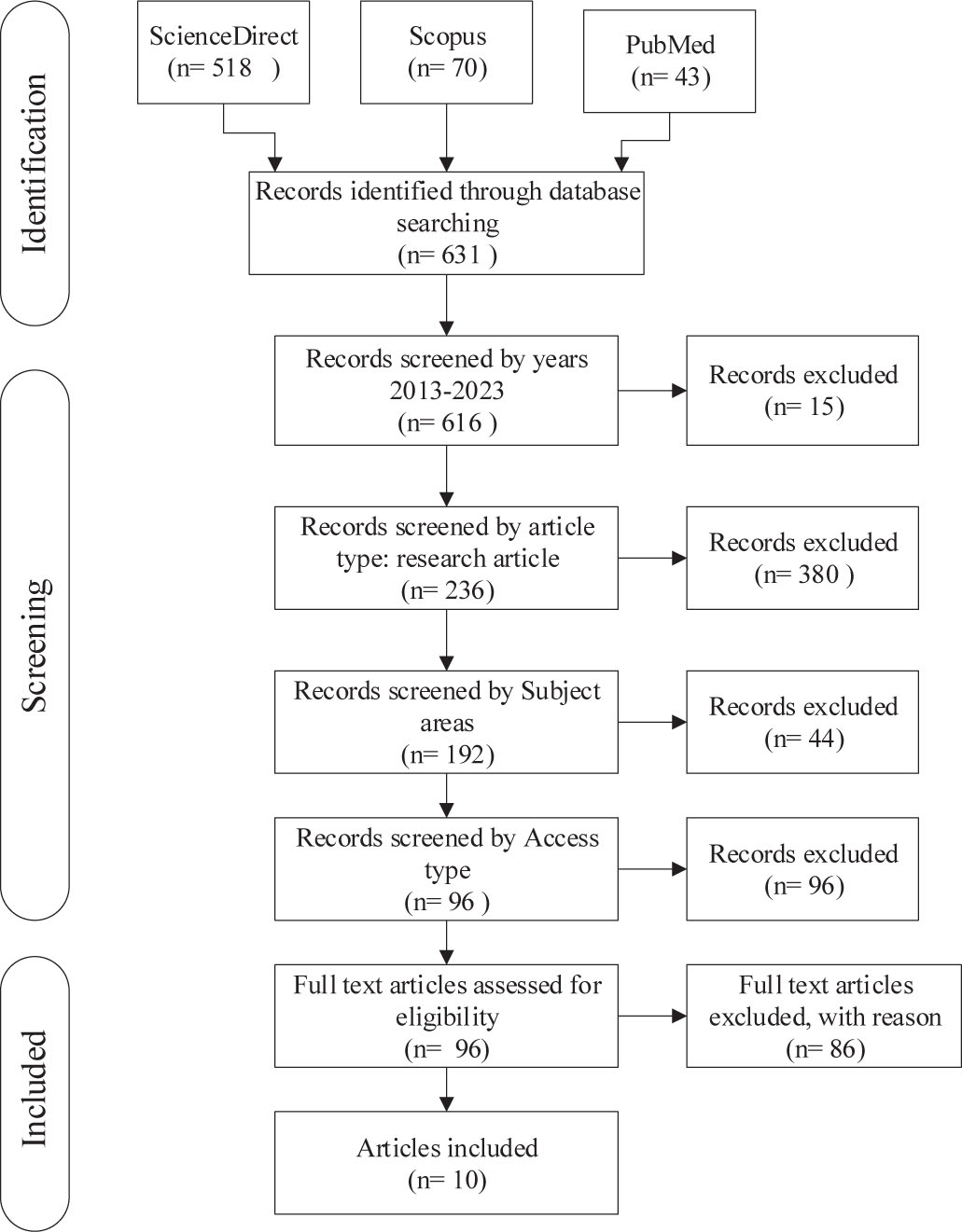
Figure 1.
Flowchart showing systematic literature review: nano-biofertilizers used in the enhancement of soil health and boosting crop productivity
Abbildung 1. Flussdiagramm Systematische Literaturübersicht: Nanobiodünger zur Verbesserung der Bodengesundheit und Steigerung der Pflanzenproduktivität
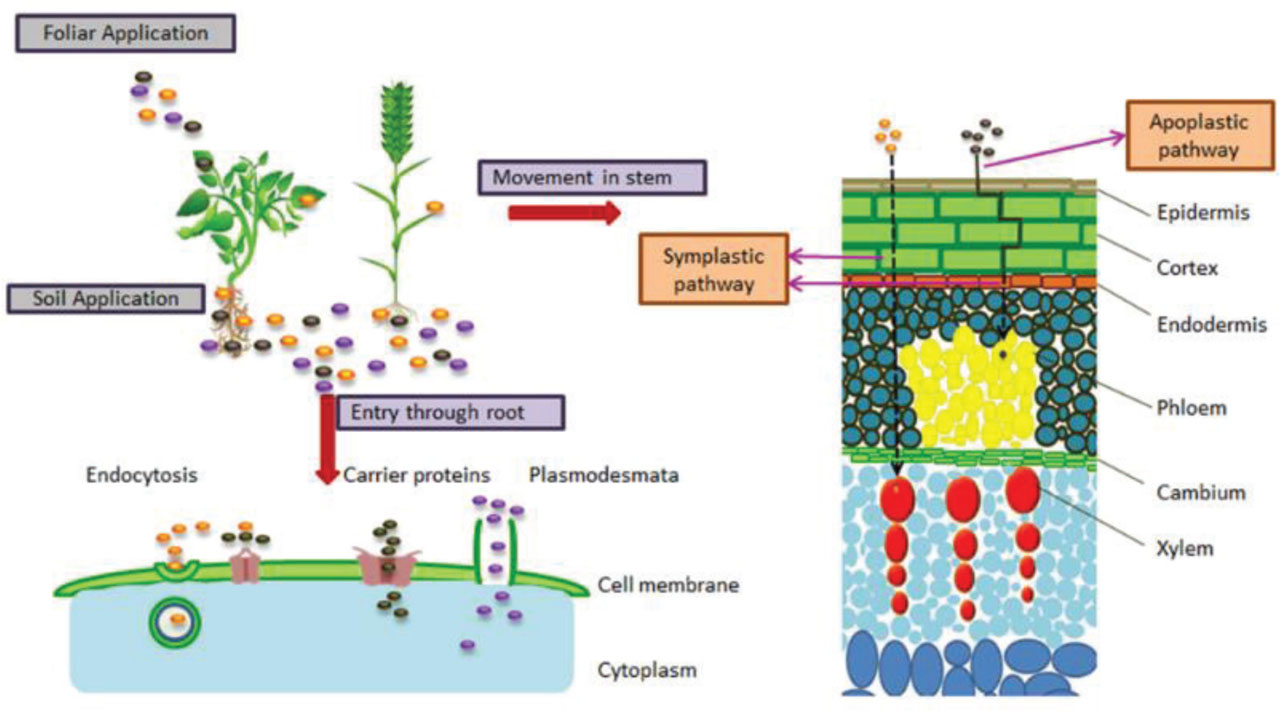
Figure 2.
Uptake and movement of nanoparticles in plants (Akhtar et al., 2022).
Abbildung 2. Aufnahme und Bewegung von Nanopartikeln in Pflanzen.
Table 1.
The role of nano-biofertilizer in improving soil health, plant growth, and productivity
Tabelle 1. Die Rolle von Nanobiodünger bei der Verbesserung der Bodengesundheit, des Pflanzenwachstums und der Produktivität
| Nano-biofertilizer | Crop | Plants’ responses | References |
|---|---|---|---|
| Zinc sulfide nanoparticles, Acinetobacter pittii and Bacillus velezensis | Tomato (Solanum lycopersicum L.) |
| Shah et al., 2023 |
| Biological selenium nanoparticles (Bio-SeNPs) synthesized by Lactobacillus acidophilus ML14 | Wheat grains Triticum spp. (Masr1) |
| El-Saadony et al., 2021 |
| Pseudomonas gessardi and Pseudomonas azotoformans + cerium oxide nanoparticle | Fenugreek plant |
| Sonali.et al., 2022 |
| Zinc-oxide nanoparticles (ZnO-NPs) and PGPR contain phosphorus- and potassium-solubilizing, nitrogen-fixing siderophore activity performing PGPR | Maize (Zea mays L.) |
| Khan et al., 2022 |
| ZnO nanoparticles in combination with Zn biofertilizer | Wheat (Triticum aestivum) |
| Saleem et al., 2023 |
| Nano-zeolite–loaded nitrogen and biofertilizers (HNB) | Caraway (Carum carvi L.) |
| Mahmoud et al., 2017 |
| Combination of application of TiO2 nanoparticles and arbuscular mycorrhizal fungi | Sage (Salvia officinalis L.) |
| Ostadi et al., 2022 |
| Application of iron oxide nanoparticles + Rhizobium pusense | Green gram [(Vigna radiata (L.) Wilczek] |
| Saleem et al., 2023 |
| Chitosan nanoparticles and arbuscular mycorrhizal fungi | Thyme (Thymus vulgaris L.) |
| Amani Machiani et al., 2023 |
| Comamonas testosteroni and silver nanoparticles (AgNPs) | Linseed (Linum usitatissimum L.) |
| Khalofah et al., 2021 |
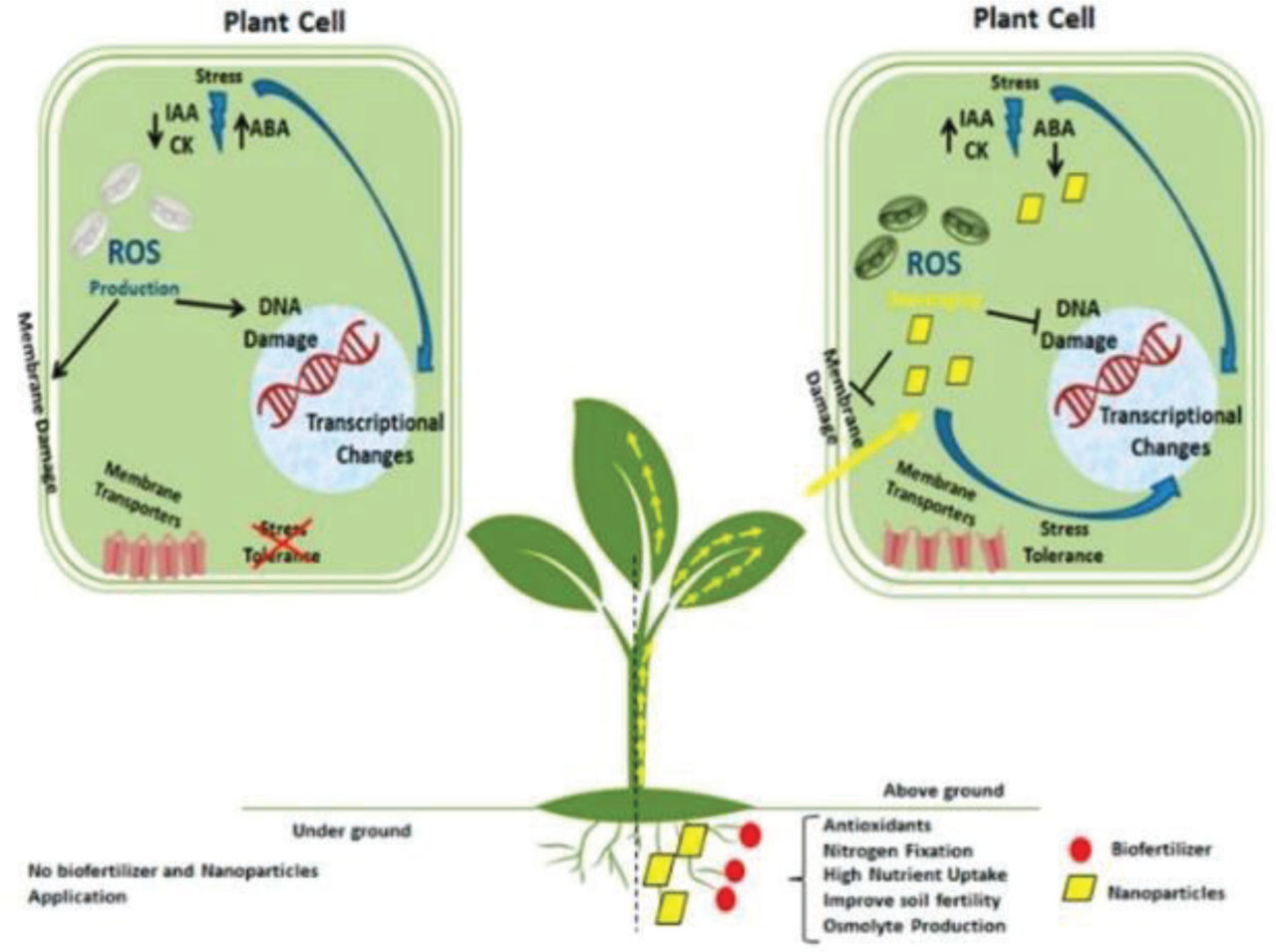
Figure 3.
The response of plant cells under water stress and the effect of the application of nanoparticles and biofertilizers (Akhtar et al., 2022)
Abbildung 3. Die Reaktion von Pflanzenzellen unter Wasserstress und die Auswirkungen der Anwendung von Nanopartikeln und Biodüngern
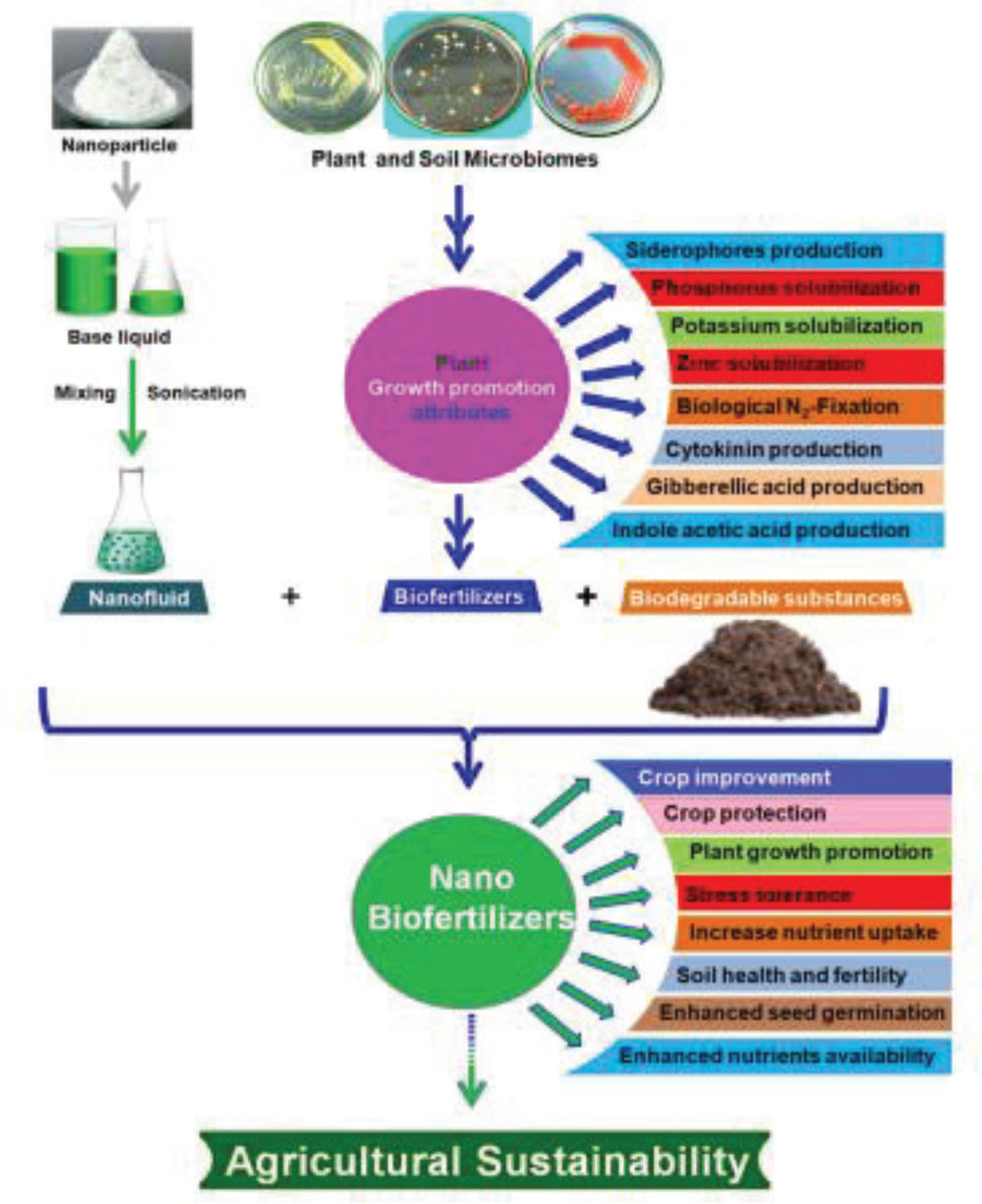
Figure 4.
Nano-biofertilizers for agricultural sustainability (Yadav et al., 2023)
Abbildung 4. Nano-Biodünger für eine nachhaltige Landwirtschaft