INTRODUCTION
Acromesomelic dysplasia (AMD) comprise of a group of progressive skeletal disorders marked by dwarfism associated with anomalies affecting both the middle (mesomelic) and distal (acromelic) portions of the limbs. AMD can occur in both syndromic and isolated (non-syndromic) forms. The syndromic form is often associated with additional abnormalities involving the genital, respiratory, cardiac and neurological systems [1, 2]. These disorders are subclassified based on clinical features and underlying genetic mutations. The latest revision of nosology included 7 different kinds of AMD [ 3, 4]. Autosomal recessive forms of AMDs include: AMD1(OMIM #602875); AMD-2A (OMIM #200700), AMD-2B (OMIM #228900), and AMD-2C (OMIM #201250); AMD3 (OMIM #200700) and AMD4 (OMIM #619636). An autosomal dominant form of acromesomelic dysplasia Osebold-Remondini type (OMIM #112910) has also been reported with an unidentified causative gene [5, 6, 7, 8, 9, 10, 11].
Acromesomelic dysplasia type Maroteaux (AMDM/AMD1) is caused by mutations in the NPR2 (natriuretic peptide receptor B) gene on chromosome 9p13–q12. It is diagnosed at birth or becomes apparent by infancy and is presented with short stature, bowed forearms, short meta-carpals and phalanges, broad tibiae and fibulae, ankle deformities, coxa valga and cortical thickening [ 12, 13, 14]. In comparison AMD type 2 variants (AMD2A–C) which are caused by the mutations in the GDF6 gene (chromosome 20q11) primarily affects the limbs with a proximal-to-distal severity gradient: Grebe type (AMD2A) shows the most severe involvement with non-articulated, rudimentary digits[15]; Du Pan type (AMD2B) is characterized by fibular hypoplasia or absence with severe hand and foot anomalies[7]; and Hunter–Thompson type (AMD2C) with limb-restricted abnormalities, relatively preserved distal phalanges, and variable joint dislocations while craniofacial and axial structures remain normal across all types[15].
Another rare form of acromesomelic dysplasia is Acrocapitofemoral dysplasia (ACFD OMIM #607778) characterized clinically by short stature with short limbs, narrow thorax, relatively large head, brachydactyly with small broad nails and lumbar lordosis. Radiographically it is manifested by egg-shaped femoral head connected to markedly short femoral neck with a small collar-like bony outgrowth and cone-shaped epiphyses predominantly affecting hands and hips [ 16, 17]. Homozygous missense mutations in the Indian Hedgehog (IHH) gene have been reported to cause ACFD [ 18, 19]. On the other hand, heterozygous dominant variants in IHH have been reported to be involved in brachydactyly type A1 (BDA1) (OMIM #112500). BDA1 is defined by shortening of the phalanges or metacarpals, most notably the middle phalanges, particularly those of 2nd and 5th digits—along with distal or terminal symphalangism that varies with disease severity. This condition also involves shortening of the thumb’s proximal phalanges, as well as the metacarpals and metatarsals. BDA1 patients often have a short stature (dwarfism) [20].
Mutation underlying both ACFD and BDA1 are restricted to the amino-terminal functional domain of IHH gene [ 17, 18, 19]. However, in a study by [21], ten heterozygous IHH variants in 17 families with autosomal dominant short stature were identified. Interestingly these families did not study show classic features of BDA1 and the identified variants were dispersed throughout the gene. This suggests that the phenotypic spectrum of IHH-associated disorders is broader than previously recognized, with clinical severity influenced by the variant’s location, functional impact, and inheritance pattern.
In the present study, we present a novel report of a homozygous missense variant (c.1018G>A, p. Val340Met) in the carboxy terminal region of the IHH gene in a consanguineous Pakistani family affected with Acromesomelic Maretoux-type like skeletal dysplasia. The affected individuals exhibited disproportionate short stature, mesomelic and acromelic limb shortening, Madelung deformity, brachydactyly, clinodactyly, coxa vara, genu varum, hip dysplasia and bilateral foot deformity (fixed equinus). These features, together with the genetic evidence, support the involvement of the IHH gene in a novel form of autosomal recessive acromesomelic skeletal dysplasia.
MATERIALS AND METHODS
Sample collection and Whole Exome Sequencing
Family was recruited and samples obtained with informed written consent under a protocol approved by the Institutional Ethical Review Board of the Abdul Wali Khan University Mardan (Pakistan). A four-generation pedigree was constructed after consultation with family elders (Figure 1a). Affected members (IV-1, IV-3, IV-4) underwent clinical examination at local government hospitals. The extraction of Genomic DNA was performed using standard methods (Sambrook et al. 1989). Whole-exome sequencing (WES) was performed using the Illumina HiSeq: Agilent Sureselect Whole Exome v6 targeting was used for exome capture, read alignment was done using BWA-MEM (v0.7.17) which was followed by mate-pairs fixed and duplicates removal by Picard v2.15.0 was used, followed by InDel realignment and base quality recalibration with GATK v3.7.0, and subsequent detection of single-nucleotide variants (SNVs) and InDel by GATK Haplotype Caller, and annotation by Alamut v1.8. Sequencing depth was assessed with GATK DepthOfCoverage. Based on the most likely inheritance pattern inferred from pedigree analysis, homozygous, compound heterozygous, and heterozygous variants were prioritized. Selection criteria included a minor allele frequency ≤ 0.005 in gnomAD, a CADD-Phred score ≥ 15, exonic or splice-site variants (±12 bp), and phenotypic similarity of candidate genes to the family phenotype. Segregation of selected variants was confirmed by Sanger sequencing in all available family members. PCR primers were designed using the Primer3 tool (https://primer3.ut.ee) while the reference gene sequences were retrieved from the UCSC Genome Browser (https://genome.ucsc.edu/).
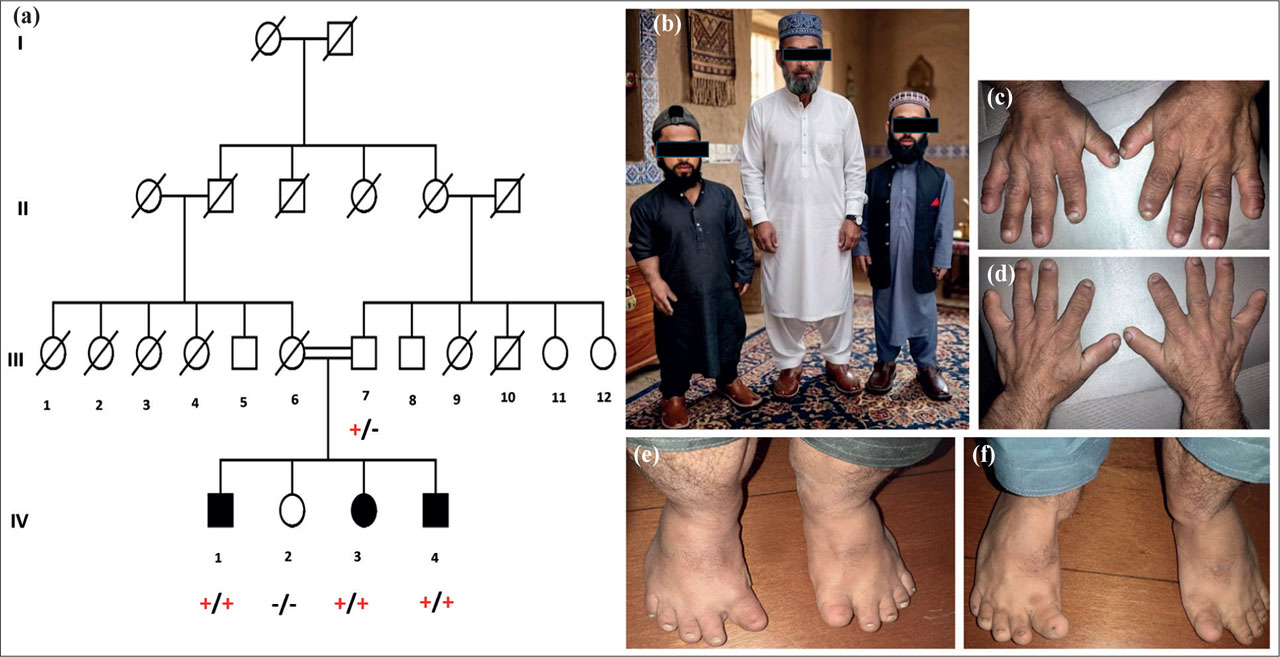
Figure 1.
(a) Pedigree of family exhibiting autosomal recessive pattern. (b) The father (III-7), of average height along with the affected males (IV-4, IV-1) who are short statured with normal trunk length and markedly shortened arms and legs. (c, d) Hands of affected males (IV-1 and IV-4) are short and broad. Clinodactyly is seen. Nails are dystrophic, with irregular curvature and thickening. (e, f) Clinical Photographs of feet of IV-1and IV-4 demonstrate broad, flat feet with disproportionately short and stubby toes. Toenails are dystrophic, with bilateral hyponychia of the great toes.
3D structure modelling
I-Tasser server was used to build three-dimensional structure of human HH C-terminal auto-processing domain of wildtype IHH protein (IHHWT) through homology modelling approach [22] using 1at.0 PDB molecule as template with 36.36% identity. Next, Insilco mutagenesis approach mutant three-dimensional structure of IHH(IHHVal340Met) protein was built through I-Tasser server [22] using IHHWT protein model as template. Predicted model were refined by WinCoot [23]and stereochemistry and validity of constructed 3D structure of human IHHWT protein (C-terminal auto-processing domain) and mutant HHVal340Met was assessed by Ramachandran plot [24] PROCHECK [25] and verify 3D [26]. To measure the effect of identified mutation on protein structure HOPE server [27] was used.
Molecular dynamic simulations
Comparative MD simulations of IHHWT and IHHVal-340Met (c-terminal auto processing domain) were performed to evaluate the conformational alterations, stability, and dynamic properties of the IHH protein. GROMACS 4.5 package was used to do simulations experiments by using Amber03 force field [28]and solvated using the TIP4P water model [29] within a periodic box. Next, Na+ and Clˉ counter ions were added to both (IHHWT and IHHVal340Met) systems to neutralize them. Simulations were carried out for a duration of 20ns time scale under constant conditions of temperature (300K) and pressure (1 atm) for the IHHWT and IHHVal340Met systems. The stability of the secondary structure elements stability along with their interactions and conformational changes were assessed using UCSF Chimera.
RESULTS
Clinical findings
The affected siblings, IV-1 (male, 28 years), IV-3 (female, 26 years), IV-4 (male 22 years) were born from a consanguineous union following full-term pregnancies without complications. At the time of evaluation IV-1 measured 116.84 cm in height (−9.6 SD), weighed 38.5 kg, hand length of 40.64cm and wrist-to-finger length of 15.24cm; IV-3 had a height of 99.06cm(−9.7 SD), weighed 32 kg, hand 38.1cm, wrist to fingers 15.24cm; IV-4 had a height of 121.92cm(−10.4 SD), weighed 38 kg, ,upper limb length (shoulder to fingertip) of 41.14cm and wrist to finger length of 15.66cm. Head circumference of the three affected (IV-1, IV-3, IV-4) was 54.61,50.8,53.84cm, respectively. Father of the affected individuals (55 years old) was of average height 160.02 cm (−1.54SD) and weight of 65 kg (Figure 1b). Head circumference and hand length were 54.61 cm and 66.04cm respectively. Based on the available information, the mother was reported to be clinically normal with no skeletal abnormalities. All the three affected individuals had very short stature with normal trunk length, severely shortened arms and legs (Figure 1b). Hands were short and broad. Fingers, especially the thumbs and index were short relative to the hand size. The 5th fingers on both hands showed inward deviation toward the 4th fingers. Nails appeared dystrophic, with irregular curvature and thickening (Figure 1c, d). Feet were broad and flat, with disproportionately short, broad, and stubby toes. Toes nails were dystrophic with bilateral hyponychia in big toes. Bowed legs (genu varum) were also evident in the standing image (Figure 1e, f) (Table 1).
Table 1.
Phenotypic comparison of the patients reported in the present family with AMDM, ACFD, AMD2A, AMD2B and AMD2C
| Characteristics | Current Study | AMD1/Maroteaux | ACFD | AMD2A / Grebe (GDF5) | AMD2B / Du Pan (GDF5) | AMD2C (GDF5) | ||
|---|---|---|---|---|---|---|---|---|
| IV-1 | IV-3 | IV-4 | ||||||
| Phenotypic Features | ||||||||
| Age (years) | 26 | 28 | 22 | NA | NA | NA | NA | NA |
| Height (cm ± SD) | 116.84 cm (−9.6 SD) | 99.06cm (−9.7 SD) | 121.92cm (−10.4 SD) | <125 cm (−6 to −10 SD) | 84, 102 cm (−2.3 to −9.6 SD) | ~100 cm (severe) | Mild–moderate short stature | Severe short stature |
| Weight (kg) | 38.5, | 32.0 | ,38 | Low | 20–30 | Low | Low | Low |
| Head Circumference (cm ± SD) | 54.61 | 50.8 | 53.84 | Macrocephaly | 50.8–54.6 | Normal | Normal | Normal |
| Acromesomelic Limb Shortening | ✓ | ✓ | ✓ | ✓ | ✓ | ✓ (Severe Distal) | ✓ | ✓ |
| Head size | Near normal | Near normal | Near normal | Normal | Large | Normal | Normal | Normal |
| Intelligence | Normal | Normal | Normal | Normal | Normal | Normal | Normal | Normal |
| Brachydactyly | ✓ | ✓ | ✓ | ✓ | ✓ | ✓ (Severe) | ✓ (complex) | ✓ |
| Clinodactyly | ✓ | ✓ | ✓ | ✓ | ✓ | ✓ | ✓ | ✓ |
| Hyponychia | ✓ | ✓ | ✓ | ✕ | ✕ | ✕ | ✓ | ✕ |
| Loose redundant skin | ✕ | ✕ | ✕ | ✓ | ✕ | ✓ | ✓ | ✓ |
| Joint laxity | ✕ | ✕ | ✕ | ✓ | ✕ | ✕ | ✕ | ✓ |
| Feet deformity | Equinus deformity/Metatarsus Adductus | Equinus deformity/Metatarsus Adductus | Equinus deformity/Metatarsus Adductus | Large halluces | Pes planus | Valgus foot deformity | Talipes equinovalgus | Short feet |
| Radiological Features | ||||||||
| Radial bowing & angulation | Severe (Madelung-like) | Severe (Madelung-like) | Severe (Madelung-like) | ✓ | Mild due to coning | ✕ | ✕ | ✕ |
| Dislocated radial head | ✓ | ✓ | ✓ | Rare | Rare | ✓ | Occasional | occasional |
| Subluxation of ulnocarpal joint | ✓ | ✓ | ✓ | ✕ | ✕ | ✓ | ✓ | ✓ |
| Retarded/dislocated Carpal bone age | Marked Delay | Marked Delay | Marked Delay | Marked Delay | Moderate Delay | Extreme Delay/Fused | Mild Delay/Fused (Rudimentary) | Mild Delay/Fused (Rudimentary) |
| Suprapatellar Loose Bodies | ✓ | ✕ | ✕ | ✕ | ✕ | ✕ | ✕ | ✕ |
| Fusion of phalanges | Synostosis | Synostosis | Synostosis | ✕ | Synostosis | Symphalangism | Symphalangism | ✕ |
| Metacarpals | Short | Short | Short | Short | Teardrop | Rudimentary or absent metacarpals | Tear drop | Cuboidal/Extremely short |
| Short phalanges | Proximal phalanges | Proximal phalanges | Proximal phalanges | Middle and proximal phalanges | Middle and Distal | Rudimentary (distal present only) | Middle and proximal | Middle and proximal |
| Thorax | Normal | Normal | Normal | Normal | Narrow | Normal | Normal | Normal |
| Vertebral changes | ✕ | ✕ | ✕ | (kyphosis) | (lumbar lordosis) | ✕ | ✕ | ✕ |
| Chest | Normal | Normal | Normal | Superiorly curved clavicles | Pectus deformities | Normal | Normal | Normal |
| Acetabulum | Normal | Normal | Normal | Dysplastic | Dysplastic | Dysplastic | Dysplastic | Dysplastic |
| Iliac Wings | Normal | Normal | Normal | Squared | Short | Hypoplastic | small | small |
| Coxa valga / vara | Vara | Vara | Vara | Valga | Vara | Dislocated | Valga | Valga |
| Cortical Thickness | Increased | Increased | Increased | Normal | Normal | Normal | Normal | Normal |
| Medullary canals | Narrow | Narrow | Narrow | Normal | Normal | Normal | Normal | Normal |
| Short tibia/fibula | ✓ | ✓ | ✓ | ✓ | ✓ | ✓ (Severely shortened) | ✓ (fibula absent/hypoplastic) | ✓ |
| Metaphyseal Shape | Flared/Irregular | Flared/Irregular | Flared/Irregular | Severely Flared | V shaped | Rudimentary | Normal | Normal |
| Cone Shaped Epiphysis | ✕ | ✕ | ✕ | ✕ | ✓ | ✕ | ✕ | ✕ |
| Short femoral neck/shaft | ✓ | ✓ | ✓ | ✓ | ✓ | ✓ | ✓ | ✓ |
| Distal femur | Hyper Plastic | Hyper Plastic | Hyper Plastic | Broad | Normal | Hypoplastic | Normal to broad | Normal |
| GenuValgum/Varum | Varum | Varum | Varum | ✕ | Varum | Valgum | Valgum | Valgum |
| Autosomal Recessive Inheritance | ✓ | ✓ | ✓ | ✓ | ✓ | ✓ | ✓ | ✓ |
| Gene mutated | IHH | IHH | IHH | NPR2 | IHH | GDF5 | GDF5 | GDF5 |
Lateral and anterior posterior radiographs of the skull of the affected members (IV-1 and IV-4) showed normal craniofacial proportions but increased radiodensity of the calvarium. No midface hypoplasia and frontal bossing was observed (Figure 2a–d). The upper limb X-rays of the same individuals revealed mildly shortened humerus, bilateral shortened radius and ulna with thickened cortices and narrow medullary canals, more pronounced in the distal radius. There was also volar and ulnar bowing of the distal radius, along with dorsal subluxation of the distal ulna and increased radial inclination supporting the diagnosis of Madelung deformity (Figure 2e–h). Chest radiographs of the affected individual IV-1 and IV-4 were normal while the chest and upper limb radiographs of the affected individual IV-3 showed Madelung deformity characterized by radial bowing with increased cortical density of the long bones, and normal thorax and vertebral column (Figure 2i–k). Radiographs of the hands of the individuals IV-1, IV-3 and IV-4 showed severe brachydactyly with generalized cortical sclerosis of the metacarpals and phalanges. The 4th and 5th metacarpals were disproportionately shortened and appeared stubbier compared to other metacarpals. The phalanges, particularly the proximal were mildly shortened with relatively preserved alignment and morphology. In addition, the carpal bones appeared to form a V-shaped (triangular) configuration at the proximal carpal row. No cone-shaped epiphyses, synostosis, or overt joint dislocations were identified in the visualized phalanges (Figure 2l–n). Pelvis radiographs of the affected individuals IV-1, IV-3 and IV-4 revealed short femoral necks with decreased neck-shaft angles consistent with coxa vara. The femoral shafts showed cortical thickening with narrowing of medullary canal. Hip and knee joint spaces were preserved (Figure 2o–q). Lower limb radiographs showed shortened and broad tibia and fibula with genu varum (bowing of the legs). There was flaring and irregularity of the metaphysis at the distal femora and proximal tibiae. The cortices appeared thickened, and the medullary canals were narrowed. Additionally multiple well-defined calcified loose bodies were seen in the left suprapatellar pouch and juxtaarticular region (Figure 2r–t). The X-rays of the feet showed short and broad tarsals, metatarsals and phalangeal bones with bony fusion (synostosis) of the distal phalanges of the fifth toes bilaterally. The epiphyses, particularly of the distal metatarsals and proximal phalanges, appeared broad and slightly squared. There was evidence of fixed plantar flexion of the forefeet and equinus deformity at the ankle joints (Figure 2u, v) (Table 1).
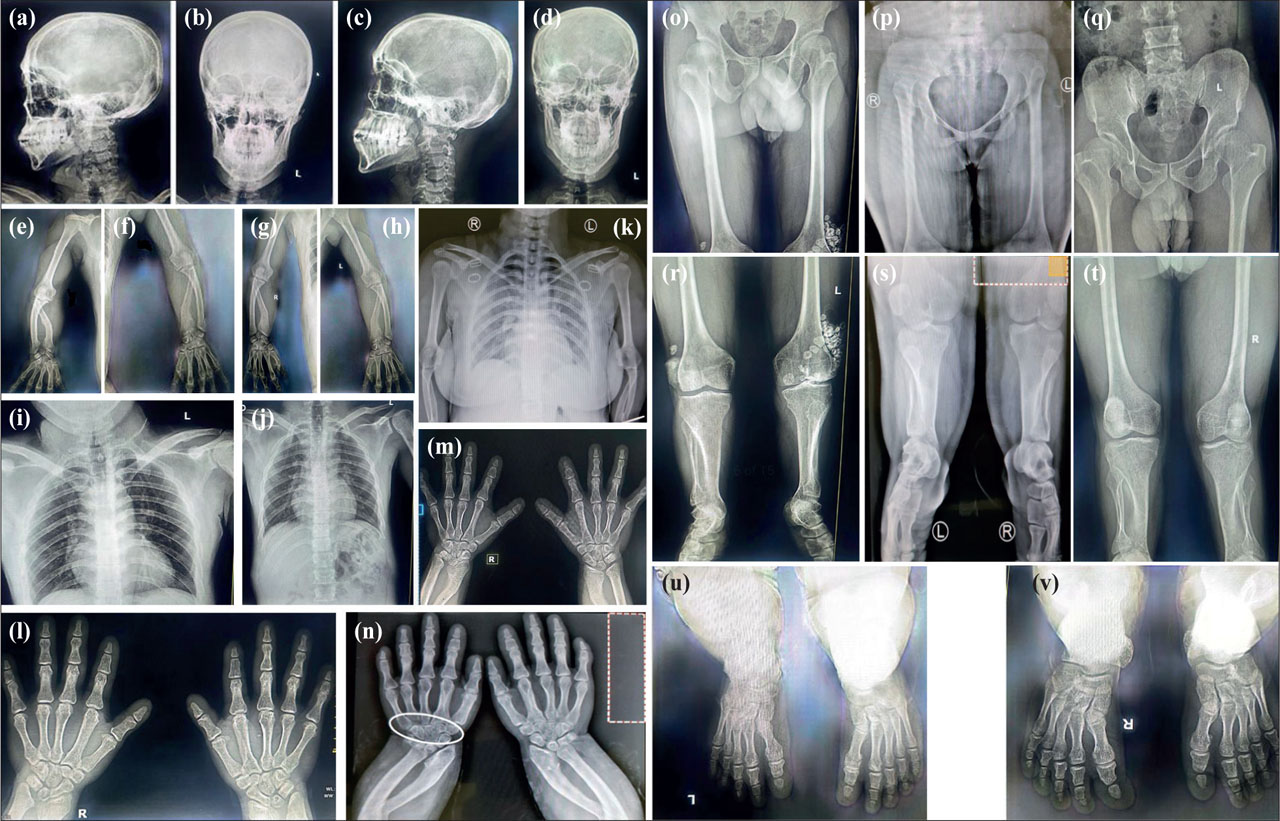
Figure 2.
(a–d) Lateral and anteroposterior (AP) skull radiographs of affected individual IV-1 and IV-4 show generalized calvarial thickening with absence of frontal bossing and no evidence of macrocephaly. (e–h) Left and right upper limb radiograph of affected individuals (IV-1, IV-4) showing bilateral shortening of the radius and ulna, with cortical thickening and narrowed medullary canals, most pronounced in the distal radius. Features of true Madelung deformity, including volar-ulnar bowing of the distal radius, dorsal subluxation of the distal ulna and increased radial inclination are also observed. (i,j,k) Chest radiographs of individuals IV-1, IV-3 and IV-4 reveals normal rib and clavicular structure (l–n) Hand radiographs of all three affected siblings demonstrate severe brachydactyly. A V-shaped configuration of the proximal carpal row is also observed in the individual IV-3. (o–q) AP pelvic radiographs of the affected individuals (IV-1, IV-3 and IV-4) demonstrate bilateral coxa vara, and femoral bowing. (r–t) Lower limb radiographs of the individuals IV-1, IV-3 and IV-4 show shortened and broadened tibia and fibula with genu varum. Flared and irregular metaphyses of the distal femora and proximal tibiae, cortical thickening with narrowed medullary canals is noted. Multiple well-defined calcified loose bodies are seen in the left suprapatellar pouch and juxta-articular region in the affected individual IV-1. (u–v) Foot radiographs of the individuals IV-1, IV-4 depict short and broad tarsals, metatarsal, and phalangeal bones with bilateral fusion of the distal phalanges of the fifth toes. The distal metatarsal and proximal phalangeal epiphyses appear broad and squared. Fixed plantar flexion of the forefeet and equinus deformity at the ankle joints are also evident.
All the patients of the family had normal intellect and central nervous system. Blood sugar levels, kidneys, heart and vision were normal. No central facial dysmorphic features were detected. Heterozygous carriers exhibited normal hands and feet with no other anomalies were noted.
Genetic findings
In the affected individual IV-1, WES analysis revealed a homozygous missense variant [(c.1018G>A; p. Val340Met) in the exon 3 of IHH gene, reporting the most significant variant. Segregation of the variant was tested using available DNA samples from the family members (III-7, IV-2, IV-3, IV-4) (Figure 3a). No homozygous occurrence of the variant was found in online population databases (EVC, ExAC, gnomAD, 1000genomes) or among 135 in-house Pakistani control exomes. Conservation analysis showed the wild type residue to be highly conserved among different species (Fig. 3B). The variant was estimated to be damaging and disease causing via different online software’s: Mutation Taster, Versome, PolyPhen-2, Provean and SIFT FATHMM-MKL (Table 2). Based on ACMG criteria the sequence variant was classified as likely pathogenic (Table S1) [30].
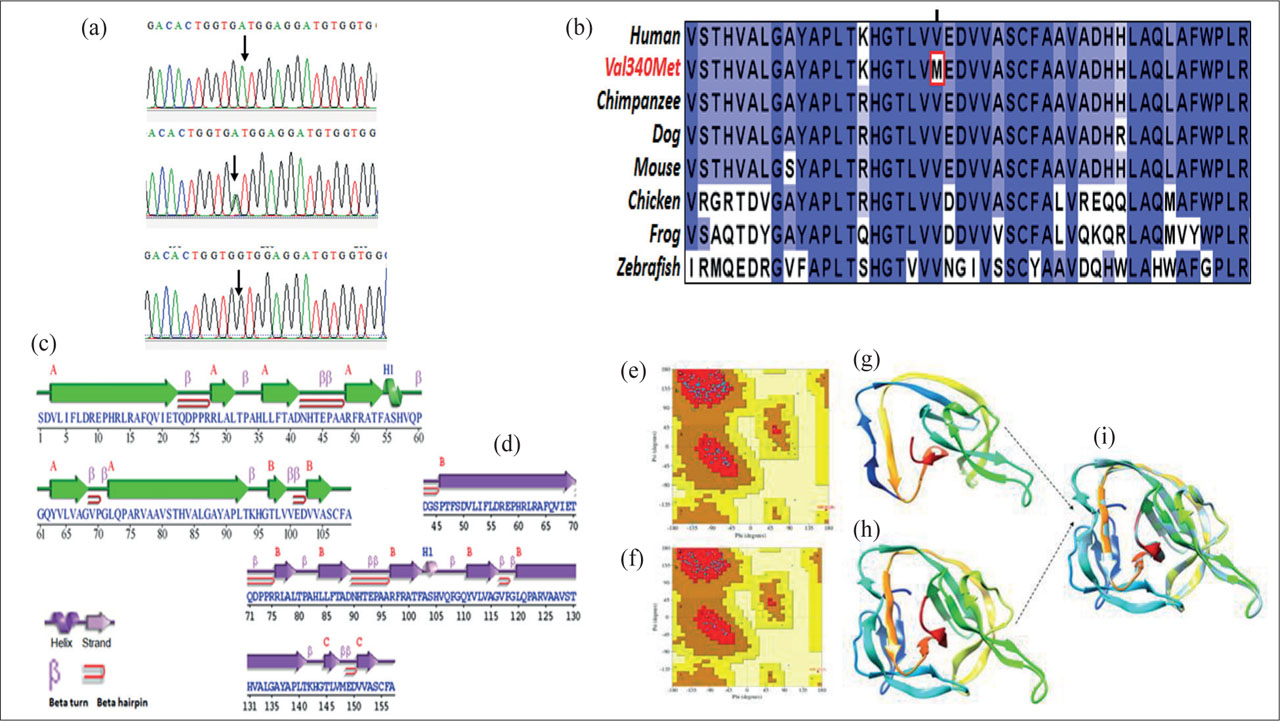
Figure 3.
(a) Sanger electrograms of the variant (c.1018G>A; p. Val340Met) identified in an affected (upper panel), a carrier (middle panel) and a normal (lower panel) (b) Showing conservation of valine amino acid across several species. Secondary structure of (c)IHHWT and (d) IHHVal340Met. Structure validation through Ramachandran plot (e) IHHWT and (f) IHHVal340Met (g) and (h) represents ribbon form of wild type and mutant tertiary structures respectively. (i) Superimposition of mutant and wild type IHH auto processing domain.
Table 2.
Pathogenicity of the identified variant (c.1018G>A; p. Val340Met)
| S. No | Tool used | Prediction |
|---|---|---|
| 1 | Mutation Taster | Disease causing |
| 2 | SIFT | Damaging |
| 3 | Provean | Neutral |
| 4 | PolyPhen-2 | Damaging |
| 5 | DANN | Disease causing (0.9986) |
| 6 | FATHMM-MKL | Damaging (Coding score 0.9894) |
| 7 | FATHMM | Damaging |
Table S1.
The sequence variant was classified as likely pathogenic based on ACMG criteria (Richards et al. 2015) [30]
| Gene | IHH |
| Variant | c.1018G>A, p. Val340Met) |
| ACMG criteria pathogenic variant | |
| Strong | |
| PS1 - same AA as established pathogenic variant | |
| PS2 - denovo | |
| PS3 - invitro assay | |
| PS4 - increase prevalence of the variant | |
| Moderate | |
| PM1 - Mutational hotspot and/or critical and well-established functional domain | |
| PM3 - cis/trans with pathogenic variant | |
| PM4 - Protein length change | |
| PM5 - same aa position, different change | |
| PM6 - assumed denovo | |
| Supporting | |
| PM2 - absent from controls | ✓ |
| PP1 - cosegregation | ✓ |
| PP2 - low rate of benign missense variation | ✓ |
| PP3 - computaional evidence support | ✓ |
| PP4 - patient phenotypes highly specific | ✓ |
| PP5 - reputable resource reports as pathogenic | |
Secondary and tertiary structure analysis and mutation outcomes
Understanding secondary structure elements is essential for acquiring deeper insights into the conformational changes at the 3D level. The Val340Met substitution occurs in the C-terminal auto processing domain of the IHH protein. The two-dimensional structural of IHHWT comprised 10 β-sheets, a single helix, 10 beta turns and 4 hairpins loops. In contrast, IHHVal340Met, exhibited changes in β-sheets lengths unlike RPTNWT (Figure 3c and d).
To assess the structural impact of the identified mutation, wild type and mutant protein models of IHH (C-terminal auto processing domain) were generated and analysed. Ramachandran plots analysis of the modelled IHHWT and IHHVal340Met showed that over 95% residues were present in the sterically allowed region (Figure 3e, f, g and h). Both modelled structures displayed acceptable stereochemical quality with parameters including peptide bond planarity, non-bonded interactions, Cα tetrahedral distortion, main chain Hydrogen bond energy and G-factor within the favoured regions. Superimposition of IHHWT and IHHVal340Met produced an overall RMSD of Q score of 0.741(Figure 3i).
Due to their distinct chemical characteristics (hydrophobic versus amphipathic) and differences in side-chain size, the substitution of the wild-type valine residue with methionine may lead to several consequences. Firstly, the mutated residue lies within a domain critical for processing and secretion of the IHH protein and this substitution may disrupt interactions with binding partners thereby affect the function of the protein. Secondly the wild-type valine residue is buried within the protein core due to its hydrophobic nature, whereas the bulkier methionine side chain may not fit into protein core, disrupting the core packing and altering the overall protein conformation (Figure 4a and b).
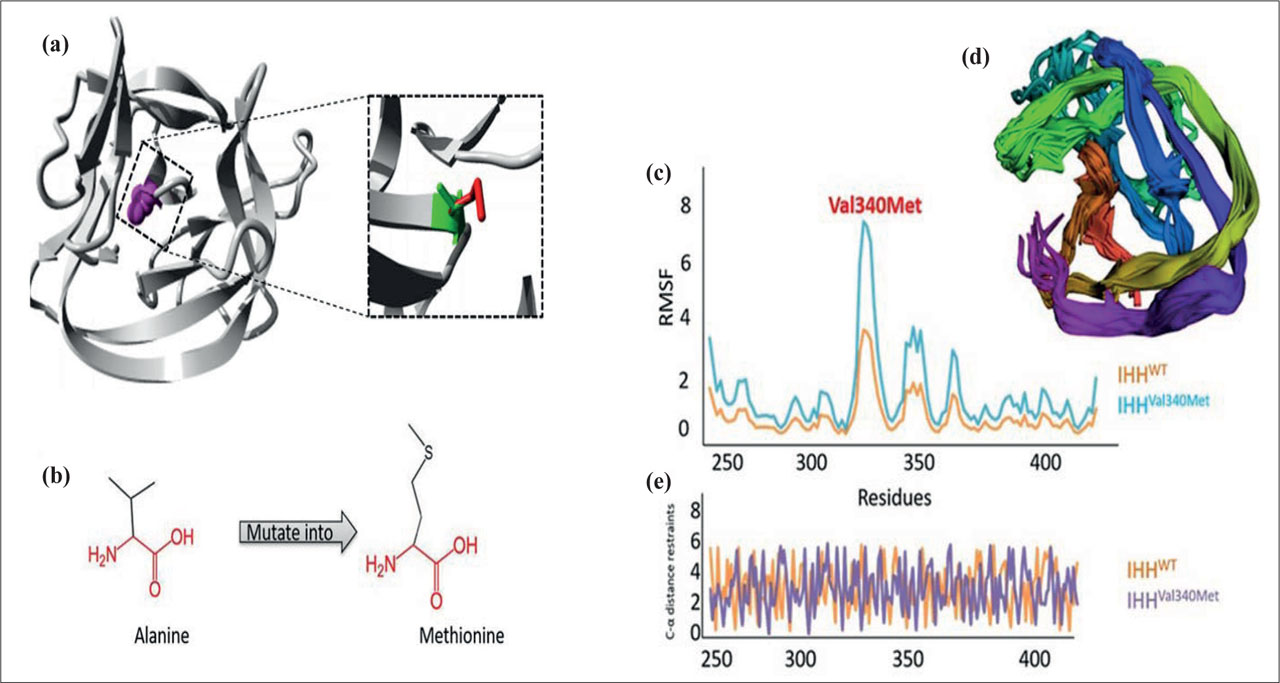
Figure 4.
(a) Ribbon representation of protein in grey colour with mutant residue in magenta colour. In close up view side chain of both wild type and mutant residues are shown in green and red colour respectively. (b) schematic structures of the original (left) and the mutant (right) amino acid. The backbone, which is the same for each amino acid, is coloured red. The side chain, unique for each amino acid, is coloured black. RMSF analysis (c, d) simulation trajectories and (e) C-α distance restraints analysis.
The results of MDs were consistent with our structure analysis of the IHH protein. RMSF analysis derived from atom trajectories revealed high fluctuations in the region harbouring the p. Val340Met substitution (Figure 4c and d) which was further validated by the C-α distance restraints analysis (Figure 4e). Simulations results suggests that p. Val340Met substitution resulted in loosely packed c-terminal auto processing domain of the IHH protein and significant structural alterations may contribute to protein dysfunction leading to disease onset. So, the identified substitution is thought to reduce the compactness and ultimately decrease the stability of the IHH protein.
DISCUSSION
The Hedgehog signaling pathway is a fundamental, evolutionarily conserved pathway required for skeletal development, particularly in coupling chondrogenesis with osteogenesis during endochondral ossification [31]. Among its three ligands—Sonic Hedgehog (SHH), Indian Hedgehog (IHH), and Desert Hedgehog (DHH)—IHH plays an important role in regulating chondrocyte proliferation and differentiation via the IHH–PTHrP feedback loop, ensuring growth plate maintenance [32]. IHH is mainly expressed by prehypertrophic and hypertrophic chondrocytes in the developing skeleton. Additionally, IHH directly promotes osteoblast differentiation in long bones through interactions with RUNX2 and BMPs, thus playing a central role in coordinating cartilage and bone development [33].
Mutations in IHH genes have been known to be linked to a range of skeletal chondrodysplasias, such as ACFD and brachydactyly type and mild disproportionate short stature [16,20, 21]. Duplications of the IHH locus have also been associated with syndactyly and craniosynostosis [34].
In this study, we report a novel missense mutation (c.1018G>A, p. Val340Met) in a consanguineous Pakistani family with three affected individuals presenting with a novel form of AMDM like skeletal dysplasia via whole-exome sequencing. The identified mutation (p. Val340Met) was present in the C-terminal auto-processing domain that catalyses the cleavage of N- and C-terminal of the protein and facilitates the addition of a cholesterol molecule to the N-terminal signalling domain. The process of auto-cleavage and subsequent addition of the cholesterol molecule are thought to be important for both the secretion and sequestration of processed Hedgehog (HH) proteins [35]. Firstly, processed HH is recognised by a sterol recognition domain in Dispatched, a membrane protein thought to be responsible for transporting cholesterol-modified HH across the plasma membrane. Secondly, HH is recognised by a sterol recognition domain in Patched, a HH receptor and binds to it. In this way, extracellular HH is sequestered and the range of its effect is limited. The mutant Met amino acid being bigger compared to the wild type Val residue, may induce structural alterations in the protein core leading to a less compact C-terminal auto processing domain of the IHH protein. These potentially significant structural fluctuations may affect the function of the protein and cause disease onset, as shown by the structural analysis of the IHH Protein (Figure 3 and 4). Recent study by [36] supported the pathogenic relevance of variants in the IHH C-terminal domain, demonstrating that such mutations reduced the IHH secretion and ligand availability, leading to short stature and skeletal abnormalities.
Phenotypically the family presented a novel case of acromesomelic short stature that shares some similarities with AMDM and ACFD. Like both conditions, the affected members in the present family demonstrated disproportionate acromesomelic limb shortening, brachydactyly, clinodactyly and shortened femoral neck/shaft. While AMDM is frequently associated with kyphosis, lumbar lordosis and vertebral body changes, these were absent in our case. Furthermore, our patients displayed stable joints, taut and normal skin in contrast to the loose redundant skin and joint laxity reported in AMDM [13, 14]. Radiographic evaluation of the forearms in our cohort demonstrated a classic Madelung deformity, characterized by volar and ulnar bowing of the distal radius, along with dorsal subluxation of the distal ulna, increased radial inclination, and V-shaped (triangular) configuration at the proximal carpal row. In contrast, AMDM is characterized by symmetrical shortening while in ACFD central epiphyseal coning is seen (Table 1).
Compared with ACFD, our patients demonstrated specific distal anomalies including synostosis of the distal phalanx of the fifth toe, fixed plantar flexion with equinus deformity, and metatarsus adductus, all of which were absent in ACFD [16]. In addition, hallmark radiographic features of ACFD (and AMDM) such as cone-shaped epiphyses and teardrop metacarpals were notably absent in our family as was narrow thorax and pectus deformities (Table 1).
The observed phenotypes in our study are also distinct from the GDF5-related AMDs (AMD2A-C). AMD2A is characterized by extreme limb shortening, rudimentary digits, loose and redundant skin whereas affected individuals in our case displayed normal digit count with preserved stable joints stability and taut skin. Furthermore, while AMD2B and AMD2C typically exhibits joint dislocations, straight normal bone structure and bone density, our family showed Madelung deformity with radial bowing and angulation along with hyperplastic distal femur and marked cortical sclerosis [6, 7, 8] (Table 1)
Although the core skeletal features including acromesomelic limb shortening, cortical sclerosis and Madelung-like deformity observed in our family were consistent in all three affected individuals (IV-1, IV-2, IV-4), intraarticular loose bodies were observed exclusively in the eldest affected member (IV-1). X-rays of the left knee showed multiple, well-defined calcified loose bodies in the suprapatellar pouch and juxtaarticular region. These most likely representing a secondary degenerative process resulting from the dense hyperplasic structure of the distal femur and chronic joint malalignment.
Taken together, the combination of unique clinical findings and a novel pathogenic IHH variant points to a previously undescribed form of acromesomelic dysplasia. This report expands both the phenotypic and genotypic spectrum of IHH-related skeletal disorders and underscores the essential role of the IHH C-terminal domain in endochondral ossification.
Acknowledgments
The authors are highly thankful to the family members that participated in this study.
Notes
[2] DECLARATIONS
Author Contributions
Muhammad Hanif, Bashir Ahmad, Amir Hayat, Bushra Khan: Genetic studies, Clinical analysis and data analysis. Salman Hassan: Sampling; Nosheen Bibi: Performed the bioinformatics analysis; Umme Kalsoom, Siara Farman, Bushra Khan; Manuscript writing and revision: Bushra Khan: Design and conception of studies, supervision and coordination.
All authors have read and approved the final version of the manuscript.
[5] Ethics Approval
The research study was approved by Institutional Review Board (IRB), Abdul Wali Khan University Pakistan
[6] Consent to participate
Informed written consent was taken from participating members of families. Blood sampling from unaffected and affected individuals were carried out according to guidelines provided by Declaration of Helsinki.
[7] Data availability statement
We have submitted the novel variant to ClinVar (https://ncbi.nlm.nih.gov/clinvar/) under an accession number; SCV006277932 for IHH variant [(c.1018G>A, p. Val340Met)]