
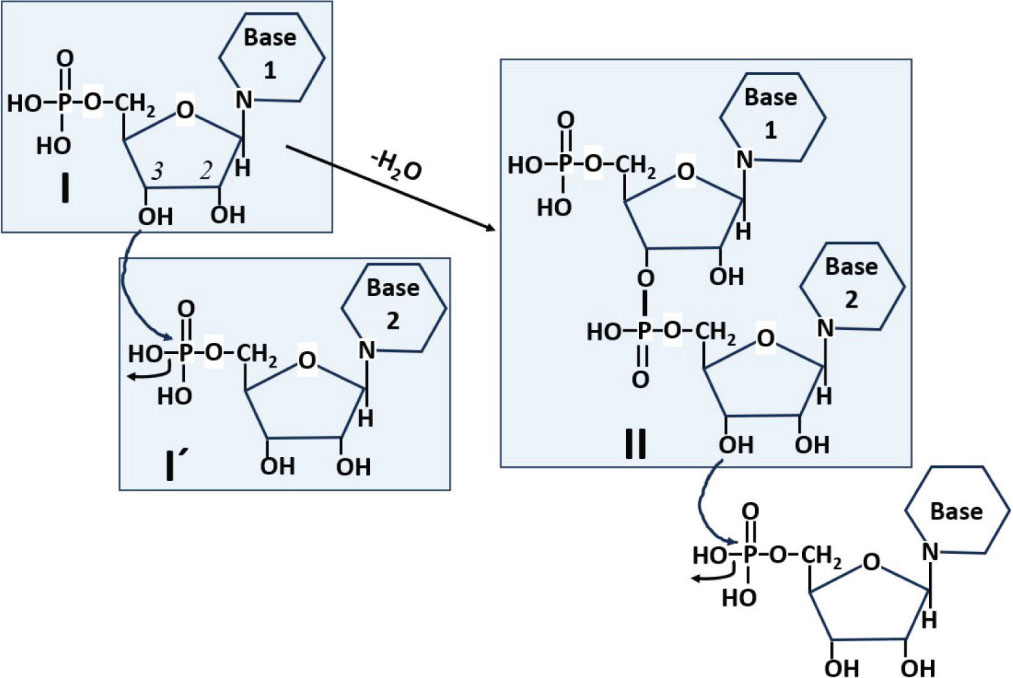
Figure 1.
Condensation of nucleotides to form RNA polymers.
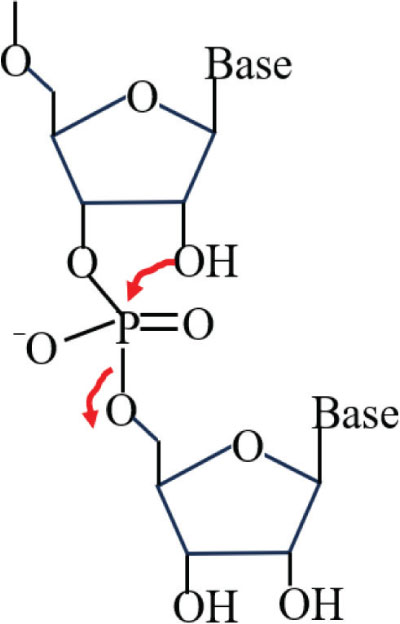
Figure 2.
Low activation energy 2′, 3′ cyclic phosphate pathway to hydrolyze phosphodiester bond in RNA.
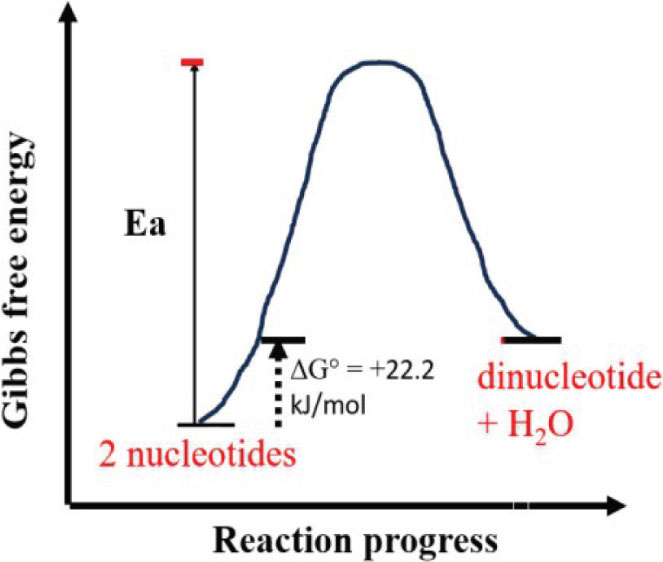
Figure 3.
Condensation of nucleotides is endergonic (thermodynamically unfavorable) and hydrolysis of oligomers is exergonic (thermodynamically favorable). Not drawn to exact scale.
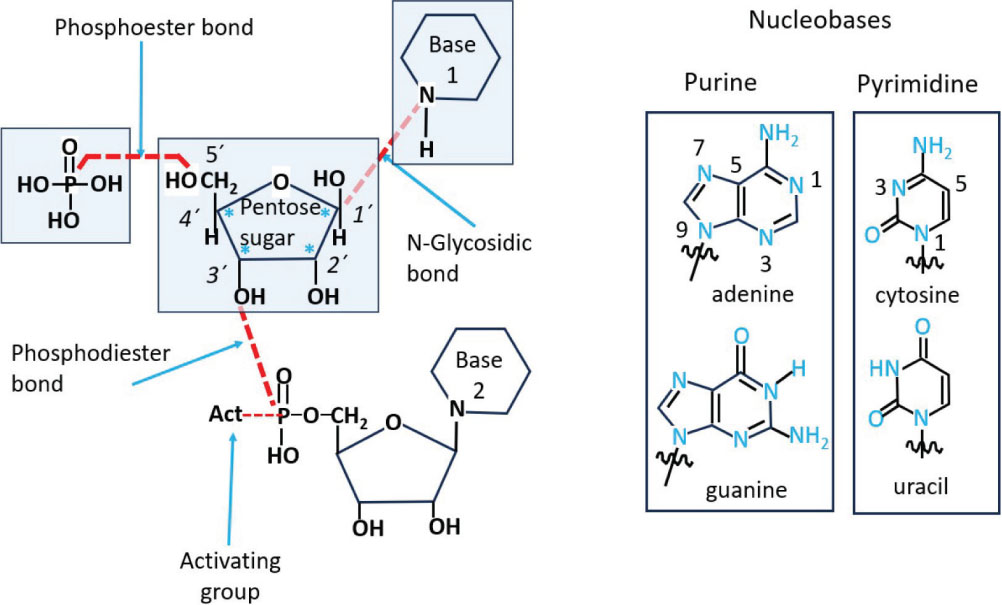
Figure 4.
Deconstruction of nucleotides into their chemical building blocks to facilitate a retro-synthetic analysis.
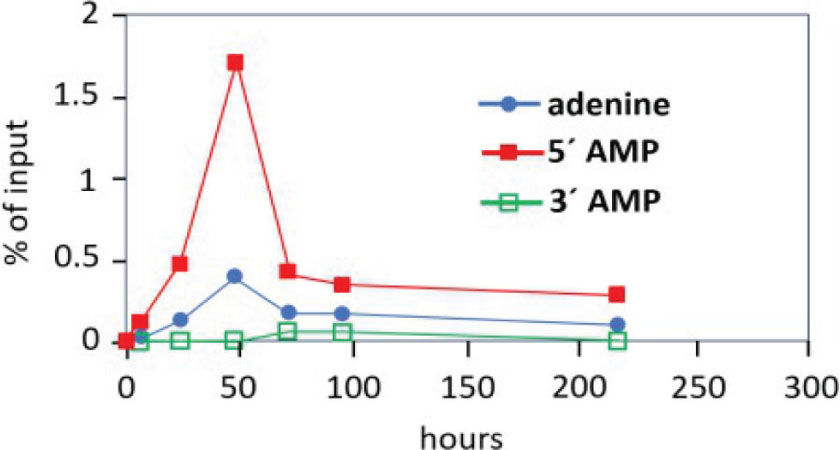
Figure 5.
Adenosine phosphorylation in formamide at 90°C in Reichenbachite, Cu2+ (PO) (OH). Mineral pretreated for 72 hr at 130°C. From Costanzo et al. (42) slightly modified.
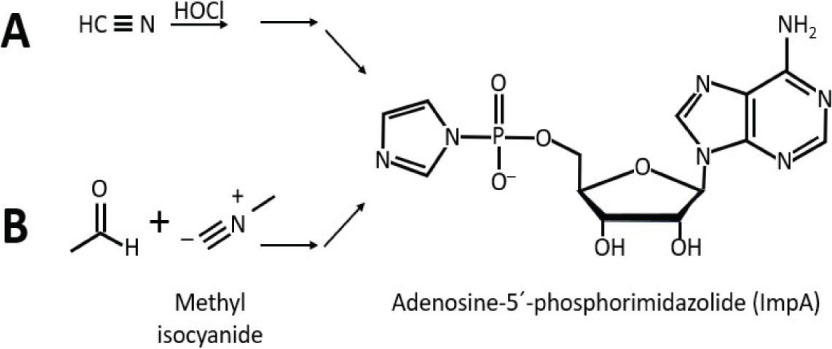
Figure 6.
Proposed abiotic synthetic routes to nucleoside-5′-phosphorimidazolides by (A) Yi et al. (55) and (B) Mariani et al. (54, 60).
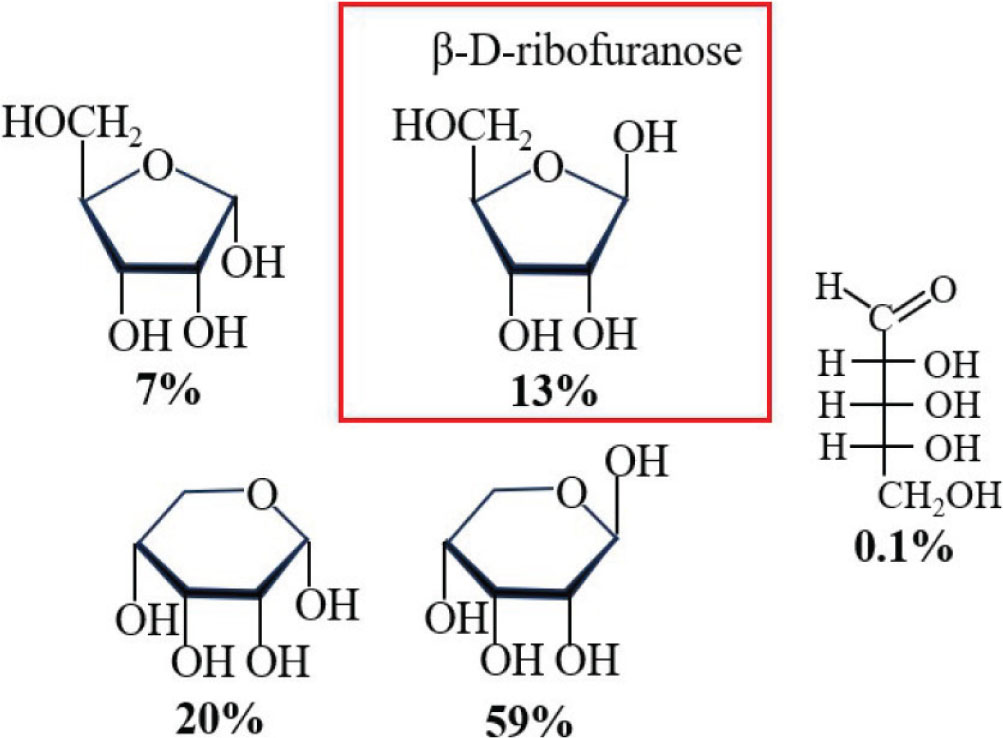
Figure 7.
Proportion of equilibrating soluble isomers of D-ribose (76). Exact proportions are modified by temperature. Framed in red is β-D-ribofuranose, used in RNA.
Table 1.
Calculated half-lives of the glycosidic bond connecting RNA ribose and nucleobase, at pH 7. Parameters taken from Stockbridge et al. (18).
| Days | Years | ||
|---|---|---|---|
| 25°C | 3.7 × 10⁻¹² s−1 | 2,168,253 | 5,936 |
| 80°C | 5.82 × 10⁻⁹ s−1 | 1379.3 | 3.78 |
| 85°C | 1.02 × 10⁻⁸ s−1 | 790.2 | 2.16 |
| 90°C | 1.75 × 10⁻⁸ s−1 | 459.7 | 1.26 |
| 95°C | 2.96 × 10⁻⁸ s−1 | 271.4 | 0.74 |
| 100°C | 1.40 × 10⁻⁷ s−1 | 162.5 | 0.44 |
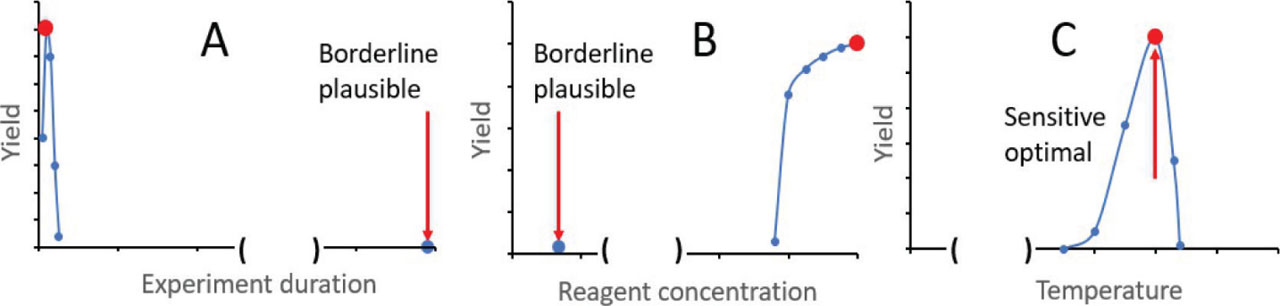
Figure 8.
Possible outcomes of extending a key reaction parameter. (A) Yields rapidly approach zero when continuing the experiment. (B) Yields rapidly approach zero when lowering the concentrations slightly (C) Raising the temperature slightly beyond the optimal value decreases the yield.