
1. Introduction
Breathing is an instinctive and essential physiological function that involves the synchronized movement of the thoracic and abdominal regions. During inspiration, diaphragmatic contraction creates negative pressure in the thoracic cavity, allowing air to flow into the lungs, while the abdominal muscles assist with controlled exhalation (Kim et al., 2022). Beyond its respiratory role, breathing is intricately connected to the autonomic nervous system, influencing cardiovascular regulation, muscle tone, and overall postural stability (Hernandez et al., 2019). Efficient diaphragmatic breathing enhances core activation, improves spinal alignment, and helps maintain a steady centre of gravity (Masroor et al., 2023).
Balance, defined as the ability to maintain the body’s centre of gravity within the base of support, depends on neuromuscular coordination and minimal postural sway. Voluntary breathing can stimulate the cerebral cortex, facilitating motor control in both the upper and lower extremities (Hodges et al., 2000). In healthy populations, voluntary breathing is particularly influential in postural control due to increased synchronization between respiration and balance responses (Hamaoui et al., 2010).
The diaphragm and abdominal muscles play a pivotal role in trunk stabilization through the generation of intra-abdominal pressure, which acts as a hydraulic mechanism supporting lumbar spinal stiffness (Foskolou et al., 2022). When breathing is primarily thoracic rather than diaphragmatic, there is increased activation of accessory muscles and reduced core engagement, which may lead to compensatory muscular imbalances and impaired postural alignment (Sharma et al., 2024). Thoracic breathing, due to its longer lever arm and peripheral muscle recruitment, contributes to greater postural sway compared to abdominal breathing (Foskolou et al., 2022).
In collegiate populations, lifestyle changes accelerated by the COVID-19 pandemic, such as increased screen time, online learning, and reduced physical activity, may promote altered breathing patterns. These dysfunctional patterns are often characterized by shallow or upper-chest breathing, which can reduce oxygen uptake, contribute to autonomic imbalance, and adversely affect postural control (Fathima et al., 2024). Prolonged poor posture reinforces these abnormal breathing behaviours, leading to a cyclical reduction in trunk stability and balance (Kawabata et al., 2023).
Breathing retraining techniques such as diaphragmatic breathing, pursed-lip breathing, and lateral costal expansion exercises have gained attention as effective, non-invasive interventions. These techniques aim to restore optimal respiratory mechanics, improving thoracoabdominal motion, enhancing oxygenation, and reducing reliance on accessory muscles (Vickery 2008). Physiologically, diaphragmatic breathing increases venous return and stroke volume, promotes parasympathetic dominance, and elevates heart rate variability, all of which reflect improved autonomic regulation (Higashino et al., 2022). Moreover, it enhances spinal stability through coordinated activation of the deep abdominal wall and pelvic floor muscles driven by increased intra-abdominal pressure (Fathima et al., 2024).
From a biomechanical standpoint, foot loading and postural alignment are intricately linked. Approximately 50% of body weight is distributed through each talus during bilateral stance, with pressure shifting dynamically during gait (Ohlendorf et al., 2020). Ho et al. (2022) demonstrated that foot posture and single-leg balance ability significantly affect running biomechanics, highlighting the importance of neuromuscular control in dynamic stability. Likewise, Carvalho et al. (2015) found that balance parameters vary between age groups and balance tasks, indicating the sensitivity of postural control even during bipedal stance.
Although the present study did not directly assess balance, it explores how breathing retraining may influence plantar weight distribution during static bipedal stance in healthy college students. This population is particularly susceptible to postural instability resulting from altered breathing mechanics and stress-induced muscle imbalances (Paillard 2023). The Ezra OHM 3000 plantar pressure system provides foot pressure mapping to objectively assess weight distribution in both static and dynamic conditions (Sawant et al., 2022). Improving plantar weight distribution may help optimize postural alignment and reduce asymmetrical loading, which could indirectly support balance and overall postural stability (Paillard 2023).
The aim of this study is to evaluate the immediate effects of diaphragmatic breathing retraining on postural balance and plantar weight distribution. Findings from this investigation may inform the integration of respiratory interventions into routine wellness programs, potentially improving postural stability, alignment, and functional performance in collegiate populations.
2. Materials and methods
This was a single-group, pre–post design study conducted to investigate the immediate effects of breathing retraining on plantar weight distribution and postural alignment in healthy young adults. A total of 100 participants aged 18–28 years were recruited through convenient sampling. All participants demonstrated a thoracoabdominal breathing pattern, confirmed using the Hi-Lo test, a clinical tool used to assess breathing mechanics with moderate interrater reliability (ICC: 0.42–0.47) (Roussel et al., 2007).
Participants with known respiratory or neuromuscular disorders, vertigo, chest wall deformities, recent fractures, or those unwilling to participate were excluded. Ethical approval was obtained from the Institutional Ethical Committee (approval ID: SRMIEC-ST0224-1171) and the study was conducted in accordance with the Declaration of Helsinki. And the study was registered with the Clinical Trials Registry (registration number: CTRI/2024/07/071596). Written informed consent was obtained from all participants prior to data collection.
Before the intervention, participants underwent a baseline assessment of weight distribution using the Ezra OHM 3000 plantar pressure mat (Ezra Technologies, India) (Figure 1) connected to the proprietary EZRA software. The Ezra OHM 3000 plantar pressure system has demonstrated good reliability for static plantar pressure assessment (Intraclass Correlation Coefficient (ICC) = 0.82–0.94) in healthy adults (Sawant et al., 2022). Similar validation approaches have been applied to other digital postural assessment tools, such as smartphone-based accelerometer systems, which have demonstrated good to excellent reliability (ICC = 0.85–0.93) for balance measurements in healthy adults (dos Santos Albarello et al., 2024). During the assessment, participants were instructed to remove their footwear and stand barefoot in a bipedal stance with arms by their sides, eyes open, and gaze fixed straight ahead at a point on the wall approximately 1.5 m away (Figure 2). They were instructed to stand still and breathe normally, using their habitual breathing pattern, while the pressure data were recorded for 30 s.
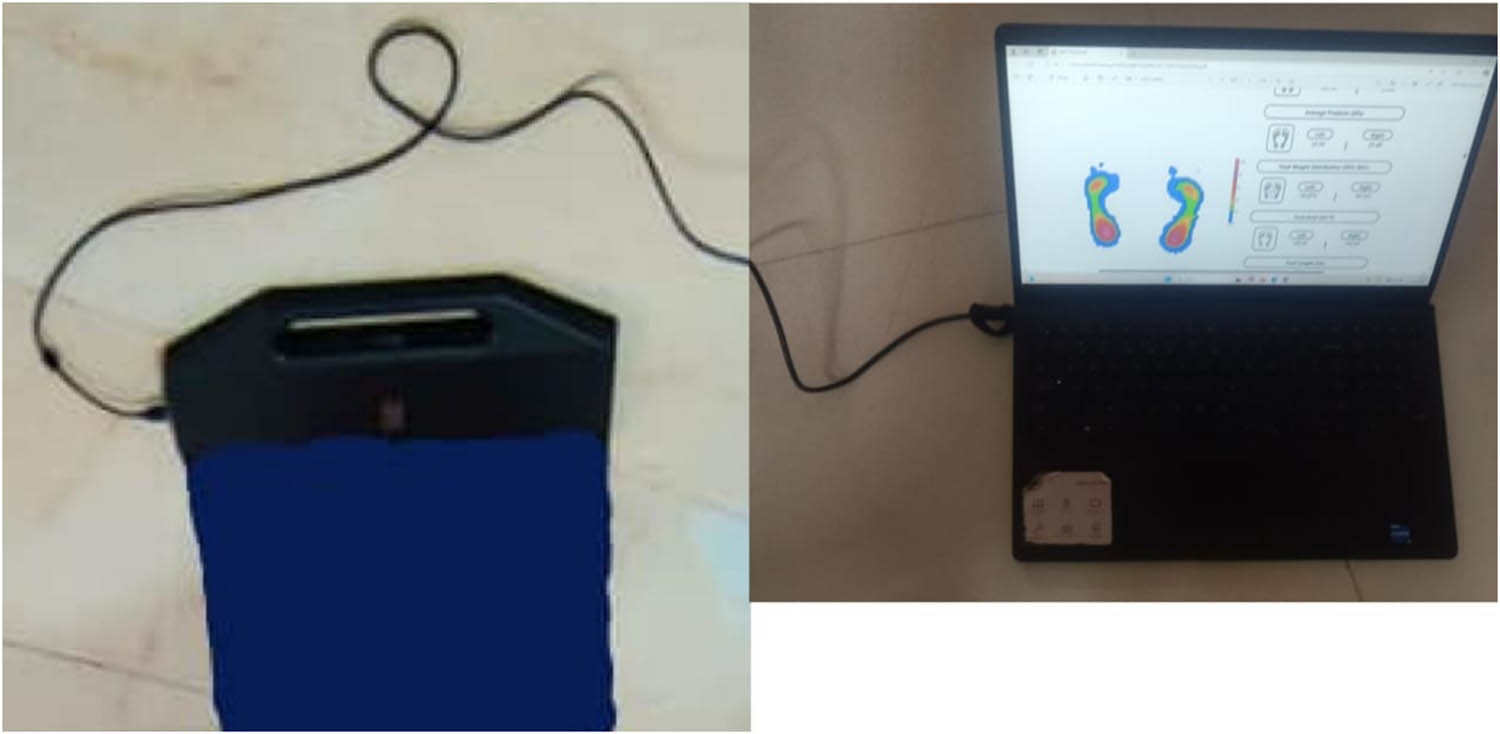
Figure 1
Ezra platform
Source: Author’s contribution.
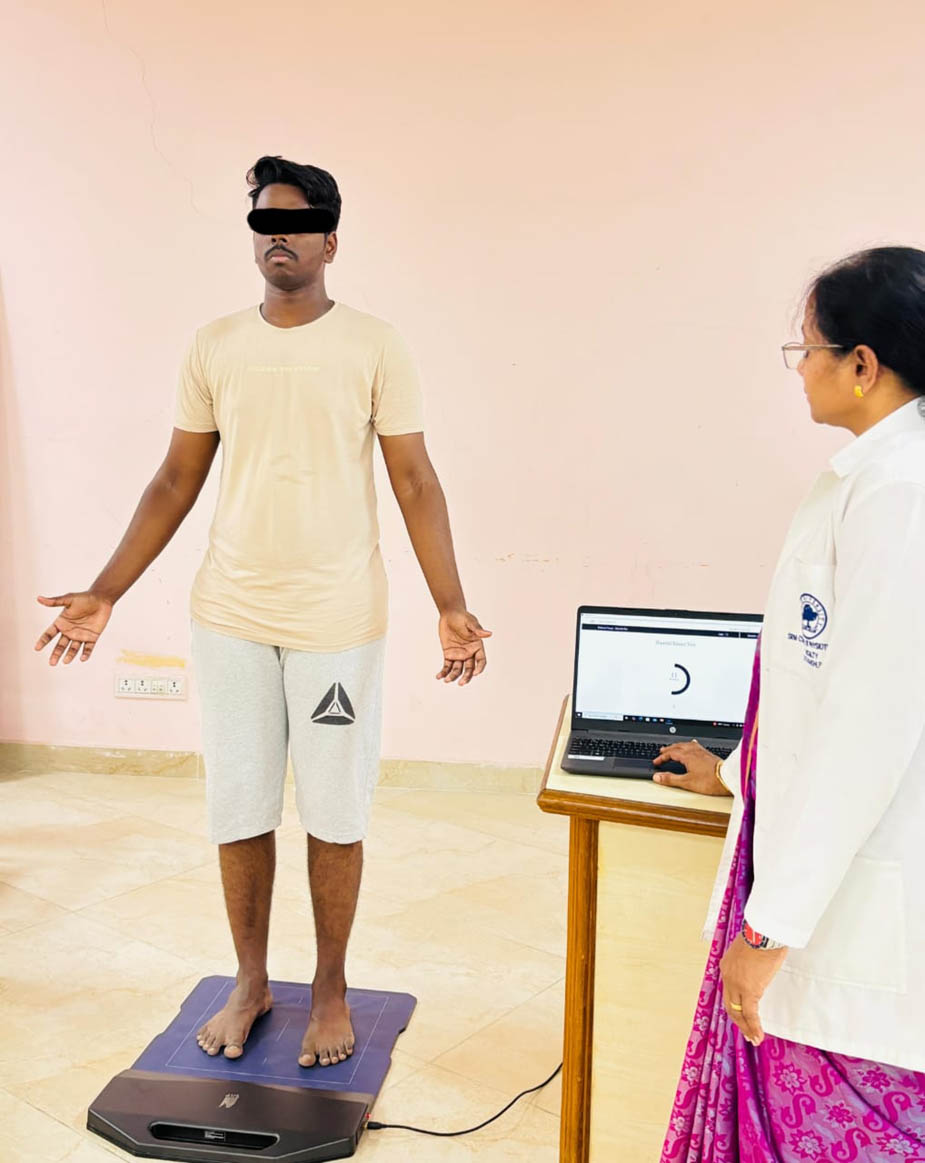
Figure 2
Subject standing in the platform
Source: Author’s contribution.
Following the baseline assessment, participants received a 15-min breathing retraining session in a semi-Fowler’s position (Figure 3). Each repetition consisted of a slow nasal inhalation of approximately 4 s emphasizing abdominal expansion, followed by a controlled oral exhalation of approximately 6 s. A 30 s rest interval was provided between sets. Tactile and verbal cueing was used to ensure correct diaphragmatic activation, defined as visible abdominal expansion with minimal upper-chest movement (Sutbeyaz et al., 2010). Breathing training was administered by a postgraduate physiotherapy student trained in cardiorespiratory techniques under the guidance of an experienced physiotherapist with over 20 years of clinical experience.
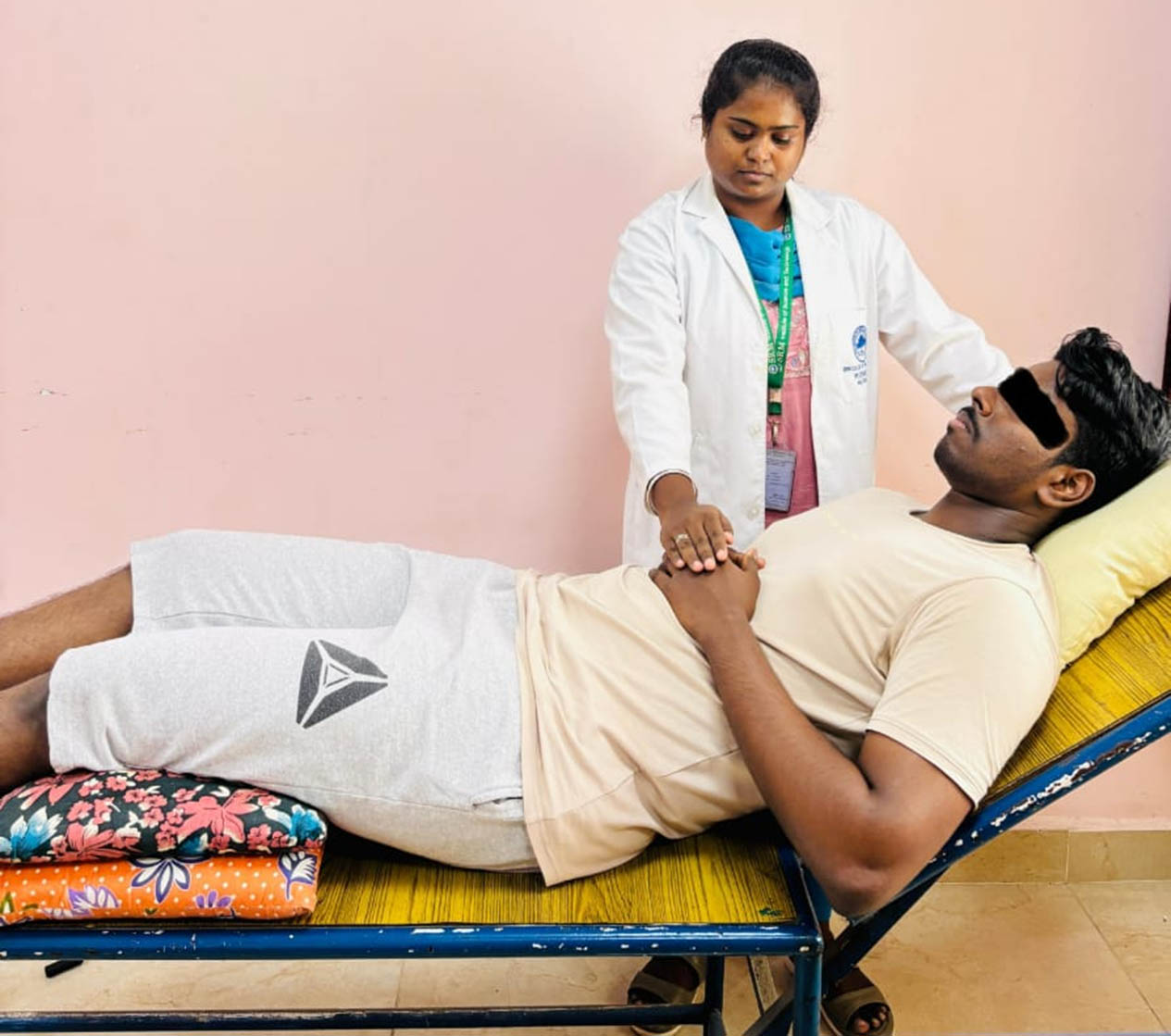
Figure 3
Subject performing breathing exercise
Source: Author’s contribution.
Ten minutes after the breathing training, a post-intervention assessment was performed using the same plantar pressure mat setup. During this phase, participants were instructed to maintain an anatomical standing posture while consciously performing the newly learned diaphragmatic breathing technique. The same measurement protocol was followed as in the pre-test.
The breathing pattern was reassessed using the Hi-Lo test by the physiotherapist who administered the breathing training to ensure that the subjects are using their diaphragm to breathe. Outcome measures included plantar pressure variables such as maximum pressure and regional pressure distribution across the hindfoot, midfoot, forefoot, and toes. These measurements were performed by another senior physiotherapist with over 5 years of experience in postural and gait analysis. The outcome assessor was not blinded to group allocation due to the single-group design. A flow diagram outlining the study procedures is provided in Figure 4.
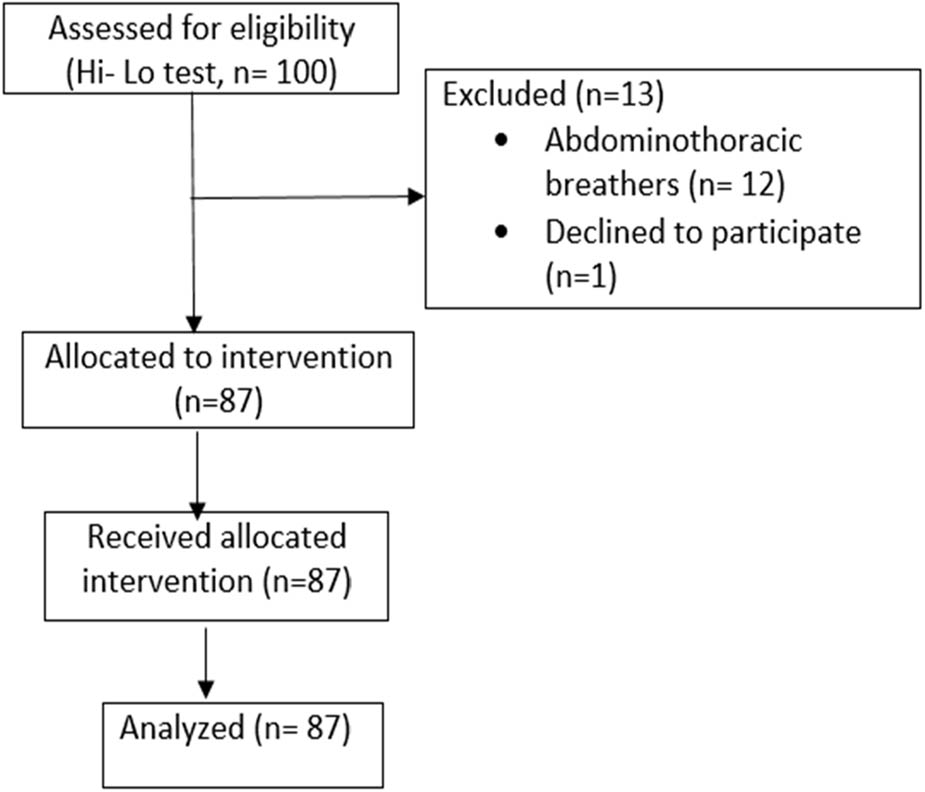
Figure 4
Consort flow diagram
Source: Author’s contribution.
3. Data analysis
3.1. Results
The collected data were tabulated and statistically analysed using IBM SPSS Statistics version 20 for Windows. The Shapiro–Wilk test was used to assess the normality of the outcome measures. As the data were normally distributed, descriptive statistics were reported as mean value and standard deviation. For inferential analysis, a paired t-test was conducted to determine the statistical significance of within-group differences. As this was an exploratory preliminary study, a priori sample size calculation was not performed. A post-hoc power analysis was conducted using G*Power 3.1. For the statistically significant left maximum pressure outcome (Cohen’s d ≈ 0.32), the achieved power was approximately 0.85, whereas non-significant outcomes demonstrated lower statistical power.
Table 1 presents the mean value and standard deviation of age and BMI among thoracoabdominal breathers. Table 2 and Figure 5 display the pre- and post-test values of maximum pressure, and regional pressure distribution across the hindfoot, midfoot, forefoot, and toes, as recorded by the plantar pressure system. Post-test values showed an increase in maximum pressure and hindfoot pressure bilaterally, accompanied by a corresponding decrease in pressure across the midfoot, forefoot, and toes. Statistically significant changes were observed in some of the post-test measures, suggesting an immediate effect of breathing retraining on plantar weight distribution and postural alignment in the study participants. However, after Bonferroni correction for multiple comparisons (adjusted α = 0.0063), only left maximum pressure remained statistically significant.
Table 1
Descriptive statistics on age and body mass index (BMI) of thoracoabdominal breathers
| Variables | n | Minimum | Maximum | Mean value ± SD | Women (n = 49) | Men (n = 38) |
|---|---|---|---|---|---|---|
| Mean value ± SD | Mean value ± SD | |||||
| Age (years) | 87 | 18 | 26 | 21.02 ± 1.81 | 21.10 ± 1.91 | 20.92 ± 1.69 |
| BMI | 87 | 14.15 | 38.28 | 23.66 ± 4.59 | 23.75 ± 5.01 | 23.54 ± 4.03 |
Source: Author’s contribution.
Table 2
Comparison of pre and post values of right and left maximum pressure, hind foot pressure, and midfoot, fore foot, and toes pressures of thoracoabdominal breathers
| Variable | Side | Pre-test mean value ± SD | Post-test mean value ± SD | Mean difference (post–pre) | 95% CI | t (df = 86) | p value | Cohen’s d | Adjusted p † |
|---|---|---|---|---|---|---|---|---|---|
| Maximum pressure (kPa) | Right | 86.54 ± 30.35 | 91.19 ± 34.90 | 4.65 | −0.47 to 9.77 | −1.49 | 0.139 | 0.14 | 1.00 |
| Left | 77.11 ± 22.04 | 84.04 ± 25.95 | 6.93 | 2.34–11.52 | −2.98 | 0.004* | 0.32 | 0.032 | |
| Hindfoot pressure (kPa) | Right | 66.73 ± 9.62 | 68.47 ± 9.43 | 1.74 | 0.25–3.23 | −2.32 | 0.020 | 0.24 | 0.160 |
| Left | 66.11 ± 9.63 | 67.08 ± 11.41 | 0.97 | −0.52 to 2.46 | −1.17 | 0.241 | 0.11 | 1.00 | |
| Midfoot + forefoot + toes (kPa) | Right | 33.18 ± 9.70 | 31.51 ± 9.42 | −1.67 | −3.17 to −0.17 | 2.21 | 0.020 | 0.23 | 0.160 |
| Left | 33.93 ± 9.63 | 32.92 ± 11.40 | −1.01 | −2.61 to 0.59 | 1.24 | 0.218 | 0.13 | 1.00 |
†Bonferroni correction applied (α = 0.0063).
*Statistically significant after correction.
Source: Author’s contribution.
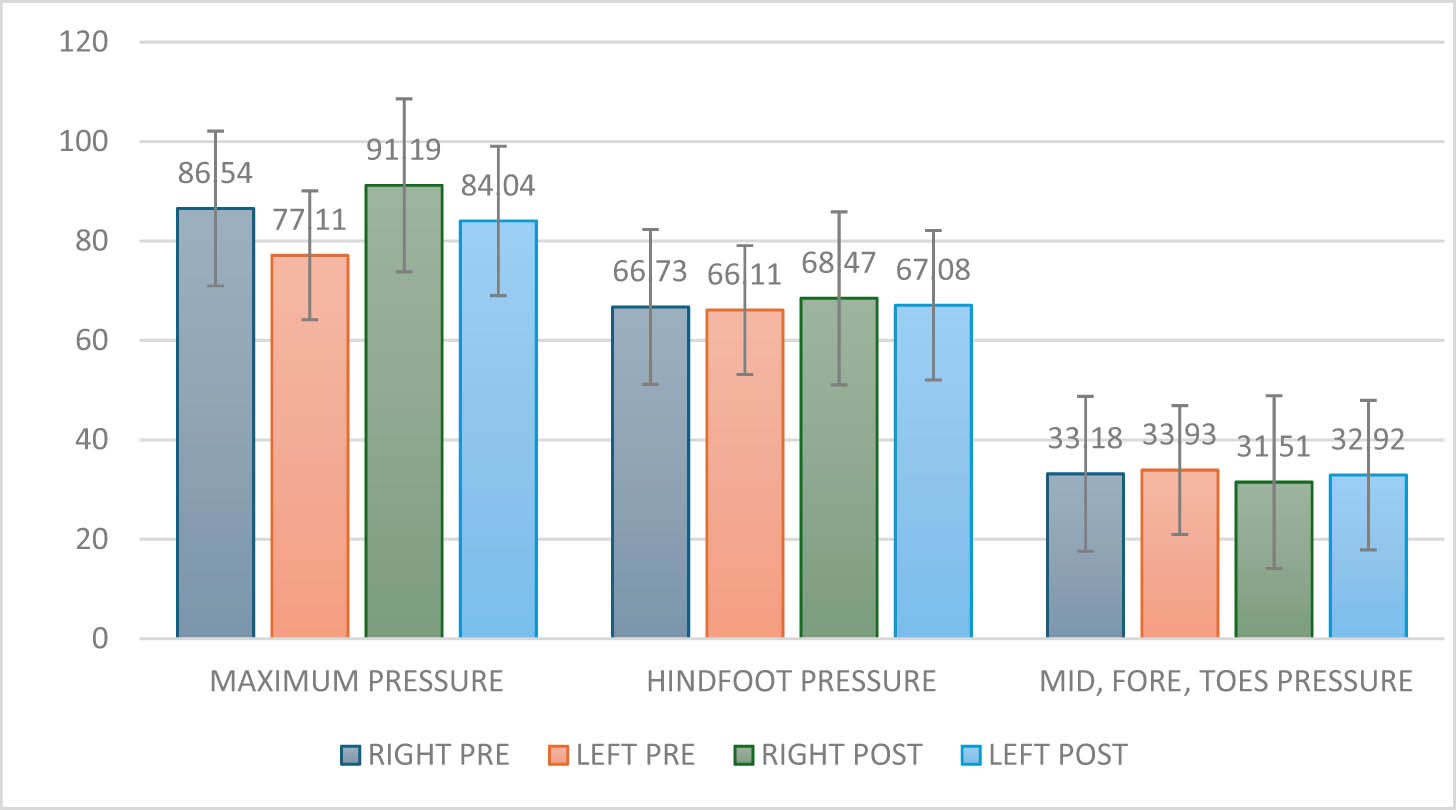
Figure 5
Comparison of pre and post values of right and left maximum pressure, hind foot pressure, and midfoot, fore foot, and toes pressures of thoracoabdominal breathers
Source: Author’s contribution.
4. Discussion
This single-group pre–post design study was conducted to investigate the immediate effect of breathing retraining on plantar weight distribution and postural alignment in healthy young college students with altered thoracoabdominal breathing patterns. The findings demonstrate that breathing retraining, a non-invasive and easily implementable strategy, can lead to measurable changes in plantar pressure distribution. Specifically, post-intervention data showed increased maximum and hindfoot pressure alongside decreased midfoot, forefoot, and toe pressure, indicating a favourable redistribution of plantar pressure following diaphragmatic breathing exercises.
These changes may be attributed to enhanced coordination between respiratory and postural control muscles, improved oxygenation, and greater engagement of core stabilizing systems (Aramaki 2023). Breathing and posture are intrinsically linked through shared muscular and neurological pathways. Regulation of the autonomic nervous system, particularly the shift from sympathetic to parasympathetic dominance during controlled breathing, may help reduce muscle tension and improve neuromuscular coordination (Fathima et al., 2024; Stick et al., 2024). Renaghan et al. (2023) highlighted that breathing exercises promote parasympathetic activity, which is associated with improved muscle relaxation and focus, both essential for postural control.
Weight distribution significantly affects plantar pressure, especially in the hindfoot and forefoot regions. In healthy individuals, static weight distribution is typically around 60% on the rearfoot and 40% on the forefoot (Ohlendorf et al., 2020). The relationship between plantar pressure distribution and postural stability is well established. Russo et al. demonstrated that modifications in foot loading patterns significantly influence gait variability, stability, and motor control, indicating that altered plantar pressure distribution can affect neuromuscular strategies involved in postural regulation (Russo et al., 2020). This study confirmed a similar post-intervention pattern, with increased hindfoot pressure suggesting improved postural alignment. According to Ohlendorf et al. (2020), greater pressure on the hindfoot and a posterior shift of body weight are characteristic features of stable standing, which aligns with the present findings.
Beyond physiological mechanisms, psychological factors such as reduced stress and anxiety – often improved through slow, deep breathing – may also contribute to better postural control. A calm mental state can enhance focus and proprioceptive awareness, both crucial for maintaining stability (Kabat-Zinn 2003).
This study also supports previous findings by Cerezci-Duygu et al. (2025) who reported that balanced weight distribution across both feet was associated with improved postural control. In our study, weight shifted significantly toward the hindfoot following the breathing intervention, underscoring the foundational role of the feet in maintaining stability. Proper plantar pressure distribution not only improves weight-bearing mechanics but also engages core structures – including the diaphragm, pelvic floor, and deep abdominal muscles – which work in synergy to stabilize the trunk and spine (Ohlendorf et al., 2020).
Cerezci-Duygu et al. (2025) observed significant improvements in static maximum pressure distribution following postural interventions, particularly in adolescents with forefoot-dominant loading patterns.
Similarly, our study found that static maximum pressure increased in both feet after diaphragmatic breathing retraining, indicating improved neuromuscular engagement and support for upright posture. The increase in maximum plantar pressure and improved hindfoot loading after training reflect greater core engagement and better alignment, both essential components of stable standing and effective breathing mechanics (Aramaki 2023).
Clinically, these findings underscore the value of incorporating breathing retraining techniques, such as diaphragmatic breathing or yogic breathing practices, into rehabilitation and wellness programs for young adults. Such interventions are low-cost, non-invasive, and easily accessible, making them highly practical for promoting postural alignment and overall well-being. Beyond physical improvements, breathing exercises can foster calmness, reduce anxiety, and enhance body awareness factors that collectively support improved postural control (Chin et al., 2019). Integrating breathing retraining into routine clinical practice or collegiate health initiatives may therefore offer a holistic approach for enhancing neuromuscular coordination and stress regulation, ultimately contributing to injury prevention and improved quality of life.
A major strength of this study lies in its focus on a healthy young adult population, a demographic often overlooked in balance and breathing research. Additionally, the use of objective, quantifiable measures via the plantar pressure mat enhances the reliability and reproducibility of the findings. Rigorous biomechanical research requires comprehensive statistical reporting, including effect sizes and confidence intervals, to facilitate accurate interpretation and reproducibility (Padulo et al., 2014). Accordingly, effect sizes and confidence intervals were reported alongside p-values to better contextualize the magnitude and potential clinical relevance of the observed changes in plantar pressure distribution.
Several limitations of the present study should be acknowledged. First, the single-group pre–post design without a control group limits causal inference, and the observed changes cannot be attributed exclusively to the breathing intervention. Second, no a priori sample size calculation was performed; although post-hoc power analysis demonstrated adequate power for the primary significant outcome, some variables were likely underpowered, increasing the risk of Type II error. Third, test–retest reliability of the specific plantar pressure measurement protocol was not assessed within this study, and reliability estimates were derived from previously published validation data. Fourth, participant classification was based on the Hi-Lo test, which demonstrates only moderate interrater reliability and may have introduced classification error. Fifth, the short interval between intervention and post-assessment limits conclusions regarding physiological stabilization and sustainability of effects. Finally, multiple statistical comparisons were conducted, and although adjusted analyses were performed, the risk of Type I error cannot be completely excluded. Future studies should employ randomized controlled designs with longer follow-up periods and blinded outcome assessment to strengthen causal inference.
Future studies should employ randomized controlled designs with longer follow-up periods, blinded outcome assessment, and more objective quantification of breathing and movement patterns using validated biomechanical tools with adequate sensitivity, as demonstrated in advanced motion variability research (Kuliś et al., 2025).
Nonetheless, this study provides meaningful insights into the immediate benefits of breathing retraining for improving plantar weight distribution in young adults with altered breathing patterns, supporting its potential integration into preventive and wellness programs within collegiate populations.
5. Conclusion
The study concludes that diaphragmatic breathing produces immediate improvements in plantar weight distribution in college students, characterized by increased hindfoot loading and decreased pressures in the midfoot, forefoot, and toes.
Acknowledgements
We would like to thank SRM College of Physiotherapy and the participants for their contribution in the completion of the study.
Funding information
The author(s) received no direct financial support for the research, but the publication charges will be covered by SRMIST, Kattankulathur.
Author contributions
Anandhi Dakshinamurthy: conceptualisation, methodology, project administration, Supervision, resources, data curation, formal analysis, writing – review and editing. Puviyarasi Srinivasan: conceptualisation, methodology, Data collection, writing – original draft. Rajasekar Sannasi: data curation, formal analysis, writing – review and editing.
Conflict of interest statement
Authors state no conflict of interest.
Data availability statement
The datasets used and/or analyzed during the study are available from the corresponding author on reasonable request.