
Introduction
Mycoplasma pneumoniae is an atypical bacterium that mostly causes respiratory tract infections [1, 2]. The main symptoms of infection include cough, elevated body temperature, and muscle and joint pain [1, 2, 3, 4]. A consistent increase in Mycoplasma infections has been observed since 2023 compared to previous years. The highest incidence is recorded in the 0–10 year age group (41.6%), followed by the 11–20 year group (36.9%) [5]. In a retrospective analysis of 1,064 patients aged 0–18 years conducted between 2013 and 2018, Mycoplasma pneumoniae infections accounted for 19% of cases. RSV, influenza, and Mycoplasma were the most common pathogens in the ≥5-year age group [6]. Additional data from a study involving 2,250 patients aged 2 to 227 months, hospitalized for pneumonia between 2010 and 2020 at the Department of Pediatric Pulmonology and Rheumatology of the University Children’s Hospital in Lublin, showed that Mycoplasma pneumoniae was responsible for the highest proportion of infections - 18.8% [7].
Mycoplasma infection may rarely present symptoms other than pulmonary manifestations, involving the skin and mucous membranes, as well as the cardiovascular, gastrointestinal, and musculoskeletal systems [4]. The aim of this article is to present the cutaneous symptoms of Mycoplasma pneumoniae infection based on the case description of a 2-year-old patient.
Case report
A two-year-old boy was referred to a primary care physician with symptoms suggestive of an infection, including a productive cough, rhinitis and isolated episodes of vomiting. His parents denied any history of fever. Physical examination revealed throat redness, enlarged palatine tonsils, and on lung auscultation, intensified vesicular breath sounds with a few dry rales. Otoscopic examination showed bulging of the right tympanic membrane with erythema in its upper part. The left tympanic membrane appeared hyperemic. Other systems showed no abnormalities.
At the first visit, the child was diagnosed with bilateral otitis media and a lower respiratory tract infection. Treatment included amoxicillin at a dose of 90 mg/kg in two divided doses, a probiotic, saline inhalations with ipratropium bromide, and ibuprofen three times a day. On the 7th day of antibiotic therapy, the boy developed a rash, which forced a return visit to the primary care physician. Physical examination during the second visit revealed a fine, macular rash that blanches on pressure, affecting the entire body. No abnormal lung sounds were noted - vesicular breath sounds were normal. Otoscopic examination was unremarkable. Clinical presentation represented an amoxicillin allergy. The antibiotic was discontinued, and cetirizine was prescribed orally in double dosage. The next day, despite antihistamine treatment, the skin lesions worsened, leading to the child’s referral to a pediatric hospital ward.
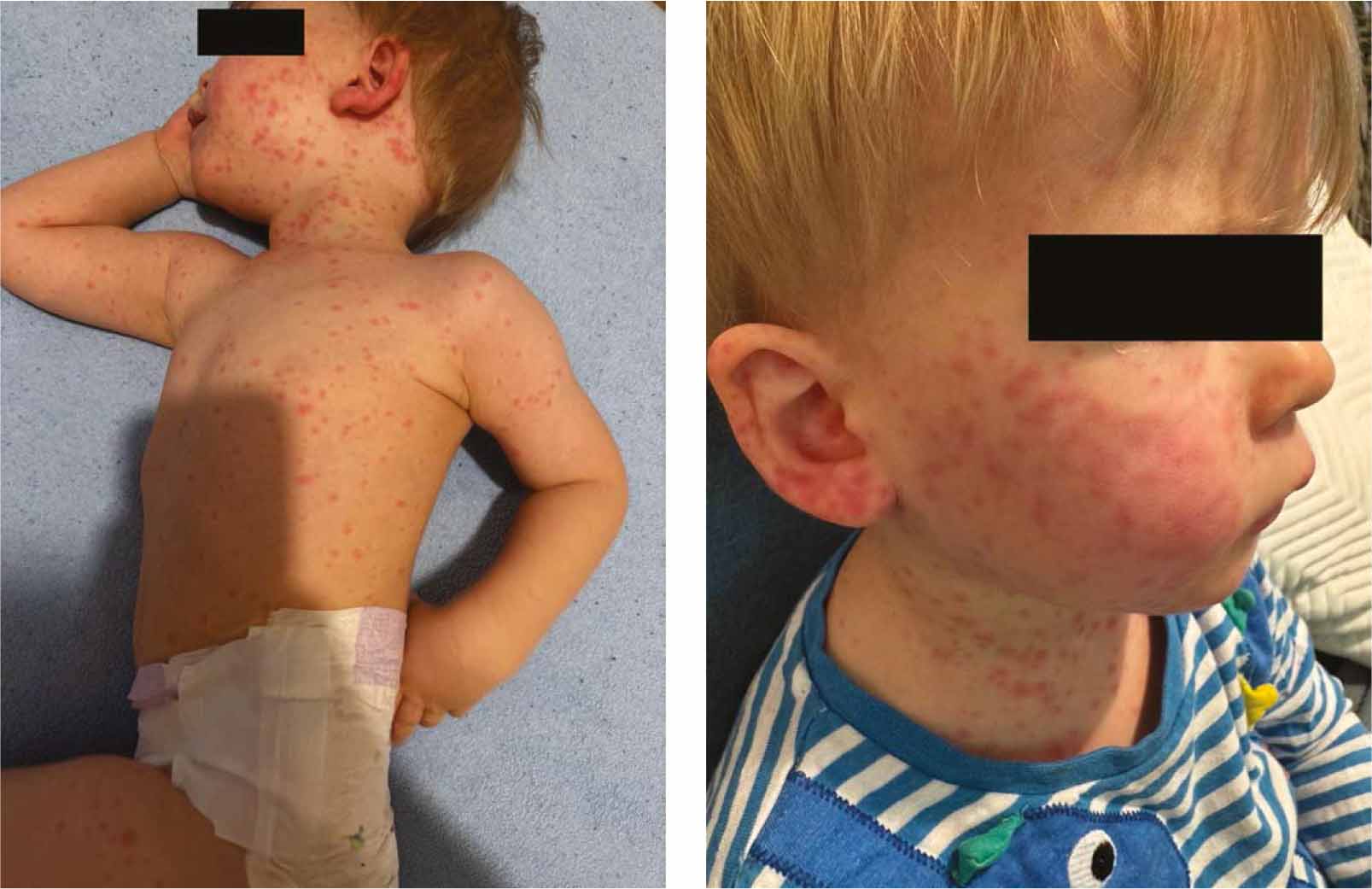
Photos 1 and 2
show the child’s skin lesions. A generalized maculopapular rash was observed on the skin, confluent and spread over the entire body, sparing only the hairy scalp. The lesions consisted of numerous red macules and papules ranging from 1 to 5 mm in diameter. The rash was symmetrical and widespread, with a marked tendency to involve large areas of the skin, including classic locations such as the elbow creases, armpits, neck, and face. The most pronounced lesions were seen on the lateral face, shoulders, chest, and abdomen. Some lesions showed a tendency to merge into larger patches, particularly on the back and shoulders.
Table 1. presents the laboratory test results obtained during hospitalization. Blood count was within normal limits, inflammatory markers were low, and there were no electrolyte or metabolic disturbances. Total IgE was elevated. A throat swab for Streptococcus pyogenes was negative. The bacterial throat culture showed normal upper respiratory tract flora. Diagnostic work-up revealed a significantly elevated IgM titer for Mycoplasma pneumoniae of >27 AU/ml.
Table 1.
Laboratory Test Results
| Parameter | Result | Reference Range |
|---|---|---|
| Erythrocytes | 4,9 | 4,2–5,4 milion/μl |
| Hemoglobin | 14 | 12–16 g/dl |
| Hematocrit | 42 | 37–47% |
| Platelets | 443 | 150–400 thousand/μl |
| Leukocytes | 14,9 | 4–10 thousand/μl |
| Neutrophils (thousand/μl) | 3,36 | 2–8 thousand/μl |
| Lymphocytes (thousand/μl) | 9,30 | 1–5 thousand/μl |
| Monocytes (thousand/μl) | 0,91 | 0,2–0,8 thousand/μl |
| Eosinophils (thousand/μl) | 1,31 | 0–0,5 thousand/μl |
| Basophils (thousand/μl) | 0,05 | 0–0,1 thousand/μl |
| Neutrophils (%) | 22,5 | 50–70% |
| Lymphocytes (%) | 62,3 | 20–45% |
| Monocytes (%) | 6,1 | 2–8% |
| Eosinophils (%) | 8,8 | 0–5% |
| Basophils (%) | 0,3 | 0–1% |
| CRP | <1,0 | 0–5 mg/dl |
| Mycoplasma pneumonie IgM | >27,00 | Negative result: <10 AU/ml, Positive result: ≥10 AU/ml |
| Total IgE | 109 | 0–100 lU/ml |
Based on the diagnostic findings, a cutaneous manifestation of Mycoplasma pneumoniae infection was diagnosed. Treatment included systemic corticosteroids (oral prednisone 5 mg), oral azithromycin at a dose of 10 mg/kg for 4 days, the antihistamine desloratadine, and supportive intravenous hydration. Gradual regression of skin lesions was observed in the boy. After 3 days of hospitalization, the patient was discharged home.
Discussion
Mycoplasma pneumoniae is a respiratory pathogen whose symptoms most commonly involve the upper and lower respiratory tract [8]. In addition to the typical pulmonary manifestations described above, the infection can also affect extrapulmonary sites. In 2014, a distinct clinical entity - Mycoplasma pneumoniae-induced rash and mucositis (MIRM) - was identified, characterized by the involvement of both the skin and mucous membranes [9].
Mycoplasma pneumoniae attach to the ciliated lining of the upper and lower airways. The infection spreads between people through respiratory droplets [1]. Complications outside the lungs are usually caused by the immune system due to similarities between bacterial and human proteins, although the bacteria can sometimes invade tissues directly, including the skin [10].
Diagnosing MIRM poses a considerable challenge due to the lack of standardized diagnostic criteria and the existence of two clinical forms of varying severity. In their systematic review, Lofgren and Lenkeit proposed diagnostic criteria necessary to confirm this condition. These include:
Clinical and laboratory evidence of atypical pneumonia caused by Mycoplasma pneumoniae
Involvement of two or more mucous membrane sites
Skin involvement of less than 10% of body surface area
Presence of a limited number of vesiculobullous or atypical targetoid lesions (with or without classic “targets”)
The authors emphasized the variable severity of MIRM, distinguishing a severe form, with extensive, target-like or bullous skin lesions, and a “sine rash” form, which presents without any skin rash [9].
The most common manifestation of MIRM is mucositis, primarily affecting the oral cavity. These lesions may present as erosions, ulcers, or tissue loss. In some cases, inflammation involves the vermilion border of the lips, causing significant swelling, vesicular lesions, erosions, or crusts. Additionally, erythema and swelling of the nasal mucosa may be observed. Mucositis can also extend to the conjunctiva or genitalia [10].
In the pediatric population, inflammation of the pharyngeal region is particularly characteristic. This may or may not be accompanied by enlargement of the cervical lymph nodes. Moreover, one of the main symptoms is sore throat, which may result from involvement of either the upper or lower respiratory tract [8].
Symptoms may also manifest as a skin rash, as in the case presented. Skin lesions may be vesiculobullous, targetoid, papular, macular, or measles-like in appearance. In line with the previously proposed diagnostic criteria, special attention should be given to the so-called “target lesions”. These evolve from erythematous-edematous lesions. A typical target lesion is less than 3 cm in diameter, round, and has clearly defined borders. It features three distinct zones: a central dark necrotic area, a paler edematous middle zone, and an outer erythematous ring. Blisters may form in both the central and peripheral parts of the lesion, and when ruptured, can lead to painful erosions. These lesions may also coalesce. Occasionally, atypical two-zone lesions with less well-defined edges are also observed [10].
In our case, the differential diagnosis initially included a suspected allergy to amoxicillin, since the rash appeared during antibiotic therapy. However, the lack of improvement after discontinuing the drug and administering antihistamines argued against this hypothesis. Instead, the progressive nature of the skin lesions, together with elevated IgM antibodies to Mycoplasma pneumoniae, supported the diagnosis of MIRM as the underlying cause. This clinical course highlights the importance of distinguishing between drug allergy and infection-related mucocutaneous manifestations.
Selecting the appropriate therapy presents a significant challenge due to the biological characteristics of Mycoplasma, which lacks a cell wall, making it resistant to many common antibiotics. The most effective options are macrolides, tetracyclines, and fluoroquinolones. In pediatric patients, only macrolides are used due to the potential toxicity of the other drug classes. Azithromycin and clarithromycin are the first-line treatments for atypical pneumonia caused by Mycoplasma pneumoniae, as they are generally better tolerated than erythromycin. Macrolide therapy typically lasts up to five days [1].
The effectiveness of antibiotic therapy in reducing the incidence and severity of mucocutaneous lesions remains unconfirmed. Currently, there are no evidence-based guidelines for the treatment of MIRM. Most patients receive antibiotic therapy (80%), glucocorticosteroids (35%), and in selected cases, intravenous immunoglobulins. Potential complications involving the skin and mucous membranes include hyperpigmentation and mucosal adhesions. Ocular complications may also occur, such as the formation of conjunctival pseudomembranes, eyelid margin ulcers, and conjunctival erosions [11].
Conclusions
In recent years, there has been a significant increase in Mycoplasma pneumoniae infections among children, highlighting the need for heightened diagnostic vigilance. Most cases present with respiratory tract symptoms, however, the incidence of atypical manifestations is also rising, making the diagnostic process more demanding and requiring careful symptom evaluation. Prompt recognition of this disease entity, including its cutaneous presentations, is crucial for implementing appropriate antibiotic therapy and preventing complications.
Considering Mycoplasma pneumoniae as a potential extrapulmonary pathogen should become a routine part of pediatric clinical practice.
Acknowledgements
We would like to express our sincere gratitude to Dr. Anna Krztoń-Królewiecka, Head of the Department of Family Medicine at Andrzej Frycz Modrzewski University, for her valuable guidance and professional support during the preparation of this work. Special thanks also go to the parents of the patient described for granting consent for participation in this study.
Notes
[1] Conflicts of interest Conflict of interest: The author declares no conflict of interest.