
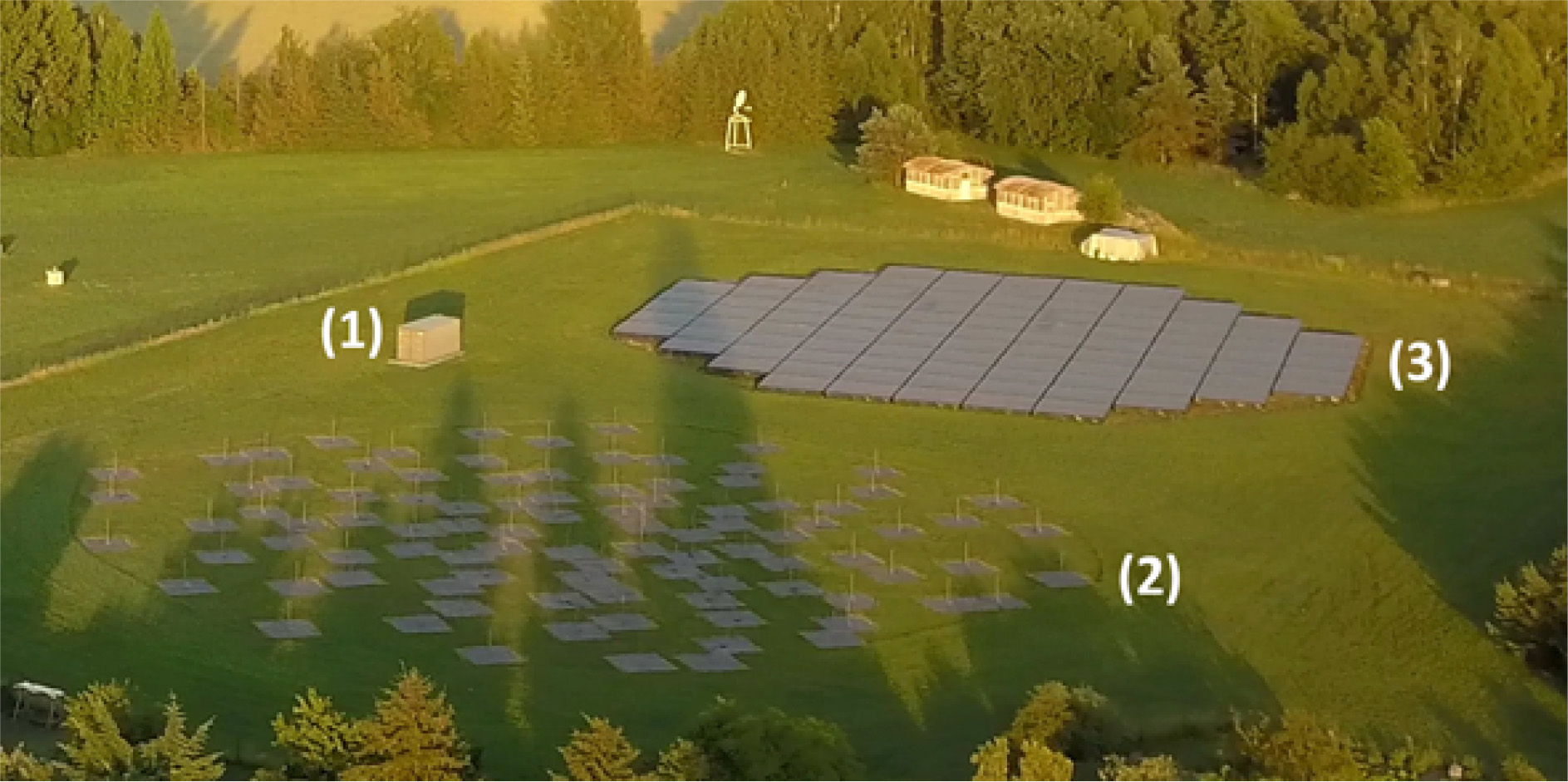
Figure 1.
The Space Research Centre, PAS, LOFAR PL610 Station in Borówiec, Poland. (1) Container with electronic equipment; (2) Low Band Antenna Field; (3) High Band Antenna Field (Pożoga et al., 2021)
Table 1.
The metadata of the standardized LOFAR PL610 data product
| Name of the attribute | Attribute description |
|---|---|
| StartTime | timestamp marking the beginning of the observation given in ISO 8601 datetime YYYY-MM-DDTHH:mm:ss(.SSSSSS) format |
| StopTime | timestamp marking the end of the observation given in ISO 8601 datetime YYYY-MM-DDTHH:mm:ss(.SSSSSS) format |
| Lane | technical parameters defining which lane was used during measurements. It is a numerical value (e.g., 1, 2, 3 or 4) |
| Target | the radio source used for the observations (e.g., CasA, TauA, CygA, VirA, Sun, Jupiter) |
| Digdir | the right ascension, declination, and epoch (J2000 for the available data) |
| Anadir | the right ascension, declination, and the epoch (J2000 for the available data) for HBA analogue beam forming |
| Band | the bands on which the observations were carried out (e.g., 10_90, 110_190, 210_270) given in MHz |
| SoftRev | Software Revision; it includes the name of the computer |
| Datatype | the type of the data |
| Observatory | the LOFAR station from which the observations were carried out. In the case of the described data sets – PL610 station |
| Bitmode | source data bit resolution 4/8/16 bits |
| FFTLength | the additional subband division using FFT (e.g. 1, 16). 1 – no division, spectral resolution: 195.0 kHz; 16 – spectrum resolution increase to 12.2 kHz |
| TimeLength | the time of the observation given in seconds [s] and multiplied by 100 Hz; the number of samples measured per second |
| SubbandNo | the number of observed frequencies |
| dimensions(sizes) | Time(TimeLength), Subband(SubbandNo) |
| variables(dimensions) | the variables including Stokes parameters (I, U, V, Q) given as float32 variables: I(Subband,Time), U(Subband,Time), V(Subband,Time), Q(Subband,Time), N(Time) – int64 – the number of samples, and Subband – given as float32 Subband(Subband) |
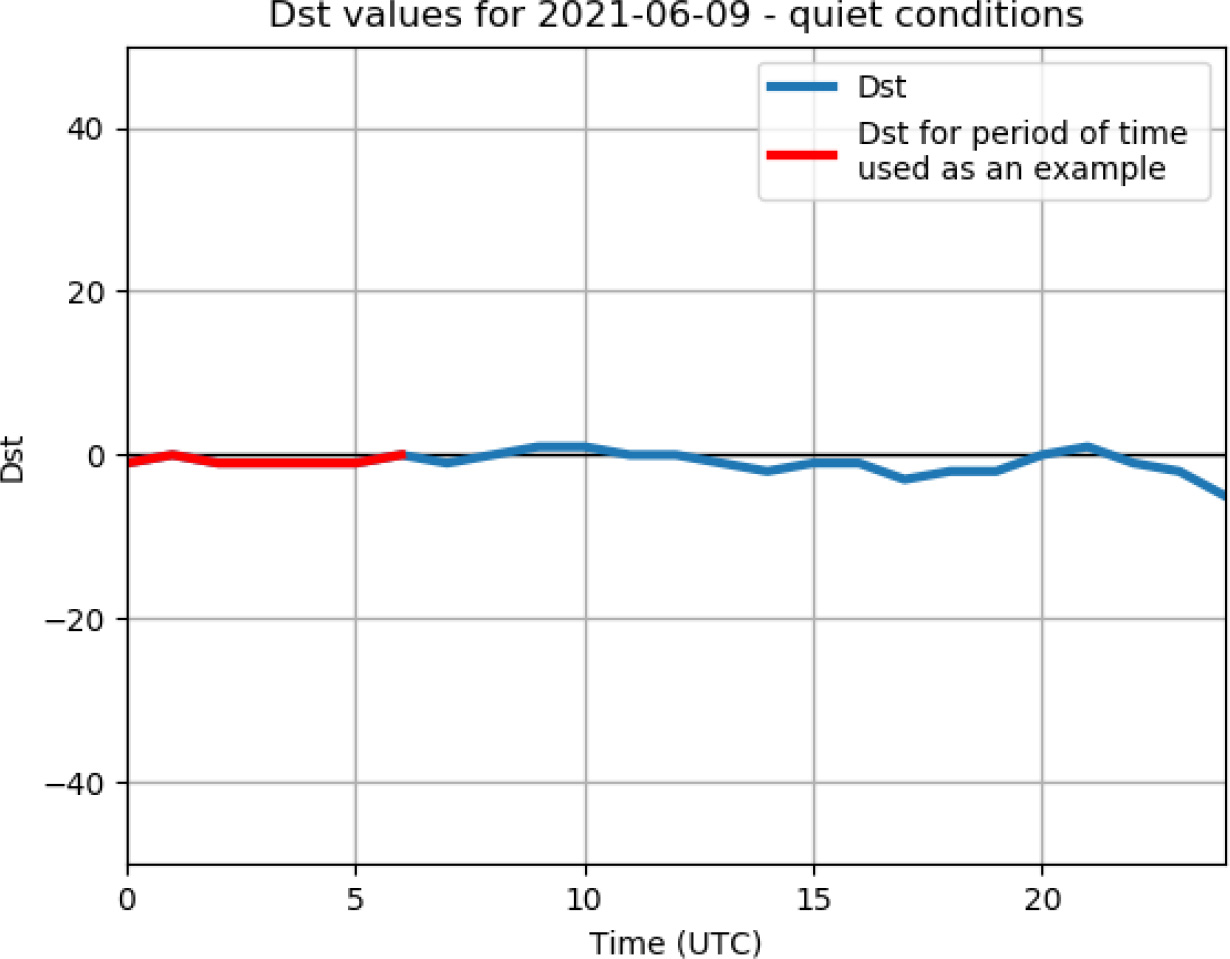
Figure 2.
The Dst index for 9th of June, 2021
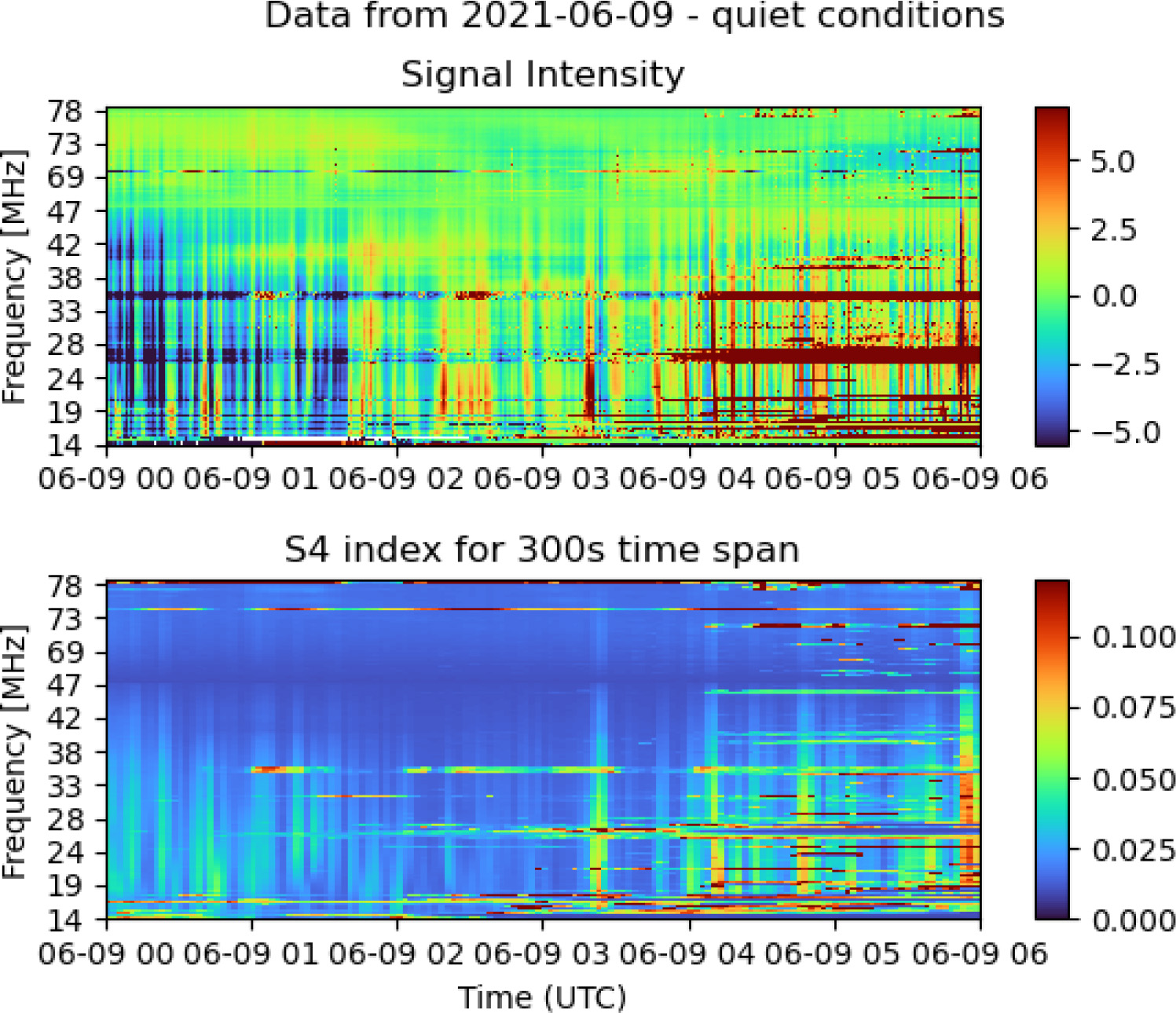
Figure 3.
The I Signal Intensity (top) and the S4 index for 300-second time window (bottom) plots of the recovery phase after the geomagnetic storm for CasA radio source
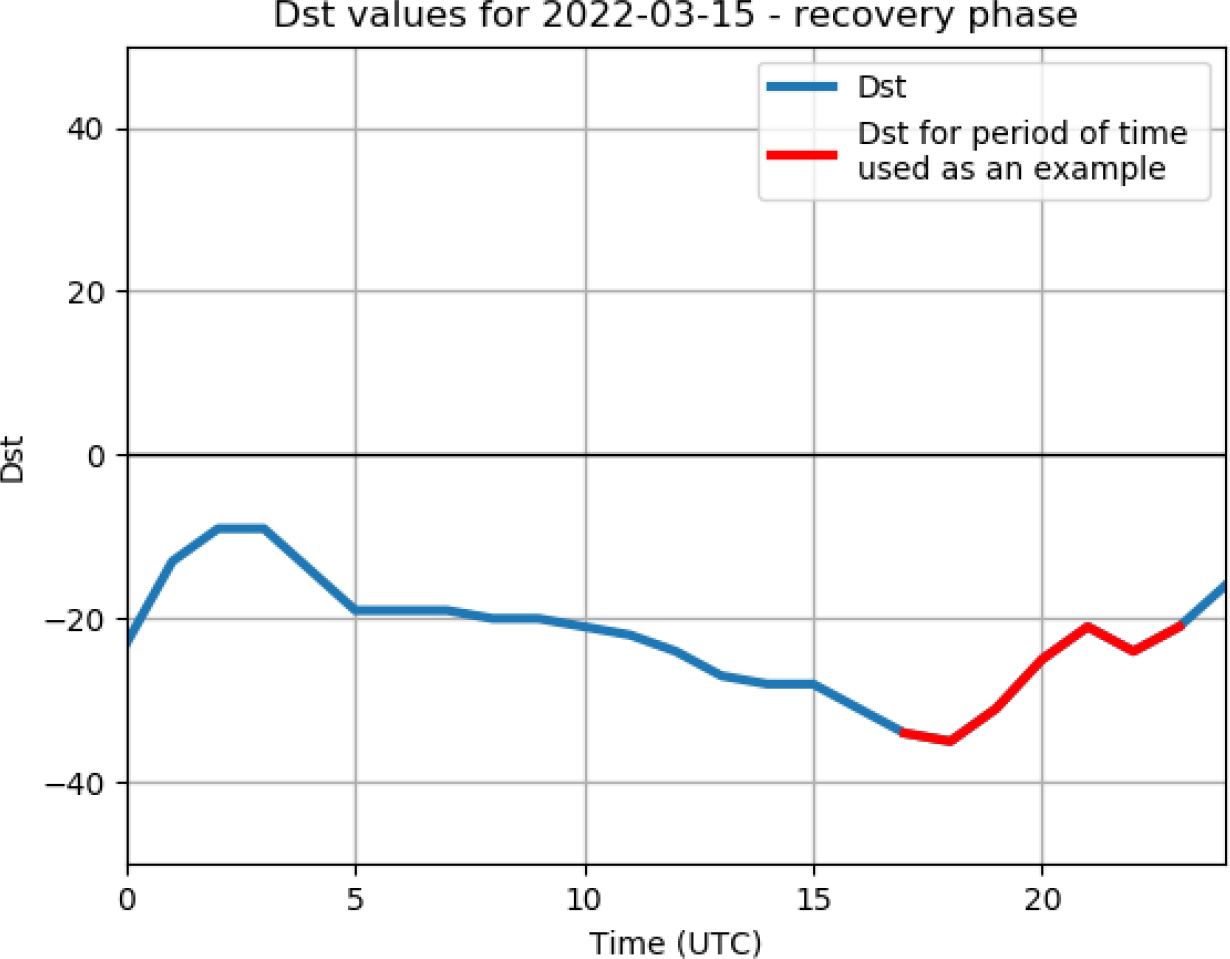
Figure 4.
The Dst index for March 15th, 2022
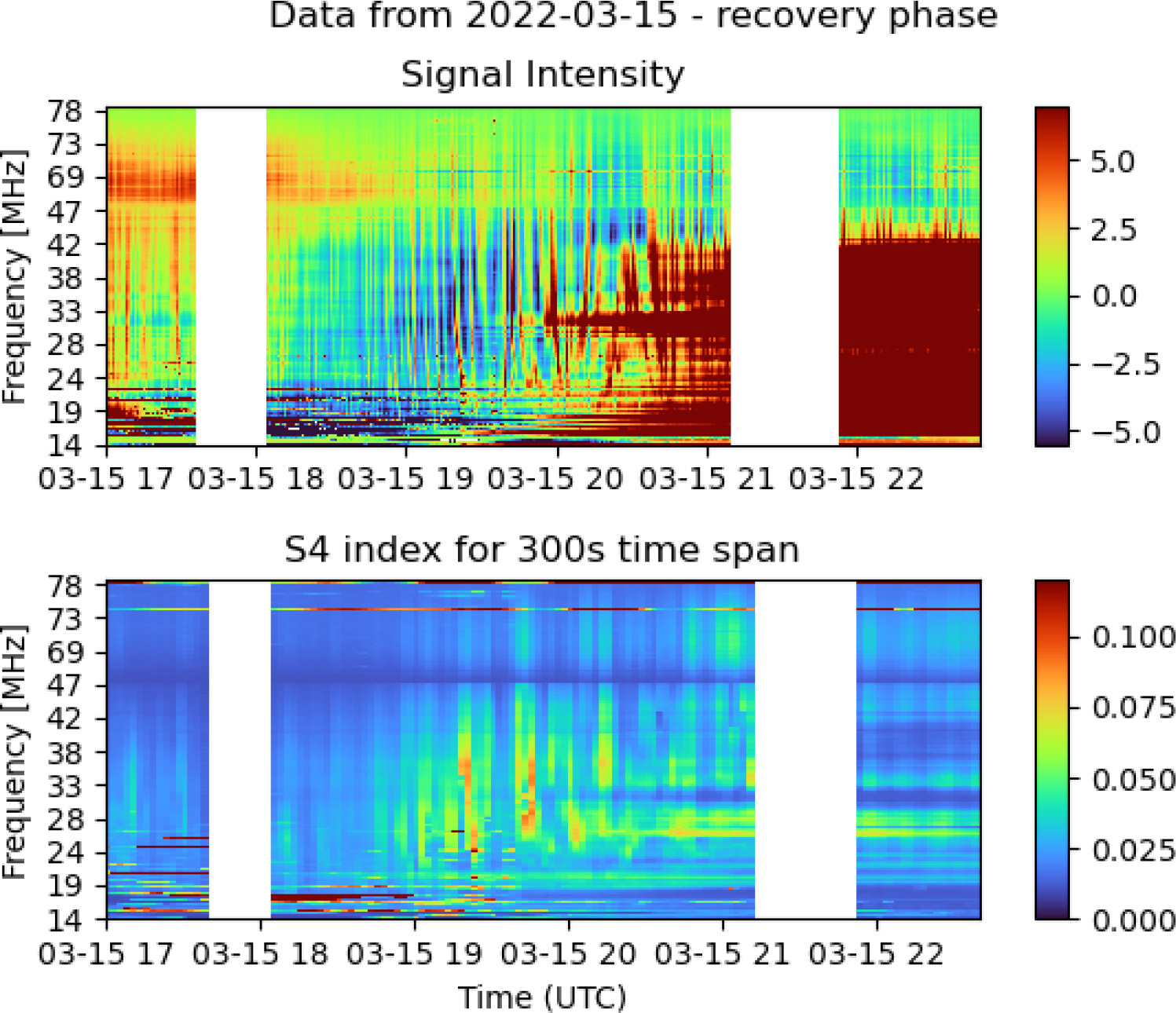
Figure 5.
The I Signal Intensity (top) and the S4 index for 300 second time window (bottom) plots of the recovery phase after the geomagnetic storm for the CasA radio source