Have a personal or library account? Click to login
Modeling of Resident Space Object Light Curves with Blender Software Cover

Modeling of Resident Space Object Light Curves with Blender Software

Open Access
|Jul 2024

Figures & Tables

Figure 1.

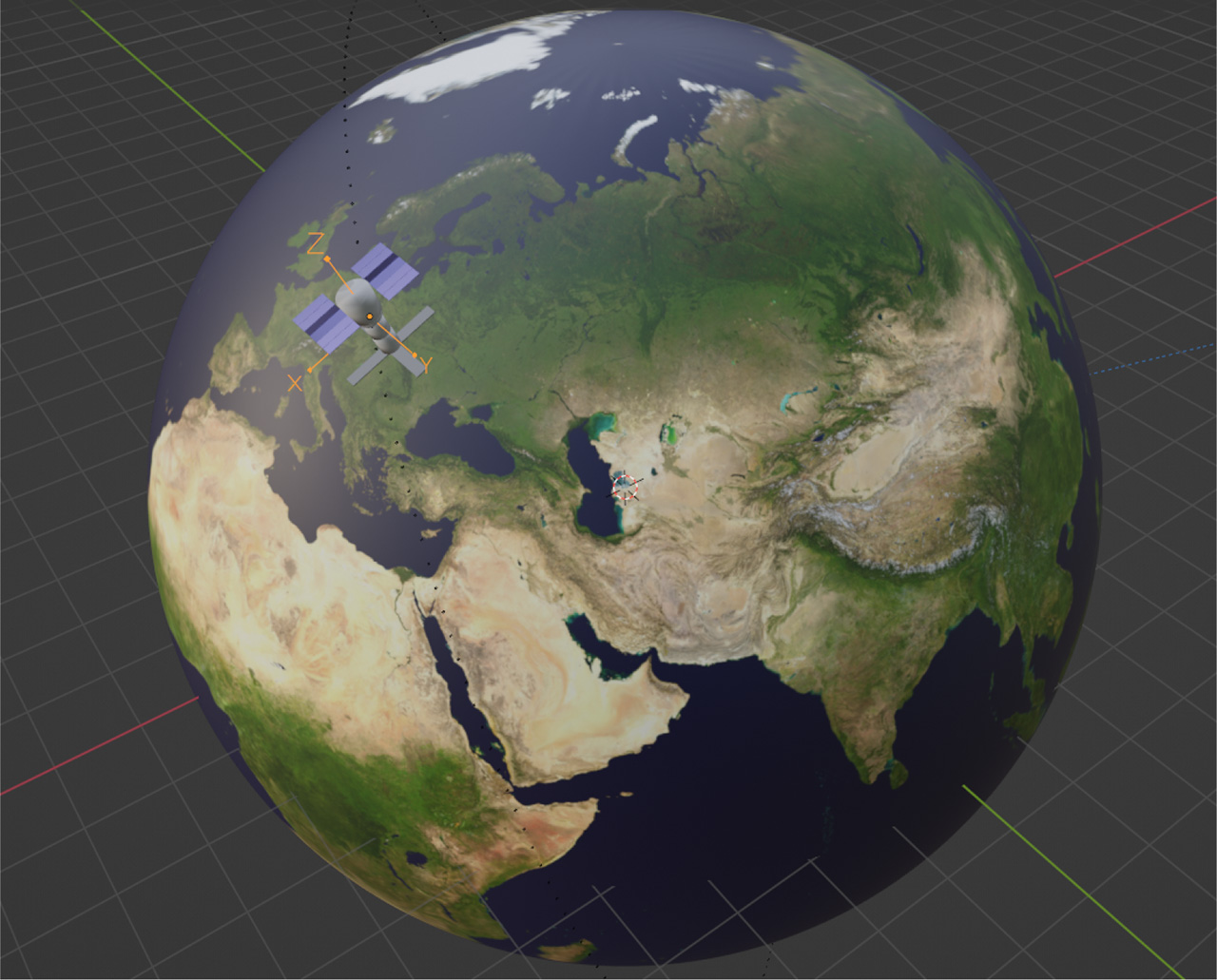
Example of loaded Blender scene with an RSO model.The size of RSO increased by 100x and studio lights were added for visualization.
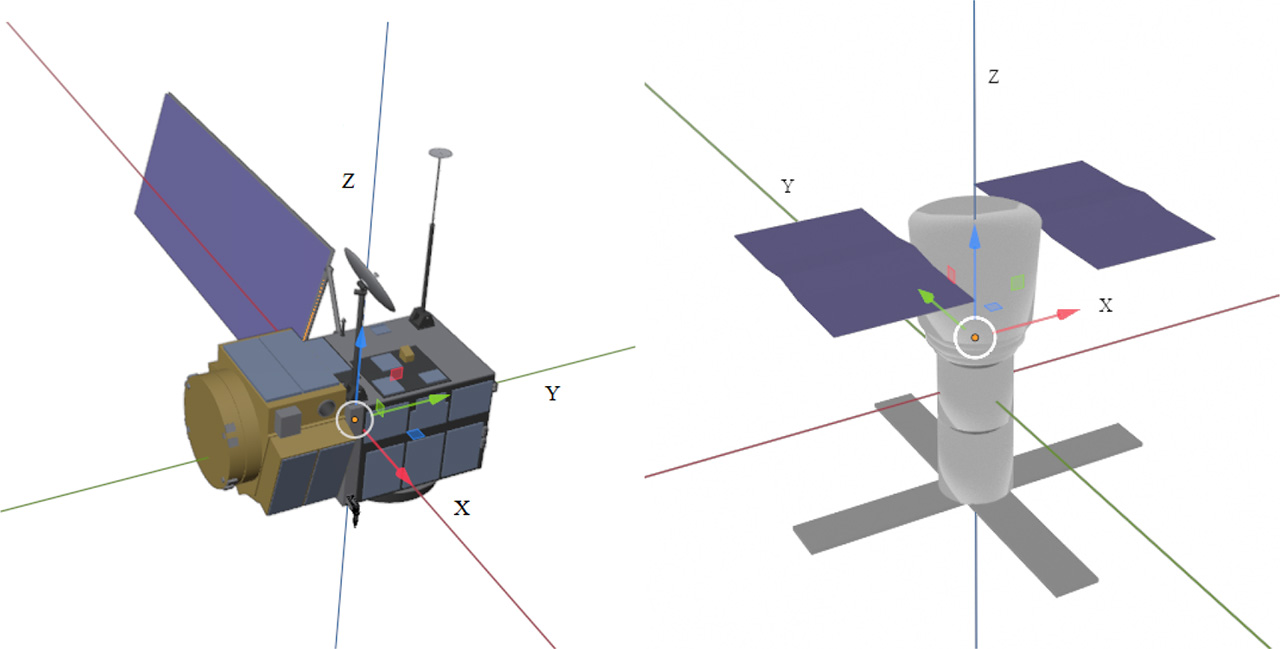

Figure 2.

3D model of satellite COSMOS 2502 satellite (right), Topex/Poseidon satellite (left) visualized in Blender software
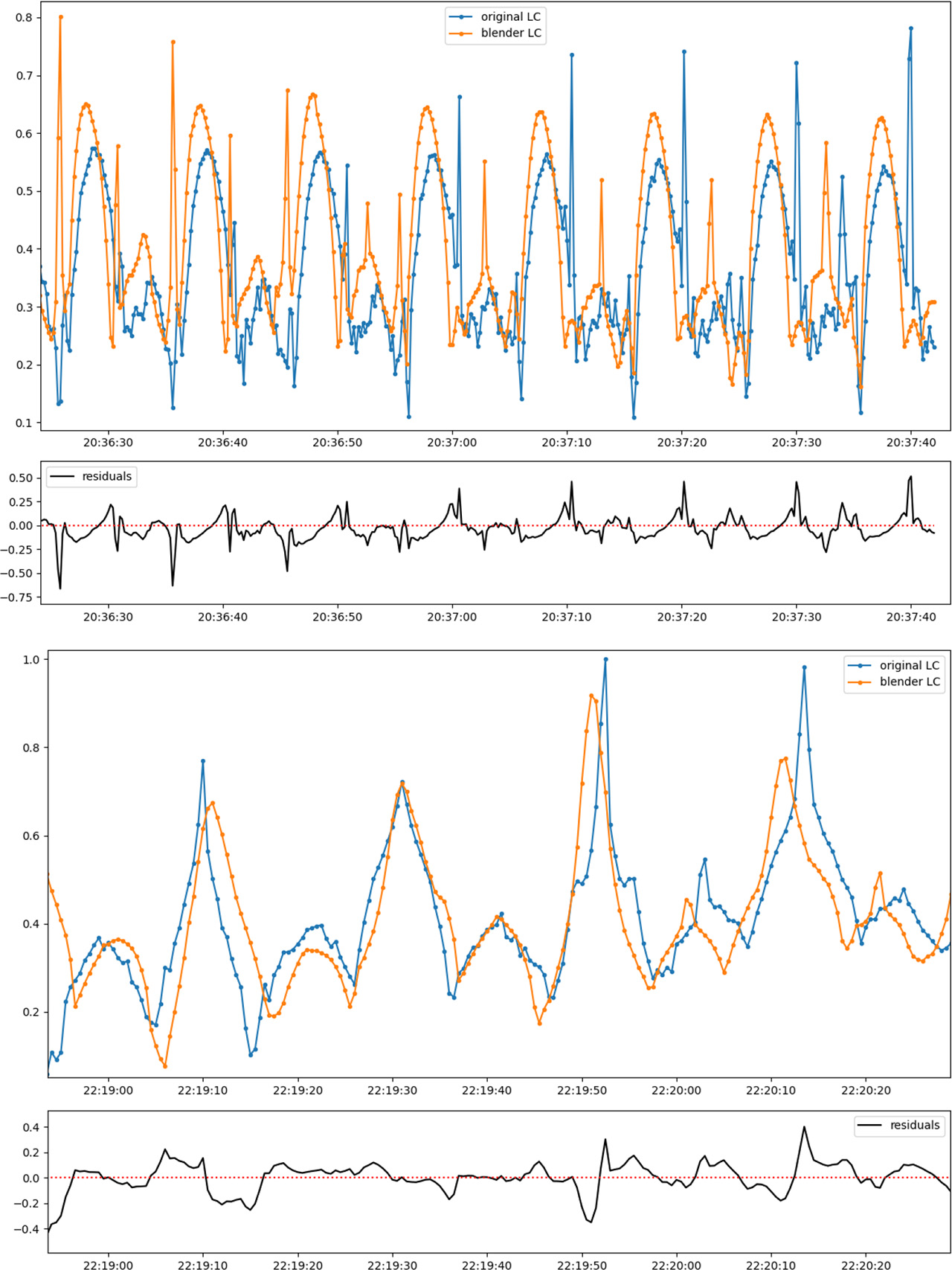

Figure 3.

Observed and synthetic LCs generated with Blander software manually.Top – Topex/Poseidon (observed Aug 02, 2020), bottom – COSMOS 2502 (observed Jun 29, 2023), and their residuals.

Figure 4.

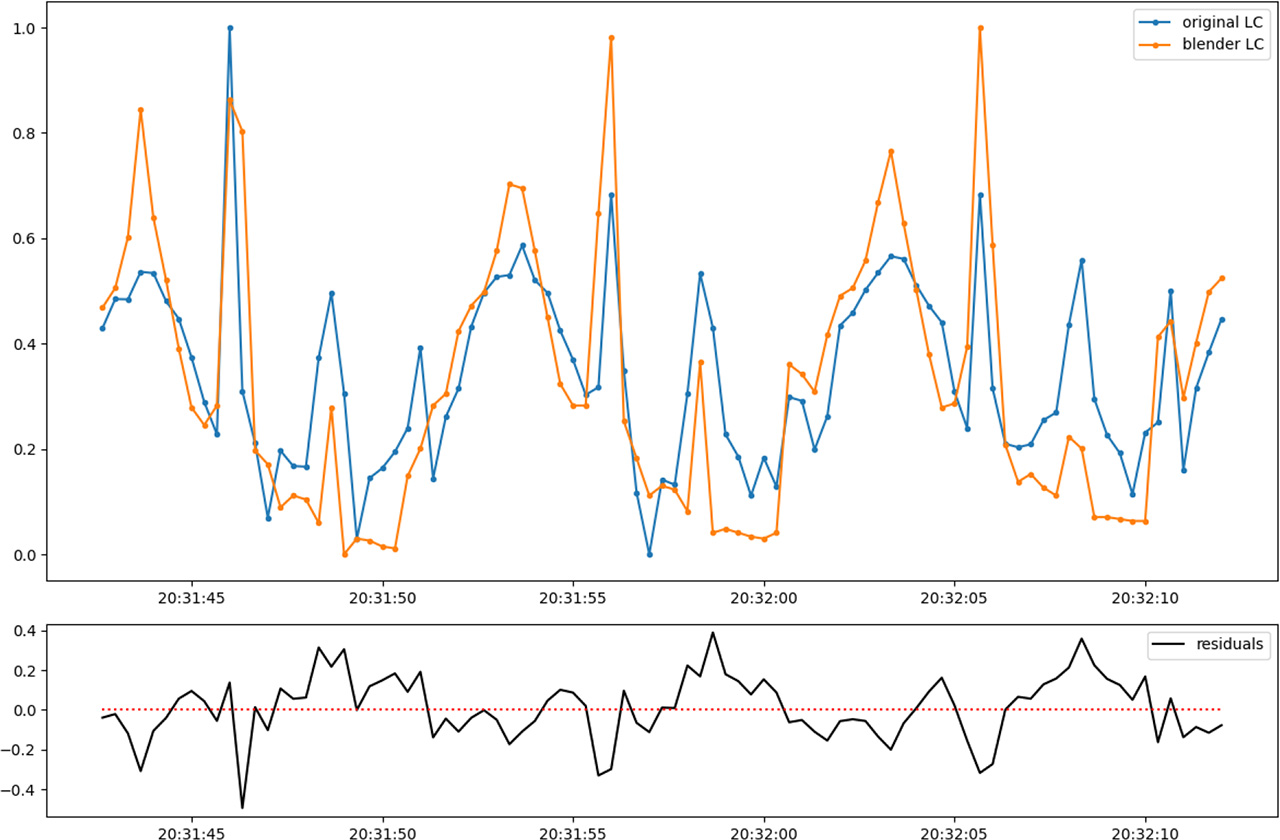
Observed and synthetic LCs (generated with the MCMC method) of satellite TOPEX/Poseidon (NORAD 22076) R filter on the upper figure. The observation was made on Aug 02, 2020. Residuals between these two LCs on the bottom figure.
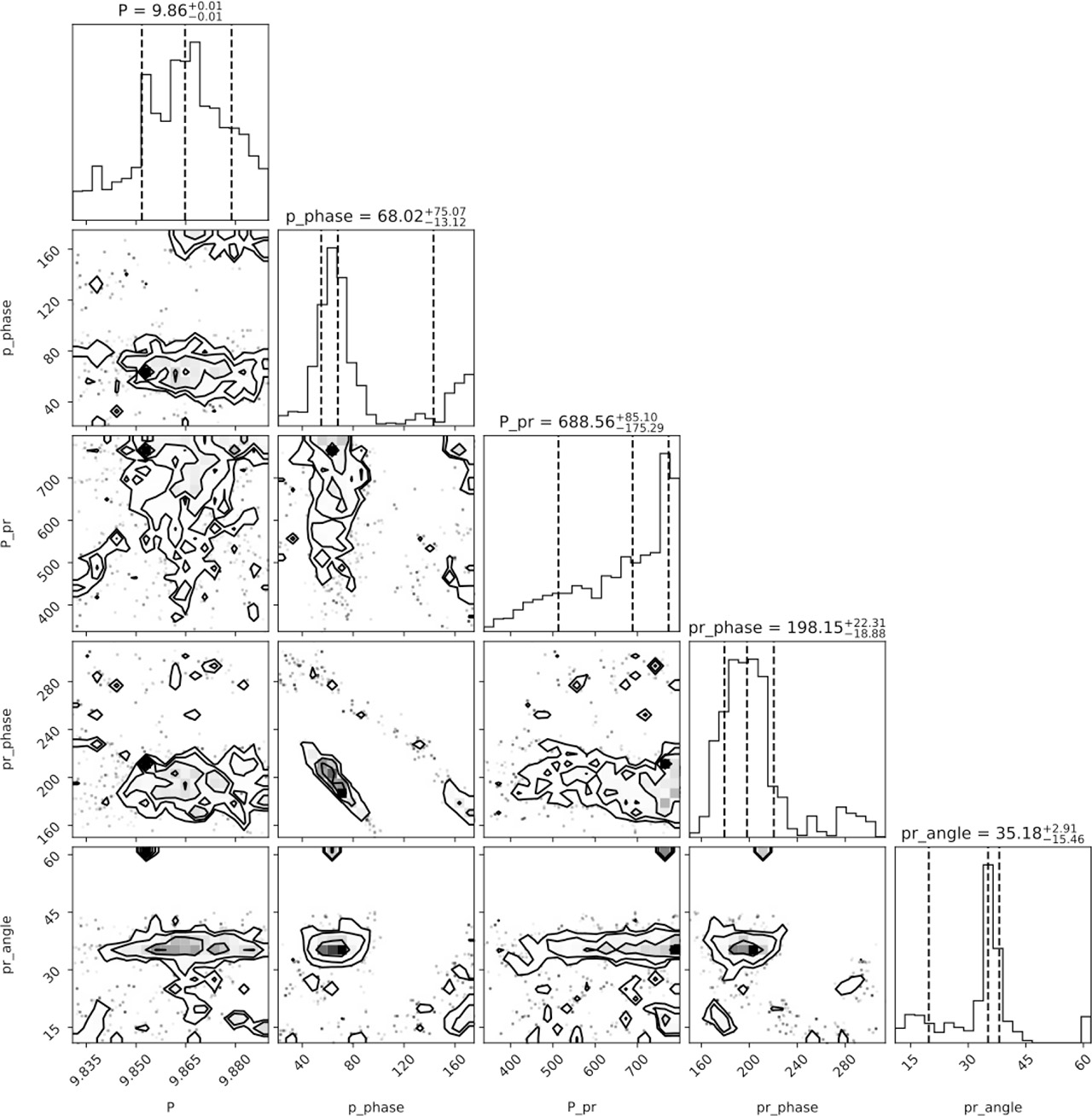

Figure 5.

Results of the MCMC sampling of Topex/Poseidon LC, displayed in the form of the corner plot

Parameters of selected RSO rotation defined from manual fitting of 3D model to the observed LCs

ParameterTopex/Poseidon Manual FitTopex/Poseidon MCMC FitCOSMOS 2502 Manual Fit

Spin Period (sec)9.85 9.860.01+0.01 9.86_{ - 0.01}^{ + 0.01} 40.5
Spin Period phase (°)130 68.0213.12+75.07 68.02_{ - 13.12}^{ + 75.07} 2
Precession period (sec)870 688.56175.29+85.10 688.56_{ - 175.29}^{ + 85.10} 1620
Precession phase (°)321 198.1518.88+22.31 198.15_{ - 18.88}^{ + 22.31} 347
Precession angle (°)33 35.1815.46+2.91 35.18_{ - 15.46}^{ + 2.91} 7
DOI: https://doi.org/10.2478/arsa-2024-0003 | Journal eISSN: 2083-6104 | Journal ISSN: 1509-3859
Language: English
Page range: 42 - 54
Submitted on: Jan 4, 2024
Accepted on: May 14, 2024
Published on: Jul 6, 2024
Published by: Polish Academy of Sciences, Space Research Centre
In partnership with: Paradigm Publishing Services
Publication frequency: 4 issues per year

© 2024 Viktor Kudak, Vasyl Perig, Viktor Dzhumelia, Oleksandr Kryoka, published by Polish Academy of Sciences, Space Research Centre
This work is licensed under the Creative Commons Attribution 4.0 License.