
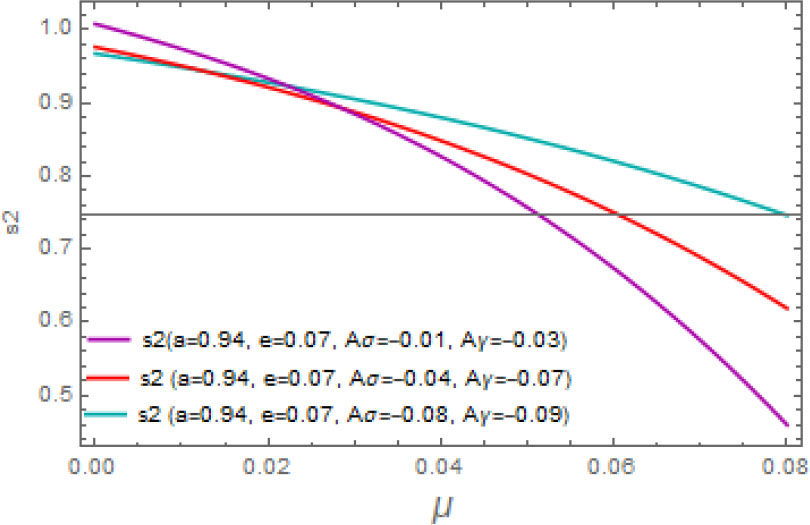
Figure 1.a.
The variation of short-period frequency versus mass parameter μ for different values of the plorate triaxiality
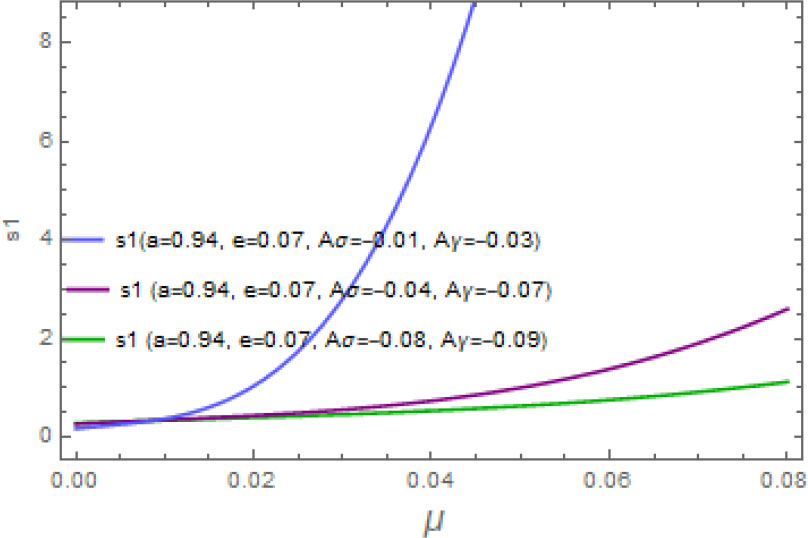
Figure 1.b.
The variation of long-period frequency versus mass parameter μ for different values of the plorate triaxiality parameter
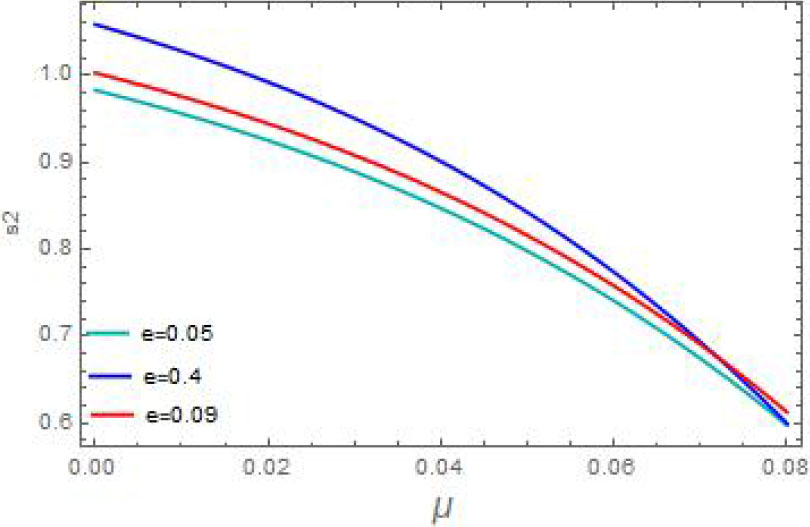
Figure 2.a.
Eccentricity effect on the short-period frequency
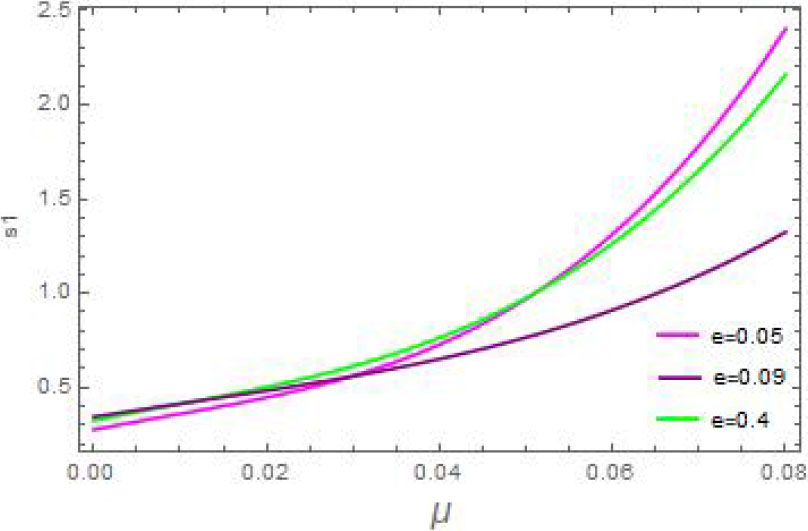
Figure 2.b.
Eccentricity effect on the long-period frequency
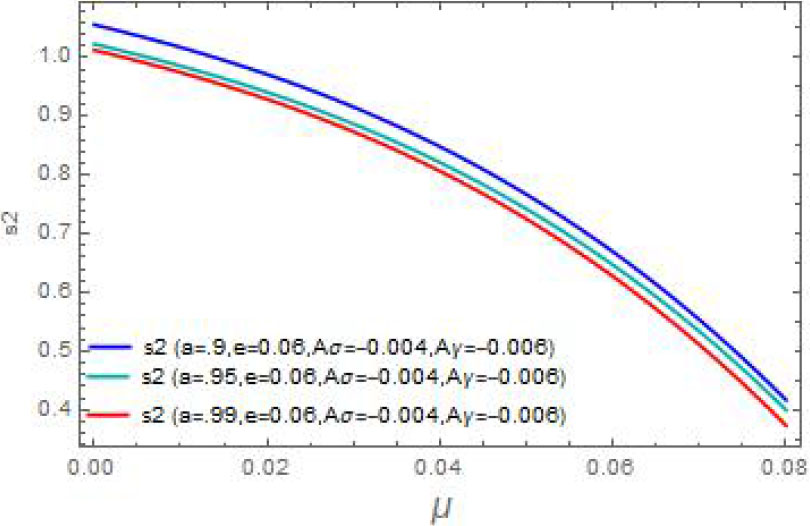
Figure 3.a.
The variations of s2 versus mass parameter μ for different values of semi-major axis (a = 0.90, 0.95, 0.99), with fixed values of Aσ = −0.004, Aγ = −0.006, and e = 0.06
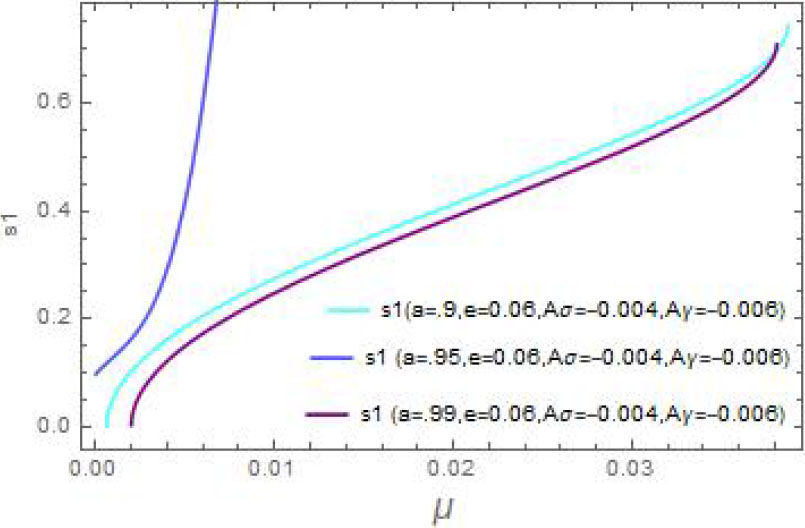
Figure 3.b.
The variations of s1 versus the mass parameter μ for different values of the semimajor axis (a = 0.90, 0.95, 0.99), with fixed plorateness triaxiality coefficients Aγ = −0.006, Aσ = −0.004, and e = 0.06
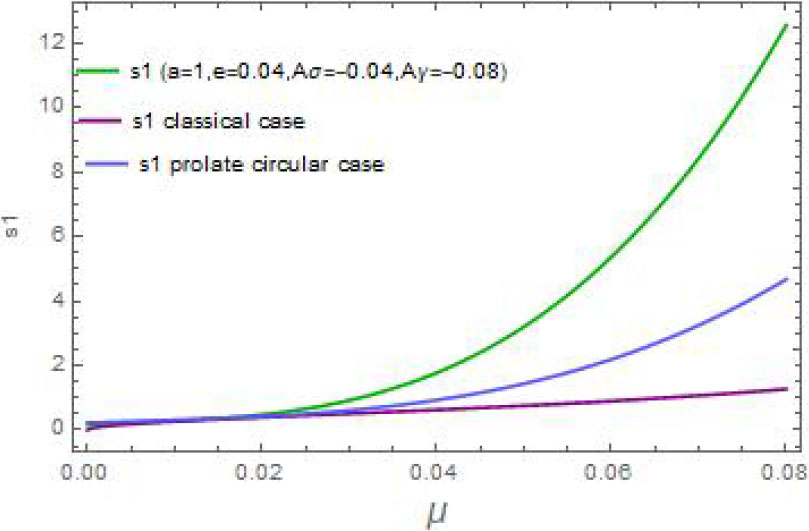
Figure 4.a.
Comparing the long-period frequency for some selected cases with the classical case
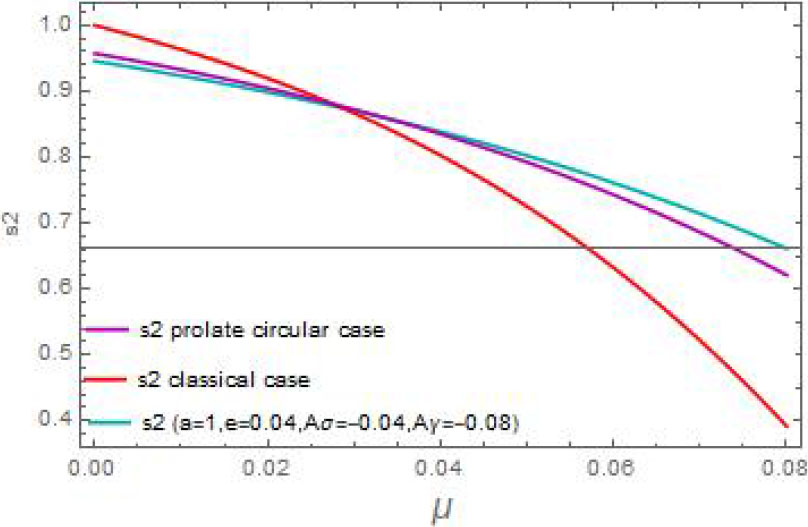
Figure 4.b.
Comparing the short-period frequency for some selected cases with the classical case
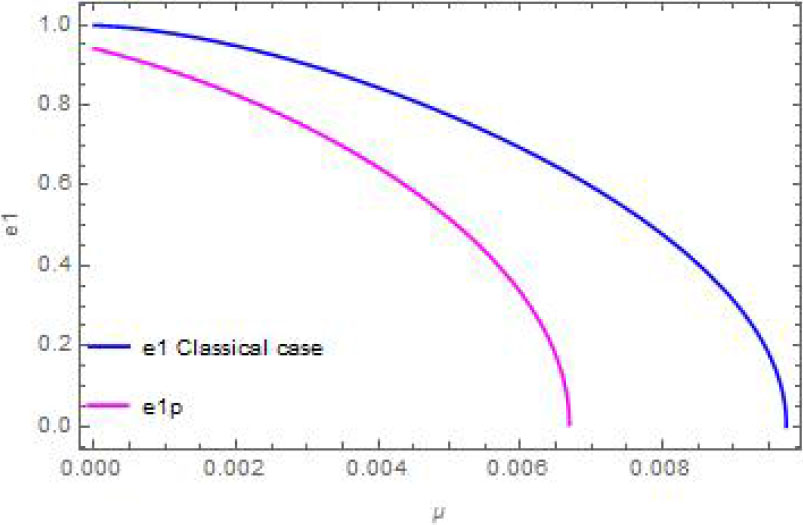
Figure. 5.a.
Comparing the eccentricity of long period motion in the classical with a selected perturbed case.
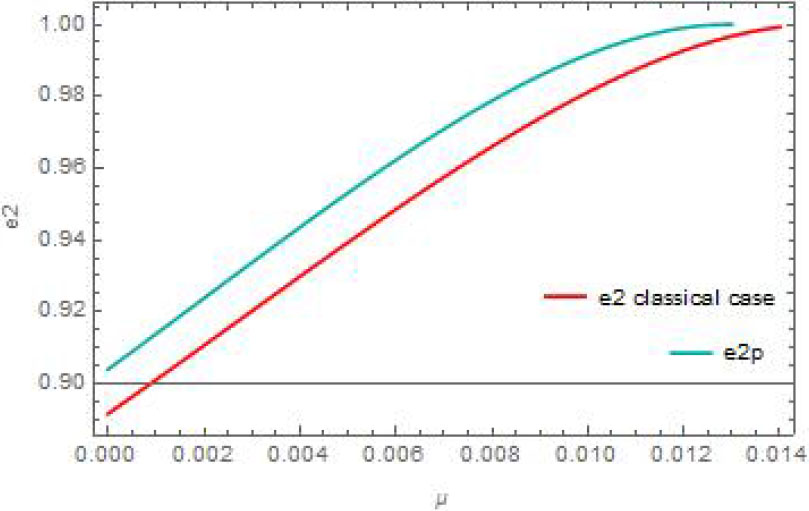
Figure 5.b.
Comparing the eccentricity of short-period motion in the classical with a selected perturbed case.