
Table I.
Demographics of the participants
| Number (percentage) | |
|---|---|
| Sex | |
| Male | 35 (58.3%) |
| Female | 25 (41.7%) |
| Country of specialist qualification | |
| New Zealand | 44 (73.4%) |
| Australia | 5 (8.3%) |
| Other | 11 (18.3%) |
| Years of experiences as specialist | |
| > 20 years | 23 (38.3%) |
| 16 - 20 years | 10 (16.7%) |
| 11 - 15 years | 7 (11.7%) |
| 6 - 10 years | 7 (11.7%) |
| 0 - 5 years | 13 (21.6%) |
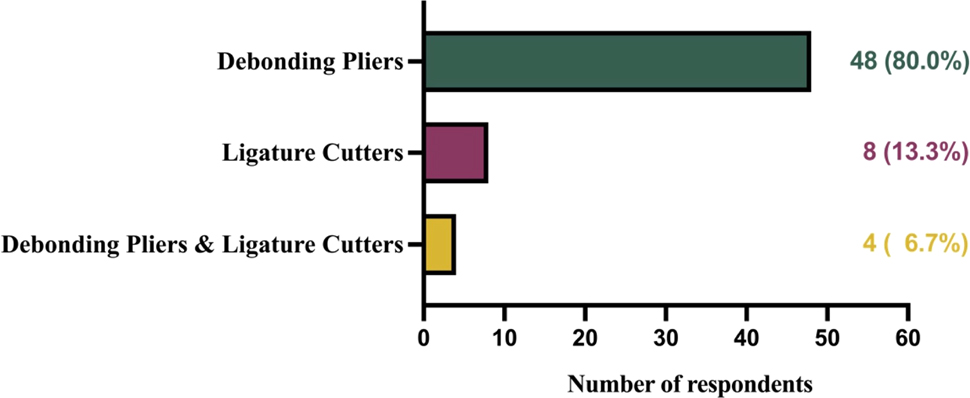
Figure 1.
Methods used to debond brackets [Data presents as number (%)].
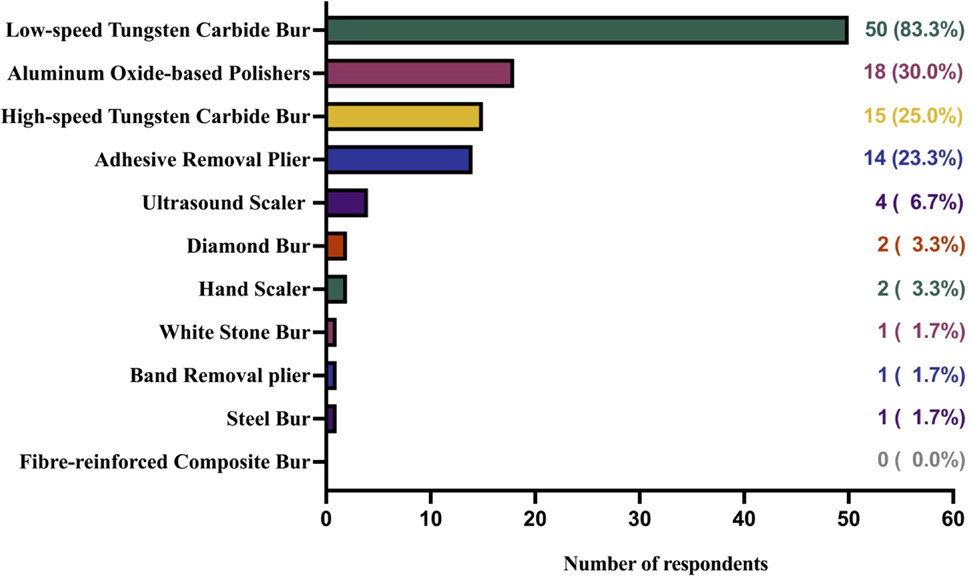
Figure 2.
Methods used to remove residual adhesives [Data presents as number (%)].
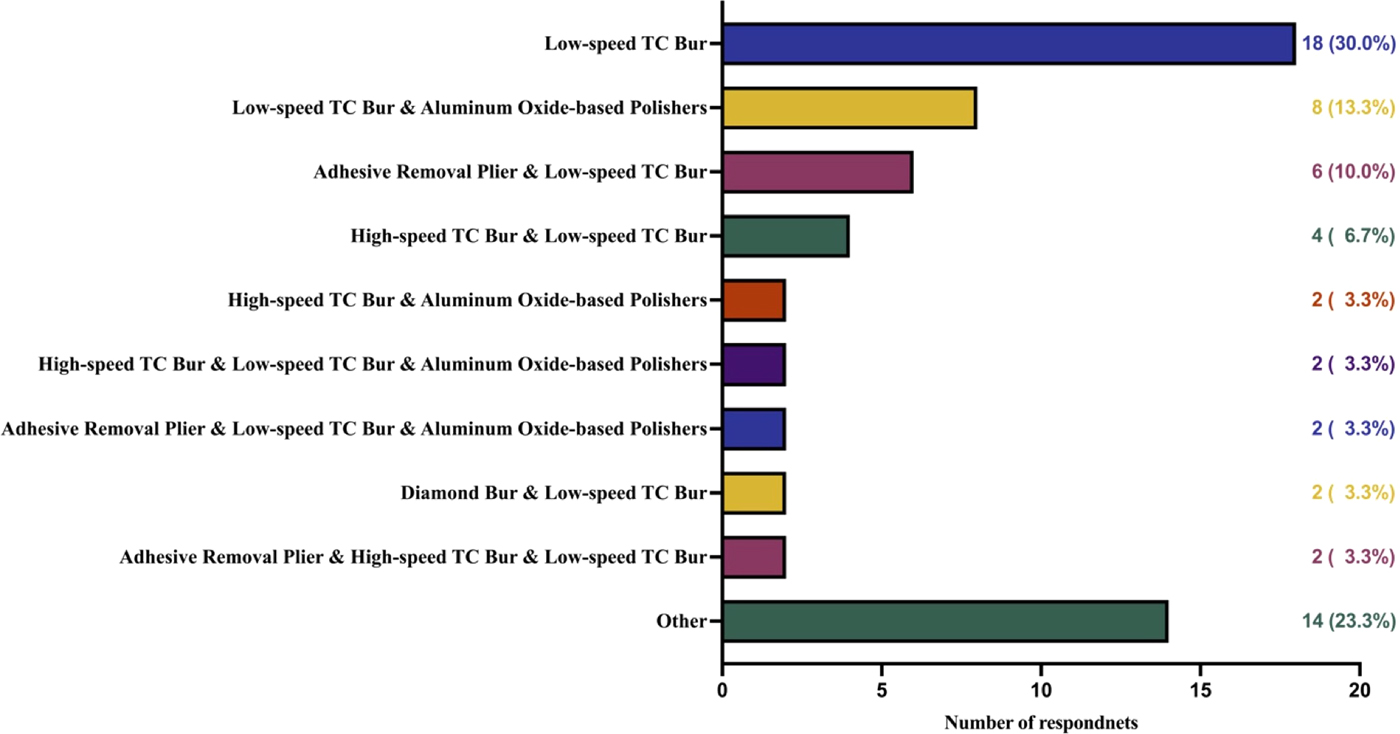
Figure 3.
Different combinations of adhesive removal tools used by orthodontists [Data presents as number (%)].
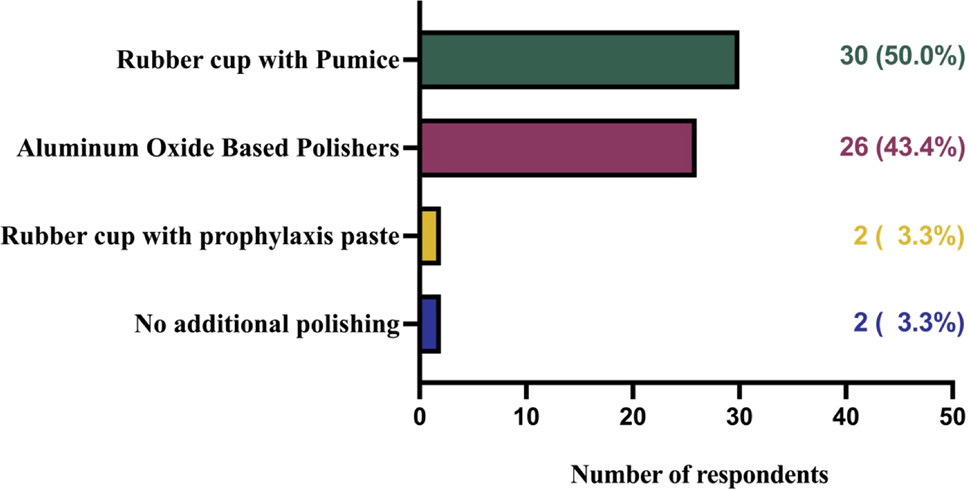
Figure 4.
Polishing after removal of adhesives [Data presents as number (%)].
Table II.
Additional debonding information from the orthodontists
| Number (percentage) | |
|---|---|
| Water irrigation during debonding | |
| Yes | 14 (23.3%) |
| No | 46 (76.7%) |
| Utilization of dental loupes | |
| Yes | 10 (16.7%) |
| No | 50 (83.3%) |
| Time allocated for debonding | |
| 0 to 30 minutes | 11 (18.3%) |
| 30 to 60 minutes | 41 (68.3%) |
| More than 60 minutes | 8 (13.4%) |
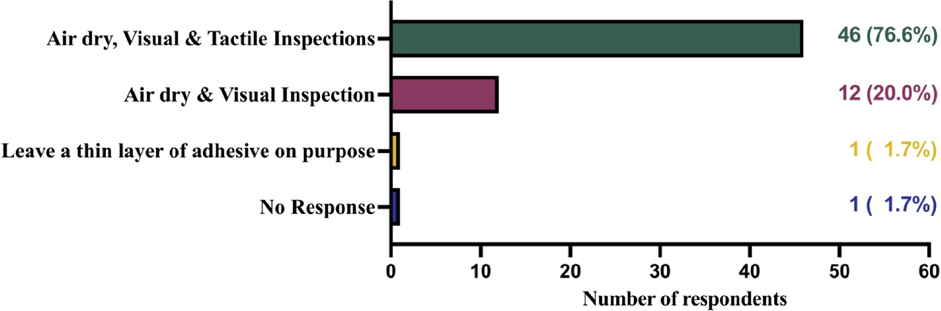
Figure 5.
Methods used to check and ensure complete removal of adhesives [Data presents as number (%)].