
1. Introduction
In countries with a limited population of specialised beef cattle, beef production relies largely on Holstein-Friesian (HF) bulls originating from dairy herds. In such production systems, animals are typically finished to relatively high slaughter weights (approximately 650–700 kg live weight) to compensate for their lower carcass muscularity and to achieve adequate carcass fatness; however, compared with specialised beef breeds, their carcasses often show lower muscularity and may yield beef of less favourable quality (Huuskonen, 2011; Nogalski et al., 2014). Consequently, nutritional strategies applied during the finishing period play a key role in shaping both carcass traits and meat quality in this production system. To improve carcass traits and beef quality, intensive finishing systems are commonly applied during the final months of fattening (Huuskonen, 2011; Nogalski et al., 2023, 2025). Such strategies aim to increase carcass conformation and fat deposition, including intramuscular fat (IMF), which is known to contribute to the sensory properties of beef (Nogalski et al., 2023). Moreover, dietary manipulation during finishing can influence the nutritional value of beef, particularly its fatty acid composition (Nogalski et al., 2018, 2022; Scollan et al., 2006; Wood et al., 2008). Protein supply is typically provided by solvent-extracted meals, predominantly rapeseed meal (RSM), and less frequently by legume seeds (Gu et al., 2020; Huuskonen, 2011). RSM is characterised by high crude protein content and a favourable amino acid profile and is widely used as a replacement for soybean meal without negative effects on growth performance or carcass traits in cattle (Good, 2018). In addition to its role as a protein source, RSM has been shown to influence ruminal lipid metabolism and beef fatty acid composition, often increasing the proportion of unsaturated fatty acids (UFAs) (Benhissi et al., 2020). These differences are particularly relevant in the context of ruminal lipid metabolism, as they may alter microbial biohydrogenation pathways and the formation of fatty acid intermediates, thereby influencing the deposition of specific fatty acids in muscle tissue (Toral et al., 2018).
In addition to nutritional considerations, the replacement of RSM with legume seeds is increasingly driven by economic and environmental factors. Locally produced legumes such as faba bean (Vicia faba L. [VFB]) and white lupin (Lupinus albus L. [LP]) can reduce dependence on imported protein sources and improve the sustainability of beef production systems. Importantly, legumes differ from RSM not only in protein characteristics but also in carbohydrate composition, ruminal degradability, and the presence of bioactive compounds such as condensed tannins (CT). These differences may influence ruminal fermentation and lipid metabolism, thereby affecting the fatty acid composition and sensory properties of beef.
Growing economic and sustainability pressures have increased interest in locally produced plant protein sources, particularly legumes such as faba bean and white lupin (Keller et al., 2021; Ragni et al., 2018). Faba bean is a protein-rich grain with a high lysine content and good agronomic adaptability (Crépon et al., 2010). However, it contains antinutritional compounds, notably CT, which may affect ruminal fermentation and nutrient utilisation (Crépon et al., 2010). Despite these characteristics, previous studies indicate that faba bean can replace conventional protein sources in cattle diets without impairing growth performance or basic meat quality traits (Almeida et al., 2022; Keller et al., 2021; Ragni et al., 2018). White lupin is another promising legume protein source (Um et al., 2024; White & Staines, 2007). Most directly, a recent study in finishing bulls showed that white lupin could replace rapeseed with largely unchanged carcass and most meat-quality traits, although muscle fatty acid proportions differed among protein sources (Bartoň et al., 2025). Unlike faba bean, modern white lupin cultivars are essentially free of CT, although they may contain other antinutritional compounds such as alkaloids, which can limit palatability at high inclusion levels (El Maadoudi, 2006; Masoero et al., 2005). A major consideration when including legume seeds in ruminant diets is the presence of CT. Depending on their dietary concentration, CT may affect ruminal fermentation and lipid metabolism (Bodas et al., 2012; Frutos et al., 2020). Importantly, CT may inhibit specific steps of ruminal biohydrogenation, increasing the intestinal availability of polyunsaturated fatty acids (PUFAs) and their deposition in muscle tissue (Buccioni et al., 2011; Girard et al., 2016; Gruffat et al., 2020; Khiaosa-Ard et al., 2009).
Consumer acceptance of beef is strongly influenced by visual appearance and eating quality traits, including colour, tenderness, juiciness, and flavour (Arend et al., 2022). These attributes are closely associated with IMF, which is a key determinant of palatability in beef. However, not only the quantity but also the qualitative composition of intramuscular lipids plays an important role. Changes in fatty acid composition may affect flavour development and oxidative stability, even when IMF content remains unchanged (Arshad et al., 2018; Shah et al., 2014). Therefore, dietary strategies that modify lipid composition without increasing total fat deposition are of particular interest in beef production systems based on dairy cattle, where IMF levels are typically low.
The extent to which replacing RSM with faba bean or white lupin seeds affects the fatty acid composition and sensory quality of beef, particularly in relation to the presence or absence of CT, remains insufficiently understood. The present study is part of a broader experimental framework in which the effects of dietary protein sources on feed intake, growth performance, and carcass characteristics of HF bulls were previously evaluated (Nogalski et al., 2025). In that study, no significant differences were observed among treatments in key performance and carcass traits, providing a basis for further investigation of meat quality and fatty acid composition. Therefore, the aim of this study was to evaluate the effects of replacing RSM with faba bean seeds containing CT or with tannin-free white lupin seeds in finishing diets for HF bulls on meat quality traits, fatty acid profile, and nutritional value of beef.
We hypothesised that replacing RSM with legume seeds would not affect IMF content but would induce qualitative changes in fatty acid composition and sensory traits, with responses potentially differing between faba bean and white lupin because of differences in their chemical composition, including the presence or absence of CT.
2. Materials and methods
2.1. Animals, housing, and experimental diets
The experiment was conducted at the Agricultural Experiment Station in Bałcyny, Poland (53°35′29″ N, 19°50′58″ E). The study was conducted as a controlled feeding experiment with a completely randomised design. Thirty HF bulls were allocated to three dietary treatments differing in the protein source used in the concentrate: RSM, faba bean seeds (VFB), or white lupin seeds (Lupinus albus L. (LP)). The individual animal was considered the experimental unit for all analyses. Animals were allocated to treatments using an analogue method based on age and live weight to ensure comparable baseline characteristics across groups. HF bulls originating from the local dairy herd were reared conventionally during the rearing phase. At approximately 5 months of age, animals entered a semi-intensive fattening system. At 527 ± 23 days of age and 507 ± 33 kg live weight, bulls were assigned to one of three dietary treatments (n = 10 per treatment). Animals were housed in three separate group pens (10 × 13 m; 13 m² per animal) on deep straw bedding, which was replenished regularly to maintain hygiene and animal comfort, with free access to water and salt licks. Animals were adapted to the experimental diets and housing conditions for 4 weeks before the start of data collection.
2.2. Feeding management
The finishing period lasted 5 months. Bulls were offered total mixed rations ad libitum. Diets were formulated to be isoenergetic and isonitrogenous, meeting requirements for growing-finishing bulls according to INRA (2009). The only experimental factor was the protein source in the concentrate: RSM, faba bean seeds (VFB), and white lupin seeds (LP). Diet composition and ingredient proportions dry matter (DM) basis are presented in Tables 1 and 2. These data describe the experimental diets and are not considered experimental results. Maize silage was prepared from the Goldnugget hybrid harvested at the dough stage. Concentrate ingredients included triticale grain (cv. Dinaro), faba bean (cv. Bobas), and white lupin (cv. Bardo); all grains were ground before feeding. A commercial mineral-vitamin premix (product code 7619; Cargill Poland Ltd., Warsaw, Poland) was included in all diets. Individual daily feed intake was recorded automatically using an Insentec feeding system (Insentec BV, Marknesse, The Netherlands). Bulls were weighed at the start of the trial and weekly thereafter. Animals remained under veterinary supervision, and no health disorders were observed during the experiment.
Table 1
Chemical composition of feed ingredients used in experimental diets (g/kg dry matter, mean ± SEM)
| Specification | MS | TG | RSM | VFB | LP |
|---|---|---|---|---|---|
| Number of samples | 9 | 9 | 9 | 9 | 9 |
| Dry matter (g/kg FM) | 314 ± 1 | 885 ± 1 | 869 ± 1 | 872 ± 1 | 886 ± 2 |
| Organic matter (g/kg DM) | 964 ± 2 | 956 ± 1 | 923 ± 2 | 971 ± 2 | 965 ± 2 |
| Crude protein (g/kg DM) | 88.5 ± 1.3 | 124 ± 1 | 384 ± 1 | 331 ± 2 | 350 ± 2 |
| Crude fat (g/kg DM) | 11.2 ± 0.6 | 17 ± 1 | 26 ± 2 | 16 ± 0 | 42 ± 1 |
| NDF (g/kg DM) | 336 ± 5 | 169 ± 1 | 293 ± 2 | 157 ± 4 | 252 ± 5 |
| ADF (g/kg DM) | 194 ± 1 | 43 ± 0 | 221 ± 1 | 104 ± 1 | 197 ± 2 |
| NFC (g/kg DM) | 503 ± 3 | 636 ± 4 | 235 ± 4 | 472 ± 4 | 318 ± 4 |
| pH | 3.54 ± 0.09 | — | — | — | — |
| Lactic acid (g/kg DM) | 27.8 ± 7.3 | — | — | — | — |
| Acetic acid (g/kg DM) | 6.3 ± 1.3 | — | — | — | — |
| Butyric acid (g/kg DM) | 0.08 ± 0.03 | — | — | — | — |
| Ammonia N (g/kg total N) | 33.6 ± 11.4 | — | — | — | — |
| UFV | 0.85 ± 0.01 | 1.18 ± 0.01 | 1.05 ± 0.01 | 1.21 ± 0.01 | 1.22 ± 0.01 |
| PDIN (g/kg DM) | 50.2 ± 0.4 | 88.5 ± 0.2 | 253 ± 1 | 208 ± 0 | 221 ± 0 |
| PDIE (g/kg DM) | 68.3 ± 0.6 | 108.1 ± 0.2 | 160 ± 1 | 112 ± 0 | 138 ± 0 |
| Condensed tannins (mg/g DM) | 0.05 ± 0.00 | nd | 0.05 ± 0.00 | 7.98 ± 0.00 | 0.05 ± 0.00 |
Values are means ± SEM. MS = maize silage; TG = triticale grain; RSM = rapeseed meal; VFB = Vicia faba seeds; LP = lupin seeds; DM = dry matter; FM = fresh matter; NDF = neutral detergent fibre; ADF = acid detergent fibre; NFC = non-fibre carbohydrates; UFV = feed units for meat production; PDIN = protein digested in the small intestine when rumen fermentable nitrogen is limiting; PDIE = protein digested in the small intestine when rumen fermentable energy is limiting; nd = not detected.
Table 2
Ingredient composition (% of dry matter) and chemical composition of experimental diets (g/kg dry matter)
| Specification | RSM | VFB | LP |
|---|---|---|---|
| Maize silage | 62 | 62 | 62 |
| Triticale grain | 21 | 17 | 19 |
| Rapeseed meal | 15 | — | — |
| Vicia faba seeds | — | 19 | — |
| Lupin seeds | — | — | 17 |
| Mineral–vitamin premix | 2 | 2 | 2 |
| Dry matter (g/kg FM) | 511 | 510 | 513 |
| Organic matter | 936.8 | 944.6 | 943.4 |
| Crude protein | 138.5 | 138.8 | 139.4 |
| NDF | 287.7 | 266.9 | 283.3 |
| ADF | 162.4 | 147.3 | 161.9 |
| NFC | 480.6 | 509.5 | 486.7 |
| UFV | 0.94 | 0.95 | 0.95 |
| PDIN | 87.5 | 85.4 | 85.3 |
| PDIE | 98.8 | 91.7 | 96.3 |
RSM = rapeseed meal; VFB = Vicia faba seeds; LP = lupin seeds; FM = fresh matter; NDF = neutral detergent fibre; ADF = acid detergent fibre; NFC = non-fibre carbohydrates; UFV = feed units for meat production; PDIN = protein digested in the small intestine when rumen fermentable nitrogen is limiting; PDIE = protein digested in the small intestine when rumen fermentable energy is limiting.
2.3. Feed sampling and chemical analyses
Feed samples were collected every 2 weeks and analysed for DM, crude protein, ether extract, and ash according to AOAC (2005). Neutral detergent fibre (NDF), acid detergent fibre (ADF), and acid detergent lignin were determined following the study by Van Soest et al. (1991). Silage pH was measured using a digital pH meter (HI 8314, Hanna Instruments, USA). Lactic and butyric acids were quantified by high-performance liquid chromatography (HPLC) (Shimadzu, Japan) using a MetaCarb 67H column with 0.0025 M sulphuric acid as the mobile phase, as described by Muck & Dickerson (1988). Water-soluble carbohydrates were determined by the anthrone method (Thomas, 1977). Fatty acid composition of feeds and concentrates was analysed by gas chromatography (GC) (Varian CP-3800, Varian Analytical Instruments, USA) equipped with a flame-ionisation detector (FID), according to PN-EN ISO 5508:1996, after preparation of fatty acid methyl esters (FAMEs) as described in PN-EN ISO 5509:2001. FAMEs were prepared using the modified Peisker method (Żegarska et al., 1991). Tannin content of feed ingredients was determined as described in Table 3. Tannin content of feed ingredients and experimental concentrates was determined according to Industry Standard BN-909160–42, which is based on the butanol–HCl method for CT described by Porter et al. (1986). Briefly, ground samples were extracted and reacted with butanol–HCl reagent in the presence of ferric ions, followed by heating to convert proanthocyanidins to anthocyanidins. Absorbance was measured spectrophotometrically at 550 nm, and results were expressed as catechin equivalents (mg/g DM). Analyses were performed in duplicate.
Table 3
Fatty acid profile and condensed tannin content of individual feed ingredients (RSM, VFB, LP) and corresponding experimental concentrates (RSMc, VFBc, LPc) (mg/g dry matter)
| Fatty acid | RSM | VFB | LP | RSMc | VFBc | LPc |
|---|---|---|---|---|---|---|
| C16:0 | 2.67 | 2.04 | 4.52 | 2.33 | 2.07 | 3.21 |
| C18:0 | 0.73 | 0.51 | 1.71 | 0.74 | 0.62 | 1.19 |
| C18:1 n−9 | 10.54 | 3.70 | 14.96 | 7.67 | 4.67 | 9.98 |
| C18:2 n−6 | 8.83 | 8.84 | 17.85 | 7.15 | 7.47 | 11.47 |
| C18:3 n−3 | 1.85 | 0.91 | 2.29 | 0.96 | 0.64 | 1.25 |
| Condensed tannins | 0.05 | 7.98 | 0.05 | 0.00 | 1.51 | 0.00 |
RSM = rapeseed meal; VFB = Vicia faba seeds; LP = lupin seeds; RSMc, VFBc, LPc = complete experimental concentrates corresponding to each dietary treatment. Condensed tannin values for feed ingredients represent intrinsic concentrations in the respective raw materials, whereas values for concentrates reflect their final concentration after formulation of the experimental diets.
2.4. Slaughter procedure and meat sampling
At the end of the finishing period (152 days), bulls were transported to a commercial abattoir and rested for 15–20 h with free access to water. Slaughter was conducted in accordance with Council Regulation (EC) No 1099/2009 on the protection of animals at the time of killing (European Union, 2009). Electrical stimulation was not applied. The longissimus lumborum muscle was excised from the left side of each carcass (n = 30) at 96 h post-mortem. Samples were packaged in polyamide/polyethylene vacuum bags at an ambient temperature of approximately 4°C under standard industrial conditions, transported in an isothermal container, and stored overnight at 4 ± 1°C in the research laboratory of the University of Warmia and Mazury in Olsztyn. Approximately 300 g of fresh muscle tissue was used for determination of the fatty acid profile. Samples of approximately 200 g were frozen for subsequent determination of mineral and vitamin content. Additional samples of approximately 700 g were vacuum packaged and aged at 4 ± 1°C in the absence of light until day 14 post-mortem, after which they were frozen at −20°C until further analyses (chemical composition and sensory evaluation).
2.5. Meat analyses
Chemical composition, sensory evaluation, fatty acid profile, and mineral and vitamin analyses were performed according to standardised and validated procedures, as detailed below. All laboratory determinations were performed at least in duplicate unless stated otherwise.
2.6. Chemical composition of meat
Chemical composition of the longissimus lumborum muscle was determined after 14 days of wet ageing. Approximately 300 g of each sample was collected for analysis. External fat and visible connective tissue were removed before analysis. Samples were ground twice through a 3 mm plate and thoroughly homogenised. Moisture content was determined by oven drying at 103 ± 2°C to constant weight in accordance with PN-ISO 1442 (2000b). Crude protein content was analysed using the Kjeldahl method (AOAC, 2006b; method 992.15) and calculated as N × 6.25. Crude fat content was determined by Soxhlet extraction (AOAC, 2006a; method 991.36). Ash content was measured according to PN-ISO 936 (2000a). Collagen content was calculated from hydroxyproline concentration using a conversion factor of 7.25, as described by Modzelewska-Kapituła et al. (2016). All chemical determinations were performed in triplicate, and mean values were used for statistical analysis.
All meat quality analyses were performed after 14 days of vacuum ageing, which reflects standard post-mortem handling procedures used in both research and commercial beef production. This approach was adopted to evaluate meat quality under conditions relevant to consumer experience, particularly for traits such as tenderness, juiciness, and flavour.
2.7. Sensory evaluation of meat
Sensory evaluation was conducted after 14 days of wet ageing in accordance with PN-ISO 4121 (1998). A trained panel consisting of six female non-smokers with confirmed sensory sensitivity and experience in meat evaluation participated in the analysis. Panel selection, training, and monitoring were performed according to ISO 8586 (1993). The panellists underwent 36 h of training over a 3-month period, focusing on the evaluation of beef sensory attributes. Meat samples were cooked under standardised conditions and evaluated immediately after cooking. Warm samples were cut into uniform slices (∼2 mm), coded with random three-digit numbers, and presented in random order on white plates. Assessments were conducted at approximately 20°C under fluorescent lighting. Water and bread were provided between samples for palate cleansing. A 10-point structured scale was used to evaluate the following attributes:
colour intensity (1 = very pale; 10 = very intense red),
aroma intensity (1 = imperceptible; 10 = extremely intense),
juiciness (1 = extremely dry; 10 = extremely juicy),
tenderness (1 = extremely tough; 10 = extremely tender),
flavour (intensity) (1 = imperceptible; 10 = extremely intense).
Five sensory sessions were conducted, with a maximum of six samples evaluated per session. Three samples were assessed consecutively, followed by a 20-min break before the next set of samples.
2.8. Fat content and fatty acid profile
Fat was extracted from ground longissimus lumborum muscle samples homogenised using an Ultra-Turrax homogeniser (Janke & Kunkel) by the Soxhlet extraction method, employing a Büchi B-811 extraction system (Büchi Labortechnik AG, Flawil, Switzerland) with hexane as the solvent (Morris, 2016). Crude fat content and fatty acid composition were determined in accordance with PN-EN ISO 5509 (2001) and PN-EN ISO 5508 (1996). FAME were prepared by dissolving the extracted fat in a methanol–chloroform–sulphuric acid mixture, followed by methylation using the modified Peisker method (Żegarska et al., 1991). The relative proportions of 31 individual fatty acids were determined by GC using a Varian CP-3800 gas chromatograph equipped with a split/splitless injector and a FID. Aliquots (1 µL) of FAME were injected onto a CP-Sil 88 capillary column (100 m × 0.25 mm internal diameter). Data acquisition and processing were performed using the Galaxie Chromatography Data System. Fatty acids were identified by comparing retention times with those of commercially available reference standards (Supelco Inc., Bellefonte, PA, USA). Analyses of samples and reference standards were conducted under identical chromatographic conditions: helium as the carrier gas, injector temperature 260°C, detector temperature 260°C, and an oven temperature programme starting at 110°C and increasing to 249°C. Fatty acids were expressed as percentages of total identified fatty acids and grouped into saturated fatty acids (SFAs) and UFAs, including monounsaturated fatty acids (MUFAs) and PUFAs. The following ratios were calculated: UFA/SFA, PUFA/SFA, and n−6/n−3 PUFA.
The atherogenic index (AI) and thrombogenic index (TI) were calculated according to Ulbricht & Southgate (1991) using the following equations:
where C12:0 is lauric acid, C14:0 myristic acid, C16:0 palmitic acid, and C18:0 stearic acid; ΣMUFA represents the sum of MUFAs; and ΣPUFA n−6 and ΣPUFA n−3 represent the sums of PUFAs of the n−6 and n−3 series, respectively.2.9. Determination of mineral content
Samples of longissimus lumborum muscle were homogenised, and subsamples of approximately 0.5 g were placed in Teflon-lined pressure vessels. Each subsample was combined with 7 mL of 65% spectrally pure nitric acid (Merck). All samples were analysed in duplicate, and mean values were used for subsequent calculations. The vessels were sealed and subjected to microwave-assisted digestion using a Mars Xpress 5 digestion system (CEM Corporation, USA). Each digestion batch included two blank samples and two certified reference materials to ensure analytical accuracy. After digestion, samples were cooled and quantitatively transferred to 25 mL volumetric flasks. Concentrations of potassium, sodium, magnesium, zinc, and iron were determined by atomic absorption spectrometry using an atomic absorption spectrometer (Candela, USA) equipped with element-specific hollow cathode lamps.
2.10. Determination of vitamin A and E content
Vitamin A (retinol) and vitamin E (α-tocopherol) contents were determined in accordance with PN-EN 12822 (2014), with minor modifications adapted to the present study. Samples of longissimus lumborum muscle were ground, and approximately 2 g subsamples were placed in 25 mL amber glass flasks. Samples were saponified at 80°C for 30 min in the presence of 1.2 mL of 20% ascorbic acid, 0.6 mL of methanol, and 5 mL of 60% potassium hydroxide. After cooling, fat-soluble compounds were extracted twice with n-hexane, and the combined extracts were evaporated to dryness under a stream of nitrogen. The residue was dissolved in 1 mL of anhydrous ethanol and filtered into amber glass vials. Separation of vitamins was performed by HPLC using a silica column. Detection was carried out using two detectors in series: a UV–visible photodiode array detector for retinol and a fluorescence detector for α-tocopherol. The injection volume was 20 µL. Quantification of retinol and α-tocopherol was based on external calibration curves constructed from analytical standards. All analyses were performed in duplicate, and mean values were used for statistical evaluation.
All analytical procedures and sample preparation steps are described in detail to ensure full reproducibility of the study, and no essential methodological information relies on previously published companion studies.
2.11. Statistical analysis
Data were analysed using one-way analysis of variance with dietary treatment as the fixed effect. Normality and homogeneity of variance were assessed using the Shapiro–Wilk and Levene tests, respectively. When significant effects were detected, Tukey’s post hoc test was applied. Differences in the sensory attributes of meat among dietary treatments were analysed using the Kruskal–Wallis test, followed by pairwise Mann–Whitney U tests with an appropriate adjustment for multiple comparisons. Results are presented as means ± SEM (standard error of the mean). Statistical significance was declared at P < 0.05 and at P < 0.01. All analyses were performed using Statistica 13.3 (TIBCO Software Inc., USA).
3. Results
The results presented below concern meat quality traits, intramuscular fatty acid composition, and mineral and vitamin content of HF bulls fed finishing diets differing in protein source. The present study is based on a feeding trial in which the effects of dietary protein sources on feed intake, growth performance, and carcass characteristics were previously reported (Nogalski et al., 2025). In that study, DM intake was comparable among treatments, whereas average daily gain ranged from 1.08 to 1.27 kg and final body weight from 677 to 694 kg, depending on the protein source used. Feed conversion ratio was most favourable in bulls fed RSM diets, which was reflected in improved carcass conformation and higher fatness scores. No significant differences were observed among dietary treatments in dressing percentage or hot carcass weight. These performance and carcass characteristics provide important background for the interpretation of meat quality traits and intramuscular lipid composition presented in the present study, particularly in relation to fat deposition and sensory attributes. Importantly, the similar levels of feed intake and overall growth performance across treatments indicate that the observed differences in fatty acid composition and sensory traits are more likely attributable to dietary effects on ruminal metabolism rather than to differences in energy intake or growth intensity.
3.1. Chemical composition of beef
The chemical composition of beef was evaluated in the longissimus lumborum muscle (Table 4). Protein, collagen, and crude fat contents did not differ significantly among dietary treatments (P > 0.05) and were within ranges typically reported for beef from intensively finished dairy bulls.
Table 4
Chemical composition of longissimus lumborum muscle from Holstein-Friesian bulls (mean and SEM)
| Trait | RSM | VFB | LP | SEM | P-value |
|---|---|---|---|---|---|
| Moisture (%) | 71.40 | 71.54 | 71.25 | 0.295 | 0.930 |
| Crude protein (%) | 22.58 | 22.98 | 22.59 | 0.189 | 0.620 |
| Collagen (g/100 g) | 2.17 | 2.22 | 2.06 | 0.048 | 0.365 |
| Intramuscular fat (%) | 3.31 | 3.23 | 2.94 | 0.346 | 0.881 |
| Ash (%) | 1.10 | 0.93 | 1.20 | 0.068 | 0.258 |
Values are means ± SEM (n = 10). RSM = rapeseed meal; VFB = Vicia faba seeds; LP = lupin seeds.
3.2. Sensory quality of the longissimus lumborum muscle
Dietary protein source significantly affected selected sensory attributes of the longissimus lumborum muscle (Figure 1). Aroma intensity differed among treatments (P < 0.01), with the highest scores recorded for beef from bulls fed the VFB diet. Scores for tenderness, juiciness, and flavour were significantly lower in the RSM group compared to the LP and VFB groups (P < 0.05).
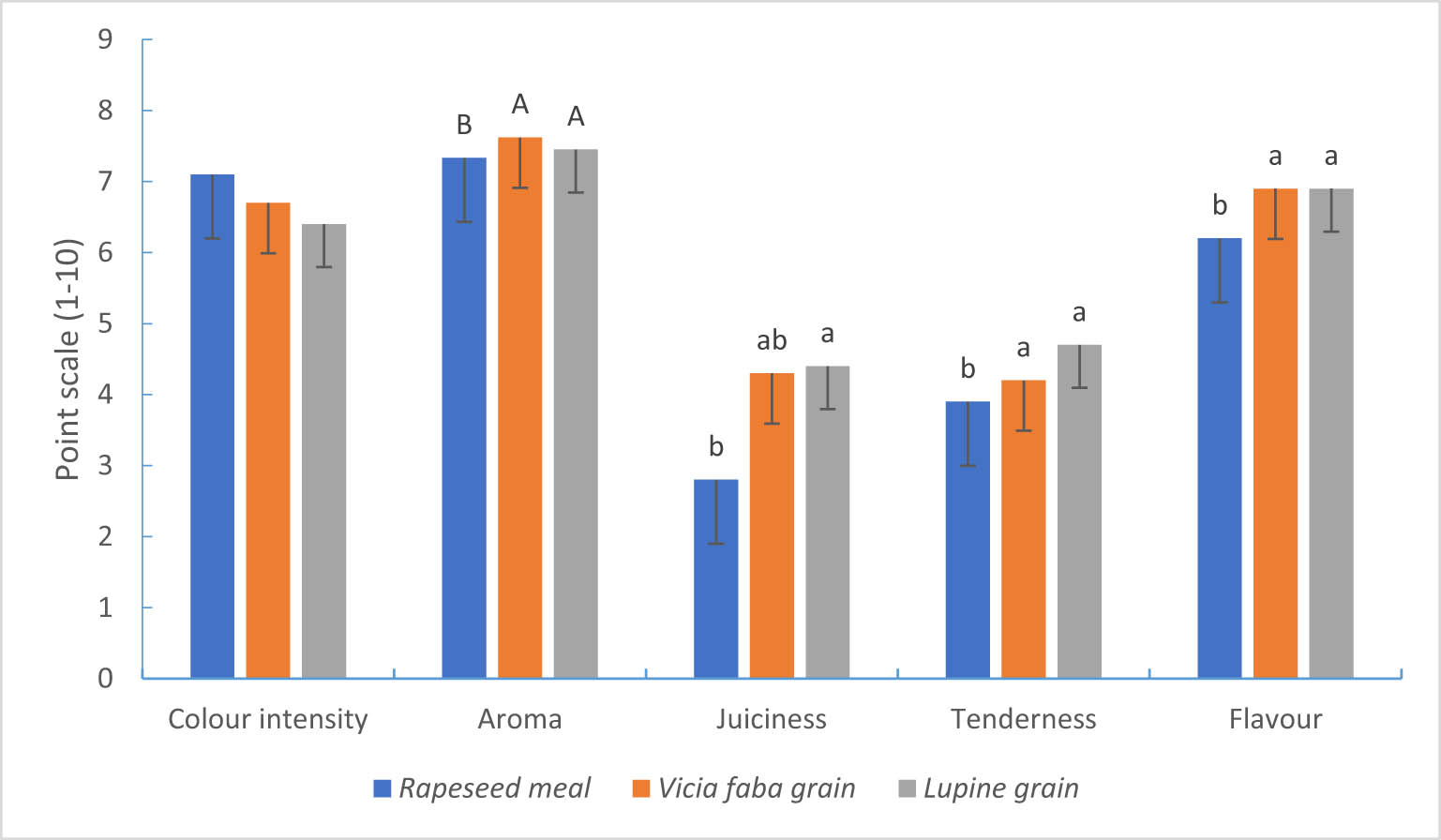
Figure 1
Sensory attributes of longissimus lumborum muscle from Holstein-Friesian bulls fed finishing diets differing in protein source (rapeseed meal, faba bean or white lupin). Data are presented as mean ± SEM (n = 10 per treatment). Different superscript letters indicate significant differences between dietary treatments A, B – P < 0.01; a, b – P < 0.05.
3.3. Fatty acid profile of intramuscular fat
The IMF content of the longissimus lumborum muscle did not differ among dietary treatments (P = 0.881; Table 4) and ranged from 2.94 to 3.31%. Data in Table 5 indicate that modifying the protein source in the diet primarily affected the composition of UFA fractions in IMF. In the RSM-fed group, a significantly higher proportion of selected PUFA was observed compared with the VFB and LP groups. In particular, fractions associated with ruminal biohydrogenation (C18:1 trans-11 and C18:2 cis-9 trans-11) were highest under the RSM diet (A vs. B, P < 0.01), whereas feeding VFB significantly reduced their levels (by nearly 25%). Similarly, only the RSM diet was characterised by a significantly higher proportion of α-linolenic acid (C18:3 n−3; A vs. B, P < 0.01) and total PUFA (A vs. B, P < 0.05), as well as a higher concentration of eicosapentaenoic acid (EPA) (C20:5 n−3; P < 0.05). The LP group was generally comparable to the VFB group. In contrast, no significant differences were observed in total SFA and MUFA contents or in lipid quality indices (AI, TI), which remained similar across all diets (all P > 0.05).
Table 5
Content of selected functional fatty acids, fatty acid groups, ratios, and lipid quality indices of intramuscular fat in longissimus lumborum muscle (% of total fatty acids, mean and SEM)
| Fatty acid | RSM | VFB | LP | SEM | P-value |
|---|---|---|---|---|---|
| C18:1 trans-11 (TVA) | 1.27 A | 0.93 B | 1.32 A | 0.048 | <0.001 |
| C18:1 cis-9 (OA) | 41.18 | 42.24 | 40.87 | 0.438 | 0.414 |
| C18:1 trans-16 | 0.31 a | 0.25 b | 0.27 b | 0.008 | 0.045 |
| C18:2 n−6 (LA) | 3.83 | 3.61 | 3.53 | 0.152 | 0.723 |
| C18:2 cis-9, trans-11 (CLA) | 0.40 A | 0.32 B | 0.33 B | 0.010 | <0.001 |
| C18:3 n−3 (LNA) | 0.48 A | 0.34 B | 0.32 B | 0.017 | 0.004 |
| C20:4 n−6 | 0.82 | 0.95 | 0.81 | 0.069 | 0.654 |
| C20:5 n−3 (EPA) | 0.08 a | 0.07 ab | 0.06 b | 0.005 | 0.044 |
| C22:5 n−3 (DPA) | 0.22 | 0.23 | 0.19 | 0.013 | 0.442 |
| C22:6 n−3 (DHA) | 0.03 | 0.04 | 0.04 | 0.002 | 0.108 |
| SFA | 42.35 | 42.41 | 43.18 | 0.437 | 0.710 |
| MUFA | 51.07 | 51.64 | 51.06 | 0.437 | 0.832 |
| PUFA | 6.58 a | 5.97 b | 5.76 b | 0.112 | 0.039 |
| n−3 PUFA | 1.64 a | 1.65 a | 1.43 b | 0.044 | 0.047 |
| n−6 PUFA | 4.65 | 4.56 | 4.34 | 0.214 | 0.850 |
| n−6/n−3 PUFA | 2.86 | 2.81 | 3.08 | 0.058 | 0.125 |
| AI | 0.57 | 0.57 | 0.60 | 0.009 | 0.234 |
| TI | 1.23 | 1.22 | 1.28 | 0.021 | 0.435 |
Values are means ± SEM (n = 10). RSM = rapeseed meal; VFB = Vicia faba seeds; LP = lupin seeds; TVA = trans-vaccenic acid; OA = oleic acid; LA = linoleic acid; CLA = conjugated linoleic acid; LNA = α-linolenic acid; EPA = eicosapentaenoic acid; DPA = docosapentaenoic acid; DHA = docosahexaenoic acid; SFA = saturated fatty acids; MUFA = monounsaturated fatty acids; PUFA = polyunsaturated fatty acids; AI = atherogenic index; TI = thrombogenic index.
Values within a row with different superscript letters differ significantly (A, B – P ≤ 0.01; a, b – P ≤ 0.05).
3.4. Mineral and vitamin composition of meat
The mineral and vitamin composition of the longissimus lumborum muscle is presented in Table 6. Dietary protein source had a selective effect on sodium, magnesium and retinol concentrations. Sodium content differed among treatments and was highest in beef from bulls fed the RSM diet (P < 0.05). Magnesium concentration was higher in the VFB group than in RSM, whereas LP showed intermediate values (P < 0.05). Retinol concentration was lower in the RSM group compared with VFB and LP (P < 0.05). No significant differences were observed for the remaining minerals and α-tocopherol (P > 0.05).
Table 6
Effect of dietary protein source on mineral and vitamin content of longissimus lumborum muscle (mg/100 g fresh meat, mean and SEM)
| Component | RSM | VFB | LP | SEM | P-value |
|---|---|---|---|---|---|
| Sodium (Na) | 48.90 A | 43.51 B | 41.71 B | 0.971 | 0.004 |
| Potassium (K) | 435.10 | 426.62 | 412.63 | 6.171 | 0.350 |
| Magnesium (Mg) | 23.51 b | 25.32 a | 24.61 ab | 0.343 | 0.041 |
| Iron (Fe) | 2.52 | 2.61 | 2.43 | 0.123 | 0.746 |
| Zinc (Zn) | 4.71 | 4.73 | 4.84 | 0.093 | 0.957 |
| Retinol (vitamin A) | 0.03 b | 0.05 a | 0.05 a | 0.004 | 0.026 |
| α-Tocopherol (vitamin E) | 0.59 | 0.47 | 0.38 | 0.039 | 0.084 |
Values are means ± SEM (n = 10). RSM = rapeseed meal; VFB = Vicia faba seeds; LP = lupin seeds. Values within a row with different superscript letters differ significantly (A, B – P ≤ 0.01; a, b – P ≤ 0.05).
4. Discussion
4.1. Chemical composition of beef
The uniform protein content observed across dietary treatments indicates that replacing RSM with VFB or LP in the concentrate did not affect protein deposition in the longissimus lumborum muscle. The protein content observed in the present study (22.58–22.98%) is within the typical range reported for beef from intensively finished dairy bulls (approximately 21–24%) and is consistent with values reported previously (Nogalski et al., 2023; Sami et al., 2010). This suggests that the applied finishing diets provided comparable nutritional conditions for muscle protein accretion. Importantly, chemical composition was determined after 14 days of wet ageing under vacuum. Ageing is associated with purge losses that may slightly affect the concentration of solids in muscle tissue; however, because all samples were subjected to identical ageing conditions, the observed differences among treatments can be interpreted without confounding effects of post-mortem handling. Therefore, the lack of differences in protein content likely reflects similarity in muscle protein deposition.
It should be noted that all meat quality assessments were conducted after a 14-day ageing period. Post-mortem ageing is known to influence several quality traits, particularly tenderness and sensory attributes, through proteolytic processes and structural changes in muscle tissue. Although identical ageing conditions were applied to all treatments, ensuring valid comparisons among dietary groups, the results should be interpreted as reflecting the combined effects of diet and post-mortem maturation rather than exclusively the direct effects of dietary treatments.
Collagen is a major determinant of meat texture and tenderness, as both its amount and structural properties influence the rheological behaviour of muscle tissue (Modzelewska-Kapituła et al., 2016). Beef from dairy breeds, including HF cattle, has often been reported to contain higher total collagen levels compared with beef from specialised beef breeds. Reported values for dairy-origin beef typically range from approximately 2.0 to 2.5 g/100 g of muscle, whereas values for beef breeds are generally lower, around 1.5–2.0 g/100 g (Domaradzki et al., 2013). In the present study, collagen content ranged from 2.06 to 2.22 g/100 g, indicating values within the typical range for dairy cattle. Although nutritional strategies may influence collagen characteristics under certain conditions (Modzelewska-Kapituła et al., 2016), the present results indicate that substituting the protein source in the concentrate during the finishing period did not modify collagen deposition in muscle tissue. This finding is consistent with the relatively short duration of the finishing period and the comparable growth performance of bulls across treatments, as collagen accumulation is primarily related to animal age and muscle growth dynamics rather than to moderate dietary modifications during late fattening (Bruce & Roy, 2019).
The lack of dietary effects on IMF content indicates that the evaluated protein sources did not influence lipid deposition in the longissimus lumborum muscle. The IMF content observed in the present study (approximately 3%) is within the range typically reported for beef from dairy-origin cattle (generally 2–4%) (Nogalski et al., 2023; Wood et al., 2008). This relatively low level of IMF is consistent with the lower propensity of dairy breeds to accumulate fat within muscle compared with specialised beef breeds. This is in line with previous observations that dietary interventions, including those involving alternative protein sources or bioactive compounds such as tannins, often affect lipid metabolism and fatty acid profile without necessarily altering total IMF content (Arend et al., 2022; Keller et al., 2021; Wood et al., 2008).
4.2. Sensory quality
The protein source in the finishing diet affected the sensory profile of the longissimus lumborum muscle after 14 days of ageing despite the absence of differences in IMF content (≈3%), basic chemical composition, and collagen content (Tables 4 and 5). Colour intensity did not differ among treatments, indicating that replacing RSM with VFB or LP had no effect on this sensory attribute. This is relevant because colour is one of the key factors influencing consumer perception of beef; however, it should be noted that only this attribute was evaluated in the present study. Therefore, no conclusions can be drawn regarding other aspects of visual appearance or overall consumer acceptance.
At the same time, significant differences were observed in attributes related to eating quality: aroma, tenderness, and flavour were rated higher in the VFB and LP groups than in the RSM group. As structural characteristics of meat determined by fat and collagen content do not explain these effects, qualitative changes in muscle lipids and their consequences for mouthfeel and flavour perception after cooking appear to be the most likely mechanism (Scollan et al., 2006; Wood et al., 2008). Such changes in fatty acid composition can influence flavour development during cooking through lipid oxidation processes and the formation of volatile compounds derived from fatty acids, thereby affecting perceived flavour intensity and juiciness even at comparable fat contents (Elmore et al., 1999; Mottram, 1998; Wood et al., 2008).
Although VFB was the only treatment containing CT, the present experimental design does not allow the effects of tannins to be separated from other differences among dietary treatments. The similarity of several responses between VFB and LP further indicates that CT cannot be considered the sole factor responsible for the observed changes. Differences in nutrient composition between protein sources, including carbohydrate profile, fibre content, and protein degradability, may also have influenced ruminal fermentation patterns and microbial activity, thereby affecting fatty acid metabolism and, consequently, meat quality traits. The observed responses should therefore be interpreted primarily as effects of the overall dietary treatments, with CT representing only one of several possible contributing factors.
These observations are consistent with previous reports, indicating that CT can modify ruminal lipid metabolism and subsequently influence the sensory attributes of ruminant products without necessarily affecting total lipid deposition (Frutos et al., 2020; Girard et al., 2016; Khiaosa-Ard et al., 2009; Vasta et al., 2009; Wood et al., 2008).
Differences in nutrient composition among protein sources, including starch availability, protein degradability, and associated rumen fermentation patterns, may have influenced lipid metabolism through changes in ruminal fermentation. However, these mechanisms were not directly assessed in the present study. Consequently, the observed effects on muscle lipid characteristics and post-mortem flavour development should be interpreted with caution (Nogalski et al., 2020; Um et al., 2024; White & Staines, 2007).
From a practical perspective, replacing RSM with faba bean or white lupin improved selected eating-quality attributes of beef, particularly juiciness and flavour, without affecting IMF content or basic chemical composition. These findings suggest that legume seeds may be useful alternative protein sources when sensory quality is an important production objective. However, the nutritional effects were not uniformly favourable. Beef from RSM-fed bulls contained higher proportions of total PUFA and selected n−3 fatty acids, whereas the atherogenic and thrombogenic indices did not differ among treatments. On the other hand, both legume-based diets increased muscle retinol concentration, and the VFB diet increased magnesium concentration. Therefore, the practical consequences of replacing RSM with legume seeds should be viewed as a trade-off between selected sensory and micronutrient benefits and some less favourable changes in the fatty acid profile, rather than as an unequivocal improvement in the overall nutritional value of beef.
4.3. Fatty acid profile of intramuscular fat
The results indicate that dietary protein source affected the fatty acid composition of IMF without altering overall fat deposition. These changes may partly reflect diet-induced differences in ruminal lipid metabolism; however, ruminal biohydrogenation was not measured directly in the present study. The absence of differences in total IMF content indicates that the protein source did not significantly affect fat accretion, but rather influenced fat composition.
The RSM diet resulted in higher proportions of several PUFA and biohydrogenation-related fatty acids, including α-linolenic acid (LNA), EPA, trans-vaccenic acid (TVA), and conjugated linoleic acid (CLA). These differences may reflect variation in both dietary fatty acid supply and ruminal lipid metabolism associated with the different protein sources. Similar effects of dietary protein source have been reported by Bartoň et al. (2025), who observed higher proportions of PUFA in meat from bulls fed rapeseed-based diets than in those fed lupin-based diets. In addition, replacing conventional protein sources with faba bean has been shown to modify the fatty acid profile of ruminant meat, including reductions in SFAs and changes in individual fatty acid fractions (Calabrò et al., 2014). The lower proportions of TVA and CLA observed in the VFB group are compatible with a possible effect of CT on ruminal lipid metabolism. However, these differences cannot be attributed specifically to tannins because the experimental diets also differed in nutrient and fatty acid composition, and ruminal biohydrogenation was not assessed directly. Therefore, the observed differences in TVA and CLA should be interpreted as responses to the overall dietary treatments rather than as direct evidence of tannin-induced inhibition of ruminal biohydrogenation.
In the case of the LP diet, despite the absence of tannins, the lower proportion of PUFAs – particularly n−3 – may be associated with differences in feed composition, including a higher fibre content and its effects on rumen microbial fermentation. Importantly, several responses observed in the LP group were similar to those in the VFB group despite the absence of CT in the LP diet. This pattern indicates that factors other than tannins contributed substantially to the observed changes. Differences in fibre and non-fibre carbohydrate concentrations, protein degradability, and dietary fatty acid supply may have altered ruminal fermentation conditions and substrate availability for lipid metabolism. Therefore, the effects observed in VFB and LP should primarily be interpreted as responses to the overall dietary treatments rather than as specific effects of individual bioactive compounds. Increased fibre supply can promote ruminal conditions favouring biohydrogenation, thereby reducing the availability of precursors such as α-linolenic acid (ALA, C18:3) for incorporation into muscle lipids (Carreño et al., 2015; Patra & Saxena, 2011). This suggests that, beyond the presence or absence of tannins, broader dietary characteristics – such as carbohydrate profile and fermentability – play an important role in modulating fatty acid metabolism in the rumen (Frutos et al., 2020; Vasta et al., 2009). Similar patterns have been reported by Calabrò et al. (2014), who indicated that dietary composition can influence the extent of PUFA biohydrogenation and subsequent deposition in muscle. At the same time, although changes consistent with differences in ruminal lipid metabolism were reflected, for example, in the lower proportions of TVA and CLA in the VFB group – these changes did not translate into a consistent improvement in health-related lipid indices of meat. This is in line with previous findings showing that shifts in individual fatty acid fractions do not necessarily result in significant changes in overall nutritional indices such as AI or TI (Bartoň et al., 2025).
Overall, these results indicate that the effect of protein source on the nutritional value of IMF was limited, and conclusions regarding the role of tannins should be drawn with caution.
Ruminal biohydrogenation involves initial lipolysis of dietary lipids followed by microbial isomerisation and hydrogenation of released PUFA, mainly C18:2 n−6 and C18:3 n−3, generating a spectrum of intermediates such as trans-vaccenic acid and, under extensive hydrogenation, stearic acid (Jenkins et al., 2008). Importantly, these processes operate through multiple metabolic pathways with distinct kinetics and differential sensitivity to dietary factors, allowing relatively subtle nutritional interventions to selectively alter specific biohydrogenation steps (Jenkins et al., 2008; Kairenius et al., 2018). The lower concentration of trans-vaccenic acid in the VFB group may reflect differences in ruminal lipid metabolism; however, the underlying mechanism cannot be established from the present data. CT represent one possible contributing factor, but differences in dietary fatty acid supply, carbohydrate composition, and ruminal degradability should also be considered. As trans-vaccenic acid represents a central intermediate in PUFA metabolism, its tissue concentration reflects the relative balance between its microbial formation and its subsequent hydrogenation to stearic acid (Khiaosa-Ard et al., 2009; Vasta et al., 2009). CT have been shown to affect microbial populations involved in specific biohydrogenation steps, potentially altering the accumulation of intermediate fatty acids; however, their effects may also extend to earlier isomerisation reactions, which could explain the reduced trans-vaccenic acid concentration in the VFB group observed in the present study and the variability reported across experiments (Carreño et al., 2015).
Previous studies have shown that CT can reduce ruminal disappearance of C18:3 n−3, leading to greater intestinal flow (Khiaosa-Ard et al., 2009; Patra & Saxena, 2011; Vasta et al., 2019). In the present study, however, such effects were not clearly reflected in muscle fatty acid composition, suggesting that other dietary or metabolic factors may have limited the transfer of α-linolenic acid to intramuscular lipids.
The higher CLA concentration observed in the RSM group may be associated with combined effects of ruminal biohydrogenation and endogenous Δ9-desaturase activity in muscle tissue. In ruminants, CLA originates both from direct ruminal escape and from tissue desaturation of trans-vaccenic acid; therefore, dietary modulation of ruminal lipid metabolism may influence CLA deposition through altered substrate availability for muscle desaturation (Bernard et al., 2013; Palmquist, 2006; Rana et al., 2012).
Despite these shifts in individual fatty acids, composite lipid quality indices such as AI and TI remained unchanged. This suggests that the magnitude of dietary effects was sufficient to alter specific biohydrogenation intermediates and PUFA fractions, but not large enough to substantially modify the overall nutritional quality of beef fat, as similarly reported in previous studies (Scollan et al., 2006; Wood et al., 2008).
Overall, the observed differences in fatty acid composition were predominantly qualitative and may reflect diet-induced differences in ruminal lipid metabolism and subsequent tissue lipid metabolism, rather than changes in total IMF deposition. The magnitude of the observed effects should also be interpreted in the context of the relatively low concentration of CT in the experimental diets (Table 3). Although tannins are known to modulate ruminal biohydrogenation, their effects are dose dependent and may selectively affect specific microbial pathways rather than inducing broad changes in fatty acid composition. This may explain why differences between treatments were limited to selected intermediates, such as trans C18:1 isomers, while overall fatty acid groups remained largely unchanged.
A limitation of the present study is that ruminal fermentation parameters, microbial populations and fatty acid biohydrogenation intermediates in the rumen were not measured. Moreover, the experimental diets differed not only in the presence of CT but also in nutrient and fatty acid composition. Consequently, the study design does not allow the independent effect of CT to be separated from the overall effect of protein source. The proposed involvement of tannins in ruminal lipid metabolism should therefore be regarded as a plausible interpretation rather than a directly demonstrated mechanism.
4.4. Mineral and vitamin composition of meat
The selective response of mineral and vitamin concentrations to dietary protein source reflects the strong homeostatic regulation of mineral composition in skeletal muscle, including the longissimus lumborum (McDowell, 2003). Consequently, dietary effects are generally subtle and become apparent mainly when differences in nutrient supply, bioavailability, or metabolic utilisation occur, particularly for fat-soluble vitamins.
The higher sodium concentration observed in beef from the RSM group likely reflects differences in dietary electrolyte balance or sodium intake rather than a direct effect of the protein source itself. Although muscle sodium concentration is tightly regulated, it can respond to differences in mineral supplementation, premix composition, or intrinsic mineral content of dietary ingredients (McDowell, 2003; National Academies of Sciences, Engineering, and Medicine, 2016). Importantly, the observed differences remained within physiological ranges.
Potassium concentration was not affected by dietary treatment, confirming its strong homeostatic control and low sensitivity to moderate dietary variation (McDowell, 2003). In contrast, magnesium concentration was highest in beef from bulls fed VFB, suggesting enhanced bioavailability or utilisation associated with legume-based diets. This may be related to dietary fibre fractions and secondary plant compounds influencing gastrointestinal conditions and mineral absorption (Patra & Saxena, 2011; Pinotti et al., 2021; Schonewille, 2013). Iron and zinc concentrations were not affected, which is consistent with previous findings, indicating stable deposition of these trace elements under similar feeding strategies (Keller et al., 2021).
Retinol concentration was significantly lower in beef from the RSM group than in the VFB and LP groups, indicating dietary modulation of muscle vitamin A status. Although vitamin A is primarily stored in the liver, muscle retinol reflects dietary supply and differences in absorption, metabolism, and transport to peripheral tissues (Li et al., 2023; Peng et al., 2021). In contrast, only a tendency was observed for α-tocopherol concentration, which is consistent with reports showing that its level in muscle depends mainly on direct dietary supply (De la Fuente et al., 2009). Moreover, CT do not necessarily improve oxidative stability, as they may reduce tissue tocopherol concentrations and increase lipid oxidation depending on their chemical structure and metabolic interactions (Larraín et al., 2008; Soldado et al., 2021).
Overall, these results indicate that mineral and fat-soluble vitamin composition of beef is influenced by complex dietary and metabolic interactions and should be interpreted in the context of whole-diet effects rather than protein source alone (De la Fuente et al., 2009; McDowell, 2003).
5. Conclusion
Replacing RSM with faba bean or white lupin seeds in finishing diets for HF bulls did not affect IMF content or basic chemical composition of beef, but resulted in qualitative modifications of intramuscular lipid composition and selected sensory traits. The observed differences in intramuscular fatty acid composition may reflect combined effects of dietary fatty acid supply and diet-related changes in ruminal lipid metabolism. Some of the changes observed with faba bean are compatible with a possible contribution of CT; however, the similarity of several responses between the VFB and LP treatments indicates that these effects cannot be attributed specifically to tannins. Differences in the overall nutrient and fatty acid composition of the diets likely also contributed to the observed responses.
These findings demonstrate that dietary protein source can influence beef quality primarily through qualitative rather than quantitative changes in muscle fat, without altering overall fat deposition. The results partially support the initial hypothesis, as the inclusion of legume seeds modified fatty acid composition and selected sensory traits, although the responses differed among individual dietary treatments.
The results should also be interpreted in the context of the applied post-mortem ageing conditions, which may have influenced selected meat quality traits.
From a practical perspective, faba bean and white lupin should therefore be considered alternative rather than nutritionally superior protein sources to RSM. Their use may improve selected sensory attributes and some micronutrient characteristics of beef while maintaining basic meat composition and lipid-related health indices, although these benefits should be weighed against the higher proportions of total PUFA and selected n−3 fatty acids observed with RSM.
Funding information
This research was supported by the University of Warmia and Mazury in Olsztyn (project No. 11.610.006-110) and by the Minister of Science under the Regional Initiative of Excellence Program.
Author contributions
Conceptualisation: Z.N. and M.M.; methodology: Z.N. and M.M.; formal analysis: Z.N.; investigation: Z.N. and M.M.; writing – original draft: Z.N.; writing – review and editing: Z.N.; resources and software: Z.N. and M.M.
Conflict of interest statement
The authors declare no conflict of interest.
Ethics approval
All procedures were approved by the Local Ethics Committee for Animal Experimentation at the University of Warmia and Mazury in Olsztyn (decision no. 08/2020, 28 January 2020) and complied with EU Directive 2010/63/EU.
Data availability statement
The data supporting the findings of this study are available from the corresponding author upon reasonable request.