
Bovine mastitis, the inflammation of the mammary gland in cattle, is a commonly reported serious disease affecting the dairy industry worldwide (Zadoks and Fitzpatrick, 2009; Reshi et al., 2015; Tommasoni et al., 2023). Furthermore, it is of increasing importance for public health due to the devastating impacts on dairy farms with costly treatments and severe economic losses (Gröhn et al., 2005; Bar et al., 2008; Hertl et al., 2010; Cheng and Han, 2020). The presence of various virulent and drug-resistant Gram-positive and Gram-negative pathogens in milk samples of bovine mastitis dairy cattle may lead to potential public health risks associated with zoonotic transmission to humans (Jiménez-Guerra et al., 2020). Bovine mastitis is a complex disease caused by multiple etiological agents, including both Gram-positive and Gram-negative pathogens (Oikonomou et al., 2014; Derakhshani et al., 2018; Hoque et al., 2020; Pascu et al., 2022). Among the emerging opportunistic mastitis-causing pathogens, the prevalence of Enterobacter species have notably increased in bovine clinical mastitis cases, including Enterobacter cloacae (12.6%) and Enterobacter sakazakii (1.1%) (Abegewi et al., 2022). Recent advances and application of genomic surveillance tools have contributed in the accurate and fast detection and monitoring of various mastitis-causing and foodborne pathogens.
Among Gram-negative bacteria, Enterobacter can be found in the farm environment (e.g. the soil, manure, and animal bedding) and cause bovine mastitis. They are also recognized as opportunistic human pathogens, causing nosocomial infections in clinical settings (Leister and Hügler, 2022; Schukken et al., 2012; Davin-Regli and Pagès, 2015). Members of the Enterobacter cloacae complex (ECC) are often multidrug-resistant, and therefore, they are considered of high importance to public health. Antimicrobial agents are commonly used in dairy production systems worldwide. The over-usage, non-prudent application of antimicrobial agents in dairy farms, and the indiscriminate application of antibiotics in the treatment of bovine mastitis drive and contribute to the emergence of multidrug-resistant bacteria (Kovačević et al., 2022; Naranjo-Lucena and Slowey, 2023; Santos et al., 2023). In Bangladesh, Escherichia coli strain of a previously unreported sequence type (ST-13054) from raw milk samples collected from cows with mastitis was characterized using whole genome sequencing (Rahman et al., 2023). In addition, we recently reported and characterized methicillin-resistant Staphylococcus aureus (Rahman et al., 2024 a), E. faecalis and E. faecium including multidrug resistant isolates from bovine mastitis using whole genome sequencing-based approach (Rahman et al., 2024 b).
It was previously reported that coliforms such as Citrobacter spp., Enterobacter spp., Escherichia coli, and Klebsiella spp. are responsible for approximately 50% of acute clinical mastitis cases (Hogan and Smith, 2003). Enterobacter are rod-shaped facultative anaerobes which are usually motile (flagellated), oxidase negative, non-spore forming Gram-negative bacteria. The genus Enterobacter includes a heterogeneous group of bacteria in the order Enterobacterales, Enterobacteriaceae family within the class Gammaproteobacteria. The Enterobacter genus is diverse, being composed of 22 species (Davin-Regli et al., 2019). These have been isolated from a wide range of environments such as soil, water, vegetation, as well as vertebrates and invertebrates (Davin-Regli et al., 2019; Moxley, 2022), and from food production facilities as previously reported (Shaker et al., 2007; Mladenović et al., 2021).
The capacity of Enterobacter spp. to produce extended spectrum β-lactamases (ESBLs) and carbapenemases conferring resistance to multiple antimicrobial agents (Bush, 2010) is a major challenge in managing Enterobacter infections (Yaikhan et al., 2025). Enterobacter cloacae (E. cloacae) is a clinically significant pathogen ranking the third pathogen among all Enterobacteriaceae in causing healthcare-associated infections due to its multidrug antimicrobial resistance, presenting a considerable challenge in the treatment of infections (Davin-Regli and Pagès, 2015).
As opportunistic pathogens, they can cause clinically highly significant nosocomial infections such as pneumonia, urinary tract infections and septicemia in humans (Mezzatesta et al., 2012; Ganbold et al., 2023). Members of the ECC belong to the ESKAPE group of pathogens and have been classified as high priority pathogens by the WHO (Tacconelli et al., 2018; De Oliveira et al., 2020).
The detection of coliform-associated, antimicrobial resistant and mastitis-causing E. cloacae isolated from livestock and dairy farm environments has been reported worldwide (Bradley et al., 2007; Nam et al., 2009; Botrel et al., 2010; Abegewi et al., 2022). However, scarce data are available on the prevalence and genomic characterization of E. cloacae and coliform mastitis-causing pathogens in dairy cows in Bangladesh. In the present study, we report the first detection, isolation, antimicrobial resistance, and genomic characterization of an E. cloacae ST84 strain isolated from raw milk sample obtained from a mastitis dairy cow in Bangladesh.
Material and methods
Ethics statement
The study was approved by the Animal Welfare and Experimentation Ethics Committee, Bangladesh Agricultural University, Mymensingh-2202, Bangladesh under reference number AWEEC/BAU/2020(44), protocol entitled “Development of polyvalent mastitis vaccine and probiotics for prevention of mastitis in cows” under the project entitled “Polyvalent Vaccine Development for Mastitis in Dairy Cow”.
Sample collection
In the current study, raw milk samples were collected from female cows (32 months old, Red Chittagong breed) from different locations in Mymensingh, Bangladesh in April 2021. Samples were tested using the California mastitis test and Lactoscan Combo’s SCC (Milkotronic Ltd, Zagora, Bulgaria) according to the manufacturer’s protocol as previously reported (Rahman et al., 2024 a, b).
Bacterial isolation and identification
E. cloacae were isolated and identified as previously reported (Rahman et al., 2023, 2024 a, b). In brief, raw milk sample (500 µl) was used to inoculate nutrient broth (10 ml) and tubes were incubated for 18 h at 37°C. Subsequently, cultures were streaked on brain heart infusion agar (HiMedia, Maharashtra, India), MacConkey and Edwards blood agar media. The inoculated plates were incubated overnight at 37°C and sub-cultured to isolate pure colonies which were identified using Gram staining and were subjected to further analysis as previously reported (Rahman et al., 2023, 2024 a, b). Pure single colonies were identified using matrix-assisted laser desorption/ionization-time of flight (MALDI-TOF) mass spectrometry using MALDI Biotyper (Bruker Daltonics, Bremen, Germany), and the isolates with a log score ≥ 2 indicate species identification as previously reported (Nonnemann et al., 2019).
Antimicrobial susceptibility test
Antimicrobial susceptibility test was performed using the Kirby-Bauer disk diffusion method (Oxoid Ltd., Hampshire, UK) as previously reported (Rahman et al., 2024 a) against different antibiotics across different classes including penicillins – ampicillin (10 µg), amoxicillinclavulanate (30 µg), meropenem (10 µg), ceftazidime (10 µg), penicillin G (10 IU); cephamycins – cefoxitin (30 µg); macrolides – azithromycin (15 µg); quinolones – ciprofloxacin (5 µg); phenicols – chloramphenicol (10 µg); aminoglycosides – amikacin (30 µg), gentamicin (10 µg); phosphonic acid antibiotics – fosfomycin (50 µg); sulfonamides – sulfamethoxazole-trimethoprim (1.25/23.75 µg); and tetracyclines – tetracycline (30 µg), and doxycycline (30 µg). E. coli ATCC 25922 was used as a negative control strain and the results were interpreted according to the Clinical and Laboratory Standard Institute guidelines (CLSI, 2020; Humphries et al., 2018). A multidrug-resistant isolate was defined as an isolate which was non-susceptible to at least one agent in three or more different antimicrobial categories as previously reported (Magiorakos et al., 2012).
Genomic DNA extraction and whole genome sequencing analysis
The identified E. cloacae isolate was subjected to whole genome sequencing as previously described (Rahman et al., 2023, 2024 a, b). One isolate was submitted to Invent Technology Ltd. (Banani, Dhaka, Bangladesh) for whole genome sequencing analysis as previously reported (Rahman et al., 2023 a, 2024 b, c). In brief, DNA was extracted from overnight cultures grown in nutrient broth at 37°C using the genomic DNA Purification Kit (Promega, WI, USA). Sequencing libraries were prepared using the Nextera XT library preparation kit (Illumina Inc., CA, USA) and sequencing was performed using the Illumina NextSeq 550 platform (Illumina Inc., CA, USA) using the NextSeq 500/550 High Output Kit v2.5 (300 cycles).
Genome assembly, annotation, MLST, and detection of virulence and antimicrobial resistance genes
Default parameters were used for all software unless otherwise specified. Quality control such as trimming and filtering was performed using trimmomatics while sequence assembly was performed using SPAdes v3.13.0 integrated in the ASA3P pipeline (v1.4.0) (Schwengers et al., 2020). Contigs, excluding those smaller than 200 bp, were uploaded to NCBI and annotated using the NCBI Prokaryotic Genome Annotation Pipeline v6.0 (Tatusova et al., 2016). Multilocus sequence type (MLST) was determined using PubMLST (Jolley et al., 2018) and antimicrobial resistance genes were detected using ResFinder (v4.0) (Bortolaia et al., 2020) database hosted by the Centre for Genomic Epidemiology (CGE) (http://cge.cbs.dtu.dk/services/ResFinder-4.0/). Plasmid replicon types were identified using PlasmidFinder 2.1 on the CGE website (https://cge.cbs.dtu.dk/services/PlasmidFinder/). The assembled genomes were further analyzed for mobile genetic elements (MGE) including insertion sequences using ISFinder (https://isfinder.biotoul.fr/). Virulence genes were analyzed using VirulenceFinder 2.0 available at the CGE website (https://cge.cbs.dtu.dk/services/VirulenceFinder/).
Phylogenetic comparison of BR-MHR107Ecl with Enterobacter cloacae ST84 isolates
All E. cloacae ST84 isolates (Table 1) available at the PubMLST database (as of 24th of September 2024) were downloaded as contigs. Core genome-based phylogeny was determined using the ParSNP tool included in the HARVEST package. Core-Single nucleotide polymorphisms (SNPs) were exported from the ParSNP output and analyzed using the snp-dists tool v. 0.8.2 included in the online version of Galaxy (https://usegalaxy.org/root?tool_id=toolshed.g2.bx.psu.edu/repos/iuc/snp_dists/snp_dists/0.8.2+galaxy0) to determine the number of SNPs. The core genome phylogenetic tree was annotated using the tool iTOL v. 1.8 and amended using Inkscape v. 0.9.1 (https://inkscape.org/release/inkscape-0.91/?latest=1).
Table 1.
Enterobacter cloacae isolates available at the PubMLST database used in the phylogenetic comparison of BR-MHR107Ecl with other ST84 isolates
| ID | Isolate | Country | Continent | Year | Source | Detailed source | Disease |
|---|---|---|---|---|---|---|---|
| 73 | B13 | Bangladesh | Asia | 2017 | human | ||
| 532 | BR-MHR107Ecl | Bangladesh | Asia | 2021 | animal | Lactating cow | other |
| 915 | PDT001195434.1 | Nigeria | Africa | 2017 | environmental | ||
| 1055 | PDT001391505.1 | Brazil | South America | 2018 | human | ||
| 1201 | PDT001543720.1 | Nigeria | Africa | 2016 | human | ||
| 1216 | PDT001543695.1 | Nigeria | Africa | 2016 | human | ||
| 1219 | PDT001543684.1 | Nigeria | Africa | 2016 | human | ||
| 1224 | PDT001543683.1 | Nigeria | Africa | 2016 | human | ||
| 1347 | MDCL 83 | India | Asia | 2022 | human | Central line blood | bacteraemia |
Results
In the present study, randomly selected lactating cows were tested for the presence of Enterobacter spp. in raw milk samples (n=423). Results revealed that 189 cows (44.68%) were mastitis-positive, of which 74 cases (17.49%) were classified as clinical mastitis and 115 cows (27.19%) were classified as sub-clinical mastitis as previously reported (Rahman et al., 2023, 2024 a, b). The detection and isolation of Enterobacter spp. was performed using conventional microbiological methods and presumptive isolates were subsequently confirmed using MALDITOF mass spectrometry as previously reported (Rahman et al., 2024 b, c). The prevalence rate of E. cloacae was 9.52% (18 out of 189 samples) in the tested milk samples in the present study. One E. cloacae isolate was chosen for whole genome sequencing analysis and genetic characterization.
Phenotypic antimicrobial resistance profiling revealed that BR-MHR107Ecl strain was resistant to amoxicillin-clavulanate, ceftazidime, ampicillin, penicillin G, cefoxitin, and azithromycin. BR-MHR107Ecl strain was sensitive to chloramphenicol, sulfamethoxazoletrimethoprim, amikacin, gentamicin, fosfomycin and tetracycline. Additionally, BR-MHR107Ecl strain was intermediate-susceptible to ciprofloxacin, doxycycline and meropenem when tested using the disk diffusion method rather than broth microdilution method to confirm the intermediate-susceptibility to ciprofloxacin, doxycycline and meropenem. The findings revealed that BR-MHR107Ecl strain was non-susceptible to three different antimicrobial categories (extended-spectrum cephalosporins, carbapenems, and fluoroquinolones), and therefore BRMHR107Ecl was designated as multidrug-resistant strain as previously reported (Magiorakos et al., 2012).
The identification and differentiation of members in the ECC remains difficult when using conventional microbiological and phenotypic methods. Here we report the first whole genome sequence of an E. cloacae strain BR-MHR107Ecl isolated from a cow with bovine mastitis. The assembled draft genome of the BR-MHR107Ecl strain spans approximately 4.7 Mb in size with a guanine (G) and cytosine (C) content of 55.02%, comprising 176 contigs and 458× sequencing coverage with contig L50 and N50 values of 20 and 79,623 bp, respectively.
In the current study, strain BR-MHR107Ecl was isolated from a domestic animal and the resistome analysis indicated the presence of several antibiotic resistance genes including the beta-lactam resistance genes blaDHA-1 and blaCMH-3-like, aminoglycosides resistance genes aph(3″)- and Ib-like, aph(6)-Id, and sul1 gene which encodes only sulphonamide resistance. The genome of the BR-MHR107Ecl strain co-harbored an additional quaternary ammonium compound-resistance gene (qacE-like) which results in resistance to antiseptics and disinfecting agents.
The PlasmidFinder analysis revealed five different plasmid replicons Col(pHAD28), IncFIA(HI1), IncFIB(K), IncR, and repB(R1701) which are frequently detected in Klebsiella spp. In the current study, different virulence genes such as astA and nlpI encoding for the heat-stable enterotoxin EAST-1, and the lipoprotein NlpI precursor, respectively were detected. In silico multilocus sequence typing (MLST) analysis revealed that BR-MHR107Ecl strain belongs to the multilocus sequence type ST84.
Discussion
Antimicrobial resistance is recognized as silent pandemic and growing dilemma for both animal and human health, demanding the implementation of One Health principles. Close and continuous programmed surveillance efforts including the application of whole genomic characterization of Enterobacter species associated with mastitis in dairy animals and food production settings and environment will help understand its pathogenesis and zoonotic potential. Furthermore, monitoring of mastitis pathogens will help contain and mitigate the health risks associated with the spread and transmission of antimicrobial resistance among different hosts. Despite the global significance of ECC infections, there is limited genomic data on ECC strains, particularly in certain regions such as Bangladesh. This study is the first to report the detection and characterization of mastitis-associated E. cloacae in dairy herds in Bangladesh using the whole genome sequencing-based approach.
Enterobacter spp. are considered as very important pathogens involved in antibiotic-resistant nosocomial infections often resulting in life-threatening outcomes (Rada et al., 2020; Denissen et al., 2022). The presence of antimicrobial-resistant bacteria such as E. cloacae in the animal food production chain is an increasing concern to human and animal health (Silbergeld et al., 2008; Economou and Gousia, 2015; Robinson et al., 2016 a; de Mesquita Souza Saraiva et al., 2022), as these bacteria might spread from food to humans and lead to not well treatable infections (Marshall and Levy, 2011; Capita and Alonso-Calleja, 2013; Lekshmi et al., 2017). The emergence of multidrug resistance, including resistance to the last-resort antibiotics, such as colistin, has increased the interest in the ECC (Annavajhala et al., 2019). Given that antimicrobial resistance in animals used for food production is of increasing risk to human health, the detection of multidrug-resistant, virulent, and mastitis-associated E. cloacae in the present study is concerning.
Mastitis is a common and economically devastating disease affecting dairy herds worldwide. Altogether, the findings of the current study emphasize the significance of the prudent and controlled use of veterinary antibiotics to prevent the selective pressure which aggravates the emergence and dissemination of multidrug resistance among animal-origin bacteria such as E. cloacae.
In the present study, findings revealed that BR-MHR107Ecl strain belonged to ST84, which was also reported in 2018 from a clinical colistin-resistant E. cloacae strain from China. The latter strain co-harbored the colistin resistance gene mcr-4.3 and the carbapenemase resistance gene blaNDM-1 as previously reported (Chavda et al., 2018).
Phenotypically, BR-MHR107Ecl strain was resistant to amoxicillin-clavulanate, ceftazidime, ampicillin, penicillin G, cefoxitin and was intermediate-susceptible to imipeneme. Genomic analysis showed that BR-MHR107Ecl harbored several antibiotic resistance genes including beta-lactam resistance genes blaDHA-1 and blaCMH-3-like. It was previously reported that only in combination with the overexpression of these genes and mutations causing porin deficiency leads to a mainly low resistance to carbapenems (Mammeri et al., 2025).
The detection of blaCMH-3-like in BR-MHR107Ecl genome in the present study is concerning since it had been reported that there is limited evidence about blaCMH in animal-derived E. cloacae (Huang et al., 2024). It was previously reported that third-generation cephalosporin-resistant E. cloacae strains carrying blaCMH gene were identified from migratory bird samples across human-bird-environment interfaces in China (Huang et al., 2024).
A comparison of the phenotypic antibiotic susceptibility profiles and the presence of antibiotic resistance determinants was performed as detailed in Table 2. BR-MHR107Ecl was phenotypically resistant to beta-lactams (amoxicillin-clavulanate, ceftazidime, ampicillin, penicillin G) which is explained by the genotypic detection of the beta-lactam resistance genes blaDHA-1 and blaCMH-3-like. The intermediate resistance towards carbapenems may be due to overexpression of these genes and/or additional porin gene mutations leading to porin deficiency which results in a mainly low resistance to carbapenems (Mammeri et al., 2025).
Table 2.
Correlation of phenotypic resistance patterns and the detected antibiotic resistance genes in BR-MHR107Ecl in the present study
| Resistance to | Phenotypic | Genotypic | Correlation phenotype vs. genotype | Possible explanation of difference |
|---|---|---|---|---|
| Amikacin | Sensitive | Not present | Yes | Neither aph(6)-Id nor aph(3″)-Ib-like confer resistance to this particular aminoglycoside |
| Amoxicillin-clavulanate | Resistant | blaDHA-1, blaCMH-3-like | Yes | Beta-lactamase present |
| Ampicillin | Resistant | blaDHA-1, blaCMH-3-like | Yes | Beta-lactamase present |
| Azithromycin | Sensitive | blaDHA-1, blaCMH-3-like | Yes | Beta-lactamase present |
| Cefoxitin | Resistant | blaDHA-1, blaCMH-3-like | Yes | Beta-lactamase present |
| Ceftazidime | Resistant | blaDHA-1, blaCMH-3-like | Yes | Beta-lactamase present |
| Chloramphenicol | Sensitive | Not present | Yes | Antibiotic resistance gene not encoded |
| Ciprofloxacin | Intermediate | qnrB4 | Yes | qnrB-like enzymes express only low-level fluoroquinolone resistance |
| Disinfectant | Not tested | qacE-like | Correlation not possible due to experimental set-up (not tested phenotypically) | N.A. |
| Fosfomycin | Sensitive | Not present | Yes | Antibiotic resistance gene not encoded |
| Gentamicin | Sensitive | Not present | Yes | Neither aph(6)-Id nor aph(3″)-Ib-like confer resistance to this particular aminoglycoside |
| Meropenem | Intermediate | Not present | Yes | Overexpression of blaDHA-1 and/or blaCMH-3-like in combination with porin deficiency mutations |
| Penicillin G | Resistant | blaDHA-1, blaCMH-3-like | Yes | Beta-lactamase present |
| Streptomycin | Not tested | aph(6)-Id | Correlation not possible due to experimental set-up (not tested phenotypically) | N.A. |
| Sulfamethoxazole-trimethoprim | Sensitive | Not present | Yes | Only gene for resistance towards sulfamethoxazole present (sul1) but not towards trimethoprim |
| Sulfonamide | Not tested | sul1 | Correlation not possible due to experimental set-up (sulfonamide tested only in combination with trimethoprim) | N.A. |
| Tetracycline | Sensitive | Not present | Yes | Antibiotic resistance gene not encoded |
| Doxycycline | Intermediate | Not present | No | Unknown mechanisms of antibiotic resistance encoded or expressed |
BR-MHR107Ecl was phenotypically sensitive to amikacin, gentamicin, and sulfamethoxazole-trimethoprim. These results correlate with the presence of the particular genes. For example, aph(3″)-Ib-like (Hainrichson et al., 2007) and aph(6)-Id (Ashenafi et al., 2014) genes confer resistance to other aminoglycosides than amikacin and gentamicin. The gene aph(3″)-Ib confers resistance to kanamycin A, neomycin B, neamin, ribostamycin, but no resistance to amikacin, tobramycin and gentamicin (Hainrichson et al., 2007). The gene aph(6)-Id confers resistance to streptomycin, only, and not to the other aminoglycosides tested in this study. The intermediate ciprofloxacin resistance can be explained by the presence of the gene qnrB4 that confers low-level resistance towards fluoroquinolnes (Jacoby et al., 2014).
The susceptibility towards sulfamethoxazole-trimethoprim is due to the absence of a trimethoprim resistance gene. The sul1 gene present in BR-MHR107Ecl encodes only sulphonamide resistance, but not trimethoprim resistance.
The correlation of some genes (qacE-like, disinfectant resistance; aph(6)-Id, streptomycin resistance; sul1, sulfonamide resistance) with phenotypic data could not be determined because of the experimental set-up – we did not test the susceptibility of the isolate towards disinfectants, streptomycin and sulfonamide.
It was previously reported that Enterobacter spp. is characterized by their capacity to produce extended spectrum β-lactamases (ESBLs) and carbapenemases, which confer resistance to multiple antimicrobial agents (Bush, 2010; Yaikhan et al., 2025), representing a major challenge in managing EEC infections.
The genome of the BR-MHR107Ecl strain co-harbored an additional quaternary ammonium compound-resistance gene (qacE-like). The qacE gene, a plasmid-mediated gene and its variant qacEΔ1 were shown to encode an efflux pump protein which mediate resistance to antiseptics and intercalating dyes in Gram-negative bacteria such as C. freundii, E. cloacae and Pseudomonas aeruginosa as previously reported (Kazama et al., 1998, 1999; Kücken et al., 2000; Chang et al., 2007; Gomaa et al., 2017). It was reported that the decrease in antibiotic and antiseptic susceptibility of clinical isolates of Acinetobacter baumannii was related to the presence of qacE gene (Gomaa et al., 2017). The association of the antibiotic resistance genes with biocide resistance determinants on the same integron was previously reported in Gram-negative bacteria in China (Wang et al., 2008).
The detection of qacE-like resistance gene in E. cloacae in the present study is of specific concern since the irrational use of biocides in dairy farm environment may have promoted the selection of antibiotic-resistant Gram-negative bacteria as previously reported and discussed elsewhere (Russell, 2000; Hegstad et al., 2010; Schwaiger et al., 2014; Davies and Wales, 2019; Boyce, 2023; James et al., 2023; Muloi et al., 2023; Cui et al., 2024). To the best of the authors’ knowledge, genome sequences of E. cloacae isolates have never been reported from milk samples obtained from bovine mastitis.
PlasmidFinder analysis revealed five different plasmid replicons Col(pHAD28), IncFIA(HI1), IncFIB(K), IncR, and repB(R1701) which are frequently detected in Klebsiella spp. It was previously reported that IncR plasmid has been frequently associated with blaDHA-1 (Mata et al., 2011; Yuan et al., 2023). ISfinder analysis detected six different insertion sequences including IS5075, IS30, IS26, ISEcl10, IS5 and ISEhe3 in different contigs in the BR-MHR107Ecl genome. Most hits were more than 99% identity in the different contigs of the genome. Myriads of insertion sequences have been associated with the carriage of ESBL and aminoglycoside resistance genes such as aph(3″)-Ib-like, and aph(6)-Id, indicating that the insertion sequences might be involved in conferring multidrug resistance in BR-MHR107Ecl strain.
It was reported that misuse of antibiotics in agriculture and animal production sectors provides selection pressure which enhances the evolution of antimicrobial-resistant bacteria in human and animal populations (Chantziaras et al., 2014). Additionally, the environment where dense populations of different animal species are housed could serve as a reservoir for the interspecies and intraspecies spillover and dissemination of antimicrobial-resistant bacteria and resistance genes (Van Balen et al., 2014; Adams et al., 2018). Further investigations utilizing the One Health principles are required to delineate the main source and the origin of BR-MHR107Ecl and to determine possible zoonotic potential of the strain.
It was reported that the ECC bacteria are relatively uncommon in foodborne diseases compared to other bacterial pathogens (Pintor-Cora et al., 2023). Hence, the potential presence of antimicrobial-resistant strains of ECC in the food chain including the strain BRMHR107Ecl reported in the present study in bovine mastitis, and the potential dissemination of their antimicrobial resistance genes to humans could pose a public health risk.
In the current study, different virulence genes such as astA and nlpI encoding for the heat-stable enterotoxin EAST-1, and the lipoprotein NlpI precursor, respectively were detected in the genome of BR-MHR107Ecl strain. It was previously reported that astA is a structural gene in enteroaggregative E. coli encoding a distinct low-molecular-weight putative enterotoxin (Savarino et al., 1993). In the present study, astA has been detected in BR-MHR107Ecl strain associated with bovine clinical mastitis.
The detection of the strain BR-MHR107Ecl in bovine mastitis therefore carries potential risks due to its plausible introduction into the food-chain and the farm-to-fork continuum, resulting in its possible transmission in raw milk, food, other livestock, and eventually to humans. Future community-wide surveillance involving livestock and environmental samples will provide an updated picture on the population dynamics of E. cloacae ST84 and its clinical relevance.
Phylogenetic analysis showed that the closest relative to BR-MHR107Ecl (Figure 1) was isolate NK-BR1453 (GenBank accession number DALQOB000000000) assembly name PDT001543683.1 isolated from a human rectal swab sample in Nigeria in 2016 as previously reported (Portal et al., 2024), albeit the relatively high number of SNPs (n=317, Table 3) which suggests recent ancestry.
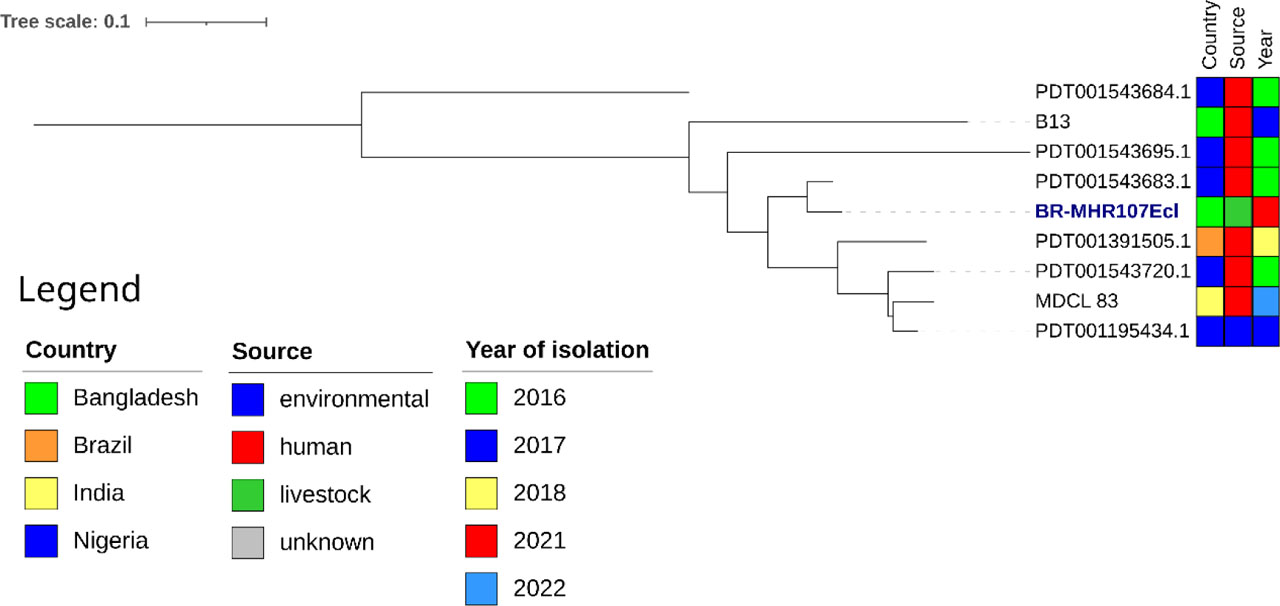
Figure 1.
Mid-point rooted core genome-based phylogenetic tree of ST84 Enterobacter cloacae isolates from PubMLST database and BR-MHR107Ecl. The tree was produced using ParSNP, annotated using iTOL v. 1.8 and amended using Inkscape v. 0.9.1
Table 3.
Matrix showing the number of single nucleotide polymorphisms (SNPs) of strain BR-MHR107Ecl compared to other Enterobacter cloacae ST84 isolates
| 532_BR_MHR107Ecl | 73_B13 | 915_PDT001195434_1 | 1055_PDT001391505_1 | 1201_PDT001543720_1 | 1216_PDT001543695_1 | 1219_PDT001543684_1 | 1224_PDT001543683_1 | 1347_MDCL_83 | |
|---|---|---|---|---|---|---|---|---|---|
| 532_BR_MHR107Ecl | 0 | 1979 | 1142 | 1169 | 1218 | 1891 | 3144 | 317 | 1223 |
| 73_B13 | 1979 | 0 | 2368 | 2399 | 2444 | 2523 | 3108 | 1934 | 2447 |
| 915_PDT001195434_1 | 1142 | 2368 | 0 | 853 | 390 | 2293 | 2826 | 1097 | 342 |
| 1055_PDT001391505_1 | 1169 | 2399 | 853 | 0 | 929 | 2322 | 2839 | 1123 | 934 |
| 1201_PDT001543720_1 | 1218 | 2444 | 390 | 929 | 0 | 2369 | 2902 | 1173 | 474 |
| 1216_PDT001543695_1 | 1891 | 2523 | 2293 | 2322 | 2369 | 0 | 3504 | 1847 | 2374 |
| 1219_PDT001543684_1 | 3144 | 3108 | 2826 | 2839 | 2902 | 3504 | 0 | 3099 | 2907 |
| 1224_PDT001543683_1 | 317 | 1934 | 1097 | 1123 | 1173 | 1847 | 3099 | 0 | 1178 |
| 1347_MDCL_83 | 1223 | 2447 | 342 | 934 | 474 | 2374 | 2907 | 1178 | 0 |
The detection of carbapenem-resistant Enterobacteriaceae including E. cloacae harboring blaKPC-2 isolated from livestock, humans and environmental samples was detailed elsewhere (Tuhamize and Bazira, 2024). In a recent study from Spain, antimicrobial-resistant ECC strains were isolated from fresh vegetables and their farm environments including samples from soil, irrigation water, air, and farm worker hands as previously reported (Pintor-Cora et al., 2023). In the present study, analysis revealed that BR-MHR107Ecl genome harbored beta-lactam resistance genes blaDHA-1 and blaCMH-3-like which highlights the strain could be of clinical significance. The detection of carbapenem-resistant Enterobacteriaceae in livestock raises significant concerns about the potential dissemination of antibiotic-resistant bacteria to humans posing a grave risk to public health (Murray et al., 2022; Pintor-Cora et al., 2023; Tuhamize and Bazira, 2024). Carbapenem-resistant E. cloacae strains carrying blaNDM-1, blaKPC, and blaOXA-48-like genes were isolated from different environmental wastewater samples including river water, soil, vegetables samples in South Africa as previously reported (Ebomah and Okoh, 2021). These reports highlight the increasing importance of One Health approach-based studies to mitigate potential risks associated with antimicrobial resistance to public health (Lammie and Hughes, 2016; Robinson et al., 2016 b; White and Hughes, 2019; Wernli et al., 2020; Aslam et al., 2021; de Mesquita Souza Saraiva et al., 2022; Velazquez-Meza et al., 2022; Jesudason, 2023; World Health Organization, 2023; Huang et al., 2024). Furthermore, the dissemination of antimicrobial resistance among various sources including humans, wild animals, livestock, plants, and their environments, necessitate a One Health comprehensive approach and oriented stewardship to control antimicrobial resistance across various environments.
The detailed genetic characterization of Enterobacter species associated with bovine mastitis will provide sufficient data on the complex genetic organization of mobile genetic elements, antimicrobial resistance, and virulence genetic elements. Genomic characterization of mastitis bacteria will help understand their complex etiology, interplay and ability to induce mastitis in udder-healthy dairy animals.
Conclusions
To the authors’ knowledge, the present study is the first at the time of writing this manuscript to report the detection and genome characterization of E. cloacae isolated from bovine mastitis using whole genome sequencing analysis. Results of the present study highlight the crucial role of whole genome sequencing tools in pathogen detection and the importance of continued surveillance for mastitis-associated bacteria, which continue to pose serious global impacts on animals, human health, and food security. Moreover, BR-MHR107Ecl ST84 is the first reported E. cloacae associated with bovine mastitis as of 17 May 2025. The draft genome of BRMHR107Ecl from bovine clinical mastitis revealed different virulence genes, several antimicrobial resistance genes, and five plasmid replicons, indicating significant pathogenic and antimicrobial resistance potential. According to Enterobacter cloacae PubMLST database, E. cloacae ST84 strain B13 was isolated from a human urine sample in Bangladesh. Therefore, the genome sequence of the reported strain will serve as a valuable reference point for molecular epidemiological studies to delineate the dissemination of multidrug resistant, foodborne and mastitis-associated pathogens between farm animals and humans. Additionally, the findings of the present study will help understand the antimicrobial resistance in livestock production systems-associated E. cloacae. The findings of the present study provide substantial new insights into the field and are sufficiently novel to contribute significantly to the existing literature, thus broadening the overall impact of the research.
Acknowledgment
The whole genome sequencing work was supported in part by the Bangladesh Academy of Sciences and the United States Department of Agriculture (Project ID: BAS-USDA LS-26/2020), the Bangladesh Agricultural University Research System (BAURES), and the Hessian Ministry of Higher Education, Research and Arts within the project HuKKH (Hessische Universitäre Kompetenzzentrum Krankenhaushygiene), Germany. The authors would like to thank Princess Noura bint Abdulrahman University Researchers Supporting Project Number (PNURSP2026R41) Princess Noura bint Abdulrahman University, Riyadh, Saudi Arabia and Al-Baha University, AlBaha, Saudi Arabia for supporting this research. Authors thank the NCBI GenBank submission staff for their help with the genome upload, decontamination and deposition process. We would like to thank the three anonymous reviewers for their insightful comments, suggestions and feedback which have significantly improved the manuscript. Authors would like to thank AlMaarefa University for supporting this research under project number MHIRSP2025027.
Notes
[2] Data availability statement
The strain reported in this study was submitted to public databases for molecular typing and microbial genome diversity for curation and is publicly available in Enterobacter cloacae PubMLST database, under ID number 532. This whole genome sequencing project has been deposited at DDBJ/ENA/GenBank under the BioProject number PRJNA716986, BioSample accession number SAMN26025963 and GenBank accession number JALBGO000000000. The version described in this paper is the first version JALBGO000000000.1. The sequence was submitted to the Sequence Read Archive (SRA) under the accession number SRR18182114.
[3] Funding
The whole genome sequencing work was supported in part by the Bangladesh Academy of Sciences and the United States Department of Agriculture (Project ID: BASUSDA LS-27326/2020), the Bangladesh Agricultural University Research System (BAURES), and the Hessian Ministry of Higher Education, Research and Arts within the project HuKKH (Hessische Universitäre Kompetenzzentrum Krankenhaushygiene), Germany, and Princess Noura bint Abdulrahman University Researchers Supporting Project Number (PNURSP2026R41), Princess Nourah bint Abdulrahman University, Riyadh, Saudi Arabia.
[5] CRediT authorship contribution statement
M.H.R.: conceptualization, methodology, investigation, formal analysis, validation. M.E.Z.: conceptualization, methodology, data curation, formal analysis, investigation, visualization, validation, writing – original draft, writing – review & editing, project administration, supervision; E.C.E: formal analysis, methodology, visualization, data curation, software, validation, writing – original draft, writing – review & editing; L.F.: writing – original draft, writing – review & editing, formal analysis, methodology, software, visualization, data curation, software, validation; M.F.R.K.: methodology, investigation; J.A.: methodology, investigation; M.R.: conceptualization, validation, supervision, project administration; A.S.: visualization, data curation, validation; writing – review & editing; H.M.S.: visualization, data curation, validation; writing – review & editing; F.A.M.G.: visualization, data curation, validation; writing – review & editing; A.N.: visualization, data curation, validation; writing – review & editing; S.F.: visualization, data curation, software, validation, writing – original draft, writing – review & editing; M.B.R.: conceptualization, validation, funding acquisition, supervision, project administration, writing – review & editing.