
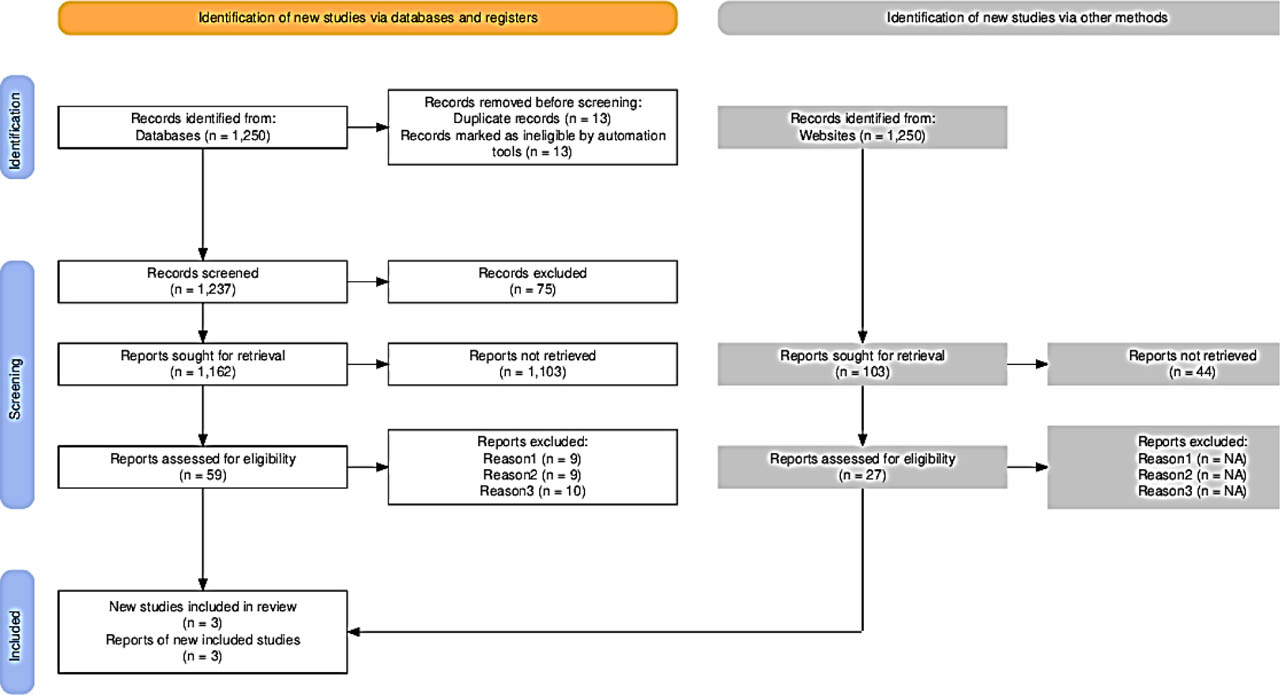
Figure 1.
PRISMA flow diagram summarizing the systematic literature search and study selection process. The initial database search conducted on 1 July 2023, using Scopus and Web of Science yielded 1,252 records. An additional 13 records were identified through other sources such as Google Scholar. After removing duplicates and screening titles, abstracts, and full texts according to PRISMA guidelines (Liberati et al., 2009), 30 studies were included in the final meta-analysis. Inclusion criteria required that studies (1) used ethanol-extracted plant parts, (2) measured immune or antioxidant biomarkers such as lysozyme activity, white blood cell counts, superoxide dismutase (SOD), catalase (CAT), or malondialdehyde (MDA), and (3) were conducted on fish, crustacean or fish cell lines.
Table 1.
Summary of the key studies included in the meta-analysis
| Code | Plant species | Plant part | Fish species | References |
|---|---|---|---|---|
| 1 | 2 | 3 | 4 | 5 |
| 1 | C. rotundus | Root | Nile tilapia | Wigraiboon et al. (2024) |
| 2 | Ocimum basilicum | Leaves | Nile tilapia | Mansour et al. (2023) |
| 3 | Paulownia tomentosa | Leaves | Nile tilapia | El-Refiae et al. (2024) |
| 4 | Cimum basilicum, Cinnamomum zeylanicum, Juglans regia and Mentha piperita | Whole plant | C. carpio | Abasali and Mohamad (2010) |
| 5 | Clove basil, Ocimum gratissimum | Leaves | African catfish, Clarias gariepinus | Abdel-Tawwab et al. (2018) |
| 6 | Clove, Eugenia caryophyllata | Flower | African catfish, Clarias gariepinus | Adeshina et al. (2019) |
| 7 | Basil (Ocimum basilicum) | Leaves | C. carpio | Amirkhani and Firouzbakhsh (2015) |
| 8 | Persian oak | Fruits | Rainbow trout | Bohlouli et al. (2016) |
| 9 | Panax ginseng | Root | Rainbow trout | Bulfon et al. (2017) |
| 10 | Garcinia kola | Seeds | Clarias gariepinus | Dada and Ikuerowo (2009) |
| 11 | Psidium guajava | Leaves | Oreochromis mossambicus | Gobi et al. (2016) |
| 12 | Aloe vera | Leaves | Rainbow trout, Oncorhynchus mykiss | Haghighi et al. (2017) |
| 13 | Azadirachta indica (neem) | Leaves | C. carpio | Harikrishnan et al. (2005) |
| 14 | A. indica, O. sanctum and C. longa | Leaves | Carassius auratus, gold fish | Harikrishnan et al. (2009) |
| 15 | Green tea | Leaves | Black rockfish, Sebastes schlegeli | Hwang et al. (2013) |
| 16 | Cynodon dactylon | Whole plant | Indian major carp, Catla catla | Kaleeswaran et al. (2011) |
| 17 | Cynodon dactylon | Whole plant | Indian major carp, Catla catla | Kaleeswaran et al. (2012) |
| 18 | Panax ginseng | Root | White shrimp, Litopenaeus vannamei | Liu et al. (2011) |
| 19 | Camellia sinensis | Leaves | Oncorhynchus mykiss | Nootash et al. (2013) |
| 20 | Pedalium murex | Seeds | Labeo rohita | Ojha et al. (2014 b) |
| 21 | Mucuna pruriens | Seeds | Labeo rohita | Ojha et al. (2014 a) |
| 22 | Epilobium hirsutum | Aerial parts | Cyprinus carpio | Pakravan et al. (2012) |
| 23 | Cotinus coggygria | Leaves | Cyprinus carpio | Bilen et al. (2013) |
| 24 | Garcinia gummi-gutta | Rind | Pangasianodon hypophthlmus | Prasad and Priyanka (2011) |
| 25 | Dill | All plant +seeds | Rainbow trout | Zeilab et al. (2020) |
| 26 | Rubus coreanus | Fruits | Penaeus vannamei | Subramanian et al. (2013) |
| 27 | Zingiber officinale | Stem | Labeo rohita | Gobi et al. (2016) |
| 28 | Apium graveolens | Leaves | Labeo chrysophekadion | Sutthi et al. (2020) |
| 29 | Ginkgo biloba | Leaves | Grouper | Tan et al. (2018) |
| 30 | Sophora flavescens | Root | GIFT Oreochromis niloticus | Wu et al. (2013) |
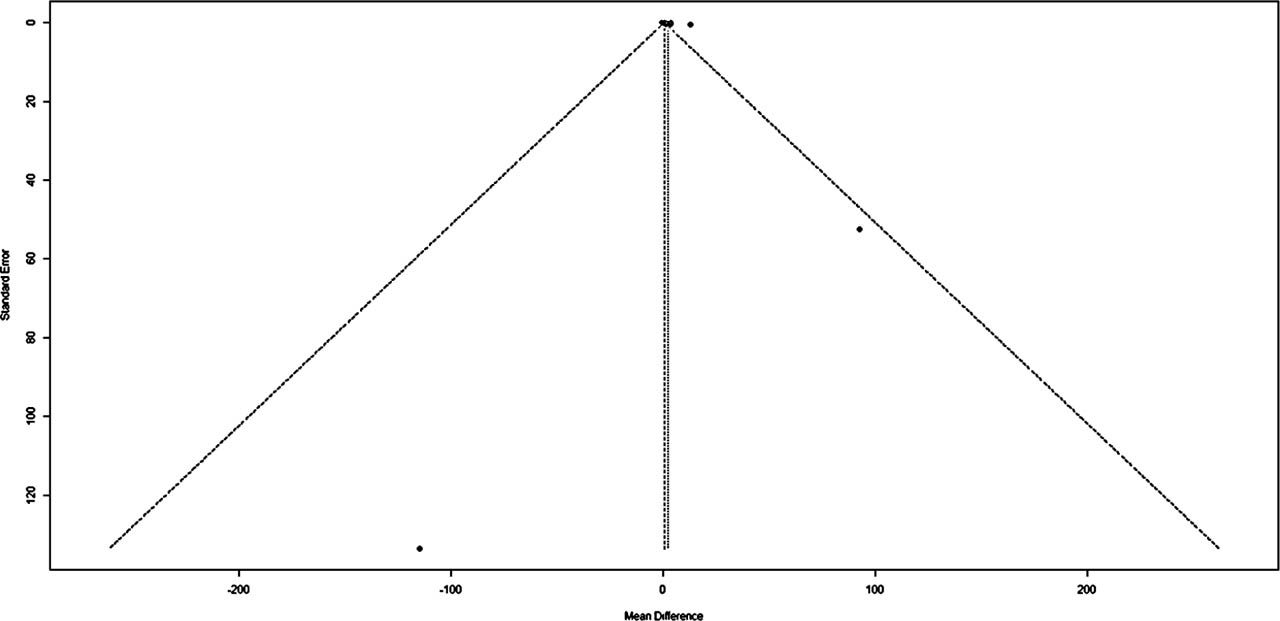
Figure 2.
Funnel plot assessing publication bias in studies evaluating the effects of ethanolic extracts from different medicinal plant parts on white blood cell (WBC) counts in fish. The x-axis represents the mean difference (effect size), and the y-axis denotes the standard error. Dotted lines indicate pseudo 95% confidence limits. Asymmetry in the distribution of studies, with several outliers beyond the funnel boundaries, suggests potential publication bias and high heterogeneity.
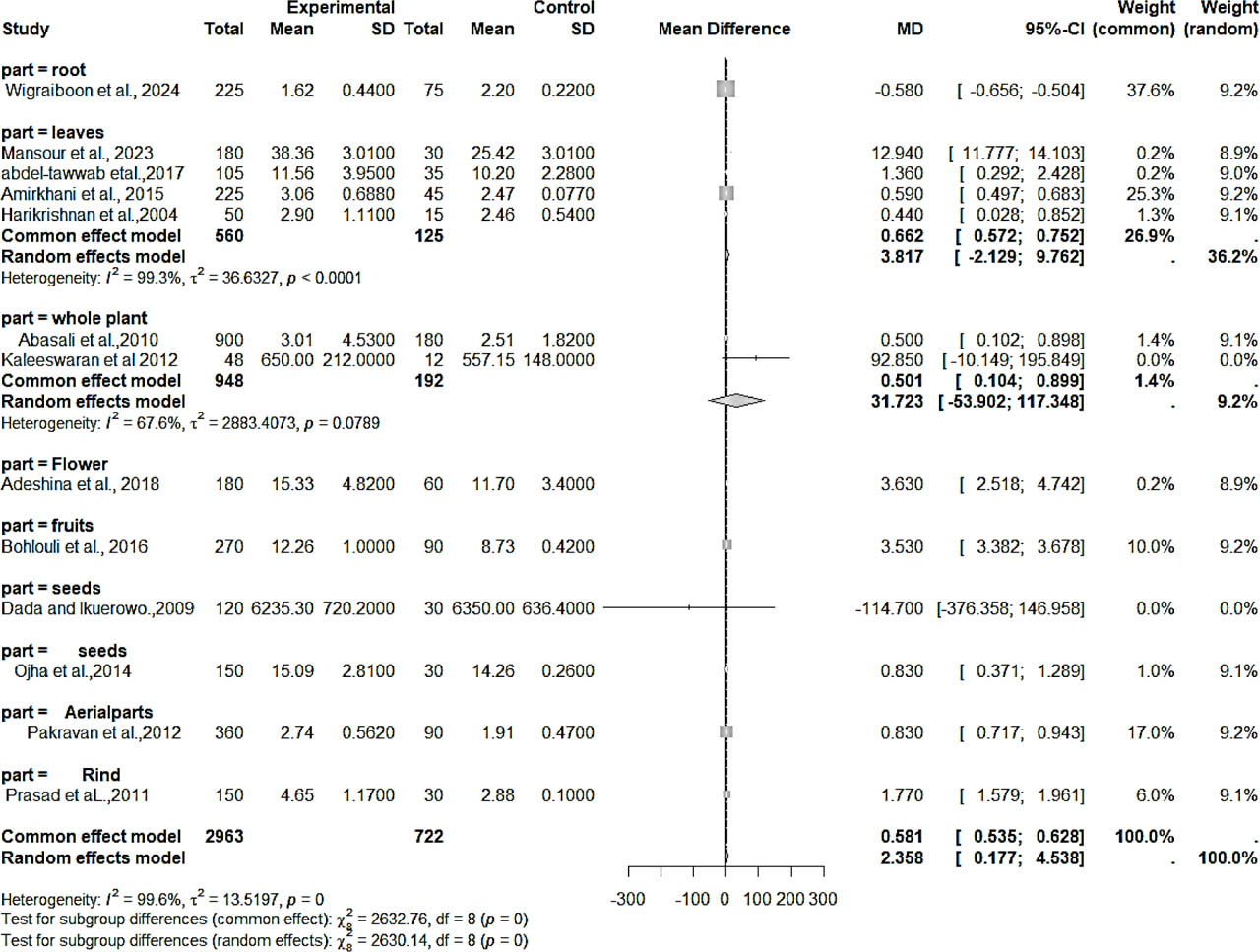
Figure 3.
Forest plot of subgroup meta-analysis evaluating the effects of different medicinal plant parts and their ethanolic extracts on white blood cell (WBC) counts in fish. Subgroups included root, leaves, whole plant, flower, fruits, seeds, aerial parts, and rind. The plot shows mean differences (MD) with 95% confidence intervals. Significant heterogeneity was observed (I2 = 99.6%), and subgroup analysis revealed that plant part type significantly influenced the immunomodulatory effect (P<0.001).
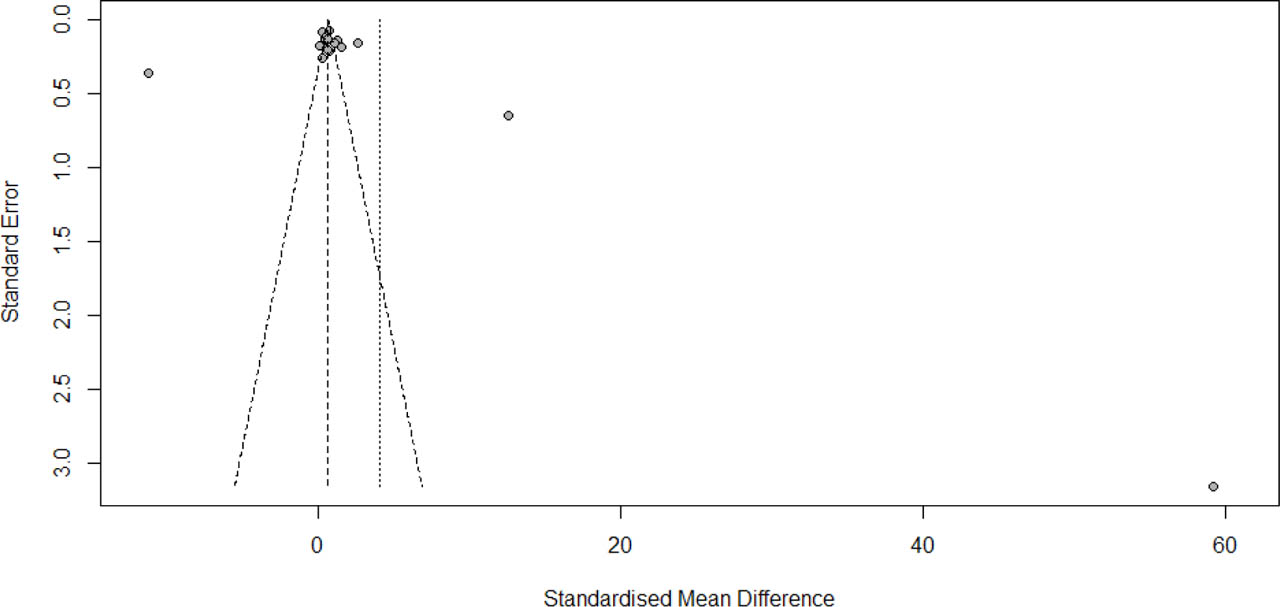
Figure 4.
Funnel plot assessing publication bias in studies investigating the effects of ethanolic extracts from various medicinal plant parts on lysozyme activity in fish. The x-axis represents the standardized mean difference (SMD), and the y-axis shows the standard error. Each circle denotes an individual study. Dashed lines represent pseudo 95% confidence limits. While the majority of studies are symmetrically distributed, a few outliers with high effect sizes and larger standard errors suggest potential small-study effects and possible publication bias.
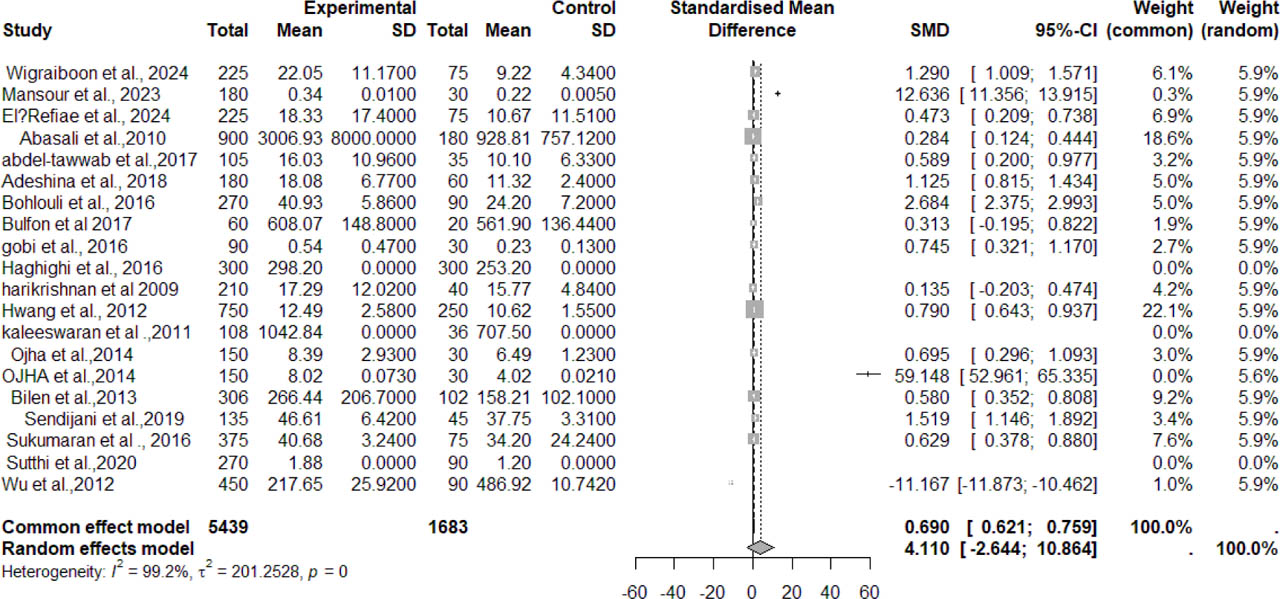
Figure 5.
Forest plot of meta-analysis evaluating the effects of medicinal plants ethanolic extract on lysozyme (LYZ) activity in fish. The plot shows standardized mean differences (SMD) with 95% confidence intervals for each study comparing experimental groups to control groups. Each square represents the effect size of an individual study, scaled by its weight, while horizontal lines indicate 95% confidence intervals. Pooled effect estimates under both the common effect and random effects models are shown as diamonds. High heterogeneity was observed across studies (I2 = 99.2%), and the wide prediction interval under the random effects model reflects substantial variability in lysozyme responses among studies.
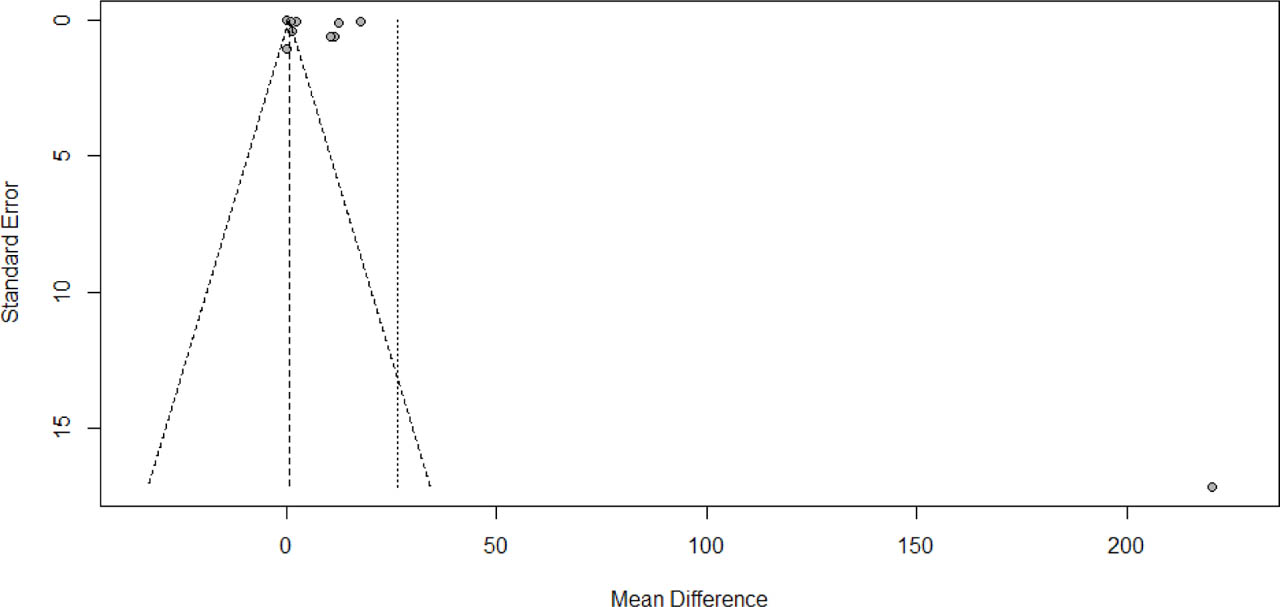
Figure 6.
Funnel plot evaluating publication bias among studies examining the impact of ethanolic plant extract supplementation on superoxide dismutase (SOD) activity in fish. The x-axis denotes the mean difference, while the y-axis represents the standard error. Each circle corresponds to an individual study. Dashed lines indicate pseudo 95% confidence intervals. The asymmetrical distribution, particularly the extreme right-hand outlier, suggests potential small-study effects and possible publication bias.
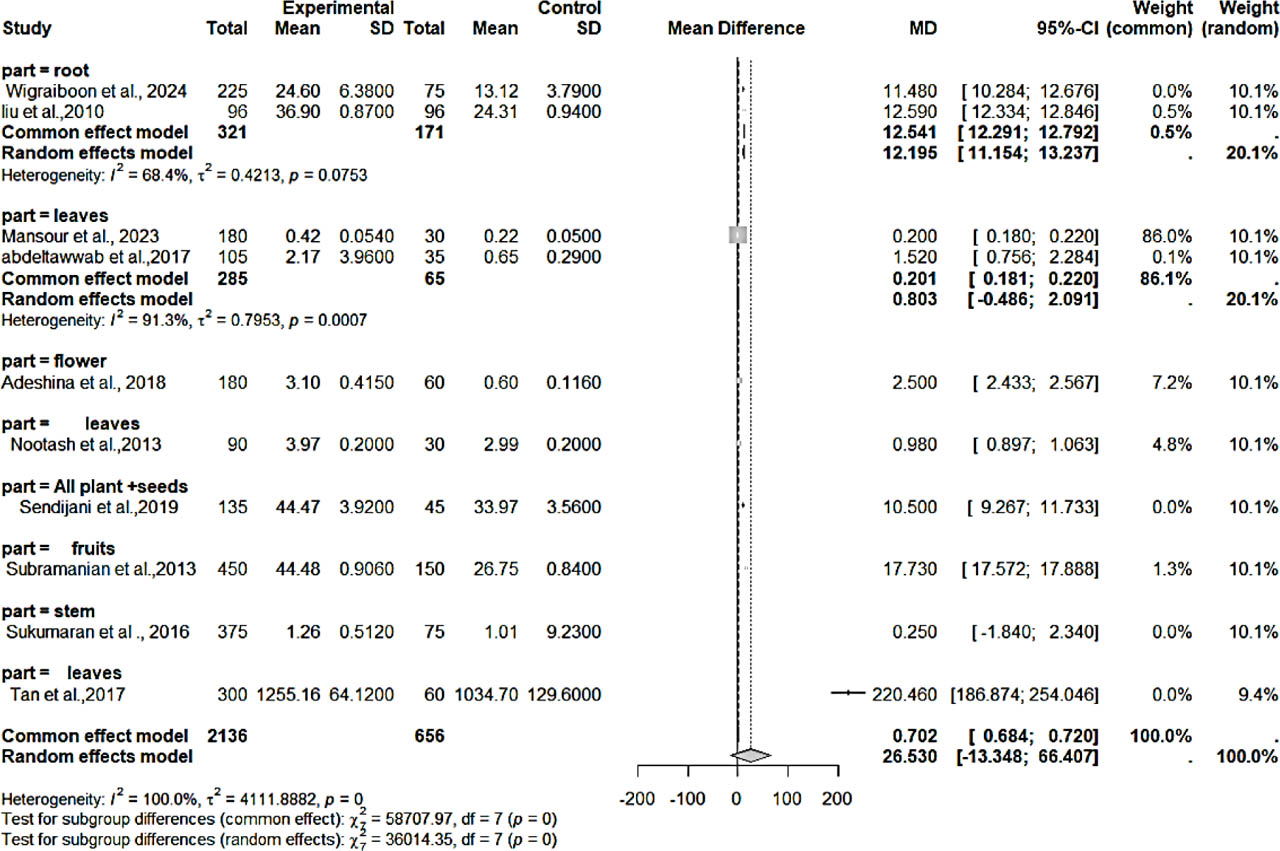
Figure 7.
Forest plot of meta-analysis evaluating the effects of plant-derived ethanolic extracts across different plant parts on the super oxide dismutase (SOD) activities of fish. The plot shows mean differences (MD) with 95% confidence intervals for each study comparing experimental groups to control groups, stratified by plant part (roots, leaves, flowers, fruits, stems, and whole plants with seeds). Each square represents the effect size of an individual study, scaled by its weight, while horizontal lines indicate 95% confidence intervals. Pooled effect estimates for subgroups and overall analyses are shown as diamonds under both common effect and random effects models. Extreme heterogeneity was observed across studies (I2 = 100%), and the wide prediction interval under the random effects model reflects substantial variability in treatment effects among different plant parts. Subgroup analyses confirmed significant differences in responses based on plant part (P<0.001 for both common and random effects models).
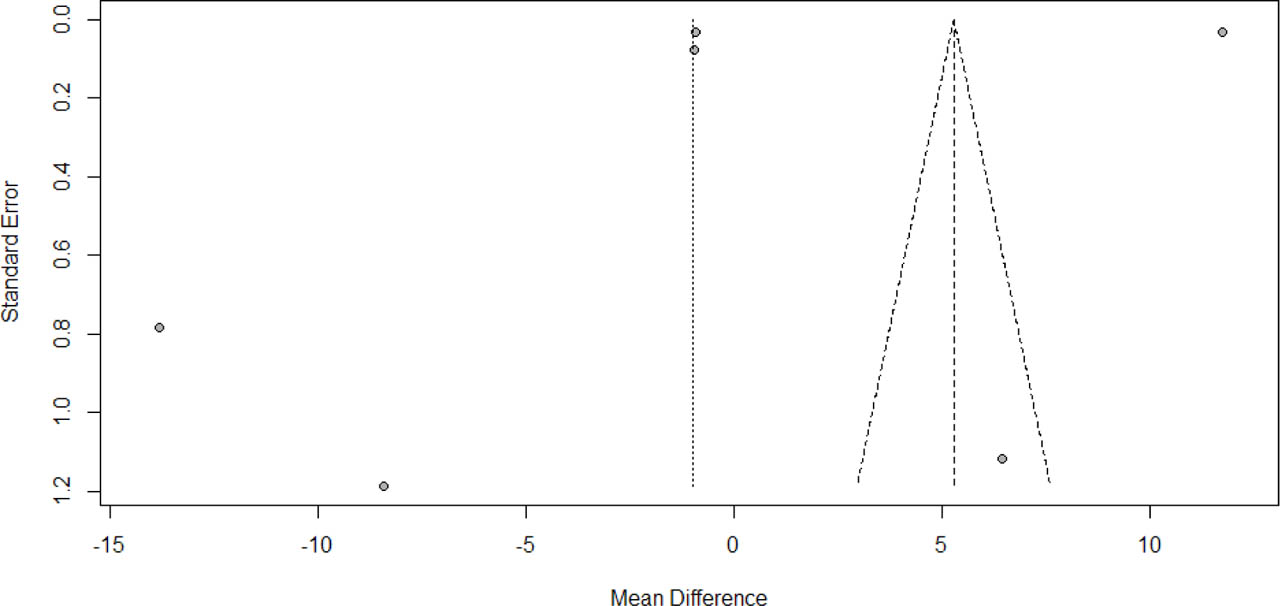
Figure 8.
Funnel plot assessing publication bias for the effect of ethanol-extracted plant parts on MDA levels. The x-axis represents the mean difference in MDA, and the y-axis shows the standard error. Symmetry around the zero line suggests minimal bias, while asymmetry may indicate potential bias or heterogeneity among included studies.
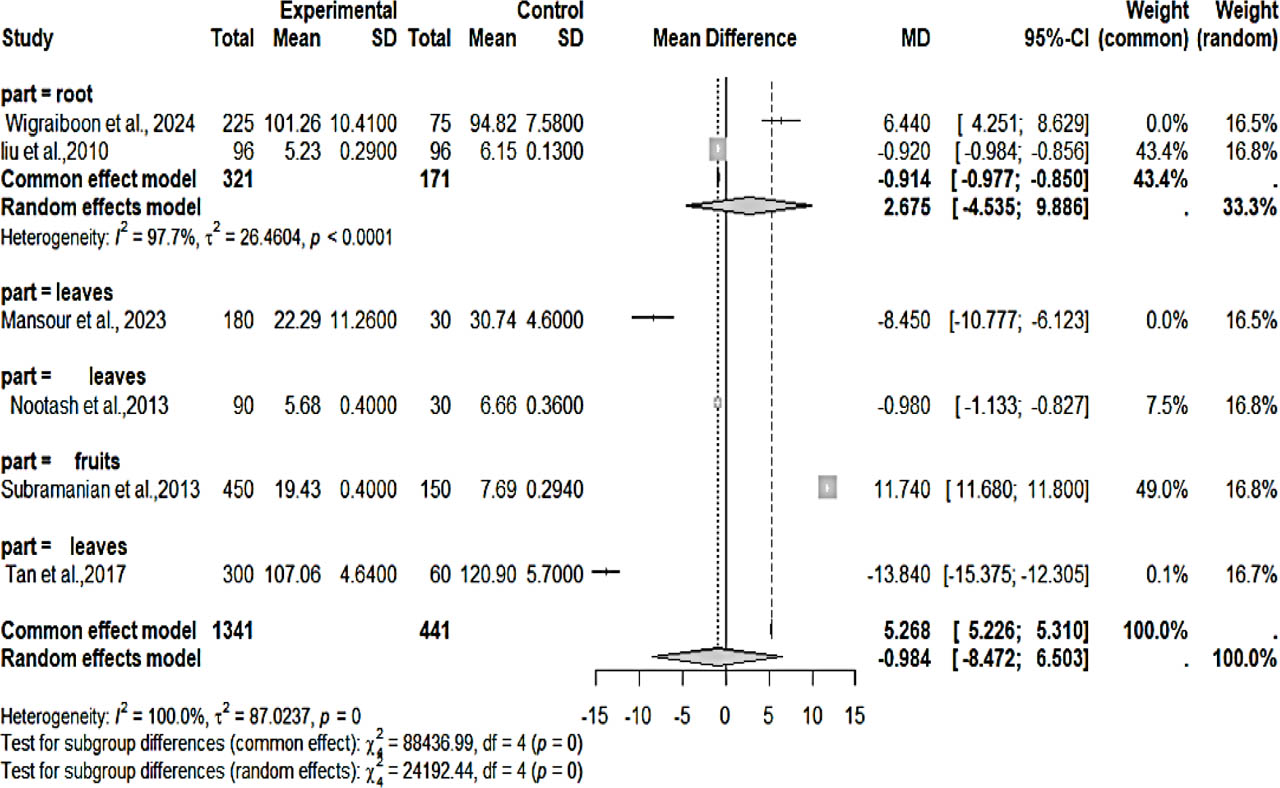
Figure 9.
Forest plot of meta-analysis of malondialdehyde (MDA) levels following treatment with ethanol-extracted plant parts. The plot displays mean differences (MD) in MDA levels with 95% confidence intervals comparing experimental (ethanol-extracted) and control groups, stratified by plant part (roots, leaves, fruits). Squares represent individual study effect sizes (proportional to study weight), horizontal lines show 95% CIs, and diamonds indicate pooled subgroup and overall estimates. Extreme heterogeneity (I2 = 100%) and significant subgroup differences (P<0.001) reflect the variable impact of ethanol-extracted plant parts on oxidative stress markers. The wide prediction interval under random effects highlights substantial variability in MDA responses across different plant parts.
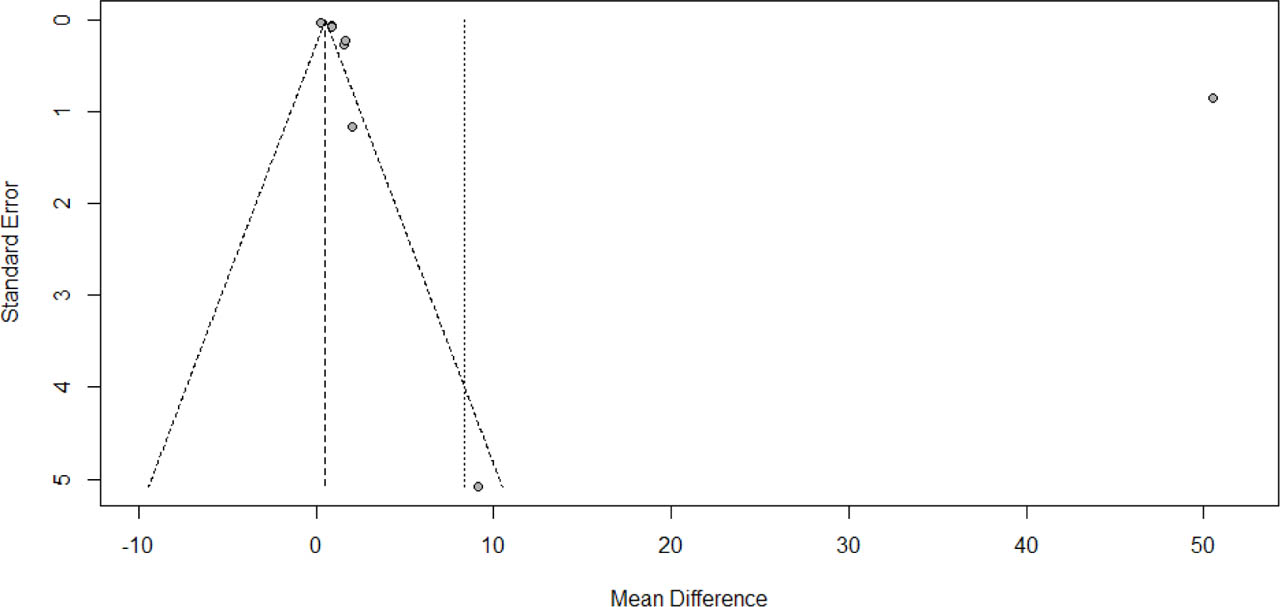
Figure 10.
Funnel plot evaluating publication bias and heterogeneity in studies analysing the effect of ethanol-extracted plant parts on catalase activity. The x-axis represents the mean difference in catalase activity, and the y-axis shows the standard error. Asymmetry in the distribution of points may indicate selective reporting of positive outcomes or variability in study design.
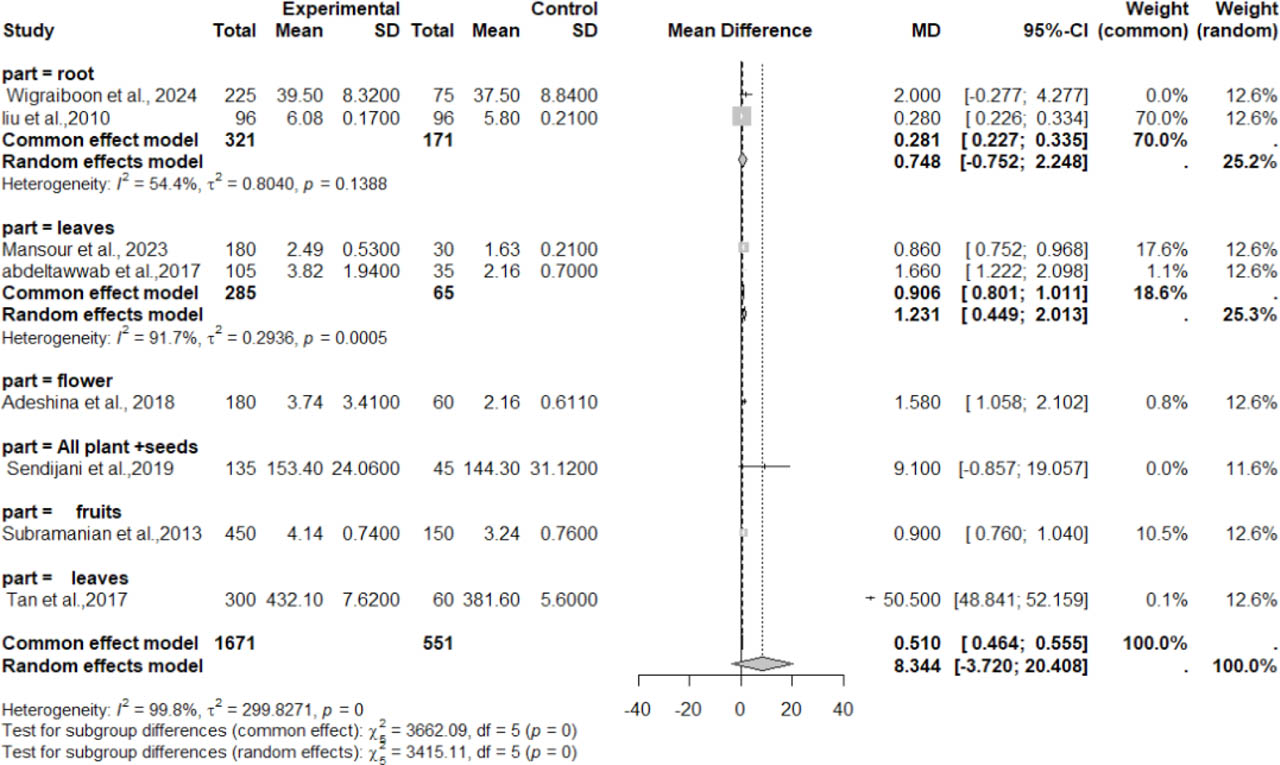
Figure 11.
Forest plot of meta-analysis of catalase activity following treatment with ethanol-extracted plant parts. The plot displays mean differences (MD) in catalase activity with 95% confidence intervals comparing experimental (ethanol-extracted) and control groups, stratified by plant part. Squares represent study effect sizes (proportional to weight), horizontal lines show 95% CIs, and diamonds indicate pooled estimates. Extreme heterogeneity (I2 = 99.8%) and significant subgroup differences (P<0.001) reflect plant-part-specific effects on catalase activity. The wide prediction interval under random effects highlights substantial variability in enzymatic responses.