
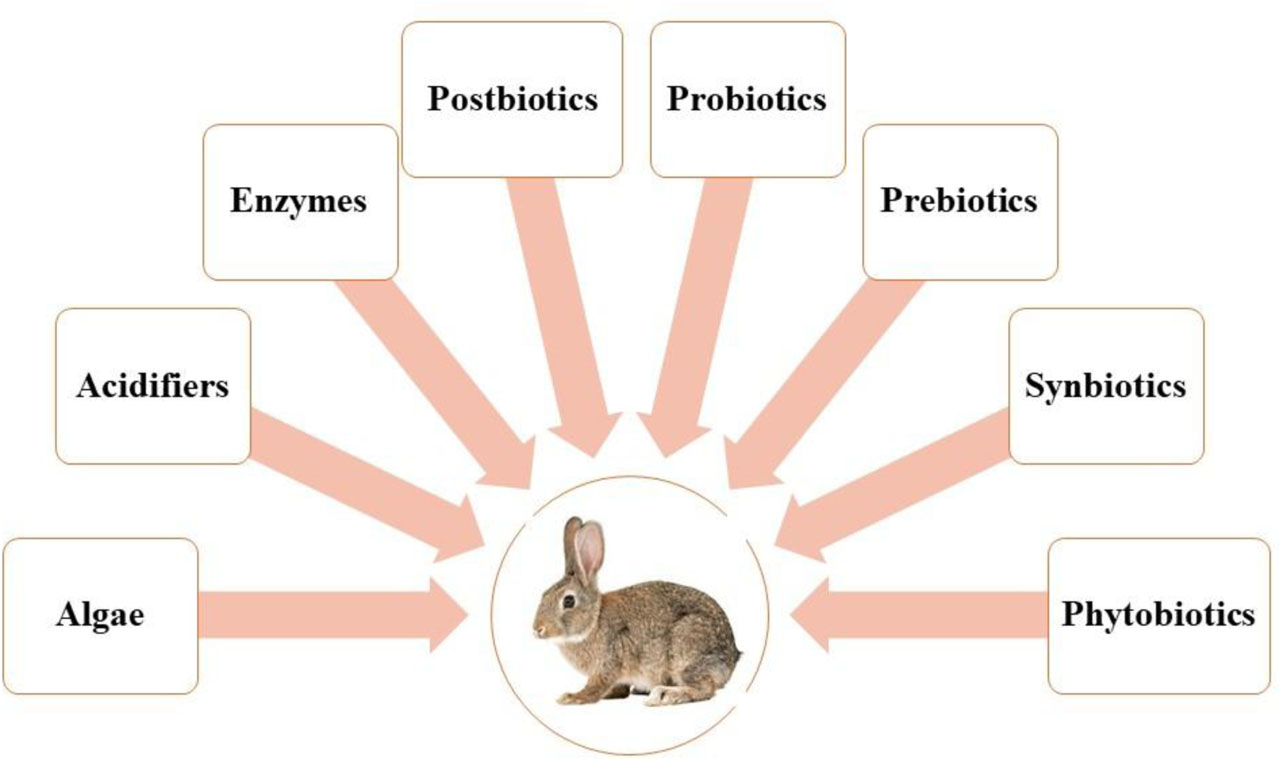
Figure 1.
Types of the different nutraceutical feed additives in rabbits
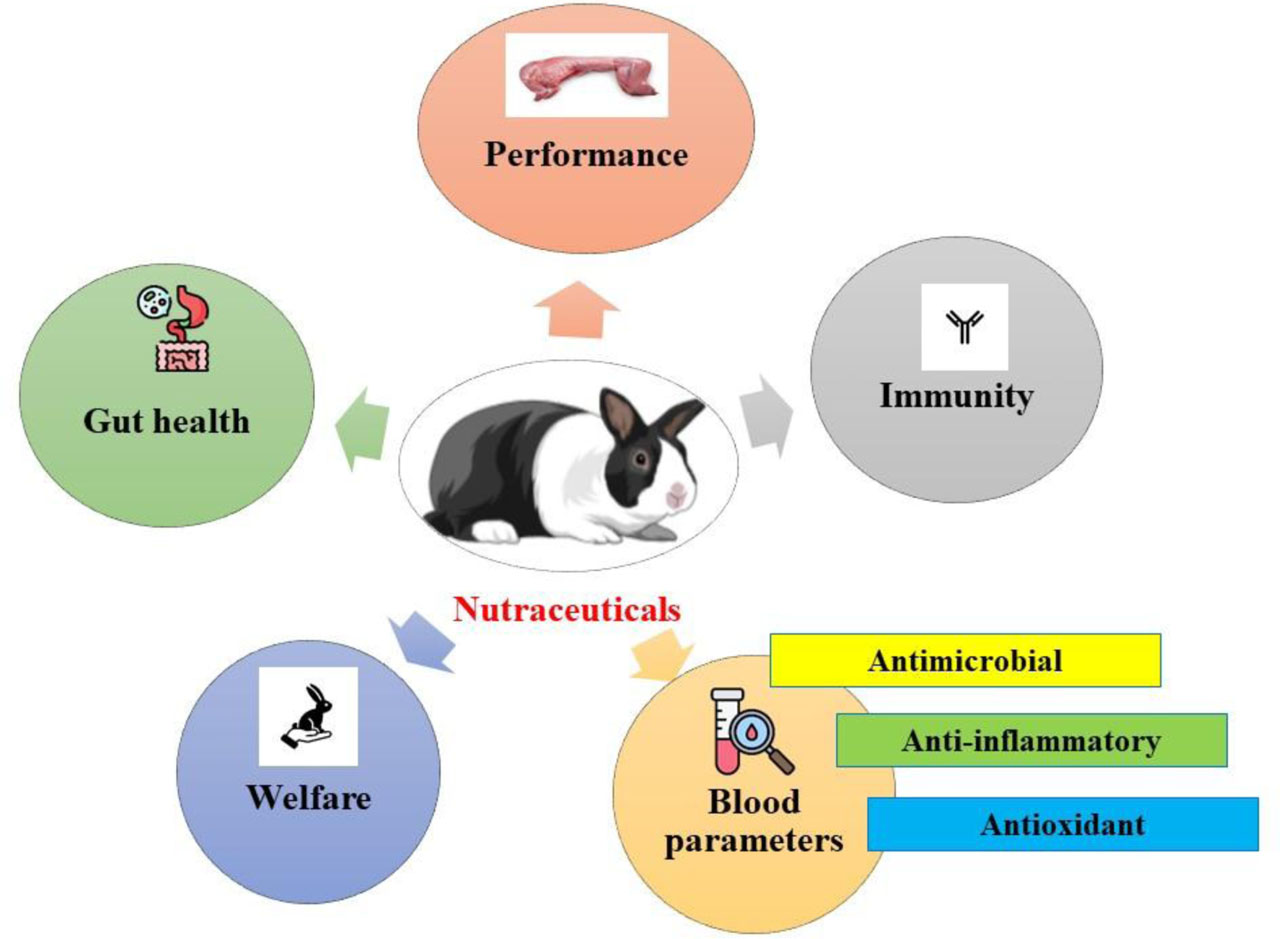
Figure 2.
The different effects of nutraceutical feed additives in rabbits
Table 1.
The different effects of dietary probiotics and prebiotics on rabbit production systems
| Type | Dose | Effects | Reference |
|---|---|---|---|
| MOS + arabinoxylan oligosaccharides | 0.1% in diets | ↑ daily BWG, production of cecal VFAs, and highest of ileal villus | Bosscher et al., 2006 |
| ↓ cecal population of coliform | |||
| E. faecium | 109 | ↑ BWG | Chrastinová et al., 2010 |
| CFU/ml/animal/day | |||
| S. cerevisiae | 200 mg /kg diet | Improved FCR | Onu and Oboke, 2010 |
| S. cerevisiae | 0.08, 0.12, and 0.16 g yeast/kg | No effect on FCR | Ezema and Eze, 2012 |
| B. cereus var. toyoi | 400 mg/kg diet | Improved fattening and dressing percentage | Brzozowski and Strzemecki, 2013 |
| E. faecium | 5.0×10⁸ | ↑ BWG and gut absorption surface | Simonová et al., 2016 |
| CFU/animal/day | |||
| S. cerevisiae + L. acidophilus | 0.5, 1, and 1.5 g/L DW + 1, 2 and 3×10⁹ CFU/kg feed | ↑ FI and BW | Hegab et al., 2019 |
| Trigonella foenum-graecum seed (dietary fiber and galactomannan) | 0.5% in diets | ↓ intestinal pH and NH3-N | Zemzmi et al., 2020 |
| ↑ production of cecal VFAs | |||
| S. cerevisiae | 0.12 g of yeast/kg diet | ↑ BWG, viability, productive performance, loin yield, intestinal morphometry, and serum proteins | Abd El-Aziz et al., 2021 |
| ↓ triglycerides and cholesterol levels | |||
| A mixture of fenugreek seeds, probiotics and phytobiotics | 0.3% in diets | ↑ digestibility of crude protein, ether extract, and crude fiber | Abdel-Wareth et al., 2021 |
| Exacerbated testosterone and estrogens levels | |||
| ↑ productive efficiency and carcass yield | |||
| S. cerevisiae boulardii | 200 or 400 g/ton | ↑ live BW and BWG | El-Sawy et al., 2021 |
| S. boulardii and L. acidophilus + FOS | 400 mg/kg + 50 mg/kg diet | ↑ final BW, average daily BWG, nutrient digestibility, intestinal villus height and width, villus density, crypt depth, villus height: crypt depth ratio, and Ig levels | Nwachukwu et al., 2021 |
| A mixture of different microorganisms | 10 and 15 mL/L DW | ↑ BW and BWG by 6.98% and 4.34%, respectively. | Diaz-Fuentes et al., 2022 |
| S. cerevisiae | 10.3%, 38.7%, and 92.7% | ↑ performance index | El-Sawy, 2022 |
| B. subtilis, L. bulgaricum, and S. cereviciae | --- | ↑ feed efficiency, gut beneficial bacteria count, and cecal VFAs | Suárez-Machín et al., 2022 |
| ↓ intestinal pH | |||
| L. casei and B. subtillus + fennel and M. oleifera oils | 1×10¹¹ CFU and 1×10¹¹ CFU (1 g/L DW) + (6 ml/L DW) | ↑ BW | Abdallah et al., 2023 |
| ↓ E. coli, mortality, and signs | |||
| S. cerevisiae + organic selenium | 1000 mg + 0.3 mg /kg diet | Improved FCR, cholesterol and selenium levels, antioxidant status, and intestinal histomorphology | Al-Sagheer et al., 2023 |
| Grow Star® (vitamins, B. subtillis, B. lichinoforms, and trace minerals) | Grow Star® (1 ml/L), FIDAL® (0.5 ml/L), or EM1® (1 ml/L) DW | ↑ productive performance, feed utilization, and economic efficiency | El-Sawy et al., 2023 |
| FIDAL® (R. flavefaciens) | No effects on carcass traits | ||
| EM1® (Effective Micro-organisms contains photo trophic and lactic acid bacteria, Saccharomyces spp., Actinomyces, and fermentative fungus) | |||
| S. cerevisiae + cellulases, xylanases, proteases, and α-amylase enzymes | 1, 2, and 3 g/L + 1 ml/L DW | Improved final BW, BWG, FCR, protein efficiency, digestibility, and carcass % | El-Speiy et al., 2024 b |
| ↑ total protein, albumin, globulin, ALT, and AST | |||
| ↓ triglycerides, total cholesterol, HDL, LDL, urea, and creatinine | |||
| E. faecium and B. subtilis | 100 mg/L DW | ↓ Eimeria stiedae oocysts shedding | Jameel and Kalef, 2024 |
| Selenium + E. faecium and C. butyricum | 0.3 mg + 1×10⁸ CFU/kg diet | ↑ growth performance, antioxidant, immune status, blood metrics, and cecal fermentation | El-Kholy et al., 2025 |
| or 0.3 mg + 2.5×10⁶ CFU/kg diet |
[i] ↑ = increased; ↓ = decreased; DW = drinking water; E. coli = Escherichia coli; BW = body weight; BWG = body weight gain; FI = feed intake; FCR = feed conversion ratio; B = Bacillus; R = Ruminococcus; S = Saccharomyces; E = Enterococcus; L = Lactobacillus; C = Clostridium; MOS = mannan-oligosaccharides; FOS = fructo-oligosaccharides; VFAs = volatile fatty acids; Ig = immunoglobulins; ALT = alanine transaminase; AST = aspartate transaminase; HDL = high-density lipoprotein; LDL = low-density lipoprotein; CFU = colony forming unit; NH3-N = nitrogen-ammonia; = Not mentioned.
Table 2.
The impacts of dietary phytobiotics on rabbit production systems
| Type | Dose/diet | Effects | Reference |
|---|---|---|---|
| Fenugreek + anise seed | 6 g + 6 g/kg | ↑ litter size | Eiben et al., 2004 a |
| Olive cake | 20%, 25%, or 30% | ↑ European efficiency | Mehrez and Mousa, 2011 |
| No influence on globulin, creatinine, cholesterol, AST, and ALT | |||
| Sage lavandulifolia and Sage officinalis | 1% | ↑ BW, BWG, and viability | Ayala et al., 2012 |
| Aloe vera leaves powder | 300 mg/kg | ↑ MDA and antioxidant status | Sethi et al., 2012 |
| Olive cake + bentonite | 30% + 1% | Enhanced final BW, BWF, and FCR | Salama et al., 2016 |
| Olive leaves | 5% or 10% | ↑ carcass quality | Zakri, 2016 |
| ↓ fat on carcass viscera or shoulders | |||
| Dried onion | 400 or 800 mg/kg | ↑ final BW | Zeweil et al., 2016 |
| Lycopene (carotenoid in tomatoes) | 5 mg/kg | ↓ AST, ALT, creatinine, and urea | Casamassima et al., 2017 |
| Flaxseed (Linum usitatissimum L.) oil | 1.5% or 3% | Modulated FAs composition of meat without adverse effects on growth performance and meat physicochemical meat quality | Khan et al., 2018 |
| ↓ medium chain and total saturated FAs | |||
| ↑ poly unsaturated FAs | |||
| Oxidized or non-oxidized rapeseed oil | 10% | ↑ glutathione peroxidase, reactive oxygen species, and catalase | Skowron et al., 2018 |
| Oxidized or non-oxidized olive oil | |||
| Olive cake pulp | 15%, 20%, and 25% | ↓ feed cost | Bakr et al., 2019 |
| Improved economic efficiency | |||
| No effect on carcass traits | |||
| ↓ glucose and triglycerides | |||
| Tomato powder (Solanum lycopersicum L.) | 2% | Improved growth performance | Elwan et al., 2019 |
| No effects on blood parameters (except for red and white blood cells) | |||
| Agave tequilana stem powder | 1.5% | ↑ productivity and meat quality with a hypolipidemic effects | Iser et al., 2019 |
| No changes in the blood count | |||
| Chinese mugwort (Artemisia argyi) | 3% | ↓ diarrhea | Liu et al., 2019 b |
| Modulated immune functions | |||
| ↑ growth performance | |||
| Fenugreek + anise seeds | 3% + 3% | ↑ total milk yield and production | Sallam et al., 2019 |
| Olive oil | 0.2%, 0.4%, and 0.6% | No negative effects on carcass quality general health, growth status, TP, albumin, triglycerides, HDL, creatinine, urea, IgG and IgM, T3, T4, AST, and ALT | Shams El-Deen et al., 2019 |
| Thyme essential oil | 0.6%, 0.12%, and 0.18% | ↑ productivity, semen quality, and testosterone | Abdel-Wareth and Metwally, 2020 |
| ↓ ALT, AST, urea, and creatinine | |||
| Olive cake + sodium bicarbonate | 10% + 0.25 or 0.50% | ↑ final BW, total gain, daily BWG, and carcass % | Azazi et al., 2020 |
| Aidan pod powder (Tetrapleura tetraptera) | 1% | ↑ performance | Ingweye et al., 2020 |
| ↓ abdominal fat yield | |||
| Mulberry (Morus alba) leaves | 50% | Supported weight gain and feed to gain ratio | Khan et al., 2020 |
| No effect on meat physicochemical traits | |||
| Pumpkin (Cucurbita moschata) seed oil | 5 g/kg | ↑ final BW | Bakeer, 2021 |
| garlic (Allium sativum) + ginger (Zingiber officinale) | 1% | ↑ productive performance and carcass yield | Johnson et al., 2022 |
| Cinnamon (Cinnamomum verum) + clove (Syzygium aromaticum) | 0.15% + 0.25% | ↑ BW, daily BWG, meat quality, TP, albumin, and globulin | Abdel-Azeem and El-Kader, 2022 |
| ↓ glucose, cholesterol, triglycerides, AST, and ALT | |||
| Salvia officinalis | 200 mg/kg | ↑ BW, daily BWG, and liver weights without effects on kidney weights | El-Bolkiny et al., 2022 |
| Lycopene + allicin (organosulfur compound in garlic) | 200 mg + 200 mg | ↑ BW without effects on FI | El-Gindy et al., 2022 |
| Improved hepatic tumor necrotizing factor-α gene expression | |||
| Aloe vera (Cactaceae) leaves powder | 1 and 2 g/kg | ↑ growth performance, immunity, and antioxidant profile | El-Kholy et al., 2022 |
| Nigella sativa | 0.125%, 0.25%, and 0.50% | ↑ digestive enzymes and genetic expression of binding proteins (occludin, claudin-1, junctional adhesion molecule-2, and secretory glycoprotein mucin-2) with a growth-promoting effect | Elmowalid et al., 2022 |
| ↓ Staphylococcus aureus | |||
| Agave fourcroydes stem powder | 1.5% | ↑ BW and feed efficiency | Martínez et al., 2022 |
| ↓ glucose, cholesterol, triglycerides, and atherogenic index | |||
| No effect on urea nitrogen, creatinine, LDL, and the relative weight of digestive organs and viscera | |||
| Wilted mulberry (Morus alba) leaves + Enzymes blend (driselase, cellulase, amylase, protease) + S. cerevisiae | 75% + 2 g/kg + 2 g/kg | Improved BWG and FCR, FI, and villus height and crypt depth values | Khan et al., 2022 |
| ↑ neutral detergent fiber, dry matter digestibility, and carcass yield without effects on meat physical and chemical properties | |||
| Aloe vera powder | 0.5, 1.0, and 2.0 g/kg | ↑ total antioxidant capacity, litter size, as well as BW and milk conversion ratio of birth | Abo El-Azayem et al., 2023 |
| ↓ MDA | |||
| Olive cakes + S. cerevisiae + citric acid | 20% or 25% + 5 g/kg + 1.0% | ↑ nutritional value of olive cake, growth performance, nutrient digestibility, thyroid activity, antioxidative status, and gut health | Elbaz et al., 2023 |
| Pumpkin seed oil + copper sulfate | 5 ml/kg + 200 mg/kg | ↑ final BW, total BWG, performance index, organic matter, dry matter and crude protein digestibility, hot carcass and total edible part %, TP, globulin, HDL, growth hormone, and thyroid stimulating hormone | El-Speiy et al., 2023 |
| ↓ FI, FCR, AST, creatinine, triglycerides, LDL, LDL, and MDA | |||
| Promoted IgG and IgM production, total antioxidant capacity, and superoxide dismutase activity | |||
| Extra virgin olive oil | 0.2%, 0.4%, and 0.6% | Improved final BW and FCR | Ezzat et al., 2023 |
| ↑ hot carcass weight, dressing and total non-carcass fat, net return, economic efficiency, performance index | |||
| Enhanced production of antibody titer against red blood cells, cholesterol, glucose, creatinine, urea, and IgM and IgG | |||
| Thyme, garlic, turmeric, clove, and cinnamon extracts | 200 mg/kg | ↑ nutrient digestibility, growth performance, immunity, and antioxidant activity | Mohamed et al., 2023 |
| Daidzein (isoflavones extracted from soybeans) | 0.17% and 0.34% | ↑ fertility and weight of birth | Xie et al., 2023 |
| Sieved olive pulp + Econase enzyme | 20% or 25% + 0.1 g/kg | ↑ growth performance, dressing percentage, TP, albumin, globulin, albumin/globulin ratio, total antioxidant capacity, and economic efficiency | Alderey et al., 2024 |
| Synbiotic, date palm pollen, bee pollen, honey bee, and their mixture | 3 ml distilled water containing 0.2 ml, 200 mg, 200 mg, and 0.2 ml | Enhanced FI and FCR | El-Speiy et al., 2024 a |
| ↑ maternal BW, daily BWG, litter size weight, survival at birth and weaning, milk production, and digestibility coefficients | |||
| Sage (Salvia officinalis) | 0.5 mg/kg | Improved BW, BWG, FI, and FCR | Khalifa et al., 2024 |
| ↓ TP and albumin | |||
| Sage (Salvia officinalis) extract | 1.5% | No effect on carcass traits | Todorova and Maya, 2024 |
| Lycopene + allicin | 150 mg/kg + 150 mg/kg | Protected against heat stress-induced growth retardation, blood alterations, immune dysfunction, and inflammation | El-Ratel et al., 2025 |
| Sage (Salvia officinalis) powder | 0.25% and 0.5% /kg | ↑ BW, total and daily BWG, pre-slaughter weight, liver and kidneys N%, TP, albumin, glucose, and T3 | Fouad et al., 2025 |
| Onion peel extract | 200, 350, and 500 mg/kg | Improved BWG, relative growth rate, and FCR | Helal et al., 2025 |
| No changes in FI, carcass traits, and triglycerides | |||
| ↓ total cholesterol, LDL, very LDL, and MDA | |||
| ↑ HDL, albumin, globulins, IgG and IgM, lysozymes activity, catalase, and glutathione | |||
| M. oleifera leaves extract | 3 and 4 g/kg | Promoted productive performance, kidney and liver functions, digestive enzymes, antioxidant biomarkers, immunological indicators, cecal microbiota, and carcass traits | Reda et al., 2025 |
| Fenugreek + + berseem seeds | 5% + 15% and 2.5% + 7.5% | ↑ total BWG of litters, return parameters (total return, net return economic efficiency, and relative economic efficiency), milk yield, mRNA expression of prolactin gene, mammary morphological characteristics, early nest building, nest quality, willingness to nurse, % of kits with full bellies, and upregulation of mRNA levels of follicular stimulating hormone gene | Sakr et al., 2025 |
| ↓ feed costs | |||
| Rosella (Hibiscus Sabdariffa) + anise seeds (Pimpinella Anisum L.) | 1 g/kg + 0.5 g/kg | ↑ conception rates, litter size and weight gain from birth to weaning, milk yield and its chemical composition of fat and lactose, total antioxidant capacity, superoxide dismutase, glutathione reductase, Ig A, IgG, and IgM | Salama et al., 2025 |
| ↓ mortality rates and thiobarbituric acid reactive substances | |||
| Olive pulp + Enzymes mixture (phytase, glucanase, α-amylase, cellulase, pectinase, xylanase, lipase, and protease) | 5% + 10% | Enhanced BW, daily BWG, FI, and FCR | Srour et al., 2025 |
| ↑ TP, albumin, glucose, carcass characteristics, dressing %, economic efficiency, and production index | |||
| No effect on cholesterol and kidney and liver functions |
[i] ↑ = increased; ↓ = decreased; BW = body weight; BWG = body weight gain; FI = feed intake; FCR = feed conversion ratio; ALT = alanine transaminase; FAs = fatty acids; AST = aspartate transaminase; MDA = malondialdehyde; Ig = immunoglobulins; S = Saccharomyces; M. oleifera = Moringa oleifera; T3 = triiodothyronine; T4 = thyroxine; TP = total protein.
Table 3.
The different effects of dietary organic acids on rabbit production
| Organic acid(s) | Dose/diet | Effects | Reference(s) |
|---|---|---|---|
| Fumaric acid | 1.5 g/kg | ↑ daily BWG | Castrovilli, 1991 |
| 3 g/kg | Hullar et al., 1996 | ||
| 1.25 g/kg | Zi Lin et al., 1996 | ||
| 0.5% | ↑ digestibility of protein and fiber | El-Kerdawy, 1996 | |
| 5 g/kg and 10 g/kg | ↑ amylolytic bacteria concentration | Abecia et al., 2005 | |
| 1.5% | ↑ daily BWG and feed efficiency | Scapinello et al., 2001; Michelan et al., 2002 | |
| Caprylic acid | 5 g/kg | ↓ mortality | Skřivanová and Marounek, 2002 |
| ↓ Pasteurella multocida, Clostridium perfringens, and Bordetella bronchiseptica | |||
| A blend of caprylic, capric, and lauric acids | 60.8, 38.7, and 0.3 g/100 g of methylesters, respectively at 10 g/kg | ↓ mortality | Skřivanová and Marounek, 2006 |
| Acids (formic, and lactic acids) + essential oils (rosemary, thyme, and cinnamon) | 5 g/kg + 4 g/kg | ↑ BWG and feed efficiency | Cesari et al., 2008 |
| Formic and citric acids + essential oils | 0.4% | ↓ pathogenic bacteria | Cardinali et al., 2008 |
| ↑ immune response | |||
| Olive cake + citric acid | 10% + 0.1% | ↓ triglyceride levels | Azazi et al., 2018 |
Table 4.
The different effects of using algae spp. on rabbit production
| Algae | Dose | Effects | Reference |
|---|---|---|---|
| Schizochytrium | 180–1800 mg/kg/d | ↑ FI and BW | Hammond et al., 2001 |
| Ulva lactuca | A diet containing 1% | Positive effects on performance and digestive health parameters | El-Banna et al., 2005 |
| ↓ relative weights of the liver, kidney, and spleen | |||
| S. platensis | A diet containing 10% | ↑ FI. | Peiretti and Meineri, 2008 |
| Ulva spp. | A diet containing dried 30% | ↓ fat content in carcasses | Chermiti et al., 2009 |
| A. platensis, Thymus vulgaris or combination | 5% (A. platensis) | No alteration in the growth or health | Gerencsér et al., 2014 |
| 3% (Thymus vulgaris) | |||
| S. platensis and C. vulgaris | 0.75 and 1.5 g/kg diet | Improved growth | Hassanein et al., 2014 |
| ↓ liver enzymes, cholesterol, and total lipids contents | |||
| S. platensis | A diet containing 20%, 40%, and 60% | Enhanced digestibility of dry matter, organic matter, crud protein, and crud fiber | Adel et al., 2017 |
| No negative impacts and maintained growth, health, and meat quality indicators | |||
| C. vulgaris | 1.0 g/kg diet | Boosted immunity and antioxidant status | Abdelnour et al., 2020 |
| ↓ accumulation of lipids in blood | |||
| S. platensis | 0.6 g/kg diet | Improved growth parameters and FCR | Alazab et al., 2020 |
| Ulva lactuca, Pterocladia capillacea, Spirodela polyrrhiza, and Cladophora aegagropila | A diet containing 4.0% | Improved final BW, daily BWG, FCR, total digestible nutrients, and digestible crude protein | Abu Hafsa et al., 2021 |
| ↓ N intake, digested, and balance | |||
| ↑ dressing weight and liver, kidney, and spleen weights | |||
| ↑ meat proteins, total lipids, total bilirubin, triglycerides, cholesterol, HDL, and LDL | |||
| S. platensis selenium nanoparticles zinc nanoparticles | 1 g/kg diet S. platensis | ↑ final BW and BWG | Bashar et al., 2023 |
| 50 mg/kg diet selenium nanoparticles | |||
| 100 mg/kg diet zinc nanoparticles | |||
| Improved FCR, white and red blood cells count, hemoglobin, and carcass traits (liver weights and edible giblets) | |||
| ↑ IgA and IgG, superoxide dismutase, and triiodothyronine | |||
| ↓ total glycerides, AST, ALT, creatinine, uric acid, total bilirubin, indirect bilirubin, cortisol, interferon-γ, malondialdehyde, and protein carbonyl | |||
| A. platensis + C. vulgaris | 300 mg A. platensis + 500 mg C. vulgaris/kg diet | ↓ weight, lipase, protease, and cholesterol | El Basuini et al., 2023 |
| ↑ FCR, total protein, glutathione peroxidase, superoxide dismutase, and catalase | |||
| S. platensis | 0.5, 1, and 1.5 g/h/d | ↑ nutrient digestibility, FI, FCR, and milk yield | Abdou et al., 2024 |
| Improved conception rate, litter size, and weight at birth and weaning | |||
| No effect on serum total protein, AST, and IgG | |||
| ↑ albumin and IgM | |||
| ↓ mortality, globulin, urea, creatinine, and ALT | |||
| Algae powder | 2 and 4 g/kg concentrated diet | ↑ final BW, packed cell volume, hemoglobin, red blood cells, total protein, albumin, and HDL | Abduljabbar et al., 2024 |
| Chlorella suspension | 40 ml | ↑ BWG | Abdurakhmanova et al., 2024 |
| Improved meat quality (organoleptic and physicochemical attributes) | |||
| C. vulgaris + crude fat + soybean oil | 1% and 2% (C. vulgaris) | Chlorella up to 2% did not significantly affect diet nutritional value, animal performance, or cecal activity. Chlorella up to 5% improved crude fat and overall feed efficiency | Bordignon et al., 2024 |
| 3% and 5% (crude fat) | |||
| 1% and 3% (soybean oil) | |||
| Dehydrated and extracts of Saccharina latissima, Himanthalia elongate, and Ulva spp. | 1.025% | ↑ fat content and proportion of monounsaturated fatty acids | Al-Soufi et al., 2024 |
| No effect on moisture, protein, or ash contents, as well as physicochemical and sensorial properties of muscles | |||
| Algae, sunflower oil, or soybean oil | 1% algae, 3% sunflower oil, or 3% soybean oil | Improved mRNA expression of calpains (CAPN1 and CAPN3) and calpastatin (CAST2) according to rabbits’ age | Maj and Grzesiak, 2024 |
| Curcumin + C. vulgaris | 50 mg curcumin + 500 mg C. vulgaris /kg BW | ↑ FI and growth rates | Soliman et al., 2025 |
| Improved FCR | |||
| No changes in albumin, globulin, urea, and creatinine | |||
| ↓ total cholesterol, triacylglycerol, triiodothyronine, and thyroxine | |||
| ↑ glutathione and glutathione peroxidase | |||
| ↑ carcass traits (weight of hot carcass, carcass yield, organs weights, and carcass parts) | |||
| ↑ economic efficiency, net revenue, and relative economic efficiency |
[i] ↑ = increased; ↓ = decreased; FI = feed intake; FCR = feed conversion ratio; BW = body weight; WG = body weight gain; N = nitrogen; Ig = immunoglobulins; C. vulgaris = Chlorella vulgaris; S. platensis = Spirulina platensis; A. platensis = Arthrospira platensis; HDL = high-density lipoprotein; LDL = low-density lipoprotein; AST = aspartate transaminase; ALT = alanine aminotransferase.