
Long Description: The figure illustrates four major mechanisms by which antimicrobial peptides (AMPs) interact with and disrupt microbial cell membranes. In the aggregate model, peptides and membrane lipids form disordered complexes that destabilize the bilayer. In the carpet model, AMPs accumulate on the membrane surface and cause membrane disintegration when a threshold concentration is reached. In the barrel-stave model, peptides insert into the membrane and assemble into transmembrane channels. In the toroidal pore model, peptides induce curved pores lined by both peptide molecules and lipid head groups, resulting in membrane leakage and microbial cell death.
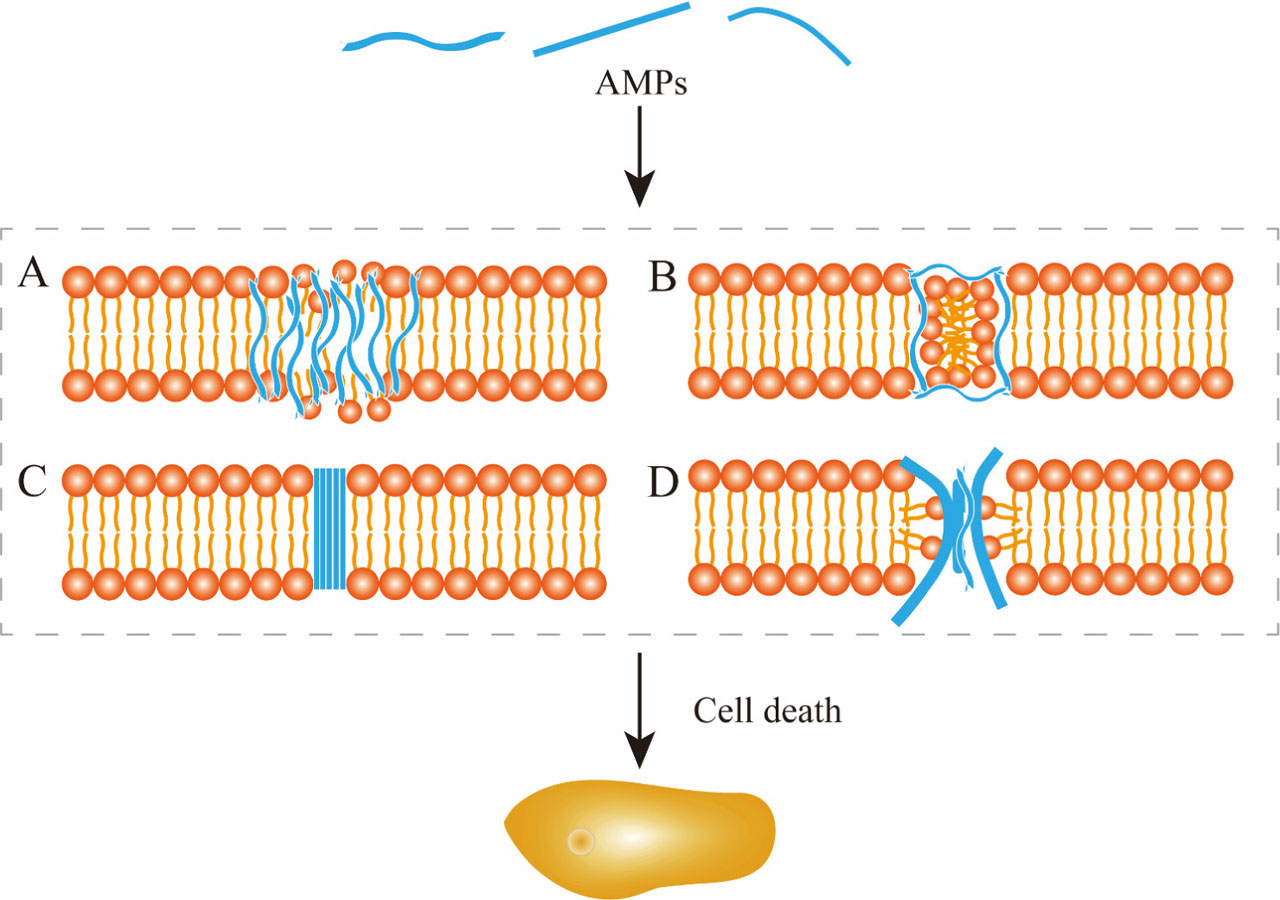
Figure 1.
Membrane permeabilization mechanism of AMPs. (A) Aggregate model. (B) Carpet model. (C) Barrel-stave model. (D) Toroidal pore model.
Long Description: The figure summarizes intracellular mechanisms through which antimicrobial peptides damage microbial cells after entering or penetrating the cell membrane. AMPs may bind DNA or RNA and interfere with replication and transcription, inhibit ribosomal activity and protein synthesis, suppress key enzymes involved in cell wall formation and energy metabolism, induce reactive oxygen species production, and damage intracellular organelles or metabolic systems. These combined actions contribute to multi-target antimicrobial effects and reduce the likelihood of resistance development.
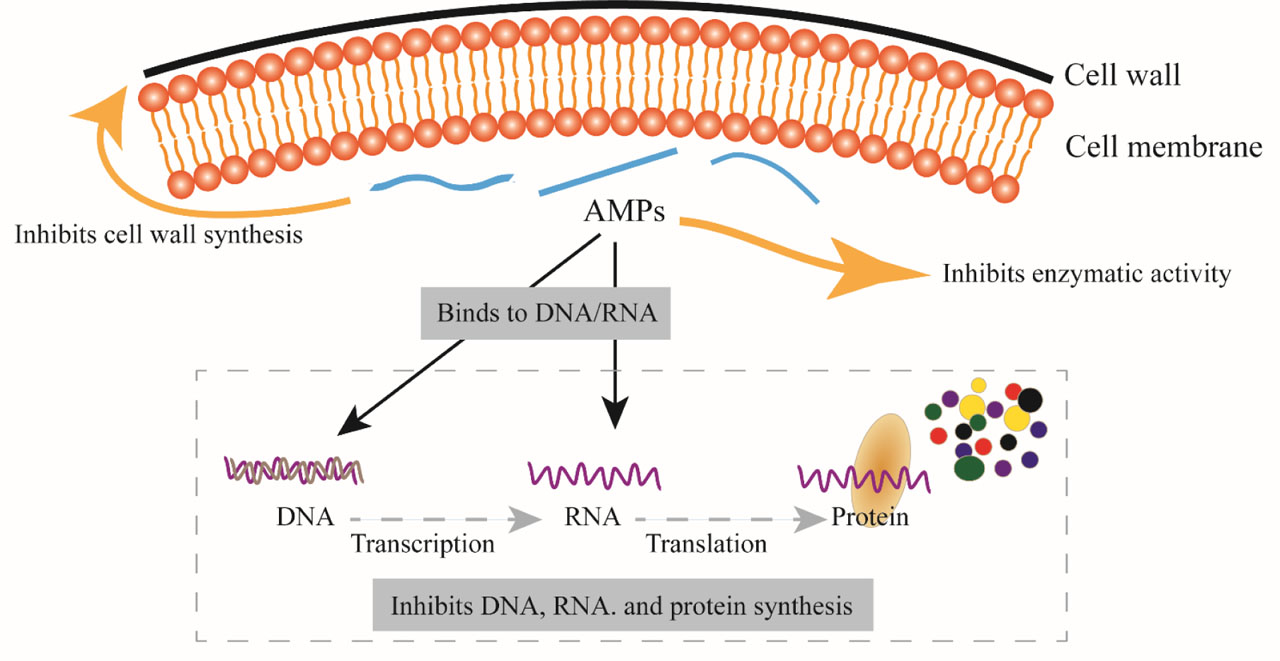
Figure 2.
Mechanism of intracellular damage.