
The most numerous population of nerve fibers supplying the pig uterus are catecholaminergic fibers, which mainly express and release noradrenaline (NA) (Majewski et al., 1995). In the healthy uterus of pigs and other animal species, the following have been identified: the isoforms A, B, D for the α1-adrenoreceptor (AR) subtype; the isoforms A, B, C for α2-AR subtype; the subtypes 1, 2 and 3 for the β-AR class (Taneike et al., 1995; Limon-Boulez et al., 1997; Ducza et al., 2002; Ontsouka et al., 2004; Gáspár et al., 2007; Parida et al., 2013; Bóta et al., 2015; Meller et al., 2018). In the porcine uterus, the aforementioned receptors were revealed in the luminal and glandular epithelium, blood vessels and myometrial muscular cells (Meller et al., 2018).
Under physiological conditions, the catecholamines cause considerable changes in the rate of synthesis and secretion of prostaglandins (PGs). In relation to PGE2, it is known that catecholamines acting by α- and β-ARs regulate PGE2 secretion by the human myometrium (Quaas et al., 1985) and the rat uterus (Chaud et al., 1986). Moreover, the role of particular isoforms of α1-and α2-ARs and particular subtypes of β-ARs in the NA-stimulated PGE2 synthesis and release by the healthy pig endometrial explants has been documented (Jana et al., 2023).
Uterine inflammation (endometritis, metritis) is a common disease in animals occurring predominantly after labor. Severe types of uterine inflammation may cause disturbances in reproduction and thus a reduction in the profitability of production (Tummaruk et al., 2010; Monteiro et al., 2022; Pascottini et al., 2023). Uterine inflammation is often caused by Gram-negative bacteria, including Escherichia coli (E. coli) (De Winter et al., 1995; Herath et al., 2006). Lipopolysaccharide (LPS), a component of the cell membrane of Gram-negative bacteria, binds to the toll-like receptor 4 expressed on endometrial cells to stimulate the generation of multiple inflammatory mediators (Herath et al., 2006; Cronin et al., 2012; Krikun et al., 2012; Pascottini et al., 2020). Irregularities in the immune defense mechanisms of the endometrium and/or contractility of myometrium result in the origin, development and maintenance of inflammation (Pascottini et al., 2020; Wiebe et al., 2021).
Literature data report high contents of PGE2 in the cow uterine fluid during pyometra (Manns et al., 1985) and in the uterine secretion in the course of endometritis (Mateus et al., 2003). Clinical endometritis in cows results in a rise in the PGE2 secretion by endometrial cells (Barański et al., 2013) and with increased mRNA expression of PG-endoperoxidase synthase-2 (PTGS-2), PTGS-1 and PTGE synthase (PTGES) (Tobolski et al., 2024). PTGS-2 mRNA expression was also augmented in the repeat-breeding cows with subclinical endometritis (Janowski et al., 2017). In turn, in pigs with acute endometritis, an increase in the PGE2 amount in the endometrium and myometrium (Jana et al., 2007), the endometrial mRNA expression of PTGS-2 (Jana et al., 2007, 2009; Roongsitthichai et al., 2011) and microsomal PTGES-1 (mPTGES-1) (Koszykowska et al., 2008) was noted. PGE2, as an inflammatory mediator, plays a role in many processes leading to the occurrence of classic signs of an inflammatory reaction (Kawahara et al., 2015). In the cow endometrium, PGE2 is capable of generating and secreting other pro-inflammatory mediators and damage-associated molecular patterns (Deng et al., 2019; Zhang et al., 2020). PGE2 also regulates the contractility of the pig uterus with inflammation (Jana et al., 2010).
During endometritis in pigs, there is a significantly altered uterine noradrenergic innervation pattern (Jana et al., 2020; Miciński et al., 2021) and abundances of ARs in the inflamed endometrium (Meller et al., 2018). The participation of particular isoforms of α1- and α2-ARs and particular subtypes of β-ARs in the NA-influenced PGE2 generation and release by the inflamed pig endometrial explants was also recognized (Jana et al., 2023). However, the cellular mechanisms of noradrenergic influence on the PGE2 generation during endometritis are not fully understood. It is hypothesized that NA acting by ARs alters PGE2 production and release by the endometrial epithelial cells under inflammatory conditions. A better understanding of the cellular and receptor mechanisms of noradrenergic control of this PG synthesis and secretion will greatly improve the prevention and treatment of uterine inflammation. The current study examined the involvement of α1-, α2- and β-ARs in the regulation of NA-affected PTGS-2, mPTGES-1 and mPTGES-2 protein abundances and PGE2 release from E. coli LPS-treated porcine endometrial epithelial cells.
Material and methods
Animals and uteri collection
The uteri from the gilts were obtained in the local slaughterhouse. Each whole uterus was collected within 5 min after slaughter. The phase of the estrous cycle/day was determined by macroscopic observation of the ovaries according to Akins and Morrissette (1968) and Leiser et al. (1988). In the study, the uteri (n=4) on day 8 of the estrous cycle were harvested. The cells isolated on this day easily became confluent in culture conditions. The uteri, kept on ice, were immediately transported to the laboratory.
Isolation of endometrial epithelial cells
Epithelial cells from the endometrium were isolated according to the methodology reported earlier (Blitek et al., 2011) with modifications. The uterine horns were washed twice in sterile phosphate-buffered saline (PBS; 137 mM NaCl, cat. no. 79412116, POCH, Gliwice, Poland; 27 mM KCl, cat. no. 739740114, POCH, Gliwice, Poland; 10 mM Na2HPO4, cat. no. 117992300, CHEMPUR, Piekary Śląskie, Poland; 2 mM KH2PO4, cat. no. 742020112, POCH, Gliwice, Poland; pH 7.4) supplemented with antibiotics (100 IU/ml penicillin and 100 μg/ml streptomycin; cat. no. 15140-122, Life Technologies, Bleiswijk, The Netherlands). The middle parts of the horns were opened longitudinally on the surface of the mesometrium. Next, using scissors, the endometrium was separated from the myometrium. The separation of both layers was confirmed under the dissecting microscope. The endometrial layer, after cutting into small slices, was digested with 0.2% (w/v) dispase (cat. no. 17105041, Life Technologies, Grand Island, NY, USA) in Dulbecco’s PBS (cat. no. D5773, Sigma) at 37°C for 50 min with gentle shaking. The cell suspension was filtered through a 270-μm mesh to separate the remaining fragments of the endometrium. The released epithelial cells were resuspended with Medium 199 with 5% normal calf serum (NCS; cat. no. N4637, Sigma), pelleted by centrifugation at 200 × g for 10 min and washed once with Medium 199 (cat. no. M5017, Sigma) containing 5% (w/v) NCS and antibiotics. Red blood cell lysing buffer (cat. no. R7757, Sigma) was used to remove red blood cells from cell suspensions. The epithelial cells were subsequently rinsed (three times) with fresh Medium 199 containing 5% NCS and filtered through a 100-μm cell strainer (Becton Dickinson, USA), and the fraction that passed through it was collected. The cells were counted in a hemocytometer and seeded onto 75-cm3 culture flasks (2 × 10⁶ cells/ml of medium). Cells were incubated at 37°C in a humidified atmosphere of 95% air and 5% CO2 for 5 h. After this period, purified non-attached epithelial cells were collected, centrifuged, suspended in fresh Medium M199 with 10% NCS and seeded onto the new culture flasks. Cell viability was approximately 90%, as determined by the exclusion of 0.5% (w/v) trypan blue dye (cat. no. T6146, Sigma). The immunofluorescent staining pattern for the presence or absence of vimentin and cytokeratin (Blitek et al., 2004), using antibodies from Abcam, Cambridge, UK (cat. no. ab20346) and Sigma (cat. no. C1801), respectively, provided evidence that epithelial cell purity was between 85% and 90% (Figure 1 A and B). Additionally, for the control of immunostaining reaction, the primary antibodies were omitted (Figure 1 C and D). During cell cultures, the medium was replaced every 24 h. Before the experiment began, cell confluence was evaluated using a Zeiss Axioplan light microscope (Carl Zeiss, Oberkochen, Germany) and reached 80% to 90% after five to six days of culture.
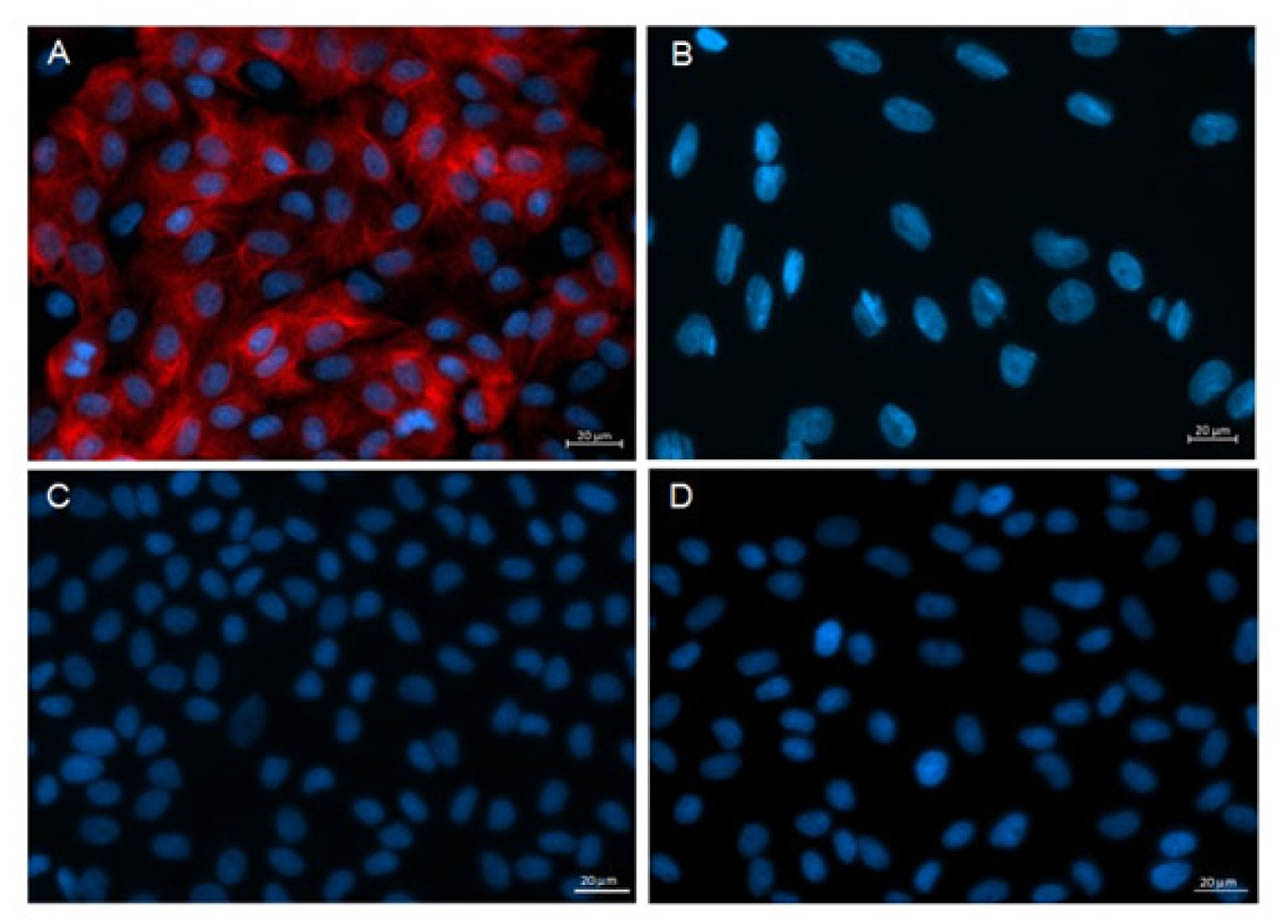
Figure 1.
The purity of endometrial epithelial cell culture confirmed by positive immunofluorescent staining for anti-cytokeratin (A) and negative anti-vimentin staining (B). Negative control without primary antibodies for cytokeratin (C) and vimentin (D). Scale bar: 20 μm.
Treatment of endometrial epithelial cells with LPS and/or NA, AR agonists, AR antagonists
Before starting treatment of the epithelial cells with exogenous factors, they were rinsed with fresh Medium 199 and then treated for 24 h with Medium 199 containing 2% BSA, 10% NCS and antibiotics containing no exogenous factors (control value) or with the addition of E. coli (O55:B5) LPS alone (10 ng/ml, cat. no. L2880, Sigma), NA alone (10−5 M, Levonor, Warszawskie Zakłady Farmaceutyczne Polfa, Poland), LPS (10 ng/ml) with NA (10−5 M), AR agonists alone (each at a dose of 10−4 M) for: α1-(/R/-/-/-phenylephrine hydrochloride, cat. no. P6126), α2-(clonidine hydrochloride, cat. no. C7897), β- (isoprenaline hydrochloride, cat. no. I5627), β1- (dobutamine hydrochloride, cat. no. D0676), β2- (salbutamol, cat. no. S8260) and β3 (sodium salt hydrate, cat. no. BRL37344) -ARs, as well as AR antagonists alone (each at a dose of 10−4 M) for: β1- (RS-atenolol, cat. no. 0387), β2- (ICI 118,551 hydrochloride, cat. no. 0821) and β3 (SR 59230A hydrochloride, cat. no. 1511) -ARs. The epithelial cells were also treated with LPS (10 ng/ml) together with α1-, α2-or β-AR agonists (each at a dose of 10−4 M) or together with β1-, β2- or β3-AR antagonists (each at a dose of 10−4 M) and NA (10−5 M) or together with β1-, β2- or β3-AR antagonists (each at a dose of 10−4 M) and β1-AR agonist (10−4 M) or together with β1-, β2- or β3-AR antagonists (each at a dose of 10−4 M) and β2-AR agonist (10−4 M) or together with β1-, β2- or β3-AR antagonists (each at a dose of 10−4 M) and β3-AR agonist (10−4 M). All agonists were obtained from Sigma, while the antagonists were provided by Tocris Bioscience. Initial dilutions of exogenous factors were made in accordance with the manufacturer’s instructions (LPS, α1-, α2-, β-, β1-AR agonists and β1- and β2-AR antagonists were diluted in 0.2 mm-filtrated distilled water; β2-AR agonist was diluted in methanol, cat. no. 621990110, POCH, Gliwice, Poland; β3-AR agonist and β3-AR antagonist were diluted in dimethyl sulfoxide, cat. no. W387509, Sigma), and then placed at −20°C. The final dilutions of these factors and NA were prepared using the same medium as in the cell culture. The observation of the PGF2α secretion after cell exposure to a nitric oxide (NO) donor (NONOate; at a dose of 10−4 M, cat. no. 82150, Cayman Chemical Co.) was applied to control the reactivity of endometrial epithelial cells. The doses of the factors used and the time of incubation were based on the findings of pilot research or according to the authors’ previous experiments. All treatments were conducted in triplicate, using cells isolated from four separate gilts. After a period of cell culture, the medium was collected into tubes containing 5% EDTA (cat. no. 118798103, CHEMPUR, Piekary Śląskie, Poland), 1% acetylsalicylic acid (cat. no. 107140422, POCH Gliwice, Poland) solution (pH 7.4), and stored at −20°C for PGE2 content determination by the ELISA method. The epithelial cells were used for the estimation of the PTGS-2, mPTGES-1 and mPT-GES-2 protein abundances using the Western blot method.
Western blot analysis
After collecting the culture medium, the endometrial epithelial cells were rinsed with PBS and lysed with 240 μl of ice-cold RIPA buffer (mmol/l Tris HCl, pH 7.4, cat. no. T150350, Sigma; 150 mmol/l NaCl, cat. no. 794121116, POCH, Gliwice, Poland; 1% Triton X-100 (v/v), cat. no. T8787, Sigma; 0.5% sodium deoxycholate (w/v), cat. no. D6750, Sigma; 0.1% sodium dodecyl sulphate (w/v); SDS, cat. no. L3771, Sigma; 1 mmol/l EDTA, cat. no. 879810429, POCH, Gliwice, Poland) together with protease inhibitor cocktail (cat. no. P8340, Sigma) and centrifuged for 5 min at 800 × g. The supernatant was placed at −80°C for further analysis. The total protein concentration was then determined (Bradford, 1976). Protein isolates (20 μg) from endometrial epithelial cells were diluted in sodium dodecyl sulphate (SDS, cat. no. L3771, Sigma), a gel-loading buffer, heated (95°C, 4 min) and separated by 10% SDS-poly-acrylamide gel electrophoresis. The separated proteins were then electroblotted onto Immobilon®-P PVDF membranes (0.45 μm pore size, cat. no. IOVH00010, Sigma) in a buffer for transfer. To block nonspecific binding sites, the incubation was carried out with 5% fat-free dry milk (Spółdzielnia Mleczarska, Gostyń, Poland) in a Tris (cat. no. T1503, Sigma) -buffered saline Tween 20 (cat. no. P1379, Sigma) buffer (1.5 h, 21°C). The membranes were exposed (18 h, 4°C) to antibodies against PTGS-2 (dilution 1:200; cat. no. 160107), mPTGES-1 (dilution 1:200; cat. no. 160140) and mPT-GES-2 (dilution 1:200; cat. no. 160145), all obtained from Cayman Chemical Co. The membranes were then placed in a solution of secondary antibody (1.5 h, 21°C): alkaline phosphatase-conjugated goat anti-rabbit (dilution 1:10000; cat. no. A3687, Sigma). Protein immune complexes were visualized by applying the standard alkaline phosphatase method (NBT-BCIP; cat. no. 72091, Sigma). Analyses were performed in triplicate. The specificity of anti-PTGS-2 and anti-mPTGES-1 antibodies was reported earlier in porcine endometrium (Jana et al., 2023). To demonstrate the specificity of anti-mPTGES-2 antibody, a specific binding peptide was used (cat. no. 300012, Cayman Chemical Co.) as a negative control. After neutralizing the primary antibody, the bands showed significantly weaker staining (Supplementary Figure 1). The data for the enzymes were normalized in relation to the expression of glyceraldehyde-3-phosphate dehydrogenase (GAPDH) using primary polyclonal rabbit anti-GAPDH antibody (dilution 1:5000; cat. no. G9545, Sigma). Images were acquired and quantified using a CHEMIDOC Touch Imaging System (Image Lab 5.2, Bio-Rad Laboratories, Hercules, CA, USA).
ELISA procedure
The PGE2 concentration in the culture medium was measured using the ELISA kit (cat. no. 514010, Cayman Chemical Co.), following the manufacturer’s protocol. The standard curve ranged from 7.8 to 1000 pg/ml. The sensitivity of the test was 13 pg/ml. The intra- and interassay coefficients of variation were 4.8% and 7.2%, respectively.
Statistical analysis
The data obtained from the endometrial epithelial cell cultures were only considered if the secretion of PGF2α after exposure to NONOate was statistically meaningful. By using the Shapiro–Wilk test, the normal distribution of data and residuals was determined. The homogeneity of variances was evaluated by Bartlett’s test. The data are presented as the mean (± SEM) values from four separate experiments (gilts). Statistical analyses were performed using a one-way ANOVA, followed by the Bonferroni test (InStat Graph Pad, San Diego, CA, USA). The level of statistical significance was set at P<0.05.
Results
Influence of NA and/or AR agonists and AR antagonists on the PTGS-2 protein abundance in the LPS-treated endometrial epithelial cells
AR agonists and AR antagonists alone
Compared to the control values, NA and α1-, α2-AR agonists and all used β-AR agonists and antagonists did not cause significant changes in the PTGS-2 protein abundances (Table 1).
Table 1.
Influence of noradrenaline (NA, 10−5 M) alone or agonists of α1-, α2- and β-adrenoreceptors (ARs, 10−4 M) alone or antagonists of β-ARs (10−4 M) alone on the prostaglandin-endoperoxidase synthase-2 (PTGS-2), microsomal PTGE synthase-1 (mPTGES-1) and mPTGES-2 protein abundances in the pig cultured endometrial epithelial cells. Enzyme abundances were determined by Western blotting, and values were normalized against glyceraldehyde-3-phosphate dehydrogenase (GAPDH) protein abundances. Treatments were conducted in triplicate for each of the four pigs. Data are presented as the mean ± SEM. Different letters (a, b, c) indicate statistical differences (P<0.01, P<0.001). CV: control value; agon.: agonist; anta.: antagonist
| Treatment | PTGS-2 | mPTGES-2 protein abundances (arbitrary units) | mPTGES-1 |
|---|---|---|---|
| CV | 0.19±0.03 | 0.03±0.01 | 0.29±0.03 a |
| NA | 0.18±0.08 | 0.04±0.02 | 0.54±0.04 b |
| α1 agon. | 0.22±0.04 | 0.04±0.02 | 0.18±0.05 a |
| α2 agon. | 0.16±0.05 | 0.03±0.01 | 0.21±0.02 a |
| β agon. | 0.22±0.03 | 0.03±0.02 | 0.71±0.06 b |
| β1 agon. | 0.23±0.02 | 0.07±0.03 | 0.58±0.02 b |
| β2 agon. | 015±0.04 | 0.05±0.03 | 1.23±0.04 c |
| β3 agon. | 0.25±0.03 | 0.03±0.01 | 0.59±0.03 b |
| β1 anta. | 0.21±0.05 | 0.06±0.02 | 0.22±0.04 a |
| β2 anta. | 0.15±0.03 | 0.04±0.01 | 0.25±0.05 a |
| β3 anta. | 0.18±0.06 | 0.04±0.02 | 0.21±0.07 a |
LPS alone, NA alone, LPS with NA or AR agonists, AR antagonists
Greater PTGS-2 protein abundances, in relation to the control value and NA action, were revealed after exposure to LPS (P<0.05), LPS with NA (P<0.001), LPS with α1-, α2- (P<0.05) β (P<0.001) -AR agonists, LPS with β1- (P<0.001), β2- and β3 (P<0.05) -AR antagonists with NA, LPS with antagonists of particular β-AR subtypes with β1-AR agonist (P<0.05), LPS with β1- (P<0.001), β2- (P<0.05) and β3 (P<0.001)-AR antagonists with β2-AR agonist, and LPS with β1-, β2- (P<0.001) and β3 (P<0.05) -AR antagonists with β3-AR agonist (Figure 2). The enzyme abundance after using LPS together with NA was higher (P<0.05) than after LPS alone. The application of α1-and α2-AR agonists in the LPS-treated cells reduced (P<0.001) the PTGS-2 protein abundances compared to the influence of LPS with NA. The use of β-AR agonist increased (P<0.01) the enzyme abundance compared to the LPS effect. After the addition of β1-AR antagonist with NA, the PTGS-2 protein abundance in the LPS-treated cells was higher (P<0.01) than after the use of LPS treatment alone. The effect of β2- and β3-AR antagonists with NA decreased (P<0.05) the enzyme abundances in the LPS-treated cells versus the influence of LPS with NA. After using β1- (P<0.01), β2-(P<0.001) and β3 (P<0.05) -AR antagonists with β1-AR agonist, the PTGS-2 abundances in the LPS-treated cells were lower than after LPS with NA action. In response to β1- (P<0.01) and β3 (P<0.05)-AR antagonists with β2-AR agonist, the cell enzyme abundances were higher compared to the LPS effect. PTGS-2 abundance was lowered (P<0.05) after stimulation with LPS, β2-AR antagonist and β2-AR agonist compared to the group with LPS with NA action. The addition of β1- and β2-AR antagonists with β3-AR agonist evoked in the LPS-treated cells a rise (P<0.01) in the PTGS-2 abundances in reference to the influence of LPS. The PTGS-2 abundance was higher (P<0.01) after using LPS with NA than LPS with β3-AR antagonist and with β3-AR agonist.
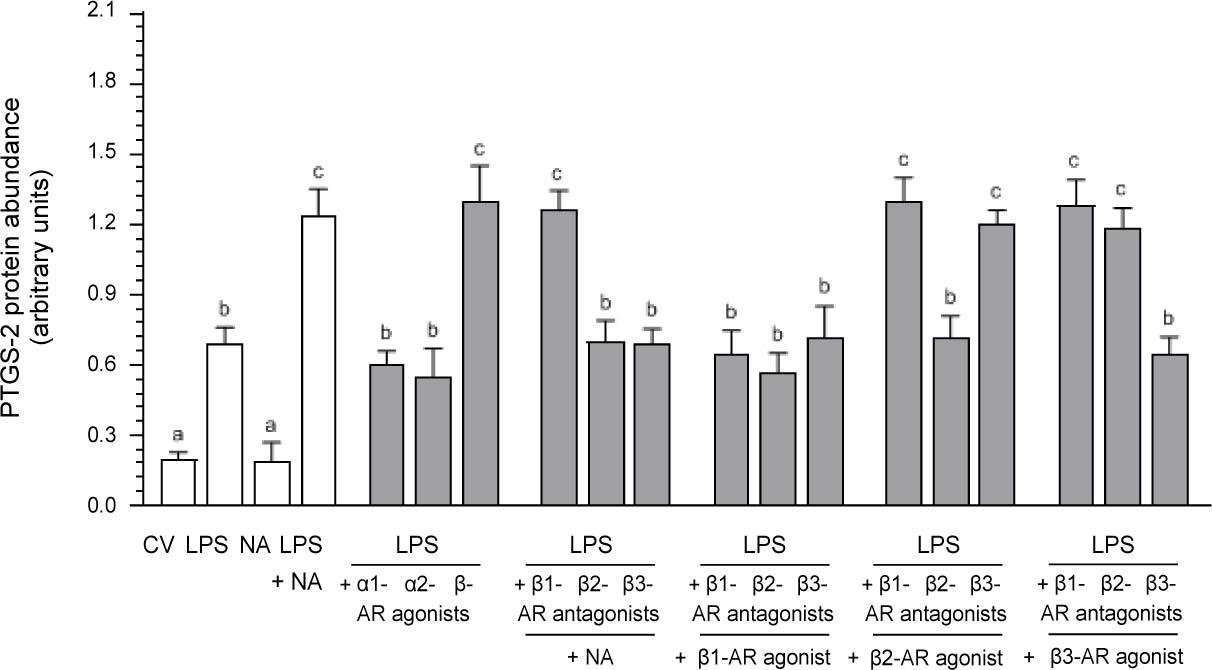
Figure 2.
Influence of noradrenaline (NA, 10−5 M) alone or agonists of α1-, α2- and β-adrenoreceptors (ARs, 10−4 M) or antagonists of β1-, β2- and β3-ARs (10−4 M) with NA or antagonists of β1-, β2- and β3-ARs (10−4 M) in combination with agonists of β1-, β2-, β3-ARs (10−4 M) on the prostaglandin-endoperoxidase synthase-2 (PTGS-2) protein abundance in the lipopolysaccharide (LPS, 10 ng/ml of medium)-exposed pig cultured endometrial epithelial cells, estimated by Western blotting. Treatments were conducted in triplicate for each of the four pigs. The values were normalized against glyceraldehyde-3-phosphate dehydrogenase (GAPDH) abundances. Data are presented as the mean (± SEM). Blots with representative bands for each treatment are given in Supplementary Figure 2 A. Different letters (a, b, c) indicate statistical differences (P<0.05–0.001). CV: control value.
Influence of NA and/or AR agonists and AR antagonists on the mPTGES-1 protein abundance in the LPS-treated endometrial epithelial cells
AR agonists and AR antagonists alone
In the cultured endometrial epithelial cells, mPT-GES-1 protein abundances did not differ significantly between the control value and after NA, and all the ARs agonists and antagonists applied (Table 1).
LPS alone, NA alone, LPS with NA or AR agonists, AR antagonists
Compared to the control values and NA action, an increase in the mPTGES-1 protein abundances took place after using LPS (P<0.05), LPS with NA (P<0.001), LPS with α1-, α2 (P<0.05) and β3 (P<0.001) -AR agonists, LPS with antagonists of particular β-AR subtypes with NA (P<0.05), LPS with β1-(P<0.01), β2- and β3 (P<0.001) -AR antagonists with β1-AR agonist, LPS with β1- (P<0.001), β2- (P<0.05) and β3 (P<0.001) -AR antagonists with β2-AR agonist, and LPS with β1-, β2- (P<0.001) and β3 (P<0.05)-AR antagonists with β3-AR agonist (Figure 3). An increase in the enzyme abundance after the application of LPS with NA was greater (P<0.001) than the effect of LPS. The use of α1- and α2-AR agonists in the LPS-treated cells reduced (P<0.01) the mPTGES-1 abundances compared to the effect of LPS with NA. The addition of β-AR agonist elevated (P<0.001) enzyme abundance compared to the LPS effect. After the application of β1-, β2- (P<0.01) and β3 (P<0.001) -AR antagonists with NA, the mPTGES-1 abundances in the LPS-treated cells were reduced compared to the influence of LPS with NA. The enzyme abundance in the LPS-exposed cells was lowered (P<0.01) after the exposure to β1-AR antagonist with β1-AR agonist compared to LPS with NA action. The stimulation with β2- (P<0.05) and β3 (P<0.001) -AR antagonists with β1-AR agonist, elevated the mPTGES-1 abundances in these cells compared to LPS action. The treatment with β1- and β3-AR antagonists with β2-AR agonist elevated (P<0.001) the enzyme abundances in the LPS-treated cells compared to the application of LPS alone. The addition of β2-AR antagonist with β2-AR agonist decreased (P<0.01) the mPTGES-1 abundance in reference to LPS with NA effect. The enzyme abundances in the LPS-treated cells were increased by β1-(P<0.001) and β2 (P<0.01) -AR antagonists with β3-AR agonist compared to LPS action. In LPS-exposed cells, the β3-AR antagonist with β3-AR agonist reduced (P<0.01) the mPTGES-1 abundance compared to the combined influence of LPS with NA.
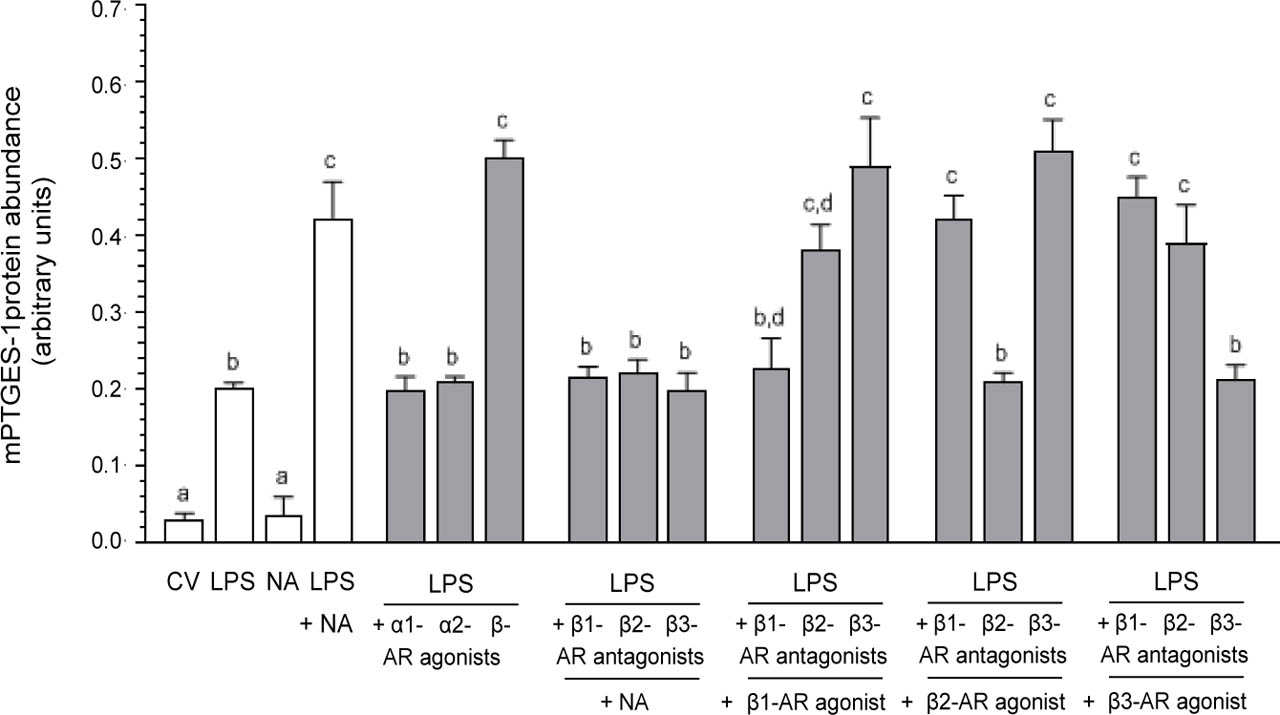
Figure 3.
Influence of noradrenaline (NA, 10−5 M) alone or agonists of α1-, α2- and β-adrenoreceptors (ARs, 10−4 M) or antagonists of β1-, β2-and β3-ARs (10−4 M) with NA or antagonists of β1-, β2- and β3-ARs (10−4 M) in combination with agonists of β1-, β2-, β3-ARs (10−4 M) on the microsomal prostaglandin E synthase-1 (mPTGES-1) protein abundance in the lipopolysaccharide (LPS, 10 ng/ml of medium)-exposed pig cultures endometrial epithelial cells, estimated by Western blotting. Treatments were conducted in triplicate for each of the four pigs. The values were normalized against glyceraldehyde-3-phosphate dehydrogenase (GAPDH) abundances. Data are presented as the mean (± SEM). Blots with representative bands for each treatment are given in Supplementary Figure 2 B. Different letters (a, b, c, d) indicate statistical differences (P<0.05–0.001). CV: control value.
Influence of NA and/or AR agonists and AR antagonists on the mPTGES-2 protein abundance in the LPS-treated endometrial epithelial cells
AR agonists and AR antagonists alone
NA and all used β-AR agonists led to a rise in mPT-GES-2 protein abundances in the cells versus the control value (NA and β1- and β3-AR agonists: P<0.01; β- and β2-AR agonists: P<0.001) and the effect of antagonists of particular β-AR subtypes (P<0.001) (Table 1). The addition of β2-AR agonist increased (P<0.001) the enzyme abundance compared to the respective influence of NA, β-, β1- and β3-AR agonists.
LPS alone, NA alone, LPS with NA or AR agonists, AR antagonists
In reference to the control value and LPS action, the cell mPTGES-2 protein abundances were increased (P<0.01) after using NA, LPS with NA, LPS with β-AR agonist, LPS with β1- and β3-AR antagonists with NA (Figure 4). In the LPS-treated cells, α1- and α2-AR agonists (P<0.05), β2-AR antagonist and NA (P<0.01), β1- (P<0.01), β2- (P<0.05) and β3 (P<0.01) -AR antagonists with β1-AR agonist, β1-, β2- (P<0.01) and β3 (P<0.05) -AR antagonists with β2-AR agonist and β1-, β2- (P<0.01) and β3 (P<0.05) -AR antagonists with β3-AR agonist decreased the mPTGES-2 abundances com-pared to the effect of NA alone or a combination of LPS with NA.
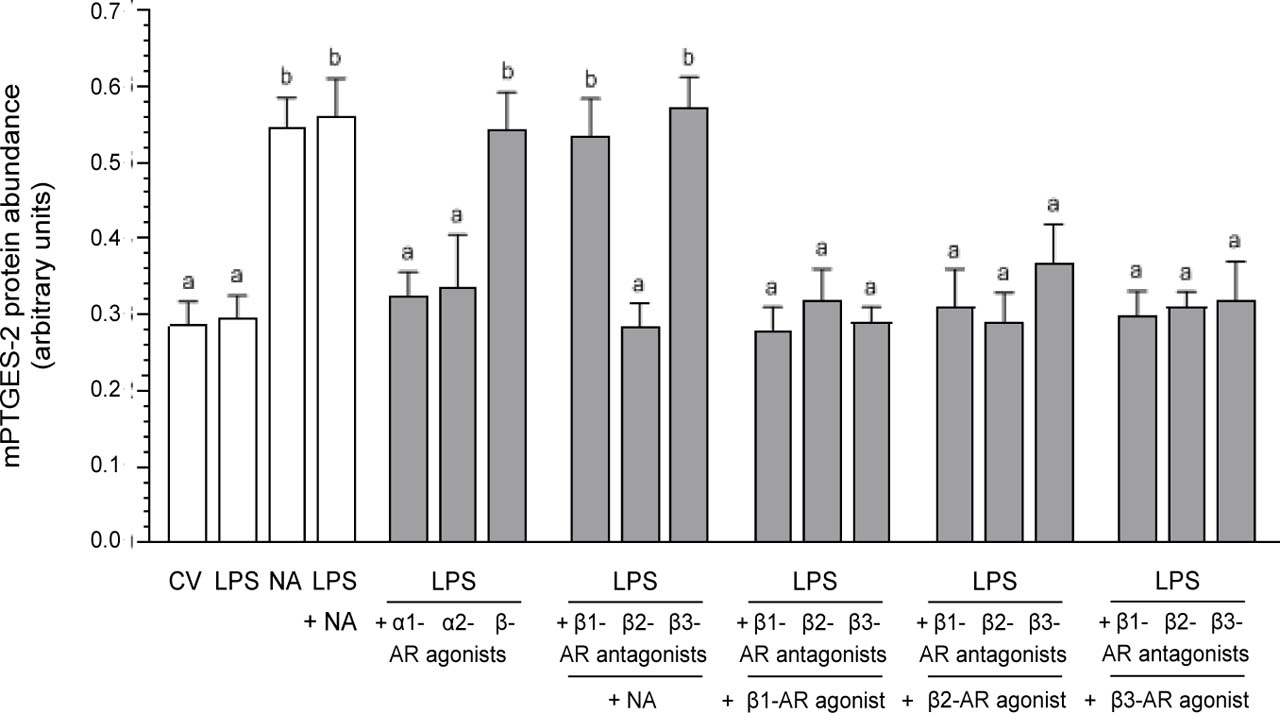
Figure 4.
Influence of noradrenaline (NA, 10−5 M) alone or agonists of α1-, α2- and β-adrenoreceptors (ARs, 10−4 M) or antagonists of β1-, β2-and β3-ARs (10−4 M) with NA or antagonists of β1-, β2- and β3-ARs (10−4 M) in combination with agonists of β1-, β2-, β3-ARs (10−4 M) on the microsomal prostaglandin E synthase-2 (mPTGES-2) protein abundance in the lipopolysaccharide (LPS, 10 ng/ml of medium)-exposed pig cultured endometrial epithelial cells, estimated by Western blotting. Treatments were conducted in triplicate for each of the four pigs. The values were normalized against glyceraldehyde-3-phosphate dehydrogenase (GAPDH) abundances. Data are presented as the mean (± SEM). Blots with representative bands for each treatment are given in Supplementary Figure 2 C. Different letters (a, b) indicate statistical differences (P<0.05, P<0.01). CV: control value.
Influence of NA and/or AR agonists and AR antagonists on the PGE2 concentration in the medium after culture of the LPS-treated endometrial epithelial cells
AR agonists and AR antagonists alone
The application of NA and all used β-AR agonists increased the PGE2 medium contents versus the control value and actions of α1- (P<0.001) and α2 (NA: P<0.01; β-AR agonists: P<0.001) -AR agonists and β1- (NA: P<0.01; β-AR agonists: P<0.001), β2- (P<0.001) and β3 (NA: P<0.05; β-AR agonists: P<0.001) -AR antagonists (Table 2). NA action was weaker (P<0.001) than the influence of the agonists of particular β-AR subtypes. The PG content was lowered following the exposure to β-AR agonist versus the effect of β2- (P<0.01) and β3 (P<0.05) -AR agonists.
Table 2.
Influence of noradrenaline (NA, 10−5 M) alone or agonists of α1-, α2- and β-adrenoreceptors (ARs, 10−4 M) alone or antagonists of β-ARs (10−4 M) alone on the prostaglandin E2 (PGE2) content in the medium of pig cultured endometrial epithelial cells. PGE2 concentrations were determined by ELISA. Treatments were conducted in triplicate for each of the four pigs. Data are presented as the mean ± SEM. Different letters (a, b, c, d) indicate statistical differences (P<0.05–0.001). CV: control value; agon.: agonist; anta.: antagonist
| Treatment | PGE2 content (ng/ml of medium) |
|---|---|
| CV | 0.71±0.15 a |
| NA | 1.52±0.13 b |
| α1 agon. | 0.59±0.17 a |
| α2 agon. | 0.68±0.14 a |
| β agon. | 1.91±0.15 cb |
| β1 agon. | 2.38±0.09 cd |
| β2 agon. | 2.74±0.11 d |
| β3 agon. | 2.65±0.13 d |
| β1 anta. | 0.62±0.14 a |
| β2 anta. | 0.53±0.09 a |
| β3 anta. | 0.83±0.14 a |
LPS alone, NA alone, LPS with NA or AR agonists, AR antagonists
Compared to the control value, all treatments resulted in an increase (P<0.001) in the PGE2 medium contents (Figure 5). After culturing the epithelial cells with a combination of LPS and NA, an increase (P<0.001) in the PGE2 content was observed compared to the influence of LPS and NA alone. Exposure of the LPS-treated cells to α1-and α2-AR agonists lowered (P<0.001) the medium PG contents in reference to the action of LPS with NA. The addition of β-AR agonist increased (P<0.001) the PGE2 amount compared to LPS and NA acting alone. The cells responded by the reduction (P<0.001) in the PG contents to the addition of antagonists of particular β-AR subtypes with NA compared to mutual effect of LPS and NA. Exposure of the LPS-treated cells to β1-AR antagonist with β1-AR agonist resulted in a drop (P<0.001) in the PGE2 content compared to a combined action of LPS with NA. After the addition of β2- and β3-AR antagonists with β1-AR agonist, the PG amounts were higher (P<0.001) than after the application of LPS and NA alone. Cell exposure to β1-and β3-AR antagonists with β2-ARs agonist, increased (P<0.001) the PGE2 contents compared to the respective influences of LPS and NA. Compared to the action of LPS with NA, β2-AR antagonist used with β2-AR agonist caused a decrease (P<0.001) in the PGE2 medium content. The addition of β1- and β2-AR antagonists with β3-AR agonist increased (P<0.001) PG amounts in the medium of LPS-treated cells compared to the respective actions of LPS and NA. In response to β3-AR antagonist with β3-AR agonist, the PGE2 value was reduced (P<0.001) compared to the influence of LPS and NA added together.
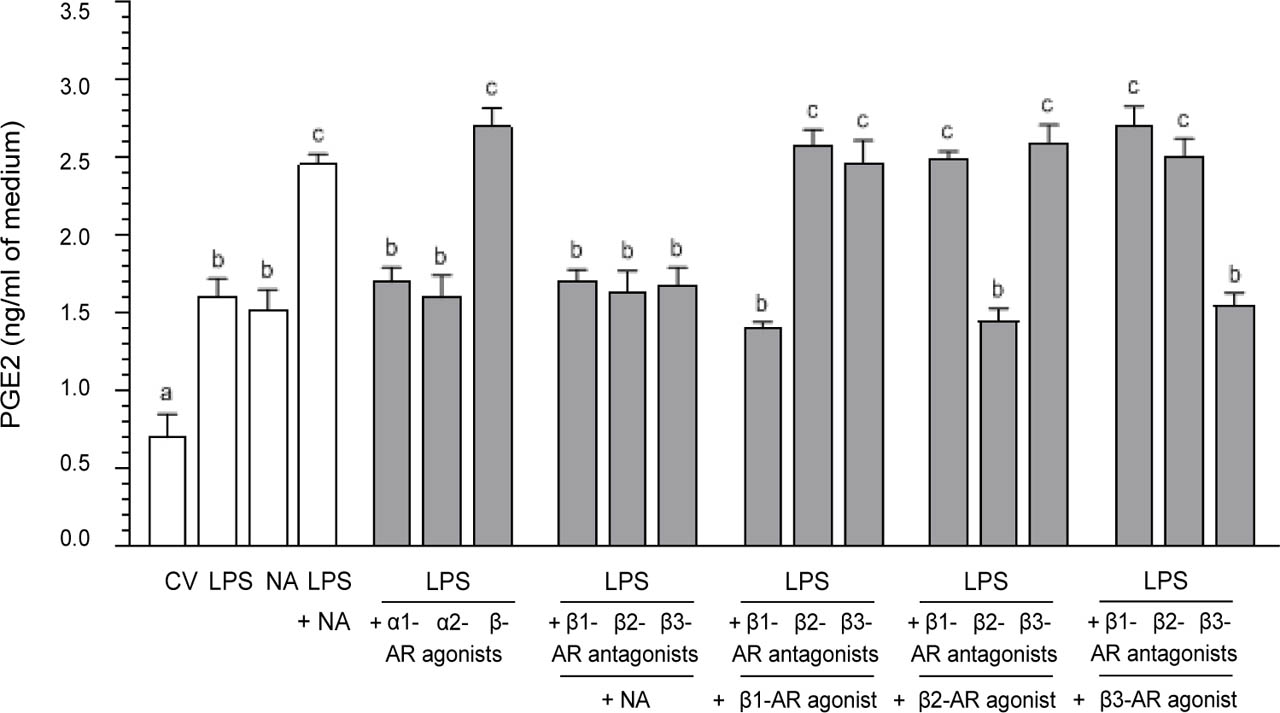
Figure 5.
Influence of noradrenaline (NA, 10−5 M) alone or agonists of α1-, α2- and β-adrenoreceptors (ARs, 10−4 M) or antagonists of β1-, β2-and β3-ARs (10−4 M) with NA or antagonists of β1-, β2- and β3-ARs (10−4 M) in combination with agonists of β1-, β2-, β3-ARs (10−4 M) on the prostaglandin E2 (PGE2) concentration in medium after incubation of the lipopolysaccharide (LPS, 10 ng/ml medium)-exposed pig cultured endometrial epithelial cells, estimated by ELISA. Treatments were conducted in triplicate for each of the four pigs. Data are presented as the mean (± SEM). Different letters (a, b, c) indicate statistical differences (P<0.001). CV: control value.
Discussion
Neuronal regulation of the secretory function of the uterus, including noradrenergic control mechanisms of PGs formation, is not yet fully understood. A severe acute inflammation in the pig endometrium was observed to lead to a rise in the population of noradrenergic uterine perikarya in the caudal mesenteric (Jana et al., 2020) and paracervical (Miciński et al., 2021) ganglia and to alterations in α1D-, α2 (A, C)- and β (1, 2)-AR abundances in the inflamed endometrium (Meller et al., 2018). The receptor mechanisms of NA participation in the PGE2 synthesis and release by the healthy and inflamed pig endometrium have also been investigated (Jana et al., 2023). It is known that endometrial cells are involved in the initial defense line, as well as that the basis for the development and maintenance of the inflammatory process in the endometrium is the interplay between factors released by various endometrial cell types, including cells of the immune system, epithelium, stroma and endothelium (Krikun et al., 2012; Korzekwa et al., 2016; Czarzasta et al., 2018). Moreover, the endometrial epithelial cells express ARs (Meller et al., 2018) and generate PGE2 under physiological and inflamed conditions (Blitek et al., 2004; MacKintosh et al., 2013; Almughlliq et al., 2018). E. coli LPS-exposed pig endometrial epithelial cells were used in the current study to closely recognize the cellular mechanisms of noradrenergic control of PGE2 formation in the course of endometritis.
In this report, for the first time, the importance of NA in the generation and release of PGE2 by LPS-treated pig endometrial epithelial cells has been presented. It was found that LPS and NA alone led to a rise in the PGE2 release from these cells. The LPS action coincided with the increase in the PTGS-2 and mPTGES-1 protein abundances. Increased secretion of PGE2 by the bovine endometrial epithelial cells after exposure to the E. coli LPS was also found, although this was not related to significant alterations in the mPTGES or cytosolic PTGES (cPTGES) protein contents (Herath et al., 2009). Increases in the PTGS-2 protein abundance in the pig endometrium with E. coli-induced inflammation (Jana et al., 2009, 2023) and in the PTGS-2 mRNA/protein expression and PGE2 secretion by the LPS-exposed rat primary microglia (Schlachetzki et al., 2010) were also noted. Clinical inflammation in cows increased mRNA expression of PTGS-2 and PTGES in the endometrium (Tobolski et al., 2024). In turn, the endometrial expression of PTGS-2 mRNA was elevated, while mPTGES-1 mRNA expression was unchanged in repeat-breeding cows with sub-clinical inflammation (Janowski et al., 2017). Similarly, in the endometrial epithelium of cows with inflammation during the postpartum period, the mRNA expression of mPTGES-1 as well as mPTGES-2 was not significantly changed (Gabler et al., 2009). The present results, showing no significant LPS effect on the mPTGES-2 protein abundance in the pig endometrial epithelial cells, confirmed the above observation. It is known that this enzyme may be important for the PGE2 generation in both tissue homeostasis and disease. However, in the course of tissue inflammation or damage, mPTGES-2 has little association with PTGS-2 and is not markedly increased (Ricciotti et al., 2011; Xu et al., 2021).
The current study revealed that the rise in PGE2 secretion provoked by NA was not accompanied by significant changes in the PTGS-2 and mPTGES-1 protein abundances. Similarly, NA insignificantly influenced the expression of these enzymes in the healthy pig endometrium (Jana et al., 2023) as well as the PTGS-2 protein expression in primary microglia of rats (Schlachetzki et al., 2010). Thus, it is supposed that the increased PGE2 secretion from the pig endometrial epithelial cells in response to NA in the present study may be a consequence of the activity of constitutively expressed PTGS-1, cPT-GES, and mPTGES-2 localized in the endometrial epithelial cells (Ni et al., 2003; Zhang et al., 2003; Yang et al., 2006; St-Louis et al., 2010; Wang et al., 2019). This assumption is partially confirmed by the ability of NA to increase the mPTGES-2 protein abundance in the epithelial cells demonstrated in the current report.
The study shows that endometrial epithelial cells exposed simultaneously to LPS and NA responded with an increase in PGE2 release and PTGS-2 and mPTGES-1 protein abundances. Interestingly, the application of LPS with NA led to a greater increase in the values of these enzymes than when LPS and NA acted alone. The stimulatory action of LPS with NA on the PTGS-2 and mPTGES-1 protein abundances compared to the lack of significant NA effect alone on these parameters (as given above) indicates that LPS is necessary to set off translation of PTGS-2 and mPTGES-1. NA was reported to increase the PGE2 secretion by the pig endometrium with E. coli-provoked inflammation, accompanied by the elevated expression of PTGS-2 and mPTGES-1 proteins (Jana et al., 2023). NA also enhanced the PTGS-2 expression and PGE2 release by the LPS-exposed primary rat microglial cells (Schlachetzki et al., 2010), the PTGS-2 and PTGES mRNA/protein expression and the PGE2 release from human ovarian cancer cells (Nagaraja et al., 2016), and the PTGS-2 mRNA/protein expression in testicular macrophages of the Syrian hamsters and non-testicular human macrophages (THP1 cell line) in experiments on male infertility (Matzkin et al., 2019).
The results from the current study highlight the significance of ARs in the influence of NA on the synthesis and secretion of PGE2 from LPS-treated endometrial epithelial cells. The study also demonstrated that the non-selective β-AR agonist stimulated the PTGS-2, mPTGES-1 and mPTGES-2 protein abundances as well as PGE2 secretion by these cells. Successively, in the LPS-treated cells, the selective β2- and β3-AR antagonists reduced the NA stimulatory action on PTGS-2 abundance. The same effect was exerted by the selective β1-, β2- and β3-AR antagonists on the mPTGES-1 abundances and PGE2 release, as well as by the selective β2-AR antagonist on the mPTGES-2 abundance. Based on above findings, it may be concluded that the influence of NA on PTGS-2 protein abundance in the LPS-exposed endometrial epithelial cells is mediated via β2- and β3-ARs, whereas β1-, β2- and β3-ARs are contributing in the action of NA on mPTGES-1 protein abundance and PGE2 secretion, and that β2-ARs are involved in NA action on mPTG-ES-2 protein abundance. Moreover, the use of selective antagonists of β1-, β2- and β3-ARs in combination with selective agonists of the above AR subtypes confirmed the above statements of the authors. Similarly, in the inflamed pig endometrial explants, all subtypes of β-ARs participate in the NA stimulatory effect on PTGE-2 protein abundance and PGE2 release, while β2- and β3-ARs are involved in a rise in mPTGES-1 protein abundance (Jana et al., 2023). In the LPS-exposed pig endometrial epithelial cells, β1- and β2-ARs mediated the NA stimulatory effect on PGIS protein abundance and PGI2 release, and β3-ARs were involved in PGI2 release (Jana et al., 2024). In relation to other pathological processes/tissues, it is known that the stimulation of β2-ARs increased the PTGS-2 and PTGES expression and PGE2 release from human ovarian cancer cells (Nagaraja et al., 2016). Moreover, β1- and β2-ARs enhanced PTGS-2 protein expression in the LPS-treated rat primary microglia (Schlachetzki et al., 2010) and in the testicular and non-testicular macrophages (Matzkin et al., 2019).
Excitation of α1- and α2-ARs was not found to enhance the PTGS-2, mPTGES-1 and mPTGES-2 protein abundances or PGE2 release by the LPS-exposed endometrial epithelial cells. The lack of involvement of α-ARs in the LPS-induced PTGS-2 protein expression in rat primary microglial cell culture (Schlachetzki et al., 2010) and in the testicular and non-testicular macrophages was also confirmed (Matzkin et al., 2019). Under physiological conditions, a rise in PGF2 release by the NA-stimulated cultured bovine endometrial epithelial cells was not mediated by α-ARs (Skarzynski et al., 1999). In turn, the secretion of PGE2 after adrenergic actions was linked to the stimulation of α-ARs in the rabbit gastric epithelial cells (Ueda et al., 1994) and rat skin (Averbeck et al., 2001). In contrast to the present findings, α1- and α2-ARs mediated the NA stimulatory effect on PTGS-2 and mPTGES-1 protein abundances and PGE2 release from the pig endometrial explants with inflammation (Jana et al., 2023). In the endometrial explants, NA could have influenced the above processes by α-ARs present in the endothelium and muscular layer of endometrial blood vessels (Meller et al., 2018) which could ultimately lead to changes in blood flow.
The present study markedly expands knowledge on the control of PGE2 generation and release from the uterus under inflammatory conditions, by demonstrating the role of noradrenergic stimulation in these processes, taking into account the participation of specific AR class/subtypes in LPS-exposed pig endometrial epithelial cells. In this regard, the increased release of PGE2 from the LPS-treated cells in response to NA, in connection with the elevated PTGS-2 and mPTGES-1 protein abundances, indicates that these cells are an important source of PGE2 formation during endometritis. The knowledge obtained on the role of particular β-AR subtypes in the mediation of NA action on the PGE2 generation and release by the pig endometrial epithelial cells under inflammatory conditions can be used to develop drugs (antagonists and/or agonists of particular β-AR subtypes) to regulate the inflammatory process and uterine function.
Conclusions
The current study demonstrates that in the E. coli LPS-exposed porcine endometrial epithelial cells, β(2, 3)-ARs are activated by NA to increase the PTGS-2 and mPTGES-1 protein abundances and PGE2 secretion. In addition, β1-ARs are involved in the rise in mPTGES-1 protein abundance and PGE2 secretion. During spontaneous endometritis and metritis evoked by E. coli, the endometrial epithelial cells may be important sites of PGE2 generation and release under the influence of catecholamines acting through β-ARs. The findings suggest that NA, by affecting these cells, may indirectly influence processes controlled by PGE2 (inflammatory response, uterine function) in the inflamed endometrium in animals and women. The current study will help to better understand the etiopathogenesis of uterine inflammation on the cellular level, and can be used for the creation of new strategies for the prevention and treatment of uterine diseases to improve reproductive function and farm production profitability.
Acknowledgments
We thank Joanna Kalinowska and Andrzej Pobiedziński for their assistance.
Notes
[1] Contributed by Author contributions
Conceptualization: B.J.; formal analysis: B.J., J.C. and A.A.; investigation: B.J., J.C., A.A., A.M.; writing – original draft preparation: B.J.; writing – review and editing: B.J., J.C., A.A., A.M.; supervision: B.J.; project administration: B.J.; funding acquisition: B.J. All authors have read and agreed to the published version of the manuscript.
[2] Institutional review board statement
The experimental procedures were performed in accordance with the relevant Polish and EU regulations in the field of Animal Protection and Welfare (Leg. Decree 26/2014 implementing EU Directive 2010/63/EU) and were approved by the Local Ethics Committee (Consent no. 65/2015).