
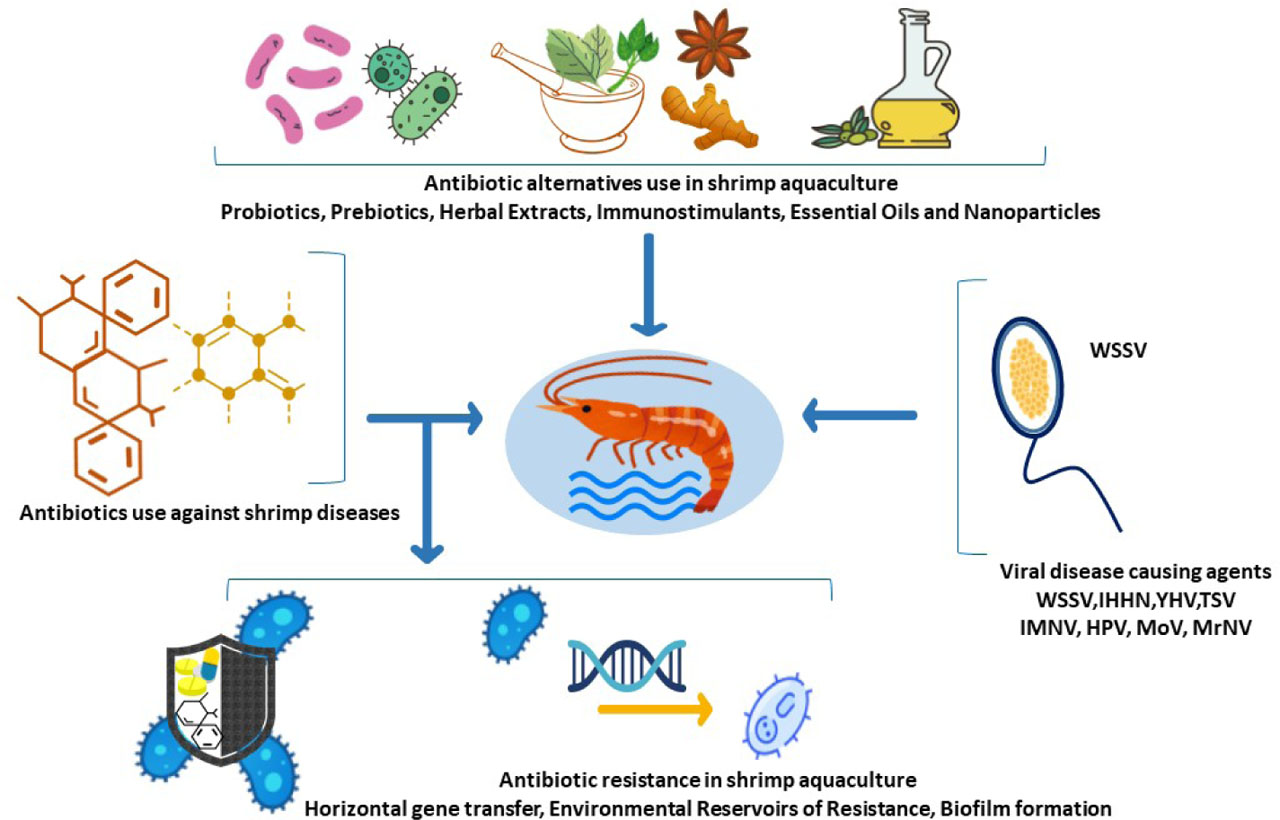
Figure 1.
Overview of antibiotic use, viral disease threats, and sustainable antibiotic alternatives in shrimp aquaculture. Excessive antibiotic use promotes antimicrobial resistance through horizontal gene transfer, biofilm formation, and environmental dissemination, while alternatives such as probiotics, prebiotics, herbal extracts, immunostimulants, essential oils, and nanoparticles offer promising strategies to improve shrimp health and reduce antibiotic dependence.
Table 1.
Common pathological viruses and their sensitivity
| Virus | Symptoms | Sensitivity | Reference |
|---|---|---|---|
| WSSV | White spots or patches on the exoskeleton of shrimp, loss of appetite, lethargy and reduced activity | Susceptible to antiviral agents such as interferon and RNAi-based therapies. | Alfaro et al. (2021) |
| IHHNV | Necrotic lesions on the cuticle of shrimp, hematopoietic tissue necrosis | Resistant to antiviral treatments, limited control options available. | Leyva-Madrigal et al. (2011) |
| TSV | Necrotic lesions on the cuticle of shrimp, necrosis of the lymphoid organ (lymphoid organ atrophy) | Sensitive to RNAi-based therapies, vaccination shows promise for prevention. | Cruz-Flores et al. (2021) |
| YHV | Yellow discoloration of the cephalothorax (head and thorax), anorexia and reduced feeding | Limited antiviral options and biosecurity measures are crucial for prevention. | Havanapan et al. (2021) |
| IMNV | Rapid mortality in shrimp, melanised spots on the exoskeleton of shrimp (spotting) | Susceptible to RNAi-based therapies, limited antiviral options are available. | Andrade et al. (2008) |
| HPV | Reduced appetite, slow or stunted growth, abdominal swelling or distension, pale or opaque hepatopancreas, increased mortality rates | Varied, typically higher in younger shrimp. More susceptible during periods of stress. Increased sensitivity in post-larval stages | Singaravel et al. (2021) |
| MoV | Loss of appetite, excessive moulting, body discoloration, reduced growth rates, increased mortality rates | Varied, may affect all age groups. More common in juvenile and subadult stages. Higher susceptibility in stressed populations | Cowley (2020) |
| Macrobrachium rosenbergii nodavirus (MrNV) | Erratic swimming behaviour, loss of appetite, body discoloration, empty gut or digestive tract, reduced growth rates | Varied, may affect shrimp of all ages, Higher susceptibility in stressed populations, more common in juvenile and subadult stages. | Ravi et al. (2009) |
| Extra small virus (XSV) | Reduced feeding activity, slow or stunted growth, abnormal swimming behaviour, increased mortality rates | Varied, may affect shrimp of all ages, Higher susceptibility in stressed populations, More common in juvenile and subadult stages | Chen et al. (2021) |
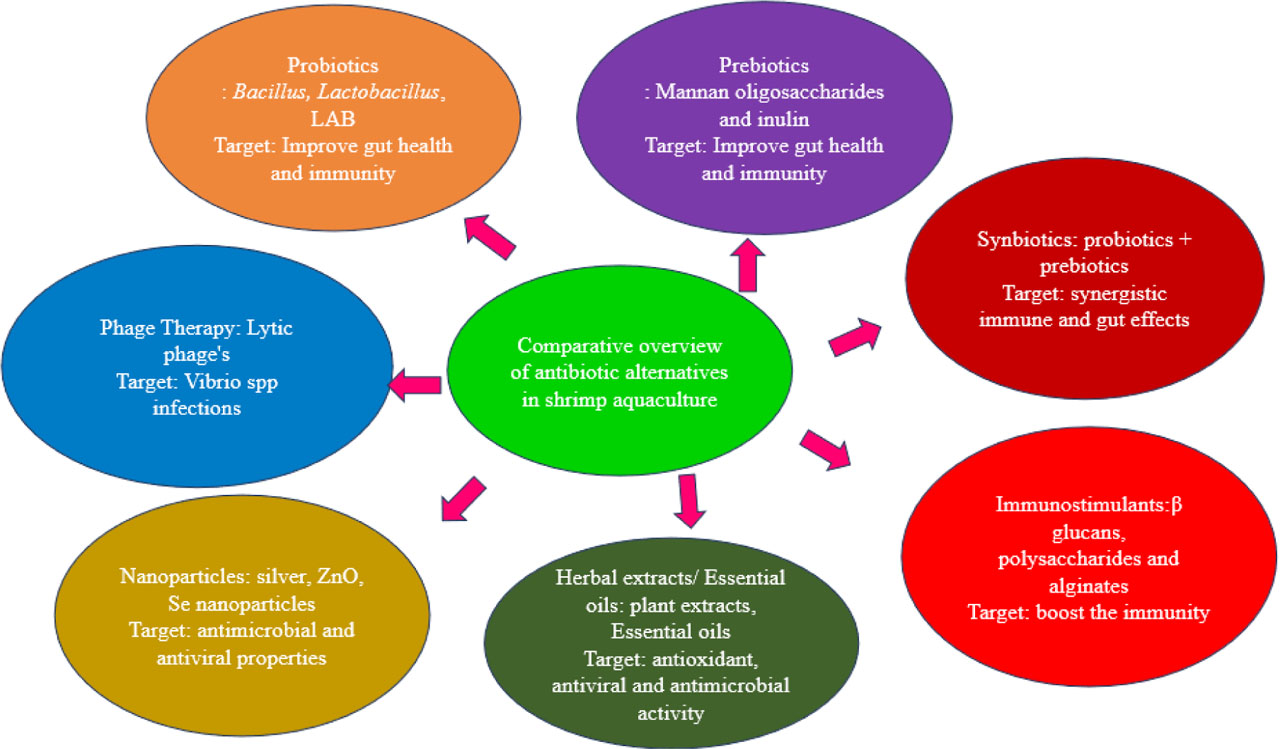
Figure 2.
Comparative overview of antibiotic alternatives in shrimp aquaculture. This schematic provides an improved and more visually structured overview of antibiotic alternatives in shrimp aquaculture. The diagram highlights seven major categories: probiotics, prebiotics, synbiotics, immunostimulants, nanoparticles, herbal extracts/essential oils, and phage therapy. Each category is presented with representative examples and their specific targets, such as enhancing gut health, boosting immunity, or providing antimicrobial and antiviral activity.
Table 2.
Antibiotic alternatives used in shrimp farming
| Antibiotic alternative | Dosage | Administration | Period of feeding time (duration) | Response | Reference |
|---|---|---|---|---|---|
| Probiotics | 1–5 g/kg of feed | Incorporation in feed | 4 weeks | Improvement in gut health, disease resistance, and growth performance | Calcagnile et al. (2024), Wang et al. (2008) |
| Prebiotics | 0.1–1% of feed | Mixing with feed | 6 weeks | Enhancement of beneficial gut microbiota, disease resistance, and growth | Amiin et al. (2023) |
| Herbal Extracts | Varies: 0.05–0.2% | In addition to food or water | 5 weeks | Enhancement of immune function, disease resistance, and growth | Saptiani et al. (2020 a) |
| Immunostimulants | As per the manufacturer’s instructions | Injection or oral | 8 weeks | Enhanced immune response leading to disease prevention | Yang et al. (2021) |
| Essential oils | Varies: 100–500 ppm | Mixing with feed | 7 weeks | Improvement in gut health, disease resistance, and growth performance | Galib et al. (2025) |
| Nano-particles | Varies: 0.1–1 mg/L | Addition to water or feed | 6 weeks | Enhanced disease resistance, growth promotion, and water quality improvement | Vijayaram et al. (2021) |