
Emulsified cooked sausages are heat-processed meat products that are widely consumed in human diets worldwide (Khodayari et al., 2019; Mohammadpourfard et al., 2021). Among emulsified cooked sausages, the frankfurter is ranked as the most popular globally. Frankfurters are consumed by individuals of all ages, whether in fast-food establishments or at home (Passos et al., 2025). In general, frankfurters contain a high fat content of approximately 20 to 30%, which makes them prone to lipid oxidation (Isaza et al., 2011; Sam et al., 2021; Mićović et al., 2021). This process leads to rancidity, an unpalatable taste, discolorations, a softened gel structure, and consequently, to a shorter shelf life of the products (El-Nashi et al., 2015; Wang et al., 2018). Additionally, the oxidation process leads to a decrease in the nutritional value of the products due to loss of essential amino acids and vitamins, but also to the formation of harmful compounds (Sam et al., 2021; Manzoor et al., 2023).
As potent antioxidants, nitrites are used in the production of cooked sausages. These compounds stabilize double bonds of unsaturated fatty acids and lead to metal ion chelation (Mićović et al., 2021). Nitrites also prevent the growth of spoilage and pathogenic bacteria, especially Clostridium spp., and play a crucial role in the formation of the characteristic pink color and aroma of the product (Choi et al., 2017; Xiang et al., 2019). However, nitrites are precursors for the formation of N-nitrosamines, compounds with carcinogenic potential (Šojić et al., 2019; Mohammadpourfard et al., 2021). Because of this, a large number of studies have focused on examining the possibility of reducing nitrite use and finding suitable alternatives to nitrites in meat products (Kim and Chin, 2021; Mićović et al., 2021). Lipid oxidation in cooked sausages can be prevented by using natural or synthetic antioxidants, but the potential toxicity of the synthetic antioxidants raises concerns and aversion among consumers (Seo et al., 2021). Generally, consumers prefer meat products with natural additives (Mohammadpourfard et al., 2021).
A potential solution is astaxanthin, an antioxidant from the carotenoid group, which is synthesized by different microorganisms and organisms, such as microalgae, bacteria, protists, yeasts, and plants, and it is also accumulated in aquatic animals such as crustaceans and salmon (Martínez-Álvarez et al., 2020). The main producer of natural astaxanthin is the alga Haematococcus pluvialis, which can produce astaxanthin in amounts greater than 4% of dry weight (Martínez-Álvarez et al., 2020). Astaxanthin is a very potent antioxidant that has the ability to neutralize free radicals and protect cells from oxidative stress (Kumar et al., 2022). It has also been proven to have beneficial effects in the prevention and treatment of chronic inflammatory processes, certain cardiovascular and gastrointestinal diseases, as well as anticancer activity (Mohammadpourfard et al., 2021). Numerous studies confirm the safety of natural astaxanthin (Brendler and Williamson, 2019). The EFSA Panel on Nutrition (2020) conducted experimental studies on the daily human intake of astaxanthin and determined that a daily dose of 8 mg of astaxanthin from food supplements is appropriate. Astaxanthin appears to be a highly promising natural additive with significant potential for application in food processing (Mohammadpourfard et al., 2021). Recent data show that astaxanthin enhances the oxidative stability of food, which is very important from the aspect of food sustainability (Carballo et al., 2019; Seo et al., 2021). Therefore, the aim of this study was to investigate the effect of astaxanthin on the quality and shelf life of frankfurt-type sausages with reduced nitrite content.
Material and methods
Sausage production
The subjects of this research were frankfurter-type sausages with reduced nitrite content, with or without the addition of astaxanthin as an antioxidant. All groups of sausages were produced in the Experimental Meat Processing Room at the Faculty of Veterinary Medicine, University of Belgrade, in three replicates, under identical production conditions and using the same technological procedures. Three groups of experimental sausages were produced: the control group (C) with reduced nitrite content, the NAX group with reduced nitrite content but with added astaxanthin, and the AX group without nitrites but with added astaxanthin (AstaBead CWD 5.0%, Algalíf Reykjanesbær, Iceland). AstaBead CWD 5.0% is a cold-water-dispersible powder containing no less than 5.0% natural astaxanthin derived from Haematococcus pluvialis algae. The composition of the experimental sausages is shown in Table 1.
Table 1.
Composition of the experimental sausages
| C | NAX | AX | |
|---|---|---|---|
| Pork I category (%) | 50 | 50 | 50 |
| Back fat (%) | 30 | 30 | 30 |
| Ice (%) | 20 | 20 | 20 |
| Spices and phosphate mix (%) | 1 | 1 | 1 |
| Sodium chloride (%) | 1.8 | 1.8 | 1.8 |
| Sodium nitrite (mg/kg) | 50 | 50 | / |
| Astaxanthin (mg/kg) | / | 200 | 200 |
The flow diagram for the production of frankfurter-type sausages is presented in Figure 1. Meat and back fat used in the production of the experimental sausages were obtained from pigs (six-month-old male crossbreds of Yorkshire and Danish Landrace, weighing between 100 and 120 kg) slaughtered in a registered slaughterhouse, adhering to animal welfare, and principles of good manufacturing and good hygiene practices. The filling for each group of experimental sausages was prepared separately in a cutter (Maxima Deluxe Cutter 9L, Maxima, Mijdrecht, Netherlands) and stuffed into previously cleaned, washed, and salted thin pork casings (Ø = 28 mm), which were desalted for 30 minutes by soaking in lukewarm water just before stuffing. The formed sausages were properly labeled and hung on rods inside the chamber for the smoking and heat treatment (UKM JUNIOR 04, Mauting, Valtice, Czechia). Beech wood shavings were used to produce smoke. Hot smoking with pasteurization was applied as the heat treatment process, which lasted until the core temperature of the product reached 72°C (Figure 1). After the heat treatment, the experimental sausages were cooled (0–4°C) and then vacuum-packed using a vacuum packaging machine (VAC-STAR S-210 DBV, VAC-STAR AG, Sugiez, Switzerland). The vacuum-packed sausages were stored for the next 30 days at 0–4°C. The sausages were analyzed immediately after production (day 0) and after 15 and 30 days of product storage.
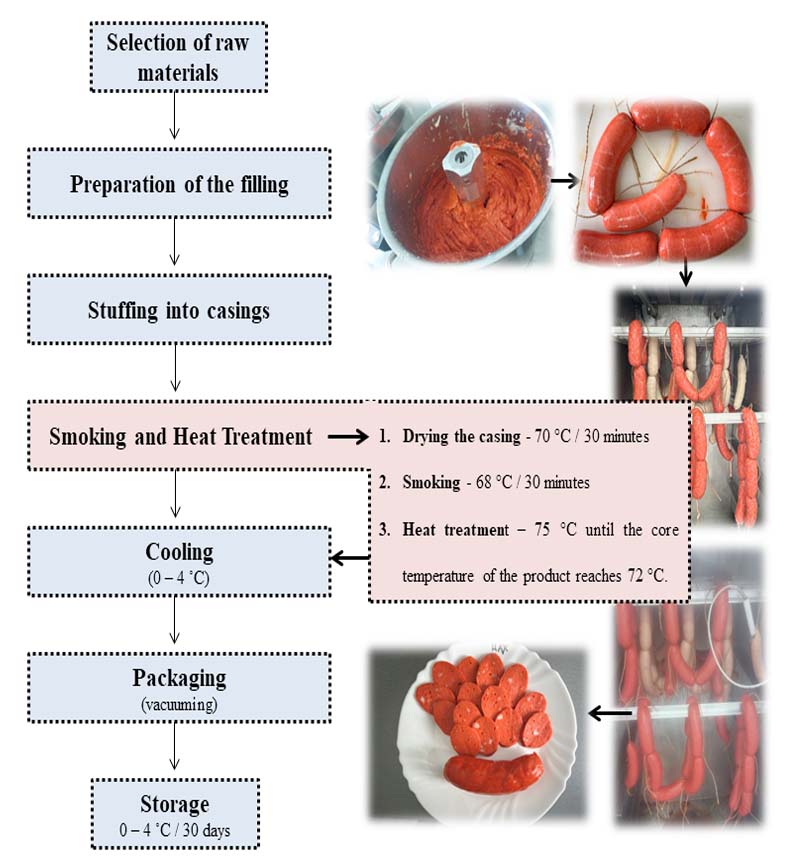
Figure 1.
The flow diagram for the production of frankfurter-type sausages
Physico-chemical analysis
The pH of experimental sausages was determined using a Testo 205 pH meter (Testo AG, Lenzkirch, Germany) in accordance with SRPS ISO 2917:2004. Before measurements, the pH meter was calibrated using standard buffers (pH 7.00 and 4.00). Additionally, water activity (aw) was measured using a Lab Master Basic device (Novasina AG, Switzerland) at a constant temperature of 20ºC, in accordance with the reference method ISO 18787:2017. Before measurements, the aw meter was calibrated using standards for the calibration. Physico-chemical measurements were conducted in six repetitions.
Chemical composition
The chemical composition of experimental sausages was analyzed on day zero using standard methods described below. The dry matter content of the products was determined using the gravimetric method according to SRPS ISO 1442:1998. The total fat content was determined using the Soxhlet method (SRPS ISO 1443:1992). The meat protein content was established using the reference method SRPS ISO 937:1992, utilizing a digestion apparatus (Gerhardt, Kjeldatherm VB/KBL) and a distillation apparatus (Gerhardt, Vapodest 20). First, the nitrogen content in the sample was determined and then multiplied by a factor of 6.25 to calculate the meat protein content. The ash content was determined in accordance with the reference method, SRPS ISO 936:1999. The chloride content was determined using the Volhard method (SRPS ISO 1841-1:1999), while the nitrite content was analyzed using the reference method, SRPS ISO 2918:1999.
Lipolytic and oxidative changes
The determination of free fatty acid content (acid value) was performed in accordance with the reference method, SRPS EN ISO 660:2021, while the peroxide value was determined using the standard method, SRPS EN ISO 3960:2017. The thiobarbituric acid reactive substances (TBARS) value was measured according to a combined method by Tarladgis et al. (1964) and Holland (1974). The TBARS value was expressed as milligrams of malondialdehyde per kilogram of sample (mg MDA/kg).
Antioxidant capacity
The evaluation of antioxidant capacity in experimental sausages was conducted using the 2,2-diphenyl-1-picrylhydrazyl free radical scavenging activity assay (DPPH) (Re et al., 1999) and 2,2’-azinobis (3-ethylbenzothiazoline-6-sulphonic acid) free radical scavenging activity assay (ABTS) (Brand-Williams et al., 1995). The results are expressed in mmol equivalents of Trolox (TE) per 100 g of sausage (mmol TE/100 g).
Microbiological analysis
To assess the dynamics of microbiota development after pasteurization and during the storage of the experimental sausages, the total viable count (TVC), lactic acid bacteria (LAB) count, and sulfite-reducing clostridia count were investigated using standard methods: ISO 4833-1:2013, ISO 15214:1998, and ISO 15213-1:2023, respectively. Investigation of the presence of Salmonella spp. and Listeria monocytogenes was conducted according to the standard methods ISO 6579-1:2017 and ISO 11290-1:2017, respectively. The number of microorganisms was expressed as a log CFU/g of sample.
Instrumental measurement of color
The color of the experimental sausages was determined using a colorimeter (NR110, 3NH Technology Co., Ltd, Shenzhen, China) under D-65 lighting, with a standard viewing angle of 2° and an 8 mm aperture on the measuring head. Values were presented according to the CIE L*a*b* system (L* – lightness, a* – redness, b* – yellowness, C* – chroma, and H* – hue angle). Prior to each measurement, the colorimeter was calibrated using the standard procedure as per the manufacturer’s instructions. The color parameters were measured on fresh cross-sections of the experimental sausage samples, with at least 6 measurements per sample being taken.
Sensory analysis
The sensory analysis of the experimental sausages was conducted by a panel consisting of seven selected and trained assessors (ISO 8586:2023) in the Sensory Testing Laboratory at the Department of Food Hygiene and Technology, Faculty of Veterinary Medicine, University of Belgrade. Quantitative descriptive analysis was used as a method of choice (ISO 6658:2017). The following product attributes were evaluated: external appearance; appearance and composition of the cross-section; color and color stability; odor and taste; texture. Each of the listed attributes was evaluated by a 5-point scale (with the possibility of semi-scores), where each score represented a specific level of quality as follows: 5 – typical, optimal level of quality, 4 – slight deviations from optimal quality, 3 – moderate defects in quality, 2 – pronounced defects in quality, 1 – atypical properties, unacceptable product. Panelists independently evaluated the experimental sausages that were marked with a three-digit code.
Statistical analysis
The statistical processing of experimental data was performed using GraphPad Prism software version 7 (GraphPad, San Diego, CA, USA). The normality of the data distribution was tested using the Shapiro-Wilk test. Since the data were normally distributed (Shapiro-Wilk test: P>0.05), the differences between sausage groups in moisture, protein, fat, ash, NaCl, and nitrites content were assessed using one-way ANOVA, followed by post hoc comparisons using the Tukey’s test. For parameters measured repeatedly over time, sausage groups were compared using a two-factor analysis of variance (ANOVA) with repeated measurements in one factor, followed by post hoc comparisons using the Tukey’s test. Sausage type and storage period were considered as the main factors. The results are presented as mean and standard deviation.
Results
Physico-chemical parameters
The results of physico-chemical parameters of experimental sausages are presented in Table 2. At the beginning of storage, a significant difference in pH was observed between the experimental sausages (P<0.05). The pH of the AX sausages decreased consistently during storage (P<0.05) and was significantly lower at the end of the study compared to the pH of the C and NAX sausages (P<0.05). On the other hand, the AX and NAX sausages initially had a significantly lower aw compared to the C sausages (P<0.05), and the aw of the astaxanthin-containing sausages did not significantly change during storage (P>0.05). A significant decrease in the aw was observed during the storage of the C sausages (P<0.05).
Table 2.
Physico-chemical parameters of experimental sausages
| C | NAX | AX | Sausage type | Storage period | St × Sp | ||
|---|---|---|---|---|---|---|---|
| pH | 0 | 6.39±0.01 Aa | 6.33±0.06 Bab | 6.46±0.02 Ca | 0.0007 | <0.0001 | <0.0001 |
| 15 | 6.34±0.01 Ab | 6.30±0.01 Bb | 6.36±0.01 Ab | ||||
| 30 | 6.37±0.02 Aab | 6.36±0.01 Aa | 6.18±0.02 Bc | ||||
| aw value | 0 | 0.972±0.002 Aa | 0.970±0.003 Ba | 0.968±0.001 Ba | 0.0004 | 0.0006 | 0.0002 |
| 15 | 0.967±0.001 Ab | 0.969±0.001 Ba | 0.969±0.001 ABa | ||||
| 30 | 0.969±0.001 ABb | 0.970±0.001 Aa | 0.967±0.001 Ba |
Chemical composition
The results of the chemical composition of experimental sausages analyzed immediately after production are presented in Table 3. The moisture and meat protein content were significantly higher in the C sausages compared to the AX and NAX sausages (P<0.05). No significant difference was observed between the experimental sausages regarding fat content (P>0.05). AX sausages had a significantly lower ash content and a higher NaCl content than C sausages (P<0.05), but did not differ significantly from NAX sausages. The nitrite content was similar in C and NAX sausages (P>0.05), while the nitrite content in AX sausages was significantly lower (P<0.05), as no nitrites were added to the filling of this experimental sausage group.
Table 3.
Chemical composition of experimental sausages immediately after production
| C | NAX | AX | P value | |
|---|---|---|---|---|
| Moisture (%) | 57.46±0.76 A | 55.46±0.74 B | 55.68±0.84 B | 0.0004 |
| Protein (%) | 13.10±0.16 A | 12.40±0.32 B | 12.10±0.04 B | <0.0001 |
| Fat (%) | 23.52±1.14 A | 24.05±0.87 A | 23.78±1.13 A | 0.7857 |
| Ash (%) | 2.88±0.03 A | 2.85±0.03 AB | 2.80±0.03 B | 0.0146 |
| NaCl (%) | 1.84±0.06 A | 1.92±0.12 AB | 2.08±0.05 B | 0.0107 |
| Nitrites (mg/kg) | 24.85±0.98 A | 25.68±0.81 A | 0.03±0.01 B | <0.0001 |
Lipolytic and oxidative changes
Lipolytic and oxidative changes in experimental sausages are shown in Table 4. At the beginning of storage, the AX sausages exhibited a significantly lower acid value than the C and NAX sausages (P<0.05). Over time, the acid value of the experimental sausages increased significantly in the C and AX sausages (P<0.05). At the end of storage, no significant difference (P>0.05) was detected between the experimental sausages regarding the acid value.
Table 4.
Lipolytic and oxidative changes in experimental sausages
| C | NAX | AX | Sausage type | Storage period | St × Sp | ||
|---|---|---|---|---|---|---|---|
| Acid value (mg KOH/g) | 0 | 5.60±0.46 Aa | 5.78±0.18 Aa | 5.01±0.08 Ba | 0.0031 | <0.0001 | <0.0001 |
| 15 | 4.93±0.10 Ab | 6.09±0.30 Ba | 5.16±0.11 Aa | ||||
| 30 | 6.19±0.44 Ac | 6.04±0.48 Aa | 5.96±0.27 Ab | ||||
| Peroxide value (mmol O2/kg) | 0 | 0.48±0.01 Aa | 0.22±0.01 Ba | 0.45±0.01 Aa | 0.0039 | <0.0001 | <0.0001 |
| 15 | 0.78±0.09 Ab | 0.77±0.09 Ab | 0.67±0.03 Ab | ||||
| 30 | 1.07±0.20 Ac | 0.91±0.09 Bc | 0.77±0.02 Cb | ||||
| TBARS value (mg MDA/kg) | 0 | 0.03±0.01 Aa | 0.06±0.01 Ba | 0.07±0.01 Ba | <0.0001 | <0.0001 | <0.0001 |
| 15 | 0.03±0.01 Aa | 0.04±0.01 Ab | 0.07±0.01 Ba | ||||
| 30 | 0.14±0.01 Ab | 0.03±0.01 Bb | 0.13±0.01 Ab |
On day 0, peroxide value of NAX sausages was significantly lower than those of C and AX sausages (P<0.05). During storage, the peroxide value significantly increased in all sausage groups (P<0.05). At the end of storage, the AX sausages had a significantly lower peroxide value compared to the C and NAX sausages (P<0.05).
At the beginning of storage, the C sausages had a significantly lower TBARS value than the NAX and AX sausages (P<0.05). During storage, the TBARS value of the C and AX sausages increased significantly (P<0.05), while a significant decrease in the TBARS value was observed for the NAX sausages (P<0.05). By the day 30 of storage, the NAX sausages had the lowest TBARS value among the three sausage groups.
Antioxidant capacity
The DPPH and ABTS values are shown in Table 5. At the beginning of storage, the highest antioxidant capacity against the DPPH radical was observed in the C sausages, which was significantly higher compared to the antioxidant capacity of the NAX sausages (P<0.05). The DPPH value of the experimental sausages did not significantly change up to the day 15 of storage (P>0.05), but then significantly decreased by day 30 of storage in all experimental groups, particularly in the C and AX sausages (P<0.05). At the end of storage, the highest antioxidant activity against the DPPH radical was observed in the NAX sausages, while the C and AX sausages exhibited approximately the same DPPH value.
Table 5.
Changes in antioxidant parameters during storage of experimental sausages
| C | NAX | AX | Sausage type | Storage period | St × Sp | ||
|---|---|---|---|---|---|---|---|
| DPPH (mmol TE/100 g) | 0 | 0.25±0.02 Aa | 0.22±0.01 Ba | 0.24±0.01 ABa | 0.0673 | <0.0001 | <0.0001 |
| 15 | 0.26±0.01 Aa | 0.22±0.01 Ba | 0.24±0.01 Aa | ||||
| 30 | 0.17±0.03 Ab | 0.19±0.01 Bb | 0.17±0.01 Ab | ||||
| ABTS (mmol TE/100 g) | 0 | 0.78±0.02 Aa | 0.80±0.03 Aa | 0.80±0.02 Aa | 0.0031 | <0.0001 | 0.0028 |
| 15 | 0.90±0.03 Ab | 0.94±0.03 ABb | 0.94±0.03 Bb | ||||
| 30 | 0.69±0.05 Ac | 0.78±0.03 Ba | 0.76±0.03 Bc |
At the beginning of storage, no significant difference was observed between the experimental sausages in terms of ABTS value (P>0.05). The ABTS value significantly increased by day 15 of storage in all experimental sausage groups (P<0.05), after which a significant decline in antioxidant activity with respect to the ABTS radical was observed (P<0.05). At the end of storage, the highest antioxidant activity against the ABTS radical was exhibited by the NAX and AX sausages, while the C sausages showed a significantly lower ABTS value (P<0.05).
Microbiota
The results of microbiological testing are presented in Figure 2. At the beginning of storage, the TVC in the experimental sausage samples ranged from 1.78 log CFU/g (NAX) to 2.14 log CFU/g (C), while the LAB count was <1 log CFU/g. During the storage of the products, the TVC and the LAB count significantly increased in all experimental groups, particularly in the AX sausages (P<0.05). Furthermore, sulfite-reducing clostridia, Salmonella spp. and Listeria monocytogenes, were not detected after manufacture or during the storage period.
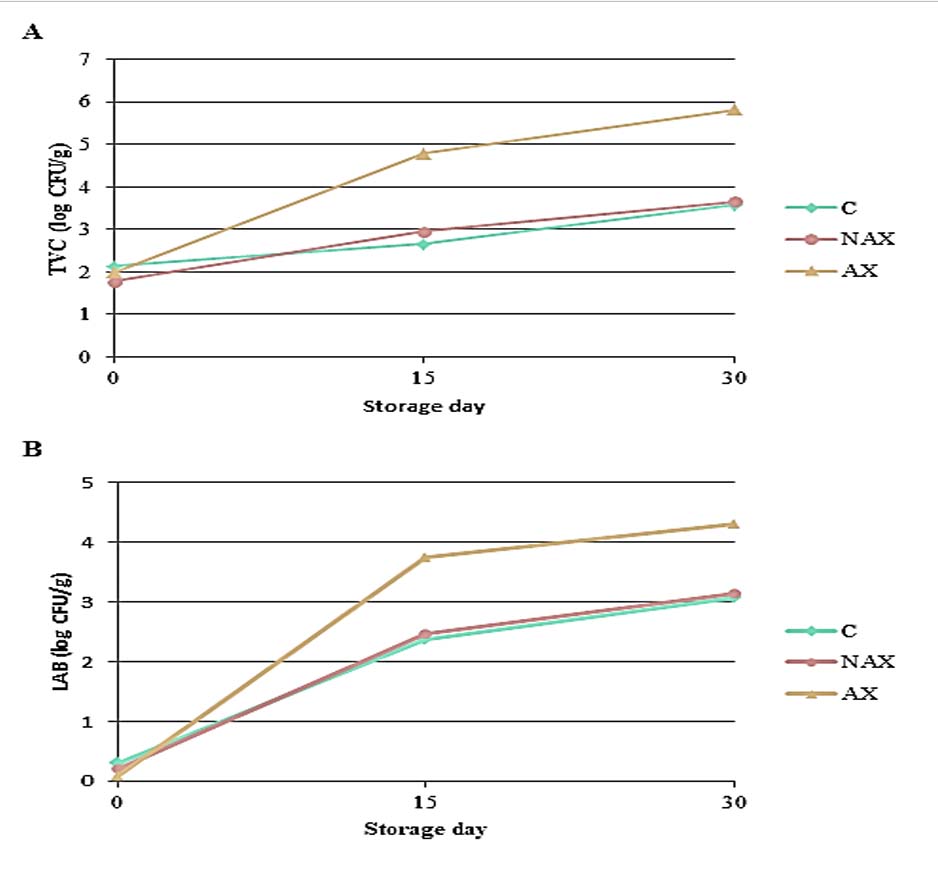
Figure 2.
Changes in the TVC (A) and the LAB count (B) during the storage of the experimental sausages
Instrumental color parameters
The instrumental color parameters of frankfurter-type sausages are presented in Table 6. Due to the added astaxanthin, the NAX and AX sausages had significantly higher a* and b* values, as well as a lower L* value compared to the C sausages (P<0.05). This consequently influenced the C* (chroma) and h* (hue angle) of the products. The instrumental color parameters of the experimental sausages did not change significantly during the storage period, except for the b* and h* values of the NAX sausages, which significantly increased by day 15 of storage (P<0.05).
Table 6.
Color parameters of experimental sausages during storage
| C | NAX | AX | Sausage type | Storage period | St × Sp | ||
|---|---|---|---|---|---|---|---|
| L* | 0 | 75.31±0.83 Aa | 47.39±0.69 Ba | 47.40±0.98 Ba | <0.0001 | 0.0373 | 0.9152 |
| 15 | 75.66±1.09 Aa | 47.96±0.53 Ba | 48.03±0.70 Ba | ||||
| 30 | 75.98±0.41 Aa | 48.07±0.59 Ba | 47.81±0.45 Ba | ||||
| a* | 0 | 6.42±0.20 Aa | 33.85±0.89 Ba | 32.56±0.88 Ca | <0.0001 | 0.8538 | 0.3961 |
| 15 | 6.45±0.22 Aa | 33.64±0.79 Ba | 32.93±1.00 Ba | ||||
| 30 | 6.15±0.32 Aa | 33.73±0.36 Ba | 32.91±0.45 Ba | ||||
| b* | 0 | 6.88±0.32 Aa | 30.61±2.05 Ba | 32.01±1.18 Ba | <0.0001 | 0.0060 | 0.6519 |
| 15 | 7.29±0.25 Aa | 32.19±1.96 Bb | 32.84±1.36 Ba | ||||
| 30 | 7.60±0.30 Aa | 32.18±0.60 Bb | 32.82±0.93 Ba | ||||
| C* (Chroma) | 0 | 9.41±0.32 Aa | 45.65±2.02 Ba | 45.66±1.42 Ba | <0.0001 | 0.0560 | 0.9258 |
| 15 | 9.74±0.17 Aa | 46.57±1.91 Ba | 46.51±1.63 Ba | ||||
| 30 | 9.78±0.40 Aa | 46.61±0.61 Ba | 46.47±0.97 Ba | ||||
| H* (Hue angle) | 0 | 46.97±1.15 Aa | 42.08±1.21 Ba | 44.51±0.43 Ca | <0.0001 | <0.0001 | 0.0003 |
| 15 | 48.49±1.67 Ab | 43.70±1.15 Bb | 44.91±0.55 Ba | ||||
| 30 | 51.06±0.99 Ac | 43.65±0.43 Bb | 44.92±0.45 Ba |
The quantitative descriptive analysis
The results of quantitative descriptive analysis are presented in Figure 3 and in the Supplementary Table 1. The scores for cross-section appearance and color of experimental sausages did not significantly change during the storage period (P>0.05). However, the scores for external appearance, texture, odor and taste significantly decreased for all experimental groups of sausages to the end of the storage (P<0.05). NAX sausages had significantly lower scores for texture than the C and AX sausages from day 15 of storage (P<0.05). Among C, NAX, and AX sausages, no significant difference in the total sensory score was observed during the experiment (P>0.05). At the end of storage, the AX sausages received the highest total sensory scores, but this did not differ significantly from those of the C and NAX sausages (P>0.05).
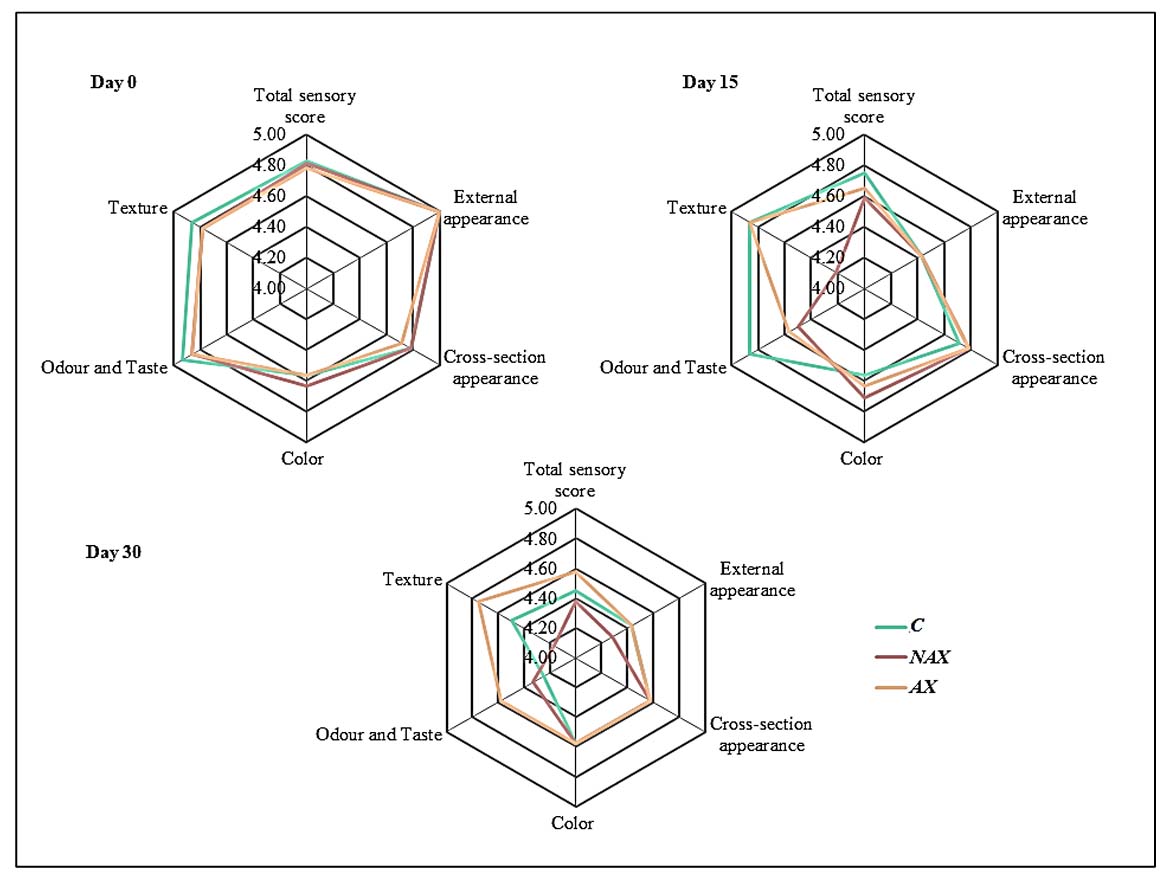
Figure 3.
Sensory properties of the experimental sausages
Discussion
Emulsified cooked sausages are heat-processed meat products characterized by high pH (6.0–6.7) and aw (0.96–0.98) (Vuković, 2020). The results of the physico-chemical parameters of frankfurter-type sausages with reduced nitrite content (Table 2) align with the mentioned pH and aw values. At the beginning of storage, a significant difference in pH was observed between the experimental sausages (P<0.05). The pH of the AX sausages decreased consistently during storage (P<0.05), resulting in a significantly lower pH at the end of the study compared to the pH of the C and NAX sausages (P<0.05). According to Stajić et al. (2021), such a decreasing trend of pH is typical for cooked sausages and can be associated with the activity of LAB, whose presence was confirmed during microbiological testing. Supporting this observation, significantly higher LAB count was recorded in the AX sausages compared to the C and NAX sausages (Figure 2). On the other hand, the AX and NAX sausages had a significantly lower aw at the beginning of storage compared to the C sausages (P<0.05), and this aw did not significantly change during storage (P>0.05), unlike the aw of the C sausages. This difference can be attributed to the moisture content, which was significantly higher in the C sausages (P<0.05). Moisture content in frankfurters is the key physico-chemical characteristic that can influence the sensory attributes of the product, particularly texture, and also affects shelf life (Sam et al., 2021). The meat protein content was also significantly higher in the C sausages compared to the AX and NAX sausages (P<0.05) (Table 3). Despite the differences, the meat protein content in the C, NAX, and AX sausages was consistent with literature data on frankfurters (Mićović et al., 2021; Fontes-Candia et al., 2023), and above the prescribed minimum limit of 11% for this type of sausage (Official Gazette RS, 50/2019 and 34/2023). In terms of fat content, no significant differences were observed among the experimental sausages (P>0.05). The determined fat contents were in line with the findings of Mićović et al. (2021) and Fontes-Candia et al. (2023). The AX sausages had a significantly lower ash content and a higher NaCl content than C sausages (P<0.05), but did not differ significantly from NAX sausages (P>0.05). The nitrite content was similar in the C and NAX sausages (P>0.05), while the nitrite content in AX sausages was significantly lower (P<0.05), as no nitrites were added to the filling of this experimental sausage group. Nitrite content in the C and NAX sausages was lower than added, considering that nitrites are highly reactive compounds, and their levels decrease during the sausage production, with a further decline during storage (Mićović et al., 2021). Nitrites lead to the formation of the characteristic pink color and aroma of the product (Choi et al., 2017; Xiang et al., 2019; Ferysiuk and Wójciak, 2020). Residual nitrites play a crucial role in the safety of cooked sausages, as they exhibit antimicrobial effects, particularly against Clostridium botulinum, whose spores can survive the thermal processing of cooked sausages. Additionally, nitrites impact other pathogenic (Listeria monocytogenes and Escherichia coli) and spoilage bacteria (Ferysiuk and Wójciak, 2020). Moreover, the antioxidant effects of nitrites are significant, as lipid oxidation processes reduce the shelf life of meat and meat products (Choi et al., 2017; Xiang et al., 2019).
To evaluate lipolytic and oxidative changes in frankfurter-type sausages during the storage, the acid value, peroxide value, and TBARS value were determined (Table 4). At the beginning of storage, the lipolysis process was least pronounced in the AX sausages, given that the acid value of AX sausages was significantly lower than in the C and NAX sausages. In all sausage groups, the acid value increased during storage, which is in accordance with findings of Mićović et al. (2021). At the end of storage, all sausage groups showed a comparable level of lipolysis, as reflected by similar acid values (P>0.05). Lipid oxidation occurs as a subsequent step to lipolysis and reduces product quality (Mohammadpourfard et al., 2021). During this process, hydroperoxides are generated as primary oxidation products, which subsequently decompose into secondary oxidation compounds over time (Sam et al., 2021). As an indicator of primary lipid oxidation, peroxide value increased significantly in all sausage groups by the end of storage (P<0.05). At that point, the AX sausages exhibited a significantly lower peroxide value compared to the C and NAX sausages (P<0.05). On the other hand, the combination of nitrites and astaxanthin in the NAX sausages demonstrated superior efficacy in the inhibition of secondary lipid oxidation, as evidenced by a significant decrease in TBARS values during storage. By day 30 of storage, this group of products had the lowest content of malondialdehyde, which is used as an indicator of rancidity. The findings reported by Mohammadpourfard et al. (2021) are consistent with our results, as they observed that the lower and acceptable levels of malondialdehyde in cooked sausages could be attributed to the combination of nitrites with high concentrations of thymol and astaxanthin. Since no significant difference was found between the C and AX sausages regarding the TBARS value at the end of storage, it can be concluded that astaxanthin showed an antioxidative effect similar to nitrites. According to Dang et al. (2024), astaxanthin enhances lipid oxidative stability by reducing the levels of thiobarbituric acid reactive substances generated in the lipid oxidation process. During the storage of the C, NAX, and AX sausages, the TBARS values were below the maximum acceptable limit of 1 mg MDA/kg (Menegas et al., 2013). The results of the oxidative changes in the fats of the experimental sausage samples are consistent with the literature, which highlights that the use of astaxanthin as an antioxidant contributes to preserving the oxidative stability of cooked sausages (Carbalo, et al., 2019; Seo et al., 2021).
The evaluation of antioxidant capacity in samples of frankfurter-type sausages included determining the ability to neutralize DPPH and ABTS radicals (Table 5). Higher values of these parameters indicate better antioxidant capacity in sausages. At the beginning of storage, the C group sausages had the highest antioxidant capacity against the DPPH radical. The DPPH value of all experimental sausages significantly decreased during storage (P<0.05), which is in line with the findings of Mićović et al. (2021). At the end of storage, the highest antioxidant activity against the DPPH radical was observed in the NAX sausages, while the C and AX sausages exhibited lower, and approximately the same, DPPH values. On the other hand, the best antioxidant activity against the ABTS radicals was observed in the NAX and AX sausages, while the C sausages showed a significantly lower ABTS value at the end of storage (P<0.05). The results of the antioxidant activity tests demonstrated that the combination of nitrites (50 mg/kg) and astaxanthin (200 mg/kg) in the NAX sausages achieved the best antioxidant effect. However, the addition of astaxanthin at a concentration of 200 mg/kg in the AX sausages resulted in better antioxidant activity than the 50 mg/kg nitrite concentration in the C sausages. Moreover, the added amount of 200 mg/kg astaxanthin in NAX and AX provides 10 mg of astaxanthin per 50 g sausage serving and satisfies the recommended daily dose of 8 mg for food supplements, which is safe for adults even in combination with high intake through background diet (EFSA Panel on Nutrition, 2020).
During the storage, the TVC and the LAB count significantly increased in all experimental groups, particularly in the AX sausages (P<0.05). According to literature, post-pasteurization surviving bacteria and secondary contaminating microbes multiply during the storage of meat products, eventually reaching levels of 7 log CFU/g, which is often regarded as the spoilage threshold (Kameník et al., 2015). The TVC in all experimental sausage groups remained below the mentioned threshold of 7 log CFU/g until the end of storage. The primary bacterial group associated with the spoilage of cooked meat products is LAB which can grow in vacuum packaging, where the byproducts of their metabolism lead to acidification and spoilage of packaged products (Kameník et al., 2015). They most commonly produce lactic, acetic, and formic acids, with the amounts depending on the species and genus of the bacteria, as well as the growth conditions and the presence of fermentable carbohydrates (O’Neill et al., 2018). The LAB count in all experimental sausage groups remained below the threshold of 7 log CFU/g, which is considered the upper limit of acceptability for cooked sausages (Feng et al., 2013). At the end of the storage period, the AX sausages had significantly higher TVC and LAB count compared to the C and NAX sausages, which could be related to the absence of antimicrobial effect of nitrites which were not added to this group of sausages. On the other hand, the presence of pathogenic microorganisms, including Clostridia spp., Salmonella spp., and Listeria monocytogenes, was not detected in any of the experimental sausage during storage, which is very important from the safety aspect.
Regarding sensory properties, the experimental sausages met the requirements of the Serbian Regulation on the Quality of Minced Meat, Meat Semi-products, and Meat Products (Official Gazette RS, 50/2019 and 34/2023). The C, NAX, and AX sausages were firm, juicy, and did not release liquid under light pressure. The sausage casing fit well around the filling, and due to small folds in the casing, the sausages received a lower rating for external appearance. The sausage filling was homogeneous, with a uniform color, without the separation of gel and fat. Due to the added astaxanthin, the NAX and AX sausages had an orange color at the cross-section, which was acceptable to most evaluators and stable during the storage period. The significant impact of astaxanthin on the color of the experimental sausages can be observed through the results of the instrumental color analysis (Table 6). The NAX and AX sausages had a significantly higher a* and b* values, as well as a lower L* value compared to the C sausages (Table 6). This consequently influenced the C* (chroma) and h* (hue angle) value of these products. Hue angle is a key parameter for evaluating color stability in meat products, with lower values indicating increased and more stable redness (Seo et al., 2021). Astaxanthin-containing sausages maintained significantly lower h* values than the C sausages throughout storage, aligning with the results reported by Seo et al. (2021). On the other hand, the C sausages had a pale pink color due to the reduced nitrite content. The C sausages were brighter and with a lower proportion of red and yellow color compared to products with usual nitrite content, which are characterized by the following values: L* = 69.98; a* = 9.65; b* = 11.43 (Ruiz-Capillas et al., 2016). Although it was extracted from seaweed the added astaxanthin did not negatively affect the odor or taste of the NAX and AX sausages. However, the NAX sausages had a rubbery consistency, which was not observed in the other sausage groups. Consequently, NAX sausages received significantly lower texture scores than C and AX sausages on days 15 and 30 (P<0.05). Results of the quantitative descriptive analysis showed that no significant difference in total sensory score was found between the experimental sausages during the storage period (P>0.05). At the end of storage, the AX sausages achieved the highest total sensory score numerically, but this did not significantly differ from the scores of the C and NAX sausages (P>0.05). Overall, the findings from this study suggest that astaxanthin can play a beneficial role in improving the quality of frankfurter-type sausages.
Conclusions
The results of the research confirmed the hypothesis that astaxanthin, as a prominent antioxidant, improves the oxidative stability of frankfurter-type sausages with reduced nitrite content, and that in this regard, it can fully replace nitrites. However, astaxanthin-containing sausages with no added nitrites (AX) showed weaker antimicrobial effect than the nitrite-containing sausages (C and NAX). Considering the crucial antimicrobial effect of nitrites against Clostridium botulinum, whose spores can survive the thermal processing of cooked sausages, it can be concluded that the formulation of NAX sausages has an advantage over the AX formulation in terms of product safety. The addition of astaxanthin into the formulations of frankfurter-type sausages successfully improved their quality and had a positive effect on the sustainability of the products during the storage period. Considering the results from this study, as well as the well-known health-promoting properties of the astaxanthin, there is a huge potential for the use of astaxanthin as an antioxidant in the production of the cooked sausages, providing not only desirable shelf life but also functional food properties.