
Mangroves play a crucial role in supporting human well-being, especially in the coastal areas of developing countries. They provide a wide range of ecosystem services that are essential for our survival (DasGupta and Shaw, 2013; Sannigrahi et al., 2020; Sharifinia et al., 2019). These areas serve as breeding grounds for various aquatic animals and act as natural filters for sediments and nutrients (Kamrani et al., 2016; Ochoa-Gómez et al., 2019; Harada et al., 2020; Bimrah et al., 2022). Furthermore, mangroves are important for climate change adaptation and reducing the risks of disasters (Arifanti et al., 2022; Zhu and Yan, 2022). For instance, during typhoons and storm surges, they offer valuable protection, serving as a barrier (Feller et al., 2017; Friess et al., 2019). They also contribute to the cycling and retention of nutrients in the ecosystem (Ellison et al., 2020; Bimrah et al., 2022), and have a high rate of carbon sequestration per area of habitat which is approximately ten times of the terrestrial ecosystems (Adame et al., 2021). Their extraordinary capability to effectively capture carbon places them at the forefront of the current advocacy for ecosystem-based mitigation and adaptation. These strategies aim to utilize nature and ecosystem services to pave the way for a future that is resilient to climate change (Macreadie et al., 2019; Dasgupta et al., 2022).
Shrimp farming is a common practice in coastal regions of tropical and subtropical countries (Khanjani et al., 2025, Khanjani, 2026). It is a rapidly growing economic activity and a major source of foreign-exchange earnings for many developing countries in Asia and Latin America (He et al., 2021; Khanjani et al., 2022). However, there has been a significant negative impact on coastal waters (Taherizadeh and Sharifinia, 2015; Emerenciano et al., 2025) and especially mangroves in these areas, with shrimp culture being responsible for 38% of global historic mangrove loss (Boyd and McNevin, 2016; Friess et al., 2019). Recognizing the immense value of mangroves compared to unsustainable shrimp farming, efforts have been made in recent years to develop mangrove-friendly aquaculture systems in various countries (Das, 2017; Anneboina and Kumar, 2017). However, the success of these initiatives depends on the active involvement of coastal communities through community and co-management systems (Farouque et al., 2017; De Royer et al., 2018; Alam et al., 2022).
Given the popularity and importance of mangrove ecosystem services, an examination of the academic literature is necessary for understanding the status quo of research. Bibliometric analyses have shown great promise as tools for the quantification of patterns and trends in the literature (Verrall and Pickering, 2020; Picone et al., 2021) and were thus applied in fields such as medical science (Chen et al., 2021), biomaterials science (Hou et al., 2021), business (Bretas and Alon, 2021), and environmental science (Jiang et al., 2021). A bibliometric review helps review the progress in a research field and provides a specific direction from scholars with significant contributions (Paul and Criado, 2020). It can analyze the relationship between keywords and literature under the vision of statistics and provide researchers with new research fields, making bibliometrics a bridge-to-bridge different discipline (Marrone and Linnenluecke, 2020; Mohammadi et al., 2024).
This study initially used a bibliometric approach to examine the patterns of research collaborations. Through co-authorship analysis, we aimed to determine the trends in author keywords for past and current studies, identify popular topics, and visualize thematic maps and their evolution. To accomplish this, we conducted a quantitative review of scientific literature using a rigorous bibliometric approach and social network analysis. Our sample consisted of publications on mangrove ecosystem services from reputable journals in the Scopus database, up until August 10, 2025. In the second section of our study, we conducted a systematic review and bibliometric analysis focusing on the most significant papers related to the impact of human activities and natural factors on mangrove loss. The results of our study can provide valuable insights for academic researchers, helping them to better comprehend the current research trends and methodologies in studying the effects of various factors on mangrove forests. Furthermore, these findings can assist researchers in identifying future research directions. Additionally, policymakers can benefit from our study’s recommendations for effective management strategies aimed at mitigating the adverse effects of climate change on mangrove forests.
Trend of mangrove distribution and losses
In the last century, there have been concerning trends in the distribution of mangroves, with significant losses observed in various regions. These losses have been primarily attributed to human activities such as coastal development, aquaculture, and deforestation. Here is an overview of the mangrove distribution trends and losses for each decade.
According to historical records, the decade of 1900–1910 saw relatively widespread and intact mangrove forests worldwide (Spalding et al., 2010). Losses during this period were minimal and mainly attributed to localized human activities such as small-scale agriculture, urbanization, and timber extraction (Alongi, 2008). In the subsequent decade of 1910–1920, mangrove forests experienced gradual degradation and losses. The primary drivers of this decline were increased coastal development, expansion of agriculture, and the conversion of mangrove habitats into shrimp farms (Spalding et al., 2010). This period marked a notable shift towards more extensive human impacts on mangrove ecosystems. The rate of mangrove destruction escalated further during the decade of 1920–1930. The expansion of commercial aquaculture, logging activities, and the construction of coastal infrastructure emerged as major contributors to these losses (Spalding et al., 2010). Large-scale land reclamation projects and the conversion of mangrove areas to industrial zones also played a role (Alongi, 2008). Between 1930 and 1940, significant mangrove losses and degradation occurred. The expansion of large-scale agriculture and extensive clearing for urban development were the primary drivers during this period, along with the construction of ports and harbors (Spalding et al., 2010). During the decade of 1940–1950, mangrove loss continued at an accelerated rate. The conversion of mangrove forests into commercial salt pans, urban expansion, and increased logging activities were the main drivers (Alongi, 2008). Additionally, the impacts of World War II also led to significant mangrove destruction in certain regions (Spalding et al., 2010). The 1950–1960 period witnessed extensive clearing and degradation of mangrove ecosystems globally. The growth of tourism, industrialization, and the rapid expansion of agriculture, particularly rice and palm oil cultivation, were identified as the primary drivers of mangrove losses (Spalding et al., 2010). Between 1960 and 1970, mangrove forests faced widespread clearing and degradation. The development of aquaculture, including the establishment of shrimp farms, further contributed to the decline (Alongi, 2008). Large-scale industrial activities and the construction of dams also negatively impacted mangrove ecosystems during this period (Spalding et al., 2010). During the 1970s and 1980s, the rate of mangrove destruction was alarmingly high, driven by various factors and industries. Coastal development, including the expansion of aquaculture and the logging industry, played a significant role in the loss of mangrove habitats (Giri et al., 2011). The rapid urbanization witnessed in Southeast Asia particularly resulted in substantial habitat loss for mangroves, as these areas underwent extensive development (Gilman et al., 2008). Moving into the 1980s and 1990s, the period continued to witness mangrove losses, albeit with different contributing factors. Unsustainable aquaculture practices, coastal infrastructure development, and increased deforestation for commercial purposes all played a detrimental role in mangrove destruction during this time (Gilman et al., 2008). The expansion of aquaculture, in particular, had adverse effects on mangroves, as it often involved the clearing of mangrove forests for shrimp ponds (Valiela et al., 2001). Furthermore, the impacts of natural disasters, such as cyclones and tsunamis, also contributed to significant losses of mangroves in some regions. These events caused widespread damage and destruction to mangrove ecosystems, exacerbating the already high rates of mangrove loss (Valiela et al., 2001). The vulnerability of mangroves to such natural disasters highlights the importance of considering their resilience and protection in coastal management strategies.
Since 1990, the trend of mangrove distribution has been characterized by both losses and gains (Gilman et al., 2008). However, the losses have generally outweighed the gains, resulting in an overall decline in mangrove ecosystems globally (Spalding et al., 2010). During the 1990s, significant losses of mangrove forests were observed due to factors such as urbanization, agricultural expansion, aquaculture development, and logging (Alongi, 2008). Large areas of mangroves were cleared to make way for infrastructure projects, including ports, industrial zones, and housing (Valiela et al., 2001). Additionally, the expansion of shrimp and fish farms contributed to the destruction of mangroves in many regions (FAO, 2007). In the 2000s, the rate of mangrove loss slightly decreased compared to the previous decade (Giri et al., 2011). However, notable losses were still recorded in numerous countries, mainly driven by ongoing urbanization, population growth, and conversion of mangrove areas into rice paddies or salt pans (Valiela et al., 2001). Between 2010 and 2020, the overall rate of mangrove loss continued, although at a slower pace than in previous decades (Hamilton and Casey, 2016). The major factors behind these losses were deforestation for land conversion, climate change-related events like storms and sea-level rise, and unsustainable fishing practices (Spalding et al., 2010).
In terms of species distribution, mangrove ecosystems vary across regions, resulting in different species composition. Some common mangrove species include the red mangrove (Rhizophora spp.), black mangrove (Avicennia spp.), and white mangrove (Laguncularia racemosa) (Spalding et al., 2010). In Southeast Asia, the most diverse and extensive mangrove ecosystems can be found, with a wide range of species present. Some species that thrive in this region include Sonneratia spp., Bruguiera spp., and Ceriops spp. (Kathiresan and Bingham, 2001). In the Americas, the Caribbean region is known for its diverse mangrove species distribution (Rull, 2023). For example, Rhizophora mangle, commonly known as red mangrove, is particularly abundant in this area. Along with red mangrove, Avicennia germinans, known as black mangrove, and Laguncularia racemosa, known as white mangrove, are also commonly found in the Caribbean region (Rull, 2023). Moving to Africa, the distribution of mangroves is mainly concentrated along the coasts of East Africa (Rull, 2023). Within this region, Rhizophora mucronata, another species of red mangrove, is the dominant species. Other species commonly found in African mangroves include Avicennia marina, known as black mangrove, and Bruguiera gymnorhiza (Diop et al., 2002; Taylor et al., 2003). The largest distribution area of mangroves is in the Pacific region, which includes countries such as Indonesia, Australia, Malaysia, and Papua New Guinea (Spalding et al., 2010). These areas have extensive coastlines and suitable environmental conditions, such as warm temperatures, tidal fluctuations, and nutrient-rich sediment, which support the growth and development of mangrove ecosystems (Alongi, 2008).
Material and methods
Data collection and statistical software
The objective of this study was to examine and analyze existing literature on the various services provided by mangrove ecosystems. To accomplish this, we searched the Scopus database for studies published between 1992 and 10 August 2025 using specific keywords such as “mangrove forest”, OR “mangrove”, OR “mangrove tree”, OR “mangrove ecosystem”, AND “ecosystem services”.
Moreover, for understanding anthropogenic/natural factors that affect mangrove loss, another comprehensive search was conducted in the Scopus database for articles published between 1960 and August 1, 2023. The search string used included various terms related to mangroves, such as “mangrove”, OR “mangrove ecosystem”, OR “mangrove tree”, OR “mangrove forest”, AND “shrimp aquaculture” OR “shrimp farming” AND “conversion”, “loss”, OR “deforestation”. This search yielded a total of 104 relevant papers, which were retrieved as full records and cited references. It is important to note that only papers written in English were considered for this study. From the downloaded papers, only those that directly addressed the causes of mangrove loss were utilized. These causes included anthropogenic factors like shrimp farming and pollution, as well as natural factors like climate change, storms, and tsunamis. To extract important information from the articles, we focused on key details such as author and publication year, species name, class, region, spatial scale, range expansion or contraction, and key findings.
Data analysis and visualization in this study were conducted using Excel 2019, VOSviewer version 1.6.16, and the Bibliometrix package in R (Aria and Cuccurullo, 2017). Descriptive information such as author, country, and publication year was obtained directly from the Scopus database (www.scopus.com/sources), and mapping was carried out using Excel 2019. The national network, journal network, and keywords were analyzed using VOSviewer (van Eck and Waltman, 2010).
The search string initially generated a total of 2279 articles. The final search string excluded any gray literature, such as books, book chapters, conference proceedings, reports, working papers, notes, letters, preprints, errata, and short surveys with potentially irrelevant studies, leaving only research articles. The search string also primarily focused on literature available in English, which may have introduced a language bias. Non-English publications might not have been adequately represented in this search. According to the results obtained from the Scopus database, it is observed that a minor portion of the articles included in the study were published in languages other than English. The other languages in which articles were published include Chinese (n = 37), Spanish (n = 29), Portuguese (12), French (6), Persian (n = 2), and Korean (n = 1). The decision to limit the search to English-language publications was made due to resource constraints and the desire to maintain consistency in the analysis. Omitting non-English publications from systematic reviews had a negligible impact on the overall conclusions, suggesting that it could serve as a feasible methodological shortcut, particularly in the context of rapid reviews. Only studies primarily focusing on mangrove forests and shrimp were included after screening titles and abstracts. A total of 1240 documents, including research articles, formed the final dataset and were downloaded for bibliometric analysis. In this study, we utilized the PRISMA (Preferred Reporting Items for Systematic Reviews and Meta-Analysis) protocol for identifying and selecting publications (Page et al., 2021) (Figure 1). The articles were reviewed by three authors of this research, and the final summary was prepared by the first author. This study used only selected published articles that addressed the topic of mangrove forests and shrimp farming. Authors read the abstracts of the articles and selected them if they were relevant to the topic; otherwise, we excluded them.
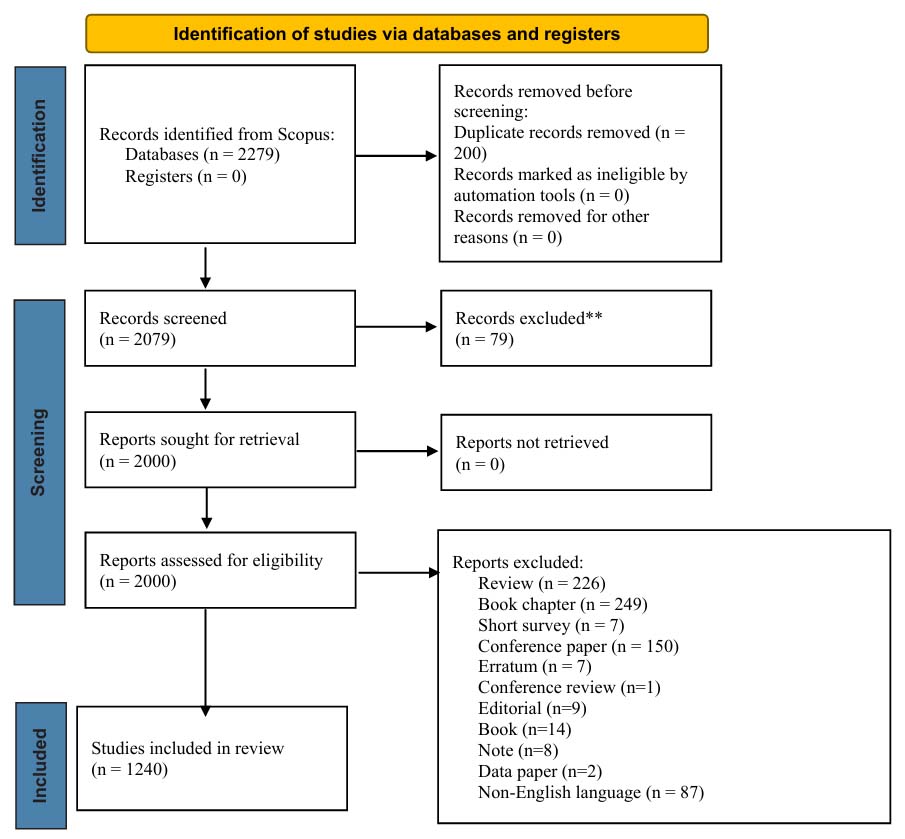
Figure 1.
Selection process flowchart, based on PRISMA software
Co-occurrence analysis
In order to identify clusters of keywords that frequently appear together, this study conducted a co-occurrence analysis. Keywords were chosen as the primary unit of analysis since they capture the main themes discussed in a publication (Verrall and Pickering, 2020). In the co-occurrence graph, the size of the circle represents the weight of an item based on the total link strength. Total link strength refers to the cumulative strength of the links of an item with other items (Neff and Corley, 2009). Indeed, the size of the circles is an indication of how important a country is based on the number of publications on mentioned field. The lines represent which countries have collaborated with each other to form a cluster. The countries can be grouped into clusters based on their collaborations. The colors determine to which group each country belongs (Neff and Corley, 2009).
Thematic map
The thematic map identifies four clusters: (1) Emerging themes: Topics in the lower left quadrant require further exploration as they are underdeveloped or emerging subjects. These topics have limited importance in the network and develop slowly within it. However, they present interesting opportunities for further research. (2) Basic themes: Topics in the top right quadrant are the main subjects of research and are central to advancements in the field. These topics are highly relevant both within and across networks. Recognizing and developing these topics can highlight opportunities for further investigation. (3) Niche themes: Topics in the upper left quadrant are well-connected within the network but have limited external connections, indicating their current lack of significance. (4) Motor themes: Topics in the upper right quadrant are the major themes in the field and have high relevance and connectivity within and across the network. As they are central to the literature, bibliometric studies can provide insights into their exact nature and guide future research. Bubble sizes in the thematic map reflect the number of publications in which each keyword appeared (García-Lillo et al., 2023).
Results
Number of publications across years
Some articles were excluded from the study due to incomplete or even irrelevant information (after reading the abstract of the article). In this regard our findings are based on an analysis of 1240 studies extracted from Scopus, sourced from 386 different publications between 1992 and 2025. These studies were authored by a total of 5359 authors. Our analysis has revealed a significant increase in the number of publications on the topic of mangrove ecosystem services between 1992 and 2025. The average growth rate of publications was close to 15.84%. The years with the least activity in terms of published documents were from 1992 to 2014, with less than 30 publications. However, the peak year was 2024, with a total of 169 papers. Furthermore, it is worth noting that on average, each document in this research area received 43.41 citations, indicating the significance of this field, particularly in recent years.
Geographic research contribution
Among the countries studied, the UK and Germany stood out with the highest number of international collaborations. It was observed that in most publications resulting from such collaborations, at least one author was from a developed country, if not both. Figure 2 provides a comprehensive ranking of the top 15 countries with the highest number of publications in renowned journals. Overall, a larger proportion of papers (83%) featured authors from the same country, indicating domestic collaborations. This percentage was significantly higher than the number of papers with international collaborations (25%), as depicted in Figure 2.
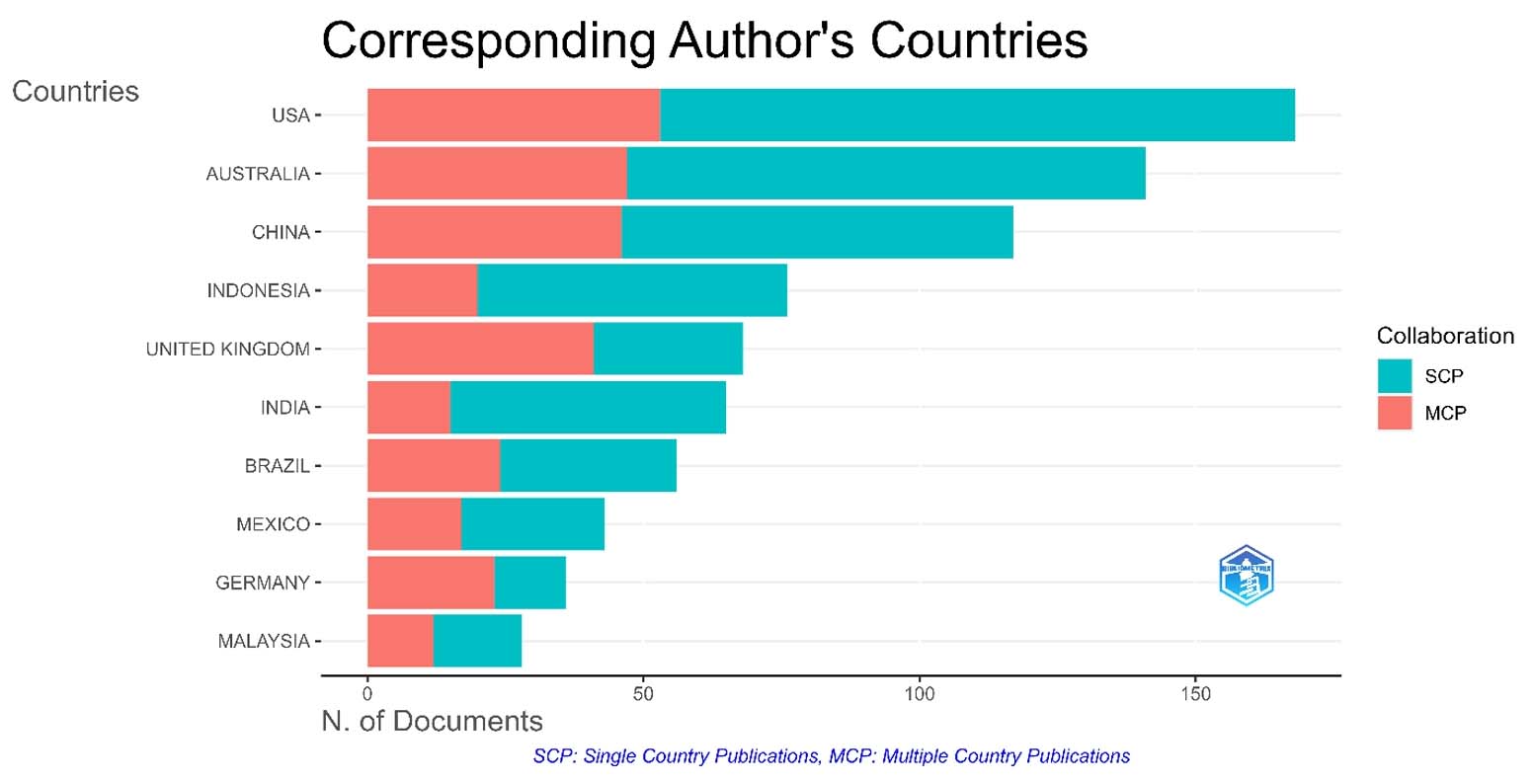
Figure 2.
Corresponding author’s country for publications. The red and blue colors, respectively, indicate papers written with/without international collaboration
Based on the findings presented in Figure 3, it is evident that the majority of co-authorships occur among authors from the United States, United Kingdom, Germany, and Australia. Specifically, the United States has the highest number of collaborations (TLS = 396), followed by Australia (TLS = 333), the United Kingdom (TLS = 296), Germany (TLS = 179), and Italy (TLS = 150) (refer to Figure 3 for more information). The authors can be grouped into clusters based on their collaborations. The first cluster (colored in red) consists of 16 items and is mainly comprised of European and Asian countries. The second cluster (colored in green) consists of 15 items and also includes mainly European and Asian countries. The third cluster (colored in blue) comprises 7 items, which involve Australia, Bangladesh, China, Finland, India, Ireland, and the Netherlands. The fourth cluster (colored in yellow) consists of 7 items and predominantly includes European and American countries. Lastly, the fifth cluster (colored in purple) consists of 3 items, namely Indonesia, New Zealand, and Vietnam.
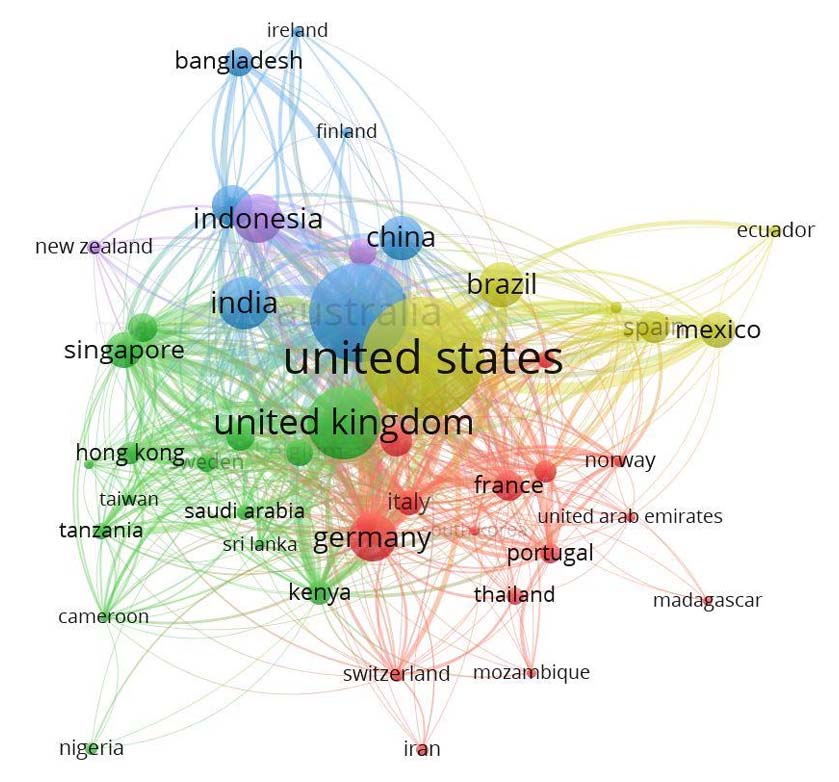
Figure 3.
Co-authorship network map of countries in the global scientific literature mangrove ecosystem services field
The United States and Australia had the highest level of collaboration in scientific research, with a total of 48 collaborative efforts. This was followed by United States and the United Kingdom with 37 collaborations, and the Australia and the United Kingdom with 33 collaborations. Other notable collaborations included the United States and China with 29 collaborations, United States and Mexico with 21 collaborations, the United Kingdom and Belgium with 19 collaborations, and the United States and Brazil with 17 collaborations. Figure 4 provides a comprehensive visual representation of research collaboration on a global scale. In terms of scientific production in the field of mangrove ecosystem services, the top countries are the United States, Australia, China, Indonesia and the United Kingdom, as depicted in Figure 4.
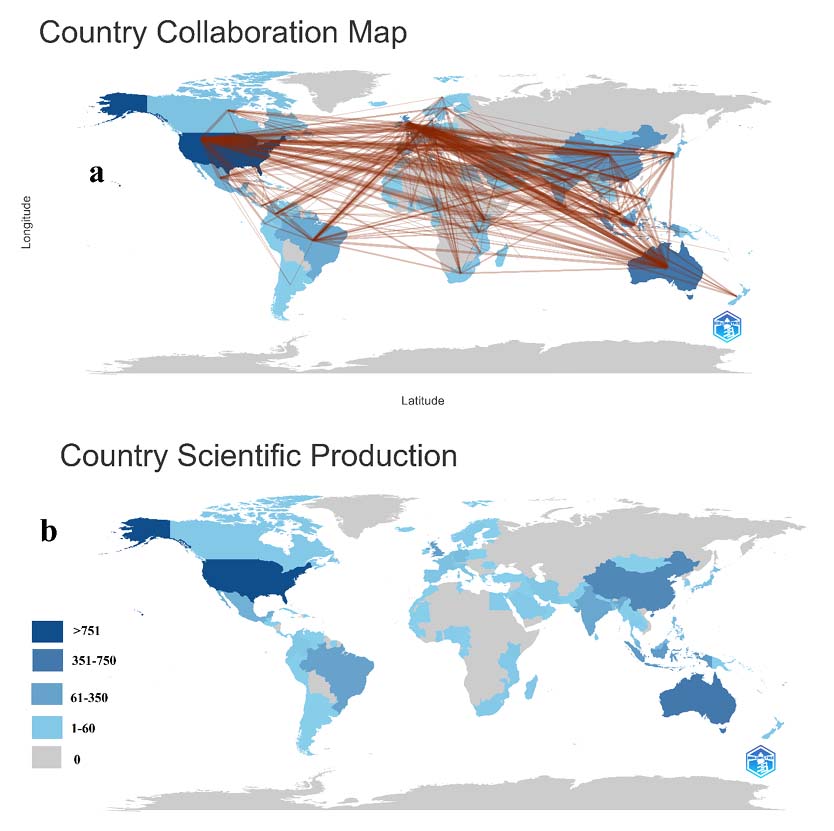
Figure 4.
Countries’ collaboration map (a) and countries’ scientific production (b) in the mangrove ecosystem services field
Co-occurrence analysis
Figure 5 displays the thematic map of the literature analysis, illustrating the internal and external relationships. The findings reveal that mangrove, wetland, and coastal protection are prominent themes. Additionally, emerging themes such as blue carbon, carbon sequestration, and carbon stock have been identified, highlighting the need for further exploration and expansion.
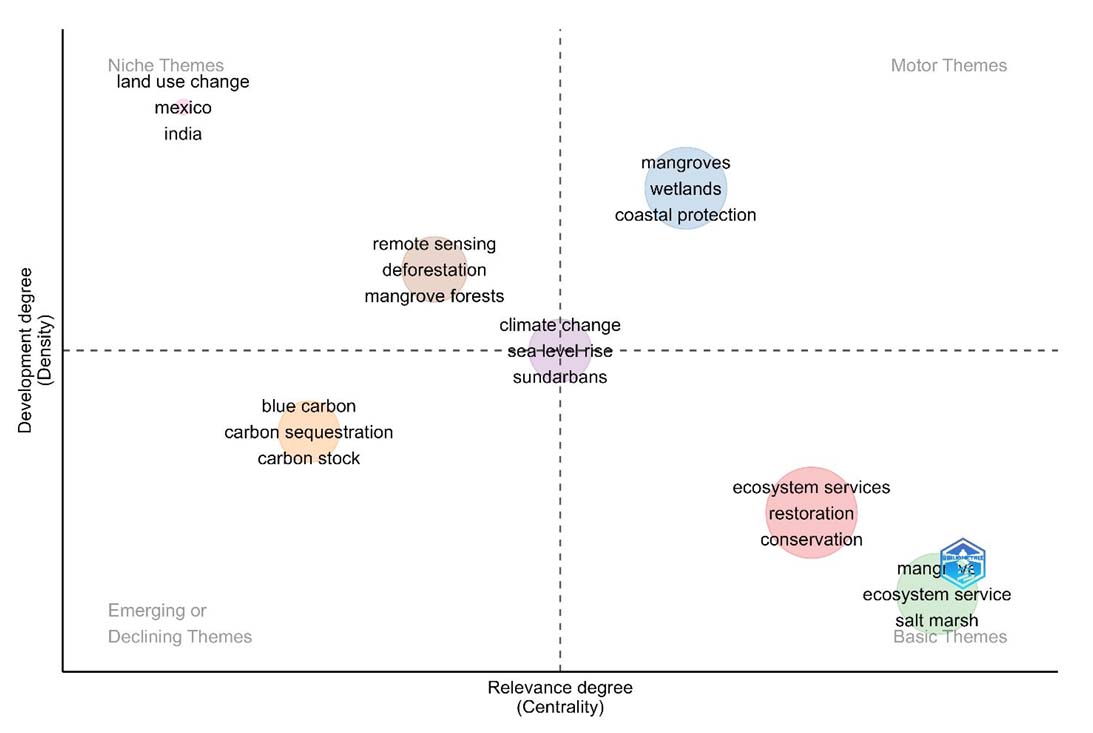
Figure 5.
Thematic map in mangrove ecosystem services
In the literature, we discovered four areas of research that are considered to be important and are also widely studied (Van Eck and Waltman, 2014). These research foci can be referred to as hot-spots in the field. They include the following: (1) the relationship between ecosystem services and mangroves, (2) the concept of blue carbon, (3) the impact of climate change, and (4) the connection between aquaculture and mangrove deforestation (refer to Figure 6 for more details).
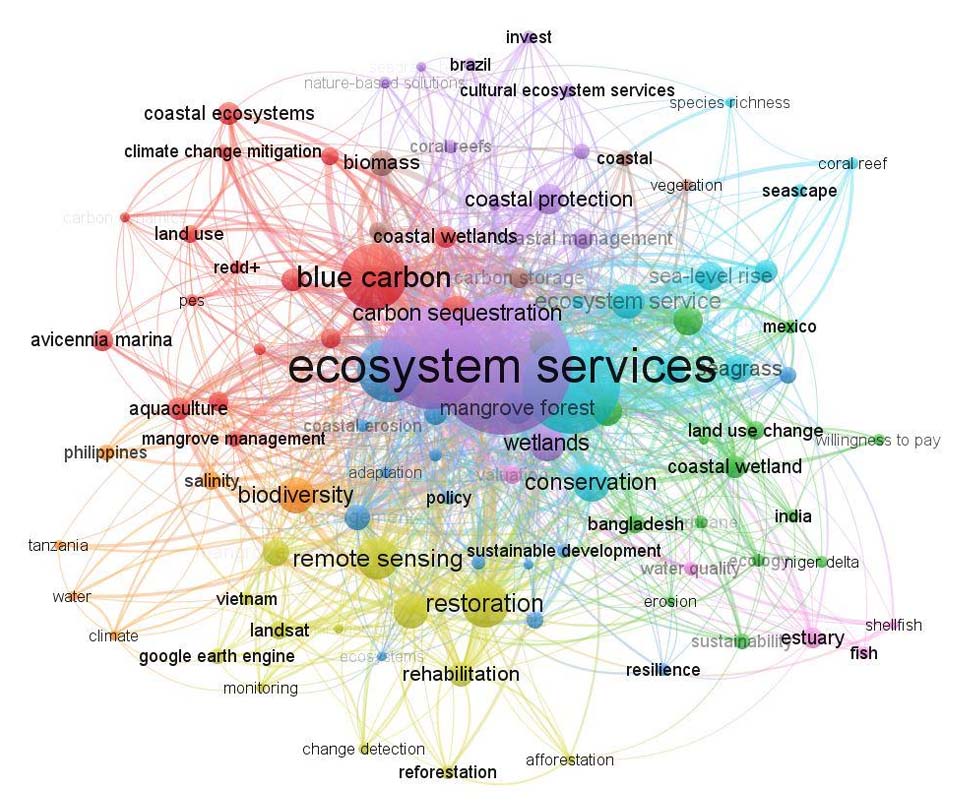
Figure 6.
Four major themes in the literature based on the 100 top research topics as defined by author keywords. Links represent publications that were co-cited in at least five publications
Table 1.
Anthropogenic and natural resources factors affecting mangrove loss in the world
| References | Region | Anthropogenic factors | Natural factors | Amount of mangrove loss | Amount of mangrove increase | Key funding |
|---|---|---|---|---|---|---|
| 1 | 2 | 3 | 4 | 5 | 6 | 7 |
| Ofori et al., 2023 | Pambala-Chilaw lagoon complex and Ihala Mahawewa, Sri Lanka | Shrimp farming | – | 45% from 1973 to 2020 | – | Mangroves around the Chilaw Lagoon had decreased by 45% from 1973 to 2020 of which 92% of this change was attributed to shrimp farming. There was, however, a decrease in the shrimp farms from 2001 to 2020, and a corresponding increase in mangroves from 2006 to 2020. The ecological footprint of shrimp farming was high. |
| Jayanthi et al., 2018 | West Bengal, Pichavaram and Muthupet mangrove forests of Tamil Nadu, the Krishna and Godavari delta of Andhra Pradesh, the Gulf of Kutch and Gulf of Khambhat mangrove forests of Gujarat, and the Mahanadi delta, Devi mouth, Bhitarkanika mangrove forests of Odisha, India | Aquaculture, agriculture, and salt pan | Hypersaline condition, lack of fresh water supply, changes in rainfall, sediment supply, topography, and sea level | 517 km2 | 918 km2 | Mangrove extent has increased from 3006 km2 to 3406 km2 from 1989 to 2013. Natural factors such as hyper saline condition, lack of fresh water supply, changes in rainfall, sediment supply, topography, and sea level rise played major role than anthropogenic activities such as aquaculture, agriculture and salt pan for the overall mangrove change. |
| Santos et al., 2018 | southern part of the Saő Francisco River, Brazil | Shrimp farming | – | – | – | Lower crab density, probably due to high crab mortality, mangrove deforestation for shrimp farming, and high fishery pressure. |
| Qin et al., 2023 | Shrimp farming | – | – | – | PH, OM, C: P, and SiO32- were the four important environmental factors explaining the A. corniculatum propagule variation. | |
| Chen et al., 2013 | Honduran mangrove forests, Guatemala | Shrimp farming | – | 11.9% (5800 ha) | – | From 1985 to 2013, approximately 11.9% of the mangrove forests were lost for other uses, especially shrimp farming. |
| Bhomia et al., 2016 | Pacific and Caribbean coasts and the three Bay Islands of Honduras, Guatemala | Shrimp farming | Climate change | 36,000 ha | – | The existing 36,000 ha of mangroves in the Pacific coast of Honduras are currently threatened by conversion into shrimp aquaculture. any loss of mangrove forests, either by land use change or effects due to global climate change, will result in increased emissions of greenhouse gases to the atmosphere. |
| Gunawardena and Rowan, 2005 | Rekawa mangrove, Sri Lanka | Shrimp aquaculture | – | – | – | Low intensity, but sustainable, harvesting has far greater long-term value to local stakeholders and the wider community than large shrimp aquaculture developments. |
| Rafique, 2018 | Pakistan | Pollution, urbanization, extraction of timber and fuel wood | Shortage of freshwater flow and silt flow into the sea and, global warming | – | – | Main causes of the decline of the mangrove forests in Pakistan are the reduced freshwater and silt flow into the sea, pollution, fast pace of urbanization and development, global warming, climate change, complex tenure system, and overgrazing and extraction of timber and fuel wood. |
| Nguyen et al., 2013 | Kien Giang Province, Vietnam | Shrimp farm expansion and urban development | – | 1992–2003 (76.4 ha), 2003–2006 (143.8 ha) | 1989–1992 (264.4 ha) | The total loss of fringe mangrove extent was significantly correlated with the increase in extent of other land covers, especially shrimp farms and bare and wet ground, during the period of 2003–2009. |
| Kauffman et al., 2014 | Montecristi Province in Northwest Dominican Republic | Conversion of mangroves to shrimp ponds | – | – | – | The potential emissions from the conversion of mangroves to shrimp ponds ranged from 2244 to 3799 Mg CO2e/ha (CO2 equivalents). the replacement of mangroves with shrimp and salt ponds has resulted in estimated emissions from this region totaling 3.8 million Mg CO2e or 21% of the total C prior to conversion. |
| Medeiros et al., 2023 | Paraíba in northeastern Brazil | Urban expansion, sugarcane monoculture, and shrimp farming | – | 5–10% from 1990 to 2016 | – | The mangrove forests analyzed have continually suffered anthropogenic pressures since their creation as protected areas. |
| Tallis et al., 2008 | Andhra Pradesh, India | Shrimp aquaculture | – | – | – | The clearing of mangroves for shrimp farms can have negative impacts on the environment and the industry itself. |
| McSherry et al., 2023 | World | Shrimp aquaculture | – | – | – | Given the rapid adoption of integrated mangrove aquc-ulture (IMA) approaches, including advocacy for uptake from many governments and non-governmental organizations, there is an urgent need to ensure that these and other aquaculture systems do not result in any conversion of intact mangrove ecosystems into aquaculture ponds. |
| Barbier, 2006 | Thailand | Shrimp aquaculture | – | – | – | Evidence from Thailand suggests that concern over mangrove deforestation by shrimp farms is an important motivation for many coastal households to participate in mangrove rehabilitation. |
| Estoque et al., 2018 | Myanmar | Paddy field expansion, fuelwood extraction, charcoal production, and fish and shrimp farming activities | – | 191,122 ha from 2000 to 2014 | – | Myanmar had a net mangrove loss of 191,122 ha from 2000 to 2014. while rice field expansion has been identified as the key driver of mangrove deforestation in the country, aquaculture farming activities are expected to intensify in the near future due to political and economic pressure. |
| Santos et al., 2014 | São Francisco River Estuary, Brazil Northeast | Shrimp aquaculture and agriculture expansion (rice and coconut plantations) | – | 25% | – | Aquaculture and agriculture make up for roughly 25% of the mangrove study area. Shrimp farming is the main anthropogenic activity, occupying the highest area and occurring within the tallest Rhizophora mangle forests (tree height >15 m). |
| Loiola et al., 2023 | Guatemala | Shrimp farming | – | – | – | Microbial diversity and ecosystem services losses in mangrove soil are related with shrimp farming activity. Shrimp farming ponds microbiomes have lower microbial diversity in comparison with control mangrove forests. |
| Islam and Wahab, 2005 | Bangladesh | Shrimp farming | – | 5446 ha of Chakaria Sundarbans’ | - | Shrimp farming is the most destructive form of resource use the mangrove has been converted to, which contributed significantly to mangrove destruction with a corresponding loss of biological resources. |
| Bèland et al., 2006 | Vietnam | Shrimp farming | – | 63% in 2001, 440 ha between 1986 and 1992 | 441 ha between 1992 and 2001 | 63% of mangrove areas apparent in 1986 had been replaced by shrimp ponds in 2001. Between 1986 and 1992, 440 ha of adult mangrove trees had disappeared. whereas the mangrove extent due to reforestation projects and conservation efforts increased by 441 ha between 1992 and 2001. |
| Camacho-Valdez et al., 2014 | The southern coast of Sinaloa, northwest Mexico | Agriculture and shrimp farming | – | 14% reduced between 2000 and 2010 | – | 14% decrease in the saltmarsh/forested mangrove area and a 12% increase in the area of shrimp pond aquaculture between 2000 and 2010. |
| Ahmed and Thompson, 2019 | Global | Shrimp farming | – | 1.89 million ha due to shrimp farming | – | Blue carbon emissions occur from mangrove deforestation due to shrimp cultivation. To increase fish production for a growing global population, aquaculture must grow sustainably while at the same time, its environmental impacts must reduce significantly. |
| Arifanti et al., 2019 | Mahakam Delta, Indonesia | Shrimp farming | – | 62% | – | About 62% of this extensive mangrove in the Mahakam Delta has been lost mainly due to conversion into aquaculture. Conversion of mangroves to shrimp ponds in the Mahakam Delta resulted in a carbon loss equivalent to 226 years of natural soil carbon accumulation in mangroves. |
| Azad et al., 2009 | Bangladesh | Shrimp farming | – | 9734 ha | – | Approximately 9734 ha of mangrove loss in the southeastern part of Bangladesh have been directly attributed to shrimp culture. |
| Giri et al., 2015 | South Asia | Conversion to agriculture, shrimp farms, development, and human settlement over-harvesting (e.g. grazing, browsing and lopping, and fishing), pollution, coastal erosion | Decline in freshwater availability, floodings and, reduction of silt deposition | 92,135 ha from 2000 to 2012 | 80,461 ha | Results showed that in South Asia from 2000 to 2012, 92,135 ha of mangroves were deforested and 80,461 ha were reforested with a net loss of 11,673 ha. |
| Pham et al., 2018 | Cat Ba biosphere reserve, Vietnam | Shrimp aquaculture | – | – | – | The results revealed that gender, education level, occupation, the participation of respondents in mangrove restoration activities, and their attitudes toward the impact of climate change were significant factors in their willingness to pay for mangrove restoration. |
| Hamilton and Lovette, 2015 | Ecuador | Shrimp aquaculture | – | – | – | Results showed that 80 percent, of the living carbon lost in Ecuadorian mangrove forests, can be attributed to the direct displacement of mangrove forests by shrimp aquaculture. |
| Reis-Neto et al., 2019 | Ceará state, northeastern Brazil | Shrimp aquaculture | – | - | 165% increased between 1968 and 2009 | Mangrove forest increased by 165%, from 380.0 ha to 1006.6 ha. |
| Ha et al., 2012 | Vietnam | Shrimp farming | – | 66,253 ha between 1980 and 1995 | – | Shrimp farmer attitude towards mangrove plantations and protection are positive. Farmer decisions are directly influenced by benefit sharing policy implementation. |
| Li et al., 2013 | Zhanjiang mangrove forests in southern China | Shrimp farming | – | – | – | Mangrove spatial extent decreased sharply during the period from 1977 to 1991 due to deforestation caused by diverse development programs, particularly shrimp farming. Afterward, there was a continuous increase in mangrove extent from 1991 to 2010 due to afforestation and conservation efforts. |
| Farley et al., 2010 | Palawan Island, Philippines | Shrimp farming | – | 100,000 ha in 1918 | – | Results showed that the economic and ecological benefits of intact mangroves outweigh the returns to aquaculture. |
| Aslan et al., 2021 | Mahakam Delta, Indonesia | Shrimp farming | – | 62% | – | During 22+ years, over half of the mangrove forest in Mahakam Delta has been converted to aquaculture. |
| Hein, 2002 | India | Shrimp farming, grazing and firewood and timber collection | – | 80% by pond construction | – | The environmental and social management of Indian shrimp farming can be improved through a mix of policy measures, including strengthening of the license system, more effective enforcement of regulations, the use of economic incentives, and increased monitoring of environmental and social impacts. |
| Järviö et al., 2018 | Vietnam | Shrimp farming | – | – | – | Mangrove deforestation resulted in 124 t CO2 ha−1 year−1, assuming International Panel for Climate Change (IPCC’s) recommendations of 1 m of soil loss, and 96% carbon oxidation. |
| Gallup et al., 2020 | Sine-Saloum Delta, Senegal | Fuelwood and charcoal, fish, clam, oyster, and shrimp collection, pollution, climate change, overgrazing by livestock | – | One-third of the mangrove cover in the Sine Saloum Delta was lost between 1972 and 1986 | – | Dead wood for use as fuel wood is the most important use of mangroves within the Sine-Saloum Delta, Senegal. Fish, clam, oyster, and shrimp collection is the second most important use of mangroves in the region. Community involvement in mangrove reforestation is significant throughout the region. |
| Hidayat, 2017 | Tanah Laut Regency, South Kalimantan Province, Indonesia | Shrimp farming | – | – | – | Pond culture development in the study site could be done through revitalization and conservation of protected area and mangrove, and access limitation to the coastal area. |
| Hai et al., 2022 | Mekong delta, Vietnam | Shrimp farms, settlements areas and public constructions | – | 920 ha loss in 1995, 1900 ha loss in 2015 | 4121 ha to 6640 ha between 1995 and 2004 | Result showed that mangrove areas increased double by 2015, but the forest had become more fragmented. We can be seen those changes in land use mainly come from land conversion from forest to shrimp farms, settlements areas and public constructions. |
| Morocho et al., 2022 | Ecuador | Shrimp farming, agriculture and construction | – | 4.56% loss (194.57 km2) between 1998 and 2010 | – | Results showed that the area affected by mangrove forest destruction reached its maximum during the 1998–2010 period, when 4.56% (194.57 km2) of the mangrove forest was lost. The main cause for the loss of mangrove cover was the expansion of shrimp farms, followed by agriculture and construction. |
| Kusumaningtyas et al., 2022 | Banten Province, Indonesia | – | – | 600,000 ha loss | – | The sediment CStock to a depth of 1 m in a rehabilitated mangrove (Ciseukeut) was higher than in a natural mangrove in Cilintang. However, the Carbon accumulation rate showed the opposite pattern, in which a natural mangrove showed an almost two-fold higher rate than that of a rehabilitated mangrove. |
| Páez-Osuna, 2001 | World | Shrimp farming | – | 1–1.5 million ha of coastal lowlands have been converted into shrimp ponds | – | The presence of buffer zones, maintaining an acceptable balance between mangroves and shrimp pond area, improved pond design, reduction of water exchange, and an improved residence time of water, size and capacity to assimilate effluents of the water body, are examples of ways to mitigate the adverse effects of Shrimp Aquaculture on coastal lowland. |
| McNally et al., 2011 | Saadani National Park, Tanzania | Fuelwood, harvesting the shrimp and fish | – | 27% loss between 1995 and 2005 | – | On average, a 10% increase in the mangrove cover within SANAPA boundaries in a 5-km2 radius of the sub-village increases shrimping income by approximately twofold. |
| Rahman et al., 2010 | Bangladesh | Shrimp farming industry | Natural disasters, climate change and sea level rise | – | – | The rapidly expanding shrimp farming industry is a significant threat to the mangrove forests of Bangladesh. |
| de Lacerda et al., 2021 | Northeast Brazil | Shrimp farming, pollution, climate change | – | – | – | The main impacts on mangroves in northeast Brazil are typically indirect, because of pollution inputs from shrimp pond effluents and associated loss of ecosystem services including reductions in primary productivity, carbon storage capacity, resilience to other environmental stressors, their efficiency as estuarine filters, and biodiversity and abundance of subsistence use of marine species. |
| Goldberg et al., 2020 | Global | Rice, shrimp, and oil palm cultivation, human settlements | Shoreline erosion and extreme weather events | 62% loss between 2000 and 2016 | – | 62% of global losses between 2000 and 2016 resulted from land-use change, primarily through conversion to aquaculture and agriculture. Up to 80% of these human-driven losses occurred within six Southeast Asian nations, reflecting the regional emphasis on enhancing aquaculture for export to support economic development. |
| Thomas et al., 2017 | Global | Conversion of mangroves to aquaculture/agriculture | Erosion and deposition | 50% loss between 1996 and 2010 | Prior to 1996 38% increase | The greatest proportion of loss was observed in Southeast Asia, whereby approximately 50% of the tiles in the region contained evidence of mangrove loss, corresponding to 18.4% of the global mangrove forest tiles. Southeast Asia contained the greatest proportion (33.8%) of global mangrove forest. |
| Sippo et al., 2018 | Global | – | Extreme climatic events | 70% loss by extreme climatic events | – | Approximately 70% of reported mangrove loss from natural causes has occurred as a result of low frequency, high intensity weather events, such as tropical cyclones and climatic extremes. |
| Carrasquilla-Henao et al., 2013 | San Ignacio-Navachiste-Macapule lagoon system, California, Mexico | Shrimp farming | – | – | – | Mangrove coverage did not change significantly between 1994 and 2009, ranging from 11,886 to 11,929 ha. |
| Treviño and Murillo-Sandoval, 2021 | Ecuador | Shrimp farming, gathering mangrove cockles | – | – | – | The introduction of industrial shrimp farming increased the community’s reliance on mangrove resources. The overuse of these resources is leading to a depletion of mangrove cockle populations, putting the community in a vulnerable position as both men and women are increasingly dependent on this fishery to subsist. |
| Basyuni et al., 2018 | Sumatra, Indonesia | Aquaculture expansion | – | – | – | This study confirmed that mangrove forest and fishery is compatible by developing silvofishery. |
| Monsalve and Quiroga, 2022 | Global | Shrimp farming | – | – | – | The main impacts included the loss of mangroves and their transformation of these ecosystems and their water bodies by receiving enriched effluents from shrimp farms. Ecuador with proportionally less territory than Mexico and Brazil produce more than 50% of the shrimp farmed in the western hemisphere. |
| Dierberg and Kiattisimkul, 1996 | Thailand | Shrimp aquaculture | – | 16 and 32% between 1979 and 1993 | – | To move Thailand towards a more sustainable aquaculture industry and coastal zone environment, integrated aquaculture management is needed. |
| Baumgartner et al., 2016 | Vietnam | Aquaculture production | – | 111,650 ha from 1980 to 2000 | – | Regulations in the form of universal mangrove-to-water ratios do not consider the realities of local households, nor are they economically or environmentally useful – rather, they appear to be arbitrary limitations that are not respected by affected communities. |
| Li et al., 2013 | Guangdong province, China | Shrimp aquaculture | – | 76 ha | 316 ha | Results revealed that the mangrove spatial extent decreased sharply during the period from 1977 to 1991 (76 ha) due to deforestation caused by diverse development programs, particularly shrimp farming. Afterwards, there was a continuous increase in mangrove extent from 1991 to 2010 (316 ha) due to afforestation and conservation efforts. |
| Didar-Ul Islam and Bhuiyan, 2016 | Bangladesh | Shrimp aquaculture | – | 9734 ha | – | The findings of the study show that the continuous and unregulated shrimp farming has immense impacts on human, ecology, environment and sustainability through saline water intrusion, soil and water quality deterioration, mangrove destruction, pollution, sedimentation, disease outbreaks, loss of biodiversity and destruction of local ecosystem. |
| Ahmed and Glaser, 2016 | Global | Shrimp aquaculture | Coastal flooding, cyclones, drought, rainfall, salinity, sea-level rise, and sea surface temperature | Mangrove area lost to shrimp culture: 1.4 million ha | – | Globally, coastal aquaculture including shrimp farming has devastating effects on mangrove forests. At the same time, mangroves are the most carbon-rich forests in the tropics, and thus, ecologically and economically significant at the planetary level. The loss of mangroves through coastal aquaculture causes carbon emission and reduces carbon sequestration. |
| Barbier and Cox, 2002 | Thailand | Shrimp farm density, population growth | – | – | – | Price of shrimp, minimum wage, distance from market, feed price, population growth, income per capita, and shrimp-farm density all have important influences on mangrove loss due to shrimp farming in Thailand. |
| Tenório et al., 2015 | Brazilian Amazon coast | Shrimp farming | – | Saltwater aquaculture contributed to the conversion of 0.53 km2 of the mangroves into rearing ponds | – | The considerable value of the ecosystem services provided by the mangroves indicates that the production of shrimp in the coastal plateau is relatively less damaging in ecological and economic terms. Thus, we can consider that the production of shrimp in the coastal plateau instead of in mangrove areas is less damaging to the long-term conservation of mangrove forests, which follows the management best practices established by international organizations. |
| Taher et al., 2023 | Bangladesh | Shrimp farming | – | – | – | The Sundarbans is threatened by shrimp aquaculture and resource overharvesting. |
| Veettil and Quang, 2019 | Cambodia | Salt farming, charcoal production and shrimp farming | – | 42% between 1982 and 2017 (1415 ha/year) | – | More than 40% of mangrove forests were cleared between 1989 and 2017 in Cambodia. Reforestation practices and proper law enforcement influencing the conservation of mangrove forests in Cambodia. Three main causes of mangrove forest destruction in Cambodia includes: salt farming, charcoal production and shrimp farming. |
| Smith et al., 2009 | Florida, USA | – | Tropical cyclones | Extensive | – | Hurricane events are the main cause of mangrove loss. |
| Wadsworth et al., 1959 | Puerto Rico | – | Hurricane Betsy | <5 ha in 1956 | – | Hurricane Betsy are the main cause of mangrove loss. |
| Craighead et al., 1962 | Florida, USA | – | Hurricane Donna | 4000 ha in 1960 | – | Hurricane Donna are the main cause of mangrove loss. |
| Craighead, 1964 | Florida, USA | – | Hurricane Donna | Extensive | – | Hurricane Donna are the main cause of mangrove loss. |
| Vermeer, 1963 | Belize | – | Hurricane Hattie | Extensive | – | Hurricane Hattie are the main cause of mangrove loss. |
| Heinsohn and Spain, 1974 | Australia | – | Cyclone Althea/ siltation | 5 ha in 1971 | – | Cyclone Althea is the main cause of mangrove loss. |
| Roth, 1992 | Nicaragua | – | Hurricane Joan | 5 ha in 1988 | – | Hurricane Joan is the main cause of mangrove loss. |
| Ogden, 1992 | Florida, USA | – | Hurricane Andrew | 150 ha in 1992 | – | Hurricane Andrew is the main cause of mangrove loss. |
| Sherman et al., 2001 | Dominican Republic | – | Hurricane Georges | 2240 ha in 1998 | – | Hurricane Georges is the main cause of mangrove loss. |
| Cahoon et al., 2003 | Honduras | – | Hurricane Mitch | 490 ha in 1998 | – | Hurricane Mitch is the main cause of mangrove loss. |
| Paling et al., 2008 | Australia | – | Cyclone Vance | 5700 ha in 1999 | – | The 5700 ha of mangrove habitat damaged by Cyclone Vance exceeds any anthropogenic impact that has ever taken place in Western Australia by several orders of magnitude. |
| Kauffman and Cole, 2010 | Micronesia | – | Cyclone (Typhoon) Sudal | <10 ha in 2004 | – | Climatic changes such as sea level rise and increased severity of cyclonic events are main cause of mangrove loss. |
| Salmo et al., 2014 | Philippines | – | Typhoon Chanhom | Extensive | – | Typhoon Chanhom is the main cause of mangrove loss. |
| Cintrón et al., 1978 | Puerto Rico | – | Hypersalinity | – | – | Hypersalinity is the main cause of mangrove loss. |
| Sherrod and McMillan, 1981 | Gulf of Mexico, USA | – | Freeze | Extensive | – | Freeze is the main cause of mangrove loss. |
| Stevens et al., 2006 | Florida, USA | – | Freeze | 15 ha in 1980 | – | Freeze is the main cause of mangrove loss. |
| Diop et al., 1997 | Senegal | – | Drought | Extensive | – | Drought is the main cause of mangrove loss. |
| Houston, 1999 | Australia | – | Hail storm | 0.1 ha | – | Hail storm is the main cause of mangrove loss. |
| Barreto, 2008 | Venezuela | – | ENSO related drought | 880 ha | – | Mangrove mortality has been related to progressive increase of salinity due to changes of hydrological and sedimentary patterns, probably caused by human activities, as well as the frequency of droughts linked to ENSO events. |
| Erftemeijer and Hamerlynck, 2005 | Tanzania | – | Flooding | 117 ha | – | Flooding is the main cause of mangrove loss. |
| Lucas et al., 2017 | Kakadu, Australia | – | ENSO related climatic extremes | Extensive (2015–2016) | – | In 2015–2016, significant dieback of mangroves was observed particularly within the lower-stature landward zones dominated by A. marina, causing considerable concern because this may not have occurred to the same extent in the recent past. |
| Lovelock et al., 2017 | Australia | – | ENSO related climatic extremes | 40 ha (2002–2016) | – | Results showed that an intensification of ENSO will have negative effects on some mangrove forests in parts of the Indo-Pacific that will exacerbate other pressures. |
| Duke et al., 2017 | Gulf of Carpentaria, Australia | – | ENSO related climatic extremes | 7400 ha (2015–2016) | – | The dieback was severe and widespread, affecting more than 7400 ha or 6% of mangrove vegetation in the affected area from Roper River estuary in the Northern Territory, east to Karumba in Queensland. At the time, there was an unusually lengthy period of severe drought conditions, unprecedented high temperatures and a temporary drop in sea level. |
| Servino et al., 2018 | Brazil | – | Hail storm | 500 ha in 2016 | – | Over 24% of mangroves were suddenly lost by a hailstorm in Eastern Brazil. Rhizophora mangle was the most impacted species by the hailstorm. |
| Sachtler, 1973 | Dominican Republic | – | Dominican Republic Tsunami | 4500 ha in 1946 | – | Dominican Republic Tsunami is the main cause of mangrove loss. |
| Kamthonkiat et al., 2011 | Thailand | – | Banda Aceh, Tsunami | 1050 ha in 2004 | – | The results showed that the mangrove area in 2005 was reduced by approximately 5% (1054.5 ha) from 2003 due to the impact of the 2004 Indian Ocean Tsunami. |
| Yanagisawa et al., 2010 | Thailand | – | Banda Aceh, Tsunami | 1 ha | – | The model reveals that a 10-year-old mangrove forest in a 500 m wide area can reduce a tsunami’s hydrodynamic force by approximately 70% for an incident wave of 3.0 m inundation depth and a wave period of 40 min at the shoreline. |
| Roy, 2016 | Andaman Islands | – | Banda Aceh, Tsunami | – | – | 30–80% of mangrove stands got affected by the tsunami-wave. |
Factors affecting mangrove loss in the world
Natural factors
According to the findings, the minimal mangrove loss caused by hail storms was observed in Australia, as reported by Houston in 1999 (refer to Table 1). On the other hand, the maximum mangrove loss occurred in the Gulf of Carpentaria, Australia, between 2015 and 2016, due to climatic extremes related to the El Niño-Southern Oscillation (ENSO), as stated by Duke et al. in 2017 (refer to Table 1).
The unequal distribution of research effort globally makes it likely that many countries do not report mangrove loss events. This lack of reporting makes it difficult to assess changes in loss over time due to the limited number of reports and the increasing effort put into observations in recent years (Sippo et al., 2018). According to a study conducted by Sippo et al. (2018), approximately 80% of reported mangrove mortality since 1990 can be attributed to climatic extremes and tropical cyclones (Table 1). Tropical cyclones have caused the largest area of mangrove loss globally, accounting for 45% of reported loss events over the past six decades (Sippo et al., 2018). However, recent cases of large-scale mangrove loss in Australia associated with climatic extremes represent 22% of all reported historical forest loss (Sippo et al., 2018). These recent events of mangrove ecosystem loss emphasize the growing significance of extreme climatic events and suggest that mangroves may serve as important indicators of global climate change (Sippo et al., 2018).
Tropical cyclones cause powerful winds, heavy rainfall, intense waves, and storm surges that can have detrimental effects on coastal wetlands (Table 1). In some cases, the damage caused by Cyclone Vance to the 5700 hectares of mangrove habitat exceeds any human-induced impact ever witnessed in Western Australia by a significant margin (Paling et al., 2008) (Table 1). Approximately 70% of global cyclones and hurricanes occur in the northern hemisphere (Knutson et al., 2010). Furthermore, Australia has reported nearly 100% of mangrove mortality associated with cyclones in the Southern hemisphere (Table 1).
The El Niño Southern Oscillation (ENSO) is a large-scale weather phenomenon that affects seasonal rainfall and sea levels (Moon et al., 2015). These ENSO-driven events, characterized by low sea levels and high temperatures, can have significant impacts on nearshore ecosystems. Coastal ecosystems with slow recovery rates, such as mangroves, are particularly vulnerable to these events (Glynn, 1988). Therefore, the frequency of ENSO events is crucial in determining the loss of mangroves in the future. In regions like Australia and the Eastern Pacific, mangrove mortality during droughts is predominantly linked to ENSO events. A study conducted by Duke et al. (2017) found that severe and widespread dieback affected over 7400 hectares or 6% of mangrove vegetation along the affected area, extending from the Roper River estuary in the Northern Territory to Karumba in Queensland. This dieback coincided with an unusually long period of severe drought conditions, record-high temperatures, and a temporary decrease in sea levels (Table 1). Similarly, in Venezuela, an El Niño-induced drought from 1990 to 1994 and an intense El Niño period from 1997 to 1998 caused the mortality of 880 hectares of mangrove forests (Table 1, Barreto, 2008; Otero et al., 2017). These examples highlight the significant impact of ENSO events on mangrove ecosystems and emphasize the importance of understanding and monitoring these weather patterns to protect coastal habitats.
Historically, tsunamis have been responsible for 18% of mangrove mortality incidents. Some of the largest recorded mangrove mortality events have been caused by tsunamis. For example, the 2004 Indian Ocean earthquake triggered a series of devastating tsunamis that led to the loss of 1,880–2,330 hectares of mangroves. Additionally, this event caused extensive damage to coral reefs, sand dunes, forests, groundwater reserves, and human settlements and agricultural lands (Kamthonkiat et al., 2011). The first significant report of mangrove mortality caused by a tsunami dates back to 1946 in the Dominican Republic. The estimated mangrove mortality area due to this event was around 4,500 hectares (Sachtler, 1973; Jiminez and Lugo, 1985) (Table 1).
According to a research conducted by Goldberg et al. (2020), it was found that 38% of the total loss of mangroves was due to natural causes. Coastal erosion, which is mainly caused by factors like rising sea levels and changes in river dynamics, accounted for 27% of global mangrove losses between 2000 and 2016, making it the second largest cause of mangrove loss globally (Thomas et al., 2017; Goldberg et al., 2020). Additionally, extreme weather events contributed to 11% of the losses. The process of erosion and deposition, which are natural processes, led to the retreat and regrowth of mangroves, respectively (Thomas et al., 2017). These processes were widespread, resulting in 20.3% of mangrove loss due to erosion and 32.4% due to colonization (Thomas et al., 2017). It was often observed that erosion and colonization occurred simultaneously, as seen in the case of the French Guiana coastline, where Fromard et al. (2004) measured a change in mangrove extent of 125.4 km2 between 1951 and 1999, attributed to both erosion and deposition of sediment. The highest concentration of mangrove erosion loss was found in Bangladesh, where erosion along the seaward edge of the Sundarbans accounted for almost 80% of national losses (Goldberg et al., 2020). Along the eastern coast of Brazil, an area of nearly 130 km2 experienced coastal erosion, largely due to the significant discharge of the Amazon River (Jahfer et al., 2017).
According to a study by Goldberg et al. (2020), the losses caused by extreme weather events such as cyclones, droughts, heatwaves, and floods were evenly distributed worldwide. These extreme weather events accounted for between 18% and 22% of the total loss area on each continent. Interestingly, in Oceania, the highest percentage of continental losses was attributed to mangrove diebacks driven by extreme weather events. In fact, almost half of all losses in Oceania from 2000 to 2016 were due to this phenomenon (Goldberg et al., 2020). Sippo et al. (2018) found that approximately 70% of reported mangrove loss resulting from natural causes was caused by low-frequency, high-intensity weather events such as tropical cyclones and climatic extremes. These events include droughts, floods, extreme heat or cold, extreme sea level variations, localized weather events, and intense wind or wave energy. It is worth noting that recent reports of mangrove mortality in Australia (Duke et al., 2017; Lovelock et al., 2017) and other locations (Servino et al., 2018) suggest an increase of mangrove loss possibly due to climate change (Sippo et al., 2018).
According to Sippo et al. (2018), extreme storms have caused the largest area of mangrove mortality globally, accounting for about 45% of reported cases. Over the past five decades, the proportion of mangrove mortality caused by tropical cyclones has remained relatively consistent, ranging from 30% to 60% of total mortality area. In Australia and the Eastern Pacific, drought-induced mangrove mortality is mainly associated with El Niño-Southern Oscillation (ENSO) events. A recent unprecedented mangrove mortality event occurred in the Gulf of Carpentaria in northern Australia, which was attributed to the combined effects of a severe El Niño event and other climatic extremes (Sippo et al., 2018; Harris et al., 2017). In addition, there have been recent instances of mangrove forest mortality caused by various factors. These include temperature extremes, drought, localized weather events, and regional sea level variability. Examples of such mortality events have been observed in Exmouth in Western Australia, Kakadu in North Western Australia, the Sundarbans, and Brazil (Lovelock et al., 2017; Servino et al., 2018).
Anthropogenic factors
According to our findings, shrimp farming is the main human activity responsible for the loss of mangrove forests, accounting for 90.16% of cases (Table 1). Other significant factors threatening mangrove forests include agriculture expansion, pollution, gathering of mangrove cockles, grazing, and the collection of firewood and timber (Table 1). In Vietnam, the conversion of mangroves to shrimp farming resulted in the loss of approximately 111,650 hectares between 1980 and 2000 (Baumgartner et al., 2016). Over time, mangrove ecosystems have been impacted by various human activities, with the most recent being deforestation for the expansion of shrimp farming (de Lacerda et al., 2021). Although forest loss rates have slightly decreased in the Americas, Africa, and Australia, the clearing and fragmentation of mangroves persist, primarily in Southeast Asia (de Lacerda et al., 2021). Approximately 80% of direct human-induced mangrove loss in Myanmar, Vietnam, Malaysia, Philippines, Thailand, and Indonesia is attributed to the conversion of mangroves for aquaculture and agriculture (de Lacerda et al., 2021). The shrimp farming sector alone is responsible for an estimated 38% decline in mangrove cover worldwide (Treviño and Murillo-Sandoval, 2021).
According to a study by Goldberg et al. (2020), anthropogenic activities were responsible for 62% of the global mangrove area loss between 2000 and 2016. Shrimp, rice, and oil palm cultivation were the main drivers of this loss, accounting for nearly half of the global losses. The majority of the direct anthropogenic loss, around 80%, occurred in just six countries: Indonesia, Myanmar, Malaysia, the Philippines, Thailand, and Vietnam. These nations accounted for 2,068 km2 of mangrove loss. The conversion of mangrove forests to human settlements contributed the least to global losses, making up only 3% of the total extent. However, there were cases of rapid urban expansion into mangrove forests in Ho Chi Minh City, Vietnam; Bangkok, Thailand; Lagos, Nigeria; and Conakry, Guinea. In these areas, settlement-driven loss was significant. In all other countries, settlement-driven loss remained below 3 km2 from 2000 to 2016. Interestingly, the proportion of loss attributed to human settlements decreased by 65% between 2005 and 2016. Furthermore, Ofori et al. (2023) conducted a study on the Chilaw Lagoon and found that the mangroves in that area had decreased by 45% from 1973 to 2020. Shrimp farming was identified as the main cause, accounting for 92% of this change, as shown in Table 1.
According to a study conducted by Arifanti et al. in 2019 and outlined in Table 1, approximately 62% of the expansive mangrove in the Mahakam Delta has been lost. This loss is primarily attributed to the conversion of mangrove areas into aquaculture. Additionally, Hamilton (2013) estimated that across eight tropical countries, which contribute to 83% of the global shrimp production, aquaculture has resulted in the conversion of around 544,000 hectares of mangrove forests.
Coastal aquaculture, particularly shrimp farming, has a destructive impact on mangrove worldwide. This is concerning because mangroves are crucial for their high carbon content, making them ecologically and economically important on a global scale. The loss of mangroves due to coastal aquaculture results in carbon emissions and a decrease in carbon sequestration. Numerous countries, such as Bangladesh, Brazil, China, India, Indonesia, Malaysia, Mexico, Myanmar, Sri Lanka, the Philippines, Thailand, and Vietnam, experienced significant mangrove destruction during the 1980s and 1990s due to the rapid expansion of shrimp farming. This destruction has led to a substantial increase in blue carbon emissions, as highlighted by studies conducted by Donato et al. (2011), Pendleton et al. (2012), and Siikamäki et al. (2012). For instance, in Sri Lanka, the conversion of mangroves to shrimp ponds resulted in a loss of 75% of the total carbon (Bournazel et al., 2015). Research by Hamilton and Lovette (2015) revealed that in Ecuadorian mangrove forests, 80% of the living carbon lost can be attributed to the direct displacement of mangroves by shrimp aquaculture (Table 1).
Discussion
Growth trend in publications
Mangroves are globally recognized for the various benefits they offer to people, such as providing food and protecting against storms. They also hold great significance in terms of local culture, economic value, and social values (Ruslan et al., 2022). While it is crucial to protect mangroves, deforestation of these ecosystems does still occur, although the rate of decline has decreased in recent years (Ruslan et al., 2022). Between 2000 and 2012, approximately 18.4% of the global mangrove area was lost, with Southeast Asia experiencing the most significant loss, exceeding 1000 km2 (Ruslan et al., 2022). The main causes of this loss are closely linked to urbanization, aquaculture, rice and palm oil plantations, illegal harvesting, and resource utilization.
Given the importance of mangrove ecosystem services and the growing concern about their deforestation due to human activities (such as shrimp farming, urbanization, and agricultural expansion) and natural factors (like climate change and storms), there is an urgent need to investigate the effects of these factors on mangrove loss (Treviño and Murillo-Sandoval, 2021). This study aims to assess the global mangrove ecosystem services and factors influencing their decline by analyzing published papers indexed in the Scopus database. Through bibliometric analysis, the study aims to identify knowledge evolution trends, potential research hotspots, and dominant themes in mangrove ecosystem service research from 1992 to 2025. In total, 2079 research papers, review papers, conference papers, book chapters, and books were published in this field during the specified time frame. The number of publications in this area has seen an exponential increase from 2014 to 2025.
Top countries and journals
The research collaboration between various countries was analyzed, and the highest collaboration was observed between the USA and Australia, with a total of 48 collaborations. This was followed by collaborations between USA and the UK (37), Australia and the UK (33), USA and China (29), USA and Mexico (21), UK and Belgium (19), and USA and Brazil (17). Figure 4 provides a graphical representation of the research collaboration across the world. In terms of scientific production in the field of mangrove ecosystem services, the top countries are the USA, Australia, the UK, and China, respectively (Figure 4).
The motor themes in this research field, such as “mangrove”, “wetland”, and “coastal protection”, are highly significant and central to the overall research. These themes have strong centrality and high density, indicating their importance and development within the field (Urhan et al., 2023). The keywords within these motor themes support the notion that mangroves and coastal protection are closely related (Tiggeloven et al., 2026). Therefore, it is crucial to prioritize the conservation of mangroves in order to mitigate the negative impacts of global environmental changes on ecosystem services (e.g. Urhan et al., 2023).
The concepts of “blue carbon”, “carbon sequestration”, and “carbon stock” are emerging themes that are supported by Alongi (2012). Among tropical forests, mangroves have some of the highest carbon densities. These ecosystems, known as “blue carbon”, are capable of storing large amounts of carbon for extended periods. By protecting them, we can reduce greenhouse gas emissions and contribute to climate change mitigation, as stated by Adame et al. (2021).
According to Adame et al. (2021), if mangroves continue to be lost, emissions could reach 2391 Tg CO2 eq by the end of the century. When considering the foregone soil carbon sequestration, this number increases to 3392 Tg CO2 eq. The regions with the highest predicted emissions are southeast and south Asia (West Coral Triangle, Sunda Shelf, and the Bay of Bengal) due to conversion for aquaculture or agriculture. The Caribbean (Tropical Northwest Atlantic) follows due to clearing and erosion, as well as the Andaman coast (West Myanmar) and north Brazil due to erosion. These six regions account for 90% of the total potential future CO2 eq emissions.
Disturbing mangrove carbon stocks can result in significant gas emissions, as highlighted by Alongi (2012). Despite their importance in providing essential ecosystem services, such as erosion prevention, protection against extreme weather events, and habitats for estuarine species, mangroves have been converted from carbon sinks to sources (Rosa et al., 2022). To address this issue and mitigate climate impacts, it is necessary to implement public policies for mangrove conservation and restoration actions.
Analysis of keywords
According to Liu et al. (2011), keywords are one of the most crucial elements in a research paper as they represent important information presented in the paper. The analysis of keyword co-occurrence is commonly used to measure the strength of associations between different keywords in a large number of documents. This technique is highly effective for identifying trends and emerging research streams, as noted by Su et al. (2024).
The analysis itself is a relational and multidimensional indicator, as highlighted by Hellsten and Leydesdorff (2016). It serves the purpose of discovering knowledge components and knowledge structure within a specific academic domain, as well as exploring research frontiers and trends, as emphasized by Radhakrishnan et al. (2017) and Yang et al. (2021). Our results indicate that the words “ecosystem services”, “mangroves”, “mangrove”, “blue carbon”, “climate change”, and “restoration” are the most frequently occurring keywords in the research papers. Specifically, topics related to climate change, blue carbon, remote sensing, and restoration have garnered significant attention in recent years, from 2014 to 2025.
Mangrove conservation and restoration are considered important actions to accomplish various international environmental goals. To align with the UN Decade of Ecosystem Restoration 2021–2030, the global conservation community has committed to increasing mangrove cover by 20% by 2030 (Sasmito et al., 2023). It is crucial to take immediate action to meet this target, along with the Sustainable Development Goals (SDGs) and the Convention on Biological Diversity’s Aichi targets 14 and 15, which focus on improving ecosystem functionality and conserving/restoring degraded ecosystems, respectively (Sasmito et al., 2023). By preventing further mangrove loss globally, we could potentially avoid emitting almost 424 MtCO2e by 2030, equivalent to 6% of the emissions produced by land use change in 2019 (Sasmito et al., 2023). The climate benefits of mangrove management (SDG 13) on a global scale could exceed 424 MtCO2e if rehabilitation programs succeed in expanding mangrove areas and effectively removing atmospheric carbon. In Indonesia, rehabilitating and conserving mangroves could benefit around 74 million people living in coastal areas and potentially contribute to reducing the country’s land-sector emissions by up to 16% (Sasmito et al., 2023).
Mangrove forests vs. shrimp farming
The mangrove ecosystem provides both direct and indirect benefits. Direct use value includes the utilization of mangroves for various purposes such as wood, charcoal, tannin, construction materials, household equipment, medicines, fish, shrimp, crab, vegetables, and raw materials for pulp and paper industries. On the other hand, the indirect use value of the mangrove ecosystem lies in its vital ecological functions. These functions include controlling coastal erosion, preventing saltwater intrusion, stabilizing sediment, protecting adjacent coral reefs from suspended solids, safeguarding coastal land from storms, naturally purifying coastal water from pollution, supplying organic detritus and nutrients to adjacent coastal water, and providing feeding, nursery, and breeding areas for fish, crustaceans, and wildlife. Through the total economic valuation methodology, the economic value of mangrove resources has been estimated to range from US $3,624.98 to US $26,734.61 per hectare per year (Rizal et al., 2018).
Conclusion and recommendations
In conclusion, our research highlights the vital role that mangrove ecosystems play in supporting human well-being, particularly in coastal regions of developing countries. These ecosystems provide a wide range of essential ecosystem services, including carbon sequestration, habitat provision, coastal protection, and water filtration. However, the globally unsustainable practice of shrimp farming poses a severe threat to these valuable mangrove forests. This study revealed that shrimp farming is the primary human cause of mangrove forest loss, accounting for a significant majority of research cases. This destructive practice not only contributes to carbon emissions but also hampers the ability of mangroves to capture and store carbon, exacerbating the effects of climate change. Furthermore, we identified other significant threats to mangrove forests, including agricultural expansion, pollution, gathering of mangrove cockles, grazing, and the collection of firewood and timber. Additionally, natural factors such as tropical cyclones were found to be a major cause of mangrove loss. To address these pressing issues, it is imperative to implement comprehensive public policies for mangrove conservation and restoration actions. Governments, non-governmental organizations, and local communities should collaborate to develop and enforce regulations that promote sustainable management practices and protect mangrove ecosystems. This could include measures such as establishing protected areas, implementing sustainable shrimp farming practices, promoting alternative livelihood options for local communities, and raising awareness about the value of mangrove ecosystems.
Furthermore, there is a need for further research and investigation in emerging fields such as “blue carbon”, “carbon sequestration”, and “carbon stock”. Some research showed that mangrove reforestation (reestablishing mangroves where they previously colonized) had a greater carbon storage potential per hectare than afforestation (establishing mangroves where not previously mangrove) (Song et al., 2023). Though, future research is needed to understand how better management and conservation strategies can affect carbon stock. Some research refers to mangrove-shrimp cultivation that can help to sequester blue carbon through mangrove restoration (Ahmed et al., 2017), which can be an option for climate change mitigation but more research is needed on how we can increase capability of mangrove carbon sequestration. Current research on fishery carbon sinks worldwide is lacking, and future research directions may become a hot spot in the field of blue carbon (Zhong et al., 2023). Aquaculture was the most mentioned content in the fishery carbon sinks, and the mixed marine aquaculture model could promote the development of blue carbon. Mixed aquaculture could effectively utilize ecological habitats conducive to the absorption of carbon dioxide, achieving the reduction of breeding costs and the improvement of productivity. The mixed culture mode of shellfish and algae had a very efficient carbon fixation effect. Therefore, the absorption effectiveness of carbon dioxide at different mixing ratios needs to be researched and verified. This information will help us better understand the potential of mangroves in mitigating climate change and inform future conservation efforts.
In summary, preserving nature’s gifts and valuing the ecosystem services provided by mangroves is crucial for the well-being of both humans and the environment. By addressing the unsustainable practices of shrimp farming and implementing effective conservation measures, we can ensure the long-term survival and sustainability of these invaluable mangrove ecosystems.
Based on our findings, we recommend the following actions to preserve and value mangrove ecosystem services:
Implement sustainable shrimp farming practices: Given that shrimp farming is identified as the primary cause of mangrove forest loss, it is crucial to promote and implement sustainable shrimp farming practices. This could include measures such as minimizing habitat destruction, reducing chemical inputs, and monitoring and regulating shrimp farming activities to minimize their impact on mangrove ecosystems.
Raise awareness and education: Increasing public awareness about the importance of mangroves and the detrimental consequences of unsustainable shrimp farming is essential. This can be done through educational campaigns, workshops, and community engagement programs aimed at local communities, shrimp farmers, and consumers. Providing information about alternative sustainable livelihood options can also help alleviate the pressure on mangroves.
Strengthen environmental regulations and policies: Governments should strengthen and enforce environmental regulations and policies to protect mangrove ecosystems. This can involve setting strict standards for shrimp farming operations, promoting sustainable land-use practices in coastal areas, and imposing penalties for non-compliance. Collaborative efforts between governments, NGOs, and local communities are needed to ensure the effective implementation of these regulations.
Support mangrove conservation and restoration initiatives: Restoration and conservation efforts play a vital role in preserving mangrove ecosystems. Governments, NGOs, and international organizations should provide financial and technical support for mangrove restoration projects, including reforestation efforts and the establishment of protected areas. Encouraging community participation and involvement in these initiatives can enhance their long-term success.
Foster international cooperation: Since mangrove loss and its impacts are a global concern, international cooperation is crucial. Governments, research institutions, and NGOs from different countries should collaborate and share knowledge, resources, and best practices in mangrove conservation and sustainable shrimp farming. This can be facilitated through international conferences, research collaborations, and policy dialogues.
Invest in research and monitoring: Given the emerging fields of research related to mangrove ecosystem services, it is essential to continue investing in scientific research and monitoring efforts. Further investigation into topics such as blue carbon, carbon sequestration, and carbon stock can provide valuable insights and data to inform decision-making and policy development.
By implementing these recommendations, there is a greater chance of preserving mangrove ecosystems, valuing their services, and mitigating the negative impacts of unsustainable shrimp farming on a global scale.
Some of the limitations in this research include: (1) This study used papers from only one database, which does not represent all of the papers published globally in this field. Therefore, the conclusion and the results should only be interpreted within the context of mangrove forest research from this database. (2) Bibliometric analysis is not applicable to literature published outside indexed journals (e.g., non-indexed journals and books) (3) Bibliometric analysis is also hampered by self-citation, inaccurate citation, and citation of second-rate works. (4) Due to the use of English search terms (mangrove forest) and the databases used, there is likely to be language and associated subsequent geographical bias in the articles reviewed. Although Scopus and Web of Science list publications in a range of languages, English language publications dominate (Ramírez-Castañeda, 2020). Also, translations of the term ‘mangrove forest’ were not searched. It is also likely that the increasing academic literature from China may not be fully assessed as such literature is not always well represented in Scopus or Web of Science (Li et al., 2014). These limitations are acknowledged here and their implications for the findings are addressed in the discussion.