
Global temperature rise poses a risk to animal productivity (North et al., 2023), livestock profitability (Katsini et al., 2024), and farm animal welfare (Shields and Orme-Evans, 2015). Heat stress in homeothermic animals, such as dairy cattle, occurs when environmental conditions (high temperatures, high or low relative humidity, and low ventilation) exceed animals’ ability to maintain thermal homeostasis (Shephard and Maloney, 2023). To maintain their thermal standard, animals use behavioral and physiological responses to reduce metabolic heat production and increase heat dissipation to the environment (Berman, 2011; Mota-Rojas et al., 2021; Wang et al., 2018). Although necessary for survival, acclimatization to heat stress can have adverse effects on animals, such as reduced feed intake (Chen et al., 2024), changes in milk composition (Molina Benavides et al., 2022), reproductive problems (Recce et al., 2021), increased disease susceptibility (Rakib et al., 2020), metabolic disorders (Lees et al., 2019), immune system changes (Kim et al., 2024), and decreased milk production (Ellett et al., 2024). These impacts affect not only lactating cows but also dry cows, influencing subsequent milk production and possibly having transgenerational consequences, as a reduction in the productive lifespan and longevity of daughters and granddaughters (Laporta et al., 2020). While dairy calves are more heat-resistant due to lower metabolic heat production and greater heat dissipation efficiency (e.g., larger surface area-to-body mass ratio) compared to dairy cows, calves may still experience heat stress (Dado-Senn et al., 2020 a). However, despite their importance in the dairy industry, calves receive less attention regarding thermal comfort management and research.
The limits of the thermoneutral zone for dairy cows (e.g., air temperature range: –0.5–20ºC; relative humidity range: 40–60%) are well established in the literature (West, 2003; Figure 1 A). However, these values for dairy calves are unclear (Bakony et al., 2023). Consequently, the thermoneutral zone for dairy calves has been the focus of recent studies. Castro Júnior et al. (2024) found that Holstein calves (range: 0–60 days old), show signs of thermal discomfort (e.g., increased heart rate and behavioral changes) when air temperature exceeds 21ºC (Figure 1 B). Since several regions of the world frequently reach or exceed this reference temperature (≥21ºC) throughout the year, and with the rise in extreme weather events (e.g., heat waves; Vroege et al., 2023), the attention to management measures is essential to ensure animal welfare and productivity.
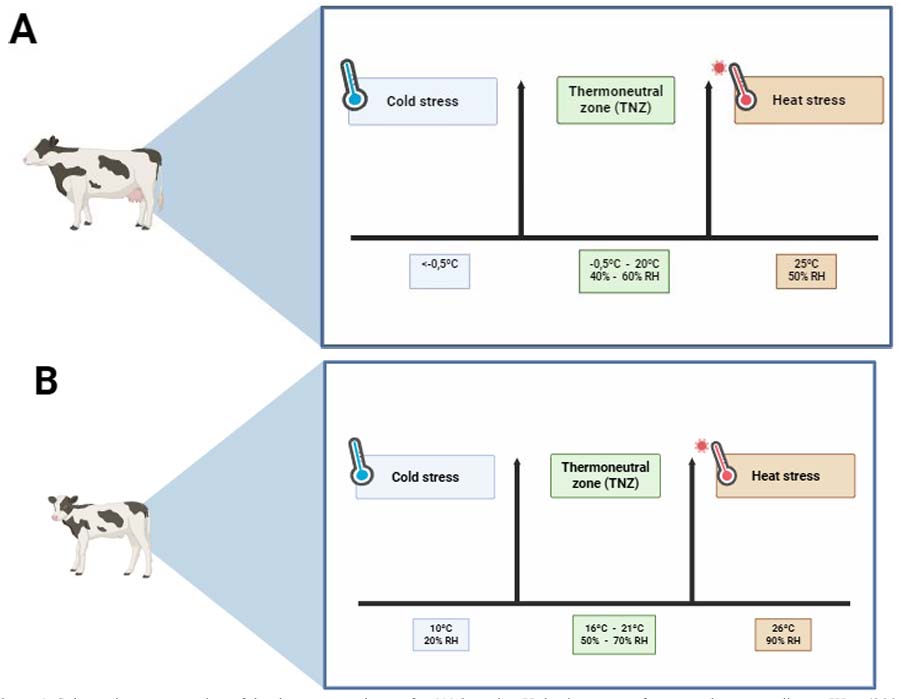
Figure 1.
Schematic representation of the thermoneutral zone for (A) lactating Holstein cows, reference values according to West (2003); and (B) Holstein dairy calves, reference values according to Castro et al., (2024). *RH = relative humidity
Heat stress in calves results in direct economic losses related to morbidity and mortality, as well as indirect costs associated with reduced weight gain, performance and lifespan (West, 2003). When calves are exposed to heat stress soon after birth, their ability to absorb serum immunoglobulins is also impaired (Stott et al., 1976), compromising passive immunity transfer and increasing vulnerability of calves to diseases. Calves’ physiological responses are also altered under heat stress conditions, including increased respiratory rate (Marrero et al., 2021; Montevecchio et al., 2022 a), heart rate (Kovács et al., 2018 a), and elevated rectal (Dado-Senn et al., 2020 b; Kovács et al., 2018 b) and core body temperature (Spain and Spiers, 1996). However, the impact of heat stress on early life at thermoregulatory behavioral response in calves remains poorly understood (Dado-Senn et al., 2022). As the experiences of early life heat stress can promote long-term negative effects on animals, we aimed to systematically review the effects of heat stress on behavior, physiology, performance, and health of pre-weaning dairy calves.
Material and methods
This review was conducted in accordance with the guidelines of the Preferred Reporting Items for Systematic Reviews and Meta-Analyses approach (PRISMA; Page et al., 2021).
Search strategy
Peer-reviewed articles written in English and published before February 2024 were systematically searched on Web of Science and Scopus. We used search terms with the combination of words written in English with the interaction of Boolean operators (e.g., AND, OR, NOT) to string together words or phrases, as well as the wildcard truncation (denoted as “ ”) to designate a range of possible word forms. The “*” symbol was used to search for alternative spellings (e.g., American English vs. British English). All searches included the following fixed set: “dairy calf” OR “dairy calves” AND “heat stress” OR “thermal stress” OR “thermal comfort” AND “climatic factors” OR thermoregulation OR “thermal environment” AND health OR immunity OR performance OR behavior* OR physiology AND NOT “beef cattle” OR Nellore OR broilers. No time restrictions were applied. The studies were validated based on the match between their keywords and the search terms used. To be included, the studies needed to contain at least two keywords aligned with the established search criteria, ensuring relevance and appropriateness to the investigated topic.
Study inclusion criteria and screening
We only selected studies that described the effect of heat stress on behavior, physiology, performance, and/or health responses of pre-weaning dairy calves. The search on Web of Science returned 90 results, while the search on Scopus returned 143 results. All results (n = 233) were included in Mendeley®. After uploading the references to Mendeley®, duplicates were excluded. The remaining articles were evaluated based on a four-steps screening and evaluation process, also conducted using Mendeley®.
The first step was the exclusion of studies written in languages other than English, because of our inability to assess the methods and evaluate the results critically. In addition, theses, books, book chapters, conference proceedings, and reports were removed as we could not be certain that these sources had been peer-reviewed. In the second step, titles and abstracts were reviewed to identify and remove studies that did not involve pre-weaning dairy calves (e.g., weaned calves, heifers, and lactating cows). In the third step, all titles and abstracts were re-evaluated to identify and remove studies not relevant to the topic and out of interest (e.g., supplementation of additives, minerals, vitamins, or fat sources in the diet of lactating calves). In the fourth step, the full texts of the remaining studies were read in detail. Studies containing experimental research were excluded if the experiment itself did not address the relationship between heat stress, calf behavior, physiology, performance, and health during the pre-weaning period. The remaining studies were included in our systematic review if in one or more sections they described at least one of the variables of interest. Additionally, the reference lists of the remaining studies included in our review were checked to identify additional studies not found in the search process; if potential studies were identified, their full text was evaluated.
Data extraction
The specific characteristics of the studies, which vary in methodological aspects, are detailed in Figure 2, allowing for a comparative and descriptive view of the evidence.
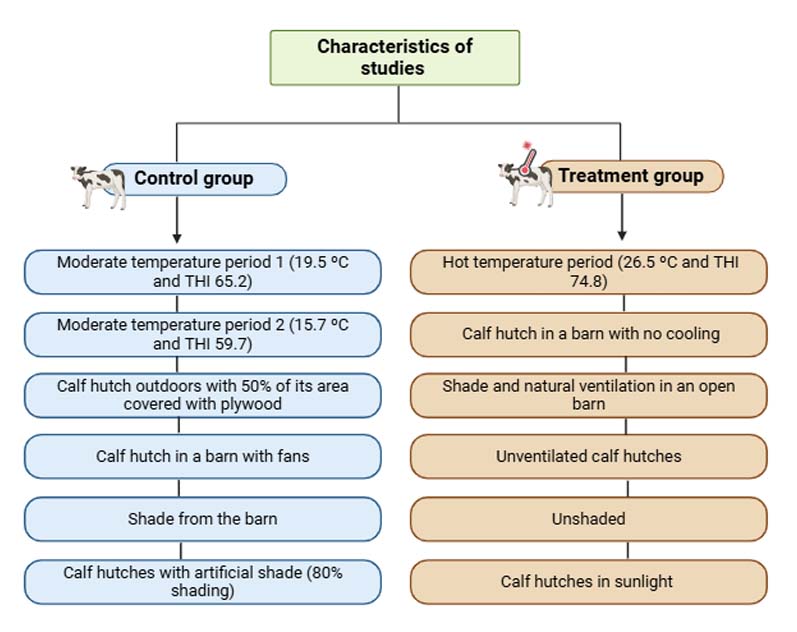
Figure 2.
Flowchart of the studies included in our systematic review: comparative characteristics between the control group and the treatment group. *THI = temperature-humidity index
Data on the thermal environment, behavior, physiology, performance, and health of pre-weaning dairy calves were extracted from the studies and tabulated by first author. Additionally, we determined the predominant direction for the outcomes of interest (microclimatic variables, thermal comfort indicator, behavioral, physiological, performance, and health responses). The predominant direction (PD) was calculated according to Harrison et al. (2014) and modified by Deniz et al. (2023), following equation (1). If the value of PD >0, the results were interpreted as predominantly positive; if it was PD ≤0, the results were interpreted predominantly negative or unclear.
Where PI is the number of studies that found a positive effect of thermal comfort on a specific variable compared to heat stress conditions. NDE is the number of studies that found no differences in the variables between conditions (thermal comfort vs. heat stress), and ND is the number of studies that found a negative effect of thermal comfort on a specific variable compared to heat stress conditions. Additionally, to assess whether the results found by the studies included in this review were consistent with the predominant direction, we determined the consistence of evidence according to Deniz et al. (2023) using equation (2).
The consistence of evidence was only calculated for variables measured in at least three studies, and values were classified in three levels: (†) slight association (≤33), (††) moderate association (range: 34 to 59%), and (†††) strong association (≥60).
Results
Overview of the studies
In total, 16 peer-reviewed studies published between 1996 and 2023 were included in this review (Table 1). Figure 3 presents the number of studies that were screened, assessed for eligibility, included, and excluded in this review. Of the 16 studies included, 9 (56%) were conducted in the United States, 5 (32%) in Hungary, 1 (6%) in Slovakia, and 1 (6%) did not specify the location of the study. Overall, the studies involved 48 animals (range: 12–226). Most of the studies (75%) evaluated Holstein animals, 2 (13%) evaluated Holstein-Friesian, 1 (6%) evaluated both Holstein and Guernsey, and 1 (6%) did not specify the breed. In terms of sex, 7 (43%) studies evaluated male calves, 2 (12%) evaluated female calves, and 7 (43%) evaluated both males and females.
Table 1.
Reference number of the 16 studies (author and year) included in the systematic review
| Reference number | Study (author and year) | Reference number | Study (author and year) |
|---|---|---|---|
| 1 | (Broucek et al., 2008) | 9 | (Montevecchio et al., 2023) |
| 2 | (Montevecchio et al., 2022 b) | 10 | (Marrero et al., 2021) |
| 3 | (Montevecchio et al., 2022 a) | 11 | (Kovács et al., 2018 c) |
| 4 | (Dado-Senn et al., 2022) | 12 | (Kovács et al., 2018 b) |
| 5 | (Reuscher et al., 2023) | 13 | (Kovács et al., 2018 a) |
| 6 | (Bakony et al., 2023) | 14 | (Kovács et al., 2019) |
| 7 | (Dado-Senn et al., 2020 a) | 15 | (Broucek et al., 2009) |
| 8 | (Dado-Senn et al., 2020 b) | 16 | (Spain and Spiers, 1996) |
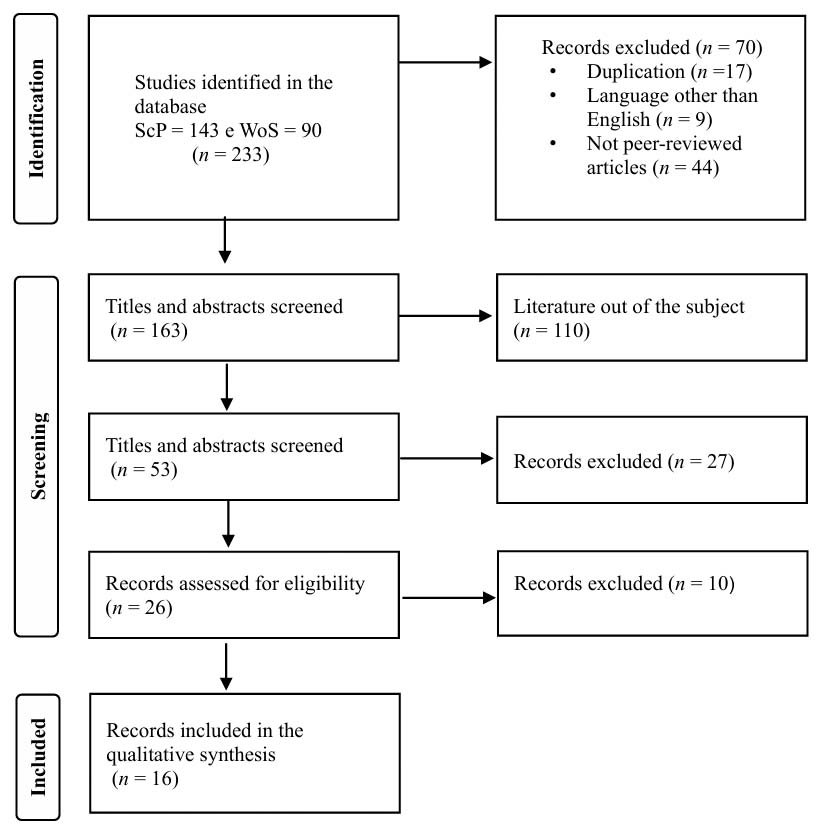
Figure 3.
Preferred Reporting Items for Systematic Reviews and Meta-Analyses (PRISMA; Page et al., 2021), flowchart describing the number of records identified and the exclusion process for the systematic review
Nine studies (56%) reported colostrum offering on the first day of the calves’ life, with quantities ranging from 4 liters per animal to ad libitum. The amount and type of milk available to the calves varied between the studies (milk replacer or bovine whole milk), with volumes ranging from 2 to 10 liters per day, depending on the age of the animals. The age at weaning ranged from 53 to 73 days; however, 6 (37%) studies did not report the age at weaning.
Regarding the type of housing, 11 (69%) studies housed the calves in an individual rearing system, 4 (25%) in a collective rearing system, and 1 (6%) study used both individual and collective systems. The types of housing included outdoor polyester fiber calf hutches (56%) and calf pens (44%) in a barn. The bedding material consisted of straw or sand.
Among the 16 studies included in this review, 14 (88%) analyzed microclimatic variables (e.g., air temperature, relative humidity, wind speed, and solar radiation), 13 (81%) studies determined thermal comfort indices (e.g., temperature and humidity index), 7 (44%) studies investigated calf behavior (lying down, lateral lying, sternal recumbency, standing, social interactions, milk intake, concentrate intake, water intake), 11 studies (69%) addressed aspects of thermal physiology (rectal temperature, body temperature, respiratory rate, heart rate, cortisol levels), 4 studies (25%) explored calf performance (average daily gain) and 2 studies (13%) examined animal health (fever, infection, immune cells).
Microclimate variables and thermal comfort indicators
Fourteen studies (87%; 14/16) assessed the microclimate variables, and 13 studies (81%; 13/16) calculated thermal comfort indicators. The predominant direction of the results and consistence of evidence of the effects of thermal comfort conditions on microclimatic variables and thermal comfort indicators are shown in Table 2. The air temperature was lower in thermal comfort (average: 28.78ºC; range: 15.7–37.7ºC) than heat stress conditions (average: 33.79ºC; range: 26.5–43ºC). Relative humidity showed unclear results; this was related to the fact that the studies did not find difference between the thermal conditions evaluated (thermal comfort – average: 73.48%; range: 63.36–79.4% and heat stress – average: 72.87%; range: 60.98–79.3%). Of the studies (n = 5) that measured wind speed, all found higher values in thermal comfort (average: 1.71 m/s; range: 1.20–2.05 m/s) than heat stress conditions (average: 0.23 m/s; range: 0.05–0.42 m/s). Of the studies (n = 13) that measured temperature-humidity index (THI), 6 studies (46%) did not find difference (thermal comfort – average: 75.29; range: 73.18–77.1 and heat stress – average: 75.32; range: 73.16–78.25).
Table 2.
Summary of the effect of heat stress conditions on microclimatic variables and thermal comfort indicators found in the studies (n = 16) included in the systematic review. The reference conditions for all variables were the thermal comfort (TC) compared to the heat stress (HS) condition. Predominant direction (PD) of results, and consistence of evidence for each variable evaluated
| Variable | Literature review | PD | Consistent evidence | ||||||
|---|---|---|---|---|---|---|---|---|---|
| n | Reference number1 | n+ | n0 | n- | n+ | n0 | n- | ||
| Microclimate variables | |||||||||
| air temperature | 13 | 1,3,5,6,7,8,9,10,11,12,13,15,16 | 0 | 4 | 9 | –1 | † | ††† | |
| relative humidity | 7 | 3,7,8,9,10,12,13 | 0 | 7 | 0 | –0.7 | ††† | ||
| wind speed | 5 | 3,4,7,8,9 | 5 | 0 | 0 | 5 | ††† | ||
| Thermal comfort indicator | |||||||||
| temperature-humidity index | 13 | 1,3,4,5,7,8,9,10,11,12,13,14,15 | 0 | 6 | 7 | –1 | †† | †† | |
1 Number of the articles defined in Table 1; n, number of studies that evaluated the variable; n+, number of studies that found higher values in TC than HS; n0, number of articles that found no difference in the variable between the conditions (TC and HS); n-, number of studies that found lower values in TC than HS; for consistent evidence, consider slight [†], moderate [††], and strong [†††].
Feeding, drinking, standing and lying behavior
Seven studies (44%; 7/16) evaluated calves’ behaviors. Milk (~0.660 g/d) and concentrate (~0.314 g/d) intake were the behaviors with strong consistence of evidence that increased in thermal comfort conditions (Table 3). Furthermore, calves in thermal comfort conditions spent longer lying (~19 min/h) and less time standing (11.6%). Two studies (28%; 2/7) reported that calves in thermal comfort conditions drank less water (~0.528 L/day).
Table 3.
Summary of the effect of heat stress conditions on behavior variables found in the studies (n = 16) included in the systematic review. The reference conditions for all variables were the thermal comfort (TC) condition compared to the heat stress (HS) condition. Predominant direction (PD) of results, and consistent evidence for each variable evaluated
| Variable | Literature review | PD | Consistent evidence | ||||||
|---|---|---|---|---|---|---|---|---|---|
| n | Reference number1 | n+ | n0 | n– | n+ | n0 | n– | ||
| Milk intake (kg/d) | 5 | 3,4,7,8,9 | 3 | 2 | 0 | 2.6 | ††† | †† | |
| Concentrate intake (kg/d) | 5 | 1,3,7,8,9 | 3 | 2 | 0 | 2.6 | ††† | †† | |
| Water intake (L/d) | 2 | 1,15 | 0 | 0 | 2 | −1 | – | – | – |
1 Number of the articles defined in Table 1; n, number of studies that evaluated the variable; n+, number of studies that found higher values in TC than HS; n0, number of articles that found no difference in the variable between the conditions (TC and HS); n-, number of studies that found lower values in TC than HS; for consistent evidence, consider slight [†], moderate [††], and strong [†††].
Physiological responses to thermal stress
Eleven studies (69%; 11/16) evaluated physiological responses to thermal stress. All variables showed strong consistence of evidence that decreased in thermal comfort conditions (Table 4). Six studies (60%; 6/10) found a decrease in calves’ rectal temperature (average 39.16°C; range 38.94–39.60°C), 3 studies (100%; 3/3) reported a decrease in body temperature (~1.77°C; range: 31.35–32.99°C), 7 studies (88%; 7/8) found a decrease in respiratory rate (~12.21 breaths/min; range: 55.55–67.76 breaths/min) and 2 studies (50%; 2/4) reported a decrease in heart rate (~17.7 beats/min; range 103.3–121 beats/min). Furthermore, one study (8%; 1/11) reported an increase of 342% in blood cortisol levels for calves in heat stress conditions.
Table 4.
Summary of the effect of heat stress conditions on thermoregulation physiology found in the studies (n = 16) included in the systematic review. The reference conditions for all variables were the thermal comfort (TC) condition compared to the heat stress (HS) condition. Predominant direction (PD) of results, and consistent evidence for each variable evaluated
| Variable | Literature review | PD | Consistent evidence | ||||||
|---|---|---|---|---|---|---|---|---|---|
| n | Reference number1 | n+ | n0 | n– | n+ | n0 | n– | ||
| Rectal temperature | 10 | 2,4,6,7,8,9,10,12,13,16 | 0 | 4 | 6 | –1 | †† | ††† | |
| Body temperature | 3 | 7,8,16 | 0 | 0 | 3 | –1 | ††† | ||
| Respiratory rate | 8 | 3,4,7,8,10,12,13,16 | 0 | 1 | 7 | –1 | † | ††† | |
| Heart rate | 4 | 8,9,12,13 | 0 | 2 | 2 | –1 | ††† | ††† | |
1 Number of the articles defined in Table 1; n, number of studies that evaluated the variable; n+, number of studies that found higher values in TC than HS; n0, number of articles that found no difference in the variable between the conditions (TC and HS); n-, number of studies that found lower values in TC than HS; for consistent evidence, consider slight [†], moderate [††], and strong [†††].
Health and performance
Only two studies (13%; 2/16) evaluated health parameters; fever and infection tended to be high in calves under heat stress conditions. Furthermore, one study (6%; 1/16) reported higher number of defense cells (lymphocytes, 103/μL) for calves in thermal comfort conditions (~4.50 103/μL) compared to calves in heat stress conditions (~4.06 103/μL). Of the studies (n = 4) that evaluated the performance of dairy calves, 3 studies (75%; 3/4) found an increase of average daily gain (~0,060 g/d) for calves in thermal conditions.
Discussion
Microclimate variables and thermal comfort indicators
We found strong consistent evidence of air temperature be lower in housing with thermal comfort conditions (<5°C), and unclear results of relative humidity. It is known that high relative humidity in dairy calf housing (greater than 75%) impacts not only thermal stress but also the health of animals (Donlon et al., 2023). For example, relative humidity levels reaching 68.8% within the housing facility over a 24-hour have been associated with an increased incidence of bovine respiratory disease (van Leenen et al., 2020) and diarrhea in pre-weaned calves (Gulliksen et al., 2009). Moreover, high relative humidity is often cited as a factor that favors bacterial persistence in the air (Hoffmann et al., 2019) and contributes to wet bedding conditions (Donlon et al., 2023). However, no study included in this review has directly investigated the impact of relative humidity on the health parameters of dairy calves, underscoring the need for further research on this aspect.
The combination of microclimatic variables (temperature, relative humidity, wind speed, and solar radiation) plays a crucial role in creating a thermal comfort environment for calves. The interaction between these factors can be complex, requiring careful management to ensure an appropriate environment to mitigate thermal stress. However, it is worth noting that in 56% of the studies included in our review, calves were housed in different types of polyester fiber calf hutches: outdoor, individual, and group housing. Estimates suggest that approximately 38% of dairy calves in the United States are housed individually in outdoor calf hutches (USDA, 2021). More than half of the studies in our review (56%) were conducted in the United States, which may indicate that these calves could be exposed to extreme environmental conditions (e.g., heat episodes during summer), as the natural behavior of heat dissipation (e.g., seeking shade) may be impaired. On the other hand, the use of group calf hutches, in addition to providing significant benefits to the social well-being of the calves (Costa et al., 2016; Donadio et al., 2024), may result in average temperatures 1°C higher compared to individual calf hutches (Reuscher et al., 2024).
Given the influence of these environmental variables, it is relevant to consider the indicators used to assess thermal comfort. Of the 13 studies that analyzed the THI as an indicator of thermal comfort, seven studies found higher values in housing under thermal stress conditions. Five different THI equations were employed across the studies (Bianca, 1962; Kelly and Bond, 1971; Mader and Davis, 2006; Nienaber et al., 1999; NRC, 1971). The choice of the THI equation is generally related to the climate of the region studied (Bohmanova et al., 2007). An inappropriate equation can either underestimate or overestimate thermal stress conditions, leading to misguided decisions regarding environmental management. The THI equations proposed by NRC (1971), Mader et al. (2006), and Kelly and Bond (1971) were used in subtropical regions, where relative humidity is high (Bohmanova et al., 2007). These equations give greater weight to humidity (Dikmen and Hansen, 2009), because in humid climates, heat dissipation from the calves’ bodies is more difficult, making these equations more suitable for studies in such conditions. On the other hand, the THI equations proposed by Bianca (1962) and Nienaber et al. (1999) were used in continental regions, where relative humidity is low (Bohmanova et al., 2007). These equations prioritize air temperature over relative humidity. For calves raised in dry regions, thermal stress is more often caused by extreme temperatures than by the difficulty of losing heat through evaporation. However, the available literature on critical cutoff points for different THI values for cattle focuses primarily on adult cattle, making it quite challenging to compare heat tolerance between cows and calves.
Although the THI is widely used in livestock management decision (Frigeri et al., 2023 b), its limitation lies in the fact that it only considers two environmental variables: air temperature and relative humidity. While these parameters are easy to obtain (Frigeri et al., 2023 a), the THI is a general and indirect indicator that does not account for the specific characteristics of each animal nor the duration of their exposure to thermal stress. This may result in an incomplete assessment of thermal comfort conditions, as the impact of heat can vary significantly depending on the individual physiology of the animals and the intensity of the heat stress (Hoffmann et al., 2019; Wang et al., 2018). Therefore, there is a need to consider other parameters, such as physiological indicators, or combinations of multiple indicators (e.g., behavioral, metabolic, and/or hormonal parameters) that allow for a more detailed and individualized analysis of thermal stress.
Feeding, drinking, standing and lying behavior
Calves housed under thermal comfort conditions consumed more milk, concentrate and water, and also spent more time lying down. Quigley (2001) noted that when air temperature exceeded 35°C, water intake in Holstein calves, approximately 30 days old, increased from 1.4 L/day to 4 L/day. The increased water demand occurs due to water loss through perspiration and respiration in the calves (Bakony and Jurkovich, 2020). Therefore, it is important that the calf always has access to high-quality and abundant water. Calves also change their posture under thermal stress conditions. They seek to lie down in cooler areas (i.e., near water sources, shade, or air movement), spend more time lying laterally, and less time lying in a sternal position (Dado-Senn et al., 2022). Additionally, they stand for longer periods (88%) during the hottest hours of the day (Kovács et al., 2018 b) and reduce the time spent sleeping, exploring, and playing (Kamal et al., 2016). However, the results obtained from the 7 studies that assessed the behavior of calves under different thermal conditions reinforce the importance of a more comprehensive approach, providing clear evidence (milk, concentrate, and water intake) that thermal comfort has a positive impact on both the welfare and performance of the animals. Nevertheless, it is important to highlight the scarcity of information regarding certain behavioral responses (e.g., sleeping, standing, social behavior, etc.) to thermal stress experienced by calves during the pre-weaning period.
Physiological responses to thermal stress
When behavioral responses are insufficient for animals to maintain homeostasis, physiological responses are activated (Bakony and Jurkovich, 2020). In our review, we identified strong and consistent evidence of an increase in both rectal and surface temperatures, as well as heart and respiratory rates in calves under heat stress conditions. Respiratory rate is considered the most sensitive indicator among all physiological responses triggered in cattle under thermal stress conditions (Mishra, 2021). This variable can be influenced by species, breed type, age, sex, body condition, feeding time, feeding management, nutritional plan, previous heat exposure, housing management, and cooling strategies (Gaughan et al., 2000). Recently, limits of THI (65–69) that triggers a rise in respiratory rate were determined for Holstein dairy calves raised in subtropical and continental climate zones in the United States. (Dado-Senn et al., 2020 a). Notably, these threshold values for calves are like those for adult cows (THI = 65 to 70, in a continental climate; Pinto et al., 2020), demonstrating that although calves may be more thermotolerant to heat stress, they are still susceptible to its effects. An increase in respiratory rate occurs when sweating is insufficient to restore the animal’s core body temperature (Gebremedhin et al., 2010). By increasing the respiratory rate, the animal reduces metabolic heat (Giannone et al., 2023). Thermal hyperventilation (respiratory rate) occurs in two stages: 1) thermal tachypnea, which involves increased breathing and allows cooling without high energy expenditure, and; 2) hyperpnea, which occurs when breathing changes from panting, mainly with the mouth closed, to panting with the mouth open (Burhans et al., 2022). At this stage, there is a greater demand for oxygen in the cellular systems, which can trigger respiratory alkalosis due to the excessive removal of carbon dioxide into the environment (Burhans et al., 2022).
Individual characteristics, such as coat color and breed, also play a relevant role in the regulation of body temperature in calves. The coat color in cattle affects the absorbance of solar radiation, which is 90% for black spots, 70% for red spots, and 40% for white spots (Silva et al., 2003). Higher radiation absorption leads to an increase in both superficial and internal temperature of animals. Although none of the studies included in our review evaluated the effects of coat on the thermal responses of calves, research on adult cattle has been conducted. Lactating black cows showed an increase in body temperature of approximately 4.8ºC when exposed to direct sunlight, while white cows showed an increase of about 0.7ºC in body temperature (Hillman et al., 2001). Meanwhile, red and white cows showed lower temperatures during the hot season compared to black and white animals (Isola et al., 2020). The darker the coat, the longer it takes to regulate body temperature (Gebremedhin et al., 2011). This condition triggers the activation of thermoregulatory mechanisms to maintain homeothermy and heat loss through evaporation (Lazzari et al., 2024). In addition to coat color, coat density (which affects airflow over the skin surface) also affects evaporative heat loss (Sejian et al., 2018). In our review, we identified that the breeds of calves investigated were predominantly Holstein. Genetic factors in cattle have been recognized as a major trait that can explain part of the differences in responses to heat stress in dairy cows. Several studies have been carried out to evaluate genome-wide association (GWAS) to identify genomic regions and variants associated with heat stress tolerance in dairy cows (Garner et al., 2020; Luo et al., 2021; Sigdel et al., 2019). Otto et al. (2019) found that Holstein animals have a more complex response to the effects of heat stress than Gir animals and therefore have more complex gene mechanisms to defend the body against the harmful effects of heat stress. However, we found no studies evaluating the genetic characteristics of calves and coat color in relation to body temperature. We suggest that new studies be carried out to help understand how these conditions can impact on heat tolerance in young animals.
The increase in rectal temperature in cattle results from excessive heat accumulation in environments, which requires the animal to dissipate the accumulated heat through evaporative heat loss (Mishra, 2021). We observed a reduction of approximately 0.22ºC in the rectal temperature of calves under thermal comfort conditions. It is already well documented in the literature that calves under thermal stress conditions showed a 3% increase in rectal temperature and a 55% increase in respiratory rate compared to calves with access to shade and/or fans in the housing (Montevecchio et al., 2022 a). Promoting sensible heat loss in calves using fans (convection) at a wind speed of 2 m/s can be sufficient for thermal balance (Dado-Senn et al., 2020 a). Although the use of fans is commonly employed as a heat abatement resource for lactating cows (Fournel et al., 2017; Herzog et al., 2021), few studies use forced air as a method for reducing thermal stress in calves. This leaves uncertainties about how the ventilation system should be managed for this category of animal under different climatic conditions. Moreover, no study specifies the calf’s age for the activation of this cooling system, considering that in the first weeks of life, the calf’s thermoregulatory system is still underdeveloped. Although our findings highlight the positive effects of using fans for calves in reducing thermal stress, more studies are needed.
The increase in heart rate in cattle under thermal stress conditions occurs due to greater secretion of catecholamines, which activate adrenergic receptors in cardiac myocytes (Mishra, 2021), elevating and redistributing blood flow to peripheral tissues, thereby aiding the transport of body heat from internal organs to the body surface (Wang et al., 2020). However, the most suitable methods for assessing thermal stress in dairy calves are still relatively unknown (Dado-Senn et al., 2020 a). Nevertheless, respiratory rate and heart rate have been considered good physiological indicators for assessing thermal stress in dairy calves in continental regions (Kovács et al., 2018 d). An increase in respiratory rate can enhance heat loss through evaporation, contributing to cooling during thermal stress (Mishra, 2021). On the other hand, surface and rectal temperatures have been considered good indicators for assessing thermal stress in dairy calves in subtropical regions (Dado-Senn et al., 2020 a). These discrepancies may be due to methodological differences between studies and regional climate conditions.
In addition to physiological and behavioral responses, neuroendocrine responses are activated to alleviate the negative effects of thermal stress. In our review, we observed only one study that assessed the hormonal effect (e.g., cortisol) between thermal comfort and thermal stress conditions (Kovács et al., 2019). Therefore, some caution is required when extrapolating our results. Overall, this finding limits the understanding of the endocrine mechanisms involved in thermoregulation in young animals, especially considering that the thermoregulatory system of calves is still immature. Therefore, we recommend that more studies be carried out to understand the effect of environmental conditions on hormonal responses in dairy calves in different regions and with different calf breeds. This information would help in making decisions about environmental management.
Heat stress stimulates the hypothalamic paraventricular nucleus (PVN) to secrete corticotrophin hormone (CRH), which acts on the corticotrophs of the pituitary gland to secrete adrenocorticotrophin (ACTH), which activates the adrenal gland to secrete cortisol into the systemic circulation (Mishra, 2021). Cortisol acts as a vasodilator to increase heat loss through evaporation and stimulates lipolysis and proteolysis to restore metabolic homeostasis in calves under acute thermal stress (Bakony and Jurkovich, 2020; Blond et al., 2024; Țogoe and Mincă, 2024). Under conditions of prolonged stress (chronic, i.e., exposure lasting more than six days with intensity), cortisol levels tend to decrease due to the negative feedback effect of cortisol on the hypothalamic-pituitary-adrenal axis (Mormède et al., 2007; Herman et al., 2016). During the exposure of calves to thermal stress, cortisol levels increased from 11 to 29 ng/ml (Yousef et al., 1997). In addition to the increase in cortisol, thermal stress also elevates the production of catecholamines. The increase in catecholamines can trigger a fight-or-flight response in the calf to counteract the effects of thermal stress, as well as help the body adapt to the lethal effects of thermal stress (Mishra, 2021).
Performance
Calves under thermal comfort conditions had higher average daily gains compared to calves at heat stress condition. Improvements in average daily gain and pre-weaning body development have been linked to earlier puberty, earlier conception, and a reduced age at first calving, along with increased milk yield during the first lactation (Moallem et al., 2010; Soberon et al., 2012). In contrast, heat stressed calves often exhibit reduced growth performance, which may be partially attributed to heat induced damage to the intestinal mucosa. This damage is believed to result from decreased intestinal blood flow and local tissue hyperthermia, compromising nutrient absorption and overall gastrointestinal integrity (Koch et al., 2023, 2021, 2019; Ríus, 2019). In order to maintain systemic blood pressure, the blood vessels of the gastrointestinal system undergo vasoconstriction (Baumgard and Rhoads, 2013), which reduces blood flow (by up to 50%; Wang et al., 2011) to the organs in the abdominal region. With less blood reaching the intestine, this organ receives less oxygen (hypoxia), compromising the integrity of the intestinal barrier (Sanz Fernandez et al., 2014) and contributing to “leaky gut” (Burhans et al., 2022).
Health
The first three weeks of life represent a challenging phase for dairy calves. The newborn calf must adapt to a completely new environment, with a high pathogen load, regulate its own body temperature (e.g., colostrum, in addition to aiding passive immunity transfer, provides energy for thermoregulation in calves; Mota-Rojas et al., 2022), and adjust its digestive system. This scenario is highly stressful, and combined with thermal stress, it negatively impacts the calf’s health. Among the observed effects, there is a reduction in glucocorticoid receptor levels, impairing intestinal mucosal formation and compromising epithelial maturation (Hulbert and Moisá, 2016). During thermal stress, autophagy and apoptosis of cells are activated. These processes are involved in cellular homeostasis control, ensuring the removal of damaged cells and maintaining cellular health. Zhai et al. (2019) identified the activation of autophagy and apoptosis in the rumen, duodenum, and kidney of Holstein calves at 35 days of age, suggesting that the nutrient absorption capacity may be altered due to the impact of thermal stress on the tissues of these organs. Morphological and functional changes in the tissues of calves due to the effects of heat-induced thermal stress may lead to permanent effects and, in extreme cases, result in death (Dahl et al., 2020).
Limitations of the studies and future trends
The effect of thermal stress on the behavior, physiology, performance, and health of dairy calves has been explored in several studies. However, since most of the studies were conducted in the United States, Hungary, and Slovakia, caution is needed when interpreting our results. The predominance of studies in these three countries raises questions about the representativeness of these findings for other regions with different climatic conditions. The United States has a temperate or subtropical climate, while Hungary and Slovakia have a temperate continental climate. However, the results obtained in our review cannot reflect the reality of production systems in tropical climates. In the future, it is essential that research is carried out in different climatic zones to broaden the applicability of the findings. Another limitation of this study was that our search strategy in the Web of Science and Scopus may not have identified all studies involving thermal stress and dairy calves in relation to behavior, physiology, performance, and health. Although Web of Science and Scopus are considered two of the most reliable and comprehensive databases for scientific publications, relevant studies may still not have been found. Additionally, another limitation of the study was the exclusive use of articles in English, as we could not critically evaluate methods and results in other languages. Thus, we excluded conference proceedings (articles and abstracts) and book chapters, as we could not ensure that these sources were peer-reviewed. Another point to consider among the studies is the variability in methodologies used to assess thermal comfort and thermal stress conditions for dairy calves. Many studies considered supplementary housing shade and/or artificial shade, along with the use of fans, as thermal comfort, while for thermal stress conditions, shade and natural ventilation in housing and/or calf hutches under direct sunlight were used. Therefore, we could not perform a meta-analysis. Another consideration is that the studies evaluated calves from the Holstein, Holstein-Friesian, and Guernsey breeds. As a result, we do not have information on Bos taurus indicus dairy calves. It is known that the thermoneutral zone for crossbred dairy calves raised in tropical environments has not yet been fully defined. However, Nascimento et al. (2019) identified that the rectal temperature of crossbred calves increases when it exceeds 26.4°C. The same authors suggest that these calves can maintain homeothermy between 17°C and 26.4°C. We recommend that new studies explore breeds with greater adaptation to heat, such as zebu breeds (Bos taurus indicus) and their crosses with taurine breeds (e.g., Girolando), which are widely used in tropical regions. Investigating these breeds can provide valuable information on the genetic mechanisms of heat resistance in dairy calves. Despite these limitations, we believe our methodology is solid, and the results obtained reflect the available evidence.
Given the evidence found in our study regarding the adverse impacts of thermal stress on dairy calves, it is essential to adopt strategies to improve environmental conditions, ensure animal welfare, and enhance the future performance of the herd. To achieve this goal, technicians and producers should focus on the following aspects:
Temperature and humidity: It is essential to ensure that calves are housed in environments-controlled temperature and humidity (from birth to 3 weeks of age: 20–25ºC and humidity between 40% and 60%; >3 weeks of age: 10–25ºC and humidity between 40% and 60%).
Evaluation of thermal comfort: In addition to using the THI as an indicator of thermal comfort, it is recommended to monitor physiological parameters such as respiratory rate, heart rate, body temperature, and rectal temperature, which may be more sensitive to environmental variations. The implementation of technologies for continuous monitoring of these variables can assist in the early detection of adverse thermal stress conditions.
Housing: When planning the type of housing, it is important to consider whether the shelter will be collective or individual. Although individual housing has some advantages in terms of temperature control, collective housing provides long-term benefits, mainly for the social behavior of the calves. However, it should be kept in mind that collective housing may result in higher average temperatures due to the increased animal density.
Attention to behavioral signs: Carefully observing changes in the behavior of calves, such as decreased resting time, changes in posture, seeking shade, and areas with air movement. These behaviors are indicative of thermal discomfort and should be monitored to adjust environmental management.
Water supply: Under thermal stress conditions, calves exhibit a significant increase in water intake, which helps to compensate for the loss of fluids due to sweating and accelerated breathing. It is essential to ensure a continuous supply of high-quality water in sufficient quantities.
Nutritional impacts: During episodes of thermal stress, calves reduce their intake of concentrates and milk, which can impact their development. Considering the significant reduction in concentrate and milk consumption, as well as the decrease in daily weight gain, coupled with the lack of data on the nutritional requirements of calves under thermal stress, we recommend that professionals in the field densify milk or milk replacer, increasing the concentration of total solids without altering the offered volume (NASEM, 2021).
Due to the conditions found in the studies included in our review, several key points are critical for guiding future research. The studies focus on the use of mechanical ventilation, such as fans, and the provision of supplemental shading over housing. Therefore, future studies should concentrate on strategies to mitigate the effects of thermal stress in calves, such as the use of misting and spraying on behavioral, physiological, performance, and health responses, as well as the preference for seeking shade. Additionally, studies should focus on identifying thermal stress through gene expression. We identified only one study that used heat shock proteins to identify thermal stress (Marrero et al., 2021) and only one study that used hormonal variables to identify thermal stress (Kovács et al., 2019). Thus, it is recommended that new studies use other hormones in the identification of thermal stress in calves, such as thyroid hormones (triiodothyronine T3 and thyroxine T4), in addition to insulin. Furthermore, the use of advanced technologies, such as automated systems for monitoring environmental conditions in housing, as well as monitoring behavior, health, and performance of dairy calves, is expected. Although the future of dairy farms points to the advancement of technology, the feasibility of this transition faces practical barriers (e.g. producers need to be trained in maintaining and updating the software, as well as correctly interpreting the data) and economic barriers, i.e. the implementation of this technology requires a considerable initial investment, which restricts its access to a portion of producers.
Conclusion
The studies included in this systematic review support the evidence that heat stress negatively impacts the feeding and drinking behavior, physiology of thermoregulation, and performance of dairy calves. However, the available data on its effects on health and social behavior in these animals remain limited and inconclusive. Future studies should explore variables such as social interactions, breed differences, ventilation systems, housing types, and geographical variations to fill these gaps and support more effective strategies for mitigating the impacts of heat stress on dairy calves. In addition, the adoption of practical strategies, such as the implementation of housing systems (e.g., open pastures, shelters, pens, huts, and barns) adapted to the characteristics of each geographic region, is essential to ensure environmental control (temperature, humidity, and wind speed) in dairy calf rearing areas. It is also important to highlight the role of nutritional management, including water availability and the concentration of milk replacer, for calves exposed to thermal stress episodes.
Acknowledgements
The author, Karen Dal’ Magro Frigeri, gratefully acknowledges the support of CAPES (Coordination for the Improvement of Higher Education Personnel, Brasília, Distrito Federal, Brazil) for the scholarship received during her Ph.D. in the Graduate Program in Animal Science at the Federal University of Technology – Paraná (UTFPR), Brazil. Karolini Tenffen De-Sousa acknowledges CNPq (National Council for Scientific and Technological Development, Brasília, Distrito Federal, Brazil) for the postdoctoral scholarship (grant no. 151292/2024-8) at the Instituto de Zootecnia. Frederico Márcio Corrêa Vieira acknowledges the support from CNPq (National Council for Scientific and Technological Development, Brasília, Distrito Federal, Brazil).