
The tilapia fish holds great economic importance for the fisheries and aquaculture industry, with Oreochromis niloticus being the most commonly and extensively farmed fish species globally (Negm et al., 2021). However, this species is particularly susceptible to environmental pollution, which negatively affects its productivity and health status (Naiel et al., 2020). Unfavorable conditions resulting from industrial revolution have led to the release of a considerable number of different contaminants into aquatic bodies (Ismael et al., 2021; El-Adl et al., 2024). This, in turn, is causing harm to aquaculture and posing a potential risk to both farmed fish and humans who consume these contaminated resources (Naiel et al., 2024 a).
Acrylamide (ACR) is a neurotoxin that poses a threat to freshwater fish when it enters surface water (Elaraby et al., 2024). ACR can contaminate water resources through various sources, including manufacturing discharge from industries such as paper, textile, crude oil production, dye and cosmetic additive creation, mineral and concrete processing, and sand and soil treatment to eliminate erosion (Raza et al., 2023). It can also come from the treatment of drainage and wastewater, waste generated from the food processing industry, and agricultural practices (Kachot et al., 2023). Therefore, it is crucial to treat wastewater and natural freshwater resources to remove dispersed ACR molecules before they are discharged, reused, or disposed (Naiel et al., 2023 b). By preventing the release of ACR into aquatic ecosystems, we can protect both aquatic creatures and consumer health (Tepe and Çebi, 2019).
Despite the well-known fact that ACR alters cellular activity in various fish species (Edrees et al., 2024), there has been insufficient research on the harmful effects of ACR on aquatic ecosystems and habitats. However, recent findings have begun to shed light on the toxicological impact of ACR on aquatic creatures (Huang et al., 2018 a). For example, it has been observed that ACR can induce hematotoxic effects on African catfish (Ibrahim and Ibrahem, 2020) and genotoxic signs in gold fish (Larguinho et al., 2014). Furthermore, subject to ACR chronic exposure has been found to cause oxidative stress, cardiovascular toxicity, splenic toxicity, and retinal toxicity in Danio rerio (Albalawi et al., 2018; Huang et al., 2018 b; Komoike et al., 2020).
Extensive research has focused on using natural feed additives in fish feed to diminish the undesirable impacts of water pollutants on aquatic creatures (Abdelghany et al., 2020; Naiel et al., 2022, 2024 b). There has been a recent surge in interest in aquaculture regarding the application of feed additives to boost growth, immune response, and survival of fish (Amenyogbe et al., 2024; Naiel et al., 2024 c). Probiotics have been found to enhance nutrient absorption and performance in fish by elevating digestive enzyme secretions (Fath El-Bab et al., 2022). Additionally, probiotics have been shown to regulate redox status and oxidative defensive mechanisms in farmed fish species, offering numerous health advantages (El-Bab et al., 2022). Similarly, the use of trace elements in nanoform within fish feed has gained popularity due to their positive effects on fish health (Wangkahart et al., 2022). Specifically, dietary selenium nanoparticles (SeNPs) have been proved to stimulate growth, improve hematological and blood biochemical measurements, and promote oxidative enzyme activities in fish, even in stressful or contaminated environments (Naiel et al., 2021, 2023 a). Moreover, the biological method used to produce Se nanoforms has been extensively validated for its ease of processing, low toxicity, and significant pharmacological benefits (Dawood et al., 2021; Abdollahi-Mousavi et al., 2024; Eissa et al., 2024 a; Sheikh et al., 2024). Therefore, this experimental trial aimed to inspect the potential protective influences of dietary supplementation with probiotics or selenium nanoparticles produced using the biological method on the growth performance, serum measurements, stress responses, immune functions, feed, water and intestine microbial content and histopathological alterations in the gills, liver, and spleen of tilapia fish exposed to ACR contaminated water.
Material and methods
Isolation and identification of applied probiotic strains
The bacteria were isolated through serial dilution and plated onto nutrient agar plates. Some plates were supplemented with 1 mM sodium selenite. After incubating at 28°C for 24 hours using a Memmert incubator (Memmert GmbH, Co. KG, Germany), the total number of heterotrophic and selenite-reducing bacteria was determined. A strain which produced a vibrant red color on nutrient agar with sodium selenite, was selected from among them. To confirm their ability to synthesize selenium nanoparticles, the cell-free supernatant from two selected probiotic strains with an equal volume of 1 mM sodium selenite was mixed, resulting in a red color. Based on these findings, two bacterial strains were considered potential candidates, and further analysis was conducted following Rajasree and Gayathri (2015) procedure.
The two probiotic strains were cultured and assessed for purity in the Laboratory of Microbiology, Faculty of Agriculture, Zagazig University, following the methods described by Garrity et al. (2005). Culturing and quantifying the isolated probiotics involved using specific nutrient agar media plates and utilizing spore staining technique using spread plates, as demonstrated by Austin et al. (1995). Molecular techniques such as gel electrophoresis and 16S rRNA sequencing were applied to identify the strains, which were specifically identified as Bacillus coagulans lilac-01 (Accession Number/LC429607.2) and Lactobacillus paraplantarum FT259 (Accession Number/KM207827.1). The selected bacterial strains were kept under −20°C in dehydrated Luria Bertani broth (Sigma-Aldrich, Millipore, SAFC, Milli-Q, Supelco, BioReliance, Roche) having 15% glycerol, till further application, according to Zokaeifar et al. (2014) procedure. The generated cell suspensions density was determined employing a spectrophotometer (600 nm) and its count was converted into CFU (colony-forming units) using the procedure of spread plate.
Synthesis and characterization of selenium nano-particles (SeNPs)
The probiotic bacterial strains mixture was enriched in Luria broth medium (200 ml) under 37°C until they reached the log phase. After centrifugation at 6000 rpm for 5 minutes using a Hettich Universal 320 centrifuge (Hettich, Germany), the settled pellet was thrown out and sodium selenite was added to the supernatant to reach a concentration of 15 mM. The prepared mixture was then incubated under 37°C for 48 hours. The purification of prepared sample was done using centrifugation process at 9000 rpm, then washing several times using distilled water. The purified selenium nanoparticles (SeNPs) were described via scanning transmission electron microscope (TEM). The transmission electron microscopic imaging in Figure 1 shows that the SeNPs have a smooth surface, nearly spherical shape, and uniform size distribution ranging from 32.1 to 66.7 nm, which is consistent with the findings of the X-ray diffraction analysis.
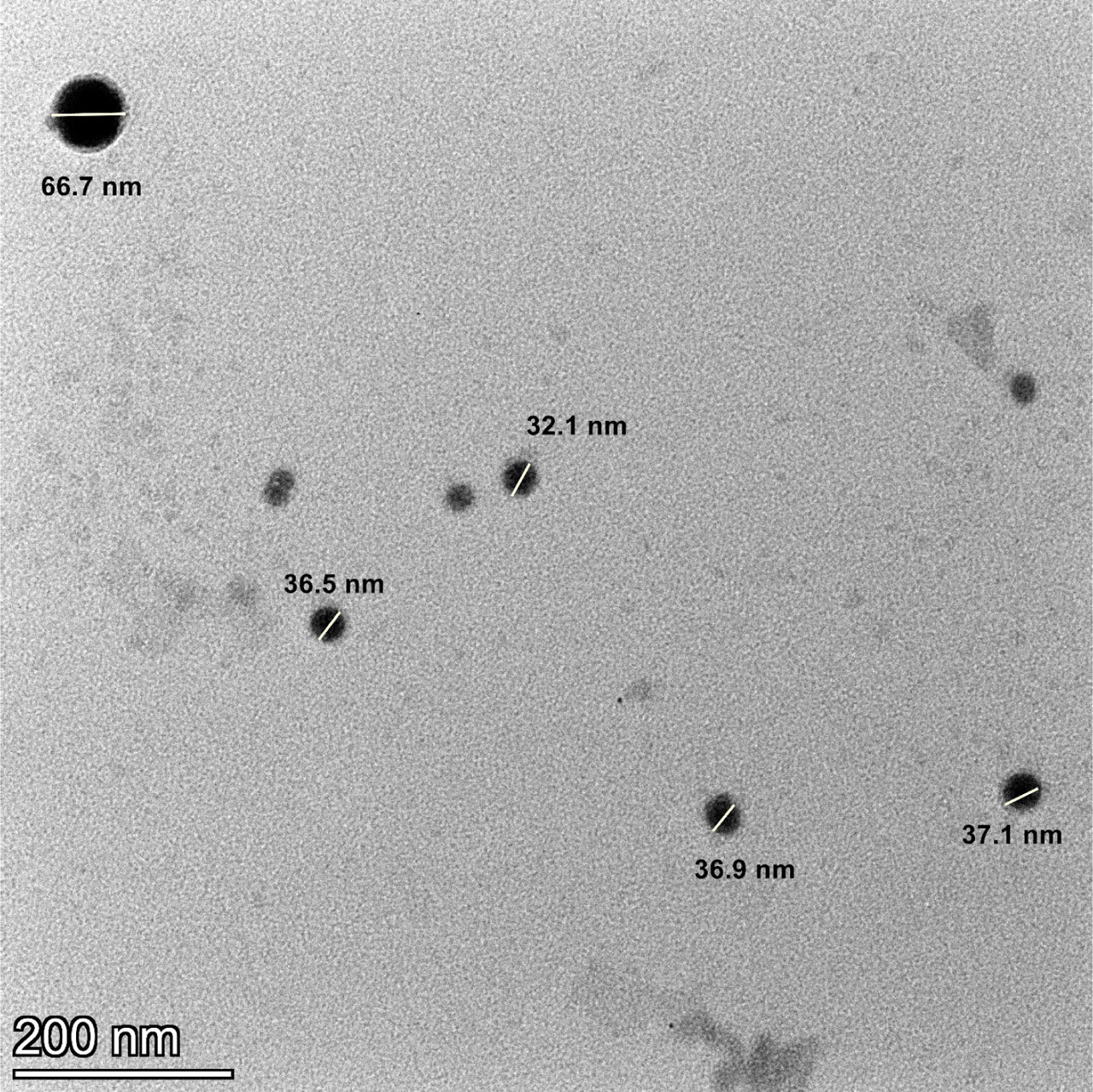
Figure 1.
A transmission electron microscope (TEM) image that depicts selenium nanoparticles (SeNPs). The image showcases the nanoparticles' nearly spherical shape, smooth surface, and uniform size distribution (from 32.1 to 66.7 nm)
Preparation of formulated feeds
Table 1 illustrates the formulation of the tested and control diets. The control group received the basal diet, while the other six groups were given diets supplemented with either a probiotic mixture (1, 2, or 3 g PM per kg of diet) or SeNPs (1, 2, or 3 mg SeNPs per kg of diet). The chosen doses of SeNPs and PM were based on earlier reports conducted by Dawit Moges et al. (2022) and Dighiesh et al. (2024), respectively. To prepare the experimental diets, each ingredient was weighed and then mixed with minerals, vitamins, and additives. Water was added until the mixture was suitable for creating 1 mm diameter pellets. The pellets were then dried for 24 hours at 60°C in a forced air-drying oven (Binder GmbH, Germany). All feeds were preserved under −20°C till further used.
Table 1.
Ingredients and chemical analysis of basal diets (on air-dry weight basis)
| Ingredients | % |
|---|---|
| Fish meal | 18 |
| Soybean meal 44% | 17 |
| Wheat bran | 26.2 |
| Maize | 24.2 |
| Corn gluten meal 60% | 10 |
| Wheat meal | 2.1 |
| Vegetable oil | 1 |
| Fish oil | 1 |
| Vitamin premix1 | 0.25 |
| Mineral premix2 | 0.25 |
| Total | 100 |
| Proximate chemical composition | |
| Crude protein (N×6.25) | 31.23 |
| Crude lipids | 8.49 |
| Ash | 4.89 |
| Crude fiber | 4.92 |
| Nitrogen free extract (NFE)3 | 50.47 |
| Gross energy (GE, MJ/Kg diet)4 | 18.39 |
1 Composition of mineral premix kg−1: manganese, 53 g; zinc, 40 g; iron, 20 g; copper, 2.7 g; iodine, 0.34 g; selenium, 70 mg; cobalt, 70 mg and calcium carbonate as carrier up to 1 kg.
Experimental design, fish welfare and chronic exposure experiment
Apparently, healthy Oreochromis niloticus weighing 24.25±0.03 g were transported alive from Abbassa private hatchery to the wet laboratory of the Animal Production Department in the Faculty of Agriculture at Zagazig University in Egypt using well-aerated, oxygen-filled plastic bags. Upon arrival, the fish were acclimatized to laboratory conditions for a period of 14 days. During this time, they were fed a control basal diet three times daily, amounting to 3% of their body weight. The acclimatization aquariums were provided with constant aeration and tap water that was free of chlorine, with a 30% water exchange per day. Throughout the trial, the water quality measurements were determined twice a week as outlined by APHA (2005) procedure. Exactly, water temperature, dissolved oxygen, and pH were measured using a multi-parameter water quality meter (model YSI ProDSS, YSI Inc., Yellow Springs, Ohio, USA). Meanwhile, ammonia and nitrite levels were measured using a portable colorimeter (model HI-83203, Hanna Instruments, Woonsocket, Rhode Island, USA). The established values for water temperature were 25±1.0°C, dissolved oxygen (DO) levels were 7.4±0.57 mg/L, pH levels were 7.5±0.35, ammonia levels were 0.001±0.001 mg/L, and nitrite levels were 0.03±0.02 mg/L.
Three hundred fifty tilapia fish were randomly distributed into seven treatments, each containing five replicates (10 fish per each aquarium). The feeding trial lasted for 26 days using experimental diets. After that, there was an additional 30-day period where the fish were exposed to ACR (at a concentration of 1/10 of the 96-hour LC50 of ACR, which is 34.6 mg/L as determined by Edrees et al. (2024)). This brought the total duration of the trial to 56 days. The first group, referred to as CTR, was given a basal diet without any supplementation for 26 days. After that, they were exposed to ACR (acrylic acid amide or 2-propenamide; ~99% purity; Cat. No. A9099, BioShop Canada Inc., Burlington) for an additional 30 days. This group served as the control. Meanwhile, the second (ACR+PM1), third (ACR+PM2), fourth (ACR+PM3), fifth (ACR+SeNPs1), sixth (ACR+SeNPs2), and seventh (ACR+SeNPs3) groups were also exposed to ACR (at a concentration of 1/10 of the 96-hour LC50 of ACR, which is 34.6 mg/L) and were fed experimental diets containing varying amounts of probiotic mixture (1, 2, or 3 g PM per kg of diet) or SeNPs (1, 2, or 3 mg SeNPs per kg of diet), respectively. Throughout the experiment, the fish were fed three times a day (at 8:00, 12:00, and 16:00) until they were satiated. To accurately determine actual feed intake, any uneaten feed was carefully collected 30 minutes after feeding using a siphon, then dried at 60°C to constant weight and weighed. The dry weight of uneaten feed was subtracted from the total feed offered to calculate the precise daily feed intake for each aquarium. The water in the aquarium was exchanged twice per week, and the ACR concentration was maintained by siphoning out the accumulated excrement.
Growth parameters and feed efficiency indices
During the 56-day feeding trial, we conducted regular feedings and weighing of the fish every two weeks. This allowed us to determine the amount of food they consumed and calculate their growth. We used the following parameters to assess their growth performance:
In these equations, WG is the weight gain and SGR is the specific growth rate, while W1 and W2 represent the initial and final weights of the survived fish respectively, and T = feeding period in days (56 days).
Also, the following parameters were considered:
Where, TFI is the total amount of actual consumed feed throughout the experiment and n is the fish total number.
In these equations, FCR is the feed conversion ratio, ADG is the average daily weight gain, ADG % is the average daily weight gain percent, and RGR is the relative growth rate.
Sampling procedure and blood biochemical measurements
After 56 days, all experimental fish were not fed for 24 hours before being sampled. Three fish per aquarium were randomly captured to obtain samples. The collected fish was immediately sedated, applying clove oil for 3 min (95 mg L−1; Oleum, Cairo, Egypt), following the protocol detailed by Adeshina et al. (2016). Blood specimens were taken from the caudal vein using a 1 ml syringe blended with 0.5 mg dipotassium salt of EDTA per mL of the blood sample as an anticoagulant and preserved in Eppendorf tubes for antioxidant, immunity, and biochemical parameter analysis. The gills, liver, and spleen tissues were gathered from the same fish as the blood sample for further histopathological examination. In addition, samples from the anterior intestine were collected to estimate microbiota counts.
The blood protein constituents such as TP (total protein) and ALB (albumin) were estimated employing a colorimetric technique. The globulin (GLOB) level was determined via subtracting the ALB value from the TP value. The A/G ratio (ALB/GLOB ratio) was calculated by dividing the ALB concentration by the GLOB level. The AST (aspartate transaminase) and ALT (ala-nine transaminase) were determined using commercial kits (AST or ALT Assay Kit, 384 well, Colorimetric/Fluorometric, ABACM241035) following the laboratory protocol detailed by Wilkinson et al. (1972). The kidney function measurements, such as UA (uric acid) and CR (creatinine), were measured using a spectrophotometer (Spectronic 20 D, Milton Roy Co.) by specific kits (BIOMED, Enzymatic/Colorimetric-Diagnostic Agent Co., Egypt) following the protocol as described by Folin and Wu (1919). Additionally, triglyceride (TG) levels were estimated applying the RA-50 Chemistry Analyzer (Bayer) with readymade chemicals (kits) produced by Spinreact Co., Spain, following the manufacturer's guidelines.
Redox status and immune response measurements
The plasma lysozyme level was estimated using micro-well plates with the Ellis (1990) procedure. The complement C3 levels were estimated using the C3 (Complement-3) commercial kits (Specific ELISA Fish Kit, My-BioSource Co., USA, No: MBS1601750), following the manual guidelines. Meanwhile, IgM (immunoglobulin-M) and IgA (immunoglobulin-A) were measured calorimetrically according to the procedure ascribed by Granfors (1979) employing specific ELISA kits (fish specific kits; Cusabio, Biotech Co., Ltd., Wuhan, China, No: MBS282651). Also, the AChE (acetylcholine esterase enzyme) activity in blood samples was determined spectrophotometrically applying the Ellman et al. (1961) technique. The IL-1β (interleukin-1β) specific ELISA Kit (CODE NO: CSB-E13259Fh; CUBIO Innovation Center, Houston, TX 77054, USA) was applied for estimating IL-1β level in blood samples following Chansue (2000) procedure.
For the detection of blood redox status, specific commercial kits obtained from Bio-diagnostic Co., Cairo, Egypt were used. The methods for detecting superoxide dismutase (SOD), total antioxidant activity (TAC), glutathione peroxidase (GSH), and the malonaldehyde (MDA) were followed as outlined by Nishikimi et al. (1972) for SOD, Amado et al. (2007) for TAC, Beutler (1963) for GSH, and Draper and Hadley (1990) for MDA detection.
Whole fish body and feed chemical analysis
The chemical compositions of fish flesh and their feed, including dry matter, moisture, crude fat, ash and crude protein contents, have been analyzed using the AOAC (2005) standard applicable methods. In details, total moisture content was determined by drying samples in a hot air oven (Binder GmbH, Germany) at 105°C until a constant weight was achieved. Crude protein was measured using the Kjeldahl method by determining total nitrogen content and multiplying by a factor of 6.25. Crude fat was extracted using a Soxhlet apparatus with petroleum ether as the solvent. Ash content was estimated by incinerating the samples in a muffle furnace at 550°C for 6 hours until white ash was obtained. Dry matter was calculated based on the moisture loss, and all analyses were carried out in triplicate to ensure accuracy of obtained data.
Microbial enumeration method
By the end of the feeding trial, water and feed samples from each formulated diet and treated aquarium were collected. Additionally, samples from the intestines were opened and removed in a sterile manner. To eliminate non-adhering bacteria, the intestinal contents were washed three times with sterile distilled water. Next, the whole intestinal samples were mixed employing a mortar that had been washed using ethanol (96%). The obtained homogenates from intestinal, water and feed samples were suspended within 10 ml from the sterile saline solution (0.85%). Then, they were subsequently diluted in 9 ml of 0.85% sterile saline to achieve concentrations of 10−8 and 10−5, respectively (Al-Harbi and Uddin, 2004, 2005). To determine the colony-forming unit (CFU) counts, the spread plate procedure was applied. The inoculated plates were then incubated using a Memmert incubator (Memmert GmbH, Co. KG, Germany) for up to 48 hours at 37°C employing tryptic soy agar (TSA, Oxoid, UK) to estimate the total count of bacterial strains, MRS agar to detect lactic acid bacteria and MacConkey agar to detect coliforms. Finally, the counts of the total colony were determined via a Quebec Darkfield Colony Counter (Leica, Buffalo, NY). All samples were plated in triplicate and the counts were then expressed as log CFU, following the methods described by Espírito Santo et al. (2007).
Tissue histopathological examination
After the exposure period, five fish from each treatment group to collect samples of their gills, liver (hepatopancreatic tissue), and spleen was dissected. These samples were sliced into small pieces measuring roughly 0.5 cm3 and then soaked in Bouin's solution for 18–24 hours to preserve them. Once fixed, the specimens using a series of alcohol concentrations were dehydrated, then cleared with xylene, and embedded in paraffin wax. Using a rotary microtome (Leica Biosystems, Germany), sections that were 5 µm thick were prepared, and then stained with hematoxylin and eosin to perform a detailed histopathological examination, following the method outlined by Atamanalp et al. (2022). To identify any histopathological alterations, five sections from each sample were inspected using a light microscope (BX50/BXFLA; Olympus, Tokyo, Japan).
Statistical procedure
The current data was primarily assessed for homogeneity and normality employing Levene's test. After that, a one-way ANOVA was performed, along with the Tukey range test for estimating the main differences between the experimental groups. The main concept was to determine if the estimated measurements were significantly influenced by the probiotic mixture or selenium nanoparticle supplementation levels in fish diets. Additionally, if a significant discovery was detected, further analysis was performed using orthogonal polynomial comparisons. Moreover, regression model analysis was employed to examine the experimental data, fitting linear, quadratic, or cubic models. A confidence level of 95% was applied. The findings are presented in tables and figures as mean ± SE.
Results
Growth and feed efficiency measurements
The feeding trial exhibited that dietary probiotics or selenium level had a statistically substantial effect on FBW, WG, DWG, DWG%, FCR and SGR (linear trend, P<0.01). Specifically, the highest feed efficiency and performance parameters were subjected to the highest level of SeNPs. While, the dietary administration of both probiotics or selenium significantly promoted total feed intake (TFI) (linear or quadratic, P<0.01) as well as relative growth rate (RGR) showed a significant linear trend at P<0.05 (Table 2).
Table 2.
Growth performance and feed efficiency of Nile tilapia fed diets supplemented with probiotic mixture (Bacillus coagulans and Lactobacillus paraplantarum ) (1, 2 and 3 g kg−1) or bacterial synthesized selenium nanoparticles (SeNPs) (1, 2 and 3 mg kg−1) for 26 days and then exposed to sublethal dose of acrylamide (
 96 h LC50= 34.6 mg L−1) for 30 days
| IBW (g) | FBW (g) | WG (g) | DWG (g) | DWG (%) | TFI (g) | FCR (g/g) | RGR (g/g) | SGR (% d−1) | |
|---|---|---|---|---|---|---|---|---|---|
| CTR | 24.25±0.03 a | 71.8±0.25 ab | 47.55±0.37 ab | 0.84±0.04 ab | 84.91±0.13 ab | 33.65±0.31 b | 1.41±0.1 ab | 66.15±0.11 | 1.93±0.16 ab |
| PM1 | 23.85±0.03 b | 64.2±0.11 b | 40.35±0.12 a | 0.72±0.73 a | 72.05±0.42 a | 35.10±0.0 1 ab | 1.14±0.12 b | 62.54±0.40 | 1.76±0.11 b |
| PM2 | 23.75±0.09 b | 71.73±0.96 ab | 47.98±0.83 ab | 0.85±0.32 ab | 85.68±0.33 ab | 35.10±0.01 ab | 1.46±0.1 ab | 66.84±0.81 | 1.97±0.04 ab |
| PM3 | 23.6±0.06 b | 71.33±0.86 ab | 47.73±0.93 ab | 0.85±0.10 ab | 85.24±0.60 ab | 35.15±0.03 ab | 1.45±0.2 ab | 66.44±2.9 | 1.96±0.2 ab |
| SeNPs1 | 23.83±0.14 b | 88.73±0.84 ab | 64.90±0.91 a | 1.15±0.03 a | 115.89±0.42 a | 36.65±0.83 a | 1.87±0.04 a | 73.11±0.64 | 2.34±0.04 a |
| SeNPs2 | 23.85±0.03 b | 87.2±0.83 a | 63.35±0.81 a | 1.13±0.06 a | 113.13±0.82 a | 35.10±0.01 ab | 1.80±0.10 a | 72.54±0.21 | 2.31±0.18 a |
| SeNPs3 | 23.8±0.06 b | 70.0±0.91 ab | 46.20±0.98 ab | 0.82±0.14 ab | 82.50±0.14 ab | 35.10±0.01 ab | 1.31±0.22 ab | 65.10±0.01 | 1.90±0.20 ab |
| P value | |||||||||
| linear | 0.700 | 0.007 | 0.006 | 0.006 | 0.006 | 0.004 | 0.013 | 0.020 | 0.010 |
| quadratic | 0.100 | 0.504 | 0.555 | 0.555 | 0.555 | 0.001 | 0.301 | 0.702 | 0.684 |
| cubic | 0.300 | 0.513 | 0.537 | 0.537 | 0.537 | 0.906 | 0.555 | 0.657 | 0.620 |
[ii] PM1, fish group fed diets supplemented with probiotic mixture (Bacillus coagulans and Lactobacillus paraplantarum ) 1 mg kg−1;
[iii] PM2, fish group fed diets supplemented with probiotic mixture (Bacillus coagulans and Lactobacillus paraplantarum ) 2 mg kg−1;
[iv] PM3, fish group fed diets supplemented with probiotic mixture (Bacillus coagulans and Lactobacillus paraplantarum ) 3 mg kg−1;
[v] SeNPs1, fish group fed diets supplemented with bacterial synthesized selenium nanoparticles 0.001 mg kg−1;
[vi] SeNPs2, fish group fed diets supplemented with bacterial synthesized selenium nanoparticles 0.002 mg kg−1;
[vii] SeNPs3, fish group fed diets supplemented with bacterial synthesized selenium nanoparticles 0.003 mg kg−1.
Serum measurements
The serum biochemical measurements of the Nile tilapia experimental groups exposed to ACR toxic doses are stated in Table 3. The high level of PM dietary supplementing significantly increased protein constituents (total protein, albumin) linearly (linear, P<0.05). While, the dietary administration of both probiotics or selenium significantly promoted serum CR, UA, ALT and AST contents (linear, quadratic or cubic, P<0.001 or 0.05). Meanwhile, the triglycerides (TG) showed significant decrease (quadratic or cubic trend at P<0.001) with increasing additive levels. Specifically, the lowest PM level indicated the lowest level of TG. On the other hand, the globulin and A/G ratio exhibited no significant effect in all experimental groups.
Table 3.
Blood biochemical profile of Nile tilapia fed diets supplemented with probiotic mixture (Bacillus coagulans and Lactobacillus paraplantarum) (1, 2 and 3 g kg−1) or selenium nanoparticles (SeNPs) (1, 2 and 3 mg kg−1) for 26 days and then exposed to sublethal dose of acrylamide (
96 h LC50 = 34.6 mg L−1) for 30 days
| Treatments | Parameters | ||||||||
|---|---|---|---|---|---|---|---|---|---|
| TP (g dL−1) | ALB (g dL−1) | GLOB (g dL−1) | A/G (%) | CR (mg dL−1) | UA (mg dL−1) | AST (UL) | ALT (UL) | T.G (mg dL−1) | |
| CTR | 6.08±0.19 ab | 3.68±0.58 ab | 2.40±0.29 | 1.64±0.45 | 0.53±0.03 a | 1.69±0.13 a | 211.80±0.61 a | 24.5±0.81 a | 182.28±0.91 a |
| PM1 | 7.09±0.39 a | 4.04±0.29 a | 3.05±0.01 | 1.32±0.44 | 0.33±0.03 b | 1.36±0.33 b | 55.64±0.31 e | 18.04±0.21 b | 98.56±0.29 e |
| PM2 | 6.51±0.09 ab | 3.91±0.11 ab | 2.60±0.19 | 1.54±0.14 | 0.24±0.01 c | 1.05±0.61 d | 102.30±0.58 b | 25.05±0.73 a | 162.2±0.99 b |
| PM3 | 5.61±0.29 b | 2.91±0.21 b | 2.70±0.29 | 1.10±0.12 | 0.19±0.01 cd | 0.95±0.11 e | 43.34±0.21 f | 13.25±0.58 c | 163.7±0.01 b |
| SeNPs1 | 6.75±0.28 ab | 3.64±0.31 ab | 3.11±0.39 | 1.19±0.11 | 0.12±0.01 e | 0.52±0.21 g | 28.29±0.58 g | 10.25±0.01 d | 148.5±0.47 c |
| SeNPs2 | 6.32±0.25 ab | 3.71±0.01 ab | 2.61±0.59 | 1.45±0.26 | 0.16±0.01 de | 0.68±0.01 f | 77.27±0.51 d | 18.11±0.22 b | 146.7±0.33 c |
| SeNPs3 | 5.41±0.39 b | 3.03±0.14 b | 2.40±0.09 | 1.29±0.16 | 0.32±0.01 b | 1.24±0.31 c | 82.24±0.41 c | 13.54±0.25 c | 140.11±0.28 d |
| P value | |||||||||
| linear | 0.048 | 0.039 | 0.797 | 0.334 | <0.001 | <0.001 | <0.001 | <0.001 | 0.526 |
| quadratic | 0.093 | 0.713 | 0.131 | 0.313 | <0.001 | <0.001 | <0.001 | <0.001 | <0.001 |
| cubic | 0.846 | 0.908 | 0.916 | 0.807 | 0.053 | <0.001 | <0.001 | 0.230 | <0.001 |
[i] PM1, fish group fed diets supplemented with probiotic mixture (Bacillus coagulans and Lactobacillus paraplantarum ) 1 mg kg−1;
[ii] PM2, fish group fed diets supplemented with probiotic mixture (Bacillus coagulans and Lactobacillus paraplantarum ) 2 mg kg−1;
[iii] PM3, fish group fed diets supplemented with probiotic mixture (Bacillus coagulans and Lactobacillus paraplantarum ) 3 mg kg−1;
[iv] SeNPs1, fish group fed diets supplemented with bacterial synthesized selenium nanoparticles 0.001 mg kg−1;
[v] SeNPs2, fish group fed diets supplemented with bacterial synthesized selenium nanoparticles 0.002 mg kg−1;
[vi] SeNPs3, fish group fed diets supplemented with bacterial synthesized selenium nanoparticles 0.003 mg kg−1.
Antioxidant and immune parameters
Serum malonaldehyde (MDA) levels were significantly decreased linearly (P<0.001) or cubically (P<0.05) with increasing selenium nanoparticles administration doses (Table 5). Specifically, the lowest level of selenium nanoparticles demonstrated the lowest MDA activity. Meanwhile, the total antioxidant capacity (TAC), superoxide dismutase (SOD) contents were significantly (quadratic, linear or cubic, P<0.001) and glutathione peroxidase (GSH) contents were significantly (quadratic or linear, P<0.001) influenced by dietary supplementation. The high level of PM (PM3) showed marked improvement of all measured antioxidant parameters (TAC, SOD, GSH and MDA).
The dietary supplementation of probiotics or selenium nanoparticles significantly (linear, quadratic or cubic, P<0.001) decreased serum IgM and IgA contents. Specifically, the lowest levels of both IgM and IgA were demonstrated in the fish group that received high PM dose, followed by the fish group fed diets supplemented with low levels of SeNPs compared to other treated and control groups. Meanwhile, acetylcholinesterase (ACHE), lysozyme (LZM) showed significant linear (P<0.001) or cubic (P<0.01 or 0.001) trends for the effect of feed supplements. The high level of ACHE and LZM was recorded in the fish group receiving diets containing 2 or 3 g PM per kg diet, respectively. The interleukin-1β (IL-1β) levels exhibited a significant decrease (linear, P<0.001) in all supplemented groups compared to the un-supplemented group, except the fish group that received 2 g of PM. Conversely, complement C3 (C3) activity displayed significant increment at linear or quadratic (P<0.001 or 0.01, respectively) in fish group fed diets supplemented with 2 g PM/kg compared to other supplemented fish groups and un-supplemented fish group (Table 4).
Table 4.
Immune parameters of Nile tilapia fed diets supplemented with probiotic mixture (Bacillus coagulans and Lactobacillus paraplantarum) (1, 2 and 3 g kg−1) or selenium nanoparticles (SeNPs) (1, 2 and 3 mg kg−1) for 26 days and then exposed to sublethal dose of acrylamide (
96 h LC50 = 34.6 mg L−1) for 30 days
| Treatments | Parameters | |||||
|---|---|---|---|---|---|---|
| IGA (ng ml−1) | IGM (ng ml−1) | AChE (pg ml−1) | C3 (mg dL−1) | LZM (ng ml−1) | IL-1β (pg ml−1) | |
| CTR | 1045.90±0.34 a | 775.35±0.89 a | 687.52±0.99 b | 38.34±0.99 b | 0.81 ±0.01 f | 827.54 ±0.28 b |
| PM1 | 522.25±0.73 c | 223.14±0.44 g | 583.18±0.02 c | 33.50±0.15 c | 1.58±0.03 d | 630.02 ±0.97 d |
| PM2 | 411.14±0.21 d | 720.11±0.91 b | 291.19±0.95 e | 18.58±0.11 e | 0.66±0.33 g | 1005.37±0.51 a |
| PM3 | 355.25±0.11 e | 343.34±0.84 e | 895.25±0.61 a | 52.25±0.01 a | 4.24±0.41 a | 286.68±0.22 g |
| SeNPs1 | 168.86±0.10 g | 281.11±0.31 f | 650.50±0.89 b | 39.39 ±0.81 b | 3.55±0.28 b | 757.64±0.27 c |
| SeNPs2 | 282.28±0.41 f | 530.25±0.51 c | 525.25±0.91 c | 31.13 ±0.71 c | 2.71±0.46 c | 535.35±0.41 e |
| SeNPs3 | 653.35±0.51 b | 445.25±0.64 d | 470.11±0.79 d | 25.25 ±0.01 d | 0.99±0.75 e | 464.28±0.61 f |
| P value | ||||||
| linear | <0.001 | <0.001 | <0.001 | <0.001 | <0.001 | <0.001 |
| quadratic | <0.001 | <0.001 | 0.892 | 0.012 | 0.175 | 0.780 |
| cubic | 0.014 | <0.001 | 0.007 | 0.470 | <0.001 | 0.358 |
[i] PM1, fish group fed diets supplemented with probiotic mixture (Bacillus coagulans and Lactobacillus paraplantarum ) 1 mg kg−1;
[ii] PM2, fish group fed diets supplemented with probiotic mixture (Bacillus coagulans and Lactobacillus paraplantarum ) 2 mg kg−1;
[iii] PM3, fish group fed diets supplemented with probiotic mixture (Bacillus coagulans and Lactobacillus paraplantarum ) 3 mg kg−1;
[iv] SeNPs1, fish group fed diets supplemented with bacterial synthesized selenium nanoparticles 0.001 mg kg−1;
[v] SeNPs2, fish group fed diets supplemented with bacterial synthesized selenium nanoparticles 0.002 mg kg−1;
[vi] SeNPs3, fish group fed diets supplemented with bacterial synthesized selenium nanoparticles 0.003 mg kg−1.
Body chemical analysis
The moisture (MOT) and dry matter (DM) content showed a linear or quadratic significant (P<0.01) increase in all treated groups compared with control group. Whereas, ether extract (EE) exhibited a significant quadratic significant trend (P<0.01) at the PM or SeNPs. The lowest EE level was recorded in fish group that received low level of PM or SeNPs. Conversely, the ash, organic matter (OM) and crude protein (CP) levels showed no significant effect in all experimental groups (Table 6).
Table 5.
Antioxidant activities of Nile tilapia fed diets supplemented with probiotic mixture (Bacillus coagulans and Lactobacillus paraplantarum) (1, 2 and 3 g kg−1) or selenium nanoparticles (SeNPs) (1, 2 and 3 mg kg−1) for 26 days and then exposed to sublethal dose of acrylamide (
96 h LC50 = 34.6 mg L−1) for 30 days
| SOD (U mL−1) | GSH (ng mL−1) | TAC (ng mL−1) | MDA (nmol mL−1) | |
|---|---|---|---|---|
| CTR | 44.68±1.99 f | 61.25±0.56 f | 0.79±0.16 f | 3.85±0.39 b |
| PM1 | 99.75±0.39 d | 116.24±0.39 d | 1.29±0.03 d | 2.20±0.03 d |
| PM2 | 28.53±0.51 g | 38.52±0.36 g | 0.58 ±0.96 g | 4.52±0.91 a |
| PM3 | 180.25±0.63 a | 220.21±0.64 a | 3.54 ±0.52 a | 0.85±0.35 e |
| SeNPs1 | 82.28±0.78 e | 95.59±0.24 e | 0.91±0.54 e | 2.82±0.43 c |
| SeNPs2 | 121.15±0.77 c | 134.34±0.63 c | 2.16 ±0.21 c | 1.82±0.11 d |
| SeNPs3 | 149.67±0.41 b | 152.36±0.75 b | 2.67±0.23 b | 1.16±0.01 e |
| P value | ||||
| linear | ˂0.001 | ˂0.001 | ˂0.001 | ˂0.001 |
| quadratic | ˂0.001 | ˂0.001 | ˂0.001 | 0.695 |
| cubic | ˂0.001 | 0.002 | ˂0.001 | 0.039 |
[i] PM1, fish group fed diets supplemented with probiotic mixture (Bacillus coagulans and Lactobacillus paraplantarum) 1 mg kg−1;
[ii] PM2, fish group fed diets supplemented with probiotic mixture (Bacillus coagulans and Lactobacillus paraplantarum) 2 mg kg−1;
[iii] PM3, fish group fed diets supplemented with probiotic mixture (Bacillus coagulans and Lactobacillus paraplantarum) 3 mg kg−1;
[iv] SeNPs1, fish group fed diets supplemented with bacterial synthesized selenium nanoparticles 0.001 mg kg−1;
[v] SeNPs2, fish group fed diets supplemented with bacterial synthesized selenium nanoparticles 0.002 mg kg−1;
[vi] SeNPs3, fish group fed diets supplemented with bacterial synthesized selenium nanoparticles 0.003 mg kg−1.
Table 6.
Body chemical analysis of Nile tilapia fed diets supplemented with probiotic mixture (Bacillus coagulans and Lactobacillus paraplantarum) (1, 2 and 3 g kg−1) or selenium nanoparticles (SeNPs) (1, 2 and 3 mg kg−1) for 26 days and then exposed to sublethal dose of acrylamide (
96 h LC50 = 34.6 mg L−1) for 30 days
| MOT | DM | Ash | OM | EE | CP | |
|---|---|---|---|---|---|---|
| CTR | 4.10±0.11 c | 95.89±0.13 a | 16.48±0.17 | 83.51±1.27 | 26.51±0.23 a | 60.67±1.30 |
| PM1 | 5.12±0.81 a | 94.87±0.81 a | 20.49±0.81 | 79.50±1.81 | 19.45±1.89 c | 64.01±2.81 |
| PM2 | 5.16±0.24 c | 94.83±0.24 a | 18.77±0.69 | 81.22±1.69 | 22.89±0.89 abc | 61.97±1.36 |
| PM3 | 4.53±0.22 c | 95.46±0.22 a | 16.86±0.96 | 83.13±1.96 | 25.19±1.50 ab | 62.40±1.67 |
| SeNPs1 | 7.47±0.83 b | 92.53±1.03 b | 19.93±0.39 | 80.06±1.29 | 20.89±0.72 c | 62.50±0.58 |
| SeNPs2 | 5.43±0.21 c | 94.56±0.21 a | 17.28±0.53 | 82.71±1.54 | 23.05±0.64 abc | 57.68±5.69 |
| SeNPs3 | 3.76±0.29 c | 96.23±0.29 a | 18.64±1.16 | 81.35±1.16 | 25.99±1.50 a | 61.09±0.59 |
| P value | ||||||
| linear | 0.002 | 0.002 | 0.836 | 0.836 | 0.525 | 0.327 |
| quadratic | 0.003 | 0.003 | 0.441 | 0.441 | 0.007 | 0.456 |
| cubic | 0.029 | 0.029 | 0.140 | 0.140 | 0.426 | 0.232 |
[i] PM1, fish group fed diets supplemented with probiotic mixture (Bacillus coagulans and Lactobacillus paraplantarum) 1 mg kg−1;
[ii] PM2, fish group fed diets supplemented with probiotic mixture (Bacillus coagulans and Lactobacillus paraplantarum) 2 mg kg−1;
[iii] PM3, fish group fed diets supplemented with probiotic mixture (Bacillus coagulans and Lactobacillus paraplantarum) 3 mg kg−1;
[iv] SeNPs1, fish group fed diets supplemented with bacterial synthesized selenium nanoparticles 0.001 mg kg−1;
[v] SeNPs2, fish group fed diets supplemented with bacterial synthesized selenium nanoparticles 0.002 mg kg−1;
[vi] SeNPs3, fish group fed diets supplemented with bacterial synthesized selenium nanoparticles 0.003 mg kg−1.
Feed microbial count
The quantity of dietary probiotics or selenium supplementation has a non-significant impact on total bacterial count of the feed, including aerobic and anaerobic bacterial strains. In details, the total bacteria count (TBC) and the counts of coliform and E. coli decreased when levels of dietary probiotics or selenium levels increased (Figure 2). The lowest count of both TBC and coliform was in fish group administered high level of SeNPs (3 mg/g diet). Conversely, the lactic acid bacterial count (LBC) increased when the levels of dietary probiotics or selenium increased, despite the fact that significance was not detected.
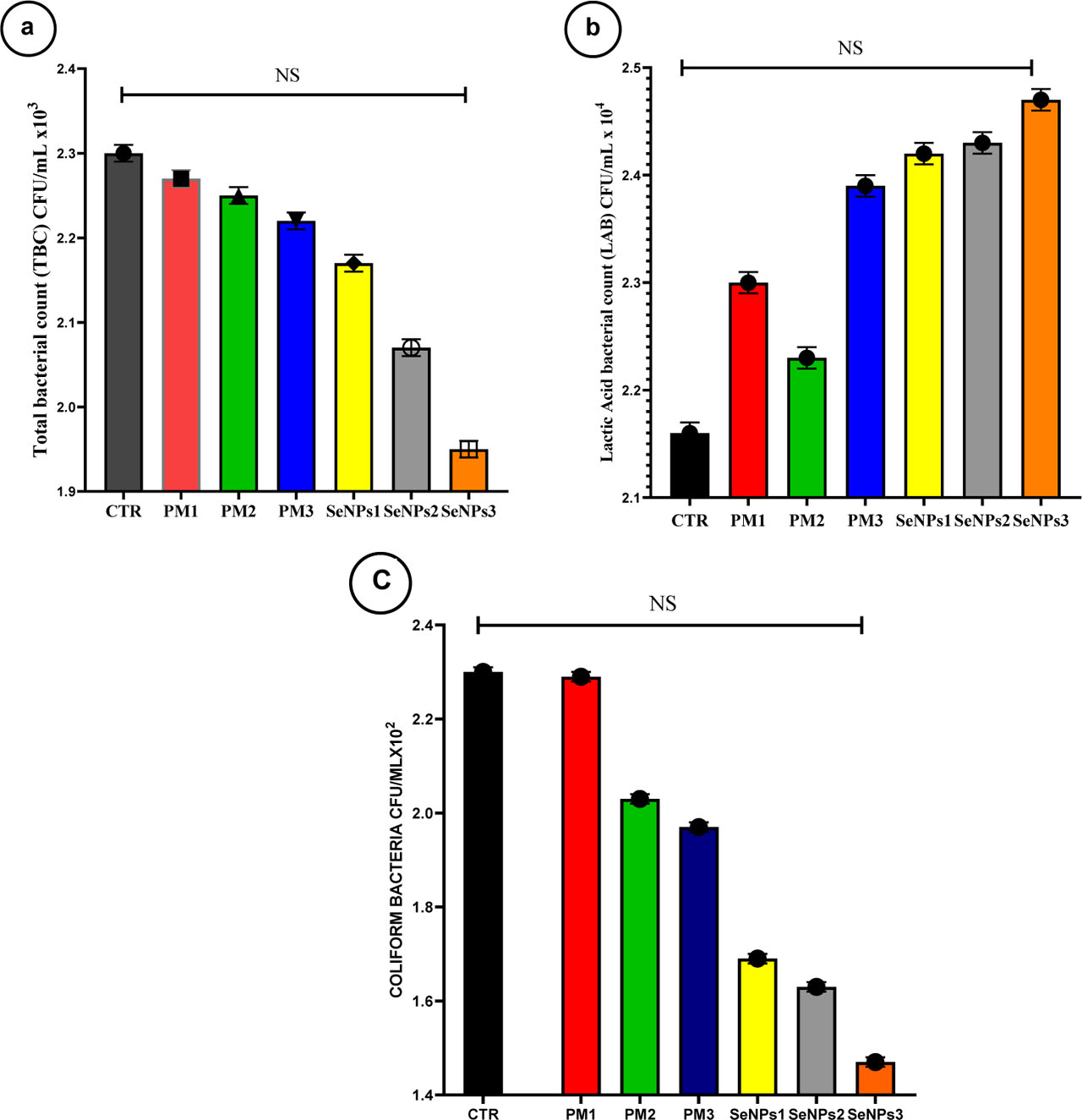
Figure 2.
Effects of enriched tilapia diets with several levels of probiotic mixture (Bacillus coagulans and Lactobacillus paraplantarum) (1, 2 and 3 mg kg−1) or bacterial synthesized selenium nanoparticles (SeNPs) (1, 2 and 3 mg kg−1) for 26 days and then exposed to sublethal dose of acrylamide (
96 h LC50 = 34.6 mg L−1) for 30 days on total and lactic acid bacterial count and coliform counts of experimental feed. The oneway ANOVA analysis was applied to identify the significant differences (P<0.05) between treated and non-treated groups. NS indicated that there were no significant differences identified between tested groups
Intestinal microbial count
The quantity of dietary probiotics or selenium incorporation level has a substantial impact on the total bacterial count and lactic acid bacterial count of the intestine (Figure 3). The total intestinal aerobic or anaerobic bacterial count (TBC) showed a linear or quadratic trend (P<0.001 or 0.05, respectively) with the levels of probiotics or selenium increasing. The lowest count of both TBC was in fish group administered high level of SeNPs (3 mg/g diet) followed by PM3 group compared to other supplemented and non-supplemented groups. Furthermore, the count of intestinal anaerobic bacterial and count of lactic acid bacteria (LAB) showed a quadratic (P<0.01) or cubic (P<0.05) trend influenced by feed supplements. Specifically, the highest values of LAB were subjected to the highest level of SeNPs. Meanwhile, the counts of coliform were not detected and non-significantly influenced by feed supplements.
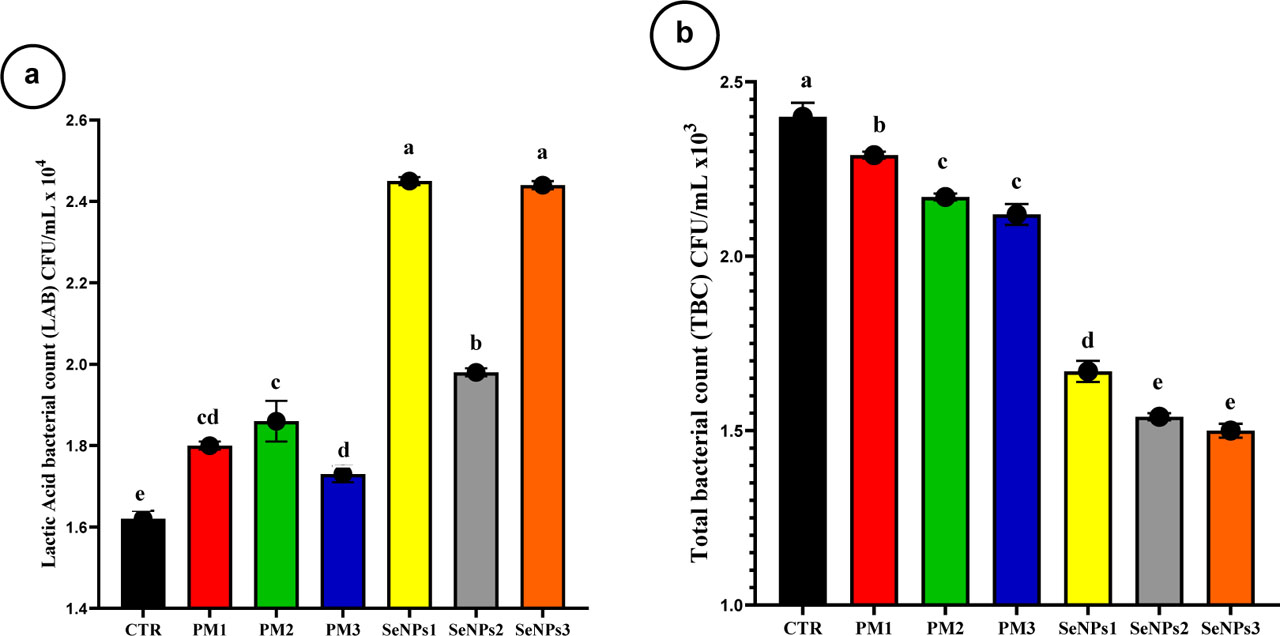
Figure 3.
Effects of enriched tilapia diets with several levels of probiotic mixture (Bacillus coagulans and Lactobacillus paraplantarum) (1, 2 and 3 mg kg−1) or bacterial synthesized selenium nanoparticles (SeNPs) (1, 2 and 3 mg kg−1) for 26 days and then exposed to sublethal dose of acrylamide (
96 h LC50 = 34.6 mg L−1) for 30 days on total and lactic acid bacterial count and coliform counts (ND; not detected) of intestinal samples. The one-way ANOVA analysis was applied to identify the significant differences (P<0.05) between treated and non-treated groups
Water microbial count
The quantity of dietary probiotics or selenium incorporation levels has a substantial impact on the water bacterial load including aerobic, anaerobic bacterial strains and LAB (Figure 4). The total bacterial count (TBC) showed a linear, quadratic or cubic (P<0.001 or 0.01) significant trend under the influence of feed additives. The lowest content of TBC was detected in water samples subjected to 2 and 3 mg SeNPs/kg diet. Whereas, lactic acid bacteria (LAB) showed a significant linear or quadratic (P<0.001 or 0.05) increments with increasing SeNPs and PM incorporation levels into fish feed. Specifically, the highest LAB values were exhibited in fish group treated with the high level of SeNPs. The counts of coliform were not detectable and showed no significant influences for any feed supplements.
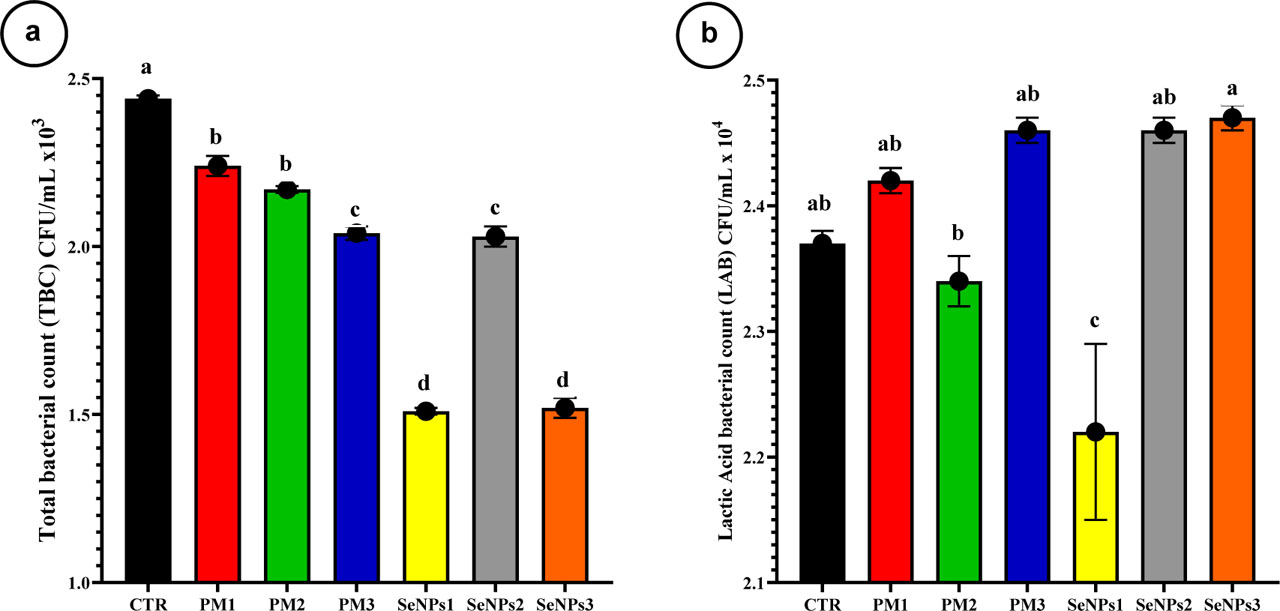
Figure 4.
Effects of enriched tilapia diets with several levels of probiotic mixture (Bacillus coagulans and Lactobacillus paraplantarum) (1, 2 and 3 mg kg−1) or bacterial synthesized selenium nanoparticles (SeNPs) (1, 2 and 3 mg kg−1) for 26 days and then exposed to sublethal dose of acrylamide (
96 h LC50 = 34.6 mg L−1) for 30 days on total and lactic acid bacterial count and coliform counts (ND; not detected) of fish rearing water samples. The one-way ANOVA analysis was applied to identify the significant differences (P<0.05) between treated and non-treated groups
Tissue histopathological examination
The histopathology examination of gill samples revealed specific findings for each experimental group (Figure 5). In the positive control group, most secondary gill lamellae were destroyed, primary gill lamellae showed dilated capillaries, and some secondary lamellae were fused with inflammatory cells. In contrast, the negative control group, as well as the fish groups that received 1 and 3 g of PM (PM1 and PM3) or 2 mg SeNPs (SeNP2), displayed normal morphological features of primary and secondary filaments. However, the fish group fed with diets containing 2 g of PM (PM2) showed a localized thickened area in both primary and secondary gill lamellae, along with infiltration of inflammatory cells. Meanwhile, the fish group supplemented with 1 mg of SeNPs (SeNP1) exhibited engorged capillaries in some secondary filaments and clusters of lymphocytes in a few secondary filaments. Additionally, invasion of inflammatory cells into certain secondary gill lamellae was observed, while the primary gill filaments appeared normal in the SeNP3 (3 mg of SeNPs) treated group.
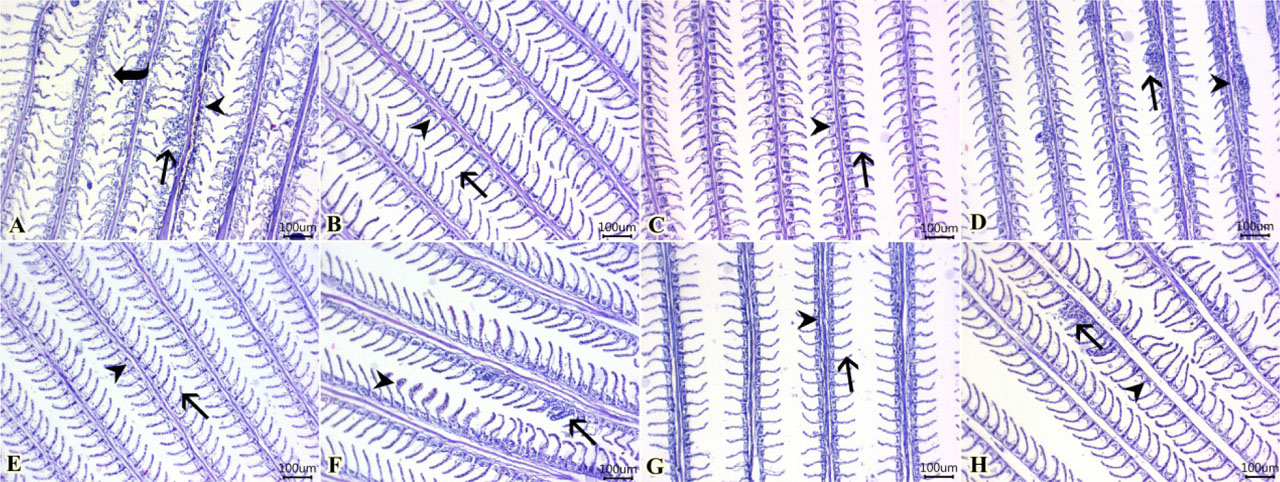
Figure 5.
Representative photomicrograph of H&E stained sections from gills (scale bar 100 μm) showing: A (positive control group): destruction of most secondary gill lamellae (curved arrow), dilated capillaries within primary gill lamellae (arrowhead) and some secondary lamellae fused with inflammatory cells (arrow). B (CTR), C (PM1), E (PM3),G (SeNP2): normal morphological striations of primary filaments (arrowheads) and secondary filament (arrow) in CTR (control–ve), PM1, PM3, SeNP2, respectively. D (PM2): focal thickened area of both primary gill lamellae (arrowhead) and secondary gill lamellae (arrow) by inflammatory cells infiltrates in PM2 treated group. F (SeNp1): some capillaries engorged at secondary filaments (arrowhead) and aggregates of lymphocytes in a few secondary filaments (arrow) in SeNp1 treated group. H (SeNP3): invasionof some secondary gill lamellae by inflammatory cells (arrow) and apparent normal primary gill filaments (arrowhead) in SeNP3 treated group
Figure 6 represents the histopathological examination of hepatopancreas samples. In the fish group reared in ACR polluted water and fed a basal diet, a focal necrotic area of the pancreatic acini with fatty cysts and congestion of vasculatures were observed. In contrast, the control fish group reared in clean water and fish groups that received probiotic mixture supplemented diets (PM1 and PM3 group) and nanoselenium-based diet (SeNP2) showed normal architectures of hepatic cells, sinusoids, and hepatoportal pancreas. The PM2 treated group displayed fatty change of pancreatic acini, congested hepatic blood vessels, and moderate areas of vacuolated hepatocytes. On the other hand, the SeNP1 treated group showed peripancreatic fatty change, congested portal vein, and apparently normal hepatic parenchyma. Finally, the SeNP3 treated group exhibited preserved structures of hepatic acini, pancreatic acini, and vascular tissue.
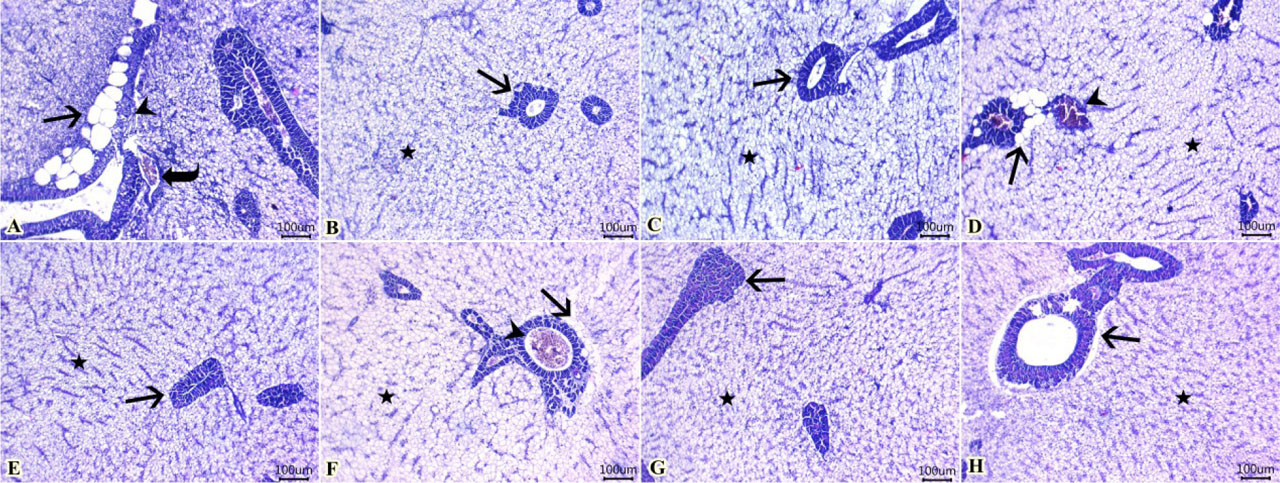
Figure 6.
Representative photomicrograph of H&E-stained sections from hepatopancreas (scale bar 100 μm) showing: A: focal necrotic area of the pancreatic acini (arrowhead) with fatty cysts (arrow) and congestion of vasculatures (curved arrow) in control+ve group. B, C, E, G: normal architectures of hepatic cells (star), sinusoids, and hepatoportal pancreas (arrow) in CTR (control–ve), PM1, PM3, SeNP2, respectively. D: fatty change of pancreatic acini (arrow), congested hepatic blood vessels (arrowhead) and moderate areas of vacuolated hepatocytes (star) in PM2 treated group. F: peripancreatic fatty change (arrow), congested portal vein (arrowhead) and apparently normal most hepatic parenchyma (star) in SeNp1 treated group. H: Preserved structures of hepatic acini (star), pancreatic acini (arrow) and vascular tissue in in SeNP3 treated group
Histopathological examination of the spleen samples from the experimental groups (Figure 7) revealed significant pathological alterations. The control group, which was exposed to polluted water, showed depleted areas of white pulp and wide areas of melanomacrophage centers. In contrast, the control group fed un-supplemented diets or other fish groups fed diets supplemented with 1 or 2 g PM (PM1 and PM2) or 2 mg SeNPs (SeNP2) displayed normal histological structures. These structures included white pulp with ellipsoidal arterioles, few melanomacrophage centers, and red pulp, respectively. However, the PM2 treated group displayed a high density of melanomacrophage centers and dilated splenic sinusoids. Additionally, the SeNP1 treated group showed widespread areas of melanomacrophage centers and alternating white and red pulps. The SeNP3 treated group exhibited a moderate area of melanomacrophage centers within white pulp areas, dilated splenic vasculatures, and aggregations of different hematopoietic series within the red pulp.
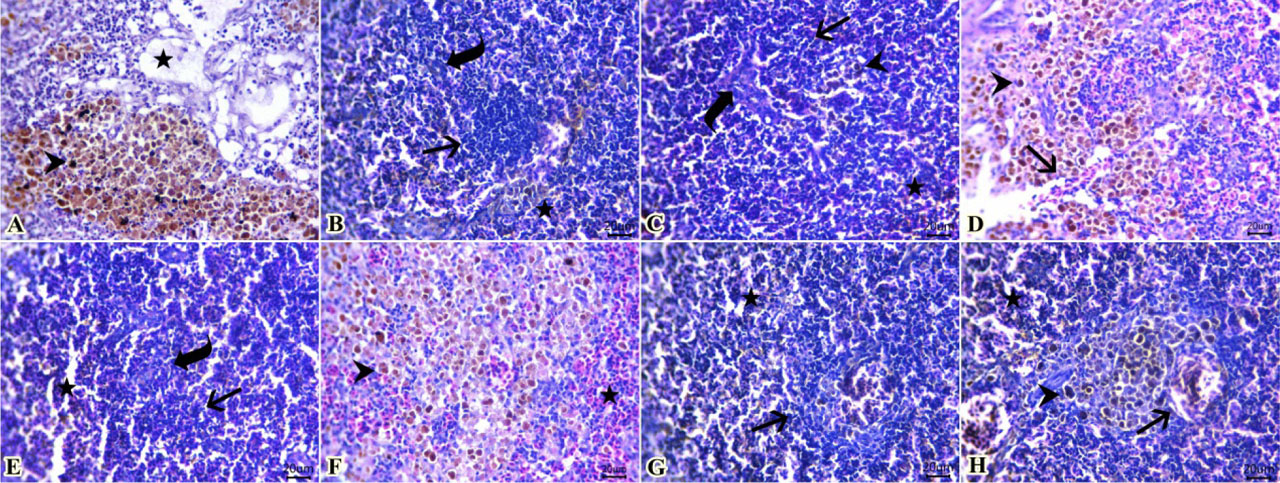
Figure 7.
Representative photomicrograph of H&E stained sections from spleen (scale bar 20 μm) showing: A: marked depleted areas of white pulp (star) with wide areas of melanomacrophages centers (arrowhead) in control+ve group. B, C, E, G: normal histological architectures of white pulps (arrow) with ellipsoids arterioles (curved arrows), few melanomacrophages centers (arrowhead) and red pulps (stars) in CTR (control–ve), PM1, PM3, SeNP2, respectively. D: high density of melanomacropahges centers (arrowhead), dilated splenic sinusoids (arrow) in PM2 treated group. F: widespread areas of melanomacropahges centers (arrowhead) and alternated white and red pulps (star) in SeNp1 treated group. H: moderate area of melanomacropahges centers within white pulp areas (arrowhead), dilated splenic vasculatures (arrow) and aggregations of different hemopiotic series within red pulp (star) in SeNP3 treated group
Discussion
The growth trial data indicated that ACR exposure had a negative influence on the growth performance of O. niloticus. However, when tilapia diets were supplemented with SeNPs (1 mg), there was a significant improvement in performance and feed efficiency parameters. Edrees et al. (2024) observed similar results in O. niloticus fish that were fed Chlorella vulgaris (10%) supplemented diets during ACR exposure. These findings align with the results reported by Kumar et al. (2018) in striped catfish (Pangasianodon hypophthalmus), where a biologically synthesized SeNPs diet (1 mg/kg) significantly enhanced performance measurements under lead (Pb) and high temperature (34°C) stresses. Additionally, Rathore et al. (2021) discovered that Nile tilapia exposed to pathogenic bacteria (A. hydrophila) and afforded feed supplemented with 1 mg SeNPs per kg diet exhibited the highest growth indices and the lowest FCR values. The observed improvement in fish growth in our study is likely attributed to the main biological active role of selenium, which promotes the synthesis of the deiodinase enzyme and indirectly stimulates the secretion of growth hormone from the pituitary gland (Çiçek and Özoğul, 2021). Also, Cotter et al. (2008) exhibited increments in the thyroid hormone activity of fish that were fed a selenium enriched diet, resulting in better growth and feed efficiency. In addition, it might be due to that the selenium acts as a cofactor for enzymes involved in the synthesis of digestive enzymes, which enhances consumed feed digestibility and nutrient release via intestinal epithelial cells, leading to an increased activation of these digestive enzymes (Shenkin, 2006). Furthermore, SeNPs have the ability to increase the intracellular protein content of the gastrointestinal epithelial cells in Carassius auratus gibelio, leading to enhanced metabolic pathways and promoting growth (Jahanbakhshi et al., 2021).
Enriching fish diets with dietary supplements can alter blood biochemical indices in aquatic fish, affecting their metabolism (Naiel et al., 2023 b). Monitoring the activities of aspartate aminotransferase (AST), ala-nine aminotransferase (ALT), uric acid (UA), and creatinine (CR) in the blood can provide insights into the fish health status, including liver or kidney damage, necrosis, and cell membrane integrity (Neamat-Allah et al., 2019; Ziaei-nejad et al., 2020). Under stressful conditions, elevated levels of AST, ALT, UA, and CR may indicate a stressful condition in fish, as demonstrated by Ziaei-nejad et al. (2020). The current results showed a significant decline in the AST, ALT, UA, and CR blood levels in the fish group exposed to ACR toxicity and given diets enriched with 1 mg of SeNPs. Several reports have exhibited a significant decline in levels of serum ALT, AST, UA and CR in several fish species such as Cyprinus carpio (Saffari et al., 2017), O. niloticus (Alaryani et al., 2024), Ctenopharyngodon idella (Yu et al., 2020) and Rutilus caspicus (Zahmatkesh et al., 2020), that were afforded diets enriched with selenium nanoparticles. These findings indicate that biological SeNPs might offer protection to the liver and renal tissue in fish. Therefore, monitoring liver and kidney function enzyme levels can be helpful in diagnosing hepatopancreatic and renal tissue damage and evaluating fish recovery.
In the same context, exposure to ACR toxicity induced remarkable alterations within hepatorenal, spleen and gills tissue structure due to the overproduction of reactive oxygen species (ROS) (van Vliet et al., 2003). These consequences were endorsed by the revealing of pathological signs in the hepatopancreatic, gill, and spleen tissues in this experiment. Exposure to ACR toxicity caused destruction within the secondary gill lamellae structure, incidence of dilated capillaries within the primary gill lamellae, and signs of inflammation in the secondary lamellae. Also, ACR toxicity resulted in a focal necrotic area of the pancreatic acini with fatty cysts and congestion of vasculature of hepatopancreatic cells. Furthermore, water contaminated with ACR led to depleted areas of white pulp and wide areas of melanomacrophage centers in spleen tissue. These pathological alterations were improved in the PM3, PM1, and SeNPs2 treated groups. The probiotic mixture or SeNPs diets given to ACR-exposed fish may be capable of regulating the biomarkers associated with gill, spleen, and hepatorenal function. This can be achieved by preserving the levels of membrane-bound enzymes and avoiding their release into the bloodstream (Xia et al., 2019; Eissa et al., 2025). Additionally, the applied probiotic mixture can synthesize amidases within the gastrointestinal tract, which could degrade ACR and reduce its harmful effects on fish organ structure (Duda-Chodak et al., 2016). Furthermore, lactic acid bacteria have been shown to diminish ACR accumulation levels in fish products by decreasing the total level of monosaccharides (Shao et al., 2022). However, more research is required to confirm whether these bacteria can degrade ACR in the fish intestine. Moreover, SeNPs' antioxidant features facilitate the ROS breakdown and the non-reactive radical species production, protecting gill, spleen and hepatorenal tissue from oxidative damage (Xia et al., 2019).
Albumin (ALB) is a protein synthesized by the liver and is the most abundant protein found in the blood (Khalafalla et al., 2011). Its primary function is to transport fatty acids that are not soluble in water throughout the bloodstream (Abd El-Kader et al., 2021). In addition to this biological role, albumin also serves as a biocarrier for various important substances such as nitric oxide (NO), fatty acids like oleic and linoleic, thyroid and steroid hormones, therapeutic drugs, and pyridoxine (Çiçek and Özoğul, 2021). Furthermore, albumin helps regulate the concentrations of the entire blood substances by binding to ROS, bilirubin, and toxic metal ions (Naiel et al., 2021). This regulation ensures that these molecules are present in appropriate amounts and prevents any potential negative effects on the body (Naiel et al., 2019). The results of the current study indicate higher total protein and albumin content in the blood when exposed to ACR toxicity, under the effects of a probiotic mixture or low levels of dietary SeNPs administration. These results are consistent with previous reports that show increased levels of ALB and GLO in O. niloticus infected with S. iniae and afforded diets containing 0.7 mg SeNPs per kg diet (Neamat-Allah et al., 2019), as well as in Caspian roach fed with SeNPs under malathion stress (Zahmatkesh et al., 2020). Meanwhile, Rathore et al. (2021) reported that ALB and GLO levels were enhanced in O. niloticus post- and pre-exposure to A. hydrophila and afforded diets containing 1 mg SeNPs per kg diet, but ALB improved and GLO levels were reduced after exposure to A. hydrophila. The effect of administering a pro-biotic mixture in the diet might be attributed to its ability to support overall body homeostasis through modulation of albumin level (Palus, 2024). Furthermore, SeNPs have been discovered to possess antioxidant properties, which can improve liver function. This, in turn, promotes the synthesis of ALB and helps prevent the excessive loss and degradation of ALB (Saffari et al., 2018).
The results of this study showed that serum triglyceride and interleukin levels were significantly suppressed in the group of fish exposed to ACR and given diets supplemented with a probiotic mixture. This indicates that the inflammatory condition caused by ACR exposure was remarkably suppressed via probiotic treatment. The current results were found to be in line with Xia et al. (2019) report, which found that treatment with L. rhamnosus modulates lipid metabolism, reducing cholesterol and triglyceride levels while increasing fatty acid levels in zebrafish. The probiotic mixture in the supplemented diets can modulate this inflammatory condition by utilizing bacterial cell surface components commonly found in gram-positive and/or negative bacteria, which induce cytokine synthesis. Specifically, cytokines are soluble messenger molecules of the immune system that interact with cells and receptors to generate mucosal antibody and cell-mediated immune responses (Mahapatro et al., 2021). Previous reports have shown that various strains of probiotic bacteria, such as L. bulgaricus, L. acidophilus, and L. rhamnosus, induce the generation of interleukins (IL-1, IL-2, IL-5, IL-6) (Rangavajhyala et al., 1997; Marin et al., 1998), interferon (Kitazawa et al., 1992), and tumor necrosis factor (TNF2-α) (Miettinen et al., 1996). These findings suggest that a dietary probiotic mixture might play a vital role in controlling the cellular redox state by promoting lipid metabolism and supporting proinflammatory cytokine activity.
This study observed that exposure to ACR resulted in antioxidant dysfunction, as indicated by decreased levels of serum SOD, GSH, and TAC, and increased levels of MDA. This redox state can be explained by long-term exposure to ACR-contaminated water, which leads to excessive production of ROS that overwhelms the anti-oxidant system's capacity (Albalawi et al., 2018). Consequently, there is a significant decline in the antioxidant indices (SOD, GSH, and TAC). Furthermore, ACR leads to damage to the cell membrane and disruption of cellular redox equilibrium through the high excessive production of cytochrome enzymes, which are a significant ROS source (Huang et al., 2018 a). The alteration of antioxidant indices and reduction of MDA activities observed in the fish group treated with a probiotic mixture (3 g) or SeNPs (3 mg) enriched diets might be due to the strong antioxidant features of the applied probiotic strains and biological nanoselenium (Rathore et al., 2021; Iorizzo et al., 2022).
The current results demonstrated that exposure to ACR toxicity caused immune dysfunction in Nile tilapia. This was characterized by lowered levels of LYZ, AChE, and complement 3, as well as increased production of immunoglobulins IgA and IgM. The immunosuppression induced by ACR exposure could be attributed to the higher production of reactive oxygen species and altered immune component functions (El-Houseiny et al., 2023). Interestingly, the negative consequence of ACR exposure on immune function were mitigated in the PM3 group and followed by the SeNPs1 treated group. This suggests that PM or SeNPs play a significant role in enhancing the immunological response. Previous research by Nikoskelainen et al. (2001) has shown that dietary supplementation with L. rhamnosus ATCC 53103 (GG) strain can stimulate immune response and improve resistance against furunculosis in rainbow trout. It is believed that probiotics generate regulatory signals that stimulate the host's immune system, providing enhanced protection against pathogens (Eissa et al., 2024 b). Additionally, nano-Se has been found to reduce the impact of stress in fish. This is evidenced by the maintenance of a normal heterophil and lymphocyte ratio, as well as an enhanced immune response in Sparus auratus (AbdEl-Kader et al., 2023). Several studies have shown that SeNPs stimulates lysozyme and phagocytic activities in different fish species, including O. niloticus (Abu-Elala et al., 2021; Rathore et al., 2021), and zebra fish (Xia et al., 2019). In addition, SeNPs have been shown to improve tolerance against low salinity stress and enhance innate immune responses such as mucus lysozyme activity, peroxidase activity, and the alternative complement pathway in Pagrus major (Dawood et al., 2019). These findings strongly support the well-established role of Se in immune response and stress tolerance in fish (Sarkar et al., 2015).
Generally, the Bio-SeNPs concentrations inhibited both the total and lactic acid bacterial count in the intestine and water samples that were tested in our study. This could be due to the fact that SeNPs have the highest antibacterial efficiency when their size is reduced (Salem et al., 2022). For example, Huang et al. (2019) reported that SeNPs sized 81 nm were highly efficient towards S. aureus infection compared to selenium nano-particles measuring 124 nm. The potential antimicrobial effects of SeNPs can occur by damaging the bacterial outer membrane, which affects its functionality, selective permeability, and integrity (Zahran et al., 2024). Another possible mechanism is by altering the replication of deoxyribonucleic acid within the bacterial membrane, the pathways of protein synthesis, and the metabolic cycle of molecules (Mosallam et al., 2018). Unlike positively charged antimicrobial proteins, nanoparticles have negative charges on their outer surfaces (Dawood, 2021). These positive charges in the proteins are what primarily drive their antimicrobial properties, as they can disrupt the outer membranes of bacteria via interacting with the chemical electrostatic negative charges that existed on the outer membranes (Ghazi et al., 2021).
Conclusion
Preventing water pollution is crucial for sustainable aquaculture production, which requires the use of safe and economic alternative strategies. The current results demonstrate that ACR chronic exposure has detrimental effects on the general health status of O. niloticus. These influences include growth suppression, alterations in antioxidant levels, damage to the gills and liver, and decline of immune responses. However, the negative consequences of chronic ACR exposure can be mitigated by dietary supplementation with PM (3 g) or SeNPs (1 mg), which have strong antioxidant and immune-boosting properties. These findings enhance our understanding of how ACR threatens farmed fish. Thus, further reports are essential to investigate the possible advantages of probiotic mixtures and biological selenium nanoparticles applications within fish feed. Additionally, long-term exposure to ACR and its effects on the general health status of other fish species should be studied.
Notes
[46] Contributed by Author contribution
All authors equally contribute to the implementation, outputs, and conceptualization, of the experiment described in this research.
[47] Data availability
The data presented in this study can be obtained upon reasonable request from the corresponding author.
[48] Consent for publication
All the authors have given their approval for the publication of this manuscript.
[50] Animal ethical approval statements
The in vivo trials involving fish were performed in agreement with the guidelines set forth by the IACUC, Zagazig University, Egypt. These protocols were constructed to adhere to ARRIVAL guidelines. The study received approval under the number ZU-IACUC/2/F/36/2024.