
Extensive production is associated with high-quality raw materials, additives, health-promoting properties, safety as well as with animal welfare and sustainable development of agricultural production. The effect of development of healthy food policies, the popularization of cultural heritage and support for local producers, is an increased interest in raw materials from native breeds. Consumers are looking for traditional meat products that are attractive in terms of appearance and sensory value, minimally processed, free of chemical additives (clean label) and produced while maintaining animal welfare (Brewer and Novakofski, 2008).
Research on the technological and culinary suitability of meat from indigenous cattle breeds such as Polish Red (PR) and White-Backed (WB) fills a research gap and allows a deeper understanding of the properties of raw materials from animals withdrawn from industrial production, especially as they provide meat with high nutritional and sensory value. Therefore, it is worth considering using the meat of native cattle breeds with an intense taste for production of dry fermented sausages, particularly because it is a technology without heat treatment. Because PR and WB meat has not yet been thoroughly examined in terms of catabolic changes affecting the quality of food products, it is an excellent material for examining the profile of volatile compounds. The addition of black garlic enriches the meat production with a sweet flavour accentuated by a slight hint of liquorice root and increases the attractiveness in terms of health-promoting properties. The popularity of black garlic, as an ingredient very often used in the sublime cuisine so recently appreciated in the West Europe and USA, has increased in recent years. However, black garlic is a product that has been known for years, especially in Japan and Korea. Knowledgeable health-promoting properties of black garlic are due to its rich content of natural antioxidants (Bae et al., 2014; Jeong et al., 2016; Kimura et al., 2016; Koutsidis et al., 2008).
Meat fermentation technology is therefore multidirectional. The influence of various factors on the profile of volatile compounds was shown in different studies. The composition of volatile compounds depends on the species of animal (Calkins and Hodgen, 2007), the feeding (Scollan et al., 2006), the maturation of the meat (Yancey et al., 2006), the type of carcass from which the product is manufactured (Lu et al., 2008) and the weight at slaughter (Insausti et al., 2005). However, one of the most influential factors on volatiles composition is the degree of maturity (Kosowska et al., 2018; Merlo et al., 2021), which affects the sensory quality and consumer acceptance of the product. The process of post-slaughter meat maturation, including the activity of post-rigor enzymes, depends on the genotype and thus on breed characteristics. Aldehydes, ketones and alcohols, secondary products of oxidation, are the main components affecting the aroma of ripened dry fermented meats (Berardo et al., 2017; Koutsidis et al., 2008; Lebert et al., 2007; Ravyts et al., 2012). The salt concentration of 3–4%, pH> 4.5< 6.0 as well as the concentration of hydrogen peroxide increasing because of lactic acid bacteria activity, can boost oxidation and impart flavour (Latorre-Moratalla et al., 2008; Lebert et al., 2007; Martínez-Arellano et al., 2016). Longerchain fatty acids (C14–C18) are precursors of selected volatile compounds (Martínez-Arellano et al., 2016).
The aim of the study was to characterise the factors affecting the volatile compounds profile of dry-cured salami-type sausages, made from meat of Polish Red (PR) and White-Backed (WB) cattle breeds with the addition of white and black garlic. The study considers lipolysis and oxidation processes as the fundamental ones responsible for the formation of volatile compounds.
Material and methods
Manufacturing
The spontaneously fermented salami-type dry-cured sausages were produced using the meat of Polish Red (PR) and White-Backed (WB) native cattle breeds with the addition of white (w) and fermented black (b) garlic in the local meat plant (Table 1). The entire sausage production process was carried out in one of the Lesser Poland Voivodeship (Małopolska) meat-processing plants, in ripening chambers, based on procedures for the selection of meat and fat raw materials, spices and additives and on technology appropriate to this type of product.
Table 1.
Technology of dry fermented sausages
| Basic raw material (per 100 kg) | ||
|---|---|---|
| Meat and fat raw materials | Quantities | Grinding |
| Polish Red or White-Backed cattle breeds beef class I | 70 kg | 20±5 mm |
| Pork bacon without bones | 30 kg | 20±5 mm |
| Spices, additives (per 100 kg of basic raw material) | ||
| Curing salt | 2.4 kg | |
| Ground black pepper, sugar, sweet red pepper | each 0.3 kg | |
| White or black fermented garlic | 0.3 kg | |
| Auxiliary materials (per 100 kg of basic raw material) | ||
| Vapour-permeable casing fibrous 55 mm | 70 m | |
| Summary | 103.6 kg | pre-ripening mass |
| 73 kg | mass of product | |
| 1.54% | machine losses | |
| 28.43% | losses due to drying | |
The sausages prepared for retail sale were controlled for quality in accordance with food safety requirements. The products met the legal microbiological criteria for foodstuffs in accordance with Commission Regulation (EC) No. 2073/2005, as amended. Ready-to-eat products have been accepted for market ing. Four separate batches (PRw, PRb, WBw, WBb) were used for 3 productions. Three, 1 kg sausage samples were taken from each batch and analysed as replications (3 productions × 3 (1 kg) replications for each batch). The quantitative composition of raw materials and additives in each batch was unchanged, regardless of the type of meat or garlic. The meat and bacon were minced into pieces Ø 20 mm in size, which were cured for 48 hours (4–6°C) with 24 g/kg of curing salt (min. 98.4% NaCl, 0.6% NaNO2, Anna, Poland). After curing was completed, the meat and bacon were minced once more, this time into pieces Ø 5 mm, mixed with spices (sugar 3 g/kg, pepper 3 g/kg, sweet red pepper 3 g/kg, white or black garlic 3 g/kg) and filled into casings (Handtmann VF 50, Germany; Fabios, Poland). The proportion of beef meat to pork was 70:30%. During the first 2 days, dry fermented sausages ripened at 18°C and 90% RH. Thereafter, the temperature and humidity of the air in the climate chamber were reduced to 16°C and 75% RH.
Analysis
Fatty acids profile and TBA index
Fatty acids were extracted from samples with a chloroform-methanol (2:1) mixture (Association of Official Analytical Chemistry, 1995). The Trace GC Ultra (Thermo Electron Corporation, Italy) with a Supelcowax 10 column (Sigma-Aldrich, USA) 30 m × 0.25 mm × 0.25 μm, was used. The analysis was carried out under the following conditions: helium carrier gas 1 mL min−1 (split flow 10 mL min−1), injector temperature 220°C, detector temperature 250°C, temperature of the furnace started at 160°C (first 3 min), increased by 3°C min−1 to 210°C and maintained for 25 min. To 10 mg of fat obtained by the Soxhlet method, 0.5 mL of 0.5N KOH in methanol was added and heated at 85°C. Then 1 mL of 12% BF3 in methanol was added and heated again at 85°C. After cooling to room temperature, 1 mL of hexane and 5 mL of saturated NaCl solution were added. 1 μL of hexane phase was injected onto the chromatograph. Individual fatty acids methyl esters were identified by comparison to the standard mixture (Supelco 37 Component FAME Mix, Sigma-Aldrich, USA). Thiobarbituric acid reactive substance (TBARS) assay was used to estimate lipid peroxidation and was determined via the spectrophotometric method using the Helios γ spectrophotometer (Thermo Electron Corporation, USA), expressed as mg of malondialdehyde (MDA) in kg of meat. Malondialdehyde is one of several end products formed through the decomposition of lipid peroxidation products. Furthermore, 10 g of the sample were homogenised with 34.25 mL of cold 4% perchloric acid and 0.75 mL of an alcoholic butylated hydroxytoluene solution (4,000 rpm × g for 2 min in a precooled centrifuge, MPW Med. Instruments, Poland). The 5 mL of the filtrate were combined with 5 mL of 0.02 M thiobarbituric acid (TBA) and heated for 1 hour. Absorbance was read at 530 nm. The blank was 5 mL of 4% perchloric acid solution and 5 mL of TBA (Rosmini et al., 1996). Atherogenic index (AI), thrombogenic index (TI) and hypocholesterolemic/hypercholesterolemic index (h/H) were calculated as follows:
Volatile compounds
For volatile compounds analysis, frozen and previously cut 5 g sample was blended at a low temperature with liquid nitrogen, placed into a solid-phase microextraction (SPME) vial (20 mL), tightly capped using a crimp cap with PTFE/silicone septum, and analysed by headspace solid-phase microextraction gas chromatography-mass spectrometry (HS-SPME GC-MS) using GCMS-QP 2010 Plus (Shimadzu, Germany) with the AOC-5000 autosampler Combi Pal System (Shimadzu, Germany) and a 50/30 μm DVB/CAR/PDMS fibre (Supelco, Poland), and Zebron ZB-5MSi then ZB-Wax columns 30 m × 0.25 mm × 0.25 μm (Phenomenex, Poland). The analysis was conducted at helium flow (He purity: 99.999; Linde Gaz Polska, Poland) 1 mL min−1, oven temperature 37°C (10 min), then increased to 132°C (4°C/min) and 240°C (8°C/min). The sample was equilibrated at 30°C for 30 min. The fibre exposition time was 15 min at 50°C, volatile organic compounds (VOC) were desorbed in splitless port at 240°C for 2 min. The quadrupole mass spectrometer (70 eV, 250°C) was operated in full scan mode in a range 35–450 m/z (Wojtycza et al., 2022). The identification was conducted using mass spectra libraries: NIST08, NIST08s, FF NSC1.3 and retention indices (RI), based on analyses of n-paraffins (Supelco, Poland), compared to values from the National Institute of Standards and Technology (NIST, USA). The autosampler rack was chilled to around +3°C. To mitigate potential disruptions caused by analytical trends, sample vials were loaded onto the rack in a staggered sequence. This method was a pivotal phase in the overall analysis procedure (Calik et al., 2017; Gąsior et al., 2021). The agreed content of a volatile compound was estimated by using methyl caproate (Merck Group, Poznań, Poland) as a standard added to the sample matrix. This technique was used in other studies (Cheng et al., 2017; Bueno et al., 2014). It is however noteworthy that the results obtained are not derived from the conventional quantification methods discussed by Jeleń and Wieczorek (2023). Instead, they present consensual values expressed in equivalent units of ng/g of standard added in the matrix sample, following the formula: methyl caproate content in ng/g × (area of the volatile compound/area of methyl caproate).
Chemometrics
The possibility of variation in ripening time (0, 2, 4, 6 weeks, n = 8 per group), breed of cattle (Polish Red/White-Backed, n = 16 per group) and garlic variety (white/black garlic, n = 16 per group) was evaluated based on data on fatty acids and volatile compounds. The most differentiating variables from the results of fatty acids and volatile compounds were identified for further multivariable statistics. These selected variables were used for principal component analysis (PCA), where the number of variables was reduced to three principal components using Cattell's scree test to prevent overfitting in the classification model. Thereafter, linear discriminant analysis (LDA) was conducted, and classification accuracy was calculated. Overall PCA-LDA analysis was performed using Statgraphics Centurion XVI software, equipped with the multivariate statistics package (Statpoint Technologies, Inc.; Gambit, Kraków, Poland).
Sensory properties
Sensory evaluation was conducted under appropriate conditions with 20 participants who met the conditions described in ISO 8589. The judges, aged between 25 and 50 years, were recruited from the staff of the Faculty of Food Technology at the University of Agriculture in Krakow. All these judges had already participated in similar descriptive analysis studies. The sausages were evaluated using a descriptive test with a 5-point scale, with the following quality levels: 4.51–5.00 (very good); 3.51–4.50 (good); 2.51–3.50 (adequate); 1.00–2.50 (inadequate). The distinguishing features evaluated were assigned the following coefficients: 0.06 (overall appearance); 0.06 (colour); 0.06 (structure); 0.16 (odour – intensity); 0.16 (odour – desirability); 0.16 (tenderness); 0.16 (juiciness); 0.06 (saltiness); 0.06 (flavour – intensity) and 0.06 (flavour – desirability). Because aroma, tenderness and juiciness were features that were significantly dependent on the quality of fats, higher coefficients were assigned to these sensory attributes.
Statistical analysis
The statistical analysis was performed using the Statistica software for Windows, version 13.3 (TIBCO Inc., USA). The effect of the ripening time on the chemical properties was tested using two-factors analysis of variance (ripening time: 0, 2, 4, 6 weeks; type of product/breed: PRw, PRb, WBw, WBb) (ANOVA with fixed and orthogonal factors). The Duncan post-hoc tests were used to compare the means at P<0.05 as well as the Pearson's correlation coefficient (r) was used to test the statistical relationship between two continuous variables. The effect of the interactions: ripening time (T); product/breed (B), ripening time × breed (T × B), is marked in the tables in superscript.
Results
Fatty acids profile and TBA index
Palmitic (C16:0) and stearic (C18:0) acids showed the highest content in meat products from the PR and WB breeds, non-significantly lower in WB sausages (Table 2). Regardless of breed, the content of both acids decreased during 6-week ripening compared to their initial content (P<0.05). Similarly, the content of long-chain heptadecanoic (C17:0) and arachidic (C20:0) acids decreased. The content of C10:0–C15:0 acids increased (P<0.05), which could be related to water loss during ripening.
Table 2.
Influence of breed and ripening time on profile of saturated fatty acids of dry fermented sausages made from meat of native cattle breeds
| SFA | Breed (B) | Ripening time (T) | Garlic (G) | Interactions | ||||||||
|---|---|---|---|---|---|---|---|---|---|---|---|---|
| (%) | PR | WB | 0 | 2 | 4 | 6 | w | b | B×T | B×G | G×T | B×T×G |
| 10:0 | 0.068 | 0.067 | 0.059 a | 0.066 b | 0.072 c | 0.073 c | 0.067 | 0.069 | ** | * | ||
| 12:0 | 0.068 | 0.069 | 0.063 a | 0.069 b | 0.070 b | 0.073 b | 0.067 a | 0.070 b | ** | |||
| 14:0 | 1.519 | 1.522 | 1.448 a | 1.494 a | 1.551 b | 1.590 b | 1.507 | 1.534 | * | |||
| 15:0 | 0.059 a | 0.052 b | 0.049 a | 0.048 a | 0.057 b | 0.068 c | 0.054 | 0.057 | ** | ** | * | * |
| 16:0 | 29.848 | 29.444 | 30.812 a | 29.607 b | 29.149 b | 29.018 b | 30.181a | 29.112 b | ** | ** | * | |
| 17:0 | 0.293 a | 0.282 b | 0.319 a | 0.298 b | 0.279 c | 0.254 d | 0.291 a | 0.284 b | ** | * | * | |
| 18:0 | 15.973 | 15.707 | 17.144 a | 16.029 b | 15.419 c | 14.768 d | 16.138 a | 15.542 b | ** | ** | ** | ** |
| 20:0 | 0.162 a | 0.156 b | 0.171 a | 0.159 b | 0.153 c | 0.153 c | 0.161 | 0.158 | ** | |||
The interactions shown in Table 2 confirm the significant effect of breed and ripening time on the quantitative composition of C15:0–C20:0 acids (P<0.01). The interaction of breed, time and garlic also affected SFA content (P<0.05, P<0.01) except for lauric (C:12), myristic (C:14) and arachidic (C:20) acids.
WB sausages were characterised by significantly higher content of eicosenoic (C20:1 n-11) acid from the MUFA group (Table 3) as well as linoleic (LA, C18:2 n-6) and eicosatetraenoic (ETA, C20:4 n-3) acids from the PUFA group (Table 4). In comparison to sausages made from PR meat, they were found to contain less of γ-linolenic (GLA, C18:3 n-6) and eicosapentaenoic (EPA, C20:5 n-3) acids. The content of most MUFA and PUFA increased during ripening (P<0.05). Except for DGLA, the share of MUFA and PUFA, which significantly differentiated PR and WB sausages, was higher in sausages produced with the addition of black garlic.
Table 3.
Influence of breed and ripening time on profile of monounsaturated fatty acids of dry fermented sausages made from meat of native cattle breeds
| MUFA | Breed (B) | Ripening time (T) | Garlic (G) | Interactions | ||||||||
|---|---|---|---|---|---|---|---|---|---|---|---|---|
| (%) | PR | WB | 0 | 2 | 4 | 6 | w | b | B×T | B×G | G×T | B×T×G |
| 14:1n-5 | 0.020 | 0.020 | 0.014 a | 0.016 ab | 0.020 b | 0.031 c | 0.018 a | 0.022 b | ** | ** | ** | |
| 16:1n-7 | 2.522 | 2.532 | 2.347 a | 2.458 b | 2.629 c | 2.674 c | 2.493 a | 2.561 b | * | |||
| 18:1n-9 | 40.619 | 40.950 | 38.761 a | 40.697 b | 41.103 b | 42.579 c | 40.113 a | 41.457 b | ** | ** | ** | ** |
| 18:1n-7 | 2.256 a | 2.175 b | 2.089 a | 2.154 a | 2.277 b | 2.342 b | 2.197 | 2.235 | * | ** | ||
| 20:1n-11 | 0.715 a | 0.748 b | 0.681 a | 0.731 b | 0.754 b | 0.757 b | 0.722 a | 0.740 b | ** | * | ||
[i] Explanations as in Table 2.
Table 4.
Influence of breed and ripening time on profile of polyunsaturated fatty acids of dry fermented sausages made from meat of native cattle breeds
| PUFA (%) | Breed (B) | Ripening time (T) | Garlic (G) | Interactions | ||||||||
|---|---|---|---|---|---|---|---|---|---|---|---|---|
| PR | WB | 0 | 2 | 4 | 6 | w | b | B×T | B×G | G×T | B×T×G | |
| 18:2n-6 (LA) | 4.146 a | 4.354 b | 4.106 a | 4.229 ab | 4.426 b | 4.239 ab | 4.096 a | 4.404 b | ** | ** | ** | * |
| 18:3n-6 (GLA) | 0.034 a | 0.031 b | 0.038 a | 0.032 b | 0.030 b | 0.031 b | 0.033 | 0.032 | * | ** | * | * |
| 18:3n-3 (ALA) | 0.214 | 0.218 | 0.217 | 0.218 | 0.217 | 0.212 | 0.210 a | 0.222 b | ** | ** | ** | |
| 18:2 9-cis11-trans (CLA) | 0.046 | 0.044 | 0.041 a | 0.042 a | 0.045 a | 0.051 b | 0.043 a | 0.047 b | ||||
| 20:3n-6 (DGLA) | 0.026 | 0.034 | 0.024 a | 0.027 a | 0.028 a | 0.042 b | 0.032 a | 0.029 b | ** | ** | ** | ** |
| 20:4 n-6 (AA) | 0.084 | 0.092 | 0.078 a | 0.088 ab | 0.090 ab | 0.096 b | 0.082 a | 0.095 b | ** | ** | * | |
| 20:4n-3 (ETA) | 0.037 a | 0.042 b | 0.036 a | 0.039 a | 0.044 b | 0.039 a | 0.037 a | 0.041 b | ||||
| 20:5n-3 (EPA) | 0.014 a | 0.011 b | 0.013 a | 0.013 ab | 0.014 a | 0.011 b | 0.013 | 0.012 | * | * | ||
| 22:6n-3 (DHA) | 0.010 | 0.011 | 0.009 a | 0.009 a | 0.011 ab | 0.013 b | 0.010 | 0.011 | * | |||
[i] Explanations as in Table 2.
The content of MUFA and PUFA depended primarily on the ripening time and the interactions of breed with garlic and ripening time (P<0.05, P<0.01) (Tables 3 and 4). Interactions affected the content of myristoleic (C14:1n-5), oleic (C18:1n-9), alpha-linolenic (C18:3n-3, ALA) and dihomo-γ-linolenic (C20:3 n-6, DGLA) acids (P<0.01) as well as eicosenoic (C20:1n-11), linoleic (C18:2n-6, LA), gamma-linolenic (C18:3n-6, GLA) and arachidonic (C20:4 n-6, AA). No interactions were observed for the conjugated linoleic (CLA) and eicosatetraenoic (ETA) acids.
Sausages produced with the addition of black garlic were characterised by a higher sum of n-3 and n-6 acids and lower UFA/SFA, PUFA/SFA and AI values (Table 5). WB sausages had higher n-6/n-3 ratio and lower UFA/SFA, PUFA/SFA, AI and TI values compared to PR sausages, although these differences were not significant.
Table 5.
Lipid quality indicators and TBA index of 6-week ripened dry fermented sausages
| Σ n-3 | Σ n-6 | n-6/n-3 | UFA/SFA | PUFA/SFA | AI | TI | h/H | TBARS (mg MDA/kg) | |
|---|---|---|---|---|---|---|---|---|---|
| PRw | 0.32 | 4.27 | 13.34 | 0.89 | 9.94 | 0.97 | 1.71 | 1.51 | 0.341 a |
| PRb | 0.37 | 4.60 | 12.43 | 0.88 | 9.26 | 0.96 | 1.68 | 1.53 | 0.338 a |
| WBw | 0.31 | 4.43 | 14.29 | 0.85 | 9.21 | 0.93 | 1.61 | 1.56 | 0.369 b |
| WBb | 0.32 | 4.72 | 14.75 | 0.83 | 8.61 | 0.90 | 1.71 | 1.60 | 0.334 a |
| WBb | 0.32 | 4.72 | 14.75 | 0.83 | 8.61 | 0.90 | 1.71 | 1.60 | 0.334 a |
[i] Explanatory notes: PRw/b – dry fermented sausages from the meat of the Polish Red cattle breed with the addition of white/black garlic; WBw/b – dry fermented sausages from the meat of the White-Backed cattle breed with the addition of white/black garlic; AI – atherogenic index; TI – thrombogenic index; h/H – hypocholesterolemic/hypercholesterolemic index; TBA – thiobarbituric acid index; MDA – malondialdehyde; a, b – different letters in the columns indicate statistically significant differences between the means at P<0.05.
The types of sausages did not differ significantly in terms of the TBARS, except for WBw sausage. There was no significant interaction between the ripening time and the type of product, which would affect the advancement of UFAs oxidation processes. Probably due to the antioxidant activity of the chemical components of spices and acidic microorganisms, the TBARS in sausages was finally determined at a low level (0.33 and 0.37 mg/kg), although the most stable fatty acid profile could be indicated for sausages with the addition of black garlic.
Volatile compounds
One hundred substances (acids, aldehydes, ketones, alcohols, nitrogen-containing compounds, esters, terpenes, sulphur compounds of organic origin) were identified. Twenty of these, significantly changing their amount during ripening (P<0.05, P<0.01) were presented in Tables 6 and 7. The compounds that most differentiated sausages from meat of PR and WB breeds (P<0.05) were isobutyric acid, 2,3-octanedione, 2,3-dimethyl-2-cyclopenten-1-one, ethanol, 4-hydroxy-4-methyl-2-pentanone (diacetone), ethyl lactate and ethyl isovalerate, formed by butyric acid fermentation, yeast fermentation, fat oxidation, acetone decomposition, esterification of ethanol and lactic acid. The volatile compounds that most differentiated the white and black garlic sausages were isobutyric acid, 2-nonenal, 3,5-octadien-2-one, 2,3-dimethyl-2-cyclopenten-1-one, ethyl lactate, methyl thiirane and dimethyl sulfone. Most of these compounds resulted from fat oxidation or were due to differences between the two types of garlic. The content of several compounds of different origins (isobutyric acid, 1-hydroxy-2-propanone, α-terpineol, methyl thiirane) decreased during ripening due to breed, garlic, time and the interaction of all these variables (P<0.05, P<0.01). Most of the other selected aldehydes, ketones, acids, and alcohols increased as evidence of the further catabolic transformations they underwent over 6 weeks of ripening. Medium to high correlation of ripening time were found with 2,3-dimethyl-2-cyclopenten-1-one (r = 0.52) and ethyl lactate (r = 0.64).
Table 6.
Influence of breed and ripening time on profile of acids, aldehydes, ketones, alcohols and nitrogen-containing compounds of dry fermented sausages made from meat of native cattle breeds (odour impression according to Flavornet; The Good Scents Company; Resconi et al., 2010; Dunkel et al., 2014)
| Volatile compound | Breed (B) | Ripening time in weeks (T) | Garlic (G) | Interactions | Probable origin (scent) | ||||||||
|---|---|---|---|---|---|---|---|---|---|---|---|---|---|
| (consensual ng/g based on methyl caproate added to the sample) | PR | WB | 0 | 2 | 4 | 6 | w | b | B×T | B×G | G×T | B×T×G | |
| Isobutyric acid | 28.49 a | 23.74 b | 62.47 a | 61.35 a | 67.44 b | 13.19 c | 27.44 a | 24.78 b | ** | ** | ** | ** | Butyric acid fermentation |
| Benzeneacetaldehyde | 22.84 | 22.05 | 6.05 a | 36.48 b | 27.71 c | 19.54 c | 22.31 | 22.58 | Ethanol derivative (almond) | ||||
| 2-decenal | 11.56 | 10.14 | 8.56 a | 11.27 b | 11.60 b | 11.95 b | 11.67 | 10.02 | * | * | * | Ethanol derivative (phenol) | |
| Acetaldehyde | 19.87 | 16.96 | 11.62 a | 20.69 bc | 24.17 b | 17.16 c | 17.35 | 19.47 | Ethanol derivative (apple) | ||||
| 2-nonenal | 35.29 | 30.52 | 32.34 | 32.58 | 32.55 | 34.14 | 37.12 a | 28.68 b | ** | Rancidity (fat, grass, elderly) | |||
| 2,3-octanedione | 71.00 a | 46.86 b | 62.38 | 47.54 | 63.30 | 62.50 | 52.82 | 65.04 | * | ** | ** | Yeast fermentation (butter) | |
| 3,5-octadien-2-one | 15.69 | 15.12 | 5.42 a | 13.35 b | 31.09 c | 11.74 b | 12.91 a | 17.89 b | * | ** | ** | Rancidity (fruits, grass) | |
| 1-hydroxy-2-propanone | 1.13 | 0.86 | 0.912 a | 0.43 b | 0.46 b | 2.16 b | 0.88 | 1.10 | ** | ** | Rancidity (roasted caramel) | ||
| 1-octen-3-one | 5.82 | 4.83 | 3.08 a | 5.08 b | 7.21 c | 5.92 bc | 5.65 | 5.00 | * | ** | Rancidity, spices (mushrooms) | ||
| 2,3-dimethyl-2-cyclopenten-1-one | 6.44 a | 4.85 b | 1.50 a | 7.18 b | 5.95 b | 7.95 b | 4.77 a | 6.53 b | ** | Rancidity (caramelised sugar) | |||
| Ethanol | 427.79 a | 341.67 b | 228.16 a | 375.56 b | 549.54 c | 385.65 b | 354.84 | 414.62 | ** | * | Yeast fermentation (alcohol) | ||
| 4-hydroxy-4-methyl-2-pentanone | 38.66 a | 22.13 b | 14.41 a | 59.50 b | 35.45 c | 12.23 a | 25.54 | 35.25 | Acetone derivative (mild mint) | ||||
| 2-methylpyridine | 1.67 | 1.43 | 1.07 a | 1.71 b | 1.17 a | 2.25 c | 1.48 | 1.61 | * | ** | ** | Pyridine derivative (tart hazelnut) | |
Table 7.
Influence of breed and ripening time on profile of esters, terpenes, sulphur compounds and hydrocarbons of dry fermented sausages made from meat of native cattle breeds (odour impression according to Flavornet; The Good Scents Company; Resconi et al., 2010; Dunkel et al., 2014)
| Volatile compound | Breed (B) | Ripening time in weeks (T) | Garlic (G) | Interactions | Probable origin (scent) | ||||||||
|---|---|---|---|---|---|---|---|---|---|---|---|---|---|
| (consensual ng/g based on methyl caproate added to the sample) | PR | WB | 0 | 2 | 4 | 6 | w | b | B×T | B×G | G×T | B×T×G | |
| Ethyl propanoate | 4.55 | 3.46 | 1.43 a | 5.01 b | 5.68 b | 3.89 ab | 3.15 | 4.86 | Esterification of ethanol and propionic acid (pineapple) | ||||
| Ethyl lactate | 48.92 a | 32.25 b | 16.28 a | 32.67 b | 52.10 c | 61.29 c | 35.06 a | 46.11 b | * | ** | ** | Esterification of ethanol and lactic acid (creamy, butter, fruity) | |
| Ethyl isovalerate | 28.61 a | 15.83 b | 12.06 a | 27.43 b | 27.94 b | 21.44 b | 19.15 | 25.29 | ** | ** | Esterification of ethanol and isovaleric acid (fruity) | ||
| Caryophyllene | 19.87 a | 16.96 b | 11.62 | 20.69 | 24.17 | 17.16 | 136.11 | 190.50 | ** | Spices (pepper, citrus) | |||
| α-terpineol | 5.97 a | 4.35 b | 7.00 a | 4.81 b | 3.36 c | 5.49 b | 5.31 | 5.01 | ** | ** | * | * | Pepper (pepper, terpenes, tropical) |
| Methyl thiirane | 83.52 a | 27.84 b | 146.63 a | 25.36 b | 12.88 b | 37.84 b | 90.31 a | 21.05 b | ** | ** | ** | ** | Garlic (solvent, apples) |
| Dimethyl sulfone | 2.10 a | 0.91 b | 0.57 a | 1.57 b | 1.93 b | 1.96 b | 0.90 a | 2.12 b | ** | ** | Garlic (pungent) | ||
[i] Explanations as in Table 6.
The presence of the compounds listed in Tables 6 and 7 indicated the progress of the fermentation processes, hydrolysis of fats, oxidation of free unsaturated fatty acids, hydrolysis of proteins, decarboxylation of free amino acids, catabolism of amino acids by microorganisms, esterification of alcohols and fatty acids. All these processes, together with the compounds added with the spices, created the aroma of the sausages of both breeds. The main sources of sulphur compounds and terpenes were garlic and pepper. The presence of 2-nonenal, 3,5-octadien-2-one, 1-hydroxy-2-propanone, 1-octene-3-one, 2,3-dimethyl-2-cyclopenten-1-one indicated activity of secondary products of fat oxidation in PR and WB meat products, despite the low values of the TBA index. The presence of acetic, alcoholic and butyric fermentation products as well as the products of amino acid catabolism confirmed the high enzymatic activity of microorganisms, both lactic acid bacteria and denitrifying, proteolytic coagulase-negative staphylococci.
Chemometrics
PCA-LDA scatter plots for spontaneously fermented sausages, based on data of fatty acids and volatile compounds, are presented in Figures 1–3. Figure 1 visualises the effect of ripening time. Figure 2 focuses on cattle breeds, while Figure 3 illustrates the impact of the type of garlic incorporation in sausages.
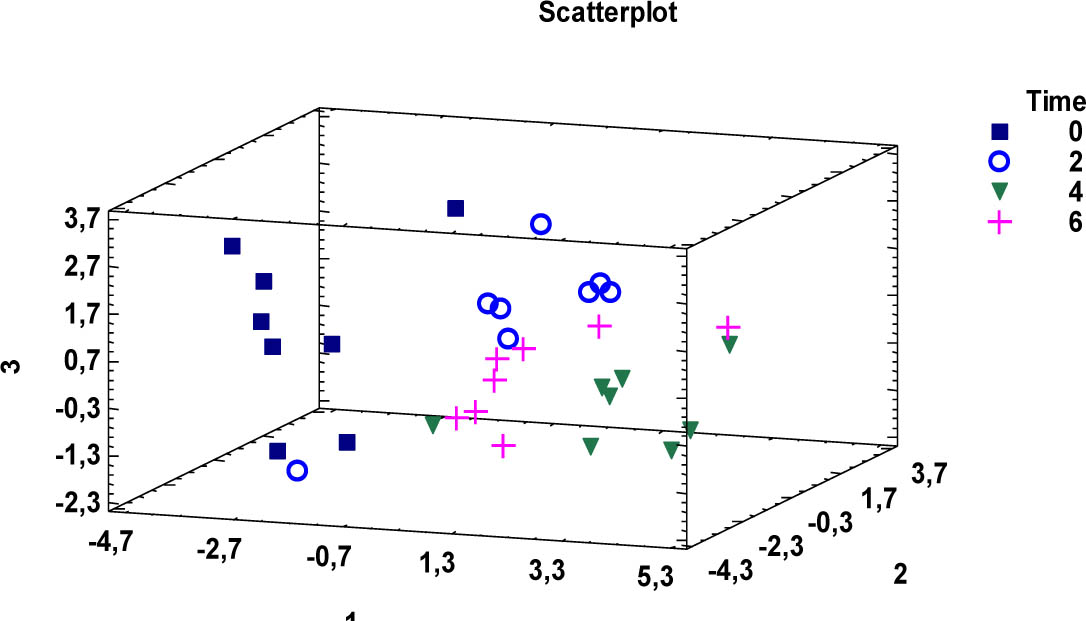
Figure 1.
PCA-LDA scatter plot for spontaneously fermented sausages at 0, 2, 4, and 6 weeks of ripening times, derived from fatty acids and volatile compounds data
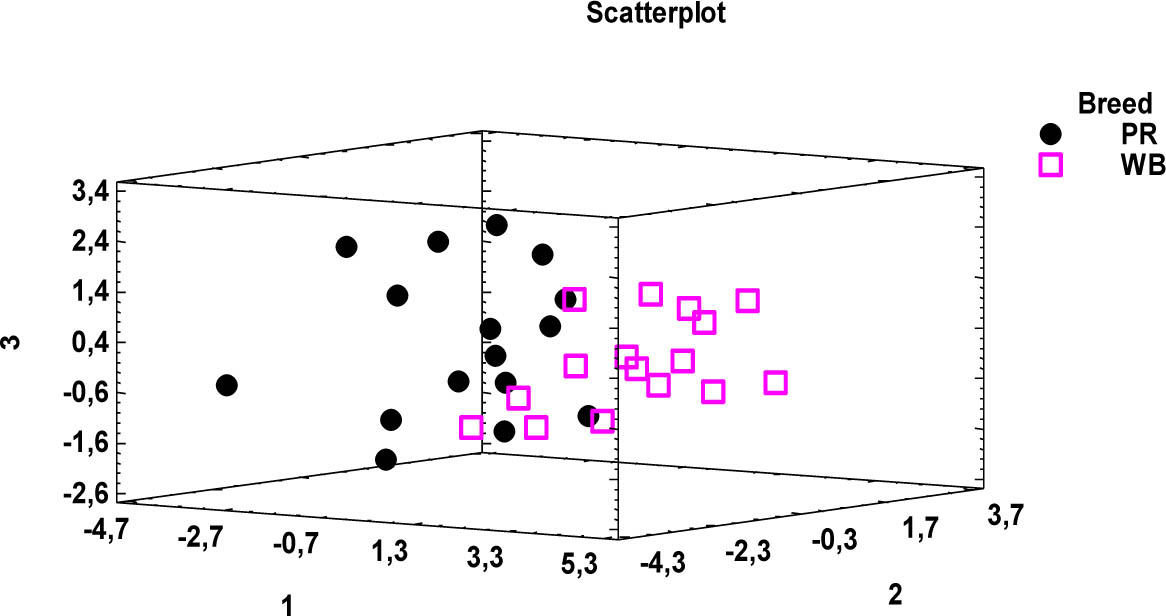
Figure 2.
PCA-LDA scatter plot for spontaneously fermented sausages from Polish Red (PR) and White-Backed (WB) native cattle breeds, utilizing data on fatty acids and volatile compounds
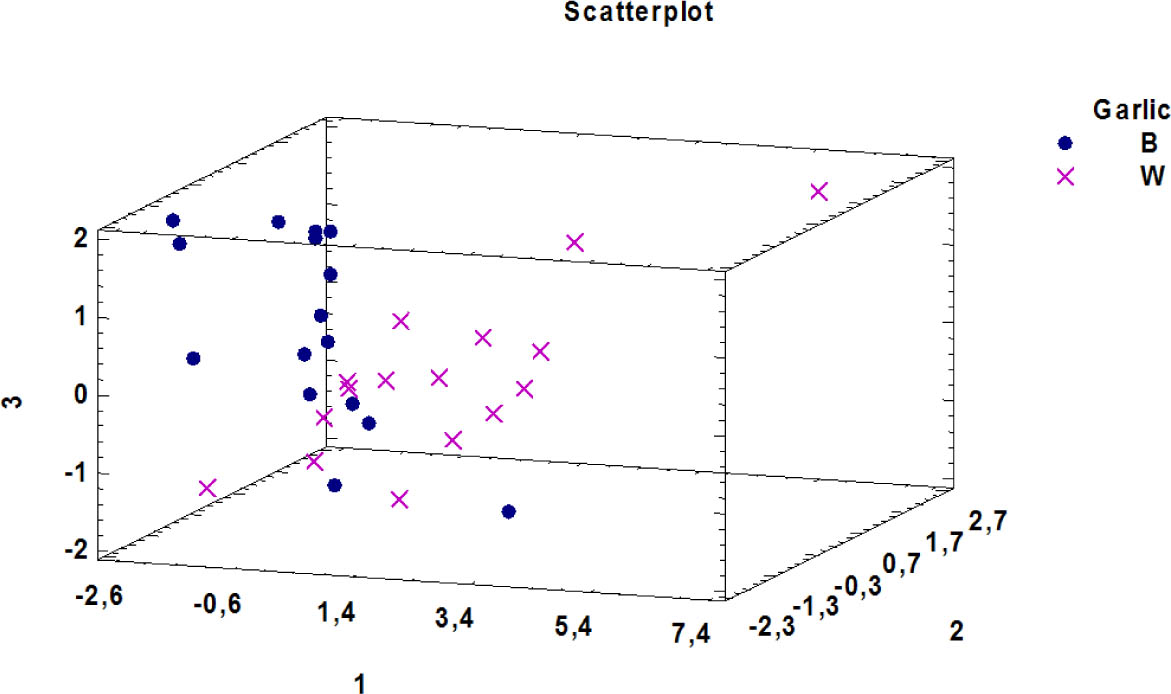
Figure 3.
PCA-LDA scatter plot for spontaneously fermented sausages from Polish Red and White-Backed native cattle breeds, incorporating white (W) and black (B) garlic, utilising data on fatty acids and volatile compounds
Sensory properties
The sausages of PR and WB breeds differed in their sensory quality assessment, although statistical analysis showed no statistically significant differences (Table 8). The properties of PC sausages that qualified slightly higher were colour, odour and flavour intensity as well as odour desirability. The characteristics of WB sausages that distinguish them were overall appearance, structure in cross-section, tenderness and juiciness. The presence of black garlic influenced the colour, structure in cross-section and juiciness of the sausages (P<0.05), as well as their overall appearance, tenderness, odour and flavour intensity and desirability. Variants with black garlic received more points and were perceived as more sensory appealing. The interaction effect of breed and ripening time on colour (P<0.01), and odour desirability (P<0.05) was substantial. The quality of PR and WB breeds meat as well as sweet, fruity aftertaste of fermented black garlic were assessed with a high approval and a declaration of purchase desire. All four recipes met consumers' expectations, although the sausages made from PR and WB meat with black garlic addition were the most favoured.
Table 8.
Influence of breed and white/black garlic addition on sensory properties of dry fermented sausages made from meat of native cattle breeds
| Properties | Breed (B) | Garlic (G) | Interaction | ||
|---|---|---|---|---|---|
| PR | WB | w | b | B × T | |
| Overall appearance | 4.29 | 4.42 | 4.29 | 4.42 | |
| Colour | 4.08 | 4.00 | 3.88 a | 4.21 b | ** |
| Structure in cross-section | 4.42 | 4.50 | 4.29 a | 4.63 b | |
| Odour intensity | 4.38 | 4.25 | 4.25 | 4.38 | |
| Odour desirability | 4.46 | 4.25 | 4.33 | 4.38 | * |
| Tenderness | 4.29 | 4.42 | 4.29 | 4.42 | |
| Juiciness | 4.50 | 4.63 | 4.38 a | 4.75 b | |
| Saltiness | 4.00 | 3.83 | 3.83 | 4.00 | |
| Flavour intensity | 4.33 | 4.25 | 4.13 | 4.46 | |
| Flavour desirability | 4.38 | 4.42 | 4.25 | 4.54 | |
Discussion
A favourable fatty acid profile reduces lipid oxidation, improves the colour, flavour, and nutritional properties of dry fermented meat products (Romero et al., 2013). Many authors highlight the importance of quantitative and qualitative composition of fatty acids in meat products for human health (Dyall, 2015; Heras-Sandoval et al., 2016). The proportion of conjugated linoleic acid (CLA) in beef ranges from 3 to 8 mg/g of fat, however its content decreases during the first hours of fermentation and then remains constant during storage (Fiego et al., 2005; Martin et al., 2008) as shown also in this study. It has also been shown that the presence of CLA has a beneficial effect on the fatty acid profile (PUFA/SFA). The changes in SFA and UFA in WB products may result in a slight decrease in the UFA/SFA and PUFA/SFA ratios. Analysis of the AI and h/H ratio confirmed WB meat as more favourable in terms of nutritional lipid quality. It is generally known that the AI index is a better indicator of fat quality than the PUFA/SFA ratio − its lower value indicates a more favourable fatty acid profile. PUFA n-6 are correlated with antiatherogenic activity (reduction of serum lipids), while PUFA n-3 are associated with antithrombogenic activity (inhibition of platelet aggregation, reduction of cholesterol and phospholipid levels) (Ulbricht and Southgate, 1991). This is related to the fact that not all SFAs are hypercholesterolaemic and that not only PUFAs but also MUFAs show protective effects. The h/H index is related to cholesterol metabolism, thus to the ratio of hypocholesterolemic (MUFA and PUFA) to hypercholesterolemic acids (C14:0 and C16:0). Products of animal origin (eggs, meat) have lower AI and TI values, but higher h/H values. According to Ulbricht and Southgate (1991) and FAO/WHO (2010) AI and TI levels ought to be <1.0 and h/H index as high as possible.
The oxidation of unsaturated fatty acids during the ripening of dry fermented sausages is crucial for the volatile compound profile. Non-high TBA values could indicate favourable fat quality, adequate cooling of carcasses after slaughter and/or further MDA reactions such as: condensation, reactions with released amino acids, degradation by Latilactobacillus plantarum and Staphylococcus carnosus, bacteria common in such sausages (Berardo et al., 2017; Koutsidis et al., 2008; Lebert et al., 2007; Ravyts et al., 2012; Węsierska et al., 2021; Hu et al., 2022).
The present study identified aroma compounds listed in a group of 226 key food odorants defined by an odour activity value (OAV ≥1) at least in one of the 227 food samples, which were described by Dunkel et al. (2014). The key odorant detected in PR and WB sausages that remained unchanged during ripening were: 2,3-butanedione, 3-hydroxy-2-butanone, ethyl acetate, ethyl butyrate, ethyl hexanoate, ethyl octanoate, acetic acid, pentanoic acid, octanoic acid, decanoic acid, 3-methylbutanal, 2-methylbutanal, hexanal, (E)-2-hexenal, methional, (E)-2-heptenal, octanal, (E)-2-octenal, nonanal, decanal, 2,4-nonadienal, 2,4-decadienal, hexanol, 1-octen-3-ol, phenylethyl alcohol, α-pinene, β-pinene, β-myrcene, limonene, diallyl disulphide, linalool and carvone. It can be assumed that this method enables reliable characterization of animal products and can contribute to the promotion of regional products with specific taste and odour characteristics from PR and WB meat. Despite many published papers (Nicolotti et al., 2013; Węsierska et al., 2021; Wojtycza, 2022), this type of research still has great potential for development by demonstrating metabolic pathways unique to the raw material (breed), sensitivity to oxidation and microorganisms activity.
In this study, the discriminant analysis data model was established using the consensual contents of highly differentiating volatile compounds determined in fermented sausages, expressed in equivalent units of ng/g of methyl caproate standard added in sample. The PCA-LDA results showed a rather respectable discrimination between ripening time (0, 2, 4 and 6 weeks), native breeds (PR and WB) and the type of garlic added to the sausages (white and black). This was illustrated in Figures 1–3. The classification accuracy, measured as the percentage of correctly classified cases, was 93.8%, 87.5%, and 84.4% for ripening time, breed, and the type of garlic, respectively. Regarding the cumulative percentage of variance, explained by the successive variables in the PCA, the first two and three principal components accounted for 60.1% and 72.2% of the total variance, respectively for ripening time; 57.8% and 69.0%, respectively, for breeds; and 60.5% and 74.7%, respectively, for the type of garlic.
With the increase in demand for dry sausages and industrialisation, production using short ripening technology has become a trend. Nevertheless, the short ripening time resulted in a lack of a distinctive flavour profile (Gąsior and Wojtycza, 2016; Wang et al., 2023). Flavour is one of the most important quality attributes when assessing dry sausages due to their strong influence on overall consumer acceptance. During traditional fermentation of dry sausages, lipids and proteins are hydrolysed into free fatty acids, free amino acids and other flavour precursors (Hu et al., 2022). Exo- and endogenous enzymes convert these compounds into volatile compounds, including aldehydes, ketones, alcohols, acids, sulphur- and nitrogen-containing compounds, which impart odour and flavour to the sausages.
Due to their low threshold value, esters have a significant effect on the flavour formation of dry sausages (Li et al., 2021), which was also demonstrated in this study. Esters were present in a significant proportion in all sausages, probably because of long natural drying and spontaneous fermentation promoted esterification reactions. Ethyl propanoate, ethyl lactate and ethyl isovalerate may have contributed to the ‘floral’ and ‘fruity’ pleasant aroma.
Benzeneacetaldehyde, acetaldehyde, 2-decenal, 2-nonenal were the main aldehydes detected in PR and WB sausages. It is known that the threshold for aldehydes is low, so even at low concentrations aldehydes could have a significant effect on flavour. Furthermore, aldehydes can also serve as precursors to other aromatic compounds (Asuming-Bediako et al., 2014).
Ketones mainly originate from lipid oxidation, pyruvate metabolism and branched-chain amino acid catabolism (Montanari et al., 2016). Numerous ketones were detected in all PR and WB sausage samples, hence they may have contributed significantly to the aroma development of fermented meat products due to their low sensing threshold.
Volatile compounds derived from spices provided a pleasing fragrance to sausages. The sausages were distinguished by the aroma of methyl thiirane and dimethyl sulfone. Those made with white garlic were characterised by a pungent odour, specific to the spice used. The presence of black garlic was emphasised by fruity notes.
Conclusions
Based on the results of this study, it can be stated that the meat of Polish Red and White-Backed native cattle breeds can be the basic raw material of dry fermented sausages with their unique profile of volatile compounds. Dry fermented products made from WB meat were characterised by a slight decrease in the UFA/SFA and PUFA/SFA ratios. The acids that differentiated products of both breeds in the n-6 group were linoleic and eicosatetraenoic acids. The sum of n-3 and n-6 acids in sausages made with black garlic was higher than in those produced with its white equivalent. Volatile compounds which differentiated sausages produced from PR and WB meat were: isobutyric acid, 2,3-octanedione, 2,3-dimethyl-2-cyclopenten-1-one and 4-hydroxy-4-methyl-2-pentanone (diacetone alcohol). The main sources of sulphur compounds and terpenes were white and black garlic as well as pepper. The presence of 2-nonenal, 3,5-octadien-2-one, 1-hydroxy-2-propanone, 1-octen-3-one, 2,3-dimethyl-2-cyclopenten-1-one indicated different activity of fat oxidation in secondary products concerning the meat from both breeds, despite low TBA values. The presence of acetic, alcoholic and butyric fermentation products, as well as volatile from amino acids catabolism, confirmed the high enzymatic activity of bacteria and yeasts.
Acknowledgements
This work was supported by the Ministry of Science and Higher Education of the Republic of Poland.