
Table 1.
Summarizing management measures used in shrimp aquaculture for disease management, including details on doses, target species, and effects on shrimp health
| Management measure | Product/Species | Dose | Target species | Effect on host | References |
|---|---|---|---|---|---|
| 1 | 2 | 3 | 4 | 5 | 6 |
| Probiotics | Bacillus subtilis, Bacillus licheniformis | 1×10⁷ CFU/mL in water | Penaeus vannamei | Enhances immune response, improves gut health, reduces Vibrio infections | Rajan et al., 2021 |
| Lactobacillus plantarum | 1×10⁶ CFU/g in feed | Penaeus monodon | Boosts immune response, reduces susceptibility to Vibrio infections | Nayak, 2021 | |
| Bacillus coagulans | 0.5 g/kg of feed | Penaeus vannamei | Enhances growth, improves survival rate under bacterial infections (AHPND) | Karunasagar and Karunasagar, 2021 | |
| Pseudomonas aeruginosa | 106 CFU/mL in water | Penaeus monodon | Increases resistance to white spot syndrome virus (WSSV) | Mohanty et al., 2020 | |
| Bacillus subtilis | 1×10⁷ CFU/g in feed | Penaeus vannamei | Improved survival rates, reduced Vibrio infections, better growth | Wang et al., 2008; Zokaeifar et al., 2012 | |
| Bacillus licheniformis | 1×10⁷ CFU/mL in water | Penaeus monodon | Enhanced immune response, improved gut microbiota, reduced mortality | Balcázar et al., 2006 | |
| Lactobacillus plantarum | 1×10⁶ CFU/g in feed | Penaeus monodon | Stimulates immune system, enhances growth, improves water quality | Vijayan et al., 2019 | |
| Bacillus coagulans | 0.5 g/kg in feed | Penaeus vannamei | Increased resistance to Vibrio spp., enhanced growth rates | Kesavelu Sr et al., 2020 | |
| Pseudomonas aeruginosa | 106 CFU/mL in water | Penaeus monodon | Increased resistance to white spot syndrome virus (WSSV) | Mohanty et al., 2020 | |
| Enterococcus faecium | 108 CFU/mL in water | Penaeus vannamei | Improved gut microbiota, increased resistance to bacterial pathogens | Huynh et al., 2018 | |
| Bacillus amyloliquefaciens | 1×10⁶ CFU/g in feed | Penaeus monodon | Enhanced immune system, improved water quality, reduced ammonia | Tseng et al., 2009 | |
| Saccharomyces cerevisiae | 0.5 g/kg in feed | Penaeus vannamei | Improved gut health, increased nutrient absorption, growth promoter | Ziaei-Nejad et al., 2006 | |
| Shewanella putrefaciens | 1×10⁷ CFU/mL in water | Penaeus vannamei | Reduction in ammonia levels, increased resistance to Vibrio infections | Hai et al., 2009 | |
| Bacillus cereus | 107 CFU/mL in water | Penaeus vannamei | Improved survival rates during stressful conditions | Qi et al., 2009 | |
| Lactobacillus rhamnosus | 1×10⁶ CFU/mL in water | Penaeus monodon | Improved survival rates, enhanced immune function, reduced pathogens | Venkat et al., 2004 | |
| Photobacterium damselae | 106 CFU/mL in water | Penaeus vannamei | Inhibits growth of Vibrio spp., enhances immune response | Balcázar et al., 2012 | |
| Vibrio alginolyticus | 106 CFU/mL in water | Penaeus vannamei | Stimulates growth, improves water quality, reduces Vibrio infections | Tseng et al., 2009 | |
| Immunostimulants | Beta-glucan | 0.2 g/kg of feed | Penaeus vannamei | Activates innate immunity, enhances disease resistance to WSSV | Chiu et al., 2022 |
| Chitosan | 1 g/kg of feed | Penaeus monodon | Enhances growth, reduces mortality under WSSV infection | Panigrahi et al., 2022 | |
| Levamisole | 5 mg/kg of body weight | Penaeus vannamei | Stimulates immune system, improves resistance to Vibrio infections | Mohapatra et al., 2017 | |
| Vitamin C and E | 1 g/kg of feed | Penaeus vannamei | Enhances immune function, reduces stress, and improves growth | Li et al., 2023 | |
| Poly-β-hydroxybutyrate (PHB) | 1–5 g/kg of feed | Penaeus vannamei | Enhances immune parameters, improves gut microbiota, reduces Vibrio infection rates | De Schryver et al., 2010 | |
| Alginate oligosaccharides (AOS) | 0.5–1% of feed | Penaeus monodon | Enhances immune response, reduces Vibrio infection rates, boosts growth | Zhang et al., 2020 | |
| Toll-like receptor agonists (TLRs) | 0.5–1% of feed | Penaeus vannamei | Improves pathogen recognition, enhances immune defense, reduces viral and bacterial infections | Venegas et al., 2000 | |
| Amino acids | 1–2 g/kg of feed | Penaeus vannamei | Enhances immune response, improves survival, and reduces disease incidence | Romano and Kumar, 2017 | |
| Yeast derivatives | 2–3% of feed | Penaeus vannamei, Penaeus monodon | Improves gut health, enhances immune function, reduces mortality from infections | Bai et al., 2014 | |
| Glucan (from Saccharomyces cerevisiae) | 1–2% of feed | Penaeus vannamei | Stimulates immune response, enhances disease resistance, and improves growth | Soltanian et al., 2014 | |
| Herbal extracts (Azadirachta indica) | 1–2% of feed | Penaeus vannamei, Penaeus monodon | Antibacterial, antiviral, and anti-inflammatory properties, improves survival | Citarasu et al., 2006 | |
| Selenium | 1.5 mg/kg of feed | Penaeus vannamei | Reduces oxidative stress, improves immune parameters, lowers mortality from infections | Wang et al., 2009 | |
| Fucoidan | 0.5–1% of feed | Penaeus monodon, Penaeus vannamei | Antiviral activity, improves immune response, reduces WSSV mortality | Chotigeat et al., 2011 | |
| Peptidoglycan | 0.1–0.5% of feed | Penaeus vannamei | Stimulates immune cells, reduces bacterial and viral load, enhances growth | Vaseeharan et al., 2012 | |
| Lipopolysaccharides (LPS) | 0.2–0.5% of feed | Penaeus vannamei | Triggers immune response, reduces mortality in viral infections like WSSV | Vaseeharan and Ramasamy, 2003 | |
| Prebiotics | Mannan oligosaccharides | 0.2% to 0.5% in feed | Penaeus monodon | Enhances gut flora, improves resistance to pathogens | Sookying et al., 2011 |
| Inulin | 1 g/kg of feed | Penaeus vannamei | Promotes growth, increases survival rates under pathogenic stress | Xia et al., 2021 | |
| Fructooligosaccharides (FOS) | 0.1% to 0.3% in feed | Penaeus monodon | Enhances immune function, reduces susceptibility to pathogens | Zhou et al., 2024 | |
| Galactooligosaccharides (GOS) | 0.2% in feed | Penaeus vannamei | Boosts immune response, enhances gut microbiota, reduces disease outbreaks | Lara-Flores et al., 2010 | |
| Xylooligosaccharides (XOS) | 0.2% in feed | Penaeus monodon | Improves disease resistance, promotes beneficial gut bacteria | Ibrahim et al., 2023 | |
| Beta-glucan | 0.1% to 0.5% in feed | Penaeus vannamei | Activates shrimp immune system, enhances resistance to Vibrio and WSSV | Cheng et al., 2020 | |
| Chitin | 0.2% in feed | Penaeus vannamei | Improves growth performance, enhances gut microbiota, reduces mortality | Li et al., 2020 | |
| Chitosan | 1 g/kg in feed | Penaeus monodon | Enhances immune response, improves growth rate, reduces mortality under stress | Panigrahi et al., 2020 | |
| Alginate oligosaccharides (AOS) | 0.5% in feed | Penaeus vannamei | Enhances resistance to pathogens, boosts immune system, improves growth | Robles-Porchas et al., 2020 | |
| Levan | 0.1% to 0.2% in feed | Penaeus vannamei | Promotes beneficial gut bacteria, enhances immune response, reduces mortality | Ringo et al., 2012 | |
| Yeast-derived β-glucans | 0.2% in feed | Penaeus monodon | Stimulates immune system, enhances resistance to bacterial and viral infections | Meena et al., 2022 | |
| Soybean meal oligosaccharides | 1 g/kg in feed | Penaeus vannamei | Improves digestion, enhances resistance to pathogens like Vibrio spp. | Jiang et al., 2022 | |
| Herbal extracts | Turmeric (Curcuma longa) | 1–2% in feed | Penaeus vannamei | Antioxidant properties, boosts immune response to bacterial and viral infections | Arulvasu et al., 2020 |
| Aloe vera | 2% in feed | Penaeus vannamei | Enhances immune response, improves antioxidant activity | Ibrahim et al., 2023 | |
| Turmeric (Curcuma longa) | 1–2% of feed | Penaeus vannamei | Enhances immune response, anti-oxidant properties, reduces bacterial and viral infections | Arulvasu et al., 2020 | |
| Garlic (Allium sativum) | 0.5–2% of feed | Penaeus vannamei | Boosts immune system, improves growth rate, reduces Vibrio infections | Nya and Austin, 2009 | |
| Ginger (Zingiber officinale) | 1% of feed | Penaeus monodon | Improves growth, enhances immune response, reduces bacterial infections | Mugwanya et al., 2022 b | |
| Neem (Azadirachta indica) | 1% in water | Penaeus monodon | Antibacterial and antiviral properties, reduces Vibrio and WSSV | Velmurugan et al., 2013 | |
| Aloe vera | 1–2% of feed | Penaeus vannamei | Enhances immunity, improves antioxidant response, reduces WSSV outbreaks | Ilham et al., 2024 | |
| Eclipta alba | 1 g/kg in feed | Penaeus vannamei | Antimicrobial properties, reduces Vibrio load in shrimp ponds | Govindasamy et al., 2019 | |
| Moringa oleifera | 2–3% of feed | Penaeus vannamei | Immune booster, improves growth rate, decreases Vibrio infections | Soltanian et al., 2021 | |
| Peppermint (Mentha piperita) | 1 g/kg in feed | Penaeus vannamei | Antioxidant properties, improves immune function, reduces mortality from bacterial infections | Badr et al., 2021 | |
| Holy basil (Ocimum sanctum) | 2% of feed | Penaeus monodon | Enhances immunity, reduces stress and mortality under pathogen exposure | Radhakrishnan et al., 2016 | |
| Cinnamon (Cinnamomum verum) | 0.5 g/kg in feed | Penaeus vannamei | Antimicrobial, anti-inflammatory properties, improves resistance to infections | Hamed et al., 2022 | |
| Andrographis paniculata | 1 g/kg in feed | Penaeus monodon | Antiviral properties, enhances immune system, reduces mortality due to Vibrio | Misra et al., 2013 | |
| Green tea (Camellia sinensis) | 1% of feed | Penaeus vannamei | Antioxidant and antimicrobial properties, reduces mortality from infections | Immanuel et al., 2012 | |
| Coriander (Coriandrum sativum) | 0.5 g/kg in feed | Penaeus monodon | Anti-inflammatory, improves immune response, reduces pathogenic bacteria | Dinakaran et al., 2017 | |
| Clove (Syzygium aromaticum) | 0.5–1% in feed | Penaeus vannamei | Antimicrobial activity, enhances immune system, reduces bacterial infections | Ahmadifar et al., 2021 | |
| Fenugreek (Trigonella foenum-graecum) | 1% in feed | Penaeus vannamei | Antibacterial, antioxidant properties, improves growth and survival under bacterial infections | Ashry et al., 2024 | |
| Garlic (Allium sativum) | 0.5–1.0 mg/kg feed | Penaeus vannamei | Provides broad-spectrum protection against WSSV, reduces mortality and increases growth | Vaseeharan et al., 2011 | |
| Pomegranate (Punica granatum) | 0.5–1% in feed | Penaeus vannamei | Improves survival rates, enhances immune response, reduces Vibrio infections | Subramanian et al., 2017 | |
| Vaccines | DNA vaccine against WSSV | Experimental doses vary | Penaeus vannamei | Provides protection against white spot syndrome virus (WSSV) | Li et al., 2020 b |
| DNA vaccine for white spot syndrome virus (WSSV) | 20–50 μg of DNA per shrimp | Penaeus vannamei, Penaeus monodon | Provides immunity to WSSV, reduces viral load, improves survival rate during WSSV outbreaks | Tan et al., 2001 | |
| Inactivated WSSV vaccine | 10–20 μg per shrimp | Penaeus monodon | Reduces viral replication, increases survival rate during WSSV infection | Kumar et al., 2008 | |
| Subunit vaccine for WSSV | 100 μg/kg feed | Penaeus vannamei | Provides protection against WSSV, decreases mortality in farmed shrimp | Li et al., 2007 | |
| Vaccine for yellow head virus (YHV) | 20–30 μg per shrimp | Penaeus monodon | Boosts immune system, reduces viral replication, improves survival under YHV exposure | Soonthornchai et al., 2010 | |
| Vacfectious myonecrosis virus (IMNV) | 10–50 μg per shrimp | Penaeus vannamei | Provides protective immunity, reduces mortality, enhances immune parameters | Hu et al., 2012 | |
| Vaccine for TaV | 50 μg per shrimp | Penaeus vannamei | Induces immune protection against TSV, reduces viral load and mortality | Granja et al., 2006 | |
| Bacterial vaccine for Vibrio | 100 μg per shrimp (oral or injection) | Penaeus vannamei, Penaeus monodon | Enhances resistance to Vibrio infections, reduces bacterial load, improves growth and survival | Son et al., 2009 | |
| Bivalent vaccine (WSSV and Vibrio spp.) | 100 μg per shrimp | Penaeus vannamei | Provides dual protection against WSSV and Vibrio, reduces mortality | Venegas et al., 2000 | |
| Oral DNA vaccine for WSSV | 1–5 μg/g in feed | Penaeus vannamei, Penaeus monodon | Enhances immune system, reduces viral load, improves survival rate | Rout et al., 2007 | |
| Vaccine for Enterocytozoon hepatopenaei (EHP) | 100 μg/kg feed | Penaeus vannamei | Provides immunity to EHP, reduces spore load, improves resistance to other diseases like AHPND | Tran et al., 2020 | |
| Peptide vaccine for WSSV | 0.5–1.0 mg/kg feed | Penaeus vannamei | Provides broad-spectrum protection against WSSV, reduces mortality and increases growth | Vaseeharan et al., 2011 | |
| Vaccine (multiple pathogens) | Shrimp | Provides protection against WSSV, Vibrio, and other bacterial pathogens | Kulkarni et al., 2021 |
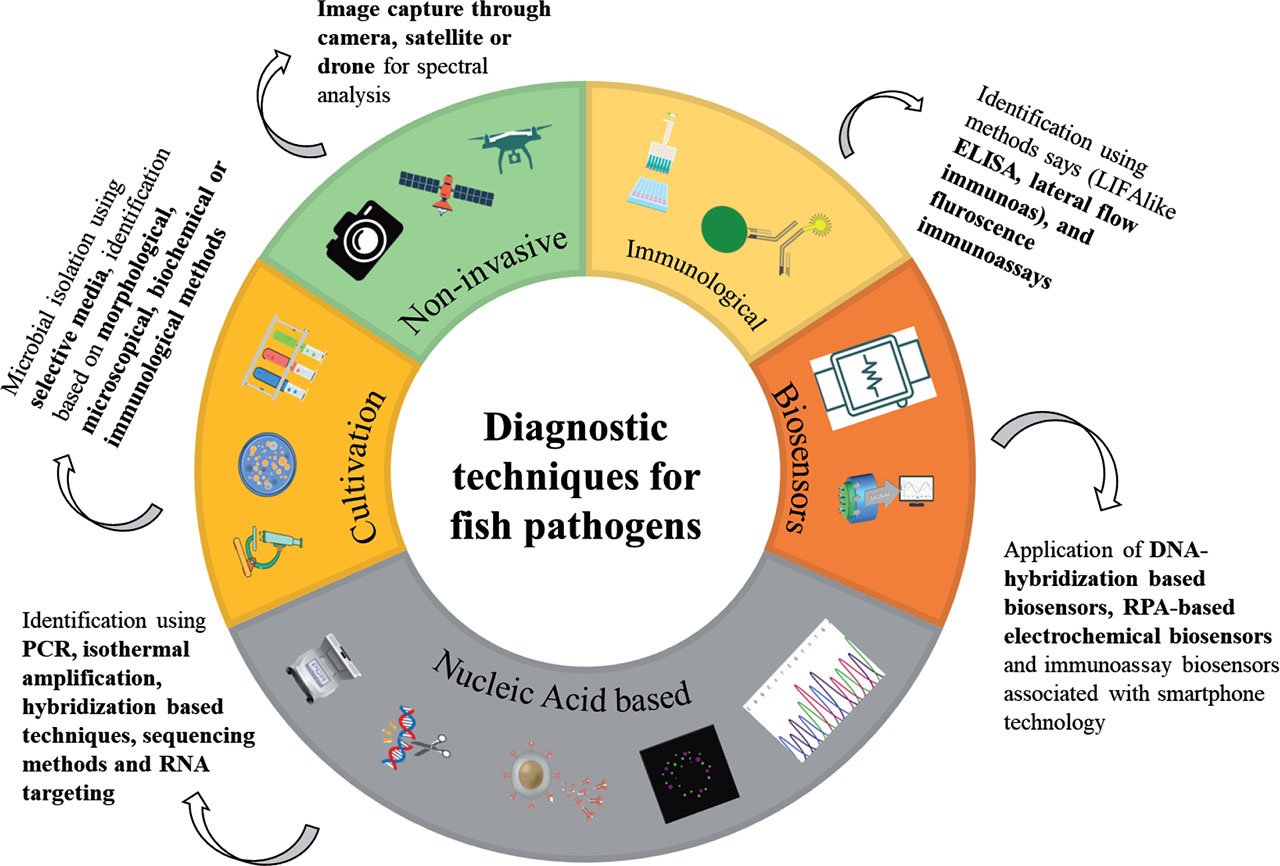
Figure 1.
Stages in the diagnosis of shrimp disease
Table 2.
The fish behavioral signs during biotic and abiotic factors
| Behavioral changes | Factors involved |
|---|---|
| Reduced or no feed intake | Viral, bacterial, or parasitic infection and environmental factors |
| Lethargic swimming | Viral, bacterial, fungal, or parasitic infection and environmental factors |
| Spinning and erratic swimming | Viral, parasitic, and environmental pollutants |
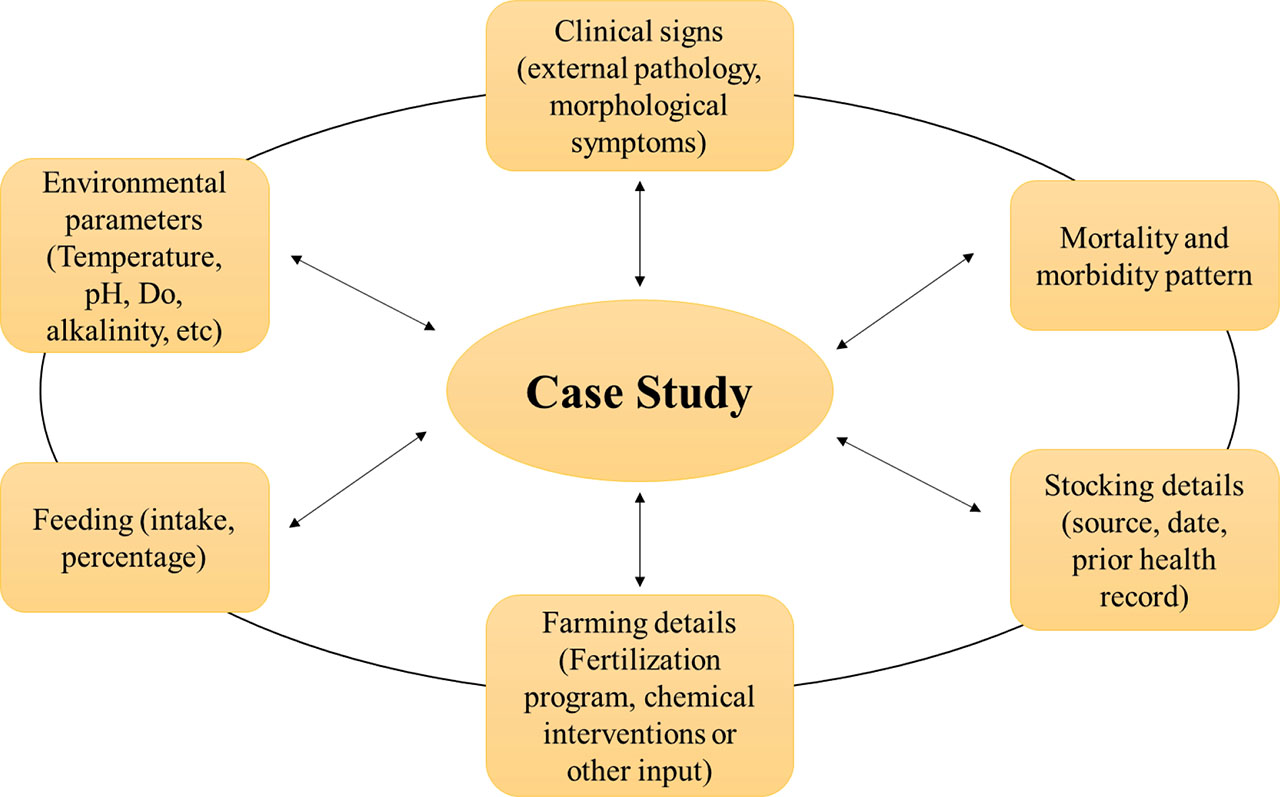
Figure 2.
Case history information collected and carefully examined in order to potentially diagnose a disease with increased specificity (Kumar et al., 2022 a, b)
Table 3.
Diagnostic levels, associated requirements and responsibilities
| Level | Activity | Work requirements | Responsibility | Technical requirements to support activities |
|---|---|---|---|---|
| I | Observation of animal and environment | Knowledge of normal feeding, behavior, growth of stock | Farm worker/manager | Field keys |
| Gross clinical examination | Frequent/regular observation of stock | Fishery extension officers | Farm record keeping formats | |
| Regular, consistent record-keeping and assistance (Levels II, III) | On-site veterinary support | Equipment lists | ||
| Model clinical observation sheets | ||||
| Pond/Site record sheets | ||||
| Maintenance of records – including fundamental environmental information | Local fishery biologists | Preservation/transportation guidelines for Levels II/III diagnoses | ||
| Knowledge contacts for health diagnosis | Model job descriptions/skill requirements | |||
| Ability to submit and/or preserve representative specimens for optimal diagnosis (Levels II, III) | Asia Diagnostic Guide to Aquatic Animal Diseases | |||
| II | Parasitology | Laboratories with basic equipment and Personnel trained/experienced in aquatic animal pathology | Fish biologists/technicians | Model laboratory record-keeping system |
| Bacteriology | Keep and maintain accurate diagnostic and laboratory case records | Aquatic veterinarians | Protocols for preservation/transport of samples to Level III | |
| Mycology | Ability to preserve and store specimens for optimal Level III diagnoses | Parasitologists/technicians | Model laboratory requirements/equipment/consumables lists | |
| Histopathology | Knowledge of/ contact with different areas of specialization within Level II | Mycologists/technicians | Model job descriptions/skill lists | |
| Knowledge of who to contact for Level III diagnostic assistance | Bacteriologists/technicians | Access to Level II and Level III specialist expertise | ||
| Histopathologists/technicians | Asia Diagnostic Guide to Aquatic Animal Diseases | |||
| OIE Diagnostic Manual for Aquatic Animal Diseases | ||||
| Regional General Diagnostics Manuals | ||||
| III | Virology | Highly equipped laboratory with highly specialised and trained personnel | Virologist/technician | Model laboratory requirements/equipment/consumables lists |
| Electron microscopy | Keep and maintain accurate diagnostic and laboratory case records | Ultrastructural histopathologist/technicians | Model job descriptions/skill requirements | |
| Molecular biology | Preserve and store specimens | Molecular biology scientists/technicians | Contact information for reference laboratories | |
| Immunology | Maintenance of contact with people responsible for sample submission | Protocols for preservation of samples for consultation/validation | ||
| Asia Diagnostic Guide to Aquatic Animal Diseases | ||||
| OIE Diagnostic Manual for Aquatic Animal Diseases | ||||
| General molecular and microbiology diagnostic references |
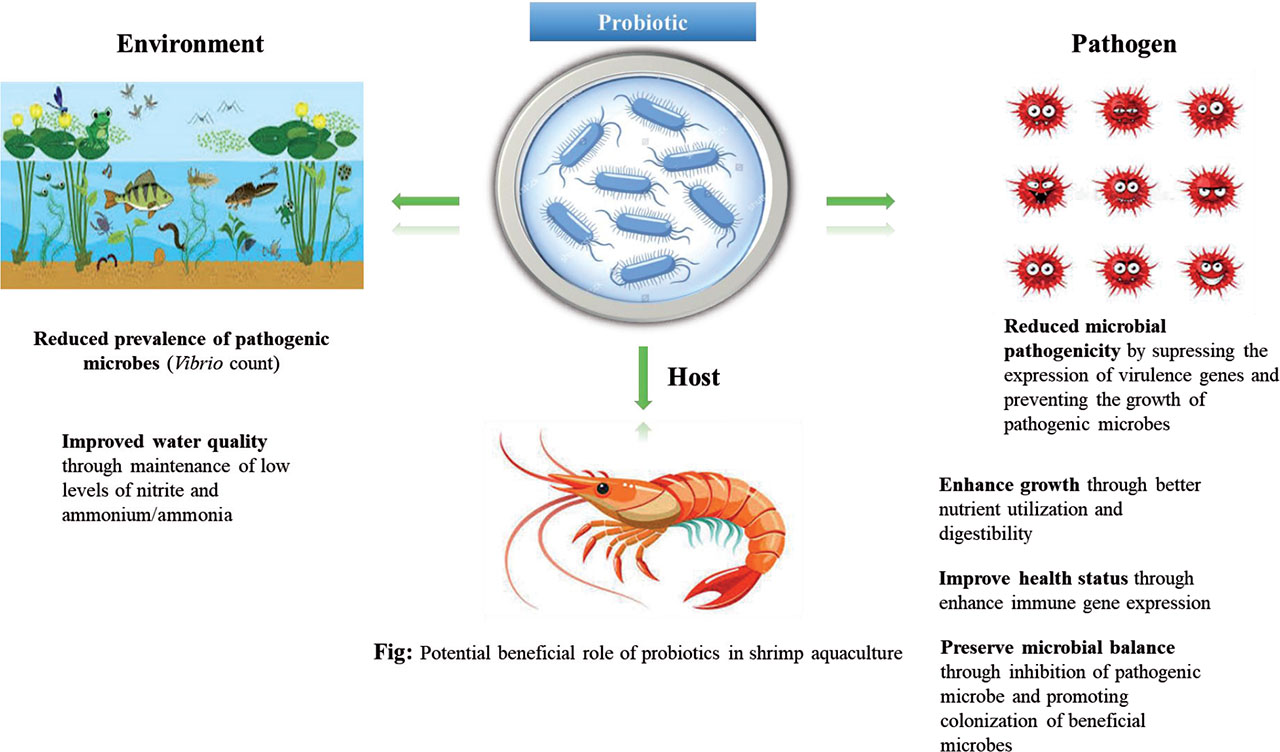
Figure 3.
Potential beneficial role of probiotics in shrimp aquaculture (Kumar et al., 2021 a)
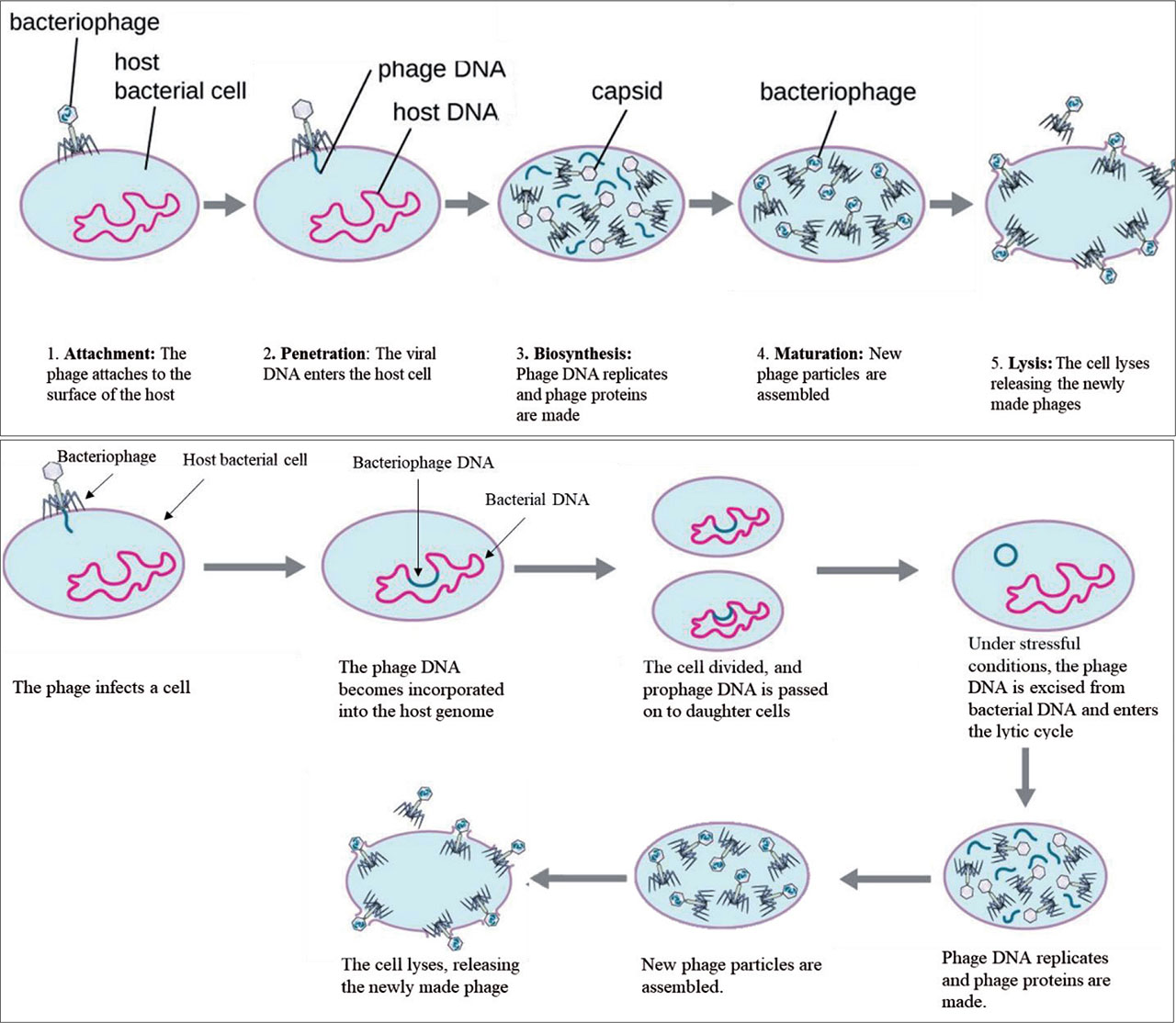
Figure 4.
A schematic overview of the bacteriophage life cycle, including the lytic and lysogenic cycles. In the lytic cycle, bacteriophages infect the host and release the viral genome into bacterial cells. Once a phage infects a bacterium, it shuts down the defense mechanism and takes over its cellular machinery to synthesize new phage particles. The number of phage particles synthesized eventually reaches a point where they rupture the bacterial cells, resulting in the release of phage particles into the environment that infect the new host. In the lysogenic cycle, phage DNA is incorporated into the bacterial host genome, where it is passed on to subsequent generations. Environmental stressors such as starvation or exposure to toxic substances may cause the prophage to excise and enter the lytic cycle (Kumar et al., 2021 b)
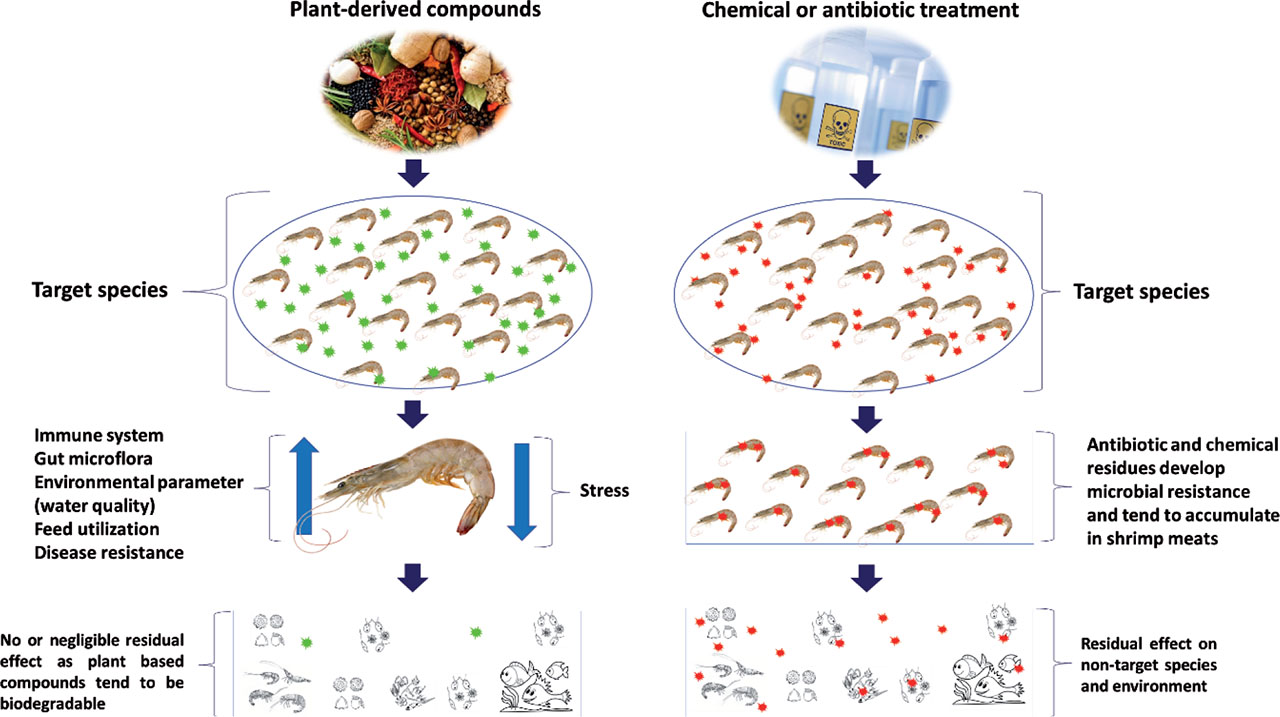
Figure 5.
Effect of plant-based or natural compounds and conventional compounds in shrimp and the environment (Kumar et al., 2021 b)
Table 3.
Role of plant-based compounds in shrimp health (Kumar et al., 2021 b)
| Class | Chemical structure | Sub-class | Example | Role in aquatic species |
|---|---|---|---|---|
| Phenolics | 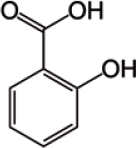 | Quinones, flavonoids, flavones, tannins, flavonols | Allium sps. (Allium cepa, Allium sativum, Allium tuberosum), Cynodon dactylon, Viscum album, etc. | Immunostimulant, antioxidant, antimicrobial, growth promotor, anti-helminthic, antiviral |
| Alkaloids | 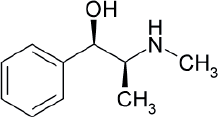 | Camellia sinensis, Nicotiana tabacum, Aconitum napellus, Atropa belladonna, Conium maculatum, etc. | Immunostimulant, antioxidant, antimicrobial, growth promotor, anti-helminthic, antiviral | |
| Terpenoids and essential oils | 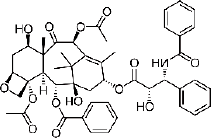 | Pistacia terebinthus, Lavandula angustifolia, Mentha piperita, Melaleuca alternifolia, etc. | Immunostimulant, antimicrobial, antioxidant, anti-helminthic, growth promotor | |
| Lectins and polypeptides | 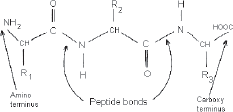 | Glycine max, Arachis hypogaea, Triticum aestivum, Cocos nucifera, etc. | Antioxidant, antiviral, immunostimulant | |
| Polyacetylenes | 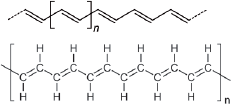 | Anethum graveolens, Carum, carvi, Daucus carota, etc. | Immunostimulant, antimicrobial, antioxidant |
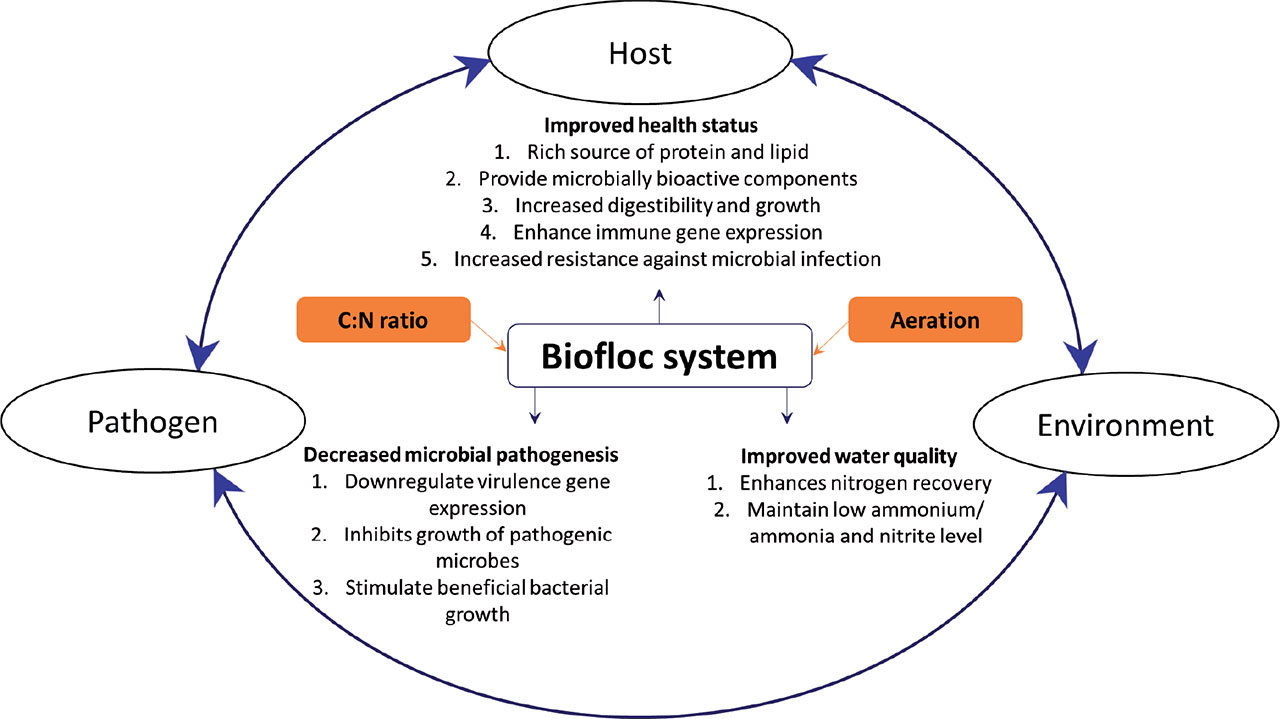
Figure 6.
Schematic role of biofloc system in host, pathogen, and environment in a shrimp aquaculture facility (Kumar et al., 2021 b)