
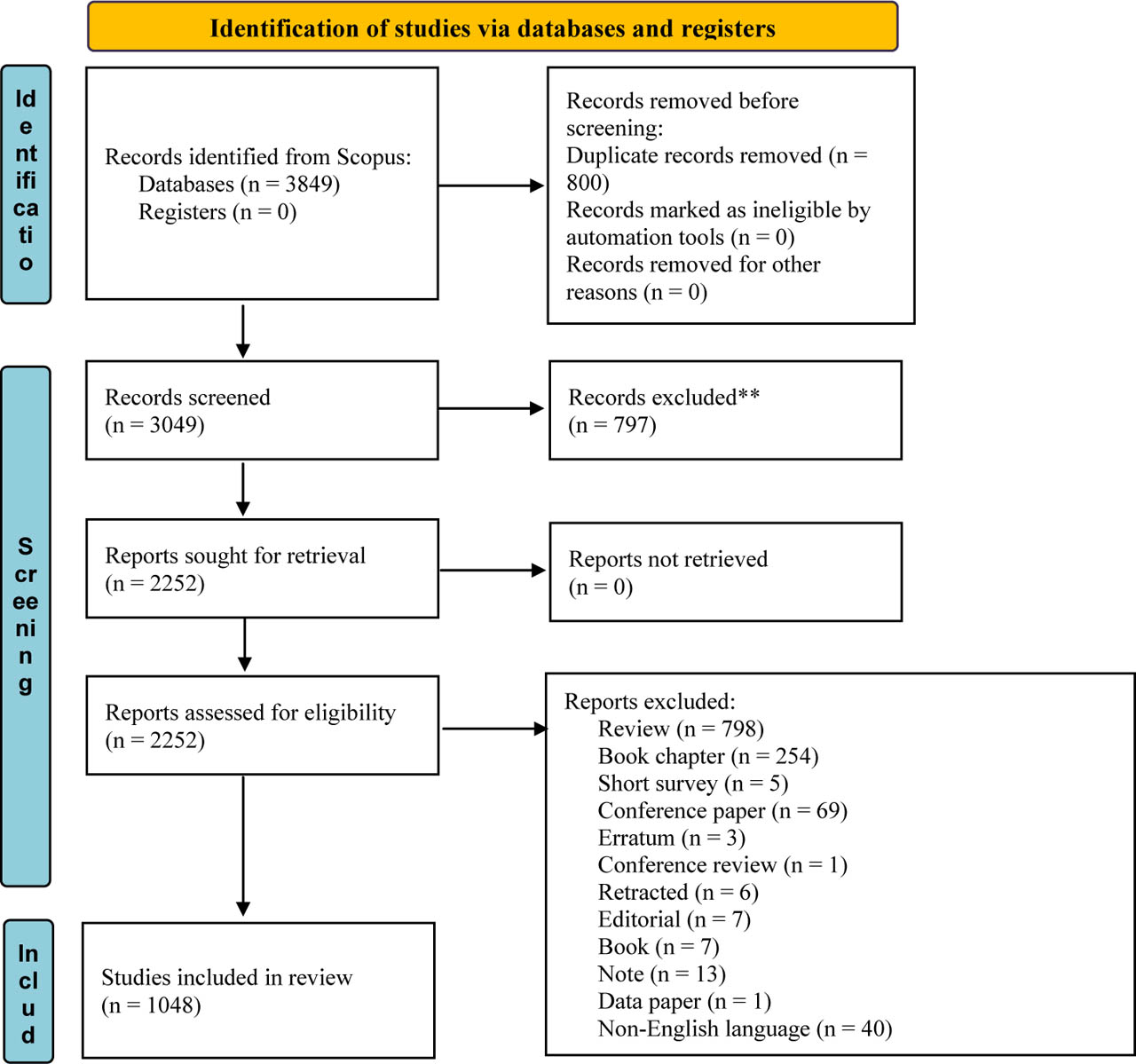
Figure 1.
Selection process flowchart, based on PRISMA software
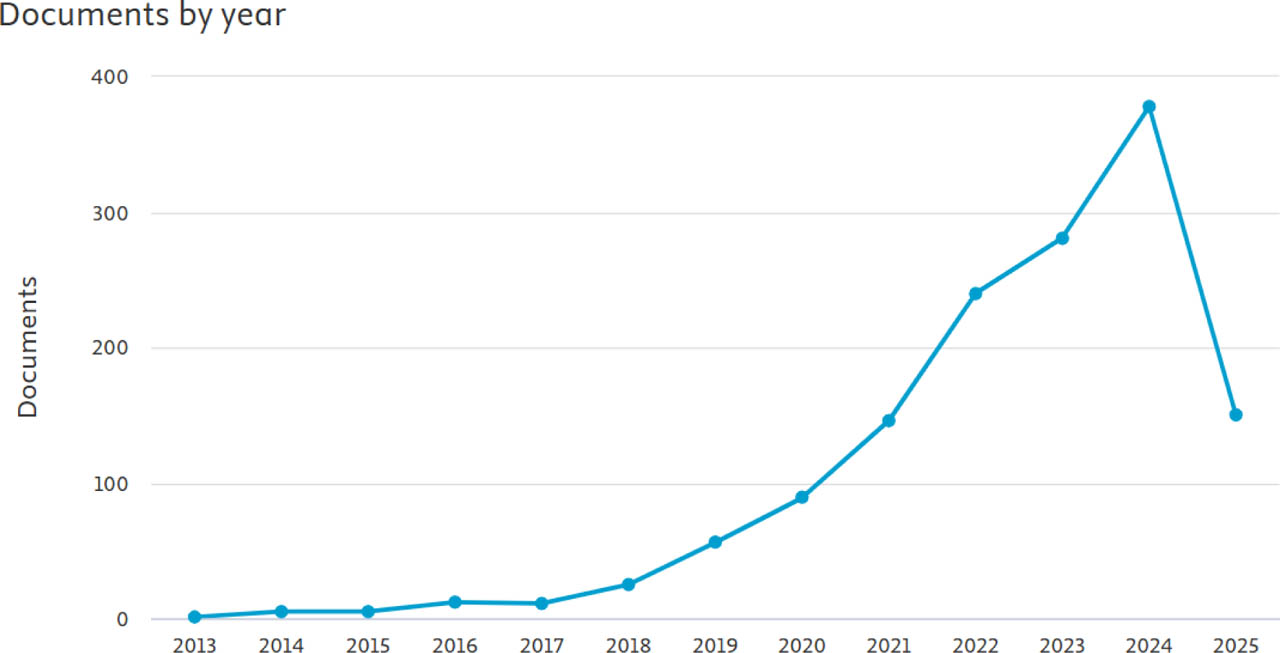
Figure 2.
Annual scientific production on the MPs in aquatic animals between 2013 and 2025
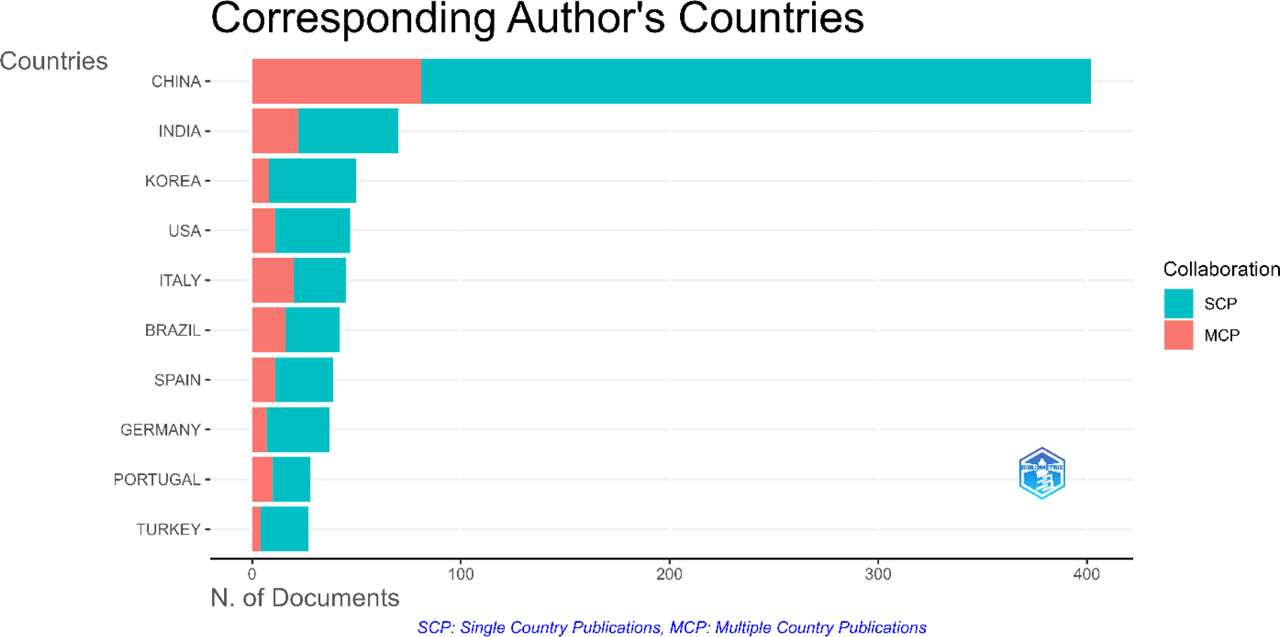
Figure 3.
The country of the corresponding author of papers published in the top 10 journals. The color red represents articles that have authors from more than one country (multiple country publications, MCP), whereas the blue bars are for papers having authors all from the same country (single country publications, SCP)
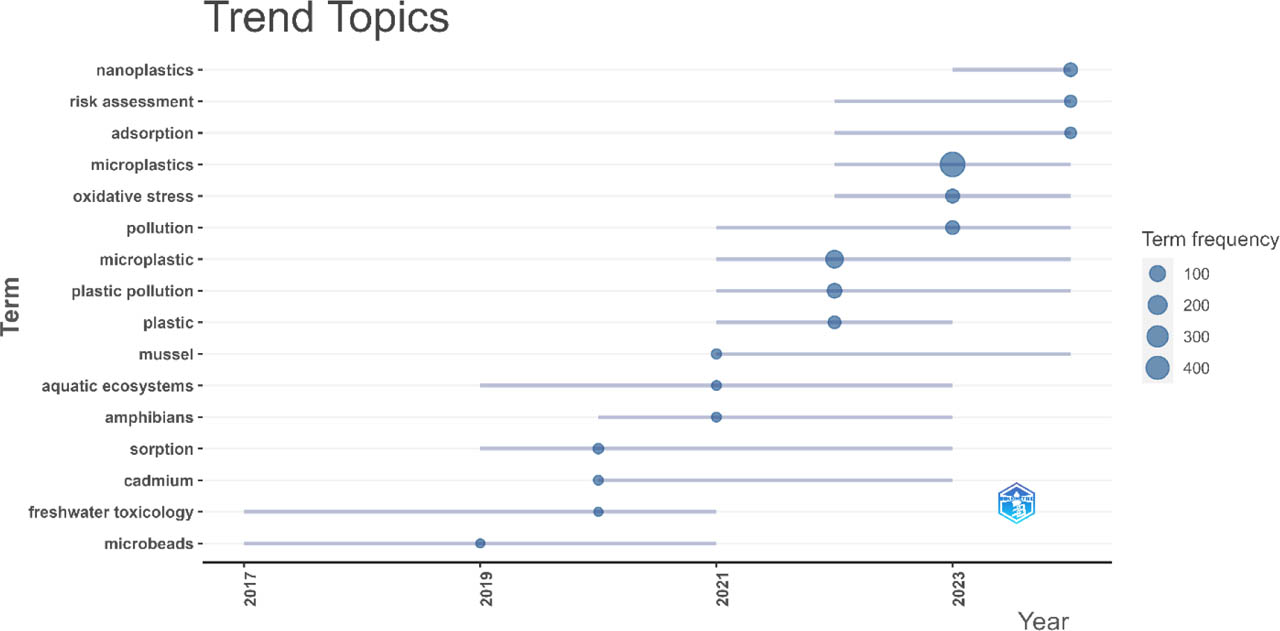
Figure 4.
Trends of the most frequently used author keywords
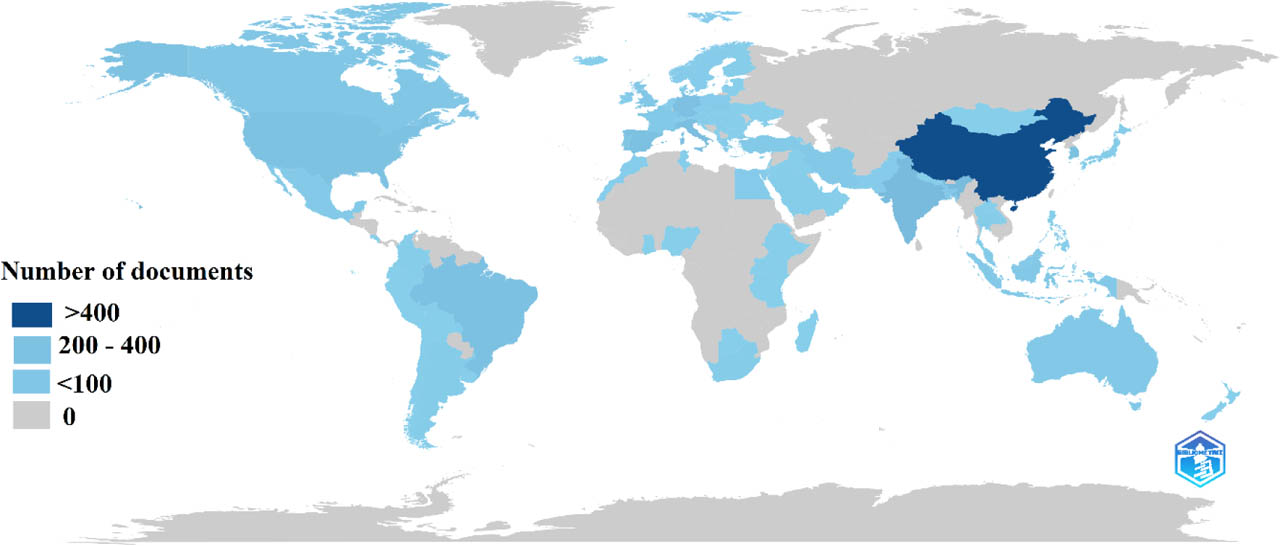
Figure 5.
Scientific production distribution in the field of MPs in aquatic animals
Table 1.
Study on abundance and types of MPs from various aquatic species
| Aquatic wildlife species | Location | MP abundance | Types of MPs | Reference |
|---|---|---|---|---|
| 1 | 2 | 3 | 4 | 5 |
| Carcinus maenas | United Kingdom | 15033 and 267 microspheres/ml in hemolymph at 21 days and 24 h respectively | PS | Farrell and Nelson, 2013 |
| Gobio gobio | 11 French streams | 12% contained plastic | Fibers and pellets | Sanchez et al., 2014 |
| Crangon crangon | Southern North Sea and Channel area | 1.23±0.99 MPs/shrimp | Fiber – film – spherule – fragment | Devriese et al., 2015 |
| Arenicola marina | French–Belgian–Dutch coastline | 1.2±2.8/g w. w. | PS | Van Cauwenberghe et al., 2015 |
| Mytilus edulis | 0.2±0.3 MPs/g w. w. | |||
| Dicentrarchus labrax | Mondego estuary, Portugal | 1.67±0.27 MPs/fish | PES, rayon, PP | Bessa et al., 2018 |
| Diplodus vulgaris | ||||
| Platichthys flesus | ||||
| Venerupis philippinarum, | ||||
| Crassostrea gigas | Coastal British Columbia, Canada | 0.03–0.05 MPs/g dry-tissue weight | Fibers from textiles (including nylon and PES) | Covernton et al., 2019 |
| Stolephoruos commersonnii | Madu-Ganga Estuary, Sri Lanka | 30.17±3.58 items/100 mg in gut | Fiber shape, PP as polymer | Praboda et al., 2020 |
| 29.33±1.19 items/g in muscles | ||||
| Caenorhabditis elegans | Various concentrations 0, 0.1, 1, 10, and 100 μg/L | PS | Yu et al., 2020 | |
| Cinclus cinclus | South Wales, UK | MPs were found in 50% of regurgitates (n = 72) of Eurasian dipper (Cinclus cinclus) | Over 95% of particles were fibers, identified multiple polymers, including PES, PP, PVC, and VC. | D'Souza et al., 2020 |
| Gadus morhua | Bergen, Norway | 3.4 μg/g wet weight in cod liver | PVC >PS> PET | Haave et al., 2021 |
| Dreissena polymorpha | Lake Iseo, North Italy | 0.03–0.27 items/individual | PET (45%), nylon (20%), PP (20%), PA (10%), and PVC (5%). | Pastorino et al., 2021 |
| Dosidicus gigas | Eastern Pacifc and Galápagos archipelago, Ecuador | 93% MPs/DT | Fibers | Alfaro-Núñez et al., 2021 |
| Alopias pelagicus | 87% MPs/DT | |||
| Coryphaena hippurus | 87% MPs/DT | |||
| L. vannamei | Santa María-La Reforma (SAMARE) lagoon, Mexico | 36.3±5.6 ítems μg/g DW in GT | Fiber type (74.7%), fragments (22.7%) predominant polymers were cotton and synthetic PET | Valencia-Castaneda et al., 2022 |
| Unio crassus | Tisza River, Hungary | 5.2–8.3 items/individual | Fibers | Almeshal et al., 2022 |
| Unio tumidus | 2.7–4.9 items/individual | |||
| Aristaeomorpha foliacea | Eastern Ionian Sea | 2.97±0.3 items/individual | Fibers, 83.82 % of fibers were PES | Leila et al., 2023 |
| Mytilus galloprovincialis | Morocco | 0.92–1.88 particles/g w.w. | Fibers were the dominant shapes and polymers PET, PP, and PE were the most abundant in mussels | Abelouah et al., 2023 |
| M. galloprovincialis | Tunisia | 0.79–1.47 particles/g w.w. | ||
| Crassostrea virginica | Coastal areas of New York | 0.008 particles/g w.w. | MP fibers and fragments (i.e. PET, PS, and PP) | Minder et al., 2023 |
| Pleoticus muelleri | The Bahía Blanca Estuary (BBE), the southwest Atlantic coast of South America | 2.15–3.69 | Fibers | Colombo et al., 2023 |
| MP/g w.w. | ||||
| M. rosenbergii | Trang river, Thailand | 3.50±0.34/5 g weight in head | Fiber | Tee-hor et al., 2024 |
| P. monodon | Negombo Lagoon, Sri Lanka | 8.29±4.63 items/g of GT, GI | Fibers (93%), fragments | Lawan et al., 2024 |
| P. indicus | 5.52±3.78 items/g of GT, GI |
[i] Abbreviations: polyethylene (PE), polyamide (PA), polypropylene (PP), polyester (PES), polystyrene (PS), polyethylene terephthalate (PET), polyvinyl chloride (PVC), polyimide (PI), vinyl chloride (VC), polytetrafluoroethylene (PFE), polyvinyl chloride (PVC), gastrointestinal tract (GT), gills (GI), digestive tract (DT).