
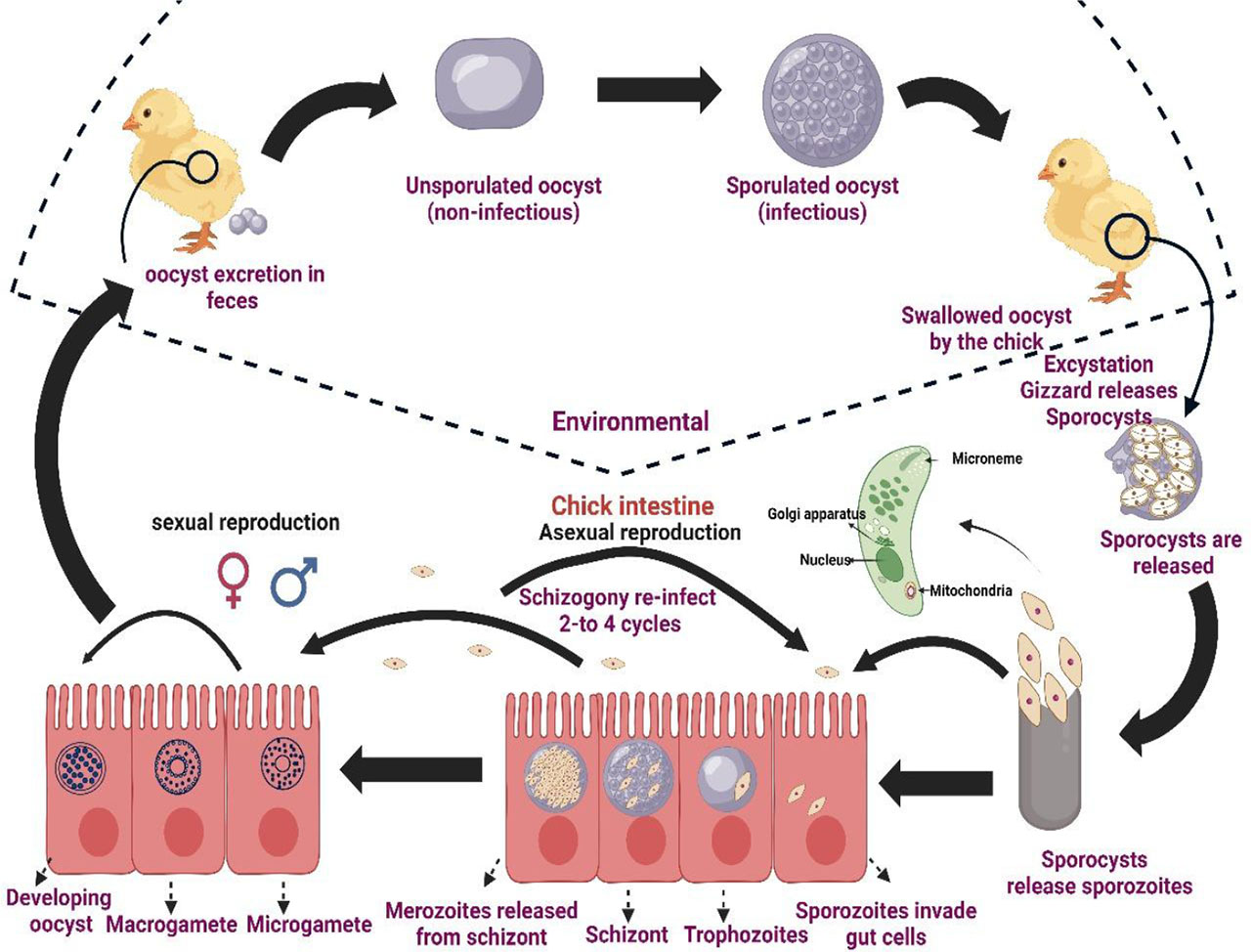
Figure 1.
Eimeria life cycle. Birds get infected by fecal matter, and protozoan reproduction occurs in the intestinal cells, damaging the intestinal wall
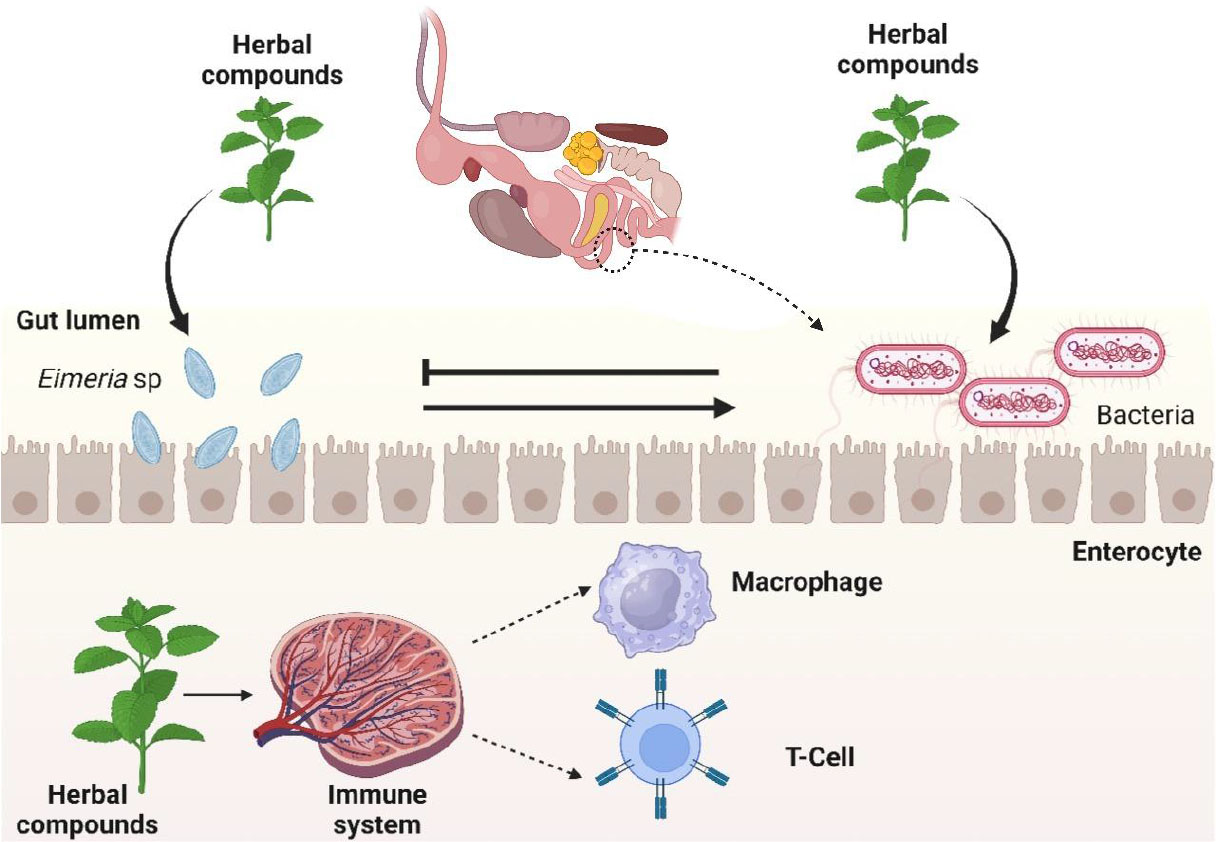
Figure 2.
Gut-associated T cells, macrophages, and the schematic process of immune response of chickens to herbal anticoccidial compounds
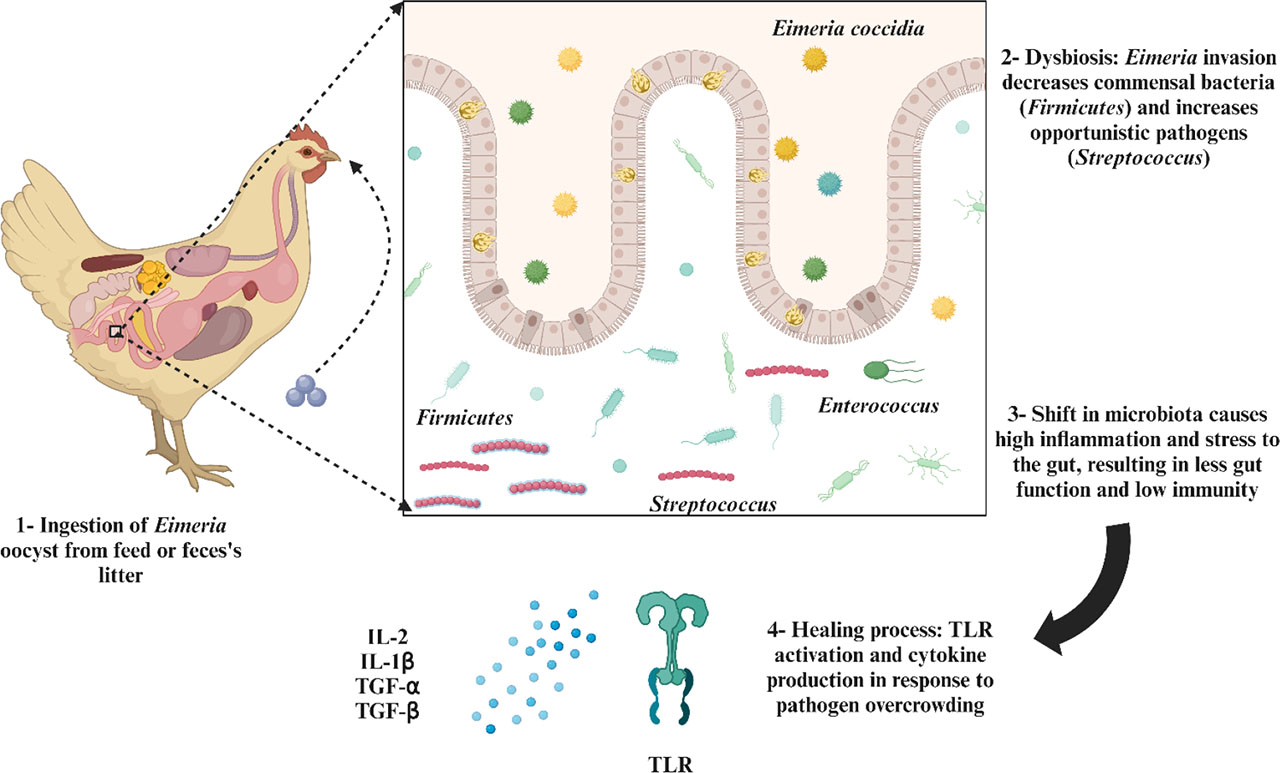
Figure 3.
Impact of coccidiosis on bacterial species in the gastrointestinal tract of chickens
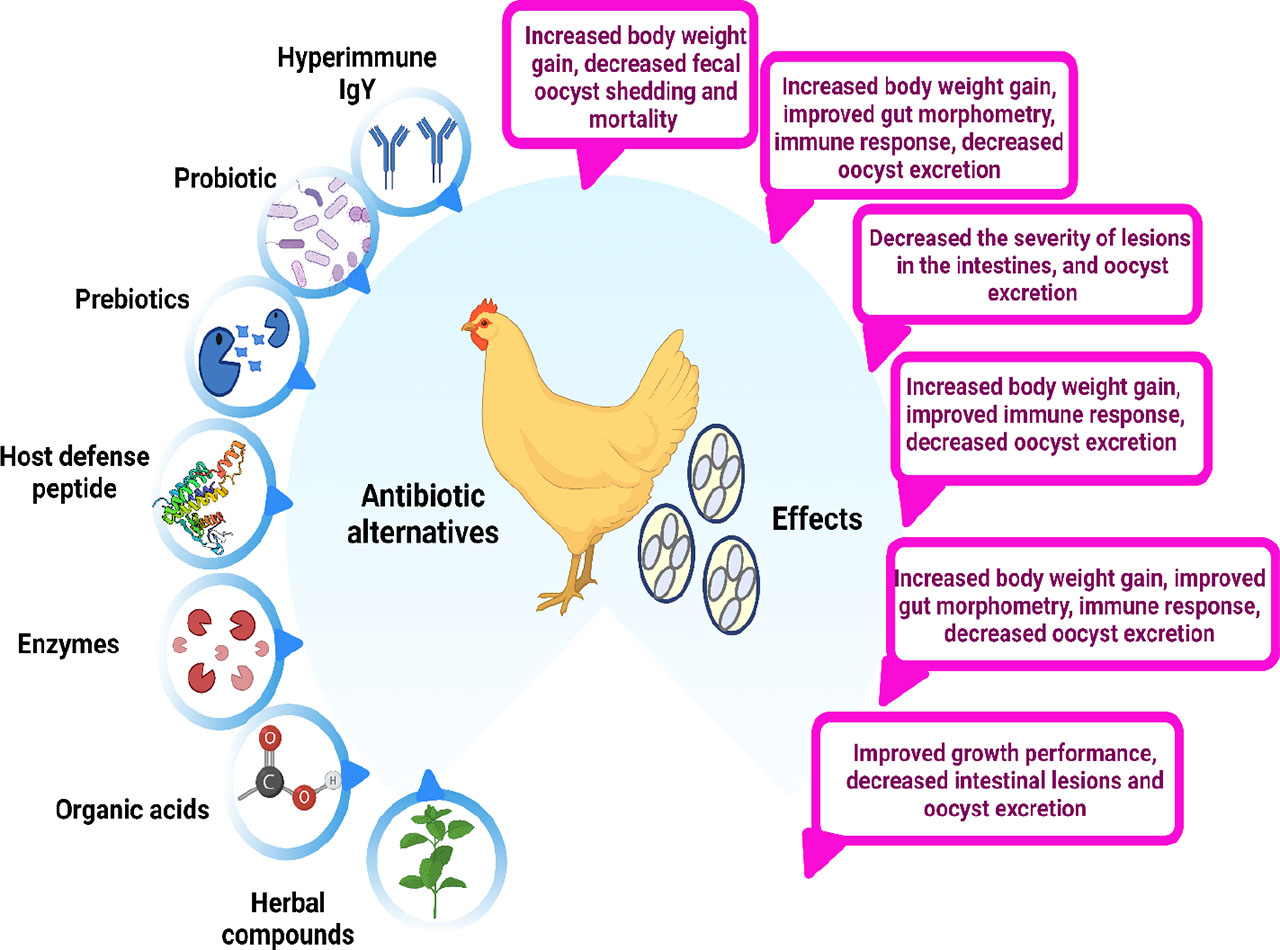
Figure 4.
Anticoccidial drug alternatives to control coccidiosis in chickens
Table 1.
Phytobiotics against Eimeria infections
| Phytobiotic | Active parts | Active compound | Anticoccidial action | References |
|---|---|---|---|---|
| 1 | 2 | 3 | 4 | 5 |
| Allium sativum | Aerial parts | Diallyl disulphide, alliin, and allicin, propyl thiosulfinate, propyl thiosulfinate oxide. S-allyl cysteine sulfoxide, phenols, flavonoids, diallyl sulphide (DAS), diallyl disulphide (DADS), or diallyl trisulphide (DATS) | Allicin and diallyl disulfide in garlic powder have antioxidant and anti-inflammatory activities, inhibiting Eimeria oocyst sporulation. The S-allyl cysteine sulfoxide, phenols, and flavonoids in the aqueous garlic extract inhibit Eimeria tenella sporulation efficiently in vitro. Furthermore, they enhance the intestinal microbiota and reduce the number of oocysts in the feces of Eimeria tenella in vivo. Essential oil of garlic contains diallyl sulphide (DAS), diallyl disulfide (DADS), or diallyl trisulphide (DATS) have anti-inflammatory and immunostimulatory characteristics and inhibit Eimeria sporulation. Propyl thiosulfinate and propyl thiosulfinate oxide inside garlicon alters the expression levels of 1,227 transcripts associated with intestinal intraepithelial lymphocytes in chickens. They trigger NF-κB, which has a significant role in regulating immune response after infection. It also improves humoral immunity, promoting splenocyte proliferation and protecting against infections of Eimeria species resulting in sporozoite destruction. | (Adjei-Mensah and Atuahene, 2022; Ali et al., 2019; Hussein et al., 2021) |
| Artemisia annua; Artemisia sieberi | Aerial parts | Artemisinin, Artemisia ketone; artemisinic acid; scopoletin, α-caryophyllene; germacrene D; Acenaphthene; 2-cyclohexen-1-one, 3-methyl-6-(1-methylethyl) | Artemisinin inhibits the growth of Eimeria sp and its sporulation. It reduces the formation of lesion score by degrading the bacterial iron-peroxide complex via the production of free radical oxygen. Coroian et al. (2022) declared that the number of oocysts per gram of feces in chickens and their lesion score decreased after treatment by Artemisia annua and Artemisia sieberi. Furthermore, it affects the gametocyte sexual cycle of Eimeria tenella via termination of the sarcoplasmic-endoplasmic reticulum calcium ATPase enzyme expression. Other components in Artemisia annua and Artemisia sieberi improve the immune response, food absorption, and digestion by increasing the beneficial intestinal microflora. | (Coroian et al., 2022; Jiao et al., 2018) |
| Curcuma longa (turmeric) | Rhizomes | Curcumin diferuloylmethane, demethoxycurcumin, and bis-demethoxycurcumin | Curcumin inhibits sporozoites by interfering with the life cycle of Eimeria. It keeps the integrity in the gut and promotes humoral immunity in the host. Besides, it alters the gut microbial population in chickens by enhancing the Lactobacilli population while lowering the Selenihalanaerobacter population. It improves antioxidant capacity, including GSH synthesis, to decrease free radical species. Yadav et al. (2020) declared that GSH synthesis reduces the number of lesions of the ceca and reduces the oocyst shedding of Eimeria maxima and Eimeria tenella. | (Lee et al., 2020; Yadav and Jha, 2019; Yadav et al., 2020) |
| Bidens pilosa | Leaves, flowers, seeds, stems, roots | Polyacetylenes, flavonoids, triterpenes, some essential oils | These active components inside Bidens pilosa have an anticoccidial effect against Eimeria tenella. They also have an immune impact by enhancing T-cell production and anti-parasitic effects against Eimeria species. Chen et al. (2020) observed that these active components treat chickens infected with E. tenella and reduce the percentage of mortalities, oocyst count, and intestinal lesions. Furthermore, they increase the body weight and gut microflora of treated chicken. | (Chen et al., 2020; Yang et al., 2019) |
| Origanum vulgare (oregano) | Leaves | Carvacrol, p-cymene, c-terpinene, limonene, terpinene, ocimene, caryophyllene, β-bisabolene, linalool, and 4-terpineol thymol, eugenol | Oregano oil has anticoccidial activity against Eimeria sp by interfering with its life cycle with the destruction of the membrane of sporozoite, resulting in a decreased number of oocysts. Furthermore, oregano oil alters the gut physiology of broiler chickens, improving growth performance and intestinal barrier function. Finally, it is observed that these compounds in the oregano oil improve the carcass traits of infected broiler chickens with coccidiosis. | (Pop et al., 2019; Tauer et al., 2018) |
| Aloe excelsa Aloe vera | Stem and fleshy, deeply channeled leaves | Acemannan chromone, anthraquinone aloe-emodin, aloin, aloesin, emodin | The active compounds inside Aloe excelsa, especially acemannan, induce immunomodulatory responses after binding with mannose receptors on the surface of macrophages. The immunomodulatory response stimulates the production of inflammatory cytokines, including IL-1, IL-6, and TNF-α, and inhibits the infection of Eimeria sp. It is observed that Aloe vera treats the infected chicken and decreases the number of droppings oocyst while improving the chicken’s weight. | (Akhtar et al., 2012; Chen et al., 2020; Darabighane and Nahashon, 2014) |
| Cinnamomum zeylanicum (cinnamon) | Inner stem bark | Cinnamaldehyde, cinnamate, and cinnamic acid | It is observed that the active compounds inside cinnamon have an anticoccidial effect against Eimeria species by promoting and increasing the production of T helper cells and cytokines with increasing body weight. Furthermore, these compounds improve the growth performance and change the caecal microbiota composition. | (Lee et al., 2011; Yang et al., 2020) |
| Beta vulgaris (beet) | Leaves taproot | Betaine, betacyanin, betaxanthin, betacyanin, phenolic acid, flavonoid | Active compounds inside Beta vulgaris improve phagocyte and lymphocyte production in the intestines of chickens infected with Eimeria sp. Also, they enhance the chicken’s weight and improve feeding efficiency by stabilizing and protecting the metabolism of intestinal epithelial cells of chicken where the Eimeria sp are multiplied and increased. They can protect intestinal cells from osmotic stress through cell membrane stabilization by a methyl group donor. Abbas et al. (2017) observed that B. vulgaris is avian coccidiosis because it contains antioxidant compounds that minimize xenobiotic-oxidative stress and stabilize the intestinal cell structures against E. maxima in broilers. | (Abbas et al., 2017; Klasing et al., 2002) |
| Triticum aestivum Saccharum officinarum | Endosperm and embryo of the wheat plant, root of Saccharum officinarum | Arabinoxylans, sugar cane | Arabinoxylan inside Triticum aestivum and Saccharum officinarum have an anticoccidial effect against coccidiosis, improving body weight, oocyst shedding, and lesion score. Arabinoxylan and sugar cane improve the natural adaptive immune response inside infected chicken against Eimeria sp. | (Awais and Akhtar, 2012) |
| Pinus radiata (pine tree) | Cones, seeds, needles, pollen, bark | Tannins | Tannins inside Pinus radiata have anticoccidial activity against Eimeria sp. Tannins penetrate the wall of Eimeria oocyst and inactivate the endogenous enzymes important for sporulating the oocyst. And so, the abnormal shapes of sporocysts inhibit the life cycle of E. tenella, E. maxima, and E. acervulina. | (Molan et al., 2009; Muthamilselvan et al., 2016) |
| Fomitella fraxinea (mushroom) | Fruiting bodies | Lectin, urushiols, polyphenols, gallotannins | It is observed that lectin inside Fomitella fraxinea has an anticoccidial effect against Eimeria sp through the improvement of both cellular and humoral immune responses inside the host. Mushrooms containing macro and micronutrients enhance immune protection and improve poultry growth. | (Dalloul et al., 2006) |
| Olea europaea (olive tree) | Leaves. olive fruits | Maslinic acid, secoiridoids, oleuropein, and oleuropein-aglycone, flavonoids, rutin and luteolin-7-glucoside, simple phenols, hydroxytyrosol, and tyrosol | Maslinic acid has anticoccidial activity and reduces the number of oocysts, lesions, and anticoccidial indices in E. tenella, increasing the treated chickens. Polyphenols, including oleuropein content, have an anti-hypertensive effect and minimize the incidence of ascites. Simple phenols penetrate and interact with cytoplasmic membranes and alter their cation permeability, impairing significant biological processes in coccidia cells and death. | (Almuhayawi et al., 2023; De Pablos et al., 2010; Debbou-Iouknane et al., 2021; Selim et al., 2022) |
| Grape seed | Seeds | Flavan-3-ol proanthocyanidins catechins | Proanthocyanidin has antioxidant activity and reduces the infection of E. tenella. It also improves the chicken’s weight and intestinal cell structure while reducing the number of mortalities. | (Wang et al., 2008) |
| Areca catechu (areca nut) | Seeds | Arecoline, arecaidine, guvacine, guvacoline | These compounds improve immunity through the production interleukins-2 and decrease the scores of the caecal lesion. Wang et al. (2018) declared that areca nut has anticoccidial characteristics in infected broiler chicks with coccidiosis. | (Wang et al., 2018 a) |
Table 2.
Probiotics and prebiotics against Eimeria infections
| Probiotic bacteria | Anticoccidial action | References |
|---|---|---|
| Bacillus cereus | Bacillus cereus competes with the Eimeria by improving the capability of beneficial intestinal bacteria to occupy the epithelium cell receptors and adhere to the gut epithelium instead of the parasite, resulting in parasite growth inhibition. Bacillus cereus facilitates the digestion of indigestible fibers into fatty acids and butyrate, which are important for extra nutrients and energy. Bacillus cereus stimulates intestinal epithelium proliferation. Furthermore, treating Bacillus cereus protects against Eimeria sp., by promoting the host immune response and regulating T-helper cells. | (Gu et al., 2020; Leung et al., 2019) |
| Bacillus subtilis | Bacillus subtilis modifies the composition of the microbiota in the gut and results in the enhancement of growth performance. Bacillus subtilis increases the number of intestinal Bacteroidetes and promotes nutrient digestion in broilers. Also, it alters microbial communities and increases predominant species, resulting in a decrease in bacterial diversity in the caecum of the infected chicken. | (Erdoğmuş et al., 2019; Wang et al., 2019 a) |
| Enterococcus faecium | Enterococcus faecium alters the composition and number of beneficial microflora in the intestine. Besides, it induces the production of anti-inflammatory cytokines with cell-mediated and humoral immunity responses in infected chickens with Eimeria sp., and decreases the severity effect of intestinal lesions. | (Wu et al., 2019) |
| Pediococcus | Pediococcus induces an immune response against Eimeria acervulina or Eimeria tenella. It protects against growth reduction and oocyst shedding. It is also observed that combining Pediococcus with saccharomyces improves the immune response against Eimeria acervulina or Eimeria tenella. | (Lee et al., 2007) |
| Bacillus DFMs | Combining Bacillus direct-fed microbials (DFMs) alone or with xylanase has anticoccidial activity against Clostridium perfringens and Eimeria sp. Furthermore, this combination improves body weight growth and decreases the mortality rate in infected broilers. Moreover, Bacillus DFMs alone or with xylanase reduces the severity and gross lesion scores in the small intestine and improves the growth performance of broilers. | (Nusairat et al. 2018) |
| A mixture of lactic acid bacteria (Lactobacillus species) |
| (Alagawany et al., 2018; Behnamifar et al. 2019; Royan, 2019) |
| Prebiotic | ||
| Arabinoxylooligosaccharides (AXOS) | Arabinoxylan is partially hydrolyzed to give Arabinoxylooligosaccharides, which have an anti-bacterial effect against Salmonella sp., by decreasing the bacterial shedding in the feces. Also, it passes from the small intestine to the lower gut. It becomes available for probiotic bacteria and enhances feed efficiency in broilers by improving the quality of short-chain fatty acids (SCFAs). AXOS enhances the selective stimulation of the beneficial bacteria and inhibits pathogenic bacteria, resulting in improved colon function and enhanced immune response. It also decreases the severity degree of lesions in the intestine and oocyst excretion in broilers. | (Al-Sheraji et al., 2013; Eeckhaut et al., 2008) |
| Fructooligosaccharides (FOS) | Fructooligosaccharides are structurally oligosaccharides extracted from garlic, onion, and chicory. It has an anticoccidial effect against Eimeria sp. It has a significant role in inducing the activity of commensal bacteria, excluding pathogenic bacteria in the gut. FOS induces the accumulation of probiotics in the gut, inhibits pathogens, and enhances the immune response in broilers. | (Nopvichai et al., 2019; Ocejo et al., 2019; Yadav and Jha, 2019) |
| Isomaltooligosaccharides (IMOS) | Isomaltooligosaccharides are extracted from the main components of starch in a multistage process. Isomaltooligosaccharide enhances the broiler’s growth performance and controls the microbiota in the intestine by improving the numbers of Lactobacillus in the ceca with broilers infected with Escherichia coli O78. | (Tarabees et al., 2019) |
| Mannan-oligosaccharides (MOS) | Mannan-oligosaccharides comprise ten mannose units linked via α-(1,3) and α-(1,6) bonds extracted from the yeast’s cell wall and Saccharomyces. MOS decreases the degree of the severity of E. acervulina lesions and oocyst fecal shedding in infected broilers with Eimeria sp. mixtures. MOS improves broilers’ growth and feed and decreases the degree of severity of lesions in broilers infected with Eimeria spp. | (Angwech et al., 2019; Bozkurt et al., 2014) |
| Soy oligosaccharides (SBM) Soybean meal-based diets | Soybean meal-based diets (SBM) enhance feed intake, weight gain, and production of short-chain fatty acids. It induces cytokines production in the duodenal in the broilers infected with E. acervulina, which is related to boiler feed improvement. | (Faber et al., 2012) |
| Xylooligosaccharides (XOS) | Lin et al. (2022) declared that xylooligosaccharides enhance nutrient utilization and growth performance in infected chicken with Eimeria sp by increasing the production of branched-chain fatty acids isobutyrate and isovalerate. | (Lin et al., 2022) |
| Quercetin | Quercetin is used as a flavonoid prebiotic, which can modify the cecal microflora of broilers by decreasing the numbers of P. aeruginosa, S. enterica, S. aureus, and E. coli and increasing the numbers of Lactobacillus and Bifidobacterium. Quercetin inhibits microbial growth of E. coli and S. aureus in vitro by cell wall and cell membrane destruction. | (Wang et al., 2018 b) |