
1. INTRODUCTION
Laser cutting is one of the most commonly used thermal cutting methods. This technology utilizes a concentrated beam of photons, enabling precise cutting of complex steel and other materials while maintaining high accuracy and quality of cut surfaces, with a narrow heat-affected zone (HAZ) [1–6]. The quality of the cutting surface is influenced by multiple factors, including the type of material being cut, selected cutting parameters (e.g., laser beam power, assist gas, feed rate, lens type, and focal length), as well as the correct setup and operation of the laser cutting system [1–10]. To assess the appropriateness of laser or plasma cutting parameters for different materials, previous studies have primarily focused on evaluating lateral surface perpendicularity, cut surface roughness, kerf width, and the heat-affected zone [1–10]. In some cases, the obtained results have been compared with relevant industry standards [11].
In the study presented in [2], roughness parameters Ra, Rz, Rt, Rp, and Rv were measured on both the laser-exposed and opposite sides of the material to compare the cutting surfaces of selected structural materials processed using plasma and laser cutting. Additionally, microstructural analysis was conducted. The comparative results demonstrated a significant advantage of laser cutting over plasma cutting.
Similarly, research described in [7] used the roughness parameter Rz5 to analyze the surfaces of S355J2 steel cut by plasma, alongside hardness (HV10) measurements and perpendicularity assessments. The study concluded that the skill and experience of the operator had a substantial impact on the quality of plasma-cut edges. Preliminary findings obtained through 3D scanning indicated that cutting parameters should not solely rely on the manufacturer’s recommended settings. Furthermore, Daniel J. Thomas [12] investigated the stability of laser-cut edges in high-stress locations on structural beams, concluding that surface roughness characteristics could serve as indicators of fatigue life.
To develop models and optimize the laser cutting process, the Design of Experiments (DoE) methodology can be employed. This approach allows for the extraction of a large amount of data from a limited number of experiments, reducing the number of required tests and overall processing time. Tests can be conducted using a full factorial design, and response surface methodology (RSM)—a combination of mathematical and statistical modeling—can be applied for multi-criteria optimization. Many researchers have used this method to analyze and optimize cutting processes [13–15]. For example, in [16], RSM was employed to model the abrasive water-jet cutting (AWSJ) process of a composite material (phenolic resin reinforced with cotton fabric), identifying optimal control parameters to enhance cutting depth efficiency. In another study [17], RSM was used to assess the influence of key process parameters on the accuracy and surface quality of plasma arc cutting (PAC) for Monel 400 steel.
This study explores the optimization of the laser cutting process for S355J2C+N steel, with particular emphasis on improving cut surface quality and accuracy using response surface methodology (RSM). There is a limited number of studies addressing this specific topic. The upper zone of the cut surface was analyzed due to the presence of irregularities in the form of striations.
These surface fringes are a major determinant of edge roughness in laser cutting and serve as key quality indicators. Their formation is influenced by both laser cutting parameters and the material properties of the workpiece [12, 18, 19]. The primary objective of this study is to minimize height variations in the surface profile, which can contribute to stress concentration and crack initiation, thereby enhancing the structural integrity of laser-cut components.
2. RESEARCH METHODOLOGY
The experiments were conducted on hot-rolled S355J2C+N non-alloy structural steel, supplied in the form of sheet metal after normalization [20]. The chemical composition and minimum mechanical properties of the tested material are presented in Table 1.
Tab. 1.
Chemical composition and minimum mechanical properties of S355J2C+N steel [20]
| Maximum element content, % | |||||
| C | Mn | Si | P | S | N |
| 0.22 | 1.5 | 0.55 | 0.035 | 0.035 | - |
| Minimal mechanical properties | |||||
| ReH MPa | Rm MPa | A % | |||
| 355 | 490 | 20 | |||
The experimental studies aimed to evaluate the influence of various fiber laser parameters on the surface morphology after the cutting process. The tests were conducted on a 10 mm thick sheet of S355J2C+N steel, using a Fiber Laser VF1530 cutting machine with a power of 4000 W (manufactured by Otinus). A double nozzle with a 1.2 mm diameter was used for cutting, and oxygen was selected as the processing gas at a pressure of 0.9 bar. For analysis, samples measuring 52.5 × 25 × 10 mm were cut from the sheet [21].
The cut surface was examined using an Olympus DSX 1000 digital microscope (Olympus Corp., Tokyo, Japan). Surface roughness analysis was performed at three locations in the upper part of the cut surface, measured from the top of the sample at distances of 750 μm, 1000 μm, and 1250 μm. The measurements were conducted using Lext software, specifically designed for the Olympus DSX 1000 microscope. The cut surface was also observed using the Axia ChemisSEM Scanning Electron Microscope from ThermoFisher Scientific. The images were captured from the analyzed upper section of the cut surface at magnifications of 200x and 2000x.
For the roughness analysis, the amplitude parameter Rc was used. Rc, known as the mean height of profile elements, represents the average height variation of surface features over the sampling length. It provides a measure of the central tendency of surface roughness peaks and valleys, offering insight into the overall surface texture. Rc is particularly valuable for surface characterization where a uniform distribution of peaks and valleys is crucial. While many studies focus on Rz (maximum height) and Ra (arithmetic mean deviation) parameters [22–25], Rc was selected for this study as it accounts for the average height of individual profile elements rather than just extreme values (Rz) or absolute mean deviations (Ra). Additionally, Rc is less sensitive to single extreme values, as it considers a greater number of measurement points compared to Rz.
The steel cutting process was conducted based on factorial experimental design. Statistical data analysis was performed using Minitab 21.1 software (Pennsylvania State University, Pennsylvania, PA, USA). A comprehensive factorial plan was applied to determine the effects of focal length (mm), feed rate (mm/s), and peak power (W) on surface roughness (Rc). The main effects and bidirectional interactions were analyzed using a mathematical model describing the relationships between variables. The function defining these relationships typically takes the form of second-degree polynomials, expressed as:
where in the formula the calculated value of the parameter is marked as – intercept, biregression coefficients of the linear terms of the model, x1 – linear terms of the factors, bij regression coefficients of the terms of the double coefficients, xixj – terms of the interaction of the double factors xi and xj.The tests were conducted based on three independent variables, namely focal length, feed rate, and peak power. The following designations and parameter ranges were adopted:
– X1 – focal length: 0.2 mm to 0.3 mm,
– X2 – feed speed: 25.334 mm/s to 28.000 mm/s,
– X3 – peak power: 3600 W to 4000 W.
These parameters were selected because the values recommended by the sheet metal manufacturer did not allow for a successful cut. The figure below presents an example of a cutting attempt using the manufacturer's recommended settings. These settings were as follows:
– Focal length: 5 mm,
– Feed speed: 30.833 mm/s,
– Peak power: 4000 W.
With these parameters, it was not possible to achieve a complete cut or to separate the element from the sheet metal.
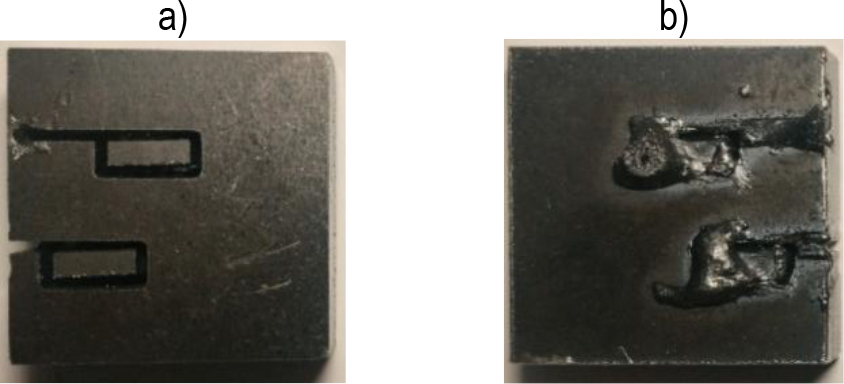
Fig. 1.
An attempt to cut out samples from S355J2C+N steel using the manufacturer's parameters: a) surface view, b) underside view
3. RESULTS AND DISCUSSION
The results of the surface roughness measurements obtained for the given laser operating parameters are presented in Table 2. The table also includes the results calculated using the (Y') model. It can be observed that an increase in power, relative to a crosscutting speed of 25.334 mm/s, resulted in additional melting of the material, leading to greater surface roughness. However, when the cross-cutting speed increased, the surface roughness decreased again.
Tab. 2.
Cutting parameters used
| Steel S355J2C+N Laser Settings | |||||
|---|---|---|---|---|---|
| Focus [mm] | Speed [mm/s] | Peak Power [W] | Mount Rc | ||
| X1 | X2 | X3 | Y | Y’ | |
| 1 | 2 | 3 | 4 | 5 | 6 |
| 1 | 0.2 | 25.334 | 3600 | 45.82 | 45.65 |
| 2 | 0.2 | 25.334 | 4000 | 61.56 | 61.73 |
| 3 | 0.2 | 28 | 3600 | 55.01 | 55.18 |
| 4 | 0.2 | 28 | 4000 | 43.00 | 42.84 |
| 5 | 0.3 | 25.334 | 3600 | 58.41 | 58.58 |
| 6 | 0.3 | 25.334 | 4000 | 79.70 | 79.53 |
| 7 | 0.3 | 28 | 3600 | 42.88 | 42.71 |
| 8 | 0.3 | 28 | 4000 | 35.07 | 35.24 |
Figure 2 presents an example of the surface topography, while Figures 3 and 4 display photographs of the side surfaces of the cut samples, including measurement site markings. Laser-cut edges produced using different parameter settings exhibit distinctive surface characteristics. On the lateral surface of the material, zones with different topographic features can be identified (see Fig. 4a). Zone 1: Regular and evenly distributed striations are visible, with an average width of approximately 250 μm, covering about 30% of the assessed area. Zone 2: The striations disappear, and the surface becomes more homogeneous.
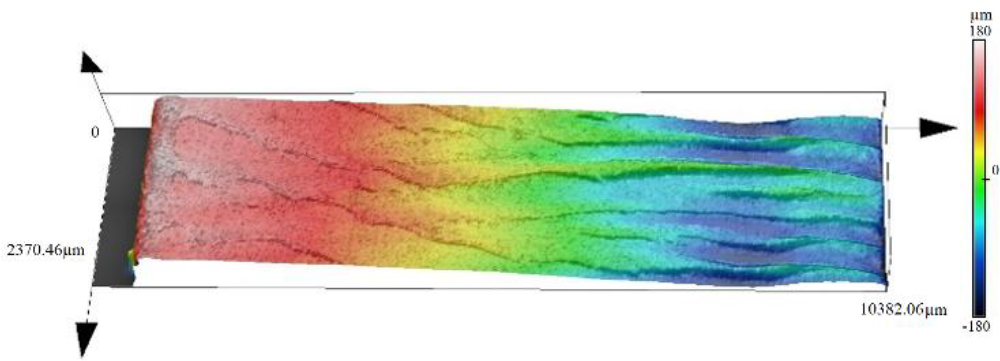
Fig. 2.
Example of surface topography obtained at the following settings: focal length 0.2 mm; feed rate 28 mm/s and peak power 3600 W (see Table 1 column 1, sample number 3)
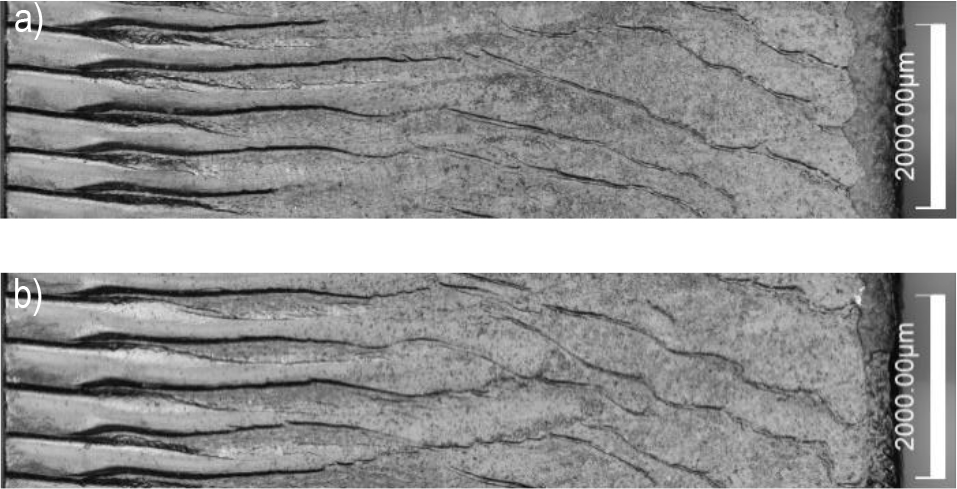
Fig. 3.
Photographs of the lateral surface of the cut specimen according to the parameters marked in Table 2, Column 1, as: a) Sample 1, b) Sample 2.
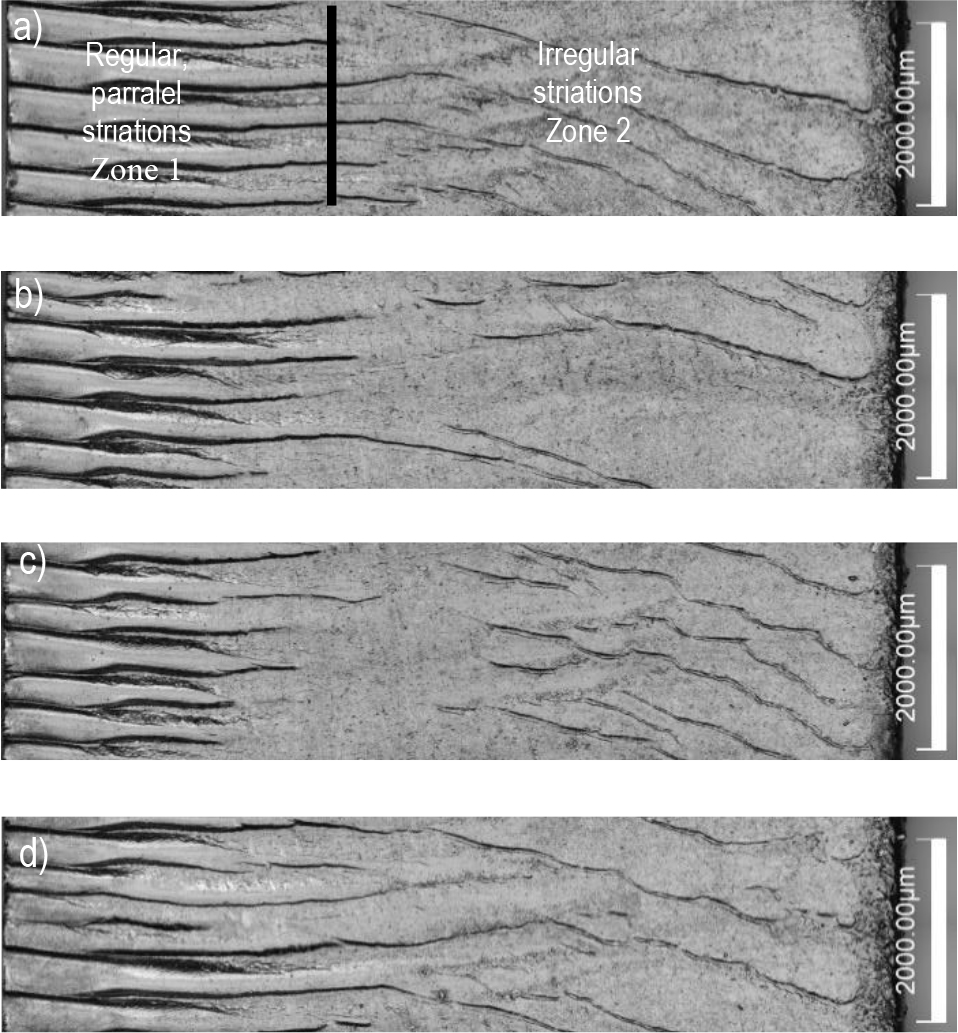
Fig. 4.
Photographs of the lateral surface of the cut specimen according to the parameters marked in Table 2, Column 1, as: a) Sample 5, b) Sample 6, c) Sample 7, d) Sample 8
Table 3 presents the overall ANOVA results for main effects and two-factor interactions, analyzed at a 95% confidence level (α = 0.05). The main effects, such as feed speed (p = 0.012) and peak power (p = 0.049), were found to be statistically sig-nificant. The interaction between feed rate and peak power, as well as focal length and feed speed, significantly affected sur-face roughness.
Tab. 3.
Analysis of variance (ANOVA) results for the influence of cutting parameters on Rc
| Source 1 | DF 2 | Adj SS 3 | Adj MS 4 | F-Value 5 | P-Value 6 |
|---|---|---|---|---|---|
| Model | 6 | 1393.79 | 232.298 | 1039.10 | 0.024 |
| Linear | 3 | 655.54 | 218.513 | 977.44 | 0.024 |
| Focal length [mm] | 1 | 14.18 | 14.176 | 63.41 | 0.080 |
| Feed speed [mm/s] | 1 | 604.34 | 604.337 | 2703.27 | 0.012 |
| Peak power [W] | 1 | 37.03 | 37.026 | 165.62 | 0.049 |
| 2-Way Interaction | 3 | 738.25 | 246.083 | 1100.76 | 0.022 |
| Focal length [mm]* Feed speed [mm/s] | 1 | 322.51 | 322.512 | 1442.64 | 0.017 |
| Focal length [mm]*Peak power [W] | 1 | 11.87 | 11.868 | 53.09 | 0.087 |
| Feed speed [mm/s]*Peak power [W] | 1 | 403.87 | 403.867 | 1806.55 | 0.015 |
| Error | 1 | 0.22 | 0.224 | ||
| Total | 7 | 1394.01 |
Figure 5 illustrates a Pareto plot of standard-ized effects, obtained from analysis of variance (ANOVA) for main effects and two-factor interactions. Additionally, the figure includes a normal probability plot of residuals and a predicted versus actual plot, which confirm that the model provides a good fit to the experimental data and that the residuals are approximately normally distributed. Although the normal probability plot of residuals indicates a departure from normality (AD = 1.282, p < 0.005), the predicted-versus-actual plot shows close agreement with the data (points along the 45° line), confirming very good model fit.The graph Pareto indicates that feed rate is the most statistically significant factor affecting surface roughness.
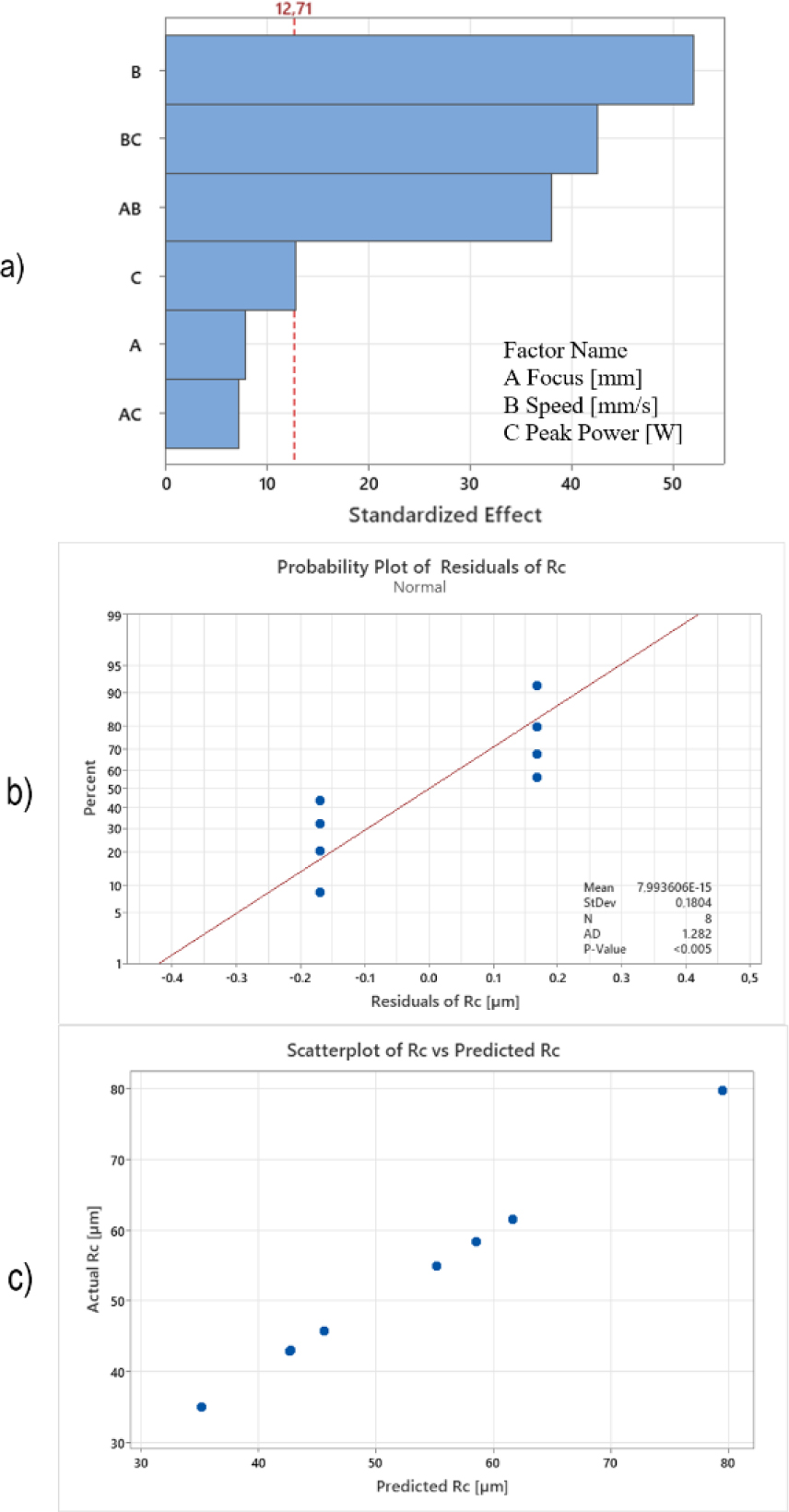
Fig. 5.
Pareto chart and diagnostic plots of the EPS production model.(a) Pareto chart of standardized effects, (b) Normal probability plot of residuals, (c) Predicted vs actual values.
In the proposed model, the coefficient of determination (R2) was relatively high, amounting to 99.98%, and was close to the adjusted coefficient of determination (R2 adj = 99.89%), which confirms the linearity of the regression model. The model's ability to predict new observations was evidenced by the high R2 values—the predicted value obtained for the reliability of the selected model was 98.97%. The equation of the full regression model, describing the effect of laser setting parameters on roughness, can be expressed as follows:
A graphical representation of this equation is shown in two-dimensional diagrams in Figure 6.
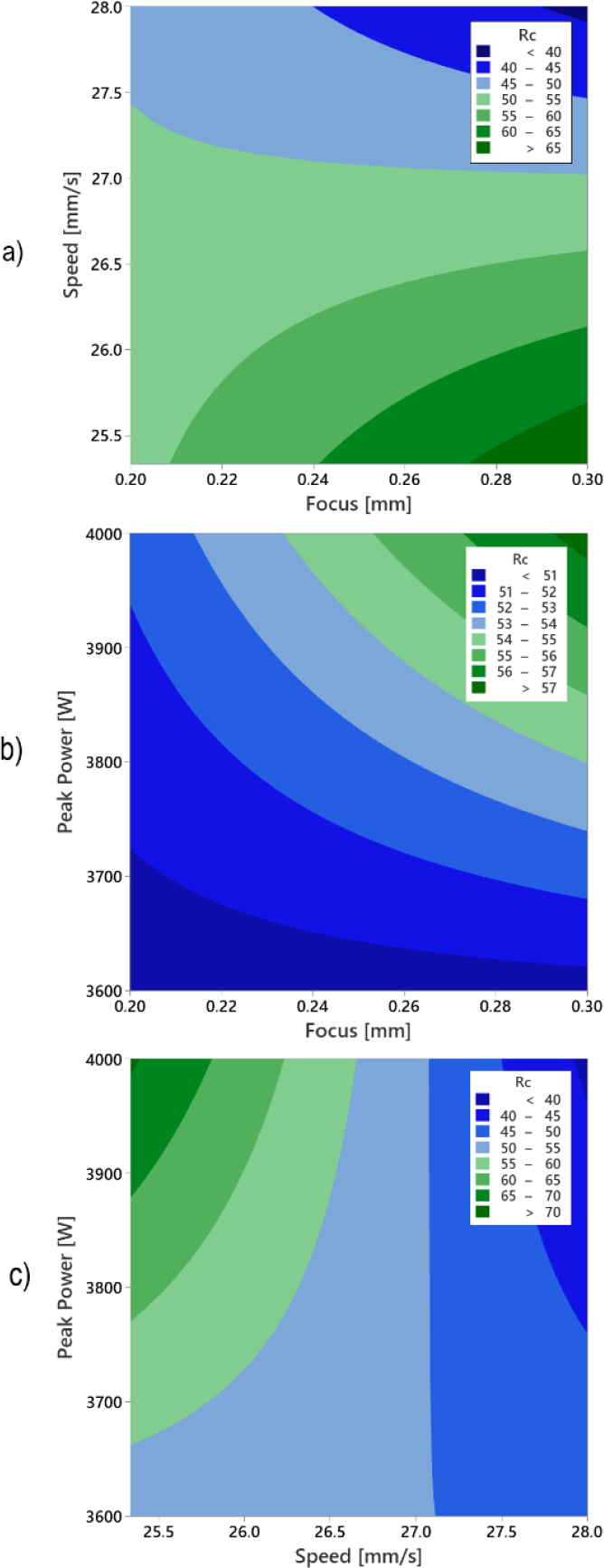
Fig. 6.
Influence of control factors on surface roughness Rc: a) Feed and focal speed; (b) Peak and focal power; (c) Peak power and feed speed
To ensure low surface roughness in the upper cutting zone under the laser settings presented in Table 1, it is necessary to apply the highest focal length and feed rate, while maintaining the lowest peak power among the analysed cases.
Figure 7 presents example SEM images of the cut surface, obtained using the Axia ChemisSEM Scanning Electron Microscope from ThermoFisher Scientific. The images were taken from the analyzed upper section of the cut surface at magnifications of 200× and 2000×, providing both macrostructural and microstructural insights into the surface characteristics. Observations were conducted on samples 6 and 8 (see Table 1), which exhibited the highest and lowest Rc roughness values, respectively. The Rc roughness parameter was measured at 79.7 μm for sample 6 and approximately 35 μm for sample 8, indicating a significant difference in surface texture between the two samples.
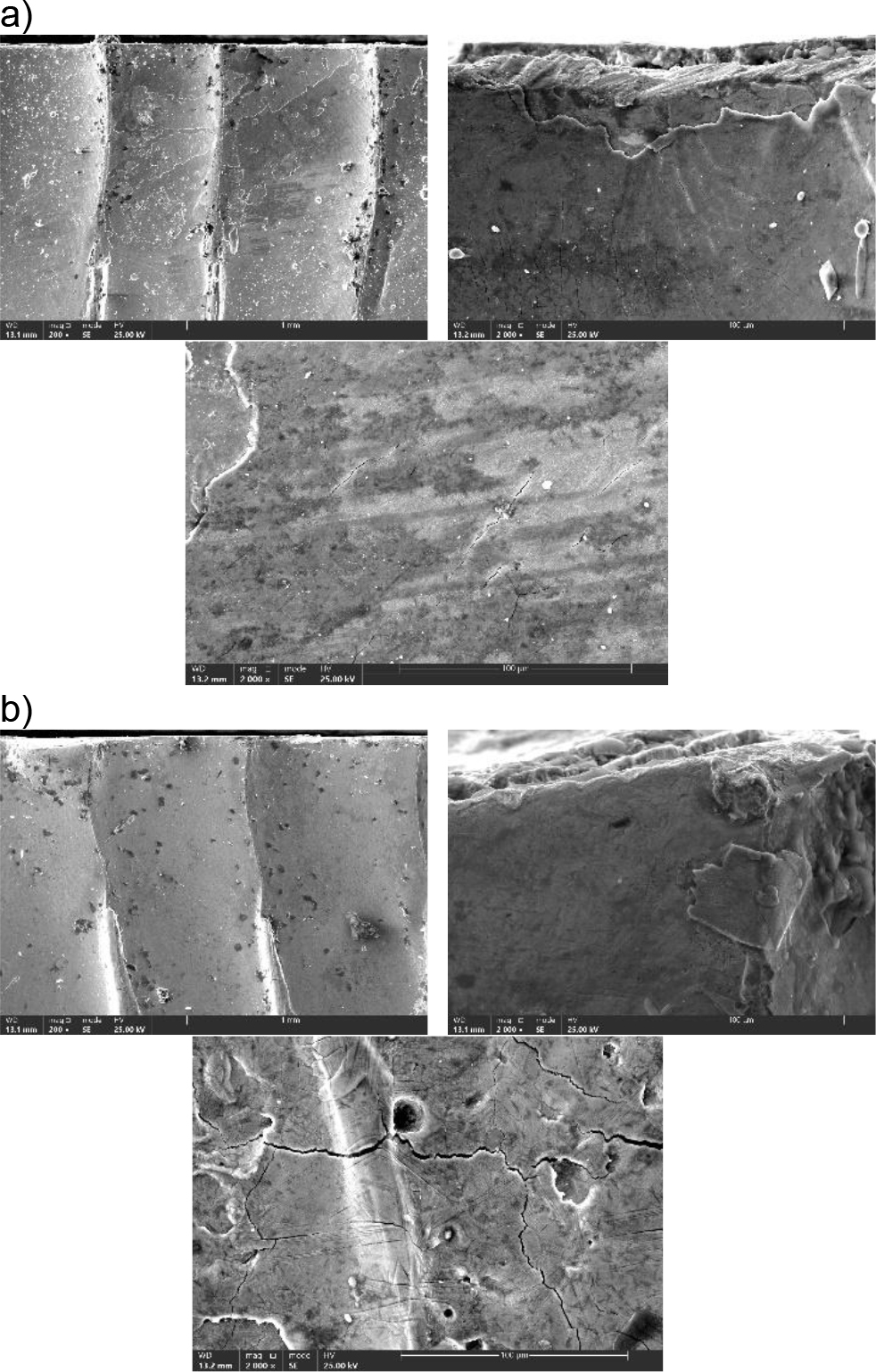
Fig. 7.
SEM photographs of the upper part of the cut surface. with visible cracks in the material, a) sample number 8; b) sample number 6 (see table 1)
It should be noted that striations form on laser-cut surfaces due to the combined effects of laser energy and high-pressure assist gas. These striations are periodic surface patterns that arise from the interaction between the heat generated by the laser and the dynamic forces of the assist gas. In the upper zone of the cut surface, burrs, localized material damage, and microcracks were observed, which may be attributed to thermal stresses during the laser cutting process. These defects, if not controlled, can negatively impact the material’s mechanical properties, particularly its fatigue resistance.
4. CONCLUSIONS
The following conclusions were drawn from the study:
– Laser-cut edges, produced with the process parameters of focus at 0.3 mm, speed of 28 mm/s, and peak power of 4000W, exhibited the lowest surface roughness, with an Rc value of approximately 35 μm. When the peak power was reduced to 3600W, this parameter increased by approximately 0.3 μm, indicating a correlation between power and surface roughness.
– Optimization via the Response Optimizer (ramp chart, Fig. 8) identified the same parameter combination (focus 0.30 mm, speed 28 mm/s, peak power 4000 W) as optimal for minimizing Rc, with a predicted minimum Rc = 35.24 μm and composite desirability D=0.996, consistent with the experimental result.
– Based on the analysis of the variance of laser cutting parameters for S355J2C+N steel, with respect to the roughness of the upper part of the cut surface (evaluated through the Rc parameter), it was found that the proposed mathematical model describing the influence of the cutting parameters on Rc demonstrated a predicted coefficient of determination of approximately 99.89% (R2 adj = 99.89%). The Rc value is significantly influenced by cutting speed, the interaction of speed and peak power, the interaction of focus and speed, as well as the peak power itself.
– Striation formation on laser-cut surfaces results from the combined effects of laser energy and the high-pressure assist gas used during the cutting process. These striations manifest as periodic surface patterns, which are a direct consequence of the interaction between thermal effects and gas dynamics, leading to variations in material removal efficiency and surface morphology. In the upper zone of the cut surface, further inspection revealed the presence of burrs, localized material damage, and microcracks, likely caused by the thermal stresses and rapid cooling associated with laser cutting. These defects are of particular concern, as they may negatively affect the mechanical properties and fatigue resistance of the processed material. Therefore, the mitigation of these defects is crucial for optimizing laser cutting parameters to ensure better performance and material integrity.
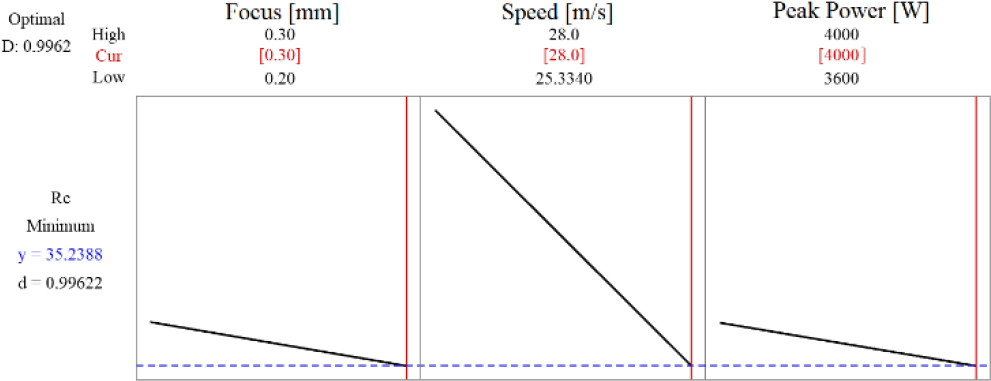
Fig. 8.
Response Optimizer ramp chart for Rc: optimal settings focus = 0.30 mm, speed = 28.0 mm/s, peak power = 4000 W; predicted minimum Rc = 35.24 μm with desirability D=0.996