
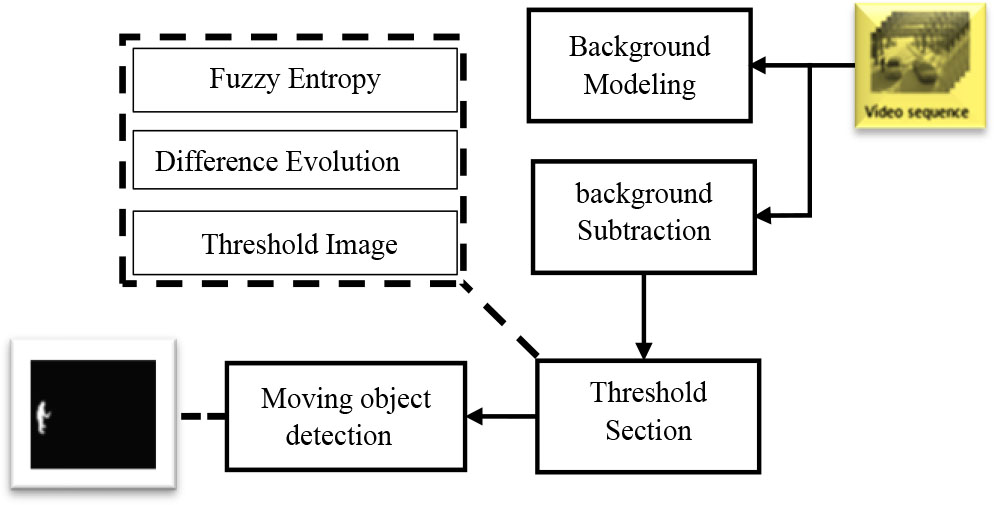
Fig. 1.
General flow chart of the proposed method
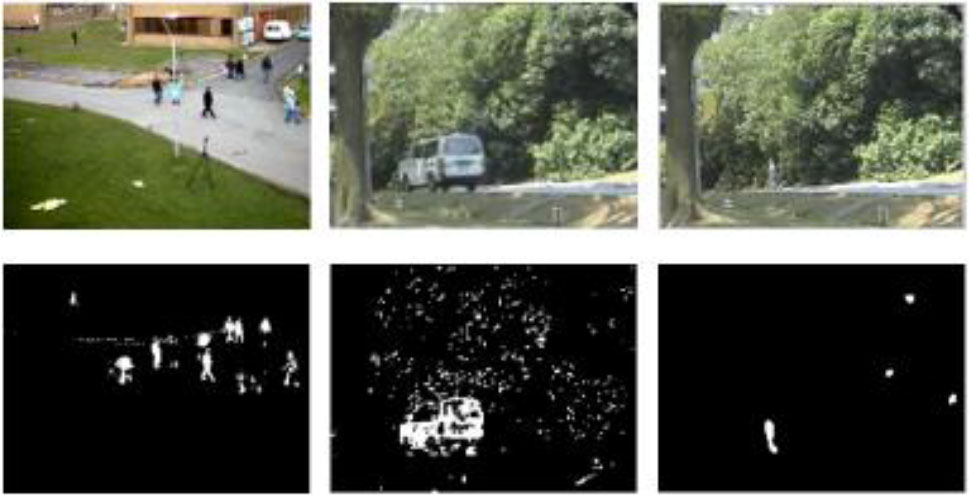
Fig. 2.
The first row shows the original images, the second row shows the generated difference images
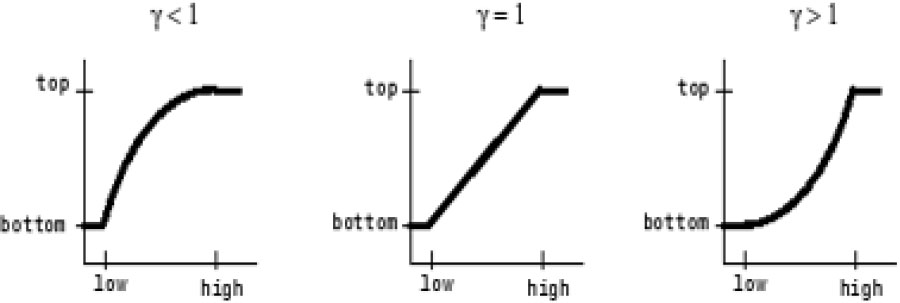
Fig. 3.
Change in intensity of the input image along the x-axis relative to the output image along the y-axis, when gamma is less than or equal to 1 and b gamma is greater than or equal to 1
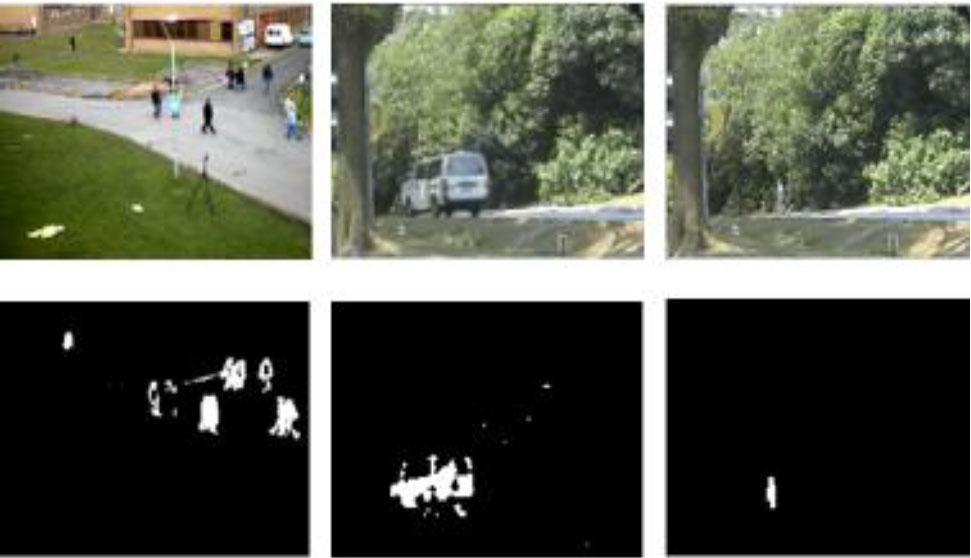
Fig. 4.
The first row shows the original images, and the post-processing scheme improves the difference images
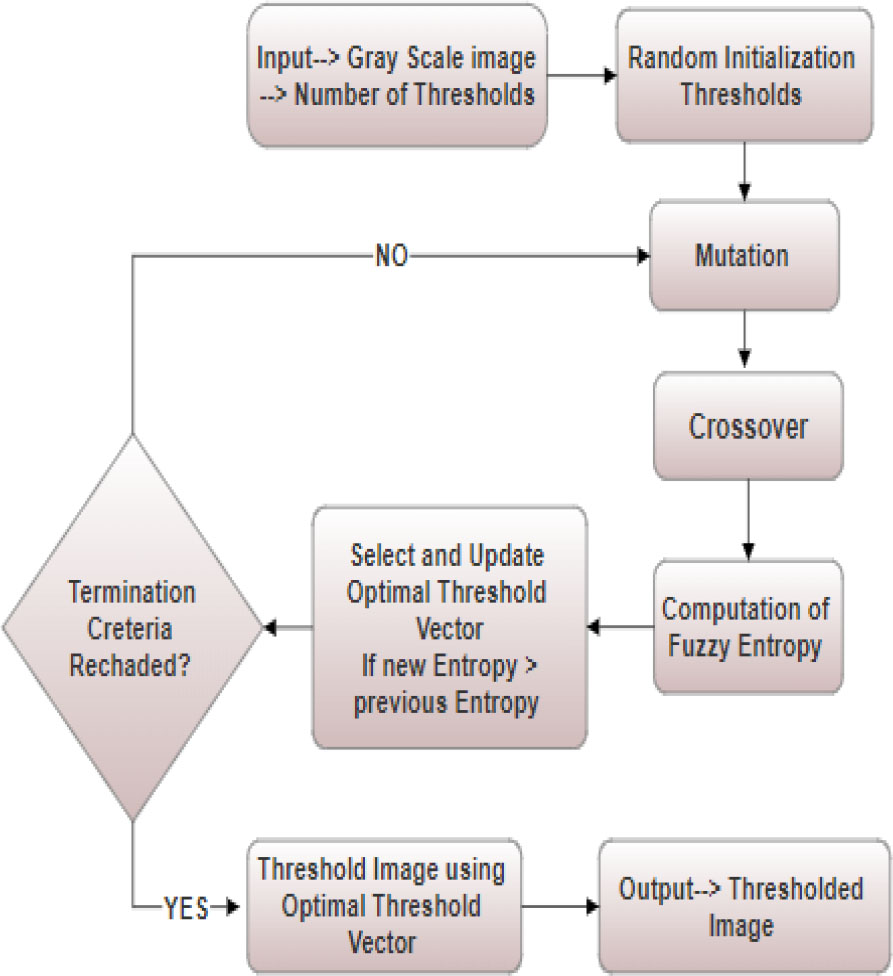
Fig. 5.
Flowchart of segmentation process
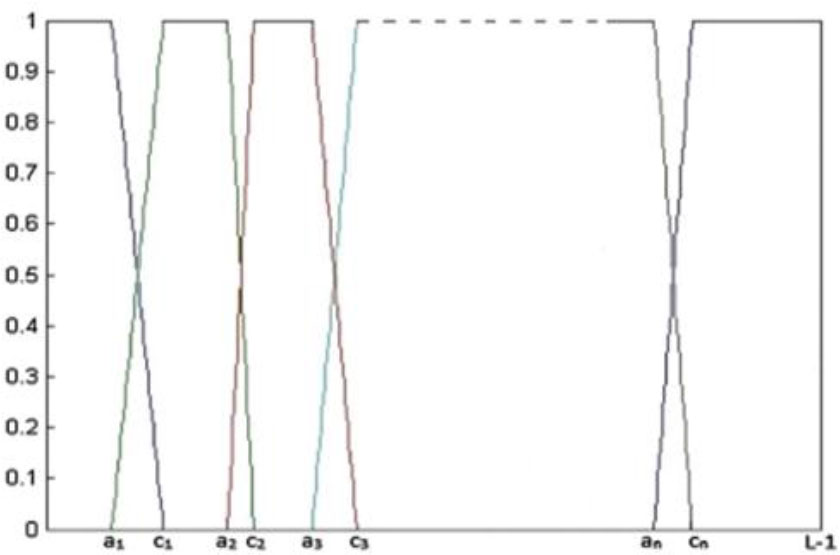
Fig. 6.
Fuzzy membership function for n - level segmentation
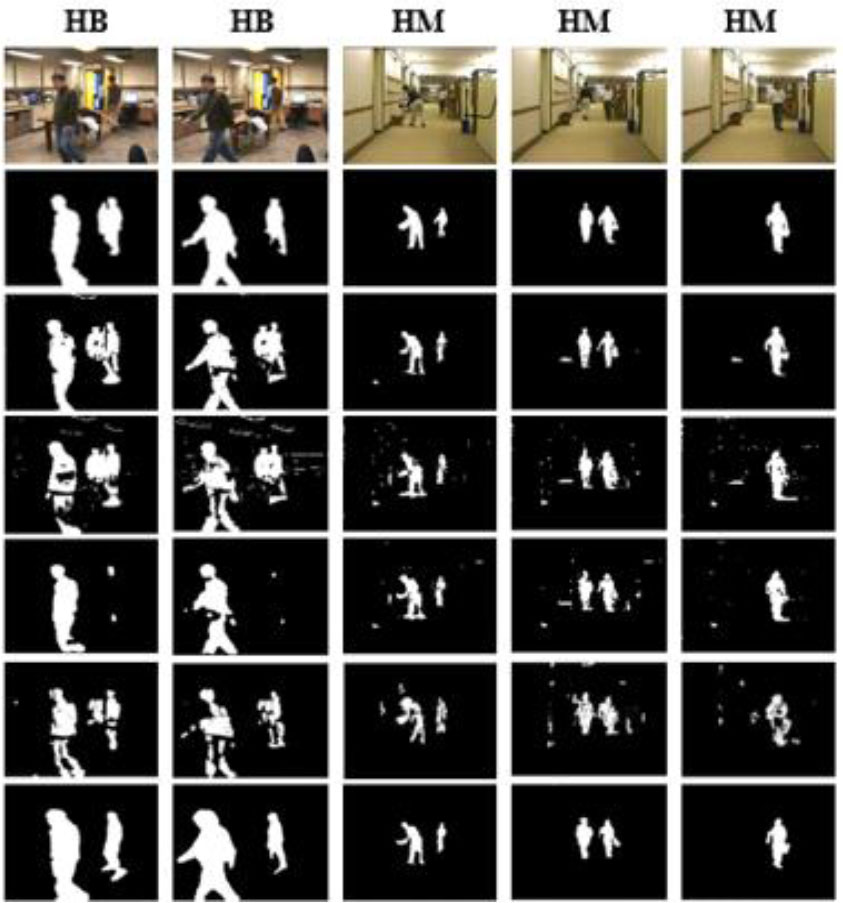
Fig. 7.
Comparative analysis of our approach with state-of-the-art methods by exploiting specific videos such as “HumanBody1-HB” and “HallAndMonitor-HM” from the SBI2015 dataset. The left-to-right layout shows results for: original, ground truth, DeepBS [27], SC_SOBS [25], SuBSENSE [24], GMM_Zivk [26}, as well as our method. The results for NThr=4 are displayed in this figure
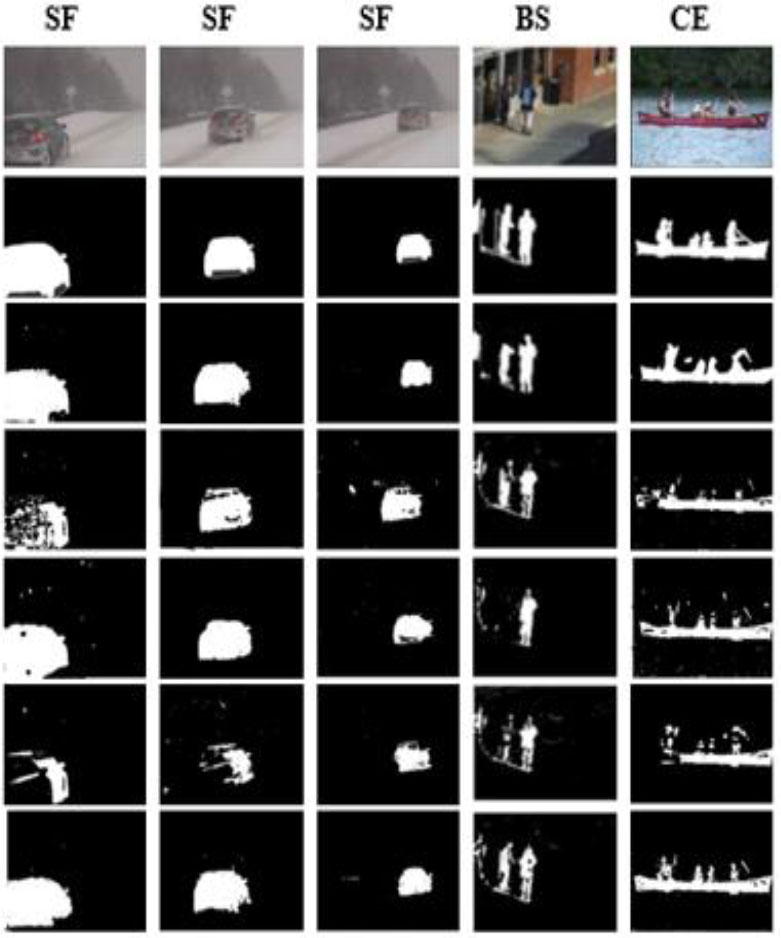
Fig. 8.
Comparative analysis of our approach with state-of-the-art methods by exploiting specific videos such as “SnowFall-SF”, “BusStation-BS” and “Canoe-CE” from the CDnet 2014 dataset. The left-to-right layout shows results for original, ground truth, DeepBS [27], SC_SOBS [25], SuBSENSE [24], GMM_Zivk [26], as well as our method, The results for NThr=4 are displayed in this figure
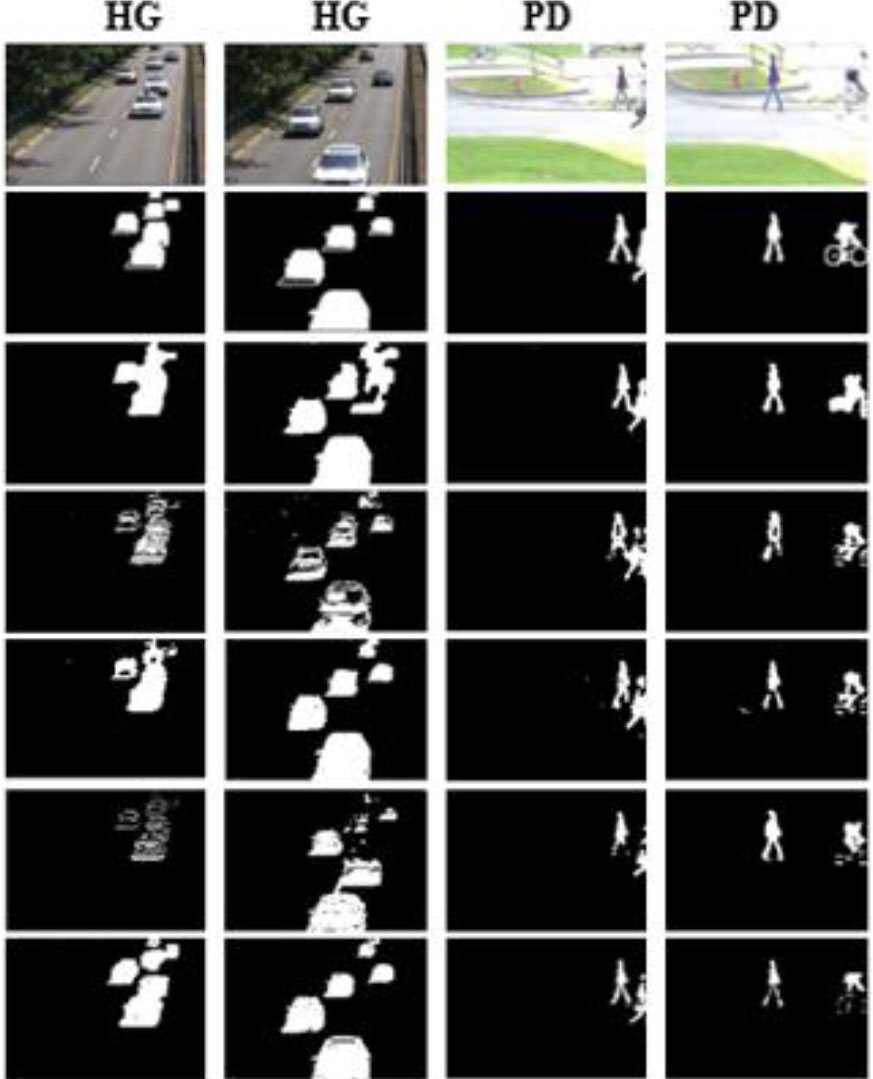
Fig. 9.
Comparative analysis of our approach with state-of-the-art methods by exploiting specific videos such as “Highway-HG” and “Pedestrians-PD” from the CDnet 2014 dataset. The left-to-right layout shows results for original, ground truth, DeepBS [27], SC_SOBS [25], SuBSENSE [24], GMM_Zivk [26], as well as our method. The results for NThr=4 are displayed in this figure
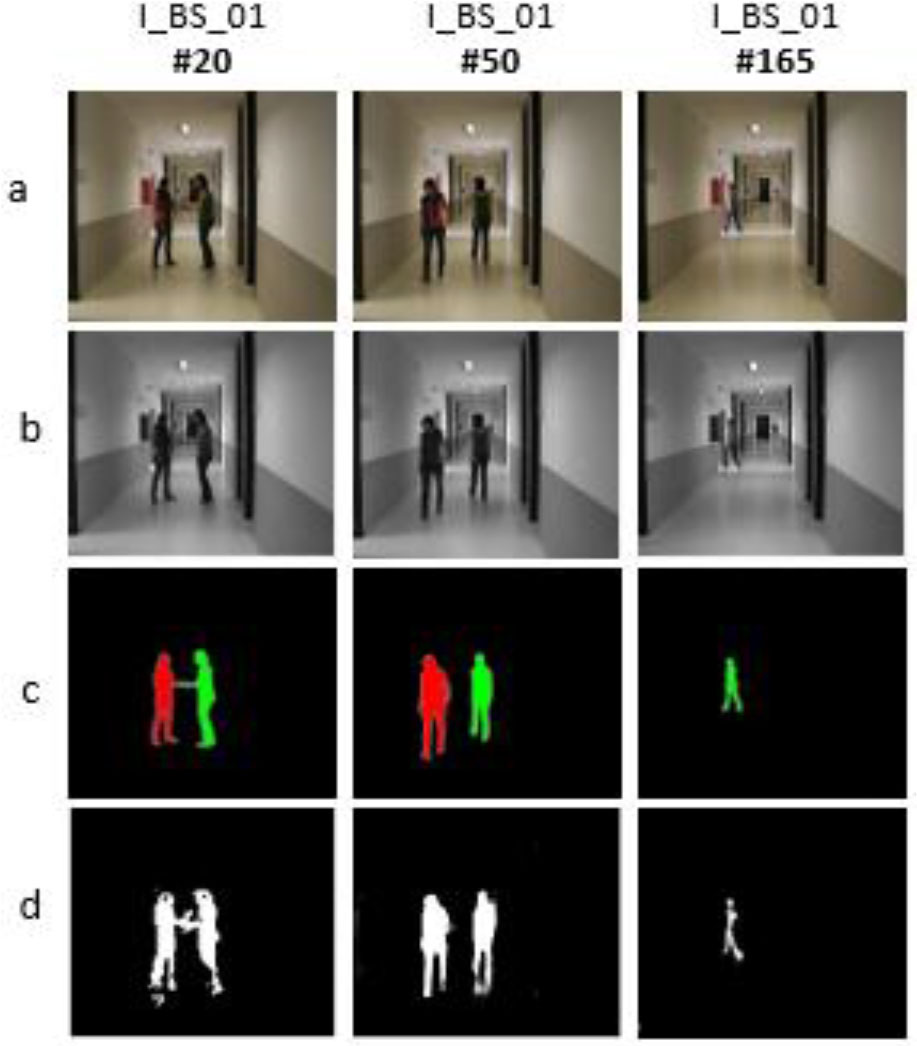
Fig. 10.
Qualitative Performance of the MOD-BFDO Approach on I_BS_01 (Bootstrap, Moderate Shadows): (a) Original Image, (b) Grayscale Image, (c) Ground Truth, (d) Proposed Approach. The results for NThr=4 are displayed in this figure
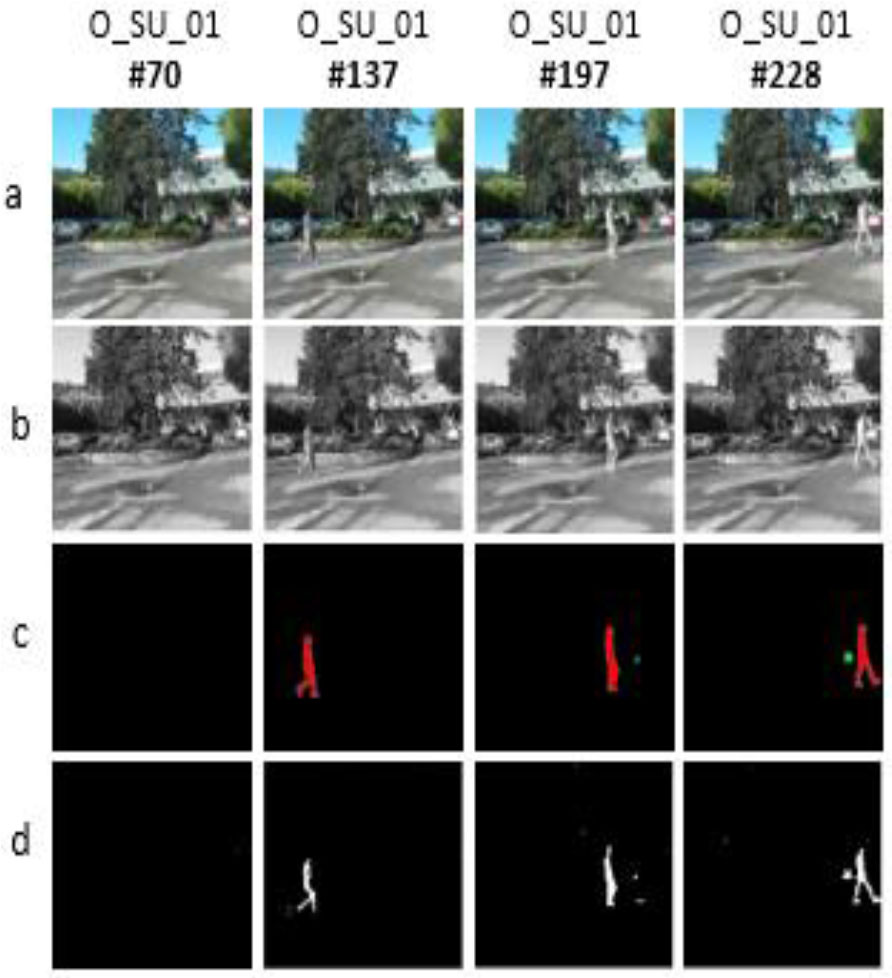
Fig. 11.
Qualitative Performance of the MOD-BFDO Approach on O_SU_01 (Dynamic background, camouflage, hard shadows.): (a) Original Image, (b) background model, (c) Ground Truth, (d) Proposed Approach. The results for NThr =4 are displayed in this figure
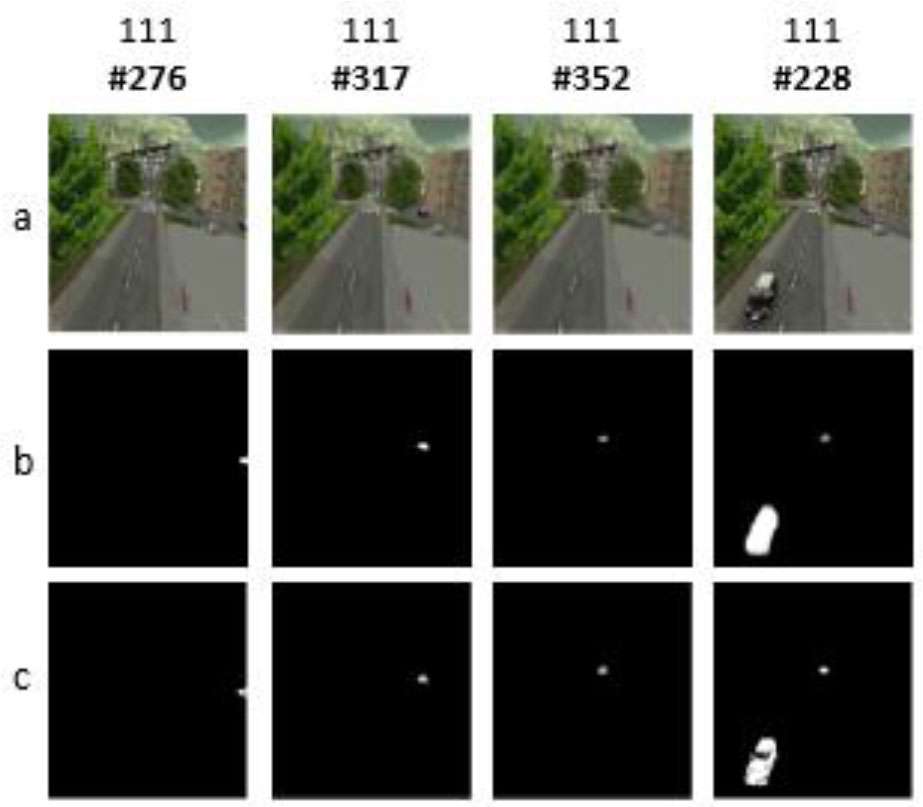
Fig. 12.
Qualitative performance of the MOD-BFDO approach on the “111” synthetic videos from the BMC2012 dataset. This figure shows: (a) the original image, (b) the background model, and (c) the results obtained with the proposed approach. The results displayed correspond to NThr=4
Tab. 1.
Evaluation of our method on the CDnet 2014
| Category | RE | SP | FPR | FNR | PWC | F-M | PR |
|---|---|---|---|---|---|---|---|
| Baseline | 0.9577 | 0.9911 | 0.0021 | 0.0423 | 0.3634 | 0.9409 | 0.9432 |
| Bad weather | 0.8950 | 0.9970 | 0.0004 | 0.1053 | 0.5212 | 0.8834 | 0.8723 |
| Dy. Backg | 0.8839 | 0.9989 | 0,0013 | 0,2332 | 0,6121 | 0.9051 | 0.9272 |
| Shadow | 0,8704 | 0,9917 | 0,0082 | 0,1295 | 1,6663 | 0.8785 | 0,8869 |
| Cam. Jitter | 0.8154 | 0,9945 | 0,0057 | 0,1864 | 1,2627 | 0.8332 | 0.8515 |
| Law. Fram | 0.7610 | 0.9934 | 0.0061 | 0.2492 | 0.9064 | 0.6800 | 0.6146 |
| Average | 0.8639 | 0.9944 | 0.0039 | 0.1576 | 0.7220 | 0.8535 | 0.8492 |
Tab. 2.
Comparative assessment of F-measure in six categories using four methods. Each row presents results specific to each method; each column displays the average scores in each category
| Methods | F-M | ||||||
|---|---|---|---|---|---|---|---|
| Baseline | Bad weather | Dy. Backg | Shadow | Cam. Jitter | Law Fram | Overall | |
| DeepBS [27] | 0.9580 | 0.8301 | 0.8761 | 0.9304 | 0.8990 | 0.6002 | 0.8490 |
| SC_SOBS [25] | 0.9333 | 0.6620 | 0.6686 | 0.7786 | 0.7051 | 0.5463 | 0.7158 |
| SuB-SENSE[24] | 0.9503 | 0.8619 | 0.8177 | 0.8646 | 0.8152 | 0.6445 | 0.8257 |
| GMM_Zivk [26] | 0.8382 | 0.7406 | 0.6328 | 0.7322 | 0.5670 | 0.5065 | 0.6696 |
| MOD-BFDO | 0.9409 | 0.8834 | 0.9051 | 0.8785 | 0.8332 | 0.6800 | 0.8535 |
Tab. 3.
A comparison between our method and some of the most important existing methods on CDnet 2014 dataset
Tab. 5.
Z-scores for MOD-BFDO vs other methods
| Comparison | z-Score |
|---|---|
| MOD-BFDO vs SuBSENSE | 0.498 |
| MOD-BFDO vs DeepBS | 0.069 |
| MOD-BFDO vs SC_SOBS | 2.11 |
| MOD-BFDO vs GMM_Zivk | 2.93 |
Tab. 6.
Results obtained by the proposed algorithm on the LASIESTA dataset
| Category | RE | PWC | F-M | PR |
|---|---|---|---|---|
| I_SI | 0.8969 | 0.5501 | 0.9089 | 0.9219 |
| I_CA | 0.7930 | 1.2835 | 0.8415 | 0.9250 |
| I_BS | 0.7015 | 0.4164 | 0.7120 | 0.7457 |
| O_SU | 0.8868 | 0.1917 | 0.8938 | 0.9038 |
| Average | 0.8195 | 0.6104 | 0.8390 | 0.8741 |