
1. Introduction
Human interventions and tense ecosystems provide fertile ground for the development and transmission of viral infections. Factors responsible for such tense ecosystems include urban expansion, habitat fragmentation, animal trafficking, ecological deprivation, cattle farming, climate variation, and mining companies (Mackenzie and Jeggo, 2019; Rabinowitz et al., 2013). In recent times, the consequences of new viral infections, viz., COVID-19, Ebola, and Zika outbreaks, have had a dramatic impact all around the world. These viruses have not only posed serious threats to public health but have also adversely affected animal welfare, biodiversity, and ecosystem stability through increased wildlife mortality, habitat disruption, and intensified human–animal interactions (Esposito et al. 2023).
It reflects a collaborative effort to recognize the complex relationships among the three health aspects: human, animal, and environmental. By working together across disciplines, professionals from diverse backgrounds can identify and address the major drivers of new viral infections, including the impact of human activities on nature, climate change, and globalized networks (Mubareka et al. 2023). The success of the One Health approach has been demonstrated by its widespread adoption in many countries, leading to improved disease monitoring, prevention, control, and treatment (Ghai et al. 2022).
This paper will explore the effects of emerging viral infections on human and animal populations by examining their historical and current contexts and evaluating the potential for zoonotic transmission.
The study selection process followed the Preferred Reporting Items for Systematic Reviews and Meta-Analyses (PRISMA) guidelines. A comprehensive literature search was conducted using the keywords “viral zoonotic diseases” and “One Health” in the UGC-Care and Scopus databases, yielding 988 and 252 records, respectively. After removing duplicates and conducting preliminary screening, 252 articles were retained for detailed evaluation. Subsequently, 98 studies were excluded based on title and abstract screening because they were unrelated to the scope of the review. Full-text assessment was performed for 154 articles, of which 87 reports could not be retrieved. The remaining 67 articles were assessed for eligibility, and 10 studies published in non-English languages and 41 lacking accessible full-text data were excluded according to the predefined inclusion criteria. Finally, 16 studies meeting all eligibility criteria were included in the review (Figure 1).
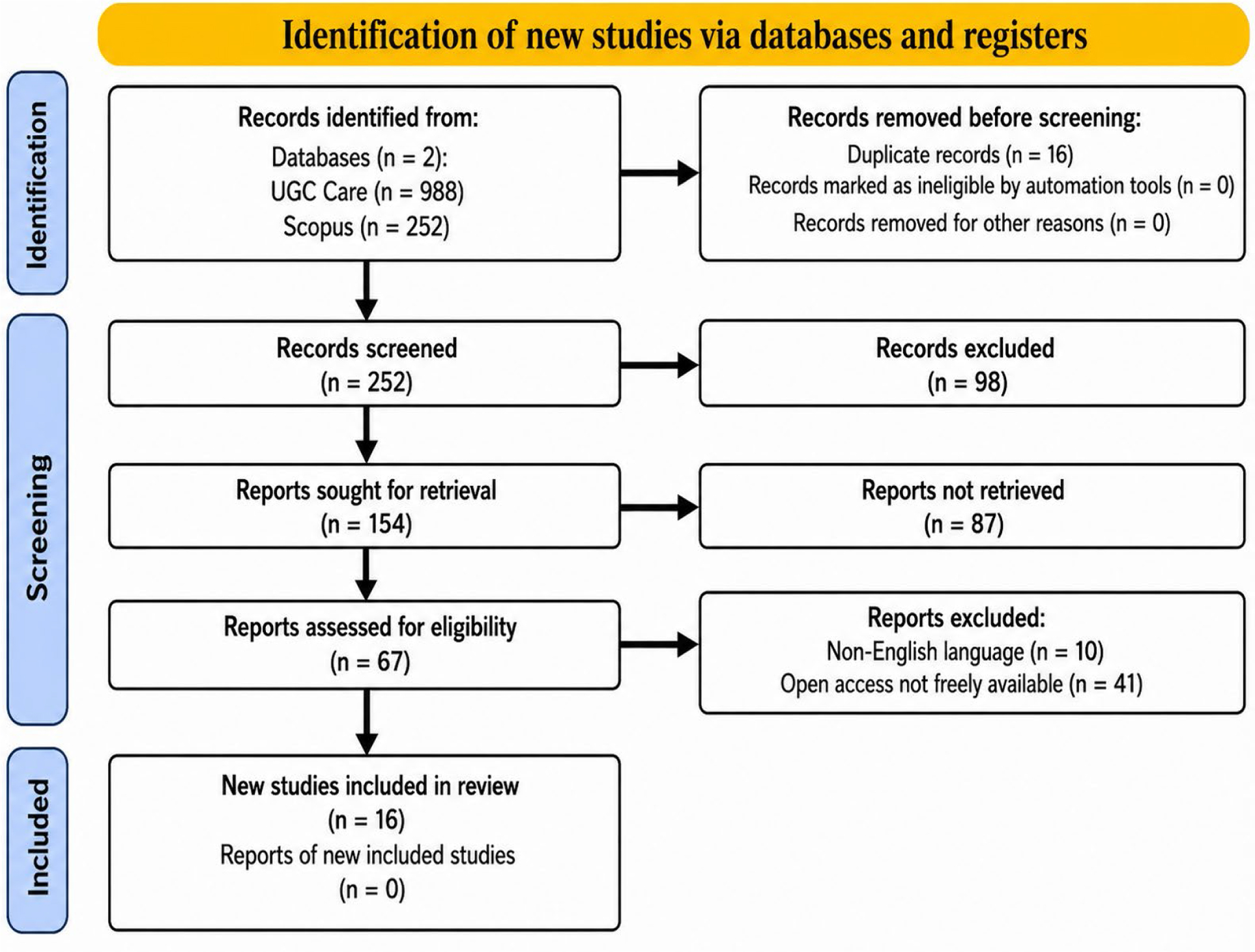
Figure 1.
PRISMA analysis of searched literature and dataset
2. Etiology, host/vector of viral zoonotic diseases
Over the past few years, many people have been discussing EZDs because of their devastating effects on public health, animal health, and the global economy. These diseases are caused by organisms that can be transmitted from animals to humans and are therefore frequently linked to environmental changes, urbanization, and increased human-animal contact. In Table 1 above, you will find a brief overview of the etiologies, animal hosts or vectors, and main pathological features of several notable EZDs.
Table 1.
Emerging zoonotic diseases (EZDs): Etiology, characteristics, animal host, and pathology.
| Emerging disease | Year of first human case | Etiology | Characteristics of Etiological Agent | Animal host/Vector | Symptoms and Organ involved | Ref. |
|---|---|---|---|---|---|---|
| Rabies | Ancient | Rhabdoviridae | bullet-like shape, ssRNA virus | Cat, dogs, bats, monkey | Nervous system | Burgos-Cáceres, 2011 |
| Newcastle disease | 1926 | Paramyxovirideae | ssRNA virus with negative sense | Poultry and wild birds | Conjunctivitis | Garbuglia et al. 2023 |
| Ebola Virus | 1976 | Filoviridae | Filamentous, enveloped, ssRNA virus | Bats | Hemorrhagic fever, CNS involvement | Bwaka et al. 1999 |
| Nipah Virus | 1998 | Paramyxoviridae | Pleomorphic, enveloped, negative-sense ssRNA | Fruit bats | CNS & respiratory disease | Bruno et al. 2023 |
| Monkeypox | 1970 | Poxviridae | Large dsDNA virus | Rodents, primates | Fever, | Petersen et al. 2019 |
| SARS & MERS | 2002, 2003 | Coronaviridae | Enveloped positive-sense ssRNA | Bats, camels | Respiratory failure | Peiris et al. 2021 |
| Zika Virus | 1947 | Flaviviridae | Icosahedral enveloped RNA virus | Monkeys, apes | Neurological disorders | Musso et al. 2016 |
| Chikungunya | 1952, 1953 | Togaviridae | Enveloped ssRNA | Aedes mosquitoes | Chronic arthritis | Suwanmanee et al. 2018 |
| Dengue | 1977 | Flaviviridae | Enveloped ssRNA | Aedes mosquitoes | Hemorrhagic fever | Chagas et al. 2022 |
| Avian Influenza | 1878 | Orthomyxoviridae | Segmented ssRNA | Water fowl | ARDS, lymphopenia | Kimble et al. 2024 |
| Rift Valley Fever | 1930 | Bunyaviridae | Tripartite RNA genome | Mosquitoes | Hemorrhagic fever, hepatitis | Kimble et al. 2024 |
| Crimean-Congo HF | 1967 | Bunyaviridae | Segmented negative ssRNA | Ticks, mammals | Severe hemorrhage | Dai et al. 2021 |
| Hantavirus | 1993 | Bunyaviridae | Tri-segmented RNA | Rodents | Pulmonary syndrome | Schmaljohn et al. 1983 |
| Marburg viral hemorrhagic fever | 1967 | Filoviridae | Negative-sense, ss RNA | Fruit bats and monkeys | Vascular system, hemorrhagic fever | Dai et al. 2021 |
| West Nile fever | 1937 | Flaviviridae | Positive-sense, ss RNA | Horse, birds and reptiles | Central nervous system | Chomel, 2014 |
| AIDS | 1981 | Retroviridae | Positive-sense, ss RNA | Monkey and chimpanzee | Immunosuppression, Influenza-like symptoms | Bengis et al. 2004 |
3. Historical landscape of emerging viral zoonotic diseases
There is no doubt that the EZDs have dramatically changed global health, and they are also responsible for various pathogens that have been traced to different parts of the world. A world map (Figure 2) shows that the two diseases, the Ebola virus, first discovered in 1976 in Zaire, and the Nipah virus, last known in 1998 in Malaysia, indicate a diversity in the sources of the threats (Singh et al. 2019).
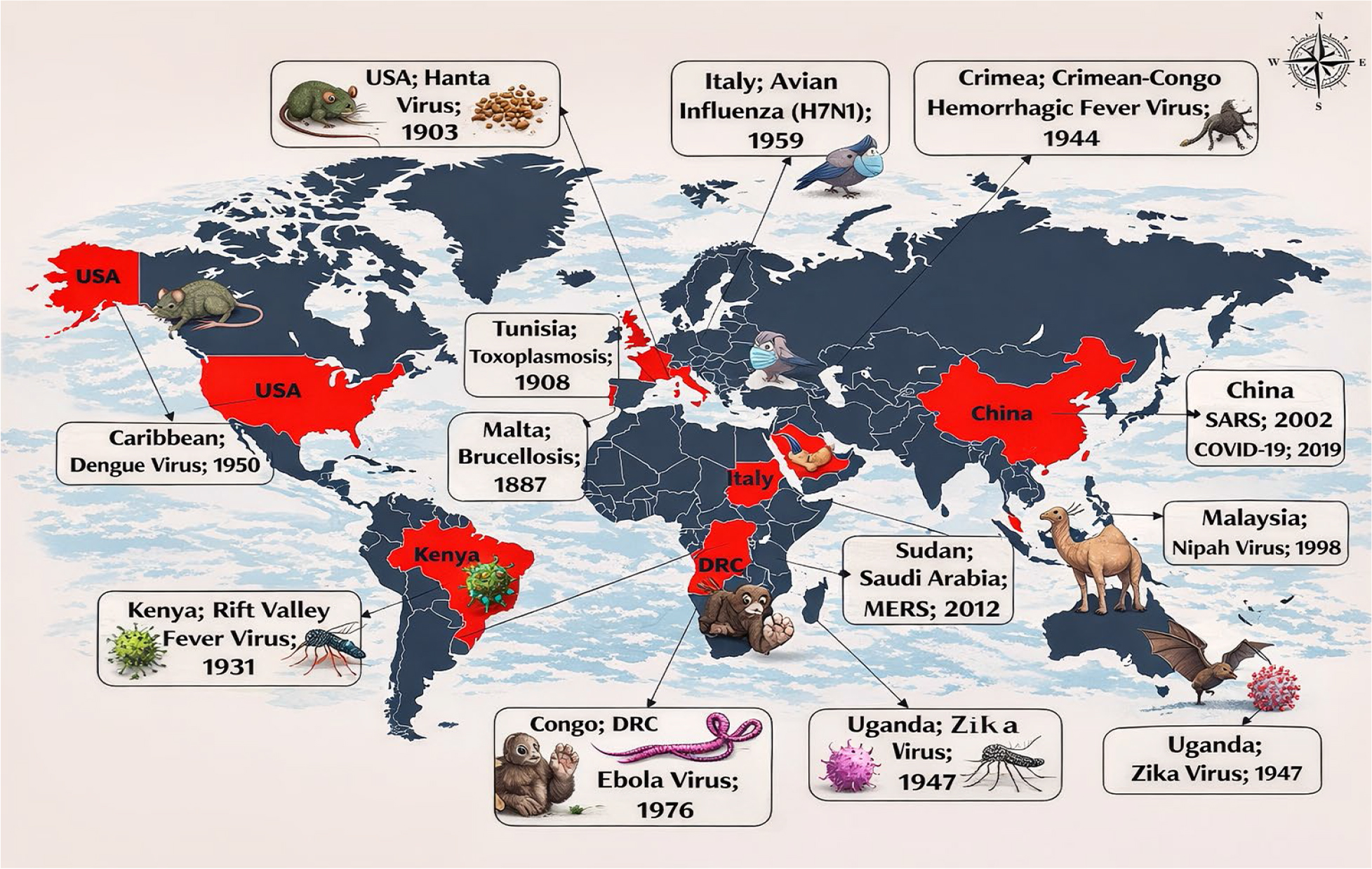
Figure 2:
Global distribution of Emerging Viral Zoonotic diseases
The three major infections, viz., monkeypox, which originated in 1958 in the Democratic Republic of Congo, along with SARS and MERS, which originated in China and Saudi Arabia, respectively, have a significant impact on the well-being of humans and animals (Petersen et al. 2019; Peiris et al. 2021). The remaining major pathogenic infections, such as Rift Valley fever and avian influenza, are from Kenya and Italy, respectively, while chikungunya and the Zika virus originated in Africa (Chagas et al. 2022; Kimble et al. 2024). Determining the habitats and historical experiences of these emerging infections will be beneficial in creating efficient surveillance and response.
4. One Health approach to viral zoonotic diseases
The One Health perspective is a collaborative effort to understand how the well-being of humans, animals, and the environment are interlinked, and thus how the health of one affects the others (Garg and Banerjee 2021). People who specialize in the well-being of the environment, humans, animals, and public health work together to identify and root out the causes of emerging viral infections. For this reason, the One Health approach involves experts from various disciplines (Aggarwal and Ramachandran 2020). In fact, the One Health approach is not new. The idea has been around since the beginning of the 20th century, but it received a fresh boost in the 1990s after the emergence of zoonotic infections like bird flu and SARS. It is now generally accepted that this approach provides an efficient framework for addressing emerging viral infections and related health problems affecting multiple species (Osterhaus et al. 2020. This method has many benefits, such as enhancing infection surveillance and supporting disease prevention and prophylaxis. It also promotes a more thorough and integrated health approach that identifies the strong connection among human, animal, and environmental well-being (Figure 3).
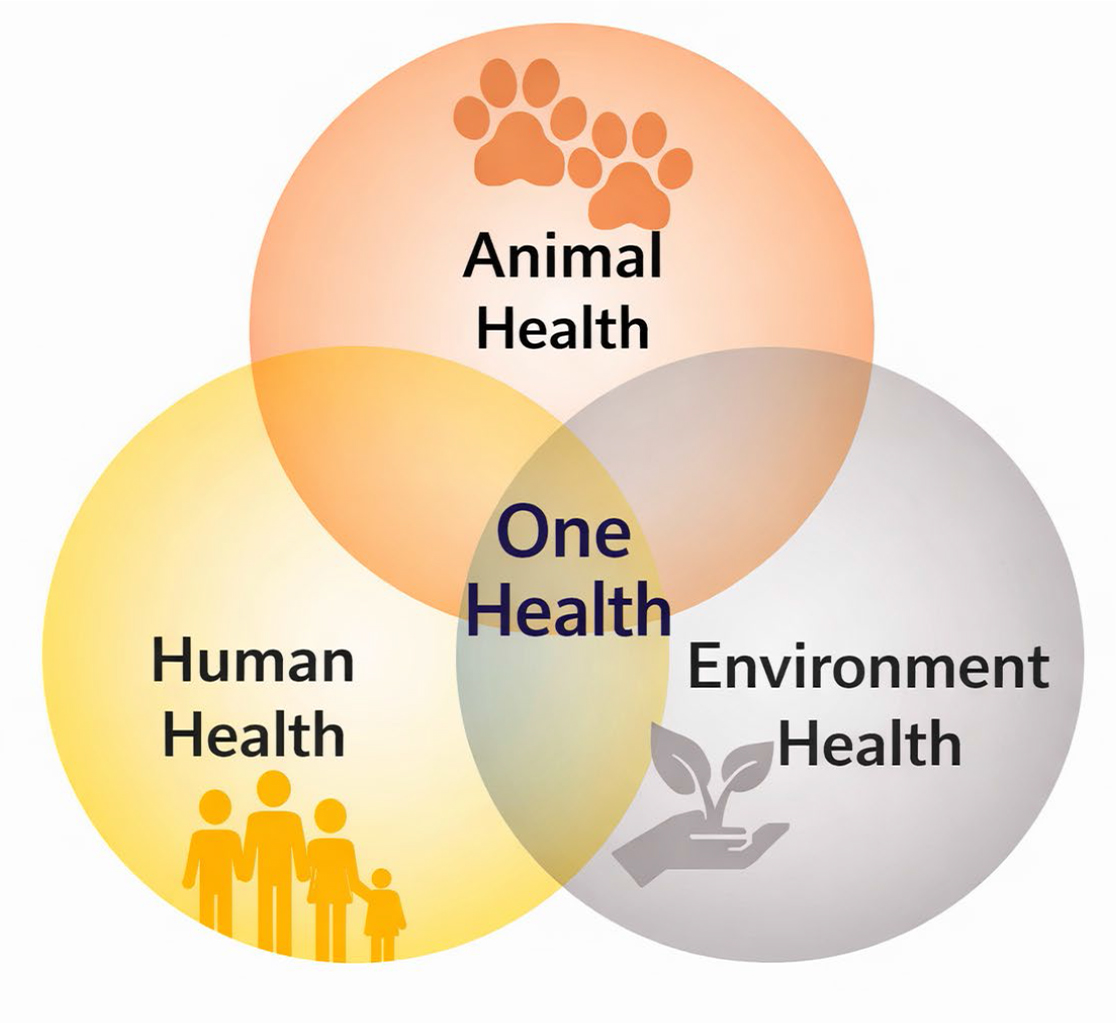
Figure 3:
Components of one health approach
5. Connections among the new viral zoonotic diseases and the environment
One of the main reasons for the emergence of viral infections is the environment on which they are highly dependent. This has been explained through the complex interactions of environmental systems, human actions, and pathogens (Bankar et al. 2022). On the other hand, environmental changes driven by human activities, such as deforestation and climate change, are recognized as the main factors driving the emergence and transmission of zoonotic infections, i.e., diseases of animal origin that have crossed into human populations (Vora et al. 2023). The main drivers of deforestation have been extensive agricultural practices and urban expansion. Deforestation disturbs the usual habitat and environmental equilibrium. Thus, it brings people and wild animals that carry unknown pathogens into closer contact (Ortiz et al. 2021). Hence, this proximity is a good opportunity for zoonotic spillover, i.e., the transmission of the disease from animals to humans, and hence the possibility of outbreaks or pandemics. At the same time, climate change affects how and where vector species like mosquitoes and ticks can live and changes their behavior, thereby altering the spread of vector-borne infections and expanding their natural habitat range (Esposito et al. 2023).
Globalization and increased travel have fundamentally changed how diseases spread. The world is now so connected that diseases can easily spread across borders and continents. This was exactly what happened with the COVID-19 pandemic, when worldwide interconnectedness and international mobility were the main factors that led to the rapid spread of the virus (Shrestha et al. 2020). Currently, there is substantial evidence that the virus SARS-CoV-2, which has caused COVID-19, is a zoonotic virus that originated in bats and an intermediate species, probably a pangolin, in a Wuhan market, resulting in human infection (Sparrer et al. 2023). Later, international travel helped the virus spread around the world, and a pandemic was the result. The One Health concept has, thereby, evolved into a holistic tool to tackle the intricate relationship among the well-being of individuals, animals, and the environment. A One Health approach seeks to identify and address the factors responsible for the inception of viral infection by fostering greater collaboration among specialists in various domains such as community health, medicine, ecology, veterinary, etc. This joint action embodies a guard montage of vigilance, timely identification, and the use of preventive environmental interventions as a possible way to minimize the risk of outbreaks and pandemics in the future.
Essentially, the connection between newly emerging viral diseases and the environment calls for interdisciplinary partnerships, the implementation of science-based, data-driven measures, and the adoption of sustainable methods to protect human health as well as the environment (Parkes et al. 2005). Through a holistic, integrated approach grounded in scientific and ethical research, it is possible to tackle the multifaceted challenges posed by newly emerging infectious diseases and strengthen the global healthcare system’s resilience to environmental changes (Piscitelli et al. 2024).
6. Epidemiology of viral zoonotic diseases
6.1. SARS coronavirus
In November 2002, a case of SARS-CoV appeared in China (Guangdong Province). Bats were identified as the usual host of the virus, and the palm civet was found to be the intermediate animal host. A couple of initial cases were individuals who stayed close to the marketplace or were food handlers (Xu et al. 2004; Zhu et al. 2020). The outbreak began in Guangdong, and the rate of spread to healthcare workers was extremely high. Later, an infected health care worker who stayed in a guesthouse infected at least 16 guests and visitors, and thus the outbreak spread in February 2003 in Hong Kong. Additionally, through infection movements, additional occurrences inside and outside the nation also took place (Hui et al. 2004). By July 2003, the SARS pandemic was over, and the total number of people infected was more than 8,000. The total number of deaths was 774 across 29 countries; the case fatality rate (CFR) was 9.5%, and for patients >65 years it was about 50.0%. Between December 2003 and January 2004, five more zoonotic cases were reported (Petrosillo et al. 2020).
6.2. MERS coronavirus
The first MERS patient was identified in June 2012 in Jeddah, Saudi Arabia. However, it was later established that healthcare workers (HCWs) with severe respiratory illnesses and no diagnosis in Jordan in April 2012 were actually infected with MERS. MERS and SARS viruses have both been traced back to bats (Cascella et al. 2020), and dromedary camels were the intermediate animal host that transmitted the infection to humans (Masood et al. 2020). The infection has spread not only locally (e.g., Qatar) but also internationally, for example, in Korea, where a tourist triggered a significant epidemic in 16 healthcare facilities in 2015 (De Wit et al. 2016). Similarly, as of October 31, 2022, there have been 2,600 cases of MERS in humans, 84.3% from Saudi Arabia, and 935 deaths (case fatality rate = 36.0%) in 27 countries. Most transmissions occurred in healthcare settings among patients (62–79%) (Mohapatra et al. 2023).
Furthermore, from 2014 to 2017, there were only seven imported cases (0.3% of the world’s cases) and one mortality (case fatality rate = 14.3%) in three SEA countries. MERS was still present in these cases. Thailand had three cases; the first and second were Omani men, both older, in 2015 and 2016, respectively, who were there for therapeutic prophylaxis; the third was a man from Kuwait who arrived on a holiday break in July 2016 (Smith 2021). Both cases in Malaysia were male pilgrims returning from Saudi Arabia; the first was in April 2014 (the death), and the second was in December 2017 (Premila Devi et al. 2014; Saba Villarroel et al., 2023). The Philippines had two cases, one in January 2015, a Filipino nurse employed in Saudi Arabia, and the other in July 2015, a male who had traveled to the UAE and Saudi Arabia before arriving in the country (Saba Villarroel et al., 2023; Burgos-Cáceres, 2011).
6.3. Chikungunya virus
The Chikungunya virus was first identified in 1952 in Tanzania, when it was isolated from the serum of a patient with fever. In the fifty years following the initial discovery, Africa and Asia sporadically reported cases of CHIKV. Recently, CHIKV has been spreading globally and is present on every continent except Antarctica, with millions infected each year, especially in humid, semitropical areas (Thiberville et al. 2013; Bettis et al. 2022). Spread comprises both sylvatic and urban phases.
The sylvatic phase occurs in forest settings, where the virus circulates among wild non-human primates via Aedes spp. mosquitoes in Africa (Sharif et al. 2021). The urban phase is primarily driven by mosquitoes (Aedes albopictus and Aedes aegypti) that transmit the virus from one human host to another. These two cycles occur in different parts of the world, with the sylvatic phase mainly in Africa and the urban phase in Asia, Europe, the Indian Ocean, and America (Khongwichit et al. 2021; Pezzi et al. 2020).
The Chikungunya virus was introduced to Southeast Asia, with confirmation in Bangkok, Thailand, in 1958 (although it is thought the virus had already been circulating in Indonesia before then) (Carey, 1971). Subsequently, a series of small epidemics occurred in countries such as Cambodia (1961), the Philippines (1965), Vietnam (1966–1967), and Indonesia (officially reported in 1972), with no significant epidemics from the 1980s to the 2000s (Thiberville et al. 2013; de Lima Cavalcanti et al. 2022). The virus returned to the region in this century. After 2008, several countries experienced large, multiple outbreaks, while some still had lower transmission rates. Indonesia is presently the most affected nation, followed by Thailand, Malaysia (MOH Malaysia, 2020), the Philippines (MOH Malaysia, 2020; Dela Cueva et al. 2018; Sy et al. 2016), Cambodia (Saba Villarroel et al. 2023), and Singapore (Hapuarachchi et al. 2021). Myanmar and Lao PDR (Calvez et al. 2022) have reported small epidemics, and there is a lack of data for Vietnam, Brunei, and Timor-Leste. However, the true extent of Chikungunya virus infection remains undefined. Cases are often unreported because of limited laboratory diagnosis, imperfect health authority reporting, and co-circulation with dengue virus, which sometimes masks Chikungunya infections (Suwanmanee et al. 2018).
6.4. Zika virus
The Zika virus (ZIKV) was first identified in 1947 in the Zika Forest, Uganda, from a sentinel rhesus monkey and later in humans in Nigeria in 1952. The virus is maintained in nature through two phases; the sylvatic phase, involving non-human primates and arboreal, canopy-dwelling Aedes mosquito species, and the urban phase, involving humans and primarily A. aegypti (the most competent) and A. albopictus mosquito vectors (Pielnaa et al. 2020). Serological evidence suggests that ZIKV circulated at low but stable levels in African nations between 1945 and 2014 and in Asian countries from 1952 to 1997 (Musso et al. 2016; Gutiérrez-Bugallo et al. 2019). The first documented epidemic occurred in 2007 in the Yap State of Micronesia, followed by outbreaks across the Pacific Islands in 2013–2014. Later, major epidemics occurred in Latin America and the Caribbean during 2015–2016. It has been reported that ZIKV is a problem in approximately 87 nations internationally (Aubry et al. 2021; Saba Villarroel et al. 2023).
Neutralization assays have confirmed that the Zika virus has been present in Southeast Asia since at least the 1950s. However, the earliest confirmed human case was reported in Cambodia in 2010 (Pastorino et al. 2019). Epidemics during 2016–2018 in Thailand (2,300 cases), Singapore (458 cases), and Vietnam (265 cases) are reported despite a lack of epidemiological data (Hills et al. 2017; Nguyen et al. 2020). Some studies indicate the virus’s presence at low levels in Indonesia, Myanmar, Cambodia, Malaysia, Lao PDR, and the Philippines (Pastorino et al. 2019; WHO Zika Epidemiology Update, 2022; Kindhauser et al. 2016; Biggs et al. 2021; Duong et al. 2017), while no data are available for Timor-Leste and Brunei. In general, laboratory-verified and likely ZIKV cases represent only a small portion of actual cases, often underestimating the true burden because of asymptomatic and pauci-symptomatic cases, as well as symptom overlap with other infections such as dengue fever. Misinterpretation of serological data also occurs due to cross-reactivity among flaviviruses, which must be verified by seroneutralization tests (Pastorino et al. 2019).
6.5. SARS coronavirus 2
The first cases of SARS-CoV-2, the virus that causes COVID-19, were reported in Wuhan City, Hubei Province, China, in December 2019. The cases were associated with a wholesale seafood market, where cases of pneumonia of unknown cause occurred. The virus is believed to have originated from bats (Cascella et al. 2020). However, a bat virus generally needs an intermediate host to infect humans, and for SARS-CoV-2 this remains unknown (Masood et al. 2020). The virus spread rapidly around the world, and WHO designated it a pandemic in March 2020 (Zhu et al. 2020). So far, COVID-19 has resulted in more than 629 million cases and 6.5 million deaths worldwide.
Among Asian countries, the Philippines, Thailand, Malaysia, Singapore, Cambodia, and Vietnam were the earliest to report cases, with the first case reported in January 2020 (Rothan and Byrareddy 2020). More than 35 million cases have been recorded so far, with a CFR of 0.7. At present, Myanmar has the highest CFR (3.1%), followed by Brunei and Singapore, which have the lowest CFR (~0.1%) (WHO COVID-19 Cases, 2026). Brunei and Singapore ranked highest in cumulative positive cases per 100,000 individuals. Cambodia and Myanmar, conversely, have the lowest numbers. Nevertheless, case figures in several countries are likely underestimated due to underreporting stemming from limited testing capacity, asymptomatic infections, or mild symptoms (CDC Cases, 2022). Vaccines have been of utmost importance in the battle against COVID-19 since December 2020. Currently, Brunei (99.9%) and Singapore (93.9%) are frontrunners in terms of fully vaccinated individuals, whereas Indonesia (62.4%) and Myanmar (51.2%) have the lowest vaccination rates (ASEAN 2023).
6.6. Highly pathogenic avian influenza
The H5N1 influenza virus was first isolated in 1996 from farmed geese in Guangdong Province, southern China. This was followed by a poultry epidemic in Hong Kong in 1997, which led to the culling of 1.3 million chickens. The virus arose from the evolution of LPAI (low-pathogenic avian influenza) viruses that were initially found in the natural reservoir. LPAIVs, if transmitted to terrestrial poultry, may become HPAI (highly pathogenic avian influenza) viruses, and such viruses can then “spill back” to wild birds, which in turn may become carriers and shedders of the virus (de Bruin et al. 2022). The segmented genome of the influenza virus confers evolutionary advantages. The H5N1 subtype has been evolving and differentiating into several phylogenetic lineages (Koel et al. 2014; Krammer et al. 2018).
Following the dormant period, the H5N1 influenza virus caused outbreaks in Southeast Asia in 2003, including Myanmar, Vietnam, Cambodia, Indonesia, Thailand, Malaysia, and Laos, mainly among backyard poultry (Saba Villarroel et al. 2018), as well as in other Asian countries such as China, South Korea, Hong Kong, and Japan (Tiensin et al. 2005). Measures were taken to stop the virus from spreading out of Asia, but it nonetheless reached the Middle East, North America (Canada and the USA), Africa, Europe, and, more recently, Latin America (PAHO Epidemiological Alert, 2026). According to some reports, poultry and migratory birds were the main factors in bringing the virus to Asia and Africa; on the other hand, migratory wild bird flyways are the key to its spread to Europe and America (Kilpatrick et al. 2006; Wille and Barr 2022). The first recorded case of human infection with the H5 virus was in 1997 in Hong Kong. Three people who had been in Fujian, China, were infected, and two of them died, signaling a restart in early 2003 (Chowdhury et al. 2019). To date, the virus has infected 868 people (41.5% of cases in Egypt) in 21 countries around the world, and 456 people have died (>50% mortality rate, varying by country), most of them children and young adults (WHO Avian Influenza, 2026; WHO Avian Influenza A (H5N1), 2026).
Human H5N1 epidemiological data underscore the large number of cases reported in SEA (N = 412), representing 47.5% of world cases, and the high death rate of almost 70.0%. Countries such as Indonesia (200 cases), Vietnam (127 cases), Cambodia (56 cases), Thailand (25 cases), Lao PDR (3 cases), and Myanmar (1 case) were affected mostly from 2004 to 2014. Most human cases involved direct contact with poultry (backyard farming systems, live bird markets, consumption of diseased poultry). Clusters of limited human-to-human transmission have been reported after close, prolonged contact with a symptomatic infected person; however, the virus has not yet transmitted from one person to another in a sustained manner (Hassan 2014).
7. Emerging approaches for the detection and prevention of viral zoonotic diseases
The increasing frequency of viral zoonotic outbreaks over the past few decades has underscored the urgent need for advanced surveillance and prevention strategies within the One Health (OH) framework. Conventional disease monitoring systems alone are no longer sufficient to identify emerging pathogens early, given rapid globalization, urbanization, climate change, ecological disruption, and increased human–animal interactions. Consequently, modern surveillance systems increasingly integrate digital technologies, molecular diagnostics, artificial intelligence (AI), environmental monitoring, and genomic epidemiology to enable rapid, coordinated responses to zoonotic threats.
Currently, several event-based surveillance platforms are used worldwide to detect infectious disease outbreaks early. Systems such as ProMED-mail, HealthMap, and the Global Public Health Intelligence Network (GPHIN) continuously gather and analyze information from official reports, news media, and online sources to detect unusual disease events before they escalate into epidemics (Sharan et al. 2023). These platforms played a significant role during the SARS, Ebola, and SARS-CoV-2 outbreaks by enabling timely dissemination of outbreak-related information across countries. Likewise, participatory surveillance systems such as Flu Near You encourage public involvement in disease monitoring through voluntary symptom reporting, thereby supporting real-time epidemiological assessments (Childs and Gordon 2009). The integration of digital epidemiology with public health infrastructure has considerably improved outbreak preparedness and risk communication.
In recent years, genomic surveillance has emerged as one of the most transformative approaches to detecting zoonotic diseases. High-throughput next-generation sequencing (NGS) enables rapid identification of novel pathogens, tracking of viral mutations, and monitoring of pathogen evolution across animal and human populations. Genome sequencing was critical during the COVID-19 pandemic, as continuous monitoring of SARS-CoV-2 variants enabled governments and healthcare agencies to understand transmission dynamics and vaccine effectiveness. Metagenomic sequencing also facilitates detection of unknown or unculturable pathogens directly from environmental or clinical samples. Combined with phylogenetic analysis and bioinformatics, genomic surveillance supports early recognition of spillover events and helps trace the origins of outbreaks (Koopmans 2013). Portable sequencing devices in the field have further strengthened surveillance capacity in remote and resource-limited areas.
Another promising development is wastewater-based epidemiology (WBE), which has attracted substantial attention since the COVID-19 pandemic. Wastewater surveillance monitors sewage systems for viral RNA, enabling estimation of disease prevalence within communities even before clinical cases are formally reported. Because infected individuals shed viral particles in feces and other bodily fluids, wastewater analysis offers a non-invasive, cost-effective approach to large-scale population monitoring. This strategy has proven valuable for detecting SARS-CoV-2 circulation, poliovirus re-emergence, and antimicrobial resistance markers. Integrating wastewater surveillance with GIS mapping and public health databases can provide an early warning system for potential outbreaks and may become an essential component of future One Health surveillance networks.
Artificial intelligence and machine learning tools are increasingly incorporated into infectious disease forecasting and outbreak prediction. AI-driven systems analyze large datasets from climate records, wildlife migration patterns, social media activity, healthcare reports, transportation networks, and genomic databases to identify outbreak hotspots and predict transmission trends. Predictive platforms such as the Framework for Reconstructing Epidemiologic Dynamics (FRED) and the Global Epidemic and Mobility Model (GLEAM) simulate disease spread under various environmental and demographic conditions, helping policymakers design containment strategies. Machine learning algorithms are also used for predicting host susceptibility, analyzing viral mutations, and assessing the risk of cross-species transmission. These computational approaches significantly enhance preparedness by enabling earlier intervention before large-scale transmission occurs.
Remote sensing technologies and satellite-based environmental monitoring are further improving the prediction of zoonotic diseases. Climatic variables such as rainfall, temperature, humidity, and vegetation changes strongly influence vector populations and wildlife migration. By integrating remote sensing data with epidemiological models, researchers can forecast outbreaks of vector-borne diseases, including Rift Valley fever, Zika virus disease, and avian influenza. Environmental surveillance of wildlife habitats and livestock ecosystems is therefore increasingly important for identifying regions at elevated risk of spillover.
The One Health approach strongly advocates interdisciplinary collaboration among physicians, veterinarians, microbiologists, ecologists, wildlife experts, and environmental scientists. Integrated surveillance systems that combine animal health, human health, and environmental data improve the detection of zoonotic pathogens at the human–animal interface. International collaborative networks such as the Global Outbreak Alert and Response Network (GOARN) strengthen global coordination for outbreak response, laboratory support, and information exchange (Sharan et al. 2023). Such coordinated frameworks are essential for addressing transboundary infectious diseases that can rapidly spread across continents. Figure 4 illustrates surveillance and detection strategies. The figure presents a comprehensive One Health Surveillance framework that integrates multiple surveillance approaches for the early detection and control of infectious disease outbreaks. The system combines genomic surveillance, digital and event-based surveillance, wastewater-based epidemiology, environmental and remote sensing surveillance, and integrated One Health collaboration across the human, animal, and environmental health sectors. Information gathered from these interconnected components is processed through a surveillance workflow to enable timely risk assessment and decision-making. This coordinated approach supports early detection, rapid alerts, coordinated response, and enhanced prevention and preparedness, thereby strengthening public health resilience against emerging and re-emerging diseases.
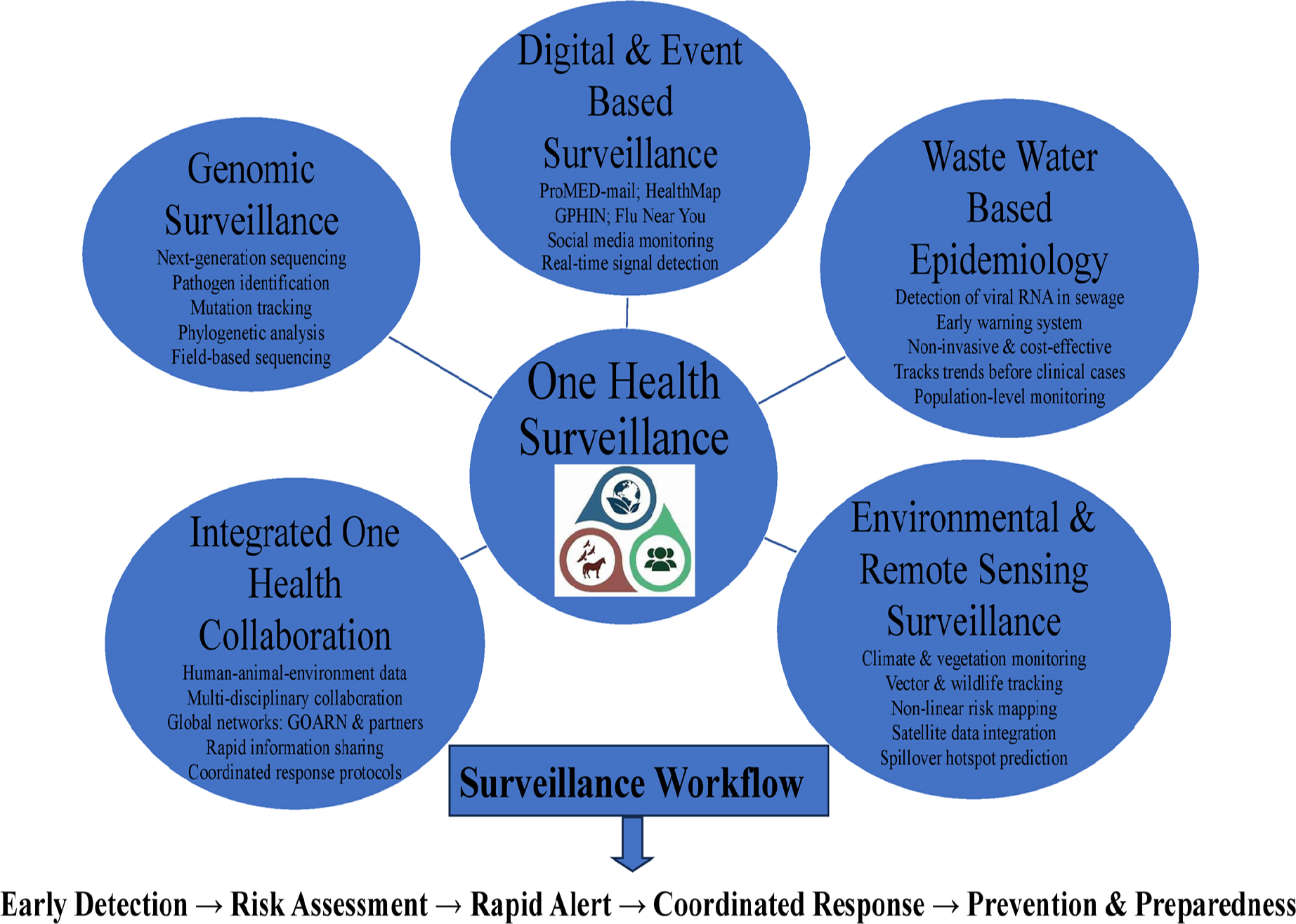
Figure 4:
Surveillance and detection strategies for emerging zoonotic diseases under the One Health framework
7.1. Strategies for prevention and control
Effective prevention and control of viral zoonotic diseases require a multidimensional strategy that includes vaccination, biosecurity, vector management, public awareness, environmental sanitation, and continuous surveillance. Vaccination remains one of the most effective tools for reducing morbidity, mortality, and interspecies transmission. Current research increasingly focuses on developing vaccines for humans, livestock, and wildlife reservoirs simultaneously to interrupt zoonotic transmission cycles within the One Health framework (Wang et al. 2023).
For Mpox, the JYNNEOS vaccine has shown significant protective efficacy and is recommended in two doses administered four weeks apart. Preventive measures also include avoiding close contact with infected individuals, maintaining hygiene, and isolating suspected cases early (Skowron et al., 2021). During the COVID-19 pandemic, mass vaccination campaigns, combined with masking, hand hygiene, improved ventilation, and genomic surveillance, substantially reduced disease transmission and severity. Similarly, the ERVEBO® vaccine against Ebola virus disease has demonstrated effectiveness in outbreak containment when paired with contact tracing, strict infection control, and post-exposure monitoring.
Preventing Nipah virus infection largely depends on minimizing human exposure to infected animals and contaminated food products. Farm-level biosecurity measures, safe animal handling practices, and surveillance of bat populations are essential to reduce spillover events (Bengis et al. 2004). For Middle East Respiratory Syndrome Coronavirus (MERS-CoV), preventive efforts focus on reducing exposure to infected camels, maintaining hospital infection control practices, and strengthening laboratory surveillance systems. Although no fully licensed vaccine is currently available for SARS, ongoing vaccine development programs continue to explore novel immunological targets.
Controlling avian influenza requires strict poultry biosecurity, surveillance of migratory birds, rapid culling of infected flocks, and vaccination programs in high-risk areas. However, ongoing viral mutation and antigenic variation necessitate continuous genomic surveillance to identify emerging strains with pandemic potential (Chu et al. 2020). Similarly, management of Zika virus disease depends primarily on vector control strategies, including eliminating mosquito breeding sites, using insecticide-treated materials, and raising public awareness of mosquito-bite prevention. Considerable progress has also been made in developing a Zika vaccine (Modjarrad et al. 2018).
Rift Valley fever prevention involves livestock vaccination, mosquito control, and climate-based outbreak forecasting. In regions where vaccines are not readily available, public health measures that reduce human exposure remain critically important. Prevention of Crimean-Congo Hemorrhagic Fever primarily depends on avoiding tick bites through protective clothing, acaricide application, and safe livestock management practices, although an effective, widely available vaccine remains lacking (Dai et al. 2021; Chomel 2014). Likewise, prevention of Hantavirus Pulmonary Syndrome relies heavily on rodent control, environmental sanitation, and minimizing contact with rodent-contaminated materials, while vaccine research continues to advance (Schmaljohn et al. 1983).
Public health education is another cornerstone of zoonotic disease prevention. Awareness campaigns on hygiene, food safety, wildlife interactions, vaccination, and vector avoidance can significantly reduce transmission risk among vulnerable populations. Community participation, especially in rural and livestock-dependent regions, improves early disease reporting and strengthens local surveillance. Furthermore, strengthening healthcare infrastructure, laboratory capacity, and international data-sharing mechanisms is essential to improving global preparedness for future zoonotic pandemics.
Overall, integrating advanced molecular diagnostics, AI-driven analytics, environmental surveillance, genomic epidemiology, and coordinated One Health policies offers a comprehensive pathway to improved detection, prevention, and control of emerging viral zoonotic diseases. Continued investment in interdisciplinary research and global collaboration will remain essential for mitigating future public health threats.
8. Challenges and future directions
Despite substantial progress in surveillance and outbreak management, emerging viral zoonotic diseases remain major global health challenges. Rapid urbanization, deforestation, climate change, increased wild-life trade, and frequent human–animal interactions have accelerated the emergence and spread of zoonotic viruses across regions (Esposito et al. 2023; Piscitelli and Miani 2024). In many low- and middle-income countries, inadequate diagnostic infrastructure, delayed reporting, and limited genomic surveillance further impede early outbreak detection and rapid response.
Another key challenge is the lack of coordinated international surveillance systems and the inconsistent implementation of One Health strategies across countries. Strengthening interdisciplinary collaboration among medical professionals, veterinarians, ecologists, and public health authorities is therefore essential for effective preparedness and response to future zoonotic outbreaks (Ghai et al. 2022; Mubareka et al. 2023). In addition, wildlife monitoring and environmental surveillance remain inadequate in several high-risk regions, particularly in Southeast Asia and Africa, where spillover events are frequently reported.
Future research should prioritize rapid point-of-care diagnostics, next-generation vaccines, antiviral therapies, and AI-assisted outbreak prediction models. Advances in genomic epidemiology, wastewater surveillance, and digital health technologies could significantly improve early warning systems and outbreak containment. Furthermore, strengthening international data-sharing networks and investing in public health infrastructure will be crucial to minimizing the impact of future zoonotic pandemics. Continued global cooperation under the One Health framework remains fundamental to improving preparedness, prevention, and long-term control of emerging viral zoonotic diseases.
9. Conclusion
Emerging zoonotic viral diseases continue to pose a serious challenge to global public health as interactions among humans, animals, and the environment intensify. Rapid urbanization, deforestation, climate variability, wildlife trade, intensive farming practices, and increased population mobility have accelerated the emergence and transmission of novel pathogens across geographic boundaries. Outbreaks caused by viruses such as SARS-CoV, Nipah virus, Ebola virus, avian influenza virus, Mpox, and SARS-CoV-2 clearly demonstrate the devastating health, social, and economic consequences of zoonotic spillovers.
Across regions, Southeast Asia remains among the most vulnerable to the emergence of zoonotic diseases due to its rich biodiversity, dense human populations, extensive livestock farming, wet markets, and frequent human–wildlife interactions. Countries in this region, including India, Bangladesh, Thailand, Malaysia, Indonesia, and Vietnam, provide favorable ecological conditions for viral evolution and interspecies transmission. Repeated outbreaks of Nipah virus, avian influenza, and coronavirus infections in this region underscore the urgent need for strengthened surveillance and coordinated public health preparedness.
The One Health approach provides an effective framework for addressing these challenges by integrating human, animal, and environmental health sectors. Early disease detection through genomic surveillance, wastewater epidemiology, artificial intelligence-based outbreak prediction, and advanced molecular diagnostics can significantly improve preparedness and response. In addition, wildlife monitoring, vector control, vaccination programs, and strict farm biosecurity measures are essential to minimize pathogen spillover events.
Public awareness and community participation are equally important for reducing the transmission of zoonotic diseases, particularly in rural and high-risk settings. Strengthening laboratory infrastructure, promoting international data sharing, and encouraging interdisciplinary collaboration among veterinarians, physicians, epidemiologists, ecologists, and policy-makers are essential for effective disease management.
Preventing future zoonotic pandemics will require sustained global cooperation, region-specific surveil-lance systems, and proactive implementation of One Health policies. Special attention should be given to high-risk regions such as Southeast Asia, where ecological and socioeconomic factors continue to favor the emergence of infectious diseases. Continuous investment in research, surveillance, and public health infrastructure will be crucial to protecting both human and environmental health from future zoonotic threats.