
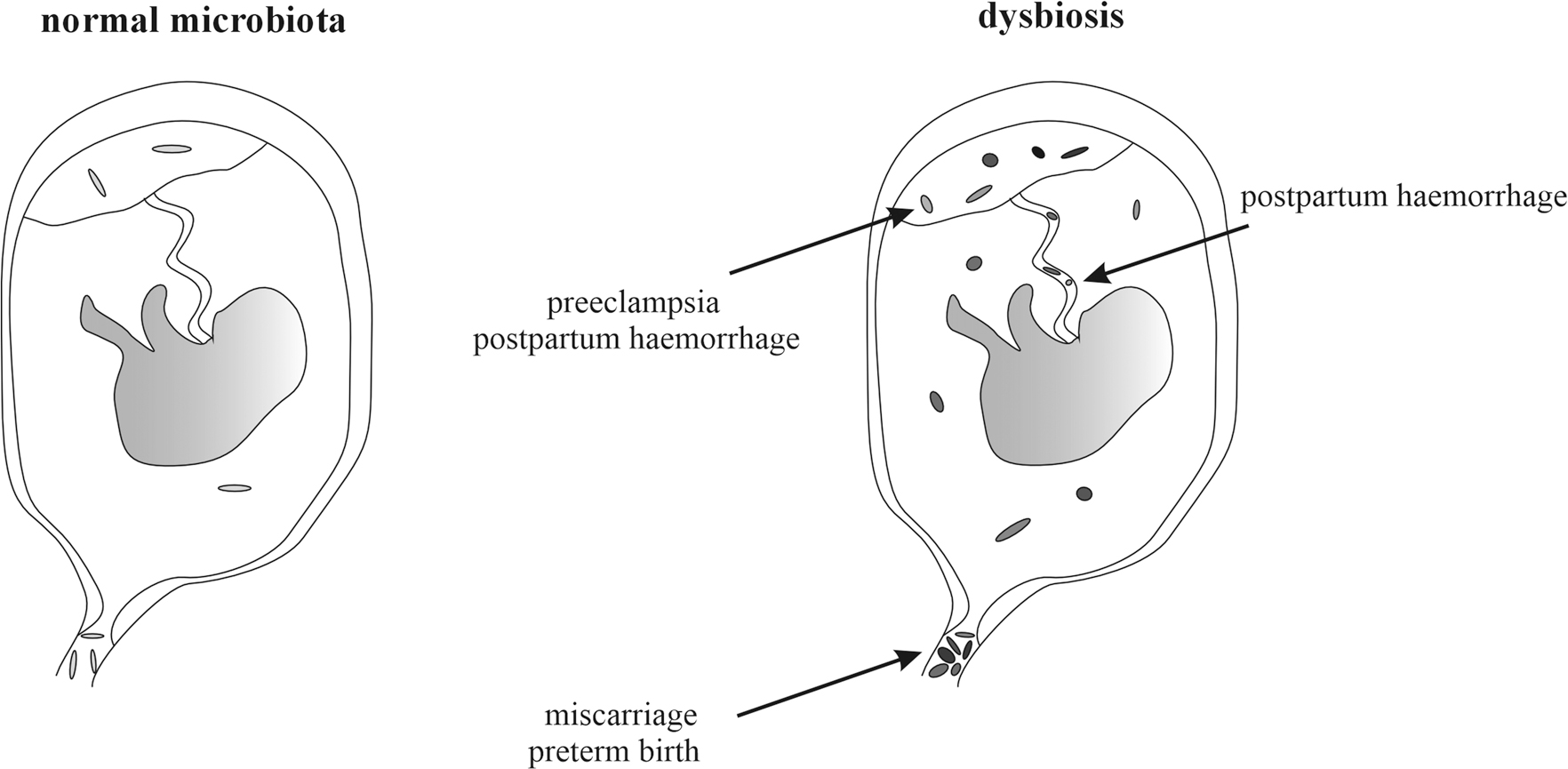
Fig. 1.
Normal microbiota and dysbiosis in the vagina, uterus and placenta and possible obstetric complications.
Table I
Composition of the microbiota of the reproductive organs in physiological pregnancy and pregnancy with complications.
| Course of pregnancy | Organ | Microbiota |
|---|---|---|
| Physiological pregnancy | vagina | high abundance and low diversity of microbiota: mainly Lactobacillus |
| Physiological pregnancy | uterus | low numbers and high biodiversity of microbiota: Lactobacillus, Cutibacterium, Escherichia, Staphylococcus, Acinetobacter, Streptococcus, Corynebacterium |
| Physiological pregnancy | placenta | small numbers and high biodiversity of microbiota: Lactobacillus, Escherichia coli, Cutibacterium acnes, Bacteroides sp. Neisseria lactamica, Fusobacterium sp., Rhodococcus erythropolis, Prevotella tannerae, Neisseria polysaccharea, Streptomyces avermitilis, Enterobacteriaceae sp., Cutibacterium acnes |
| Physiological pregnancy | cord blood | small amount and high biodiversity of microbiota: Enterococcus faecium, Propionibacterium acnes, Staphylococcus epidermidis i Streptococcus sanguinis |
| Miscarriage | vagina | decrease in the number of Lactobacillus |
| Preterm birth | vagina | decrease in the number of Lactobacillus bacteria, increase in the number of bacteria: Bacteroides (Firmicutes), Prevotella (Bacteroidetes), Klebsiella (Proteobacteria) and Mobiluncus (Actinobacteria) |
| Preeclampsia | placenta | decrease in the number of Lactobacillus, increase in the number of Bacteroides |
| Postpartum hemorrhage | uterus and placenta | decrease in the number of Lactobacillus, increase in the number of Bacteroides |