
Table 1.
List of all primers used in RT-PCR
| Species | Primer | Sequence (5′-3′) |
|---|---|---|
| Homo sapiens | miR-579-3p_F | GCACGGAACTTCCCTTGACGTC |
| miR-579-3p_R | GCTCTAGGGATCGTCGCCGAA | |
| U6_F | CGCTTCGGCAGCACATATACTAA | |
| U6_R | TATGGAACGCTTCACGAATTTGC | |
| ANXA3_F | TTAGCCCATCAGTGGATGCTG | |
| ANXA3_R | CTGTGCATTTGACCTCTCAGT | |
| GAPDH_F | CCCAAACCGAAGTCATAGC | |
| GAPDH_R | CGCCCAATACGACCAAAT | |
| Mice | miR-579-3p_F | GTCGTATCCAGTGCAGGGTCCG |
| miR-579-3p_R | GCGGCTTCATTTGGTATAAACC | |
| U6_F | AAAGCAAATCATCGGACGACC | |
| U6_R | GTACAACACATTGTTTCCTCGGA | |
| ANXA3_F | ATGGCCTCTATCTGGGTTGGA | |
| ANXA3_R | CAAGTCCTCTGATCGCTTTCC | |
| GAPDH_F | TTGACCCTGAAGCTCCCT | |
| GAPDH_R | CAATCTCCACTTTGCCACT |
Table 2.
GEO database information
| ID | Platforms | Samples |
|---|---|---|
| GSE173514 | GPL30060 NanoString nCounter Human v3 miRNA Assay (NS_H_miR_v3b) | Isolation of sEV-enriched preparations from the plasma of 15 pancreatitis patients and 10 HCs |
| GSE194331 | GPL16791 Illumina HiSeq 2500 (Homo sapiens) | Peripheral blood of 87 patients with AP and 32 HCs. |
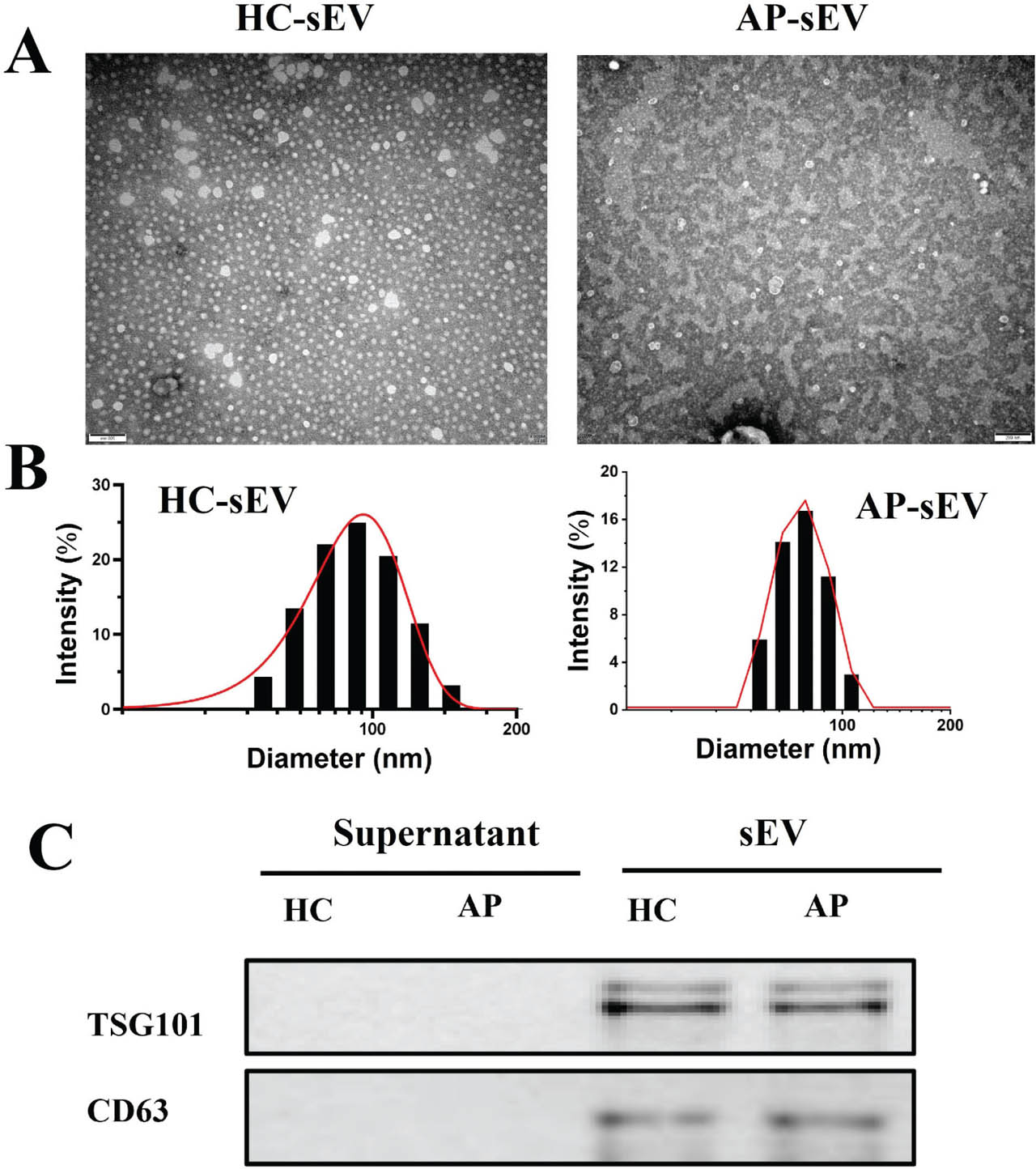
Fig 1.
Isolation and characterization of sEV-enriched preparations from HCs and AP patients. sEV-enriched preparations were isolated from healthy individuals (HC-sEV) and AP patients (AP-sEV). (A) TEM showing characteristic sEV morphology. Scale bars: 100 nm. (B) Nanoparticle tracking analysis demonstrating size distribution of HC-sEV and AP-sEV with peak diameters around 100 nm. (C) Western blot analysis of sEV-associated proteins TSG101 and CD63 in sEV-enriched preparations and supernatants, confirming successful isolation and purity. AP, acute pancreatitis; HC, healthy control; sEVs, small extracellular vesicles; TEM, transmission electron microscopy.
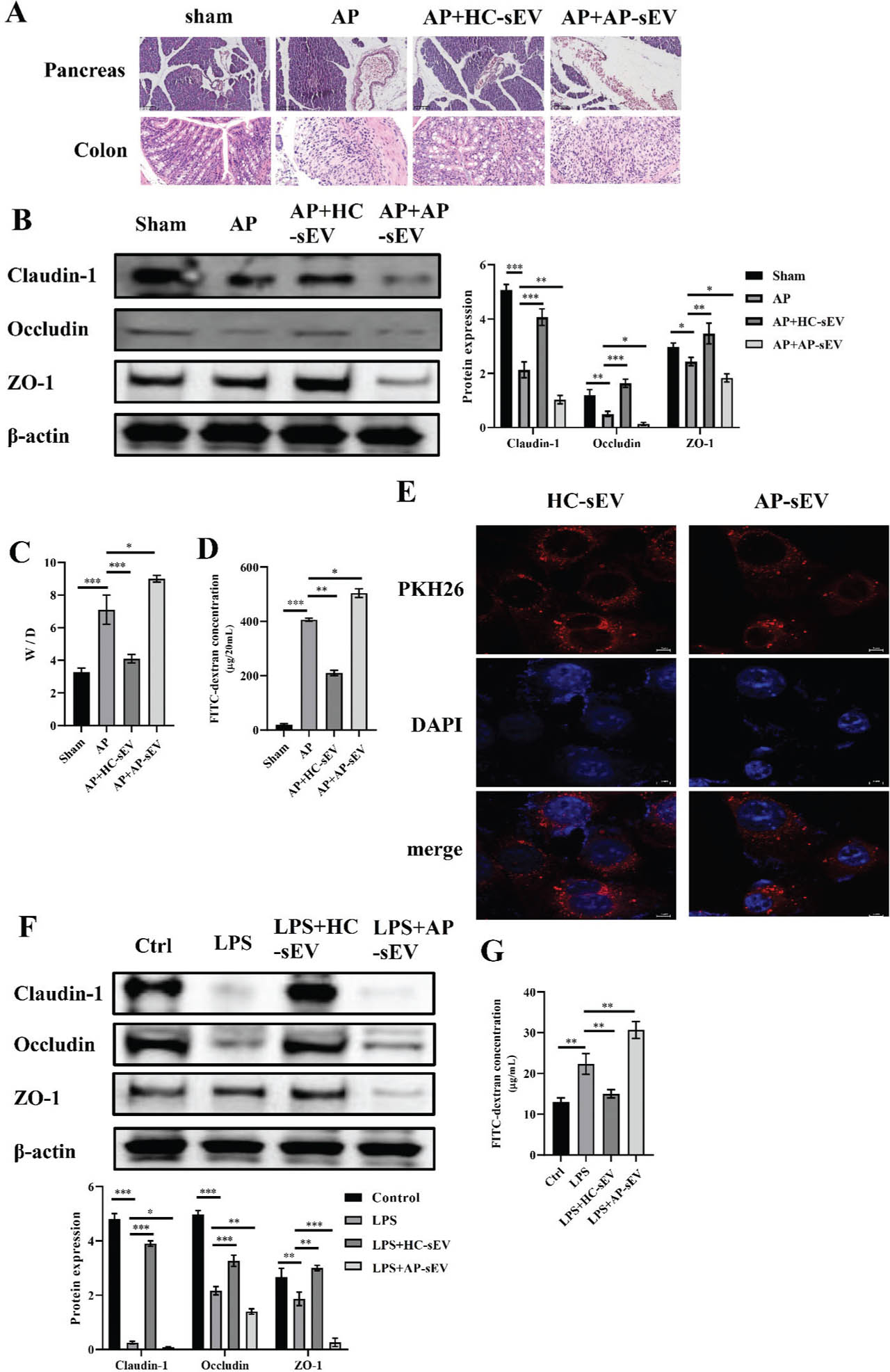
Fig 2.
sEV-enriched preparations from healthy individuals ameliorate AP-induced intestinal barrier dysfunction. (A) Hematoxylin and eosin staining of pancreatic and colonic tissues from sham, AP, AP + HC-sEV, and AP + AP-sEV groups. Scale bar: 100 μm. (B) Western blot analysis and quantification of tight junction proteins claudin-1, occludin, and ZO-1 in intestinal tissues. (C) Intestinal wet-to-dry weight ratio measurement. (D) Assessment of intestinal permeability using FITC-dextran. (E) Fluorescence microscopy showing uptake of PKH67-labeled sEV-enriched preparations by HIEC. Scale bar: 5 μm. (F) Western blot analysis and quantification of claudin-1, occludin, and ZO-1 expression in HIEC following LPS treatment with or without sEV treatment. (G) Paracellular permeability measurement in HIEC using FITC-dextran assay. AP, acute pancreatitis; AP-sEV, sEV-enriched preparations from AP patients; DAPI, 4′,6-diamidino-2-phenylindole; FITC-dextran, fluorescein isothiocyanate-labeled dextran; HC, healthy control; HC-sEV, sEV-enriched preparations from HCs; HIEC, human intestinal epithelial cells; LPS, lipopolysaccharide; SD, standard deviation; sEVs, small extracellular vesicles. Data are presented as mean ± SD. *p < 0.05, **p < 0.01, ***p < 0.001.
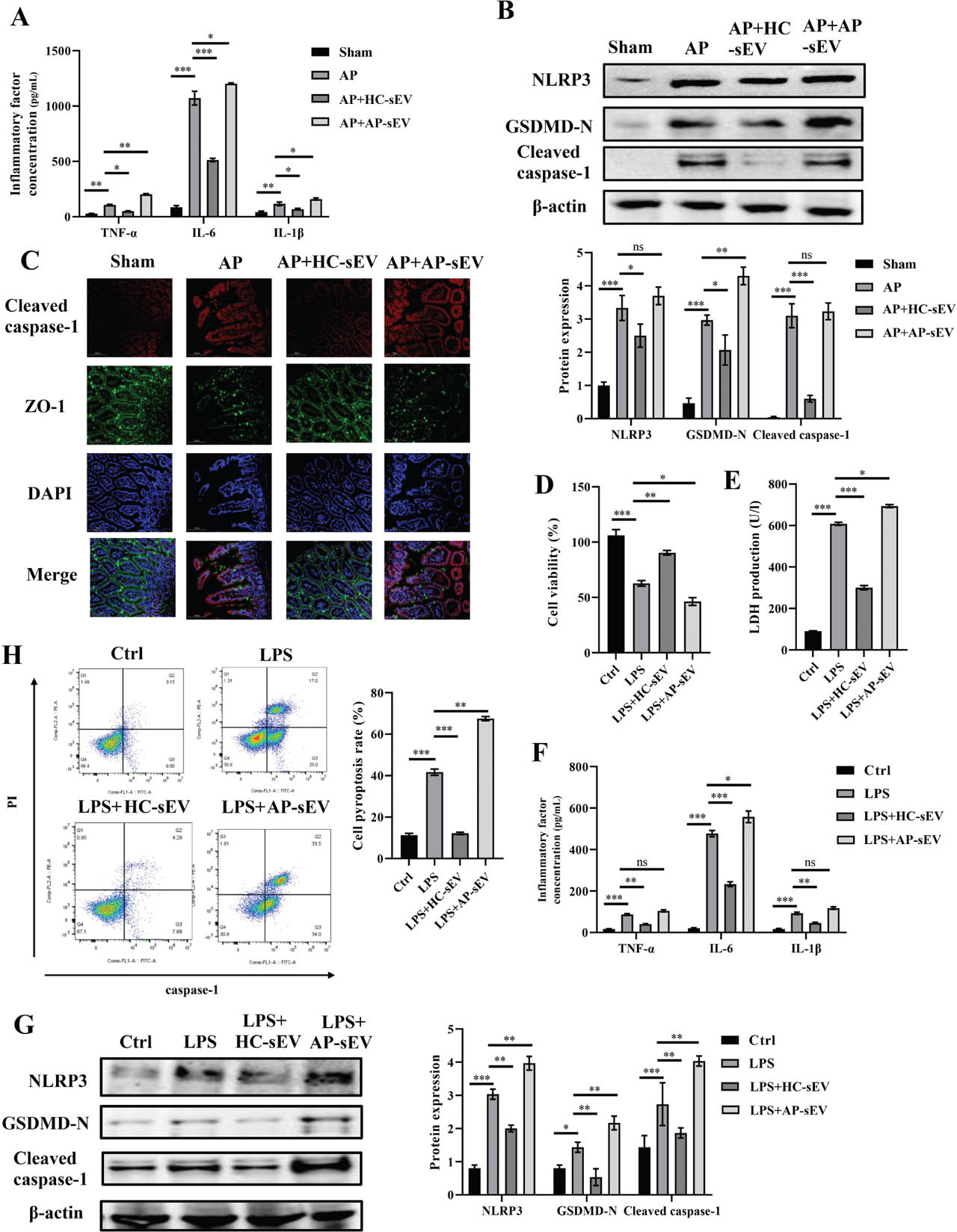
Fig 3.
(A) Serum concentrations of TNF-α, IL-6, and IL-1β in sham, AP, AP + HC-sEV, and AP + AP-sEV groups as determined by ELISA. sEV-enriched preparations from healthy individuals suppress NLRP3 inflammasome-mediated pyroptosis in intestinal epithelial cells. ELISA analysis of serum inflammatory cytokines TNF-α, IL-6, and IL-1β in mice. (B) Western blot analysis and quantification of pyroptosis-related proteins NLRP3, GSDMD-N, and cleaved caspase-1 in intestinal tissues. (C) Immunofluorescence staining of cleaved caspase-1 (red) and ZO-1 (green) in colonic tissues with DAPI nuclear counterstaining (blue). Scale bar: 100 μm. (D) Cell viability assessment in HIEC using CCK-8 assay. (E) LDH release measurement indicating cytotoxicity in HIEC. (F) ELISA analysis of inflammatory cytokines TNF-α, IL-6, and IL-1β in HIEC culture supernatants. (G) Western blot analysis and quantification of pyroptosis-related proteins in HIEC. (h) Flow cytometric analysis of pyroptotic cell death using caspase-1 and PI double staining in HIEC. CCK-8, cell counting kit-8; DAPI, 4′,6-diamidino-2-phenylindole; ELISA, enzyme-linked immunosorbent assay; HIEC, human intestinal epithelial cells; IL, interleukin; LDH, lactate dehydrogenase; LPS, lipopolysaccharide; NLRP3, NOD-like receptor pyrin domain-containing protein 3; PI, propidium iodide; SD, standard deviation; TNF, tumor necrosis factor. Data are presented as mean ± SD. *p < 0.05, **p < 0.01, ***p < 0.001.
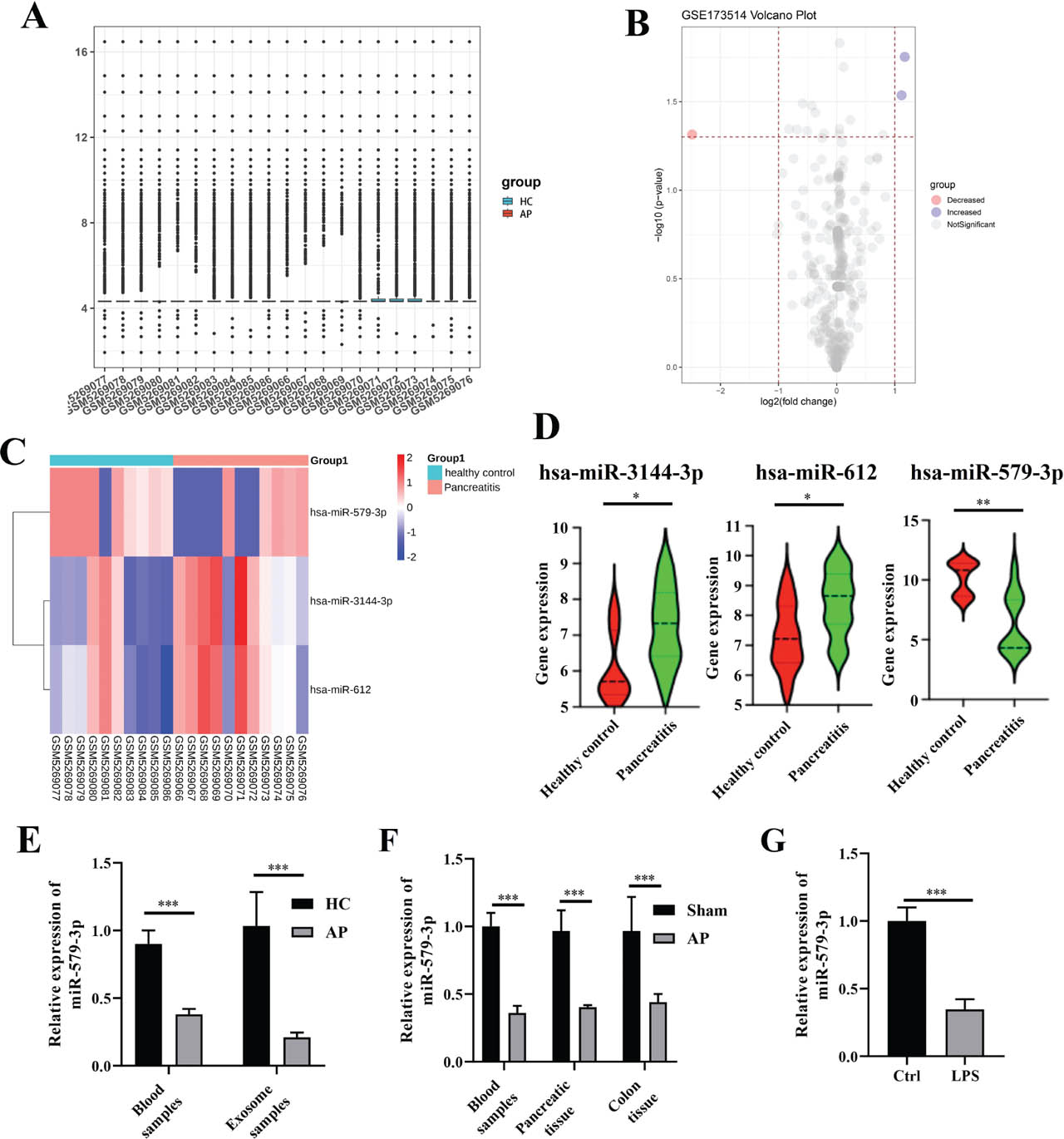
Fig 4.
(A) Box plots showing normalized gene expression profiles in the GSE173514 dataset comparing healthy controls and pancreatitis patients. miR-579-3p is differentially expressed in sEV-enriched preparations from healthy individuals vs. AP patients. (B) Volcano plot visualizing differentially expressed microRNAs with statistical significance thresholds. (C) Heatmap displaying expression patterns of differentially expressed microRNAs across samples from HCs and pancreatitis patients. (D) Expression levels of miR-3144-3p, miR-612, and miR-579-3p in the GSE173514 dataset showing differential regulation between groups. (E) Quantitative RT-PCR validation of miR-579-3p expression in blood samples and sEVs from HCs and AP patients. (F) miR-579-3p expression levels in blood samples, pancreatic tissue, and colonic tissue from sham and AP mice. (G) miR-579-3p expression in HIEC following LPS treatment. AP, acute pancreatitis; HC, healthy control; HIEC, human intestinal epithelial cells; LPS, lipopolysaccharide; RT-PCR, reverse transcription polymerase chain reaction; SD, standard deviation; sEVs, small extracellular vesicles. Data are presented as mean ± SD. *p < 0.05, **p < 0.01, ***p < 0.001.
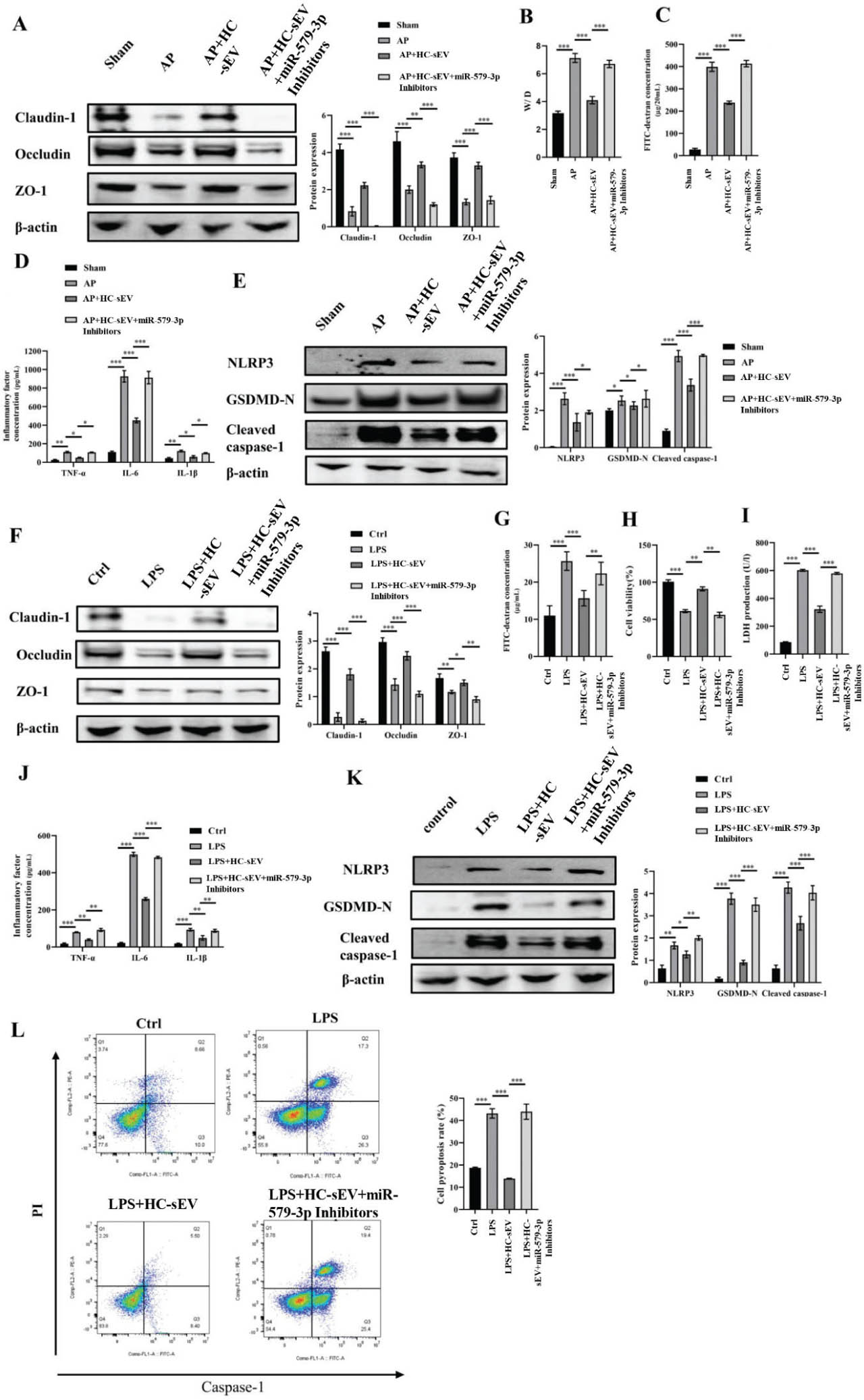
Fig 5.
(A) Western blot analysis and quantification of tight junction proteins claudin-1, occludin, and ZO-1 in intestinal tissues from mice treated with HC-sEV and miR-579-3p inhibitors. miR-579-3p mediates the protective effects of sEV-enriched preparations from healthy individuals on intestinal barrier function. (B) Intestinal wet-to-dry weight ratio measurement. (C) Assessment of intestinal permeability using FITC-dextran. (D) ELISA analysis of serum inflammatory cytokines TNF-α, IL-6, and IL-1β in mice. (E) Western blot analysis and quantification of pyroptosis-related proteins NLRP3, GSDMD-N, and cleaved caspase-1 in intestinal tissues. (F) Western blot analysis and quantification of tight junction proteins in HIEC following treatment with HC-sEV and miR-579-3p inhibitors. (G) Paracellular permeability measurement in HIEC using FITC-dextran assay. (H) Cell viability assessment using CCK-8 assay. (I) LDH release measurement indicating cytotoxicity. (J) ELISA analysis of inflammatory cytokines in HIEC culture supernatants. (K) Western blot analysis and quantification of pyroptosis-related proteins in HIEC. (L) Flow cytometric analysis of pyroptotic cell death using caspase-1 and PI staining. AP, acute pancreatitis; CCK-8, cell counting kit-8; ELISA, enzyme-linked immunosorbent assay; FITC-dextran, fluorescein isothiocyanate-labeled dextran; HC, healthy control; HIEC, human intestinal epithelial cells; IL, interleukin; LDH, lactate dehydrogenase; LPS, lipopolysaccharide; NLRP3, NOD-like receptor pyrin domain-containing protein 3; PI, propidium iodide. SD, standard deviation; sEVs, small extracellular vesicles; TNF, tumor necrosis factor. Data are presented as mean ± SD. *p < 0.05, **p < 0.01, ***p < 0.001.
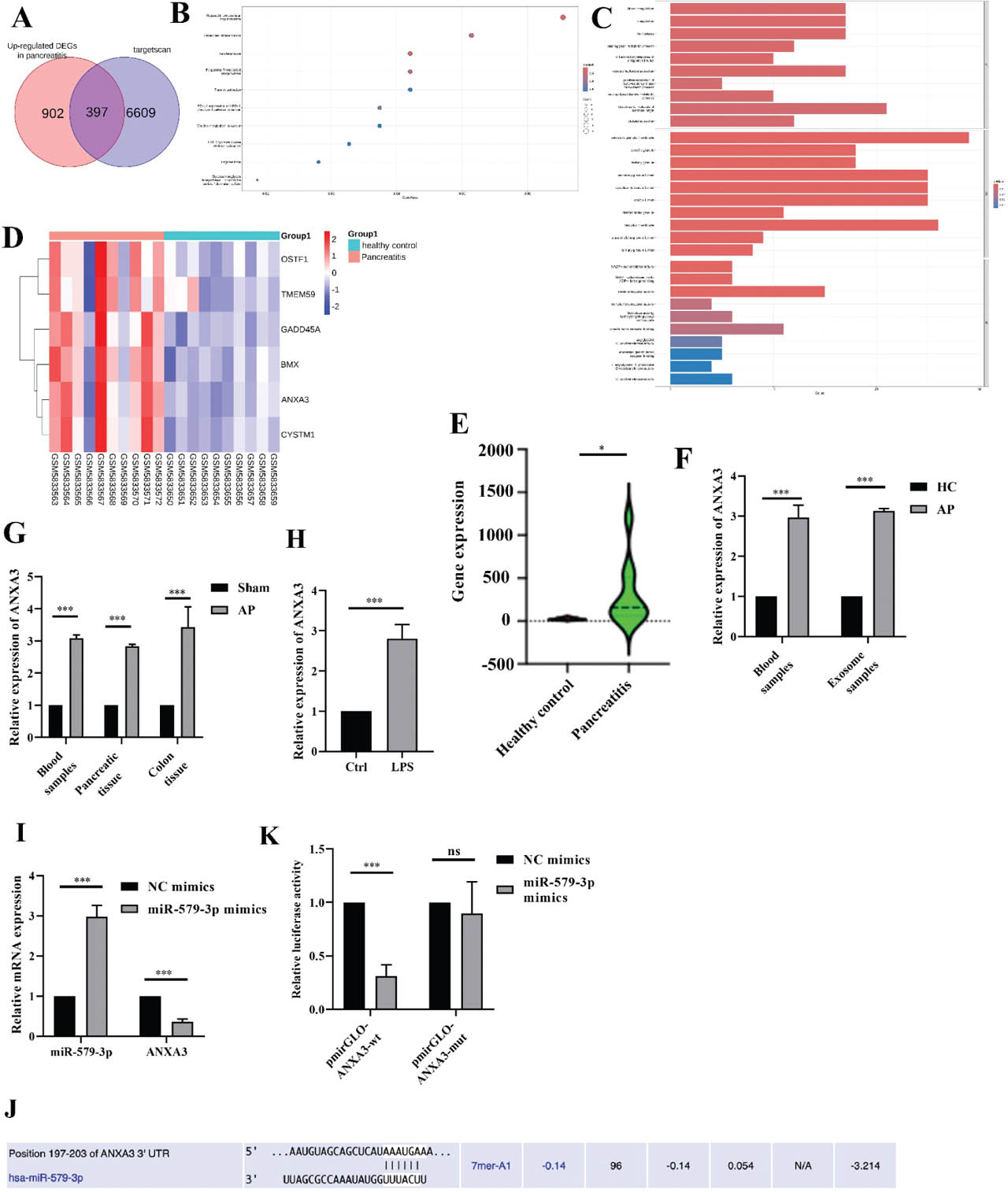
Fig 6.
(A) Venn diagram showing intersection of upregulated differentially expressed genes in acute pancreatitis (GSE194331) and predicted miR-579-3p target genes from TargetScan8.0, identifying 397 candidate target genes. miR-579-3p directly targets ANXA3 to regulate inflammatory responses and pyroptosis. (B, C) Functional enrichment analysis of the 397 intersecting genes showing associated biological pathways and molecular functions. (D) Heatmap displaying expression patterns of the top 6 candidate genes across HC and pancreatitis samples. (E) ANXA3 expression levels in the GSE194331 dataset comparing HCs and pancreatitis patients. (F) Quantitative RT-PCR validation of ANXA3 expression in blood samples and sEVs from HCs and AP patients. (G) ANXA3 expression levels in blood samples, pancreatic tissue, and colonic tissue from sham and AP mice. (H) ANXA3 expression in HIEC following LPS treatment. (I) ANXA3 and miR-579-3p expression levels in HIEC following transfection with NC or miR-579-3p mimics. (J) Predicted binding site between miR-579-3p and ANXA3 3′UTR using TargetScan8.0 database. (K) Dual-luciferase reporter assay confirming direct binding interaction between miR-579-3p and ANXA3. 3′UTR, 3′-untranslated region; ANXA3, Annexin A3; AP, acute pancreatitis; HC, healthy control; HIEC, human intestinal epithelial cells; LPS, lipopolysaccharide; NC, negative control; RT-PCR, reverse transcription polymerase chain reaction; SD, standard deviation; sEVs, small extracellular vesicles. Data are presented as mean ± SD. *p < 0.05, **p < 0.01, ***p < 0.001.
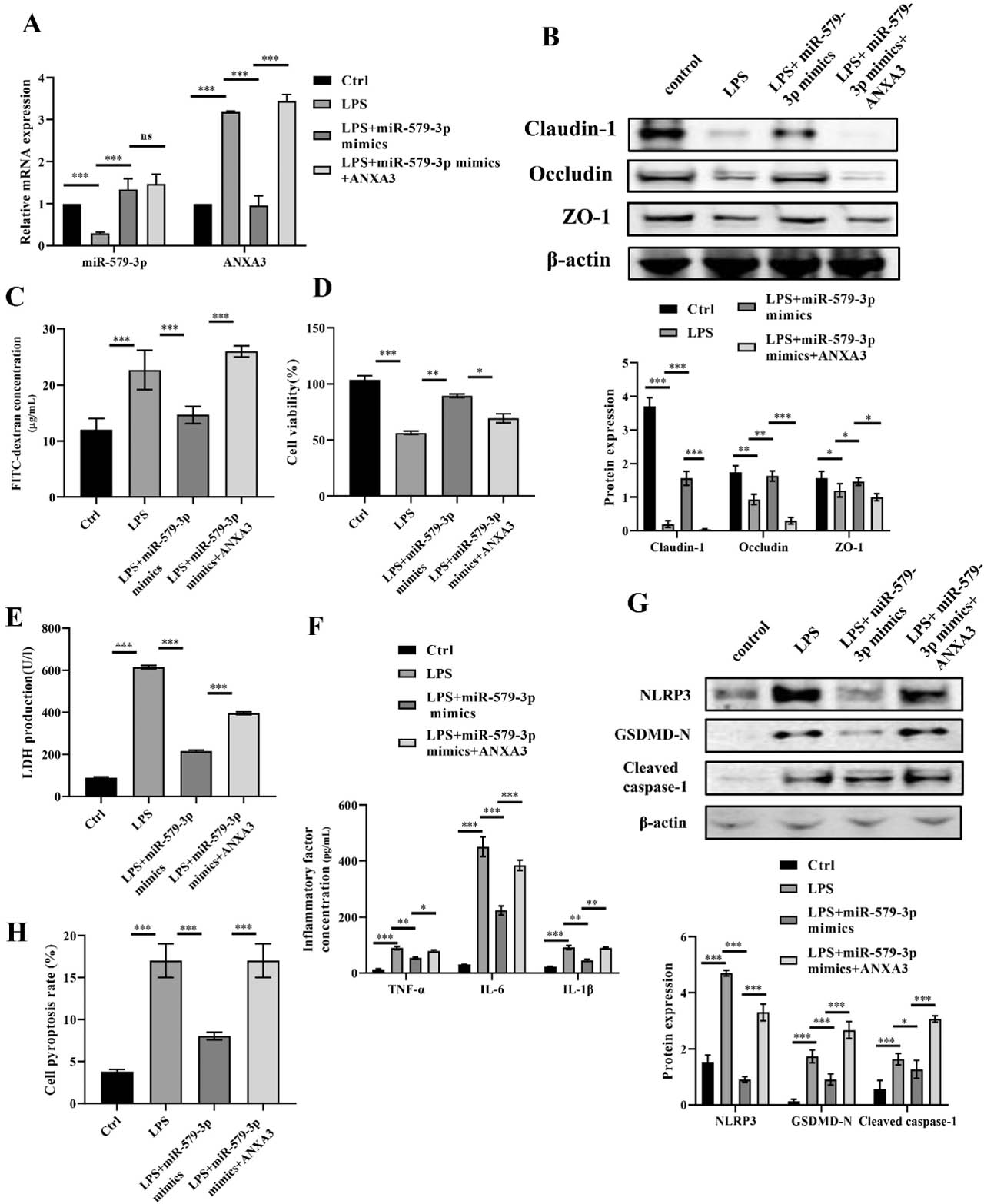
Fig 7.
ANXA3 overexpression counteracts the protective effects of miR-579-3p on intestinal epithelial barrier function and pyroptosis. (A) Quantitative RT-PCR validation of miR-579-3p and ANXA3 expression levels in HIEC following transfection with miR-579-3p mimics and ANXA3 overexpression plasmid. (B) Western blot analysis and quantification of tight junction proteins claudin-1, occludin, and ZO-1 in HIEC treated with LPS, miR-579-3p mimics, and ANXA3 overexpression. (C) Paracellular permeability measurement using FITC-dextran assay. (D) Cell viability assessment using CCK-8 assay. (E) LDH release measurement indicating cytotoxicity. (F) ELISA analysis of inflammatory cytokines TNF-α, IL-6, and IL-1® in HIEC culture supernatants. (G) Western blot analysis and quantification of pyroptosis-related proteins NLRP3, GSDMD-N, and cleaved caspase-1 in HIEC. (H) Flow cytometric analysis of pyroptotic cell death using caspase-1 and PI staining. ANXA3, Annexin A3; CCK-8, cell counting kit-8; FITC-dextran, fluorescein isothiocyanate-labeled dextran; HIEC, human intestinal epithelial cells; IL, interleukin; LDH, lactate dehydrogenase; LPS, lipopolysaccharide; NLRP3, NOD-like receptor pyrin domain-containing protein 3; PI, propidium iodide; RT-PCR, reverse transcription polymerase chain reaction; SD, standard deviation; TNF, tumor necrosis factor. Data are presented as mean ± SD. *p < 0.05, **p < 0.01, ***p < 0.001.