
1. Introduction
Acute pancreatitis (AP) is an acute abdominal condition with a mortality rate ranging 9%–24% (Mederos et al. 2021). In AP patients complicated by multiple organ dysfunction syndrome (MODS), the mortality rate can escalate to 47%–69% due to the involvement of multiple organ failures, including the lungs, liver, kidneys, and intestines (Garg and Singh 2019). Systemic inflammation increases the burden on organs and exacerbates AP severity, delivering a “second hit” to patients (Ge et al. 2020). One of the target organs in AP-induced MODS is the gut. Since the gut is the biggest immunological organ and a functional barrier, disruption to the intestinal barrier may result in bacterial translocation, microbial infections, increased intestinal permeability, and the production of pro-inflammatory chemicals (Scaldaferri et al. 2012; Chopyk and Grakoui 2020). Consequently, the intestine acts as a driver of localized inflammatory responses in AP, which can subsequently result in distant organ dysfunction (Zhou et al. 2021). However, the specific mechanisms by which AP causes intestinal barrier damage remain unclear.
Components of the NOD-like receptor pyrin domain-containing protein 3 (NLRP3) inflammasome combine and activate caspase-1 under various stress situations, including oxidative stress, which causes interleukin (IL)-1β and gasdermin D (GSDMD) to mature and cause inflammation and pyroptosis. A recently identified mechanism of planned cell death that commonly takes place in a variety of organs and tissues is called pyroptosis (Rao et al. 2022; Vasudevan et al. 2023).
Several studies have found that severe AP releases a large number of inflammatory substances, which induce pyroptosis in intestinal epithelial cells (Shao et al. 2023, 2024). The breakdown of tight connections between intestinal epithelial cells brought on by excessive pyroptosis might increase intestinal permeability (Li et al. 2023a). Therefore, inhibiting pyroptosis is a potential strategy to alleviate intestinal barrier damage.
Small extracellular vesicles (sEVs) are cell-derived vesicles ranging in diameter from approximately 50 to 150 nm that carry diverse molecular cargo, including proteins, lipids, and RNA species (Pegtel and Gould 2019; Kimiz-Gebologlu and Oncel 2022; Krylova and Feng 2023). sEVs produced from mesenchymal stem cells, neural stem cells, astrocytes, and microglia have been shown to provide intestinal protection via a variety of mechanisms. For example, sEVs derived from human umbilical cord mesenchymal stem cells carried miR-129-5p and inhibited ferroptosis, thereby alleviating inflammatory bowel disease (Wei et al. 2023). sEVs derived from intestinal epithelial cells carried microRNA-23a-3p, which mitigated intestinal injury after ischemia/reperfusion by targeting MAP4K4 (Yang et al. 2022). sEVs are detectable in the bloodstream, and the diversity of particles released into plasma or serum reflects contributions from multiple cell types (Bei et al. 2017). Convalescent plasma therapy has previously shown promise as a treatment for immunological and viral disorders (Mair-Jenkins et al. 2015). It has long been thought that plasma treatment gives patients nutrition and antibodies. According to recent research, sEV-enriched blood-derived preparations confer a variety of biological effects. For example, by preventing ferroptosis damage, sEV-enriched preparations from healthy human plasma may aid in functional recovery following intracerebral hemorrhage (Yang et al. 2023). However, the mechanisms by which sEV-enriched preparations from healthy serum protect against AP-induced intestinal injury, and the identity of the molecular carriers responsible for their effects, remain to be defined.
Therefore, this study investigated the mechanisms by which sEV-enriched serum preparations are involved in the context of AP-associated intestinal barrier injury. The findings revealed that sEV-enriched preparations from healthy individuals carry miR-579-3p, which targets Annexin A3 (ANXA3), reducing NLRP3 inflammasome-mediated pyroptosis, thereby improving AP-related intestinal barrier function.
2. Materials and Methods
2.1. Study design and patient recruitment
This prospective observational study was conducted at The First Affiliated Hospital of Soochow University between April 2024 and October 2024. The study protocol was approved by the institutional Ethics Committee, and all procedures were conducted in accordance with the Declaration of Helsinki. Written informed consent was obtained from all participants before enrollment.
The diagnosis of AP was established according to the revised Atlanta criteria, requiring the presence of at least two of the following three features: 1. characteristic epigastric abdominal pain radiating to the back, 2. serum amylase or lipase levels exceeding three times the upper limit of normal (reference range: lipase 13–60 U/L, amylase 25–125 U/L), 3. characteristic imaging findings on contrast-enhanced computed tomography, magnetic resonance imaging, or transabdominal ultrasonography. Exclusion criteria included chronic pancreatitis, pancreatic malignancy, pregnancy, active malignancy, immunosuppressive therapy, or refusal to provide informed consent.
Healthy control (HC) subjects were recruited from individuals undergoing routine health examinations at the hospital's physical examination center. Control subjects had no history of pancreatic disease, gastrointestinal disorders, inflammatory conditions, or current medication use that could affect immune function. A total of 10 patients with AP and 10 age-matched HCs were enrolled. Demographic data, clinical parameters, and disease severity scores were recorded for all participants.
Peripheral blood samples (10 mL) were collected in serum separator tubes within 24 h of the diagnosis of AP for patient groups and during routine examination for HCs. Samples were allowed to clot at room temperature for 30 min, then centrifuged at 3,000 × g for 10 min at 4°C. The serum was aliquoted and stored at −80°C until the sEV isolation procedures were performed.
2.2. Isolation and enrichment of sEV-containing preparations
sEV-enriched preparations were isolated from serum using a two-step protocol combining precipitation and ultracentrifugation. The ExoQuick Exosome Precipitation Solution (System Biosciences, Mountain View, CA, USA) was utilized for initial particle enrichment. 250 μL of serum was thawed on ice and clarified by centrifugation at 3,000 × g for 15 min at 4°C to remove cellular debris and large vesicles. The clarified serum was mixed with 63 μL of ExoQuick solution in a 1.5 mL micro-centrifuge tube and incubated at 4°C for 30 min with gentle mixing every 10 min.
Following incubation, the mixture was centrifuged at 1,500 × g for 30 min at 4°C. The resulting pellet was carefully resuspended in 100 μL of sterile phosphate-buffered saline (PBS; pH 7.4) and transferred to ultracentrifuge tubes. The suspension underwent ultracentrifugation at 100,000 × g for 60 min at 4°C using a Beckman Colter Optima XE-90 ultracentrifuge with a Type 70 Ti rotor. The supernatant was carefully removed, and the pellet was washed once with 100 μL of PBS, followed by a second ultracentrifugation step under identical conditions.
The final sEV pellet was resuspended in 100 μL of sterile PBS and stored in 10 μL aliquots at −80°C. Protein concentration was determined using the bicinchoninic acid assay (Thermo Fisher Scientific, Waltham, MA, USA), and sEV-enriched preparations were used within 3 months of isolation. To maintain preparation integrity, freeze-thaw cycles were strictly limited to a maximum of 3 cycles.
2.3. Characterization of sEV-enriched preparations
The morphology of sEV-enriched preparations was assessed by transmission electron microscopy (TEM) using negative staining protocols. Briefly, 5 μL of each preparation was applied to carbon-coated copper grids and negatively stained with 2% uranyl acetate. Images were acquired using a JEOL JEM-1400 TEM operated at an acceleration voltage of 80 kV. The resulting micrographs were used to identify vesicle-like structures consistent with sEV morphology; it is acknowledged that negative staining TEM at this resolution cannot formally confirm lipid bilayer membrane architecture, and morphological data should be interpreted in conjunction with the biochemical characterization described below.
Size distribution and particle concentration were determined by nanoparticle tracking analysis using a NanoSight NS300 system (Malvern Panalytical, Malvern, UK) equipped with a 532 nm laser. Three 60-second videos were recorded per sample and analyzed using NTA 3.2 software (Malvern Panalytical, Malvern, UK) with the camera level set to 13 and the detection threshold set to 5. The measured size distributions reflect the overall particle composition of the sEV-enriched preparations, which inevitably include co-isolated non-vesicular particles, such as lipoproteins and ribonucleoprotein complexes that overlap in size with sEVs and contribute to the observed peak below 100 nm, consistent with published profiles of serum-derived sEV-enriched preparations (Sork et al. 2021; Rai et al. 2025).
The presence of sEV-associated proteins was assessed by Western blot analysis. Protein lysates were prepared from sEV-enriched preparations and corresponding serum supernatants using radioimmunoprecipitation assay buffer supplemented with protease inhibitor cocktail (Roche, Basel, Switzerland). Equal amounts of protein (20 μg) were separated by sodium dodecyl sulfate-polyacrylamide gel electrophoresis and probed for the sEV-associated proteins CD63 and TSG101 and for the absence of cellular contamination markers calnexin and cytochrome c. Detection of CD63 and TSG101 in the preparations is consistent with sEV enrichment; however, as purity markers, including ADAM10 and apolipoprotein A-I, were not assessed due to exhaustion of the original serum samples, these data confirm sEV-associated protein enrichment rather than purification. This represents a limitation of the current study and will be addressed in future work using a complete MISEV2023-recommended characterization panel alongside density gradient separation. For cellular uptake studies, sEV-enriched preparations were labeled with PKH26 red fluorescent cell linker dye (Sigma-Aldrich, St. Louis, MO, USA) according to the manufacturer's protocol. Labeled preparations were co-cultured with human intestinal epithelial cells (HIEC) at 37°C, and cellular uptake was monitored by confocal laser scanning microscopy (Zeiss, Germany) with 4′,6-diamidino-2-phenylindole (DAPI) nuclear counterstain and a bright-field channel to facilitate morphological interpretation.
2.4. Animal model and experimental design
All animal experiments were conducted in strict accordance with the Guide for the Care and Use of Laboratory Animals and were approved by the Ethics Committee of Soochow University. Male C57BL/6 mice aged 6–8 weeks with body weights ranging from 22–27 g were obtained from the Laboratory Animal Center of Soochow University. Animals were housed in individually ventilated cages under specific pathogen-free conditions with controlled temperature (22°C ± 2°C) and a 12-hour light-dark cycle. Standard laboratory chow and water were provided ad libitum, and animals underwent a 1-week acclimatization period before experimental procedures.
A minimum of six animals per group was determined to be sufficient for detecting statistically significant differences based on prior studies using this model. Animals were randomly assigned to experimental groups using a computer-generated randomization sequence.
AP was induced using a well-established protocol combining cerulein hyperstimulation and lipopolysaccharide (LPS) administration, which has been validated to reproduce key features of human AP-associated intestinal barrier dysfunction, including systemic cytokine elevation, tight junction disruption, and increased intestinal permeability (Mayer et al. 2000; Kylänpää et al. 2010). Mice were fasted for 18 h with free access to water before experimental procedures. Cerulein was administered intraperitoneally at 50 μg/kg body weight hourly for six consecutive injections. 1 h after the final cerulein injection, LPS (Escherichia coli 055:B5, Meilunbio, China) was administered intraperitoneally at 10 mg/kg body weight. Sham control animals received equivalent volumes of sterile normal saline following an identical injection schedule; this group was included to control for any direct effect of the intraperitoneal injection procedure on intestinal integrity, independent of AP induction.
Experimental groups comprised: sham (n = 6), AP (n = 6), AP treated with HC-sEV preparations (AP + HC-sEV, n = 6), and AP treated with AP-sEV preparations (AP + AP-sEV, n = 6). sEV-enriched preparations were administered via tail vein injection at 200 μg/kg body weight daily for three consecutive days, beginning immediately after AP induction. The dose was selected on the basis of previous studies reporting therapeutic efficacy without adverse effects.
To investigate the functional contribution of miR-579-3p to the observed effects of HC-sEV preparations, a separate cohort was divided into four groups: sham (n = 6), AP (n = 6), AP + HC-sEV (n = 6), and AP + HC-sEV + miR-579-3p inhibitors (n = 6). In experiments involving microRNA manipulation, animals received the relevant intervention via tail vein injection using an in vivo transfection reagent 24 h prior to AP induction.
2.5. Tissue collection and processing
At 72 h following AP induction, animals were anesthetized with isoflurane and euthanized by cervical dislocation. Blood samples were collected via cardiac puncture for serum preparation. Pancreatic and colonic tissues were rapidly excised and divided into portions for different analytical procedures. Tissue samples designated for histological analysis were immediately fixed in 10% neutral-buffered formalin for 24 h before processing for paraffin embedding. Samples for molecular analyses were snap-frozen in liquid nitrogen and stored at −80°C until processing.
For determining the wet-to-dry weight ratio, segments of the distal colon were carefully cleaned of luminal contents, weighed immediately (wet weight), and then dried in a vacuum oven at 60°C for 48 h before being reweighed (dry weight). The wet-to-dry ratio was calculated as an indicator of tissue edema and barrier dysfunction.
2.6. Histopathological evaluation
Formalin-fixed, paraffin-embedded tissue sections were cut at 5 μm thickness using a rotary microtome and mounted on positively charged glass slides. Sections were deparaffinized in xylene and rehydrated through a graded series of alcohols before staining with hematoxylin and eosin using standard protocols.
Pancreatic tissue injury was assessed using a standardized scoring system evaluating acinar cell necrosis, inflammatory cell infiltration, interstitial edema, and hemorrhage on a scale of 0–3 (0 = none, 1 = mild, 2 = moderate, 3 = severe). The total pancreatic injury score was calculated as the sum of individual parameter scores. Intestinal tissue damage was evaluated by assessing villus height, crypt depth, inflammatory cell infiltration, and epithelial integrity using similar scoring criteria.
2.7. Immunofluorescence staining and colocalization analysis
For immunofluorescence studies, tissue samples were embedded in optimal cutting temperature compound and sectioned at a thickness of 10 μm using a cryostat. Sections were fixed in 4% paraformaldehyde for 15 min at room temperature and permeabilized with 0.5% Triton X-100 in PBS for 10 min. Non-specific binding was blocked using 5% normal goat serum containing 1% bovine serum albumin for 1 h at room temperature. Primary antibodies were applied overnight at 4°C in a humidified chamber. The following primary antibodies were used: rabbit anti-cleaved caspase-1 (1:200, Cell Signaling Technology) and mouse anti-ZO-1 (1:300, Invitrogen, Thermo Fisher Scientific, Waltham, MA, USA). After washing with PBS, sections were incubated with appropriate Alexa Fluor-conjugated secondary antibodies (1:500, Invitrogen, USA) for 1 h at room temperature in the dark.
Nuclei were counterstained with (DAPI, 1:1000) for 5 min. Sections were mounted using ProLong Gold anti-fade mounting medium (Invitrogen, USA) and examined using a Zeiss confocal laser scanning microscope. Images were acquired using identical acquisition parameters across all samples, and fluorescence intensity was quantified using ImageJ software (National Institutes of Health, Bethesda, MD, USA) with consistent regions of interest.
2.8. Cell culture
Human intestinal epithelial cells (HIEC-6; passage 15–25) were obtained from the Cell Bank of the Chinese Academy of Sciences (Shanghai, China) and maintained according to standard protocols. Cells were cultured in RPMI-1640 medium (Gibco, Thermo Fisher Scientific, Waltham, MA, USA) supplemented with 10% heat-inactivated fetal bovine serum (Gibco, Thermo Fisher Scientific, Waltham, MA, USA), 100 U/mL penicillin, and 100 μg/mL streptomycin in a humidified incubator at 37°C with 5% CO2.
Cell passage was performed when cultures reached 80%–90% confluence using 0.25% trypsin-EDTA solution. Cell viability was routinely assessed using the trypan blue exclusion method, and only cultures with viability greater than 95% were used for experiments. Cells were seeded at appropriate densities 24 h before experimental treatments to ensure optimal confluence. For inflammatory stimulation, cells were treated with LPS (Sigma-Aldrich, St. Louis, MO, USA) at a concentration of 100 μg/mL for 24 h, based on dose-response and time-course optimization experiments. This concentration was selected as it consistently induced inflammatory responses without causing excessive cell death. sEV treatments were performed using sterilized sEV preparations at a concentration of 50 μg/mL, which was determined to be optimal based on preliminary dose-response studies.
2.9. Transfection procedures and gene manipulation
miR-579-3p mimics, inhibitors, and negative control (NC) oligonucleotides were chemically synthesized by BioLink Biotechnology (Shanghai, China) with 2′-O-methyl modifications to enhance stability. The ANXA3 overexpression plasmid (pcDNA3.1-ANXA3) and empty vector control were constructed by GeneChem (Shanghai, China) using standard molecular cloning techniques. Plasmid integrity was verified by restriction enzyme analysis and DNA sequencing. Transfections were performed using Lipofectamine RNAiMAX reagent (Invitrogen, USA) for oligonucleotides and Lipofectamine 2000 reagent (Invitrogen, USA) for plasmids according to the manufacturer's protocols. Briefly, cells were seeded in antibiotic-free medium 24 h before transfection to achieve 70%–80% confluence. Transfection complexes were prepared by mixing nucleic acids with lipofection reagents in Opti-MEM medium (Gibco, Thermo Fisher Scientific, Waltham, MA, USA) and incubating for 20 min at room temperature before adding them to the cells.
Transfection efficiency was monitored using fluorescently labeled control oligonucleotides and assessed by flow cytometry. Optimal transfection conditions achieved an efficiency of over 85% with minimal cytotoxicity. For in vivo ANXA3 overexpression, the pcDNA3.1-ANXA3 plasmid (2 mg/kg body weight) was administered via tail vein injection using jetPEI-in vivo transfection reagent (Polyplus Transfection, France) according to the manufacturer's protocol, 24 h prior to AP induction. Successful ANXA3 protein overexpression in colonic tissue was verified by Western blot at the experimental endpoint.
2.10. Protein extraction and Western blot analysis
Total protein was extracted from cultured cells using modified RIPA buffer (50 mM Tris-HCl, pH 7.4, 150 mM NaCl, 1% NP-40, 0.5% sodium deoxycholate, 0.1% SDS) supplemented with protease and phosphatase inhibitor cocktails (Roche, Basel, Switzerland). Tissue samples were homogenized using a TissueLyser II (Qiagen, Germany) with stainless steel beads. Protein concentrations were determined using the Pierce BCA Protein Assay Kit (Thermo Fisher Scientific, Waltham, MA, USA).
Equal amounts of protein (30–50 μg) were separated by SDS-PAGE and transferred to PVDF membranes (Millipore, USA). Membranes were blocked with 5% non-fat milk in TBST for 1 h at room temperature, then incubated overnight at 4°C with primary antibodies: rabbit anti-NLRP3 (1:1000, Cell Signaling Technology, Danvers, MA, USA), rabbit anti-gasdermin D (anti-GSDMD;1:1000, Abcam, Cambridge, UK), rabbit anti-cleaved caspase-1 (1:1000, Cell Signaling Technology, USA), mouse anti-claudin-1 (1:2000, Invitrogen, USA), rabbit anti-occludin (1:1500, Invitrogen, USA), mouse anti-ZO-1 (1:2000, Invitrogen, USA), and mouse anti-β-actin (1:5000, Sigma-Aldrich, St. Louis, MO, USA).
After washing, membranes were incubated with horseradish peroxidase-conjugated secondary antibodies (1:10,000, Jackson ImmunoResearch, USA) for 1 h at room temperature. Protein bands were visualized using ECL substrate (Thermo Fisher Scientific, Waltham, MA, USA) and detected with a ChemiDoc MP imaging system (Bio-Rad, Bio-Rad Laboratories, Hercules, CA, USA). Densitometric analysis was performed using ImageJ software with β-actin normalization.
2.11. RNA extraction and quantitative reverse transcription polymerase chain reaction (RT-PCR)
Total RNA was extracted from cells and tissues using TRIzol reagent (Takara Bio, Japan) according to the manufacturer's protocol. For microRNA isolation, the miRNeasy Mini Kit (Qiagen, Germany) was used to ensure efficient recovery of small RNA species. RNA quality and concentration were assessed using a NanoDrop 2000 spectrophotometer (Thermo Fisher Scientific, Waltham, MA, USA). Only samples with A260/A280 ratios between 1.8 and 2.2 and A260/A230 ratios greater than 1.8 were used for downstream applications. For messenger RNA analysis, complementary DNA synthesis was performed using the QuantiTect Reverse Transcription Kit (Qiagen, Germany) with 1 μg of total RNA according to the manufacturer's instructions. For microRNA analysis, the miScript II RT Kit (Qiagen, Germany) was used, along with specialized primers for miR-579-3p and the endogenous control U6 small nuclear RNA.
Quantitative PCR reactions were performed using the Fast SYBR Green Master Mix (Applied Biosystems, USA) on a StepOnePlus Real-Time PCR System (Applied Biosystems, USA). Reaction conditions included initial denaturation at 95°C for 10 min, followed by 40 cycles of 95 °C for 15 s and 60°C for 1 min. Melt curve analysis was performed to verify primer specificity and the absence of primer dimers.
Gene expression levels were calculated using the 2^(–ΔΔCt) method with glyceraldehyde-3-phosphate dehydrogenase (GAPDH) or β-actin as endogenous controls for messenger RNA and U6 small nuclear RNA for microRNA. All reactions were performed in triplicate, and no-template controls were included to monitor for contamination. The primer sequences are listed in Table 1.
Table 1.
List of all primers used in RT-PCR
| Species | Primer | Sequence (5′-3′) |
|---|---|---|
| Homo sapiens | miR-579-3p_F | GCACGGAACTTCCCTTGACGTC |
| miR-579-3p_R | GCTCTAGGGATCGTCGCCGAA | |
| U6_F | CGCTTCGGCAGCACATATACTAA | |
| U6_R | TATGGAACGCTTCACGAATTTGC | |
| ANXA3_F | TTAGCCCATCAGTGGATGCTG | |
| ANXA3_R | CTGTGCATTTGACCTCTCAGT | |
| GAPDH_F | CCCAAACCGAAGTCATAGC | |
| GAPDH_R | CGCCCAATACGACCAAAT | |
| Mice | miR-579-3p_F | GTCGTATCCAGTGCAGGGTCCG |
| miR-579-3p_R | GCGGCTTCATTTGGTATAAACC | |
| U6_F | AAAGCAAATCATCGGACGACC | |
| U6_R | GTACAACACATTGTTTCCTCGGA | |
| ANXA3_F | ATGGCCTCTATCTGGGTTGGA | |
| ANXA3_R | CAAGTCCTCTGATCGCTTTCC | |
| GAPDH_F | TTGACCCTGAAGCTCCCT | |
| GAPDH_R | CAATCTCCACTTTGCCACT |
2.12. Cytokine quantification by enzyme-linked immunosorbentassay
Serum samples and cell culture supernatants were analyzed for inflammatory cytokine concentrations using commercially available enzyme-linked immunosorbent assay (ELISA) kits.
The following cytokines were measured: tumor necrosis factor (TNF)-α, IL-6, and IL-1β. All assays were performed according to the manufacturer's protocols with appropriate dilutions to ensure readings within the linear range of standard curves. Optical density measurements were obtained using a microplate reader (BioTek Synergy H1) (BioTek Instruments, Winooski, VT, USA) at 450 nm with background correction at 570 nm. Standard curves were generated using recombinant protein standards provided with each kit, and sample concentrations were determined using a four-parameter logistic curve fitting model. All samples were analyzed in duplicate, and results were expressed as picograms per milliliter for serum and cell culture supernatants.
2.13. Intestinal permeability assessment
In vivo intestinal permeability was evaluated using fluorescein isothiocyanate-labeled dextran (FITC-dextran, 4 kDa, Sigma-Aldrich, St. Louis, MO, USA) as a marker of intestinal barrier integrity. Under anesthesia, a midline laparotomy was performed, and a 5 cm segment of jejunum was carefully isolated. One end was ligated with silk suture, and 200 μL of FITC-dextran solution (40 mg/mL in PBS) was injected into the intestinal lumen using a 30-gauge needle. The opposite end was immediately ligated to create a closed loop.
The intestinal segment was returned to the peritoneal cavity, and the abdomen was temporarily closed. After 1 h, the intestinal loop was removed and placed in 5 mL of pre-warmed PBS (37°C). FITC-dextran concentration in the external medium was measured using a fluorescence spectrophotometer with excitation at 485 nm and emission at 528 nm.
For in vitro permeability studies, HIEC were grown on poly-carbonate Transwell inserts (0.4 μm pore size, Corning) until confluent monolayers formed. Transepithelial electrical resistance was measured using an EVOM2 voltohmmeter (World Precision Instruments) to confirm barrier integrity prior to the experiments. Only monolayers with resistance values >300 Ω·cm2 were used for permeability studies.
FITC-labeled dextran (4 kDa, Sigma-Aldrich, St. Louis, MO, USA) was added to the apical chamber at a final concentration of 0.2 mg/mL in phenol red-free Hanks' balanced salt solution. After 3 h of incubation at 37°C, 100 μL samples were collected from the basolateral chamber, and fluorescence intensity was measured using a fluorescence spectrophotometer. Apparent permeability coefficients were calculated using the formula: Papp = (dQ/dt) × (1/A × C0), where dQ/dt is the permeability rate, A is the surface area of the monolayer, and C0 is the initial concentration in the apical chamber.
2.14. Cell viability and cytotoxicity evaluation
Cell viability was assessed using the cell counting kit-8 (CCK-8; Thermo Fisher, Waltham, MA, USA) colorimetric assay based on the reduction of tetrazolium salt WST-8 by cellular dehydrogenases. Cells were seeded in 96-well plates at a density of 1 × 10⁴ cells per well and treated according to the experimental protocols. At designated time points, 10 μL of CCK-8 solution was added to each well, and plates were incubated for 2 h at 37°C.
Absorbance was measured at 450 nm using a microplate reader with background correction at 630 nm. Cell viability was calculated as a percentage relative to untreated control cells.
Cytotoxicity was evaluated by measuring lactate dehydrogenase (LDH) release into the culture medium using the CytoTox 96 Non-Radioactive Cytotoxicity Assay (Promega, Promega Corporation, Madison, WI, USA). This assay quantifies LDH activity released from cells with compromised membrane integrity. Cell culture supernatants were collected and centrifuged to remove cellular debris before analysis according to the manufacturer's protocol.
2.15. Flow cytometric analysis of pyroptotic cell death
Pyroptotic cell death was quantified using a specialized flow cytometry-based assay combining caspase-1 activity detection with propidium iodide (PI) staining to identify cells undergoing pyroptosis. The Pyroptosis/Caspase-1 Assay Kit (Abcam, UK) was used according to the manufacturer's instructions with minor modifications.
Cells were harvested by trypsinization and washed twice with ice-cold PBS. Cell suspensions were incubated with FLICA caspase-1 probe for 1 h at 37°C to label active caspase-1, followed by washing and PI staining for 5 min on ice. Cells were analyzed immediately using a BD FACSCanto II (BD Biosciences, San Jose, CA, USA) flow cytometer equipped with appropriate laser and filter configurations.
Data acquisition included at least 10,000 events per sample, and analysis was performed using FlowJo software version 10.6 (BD Biosciences, Ashland, OR, USA). Pyroptotic cells were identified as the population positive for both caspase-1 activity and PI uptake. Appropriate compensation controls and fluorescence-minus-one controls were included to ensure accurate gating and minimize artifacts from spectral overlap.
2.16. Bioinformatics analysis and target prediction
Publicly available gene expression datasets were obtained from the gene expression omnibus (GEO) database for comprehensive bioinformatics analysis. Detailed information about the datasets is provided in Table 2. Dataset GSE173514 contained microRNA expression profiles from sEV-enriched serum preparations of HCs and AP patients, while GSE194331 provided messenger RNA expression data from pancreatic tissue samples.
Table 2.
GEO database information
| ID | Platforms | Samples |
|---|---|---|
| GSE173514 | GPL30060 NanoString nCounter Human v3 miRNA Assay (NS_H_miR_v3b) | Isolation of sEV-enriched preparations from the plasma of 15 pancreatitis patients and 10 HCs |
| GSE194331 | GPL16791 Illumina HiSeq 2500 (Homo sapiens) | Peripheral blood of 87 patients with AP and 32 HCs. |
Raw expression data were processed using R software version 4.1.0 with Bioconductor packages. Quality control assessment was performed using the array Quality Metrics package, and data normalization was conducted using the robust multi-array average method implemented in the affy package. Differential expression analysis was performed using the limma package with Benjamini–Hochberg correction for multiple testing.
Differentially expressed genes were identified using stringent criteria of adjusted p-value < 0.05 and absolute log2 fold change >1.0. Functional enrichment analysis was conducted using the clusterProfiler package to identify overrepresented Gene Ontology biological processes and Kyoto Encyclopedia of Genes and Genomes pathways.
Target prediction for miR-579-3p was performed using the TargetScan8.0 database, which utilizes sequence complementarity, evolutionary conservation, and thermodynamic stability to predict microRNA-messenger RNA interactions. Predicted targets were filtered based on context score and conserved targeting to identify high-confidence candidates.
2.17. Luciferase reporter assay validation
The direct interaction between miR-579-3p and the 3′-untranslated region (3′UTR) of ANXA3 was validated using dual-luciferase reporter assays. Wild-type and mutant ANXA3 3′UTR fragments containing the predicted miR-579-3p binding site were PCR-amplified and cloned into the pmirGLO dual-luciferase miRNA target expression vector (Promega, USA) using standard molecular cloning techniques.
Cloning accuracy was verified by DNA sequencing using vector-specific primers. HEK293T cells were seeded in 24-well plates and transfected at 70%–80% confluence using Lipofectamine 2000. Each well received 200 ng of reporter plasmid and 50 nM of either NC mimics or miR-579-3p mimics. The Renilla luciferase plasmid was co-transfected as an internal control for transfection efficiency.
Forty-eight hours post-transfection, cells were lysed, and luciferase activity was measured using the Dual-Luciferase Reporter Assay System (Promega, USA) according to the manufacturer's protocol. Luminescence was detected using a GloMax 20/20 luminometer (Promega, USA), and firefly luciferase activity was normalized to Renilla luciferase activity to account for variations in transfection efficiency.
2.18. Statistical analysis
Statistical analyzes were performed using GraphPad Prism version 8.0.2 software and R statistical computing environment version 4.1.0. Data distribution normality was assessed using the Shapiro–Wilk test and visual inspection of quantile-quantile plots. Homogeneity of variance was evaluated using Levene's test.
For comparisons between two groups, unpaired Student's t-tests were used for normally distributed data with equal variances, while Welch's t-tests were applied when variances were unequal. Mann–Whitney U tests were used for non-normally distributed data. Multiple group comparisons were analyzed using one-way analysis of variance, followed by Tukey's honestly significant difference post hoc test for parametric data or Kruskal–Wallis test with Dunn's multiple comparisons test for non-parametric data. Data are presented as mean ± standard deviation (SD) unless otherwise specified. Statistical significance was defined as p-value < 0.05. All statistical tests were two-tailed, and no data points were excluded from analysis unless pre-specified exclusion criteria were met.
3. Results
3.1. Isolation and characterization of sEV-enriched preparations from HCs and AP patients
sEV-enriched preparations were obtained from serum samples of HCs (HC-sEV) and AP patients (AP-sEV) using ExoQuick precipitation followed by ultracentrifugation. TEM revealed vesicle-like structures in both HC-sEV and AP-sEV preparations (Figure 1a). While the images are consistent with sEV morphology, the resolution of the current micrographs is insufficient to formally confirm lipid bilayer membrane architecture, and morphological characterization should therefore be interpreted in conjunction with the biochemical data presented below.
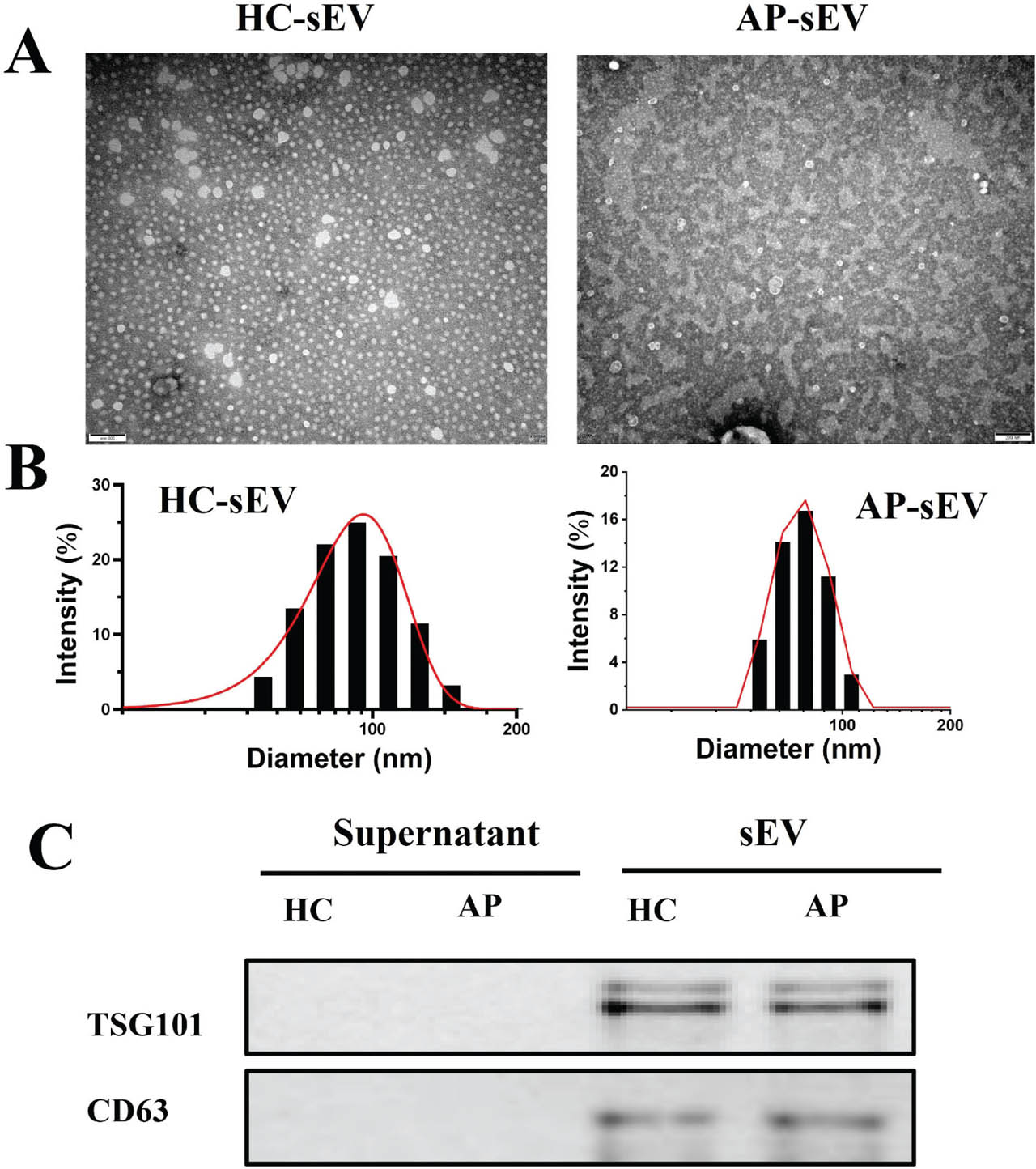
Fig 1.
Isolation and characterization of sEV-enriched preparations from HCs and AP patients. sEV-enriched preparations were isolated from healthy individuals (HC-sEV) and AP patients (AP-sEV). (A) TEM showing characteristic sEV morphology. Scale bars: 100 nm. (B) Nanoparticle tracking analysis demonstrating size distribution of HC-sEV and AP-sEV with peak diameters around 100 nm. (C) Western blot analysis of sEV-associated proteins TSG101 and CD63 in sEV-enriched preparations and supernatants, confirming successful isolation and purity. AP, acute pancreatitis; HC, healthy control; sEVs, small extracellular vesicles; TEM, transmission electron microscopy.
Nanoparticle tracking analysis revealed size distributions with a predominant peak below 100 nm for both preparations (Figure 1b). This profile is consistent with published characterizations of serum-derived sEV-enriched preparations, in which co-isolated non-vesicular particles, including lipoproteins and ribonucleoprotein complexes that overlap in size with sEVs, contribute to the measured distribution and shift the peak toward smaller diameters. These data therefore reflect the overall particle composition of the enriched preparations rather than purified sEVs. Western blot analysis detected the sEV-associated proteins TSG101 and CD63 in both HC-sEV and AP-sEV preparations, with the absence of the cellular contamination markers calnexin and cytochrome c (Figure 1c), consistent with successful sEV enrichment from both healthy and pathological serum samples. The limitations of the current isolation and characterization approach, including the absence of purity markers ADAM10 and apolipoprotein A-I, are addressed in the Discussion section.
3.2. sEV-enriched preparations from healthy individuals ameliorate AP-induced intestinal barrier dysfunction
To investigate the effects of serum-derived sEV-enriched preparations on AP-associated intestinal injury, HC-sEV and AP-sEV preparations were administered to mice with experimentally induced AP. Histopathological examination demonstrated that AP induction resulted in severe pancreatic tissue damage, characterized by extensive inflammatory cell infiltration, acinar cell necrosis, and interstitial edema relative to sham-operated controls (Figure 2a). Colonic tissues from AP mice exhibited marked destruction of mucosal architecture, villus shortening, pronounced inflammatory infiltration, and interstitial edema. Administration of HC-sEV preparations significantly attenuated these pathological changes in both pancreatic and colonic tissues, preserving tissue architecture and reducing inflammatory cell accumulation. In contrast, AP-sEV administration exacerbated histopathological damage in both organs, with more pronounced inflammatory responses and structural disruption compared to untreated AP mice.
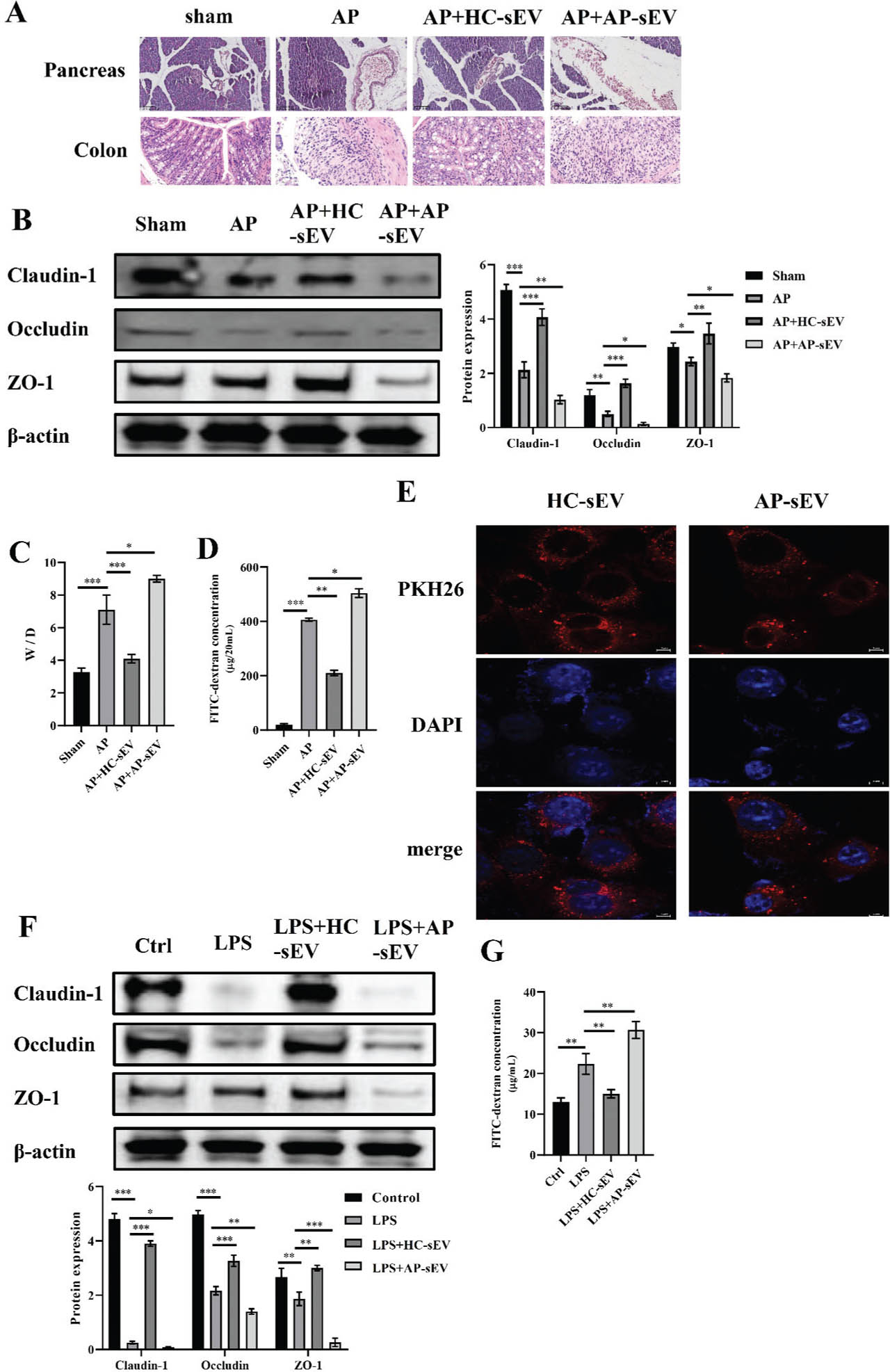
Fig 2.
sEV-enriched preparations from healthy individuals ameliorate AP-induced intestinal barrier dysfunction. (A) Hematoxylin and eosin staining of pancreatic and colonic tissues from sham, AP, AP + HC-sEV, and AP + AP-sEV groups. Scale bar: 100 μm. (B) Western blot analysis and quantification of tight junction proteins claudin-1, occludin, and ZO-1 in intestinal tissues. (C) Intestinal wet-to-dry weight ratio measurement. (D) Assessment of intestinal permeability using FITC-dextran. (E) Fluorescence microscopy showing uptake of PKH67-labeled sEV-enriched preparations by HIEC. Scale bar: 5 μm. (F) Western blot analysis and quantification of claudin-1, occludin, and ZO-1 expression in HIEC following LPS treatment with or without sEV treatment. (G) Paracellular permeability measurement in HIEC using FITC-dextran assay. AP, acute pancreatitis; AP-sEV, sEV-enriched preparations from AP patients; DAPI, 4′,6-diamidino-2-phenylindole; FITC-dextran, fluorescein isothiocyanate-labeled dextran; HC, healthy control; HC-sEV, sEV-enriched preparations from HCs; HIEC, human intestinal epithelial cells; LPS, lipopolysaccharide; SD, standard deviation; sEVs, small extracellular vesicles. Data are presented as mean ± SD. *p < 0.05, **p < 0.01, ***p < 0.001.
Western blot analysis of intestinal barrier proteins demonstrated that AP induction substantially reduced the expression of tight junction components claudin-1, occludin, and ZO-1 in colonic tissues (Figure 2b). HC-sEV treatment restored the expression levels of these proteins toward those observed in sham controls, while AP-sEV administration further suppressed their expression relative to untreated AP mice. Functional assessment of intestinal barrier integrity showed that HC-sEV treatment significantly reduced the intestinal wet-to-dry weight ratio and intestinal permeability in AP mice, whereas AP-sEV treatment resulted in increased values for both parameters (Figure 2c,d).
To examine uptake and in vitro functional effects, sEV-enriched preparations were labeled with PKH26 red fluorescent dye and co-cultured with HIEC-6. Confocal laser scanning microscopy confirmed efficient internalization of both preparations within 24 h, with fluorescent signal predominantly distributed in the cytoplasm (Figure 2e). In LPS-stimulated HIEC-6 cells serving as an in vitro model of intestinal barrier dysfunction, HC-sEV treatment significantly upregulated the expression of claudin-1, occludin, and ZO-1, while AP-sEV treatment resulted in further downregulation of these proteins relative to LPS-stimulated controls (Figure 2f). Consistent with these molecular findings, FITC-dextran permeability assays demonstrated that HC-sEV treatment reduced epithelial monolayer permeability, whereas AP-sEV treatment increased paracellular permeability in LPS-treated cells (Figure 2g). Taken together, these data indicate that sEV-enriched preparations from healthy individuals preserve tight junction protein expression and maintain epithelial barrier integrity under AP-associated inflammatory conditions, while preparations from AP patients exert opposing effects.
3.3. sEV-enriched preparations from healthy individuals suppress NLRP3 inflammasome-mediated pyroptosis in intestinal epithelial cells
Given that pyroptosis of intestinal epithelial cells represents a critical mechanism underlying AP-associated barrier dys-function, the effects of sEV-enriched preparations on inflammasome activation and pyroptotic cell death were examined. ELISA demonstrated that AP induction significantly elevated serum concentrations of the pro-inflammatory cytokines TNF-α, IL-6, and IL-1β relative to sham controls (Figure 3a). HC-sEV treatment markedly reduced circulating levels of these mediators, whereas AP-sEV administration further elevated their concentrations in AP mice.
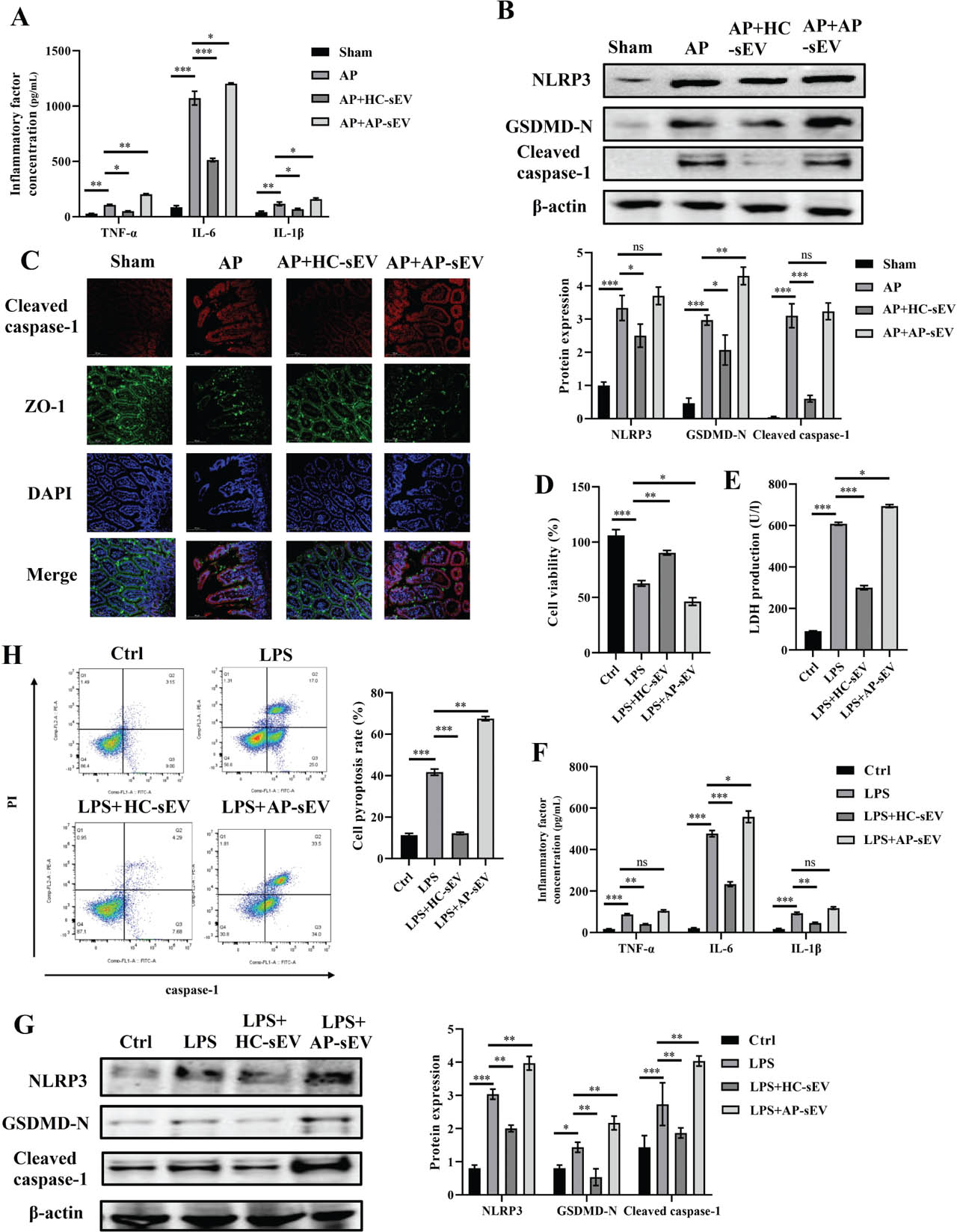
Fig 3.
(A) Serum concentrations of TNF-α, IL-6, and IL-1β in sham, AP, AP + HC-sEV, and AP + AP-sEV groups as determined by ELISA. sEV-enriched preparations from healthy individuals suppress NLRP3 inflammasome-mediated pyroptosis in intestinal epithelial cells. ELISA analysis of serum inflammatory cytokines TNF-α, IL-6, and IL-1β in mice. (B) Western blot analysis and quantification of pyroptosis-related proteins NLRP3, GSDMD-N, and cleaved caspase-1 in intestinal tissues. (C) Immunofluorescence staining of cleaved caspase-1 (red) and ZO-1 (green) in colonic tissues with DAPI nuclear counterstaining (blue). Scale bar: 100 μm. (D) Cell viability assessment in HIEC using CCK-8 assay. (E) LDH release measurement indicating cytotoxicity in HIEC. (F) ELISA analysis of inflammatory cytokines TNF-α, IL-6, and IL-1β in HIEC culture supernatants. (G) Western blot analysis and quantification of pyroptosis-related proteins in HIEC. (h) Flow cytometric analysis of pyroptotic cell death using caspase-1 and PI double staining in HIEC. CCK-8, cell counting kit-8; DAPI, 4′,6-diamidino-2-phenylindole; ELISA, enzyme-linked immunosorbent assay; HIEC, human intestinal epithelial cells; IL, interleukin; LDH, lactate dehydrogenase; LPS, lipopolysaccharide; NLRP3, NOD-like receptor pyrin domain-containing protein 3; PI, propidium iodide; SD, standard deviation; TNF, tumor necrosis factor. Data are presented as mean ± SD. *p < 0.05, **p < 0.01, ***p < 0.001.
Western blot analysis of intestinal tissues revealed differential regulation of pyroptosis-associated proteins following AP induction and sEV treatment (Figure 3b). NLRP3 protein expression was significantly elevated in AP mice compared to sham controls; HC-sEV treatment attenuated this upregulation, though expression remained above sham levels, while AP-sEV treatment produced no significant change relative to untreated AP mice. The downstream pyroptotic effector GSDMD-N was markedly elevated following AP induction; HC-sEV treatment significantly reduced GSDMD-N expression, whereas AP-sEV further increased it. Similarly, cleaved caspase-1 levels were substantially elevated in AP mice; HC-sEV treatment effectively reduced this elevation, while AP-sEV treatment showed no significant effect relative to untreated AP controls.
Immunofluorescence microscopy of colonic tissues demonstrated extensive cleaved caspase-1 immunoreactivity in AP mice, which was substantially reduced following HC-sEV treatment (Figure 3c). ZO-1 immunofluorescence intensity was preserved in HC-sEV-treated mice, and regions of co-localization between cleaved caspase-1 and ZO-1 indicated pyroptotic events occurring within barrier-forming epithelial cells. AP-sEV treatment resulted in increased cleaved caspase-1 immunoreactivity and further diminished ZO-1 expression.
In vitro studies in LPS-stimulated HIEC-6 cells corroborated these in vivo findings. Cell viability assays demonstrated that HC-sEV treatment significantly enhanced cell survival under inflammatory conditions, while AP-sEV exacerbated cell death (Figure 3d). LDH release measurements confirmed that HC-sEV reduced membrane permeabilization associated with pyroptotic cell death, whereas AP-sEV increased cytotoxicity (Figure 3e). Quantification of inflammatory cytokines in cell culture supernatants showed that HC-sEV suppressed TNF-α, IL-6, and IL-1β production in LPS-treated HIEC-6 cells, while AP-sEV enhanced their secretion (Figure 3f). Western blot analysis confirmed that HC-sEV treatment reduced NLRP3, GSDMD-N, and cleaved caspase-1 expression, while AP-sEV had opposing effects on these pyroptosis-associated proteins (Figure 3g). Flow cytometric analysis using PI and caspase-1 dual staining established that HC-sEV treatment significantly reduced the proportion of pyroptotic cells relative to LPS-treated controls, while AP-sEV increased pyroptotic cell populations (Figure 3h). Collectively, these in vivo and in vitro data demonstrate that sEV-enriched preparations from healthy individuals attenuate intestinal barrier dysfunction through suppression of NLRP3 inflammasome-mediated pyroptosis, while preparations from AP patients exert the converse effect.
3.4. miR-579-3p is differentially expressed in sEV-enriched preparations from healthy individuals vs. AP patients
To identify molecular mediators underlying the differential effects of HC-sEV and AP-sEV preparations on intestinal barrier function, microRNA expression profiles were examined using publicly available transcriptomic data from the GEO database (GSE173514). Principal component analysis revealed distinct clustering of sEV-enriched preparations from HCs and AP patients, indicating substantial differences in their microRNA composition (Figure 4a). Volcano plot analysis identified differentially expressed microRNAs meeting thresholds of adjusted p-value < 0.05 and |log2 fold change| > 1.0 (Figure 4b). Hierarchical clustering analysis of the most significantly altered microRNAs demonstrated clear segregation between the two groups, with three microRNAs exhibiting the most pronounced differential expression (Figure 4c).
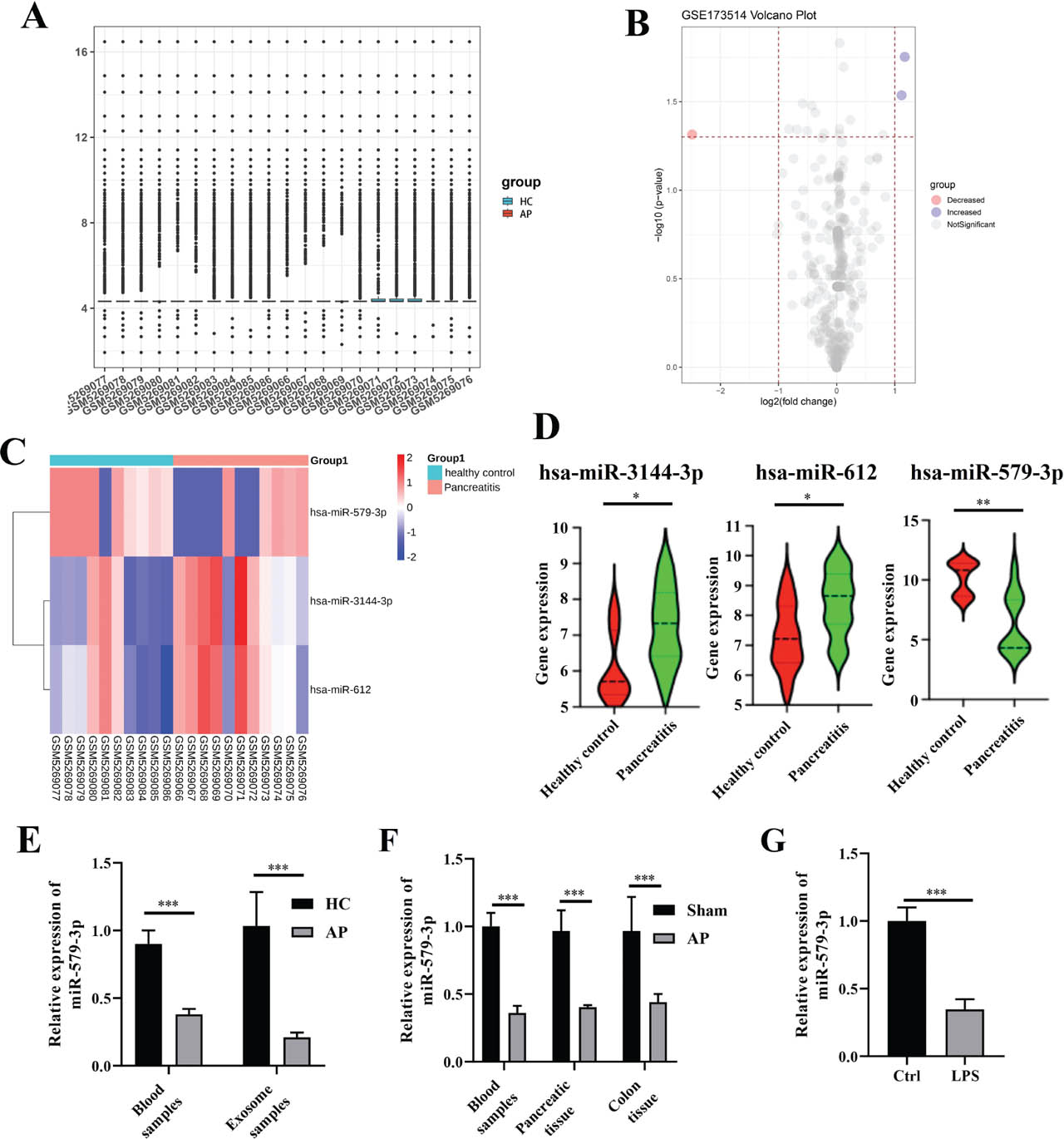
Fig 4.
(A) Box plots showing normalized gene expression profiles in the GSE173514 dataset comparing healthy controls and pancreatitis patients. miR-579-3p is differentially expressed in sEV-enriched preparations from healthy individuals vs. AP patients. (B) Volcano plot visualizing differentially expressed microRNAs with statistical significance thresholds. (C) Heatmap displaying expression patterns of differentially expressed microRNAs across samples from HCs and pancreatitis patients. (D) Expression levels of miR-3144-3p, miR-612, and miR-579-3p in the GSE173514 dataset showing differential regulation between groups. (E) Quantitative RT-PCR validation of miR-579-3p expression in blood samples and sEVs from HCs and AP patients. (F) miR-579-3p expression levels in blood samples, pancreatic tissue, and colonic tissue from sham and AP mice. (G) miR-579-3p expression in HIEC following LPS treatment. AP, acute pancreatitis; HC, healthy control; HIEC, human intestinal epithelial cells; LPS, lipopolysaccharide; RT-PCR, reverse transcription polymerase chain reaction; SD, standard deviation; sEVs, small extracellular vesicles. Data are presented as mean ± SD. *p < 0.05, **p < 0.01, ***p < 0.001.
Examination of individual microRNA expression levels revealed that miR-3144-3p and miR-612 were significantly upregulated in AP-sEV preparations relative to HC-sEV preparations (Figure 4d). In contrast, miR-579-3p showed the most substantial downregulation, with expression levels approximately 50% lower in AP-sEV preparations than in HC-sEV preparations. Given this magnitude of differential expression and the prior reported involvement of miR-579-3p in inflammatory injury contexts, it was selected as the primary candidate for subsequent mechanistic investigation.
Quantitative RT-PCR validation confirmed the bioinformatics findings across multiple sample types. miR-579-3p levels were significantly reduced in both whole blood and sEV-enriched serum preparations from AP patients compared to HCs (Figure 4e). Whether this reduction reflects a decrease in vesicle-associated or non-vesicular miR-579-3p pools cannot be resolved from the current data and warrants further investigation.Tissue-specific analysis in the AP mouse model demonstrated decreased miR-579-3p expression in both pancreatic and colonic tissues relative to sham-operated controls (Figure 4f). LPS stimulation of HIEC-6 cells produced a marked reduction in miR-579-3p expression compared to unstimulated cells (Figure 4g). Across these multiple experimental systems, miR-579-3p expression was consistently reduced under inflammatory conditions and relatively enriched in sEV-enriched preparations from healthy individuals, supporting its candidacy as a molecular mediator of the observed protective effects.
3.5. miR-579-3p mediates the protective effects of sEV-enriched preparations from healthy individuals on intestinal barrier function
To establish the functional contribution of miR-579-3p to the intestinal protective effects of HC-sEV preparations, miR-579-3p inhibitors were administered to AP mice receiving HC-sEV treatment. Western blot analysis demonstrated that miR-579-3p inhibition significantly reduced the expression of claudin-1, occludin, and ZO-1 in colonic tissues, negating the barrier protein-restoring effect of HC-sEV treatment (Figure 5a). Functional assessment confirmed that miR-579-3p inhibitors reversed the beneficial effects of HC-sEV on both the intestinal wet-to-dry weight ratio and intestinal permeability (Figure 5b,c), demonstrating that the barrier-protective properties of HC-sEV preparations are dependent on miR-579-3p activity.
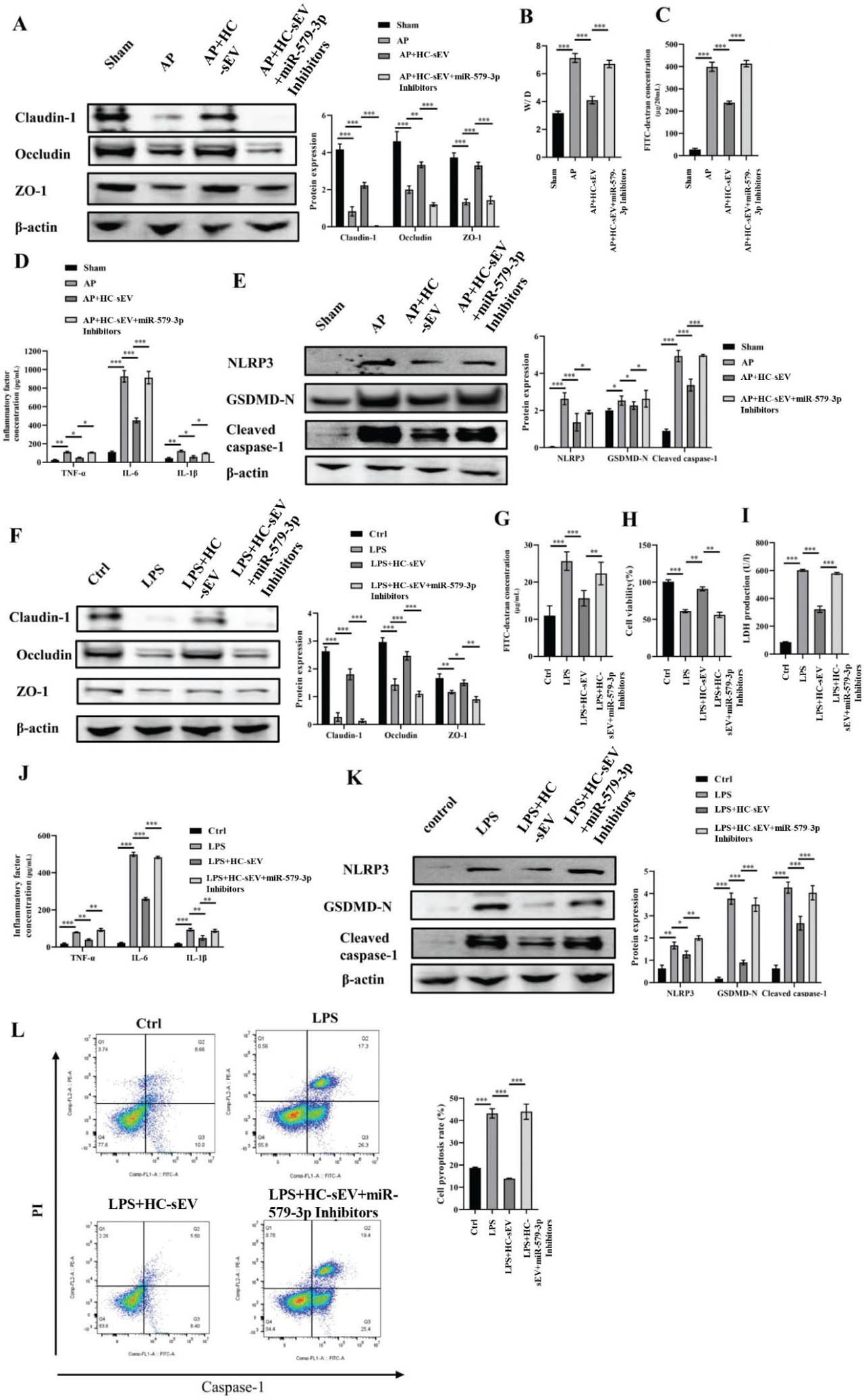
Fig 5.
(A) Western blot analysis and quantification of tight junction proteins claudin-1, occludin, and ZO-1 in intestinal tissues from mice treated with HC-sEV and miR-579-3p inhibitors. miR-579-3p mediates the protective effects of sEV-enriched preparations from healthy individuals on intestinal barrier function. (B) Intestinal wet-to-dry weight ratio measurement. (C) Assessment of intestinal permeability using FITC-dextran. (D) ELISA analysis of serum inflammatory cytokines TNF-α, IL-6, and IL-1β in mice. (E) Western blot analysis and quantification of pyroptosis-related proteins NLRP3, GSDMD-N, and cleaved caspase-1 in intestinal tissues. (F) Western blot analysis and quantification of tight junction proteins in HIEC following treatment with HC-sEV and miR-579-3p inhibitors. (G) Paracellular permeability measurement in HIEC using FITC-dextran assay. (H) Cell viability assessment using CCK-8 assay. (I) LDH release measurement indicating cytotoxicity. (J) ELISA analysis of inflammatory cytokines in HIEC culture supernatants. (K) Western blot analysis and quantification of pyroptosis-related proteins in HIEC. (L) Flow cytometric analysis of pyroptotic cell death using caspase-1 and PI staining. AP, acute pancreatitis; CCK-8, cell counting kit-8; ELISA, enzyme-linked immunosorbent assay; FITC-dextran, fluorescein isothiocyanate-labeled dextran; HC, healthy control; HIEC, human intestinal epithelial cells; IL, interleukin; LDH, lactate dehydrogenase; LPS, lipopolysaccharide; NLRP3, NOD-like receptor pyrin domain-containing protein 3; PI, propidium iodide. SD, standard deviation; sEVs, small extracellular vesicles; TNF, tumor necrosis factor. Data are presented as mean ± SD. *p < 0.05, **p < 0.01, ***p < 0.001.
Analysis of inflammatory and pyroptotic markers in vivo showed that miR-579-3p inhibition abrogated the anti-inflammatory effects of HC-sEV treatment: serum concentrations of TNF-α, IL-6, and IL-1β were significantly elevated in HC-sEV-treated AP mice following miR-579-3p inhibitor administration (Figure 5d). Western blot analysis of intestinal tissues further demonstrated that miR-579-3p inhibitors increased NLRP3, GSDMD-N, and cleaved caspase-1 expression, counteracting the suppressive effects of HC-sEV on these pyroptosis-associated proteins (Figure 5e).
In vitro studies in HIEC-6 cells corroborated these in vivo observations. miR-579-3p inhibition reversed the HC-sEV-mediated upregulation of claudin-1, occludin, and ZO-1 in LPS-stimulated cells (Figure 5f), and negated the barrier-protective effect of HC-sEV treatment as measured by FITC-dextran permeability (Figure 5g). Cell viability and cytotoxicity assays demonstrated that miR-579-3p inhibitors reduced the cytoprotective effect of HC-sEV, resulting in decreased cell viability and increased LDH release (Figure 5h,i). Inflammatory cytokine secretion was correspondingly elevated following miR-579-3p inhibition, with increased TNF-α, IL-6, and IL-1β production despite HC-sEV co-treatment (Figure 5j). Western blot analysis confirmed elevated NLRP3, GSDMD-N, and cleaved caspase-1 expression in HC-sEV-treated cells receiving miR-579-3p inhibitors (Figure 5k). Flow cytometric analysis established that miR-579-3p inhibition significantly increased the proportion of pyroptotic cells, reversing the anti-pyroptotic effect of HC-sEV treatment (Figure 5l).
It should be noted that these experiments modulate endogenous miR-579-3p activity and do not directly demonstrate that human miR-579-3p transferred from sEV-enriched preparations accumulates in target cells and engages cognate mRNA targets. The stoichiometric constraints of miRNA-per-vesicle transfer (Chevillet et al. 2014) and the formal assignment of miR-579-3p to a specific particle population represent important unresolved questions addressed in the Discussion. Collectively, these data establish miR-579-3p as a functionally critical molecular component through which sEV-enriched preparations from healthy individuals attenuate AP-associated intestinal barrier dysfunction and pyroptotic cell death.
3.6. miR-579-3p directly targets ANXA3 to regulate inflammatory responses and pyroptosis
To identify the downstream molecular target through which miR-579-3p exerts its intestinal protective effects, transcriptomic data from the GEO database (GSE194331) were analyzed. Differential gene expression analysis identified 1299 genes significantly upregulated in AP patients relative to HCs, representing candidates potentially involved in disease progression. Intersection of these upregulated genes with predicted miR-579-3p target genes from the TargetScan8.0 database — filtered on the basis of sequence complementarity, evolutionary conservation, and thermodynamic stability — yielded 397 candidate targets potentially relevant to AP-induced intestinal dysfunction (Figure 6a).
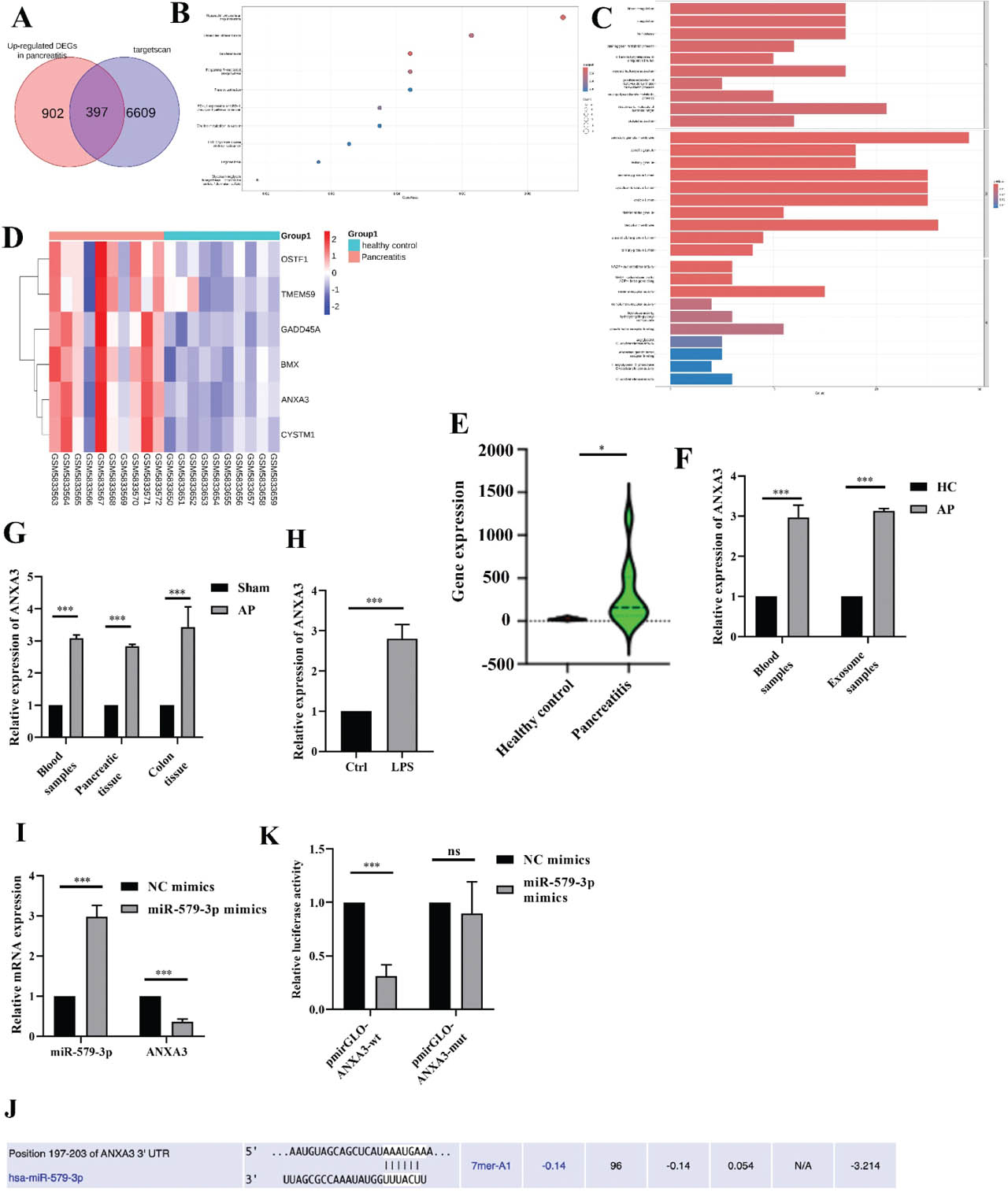
Fig 6.
(A) Venn diagram showing intersection of upregulated differentially expressed genes in acute pancreatitis (GSE194331) and predicted miR-579-3p target genes from TargetScan8.0, identifying 397 candidate target genes. miR-579-3p directly targets ANXA3 to regulate inflammatory responses and pyroptosis. (B, C) Functional enrichment analysis of the 397 intersecting genes showing associated biological pathways and molecular functions. (D) Heatmap displaying expression patterns of the top 6 candidate genes across HC and pancreatitis samples. (E) ANXA3 expression levels in the GSE194331 dataset comparing HCs and pancreatitis patients. (F) Quantitative RT-PCR validation of ANXA3 expression in blood samples and sEVs from HCs and AP patients. (G) ANXA3 expression levels in blood samples, pancreatic tissue, and colonic tissue from sham and AP mice. (H) ANXA3 expression in HIEC following LPS treatment. (I) ANXA3 and miR-579-3p expression levels in HIEC following transfection with NC or miR-579-3p mimics. (J) Predicted binding site between miR-579-3p and ANXA3 3′UTR using TargetScan8.0 database. (K) Dual-luciferase reporter assay confirming direct binding interaction between miR-579-3p and ANXA3. 3′UTR, 3′-untranslated region; ANXA3, Annexin A3; AP, acute pancreatitis; HC, healthy control; HIEC, human intestinal epithelial cells; LPS, lipopolysaccharide; NC, negative control; RT-PCR, reverse transcription polymerase chain reaction; SD, standard deviation; sEVs, small extracellular vesicles. Data are presented as mean ± SD. *p < 0.05, **p < 0.01, ***p < 0.001.
Functional enrichment analysis of these 397 genes demonstrated significant over-representation of metabolic and immune-related pathways, including inflammatory response, cytokine signaling, and cell death regulation (Figure 6b,c), supporting the biological relevance of this target set in the context of AP-associated intestinal injury. The six most highly expressed candidate genes are displayed in a clustered heatmap (Figure 6d).
Among these candidates, ANXA3 was prioritized for further investigation on the basis of its substantial upregulation in AP patients and its previously reported roles in inflammatory signaling and cell death regulation (Figure 6e). Quantitative RT-PCR confirmed significantly elevated ANXA3 expression in whole blood and sEV-enriched serum preparations from AP patients relative to HCs (Figure 6f). Tissue-specific analysis in the AP mouse model demonstrated increased ANXA3 expression in both pancreatic and colonic tissues (Figure 6g), and LPS stimulation of HIEC-6 cells produced marked upregulation of ANXA3 mRNA (Figure 6h), confirming its responsiveness to inflammatory stimuli across multiple experimental systems.
To establish the direct regulatory relationship between miR-579-3p and ANXA3, transfection of HIEC-6 cells with miR-579-3p mimics significantly reduced ANXA3 mRNA expression (Figure 6i). TargetScan8.0 analysis identified a conserved miR-579-3p binding site within the ANXA3 3′UTR (Figure 6j). Dual-luciferase reporter assays confirmed direct binding: miR-579-3p mimics significantly reduced lucifer-ase activity in cells transfected with the wild-type ANXA3 3′UTR reporter construct, whereas site-directed mutation of the seed-match complementary sequence within the predicted binding site abolished this reduction, confirming the specificity of the miR-579-3p/ANXA3 interaction (Figure 6k). These data establish ANXA3 as a direct and functionally relevant transcriptional target of miR-579-3p in the context of AP-induced intestinal barrier dysfunction.
3.7. ANXA3 overexpression reverses the protective effects of miR-579-3p on intestinal epithelial barrier function and pyroptosis
To establish the functional relationship between miR-579-3p and ANXA3 in regulating intestinal epithelial barrier integrity, we performed rescue experiments using co-transfection of miR-579-3p mimics and ANXA3 overexpression plasmids in HIEC. Quantitative RT-PCR confirmed successful transfection efficiency, with miR-579-3p mimics significantly increasing miR-579-3p expression while ANXA3 overexpression substantially elevated ANXA3 mRNA levels (Figure 7a). The co-transfection approach effectively restored ANXA3 expression in the presence of miR-579-3p mimics, validating the experimental design for subsequent functional analyses. Western blot analysis of tight junction proteins demonstrated that miR-579-3p mimics significantly enhanced the expression of claudin-1, occludin, and ZO-1 in LPS-stimulated intestinal epithelial cells (Figure 7b). However, concurrent ANXA3 overexpression effectively reversed these protective effects, reducing tight junction protein levels to those observed in LPS-treated control cells. Functional assessment of epithelial barrier integrity using FITC-dextran permeability assays revealed that miR-579-3p mimics substantially reduced para-cellular permeability, while ANXA3 overexpression counteracted this protective effect and restored elevated permeability levels (Figure 7c).
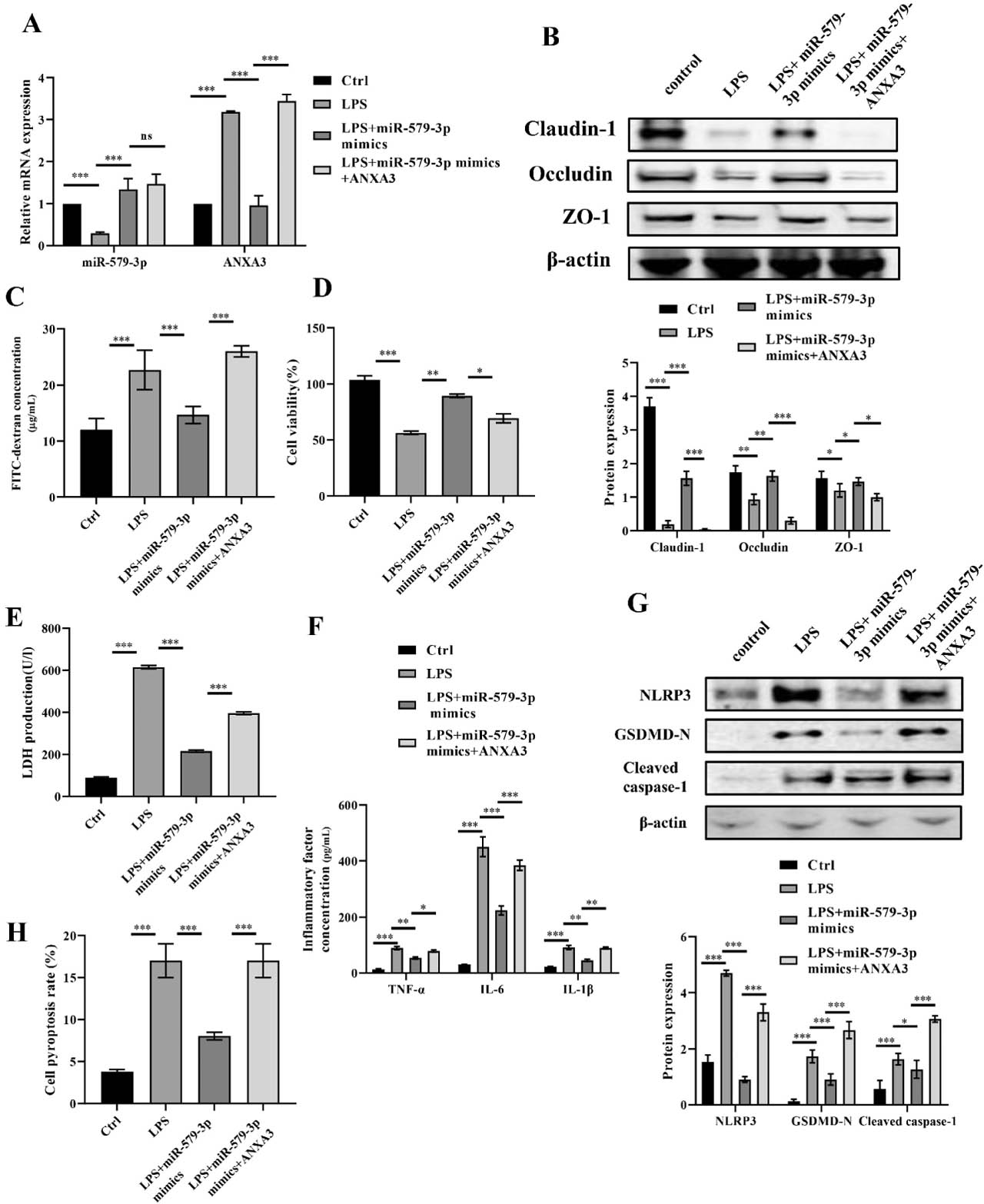
Fig 7.
ANXA3 overexpression counteracts the protective effects of miR-579-3p on intestinal epithelial barrier function and pyroptosis. (A) Quantitative RT-PCR validation of miR-579-3p and ANXA3 expression levels in HIEC following transfection with miR-579-3p mimics and ANXA3 overexpression plasmid. (B) Western blot analysis and quantification of tight junction proteins claudin-1, occludin, and ZO-1 in HIEC treated with LPS, miR-579-3p mimics, and ANXA3 overexpression. (C) Paracellular permeability measurement using FITC-dextran assay. (D) Cell viability assessment using CCK-8 assay. (E) LDH release measurement indicating cytotoxicity. (F) ELISA analysis of inflammatory cytokines TNF-α, IL-6, and IL-1® in HIEC culture supernatants. (G) Western blot analysis and quantification of pyroptosis-related proteins NLRP3, GSDMD-N, and cleaved caspase-1 in HIEC. (H) Flow cytometric analysis of pyroptotic cell death using caspase-1 and PI staining. ANXA3, Annexin A3; CCK-8, cell counting kit-8; FITC-dextran, fluorescein isothiocyanate-labeled dextran; HIEC, human intestinal epithelial cells; IL, interleukin; LDH, lactate dehydrogenase; LPS, lipopolysaccharide; NLRP3, NOD-like receptor pyrin domain-containing protein 3; PI, propidium iodide; RT-PCR, reverse transcription polymerase chain reaction; SD, standard deviation; TNF, tumor necrosis factor. Data are presented as mean ± SD. *p < 0.05, **p < 0.01, ***p < 0.001.
Cell viability and cytotoxicity measurements confirmed the cytoprotective role of miR-579-3p and its antagonism by ANXA3. Treatment with miR-579-3p mimics significantly enhanced cell viability in LPS-stimulated conditions, whereas ANXA3 overexpression counteracted this beneficial effect (Figure 7d). LDH release assays revealed that miR-579-3p mimics significantly reduced cellular damage and membrane permeabilization induced by LPS treatment. Co-transfection with ANXA3 overexpression plasmid effectively reversed the protective effects conferred by miR-579-3p mimics, resulting in increased cytotoxicity levels (Figure 7e).
Analysis of inflammatory mediators showed that miR-579-3p mimics significantly suppressed the production of TNF-α, IL-6, and IL-1β in LPS-stimulated intestinal epithelial cells (Figure 7f). ANXA3 overexpression effectively reversed these anti-inflammatory effects, restoring cytokine production to levels observed in LPS-treated control cells. Western blot examination of pyroptosis-related proteins revealed that miR-579-3p mimics substantially reduced the expression of NLRP3, GSDMD-N, and cleaved caspase-1 (Figure 7g). Concurrent ANXA3 overexpression counteracted these protective effects, leading to increased expression of pyroptotic markers. Flow cytometric analysis demonstrated that miR-579-3p mimics significantly reduced the percentage of pyroptotic cells compared to LPS treatment alone, whereas co-transfection with ANXA3 overexpression plasmid effectively abolished this protective effect, resulting in elevated pyroptotic cell populations. (Figure 7h). These comprehensive rescue experiments establish that ANXA3 functions as a critical downstream mediator of miR-579-3p signaling and that the protective effects of miR-579-3p on intestinal epithelial barrier function and pyroptosis are mediated through the suppression of ANXA3 expression.
4. Discussion
AP is a condition of high severity, urgent danger, and high morbidity and mortality, which triggers and exacerbates the systemic inflammatory response syndrome, even leading to multi-organ dysfunction and causing damage to the intestinal mucosal barrier (Zerem 2014; Deng et al. 2016). The intestinal mucosal barrier, composed of multiple defense mechanisms, including mechanical, immune, chemical, and biological, plays a central role in effectively blocking the invasion of toxins, bacteria, and inflammatory mediators from the intestinal lumen into the blood circulatory system. Changes in intestinal permeability triggered by AP are considered to be a key causative factor in the development of gastrointestinal infectious complications (Ye et al. 2020). However, the mechanisms and therapeutic strategies for AP-induced intestinal injury are not known. In this study, the cerulein plus LPS intraperitoneal injection model was selected for its established capacity to reproduce key features of human AP-associated intestinal injury, including systemic cytokine elevation, tight-junction disruption, and increased intestinal permeability. Sham-operated animals receiving equivalent volumes of normal saline via the identical injection schedule were included as a parallel control group to account for any direct effect of the intraperitoneal injection procedure on intestinal integrity, independent of AP induction. This study investigated the role and mechanism of sEV-enriched serum preparations in AP-associated intestinal barrier injury.
sEVs play a crucial role in disease development. sEVs carry diverse biomolecular cargo (Krylova and Feng 2023). They are taken up by nearby or distant cells, transferring their components to alter the function of target cells (Mathieu et al. 2019; Wortzel et al. 2019). Therefore, sEVs are considered key mediators of intercellular communication and long-distance information transfer, exhibiting high targeting specificity. In recent years, studies have found that the release of sEVs is also a critical factor in organ injury. Blood, as a key component of the peripheral circulation, can flow between organs, and sEV-enriched blood preparations may exacerbate or ameliorate organ damage through their molecular cargo. For example, sEV-enriched peripheral blood preparations have been reported to cross the blood-brain barrier and contribute to neurological disorders (Chavez et al. 2021; Wang et al. 2023). In a rat stroke model, sEVs made from healthy serum reversed autophagy-mediated decreases in tight junction proteins and prevented endothelial cell death, improving neurological outcomes and protecting the blood-brain barrier (Huang et al. 2022). In this study, we looked at how AP-mediated intestinal damage is affected by sEVs made from the serum of AP patients or healthy people. The results showed that HC-exo ameliorated intestinal barrier damage both in vivo and in vitro, while AP-exo exacerbated intestinal barrier damage. This suggests that sEVs in the serum of pancreatitis patients may be a significant factor in aggravating intestinal barrier injury. Conversely, administering sEVs from healthy individuals' serum may be a potential strategy for treating AP-related intestinal barrier damage. However, the biological activities observed in this study are attributable to sEV-enriched serum preparations as a whole, and the specific contribution of vesicle-associated vs. nonvesicular miR-579-3p to the observed effects cannot be resolved without further fractionation studies.
Pyroptosis is mediated by the NLRP3 inflammasome through the activation of GSDMD, accompanied by the cleavage of GSDMD and the release of related inflammatory factors (Vasudevan et al. 2023). Recent studies have reported that in the inflammatory response triggered by AP, the activation of the NLRP3 inflammasome promotes the release of pro-inflammatory cytokines (Lin et al. 2024). The increase in these cytokines may play a direct role in intestinal barrier damage, triggering inflammatory responses and causing intestinal mucosal injury (Lin et al. 2024). Additionally, activation of NLRP3 can also induce inflammatory pyroptosis, leading to the death of intestinal epithelial cells. This form of cell death disrupts the mucosal barrier, increasing the intestine's permeability to bacteria and toxins (Naseer et al. 2022; Xu et al. 2024). The present investigation also assessed the impact of sEVs on pyroptosis-related markers, as these findings suggest that pyroptosis is a major contributor to intestinal barrier degradation. We found that HC-sEV reduces NLRP3 inflammasome-mediated pyroptosis, while AP-sEV exacerbates pyroptosis in intestinal epithelial cells. These results suggest that HC-sEV ameliorates AP-mediated intestinal barrier damage by reducing pyroptosis.
In recent years, RNAs associated with sEV-enriched preparations, including microRNAs, have been implicated in intercellular signal transduction (Zhang et al. 2015). MicroRNAs are non-coding single-stranded RNA molecules approximately 22 nucleotides in length, encoded by endogenous genes. To explore the intestinal protective mechanisms of HC-sEV, we analyzed GEO datasets and found that miR-579-3p is enriched in sEVs derived from healthy individuals' serum. We also validated that miR-579-3p was downregulated in both in vivo and in vitro models, as well as in AP patients. These results suggest that HC-sEV preparations may exert their effects through miR-579-3p associated with these preparations. Previous studies have shown that downregulation of miR-579-3p exacerbated acute kidney injury induced by sepsis (Li et al. 2023b), while upregulation of miR-579-3p alleviated penicillin-induced damage in human pancreatic cells (Lu et al. 2025). These findings demonstrate that upregulation of miR-579-3p protects cells from damage caused by external stimuli. Consistent with these results, we found that inhibition of miR-579-3p promoted pyroptosis and reversed the protective effects of HC-sEV on the intestinal epithelial barrier. These results indicate that HC-sEV inhibited pyroptosis and ameliorated intestinal barrier damage by upregulating the expression of miR-579-3p. However, several important caveats apply to this interpretation. First, the stoichiometry of miRNA per vesicle is generally below one copy per particle, raising questions about whether vesicle-to-cell transfer of miR-579-3p occurs at biologically meaningful copy numbers. Second, the experiments employing miR-579-3p inhibitors in Figure 5 modulate endogenous miR-579-3p activity and do not directly demonstrate that human miR-579-3p transferred from the sEV-enriched preparation accumulates in murine intestinal epithelial cells and engages target mRNAs. Definitive evidence for functional miRNA transfer would require detection of human-specific miR-579-3p sequences in murine intestinal tissue by stem-loop RT-PCR or small RNA sequencing, which was not performed in the present study.
miRNAs bind to the 3′UTR of target genes and inhibit gene transcription through incomplete complementary binding (Fabian et al. 2010; Zhdanov 2022). Therefore, this study also investigated the target genes of miR-579-3p. ANXA3 was identified as a target gene of miR-579-3p, and its high expression in pancreatitis patients led us to hypothesize that ANXA3 might be associated with intestinal injury. Previous studies have shown that ANXA3 was a gene marker related to pyroptosis, potentially promoting pyroptosis through the NLRC4/AIM2 axis (Liu et al. 2023). Additionally, inhibition of ANXA3 expression could alleviate AP-related acute lung injury by suppressing inflammation and reducing cell apoptosis (Zhou et al. 2022). Thus, the expression of ANXA3 is closely linked to cellular inflammation and death. The mechanisms by which ANXA3 drives intestinal inflammatory responses and epithelial cell death warrant further discussion. As a calcium-dependent phospholipid-binding protein, ANXA3 regulates phospholipase A2 activity and thereby modulates arachidonic acid metabolism and the downstream production of eicosanoid inflammatory mediators. At the level of cell death signaling, ANXA3 could facilitate pyroptosis through the NLRC4/AIM2 inflammasome axis, and to amplify pro-inflammatory cytokine transcription — including IL-1β, IL-6, and TNF-α — via NF-κB pathway activation. Within intestinal epithelial cells, sustained ANXA3 upregulation has been linked to the phosphorylation-dependent internalization of tight junction proteins ZO-1 and occludin from the apical membrane, a process that directly increases paracellular permeability. The miR-579-3p-mediated suppression of ANXA3 described in this study would therefore be expected to simultaneously attenuate NLRP3 inflamma-some activation, reduce cytokine-driven inflammation, and preserve tight junction protein localization at the epithelial membrane. Consistent with these findings, this study also demonstrated that overexpression of ANXA3 exacerbated pyroptosis in intestinal epithelial cells, thereby reversing the intestinal protective effects of miR-579-3p.
Several methodological limitations of this study warrant consideration. The cohort size of 10 subjects per group, while sufficient for a preliminary mechanistic study, limits the power to fully assess the influence of demographic variables, including sex, disease severity, and comorbidities, on serum sEV composition and miR-579-3p levels. Validation in a larger prospective cohort is warranted. The ExoQuick precipitation combined with the ultracentrifugation protocol yields sEV-enriched preparations that inevitably contain co-isolated non-vesicular particles, including lipoproteins, ribonucleoprotein complexes, and platelet-derived material. Future investigations will employ density gradient ultracentrifugation, along with the complete MISEV2023-recommended characterization panel, to more rigorously define the vesicular composition of these preparations. Furthermore, the use of serum rather than plasma introduces a confounding variable, as platelet activation during clot formation releases platelet-derived particles that contribute to the sEV-enriched preparation. Plasma-based studies with appropriate anticoagulation protocols would reduce this source of variability in future work.
In conclusion, these results indicate that HC-sEV delivered miR-579-3p to the ANXA3 target, reducing pyroptosis and improving AP-related intestinal barrier function.
5. Conclusions
This study found that HC-sEV alleviated AP-induced intestinal barrier damage by inhibiting pyroptosis in intestinal epithelial cells. Analysis of the GEO database revealed that miR-579-3p was enriched in HC-sEV preparations but reduced in AP-sEV preparations. Increasing the expression of miR-579-3p also exerted intestinal protective effects. miR-579-3p targeted ANXA3, which was found to be upregulated in AP patients. The intestinal protective effects of miR-579-3p were dependent on the expression of ANXA3. Therefore, HC-sEV preparations attenuated AP-related intestinal barrier damage through a mechanism associated with the miR-579-3p/ANXA3 axis.
Abbreviations
- Opti-MEM
Opti-Minimal Essential Medium
- jetPEI
jet polyethylenimine
- RIPA
radioimmunoprecipitation assay
- BCA
bicinchoninic acid
- SDS-PAGE
sodium dodecyl sulfate–polyacrylamide gel electrophoresis
- PVDF
polyvinylidene difluoride
- TBST
Tris-buffered saline with Tween 20
- ECL
enhanced chemiluminescence
- PCR
polymerase chain reaction
- FLICA
fluorescent-labeled inhibitor of caspases
- GSDMD-N
gasdermin D N-terminal domain
- NLRC4/AIM2
NLR family CARD domain-containing protein 4/absent in melanoma 2
- NF-κB
nuclear factor kappa-light-chain-enhancer of activated B cells
- MISEV2023
Minimal Information for Studies of Extracellular Vesicles 2023
- EDTA
ethylenediaminetetraacetic acid
- EVOM2
Epithelial Volt/Ohm Meter 2
Acknowledgments
Not applicable.
Notes
[3] Conflicts of interest Funding
This study was supported by the Suzhou Science and Technology Plan Project (Grant No. SKY2021038).
[4] Ethics Approval
All procedures performed in studies involving human participants were in accordance with the standards upheld by the Ethics Committee of the First Affiliated Hospital of Soochow University (Approval no. 2024592) and with those of the 1964 Helsinki Declaration and its later amendments for ethical research involving human subjects.
All animal experiments were approved by the Ethics Committee of Soochow University (Approval no. SUDA20241028A02).
[5] Contributed by Contribution of Authors
Huiyuan Gu, Chenyue Tang, and Chunfang Xu designed the experiments. Huiyuan Gu, Chenyue Tang, Yuqi Shi, and Jiaqing Shen carried them out. Huiyuan Gu, Chenyue Tang, Yuqi Shi, and Jiaqing Shen analyzed and interpreted the data. Huiyuan Gu, Chenyue Tang, and Chunfang Xu prepared the manuscript. All authors have read and approved the manuscript.
[6] Financial disclosure Competing Interests
The authors state that there are no conflicts of interest to disclose.