Fig 1.
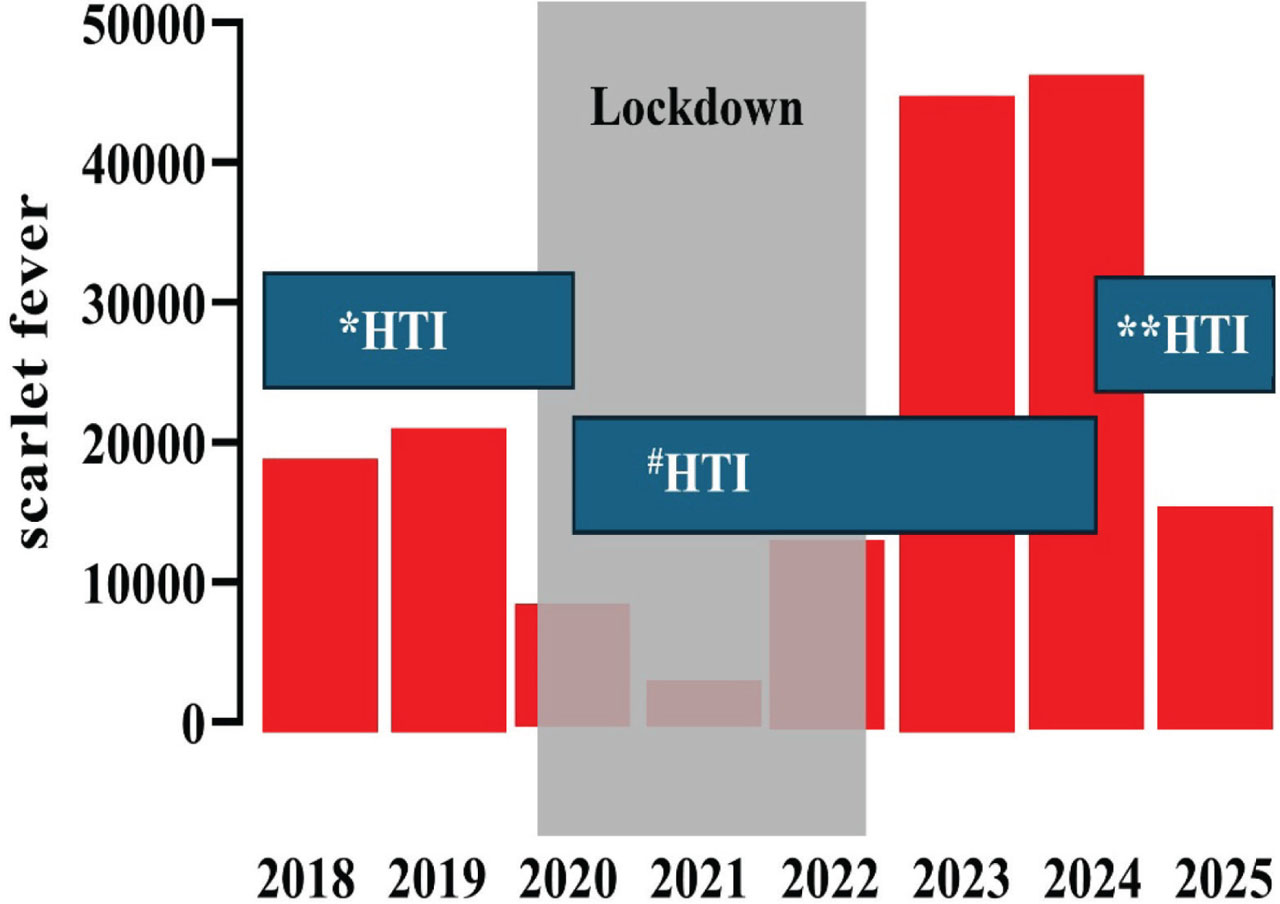
Timeline of S. pyogenes (GAS)—scarlet fever infections in Poland (2018–2025) the figure shows annual scarlet fever incidence in relation to the COVID-19 lockdown period (March 2020–May 2022). Reduced microbial exposure during lockdown is associated with a gap in trained immunity (2020–2022), a decline in incidence, and subsequent re-establishment of herd-trained immunity (HTI, green line) in 2023–2025, expressed relative to the pre-2020 baseline (100%). Scarlet fever incidence (new cases per year) is shown in bars. Data source: PZH, 30 March 2026. GAS, group A Streptococcal; HTI, herd-trained immunity; pre-2020, pre-pandemic.
Table 1.
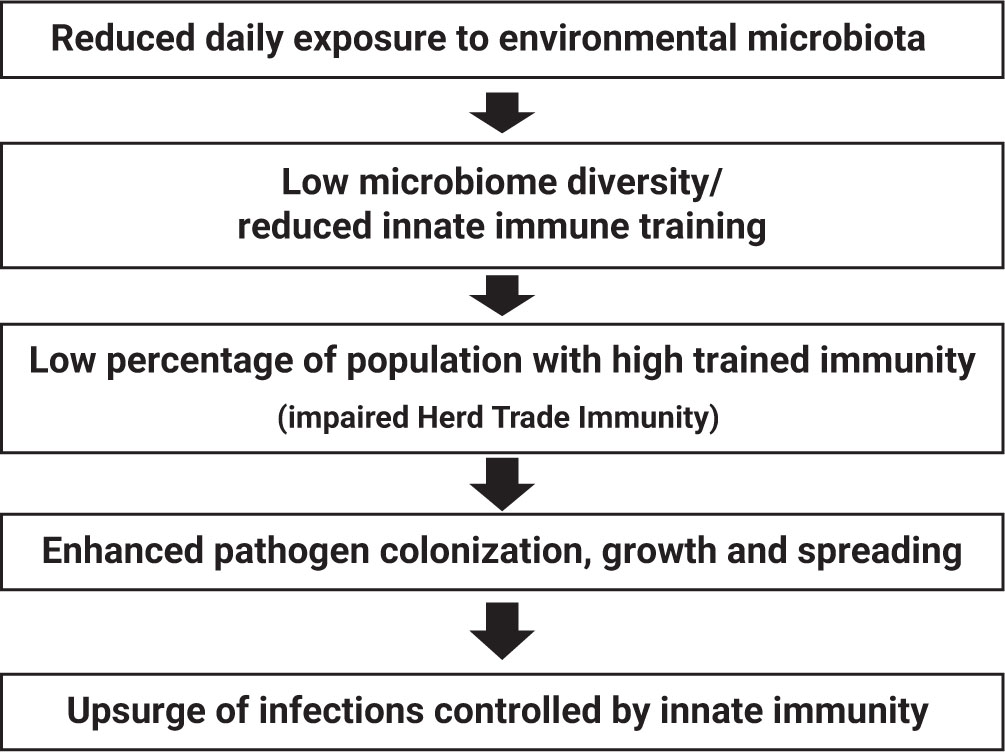
Impact of long-term pandemic lockdowns on the personal microbiome and innate immune memory, contributing to impaired HTI and increased incidence of GAS infections. Summary of the sequence of events linking prolonged lockdowns to microbiome disruption, immunity debt, reduced HTI, and increased susceptibility to infections, including GAS.