
Dear Editor,
Following the COVID-19 pandemic lockdowns, many countries reported an unexpected resurgence of infections, often exceeding pre-pandemic (pre-2020) levels despite the restoration of routine health services. This phenomenon has been widely attributed to a population-level “immunity debt”; however, current explanations do not fully account for infections that lack adaptive immune protection. I have proposed that lockdowns uncovered a previously unrecognized population-scale phenomenon of innate immune memory, termed herd-trained immunity (HTI). To evaluate the plausibility of HTI as a mechanistic contributor to the post-pandemic surge in infections, group A Streptococcal (GAS) diseases are considered as a model, as they lack vaccine-mediated adaptive immunity and involve pathogens influenced by trained immunity.
Global lockdowns markedly reduced exposure to environmental microbiota among billions of individuals, leading to a gradual disruption of the microbiome and a decline in trained immunity at the individual and population level. The short lifespan of innate immune memory suggests that the pre-2020 pool of trained innate immune cells did not persist during prolonged lockdowns. This temporal decline coincided with sharp post-pandemic increases in multiple infections, including scarlet fever, a primary non-invasive GAS disease. Approximately 2 years after the removal of restrictions, disease incidence returned to pre-2020 levels, suggesting restoration of HTI. HTI was first described in 2024 as a previously unrecognized immunological phenomenon emerging in the context of the post-COVID-19 resurgence of multiple infectious diseases (Marcinkiewicz 2024). In that publication, I proposed that strict non-pharmaceutical interventions (NPIs) drastically reduced pathogens circulation. This reduction limited the repeated microbial stimulation required to maintain trained innate immune responsiveness. Upon lifting these restrictions and the restoration of social mixing, populations were immunologically less primed, leading to disproportionate rebounds in both the incidence and severity of infections. In this context, I introduced the term HTI to suggest that population-wide innate immune training may function as a complementary counterpart to classical herd immunity, particularly for pathogens for which no effective vaccine is available and are influenced by trained immunity. I further suggested that the prolonged, lockdown-associated disruption of environmental microbiota circulation—and the resulting reduction in herd-level innate immune training—may constitute a mechanistic basis for the so-called “immunity debt” (Marcinkiewicz 2025). This model was proposed specifically to explain the marked increase in GAS (Streptococcus pyogenes) infections observed in the years following the COVID-19 pandemic lockdowns and was motivated by several converging epidemiological patterns (Götzinger et al. 2020; Musumeci et al. 2025).
A pronounced post-pandemic resurgence of numerous bacterial and viral infections has been reported across many highly developed countries. In 2022–2023, the incidence of several common infections substantially exceeded pre-2020 levels (Brueggemann et al. 2021; Abo et al. 2023; Ammar et al. 2024). By contrast, during periods of pandemic lockdown—when social contact was markedly reduced and NPIs were widely implemented—the incidence of most infectious diseases declined sharply, despite temporary disruptions to routine childhood immunization programs (Baker et al. 2020; Götzinger et al. 2020; Dinleyici et al. 2021). Although multiple explanations have been proposed, none has yet provided a comprehensive mechanistic framework that fully accounts for these observations. For example, Nygaard and colleagues, in a review published in The Lancet, examined several factors that may have contributed to the marked post-pandemic increase in infection rates (Nygaard et al. 2024a,b). Their analysis considered the roles of antimicrobial resistance, reduced vaccine coverage, virus-bacteria interactions, and altered immune development in children who experienced unusually limited pathogen exposure during the pandemic period. Overall, the evidence supports the interpretation that a population-level “immunity debt” combined with the reintroduction of circulating viral and bacterial pathogens, played a central role in driving the post-pandemic resurgence of infections. However, the potential contribution of reduced trained immunity—and thus an innate “immunity debt” at the individual level—remains underexplored (Needle and Russell 2023; Munro and House 2024; Vuscan et al. 2024). More general, it is challenging to identify a single unifying explanation, because the phenomenon spans many distinct infections: bacterial and viral diseases; infections with and without effective vaccines; and, critically, conditions controlled predominantly by innate vs. adaptive immune mechanisms. I hereby intend to update the body of evidence supporting the concept of HTI and to explain how this idea emerged from analyses of the post-pandemic surge in GAS infections. Furthermore, it seeks to encourage further research into impaired trained immunity at both the individual and population levels. Moreover, it proposes an updated nomenclature of innate immunity that distinguishes between natural, inducible, and herd-level trained immunity to guide future research. Finally, we outline future research directions aimed at advancing the understanding of the crosstalk between the microbiome and trained innate immunity. HTI represents a previously unrecognized component of population-level innate immunity, revealed under the unique global conditions of COVID-19 lockdowns. Importantly, maintaining normal levels of HTI likely requires continuous interaction between immune cells and the microbiota. Finally, a role of the gut microbiome in trained immunity is discussed later.
1. GAS Infections: Pathogenesis and Immunity
To reduce the number of confounding variables, I therefore focused on data comparing the pre- and post-pandemic incidence of GAS infections, for which no vaccines are currently available and for which effective innate immune defenses are particularly important (Cunningham 2000). S. pyogenes is an exclusively human pathogen (Walker et al. 2014). It primarily colonizes the upper respiratory tract, resulting in either asymptomatic carriage or symptomatic infection. The most common non-invasive GAS disease is scarlet fever, whereas necrotizing fasciitis and streptococcal toxic shock syndrome represent the most severe forms of invasive GAS disease (iGAS), both associated with high mortality rates (Lappin and Ferguson 2009; Tse et al. 2012; Commons et al. 2014). The transition from asymptomatic GAS carriage to symptomatic infection is typically driven by an interplay of factors, including: an increase in GAS virulence or bacterial load; conditions that impair host immunity; and disruption of the throat microbiome, which normally acts to suppress GAS colonization (Cunningham 2000). Importantly, multiple lines of evidence indicate that innate, rather than adaptive, immunity plays the central role in controlling GAS infections. GAS produces a wide array of virulence factors, including streptococcal superantigens (e.g. exotoxin superantigen SpeA), that drive massive polyclonal T-cell activation and the release of large quantities of cytokines (IL-1, IL-6, TNF-α), potentially leading to cytokine storm and sepsis (Commons et al. 2014). These severe outcomes are frequently associated with impaired innate immune function (Fieber and Kovarik 2014). GAS further evades host defenses through the M1 protein, a major virulence factor belonging to the highly diverse emm family, which includes more than 250 emm types defined by variation in the N-terminal region (Vieira et al. 2024). The emm1 genotype—particularly its M1UK sub lineage first identified in the United Kingdom in 2019—has been linked to increased rates of scarlet fever and iGAS disease (Rodriguez-Ruiz et al. 2023). M1UK, a highly virulent lineage, shows increased resistance to neutrophil antimicrobial activity and inhibits Ig-dependent phagocytosis. It differs from the widely distributed M1global lineage by producing approximately 9.5-fold higher levels of the exotoxin superantigen SpeA, which drives immune dysregulation (Cai et al. 2025). Although adaptive immune responses are activated during infection, the resulting GAS-specific antibodies provide only limited protection, and individuals typically do not develop durable antigen-specific immunity even after repeated infections (Su et al. 2024). Consistent with this, high anti-streptolysin O (ASO) titers do not protect against scarlet fever; ASO antibodies simply indicate prior exposure to S. pyogenes rather than effective immunity. In contrast, GAS exposure or immunization has been shown to induce trained immunity, which enhances the responsiveness of innate immune cells to subsequent encounters, with trained macrophages appearing to play a primary role (Matsumura and Takahashi 2020; Emami et al. 2023).Together, these observations underscore that innate immunity, especially trained immunity—rather than adaptive immunity—is the primary determinant of host defense against GAS infection.
2. Post-COVID19 Lockdown Upsurge of GAS Infections: Microbiome Disruption—Immunity Debt—Impaired HTI
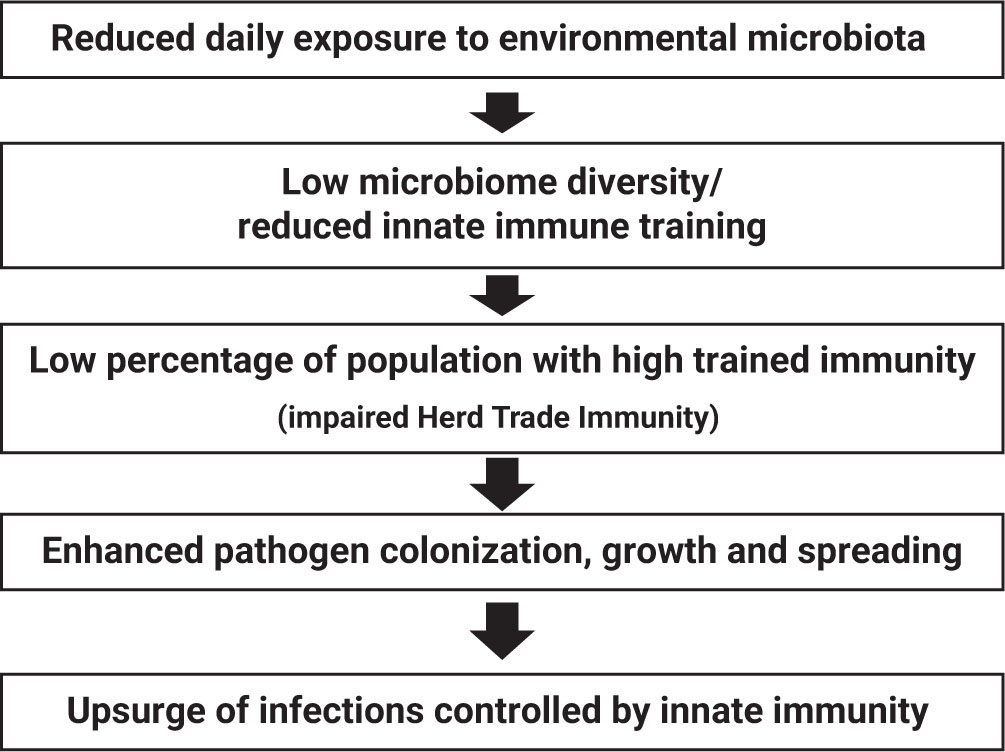
Importantly, following the prolonged COVID-19 lockdown periods, the World Health Organization reported a marked increase in the incidence of invasive iGAS infections and scarlet fever across several countries in 2022–2023. This increase was observed in a number of high-income countries with well-developed healthcare systems, including the United Kingdom, Ireland, the Netherlands, France, Denmark, Sweden, Poland, the United States, Australia, and New Zealand (Abo et al. 2023; Górka et al. 2023; Ammar et al. 2024; Tomidis Chatzimanouil et al. 2025). It has widely been suggested that post-pandemic immunity debt was a major contributor to the increased incidence of streptococcal infections. This interpretation implies that immunity debt reflects a loss or decline of trained immunity (innate immune memory) resulting from reduced exposure to pathogens (Yang et al. 2025). Because COVID-19 lockdowns lasted far longer than the typical lifespan of trained immunity acquired before 2020 (approximately 3 months) (Tran et al. 2025) a large proportion of the population likely lost the innate immune defenses that normally contribute to protection against infections primarily controlled by innate immunity (Figure 1). Based on this information, the sequence of events following the COVID-19 lockdowns that led to a transient but substantial surge in GAS infections is summarized in Table 1. Briefly, the prolonged reduction in daily microbial exposure likely decreased microbiome diversity. A less diverse microbiome may create ecological “space” that facilitates GAS colonization of the throat and weakens remotely on the bone marrow hematopoietic system to promote central trained immunity (Yang et al. 2025) natural microbial defenses that typically restrict GAS proliferation (Cunningham 2000; Fieber and Kovarik 2014). Importantly, disruption of the microbiome may also impair its capacity to train innate immune cells (Stražar et al. 2021). In recent years, the concept of the “gut-bone marrow axis” has been proposed, suggesting that signals derived from the gut microbiome can act remotely on the bone marrow hematopoietic system to promote central trained immunity (Yang et al. 2025).
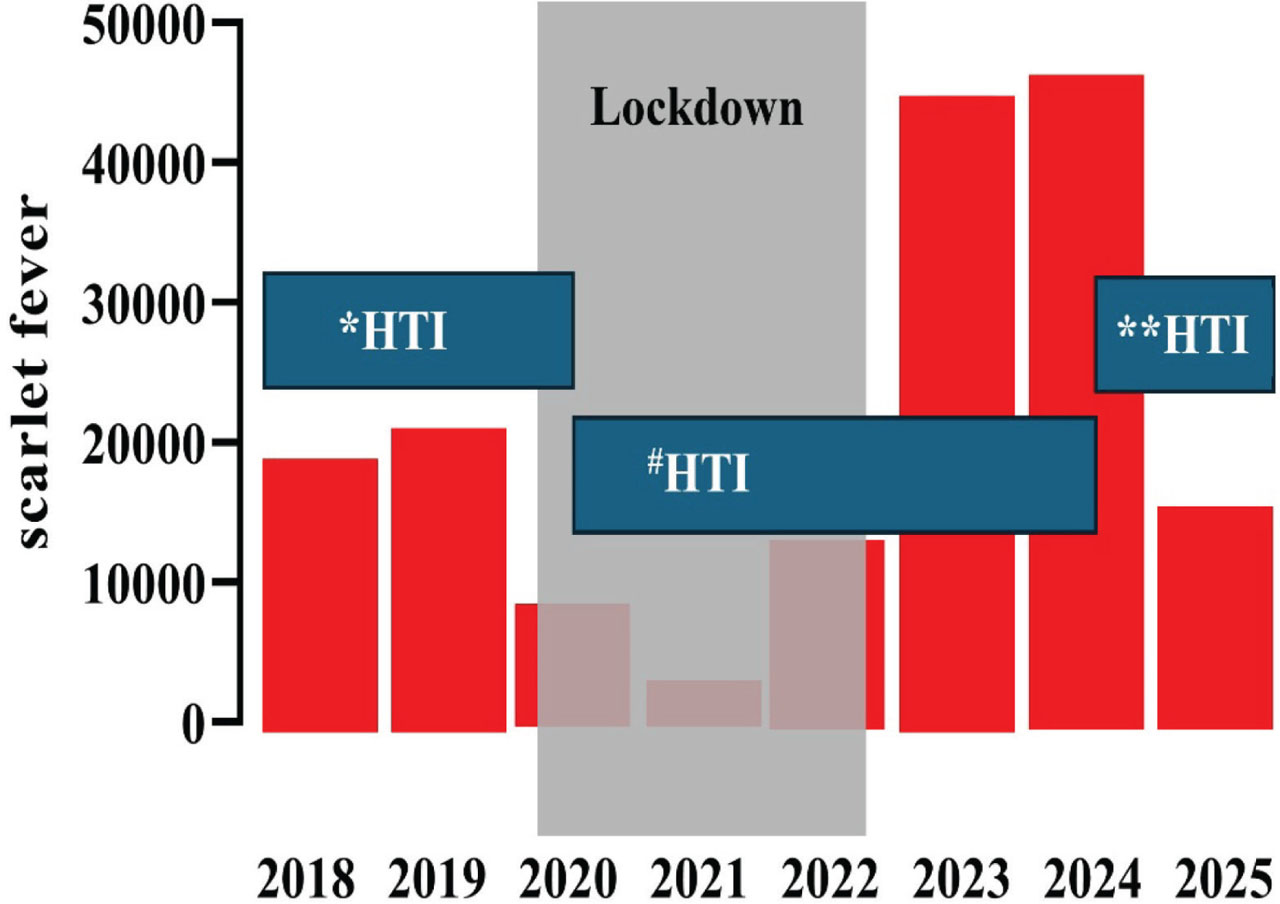
Fig 1.
Timeline of S. pyogenes (GAS)—scarlet fever infections in Poland (2018–2025) the figure shows annual scarlet fever incidence in relation to the COVID-19 lockdown period (March 2020–May 2022). Reduced microbial exposure during lockdown is associated with a gap in trained immunity (2020–2022), a decline in incidence, and subsequent re-establishment of herd-trained immunity (HTI, green line) in 2023–2025, expressed relative to the pre-2020 baseline (100%). Scarlet fever incidence (new cases per year) is shown in bars. Data source: PZH, 30 March 2026. GAS, group A Streptococcal; HTI, herd-trained immunity; pre-2020, pre-pandemic.
Table 1.
Impact of long-term pandemic lockdowns on the personal microbiome and innate immune memory, contributing to impaired HTI and increased incidence of GAS infections. Summary of the sequence of events linking prolonged lockdowns to microbiome disruption, immunity debt, reduced HTI, and increased susceptibility to infections, including GAS.
Furthermore, individual immunity debt (see Key Points) contributed to the transition from an asymptomatic S. pyogenes carrier state to overt GAS disease, such as pharyngitis or scarlet fever. This shift resulted in higher bacterial loads in infected individuals and facilitated increased pathogen transmission (Cunningham 2000). At the population level, this expanded the human reservoir of S. pyogenes, which—combined with population-level immunity debt—led to impaired HTI and ultimately to the resurgence of GAS infections (Marcinkiewicz 2025). Finally, although impaired HTI appears to be a primary factor underlying the post-pandemic resurgence of streptococcal infections, additional contributing mechanisms cannot be ruled out. These include:
The emergence or re-emergence of more virulent pathogen strains (e.g. the emm1 M1UK invasive iGAS strain) (Lynskey et al. 2019; Vieira et al. 2024);
Increases in respiratory viral infections (e.g. respiratory syncytial virus (RSV) and influenza), which may predispose individuals to secondary bacterial infections (Musumeci et al. 2025).
Nevertheless, further retrospective studies of GAS incidence are needed in countries with differing prevalence of the M1UK strain and varying common viral infections dynamics.
In conclusion, the term “herd-trained immunity” is very recent and remains primarily a conceptual hypothesis rather than a firmly established phenomenon supported by extensive population-level empirical data. In contrast, most existing research on trained immunity focuses on individual or cellular mechanisms (trained immunity), with limited evidence of indirect population-level effects (Netea et al. 2011; Vuscan et al. 2024). Moreover, some reviewers of my previous articles (Marcinkiewicz 2024, 2025) have described herd-trained immunity as an intriguing but speculative extension of trained immunity. Therefore, it is important to address the key gaps that have been raised regarding HTI in order to support the plausibility of this hypothesis.
2.1. Quantitative data on the proportion of a population that would require “trained” innate immunity to generate a herd-level effect
At present, it is not possible to determine the precise threshold of HTI required at the population level. However, the global COVID-19 lockdowns, which affected an estimated 4 billion people, created an unprecedented situation in which a very large proportion of the global population experienced markedly reduced exposure to environmental microbiota (Brueggeman et al. 2022; Netea et al. 2023; Lorenz et al. 2025). This widespread reduction in microbial contact is thought to have resulted in a population-wide immunity debt. Thus, the pandemic lockdowns unintentionally revealed a hidden aspect of innate immune memory and provided a unique opportunity to examine the possible role of HTI in infections for which no adaptive immune protection exists. Such a large-scale “global experiment” randomly caused by any viral infection is unlikely to occur again.
2.2. Evidence on the duration of trained immunity at a population scale
At the individual level, the duration of trained immunity—largely determined by the lifespan of trained macrophages and other innate immune cells—is typically estimated to last weeks–months (Tran et al. 2025). During the lockdown period, individual trained immunity gradually waned; at the population level, this decline extended over nearly 2 years. Impaired HTI coincided with marked surges in several infections, including scarlet fever, which serves as a useful model disease (due to the absence of vaccine-mediated adaptive protection). Importantly, approximately 3 years after the lifting of pandemic restrictions, HTI appears to have returned to pre-2020 levels, as reflected in the 2025 incidence of scarlet fever, which mirrors values observed in 2018 (Goldberg-Bockhorn et al. 2024; Infectious diseases and poisonings in Poland (annual reports 2019–2023); Reports from UK Health Security Agency). Analysis of the lockdown timeline, together with available measurements of B-cell, T-cell, and innate immune memory, suggests that among these immune components, only the pre-2020 pool of trained innate immune cells failed to persist during the prolonged period of reduced pathogen exposure (Figure 1). This analysis supports the concept of impaired HTI. Moreover, Netea et al. (2011) have demonstrated that trained innate immunity is induced and maintained by repeated microbial stimulation, metabolically and epigenetically programmed, time-limited and dependent on continued environmental input (Netea et al. 2011; Vuscan et al. 2024). Therefore, the hypothesis of HTI extends this framework to the population level. However, the HTI phenomenon does not apply to viral infections with variable infectiousness or virulence (e.g. influenza, RSV). Furthermore, the following clarification is proposed regarding how population-level reductions in microbial exposure may impair HTI:
2020–2022—COVID-19 pandemic
Lockdowns resulted in a markedly low incidence of GAS infections and reduced microbiome diversity (Tomidis Chatzimanouil et al. 2025). This likely contributed to a decline in trained immunity.
2022–2023—Immediate post-pandemic period
The restoration of normal social contact led to a sharp surge in GAS infections. This increase coincided with an “immunity debt” and the rise of the highly virulent emm1 M1UK GAS strain. Simultaneously, respiratory viral infections such as RSV increased, potentially promoting secondary bacterial infections (den Hartog et al. 2023; Lorenz et al. 2025; Musumeci et al. 2025).
2024–2025—Later period
As the disrupted microbiome and HTI gradually recovered, GAS incidence returned to pre-2020 levels despite ongoing circulation of the M1UK strain and even higher RSV incidence (Rodriguez-Ruiz et al. 2023; Vieira et al. 2024; Cai et al. 2025).
Together, these observations strongly support HTI as a previously under-recognized, yet critical, component of trained immunity. HTI remained unrecognized until it was revealed by the global COVID-19 lockdowns. Recognizing this concept supports the need for an updated and more structured nomenclature for trained immunity, aligned with established classifications of immunological memory (Boraschi and Italiani 2018). Accordingly, I propose a refined framework distinguishing natural (baseline), inducible (stimulus-driven), and herd-level (population-scale) trained immunity as a part of entire innate immunity. This classification parallels the adaptive immune system’s distinction between natural and vaccine-induced immunity and provides a conceptual foundation for future studies investigating how innate immune memory shapes population-level susceptibility to infectious diseases.
Innate immunity comprises naive (non-primed) and trained innate immune cells (e.g. monocytes, macrophages, and NK cells):
Trained immunity: the overarching term encompassing all forms of innate immune memory;
Natural trained immunity: basal innate immune memory acquired through continuous exposure to the microbiome beginning at birth and to pathogens during infections;
Inducible trained immunity: immune memory elicited by defined stimuli (e.g., β-glucan, Bacillus Calmette-Guerin [BCG]). In veterinary medicine, β-glucans are widely used as potent feed additives with immunostimulatory properties;
HTI: broad, non-specific protection at the population level against diverse pathogens mediated by innate immunity.
Finally, considering this classification, and recognizing that the defensive capacity of an individual’s innate immune system comprises a combination of naïve and trained innate immune cells (e.g. trained monocytes—a hallmark of trained immunity), it would be valuable to evaluate the ratio between these cell populations. Furthermore, as global lockdowns are unlikely to be implemented again and large-scale population studies of trained immunity are currently lacking, an alternative approach would be to assess the impact of exposure to natural environmental microbiota vs. low-diversity, confined microbiota on individual levels of trained immunity. In this context, blood monocyte markers and gut microbiome composition in astronauts—examined before and after long-term space missions—or in polar explorers may represent a unique and valuable model for such investigations. Despite considerable methodological challenges, such studies remain feasible and highly informative for investigating the gut microbiome-bone marrow-trained innate immunity axis, a rapidly evolving concept in immunology (Pellon et al. 2025).
Notes
Acknowledgments
I would like to express my gratitude to Prof. Piotr Głuszko for his insightful comments that improved the clarity of the manuscript, and to Dr. Grzegorz Majka (Department of Immunology, Faculty of Medicine, Jagiellonian University Medical College) for his valuable assistance with manuscript editing.
Key Points
Immunity debt—individual level
Refers to the reduced ability of an under-stimulated immune system to effectively combat pathogens. This may result in weakened immune barriers, uncontrolled pathogen proliferation, and increased secretion of virulence factors (Needle and Russell 2023).
Immunity debt—population level
A public-health concept describing how prolonged reduction in exposure to common pathogens (e.g. during lockdowns - extended social isolation) can limit routine immune “education.” Immunity debt relates to both innate and adaptive immunity (Lorenz et al. 2025).
Herd immunity
A population-level state achieved through widespread adaptive immunity, acquired via natural infection or mass vaccination. While individual vaccination aims to prevent or reduce recurrent infections, the public-health goal of herd immunity is to enhance immunization coverage sufficiently to control or eradicate disease within a cohort. Herd immunity depends on long-lasting, antigen-specific T and B cell memory (Randolph and Barreiro 2020).
Trained immunity
Describes the capacity of the innate immune system (e.g. macrophages, NK cells) to develop a memory-like enhanced response following certain exposures—such as microbial components (self-microbiome components, pathogens, BCG vaccine, β-glucans). This leads to extended lifespan of trained cells and non-specific, heightened protection against unrelated pathogens (Netea et al. 2011, 2020; Chen et al. 2023).
Gut microbiome-bone marrow-trained immunity axis
This axis describes how the gut microbiota regulates hematopoiesis and functionally “trains” innate immune cells to respond more effectively to subsequent infections.
Herd Trained Immunity (HTI)
Proposes that if a substantial portion of a population develops enhanced innate responsiveness, the group may experience a form of non-specific, herd-level protection. This could reduce disease spread or severity even among individuals without direct exposure. HTI—broad, non-specific protection against diverse pathogens controlled by innate immunity. Transient, may wane without microbial exposure (Marcinkiewicz 2024, 2025; Vuscan et al. 2024).