
1. Introduction
With the improvement of the living standards, cardiovascular diseases, especially myocardial infarction (MI), have become the leading causes of death worldwide (Salari et al. 2023). In China, the incidence of MI has exceeded 1% and continues to increase annually (Zhang et al. 2025). After MI, cardiomyocytes undergo irreversible death and are gradually replaced by fibroblasts, leading to ventricular remodeling, ventricular wall thinning, and scar formation, which ultimately result in heart failure or sudden death (Galli et al. 2024). Therefore, identifying novel and effective therapeutic strategies remains essential for improving MI outcomes.
Shexiang tongxin dropping pills (STDP) is a traditional Chinese medicine formulation widely used for the treatment of cardiovascular diseases in China and Southeast Asia (Tan et al. 2023; Cui and Pu 2024; Zhu et al. 2024). Previous studies have demonstrated that STDP exerts protective effects against acute MI in rat models (Yan et al. 2024). Salvia miltiorrhiza Bge. is a key component of STDP, and multiple bioactive constituents derived from this herb exhibit cardioprotective effects (Shan et al. 2024a). For instance, tanshinone IIA suppresses cardiomyocyte pyroptosis after acute MI (Chai et al. 2023). In addition, salvianolic acid B has been shown to alleviate ferroptosis in MI rats (Shen et al. 2022b).
Salvianolic acid C (SAC) is a major polyphenolic compound isolated from S. miltiorrhiza Bge., and is structurally composed of two salvianolic acid units and one caffeic acid unit (Xing et al. 2025). SAC has been reported to possess antioxidant, anti-inflammatory, and antiapoptotic properties and to participate in the regulation of multiple pathological processes. For example, SAC modulates the TLR4/NF-κB pathway to reduce neuroinflammation, thereby improving cerebral ischemic injury (Guo et al. 2024). Moreover, SAC alleviates renal tubulointerstitial fibrosis (Wu et al. 2023a) and reduces inflammation and apoptosis to cisplatin-induced acute kidney injury (Chien et al. 2021). SAC has also been shown to promote cerebral angiogenesis and mitigate cerebral ischemia-reperfusion injury (Shen et al. 2022a). Importantly, SAC has been verified to attenuate apoptosis, inflammation, and oxidative stress (Duan et al. 2019; Wu et al. 2019). However, the protective effects of SAC in MI and the underlying molecular mechanisms have not yet been fully elucidated.
In this study, we demonstrated that SAC activated the AMPK pathway to inhibit ferroptosis and alleviate cardiomyocyte injury after acute MI. These findings provide novel mechanistic insights into the cardioprotective role of SAC and suggest its potential value in the clinical treatment of MI.
2. Materials and Methods
2.1. MI rat model
This work was approved by the Institutional Animal Care and Use Committee (IACUC) of Zhejiang Provincial Laboratory Animal Center, China (Approval No. ZJCLA-IACUC-20011035), with the application submitted through Shaoxing Central Hospital, China. The animal experiments were performed in accordance with the National Institutes of Health Guide for the Care and Use of Laboratory Animals.
Sprague-Dawley rats (specific pathogen-free grade, n = 24) were purchased from the Beijing Vital River Laboratory Animal Technology Co., Ltd. (Beijing, China). After anesthesia with pentobarbital sodium, MI was induced by ligation of the left anterior descending (LAD) coronary artery. Successful establishment of the MI model was confirmed by visible whitening of the ligation area. In the Sham group, rats underwent thoracotomy without LAD ligation. SAC (IS05509; 10 mg/kg or 20 mg/kg), purchased from Solarbio Biotechnology Co., Ltd. (Beijing, China), was administered intragastrically to rats once daily for 30 days.
2.2. Triphenyltetrazolium chloride staining
Myocardial tissues were sliced into -mm-thick sections. Sections were incubated in 1% triphenyltetrazolium chloride (TTC) solution for 0.5 h, followed by 10% formaldehyde for 6 h. The infarct area (white) and non-infarct area (red) were photographed, and the infarct size was calculated as a percentage of the total myocardial area.
2.3. Hematoxylin-eosin staining
The myocardial tissues were fixed in 4% paraformaldehyde and embedded in paraffin. Paraffin-embedded tissues were sectioned at a thickness of 4 μm, followed by hematoxylin-eosin (HE) staining according to standard procedures. Histological images were captured using a light microscope (BX53, Olympus, Japan).
2.4. Reverse transcription quantitative polymerase chain reaction
Total RNA was extracted from myocardial tissues using TRIzol reagent (Thermo Fisher Scientific, Waltham, MA, USA). Complementary DNA was synthesized using the PrimeScript™ RT Reagent Kit (Takara, Dalian, China). Quantitative PCR was performed using the SYBR Green PCR kit (Toyobo, Japan). Relative mRNA expression levels were calculated using the 2−ΔΔCt method, with glyceraldehyde-3-phosphate dehydrogenase (GAPDH) as the internal control.
The primer sequences were as follows:
Tumor necrosis factor (TNF)-α:
F: 5′-AGCCGATGGGTTGTACCT-3′
R: 5′-TGAGTTGGTCCCCCTTCT-3′
Interleukin (IL)-1β:
F: 5′-CCAGCTTCAAATCT CACAGCAG-3′
R: 5′-CTTCTTTGGGTATTGCTTGGGATC-3′
IL-6:
F: 5′-TCCAGTTGCCTTCTTGGGAC-3′
R: 5′-GTACTCCAGAAGACCAGAGG-3′
GAPDH:
forward, 5′-CTGGGCTACACTGAGCACC-3′
reverse, 5′-AAGTGGTCGTTGAGGGCAATG-3′
2.5. Enzyme-linked immunosorbent assay
Commercial enzyme-linked immunosorbent assay (ELISA) kits were used to measure cytokine levels according to the manufacturers’ instructions, including IL-1β (ab255730, Abcam, Shanghai, China), IL-6 (ab234570, Abcam), and TNF-α (ab236712, Abcam).
2.6. Reactive oxygen species examination (DHE staining)
The myocardial tissue sections (4 μm) were incubated with dihydroethidium (DHE; 10 μmol, Sigma-Aldrich, USA) for 30 min in the dark. After being washed twice with phosphate-buffered saline (PBS), fluorescence images were acquired using an automatic fluorescence microscope (BX63, Olympus Optical Ltd. Tokyo, Japan).
2.7. Measurement of superoxide dismutase, malondialdehyde, and ferrous iron (Fe2+)
The levels of superoxide dismutase (SOD), malondialdehyde (MDA), and Fe2+ were quantified using commercial assay kits, including SOD (ab65354, Abcam, Shanghai, China), MDA (ab118970), and the Fe assay kit (ab83366), following the manufacturer’s protocols.
2.8. Terminal deoxynucleotide transferase-mediated dUTP nick end-labeling assay
Apoptosis in myocardial tissues was detected using the In Situ Cell Death Detection Kit (Roche, Basel, Switzerland). The myocardial tissue sections were permeabilized with 0.1% Triton X-100, followed by incubation with terminal deoxynucleotide transferase-mediated dUTP nick end-labeling (TUNEL) staining solution for 1 h in the dark. After washing, converter-peroxidase and diaminobenzidine (DAB) were subsequently applied, and nuclei were counterstained with DAPI. Fluorescence images were obtained using a fluorescence microscope (BX63, Olympus Optical Ltd. Tokyo, Japan).
2.9. Western blot
Total proteins were extracted from myocardial tissues or H9C2 cells using RIPA lysis buffer (Beyotime, Shanghai, China). Equal amounts of protein were separated by 10% SDS-PAGE and transferred onto polyvinylidene fluoride (PVDF) membranes (Beyotime, Shanghai, China). After blocking, membranes were incubated overnight at 4°C with primary antibodies, including SLC7A11 (1/1000; ab307601; Abcam, Shanghai, China), GPX4 (1/1000; ab125066), p-AMPK (1/2000; ab68206), AMPK (1/1000; ab32047), p-mTOR (1/1000; ab109268), mTOR (1/5000; ab134903) and GAPDH (1/2000; ab8245) for 12 h. Afterward, membranes were incubated with the appropriate secondary antibodies (1/1000; ab7090) for 2 h, and the protein bands were visualized using a chemiluminescence detection kit (Thermo Fisher Scientific, Inc., USA).
2.10. Cell lines and treatment
Rat H9C2 cardiomyocytes were obtained from American Tissue Culture Collection (ATCC, Manassas, VA, USA), and cultured in DMEM under humidified conditions (37°C, 5% CO2). To establish the oxygen-glucose deprivation (OGD) model, cells were incubated in glucose-free and serum-free DMEM under hypoxic conditions (94% N2, 5% CO2, and 1% O2) for 3 h. Control cells were maintained under normoxic conditions (95% air and 5% CO2). SAC (0, 2.5, 5, 10, 20, 40, 80, and 160 μM) was adopted for treating H9C2 cells.
2.11. Cell counting kit-8 assay
H9C2 cells were seeded into 96-well plates, and 10 μL of cell counting kit-8 (CCK-8) reagent (Dojindo Laboratories, Kumamoto, Japan) was added to each well. Cell viability was measured using a microplate reader (Bio-Rad, CA, USA).
2.12. ROS detection by dichlorofluorescein staining
Intracellular reactive oxygen species (ROS) levels were assessed using a ROS kit (E004-1-1, Nanjing Jiancheng Technology Co., Ltd., Nanjing, China). H9C2 cells were incubated with dichlorodihydrofluorescein diacetate (DCFH-DA) for 30 min. After washing, images were captured through the fluorescence microscope (Olympus, Tokyo, Japan).
2.13. Statistical analysis
All data are presented as the mean ± standard deviation (SD). Statistical analyses were performed using GraphPad Prism 9.0 (GraphPad Software, La Jolla, CA, USA). The one-way analysis of variance (ANOVA) was applied for multiple group comparisons, and p < 0.05 was considered statistically significant.
3. Results
3.1. SAC alleviated the infarct size in MI rats
The infarct size of the heart was significantly increased in the MI group; however, this effect was markedly attenuated following SAC treatment (10 mg/kg or 20 mg/kg) (Figure 1A, p < 0.05). In addition, obvious myocardial fiber rupture, cardiomyocyte swelling, and extensive inflammatory cells were observed in the MI group. These pathological changes were notably improved after SAC treatment (Figure 1B). In general, these findings indicate that SAC effectively reduces infarct size in MI rats.
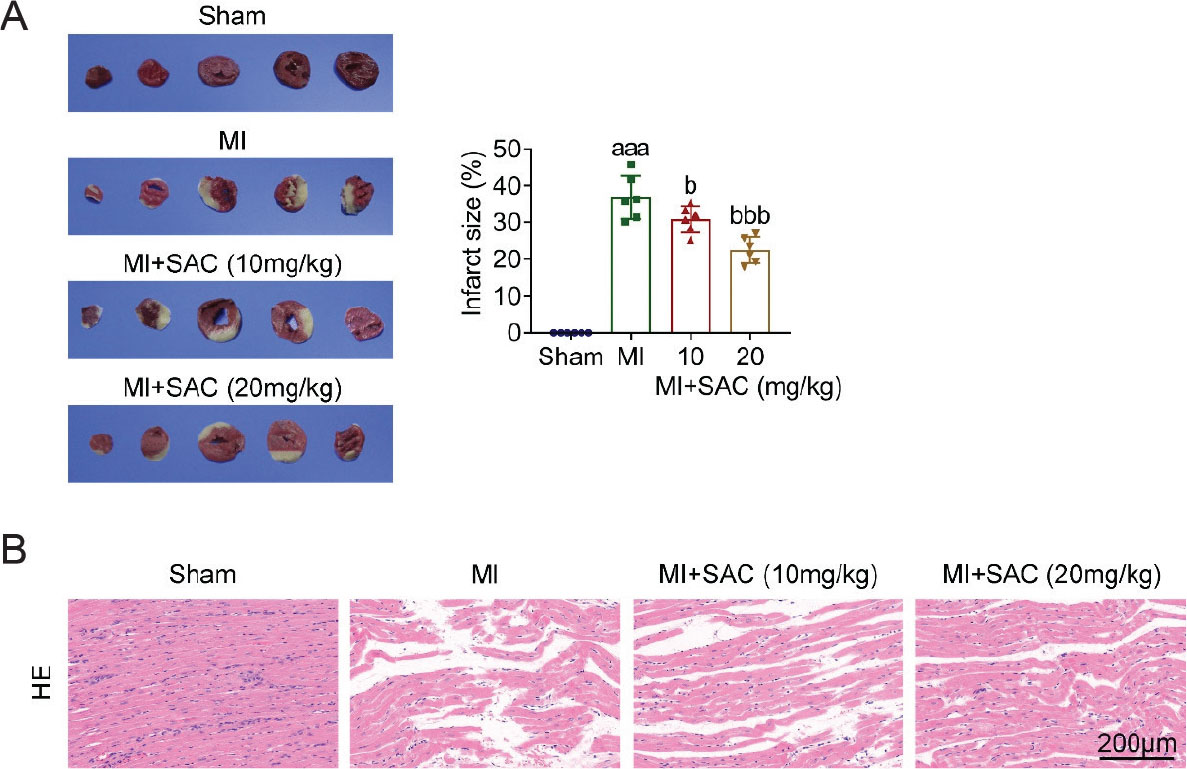
Fig 1.
SAC alleviated the infarct size in MI rats. Groups were separated into the Sham, MI, MI + SAC (10 mg/kg), and MI + SAC (20 mg/kg) groups. (A) The infarct size of the heart in rats was assessed through TTC staining. (B) Myocardial histopathological damage was evaluated by HE staining. aaap < 0.001 vs the Sham group; bp < 0.05, bbbp < 0.001 vs the MI group HE, hematoxylin-eosin; MI, myocardial infarction; SAC, salvianolic acid C; TTC, triphenyltetrazolium chloride.
3.2. SAC attenuated inflammation and cardiomyocyte apoptosis in MI rats
The mRNA expression levels of IL-1β, IL-6, and TNF-α were significantly elevated in the MI group. These increases were rescued after SAC treatment (Figure 2A, p < 0.01). Consistently, ELISA results showed similar trends at the protein level, with significantly reduced IL-1β, IL-6, and TNF-α levels after SAC administration (Figure 2B, p < 0.001). Furthermore, cardiomyocyte apoptosis was markedly increased in the MI group, whereas this effect was substantially neutralized after SAC treatment, as demonstrated by TUNEL staining (Figure 2C). Taken together, these results suggest that SAC effectively suppresses inflammation and cardiomyocyte apoptosis in MI rats.
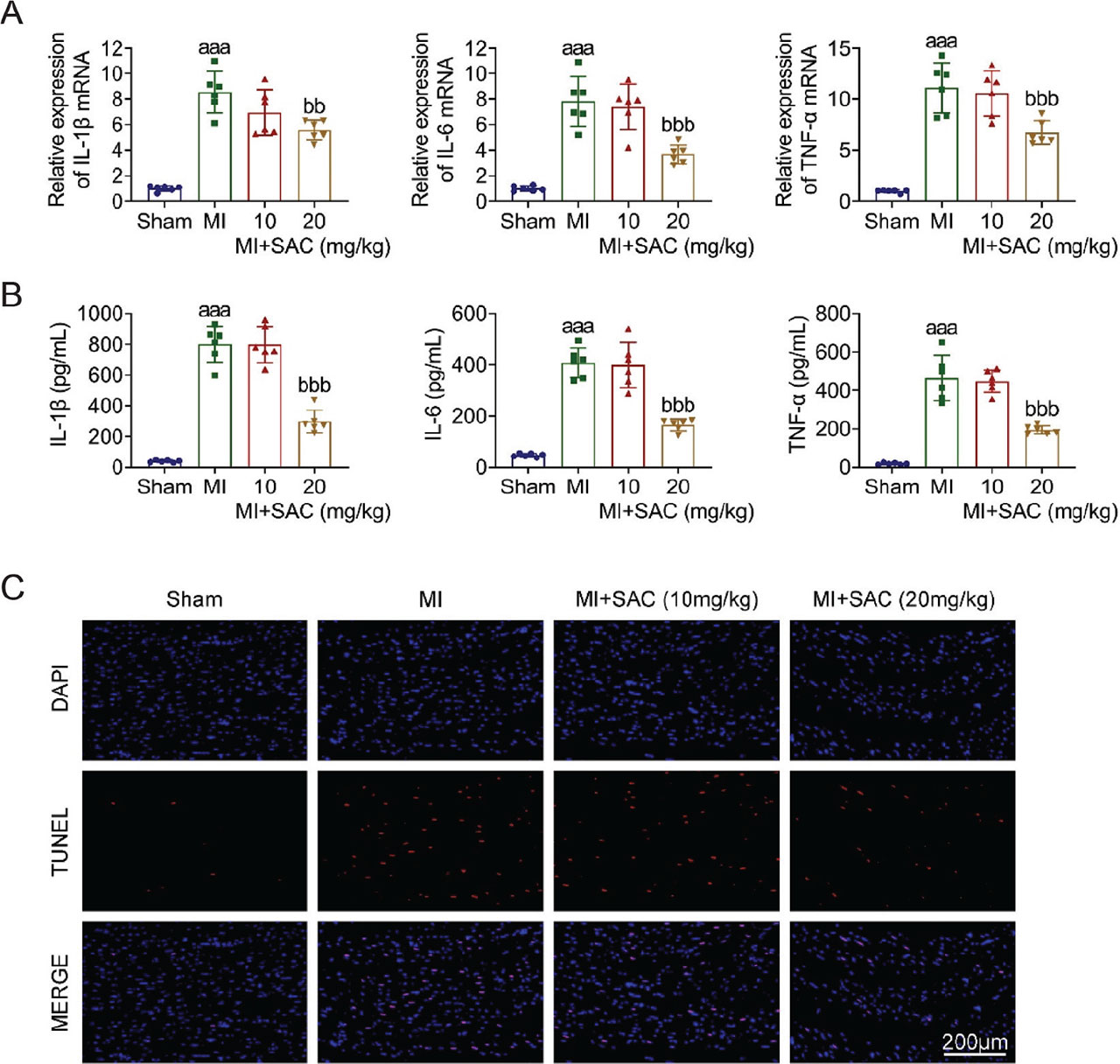
Fig 2.
Groups were separated into the Sham, MI, MI + SAC (10 mg/kg), and MI + SAC (20 mg/kg) groups. (A) mRNA expressions of IL-1β, IL-6, and TNF-α were examined through RT-qPCR. (B) The levels of IL-1β, IL-6, and TNF-α were tested through ELISA. (C) Cardiomyocyte apoptosis in myocardial tissues was evaluated through the TUNEL assay.
3.3. SAC suppressed ferroptosis in MI rats
The ROS level was markedly increased in the MI group, whereas SAC treatment significantly reduced ROS accumulation (Figure 3A). Moreover, the SOD level was significantly decreased, while MDA and Fe2+ levels were markedly increased in the MI group. These alterations were reversed after SAC treatment (Figures 3B–D, p < 0.01). In addition, the protein expression levels of the ferroptosis-related markers SLC7A11 and GPX4 were significantly reduced in the MI group. SAC administration effectively restored the expression of both proteins (Figure 3E, p < 0.001). Taken together, these findings demonstrated that SAC suppressed ferroptosis in MI rats.
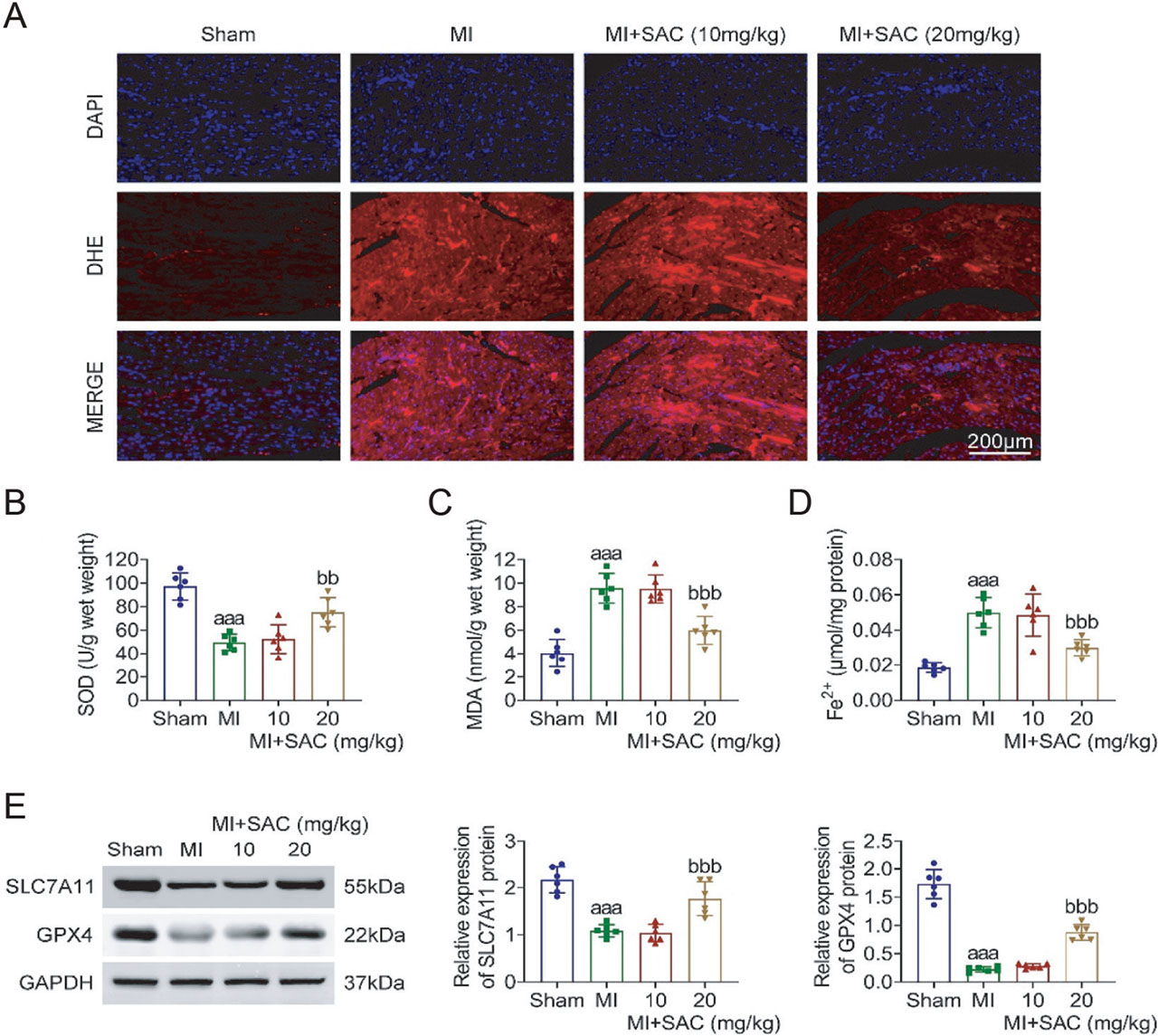
Fig 3.
SAC suppressed ferroptosis in MI rats. Groups were separated into the Sham, MI, MI + SAC (10 mg/kg), and MI + SAC (20 mg/kg) groups. (A) The ROS level was measured through DHE staining. (B–D) The levels of SOD, MDA, and Fe2+ were examined through the corresponding kits. (E) The protein expressions of SLC7A11 and GPX4 were assessed through Western blot. aaap < 0.001 vs the Sham group; bbp < 0.01, bbbp < 0.001 vs the MI group DHE, dihydroethidium; GAPDH, glyceraldehyde-3-phosphate dehydrogenase; MDA, malondialdehyde; MI, myocardial infarction; ROS, reactive oxygen species; SAC, salvianolic acid C; SOD, superoxide dismutase.
3.4. SAC activated the AMPK signaling pathway
The protein level of p-AMPK/AMPK was decreased, and p-mTOR/mTOR was increased in the MI group. These changes were effectively reversed by SAC treatment (Figure 4, p < 0.001), indicating that SAC activates the AMPK pathway in MI rats.
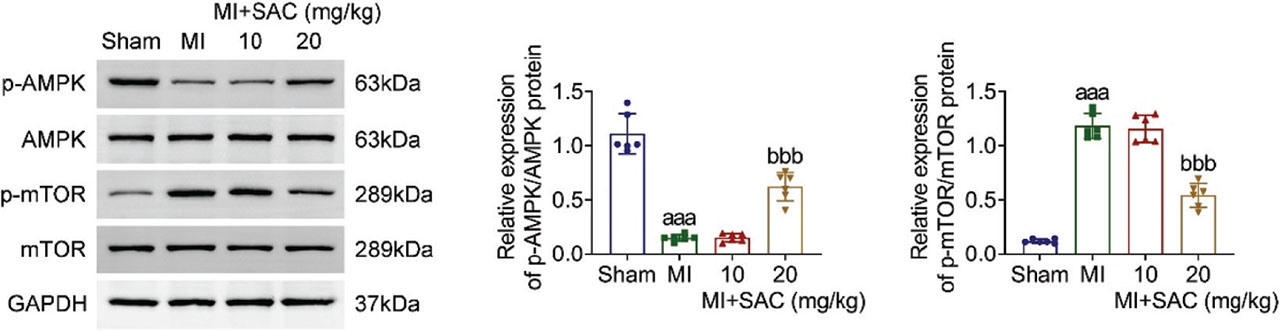
Fig 4.
SAC evoked the AMPK pathway. Groups were separated into the Sham, MI, MI + SAC (10 mg/kg), and MI + SAC (20 mg/kg) groups. The protein expressions of p-AMPK, AMPK, p-mTOR, and mTOR were determined through western blot. aaap < 0.001 vs the Sham group; bbbp < 0.001 vs the MI group GAPDH, glyceraldehyde-3-phosphate dehydrogenase; MI, myocardial infarction; SAC, salvianolic acid C.
3.5. SAC activates the AMPK pathway to ameliorate OGD-induced cardiomyocyte injury
In vitro experiments revealed that the cell viability of H9C2 cells was significantly reduced after SAC treatment with high concentrations of SAC (40, 80, and 160 μM) (Figure 5A, p < 0.001). Therefore, 20 μM SAC was chosen for subsequent experiments. The decreased p-AMPK/AMPK protein level in the OGD group was reversed after SAC treatment, whereas this protective effect was abolished following AMPK inhibition (Figure 5B, p < 0.001). In addition, OGD-induced reductions in SOD levels and increases in MDA and Fe2+ levels were significantly reversed by SAC treatment. These effects were further abrogated after AMPK knockdown (Figures 5C–E, p < 0.05). Similarly, the elevated ROS levels induced by OGD were attenuated by SAC treatment, while AMPK suppression reversed this effect (Figure 5F). Furthermore, GD-induced downregulation of SLC7A11 and GPX4 protein expression was significantly reduced by SAC treatment, and this rescue effect was further diminished after AMPK knockdown (Figure 5G, p < 0.01). Collectively, these results indicate that SAC alleviated OGD-induced cardiomyocyte injury through activation of the AMPK pathway.
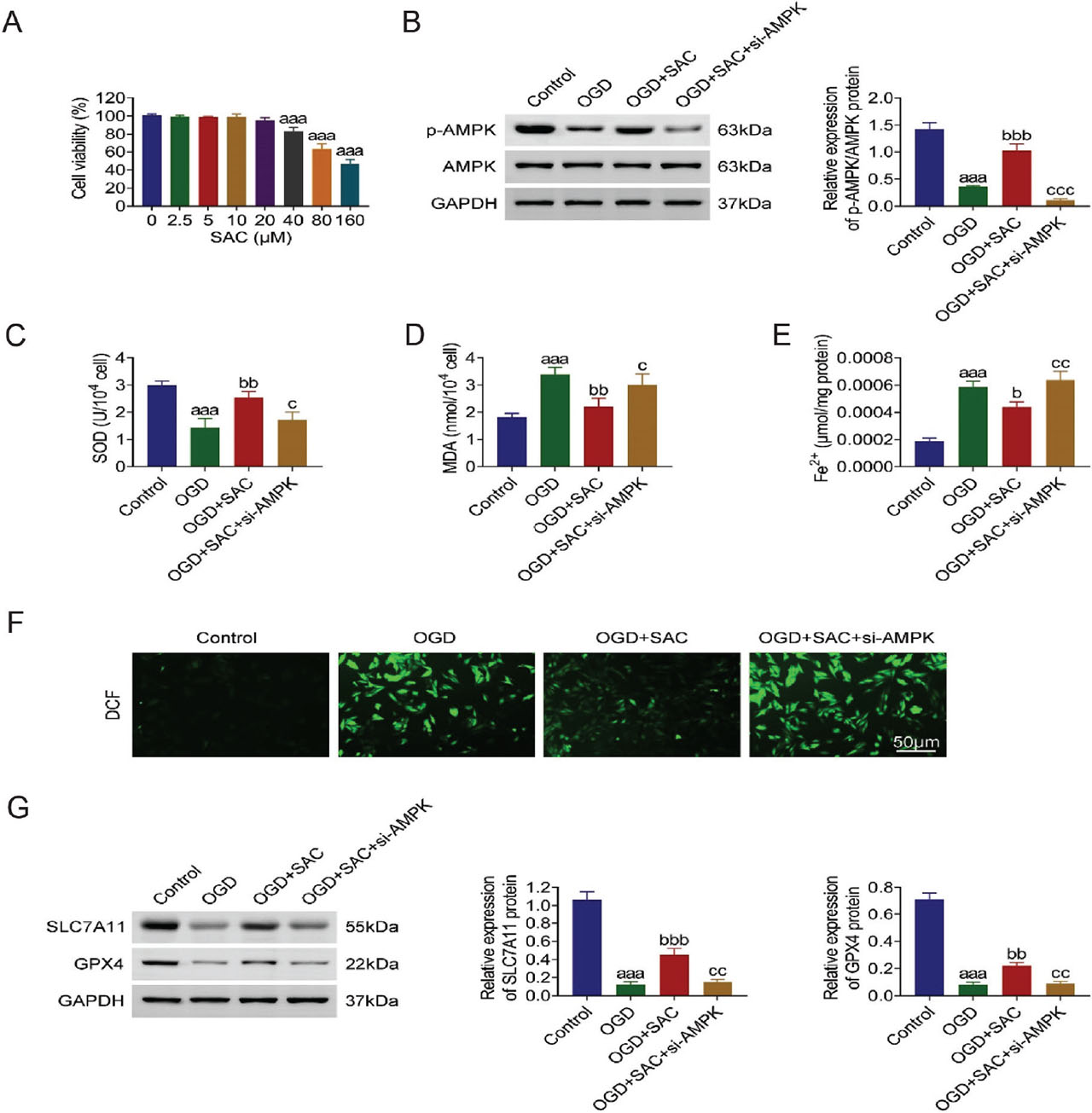
Fig 5.
SAC triggered the AMPK pathway to ameliorate cardiomyocyte damage mediated by OGD. (A) The cell viability was inspected through CCK-8 assay in the 0, 2.5, 5, 10, 20, 40, 80, and 160 μM SAC groups. (B) The protein expressions of p-AMPK and AMPK were assessed through western blot in the control, OGD, OGD + SAC, and OGD + SAC + si-AMPK groups. (C–E) The levels of SOD, MDA, and Fe2+ were examined through the corresponding kits in the control, OGD, OGD + SAC, and OGD + SAC + si-AMPK groups. (F) The ROS level was tested through DCF staining in the control, OGD, OGD + SAC, and OGD + SAC + si-AMPK groups. (G) The protein expressions of SLC7A11 and GPX4 were measured through western blot in the control, OGD, OGD + SAC, and OGD + SAC + si- AMPK groups. aaap < 0.001 vs the control group; bp < 0.05, bbp < 0.01, bbbp < 0.001 vs the OGD group; cp < 0.05, ccp < 0.01, cccp < 0.001 vs the OGD + SAC group CCK-8, cell counting kit-8; DCF, dichlorofluorescein; GAPDH, glyceraldehyde-3-phosphate dehydrogenase; MDA, malondialdehyde; OGD, oxygen-glucose deprivation; ROS, reactive oxygen species; SAC, salvianolic acid C.
3.6. SAC and Ferrostatin-1 exert similar protective effects against OGD-induced injury
Additional experiments demonstrated that cell viability was significantly reduced following OGD exposure, whereas this reduction was markedly reversed by treatment with SAC or Ferrostatin-1, a ferroptosis inhibitor (Figure S1A, p < 0.01). Similarly, OGD-induced decreases in SOD levels were alleviated by SAC or Ferrostatin-1 treatment (Figure S1B, p < 0.05). Moreover, the elevated MDA and Fe2+ levels observed after OGD treatment were significantly attenuated after SAC or Ferrostatin-1 (Figures S1C,D, p < 0.01). The GPX4 protein expression was also significantly reduced in the OGD group, whereas both SAC and Ferrostatin-1 restored GPX4 expression (Figure S1E, p < 0.05). These findings further confirm that SAC exerts cardioprotective effects by inhibiting ferroptosis.
4. Discussion
SAC has been reported to exhibit anti-oxidant, anti-inflammatory, and anti-apoptotic properties in various diseases (Chien et al. 2021; Shen et al. 2022a; Wu et al. 2023a; Guo et al. 2024). However, its regulatory effects and underlying mechanisms in the progression of MI have remained largely unclear. In recent years, increasing attention has been directed toward the use of herbal extracts and natural compounds for MI treatment. For example, S.miltiorrhiza has been shown suppress cardiomyocyte ferroptosis after MI (Wu et al. 2024). In addition, latifolin relieves MI progression by attenuating myocardial inflammation (Lai et al. 2020), while polydatin stimulates Sirt3 to protect cardiomyocytes in MI injury (Zhang et al. 2017). Consistent with these previous studies, this study demonstrated that SAC significantly alleviates the infarct size in MI rats. Inflammation and cardiomyocyte apoptosis were markedly enhanced in the MI group, whereas these pathological changes were effectively attenuated following SAC treatment. Collectively, these findings indicate that SAC exerts a protective effect against MI progression.
Accumulating evidence indicates that ROS production triggered by MI plays a key role in myocardial injury (Cadenas 2018). It has been confirmed that ferroptosis participates in the pathogenesis of myocardial diseases (Fang et al. 2024). Ferroptosis is a distinct form of regulated cell death characterized by iron-dependent lipid peroxidation and excessive lipid ROS accumulation (Endale et al. 2023). Therefore, targeting ferroptosis has emerged as a promising strategy for alleviating myocardial injury after MI, attracting increasing attention from researchers. For example, epigallocatechin gallate (EGCG) suppresses ferroptosis by targeting the miR-450b-5p/ACSL4 axis, thereby alleviating acute MI (Yu et al. 2023). Additionally, S. miltiorrhiza activates the Nrf2 pathway to attenuate ferroptosis after MI (Wu et al. 2024). Ferrostatin-1 has also been reported to attenuate ferroptosis after MI (Wu et al. 2023b). Furthermore, fraxetin targets the AKT/Nrf2/HO-1 pathway to relieve ferroptosis in MI (Xu et al. 2021). Similarly, our study demonstrated that SAC suppressed ferroptosis in MI rats, highlighting its potential role in regulating oxidative cell death.
AMPK is a key modulator of lipid metabolism and glucose metabolism, and exhibits crucial roles in controlling cellular energy homeostasis (Carling 2017; Herzig and Shaw 2018). The impaired AMPK phosphorylation has been reported to affect the absorption and metabolism of glucose in the heart during myocardial ischemia (Lu et al. 2022), suggesting that AMPK represents a strategic therapeutic target for MI. Importantly, activation of the AMPK pathway has been reported to inhibit ferroptosis in cardiomyocytes, thereby alleviating myocardial ischemia–reperfusion (I/R) injury in mice (Liu et al. 2024). Many studies have emphasized the significance of the AMPK pathway in MI progression. For instance, Rap1GAP aggravated the MI progression by modulating the AMPK/NF-κB pathway (Shan et al. 2024b). Geniposide activates the AMPK pathway to suppress pyroptosis and improve MI outcome (Li et al. 2022). Moreover, remote cyclic compression has been shown to alleviate MI injury via AMPK-dependent mechanisms (Xu et al. 2022). In addition, SERPINB1 targets the AMPK/mTOR pathway to ameliorate acute MI-triggered myocardial damage (Wang et al. 2022). Consistent with these reports, our study confirmed that SAC activates the AMPK signaling pathway in vivo. Furthermore, in vitro experiments demonstrated that SAC alleviates OGD-induced cardiomyocyte injury by activating the AMPK pathway, providing mechanistic evidence for its cardioprotective effects.
In conclusion, his study is the first to demonstrate that SAC activates the AMPK pathway to inhibit ferroptosis and alleviate cardiomyocyte injury following acute MI. These findings highlight the therapeutic potential of SAC as a novel cardioprotective agent for MI treatment. Nevertheless, several limitations should be acknowledged. This study was limited to animal models and cell lines, and no experiments were performed using human samples. In addition, other relevant cellular phenotypes and clinical treatment scenarios were not explored. These limitations may restrict the direct translation of our findings to human patients. Future studies will focus on validating the protective effects of SAC in clinical settings and further elucidating its role in MI progression.
5. Conclusion
This study demonstrates that SAC protects against acute MI by inhibiting ferroptosis through activation of the AMPK signaling pathway. These findings suggest that SAC may represent a promising therapeutic candidate for MI. Further studies are needed to validate its clinical applicability.
Abbreviations
- AMPK
Adenosine 5‘-Monophosphate (AMP)-Activated Protein Kinase;
- ARRIVE
Animal Research: Reporting of In Vivo Experiments;
- DAPI
4’,6-Diamidino-2-Phenylindole;
- DMEM
Dulbecco's Modified Eagle Medium;
- ELISA
Enzyme-Linked Immunosorbent Assay;
- GPX4
Glutathione Peroxidase 4;
- mRNA
Messenger Ribonucleic Acid;
- mTOR
Mammalian Target of Rapamycin;
- NF-κB
Nuclear Factor Kappa B;
- p-AMPK
Phosphorylated AMPK;
- PCR
Polymerase Chain Reaction;
- p-mTOR
Phosphorylated mTOR;
- Rap1GAP
Rap1 GTPase-Activating Protein;
- RIPA
Radioimmunoprecipitation Assay;
- RT
Reverse Transcription;
- SDS-PAGE
Sodium Dodecyl Sulfate–Polyacrylamide Gel Electrophoresis;
- SLC7A11
Solute Carrier Family 7 Member 11;
- SYBR
SYBR Green.
Acknowledgments
Not applicable.
Notes
[1] Financial disclosure Funding
This work was supported by the Zhejiang Provincial Traditional Chinese Medicine Science and Technology Program (County-level Special Project) in 2025, China (Grant No. 2025ZX038).
[2] Availability of Data and Materials
All data generated or analyzed during this study are included in this published article.
[4] Ethics Approval
This work was approved by the Institutional Animal Care and Use Committee (IACUC), Zhejiang Provincial Laboratory Animal Center (Approval No. ZJCLA-IACUC-20011035), with the application submitted through Shaoxing Central Hospital.
All animal experiments should comply with the ARRIVE guidelines and conducted in accordance with the U.K. Animals (Scientific Procedures) Act, 1986 and associated guidelines, EU Directive 2010/63/EU for animal experiments.
[5] Contributed by Author’s Contribution
Conceptualization, Methodology, and Writing – Original Draft were performed by Yanping Zeng; Formal analysis, Resources, and Investigation were performed by Lin Chen; Formal analysis, Visualization and Data Curation were performed by Zhenhua Qian and Weixing Ma; Project administration, Supervision, and Validation were performed by Cheng Ma and Yan Wang; Validation, Supervision, and Writing – Review and Editing were performed by Guanfeng Zhu. All authors read and approved the final manuscript.
Notes
Supplementary Figure
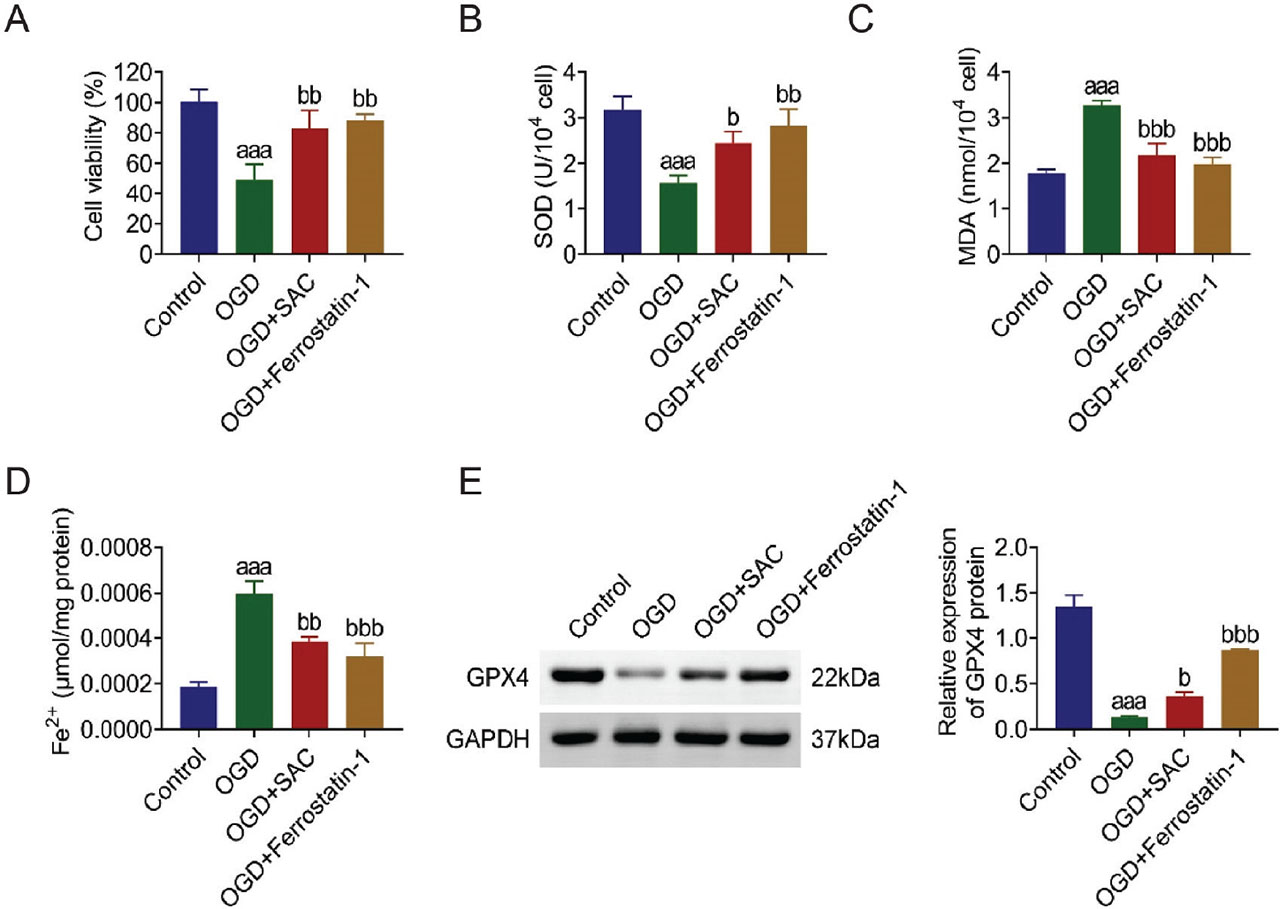
Fig S1.
SAC and Ferrostatin-1 both can affect MI progression. Groups were separated into the control, OGD, OGD + SAC, and OGD + errostatin-1 groups. (A) The cell viability was inspected through the CCK-8 assay. (B–D) The levels of SOD, MDA, and Fe2+ were examined through the corresponding kits. (E) The protein expression of GPX4 was measured through western blot. aaap < 0.001 vs the control group; bp < 0.05, bbp < 0.01, bbbp < 0.001 vs the OGD group CCK-8, cell counting kit-8; GAPDH, glyceraldehyde-3-phosphate dehydrogenase; MDA, malondialdehyde; MI, myocardial infarction; OGD, oxygen-glucose deprivation; SAC, salvianolic acid C; SOD, superoxide dismutase.