
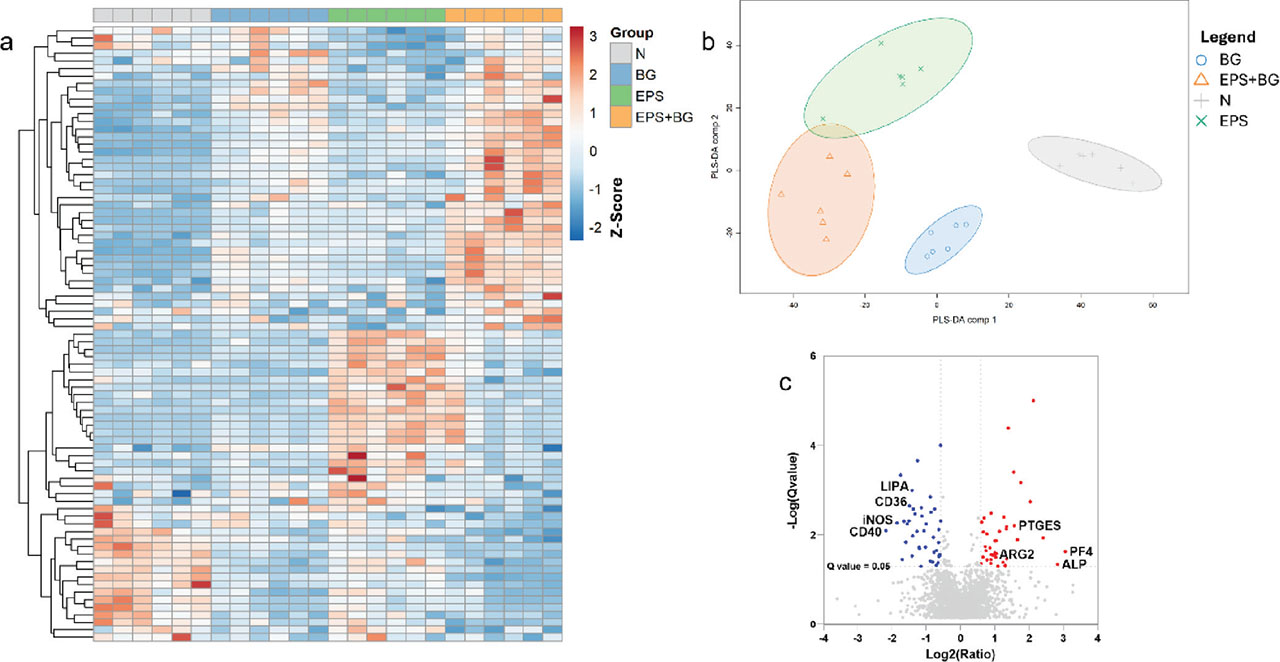
Fig 1.
An overview of the quantitative proteomics analyses. The regulated proteins exhibited marked differences in expression levels between naïve and BG-trained macrophages stimulated with EPS, as illustrated by the heatmap, which also includes unstimulated cells and those exposed to BG alone (a). Based on whole-proteome profiles, PLS-DA enabled clear class separation between naïve and BG-trained macrophages, as well as between EPS-activated cells, highlighting the effects induced by BG training in EPS-stimulated specimens (b). The volcano plot summarizes the quantitative differences between naïve and BG-trained macrophages stimulated with EPS and highlights proteins enriched in significantly altered pathways (c). ALP, antileukoproteinase; BG, β-glucan; EPS, Exopolysaccharide; iNOS, inducible nitric oxide synthase; PLS-DA: partial least squares-discriminant analysis.
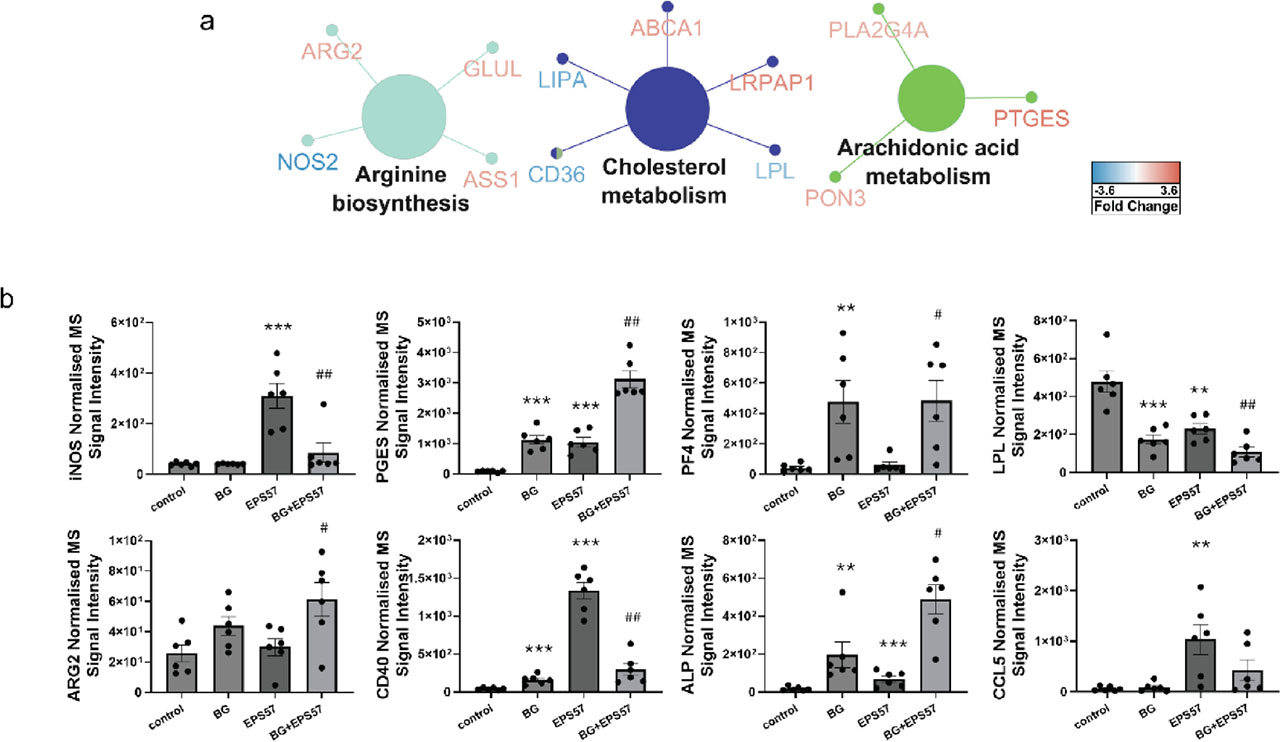
Fig 2.
Effect of BG training on EPS57-activated macrophages. Pathway enrichment analysis resulted in the identification of three functional modules in which the regulated proteins are engaged (a). The normalized MS intensities derived from SWATH data for selected proteins (b) are presented as mean ± SEM values of n = 6 biological replicates. ∗p < 0.05, ∗∗p < 0.01, ∗∗∗p < 0.001 indicate the significance of the difference observed with naïve controls; #p < 0.05, ##p < 0.01, ###p < 0.001 indicate BG-trained vs. BG-trained + EPS57. ALP, antileukoproteinase; BG, β-glucan.
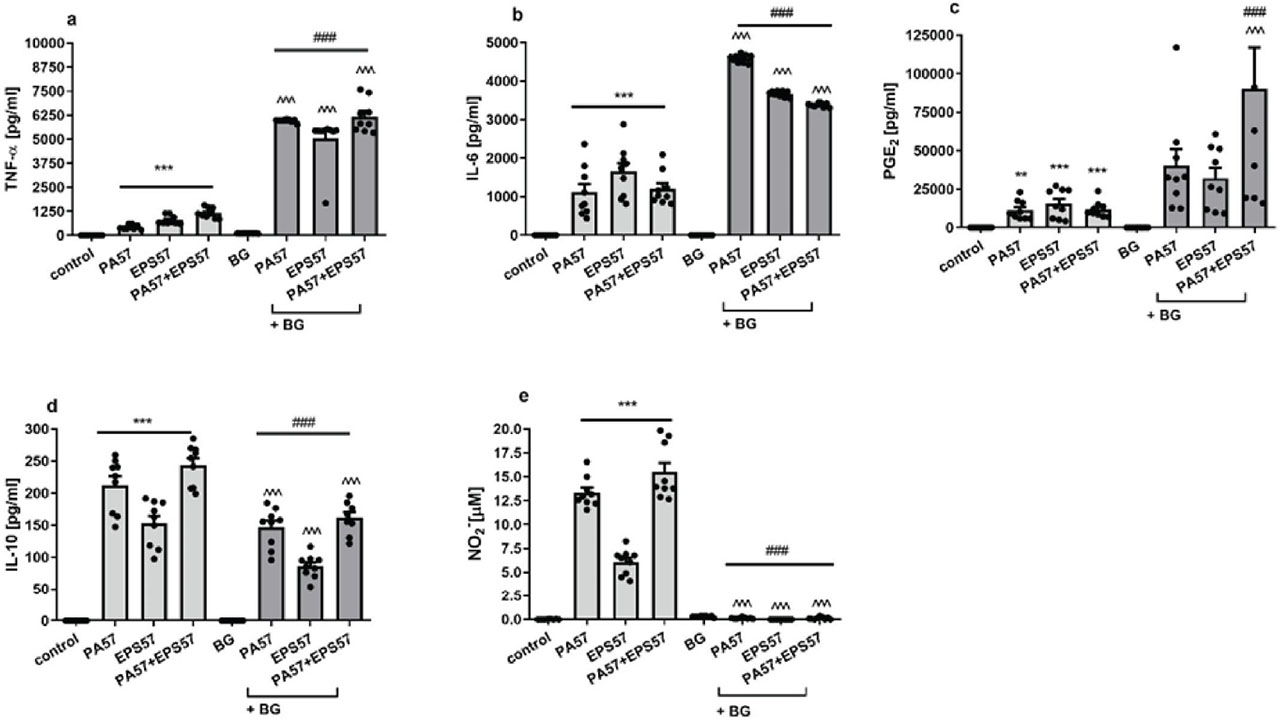
Fig 3.
Secretory properties of BG-trained macrophages exposed to EPS57. Levels of TNF-α (a), IL-6 (b), PGE2 (c), IL-10 (d), and NO (e) were analyzed by ELISA or Griess method, respectively, in supernatants collected 24 h after the restimulation of macrophages with EPS57/killed bacteria. Data are mean ± SEM values of three independent experiments (macrophages isolated from three mice and tested in three technical replicates, n = 9), ∗∗p < 0.01 and ∗∗∗p < 0.001 not trained vs. control; ###p < 0.001 trained vs. BG; ^^^p < 0.001 trained vs. not trained. BG, β-glucan; IL, interleukin; NO, nitric oxide; PGE2: prostaglandin E2; TNF-α, tumor necrosis factor-α.
Table 1.
Roles of PGE2 and NO in the inflammatory functions of M1, M2, and trained macrophages
| Feature | M1 macrophages (classically activated) | M2 macrophages (alternatively activated) | Trained macrophages (highPGE2/lowNO) |
|---|---|---|---|
| Activation stimuli | LPS, IFN-γ, TNF-α | IL-4, IL-13, IL-10, glucocorticoids | S. cerevisiae BG |
| COX-2 expression/PGE2 secretion | High/High | Low-moderate/low | High/high |
| Functional role of PGE2 | Pro-inflammatory; promotes IL-6, IL-1β | Anti-inflammatory; promotes tissue repair, fibrosis | Promotes neutrophil apoptosis and efferocytosis. Tissue repair. |
| iNOS | Strongly induced | Weak or absent | Weak or absent |
| NO production | High (major molecule for pathogen killing) | Low (minimal cytotoxic activity) | Low (minimal cytotoxic activity) |
| Functional role of NO | Microbicidal; contributes to oxidative stress | Suppresses inflammation; promotes healing indirectly (low NO maintains tissue integrity) | Suppresses inflammation; promotes healing indirectly (low NO maintains tissue integrity) |
| Beneficial functions | Early stages of infection/inflammation. Cooperation with neutrophils in pathogen killing | Resolution of inflammation. Efferocytosis of apoptotic neutrophils | Late stages of infection/inflammation. Recruitment of naïve macrophages. Resolution of chronic inflammation. Reduction of hyperinflammatory response |
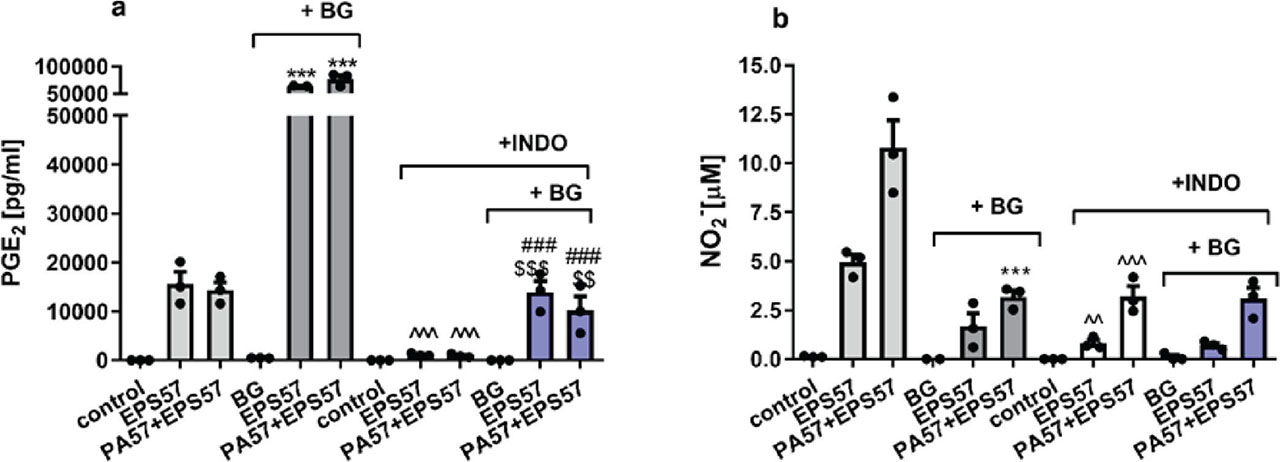
Fig S1.
Influence of indomethacin on PGE2 and NO secretion in BG-trained macrophages exposed to EPS57. Levels of PGE2 (a) and NO (b) were analyzed by ELISA or Griess method, respectively, in supernatants collected 24 h after the restimulation of macrophages with EPS57/killed bacteria in the presence or absence of indomethacin (10 µM). Data are mean ± SEM values of three independent technical replicates. ∗∗∗p < 0.001 not trained vs. trained; ###p < 0.001 trained vs. trained + INDO; ^^p < 0.01 and ^^^p < 0.001 not trained vs. not trained + INDO; $$p < 0.01 and $$$p < 0.001 not trained + INDO vs. trained + INDO. BG, β-glucan; NO, nitric oxide; PGE2, prostaglandin E2.
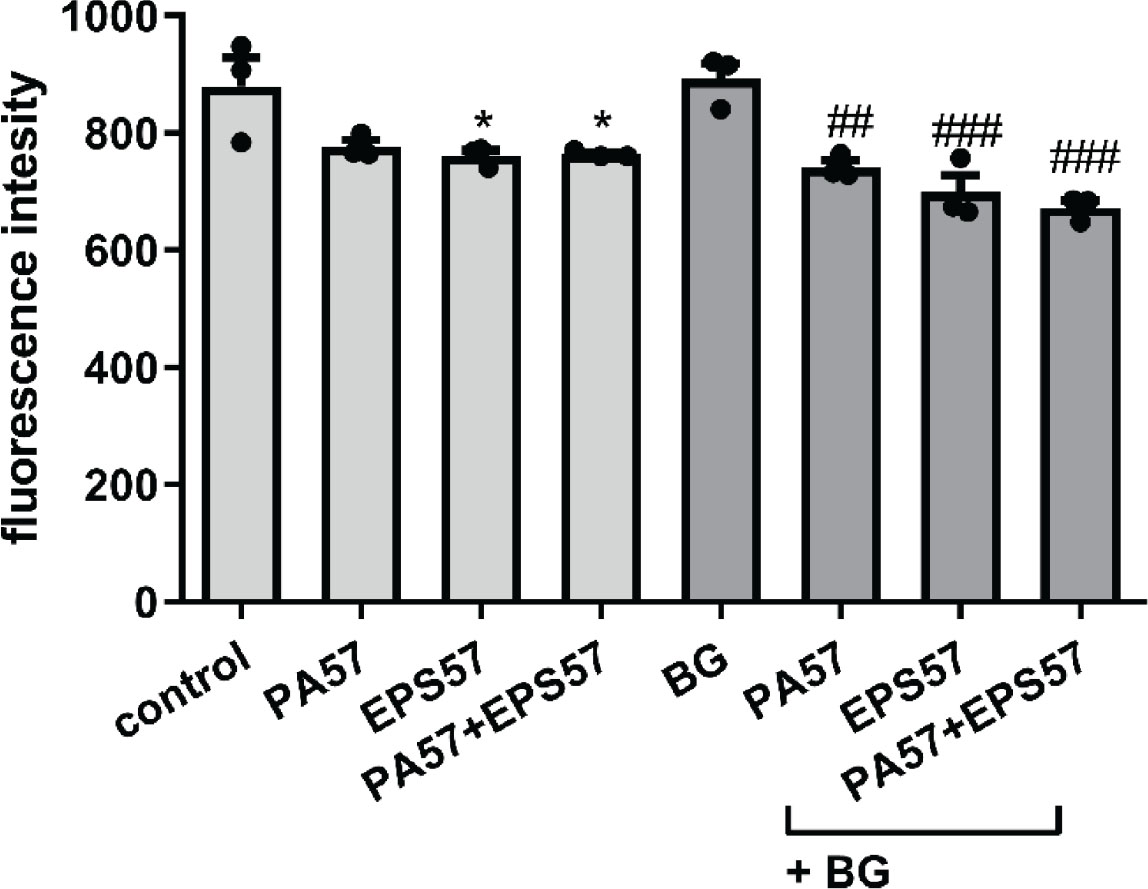
Fig S2.
Phagocytic properties of BG-trained macrophages exposed to EPS57 or killed bacteria. Intensity of fluorescence corresponding to phagocytic activity levels was assessed upon 90 min of incubation with fluorescently labeled zymosan particles. Data are mean ± SEM values of three independent experiments. Each group was run in four technical replicates. ∗p < 0.05 not trained vs. control; ##p < 0.01 ###p < 0.001 trained vs. BG. BG, β-glucan.