
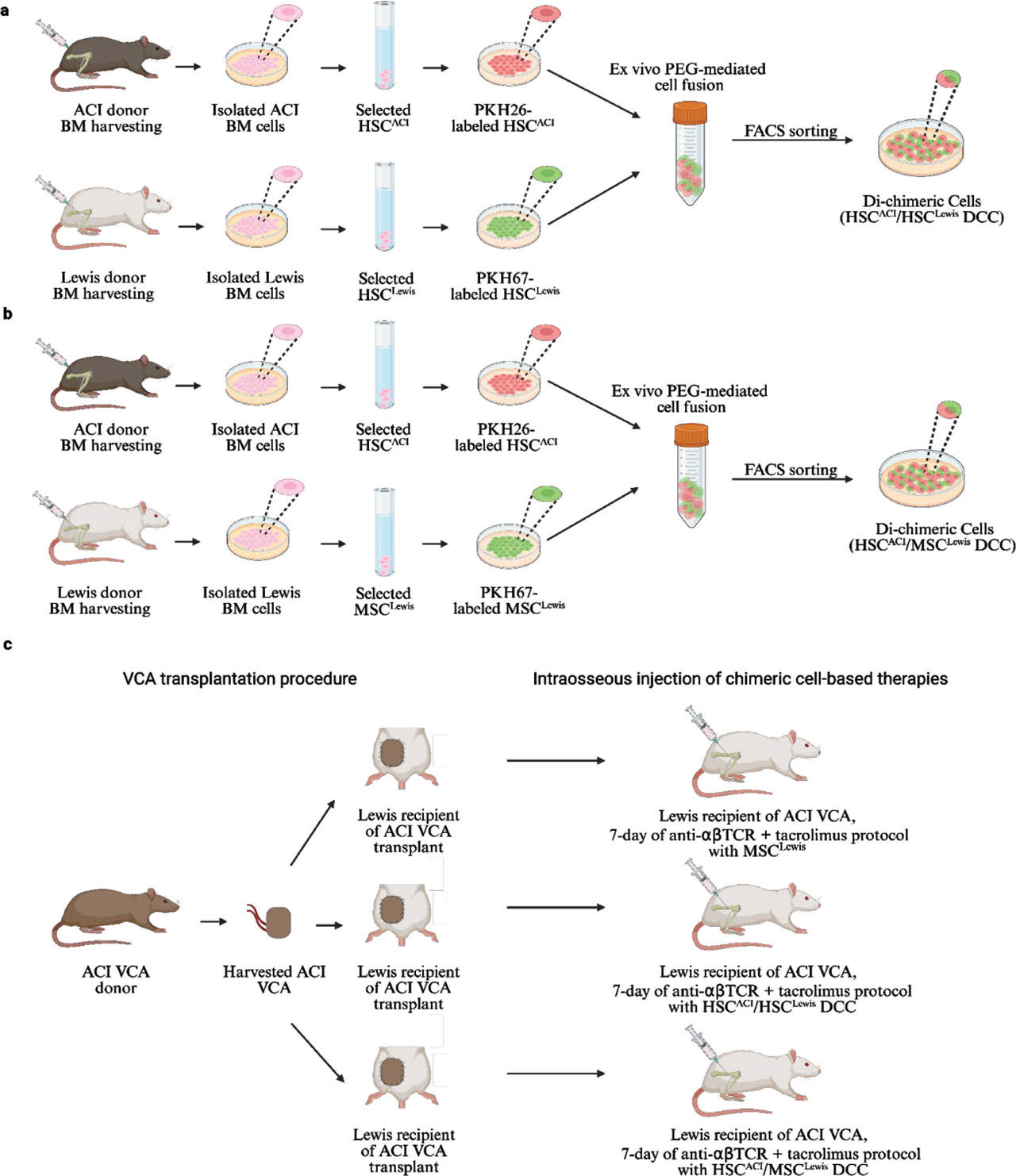
Fig 1.
Experimental study design and group allocation for the evaluation of the therapeutic efficacy of DCC lines in a rat VCA model. Creation of: (a) HSCACI/HSCLewis DCC and (b) HSCACI/MSCLewis DCC lines generated via ex vivo PEG-mediated cell fusion. BM cells were isolated from ACI (RT1a) and Lewis (RT11) donors, with HSCs obtained from both strains and MSCs from Lewis donors. ACI and Lewis cells were fluorescently labeled with PKH26 (red) or PKH67 (green) fluorescence dyes, respectively. Next, the cells were subjected to PEG-mediated fusion to generate the HSCACI/HSCLewis and HSCACI/MSCLewis DCC lines, which were subsequently characterized. (c) VCA transplantation and DCC therapies administration. From the left: VCA groin flaps were harvested from ACI (RT1a) donors and transplanted to the groin region of the fully MHC-mismatched Lewis (RT11) recipients. Following transplantation, Lewis VCA recipients received intraosseous administration of MSCLewis, HSCACI/HSCLewis DCC, or HSCACI/MSCLewis DCC and a 7-day immunosuppression protocol of anti-αβTCR monoclonal antibody and tacrolimus. ACI, August Copenhagen Irish; BM, bone marrow; DCC, di-chimeric cells; FACS, fluorescence-activated cell sorting; HSCs, hematopoietic stem cells; MHC, major histocompatibility complex; MSCs, mesenchymal stem cells; PEG, polyethylene glycol; VCA, vascularized composite allograft.
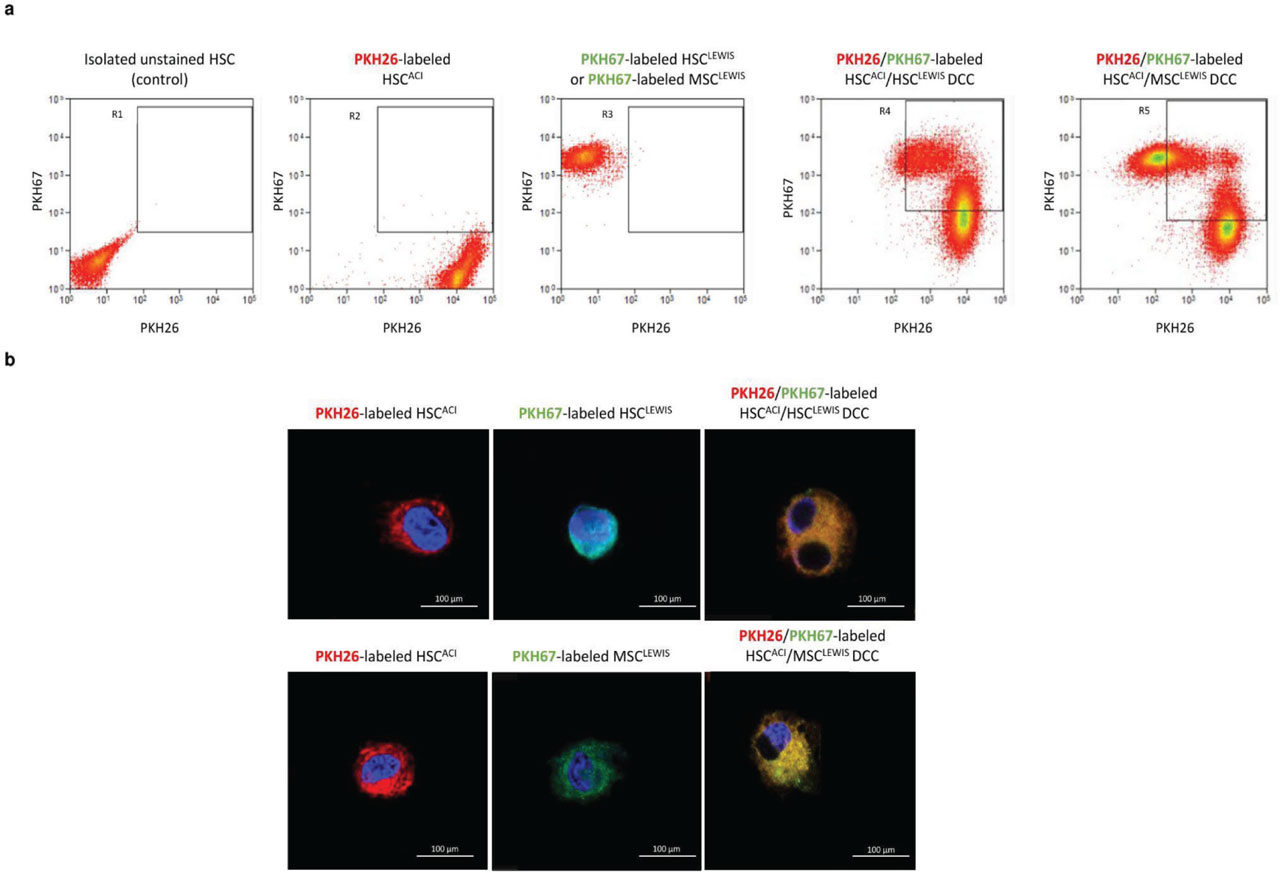
Fig 2.
Confirmation of creation of the HSCACI/HSCLewis DCC and HSCACI/MSCLewis DCC lines via PEG-mediated ex vivo cell fusion procedure. (a) Representative FC dot-plots confirming the efficacy of PKH staining and PEG-mediated cell fusion (in sequential order from the left): isolated unstained HSC; single PKH26-labeled HSCACI before fusion procedure; single PKH67-labeled HSCLewis and MSCLewis before fusion procedure; fused HSCACI/HSCLewis DCC (gate R4); and fused HSCACI/MSCLewis DCC (gate R5), the gate based on PKH26- vs. PKH67-labeling. (b) Representative immunofluorescence CM images of (in sequential order from the left): single PKH26-labeled HSCACI before fusion procedure (red); single PKH67-labeled HSCLewis (upper row) and MSCLewis (lower row) before fusion procedure (green); fused and sorted HSCACI/HSCLewis DCC (upper row) and HSCACI/MSCLewis DCC (lower row), revealing the overlapping of PKH26/PKH67 membrane dyes (orange), confirming the di-chimeric state of the created DCC lines. Nuclei were counterstained with 4′,6-diamidino-2-phenylindole (DAPI) (blue). Images were captured using an upright confocal microscope (Leica TCS SP2 Upright CM) at a magnification of 400x, with a scale bar of 100 μm. ACI, August Copenhagen Irish; CM, confocal microscopy; DCC, di-chimeric cells; FC, flow cytometry; HSCs, hematopoietic stem cells; MSCs, mesenchymal stem cells; PEG, polyethylene glycol; VCA, vascularized composite allograft.
Table 1.
Confirmation of hematopoietic phenotype maintenance in the created HSCACI/HSCLewis DCC and HSCACI/MSCLewis DCC lines by assessment of the hematopoietic cell surface markers expression
| Samples | CD34+ | CD45+ | CD90+ | CD29+ | CD73+ |
|---|---|---|---|---|---|
| HSCACI | 93.33 | 80.33 | 79.33 | 1.07 | 3.47 |
| HSCLEWIS | 90.33 | 80.33 | 76.00 | 1.00 | 1.93 |
| MSCLEWIS | 53.33 | 3.40 | 72.67 | 95.00 | 78.00 |
| HSCACI/HSCLEWIS DCC | 74.33 | 72.33 | 69.67 | 3.20 | 2.33 |
| HSCACI/MSCLEWIS DCC | 77.33 | 62.67 | 73.33 | 80.00 | 69.67 |
[i] Expression of the stem cells surface markers, including HSC (CD34+, CD45+, CD90+) and MSC (CD90+, CD29+, CD73+), was assessed in parent cells before fusion and in DCC lines after fusion. Hematopoietic cell surface marker expression was considered positive if at least 60% of cells expressed the specific cell surface marker (green field), and was considered negative when surface marker expression was below 5% (orange field).
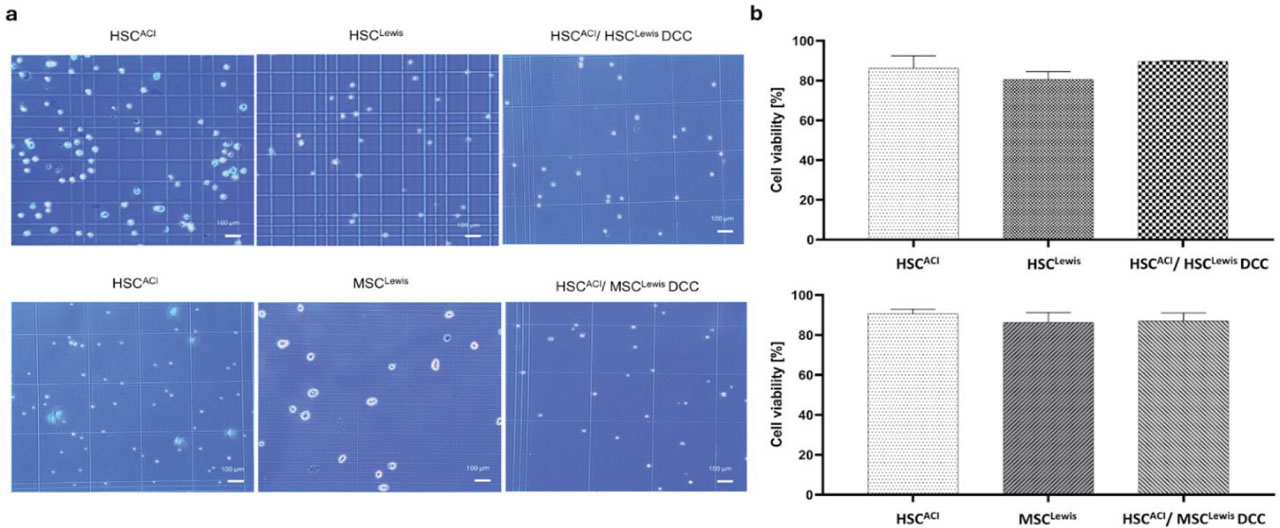
Fig 3.
Confirmation of the viability of ACI and Lewis parent cells and the created HSCACI/HSCLewis DCC and HSCACI/MSCLewis DCC lines by Trypan Blue staining at 14 days after fusion. (a) Assessment of viability by Trypan Blue staining of (in sequential order from the left), upper panel: HSCACI and HSCLewis before fusion and HSCACI/HSCLewis DCC after fusion; and lower panel: HSCACI and MSCLewis before fusion and HSCACI/MSCLewis DCC after fusion. Images were captured using an upright CM (Leica TCS SP2 Upright CM), scale bar: 100 μm. (b) Comparison analysis of the number of viable cells based on Trypan Blue dye inclusion (in sequential order from the left), upper panel: HSCACI and HSCLewis before fusion and HSCACI/HSCLewis DCC after fusion; and lower panel: HSCACI and MSCLewis before fusion and HSCACI/MSCLewis DCC after fusion. No statistically significant difference in cell viability was observed between parent cells prior to fusion and DCC lines after fusion. A one-way ANOVA test was used to determine statistical significance for group comparisons. ACI, August Copenhagen Irish; ANOVA, analysis of variance; CM, confocal microscopy; DCC, di-chimeric cells; HSCs, hematopoietic stem cells; MSCs, mesenchymal stem cells.
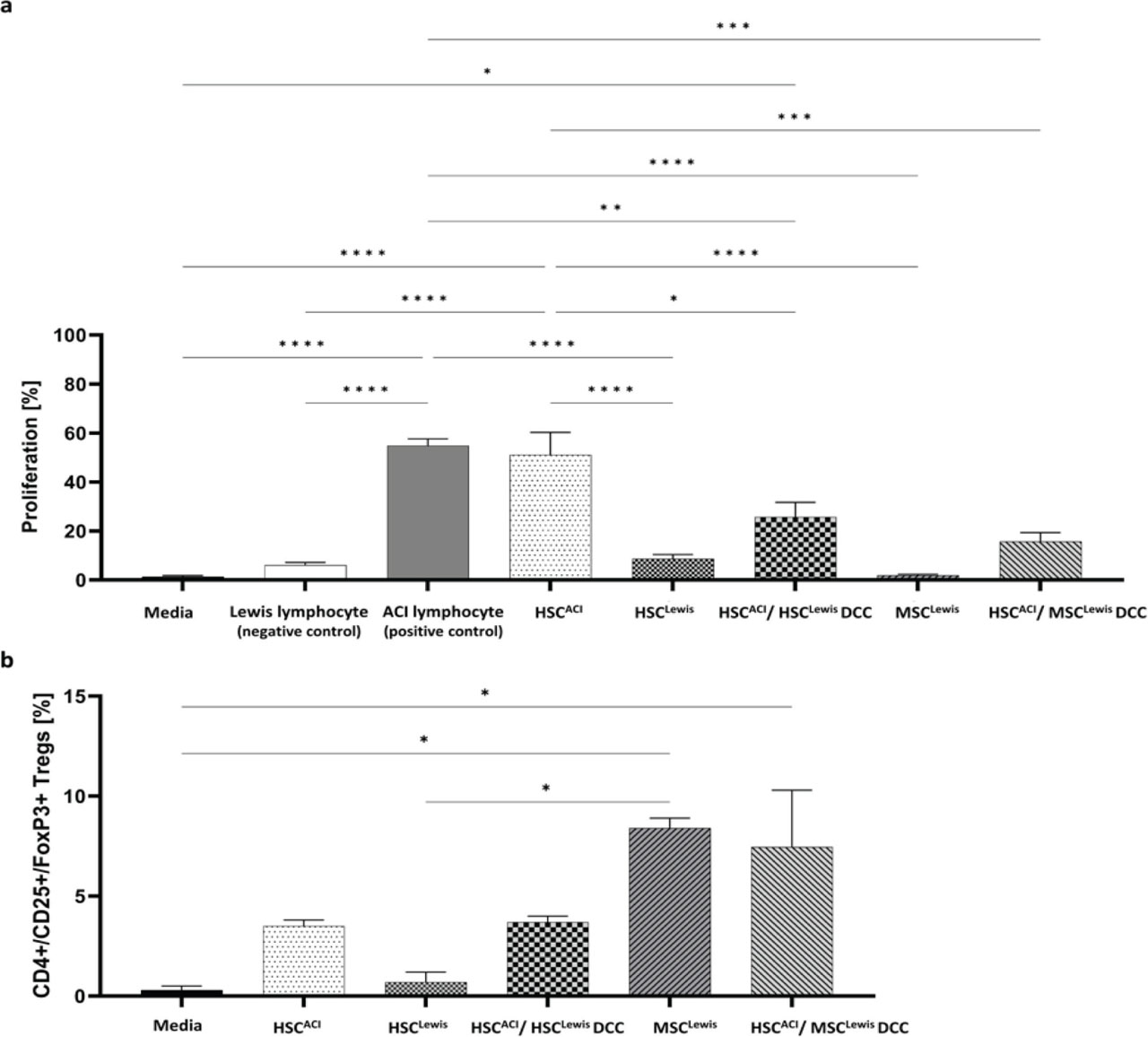
Fig 4.
Evaluation of the immunogenicity of the ACI and Lewis parent cells before fusion and the created HSCACI/HSCLewis DCC and HSCACI/MSCLewis DCC lines after ex vivo fusion. (a) Evaluation of in vitro allogeneic response of ACI and Lewis parent cells, as well as the created HSCACI/HSCLewis DCC and HSCACI/MSCLewis DCC lines by fluorescence-based lymphocyte reactivity assay. (b) FC evaluation of the immunomodulatory properties of in vitro co-cultured CD3+/CD4+/CD25− Lewis T cells with ACI and Lewis parent cells, as well as the created HSCACI/HSCLewis DCC and HSCACI/MSCLewis DCC lines by regulatory T-cell (Treg) induction assay. Data presented as mean ± SEM. An ordinary one-way ANOVA test for group comparison was used to define statistical significance, *p < 0.05, **p < 0.01, ***p < 0.001, ****p < 0.0001. ACI, August Copenhagen Irish; ANOVA, analysis of variance; DCC, di-chimeric cells; HSCs, hematopoietic stem cells; MSCs, mesenchymal stem cells; SEM, standard error of the mean.
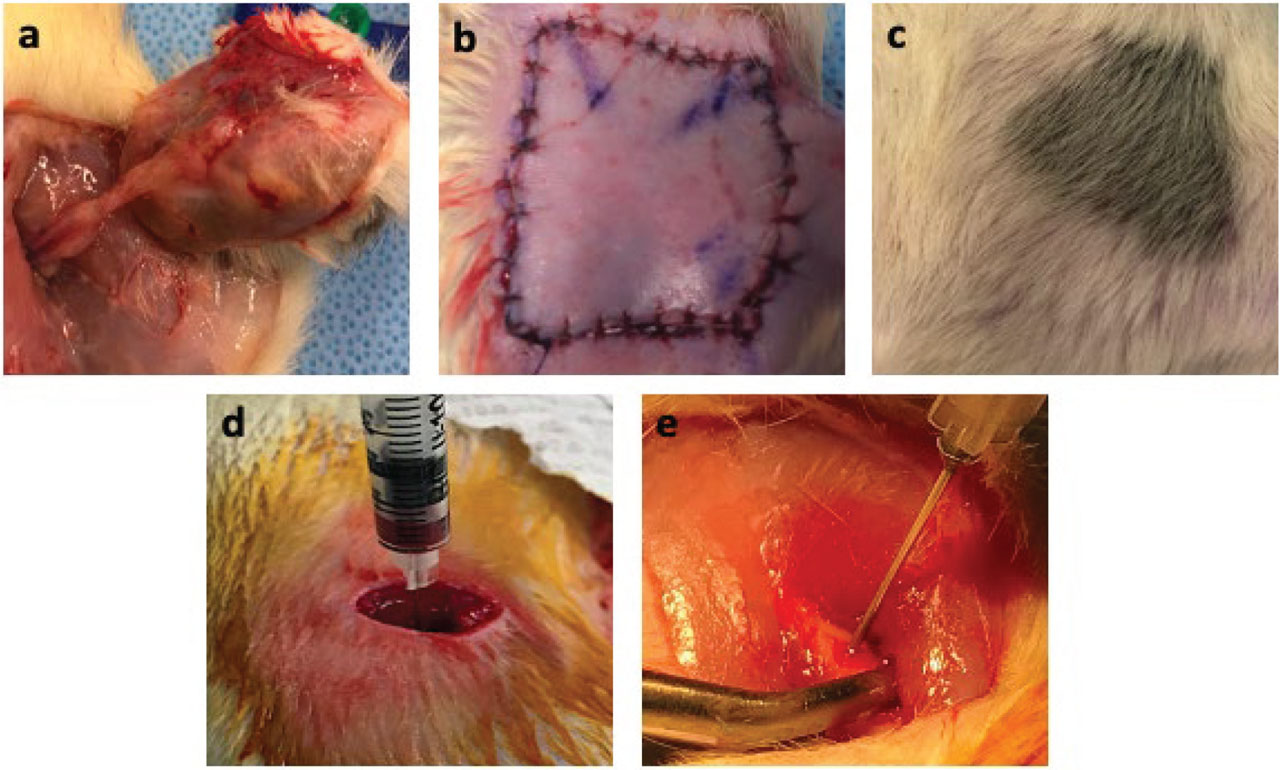
Fig 5.
Representative pictures of the VCA (groin flap) transplantation procedure and the intraosseous DCC injection. (a) The Vascularized composite groin flap transplant was harvested from the donor rat on the vascular pedicle of the femoral artery and vein. (b) VCA after transplantation to the recipient. (c) Healthy VCA at day 63 post-transplant. (d) BM aspiration from the femoral medulla to reduce the risk of hyperpressure. (e) DCC therapy injection into the femoral bone, followed by the hole sealing with the bone wax to prevent any cell leakage before skin closure. BM, bone marrow; DCC, di-chimeric cells; VCA, vascularized composite allograft.
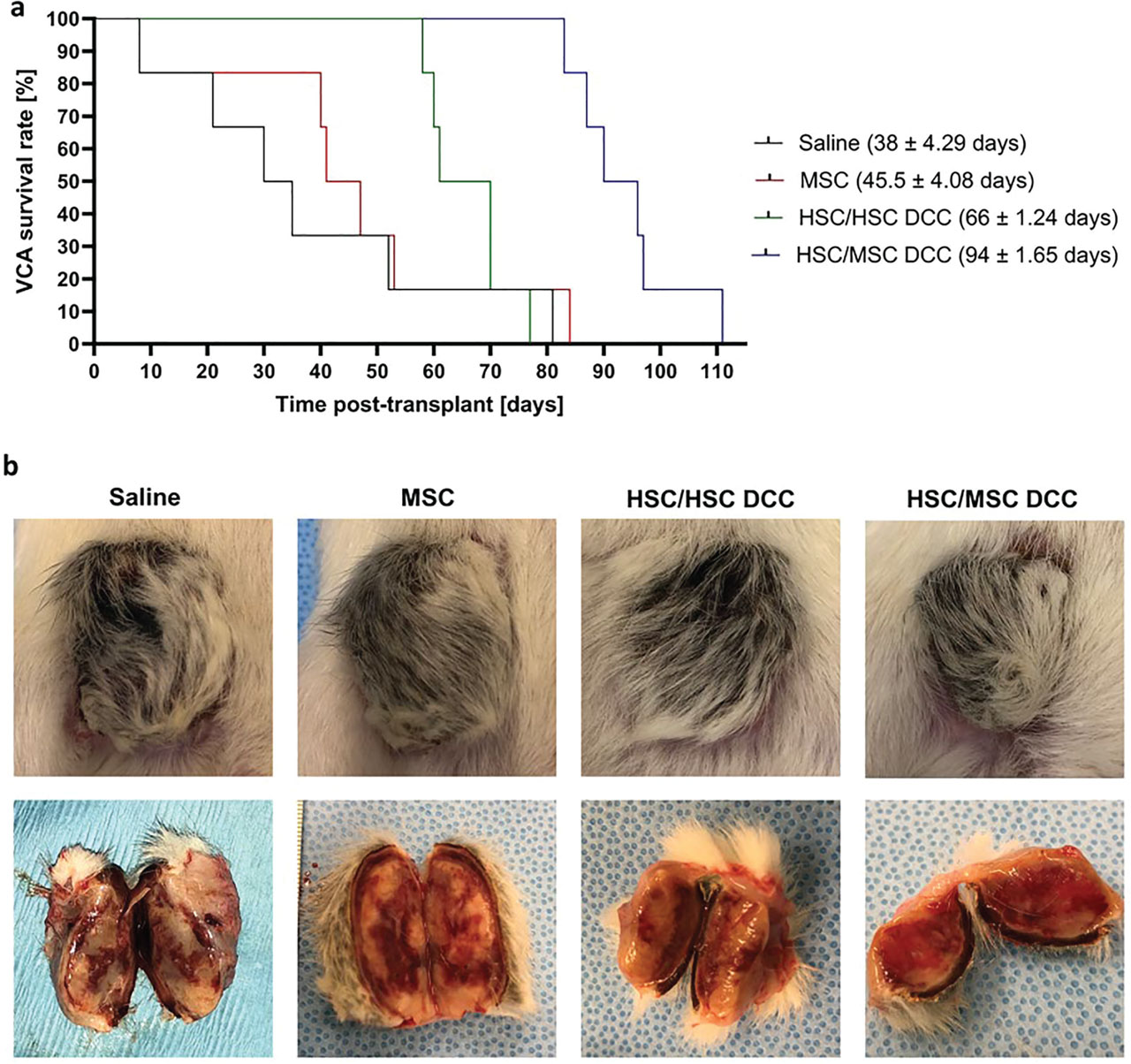
Fig 6.
VCA survival and macroscopic assessment following intraosseous administration of cellular therapies combined with a 7-day immunosuppression protocol of anti-αβTCR monoclonal antibody and tacrolimus. (a) Kaplan–Meier survival curve representing the VCA survival in experimental groups based on the number of days from the transplantation procedure to VCA rejection. The longest average VCA survival was observed following intraosseous administration of the HSC/MSC DCC therapy (94 ±1.65 days; mean ± SEM) (b) Representative pictures of the VCA after transplantation on days (from the left) 81, 84, 77, and 111. The columns represent the experimental groups that received an intraosseous injection of (in the sequential order from left to right) saline (control), MSC therapy, HSC/HSC DCC therapy, and HSC/MSC DCC therapy, followed by a 7-day immunosuppression protocol. Upper row: Gross assessment of the transplanted VCA. Lower row: The same VCA transected longitudinally to visualize the subcutaneous tissue condition. DCC, di-chimeric cells; HSCs, hematopoietic stem cells; MSCs, mesenchymal stem cells; SEM, standard error of the mean; VCA, vascularized composite allograft.