
1. Introduction
Bladder cancer is one of the most common malignancies worldwide, ranking as the 10th most frequently diagnosed cancer. It significantly impacts public health, with over 573,000 new cases and 213,000 deaths reported globally in 2020 (Dyrskjøt et al. 2023). The disease predominantly affects older adults, with higher incidence rates in men compared to women (Dobruch and Oszczudłowski 2021). Major risk factors for bladder cancer include smoking, occupational exposure to carcinogens, chronic bladder inflammation, and certain genetic predispositions (Jubber et al. 2023). Additionally, the role of microbiota has garnered increasing attention in cancer research, with the gut and urinary microbiota being implicated in the pathogenesis of various malignancies, including bladder cancer. Dysbiosis, an imbalance in microbial communities, can influence cancer development through mechanisms such as chronic inflammation, immune modulation, and direct interactions with cancer cells (Liu et al. 2020). Understanding the interplay between microbiota and bladder cancer may offer novel insights into disease mechanisms and potential therapeutic targets.
Fusobacterium nucleatum (FN) is a gram-negative anaerobic bacterium that has been increasingly recognized for its role in cancer biology, particularly in colorectal cancer (Jiang et al. 2023). It is known to associate with various malignancies, contributing to tumorigenesis through multiple mechanisms. FN promotes chronic inflammation and immune evasion, creating a microenvironment conducive to cancer development. It can directly interact with cancer cells, enhancing their proliferative and invasive capabilities (Engevik et al. 2021). Additionally, the bacterium can modulate the immune response, helping cancer cells escape immune surveillance. These multifaceted interactions highlight the bacterium's significant role in cancer progression, making it a critical focus for research aimed at understanding microbial influences on cancer and developing potential therapeutic interventions.
Long noncoding RNA (lncRNA) are a diverse class of RNA molecules longer than 200 nucleotides that do not encode proteins (Chen and Kim 2024). Despite their lack of coding potential, lncRNA play crucial roles in regulating various cellular processes. They are involved in the modulation of gene expression at transcriptional, post-transcriptional, and epigenetic levels, influencing cell growth, differentiation, and apoptosis. In the context of cancer biology, lncRNAs have emerged as key players in tumorigenesis. They can act as oncogenes or tumor suppressors, depending on their specific functions and interactions within the cell. lncRNA contribute to cancer progression by regulating pathways associated with cell proliferation, metastasis, and resistance to apoptosis. Their dysregulation is often linked to poor clinical outcomes, making them potential biomarkers for cancer diagnosis and prognosis. Understanding the roles of lncRNA in cancer can provide valuable insights into the mechanisms of disease and reveal novel therapeutic targets.
Autophagy is a cellular process wherein cells degrade and recycle their own components through the lysosomal machinery, maintaining cellular homeostasis and responding to stress conditions (Debnath et al. 2023). This process involves the formation of autophagosomes that engulf damaged organelles and proteins, which are then degraded and recycled. In cancer, autophagy plays a dual role; it can act as a tumor suppressor in the early stages of cancer by removing damaged organelles and preventing genomic instability. However, in established cancers, autophagy often supports tumor growth and survival by allowing cancer cells to endure metabolic stress, nutrient deprivation, and hypoxia (Liu et al. 2023). Moreover, autophagy enables cancer cells to resist chemotherapy and radiotherapy by mitigating treatment-induced cellular damage. Numerous studies have demonstrated the intricate balance between autophagy and cancer progression, highlighting its complexity as both a protective mechanism and a facilitator of cancer cell survival. Understanding these dynamics is crucial for developing therapeutic strategies that target autophagy in cancer treatment.
Emerging evidence indicates that FN can influence the expression of lncRNA and autophagy, suggesting a potential link between microbial infection and cancer progression. This study hypothesizes that FN promotes bladder cancer development through IDH1-AS1-mediated autophagy. The research aims to achieve three primary objectives: first, to investigate the effect of FN infection on the expression of IDH1-AS1 in bladder cancer cells; second, to elucidate the role of IDH1-AS1 in modulating autophagy in the context of bladder cancer; and third, to assess the impact of FN-induced autophagy on bladder cancer cell proliferation and survival. Understanding these interactions could significantly advance our knowledge of the microbial contributions to bladder cancer and potentially lead to the development of novel therapeutic strategies targeting the FN-IDH1-AS1-autophagy axis. This study's findings may offer new insights into the mechanisms underlying bladder cancer progression and open up avenues for innovative treatments.
2. Materials and Methods
2.1. Patient sample collection and storage
Bladder cancer tissues and adjacent normal tissues were collected from patients who underwent surgical resection at our affiliated hospital. All patients provided informed consent, and the study was approved by the hospital's ethics committee. The collected tissue samples were immediately snap-frozen in liquid nitrogen and stored at −80°C until further analysis. The human ethic approval was reviewed and approved from Lanxi People's Hospital (Approval no. 20220410009), and written informed consent was obtained from all patients. Ethics approval and consent to participate were in accordance with the Declaration of Helsinki.
2.2. In vitro experiments
T24 bladder cancer cells were cultured in RPMI-1640 medium and subjected to FN infection at a multiplicity of infection of 100:1 for 24 h, with uninfected cells serving as controls. To investigate the role of IDH1-AS1, cells were transfected with either IDH1-AS1-specific siRNA/shRNA for knockdown or IDH1-AS1 overexpression vectors using Lipofectamine 3000, followed by a 48-h recovery period. Five experimental groups were established: control group (CG), inhibitor control group (ICG), IDH1-AS1 inhibitor group (IDH1-AS1 IG), overexpression control group (OCG), and IDH1-AS1 overexpression group (IDH1-AS1 OG), allowing for comprehensive analysis of IDH1-AS1 function under both normal and FN-infected conditions.
2.3. In vivo experiments
Female nude mice (BALB/c, 4–6 weeks old) were subcutaneously injected with 5 × 10⁶ T24 bladder cancer cells to establish xenograft tumors, which were allowed to grow to approximately 100 mm3. All animal procedures were approved by the institutional animal care and use committee of Lanxi People's Hospital, following ethical guidelines for animal research. Mice were randomly divided into control and infection groups (n = 5 per group), with the infection group receiving intratumoral injections of FN suspension (108 CFU/mL) every 3 days for 3 weeks while controls received phosphate-buffered saline (PBS). To investigate IDH1-AS1 function, mice underwent intratumoral injections of either IDH1-AS1-specific siRNA/shRNA or overexpression vectors (10 μg in 50 μL Lipofectamine 3000 complex) three times weekly, with appropriate controls using nontargeting siRNA/shRNA or empty vectors. Five experimental groups were established: CG, ICG, IDH1-AS1 IG, OCG, and IDH1-AS1 OG.
2.4. Gene expression analysis
Total RNA was extracted from both bladder cancer tissues and adjacent normal tissues using TRIzol reagent (Invitrogen, Carlsbad, CA, USA) according to the manufacturer's protocol. The quality and quantity of extracted RNA were assessed using a NanoDrop spectrophotometer (Thermo Fisher Scientific, Wilmington, DE, USA) and agarose gel electrophoresis. Subsequently, cDNA was synthesized from 1 μg of total RNA using the PrimeScript RT reagent kit (Takara, Shiga, Japan) following the manufacturer's instructions. Quantitative polymerase chain reaction (qPCR) was performed to measure IDH1-AS1 expression levels using SYBR Green PCR Master Mix (Applied Biosystems, Foster City, CA, USA) on an ABI 7500 Real-Time PCR System (Applied Biosystems). Specific primers for IDH1-AS1 and the internal control GAPDH were designed and synthesized by Sangon Biotech (Shanghai, China).
2.5. CCK8 assay for cell viability
Cell viability was assessed using the Cell Counting Kit-8 (CCK8; Dojindo, Kumamoto, Japan). Cells were incubated with CCK8 reagent for 2 h, and absorbance was measured at 450 nm using a microplate reader.
2.6. EDU assay for cell proliferation
Cell proliferation was measured using the EDU assay kit (RiboBio, Guangzhou, China). Cells were incubated with EDU for 2 h, fixed, and stained according to the manufacturer's protocol. EDU incorporation was detected using fluorescence microscopy.
2.7. Flow cytometry for cell cycle and apoptosis
For cell cycle analysis, cells were fixed in 70% ethanol, stained with propidium iodide (PI), and analyzed by flow cytometry. For apoptosis analysis, cells were stained with Annexin V-FITC/PI and analyzed by flow cytometry.
2.8. LC3-GFP-RFP assay for autophagy levels
T24 cells were transfected with LC3-GFP-RFP plasmid (Addgene) to monitor autophagosomes (GFP-positive) and autolysosomes (RFP-positive). Cells were imaged using fluorescence microscopy to assess autophagy levels.
2.9. Western Blot for autophagy-related proteins
Protein lysates were prepared using RIPA buffer supplemented with protease inhibitors. Equal amounts of protein were separated by sodium dodecyl-sulfate polyacrylamide gel electrophoresis (SDS-PAGE) and transferred to polyvinylidene fluoride (PVDF) membranes. Membranes were probed with primary antibodies against LC3B, p62, and beclin1 (Cell Signaling Technology, Danvers, MA, USA), followed by horseradish peroxidase (HRP)-conjugated secondary antibodies. Protein bands were visualized using an ECL detection system and quantified using ImageJ software (National Institutes of Health, Bethesda, MD, USA).
2.10. Statistical analysis
Statistical analysis was performed using SPSS software (version 26.0; IBM Corp., Armonk, NY, USA) (version 26.0). Data are presented as mean ± standard deviation. Student's t-test was used for two-group comparisons, while one-way ANOVA followed by Tukey's post hoc test was applied for multiple group comparisons. Statistical significance was set at P < 0.05.
3. Results
3.1. Effects of FN infection on bladder cancer cell biological functions
To evaluate the impact of FN infection on cell viability, proliferation, cell cycle distribution, and apoptosis, we conducted a series of assays as illustrated in Figures 1a–d. The CCK8 assay results demonstrate a significant increase in cell viability in the infection group compared to the CG (P < 0.01, as shown in Figure 1a). This indicates that infection promotes cell survival. The EDU assay results show a notably higher proliferation rate in the infection group relative to the CG (P < 0.01, as shown in Figure 1b). This suggests that infection enhances cellular proliferation. Flow cytometry analysis reveals a significant increase in the proportions of cells in the S phase and G2/M phase in the infection group compared to the CG (P < 0.01, as shown in Figure 1c). This indicates that infection influences the progression of the cell cycle. Flow cytometry results for apoptosis indicate a significantly lower apoptosis rate in the infection group compared to the CG (P < 0.01, as shown in Figure 1d). This suggests that infection reduces the rate of programmed cell death.
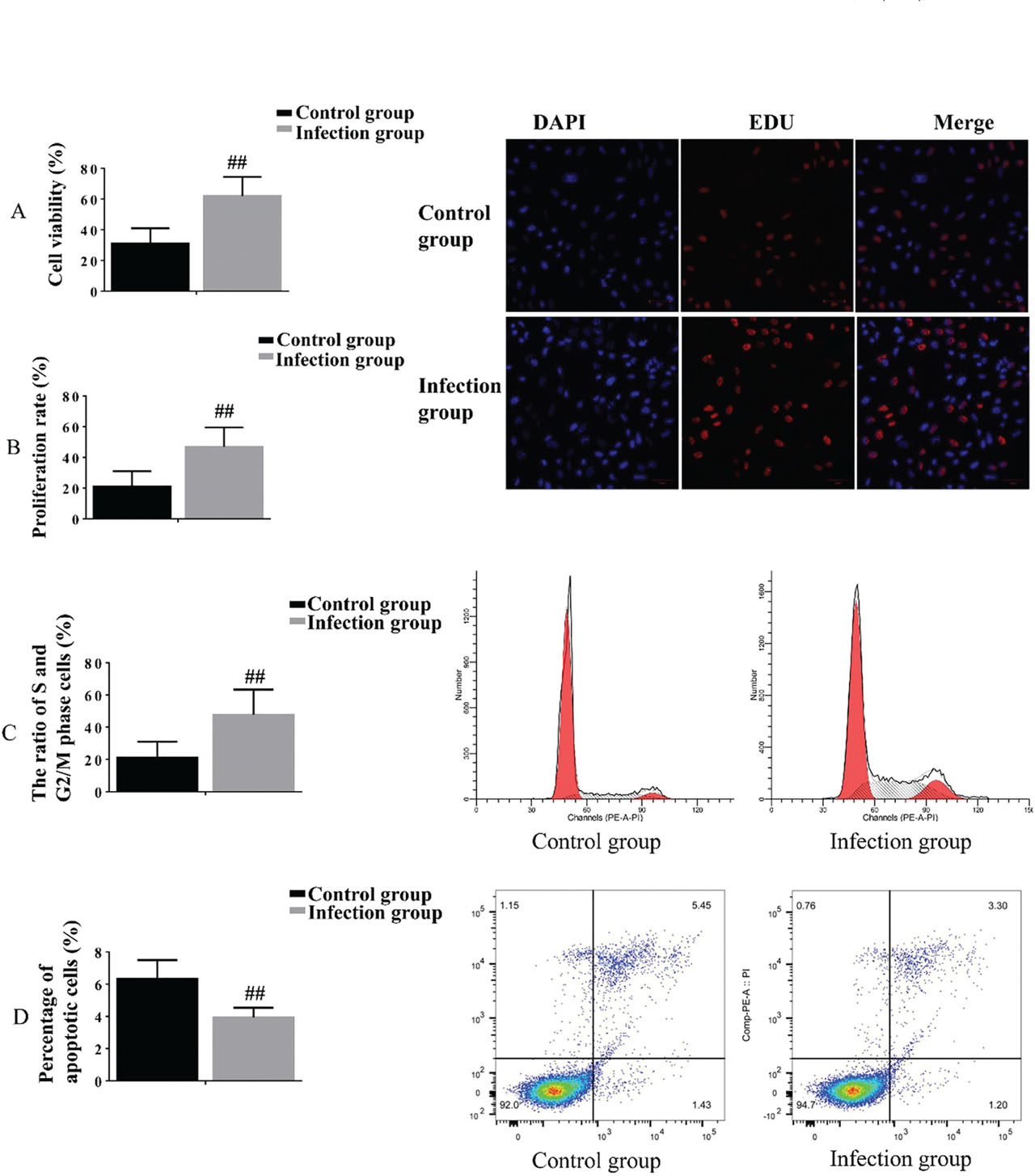
Fig 1.
The effects of FN infection on cell viability, proliferation, cell cycle distribution, and apoptosis. (A) Cell viability detection (CCK8 method); (B) Cell proliferation detection (EDU method); (C) Cell cycle distribution (flow cytometry); (D) Cell apoptosis detection (flow cytometry). ## Compared to the CG, P < 0.01. CG, control group; FN, Fusobacterium nucleatum.
3.2. IDH1-AS1 expression in bladder cancer and its functional role in cell proliferation and survival
To investigate the expression levels and functional roles of lncRNA IDH1-AS1 in bladder cancer, we conducted a series of experiments analyzing tissue samples and cell lines as described below and illustrated in Figures 2a–g. Bladder cancer tissues and adjacent normal tissues were collected, with the adjacent normal tissues serving as the CG and the bladder cancer tissues as the infection group. The expression levels of lncRNA IDH1-AS1 were significantly higher in the infection group compared to the CG (P < 0.01, as depicted in Figure 2a).
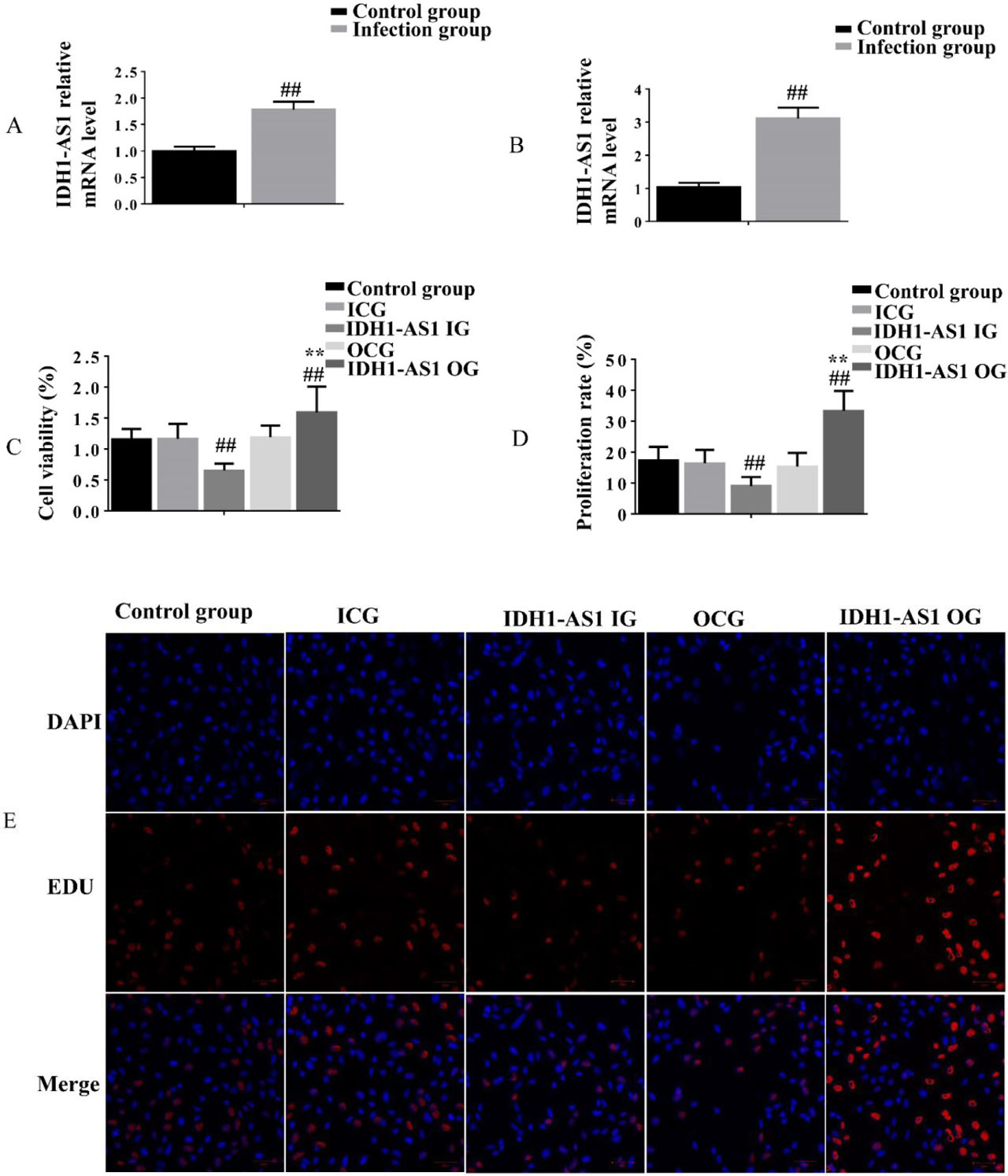
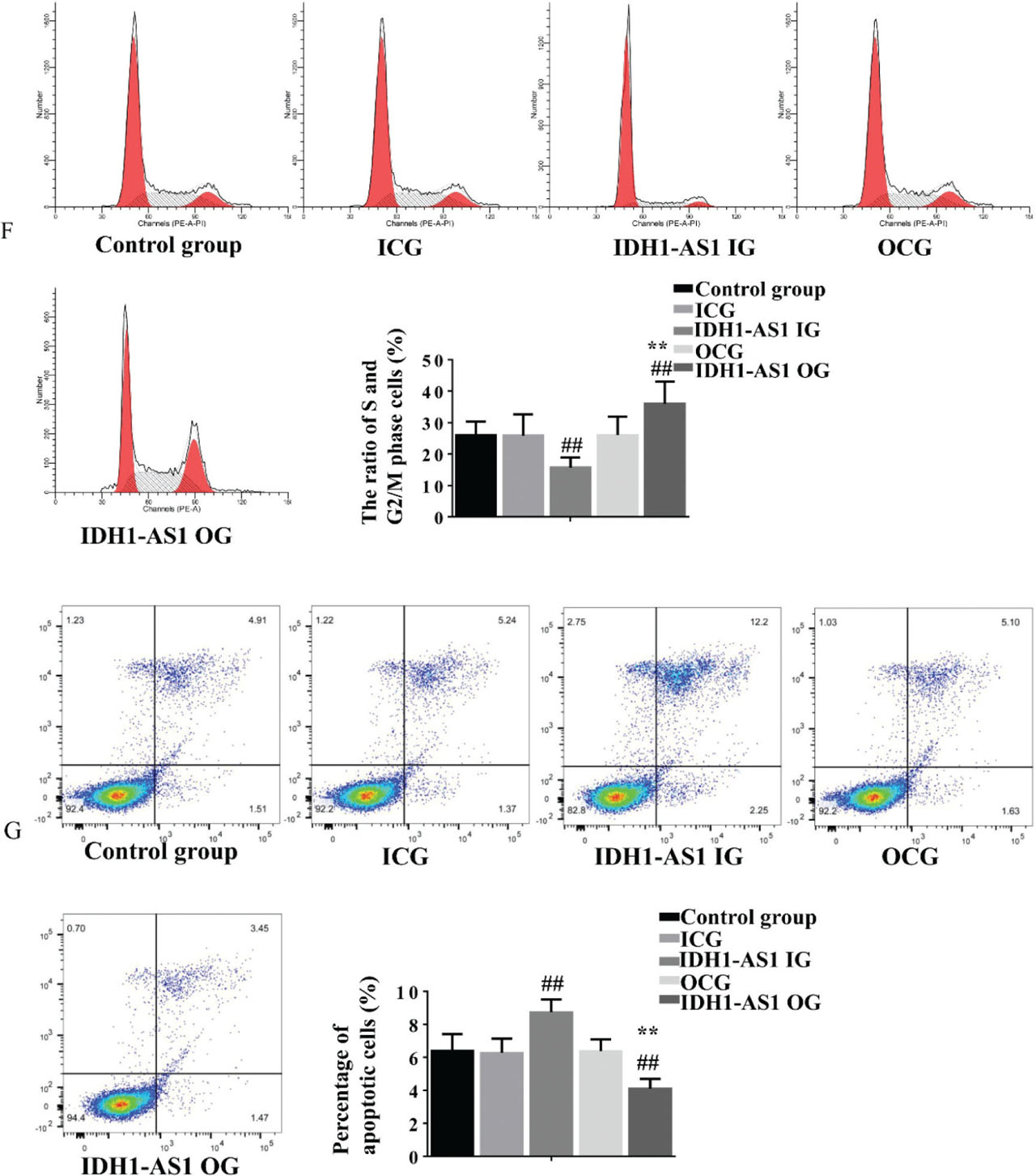
Fig 2.
The expression level and functional role of lncRNA IDH1-AS1 in bladder cancer; (A) Expression level of IDH1-AS1 in tissues; (B) Impact of FN infection on IDH1-AS1 expression; (C) Cell viability assay; (D) EDU proliferation assay (quantitative analysis) and (E) EDU proliferation assay (fluorescence microscopy images); (F) Cell cycle distribution; and (G) Cell apoptosis detection. ## Compared to the CG, P < 0.01. **Compared to the IDH1-AS1 IG group, P < 0.01. CG, control group; FN, Fusobacterium nucleatum; ICG, inhibitor control group; lncRNAs, long noncoding RNAs; OCG, overexpression control group.
Bladder cancer tissues were cocultured, with the infected group (infected with FN) serving as the infection group and the noninfected group serving as the CG. The infection group exhibited significantly higher levels of lncRNA IDH1-AS1 compared to the CG (P < 0.01, as depicted in Figure 2b). CCK8 assays compared the cell viability among the CG, ICG, and OCG, showing no significant differences (as shown in Figure 2c). However, cell viability in the IDH1-AS1 Inhibitor Group (IDH1-AS1 IG) was significantly lower than in the CG, ICG, and OCG (P < 0.01). Conversely, cell viability in the IDH1-AS1 Overexpression Group (IDH1-AS1 OG) was significantly higher than in the CG, ICG, and OCG (P < 0.01). Additionally, cell viability in the IDH1-AS1 OG group was significantly higher than in the IDH1-AS1 IG group (P < 0.01).
EDU assays showed no significant differences in cell proliferation among the CG, ICG, and OCG (Figures 2d–e). However, cell proliferation significantly reduced in the IDH1-AS1 IG group compared to the CG, ICG, and OCG (P < 0.01), while it significantly increased in the IDH1-AS1 OG group compared to the CG, ICG, and OCG (P < 0.01). Furthermore, cell proliferation in the IDH1-AS1 OG group was significantly higher than in the IDH1-AS1 IG group (P < 0.01).
Flow cytometry analysis of cell cycle distribution revealed no significant differences in the proportions of cells in the S and G2/M phases among the CG, ICG, and OCG (Figure 2f). However, the proportions of cells in the S and G2/M phases were significantly lower in the IDH1-AS1 IG group compared to the CG, ICG, and OCG (P < 0.01), while they were significantly higher in the IDH1-AS1 OG group compared to the CG, ICG, and OCG (P < 0.01). Additionally, the proportions of cells in the S and G2/M phases in the IDH1-AS1 OG group were significantly higher than in the IDH1-AS1 IG group (P < 0.01).
Flow cytometry analysis of apoptosis showed no significant differences in apoptosis rates among the CG, ICG, and OCG (Figure 2g). However, the apoptosis rate was significantly higher in the IDH1-AS1 IG group compared to the CG, ICG, and OCG (P < 0.01), while it was significantly lower in the IDH1-AS1 OG group compared to the CG, ICG, and OCG (P < 0.01). Furthermore, the apoptosis rate in the IDH1-AS1 OG group was significantly lower than in the IDH1-AS1 IG group (P < 0.01).
3.3. IDH1-AS1 regulates autophagy in bladder cancer cells
As shown in Figure 3a, the LC3-GFP-RFP assay results indicated no significant differences in the number of GFP-positive and RFP-positive cells among the CG, ICG, and OCG. However, compared to the CG, ICG, and OCG, the IDH1-AS1 IG group exhibited a significant reduction in GFP-positive and RFP-positive cells (P < 0.01), while the IDH1-AS1 OG group showed a significant increase in GFP-positive and RFP-positive cells (P < 0.01). Furthermore, the cell viability in the IDH1-AS1 OG group was significantly higher than that in the IDH1-AS1 IG group (P < 0.01). Protein Expression Analysis by Western Blot (Figure 3b) presents the Western Blot analysis results. There were no significant differences in the expression levels of Beclin1, P62, and LC3 proteins among the CG, ICG, and OCG. In contrast, compared to the CG, ICG, and OCG, the IDH1-AS1 IG group showed a significant decrease in Beclin1 and LC3 protein levels (P < 0.01), while the P62 protein level significantly increased (P < 0.01). Conversely, the IDH1-AS1 OG group exhibited significantly higher levels of Beclin1 and LC3 proteins (P < 0.01) and a significant decrease in P62 protein levels (P < 0.01). When comparing the IDH1-AS1 OG group to the IDH1-AS1 IG group, the levels of Beclin1 and LC3 proteins were significantly increased (P < 0.01), while the P62 protein level significantly reduced (P < 0.01).
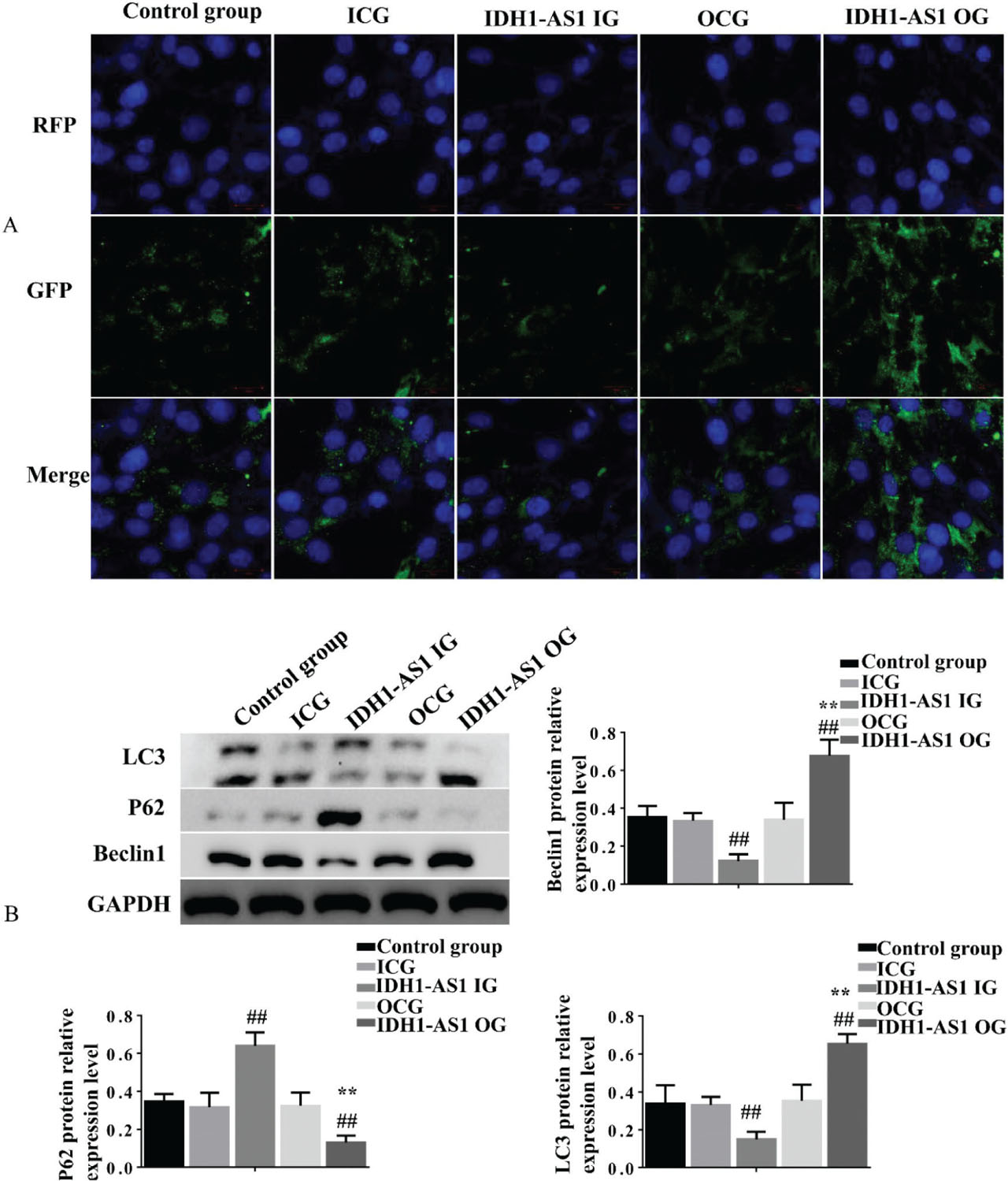
Fig 3.
IDH1-AS1 regulates autophagy in bladder cancer cells. (A) LC3-GFP-RFP autophagy flow analysis; (B) Autophagy-related protein Beclin1, p62 and LC3 expression analysis. ## Compared to the CG, P < 0.01. **Compared to the IDH1-AS1 IG group, P < 0.01. CG, control group; FN, Fusobacterium nucleatum; ICG, inhibitor control group; lncRNAs, long noncoding RNAs; OCG, overexpression control group.
3.4. FN infection promotes bladder cancer progression and autophagy in vivo
As illustrated in Figure 4a, the CG consisted of nude mice model of bladder cancer, while the infection group comprised nude mice model of bladder cancer infected with FN. The results demonstrate that the tumor volume and weight in the infection group were significantly greater than those in the CG. Figure 4b presents the results of the EDU assay, comparing cell proliferation between the control and infection groups. The data indicate that cell proliferation was significantly higher in the infection group compared to the CG (P < 0.05). The Western Blot analysis results, shown in Figure 4c, reveal that the expression levels of Beclin1 and LC3 proteins were significantly increased in the infection group compared to the CG (P < 0.01). Conversely, the expression level of P62 protein was significantly decreased in the infection group (P < 0.01). Figure 4d displays the qPCR analysis results for IDH1-AS1 gene expression in both groups. The results indicate that the IDH1-AS1 gene expression level was significantly higher in the infection group compared to the CG (P < 0.01).
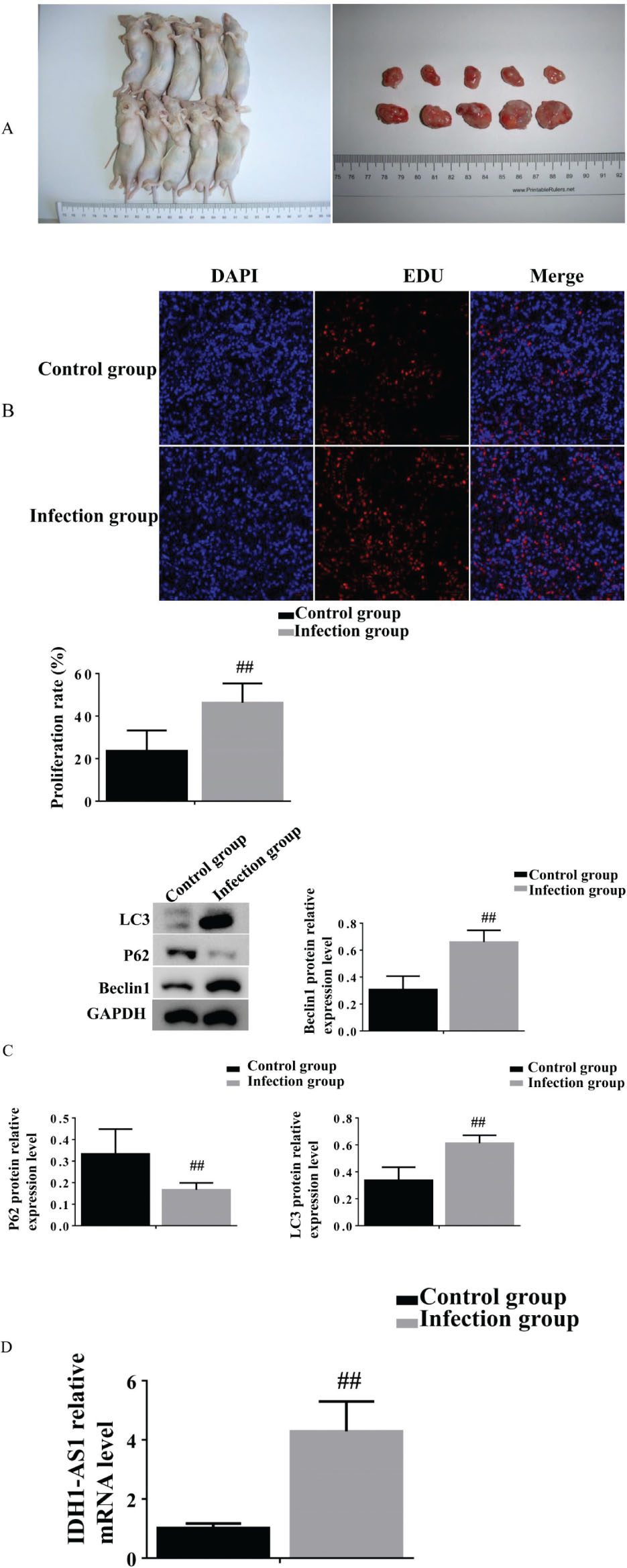
Fig 4.
FN infection promotes bladder cancer progression and autophagy in vivo. (A) Tumor growth assessment (n = 5 per group); (B) Cell proliferation analysis (EDU Assay); (C) Autophagy-related protein Beclin1, p62, and LC3 expression; (D) IDH1-AS1 gene expression analysis. ## Compared to the CG, P < 0.01. CG, control group; FN, Fusobacterium nucleatum.
3.5. Effects of IDH1-AS1 expression modulation on bladder cancer progression
The experimental results depicted in Figure 5a demonstrate that the CG, ICG, and OCG represent bladder cancer nude mouse models, while the IDH1-AS1 OG group corresponds to the nude mice model of bladder cancer with overexpressed IDH1-AS1, and the IDH1-AS1 IG group corresponds to those with knocked-down IDH1-AS1. The results indicate no significant difference in tumor volume and weight among the CG, ICG, and OCG. However, the tumor size in the IDH1-AS1 IG group significantly reduced, while in the IDH1-AS1 OG group, it significantly increased. Figures 5b,c shows the results of the EDU assay, presented as fluorescence images and bar graphs, respectively, illustrating the proliferation of cells in the five groups of nude mice. The results show no significant differences in cell proliferation among the CG, ICG, and OCG. Compared to the CG, ICG, and OCG, cell proliferation was significantly decreased in the IDH1-AS1 IG group (P < 0.01), whereas it significantly increased in the IDH1-AS1 OG group (P < 0.01). Additionally, cell proliferation in the IDH1-AS1 OG group was significantly higher than in the IDH1-AS1 IG group (P < 0.01).
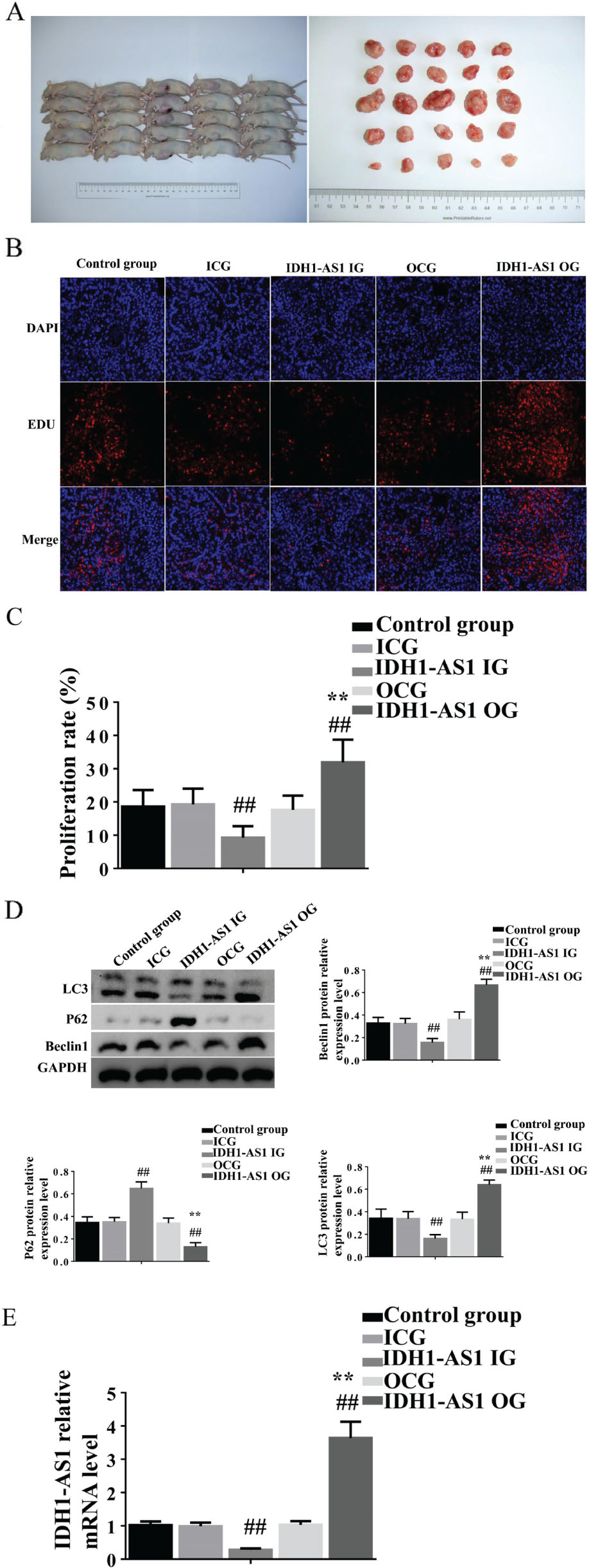
Fig 5.
Effects of IDH1-AS1 expression modulation on bladder cancer progression in nude mouse xenograft models. (A) Representative images of tumor xenografts and analysis of tumor volume and weight measurements (n = 5 per group); (B) Cell proliferation visualization (EDU fluorescence microscopy); (C) Cell proliferation quantification; (D) Autophagy-related protein Beclin1, p62, and LC3 expression analysis; and (E) IDH1-AS1 gene expression analysis. ##Compared to the CG, P < 0.01. **Compared to the IDH1-AS1 IG group, P < 0.01. CG, control group; ICG, inhibitor control group; OCG, overexpression control group.
Figure 5d displays the results of the Western Blot analysis, indicating that there were no significant differences in the expression levels of Beclin1, P62, and LC3 proteins among the CG, ICG, and OCG. Compared to the CG, ICG, and OCG, the IDH1-AS1 IG group exhibited significantly lower expression levels of Beclin1 and LC3 proteins (P < 0.01), while the expression level of P62 protein significantly increased (P < 0.01). Conversely, in the IDH1-AS1 OG group, the expression levels of Beclin1 and LC3 proteins were significantly increased (P < 0.01), and the expression level of P62 protein significantly reduced (P < 0.01). When comparing the IDH1-AS1 OG group to the IDH1-AS1 IG group, the former showed significantly higher expression levels of Beclin1 and LC3 proteins and a significantly lower expression level of P62 protein (P < 0.01).
Figure 5e presents the qPCR results, indicating that there were no significant differences in the expression of the IDH1-AS1 gene among the CG, ICG, and OCG. Compared to the CG, ICG, and OCG, the IDH1-AS1 gene expression significantly reduced in the IDH1-AS1 IG group (P < 0.01), while it significantly increased in the IDH1-AS1 OG group (P < 0.01). Moreover, the IDH1-AS1 gene expression in the IDH1-AS1 OG group was significantly higher than in the IDH1-AS1 IG group (P < 0.01).
4. Discussion
lncRNAs have emerged as critical regulators in cancer biology, with mounting evidence demonstrating their pivotal roles in tumorigenesis, metastasis, and therapeutic resistance across various malignancies (Najafi et al. 2022). Among these, IDH1-AS1, the antisense transcript of isocitrate dehydrogenase 1, has garnered increasing attention for its oncogenic properties in multiple cancer types (Zhou et al. 2023). However, its specific role in bladder cancer pathogenesis and the underlying molecular mechanisms remained largely unexplored. In this study, we provide comprehensive evidence demonstrating that IDH1-AS1 functions as an oncogenic lncRNA in bladder cancer by promoting cell proliferation, migration, invasion, and autophagy both in vitro and in vivo.
Our initial analysis revealed significantly elevated IDH1-AS1 expression in bladder cancer tissues compared to adjacent normal tissues, which is consistent with previous reports in other malignancies including hepatocellular carcinoma and glioma (Wang et al. 2020). This upregulation suggests that IDH1-AS1 may serve as a potential diagnostic biomarker for bladder cancer. The consistent overexpression pattern observed across our clinical samples indicates that IDH1-AS1 dysregulation is likely an early event in bladder carcinogenesis, potentially contributing to the initiation and progression of the disease. The clinical relevance of IDH1-AS1 overexpression extends beyond mere diagnostic utility. Previous studies have demonstrated correlations between elevated IDH1-AS1 levels and poor prognosis in various cancers (Zhou et al. 2023). While our current study focused on functional characterization, future longitudinal studies investigating the prognostic value of IDH1-AS1 in patients with bladder cancer would provide valuable insights for clinical management and therapeutic decision-making.
Our functional studies demonstrate that IDH1-AS1 exerts profound effects on multiple hallmarks of cancer. The knockdown of IDH1-AS1 resulted in significant suppression of cell proliferation, as evidenced by reduced cell viability and decreased EDU incorporation. Conversely, overexpression of IDH1-AS1 enhanced proliferative capacity, indicating its role as a growth promoter in bladder cancer cells. These findings align with the established oncogenic functions of IDH1-AS1 in other cancer types, where it has been shown to promote cell cycle progression and resist apoptosis (Xiang et al. 2018; Wang et al. 2020).
The ability of cancer cells to migrate and invade surrounding tissues represents a crucial step in metastatic dissemination, which is the primary cause of cancer-related mortality (Bonney et al. 2022). The dramatic reduction in migratory and invasive capabilities following IDH1-AS1 knockdown, coupled with enhanced motility upon overexpression, suggests that IDH1-AS1 may play a central role in bladder cancer progression and metastasis. This finding is particularly relevant given that muscle-invasive bladder cancer carries a significantly worse prognosis than non-muscle-invasive disease.
One of the most intriguing findings of our study is the demonstration that IDH1-AS1 modulates autophagy in bladder cancer cells. Autophagy, a cellular degradation process that maintains cellular homeostasis, plays a complex and context-dependent role in cancer (Russell and Guan 2022; Zhang et al. 2023). While autophagy can initially suppress tumorigenesis by preventing cellular damage, established tumors often exploit autophagy to survive metabolic stress and therapeutic interventions (Li et al. 2021). Our Western Blot analysis revealed that IDH1-AS1 knockdown significantly decreased the expression of Beclin1 and LC3-II while increasing P62 levels, collectively indicating autophagy inhibition. Conversely, IDH1-AS1 overexpression promoted autophagy activation, as evidenced by increased Beclin1 and LC3-II expression and decreased P62 accumulation. These molecular changes suggest that IDH1-AS1 functions as a positive regulator of autophagy in bladder cancer cells.
The pro-autophagic function of IDH1-AS1 may contribute to bladder cancer progression through several mechanisms. First, enhanced autophagy can provide metabolic support for rapidly proliferating cancer cells by recycling cellular components and generating nutrients (Chen et al. 2024). Second, autophagy activation can promote cancer cell survival under stress conditions, including hypoxia and nutrient deprivation commonly encountered in the tumor microenvironment. Third, autophagy has been implicated in facilitating cancer cell migration and invasion by regulating cellular adhesion and extracellular matrix remodeling. The relationship between IDH1-AS1 and autophagy regulation represents a novel finding that extends our understanding of lncRNA-mediated cancer biology. Previous studies have identified various lncRNA as autophagy regulators, but the specific involvement of IDH1-AS1 in this process has not been previously reported in bladder cancer (Gan et al. 2024). The molecular mechanisms underlying IDH1-AS1-mediated autophagy regulation warrant further investigation, potentially involving interactions with key autophagy regulators such as mTOR, AMPK, or specific microRNAs. Our xenograft experiments provide compelling in vivo evidence supporting the oncogenic role of IDH1-AS1 in bladder cancer. The significant reduction in tumor growth following IDH1-AS1 knockdown, coupled with enhanced tumorigenicity upon overexpression, validates our in vitro findings and demonstrates the clinical relevance of our observations. The consistency between in vitro and in vivo results strengthens the evidence for IDH1-AS1 as a potential therapeutic target. The therapeutic implications of our findings are substantial. Given that IDH1-AS1 is a noncoding RNA without protein-coding potential, it represents an attractive target for RNA-based therapeutic strategies. Antisense oligonucleotides, small interfering RNAs, or CRISPR-based approaches could potentially be employed to specifically target IDH1-AS1 in patients with bladder cancer (Zhao et al. 2020). The significant anti-tumor effects observed following IDH1-AS1 knockdown in our xenograft model suggest that such approaches may have clinical utility. Furthermore, the dual role of IDH1-AS1 in promoting both proliferation and autophagy suggests that targeting this lncRNA might overcome some limitations of current therapeutic approaches. Many cancer treatments face challenges related to autophagy-mediated resistance, where cancer cells utilize autophagy to survive therapeutic stress (Silva et al. 2020). By simultaneously inhibiting proliferation and autophagy, targeting of IDH1-AS1 might provide synergistic therapeutic benefits.
While our study establishes IDH1-AS1 as an important regulator of bladder cancer progression, several mechanistic questions remain to be addressed. lncRNA can function through various mechanisms, including chromatin modification, transcriptional regulation, post-transcriptional control, and protein interactions (Han et al. 2025). Future studies should investigate the specific molecular pathways through which IDH1-AS1 exerts its effects in bladder cancer. One potential mechanism involves the regulation of IDH1 itself, given that IDH1-AS1 is the antisense transcript of IDH1. IDH1 is a key metabolic enzyme involved in the citric acid cycle and has been implicated in cancer metabolism (Trejo-Solís et al. 2024). The relationship between IDH1-AS1 and IDH1 expression, and their collective impact on cellular metabolism and autophagy, represents an important area for future investigation. Additionally, the involvement of competing endogenous RNA networks should be explored. Many lncRNAs function as molecular sponges for microRNAs, thereby regulating the expression of target mRNAs. Identifying the specific microRNAs and downstream targets involved in IDH1-AS1-mediated effects could provide additional therapeutic opportunities and biomarkers.
The consistent overexpression of IDH1-AS1 in bladder cancer tissues suggests its potential utility as a diagnostic or prognostic biomarker. Noninvasive detection of IDH1-AS1 in urine or blood samples could facilitate early diagnosis and monitoring of treatment response (López-Camarillo et al. 2021). Given the challenges associated with current diagnostic methods for bladder cancer, including the invasive nature of cystoscopy and the limited sensitivity of cytological examination, novel biomarkers such as IDH1-AS1 could significantly improve clinical management. Moreover, the functional importance of IDH1-AS1 in bladder cancer progression suggests that its expression levels might predict treatment response and patient outcomes. Future clinical studies should evaluate the prognostic value of IDH1-AS1 expression and its potential role in guiding therapeutic decisions.
Several limitations of our study should be acknowledged. First, while we demonstrate clear functional effects of IDH1-AS1 modulation, the detailed molecular mechanisms remain to be fully elucidated. Second, our in vivo studies were conducted using immunocompromised nude mice, which may not fully recapitulate the complex tumor microenvironment and immune interactions present in human bladder cancer. Third, the clinical significance of our findings needs validation in larger patient cohorts with long-term follow-up data. Additionally, the heterogeneity of bladder cancer, including different histological subtypes and molecular classifications, should be considered in future studies. The role of IDH1-AS1 may vary among different bladder cancer subtypes, and personalized therapeutic approaches based on molecular profiling might be necessary.
Based on our findings demonstrating that FN infection significantly promotes bladder cancer progression through enhanced cell viability, proliferation, cell cycle acceleration, and reduced apoptosis, the therapeutic removal of FN bacteria represents a promising interventional strategy. Given that FN creates a pro-tumorigenic microenvironment by facilitating cancer cell survival and growth, targeted antibiotic therapy could potentially reverse these oncogenic effects. The elimination of FN through specific antimicrobial treatments might restore normal cellular apoptosis rates, reduce aberrant proliferation, and normalize cell cycle progression, thereby slowing tumor advancement. Furthermore, removing FN could prevent the chronic inflammatory state that supports cancer cell invasion and metastasis. This approach could be particularly valuable as an adjuvant therapy alongside conventional treatments, potentially improving treatment efficacy and patient outcomes. However, careful consideration must be given to antibiotic selection to avoid disrupting beneficial microbiota while effectively targeting FN. Future clinical studies should investigate the optimal timing, duration, and specific antimicrobial agents for FN eradication in patients with bladder cancer, as this bacterial-targeted therapeutic approach could offer a novel avenue for improving cancer management and preventing disease progression. Given our findings that autophagy plays a crucial role in cancer progression, targeting this pathway with inhibitors such as rapamycin represents a promising therapeutic strategy. Rapamycin and other autophagy modulators could potentially disrupt the protective autophagy mechanisms that support cancer cell survival and proliferation, thereby enhancing treatment efficacy in patients with bladder cancer.
5. Conclusions
In conclusion, our study provides comprehensive evidence demonstrating that IDH1-AS1 functions as an oncogenic lncRNA in bladder cancer. Through promoting cell proliferation, migration, invasion, and autophagy, IDH1-AS1 contributes significantly to bladder cancer progression. The consistent overexpression of IDH1-AS1 in clinical samples, coupled with its functional importance demonstrated through both in vitro and in vivo experiments, establishes IDH1-AS1 as a promising therapeutic target and potential biomarker for bladder cancer. The novel finding that IDH1-AS1 regulates autophagy in bladder cancer cells opens new avenues for understanding the complex interplay between lncRNA, cellular metabolism, and cancer progression. Future mechanistic studies and clinical investigations will be essential to translate these findings into improved diagnostic and therapeutic strategies for patients with bladder cancer.
Our work contributes to the growing body of evidence highlighting the critical roles of lncRNA in cancer biology and underscores the potential of RNA-based therapeutic approaches in oncology. As we continue to unravel the complex regulatory networks governing cancer progression, lncRNAs such as IDH1-AS1 represent promising targets for the development of precision cancer therapies.
Abbreviations
- AMPK
AMP-activated protein kinase
- ANOVA
analysis of variance
- BALB/c
Bagg Albino inbred mouse strain
- CCK-8
Cell Counting Kit-8
- cDNA
complementary DNA
- CRISPR
clustered regularly interspaced short palindromic repeats
- DAPI
4′,6-diamidino-2-phenylindole
- ECL
enhanced chemiluminescence
- EdU
5-ethynyl-2′-deoxyuridine
- GAPDH
glyceraldehyde-3-phosphate dehydrogenase
- GFP-positive
green fluorescent protein–positive
- IDH1
isocitrate dehydrogenase 1
- IDH1-AS1
IDH1 antisense RNA 1
- IDH1-AS1 IG
IDH1-AS1 inhibitor group
- IDH1-AS1 OG
IDH1-AS1 overexpression group
- IG
inhibitor group
- LC3-GFP-RFP
microtubule-associated protein 1 light chain 3 tagged with green fluorescent protein and red fluorescent protein
- microRNAs
microRNAs
- mRNA
messenger RNA
- mTOR
mechanistic target of rapamycin
- RFP-positive
red fluorescent protein–positive
- RIPA
radioimmunoprecipitation assay buffer
- RNAs
ribonucleic acids
- siRNA/shRNA
small interfering RNA/short hairpin RNA
Acknowledgments
We would like to acknowledge everyone involved in this study for their helpful contributions on this paper.
Declarations
[1] Human ethics approval and consent to participate
The human ethic approval was reviewed and approved by Lanxi People's Hospital, and a written informed consent was obtained from all patients.
[2] Animal ethics approval and consent to participate
The animal ethics approval was reviewed and approved by the Institutional Animal Care and Use Committee of Lanxi People's Hospital. All animal experiments were conducted in accordance with institutional guidelines for animal care and use. The human ethics approval was reviewed and approved by the Ethics Committee of Lanxi People's Hospital and written informed consent was obtained from all patients.