
Table 1.
Detailed composition of the induction, maturation, and neuronal media applied in the experimental protocols
| Component | Concentration | Component | Concentration | Component | Concentration |
|---|---|---|---|---|---|
| Induction Medium I | Induction Medium II | Neuronal Medium | |||
| B27 | 2% | B27 | 2% | B27 | 2% |
| N-2 | 1% | N-2 | 1% | N-2 | 1% |
| BDNF | 20 ng/mL | BDNF | 20 ng/mL | BDNF | 20 ng/mL |
| GDNF | 20 ng/mL | GDNF | 20 ng/mL | GDNF | 20 ng/mL |
| NT3 | 10 ng/mL | NT3 | 10 ng/mL | NT3 | 10 ng/mL |
| IGF | 20 ng/mL | IGF | 20 ng/mL | AA | 1% |
| M-CSF | 50 ng/mL | M-CSF | 50 ng/mL | DMEM:F12 | – |
| GlutaMAX | 1% | GlutaMAX | 1% | Neurobasal | – |
| AA | 1% | AA | 1% | ||
| Chir99021 | 3 μM | Chir99021 | 3 μM | ||
| RepSox | 1 μM | Forskolin | 10 μM | ||
| Forskolin | 10 μM | Y-27632 | 10 μM | ||
| Dorsomorphin | 1 μM | VPA | 0.5 mM | ||
| Y-27632 | 10 μM | A83-01 | 5 μM | ||
| VPA | 0.5 mM | TTNPB | 1 μM | ||
| X-VIVO 15 | – | NaB | 0.1 mM | ||
| X-VIVO 15 | – | ||||
| Maturation Medium I | Maturation Medium II | Maturation Medium III | |||
| B27 | 2% | B27 | 2% | B27 | 2% |
| N-2 | 1% | N-2 | 1% | N-2 | 1% |
| BDNF | 20 ng/mL | BDNF | 20 ng/mL | BDNF | 20 ng/mL |
| GDNF | 20 ng/mL | GDNF | 20 ng/mL | GDNF | 20 ng/mL |
| NT3 | 10 ng/mL | NT3 | 10 ng/mL | NT3 | 10 ng/mL |
| IGF | 20 ng/mL | IGF | 20 ng/mL | AA | 1% |
| GlutaMAX | 1% | GlutaMAX | 1% | cAMP | 20 ng/mL |
| AA | 1% | AA | 1% | Chir99021 | 3 μM |
| Chir99021 | 3 μM | Chir99021 | 3 μM | Forskolin | 10 μM |
| RepSox | 1 μM | Forskolin | 10 μM | Y-27632 | 10 μM |
| Forskolin | 10 μM | Dorsomorphin | 1 μM | A83-01 | 5 μM |
| Dorsomorphin | 1 μM | DMEM:F12 | – | TTNPB | 1 μM |
| Y-27632 | 10 μM | Neurobasal | – | L-ascorbic acid | 0.2 mM |
| L-ascorbic acid | 0.2 mM | DMEM:F12 | – | ||
| DMEM:F12 | – | Neurobasal | – | ||
| Neurobasal | – | ||||
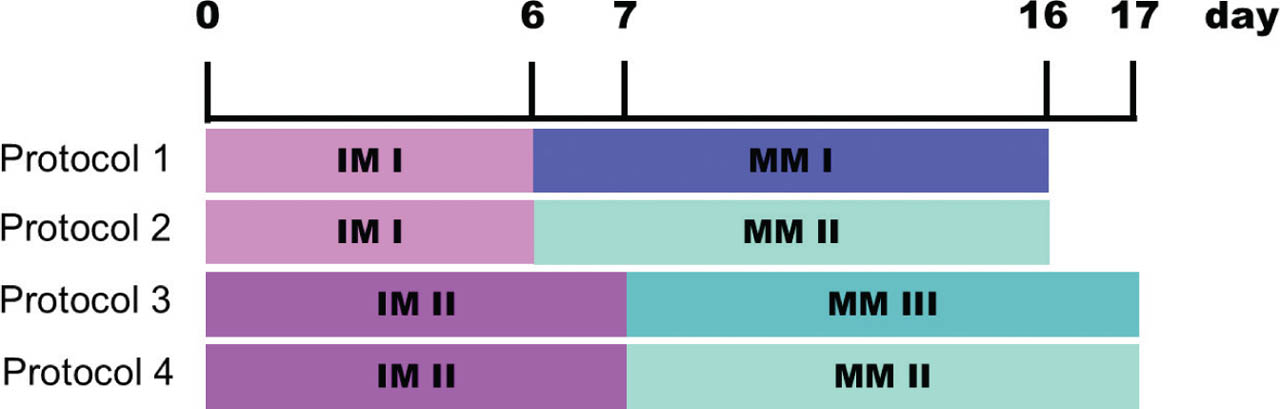
Fig 1.
Experimental protocols showing the timing of cells incubation in IM and MM. Four different protocols (1–4) were applied, each with distinct schedules of IM and MM phase. IM, induction medium; MM, maturation medium.
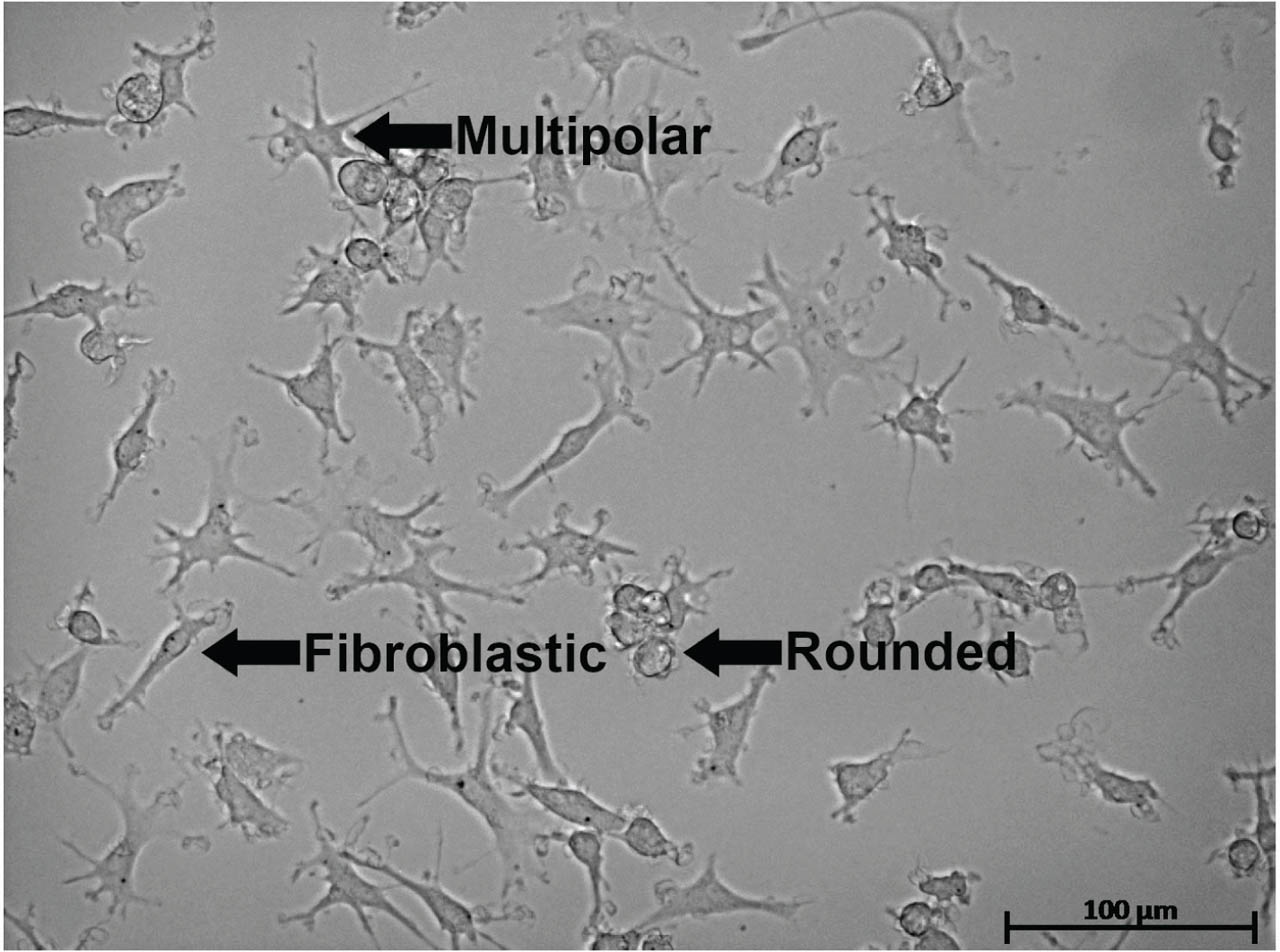
Fig 2.
Morphological changes observed during transdifferentiation procedure.
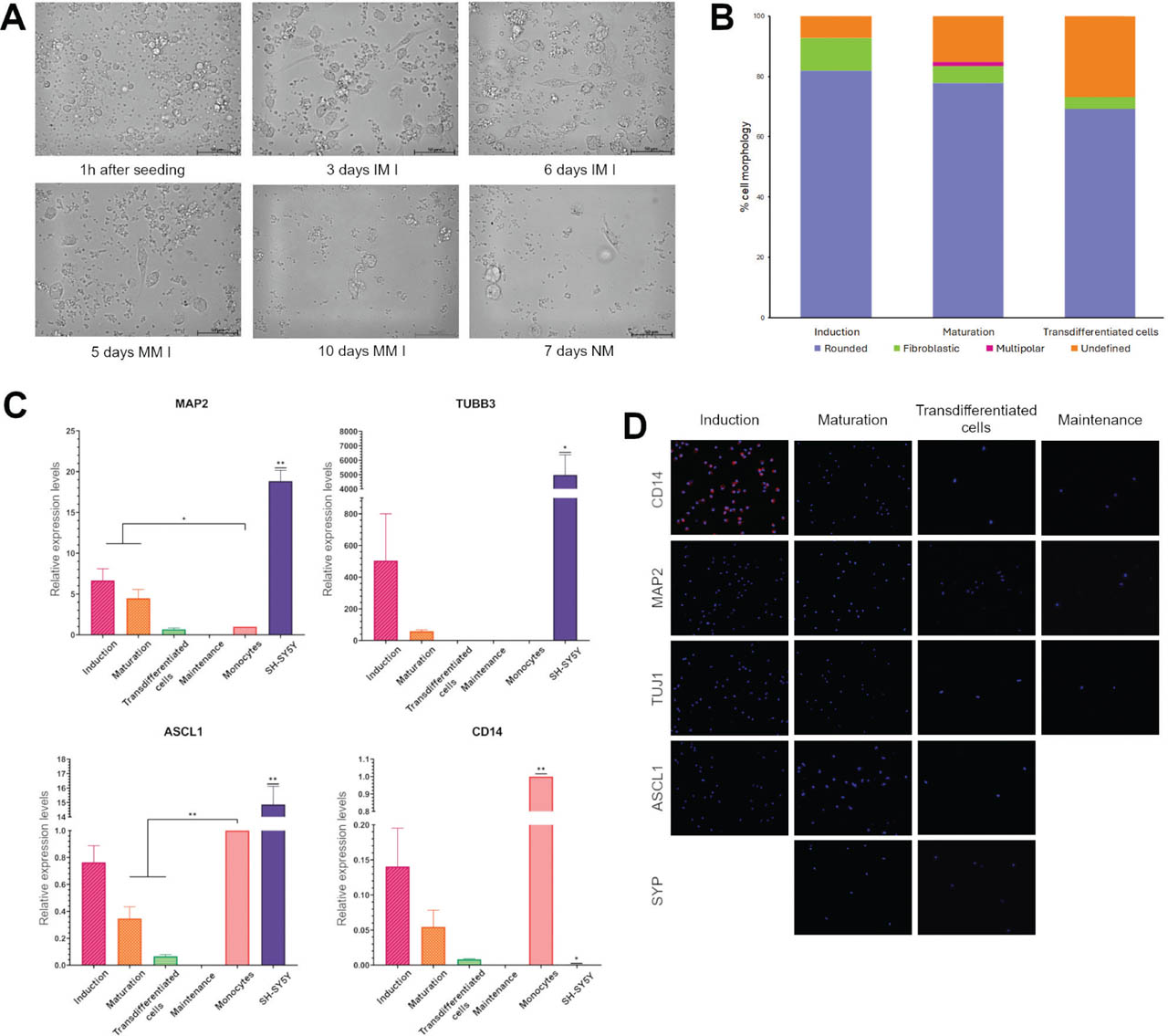
Fig 3.
Transdifferentiation of human monocytes into neuron-like cells using Protocol #1. (A) Representative phase-contrast images showing the morphological progression of monocytes through various stages of transdifferentiation: 1 h after seeding, 3 days and 6 days in IM I, 5 days in Maturation Medium I (MM I), 10 days in MM I, and 7 days in Neuronal Medium (NM). Scale bar = 50 μm. (B) Quantification of cell morphology across different stages of transdifferentiation, expressed as the percentage of cells displaying rounded, fibroblastic, multipolar, or undefined morphology (n = 3 independent experiments). (C) RT-qPCR analysis of neuronal (MAP2, TUBB3), neurogenic (ASCL1), and monocytic (CD14) gene expression at four key time points (induction, maturation, transdifferentiated cells, and maintenance), compared with native monocytes and SH-SY5Y neuroblastoma cells as controls. Data are presented as mean ± SEM (standard error of the mean). *p < 0.05, **p < 0.01. (D) Immunofluorescence staining of CD14, MAP2, TUJ1 (βIII-tubulin), ASCL1, and SYP across the four stages of transdifferentiation. Nuclei are counterstained with DAPI (blue), and target proteins appear in red. Expression of CD14 decreased over time, while neuronal and neurogenic markers increased, confirming transdifferentiation at the protein level. DAPI, 4′,6-diamidino-2-phenylindole; IM I, induction medium I; SYP, synaptophysin.
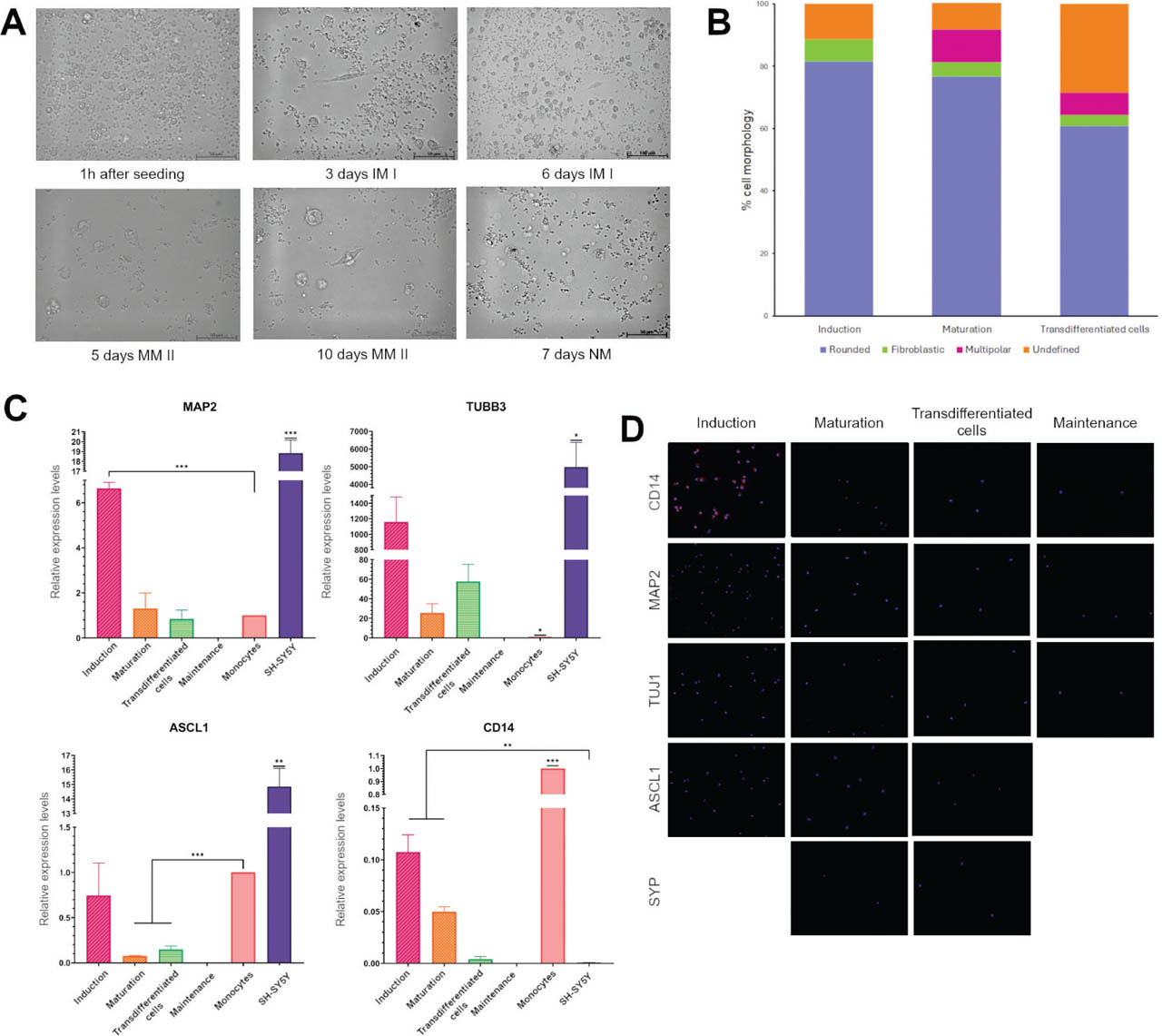
Fig 4.
Enhanced transdifferentiation of human monocytes into neuron-like cells using Protocol #2. (A) Representative phase-contrast images showing sequential morphological transformation of monocytes throughout the transdifferentiation process. Time points include: 1 h after seeding, 3 days and 6 days in IM I, 5 days and 10 days in Maturation Medium II (MM II), and 7 days in Neuronal Medium (NM). Morphological changes from rounded monocytic shape to multipolar neuron-like features are visibly observed. Scale bar = 50 μm. (B) Quantitative analysis of cellular morphology across four defined stages of differentiation (induction, maturation, transdifferentiated cells, and maintenance). The proportion of cells with rounded, fibroblastic, multipolar, and undefined morphologies is displayed as a stacked bar graph (n = 3 independent experiments). A progressive increase in multipolar morphology is noted, particularly in the transdifferentiated population. (C) Quantitative RT-PCR analysis of lineage-specific gene expression at different stages. Neuronal markers MAP2 and TUBB3, neurogenic transcription factor ASCL1, and monocytic marker CD14 were analyzed and compared with native monocytes and SH-SY5Y neuroblastoma cells. Data are presented as mean ± SEM (standard error of the mean). *p < 0.05, **p < 0.01. Significant upregulation of MAP2, TUBB3, and ASCL1 was observed during transdifferentiation, alongside a marked downregulation of CD14. (D) Immunofluorescence staining showing dynamic protein expression of CD14, MAP2, TUJ1 (βIII-tubulin), ASCL1, and SYP across the four transdifferentiation stages. DAPI (blue) stains nuclei; target proteins are shown in red, green, or cyan depending on the panel. A decrease in CD14 and a robust increase in neuronal and synaptic markers validate successful reprogramming at the protein level. DAPI, 4′,6-diamidino-2-phenylindole; IM I, induction medium I; SYP, synaptophysin.
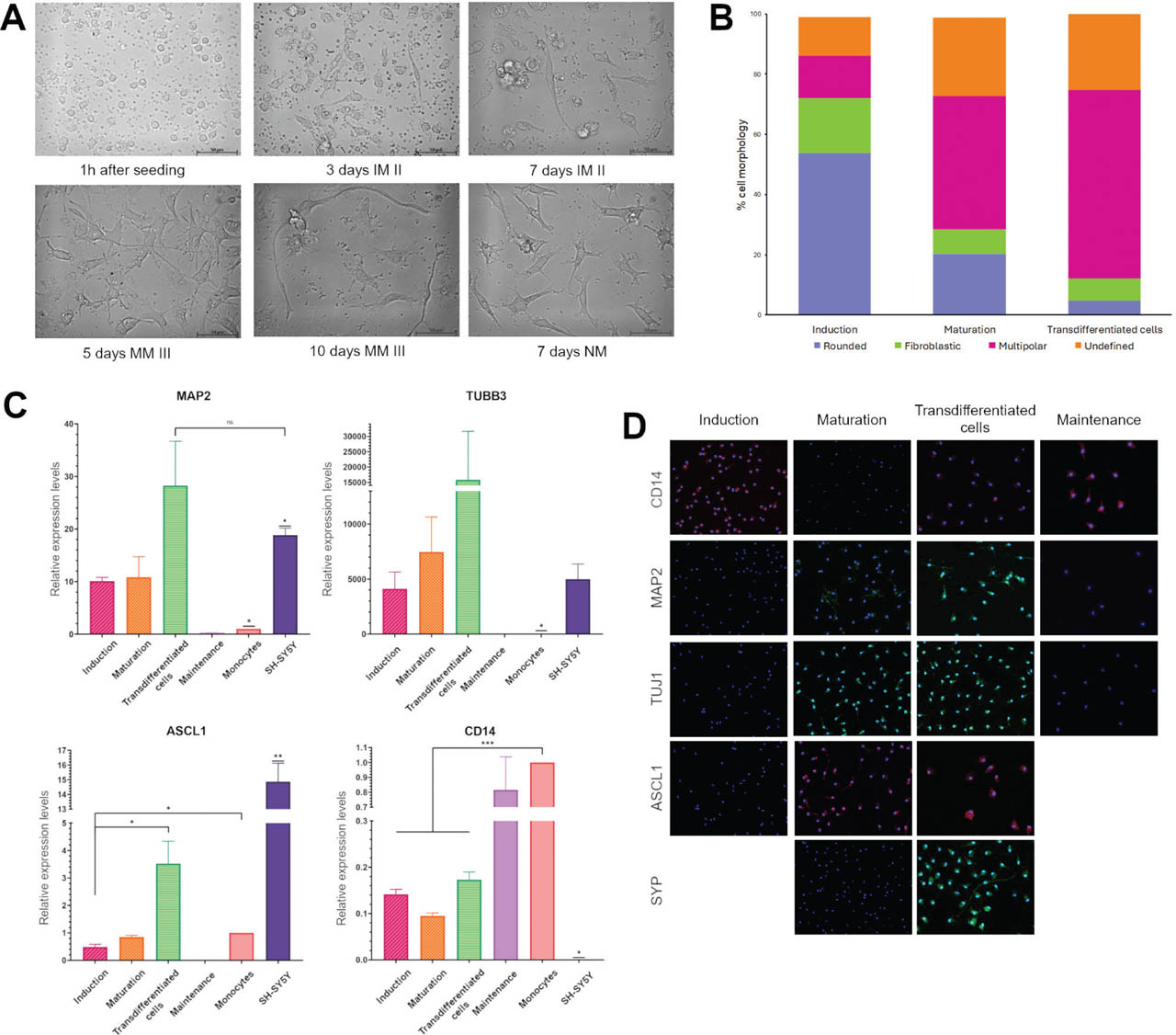
Fig 5.
Advanced transdifferentiation of human monocytes into neuron-like cells using Protocol #3. (A) Phase-contrast images showing morphological progression of monocytes during the transdifferentiation process using Protocol #3. Cells are displayed at key time points: 1 h after seeding, 3 days in IM II, 7 days in IM II, 5 days in Maturation Medium III (MM III), 10 days in MM III, and 7 days in Neuronal Medium (NM). Progressive transition from rounded morphology to a multipolar, neuron-like phenotype is clearly observed. Scale bar = 50 μm. (B) Morphological classification of cells at successive stages (induction, maturation, transdifferentiated cells, and maintenance), expressed as percentage of total population. Categories include rounded, fibroblastic, multipolar, and undefined morphologies (n = 3 biological replicates). An increase in multipolar cells, indicative of neuronal differentiation, is especially prominent during the final stages. (C) Quantitative gene expression analysis via RT-qPCR (reverse transcription-quantitative polymerase chain reaction) for neuronal markers MAP2 and TUBB3, transcription factor ASCL1, and monocytic marker CD14. Data are compared across differentiation stages as well as with native monocytes and SH-SY5Y neuroblastoma cells. Expression is normalized and presented as mean ± SEM (standard error of the mean). *p < 0.05, **p < 0.01. Strong upregulation of MAP2, TUBB3, and ASCL1, along with suppression of CD14, reflects effective neuronal reprogramming and loss of monocytic identity. (D) Immunofluorescence staining of lineage markers across the four transdifferentiation stages. CD14 (monocytic), MAP2, TUJ1 (βIII-tubulin), ASCL1 (neurogenic transcription factor), and SYP (SYP; synaptic marker) were visualized. DAPI stains nuclei in blue; individual protein signals are shown in magenta, cyan, or green. Marked loss of CD14 and progressive gain of neuronal markers validate successful transdifferentiation at the protein level. DAPI, 4′,6-diamidino-2-phenylindole; IM II, induction medium II; SYP, synaptophysin.
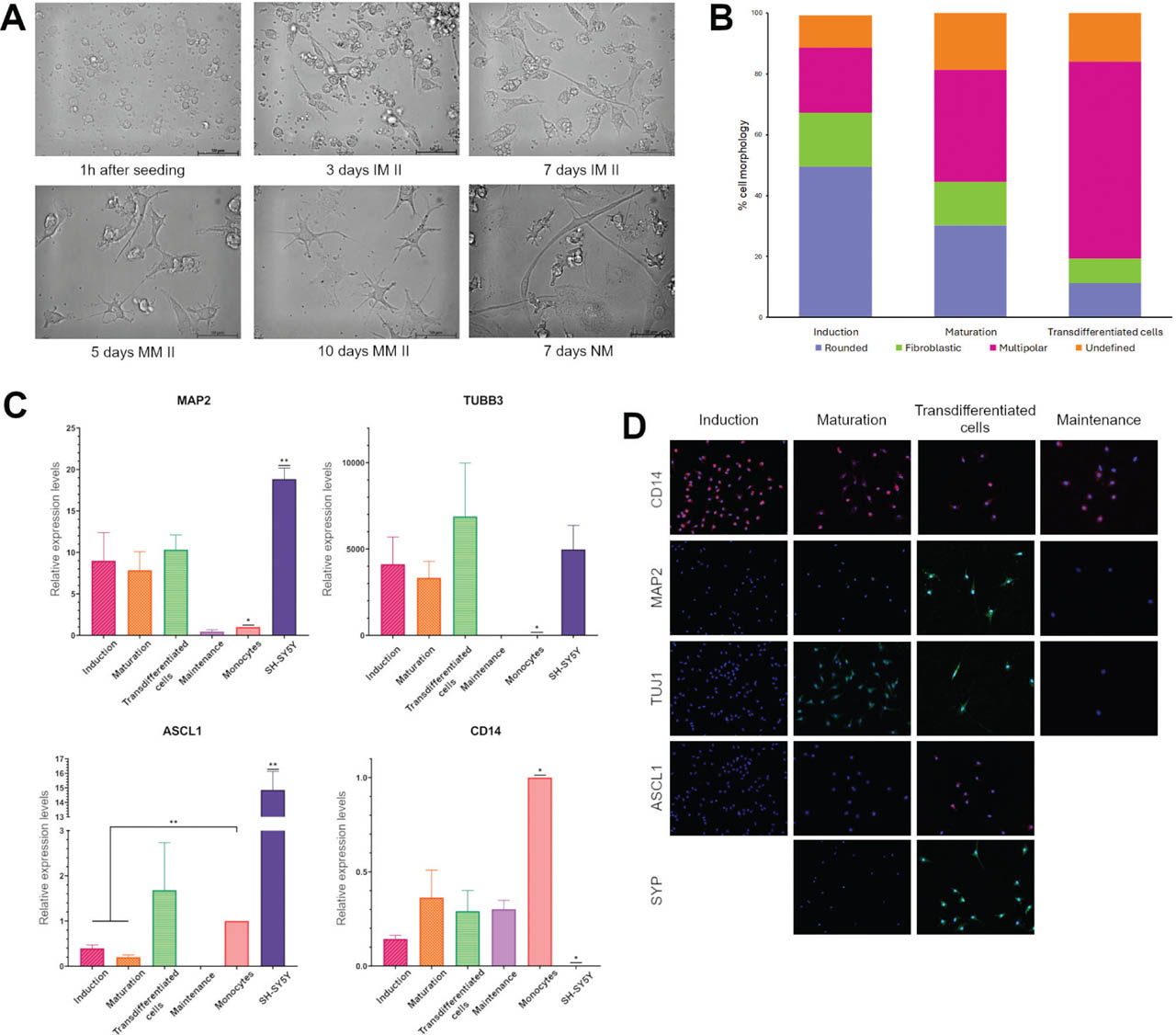
Fig 6.
Transdifferentiation of human monocytes into neuron-like cells using Protocol #4. (A) Representative phase-contrast images illustrating the morphological transformation of human monocytes at various stages of transdifferentiation using Protocol #4. Images were captured at 1-h post-seeding, 3 days and 7 days in IM II, 5 days and 10 days in Maturation Medium II (MM II), and after 7 days in Neuronal Medium (NM). Cells progressively adopt elongated and multipolar neuron-like shapes, especially during the maturation and maintenance phases. Scale bar = 50 μm. (B) Quantification of cell morphologies across the transdifferentiation process, expressed as percentage of total cells at each stage (n = 3 independent experiments). Cell types were categorized as rounded, fibroblastic, multipolar, or undefined. A notable increase in multipolar cells was observed during the later stages, indicative of neuronal conversion. (C) RT-qPCR (reverse transcription-quantitative polymerase chain reaction) analysis of gene expression at different transdifferentiation stages. Neuronal markers MAP2, TUBB3, and ASCL1, along with the monocytic marker CD14, were assessed. SH-SY5Y neuroblastoma cells and primary monocytes served as positive and negative controls, respectively. Expression levels are shown as mean ± SEM (standard error of the mean). *p < 0.05, **p < 0.01. Results demonstrate robust upregulation of ASCL1 and MAP2 during the maintenance phase, with concurrent downregulation of CD14. (D) Immunofluorescence staining for key markers across the transdifferentiation timeline. CD14 (magenta) marks monocytic identity; MAP2, TUJ1 (βIII-tubulin), ASCL1, and SYP indicate neuronal lineage. DAPI (blue) labels nuclei. A progressive decline in CD14 expression and acquisition of neuronal markers – especially MAP2 and SYP – confirm effective reprogramming at the protein level. DAPI, 4′,6-diamidino-2-phenylindole; IM II, induction medium II; SYP, synaptophysin.
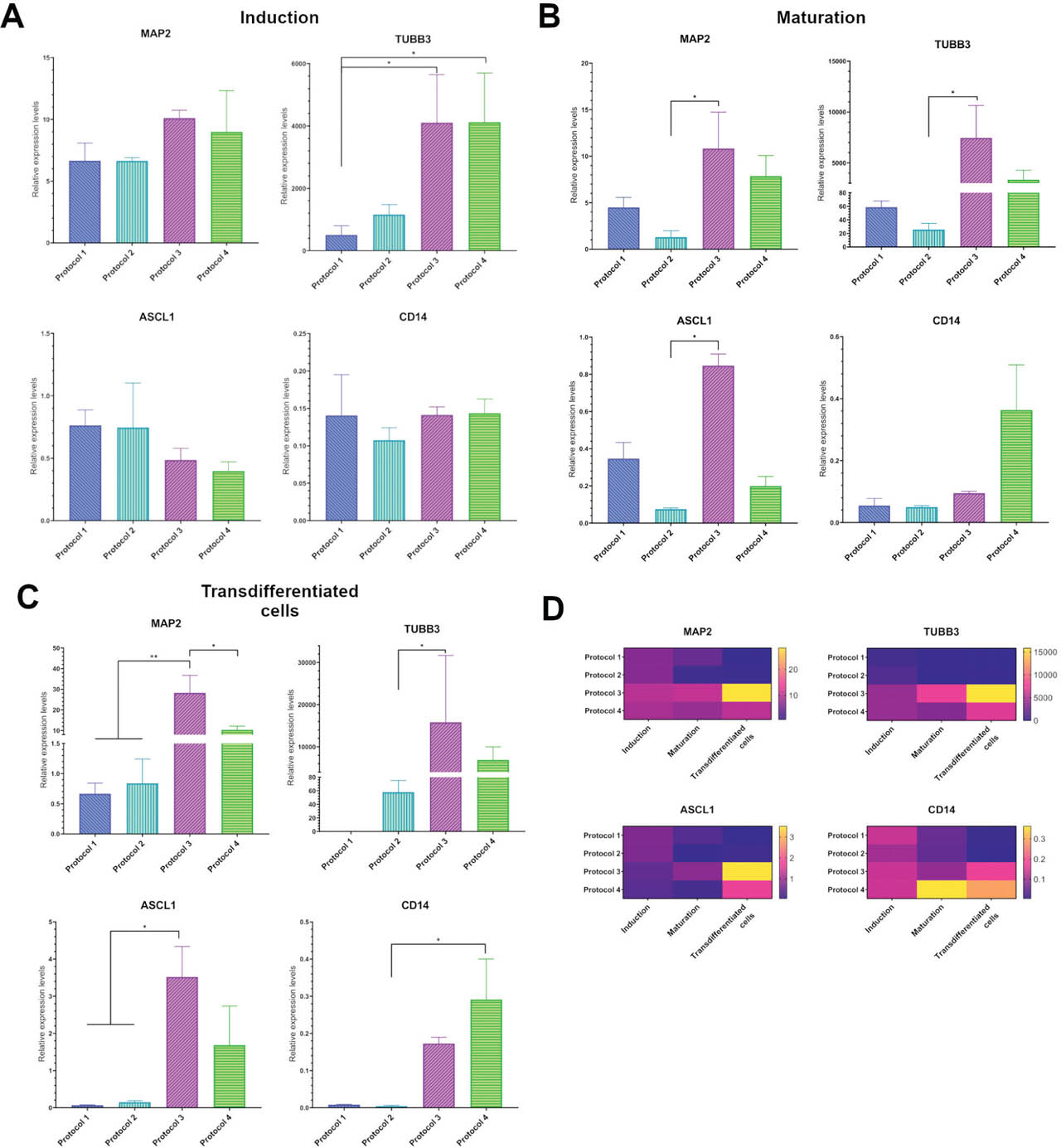
Fig 7.
Comparative transcriptional profiling of neuronal transdifferentiation protocols from human monocytes. (a–c) Quantitative RT-PCR analysis of neuronal and monocytic gene expression at three key transdifferentiation stages across all four protocols: (a) Induction phase: Expression levels of MAP2, TUBB3 (βIII-tubulin), ASCL1, and CD14 were measured 3 days after treatment with IM. Protocol 2 exhibited significantly elevated TUBB3 expression compared with Protocols #1 and #3 (*p < 0.05). (b) Maturation phase: Expression analysis 10 days post-induction revealed that Protocol 2 significantly upregulated MAP2, TUBB3, and ASCL1 relative to other protocols (*p < 0.05), suggesting enhanced neuronal lineage commitment. (c) Transdifferentiated cells: Gene expression levels were measured after 7 days in neuronal medium. Protocol #2 consistently yielded the highest expression of MAP2, TUBB3, and ASCL1, and the lowest levels of CD14, indicating more efficient neuronal transdifferentiation and loss of monocytic identity. Data are presented as mean ± SEM (standard error of the mean); *p < 0.05, **p < 0.01. (d) Heatmap visualization of gene expression trends (MAP2, TUBB3, ASCL1, and CD14) across the three phases (Induction, Maturation, and Transdifferentiated Cells) and all four protocols. Each heatmap highlights expression intensity (color scale) and confirms the superior performance of Protocol #2 in promoting neuronal gene expression while repressing monocytic markers. IM, induction medium.
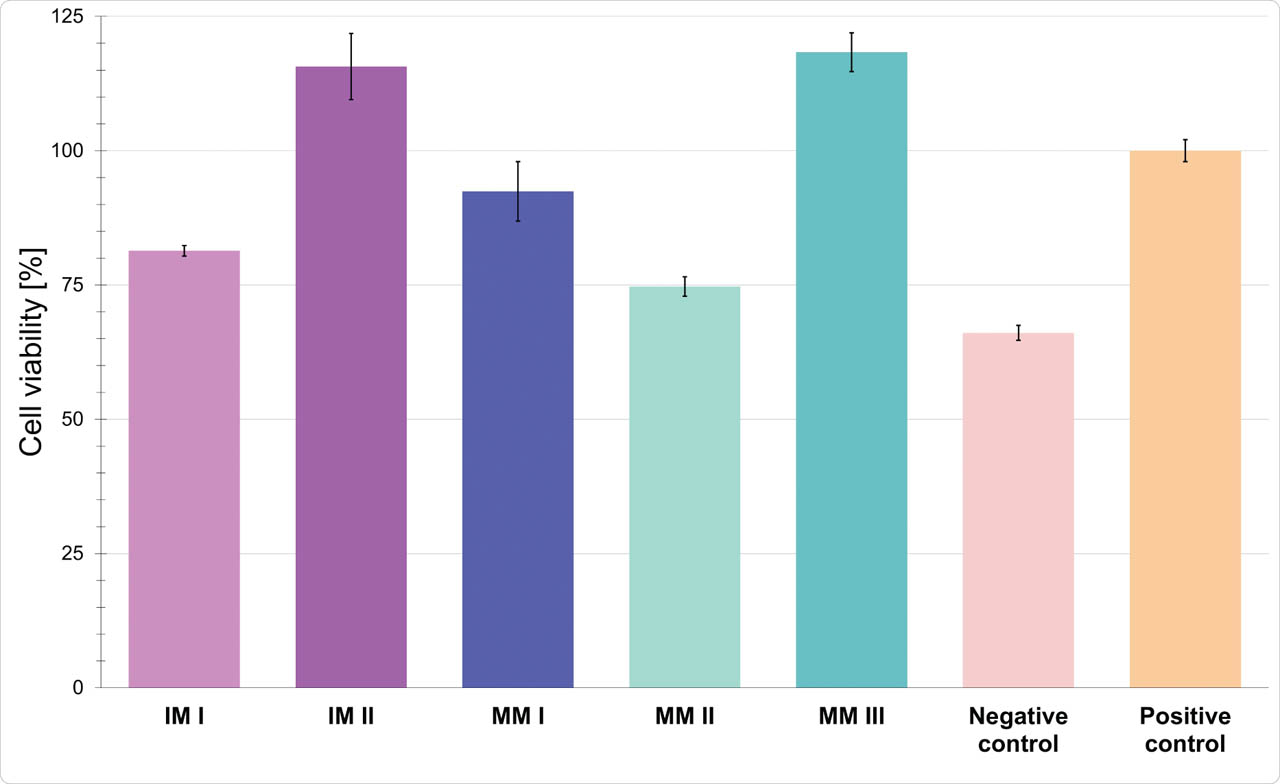
Fig S1.
MTT test results.
Table S1.
Purity of isolated monocytes population
| Cells/mL | Monocytes CD45+ CD14+ (%) | Monocytes CD14++ CD16− (%) | Monocytes CD14++ CD16+ (%) | Monocytes CD14+ CD16++ (%) | Other CD45+ cells (%) |
|---|---|---|---|---|---|
| 990,000 | 3.24 | 3.23 | 0 | 0.01 | 0.2 |
| 945,000 | 9 | 9 | 0 | 0 | 0.77 |
| 1,630,000 | 6.07 | 6.06 | 0 | 0.01 | 0.53 |
| 1,405,000 | 9.91 | 9. 87 | 0 | 0.04 | 1. 99 |
| 1,330,000 | 12.87 | 12. 80 | 0 | 0.07 | 2.42 |
| 710,000 | 8.41 | 8.34 | 0 | 0.07 | 1. 28 |
| 1,475,000 | 3 | 2.99 | 0 | 0.01 | 0.36 |
| 1,670,000 | 4.26 | 4.25 | 0 | 0.01 | 0.4 |
| 1,845,000 | 1.81 | 1. 81 | 0 | 0 | 0.19 |
| 1,480,000 | 3.83 | 3.83 | 0 | 0 | 0.38 |
| 505,000 | 0.97 | 0.97 | 0 | 0 | 0.18 |
| 615,000 | 0.73 | 0.72 | 0 | 0.01 | 0.11 |
| 785,000 | 2.26 | 2.25 | 0 | 0.01 | 0.13 |
Table S2.
The mechanism of action of the selected SM in the process of neuronal transdifferentiation
| SM | Mechanism | References |
|---|---|---|
| Chir99021 | Direct inhibition of GSK3β, causing indirect activation of the WNT signaling pathway | Gupta et al. (2022), Xu et al. (2019) |
| RepSox | Indirect blocking of TGF-β, which leads to SMAD inhibition | Gao et al. (2017), Shi et al. (2023), and Wei et al. (2019) |
| Y-27632 | Inhibition of ROCK pathway | Chan et al. (2007), Descoteaux et al. (2022), and Xu et al. (2019) |
| Forskolin | Increase of cAMP levels and decrease of NRSF levels | Thompson et al. (2019), Wang et al. (2024) |
| Dorsomorphin | Inhibition of BMP pathway | Ghosh et al. (2024) |
| VPA | Inhibition of HDAC, decrease of GSK3 levels and activation of ERK | Gurvich et al. (2004), Hao et al. (2004), and Mertsch and Krämer (2017) |
| TTNPB | Direct activation of RAR | Das and Pethe (2021), Xu et al. (2019) |
[i] BMP, Bone morphogenetic proteins; cAMP, cyclic adenosine monophosphate; ERK, extracellular signal-regulated kinase; GSK3, glycogen synthase kinase 3; HDAC, histone deacetylase; NRSF, neuron-restrictive silencer factor; RAR, retinoic acid receptor; ROCK, Rho-associated protein kinase; SM, small molecules; SMAD, suppressor of mothers against decapentaplegic; TGF, transforming growth factor; TTNPB, arotinoid acid; WNT, wingless related integration site; VPA, valproic acid.
Table S3.
Antibodies used for immunofluorescence staining
| Antibody | Concentration | Cat. # |
|---|---|---|
| Anti-MAP2 rabbit | 1:50 | Invitrogen, cat.#PA5-17646 |
| Anti-TUJ1 mouse | 1:200 | Invitrogen, cat.#MA1-118 |
| Anti-ASCL1 rabbit | 1:250 | Invitrogen, cat.#PA5-77868 |
| Anti-SYP rabbit | 1:50 | Invitrogen, cat.#MA5-14532 |
| Anti-CD14 rabbit | 1:100 | Invitrogen, cat.#MA5-32248 |
| Anti-rabbit AlexaFluor 488 | 10 μg/mL | Invitrogen, cat.#A11008 |
| Anti-rabbit TRITC | 10 μg/mL | Invitrogen, cat.#A16101 |
| Anti-mouse FITC | 10 μg/mL | Invitrogen, cat.#F2761 |
| Anti-mouse AlexaFluor 594 | 10 μg/mL | Invitrogen, cat.#A11005 |